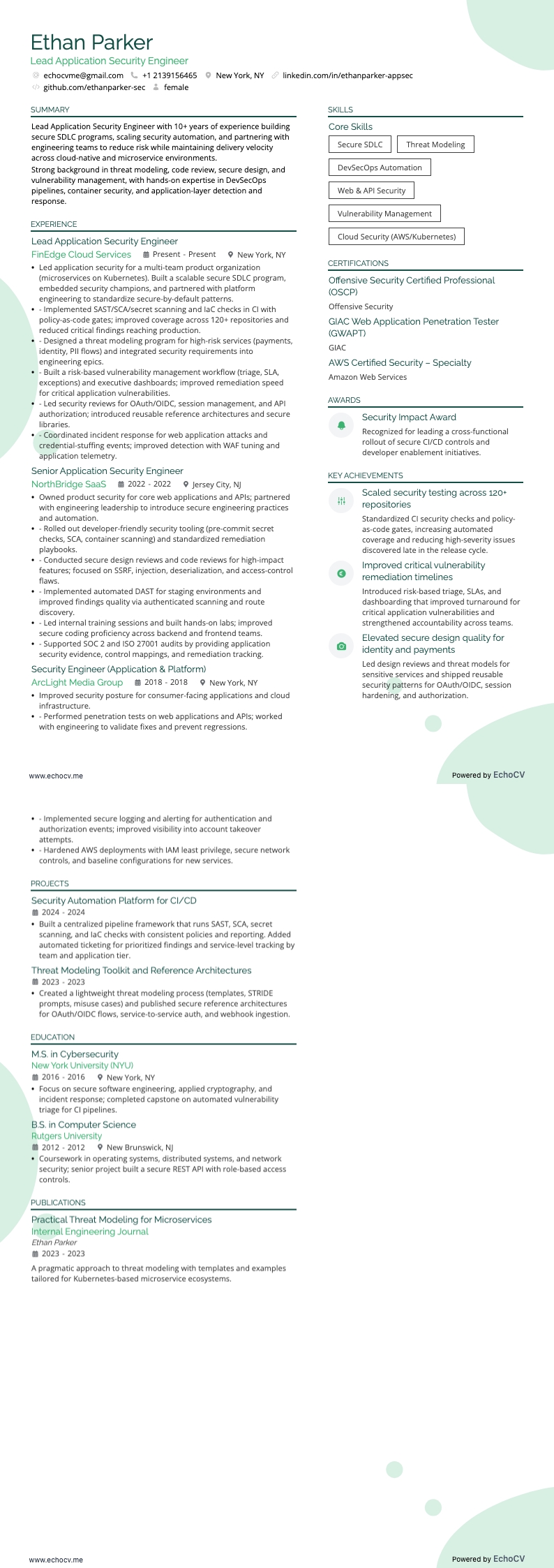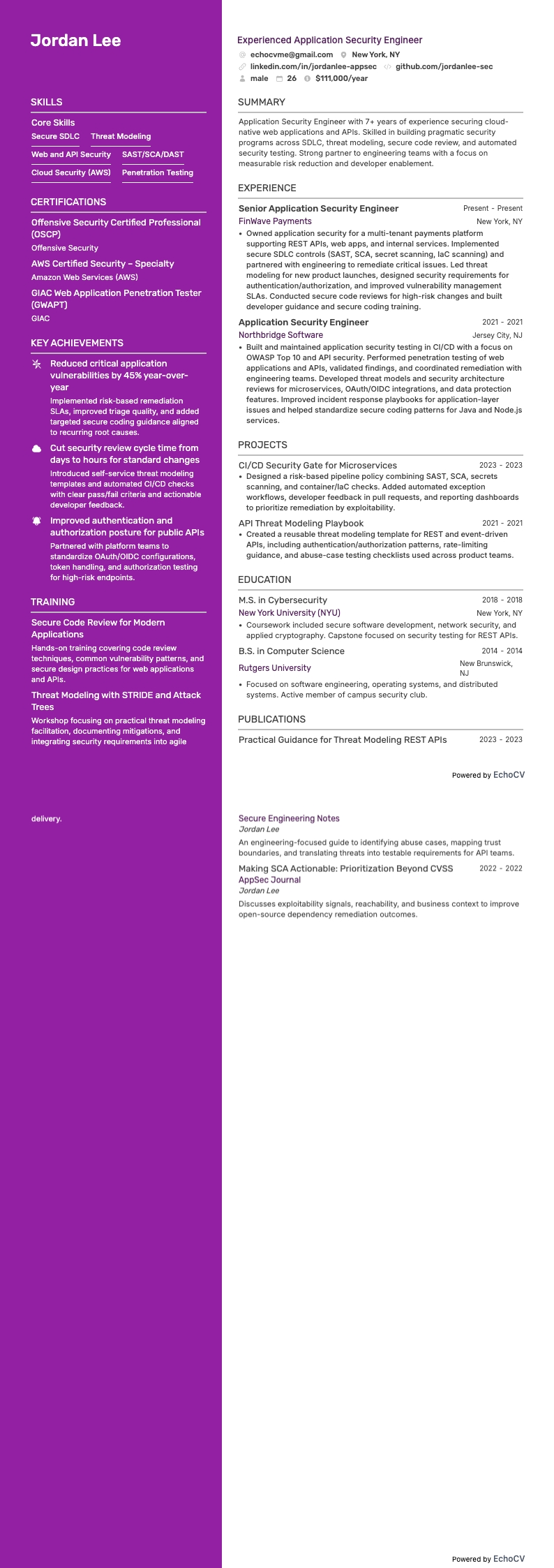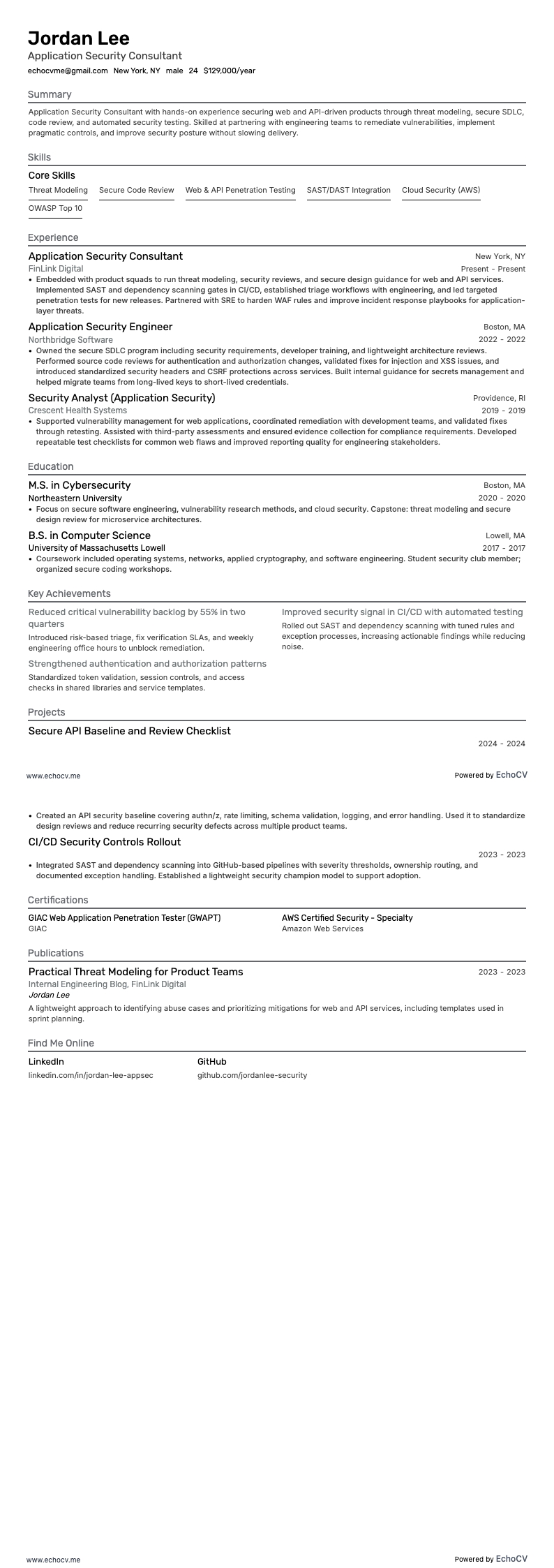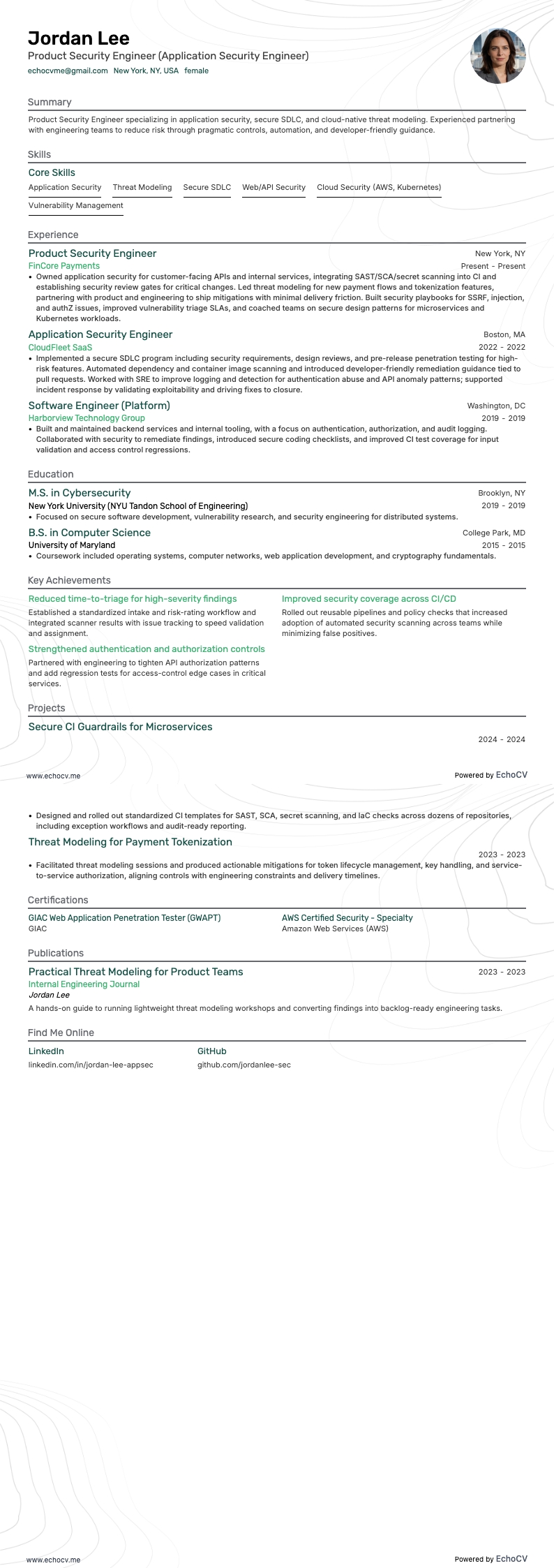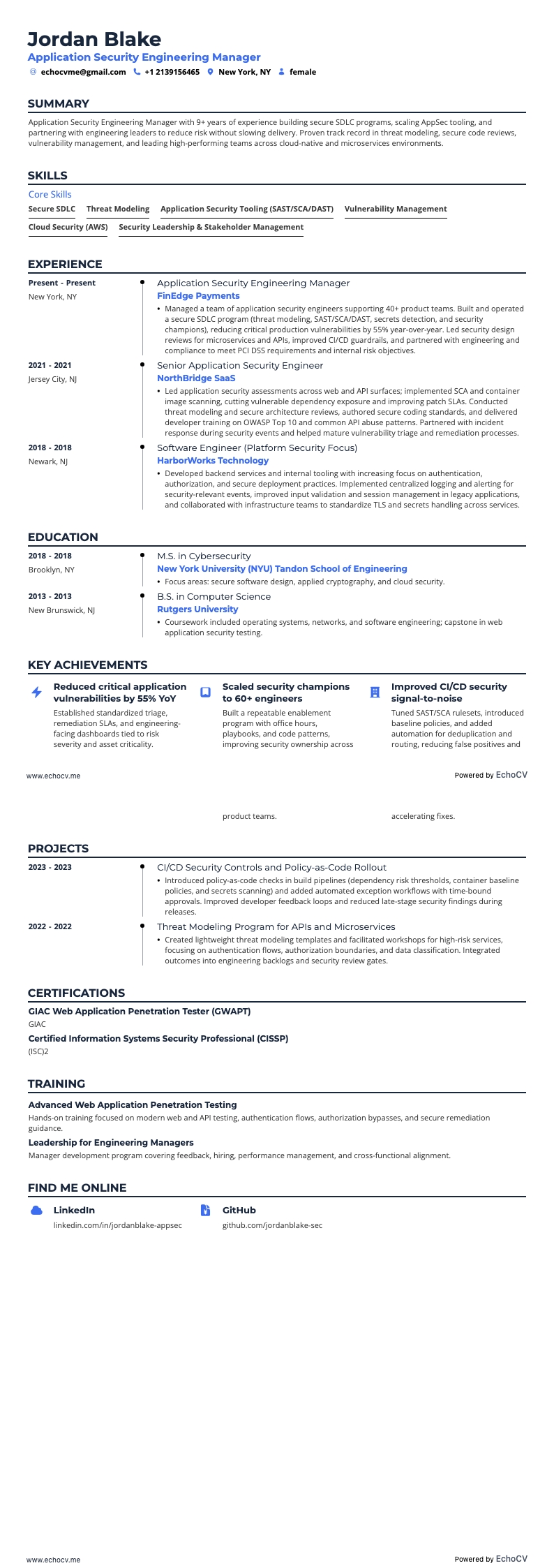
Once you’ve organized your resume with the right core components, the next step is to write your application security engineer experience in a way that fits that structure and shows your impact.
How to write your application security engineer resume experience
The experience section is where you prove you've shipped meaningful security improvements—through threat modeling, secure code reviews, vulnerability remediation, and tooling you directly implemented or managed. Hiring managers prioritize demonstrated impact over descriptive task lists, so every bullet should connect your work to a measurable outcome like reduced vulnerabilities, faster remediation cycles, or strengthened application defenses. Building a targeted resume ensures each entry reflects what the specific employer values most.
Each entry should include:
- Job title
- Company and location (or remote)
- Dates of employment (month and year)
Three to five concise bullet points showing what you owned, how you executed, and what outcomes you delivered:
- Ownership scope: the applications, services, codebases, or security programs you were directly accountable for, including the scale of systems, teams, or environments under your purview as an application security engineer.
- Execution approach: the static and dynamic analysis tools, penetration testing frameworks, secure development lifecycle practices, or threat modeling methodologies you used to identify vulnerabilities and drive remediation.
- Value improved: the specific gains in security posture, code quality, remediation speed, compliance readiness, or risk reduction your work produced across the applications you protected.
- Collaboration context: how you partnered with software engineering, DevOps, product, or compliance teams to embed security into development workflows, triage findings, and align on prioritized fixes.
- Impact delivered: the concrete results your efforts produced—expressed through reduction in attack surface, faster mean time to remediate, improved audit outcomes, or strengthened resilience—rather than a list of tasks you performed.