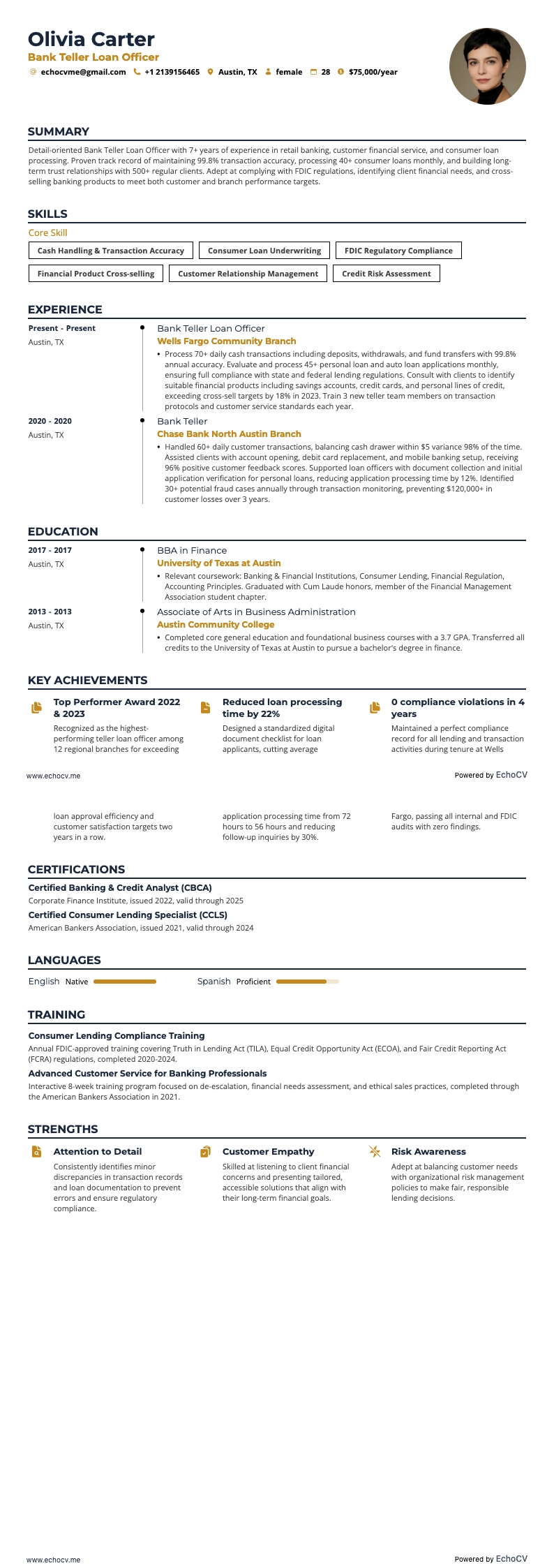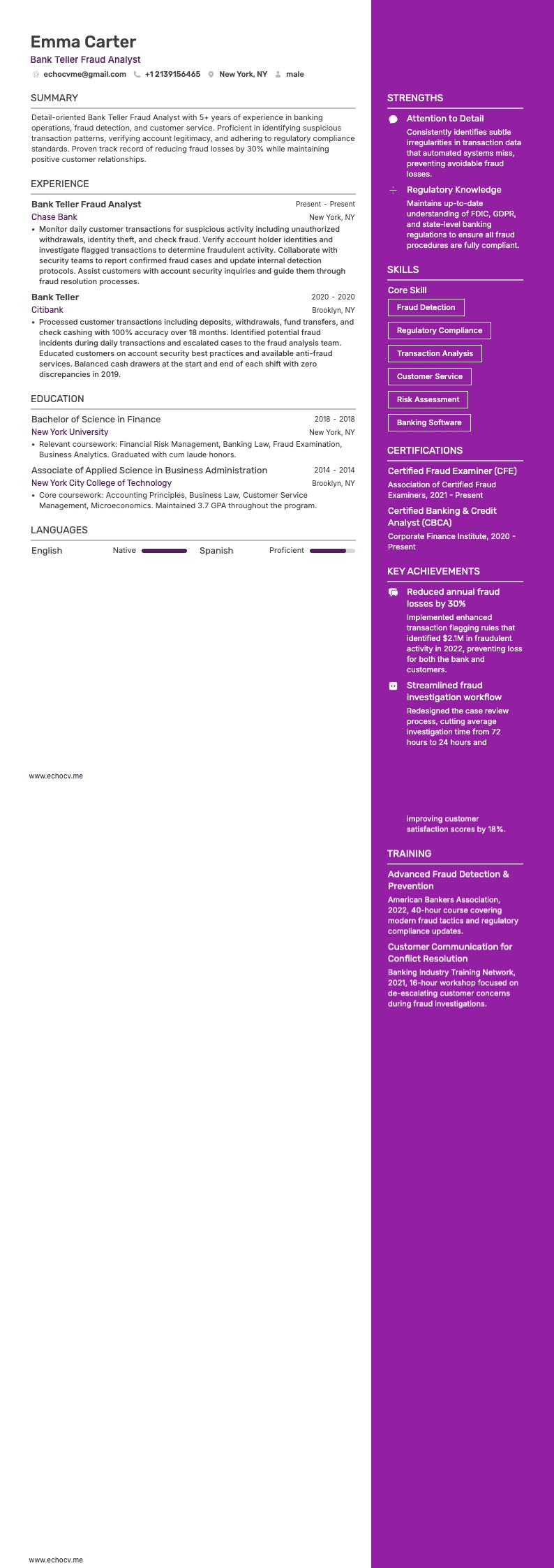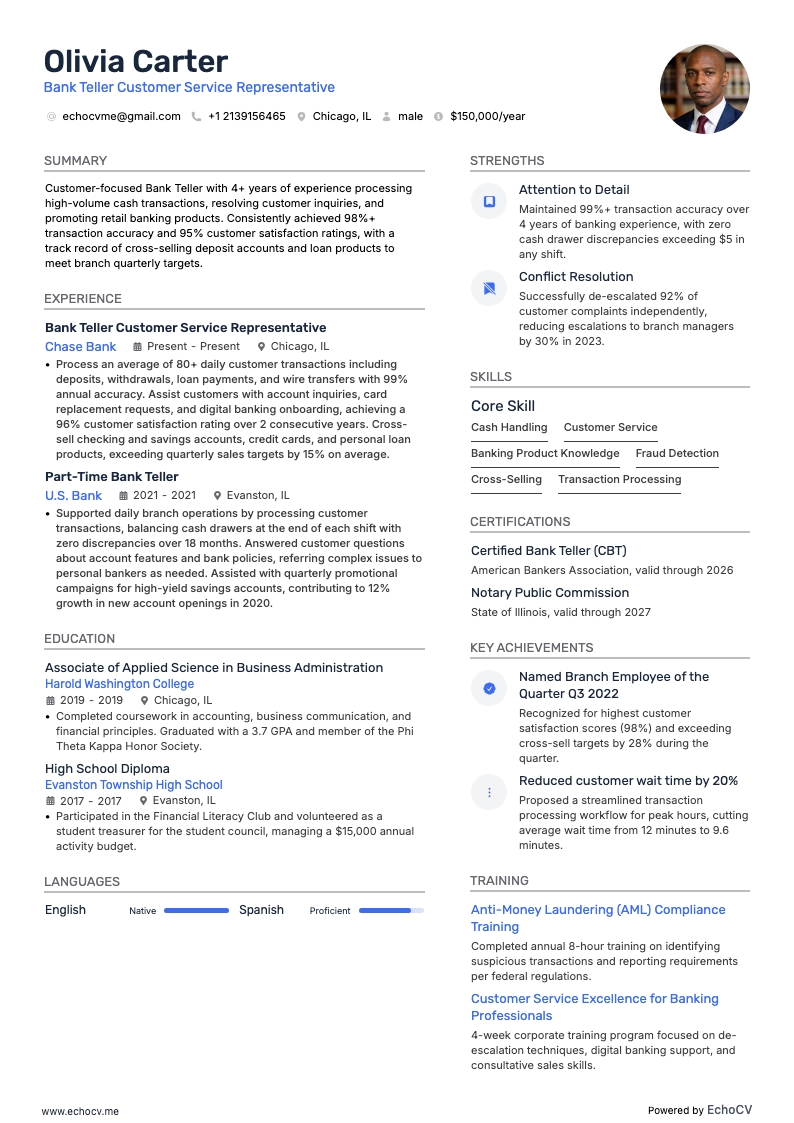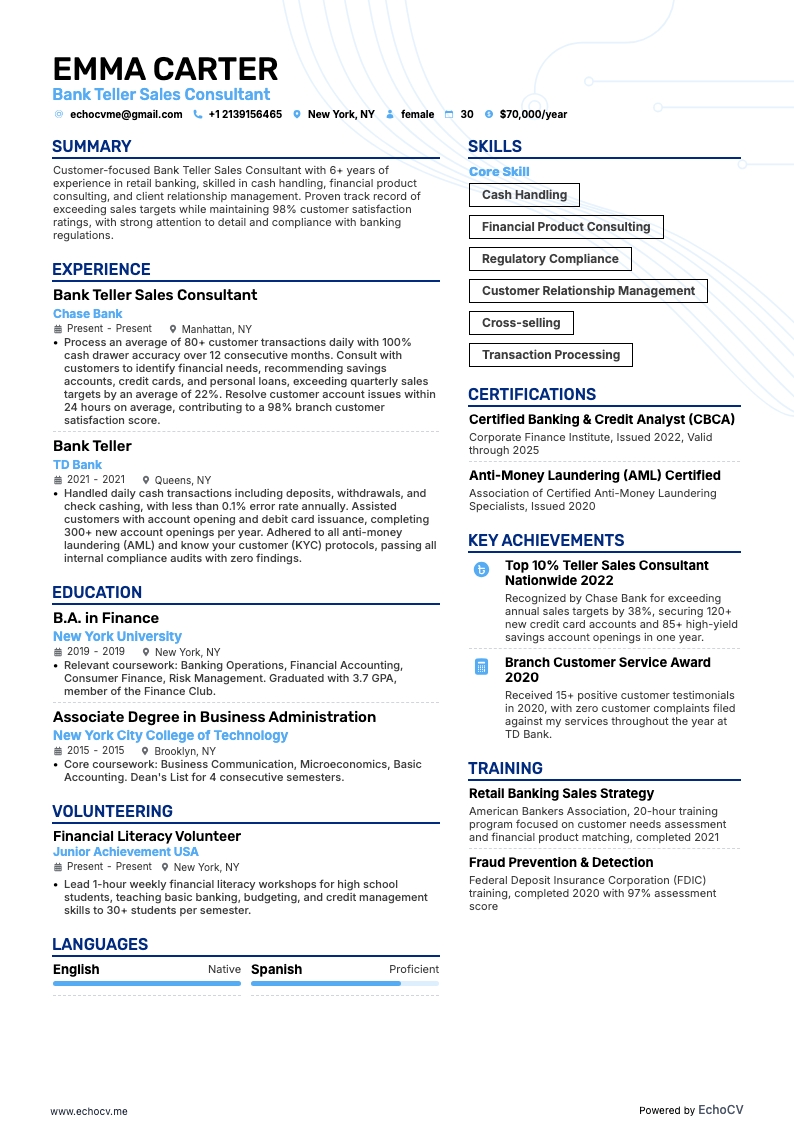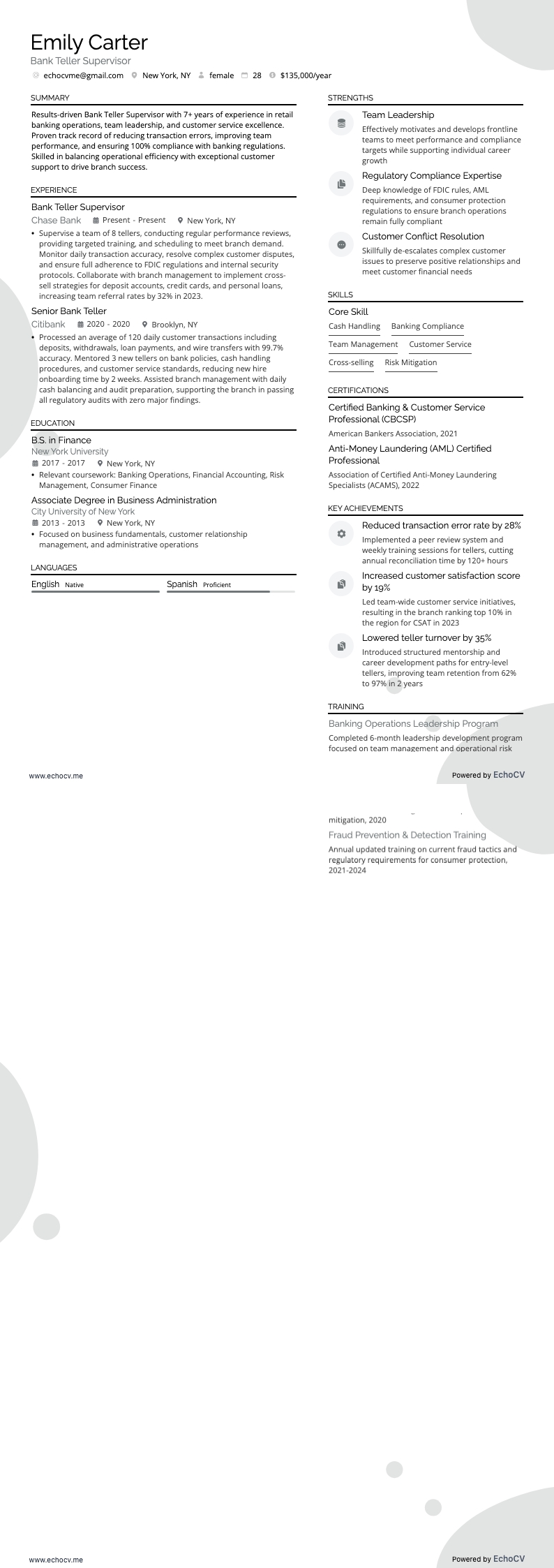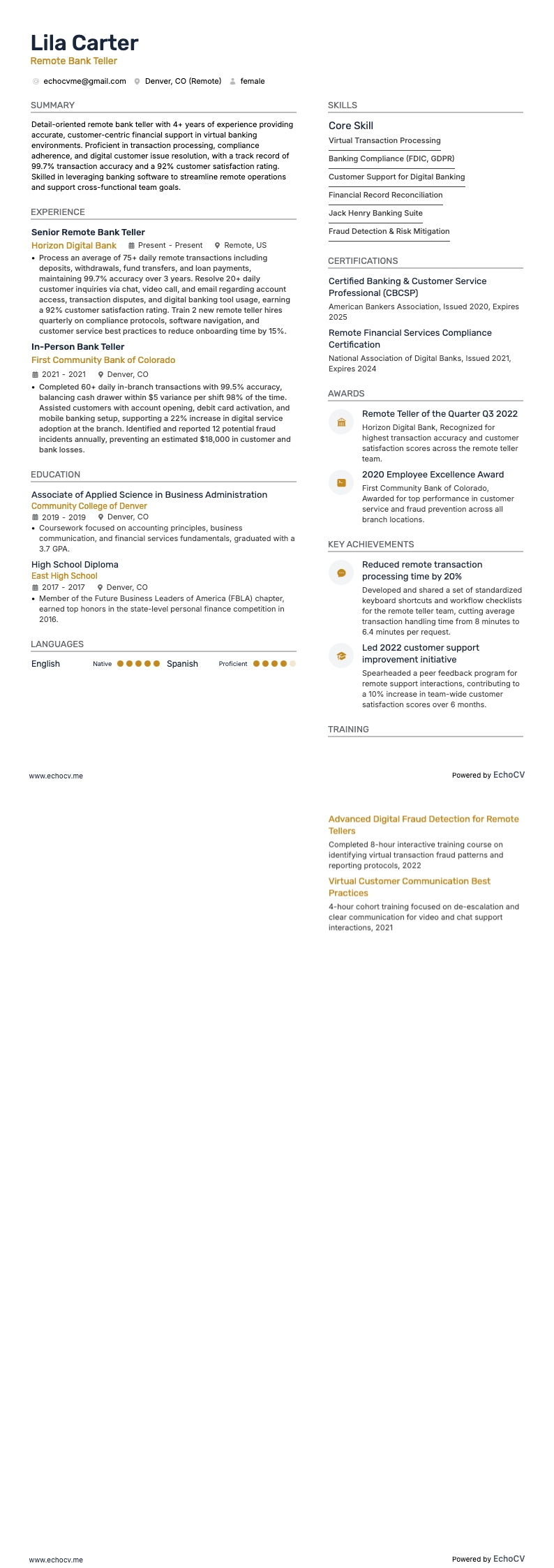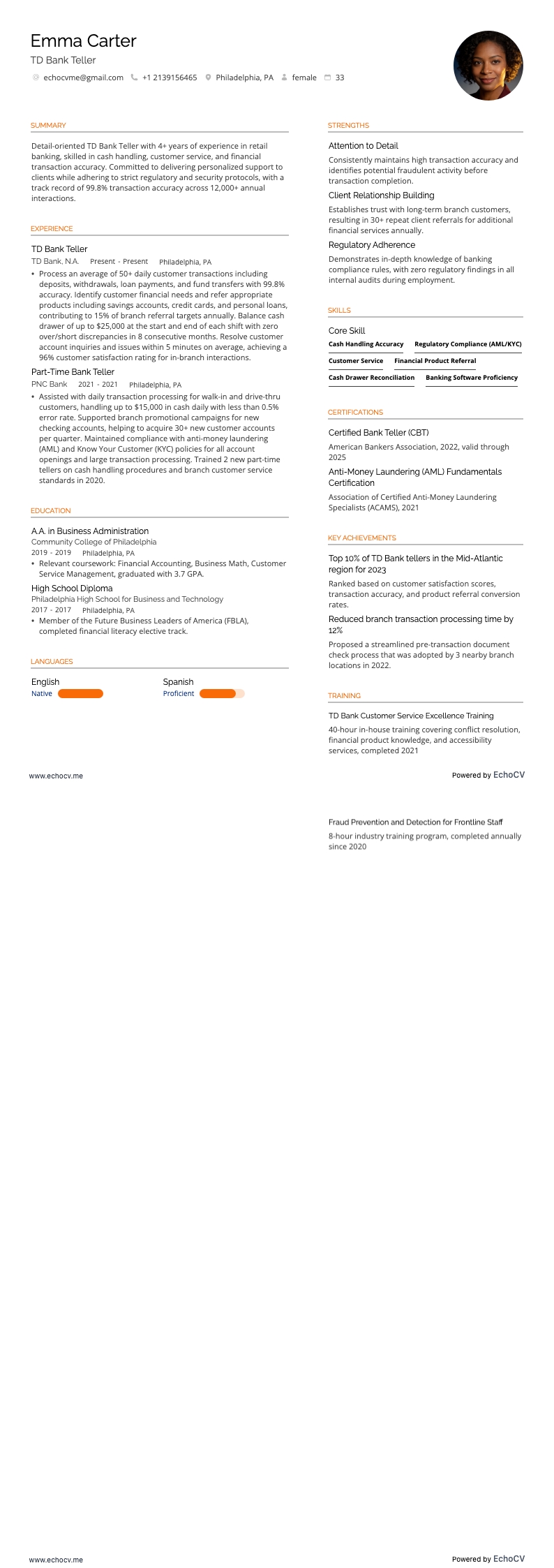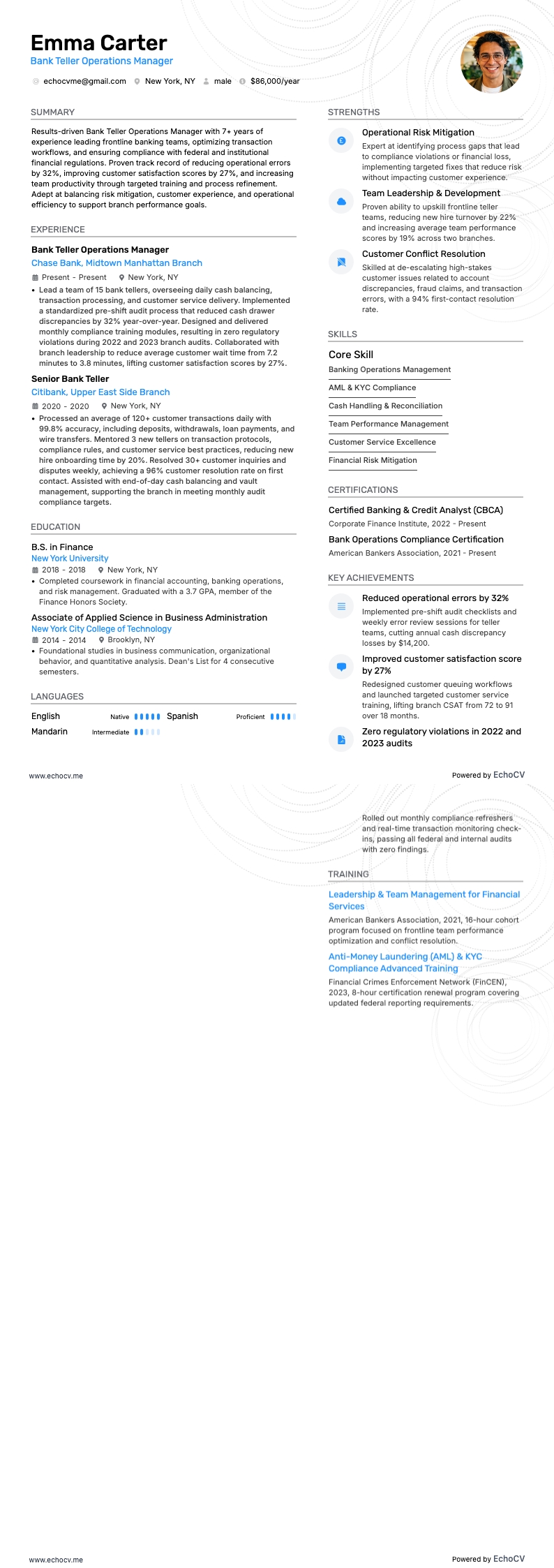
Crafting a compelling resume as a bank teller can be challenging. After all, you handle sensitive information. The goal’s to show your skills and experiences without breaching confidentiality. Bank tellers often engage in delicate financial discussions and resolve complex issues. These must be conveyed effectively on a resume while respecting privacy protocols.
Banktelling is expected to witness about 29,000 openings each year. This competitive job market means your resume needs to stand out. Our guide provides real-life examples and insightful strategies to help you write each section. Learn how to describe your experience, list your skills effectively, and maintain discretion. This will ensure your resume highlights your value while protecting sensitive information.
You’ll also learn how to:
- Format your resume to reflect your seriousness and professionalism;
- Tailor your experience section to fit a real job description for a bank teller;
- Describe your education and certifications;
- Include an incomplete degree on your resume;
- List your abilities, so that they reflect your technical knowledge and your people skills;
- Craft a well-written bank teller summary;
- Show proactivity and dedication with original additional sections.
Check out these related guides as well:
- Banking resume example
- Loan officer resume example
- Loan processor resume example
- Phone banking resume example
- Credit analyst resume example
- Personal banker resume example
- Bank manager resume example
- Call center representative resume example
- Entry-level customer service resume example
How to format a bank teller resume
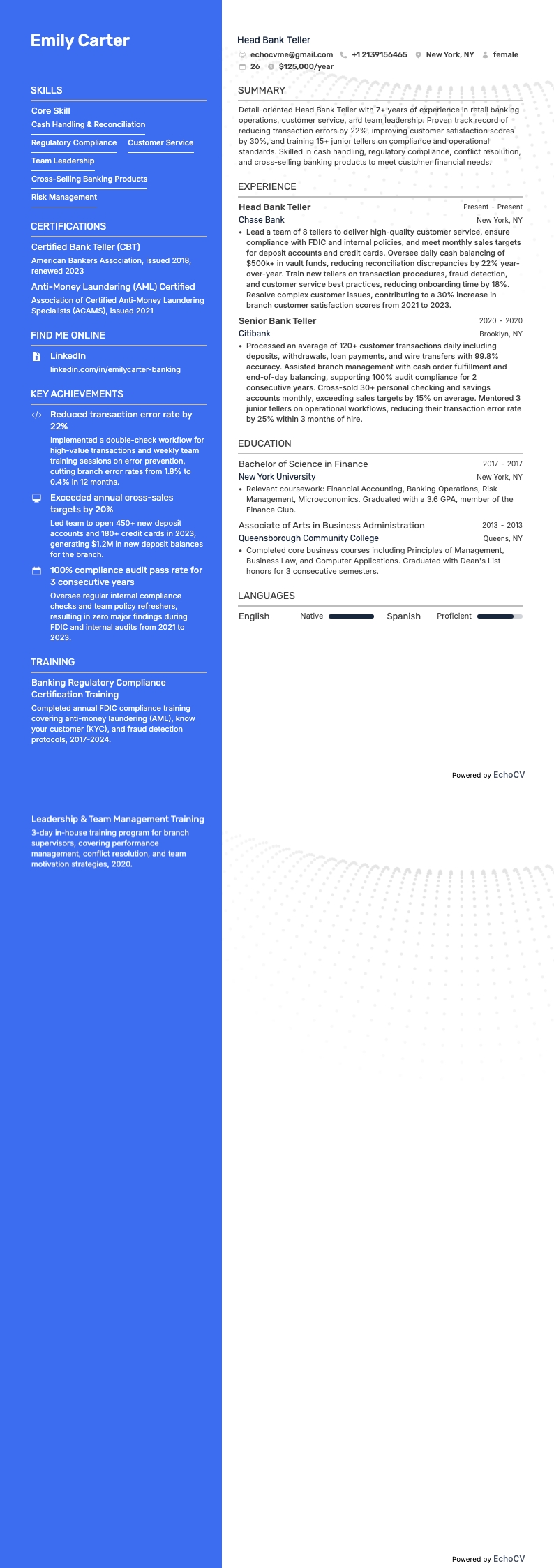
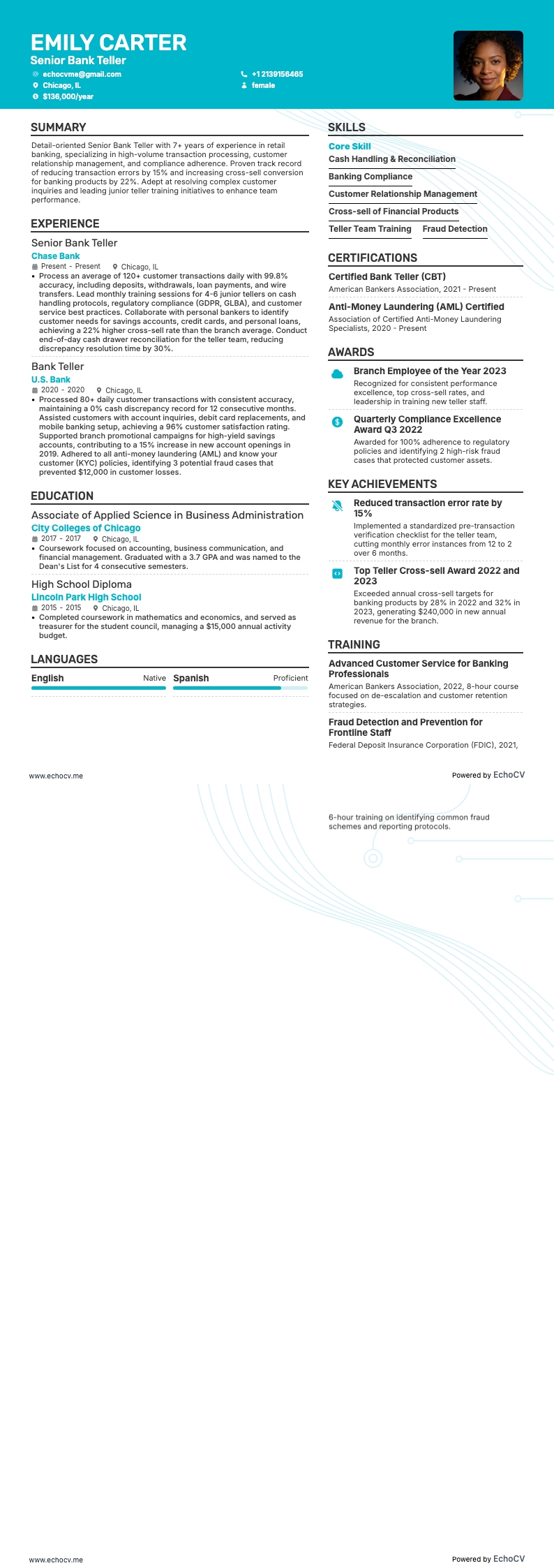
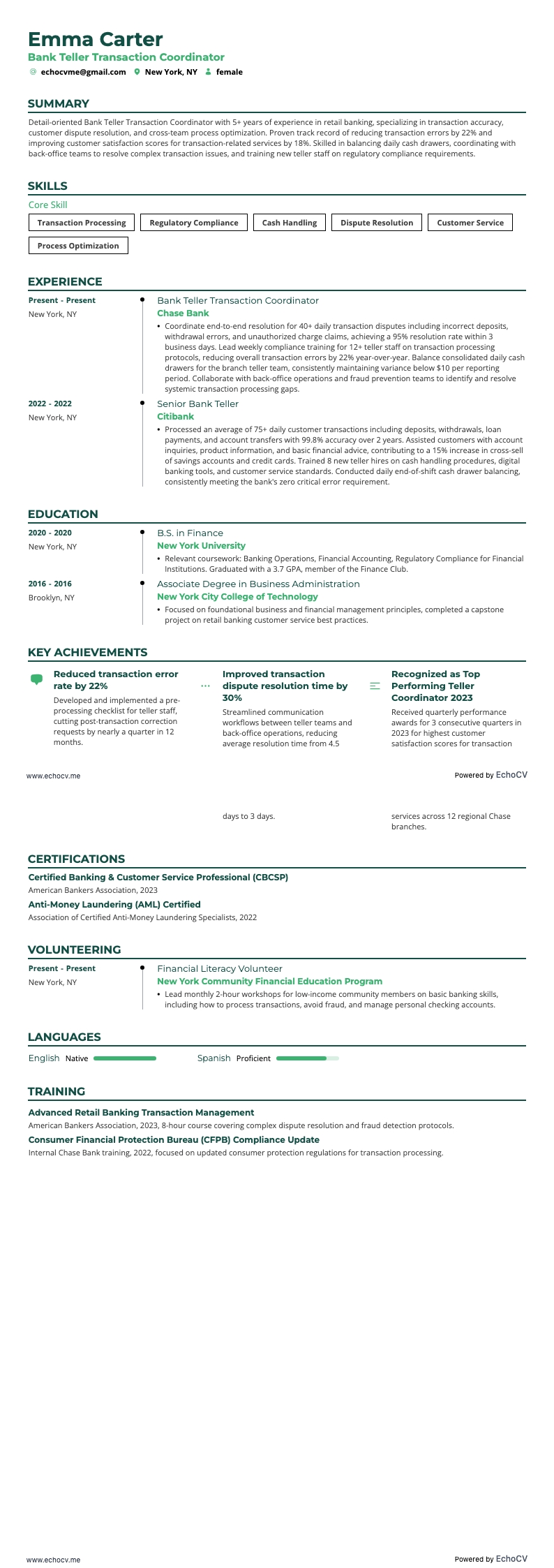
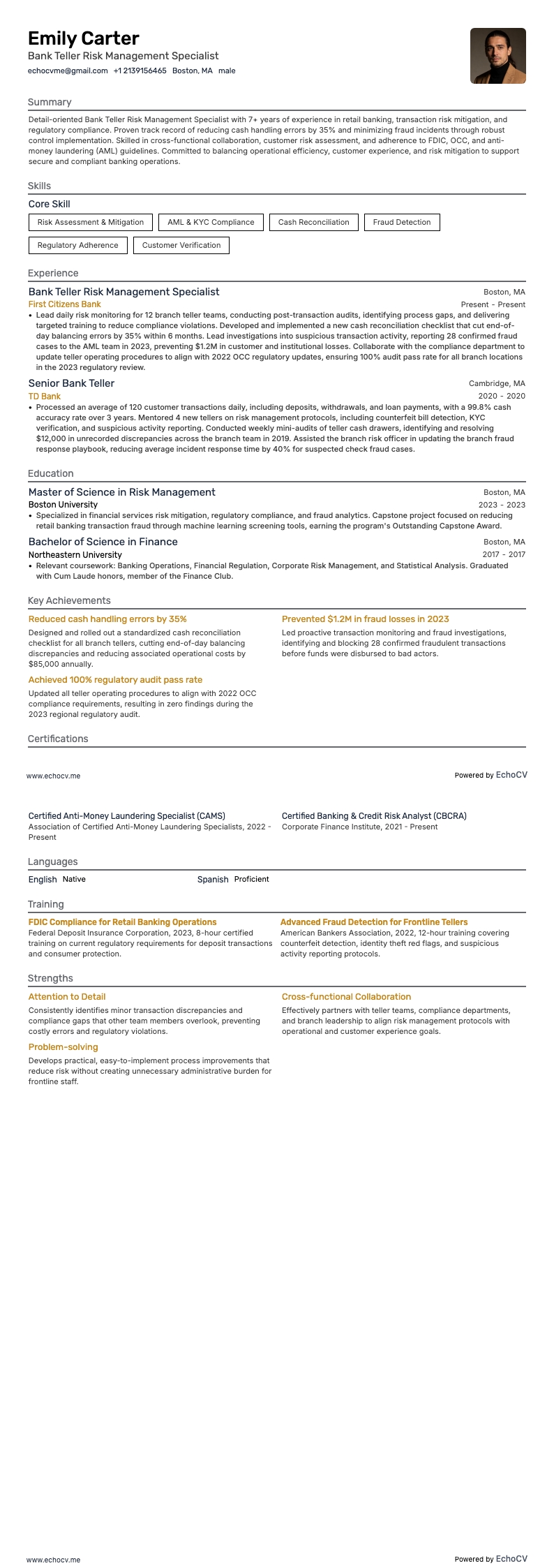
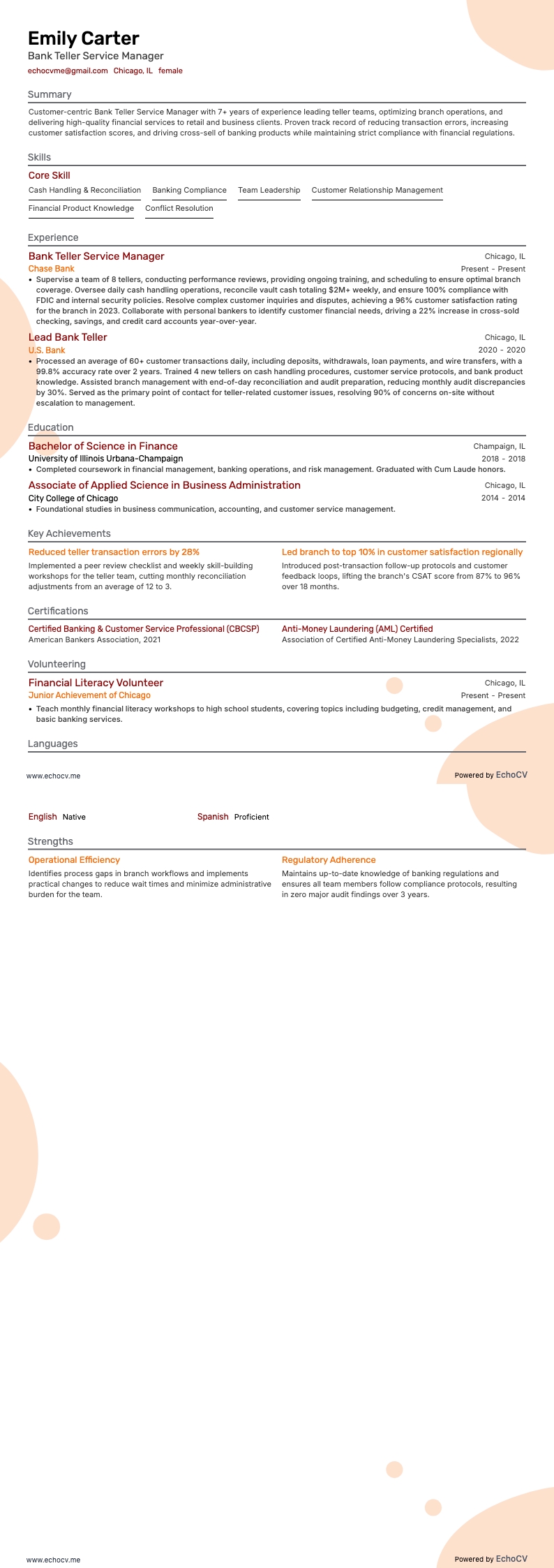
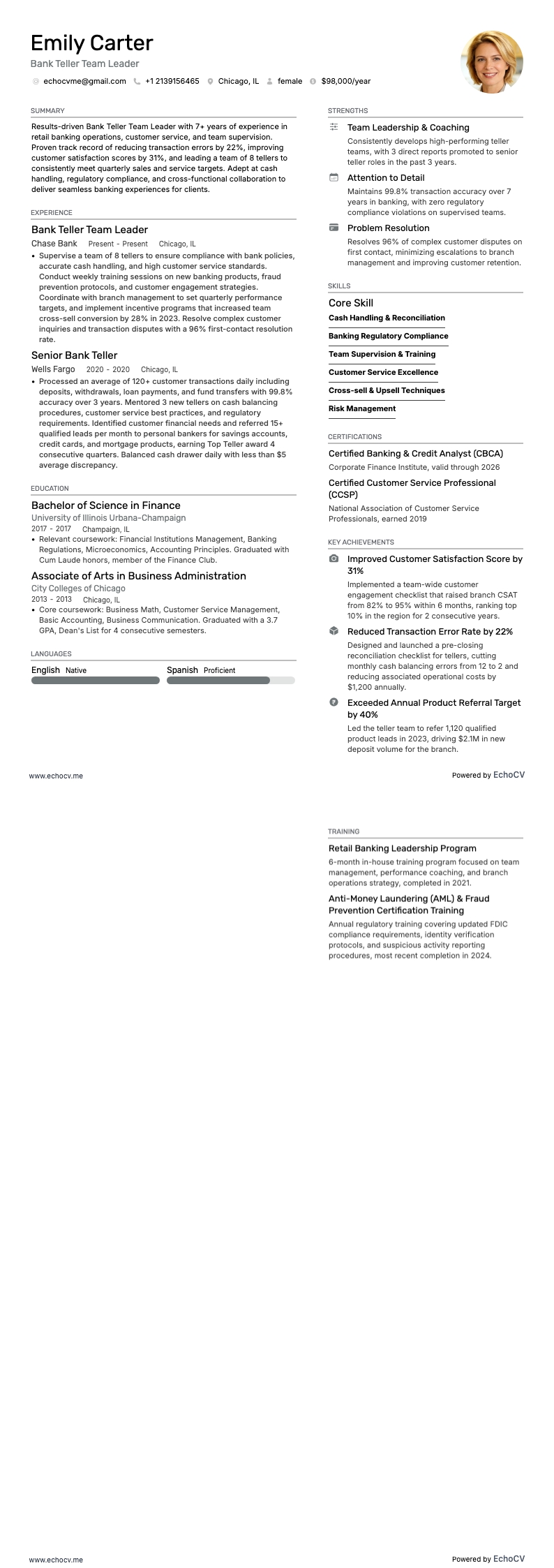
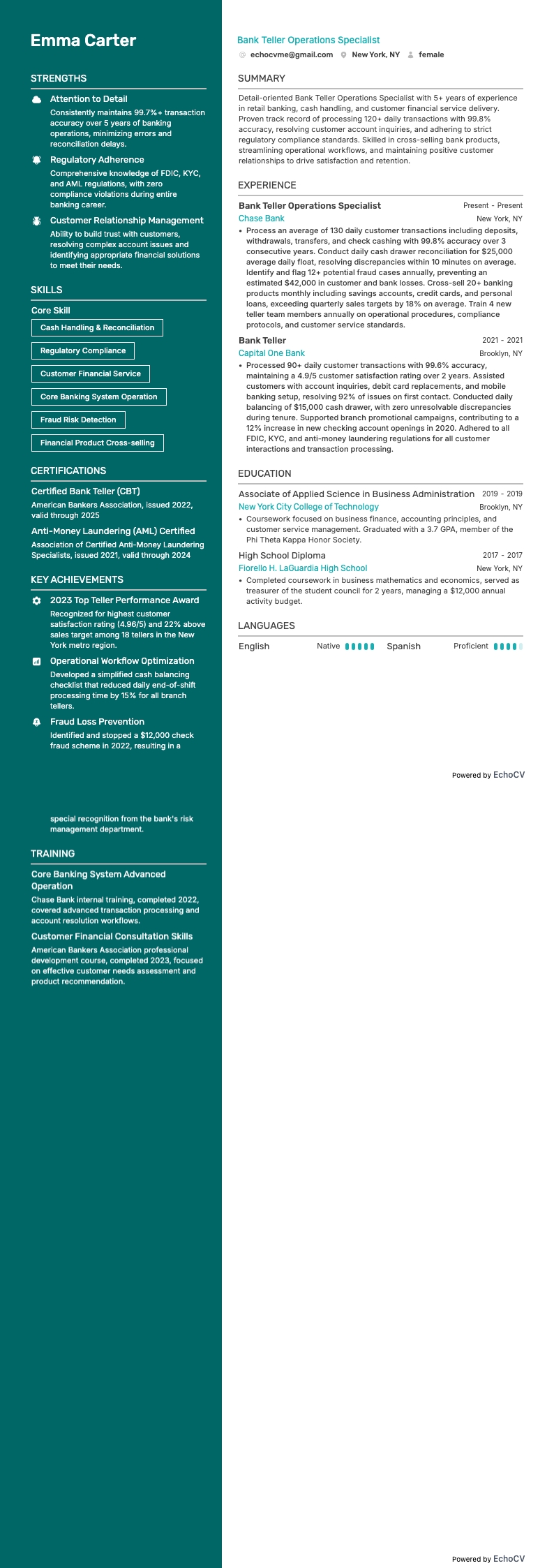
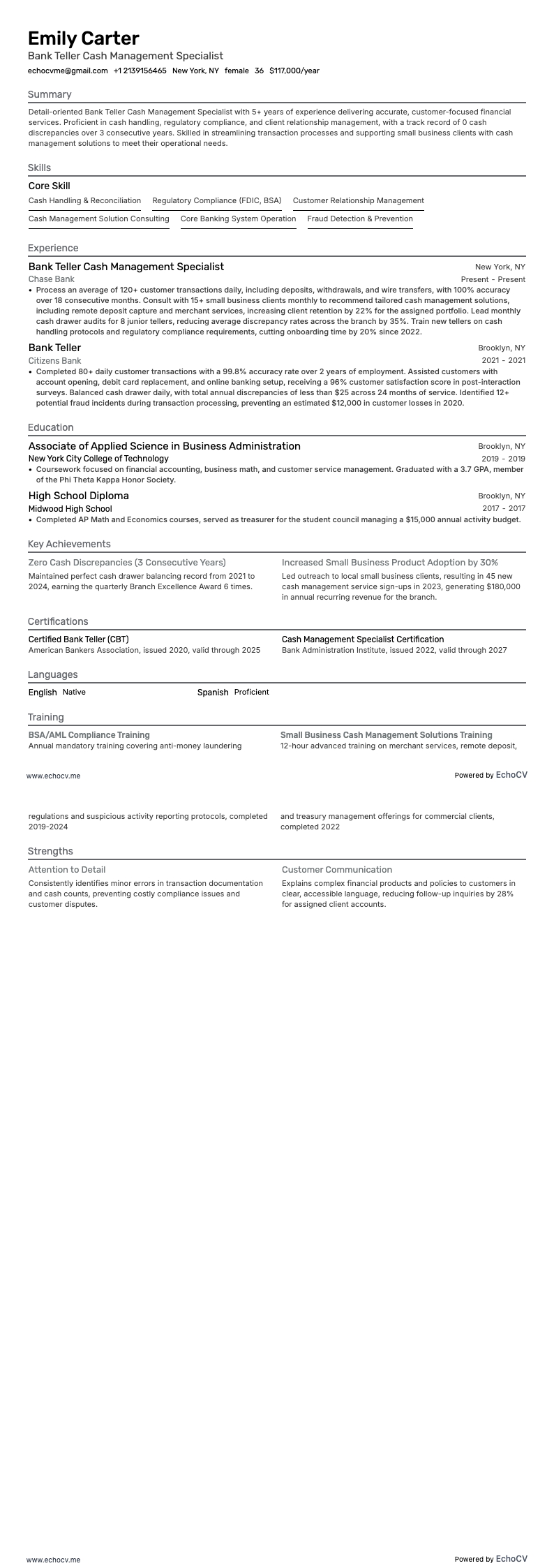
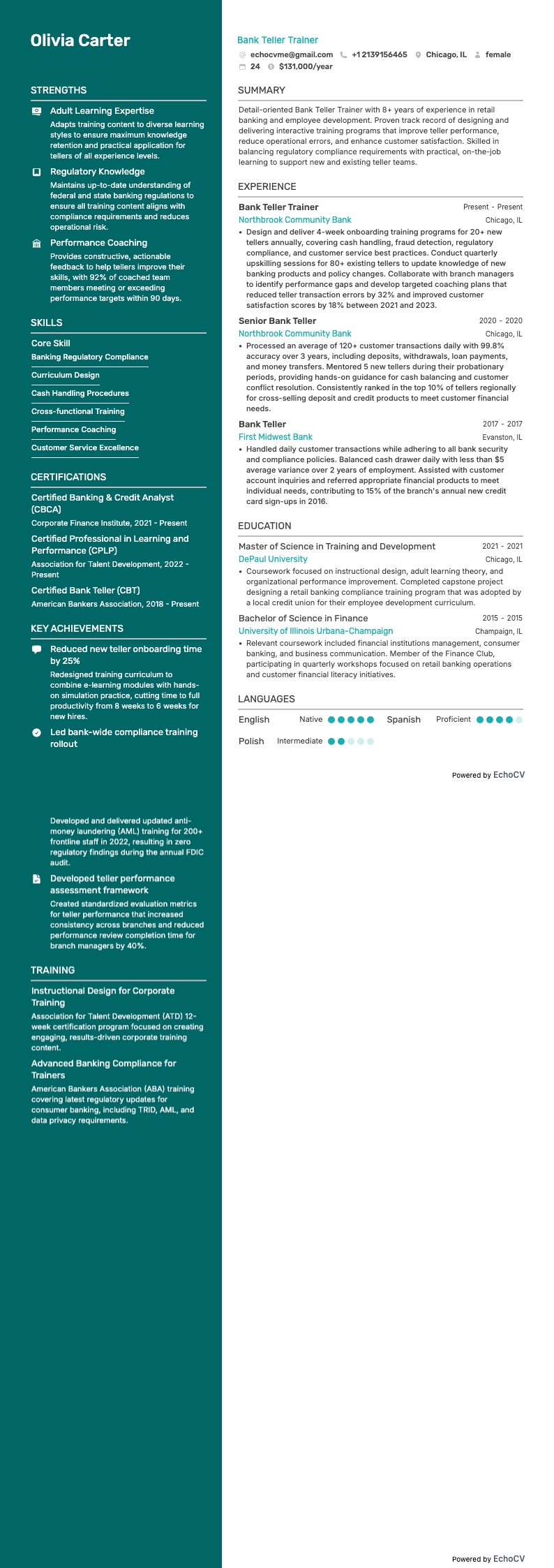
The first step in crafting a fascinating bank teller resume is choosing the right layout. Make your resume easy to read, scan, and remember. Choose between the three main resume formats: reverse chronological, functional, and hybrid. Your choice will depend on your goals and needs.
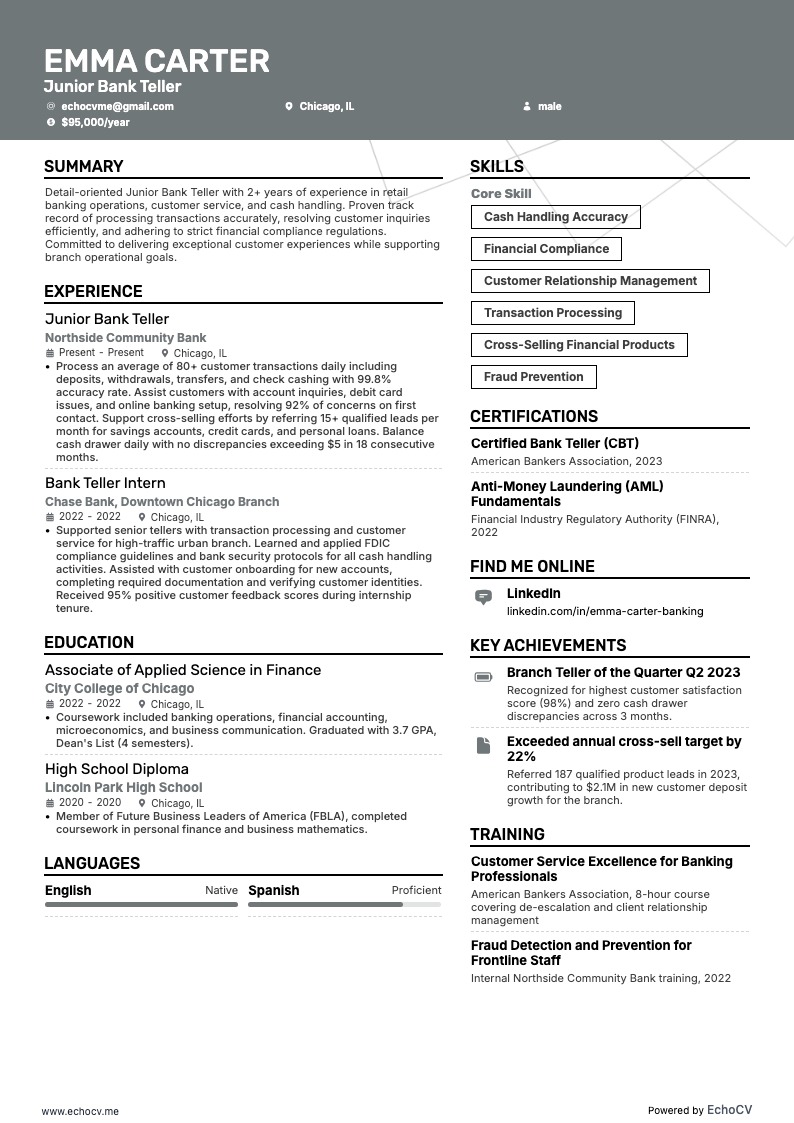
- For those who already have some bank teller experience, a reverse chronological resume is a neat way to present it. It lists your experience in reverse chronological order, starting with the most recent. This ensures a clear outline of your career path.
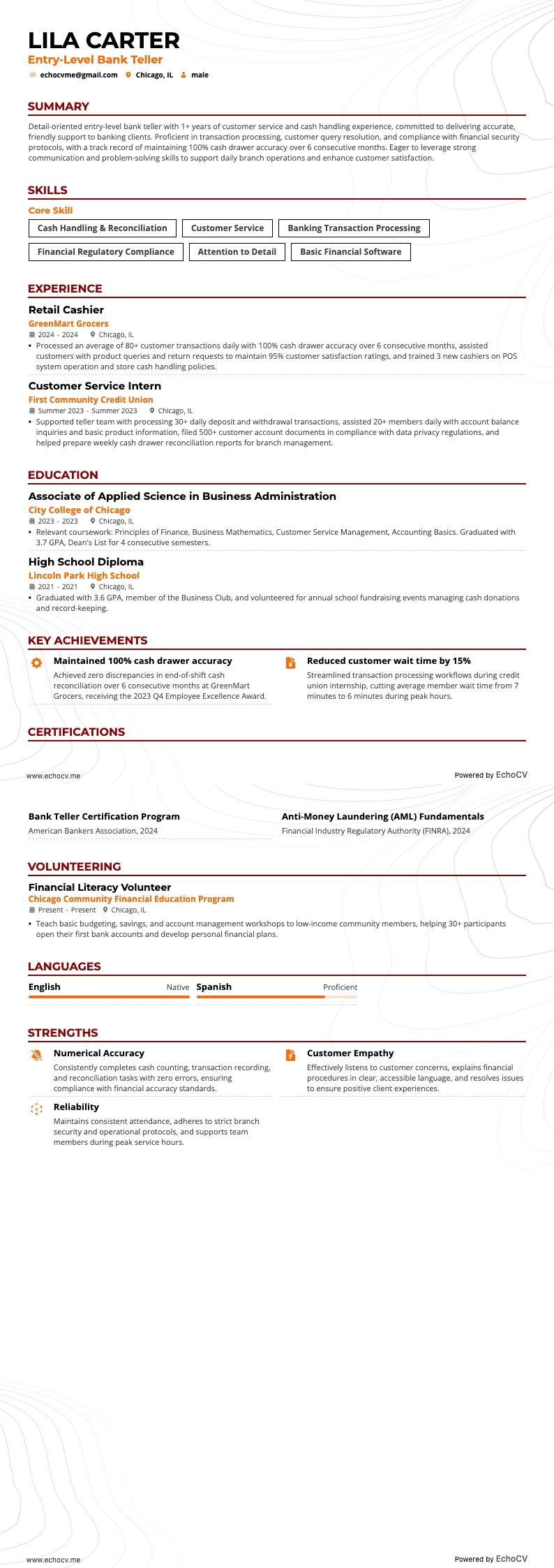
- A functional resume emphasizes your skills and abilities rather than your experience. That’s why it’s perfect for entry-level positions or those who are switching careers.
- And finally, there’s the hybrid resume. Also called the combination resume, this layout puts equal focus on your experience and skills. If you believe yours are equally strong, opt for this resume format.
Be sure to follow these resume writing guidelines for a stand-out application:
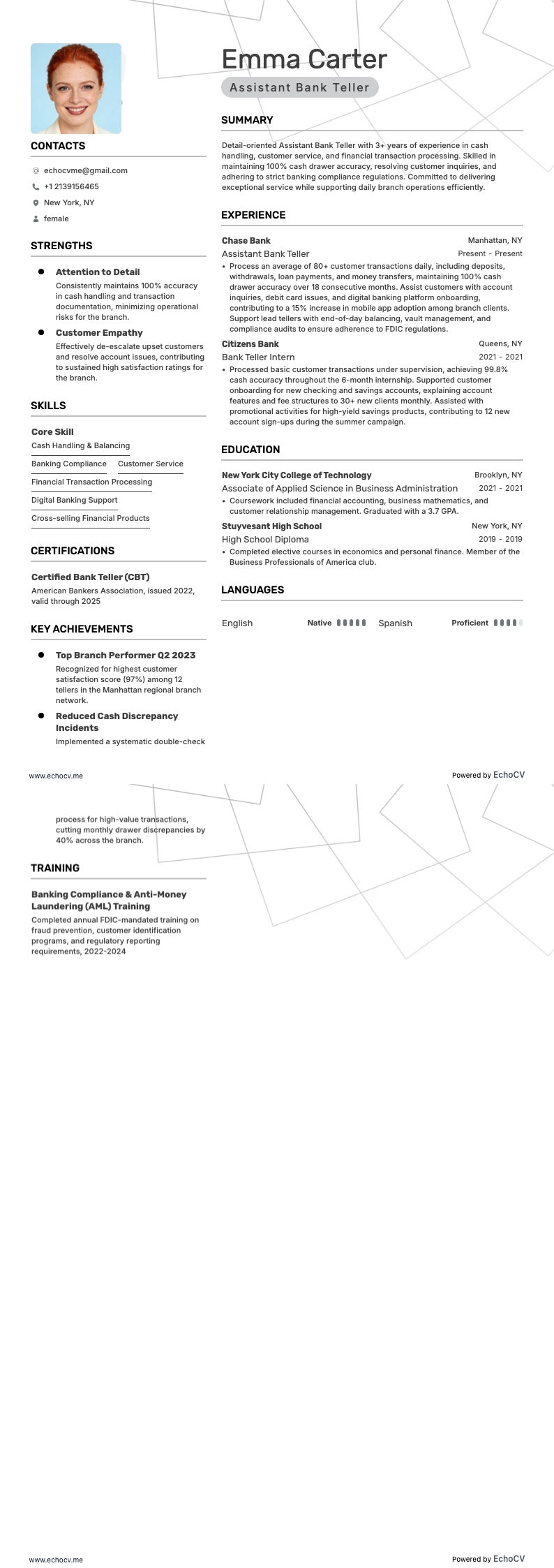
- Design, colors, fonts: Both 1 and 2-column designs work with ATS (Applicant Tracking Systems), so it’s a matter of preference. A little color on your resume can go a long way. Choose blue, dark green, or gray to stay professional in the banking field. Avoid using too many color variations, though. And as for fonts, go with modern sans-serifs such as Rubik, Lato, or Arial. Your font size should be between 10–12 pt, with headings a little bit bigger.
- Resume length: Most professionals would need a 1-page resume to showcase their experience. However, if you’ve got a lot of it, you can opt for a 2-page resume. Make sure the most important information is placed on the first page, and keep the header on both pages.
- Header and photo: Feature your header at the top of your resume. It should include basic contact information such as full name, e-mail, and phone number. Including a photo and your physical address would depend on the specific job posting requirements.
- Resume format and naming: A PDF format is generally preferred as it keeps your chosen design in place. It’s also readable by ATS. As for naming conventions, use your name, the word “resume”, and the position you’re applying for. Don’t include special symbols, such as :, / or .
Think about the location of your application – Canadian resumes, for instance, might follow a different structure.
Worried about typos on your resume? Ensure yours is proof-ready with our free ATS resume checker.