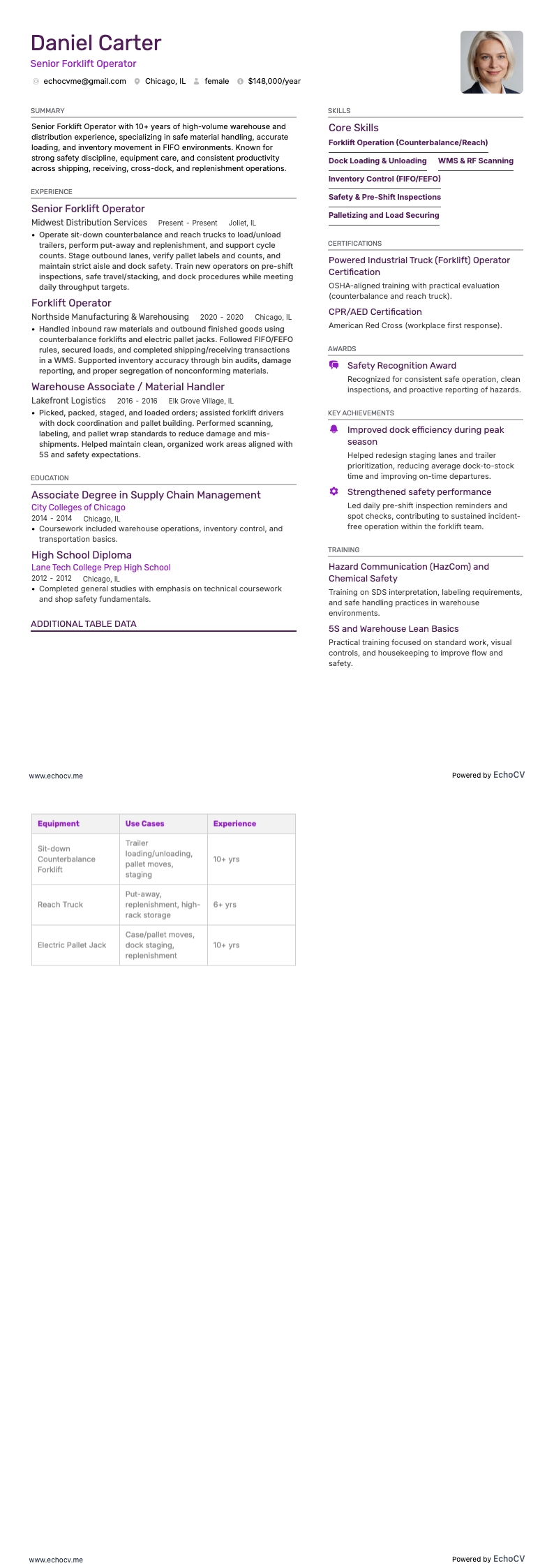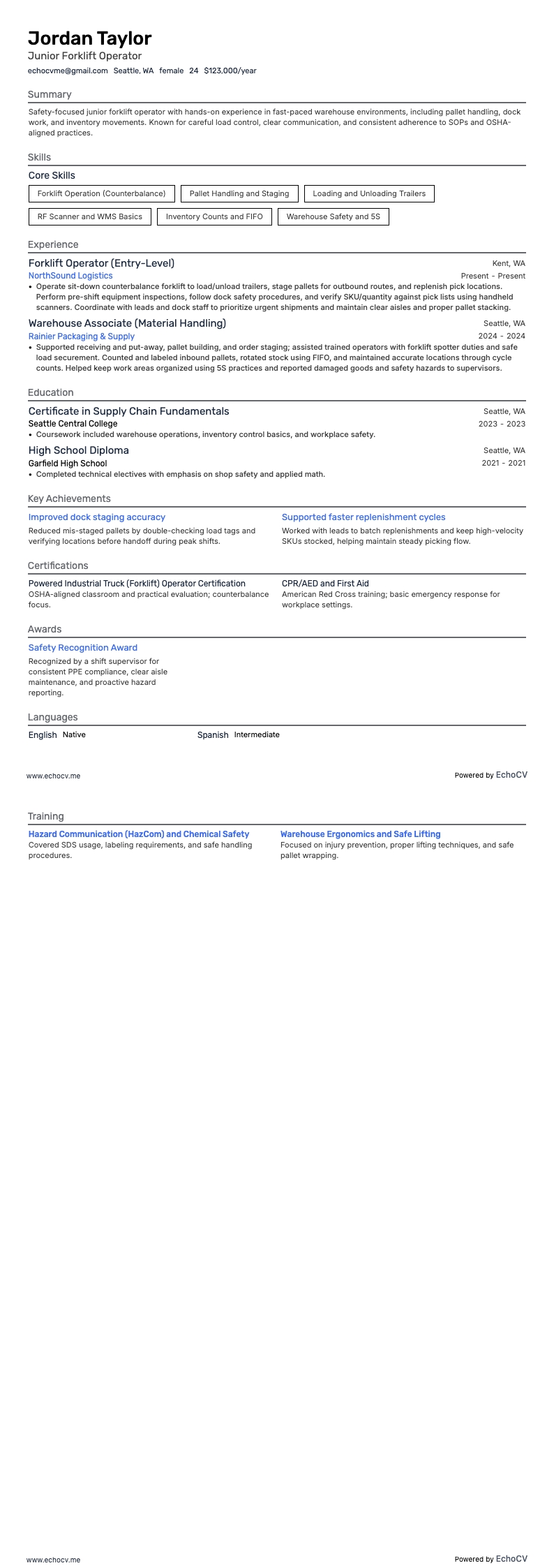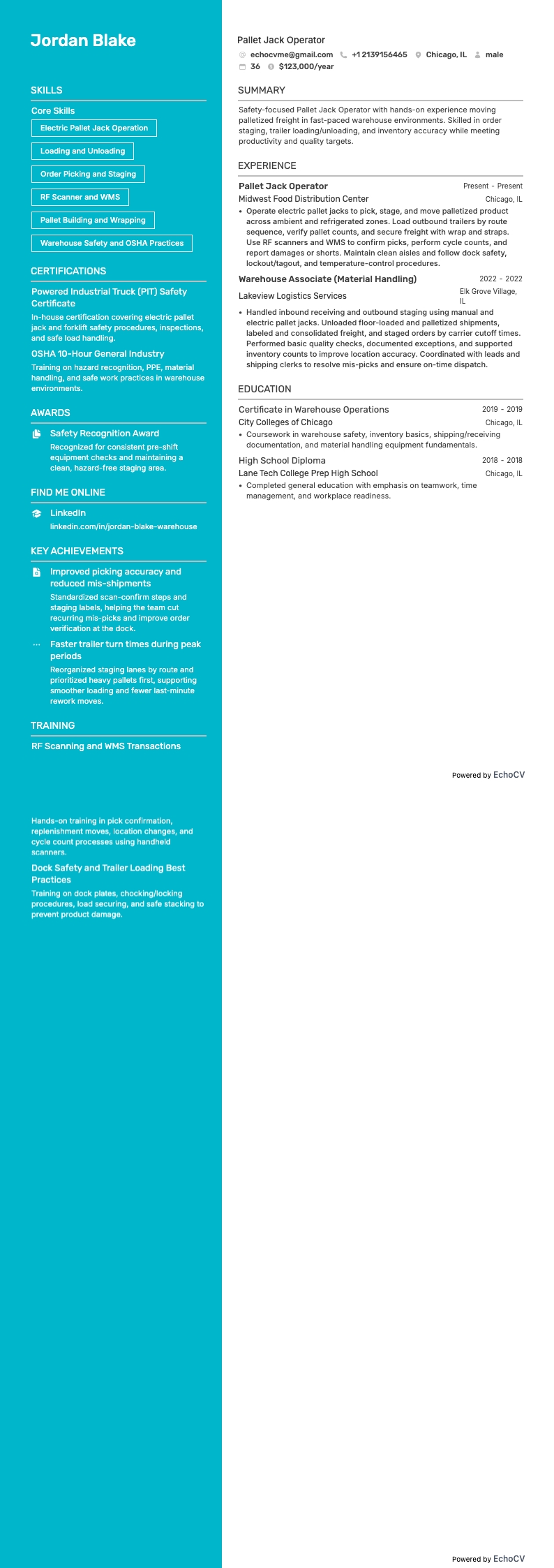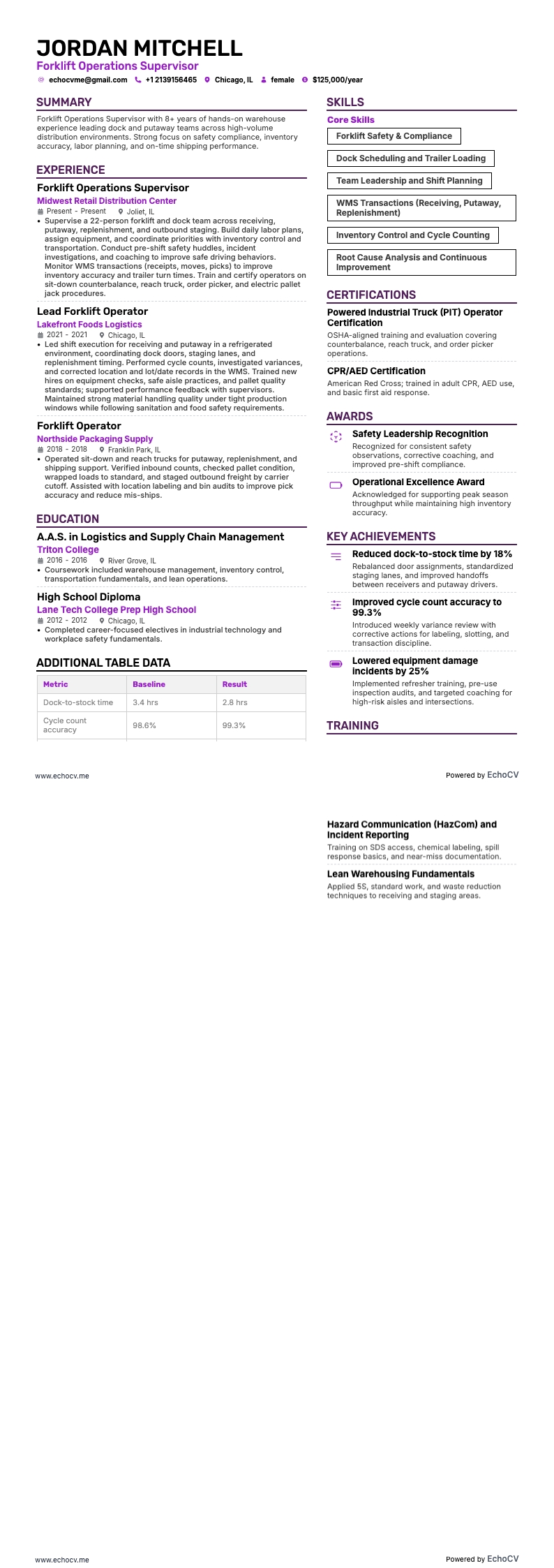
Now that you’ve set up the key parts of your resume, the next step is learning how to write your forklift operator resume experience so each role supports the sections you’ve included.
How to write your forklift operator resume experience
Your work experience section should highlight the warehouse, logistics, or manufacturing work you've completed—focusing on the equipment you operated, the safety protocols you followed, and the measurable results you produced. Hiring managers prioritize demonstrated impact over descriptive task lists, so every bullet should connect your daily operations to outcomes like reduced damage rates, faster turnaround times, or improved inventory accuracy.
Each entry should include:
- Job title
- Company and location (or remote)
- Dates of employment (month and year)
Three to five concise bullet points showing what you owned, how you executed, and what outcomes you delivered:
- Ownership scope: the warehouse zones, inventory categories, loading docks, equipment fleets, or material handling processes you were directly accountable for as a forklift operator.
- Execution approach: the forklift types, warehouse management systems, RF scanners, safety inspection checklists, or load-planning methods you used to carry out daily operations and make real-time decisions.
- Value improved: changes to order accuracy, load turnaround speed, product damage rates, workplace safety compliance, equipment uptime, or storage utilization that resulted from your work.
- Collaboration context: how you coordinated with shipping clerks, receiving teams, inventory managers, quality control staff, or external carriers to keep materials moving through the supply chain without delays.
- Impact delivered: outcomes tied to throughput volume, accident-free streaks, on-time shipment rates, cost savings from reduced breakage, or operational improvements—expressed as results rather than activities.