How can I show salary readiness without listing numbers?
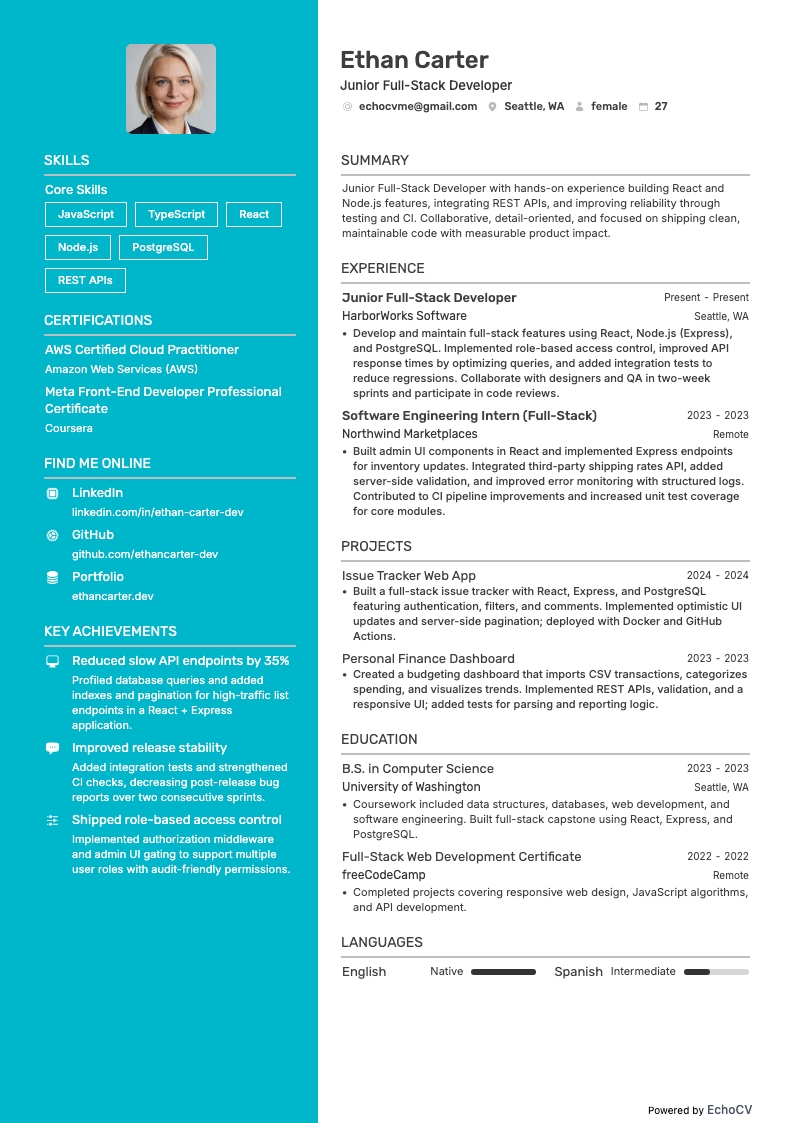
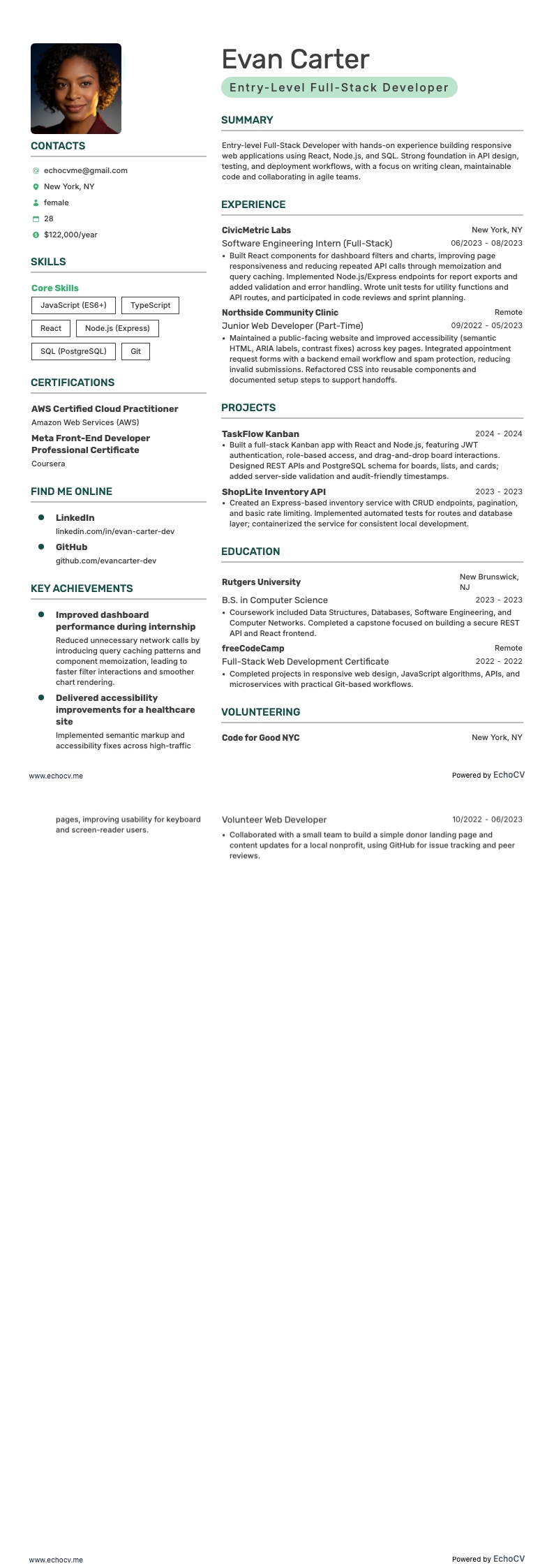
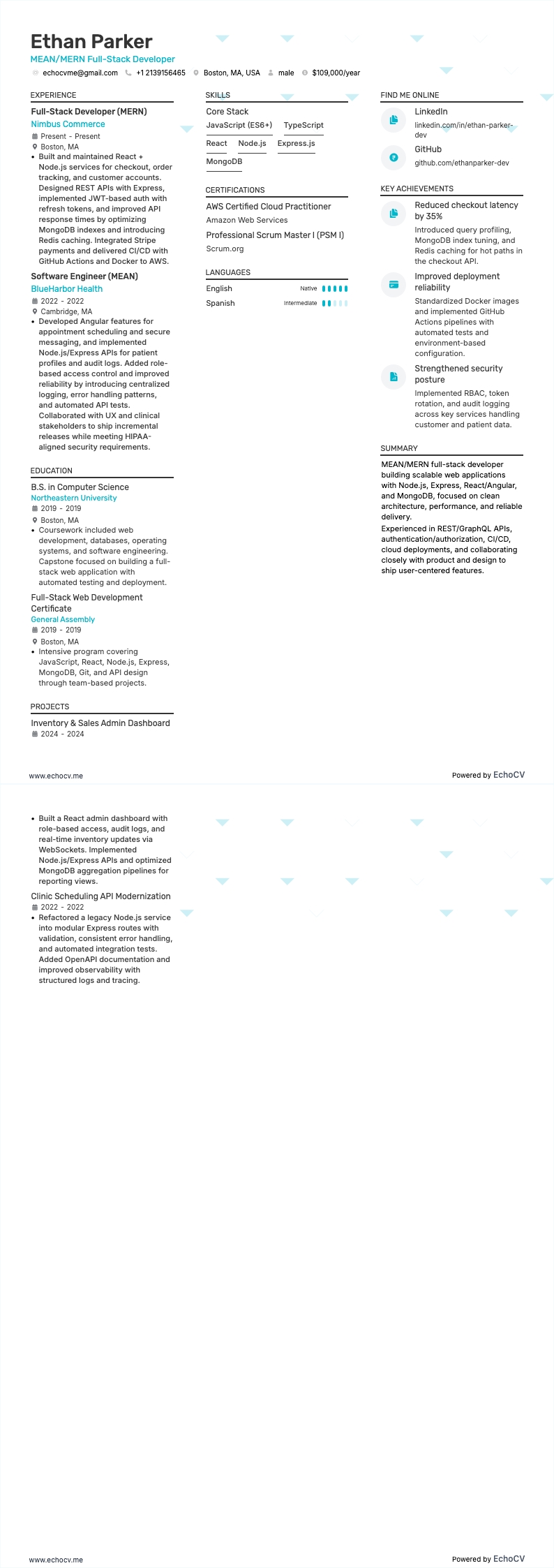
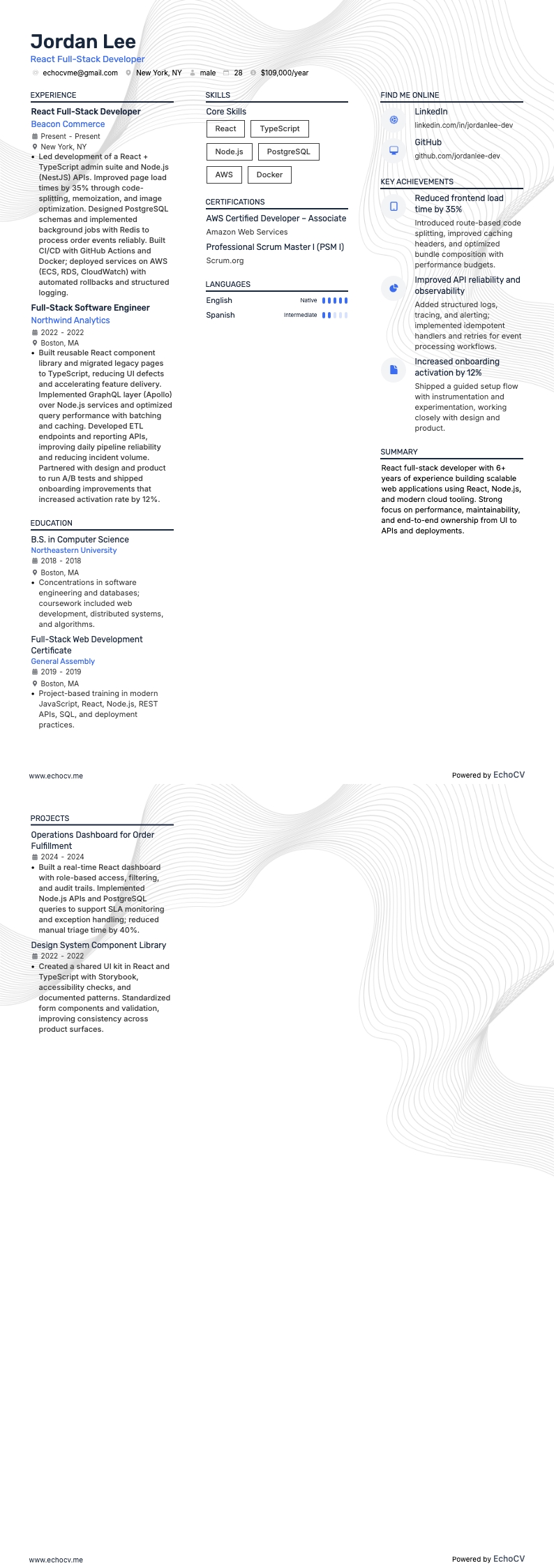
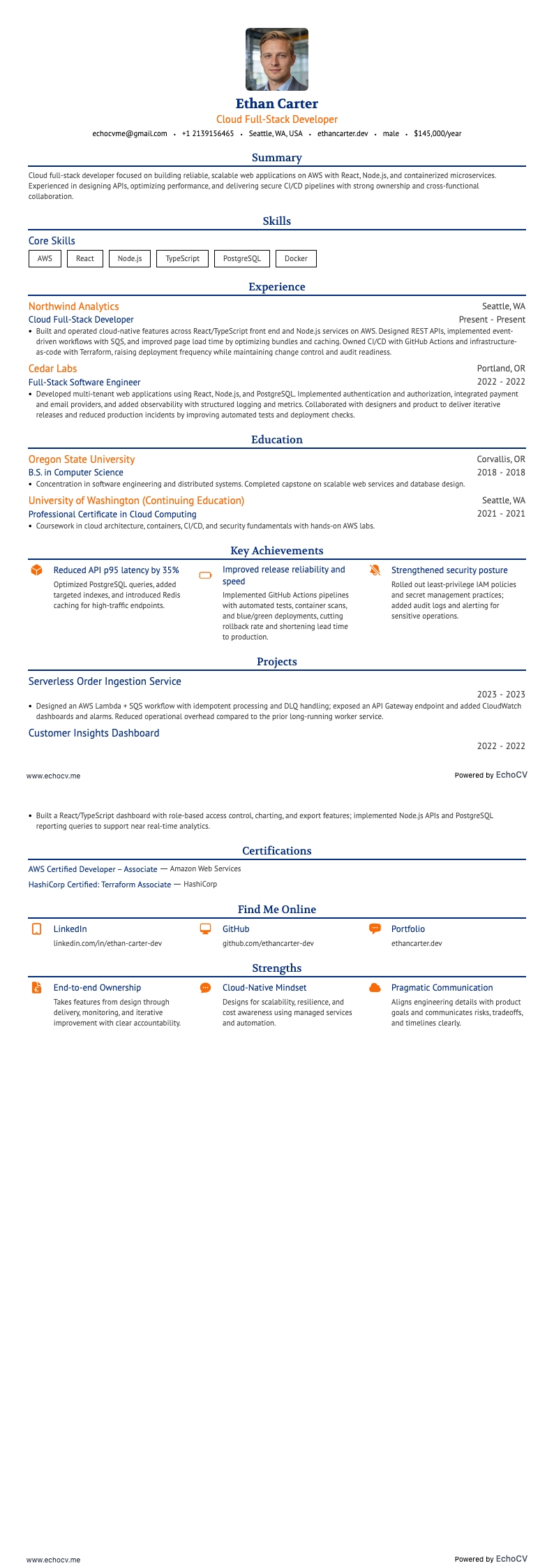
You can hint at your market value by showcasing certifications, quantified achievements, and experience with high-demand stacks (React, Node.js, AWS). Recruiters know what those skills are worth.
Do full-stack developers need certifications to land a role?
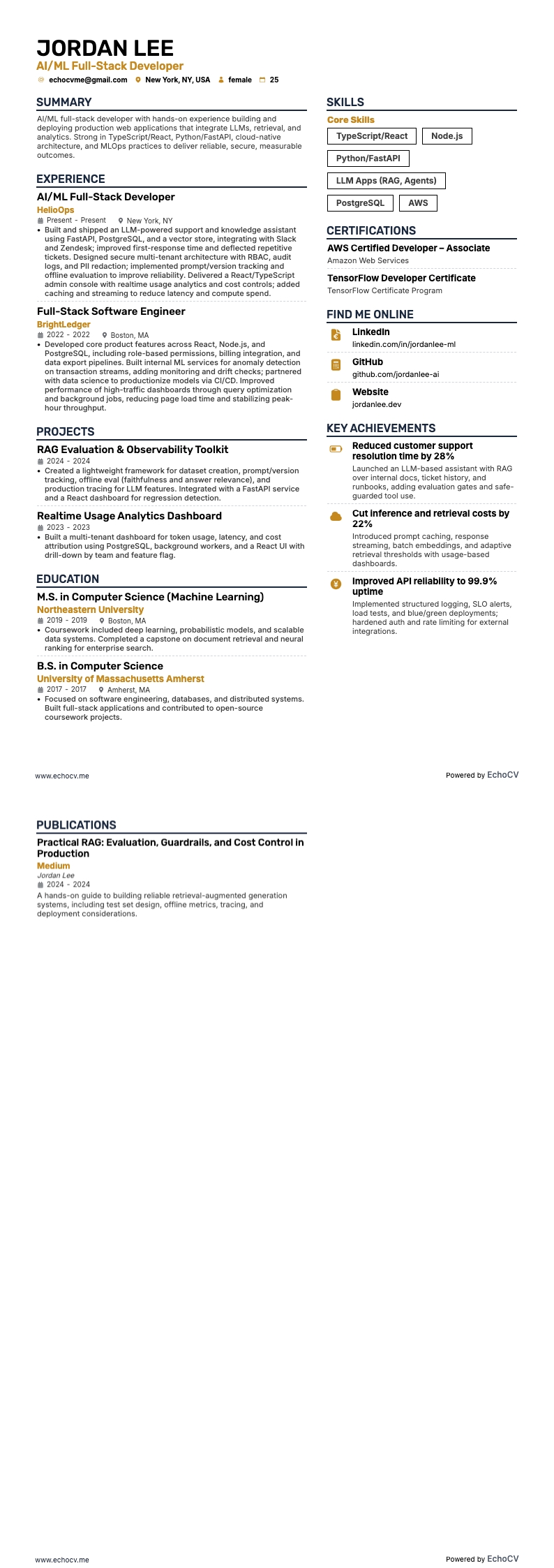
Not always, but relevant ones (AWS, Kubernetes, Node.js) can help you stand out, especially if you’re early in your career or moving into cloud-heavy environments.
How can I show career progression as a developer?
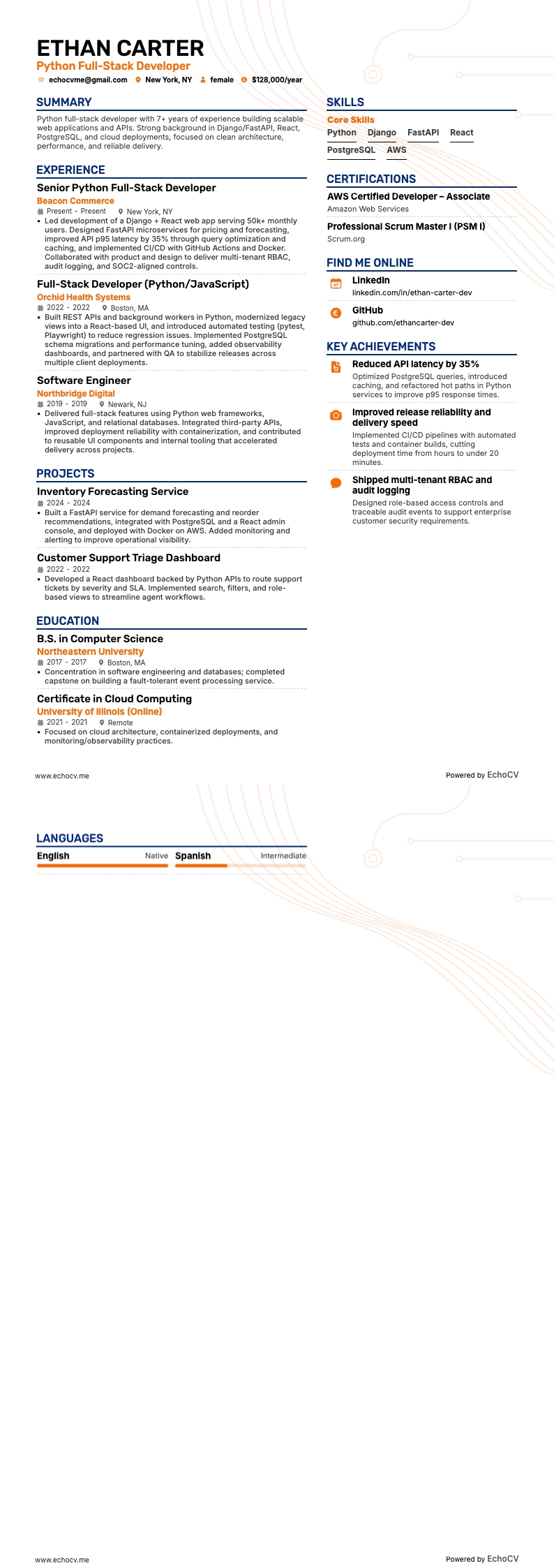
Even if your titles don’t change much, emphasize growing project scope, new frameworks mastered, or added leadership responsibilities like mentoring juniors.
Is it okay to list GitHub or portfolio projects as experience?
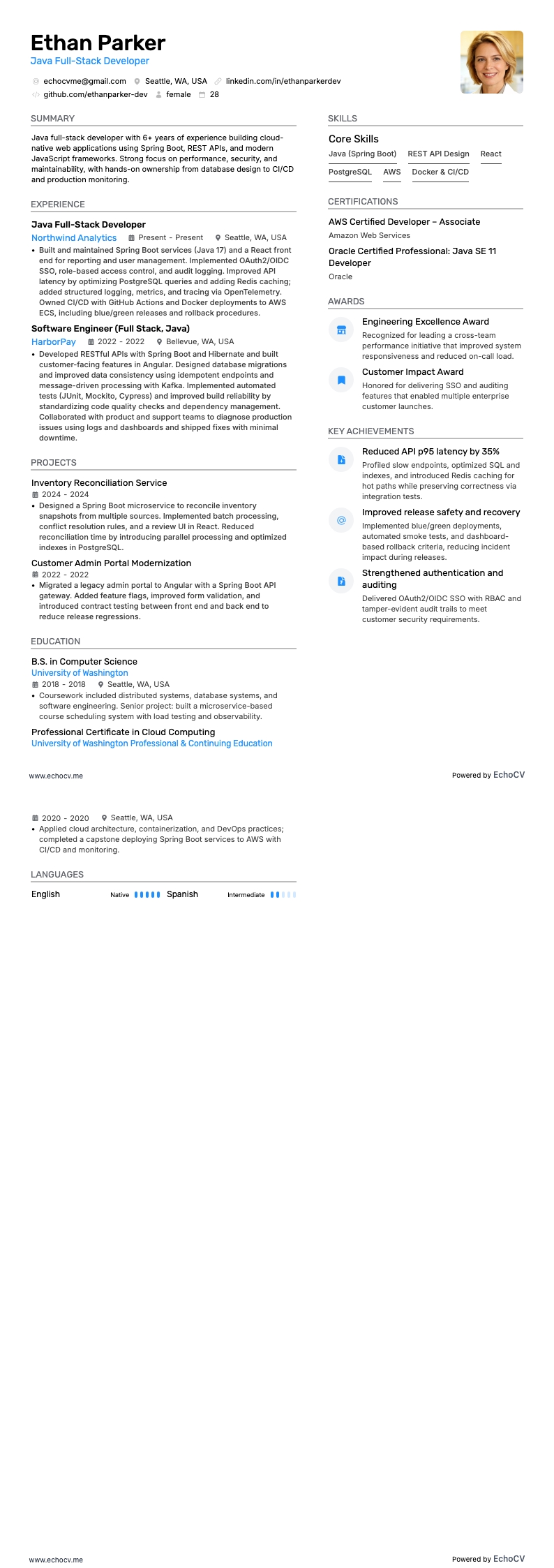
Absolutely—if you’re short on professional roles, projects are your proof of skill. Just make sure they’re polished, documented, and relevant to the stack the company uses.
Should I include freelance work on my resume?
Yes, if it’s relevant. A freelance project that demonstrates end-to-end development, collaboration, or deployment at scale can be just as valuable as a formal role.
How do I show remote collaboration skills?
Highlight tools (Slack, Jira, GitHub, Zoom) and results (delivered features across distributed teams, coordinated sprints in different time zones). Recruiters want proof you can thrive in a modern team.
In conclusion
Your resume isn’t just a catalog of frameworks and jobs—it’s proof you can take an idea and ship it into the world. Show the stack, show the impact, and don’t let your results hide behind jargon. Whether you’re new to the field or scaling into senior roles, the goal is the same—make it impossible for a recruiter to miss what you bring to the table.