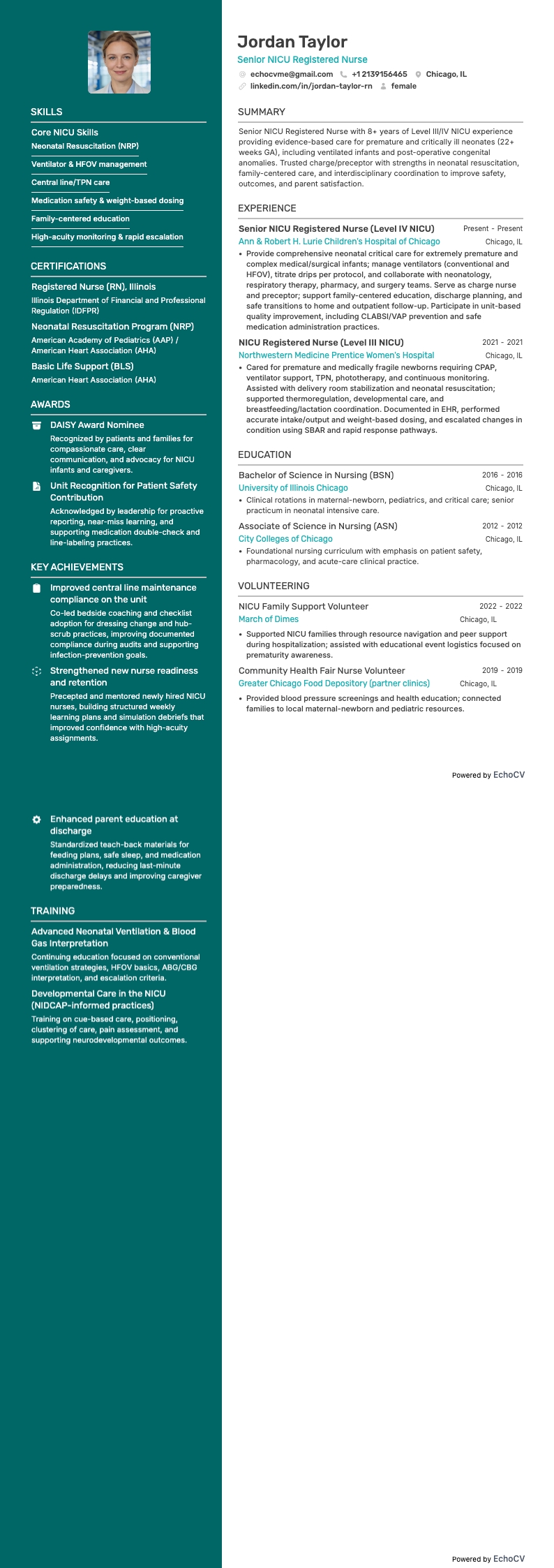
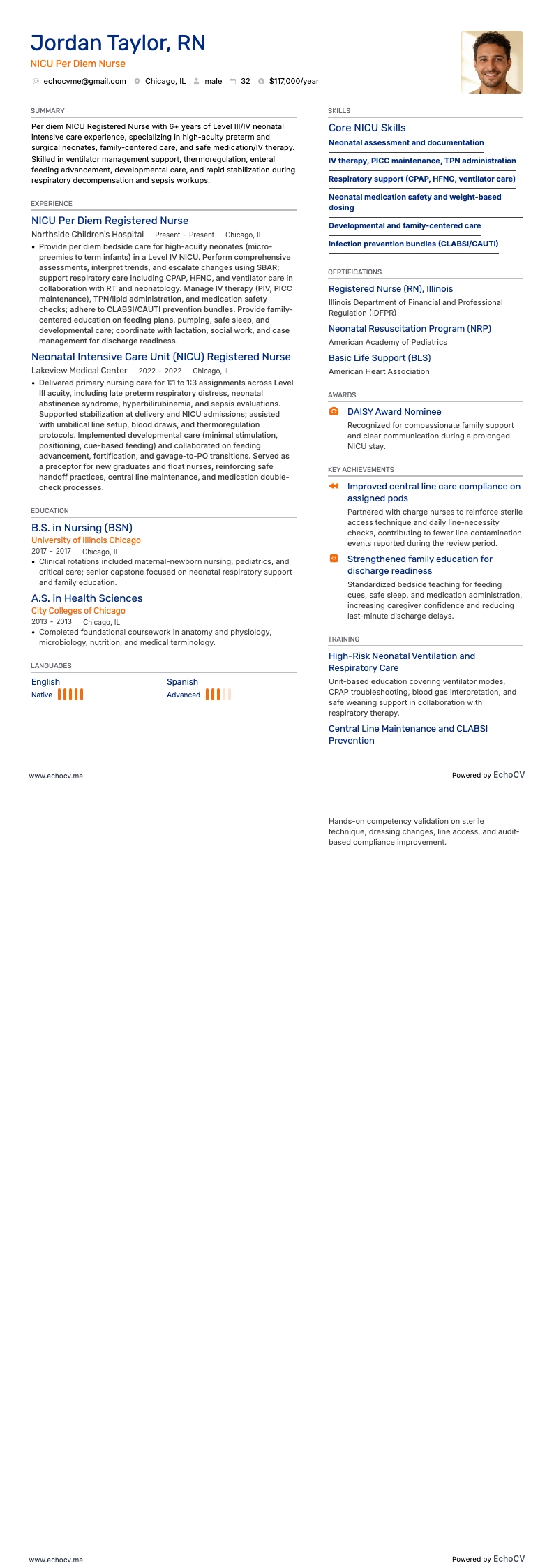
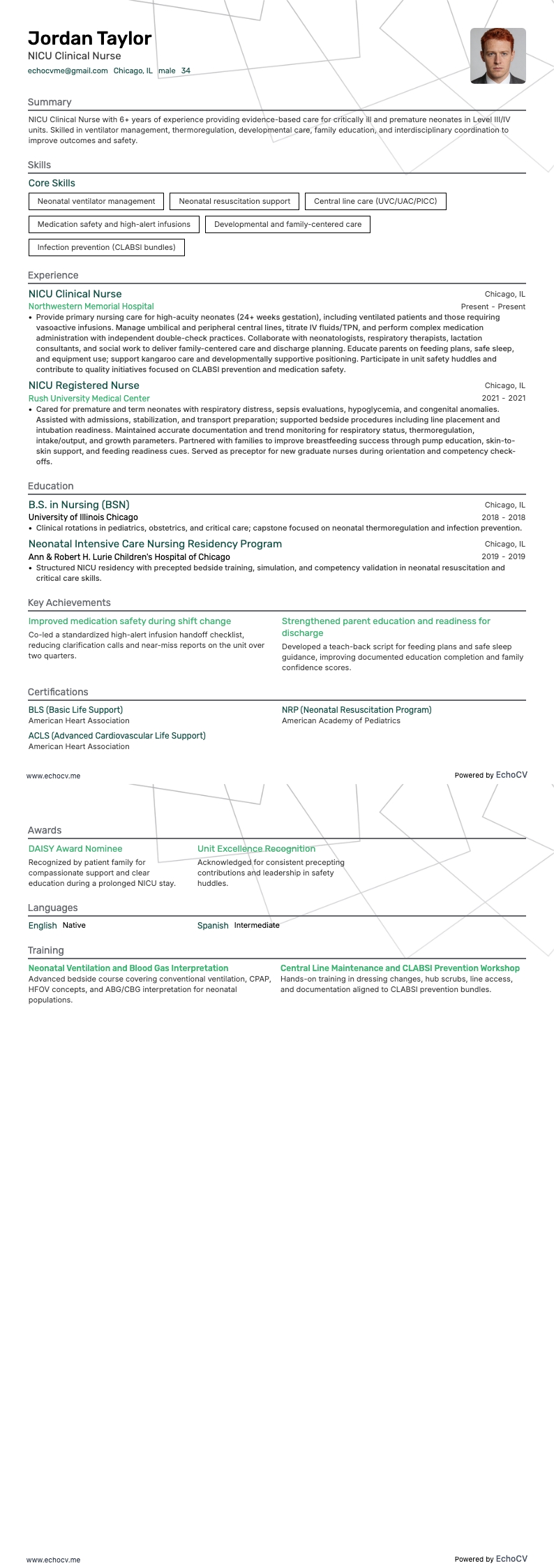
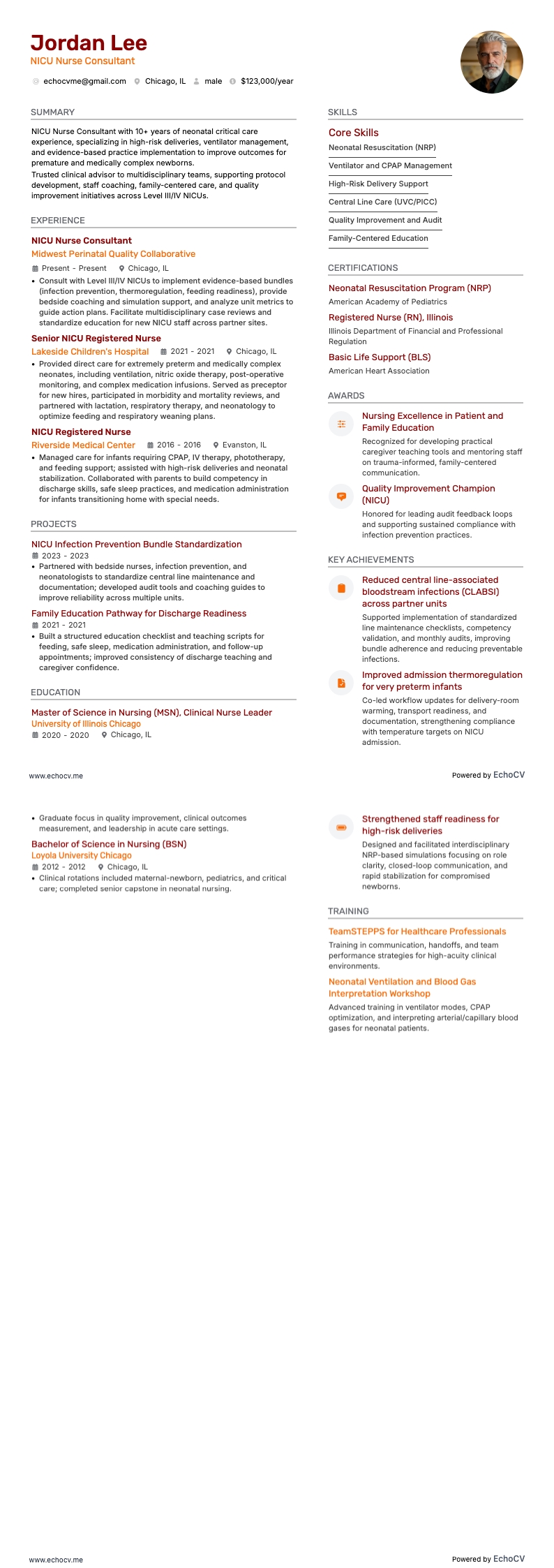
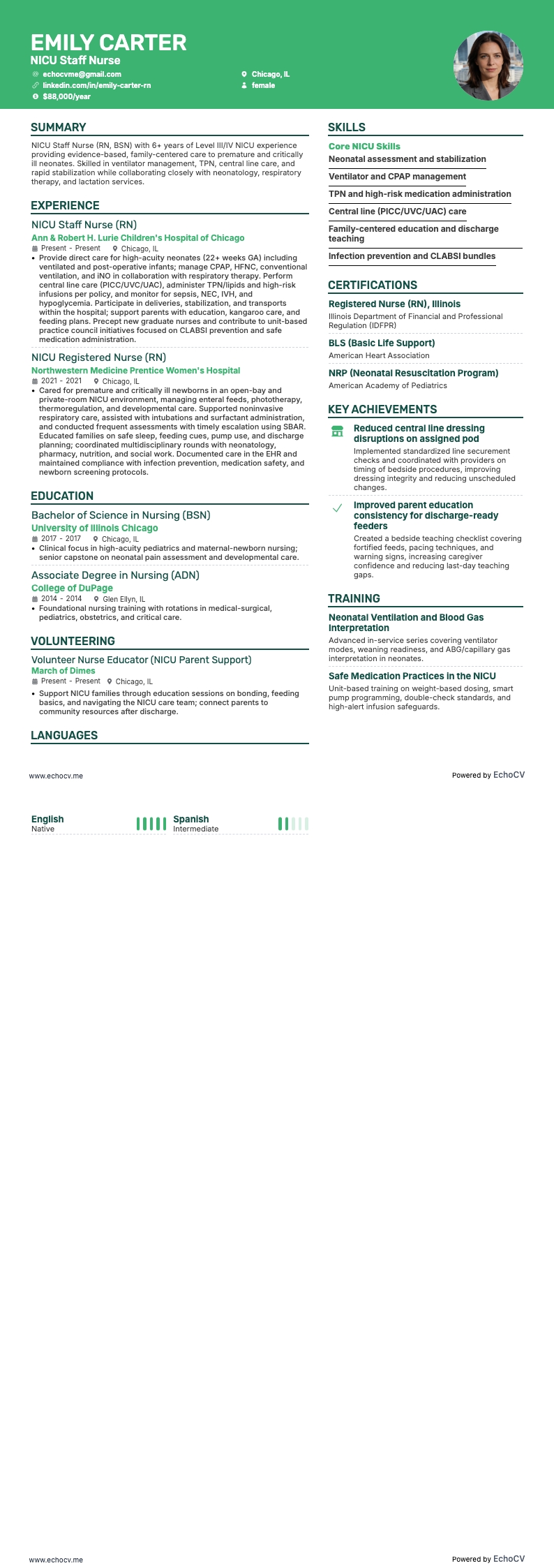
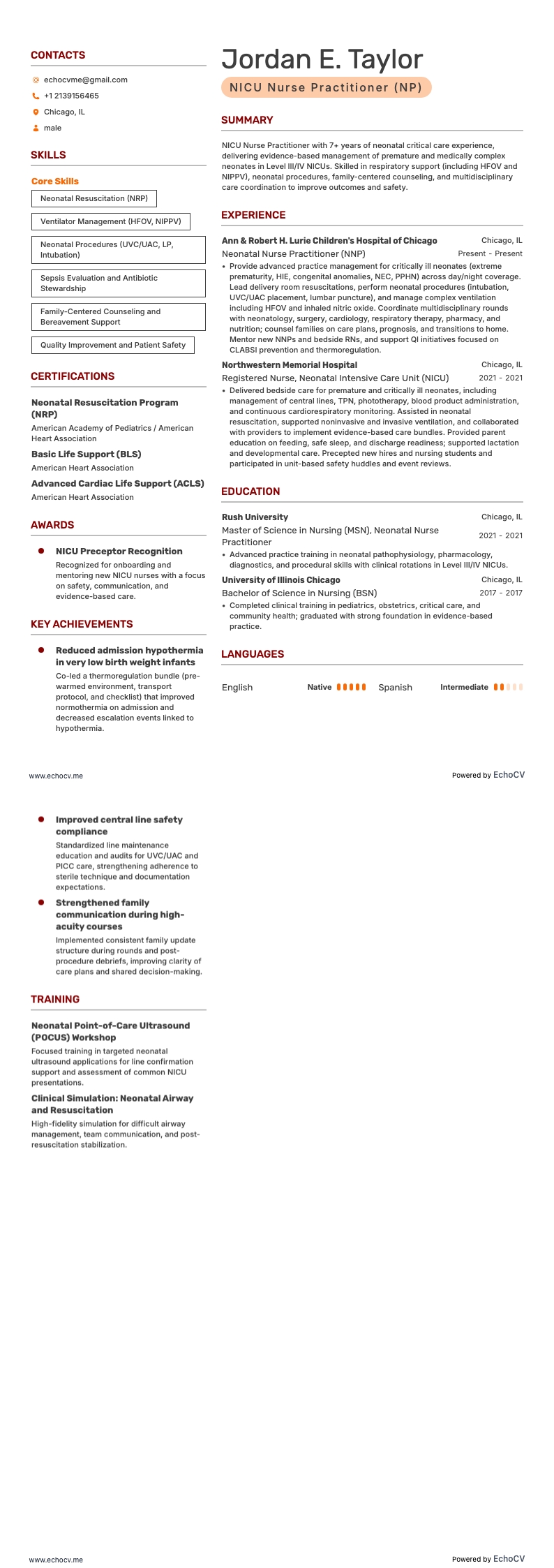
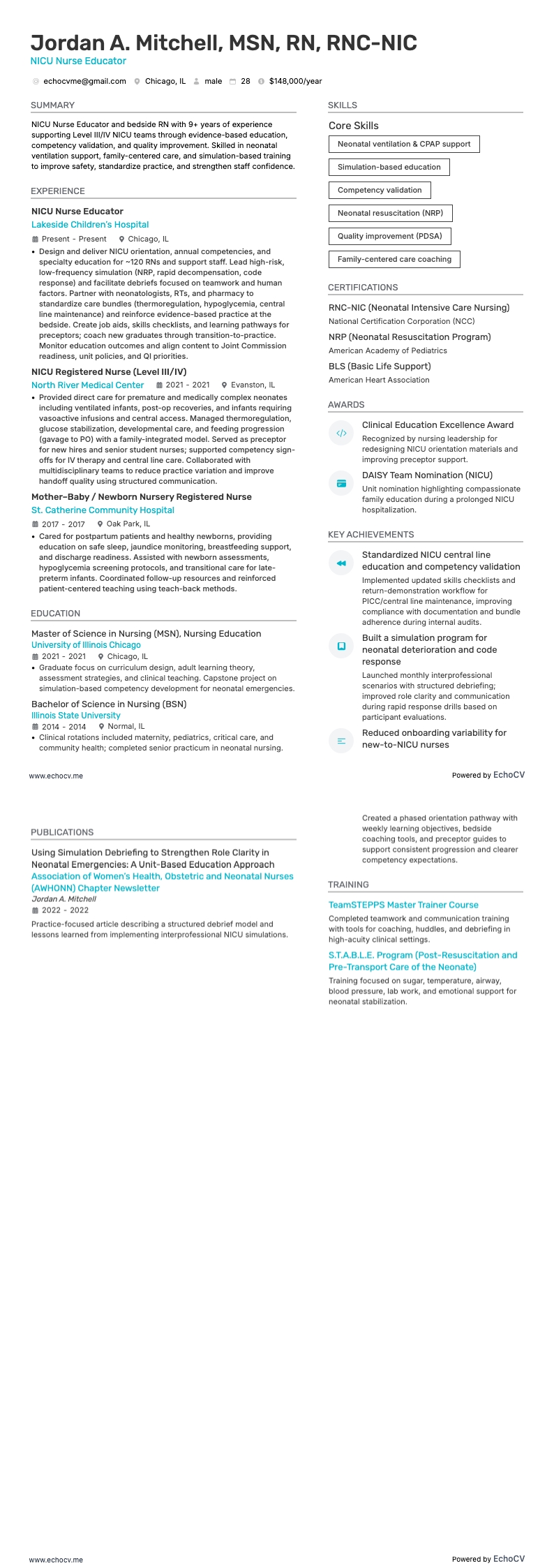
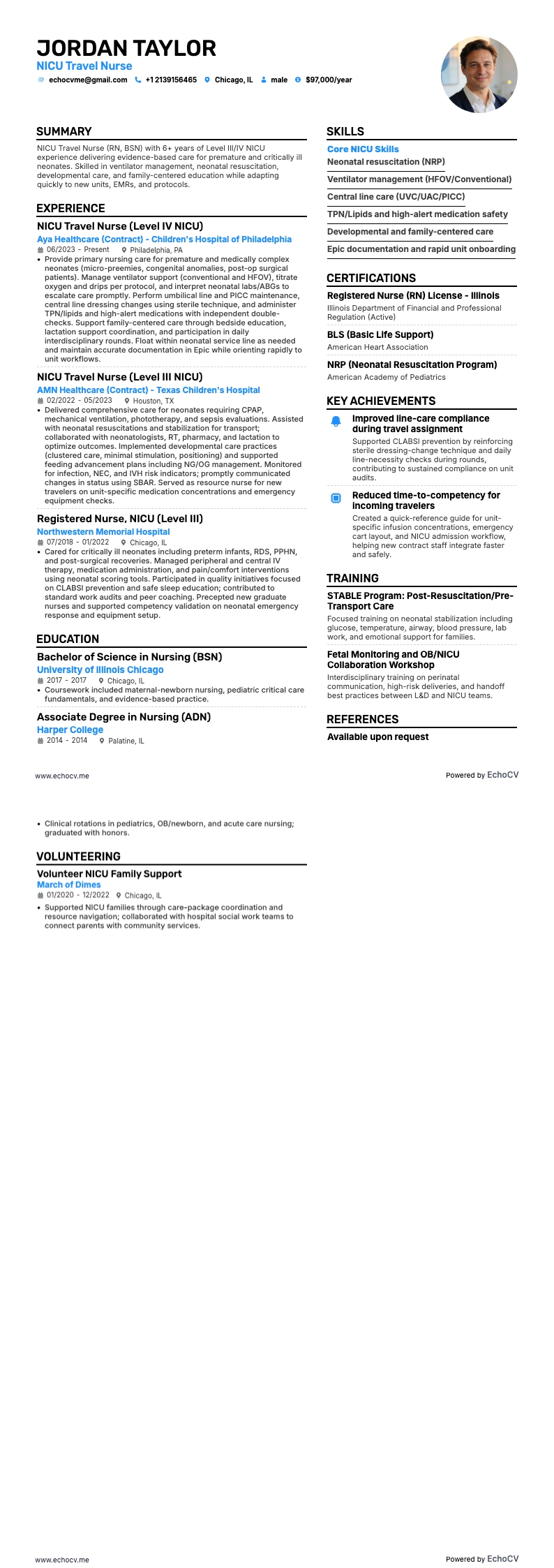
Writing a NICU nurse resume without any experience
Yes, it's possible to get a job as a NICU (Neonatal Intensive Care Unit) nurse without previous experience specifically in a NICU, though it may be challenging. Employers often look for nurses with some level of experience in pediatrics, neonatal care, or general nursing experience due to the specialized and sensitive nature of caring for newborns, especially those who are ill or premature.
However, here are a few steps that can improve your chances:
- Education: Ensure you have a solid educational background, such as a Bachelor of Science in Nursing (BSN). Some employers may accept an Associate Degree in Nursing (ADN), but a BSN is often preferred.
- Licensure: Obtain your Registered Nurse (RN) license by passing the NCLEX-RN examination.
- Certifications: Acquire certifications relevant to neonatal care, even as a new graduate. For example, the Neonatal Resuscitation Program (NRP) certification is highly recommended.
- Internships or clinical rotations: While in nursing school, seek out internships or clinical rotations in a NICU or pediatrics to gain exposure and experience, even if it's not paid work.
- Networking: Connect with professionals working in NICUs through job fairs, professional nursing associations, or through your school's alumni network to learn about opportunities and get advice.
- Continuing education: Be open to continuing education opportunities and additional certifications once you're employed, to further demonstrate your commitment and expertise in neonatal care.
Employers in NICUs understand that every nurse has to start somewhere, and some are willing to invest in training and mentoring enthusiastic, new graduates who demonstrate a strong interest and foundational skills in neonatal care.
Having a proper skills section is one way to show that. Let’s take a look at some of the best ones to have on your resume.
How to list your hard and soft skills on your resume
Listing both hard and soft skills on a NICU nurse resume is crucial. Hard skills demonstrate technical competence and specialized knowledge, while soft skills showcase the ability to communicate effectively, work as part of a team, and handle the emotional demands of working with critically ill infants and their families.
Let’s first go through which hard skills are best for your resume: