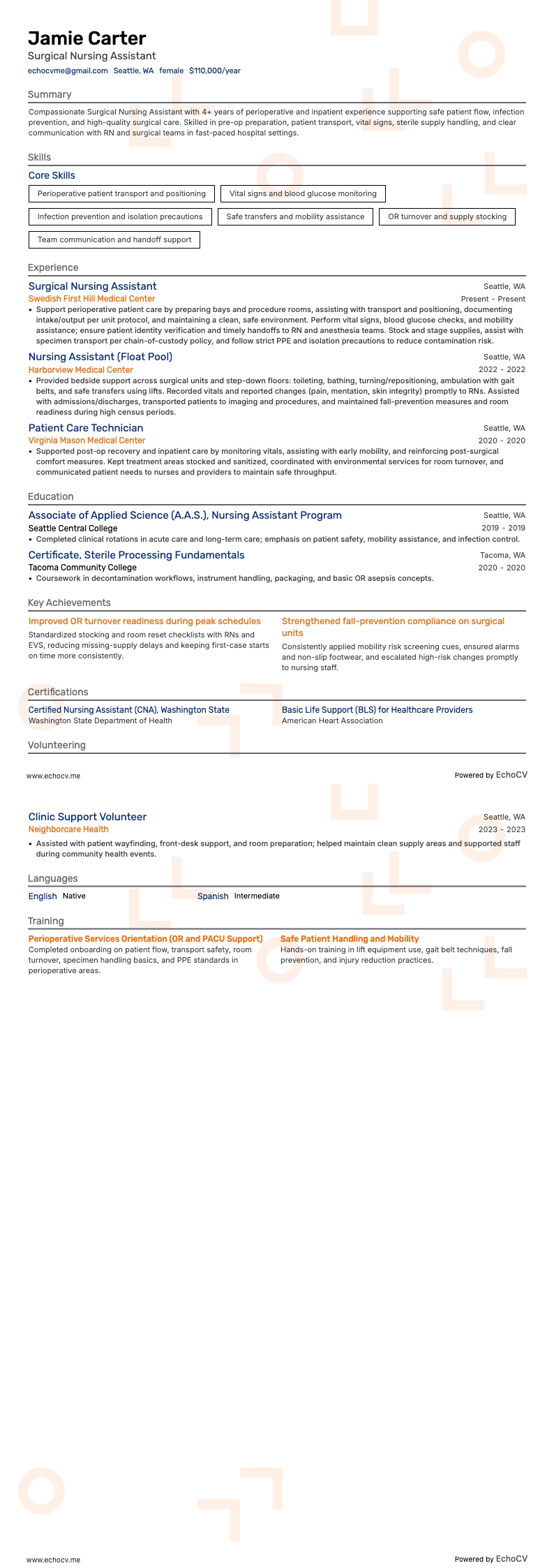
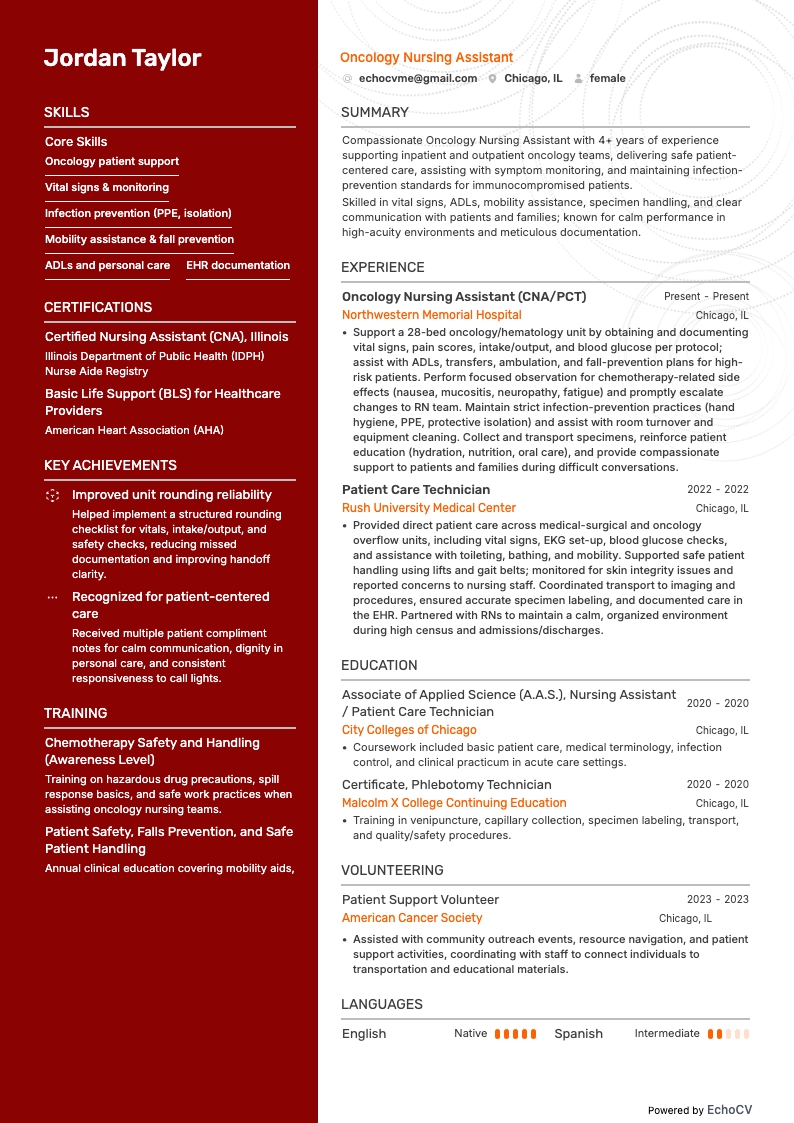
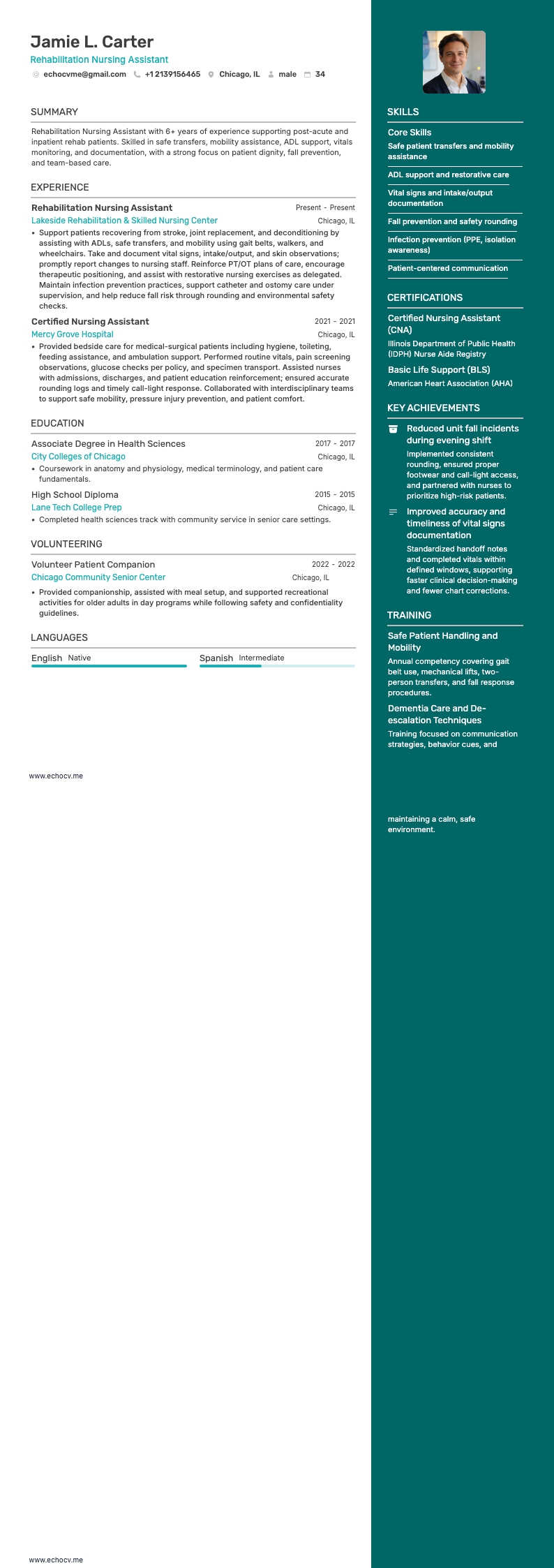
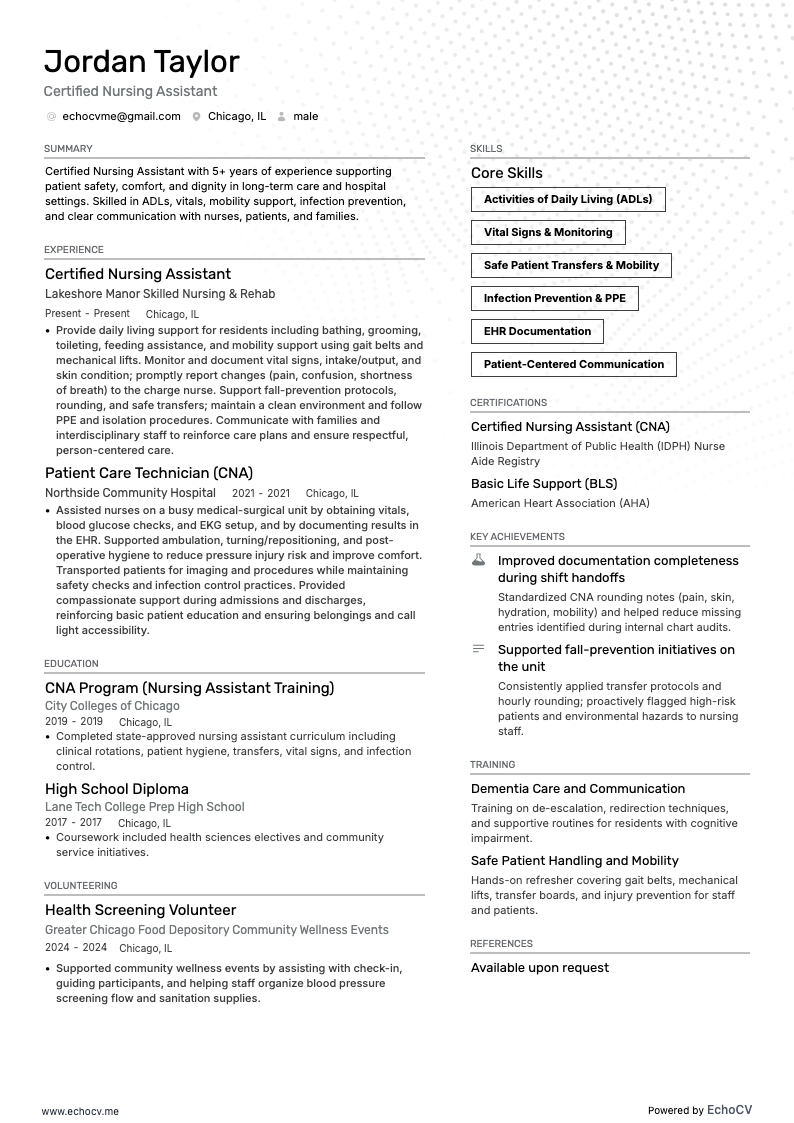
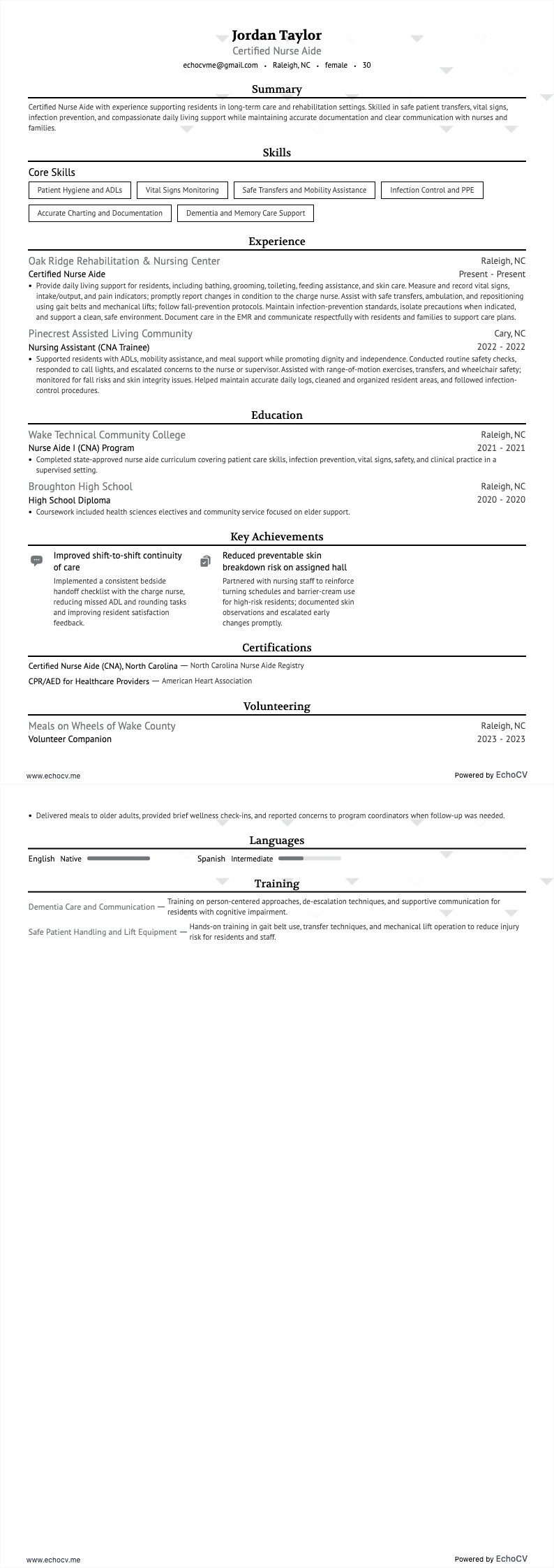
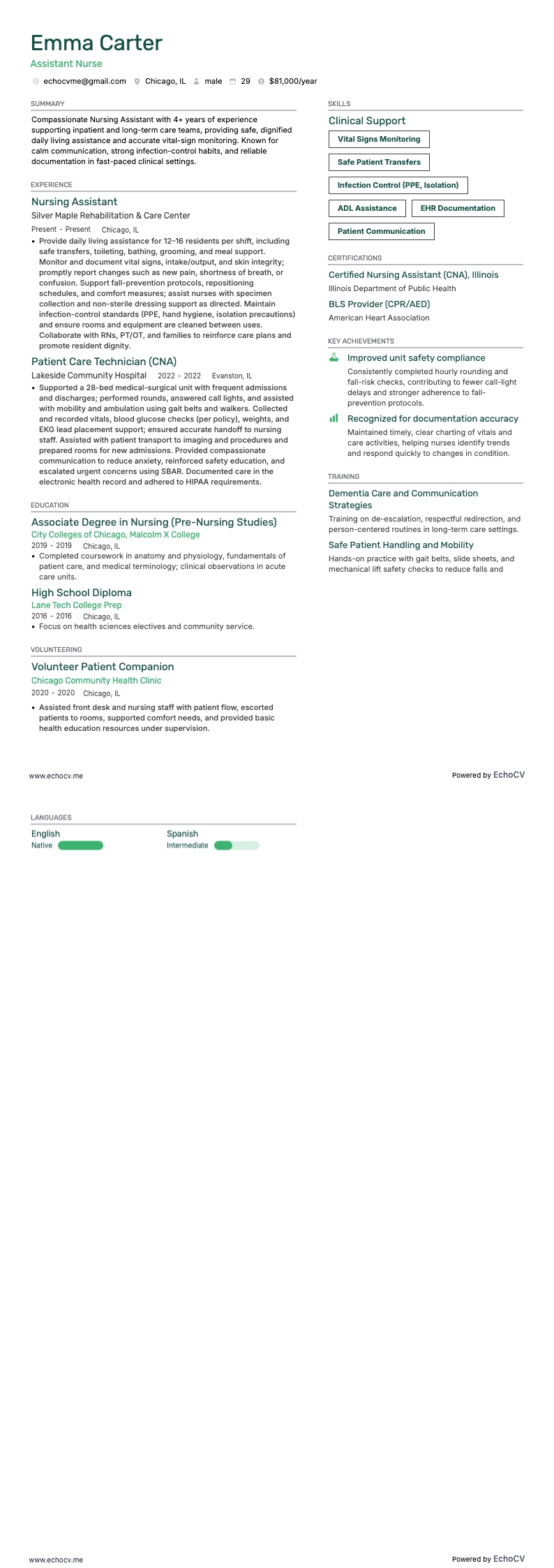
Many nursing homes and facilities found themselves severely understaffed, following the release of new federal requirements. This means that numerous nursing positions will be opening in the coming months.
If you’re passionate about helping others improve their health and are proficient in operating a variety of medical equipment, this is your chance to start your career as a nursing assistant.
In this guide, we’ll go over:
- How to choose the best resume format according to your level of experience;
- What to include in your resume header to ensure recruiters understand your qualifications before they review your application;
- When and how to craft a professional objective or summary;
- How to build an impactful and ATS-compatible (Applicant Tracking System) experience section;
- How to showcase your professional qualifications and certifications;
- Real nursing assistant resume examples and the writing traps you must avoid.
Consider taking a look at other nursing-related guides we have:
How to Format a Nursing Assistant Resume
Writing a good shift report or an outstanding nursing assistant resume both hinges on having excellent communication skills and being able to relay important information succinctly.
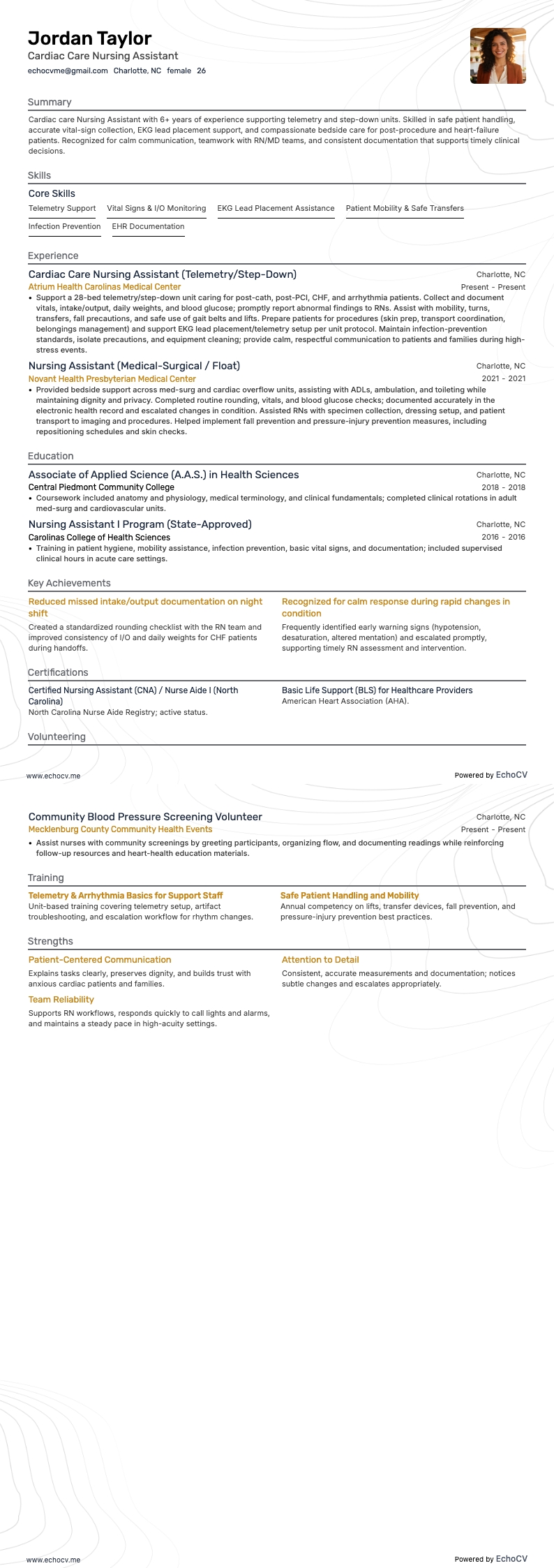
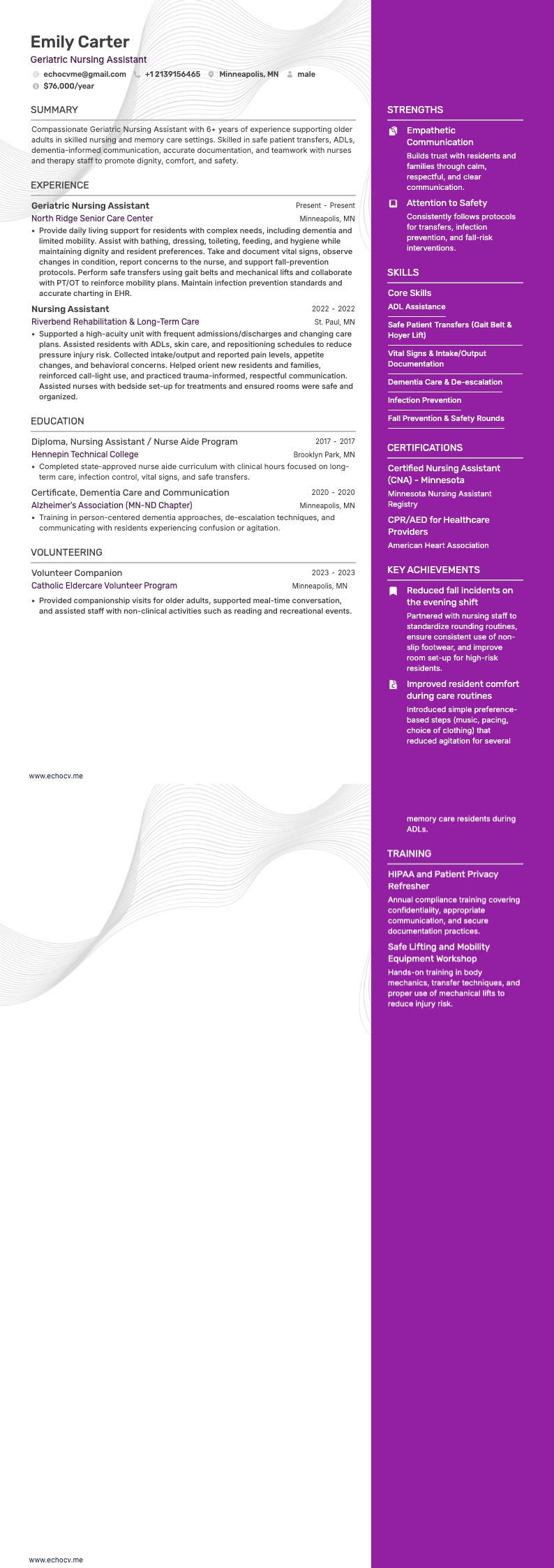
The first step in showcasing your skills and expertise properly is choosing a suitable resume format. Working with the right framework will guarantee you’re making the most out of your resume because you’re highlighting all the relevant know-how you have to offer.
Let’s review the three most popular layouts and when to use them.
Reverse-chronological resume format
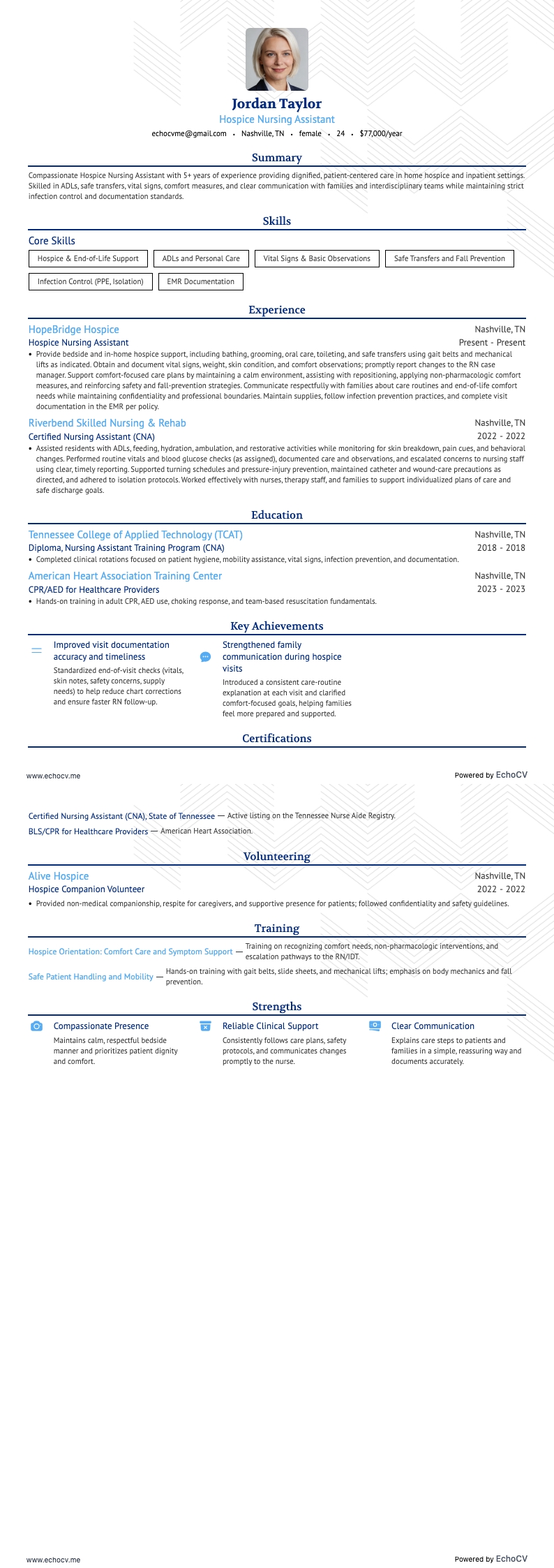
If you’re a tenured nursing assistant with plenty of experience in a variety of health environments, pick the reverse-chronological resume format. Hiring managers are keen to understand how much of your experience is relevant to the offered role to determine the range of responsibilities you can potentially take on.
It’s worth noting that because of the heavy focus on prior positions, the reverse-chronological resume format makes career gaps more visible. So, if you have any, remember to include additional information that will explain how you were engaged during that time. For example, reference other professional commitments you’ve had or supplementary nursing training you’ve undergone.
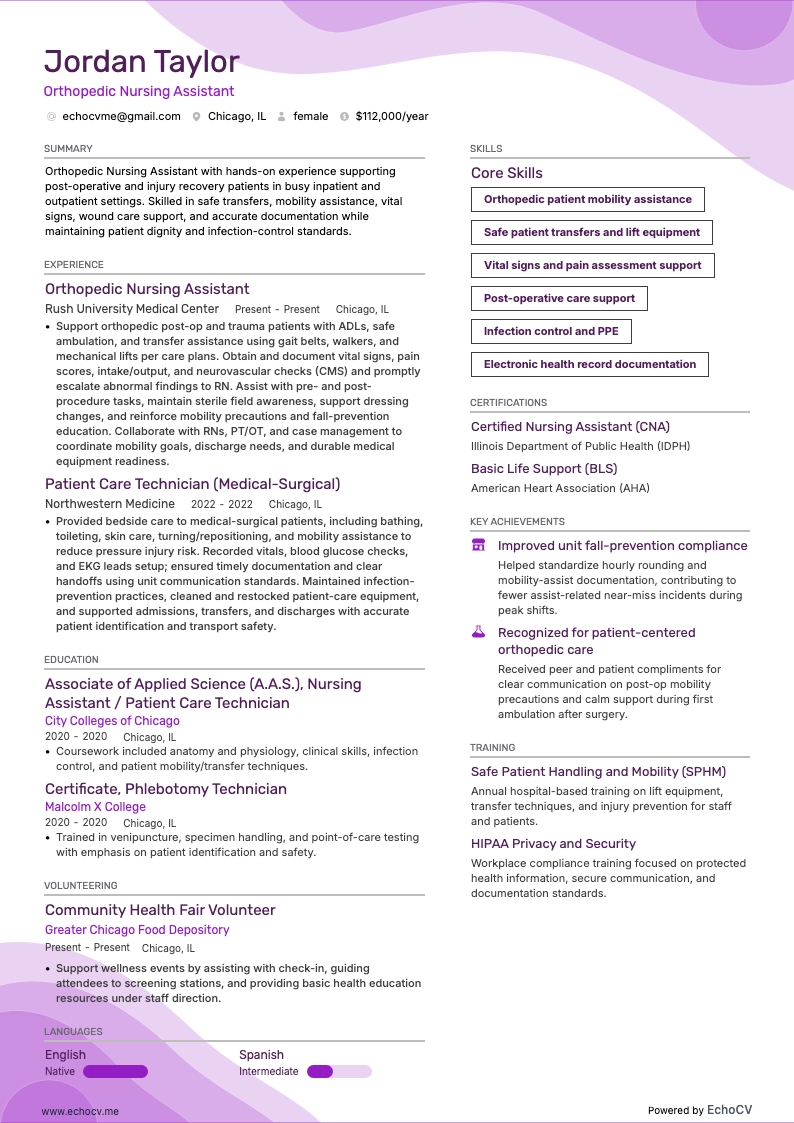
Hybrid (combination) resume format
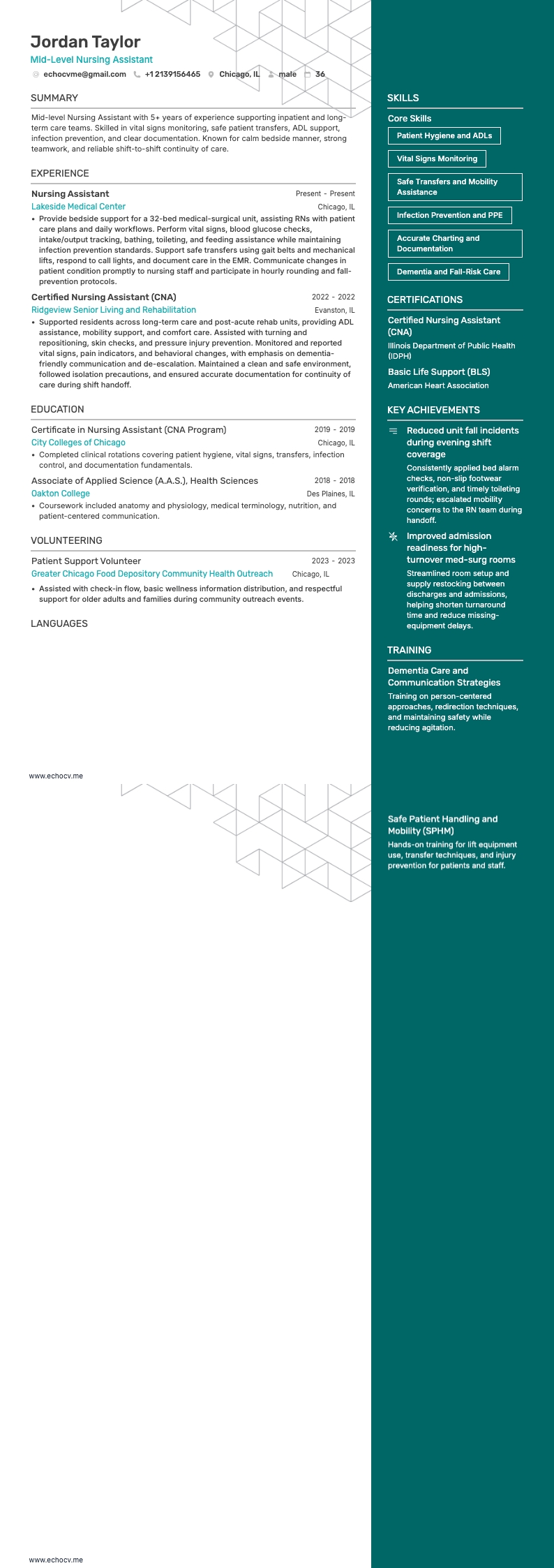
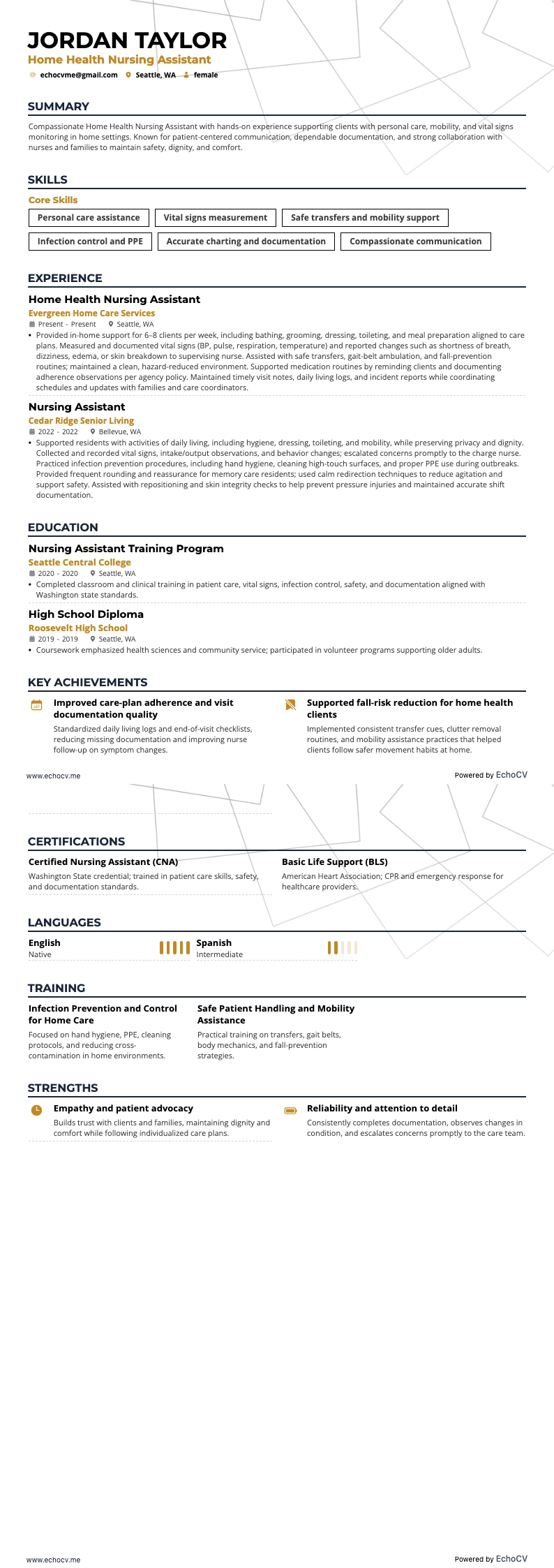
As its name suggests, the hybrid resume format strives to provide a balanced overview of your practical experience, transferable skills, and expertise. This is what makes it the perfect layout for candidates who have less than five years of experience or are switching careers from an adjacent field. It’s also ideal for positions that require you to feature both home care and clinical experience — especially if the role requires comprehensive knowledge of specialized medical equipment for long-term care patients.
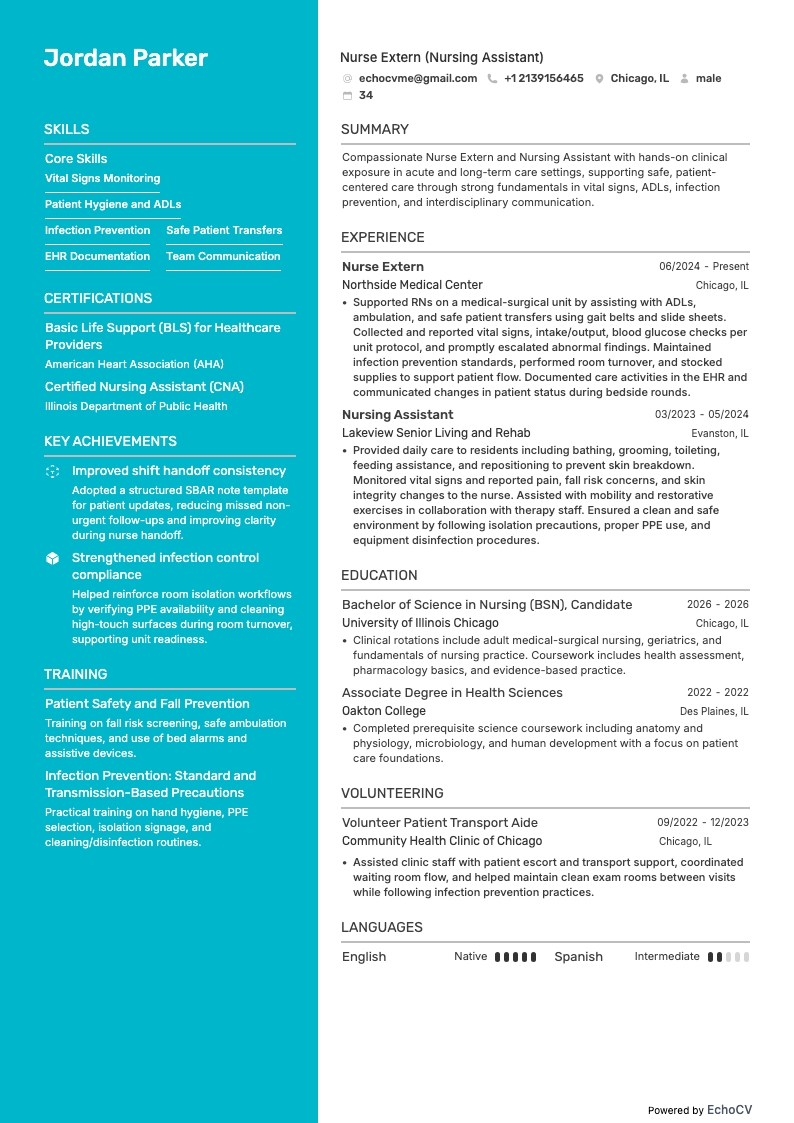
Functional resume format
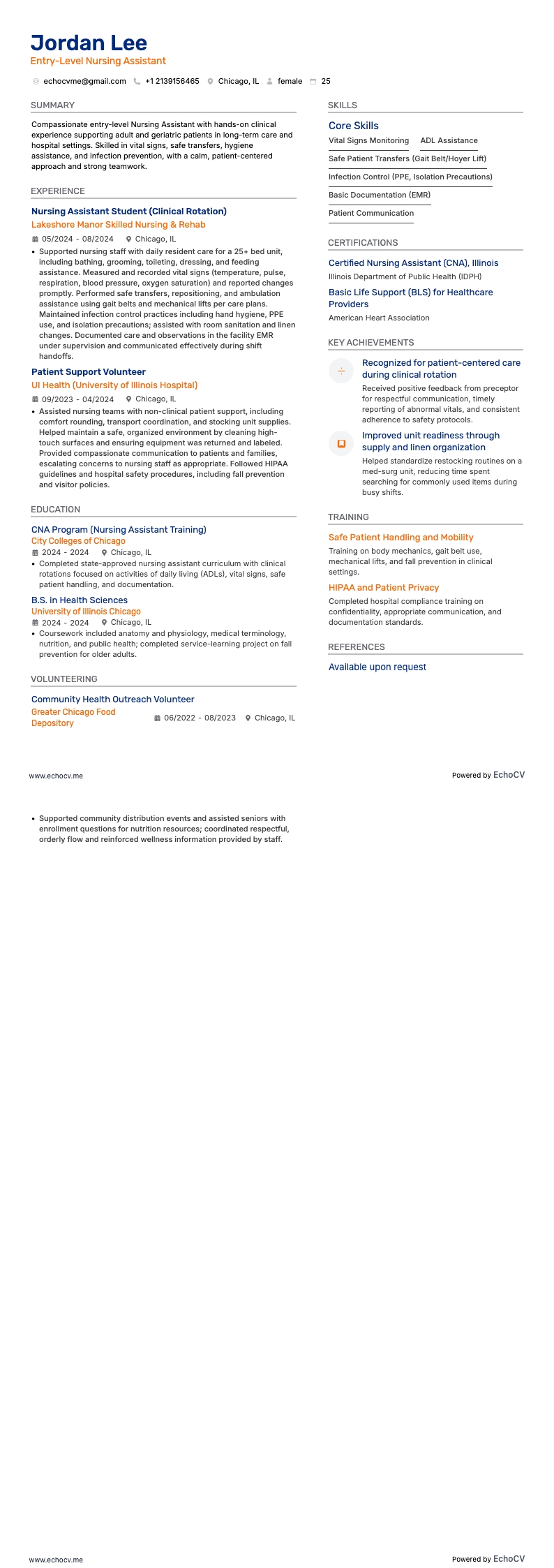
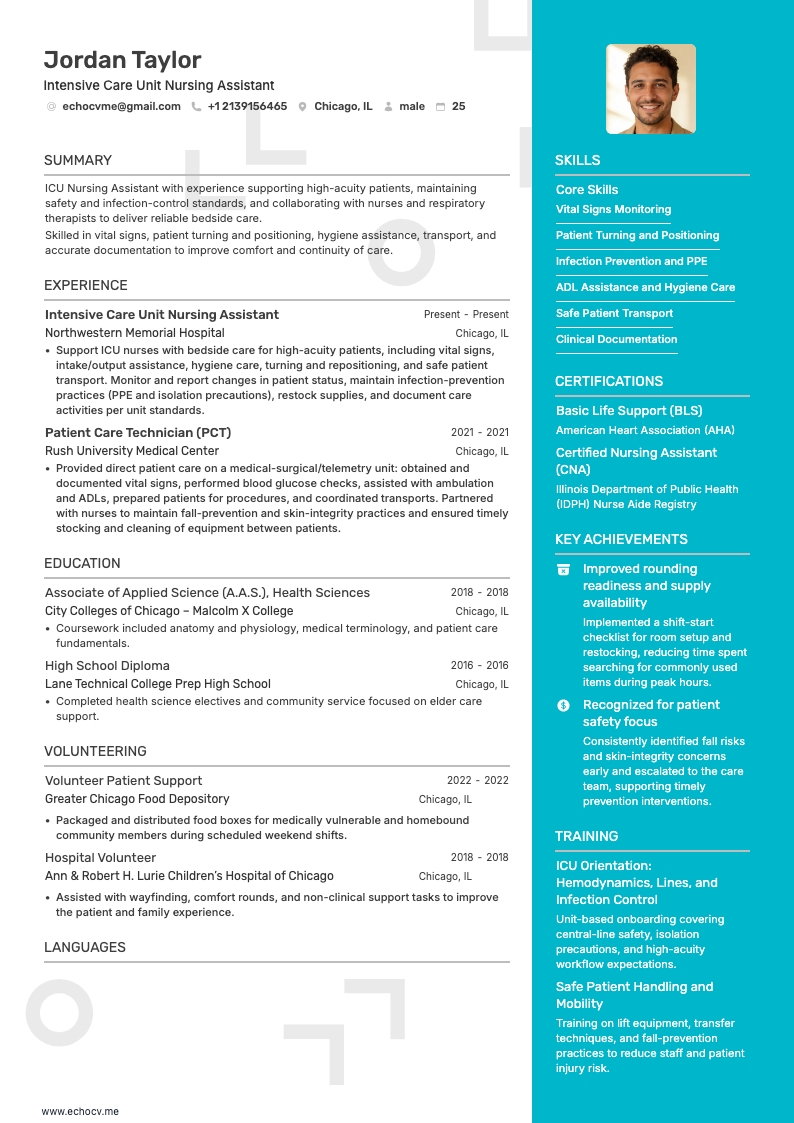
Your third option is the functional resume format. The layout concentrates mainly on your relevant skills and qualifications rather than hands-on experience. For example, if you have customer support experience, you can boast about your strong communication skills and ability to empathize with others. Thus, the functional template is ideal for recent college grads and candidates aiming to secure their first clinical rotation.
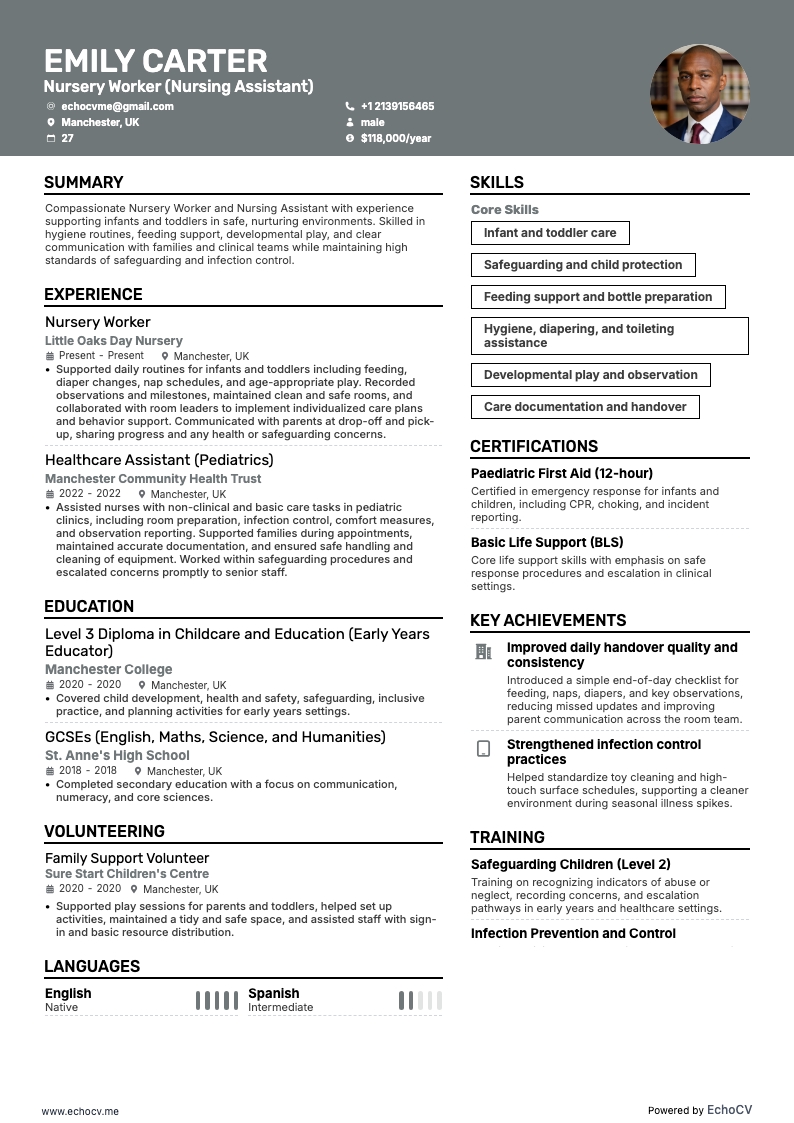
Consider your target market – resumes in Canada, for example, follow different layout conventions.