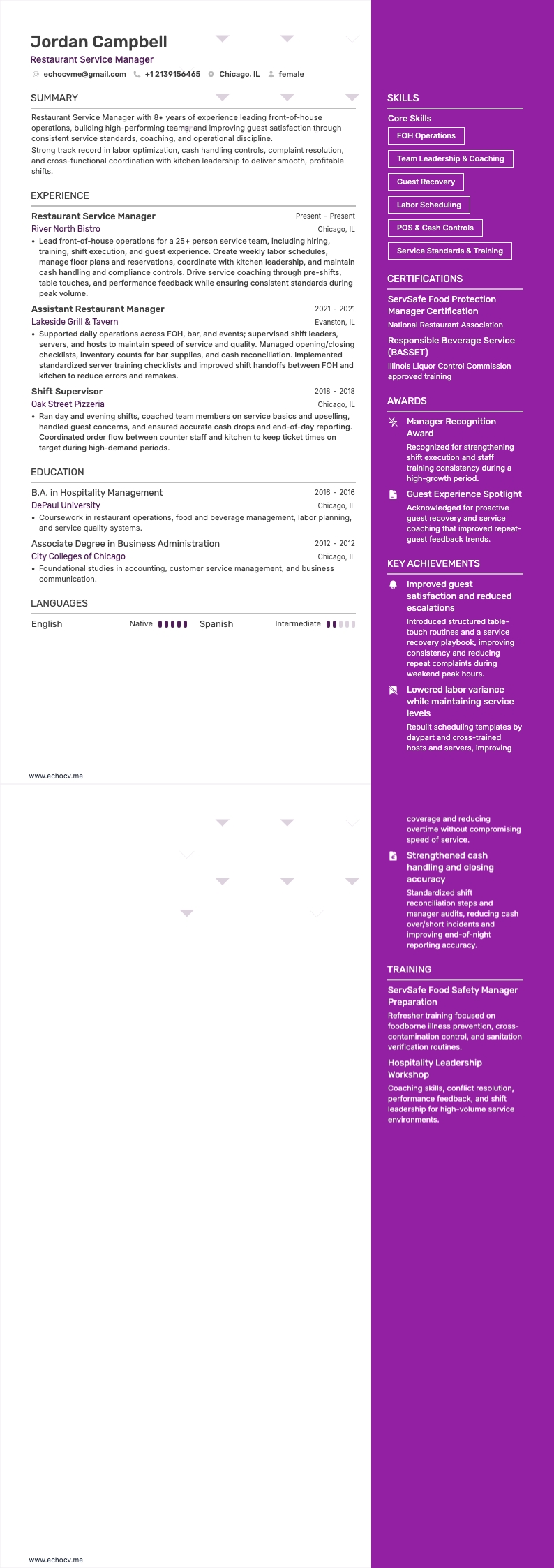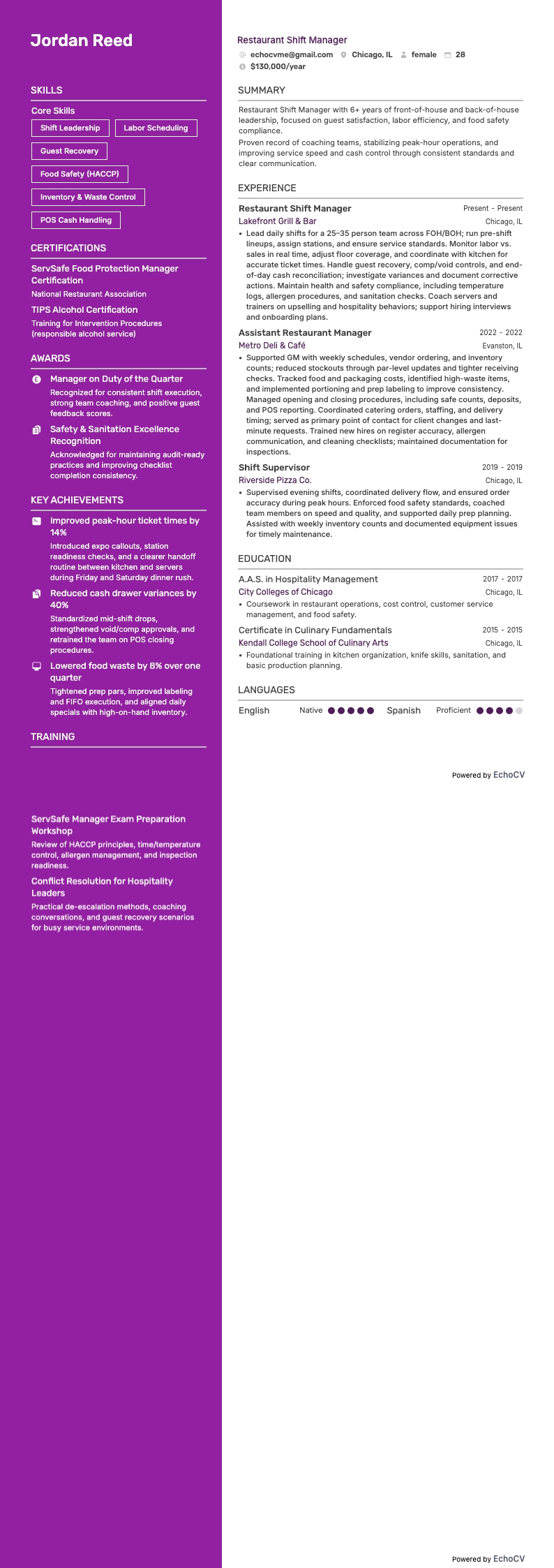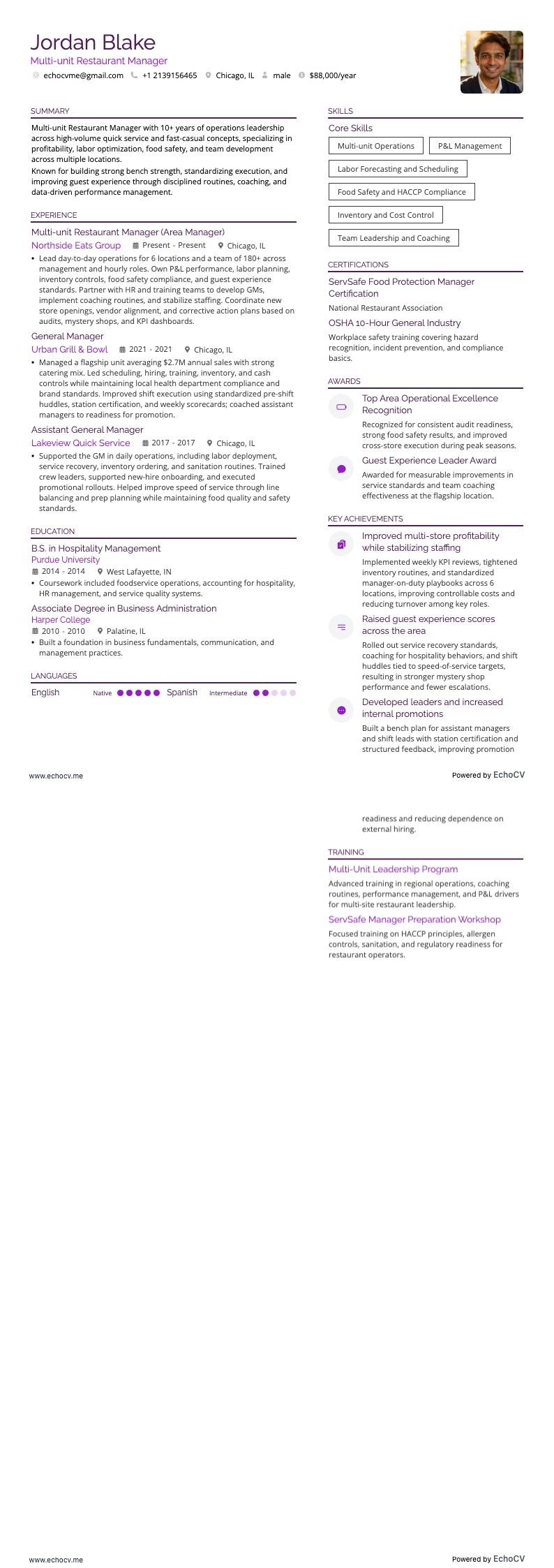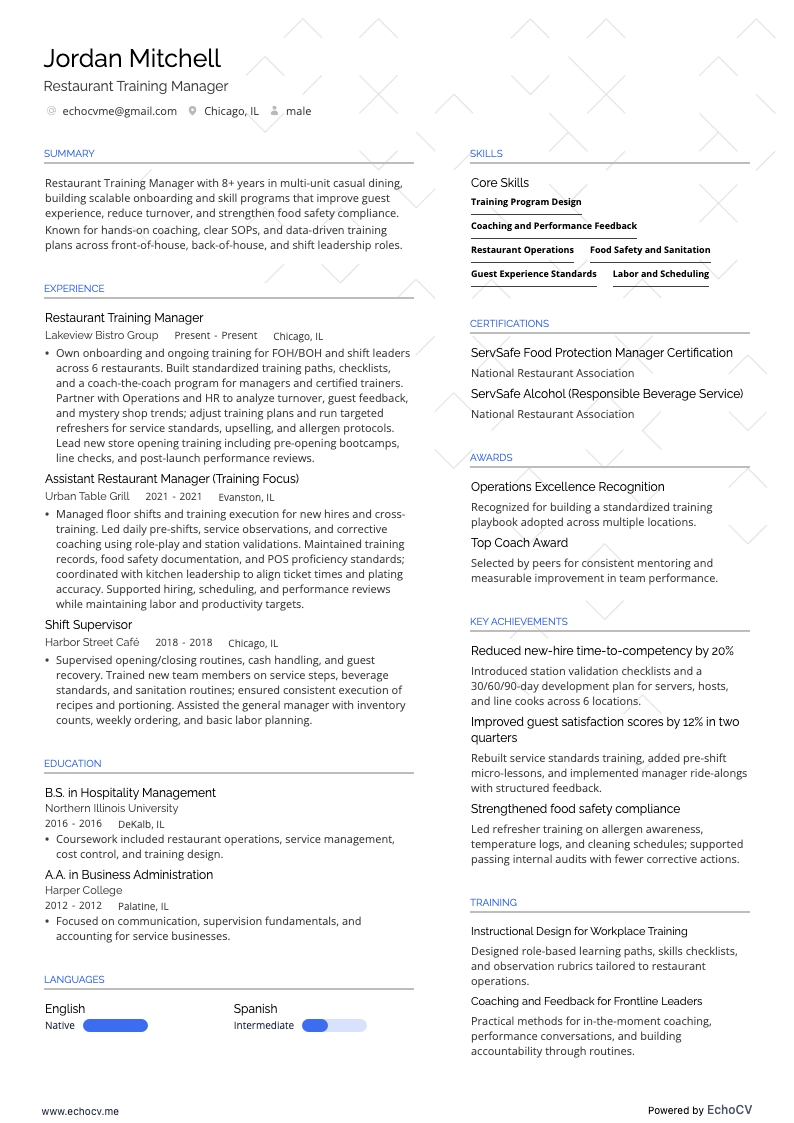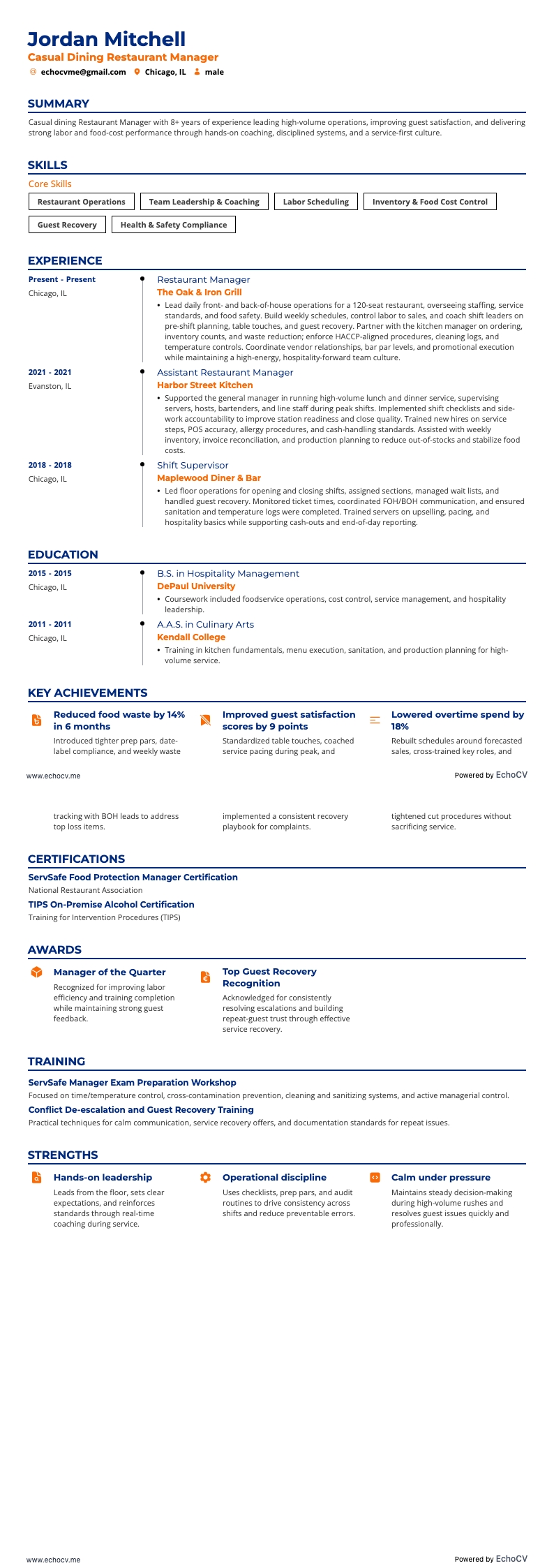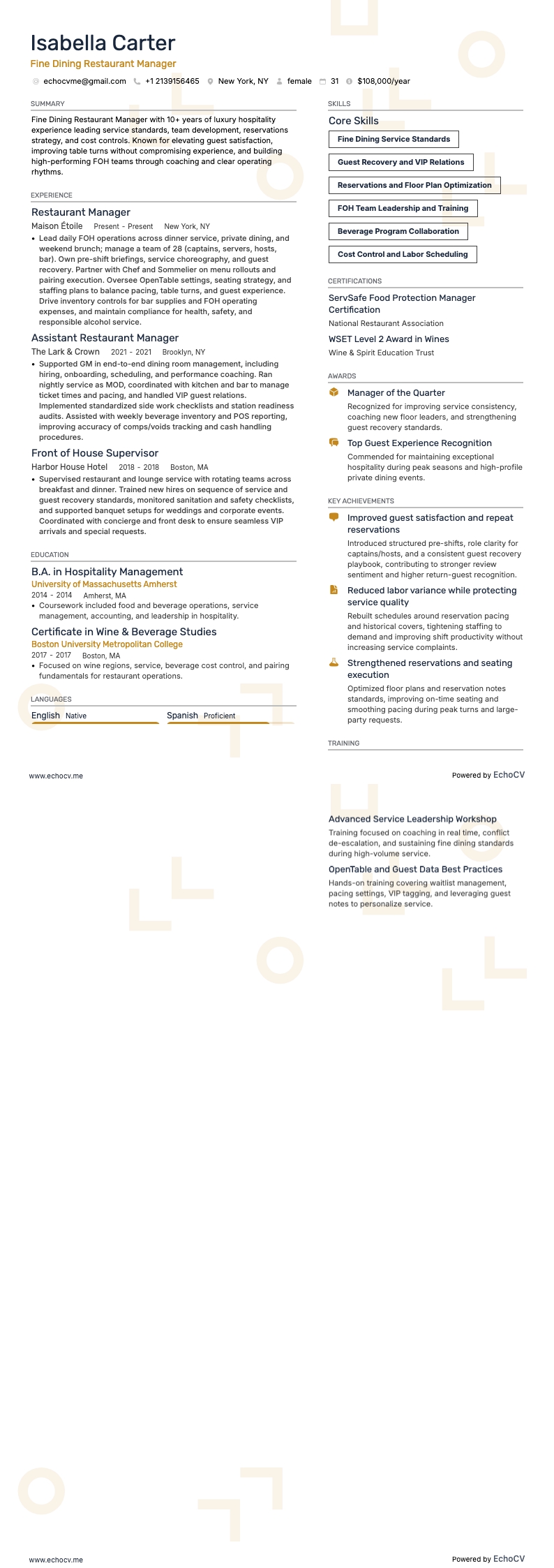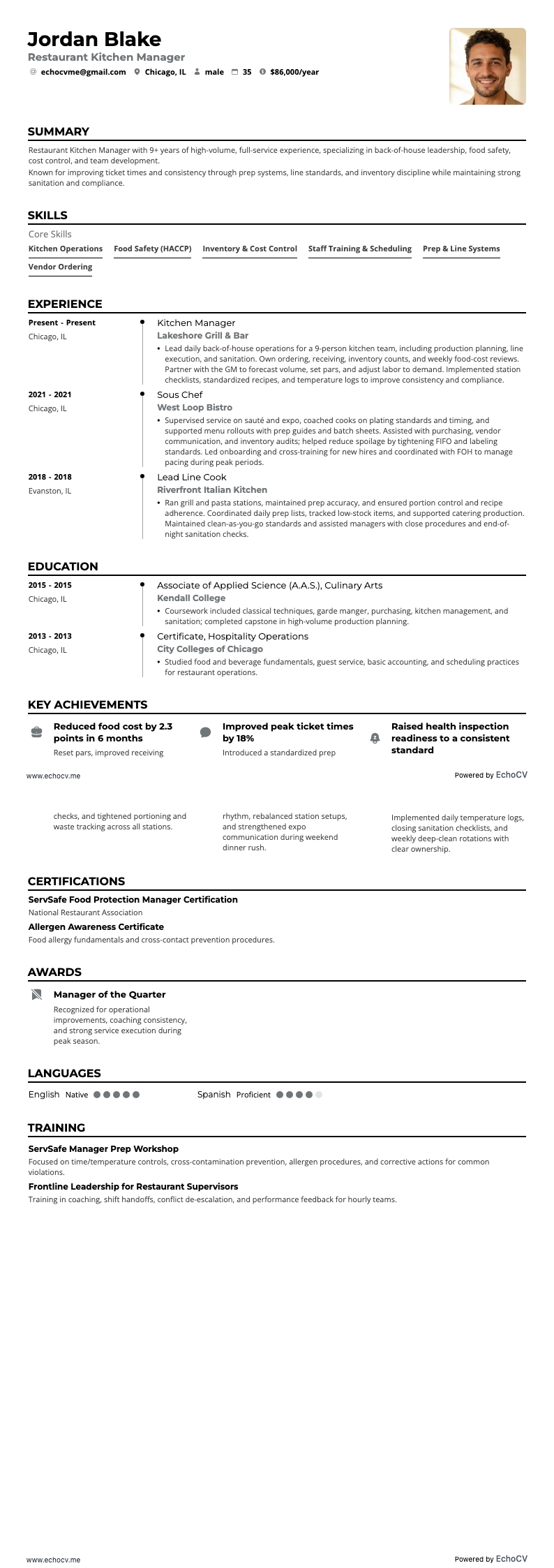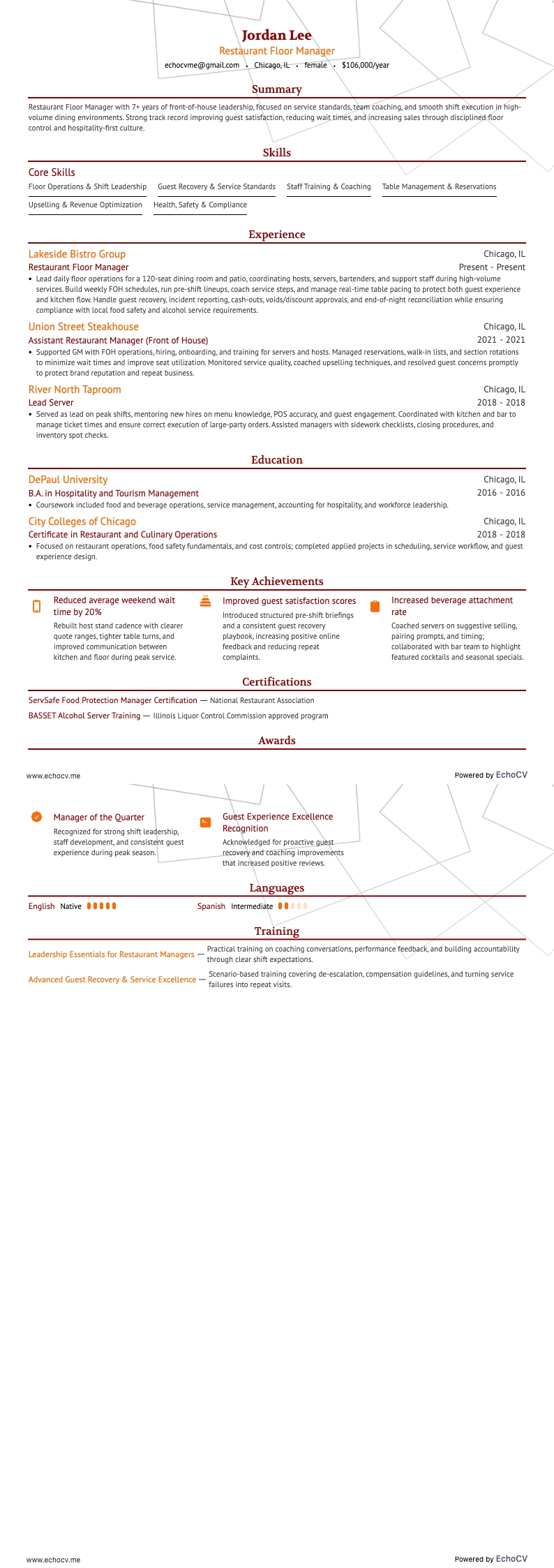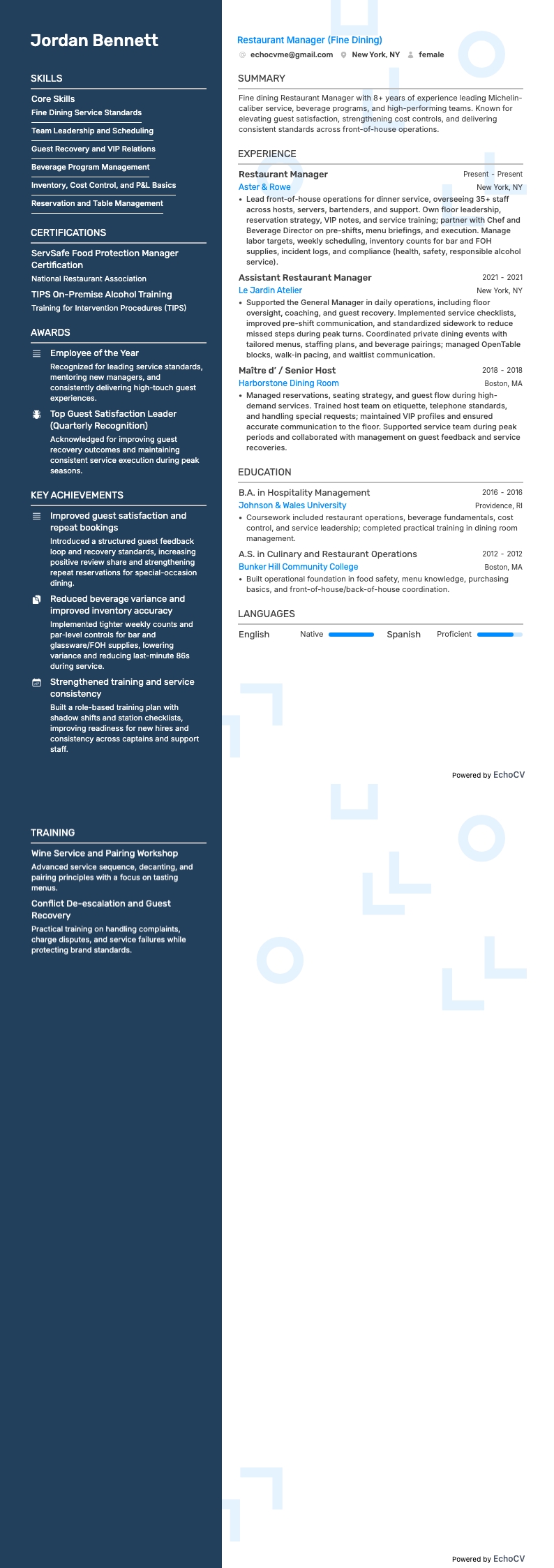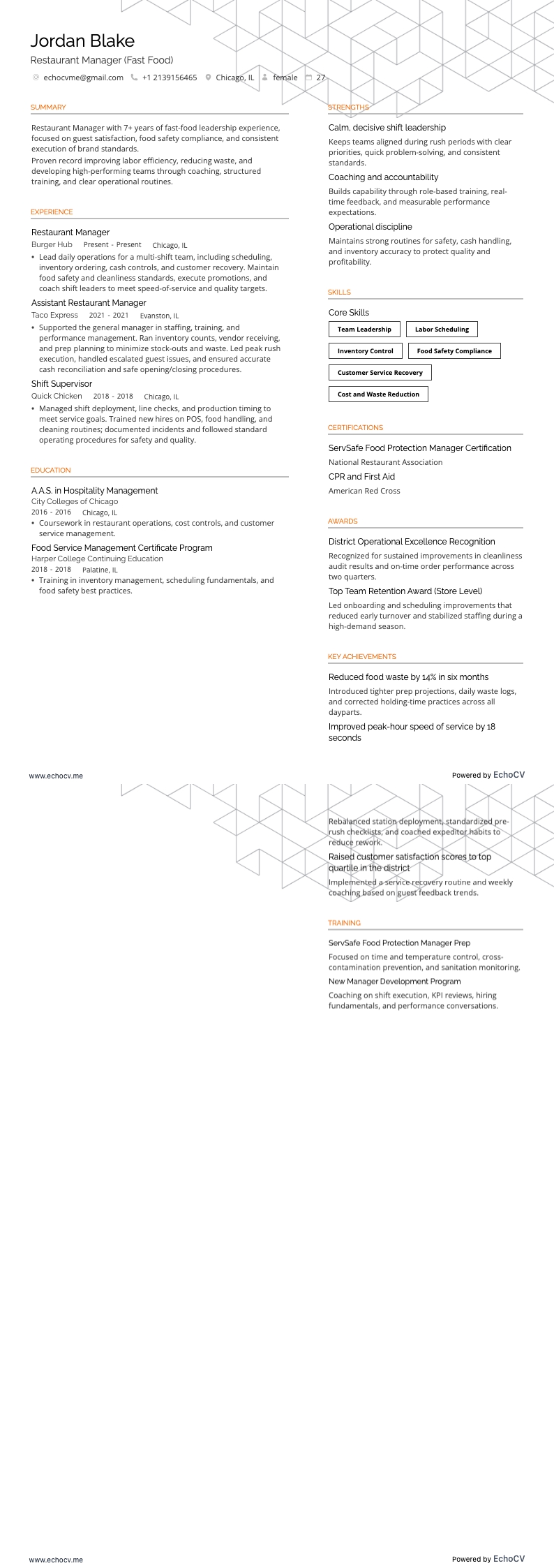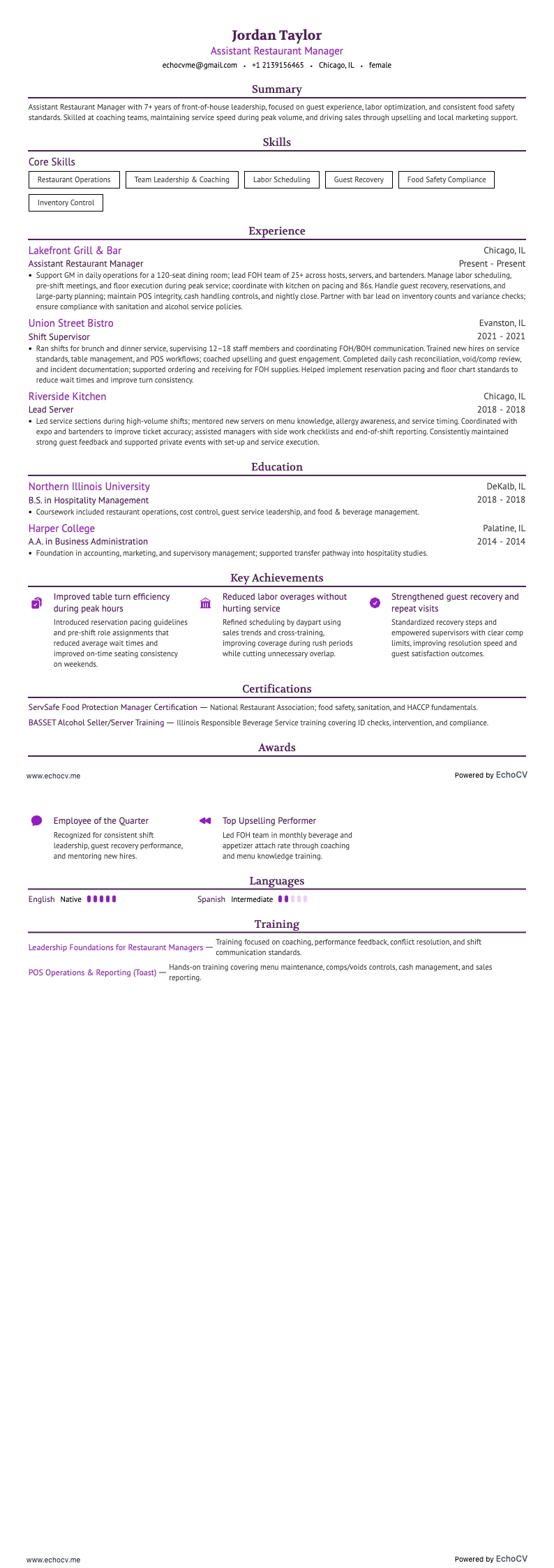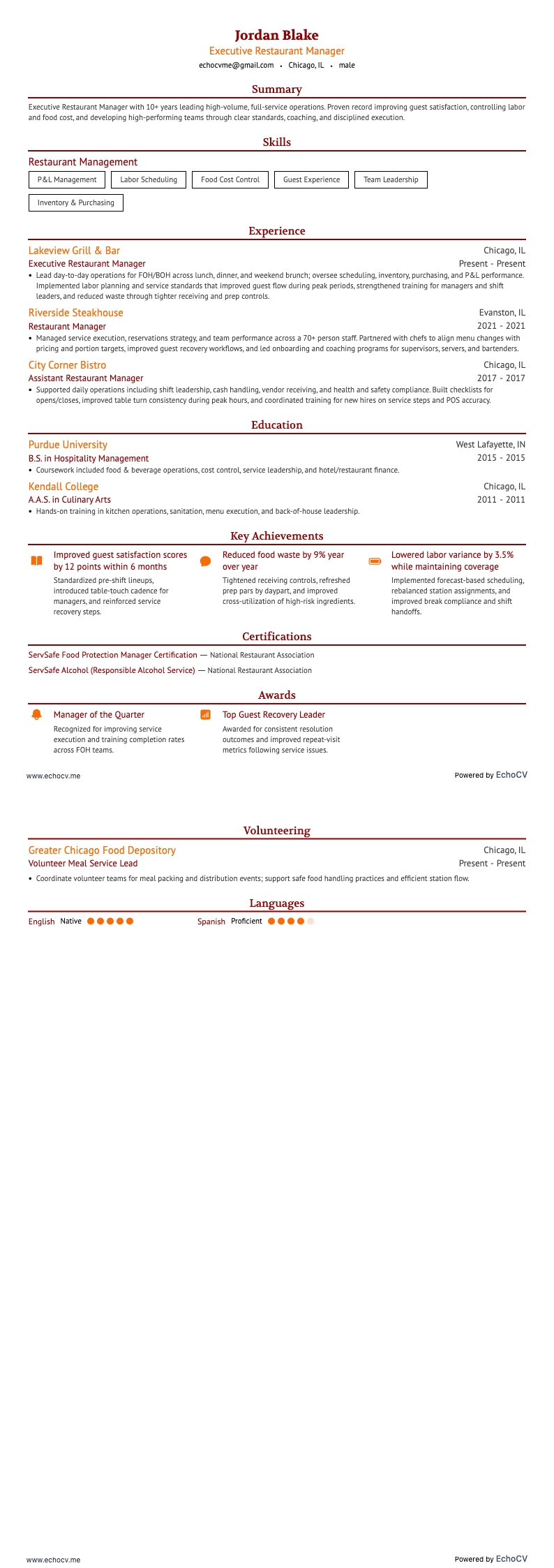
So let’s first imagine that the experience is correctly done in a reverse chronological order, starting with your most recent job first.
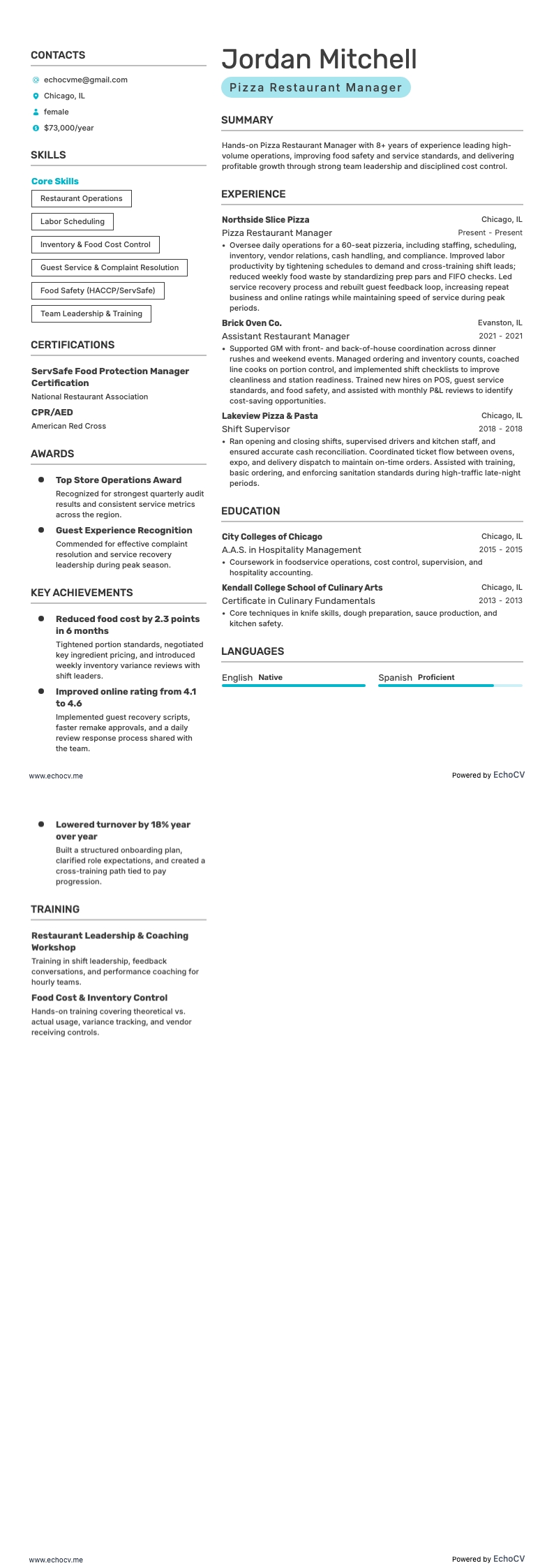
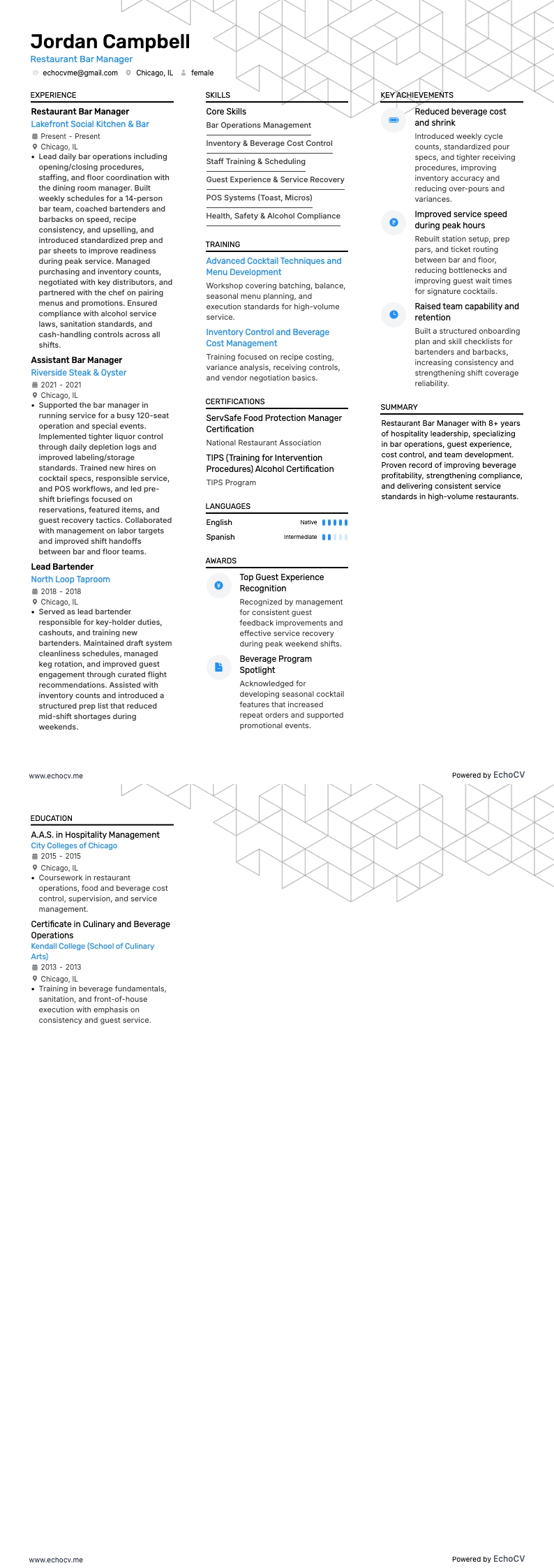
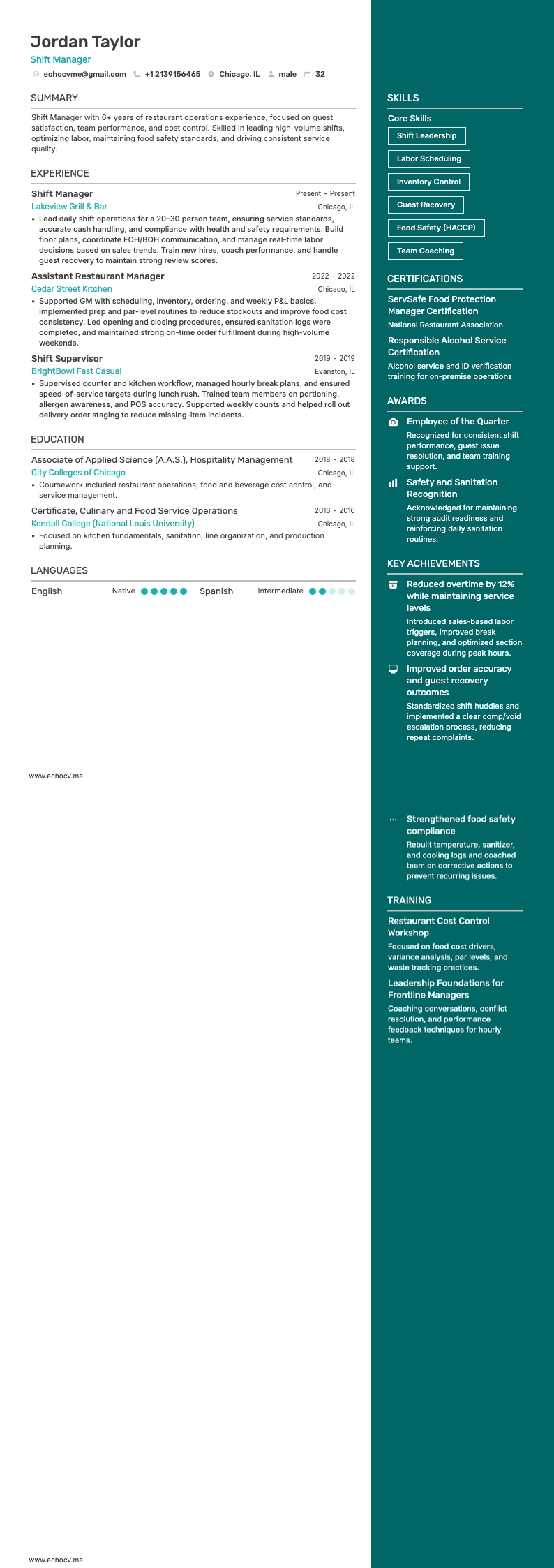
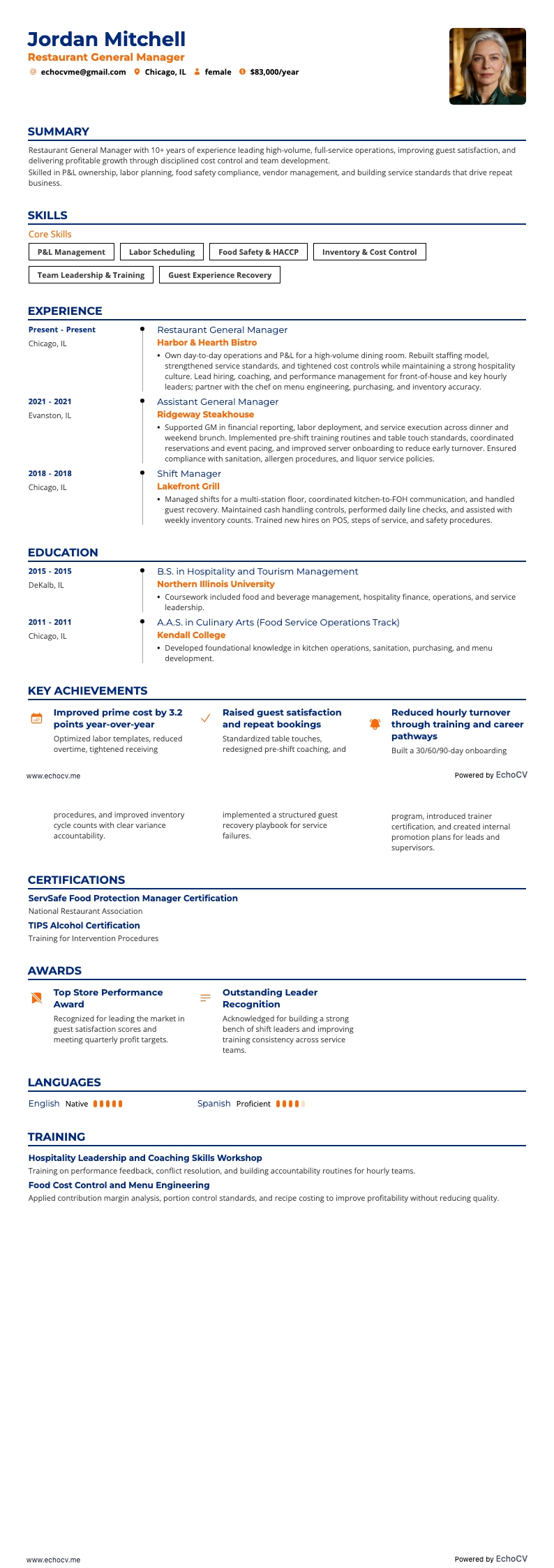
Other than that, here’s what this candidate does right:
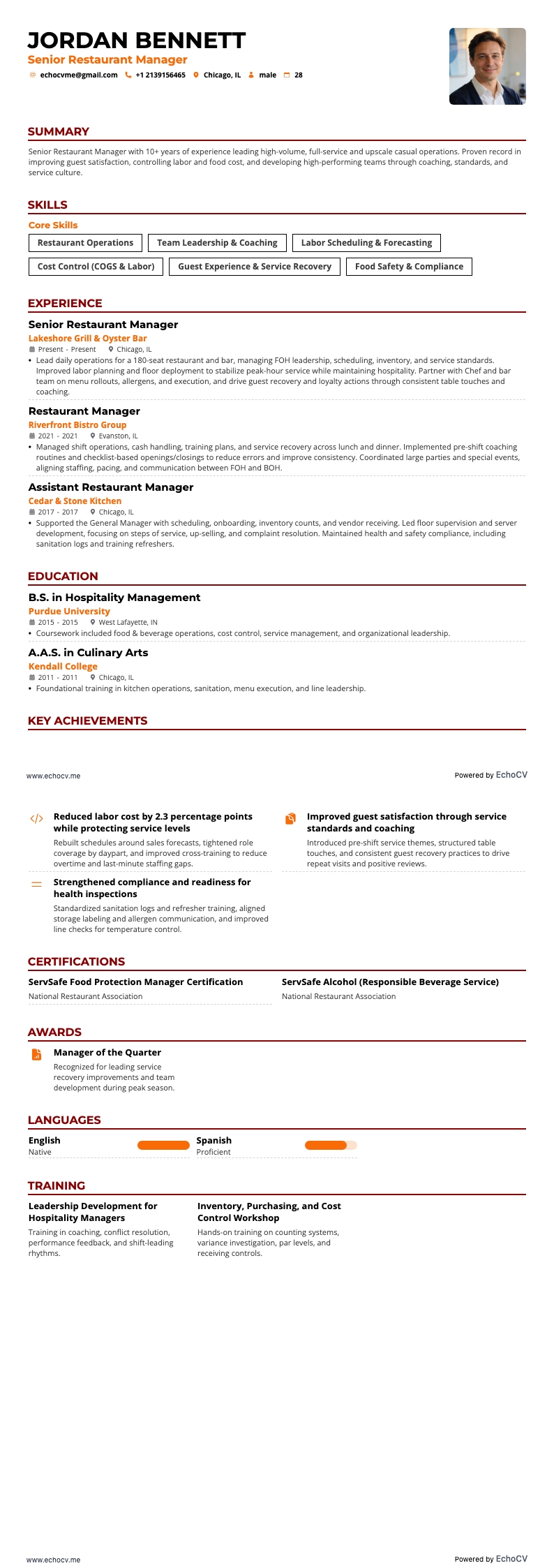
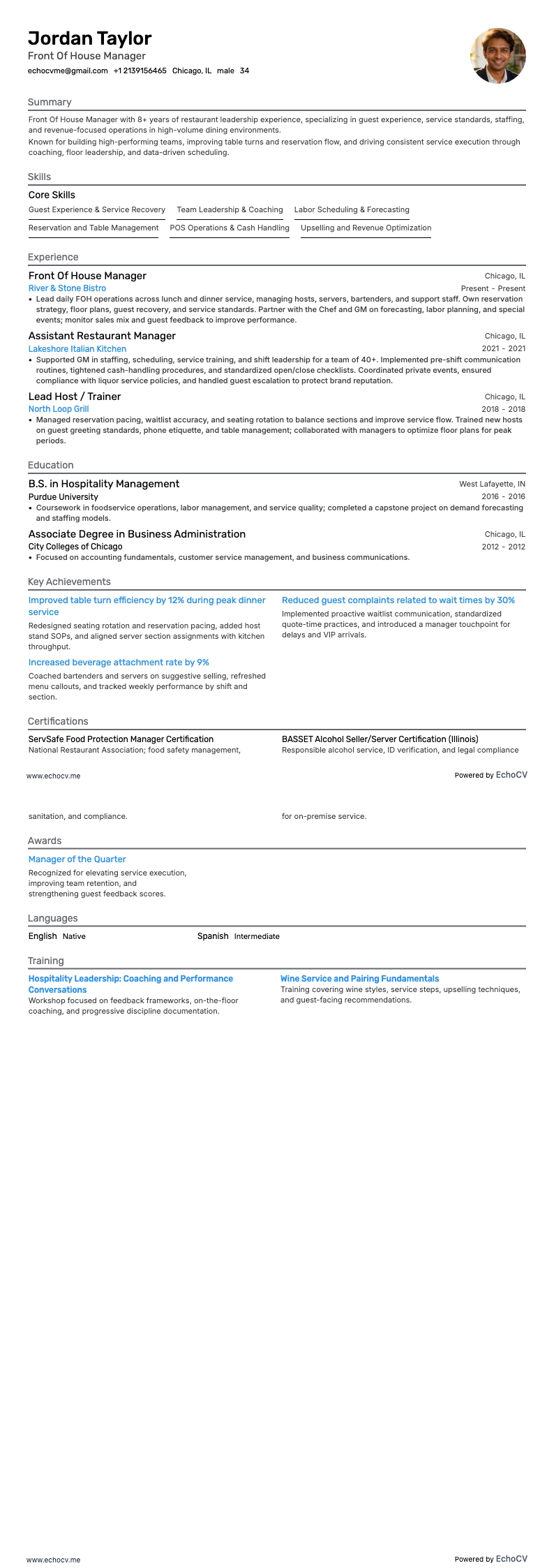
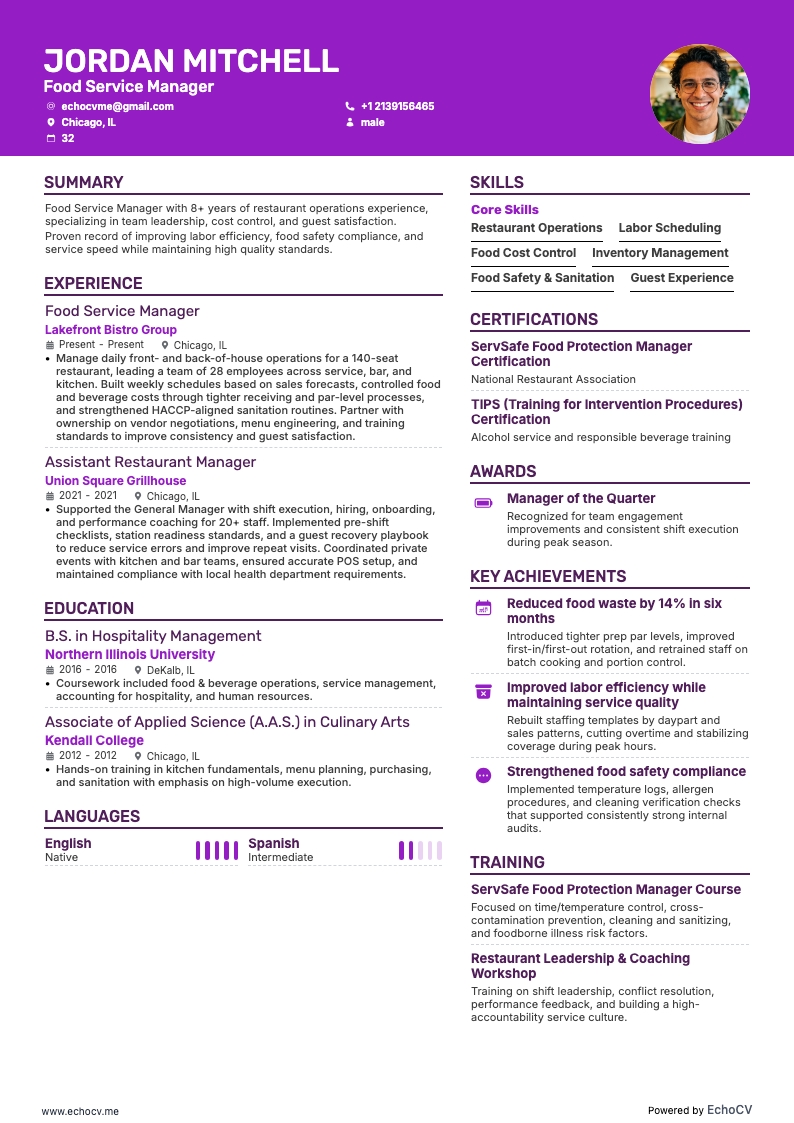
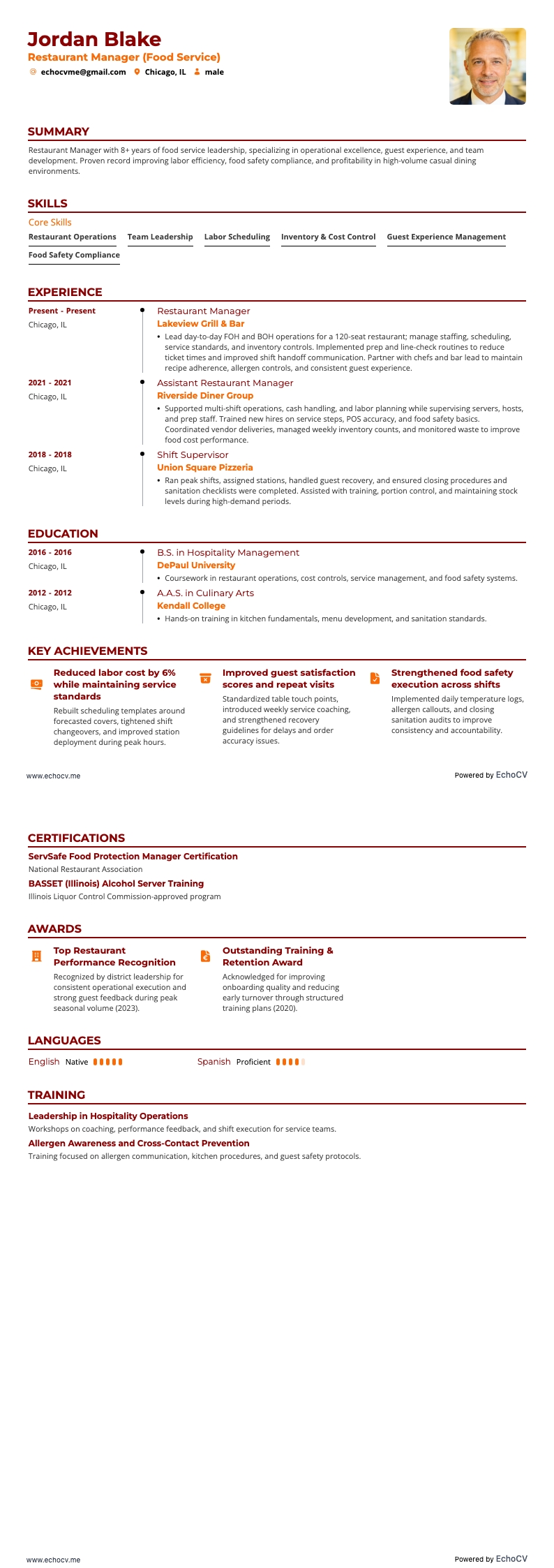
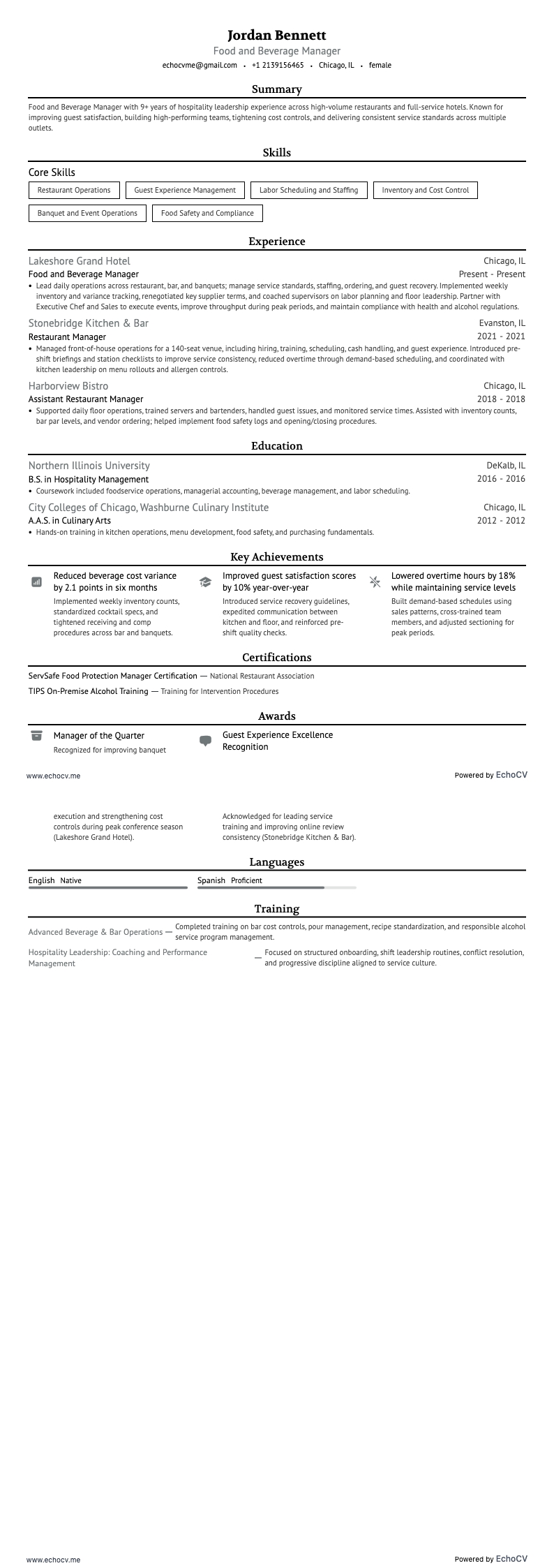
- Uses action verbs: Starts each bullet point with a strong resume action verb that clearly articulates the candidate’s role and impact.
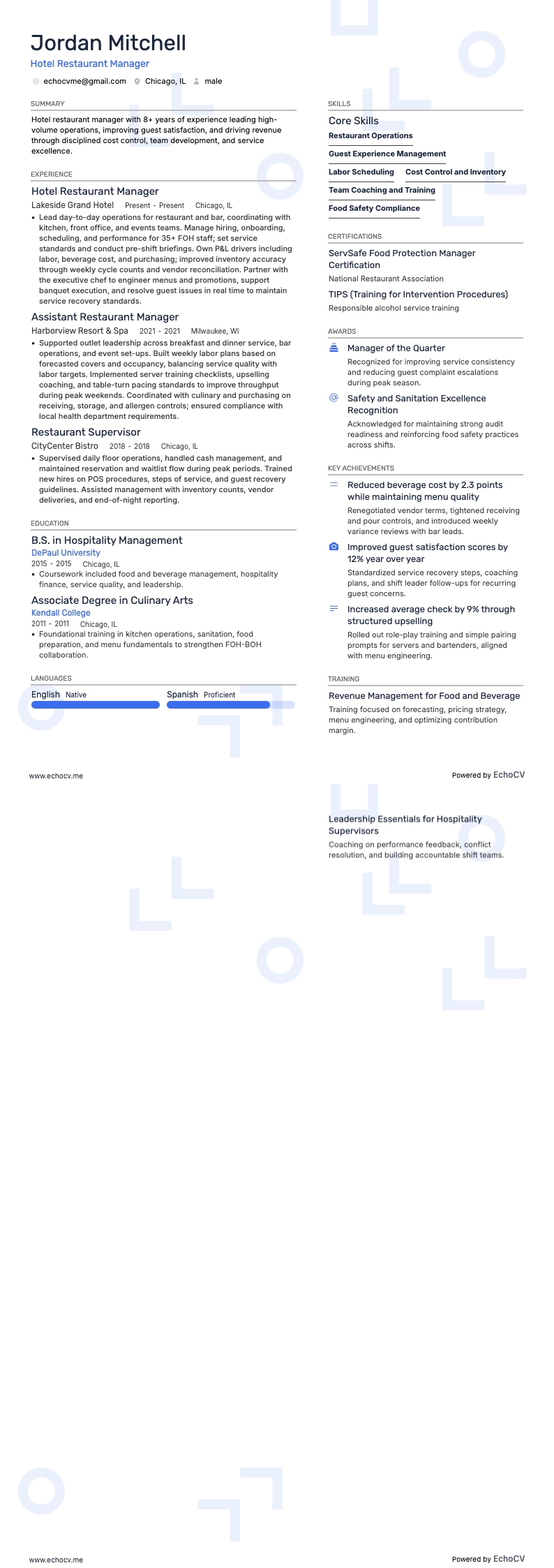
- Quantifies achievements: Includes specific numbers and percentages to demonstrate the magnitude of their contributions and successes.
- Highlights leadership and management skills: Shows the candidate’s ability to lead and manage teams, as well as improve operational aspects of the restaurant.
- Demonstrates problem-solving abilities: Illustrates how the candidate identified issues (e.g., staff turnover, customer satisfaction) and implemented solutions.
- Details specific responsibilities and skills: Clearly explains the candidate's responsibilities and the skills they applied, such as inventory management, budgeting, and marketing.
This approach not only showcases your career progression and leadership abilities but also demonstrates your direct impact on the operations and success of the establishments you've managed, making your resume stand out to potential employers.
Listing all of your experience could be a lengthy ordeal and it’s recommended to keep your resume as concise and impactful as possible.
How to quantify your impact
- Include the size of the restaurant you managed: This proves your ability to handle the logistics and operations of a similar-sized establishment.
- Mention the number of staff you supervised: It shows you’re capable of leading and managing a team, which is vital for this position.
- Specify your measurable contributions to revenue growth: This can demonstrate your effectiveness in driving sales and contributing to profitability.
- Document the reduction in operating costs under your management: This provides evidence that you can manage resources efficiently and cut unnecessary expenses.
- Detail the number of successful food safety inspections during your tenure: This reflects your commitment to delivering high-quality, safe food to customers.
- Present the scores or ratings from customer satisfaction surveys: There’s nothing wrong with a little bragging. Be sure to write about your high ratings to prove your success in customer service and customer experience management.
- Mention the number of menus or special promotions you oversaw: This shows your creativity and understanding of food trends.
- Report on the worker retention rate during your management: This reflects your leadership style and people management skills - important in creating a positive work environment.
Writing a restaurant manager resume without any work experience
However challenging, writing a restaurant manager resume with no experience is still possible. The first thing is to be confident that you know exactly what’s in store for you. I suggest reading as much as possible about what exactly restaurant managers do - I found this to be quite a good read with a lot of useful information.
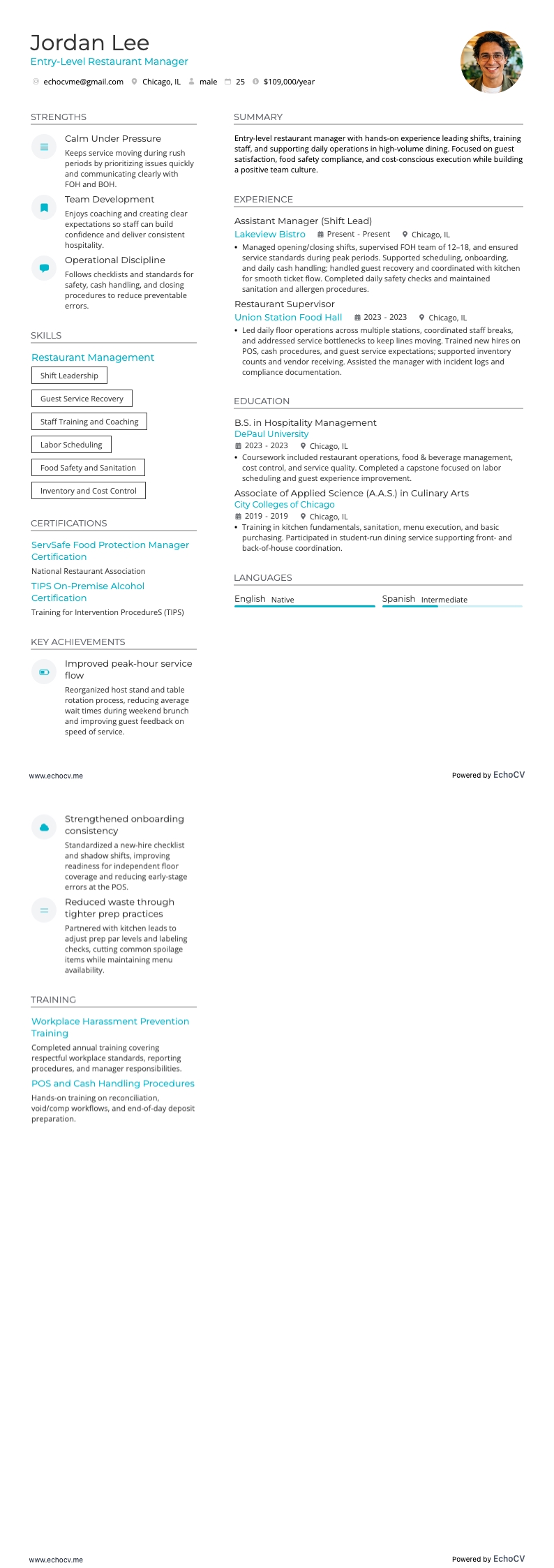
Let’s take a look into crafting a resume for a candidate lacking direct experience. The main thing we need to do is emphasize transferable skills, education, and any related volunteer work or internships.
Focus on these:
- Professional objective
State your eagerness to apply your skills in a management role, highlighting communication, leadership, and customer service abilities.
- Education
List your degrees and relevant hospitality or management courses.
- Skills
Include transferable skills (Both hard and soft) such as leadership, problem-solving, customer service, and familiarity with technology.
- Volunteer experience/internships
Describe any relevant experience that showcases your ability to manage, organize, or lead, focusing on outcomes and skills gained. Volunteering on a resume always looks good!
- Additional qualifications
Mention any certifications, languages, or relevant memberships that support your candidacy.
Also, always pair your resume with a concise cover letter that ties your background to the exact job, emphasizing your enthusiasm and potential to grow into the position.
Putting Your Skills Under the Spotlight
The next element we’ll look at is the resume skill section - for the restaurant industry, it’s imperative!
Of course, we know that you’re overflowing with skills of all kinds, so the first step is to remember one very important thing - keep it relevant! Read the job description and tailor your resume, more specifically, your skills to the ones they’re searching for.
Firstly, let’s quickly go over the difference between hard skills on a resume and soft skills. Hard skills provide the technical foundation necessary for operational and financial management, while soft skills facilitate leadership, communication, and the ability to create a positive and responsive dining experience for customers.
They’re particularly crucial for a restaurant manager because they combine to ensure effective operation, leadership, and growth of the restaurant.
Here are a couple of lists with the most useful skills related to the position of restaurant manager.