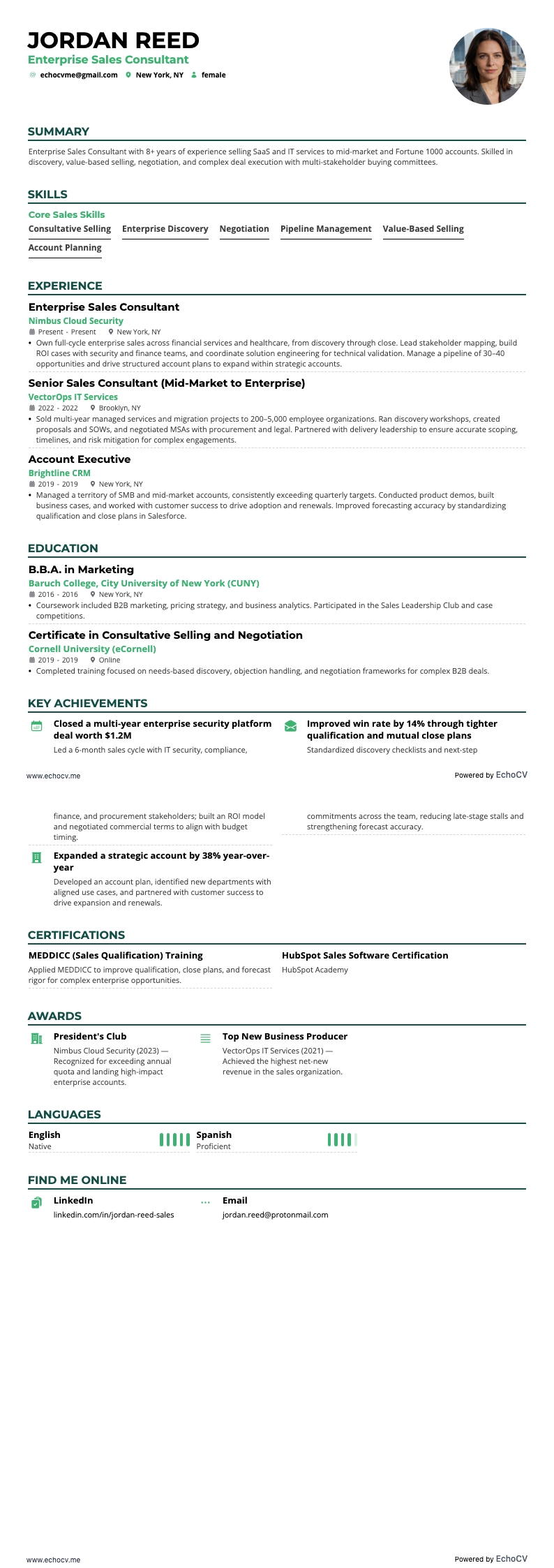
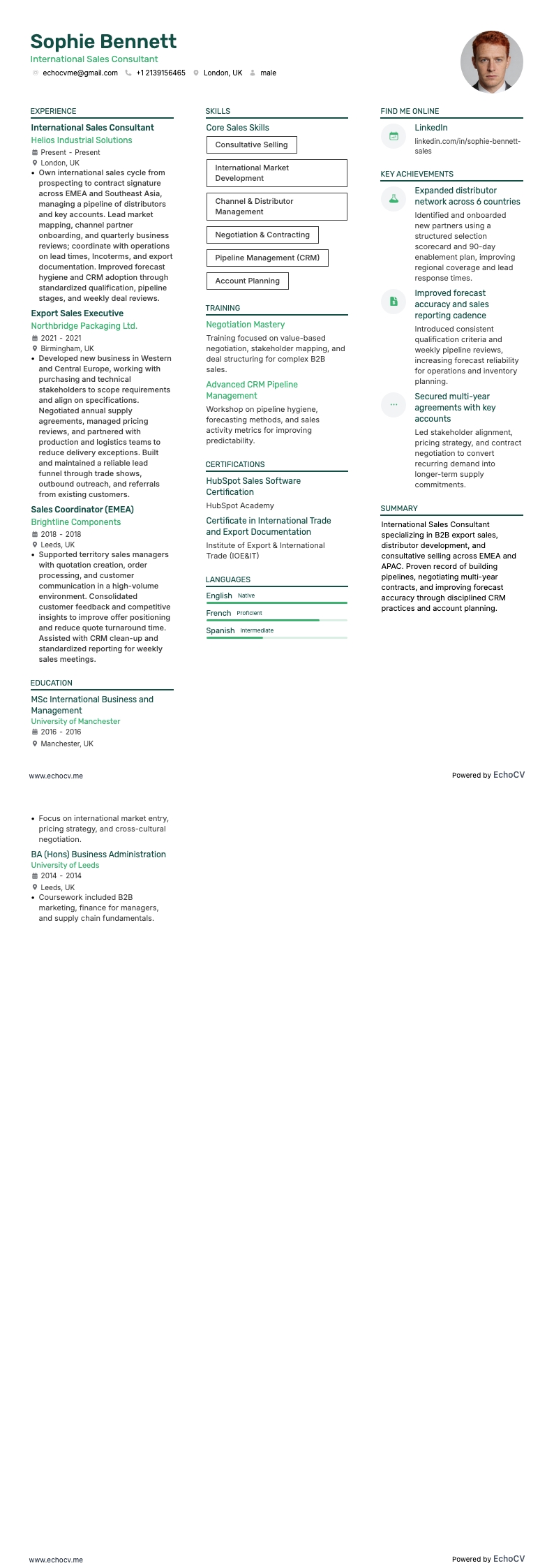
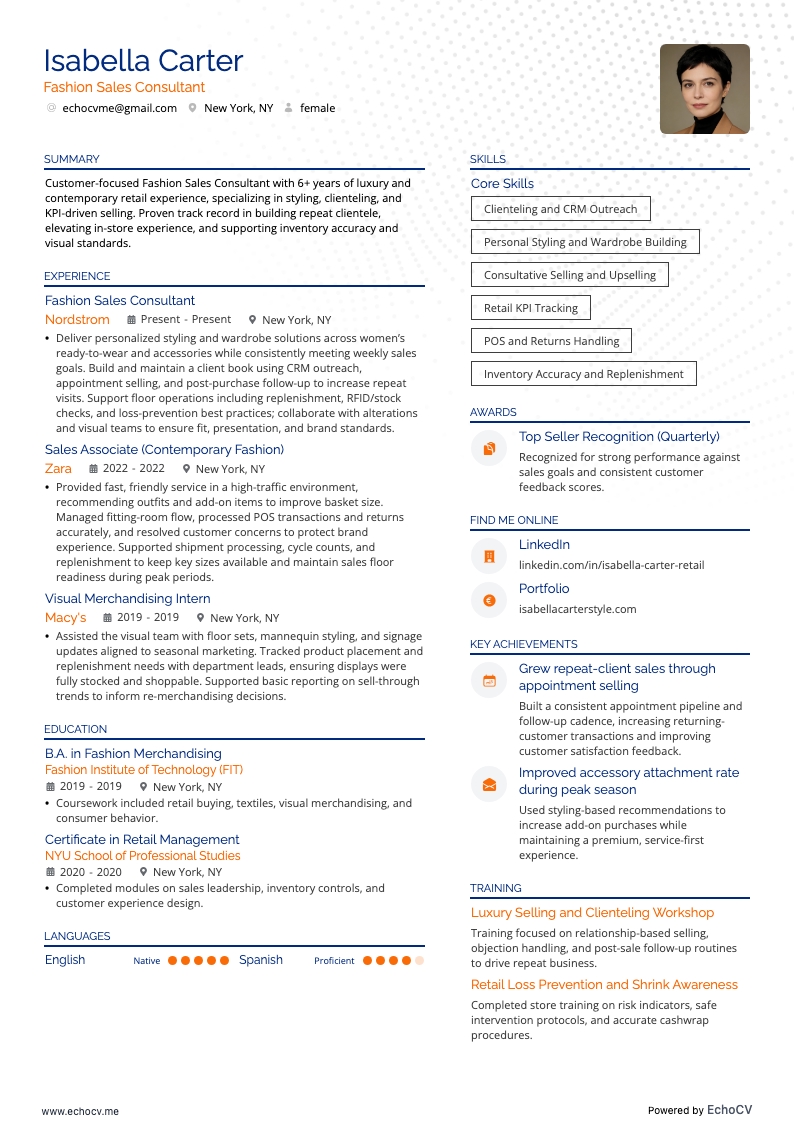
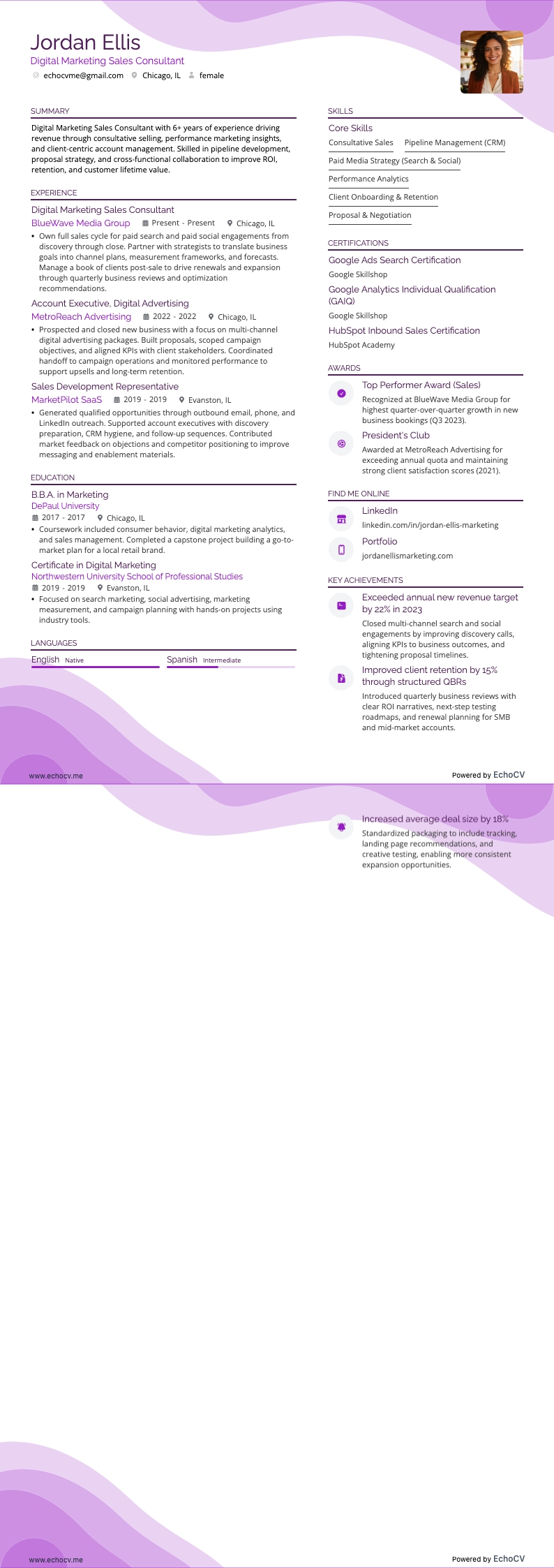
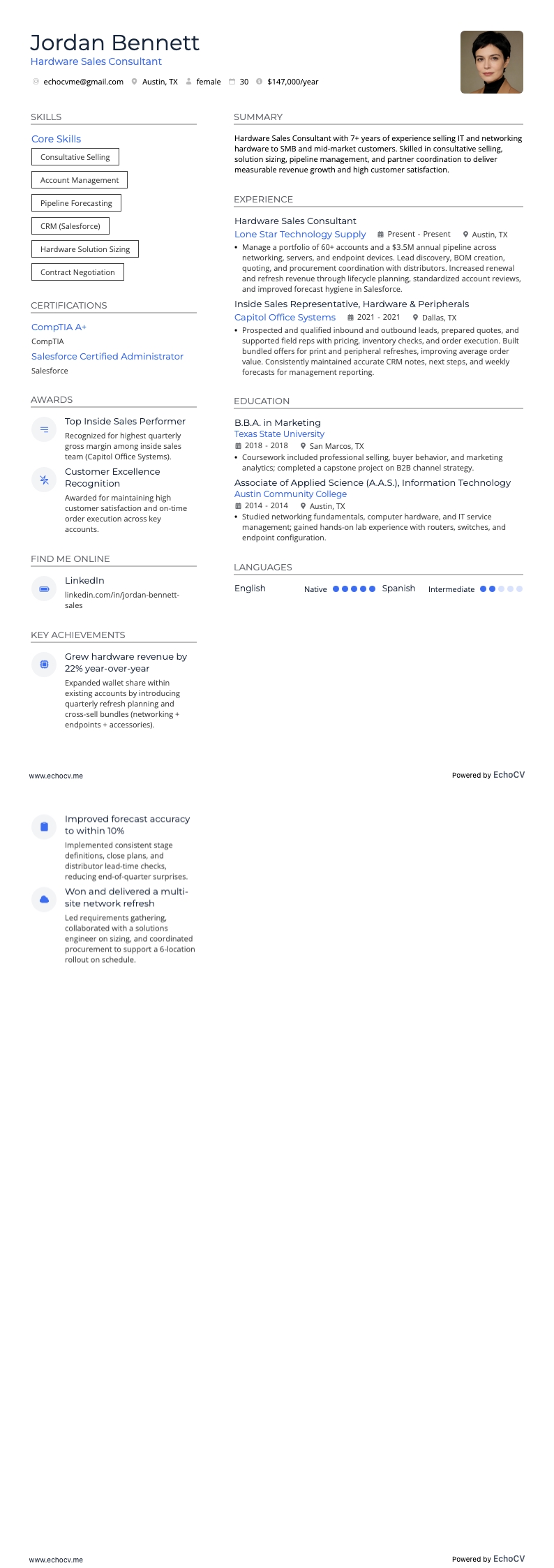
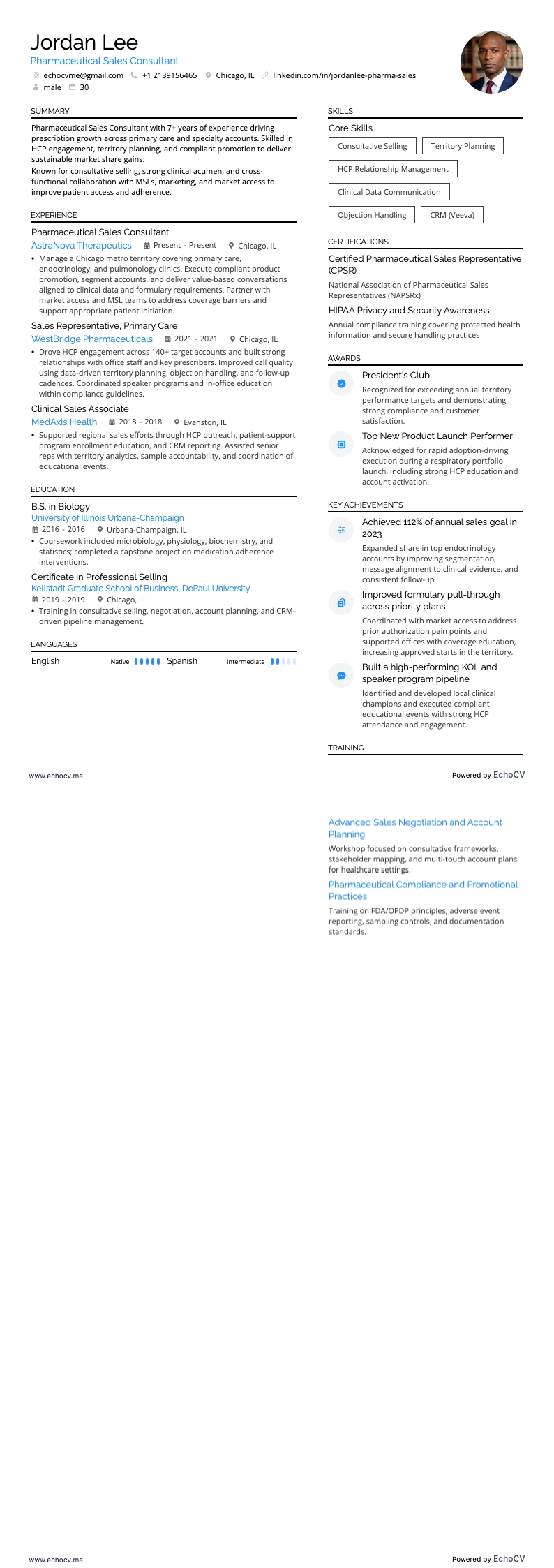
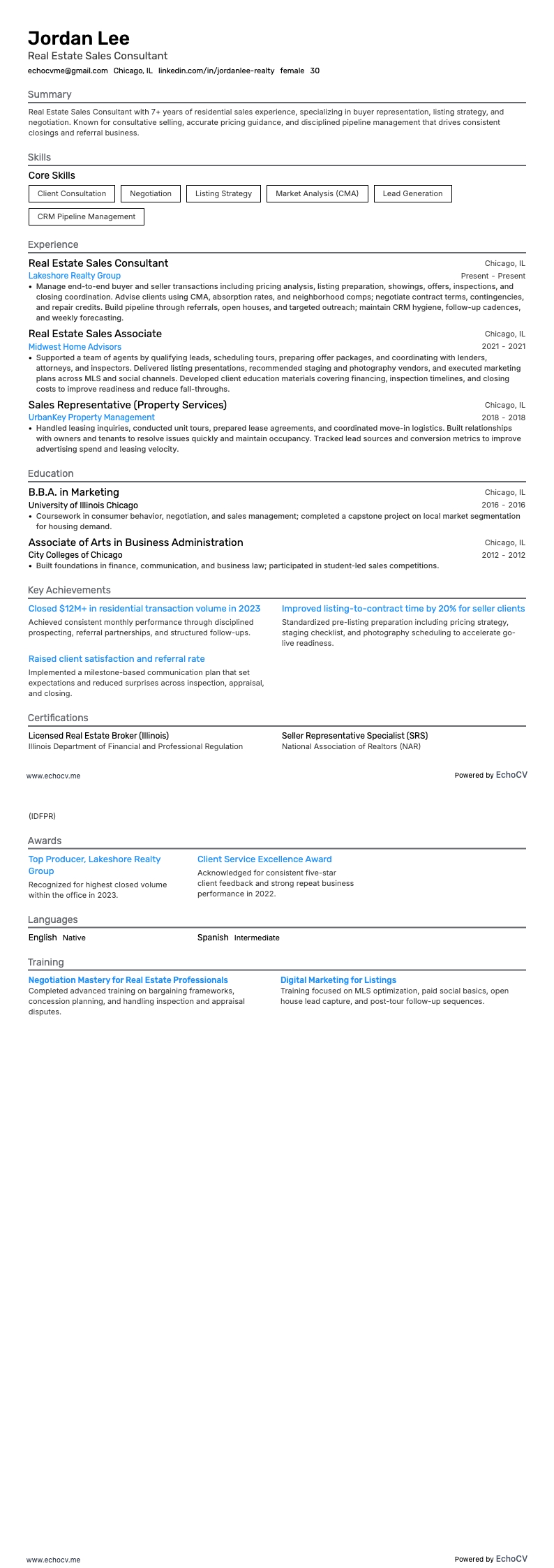
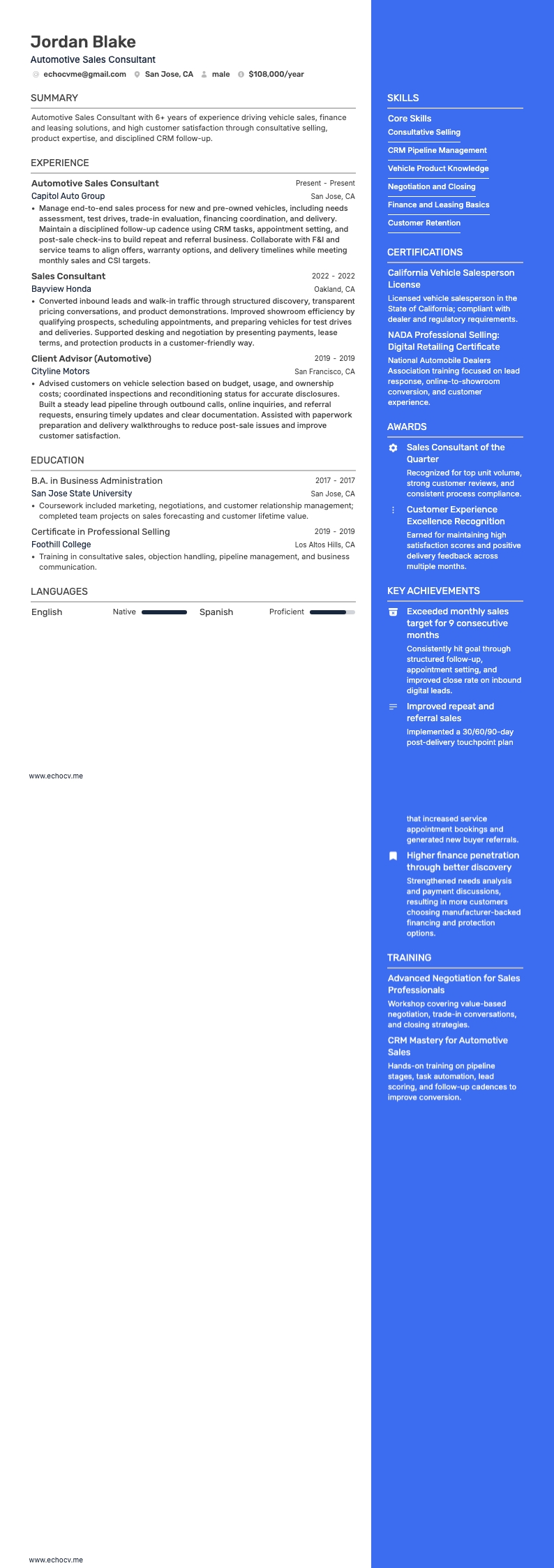
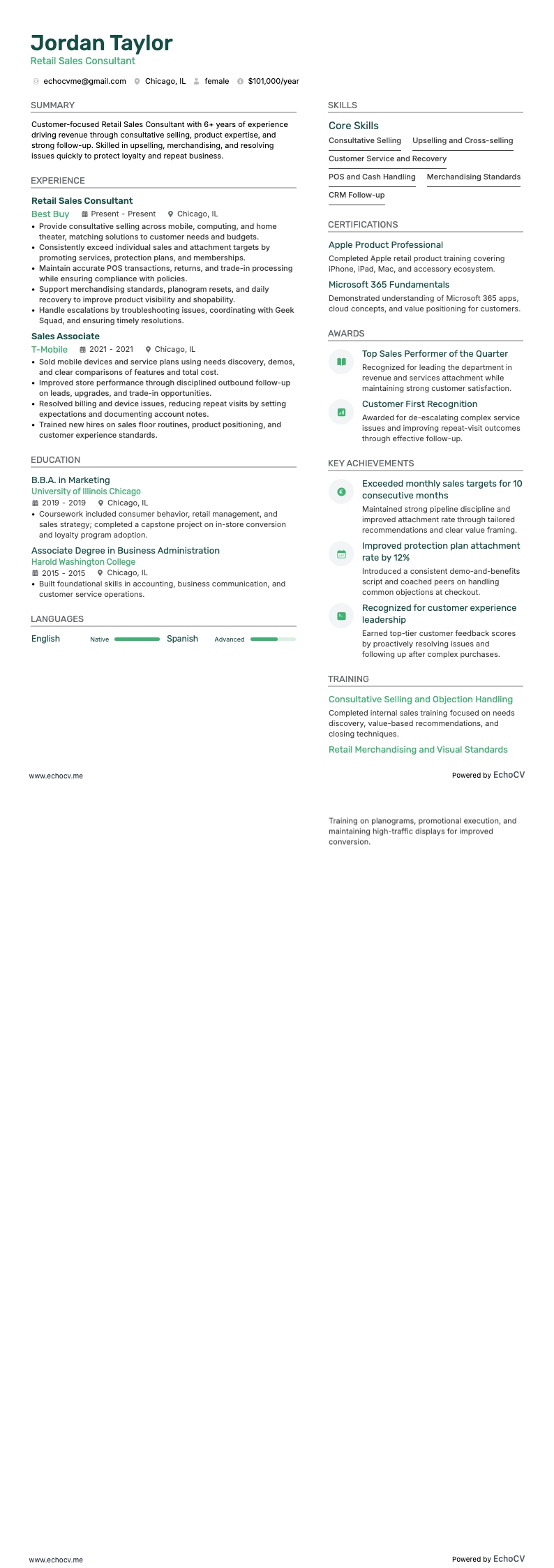
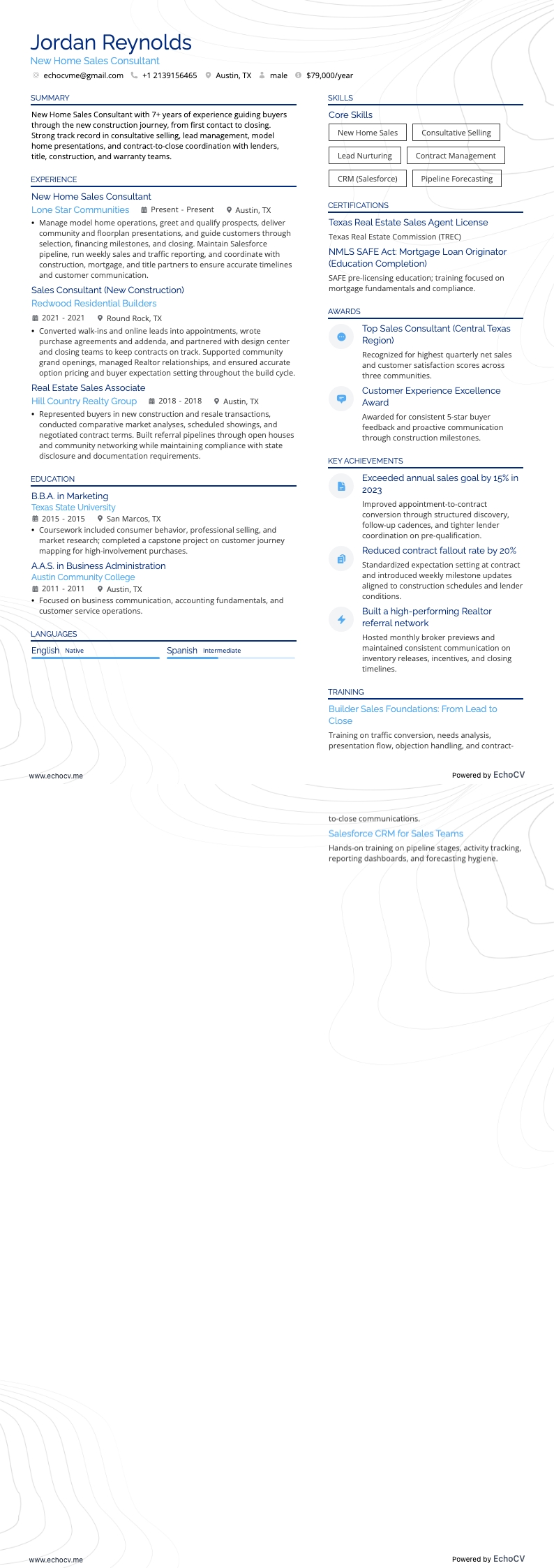
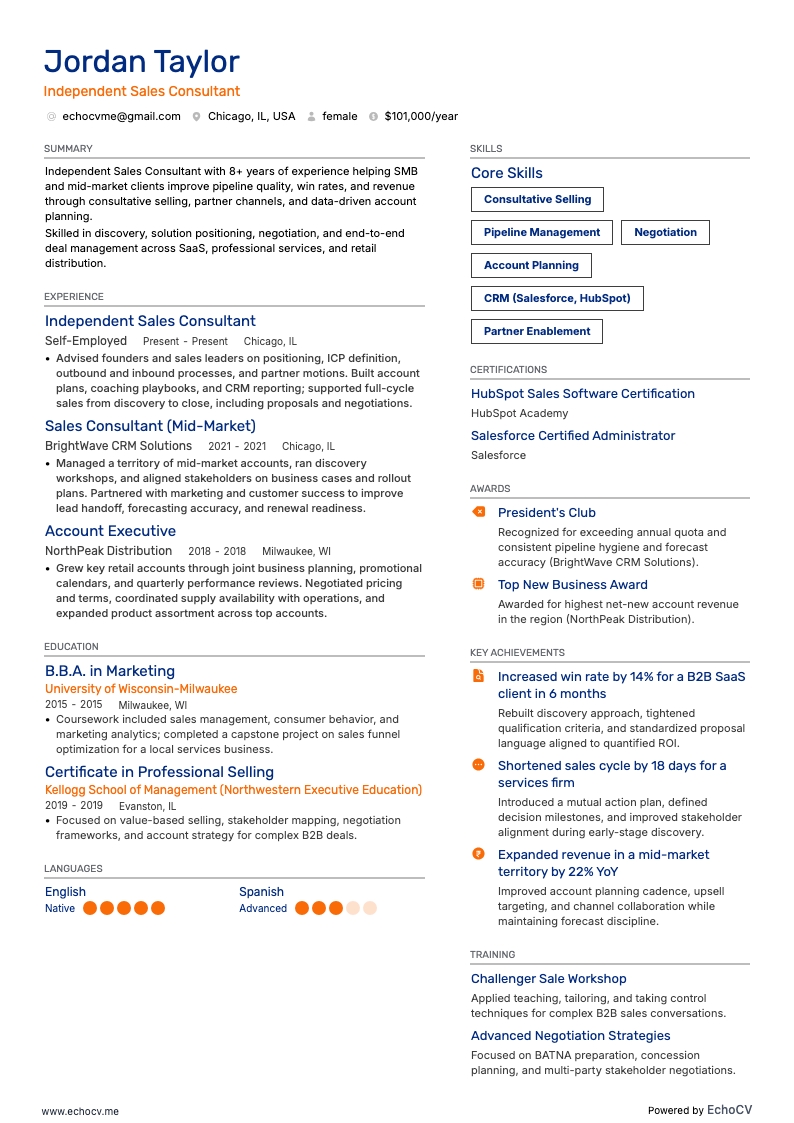
Very often it's all about turning your experiences into numbers. Let's break down how to do just that in the section up ahead.
How to quantify impact on your resume
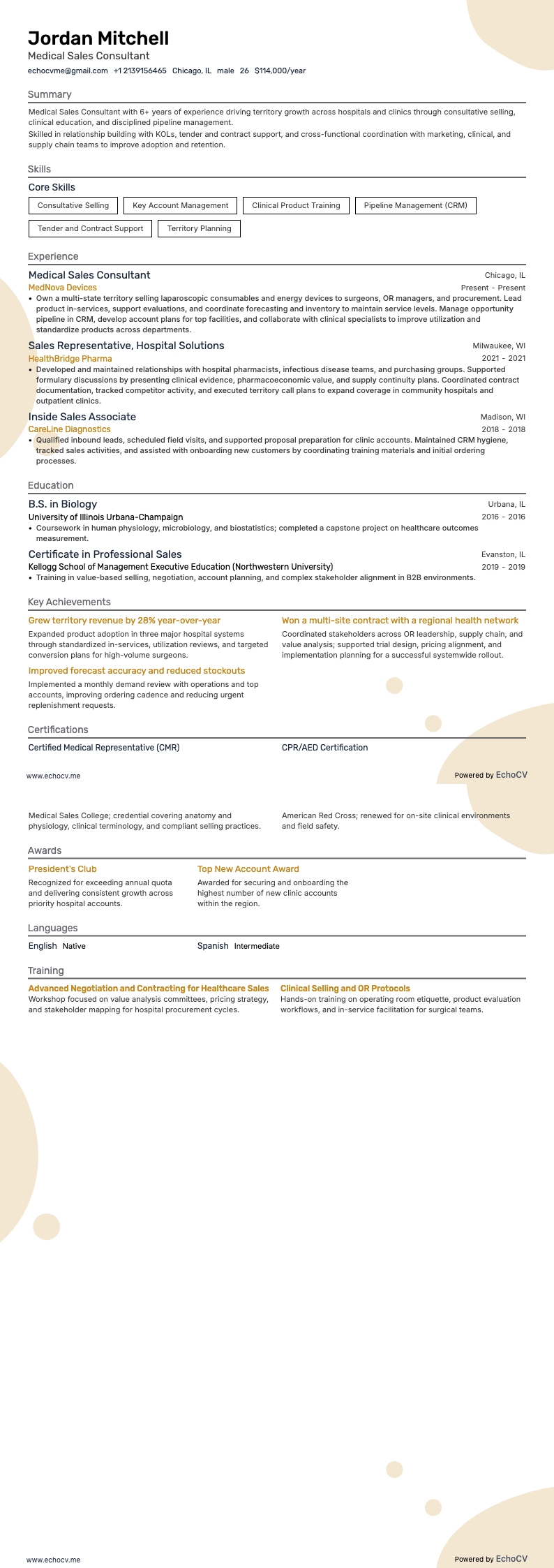
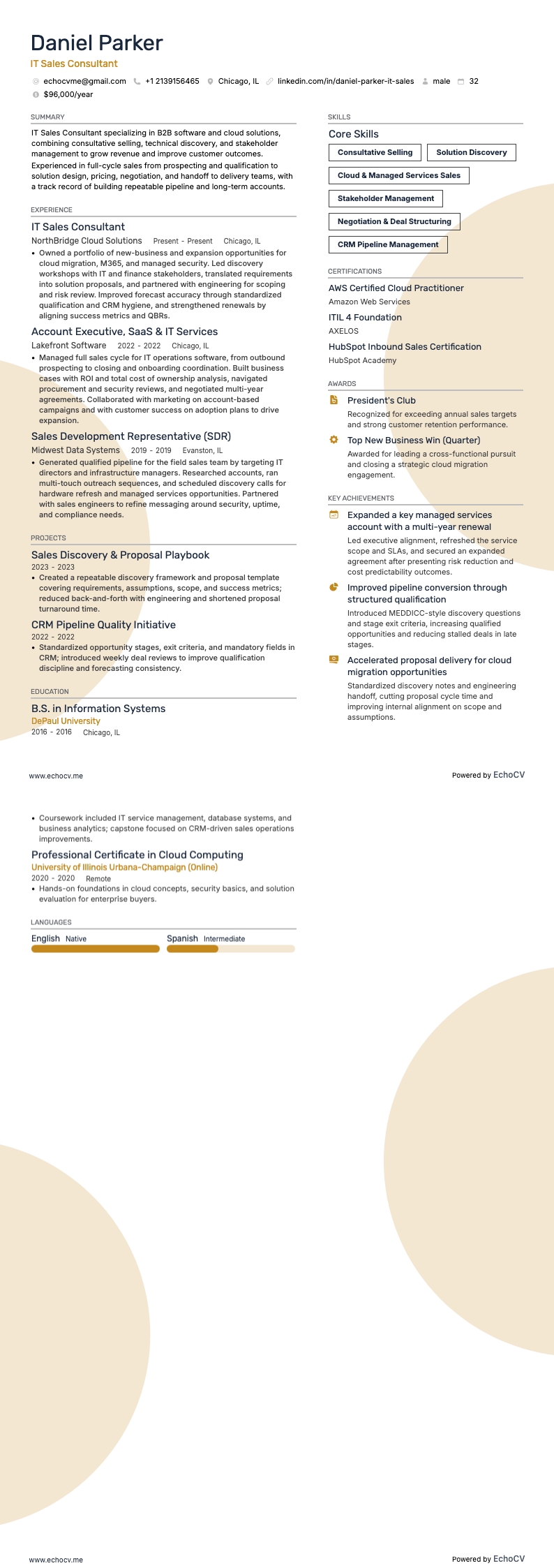
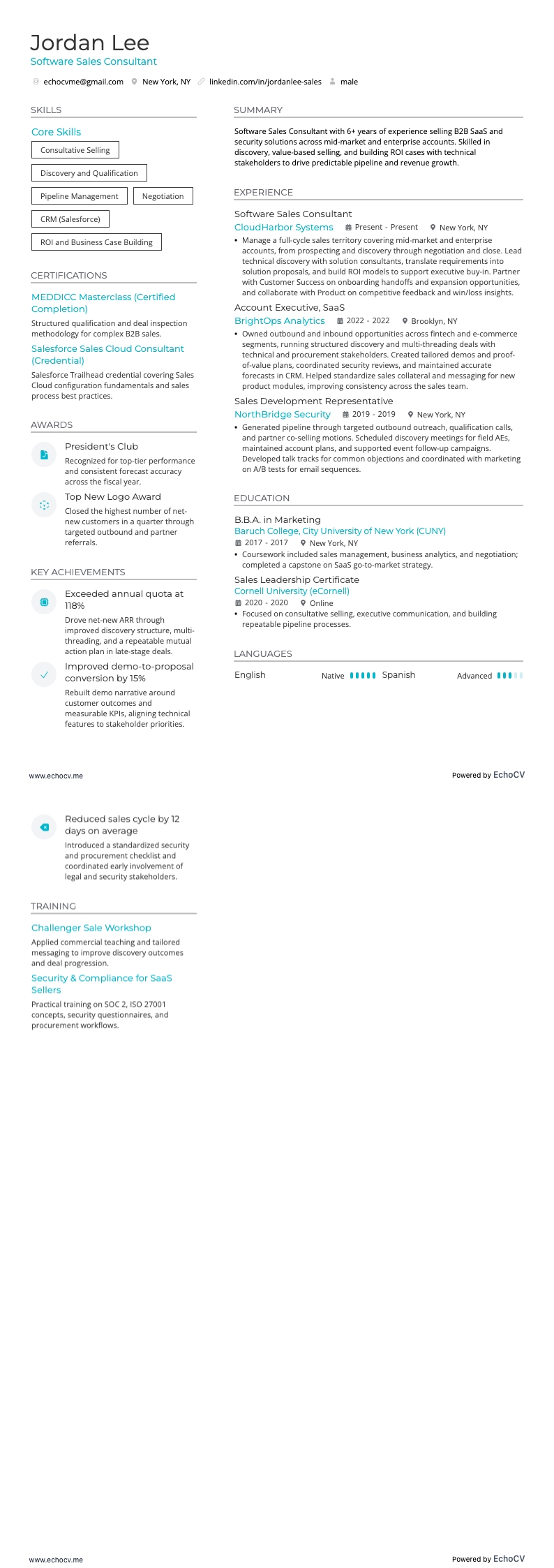
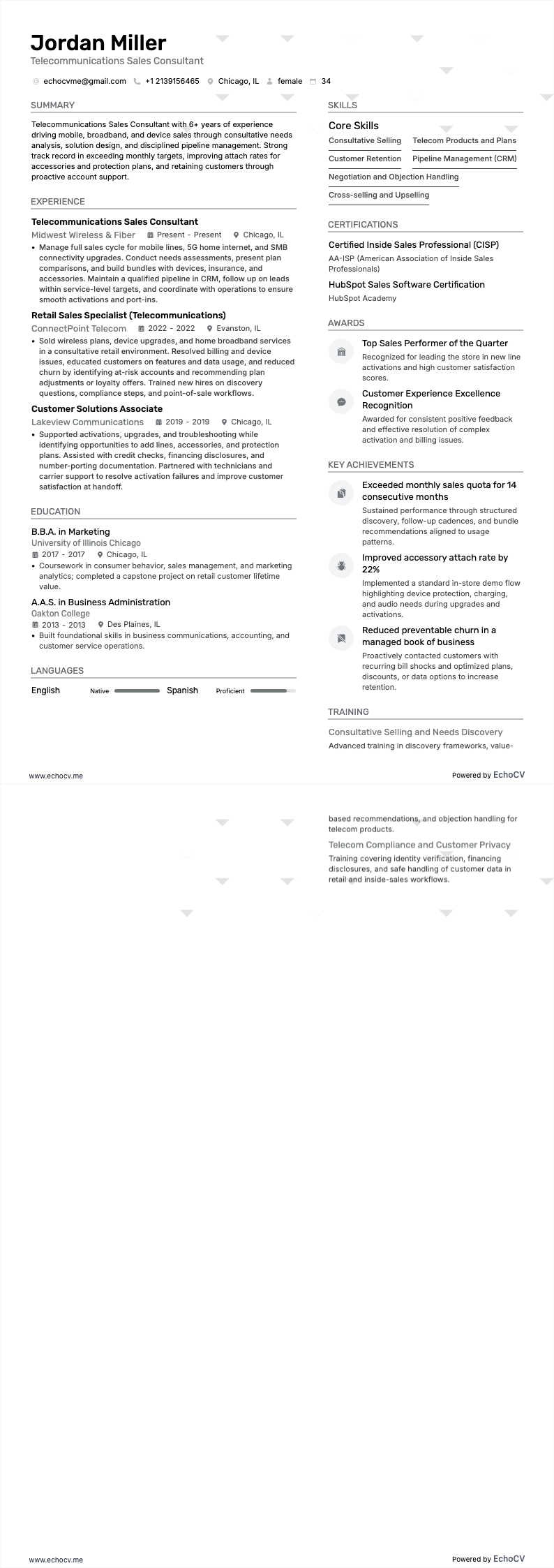
Many sales consultants struggle with quantifying their achievements for their resumes. After all, your impact is often gauged by revenue generated, units sold, or new clients secured — metrics that aren't always at your fingertips.
Sales tracking tools like Salesforce or Zoho CRM can help you keep a precise record of your performance over time. To really make your resume shine, zero in on these key figures from your stats dashboard.
- The number of new clients acquired. This demonstrates your ability to expand the business and bring in fresh revenue streams.
- The percentage increase in sales achieved. It shows your effectiveness at driving sales growth and meeting business objectives.
- The scale of your largest sale. Showcasing the size of your largest deal highlights your capacity to handle and close high-stake transactions.
- Conversion rate. Presenting your ratio of leads converted to sales proves your ability to effectively transform potential into profit.
- The revenue generated annually. This showcases your direct impact on the company's bottom line and your capability to contribute to financial growth.
- The number of returning customers. It testifies to your excellent customer relationship management that drives ongoing business.
- Reduction in sales cycle length. This signifies your proficiency in implementing efficient sales processes to close deals faster.
- The numbers related to cross-selling or upselling. This shows your ability to maximize the revenue from each existing customer, revealing your effective selling skills.
How to write a sales consultant resume with no experience
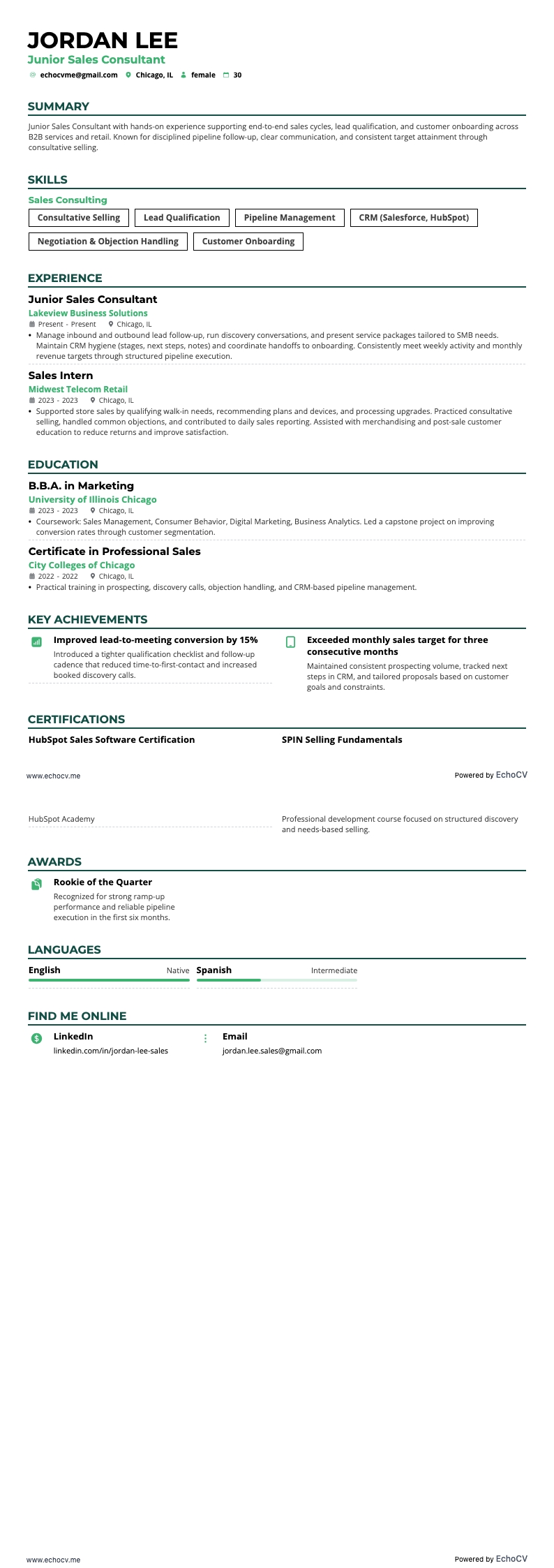
The pointers above are great for entry-level sales consultants too. Your figures might lean more on academic achievements or community projects rather than direct sales experience, but they're just as valuable.
Here’s what you can focus on when you’re entering the world of sales:
- Kick off with a punchy resume objective that says who you are and what you’re aiming for, mixing your sales enthusiasm with a dash of ambition.
- Elaborate on the education section to highlight any projects or courses where you’ve honed skills like negotiating or presenting.
- Skills. This is your arsenal. Mix technical know-how, like CRM software, with your superpowers in communication and making friends. Make sure to match these skills with the job posting.
- Got experience outside direct sales? Repurpose it. Customer service gigs, negotiation in any role, or even leading a team project can show off your people skills.
- Mention any sales or related training courses you’ve taken. It shows you’re serious about selling and eager to learn more.
- Ever won something or been recognized? Here’s the spot to brag a bit. It’s all about showing you’ve got the drive and can hit targets.
Now, let’s explore that unbeatable mix of skills that sales consultants are so often praised for.
How to list hard and soft skills on your resume
While sales consultants mainly deal with people, they also need to show a certain level of technical proficiency, such as familiarity with customer relationship management (CRM) software or data analysis tools.
Below is a list of the most common tools you might need as a sales consultant. Note that as these may vary from company to company, perfecting that part of the resume and tailoring it for each job description is crucial.