Remember that scene from The Bodyguard when Rachel tells Frank he doesn’t look like a ‘tough guy,’ and he replies that that was his disguise? It turns out, Frank was on to something. In reality, the effectiveness of a security guard, much like a bodyguard, often lies in their ability to blend in—not sticking out until it's essential not to. Both roles share this quality of unassuming presence coupled with acute alertness.
When crafting your resume, however, forget about blending in. It has to stand out. Here, you should think about the best ways you can convey this precious mix of discreet vigilance and prompt readiness.
In this guide, we'll explore how to build a security guard resume that captures the essence of your responsibilities and skills. Here’s what we’ll cover:
- How to choose a resume format that matches your experience and achievements.
- How to describe and quantify your work experience in a way that will impress recruiters and is optimized for applicant tracking systems (ATS).
- How to highlight your skills in your resume and how to prove you have them.
- How to write a professional summary that captures attention from the start.
By the end of this guide, you'll be ready to present a resume that doesn’t just say, “I can look tough,” but rather, “I can handle tough situations.” Let’s get started and turn that paper into your first line of defense!
Are you interested in any other security-related position? Explore the examples below:
- Case Manager Resume
- Firefighter Resume
- Law Enforcement Resume
- Investigator Resume
- Police Officer Resume
- Security Manager Resume
- Incident Manager Resume
- Security Officer Resume
- Fraud Investigator Resume
- Security guard Cover Letter
How to format a security guard resume
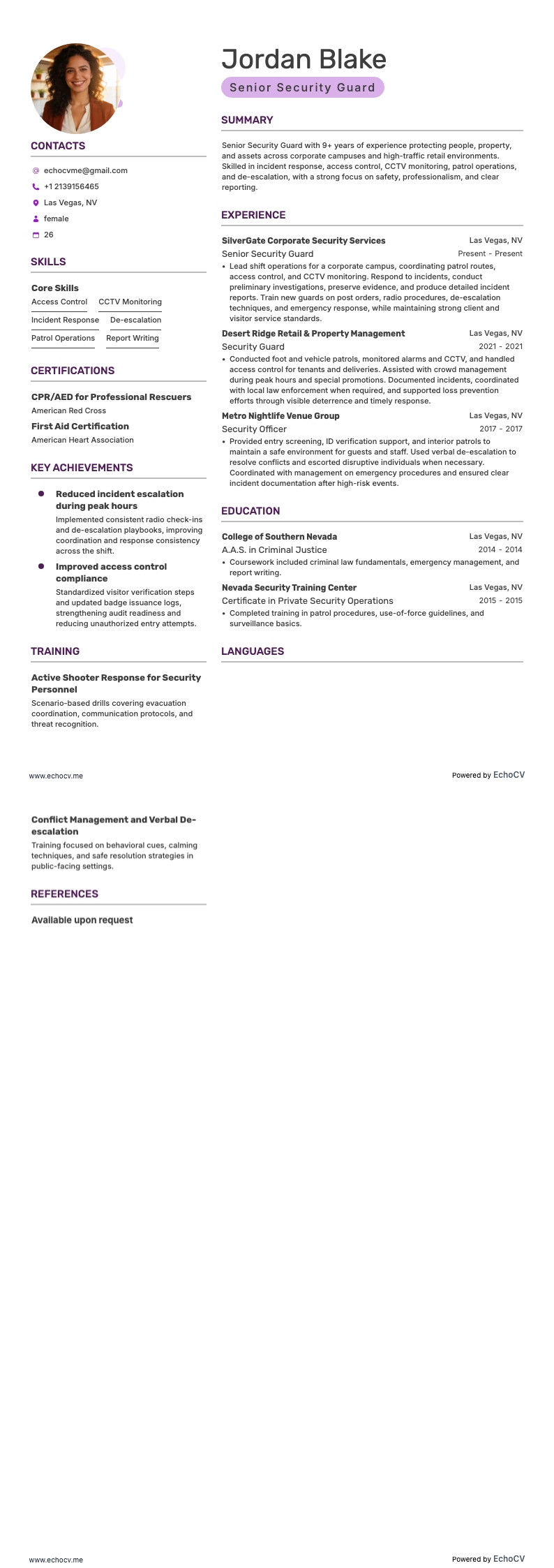
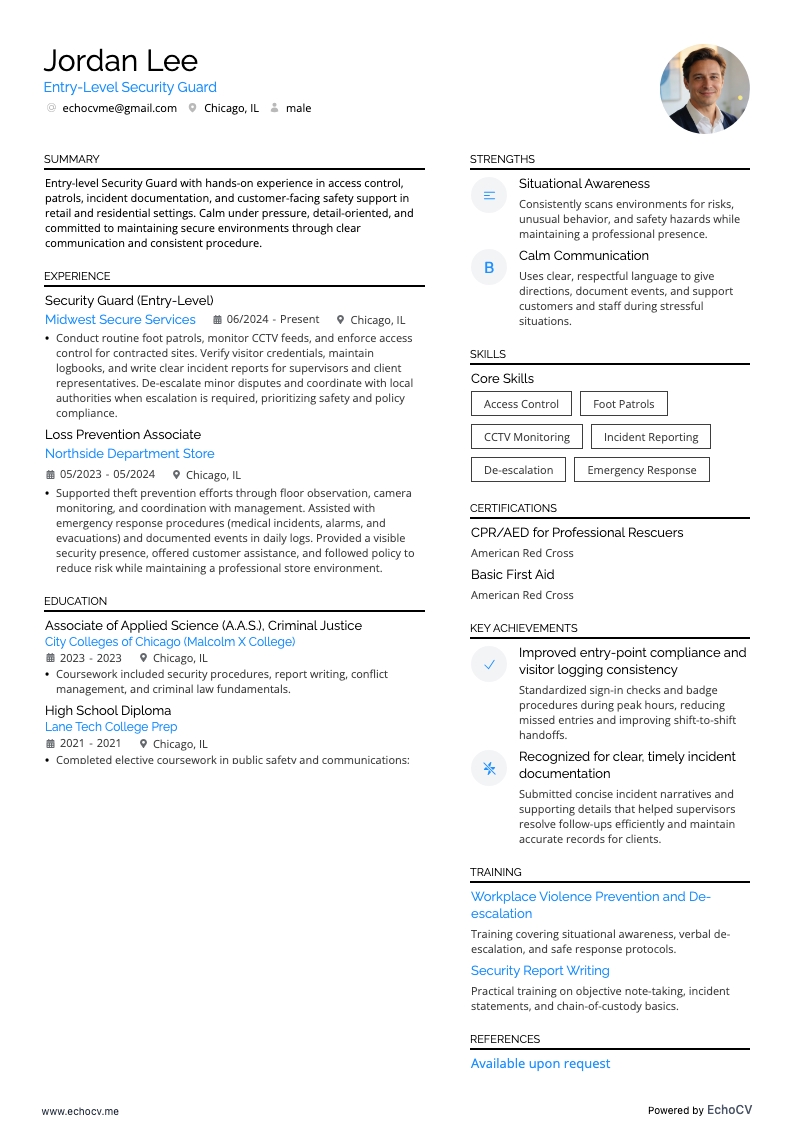
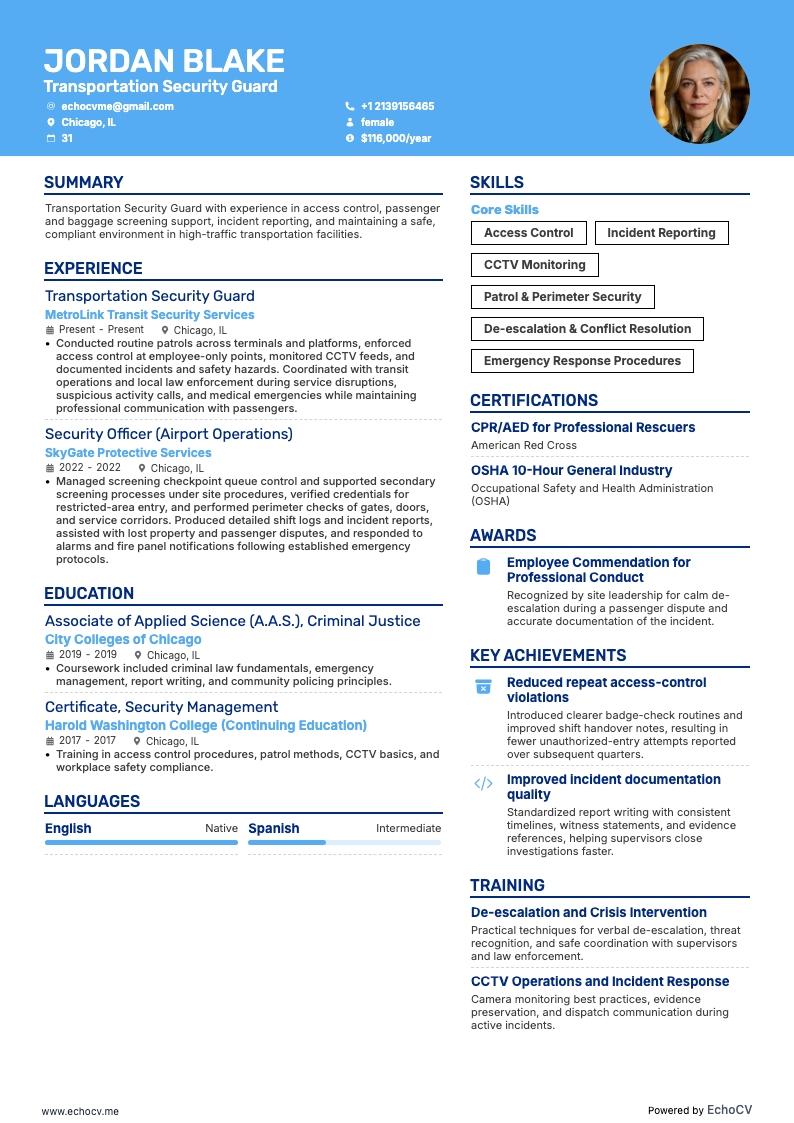
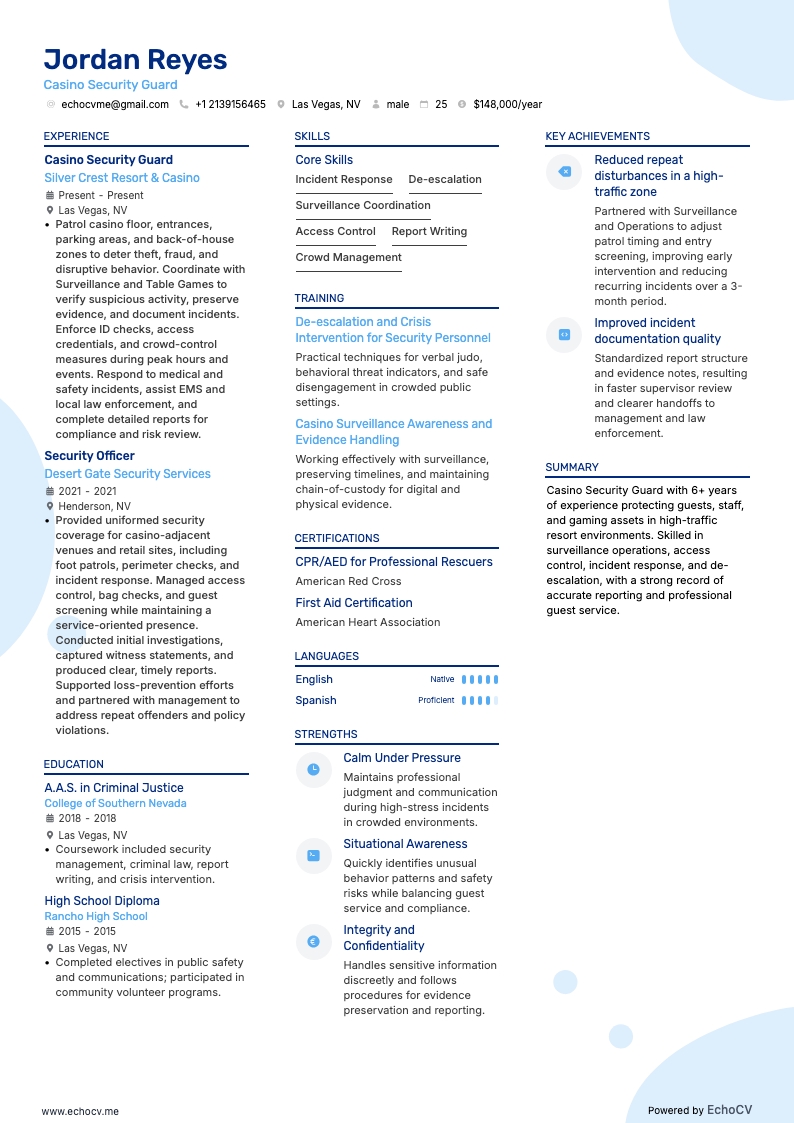
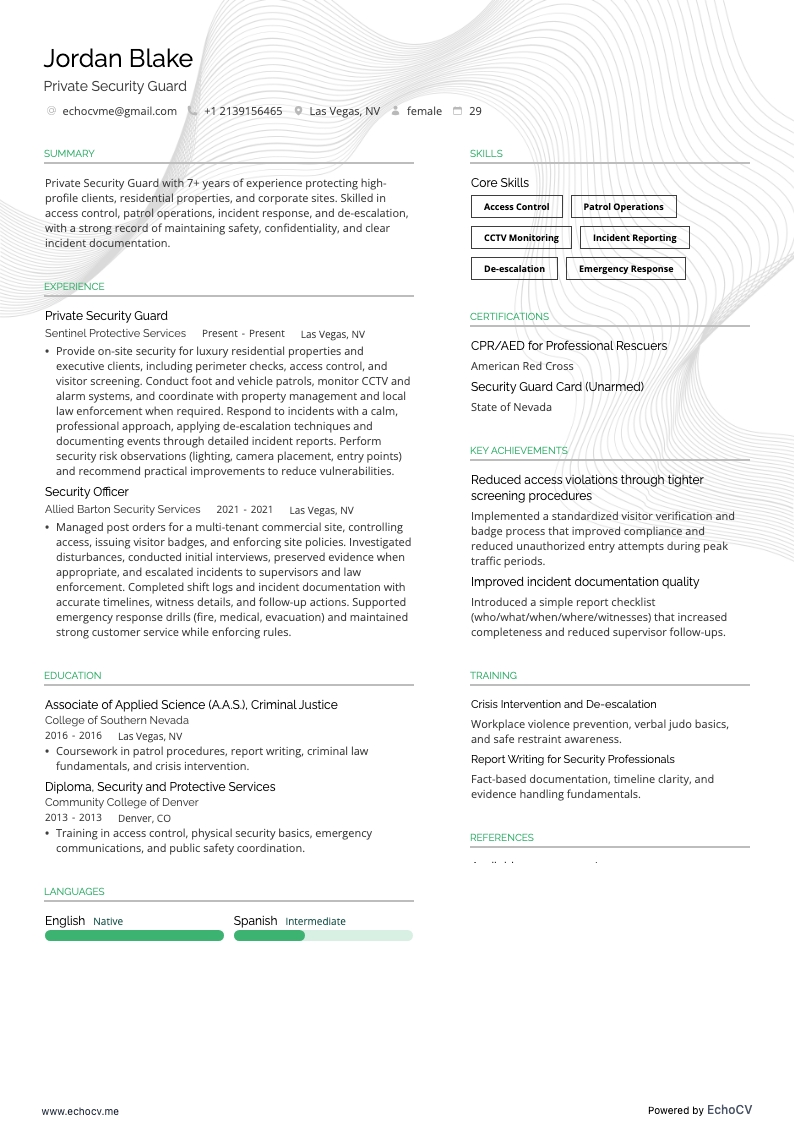
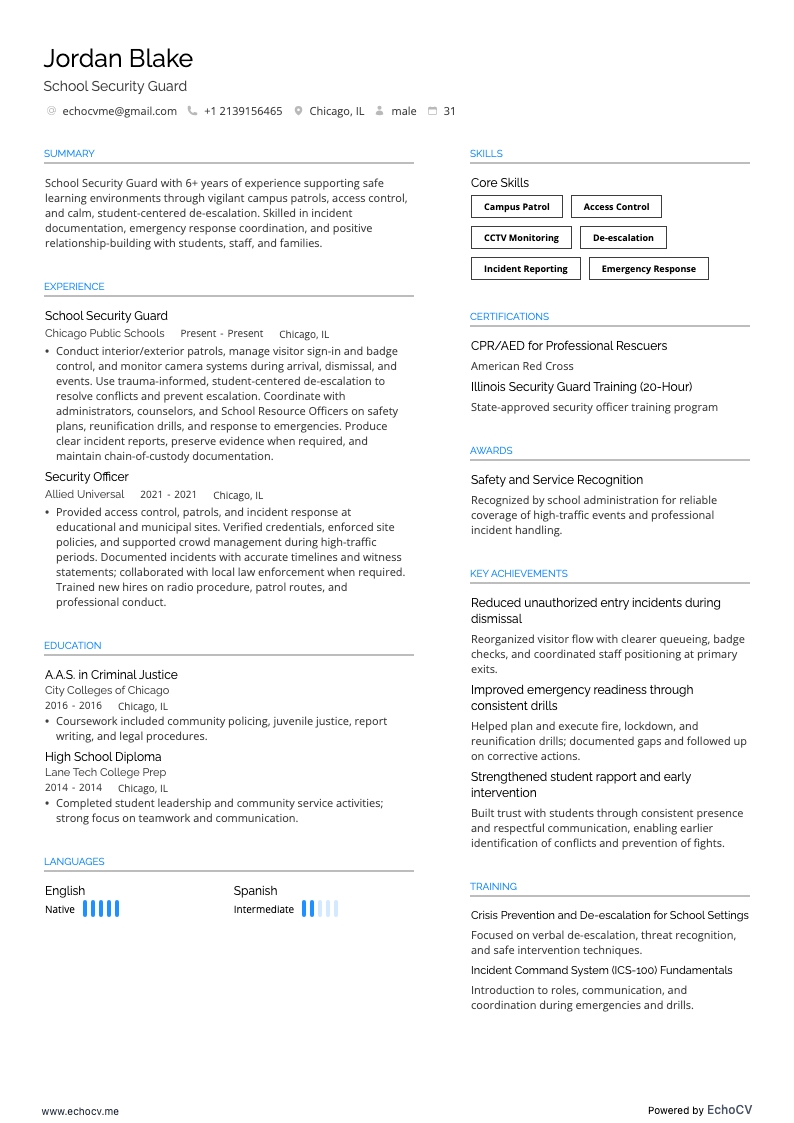
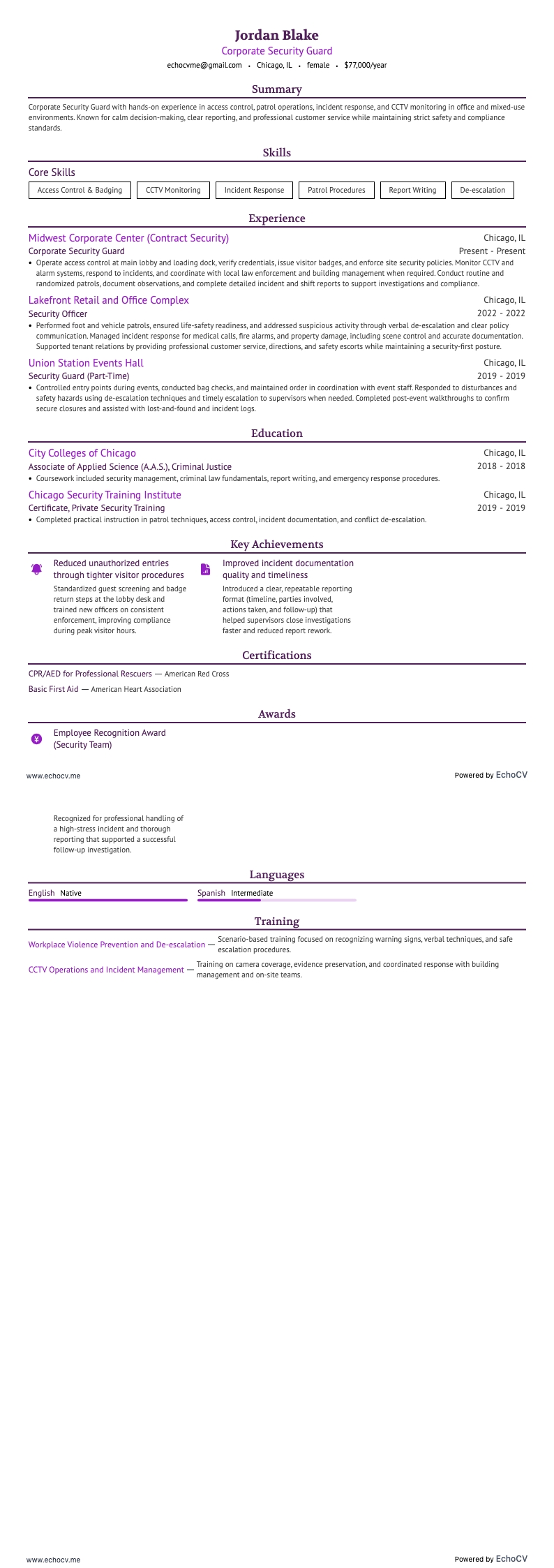
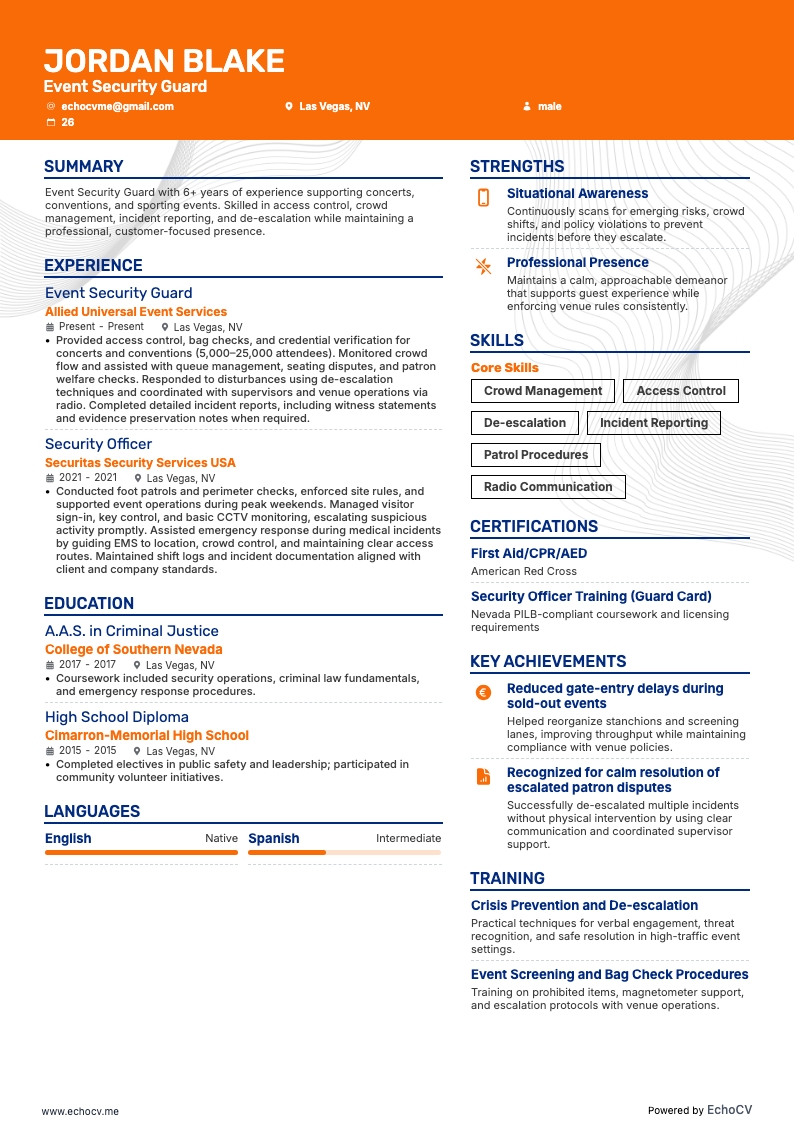
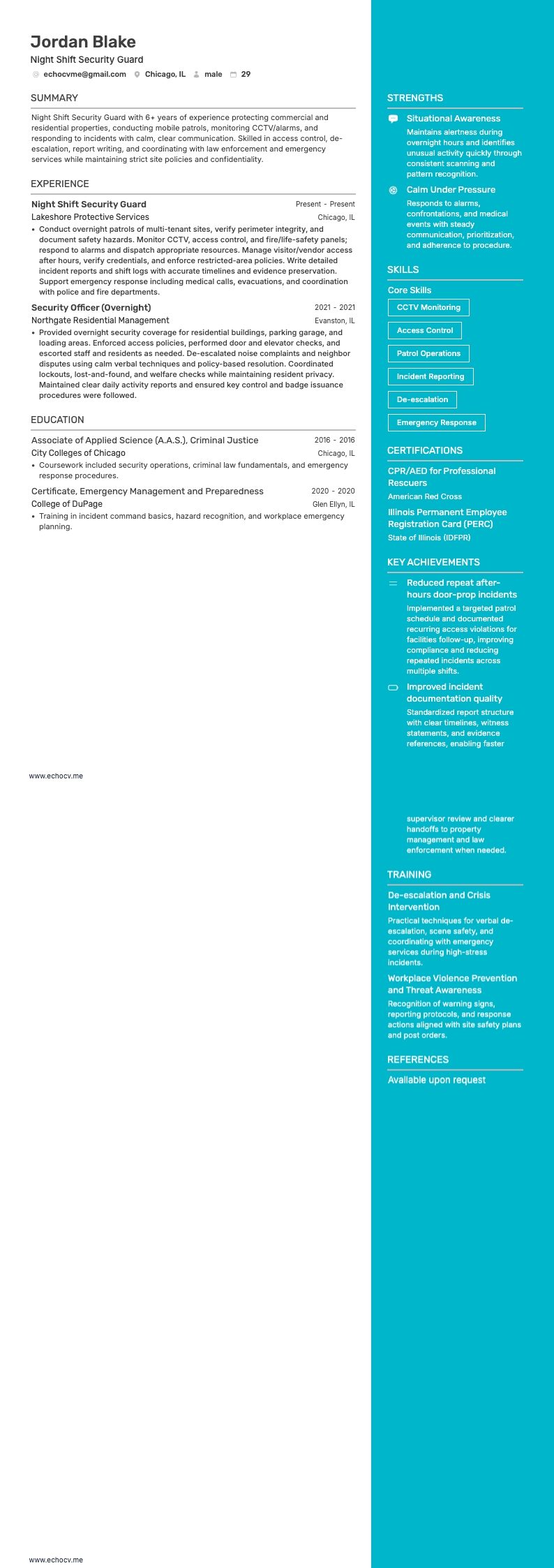
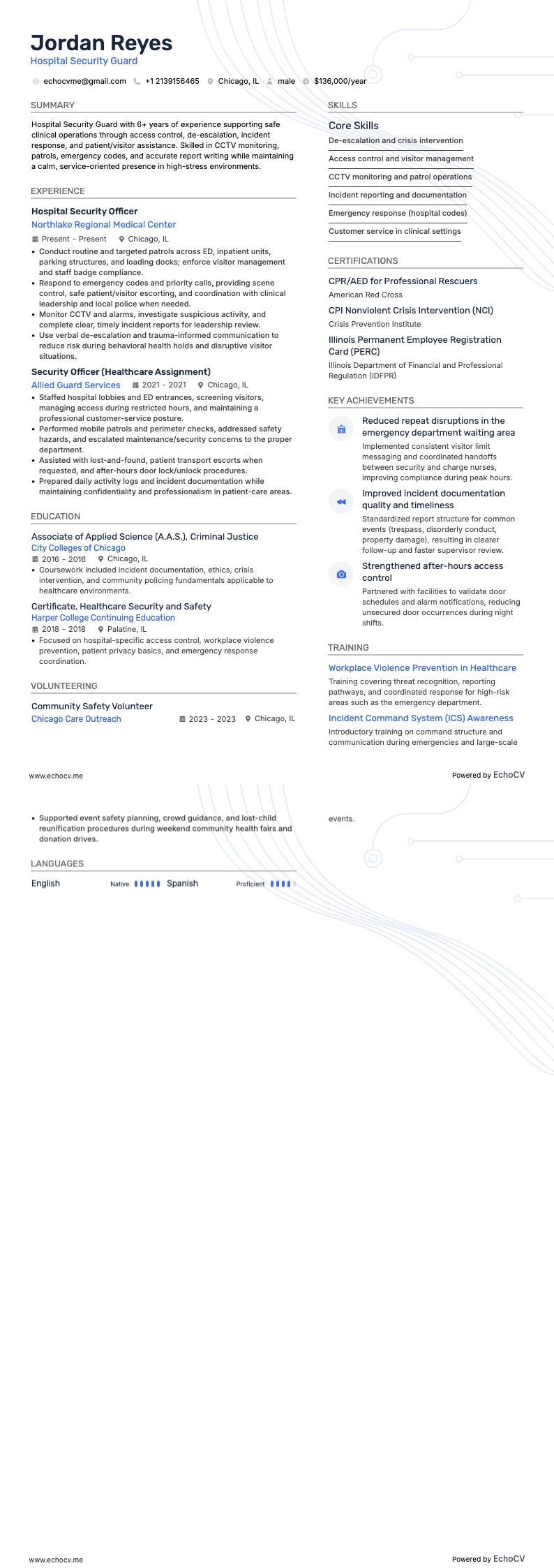
The key to building a well-organized resume is to prioritize clarity and relevance to the security field. Let’s start by defining an effective resume format that would allow for all your skills and experience to shine through.
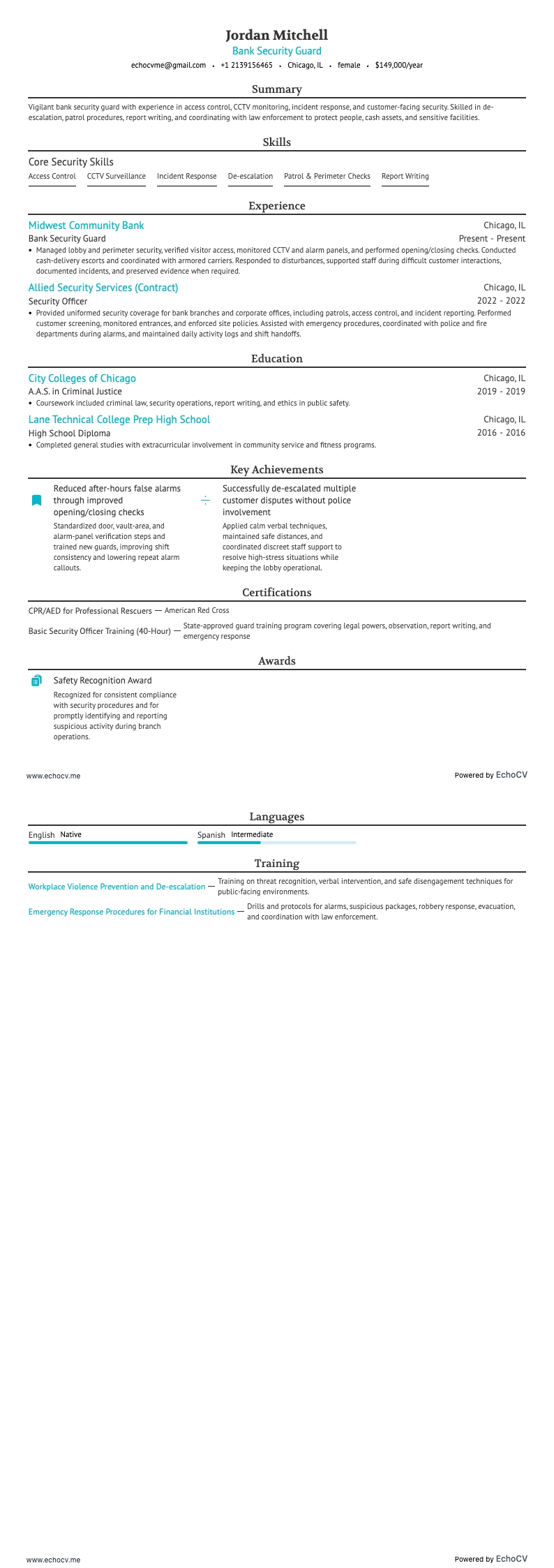
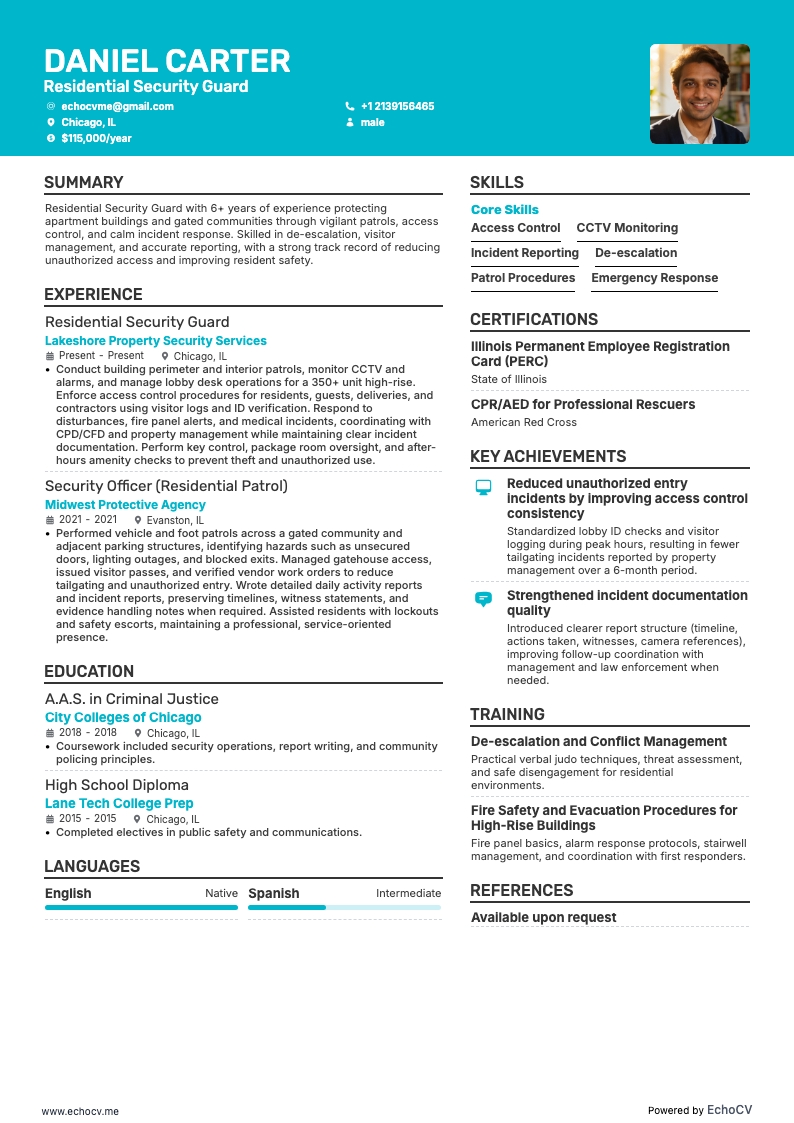
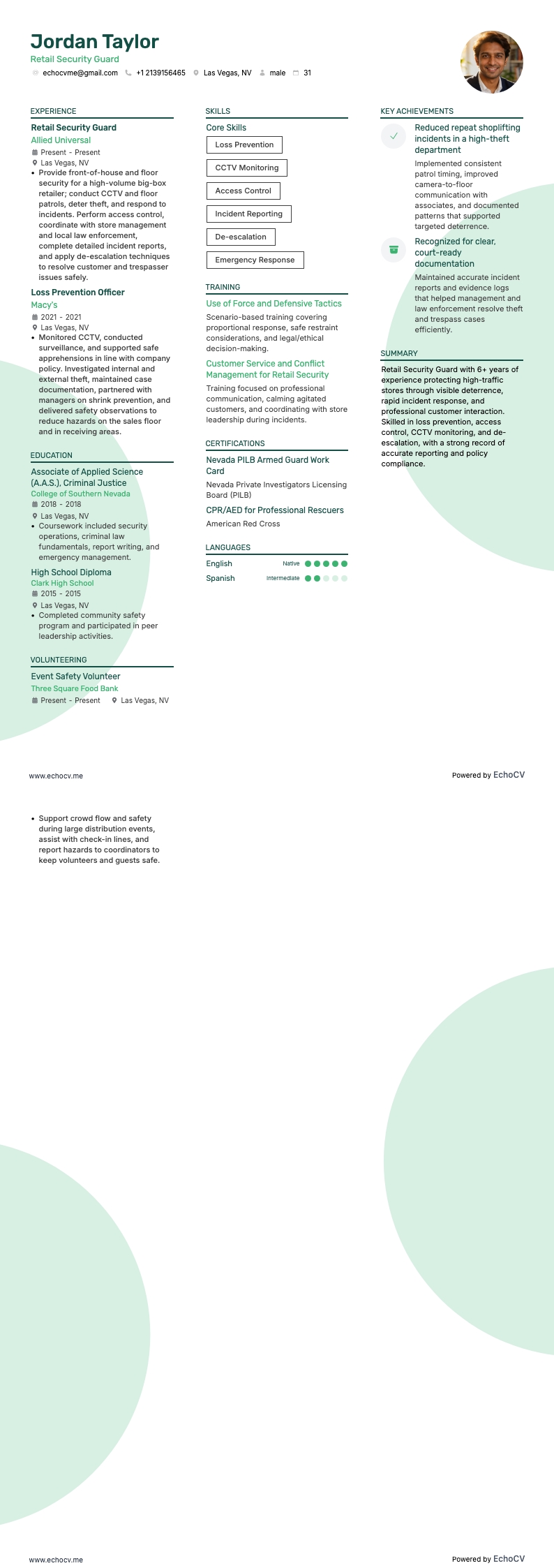
- Reverse chronological layout: This format lists your work experience in reverse chronological order, starting with your most recent job at the top. It’s most employers’ favorite because it easily outlines your career progression and responsibilities in each role. Plus, it’s easy for hiring managers to scan and aligns well with ATS.
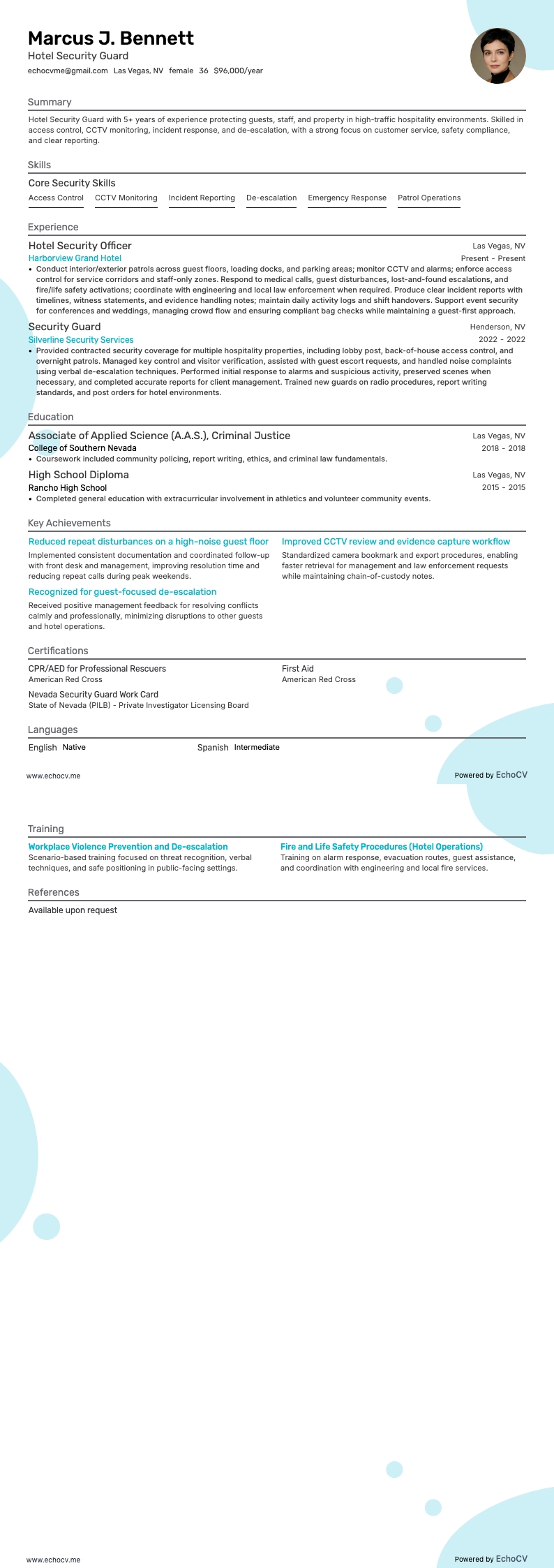
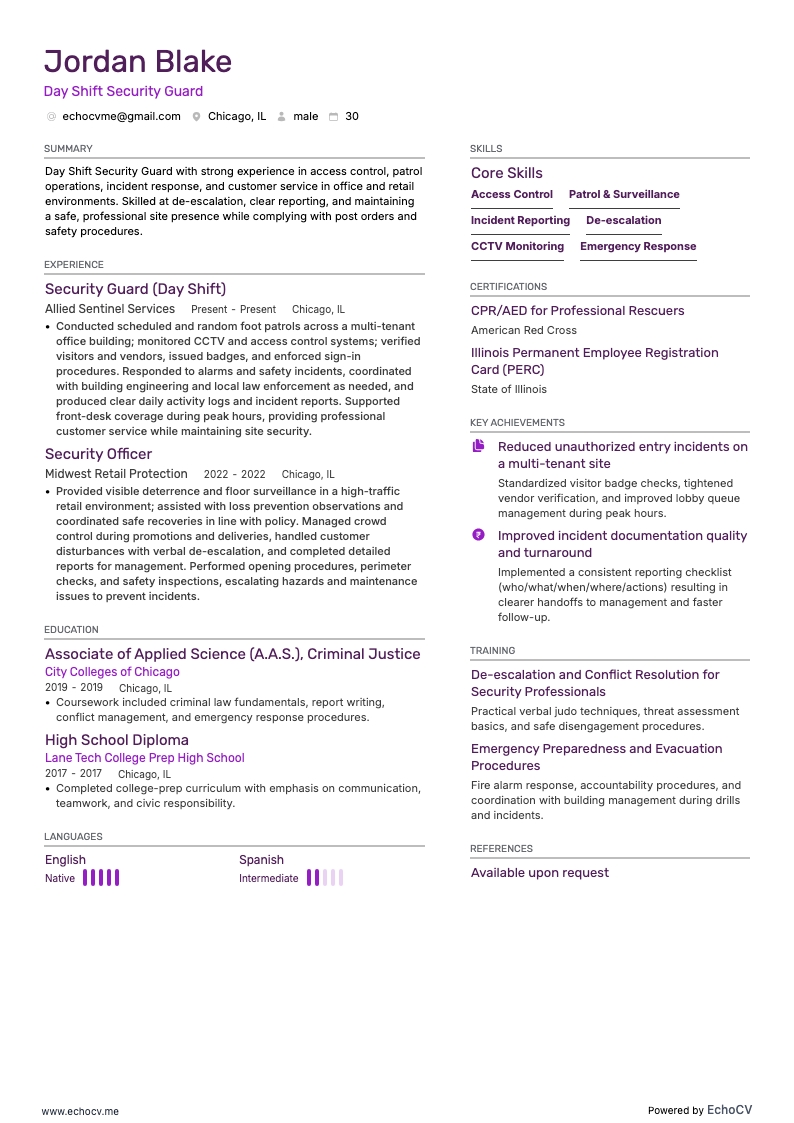
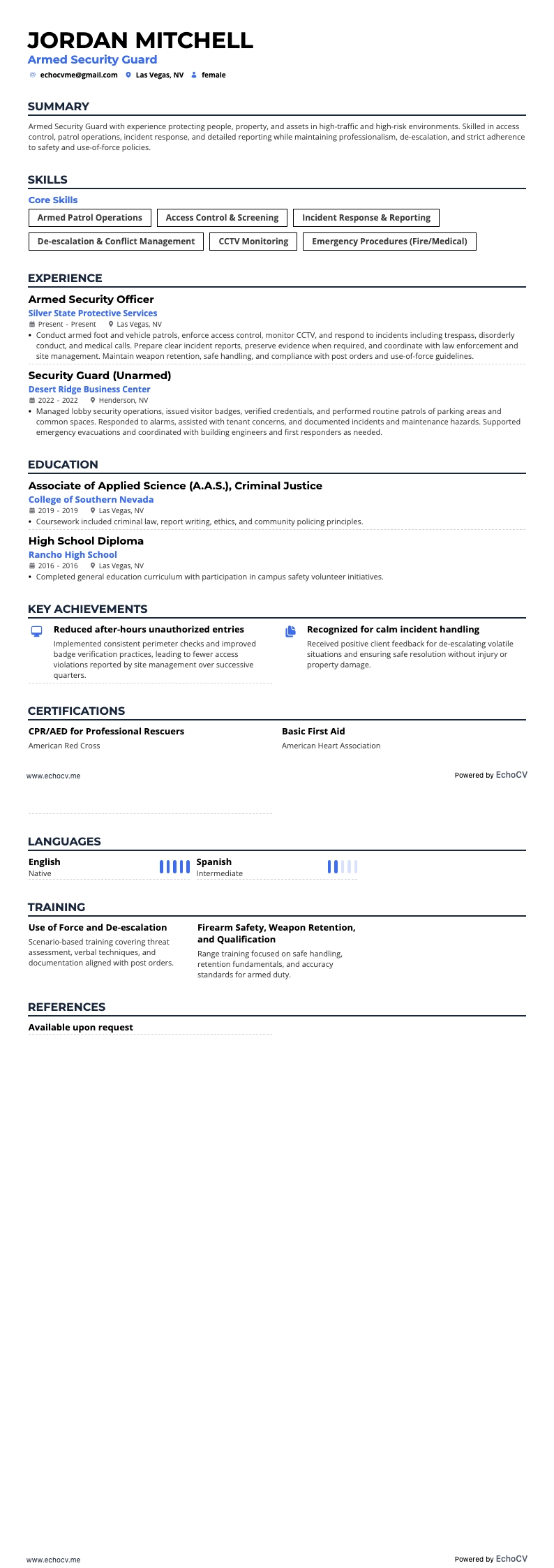
- Functional layout: This format focuses on your skills and qualifications rather than your chronological work history. It allows you to cluster your experiences under functional skill categories (e.g., Surveillance, Crisis Management, or Technical Skills). If you want to emphasize specialized training or certifications, this is your best option.
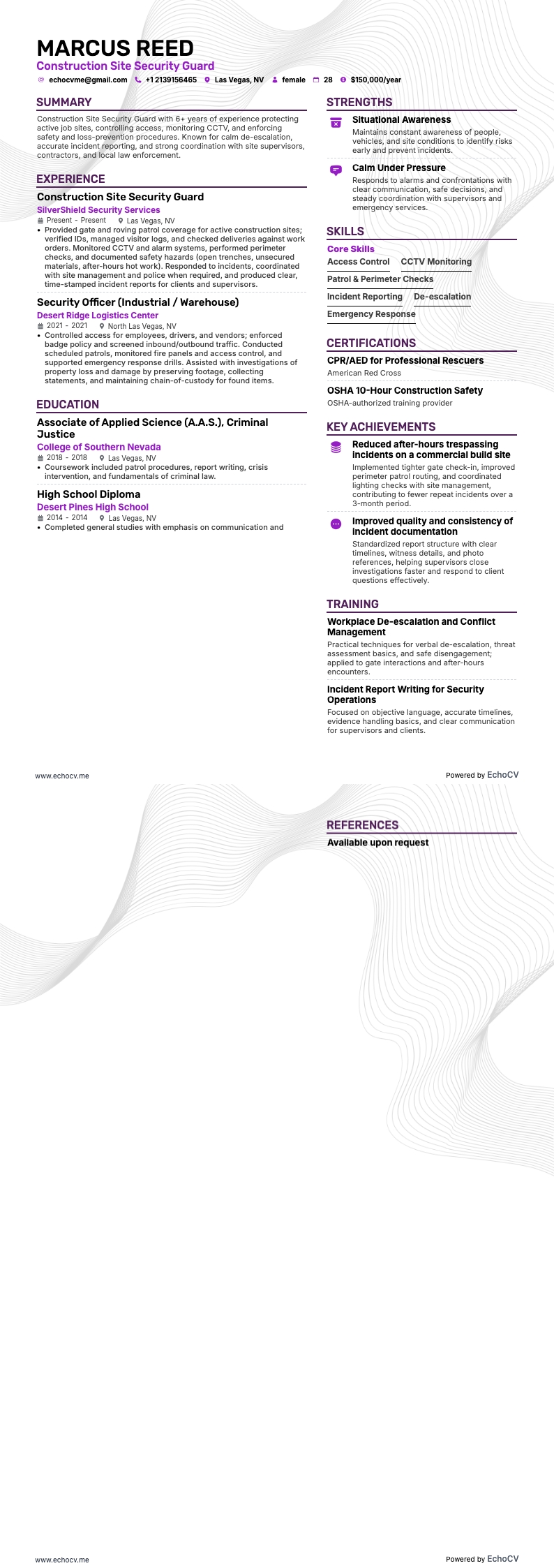
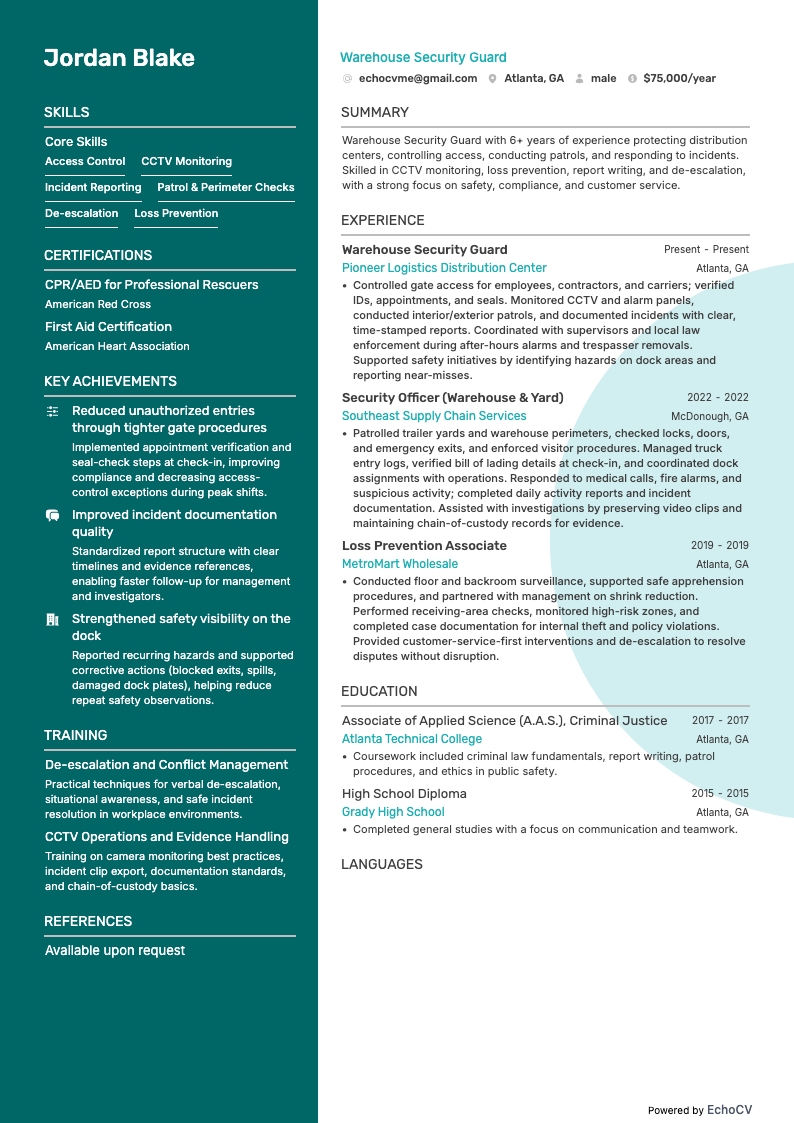
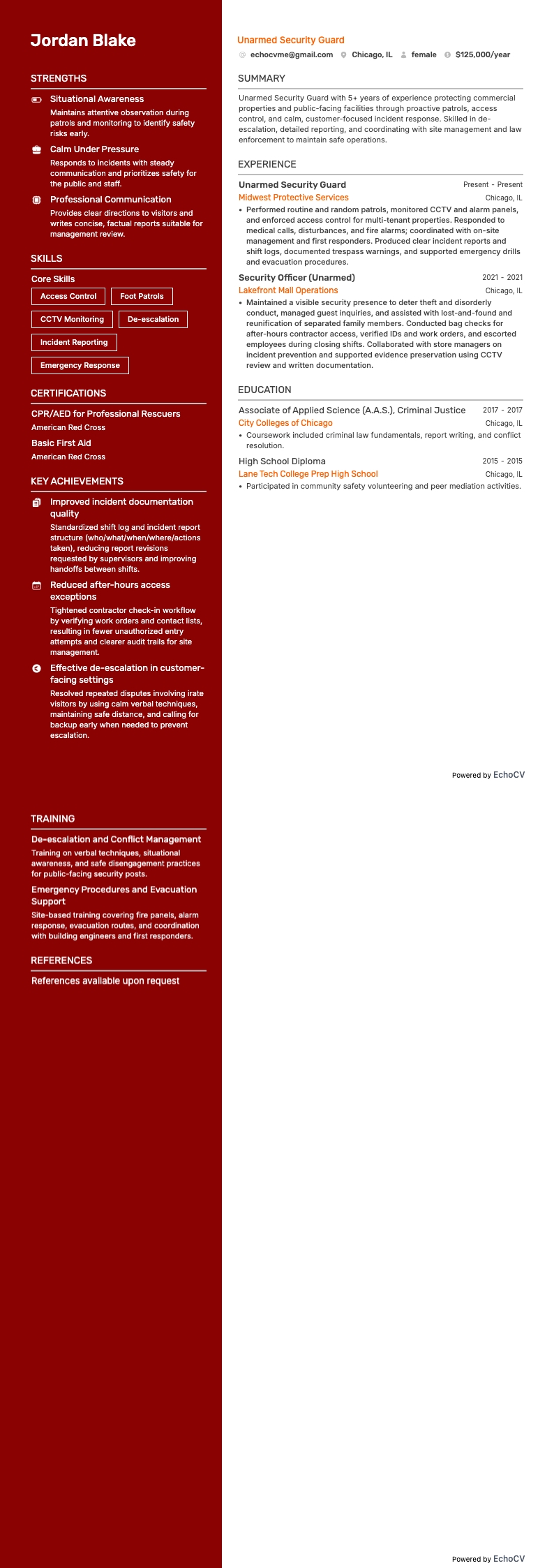
- Combination (hybrid) layout: It combines both the chronological and functional formats to highlight key skills upfront, followed by a chronological list of jobs.