Ancient Egyptian engineers built the pyramids to endure for millennia. Their legacy stands as a testament to human ingenuity. Today, civil engineers face a similar challenge: creating structures that last while at the same time protecting our planet. Sustainable building practices, such as adaptive reuse, urban regeneration, and green building design, are crucial.
civil engineers play a vital role in our legacy to future generations. It's more than a job—it's a mission. Your resume should reflect this dedication.
Explore our comprehensive civil engineer resume guide to see how to demonstrate the impact of your work.
Here’s what else we’ll cover:
- Tips on formatting your resume according to your civil engineering experience and goals.
- How to use your experience section to bridge your current career and your next desired position.
- The importance of measurable impact on your resume.
- What a well-rounded skill set for a civil engineer is.
- The importance of relevant education and certifications.
- How additional sections can make your resume shine even brighter.
- Civil engineer example resumes and templates.
Here’s a list of guides related to civil engineering that might be useful:
- Design Engineer resume examples
- Electrical Engineering resume examples
- Structural Engineer resume examples
- Quality Engineer resume examples
- Project Engineer resume examples
- Architect resume examples
- Construction engineer examples
- Entry-level engineering examples
How to format a resume for a civil engineer
Your resume layout is what speaks to recruiters immediately. It can either be a comprehensive map of your experience and skills or an unsolvable labyrinth for the potential employer. Make sure it’s the first, and start by choosing the right format.
Here are the three most common resume formats depending on your needs:
- Reverse chronological resume: It lists your workplaces starting with the most recent. This approach focuses on your professional growth and maintaining a consistent career progression.
- Functional resume: Ideal for those with limited experience or those switching careers. It focuses on your skills and accomplishments rather than your experience.
- Hybrid resume: Confident in both your skills and experience? Try the combination resume, which gives equal weight to both.
OK, you’ve chosen your format, now what? Here are some practical tips:
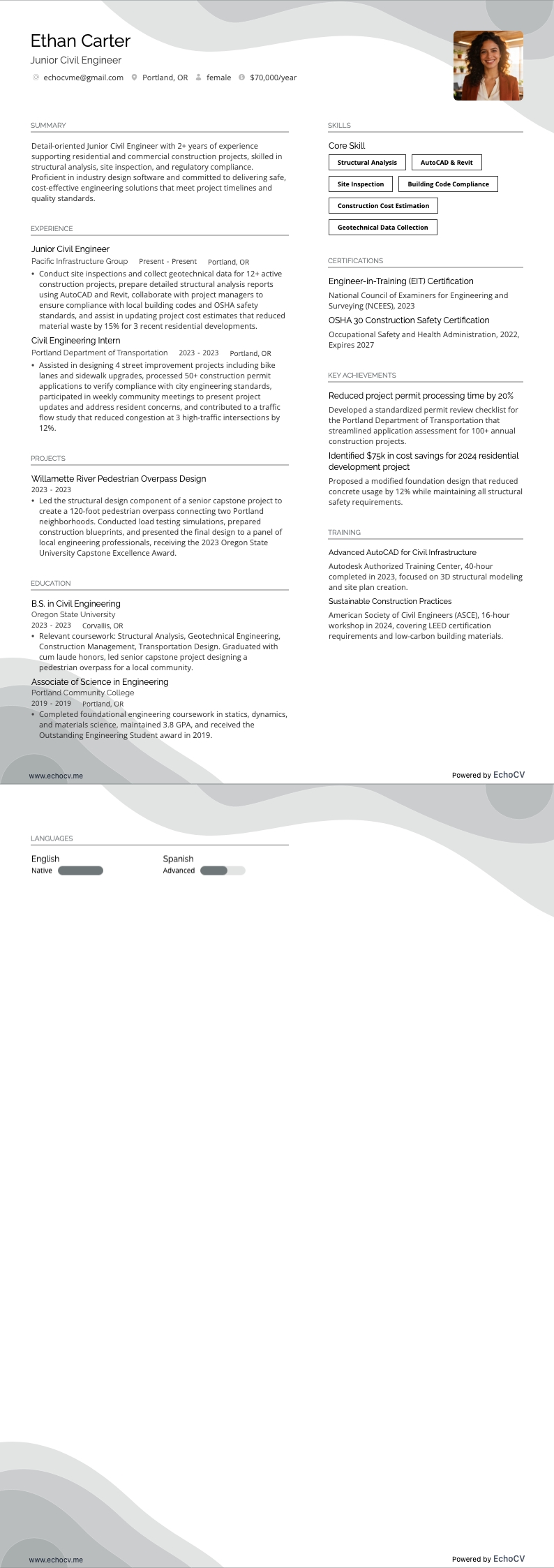
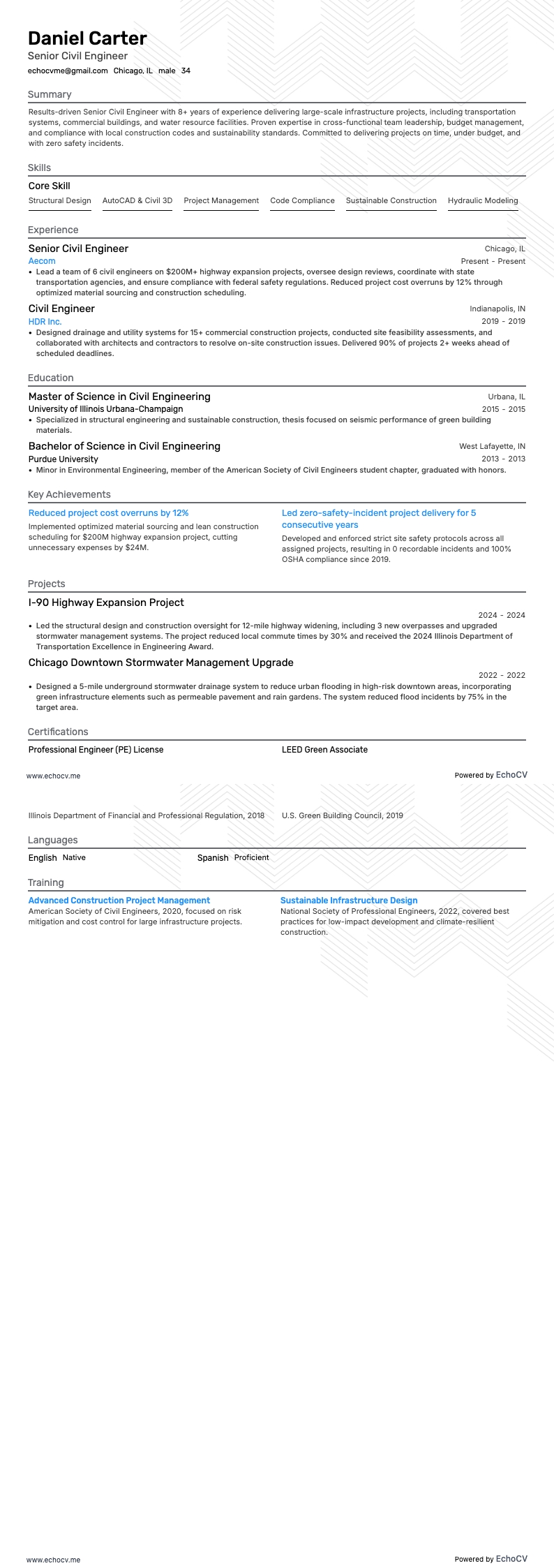
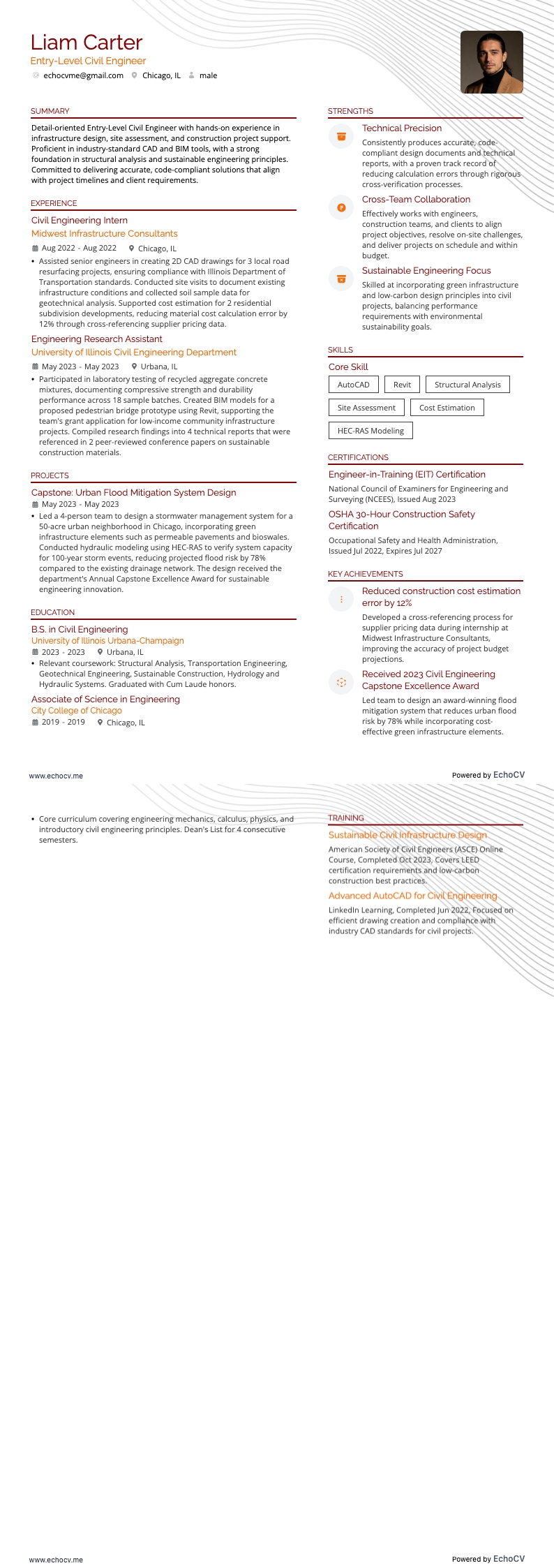
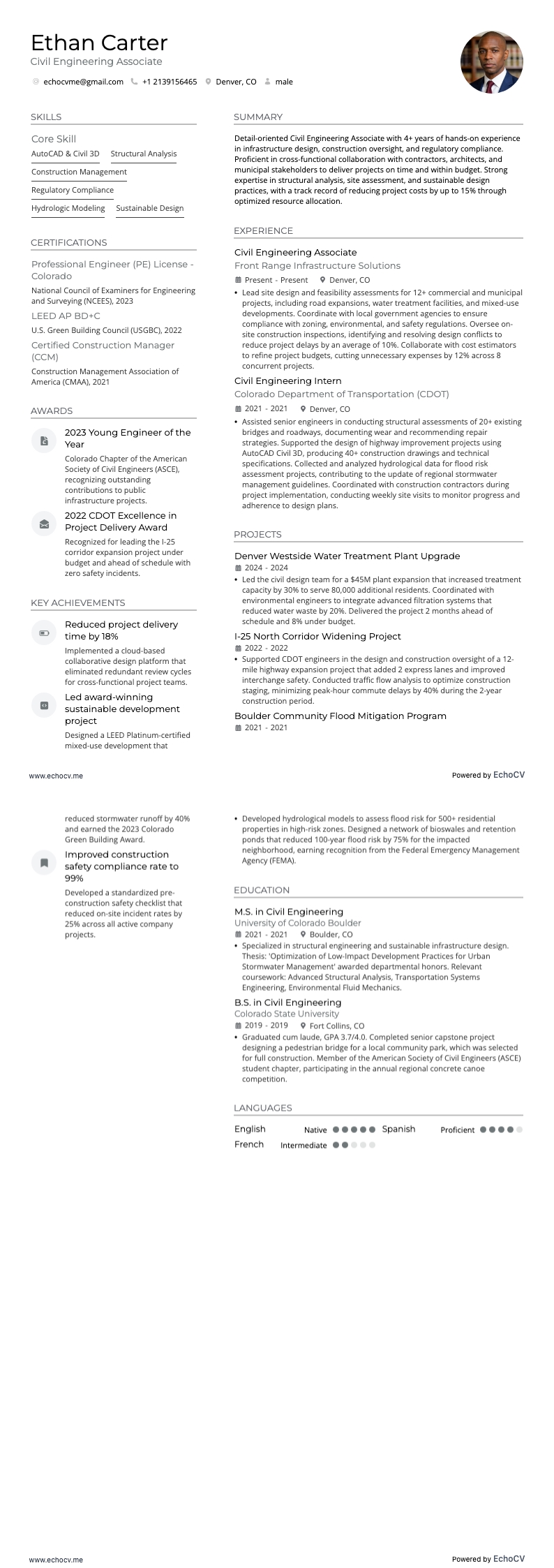
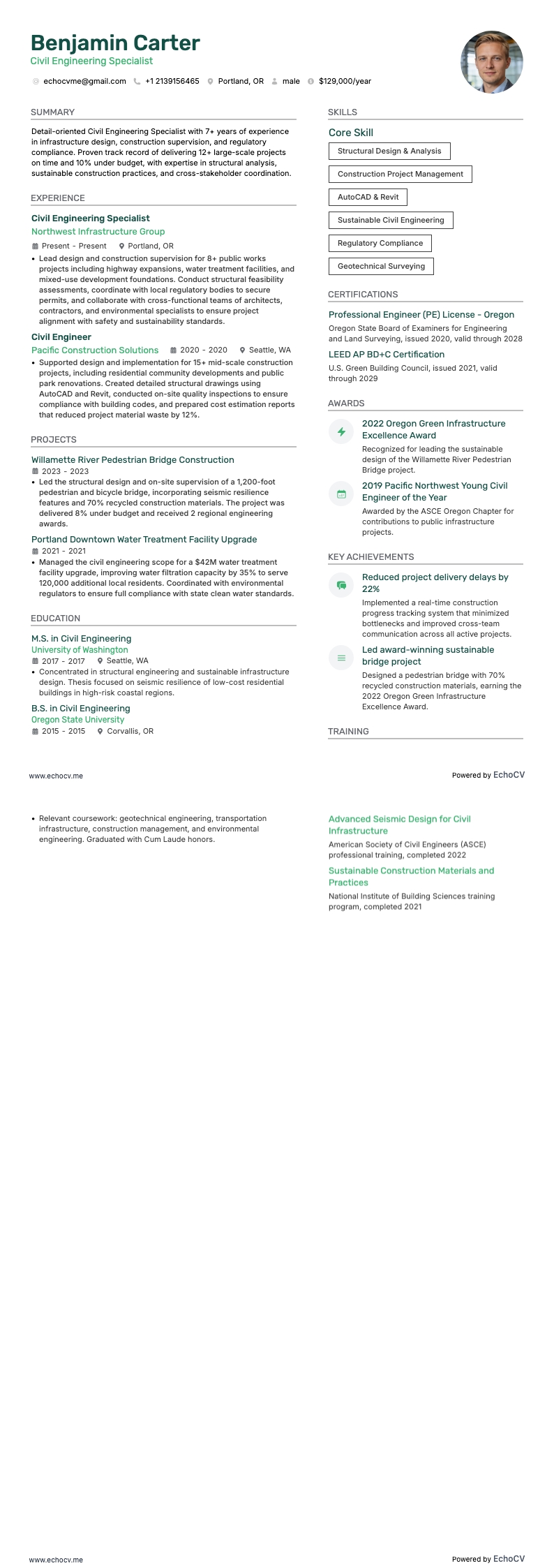
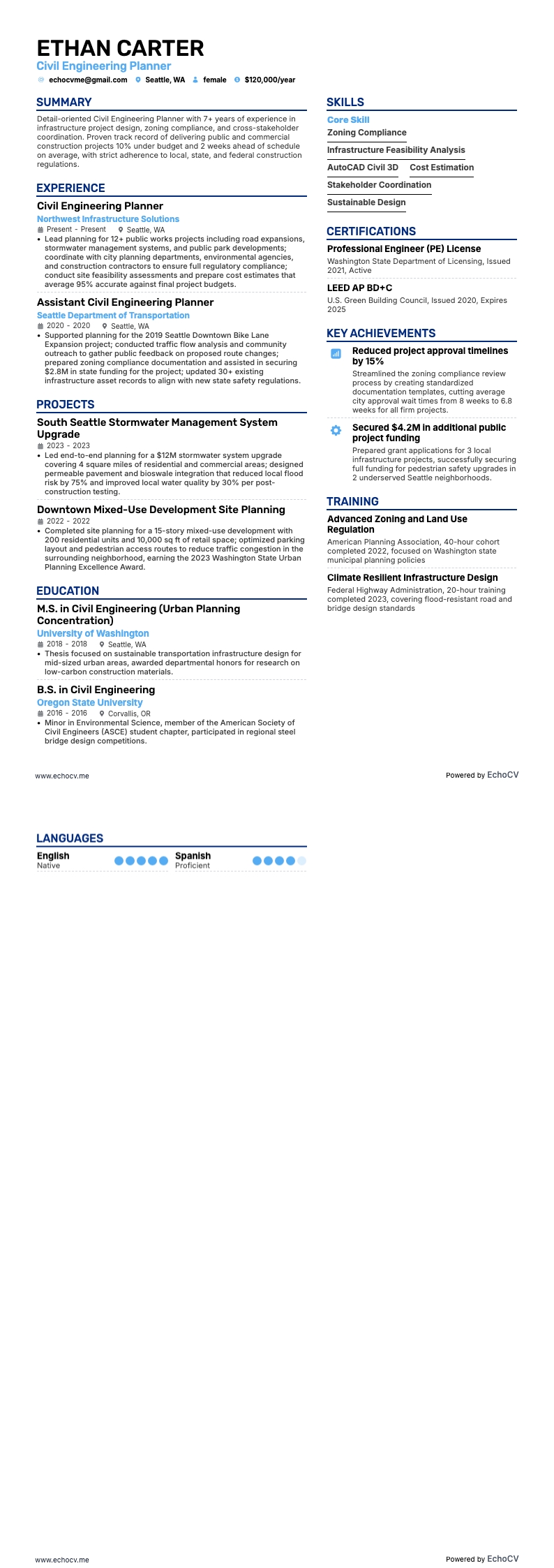
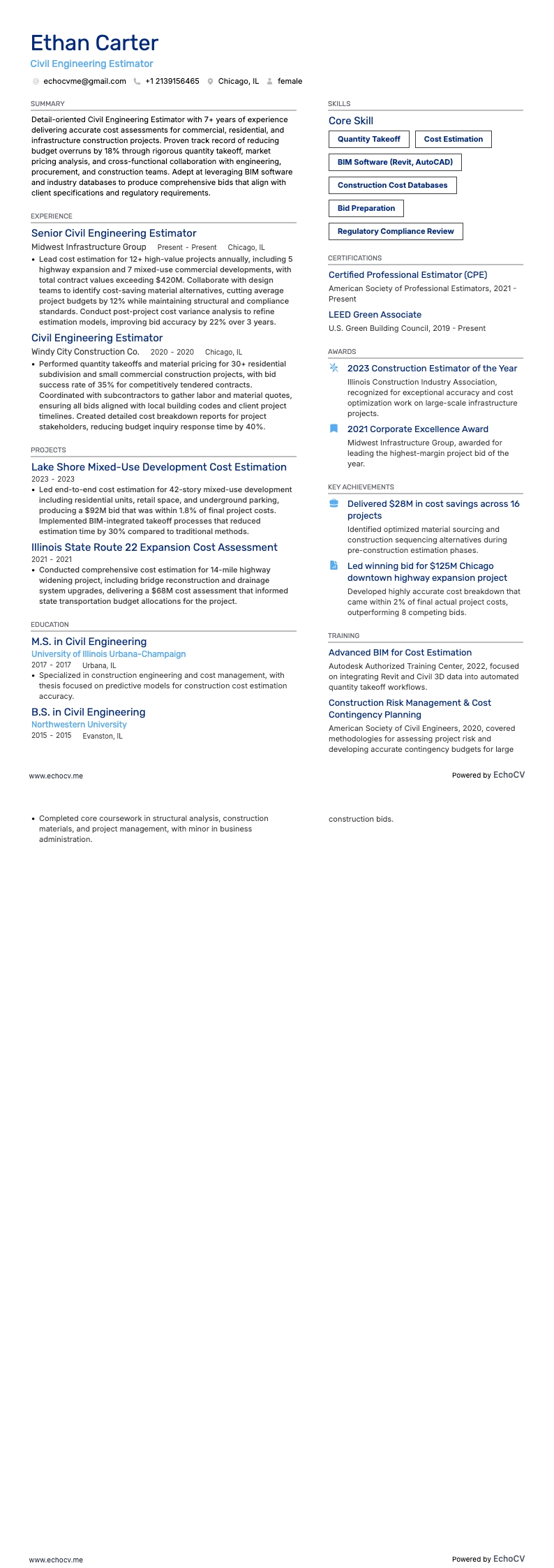
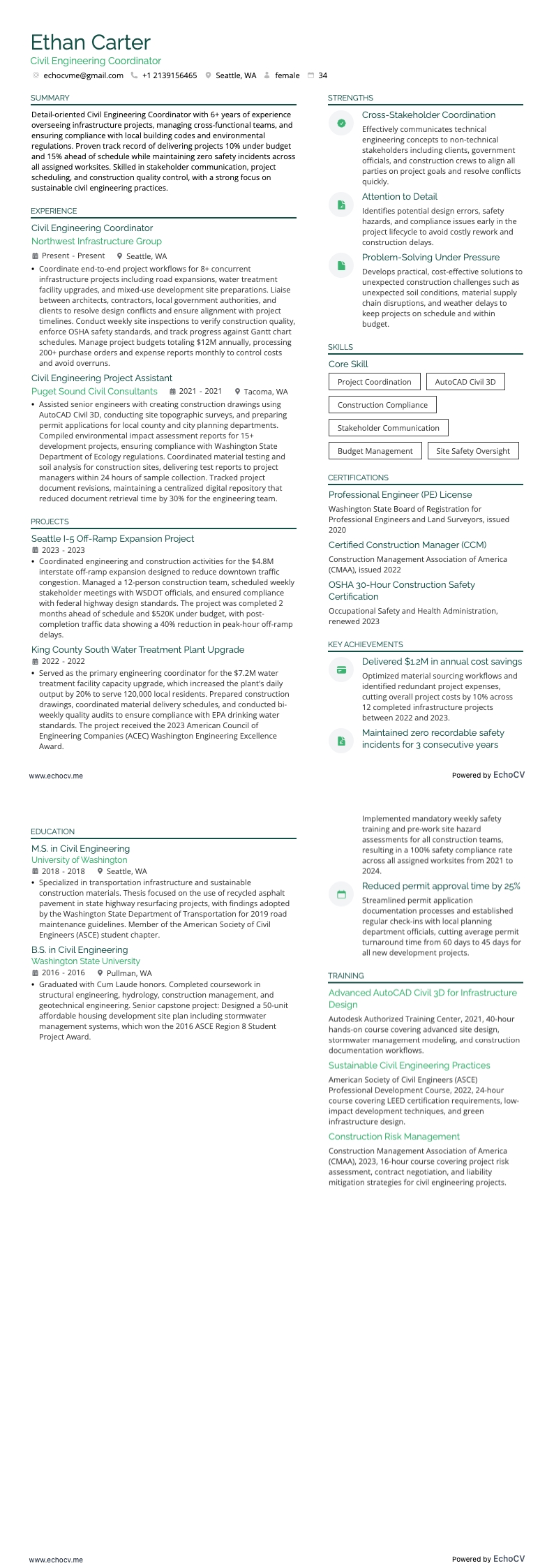
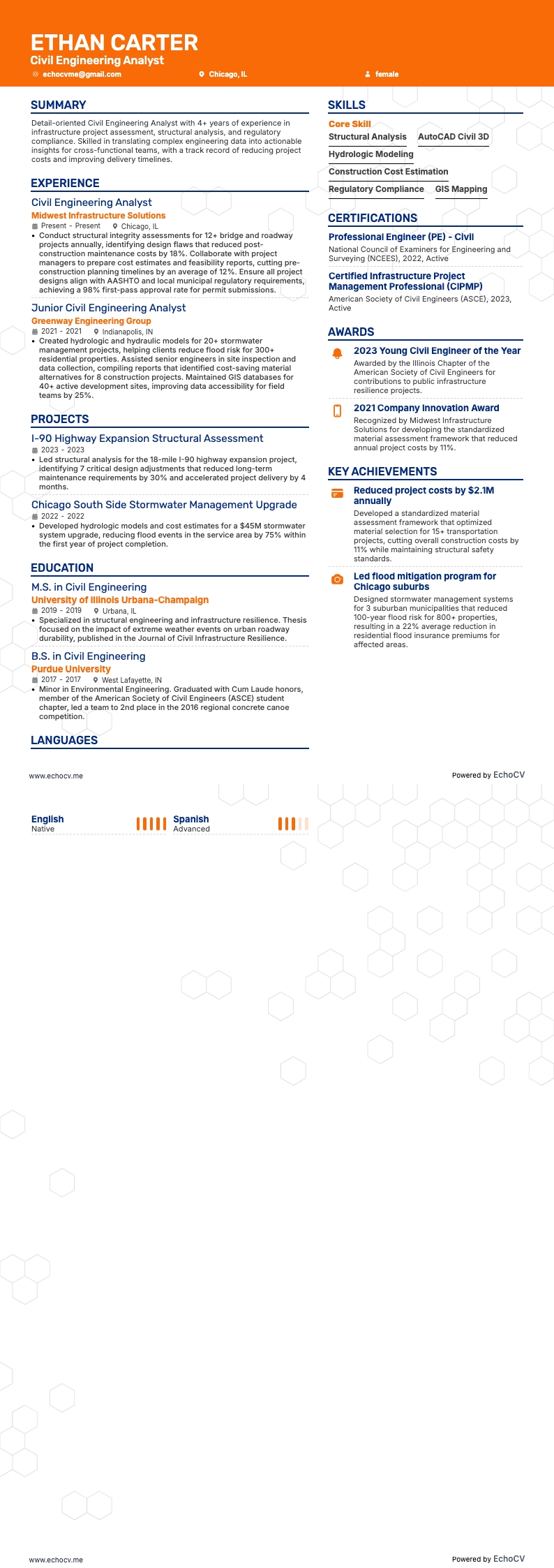
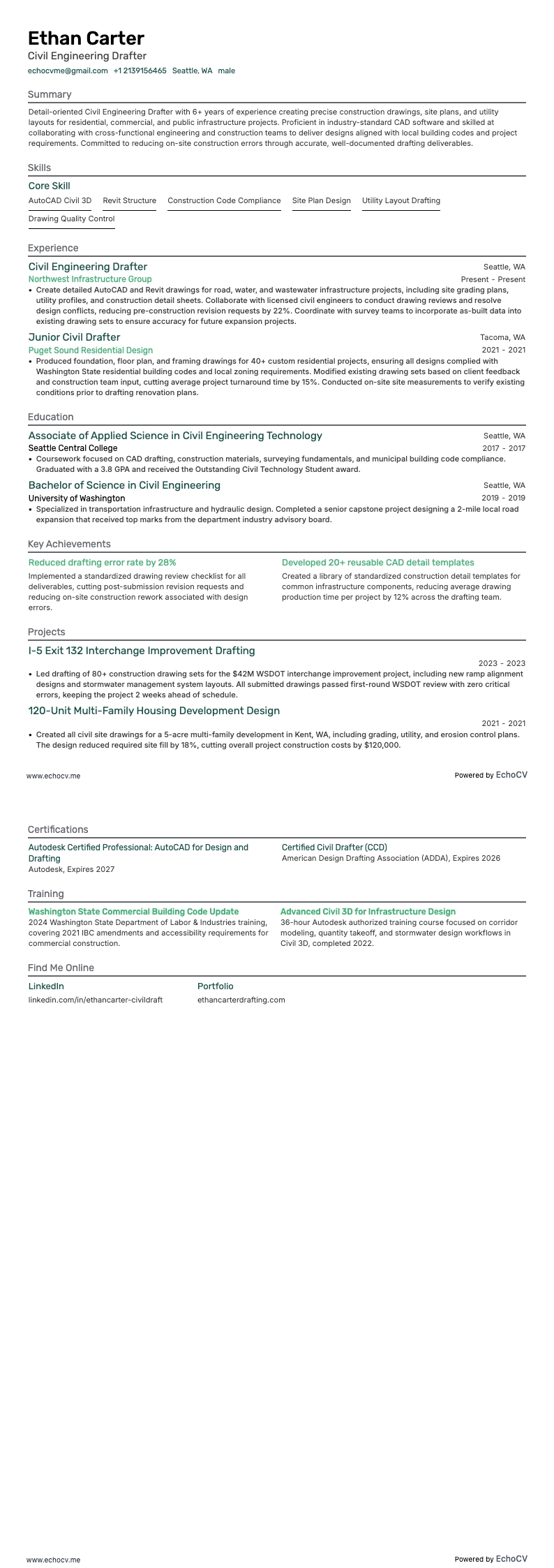
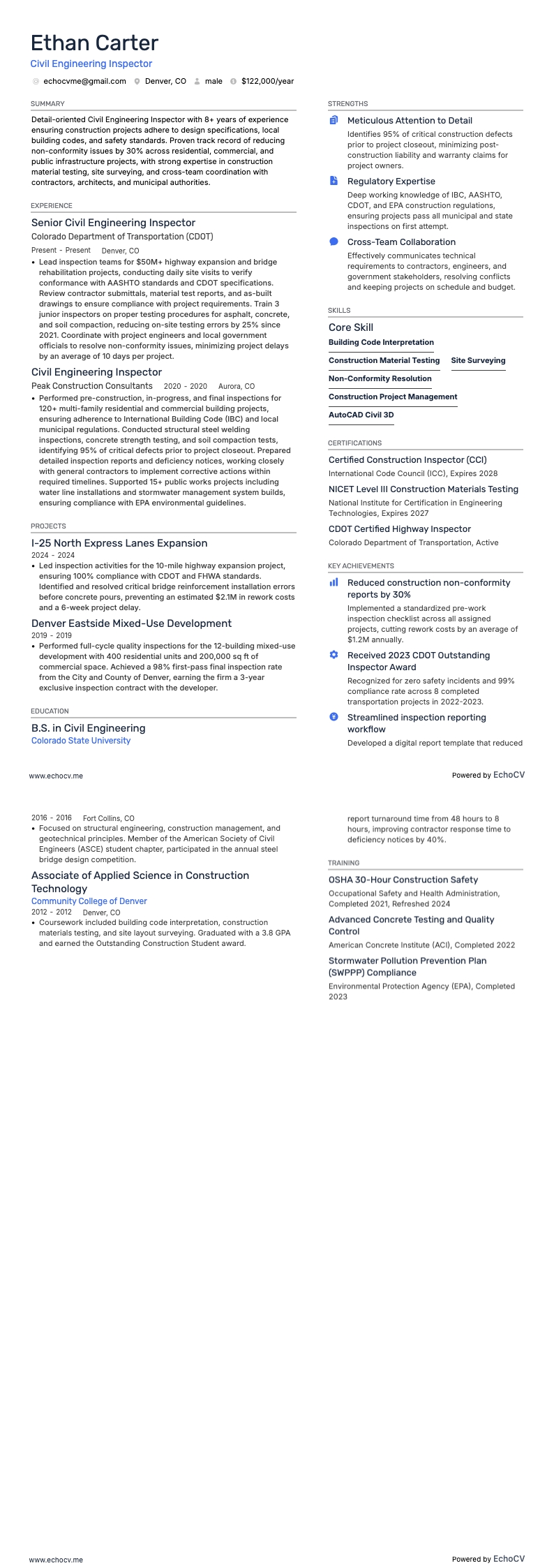
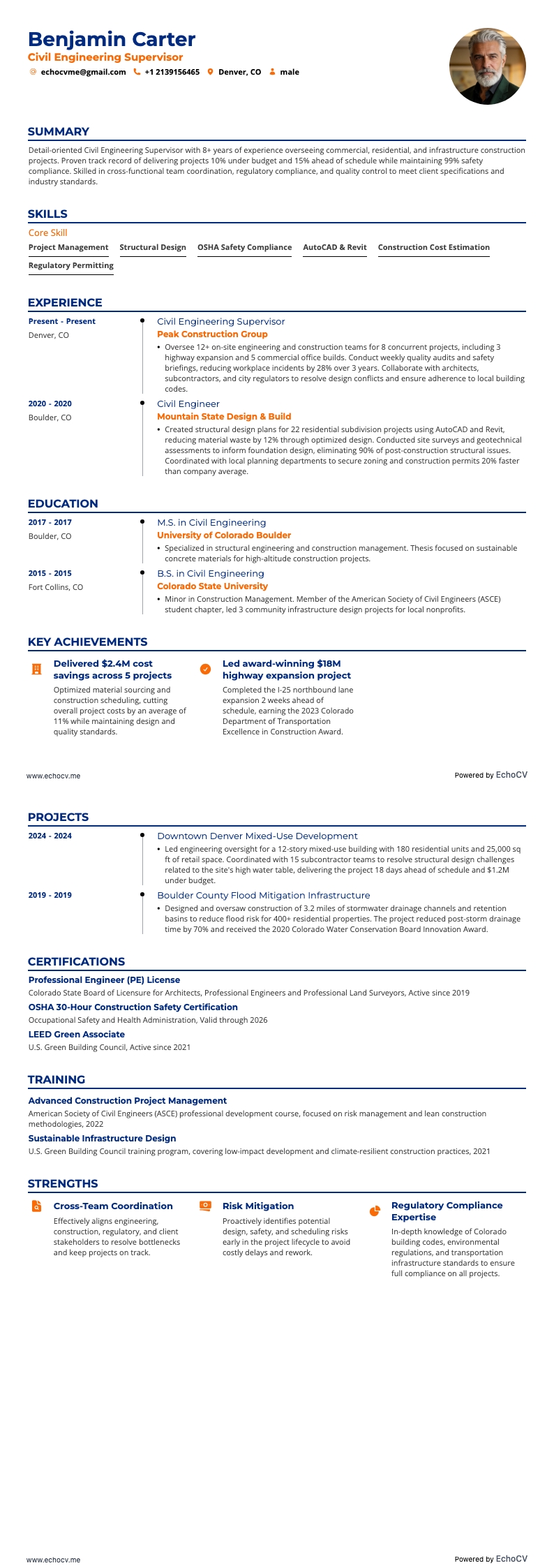
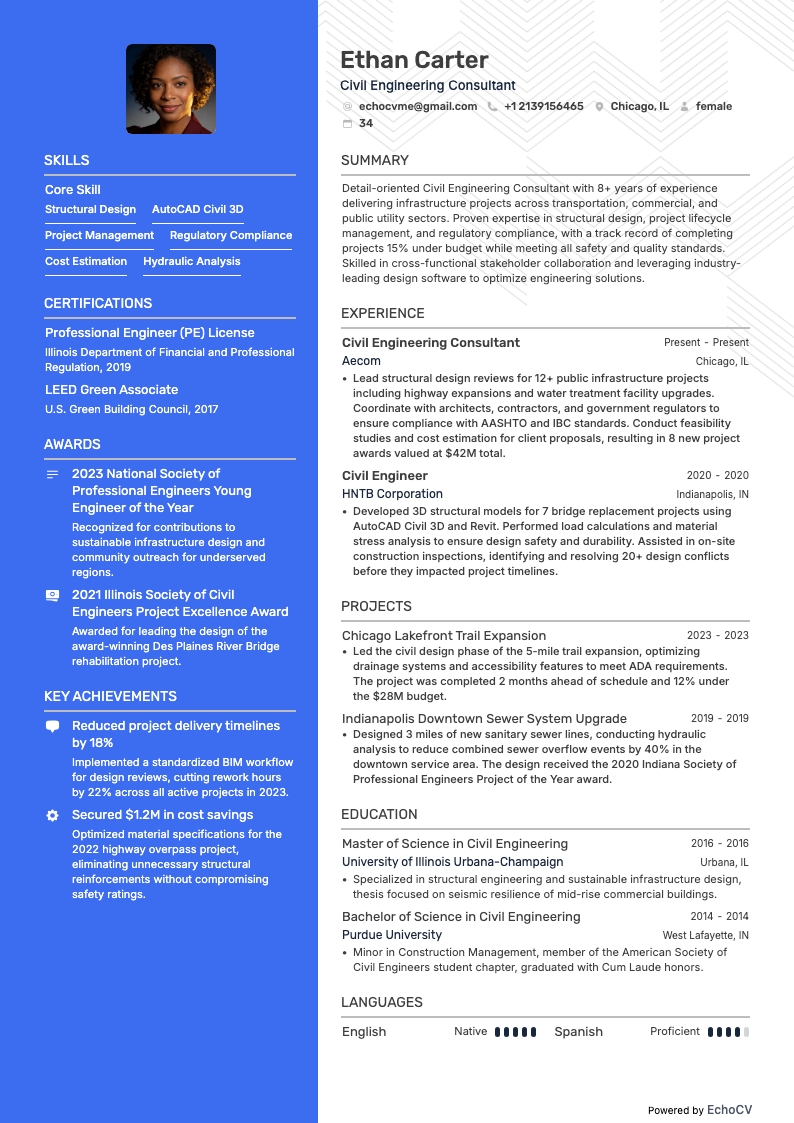
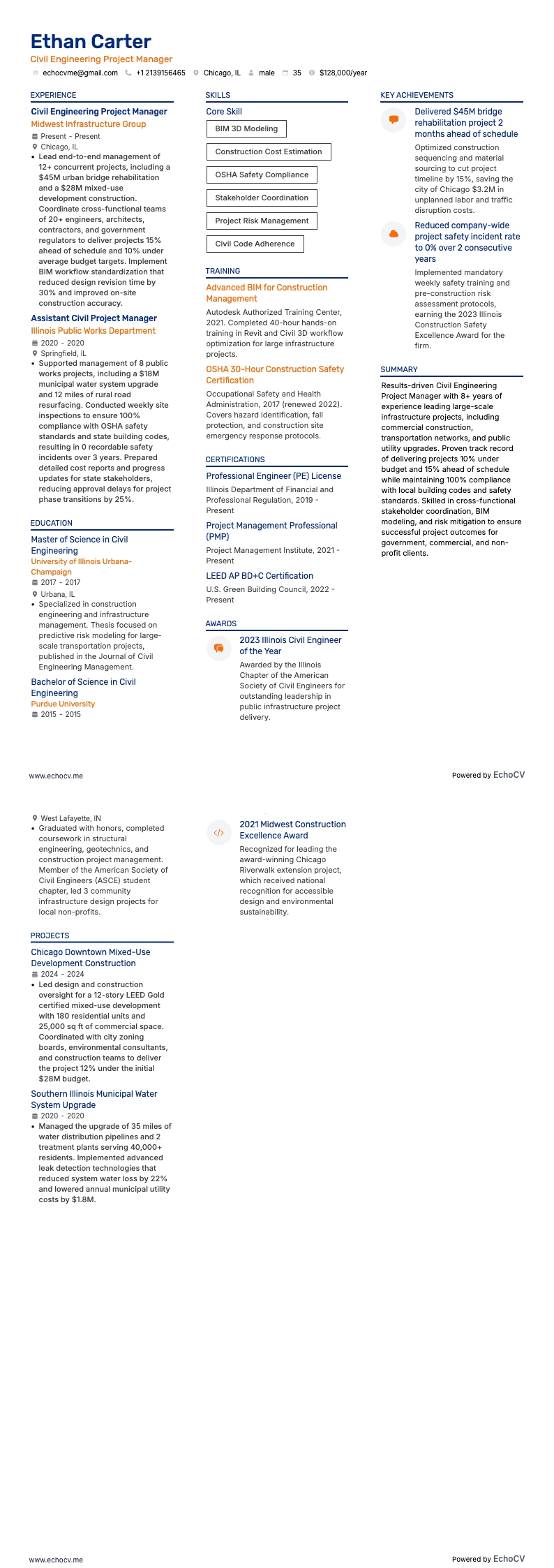
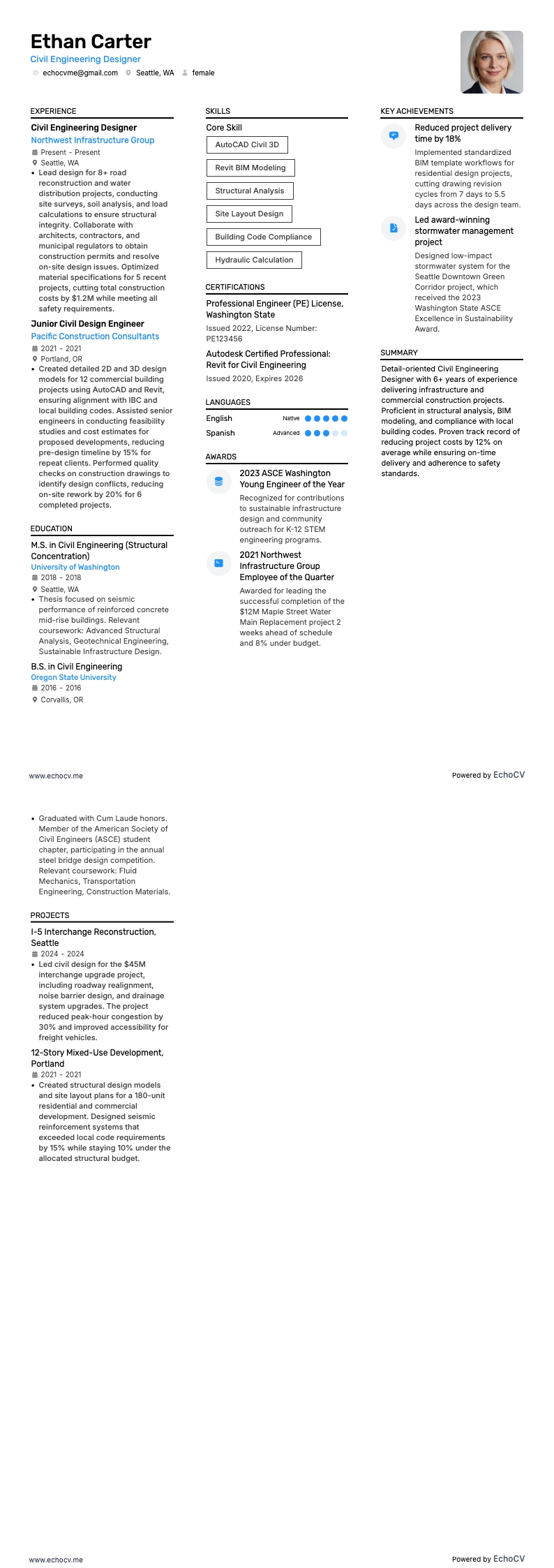
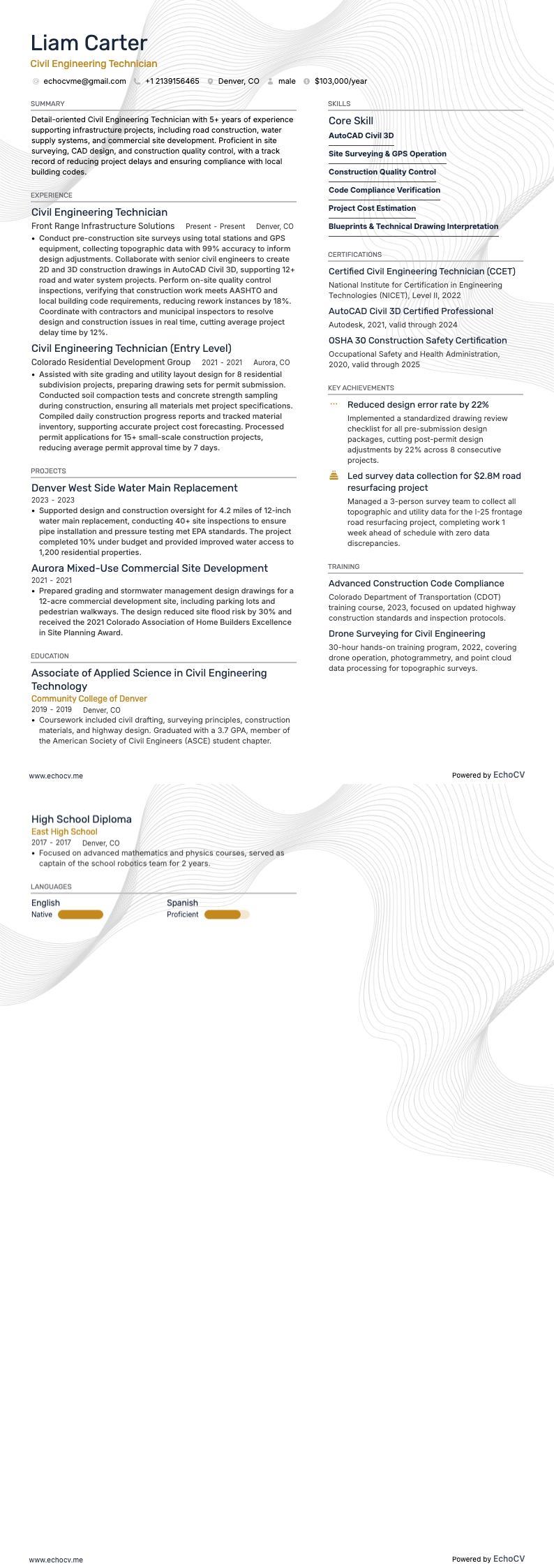
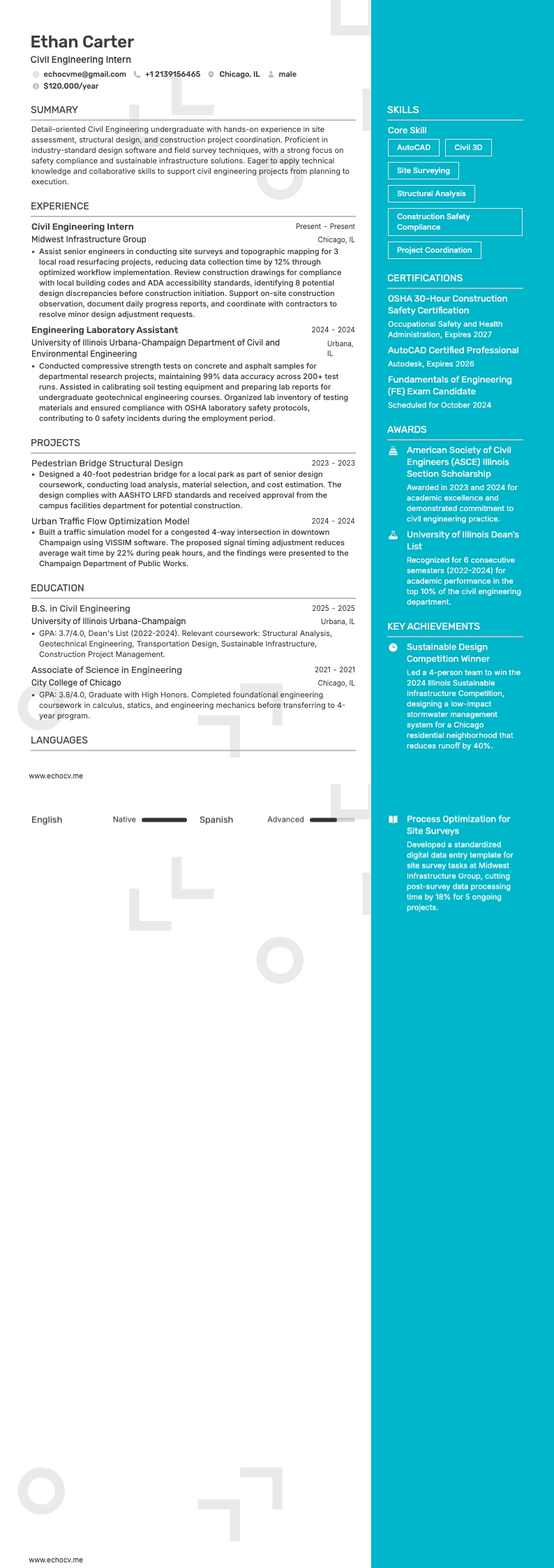
- Resume length and layout: Choose a layout that will be easy to scan and comprehend. A two-column layout is best—and yes, it’s readable by ATS (Applicant Tracking Systems). Leave enough space between sections, maintain 1-inch margins, and list the information in bullet points for better clarity. The length of your civil engineering resume depends on your experience. Choose a 1-page format if you have less than 5 years of experience, and 2 pages for more.
- Colors and fonts: A splash of color on your resume won’t make it less professional. Consider using a subtle color to highlight section headings or key civil engineer achievements. Use modern fonts like Rubik or Lato and keep the size of the text between 10 to 12 pt, with resume headings a bit larger.
- Header and photo: Your header should reside on top of your resume and include basic contact information, such as name, e-mail, phone number, and job title. A photo is usually not required but check with your specific job posting to be sure.
- Naming and formatting: Use a PDF format to maintain your chosen resume layout across all platforms. To follow naming conventions, include your first and last name, the position you’re applying for, and the word resume. For example, JohnSmithCivilEngineerResume.pdf
Got a resume already? Run it through our 16-point evaluation tool for free!
Different regions expect different formats – Canadian resumes, for example, may look unique.