10 Lebenslauf-Beispiele für Betrugsermittlers
EchoCV
Verfasst vom EchoCV-Team
Aktualisiert: 9/15/2023•8 min read
Sehen Sie alle Lebenslauf-Beispiele in diesem Leitfaden oder erstellen Sie mit Ihrem persönlichen Prompt Ihr eigenes Beispiel.
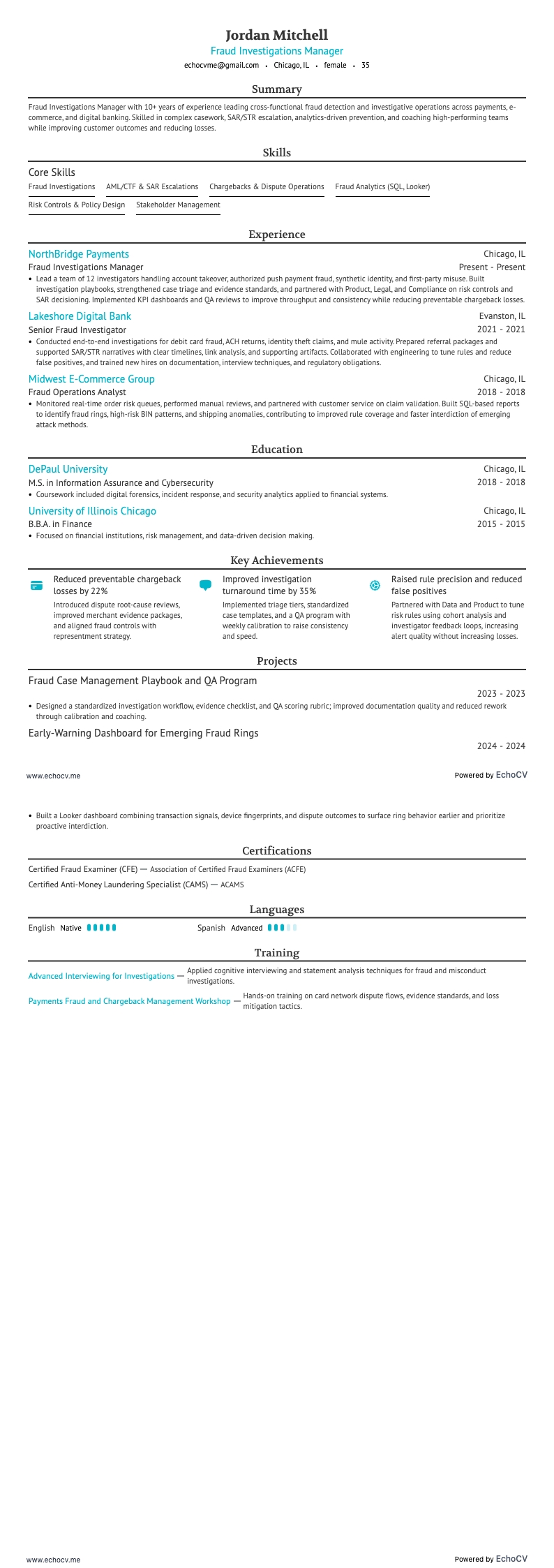
Manager für Betrugsermittlungen
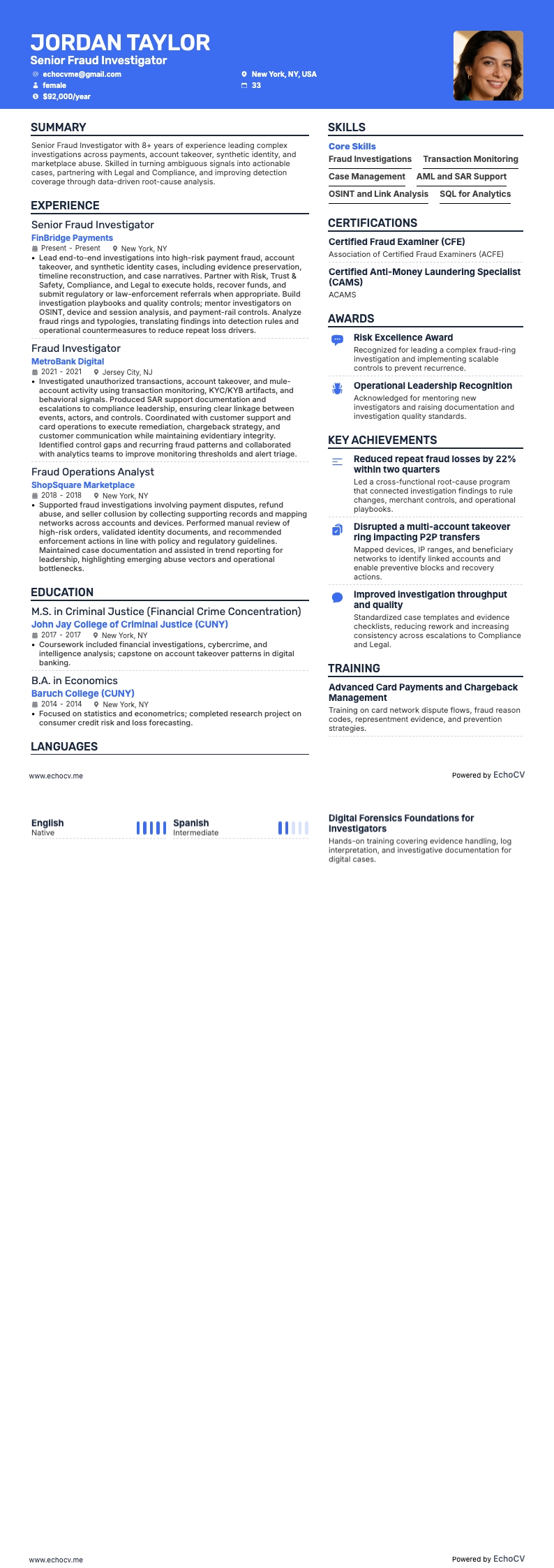
Leitender Betrugsermittler
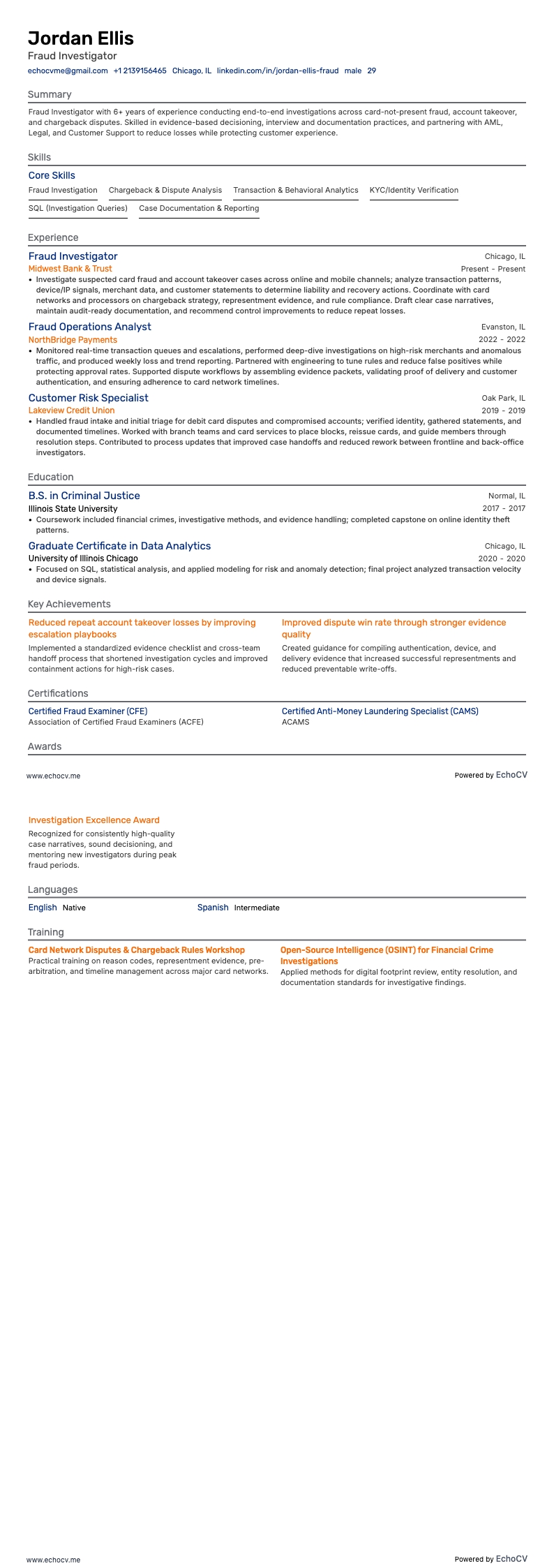
Betrugsermittler
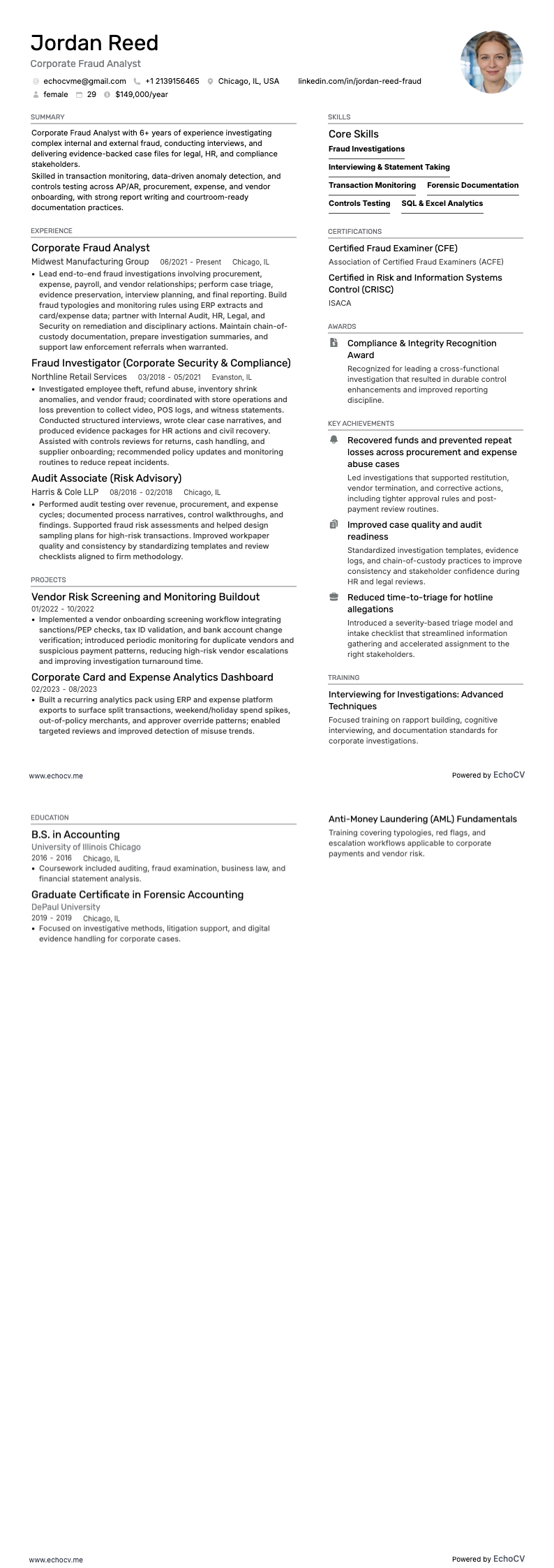
Analyst für Unternehmensbetrug
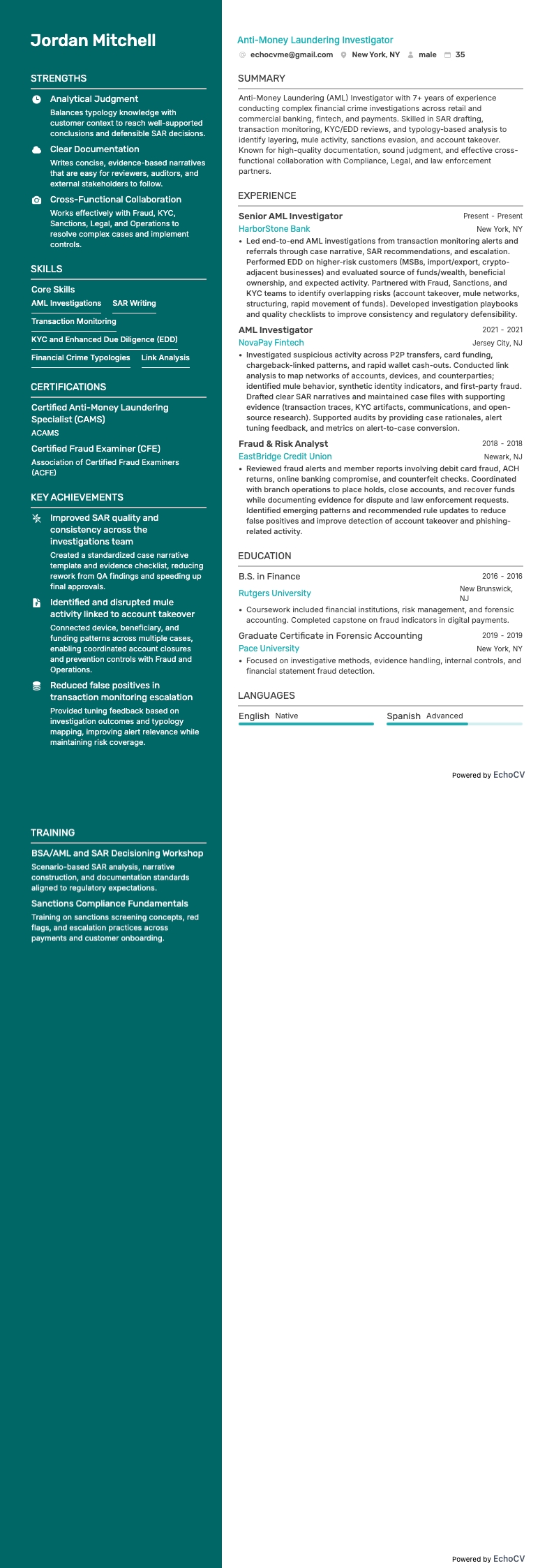
Ermittler für Geldwäschebekämpfung
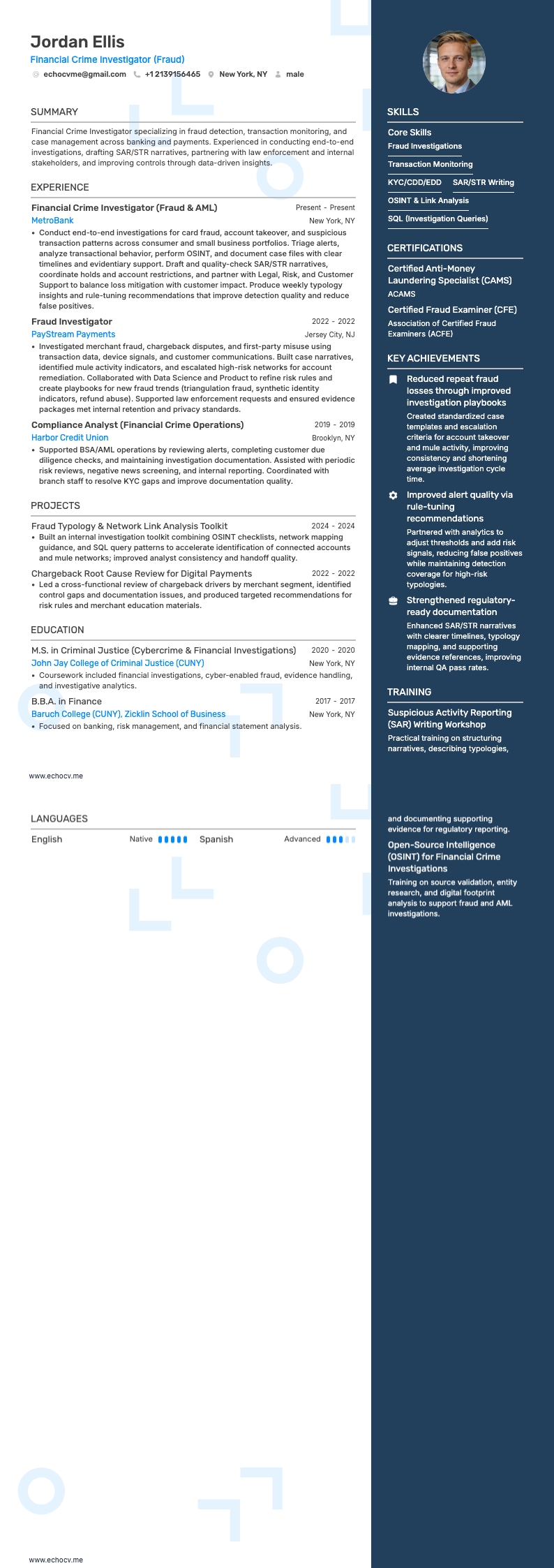
Ermittler für Finanzkriminalität
Betrugsermittler Lebenslauf-Beispiele
Entdecken Sie weitere Betrugsermittler-Lebenslauf-Beispiele und Leitfäden und sehen Sie, was für Ihr Erfahrungsniveau oder Ihre Rolle am besten funktioniert.
Nach Erfahrung
Manager für Betrugsermittlungen
Leitender Betrugsermittler
Betrugsermittler
Betrugsermittler Lebenslauf-Beispiele
Entdecken Sie weitere Betrugsermittler-Lebenslauf-Beispiele und Leitfäden und sehen Sie, was für Ihr Erfahrungsniveau oder Ihre Rolle am besten funktioniert.
Nach Rolle
Analyst für Unternehmensbetrug
Ermittler für Geldwäschebekämpfung
Ermittler für Finanzkriminalität