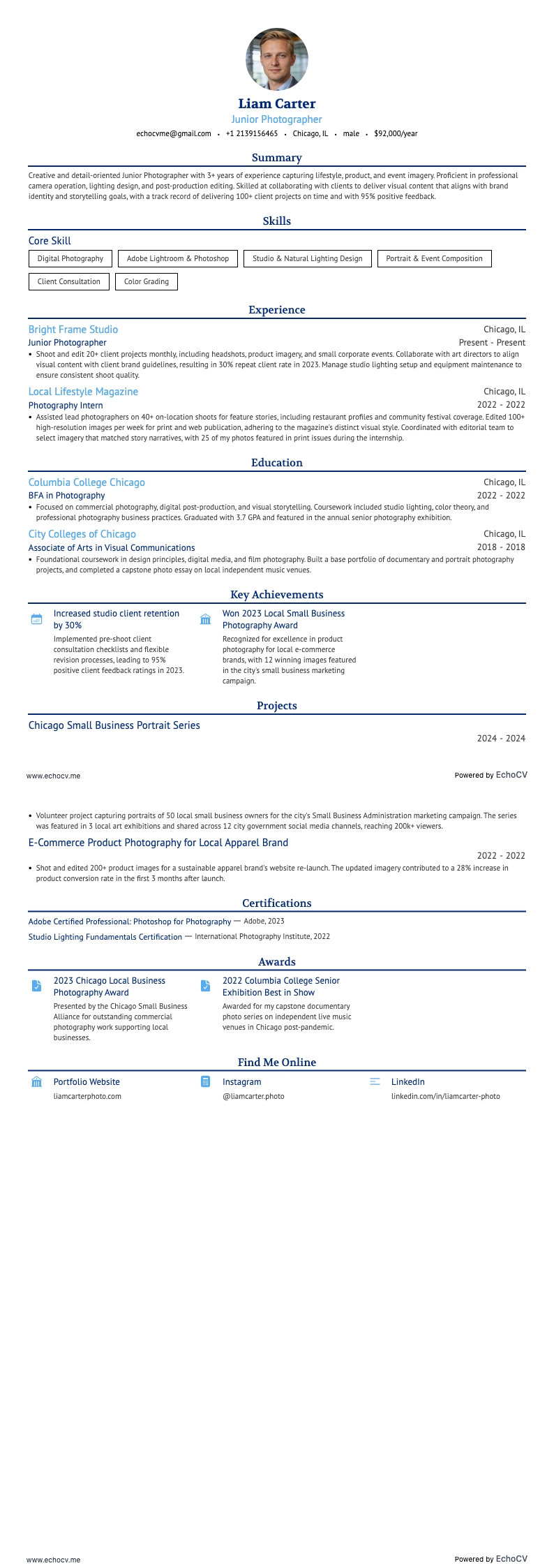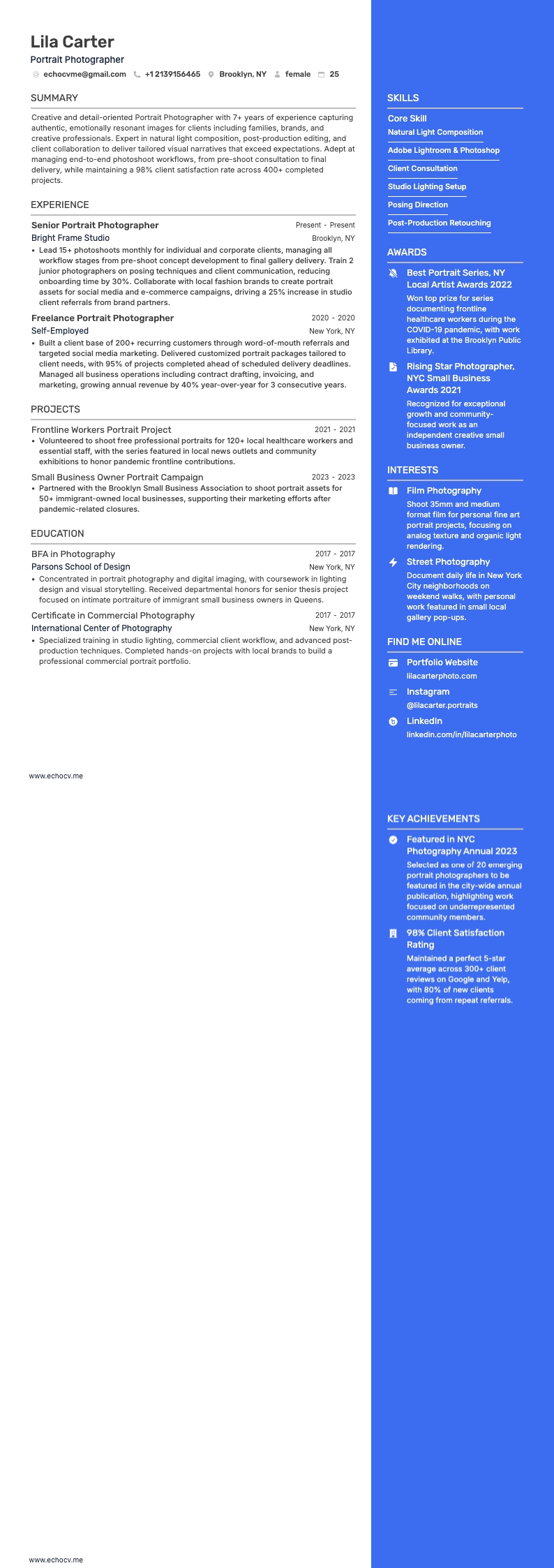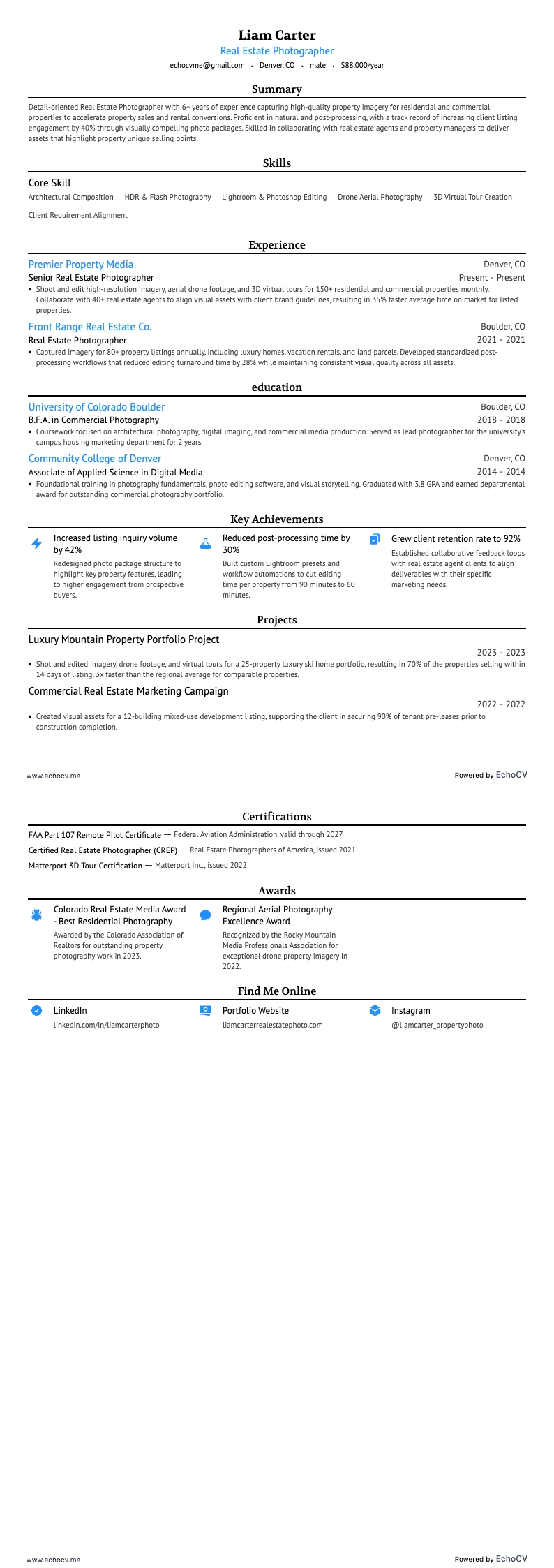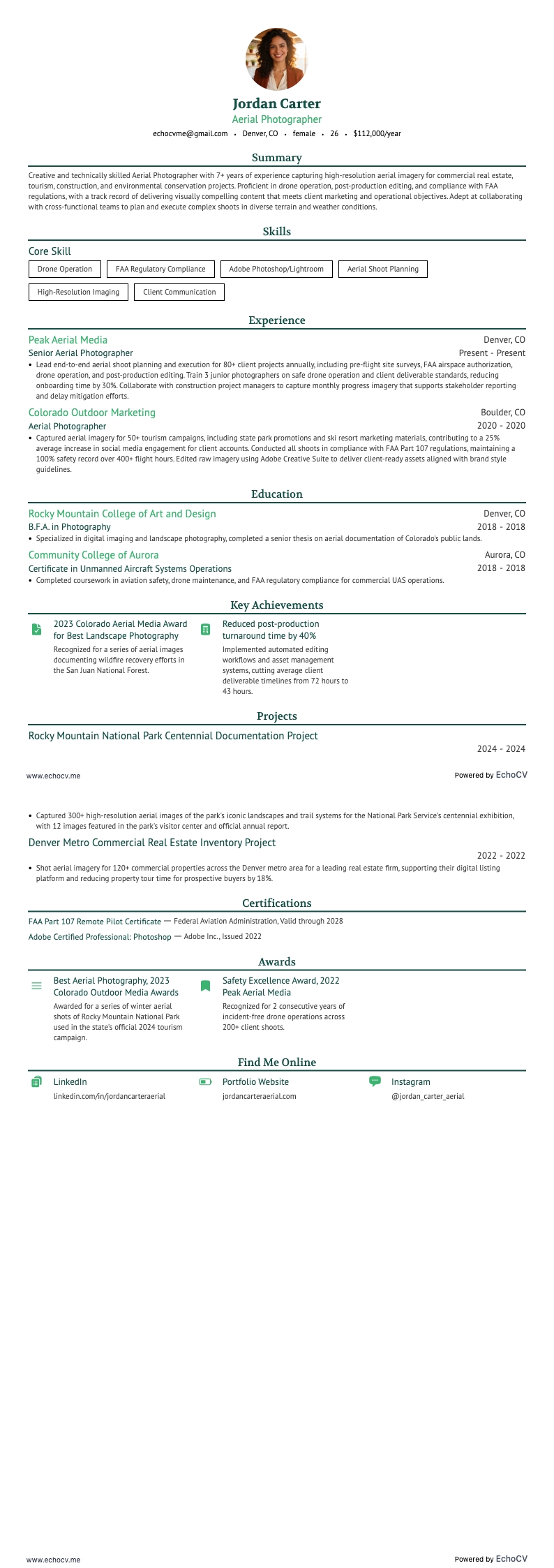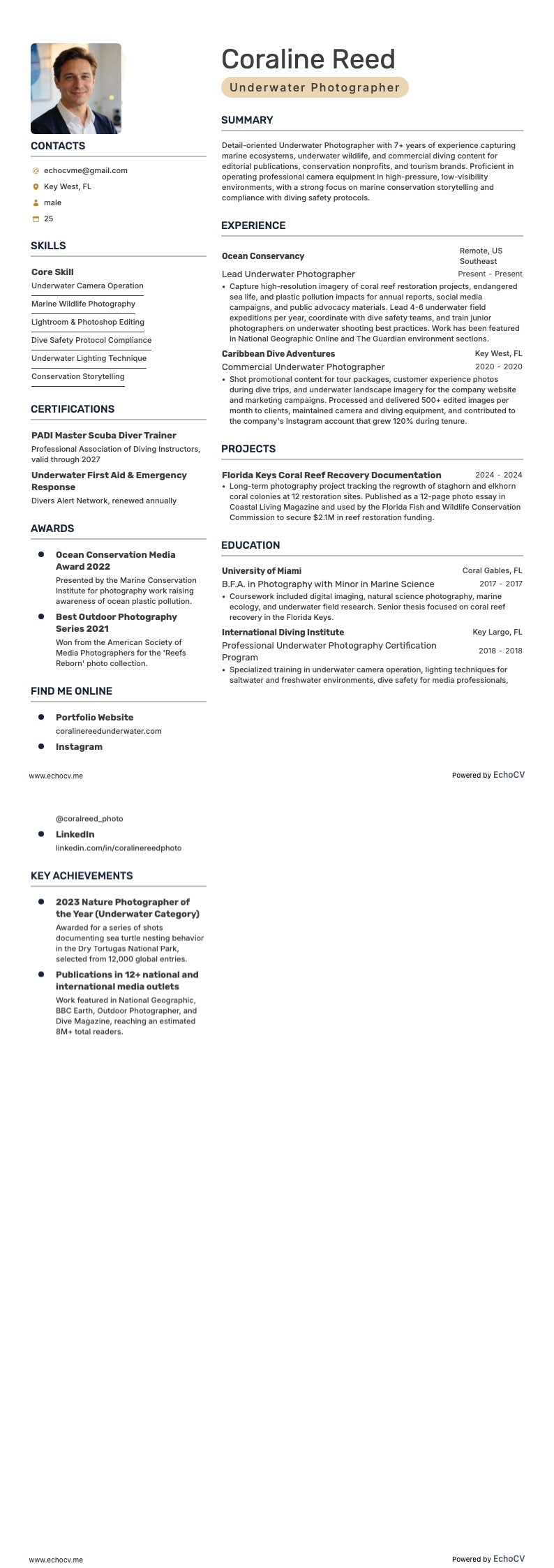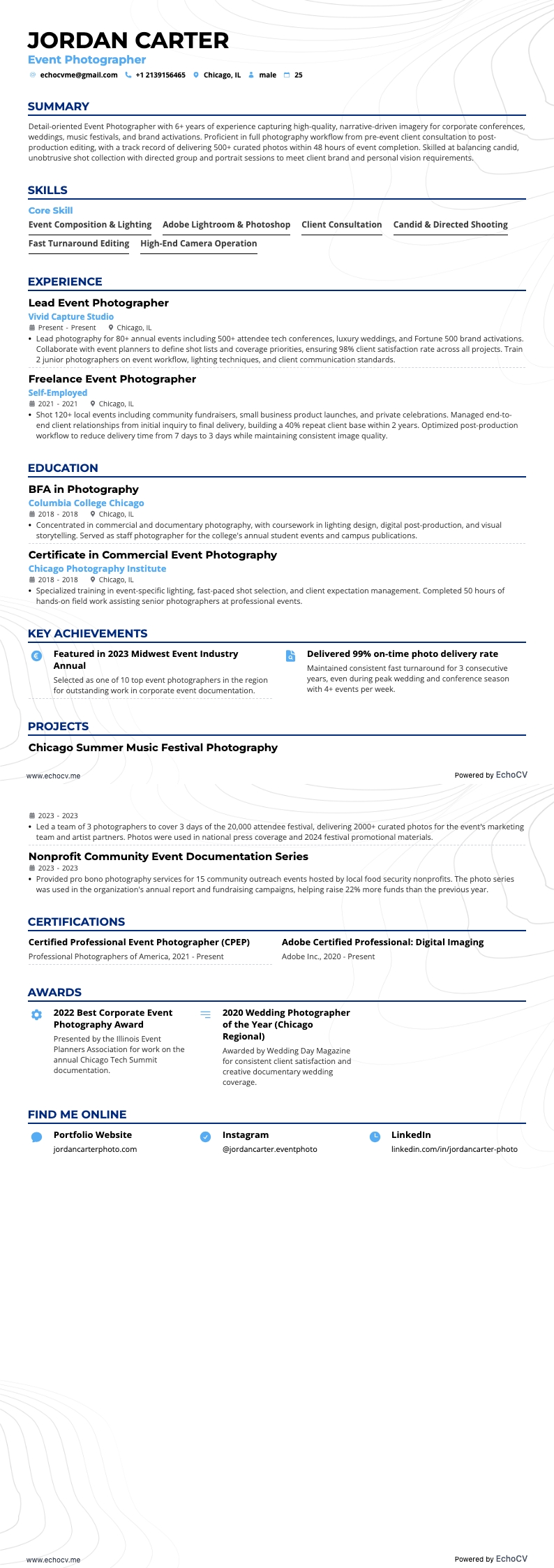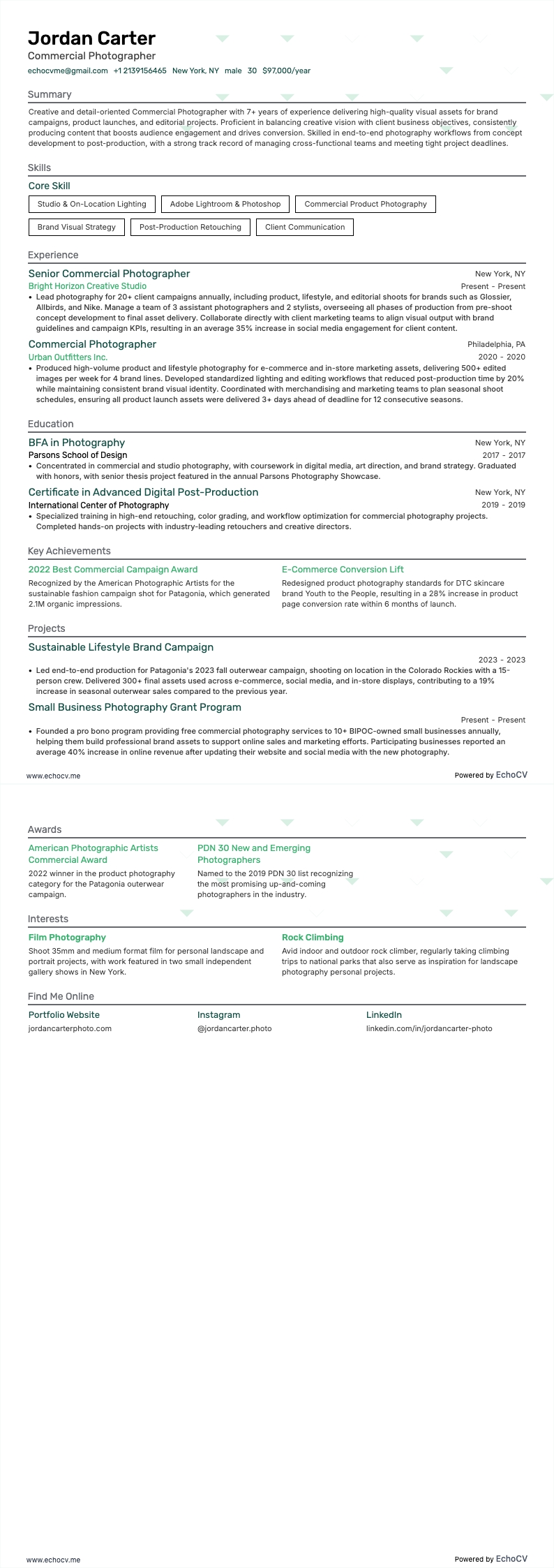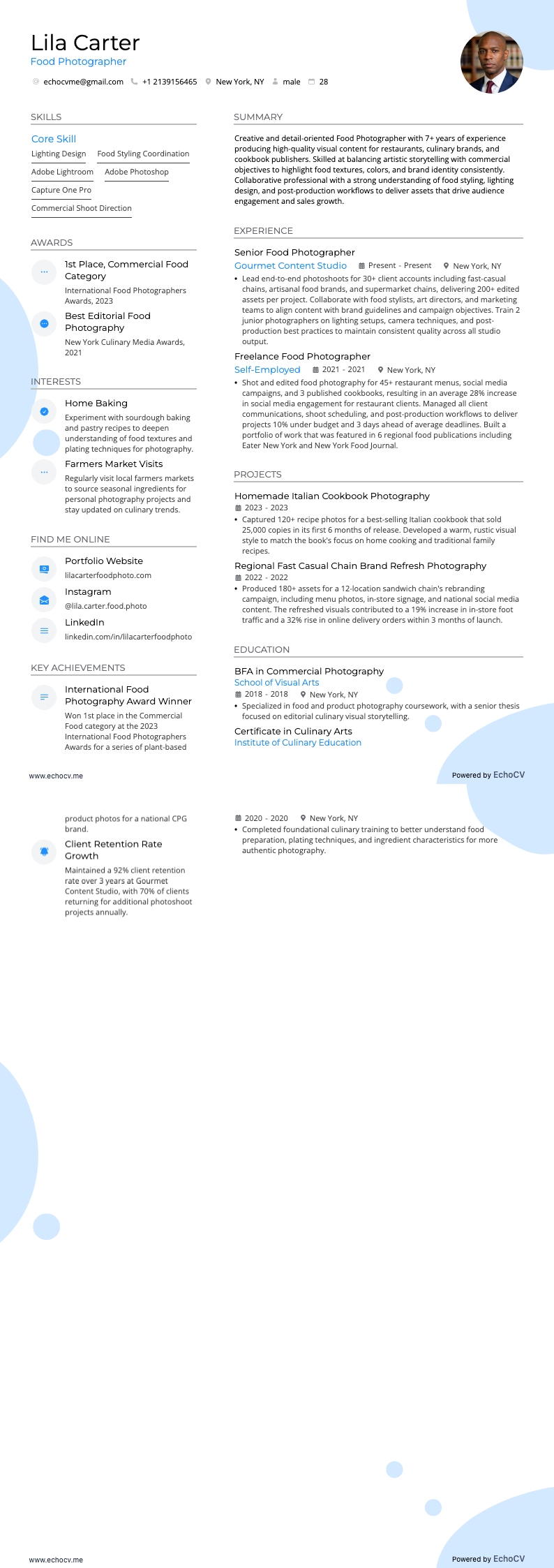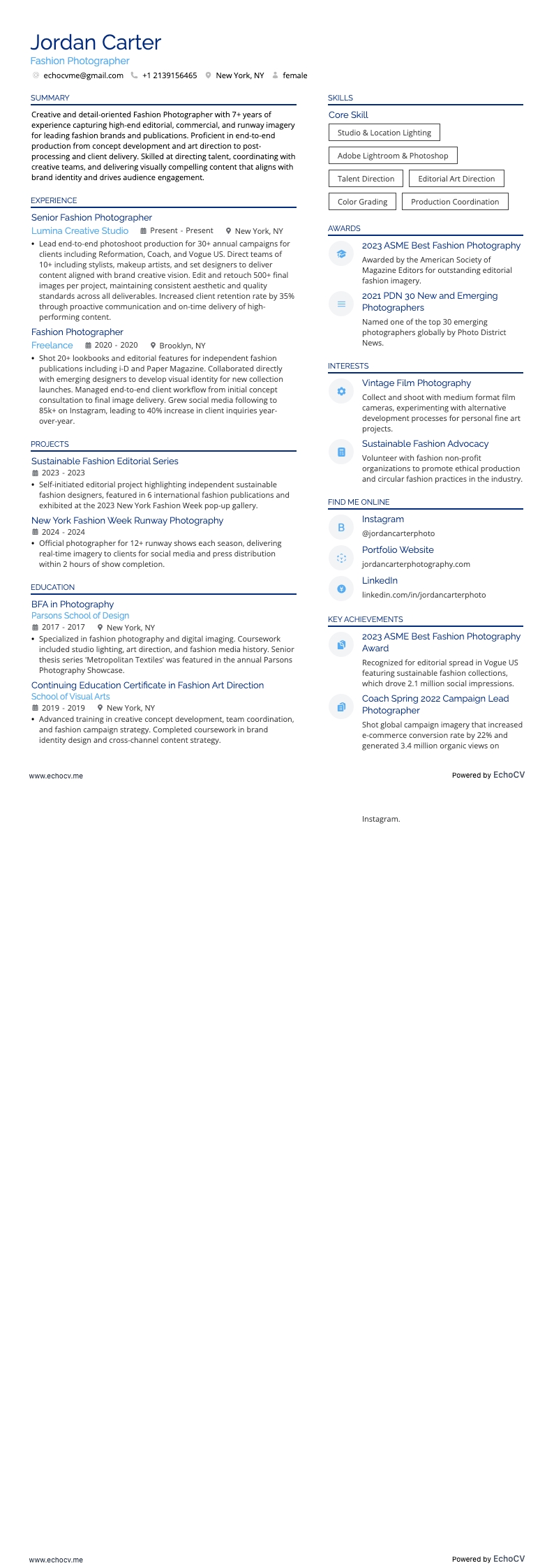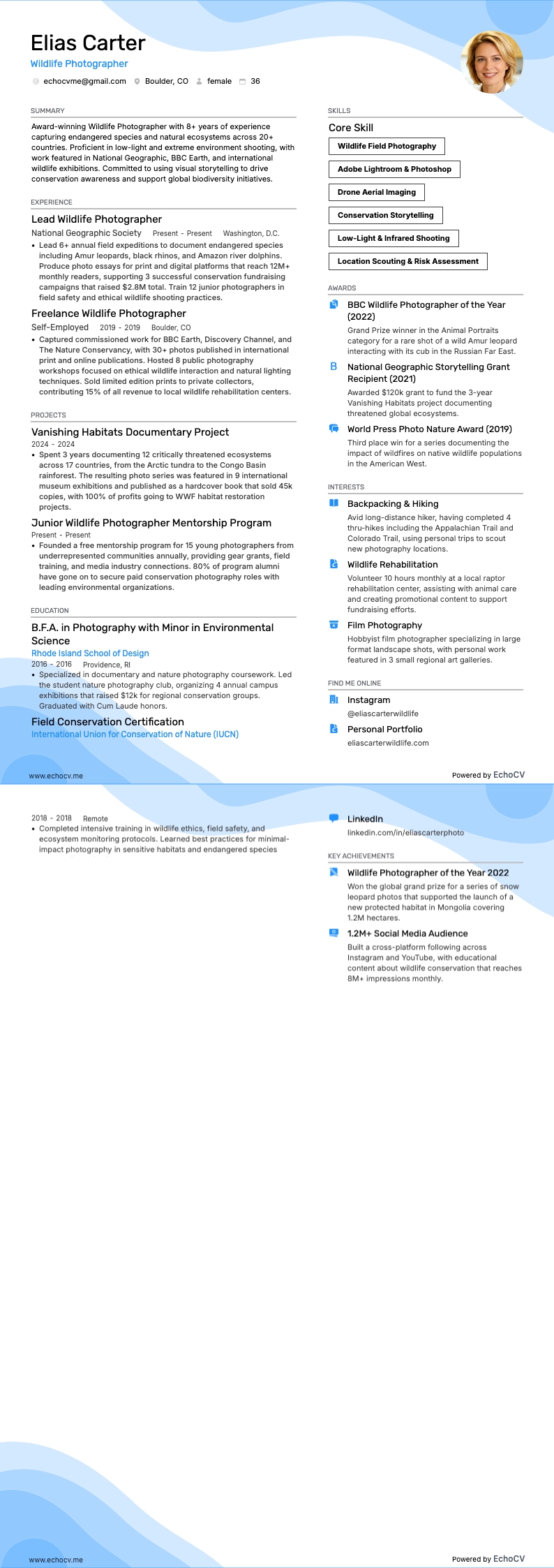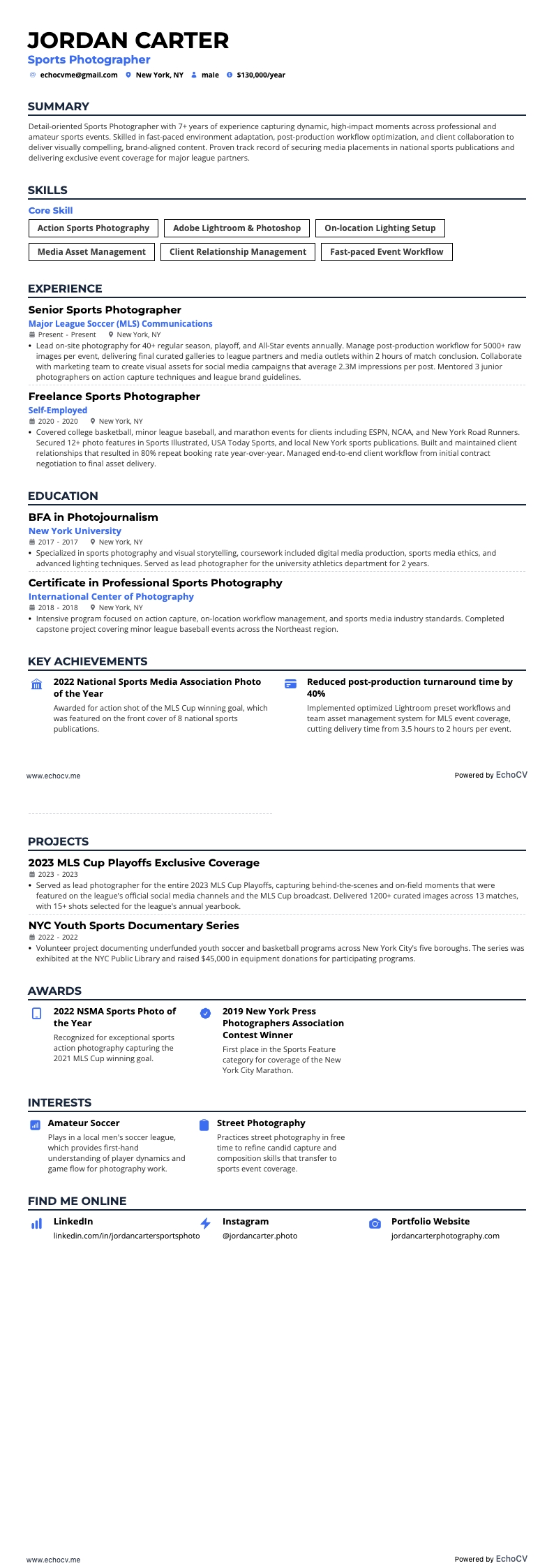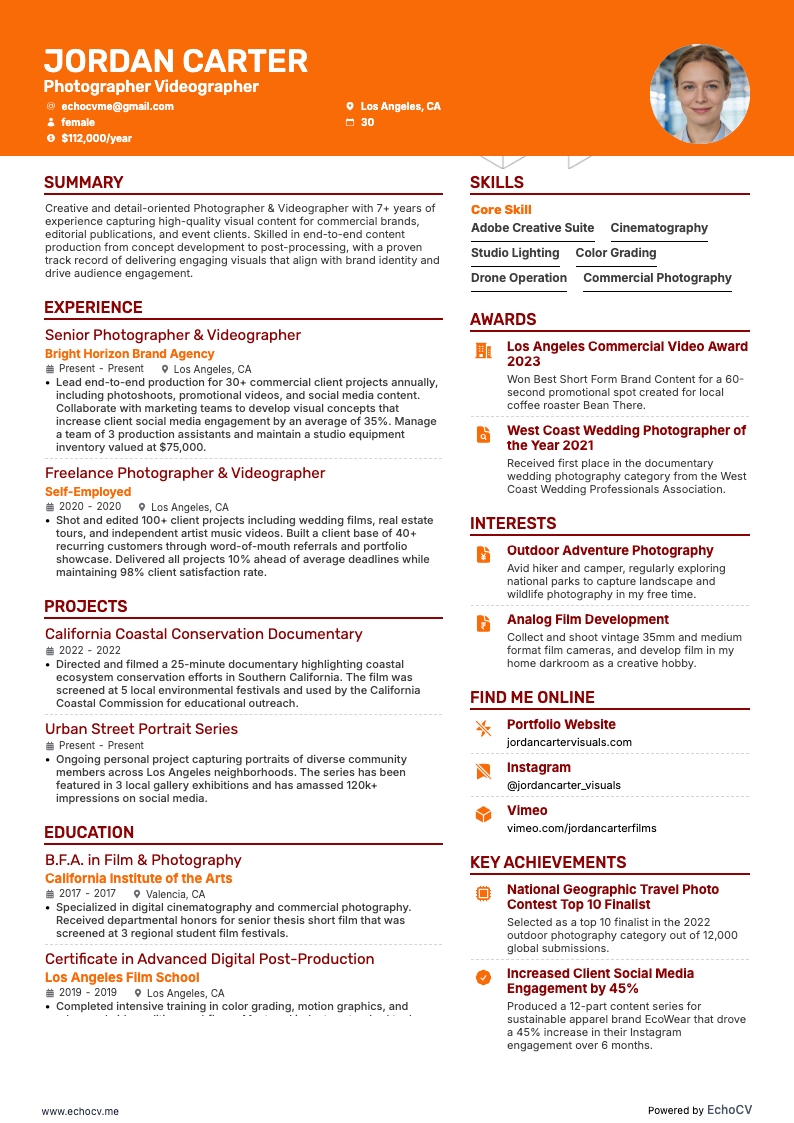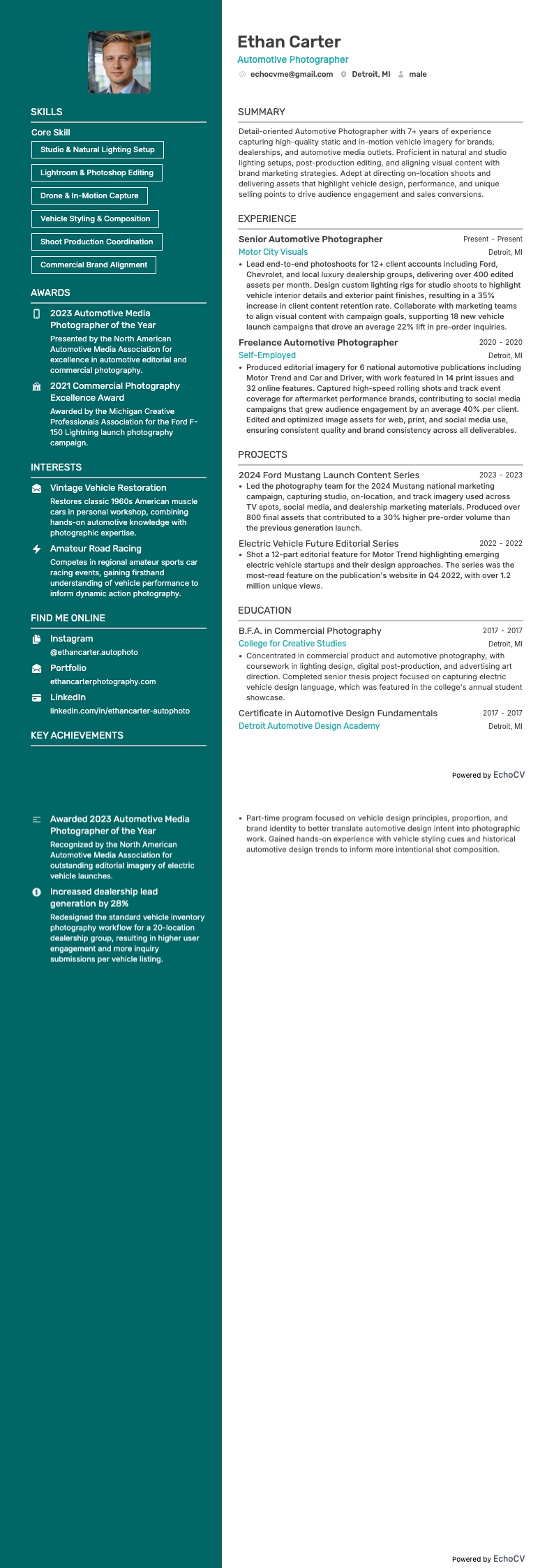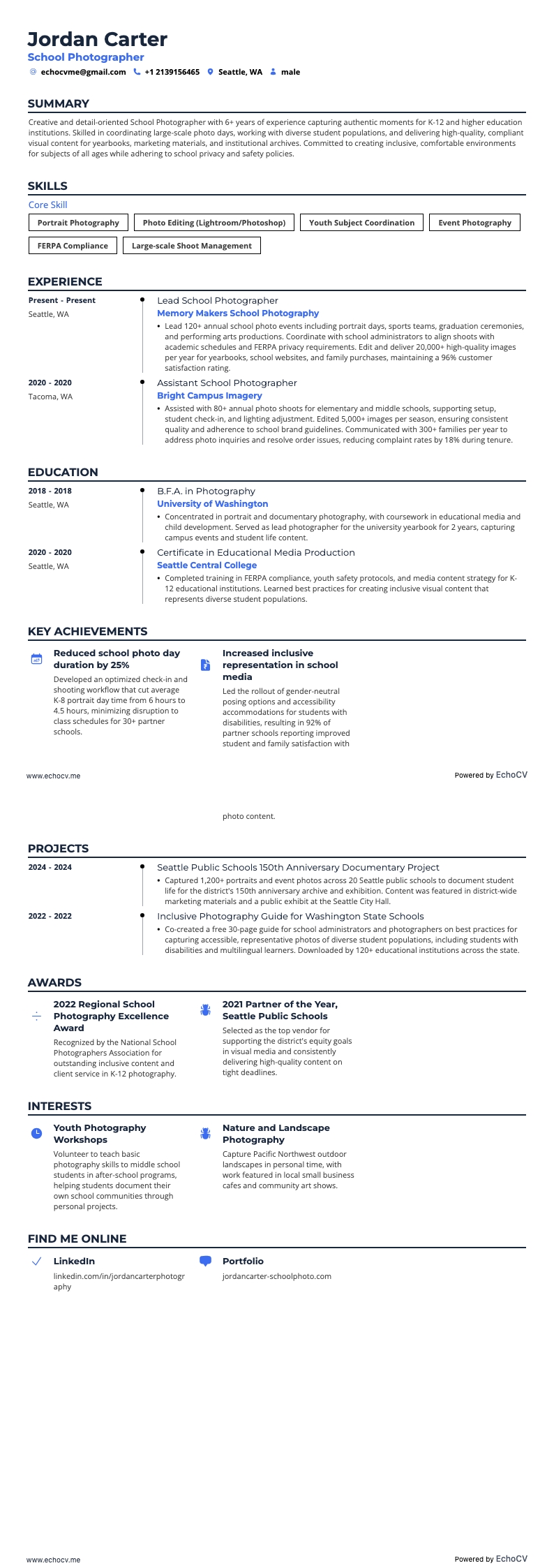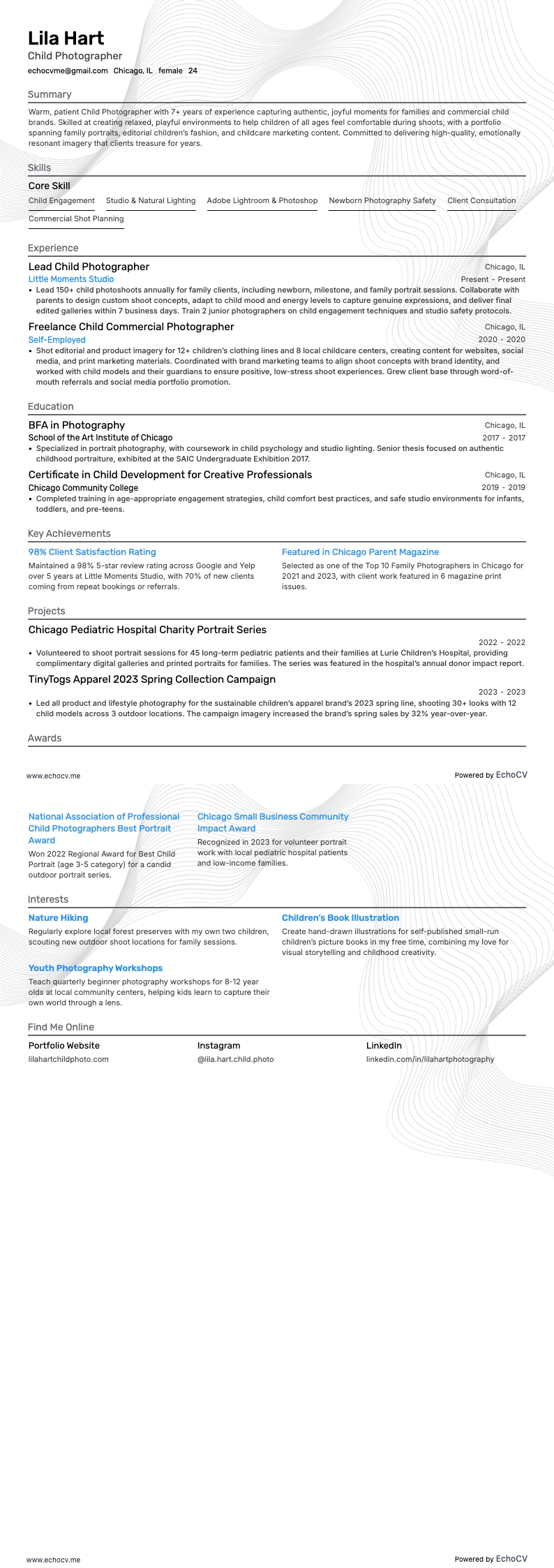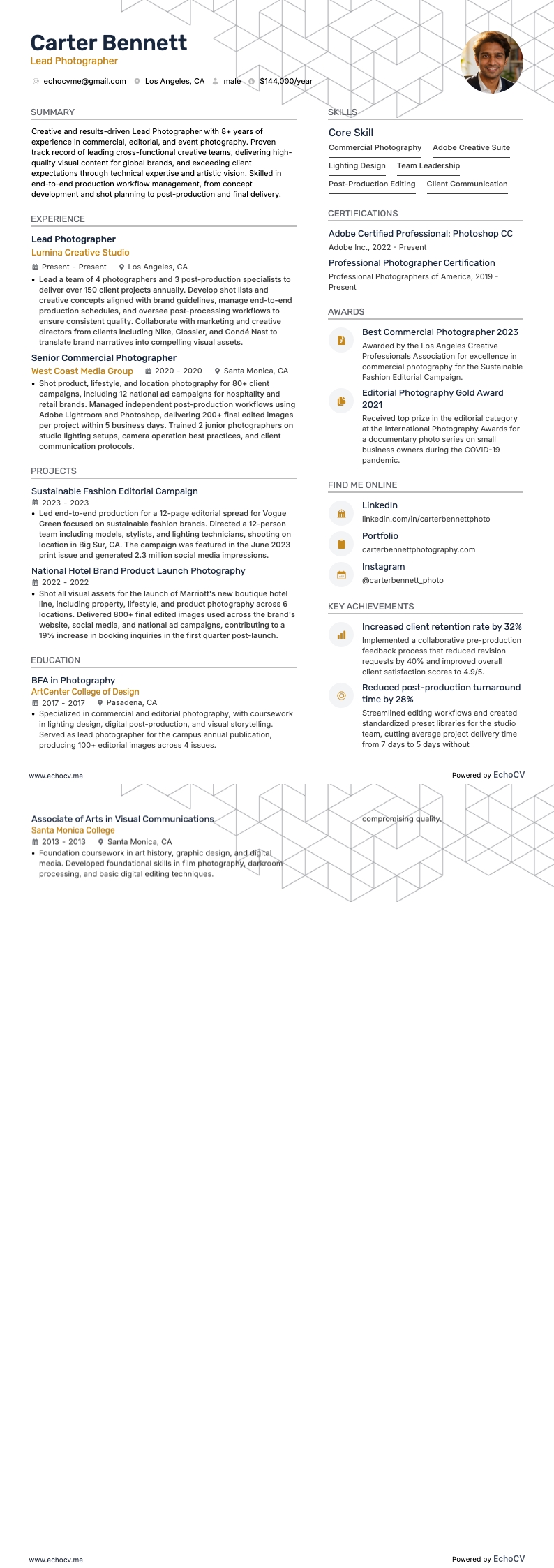
Why this is good:
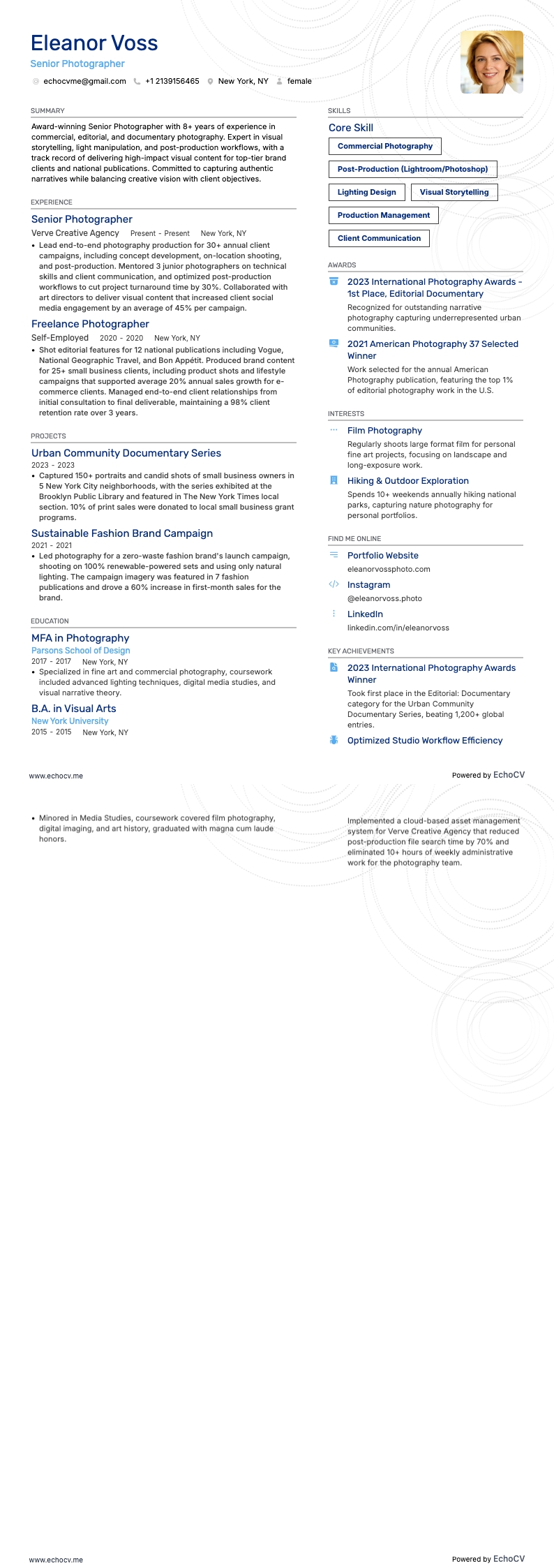
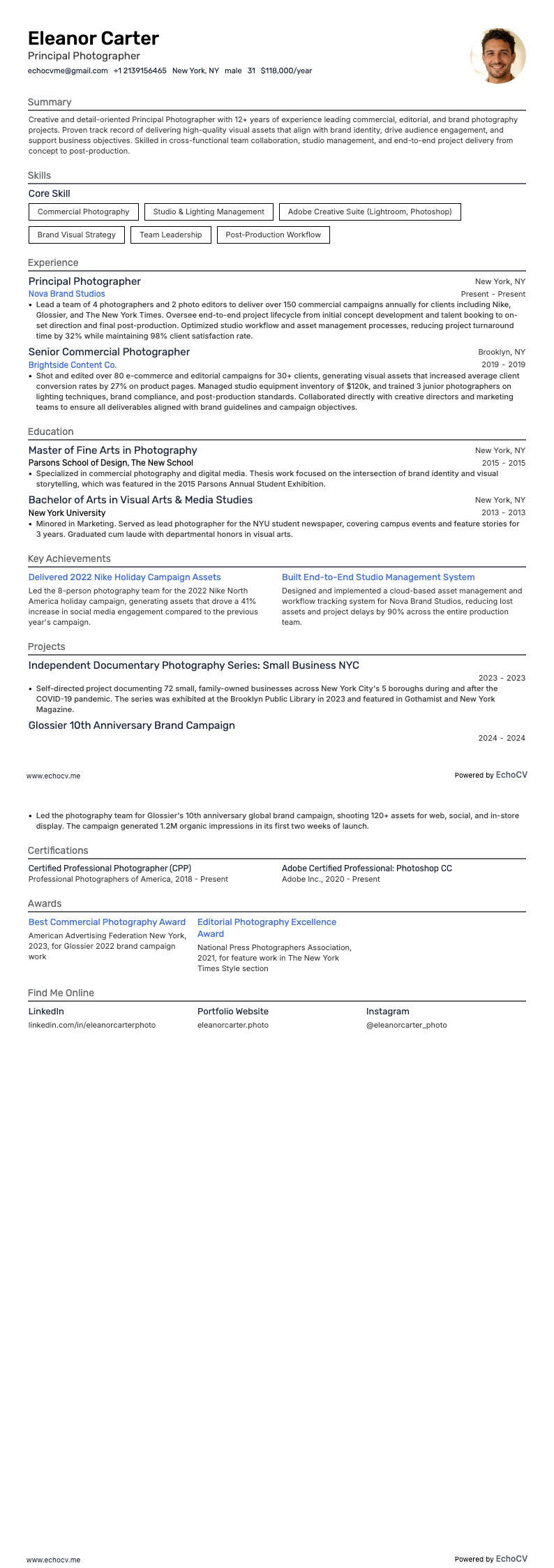
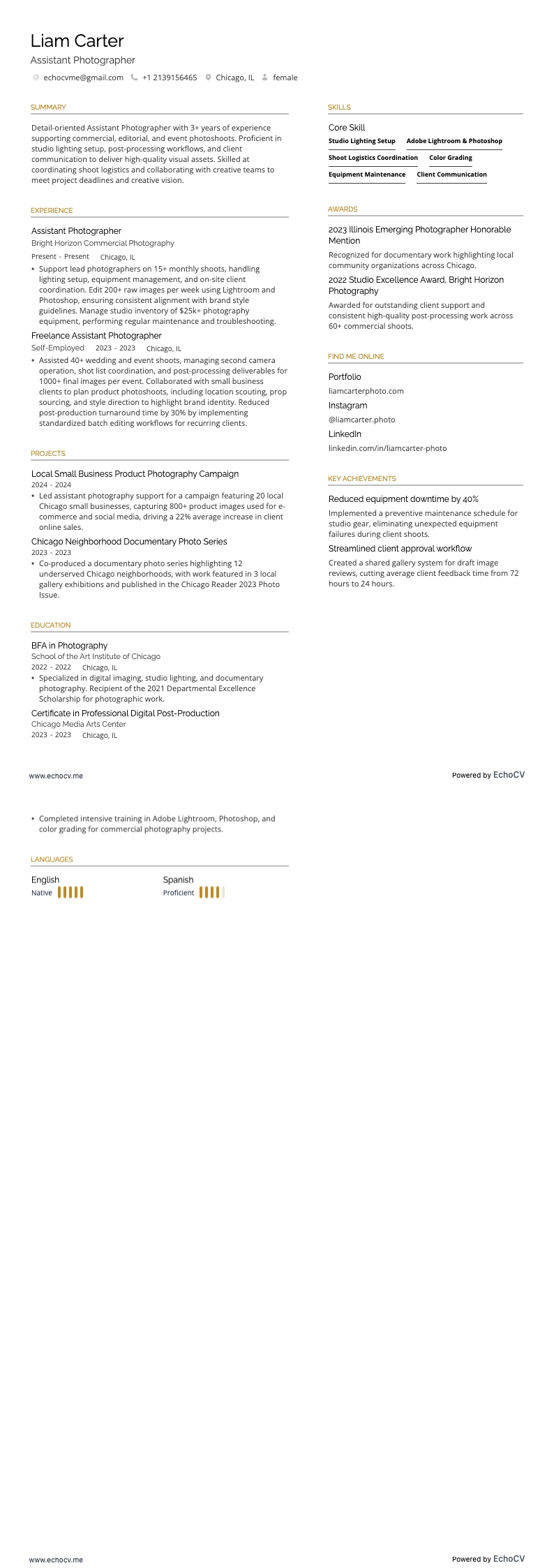
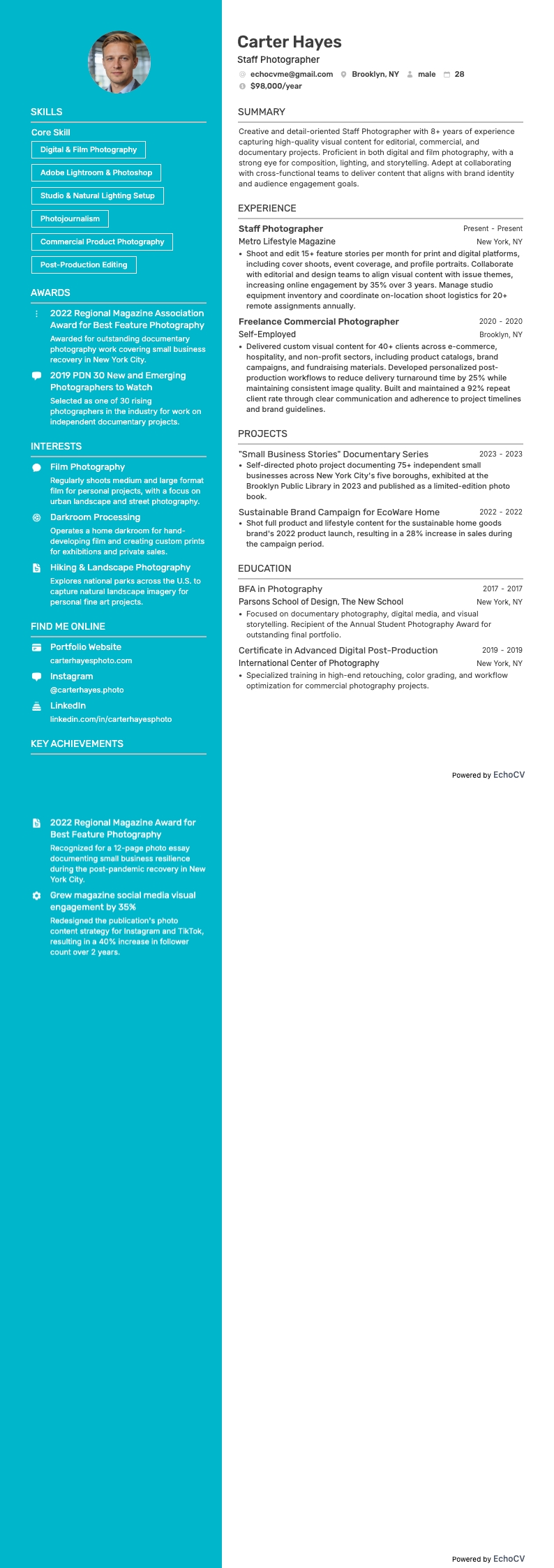
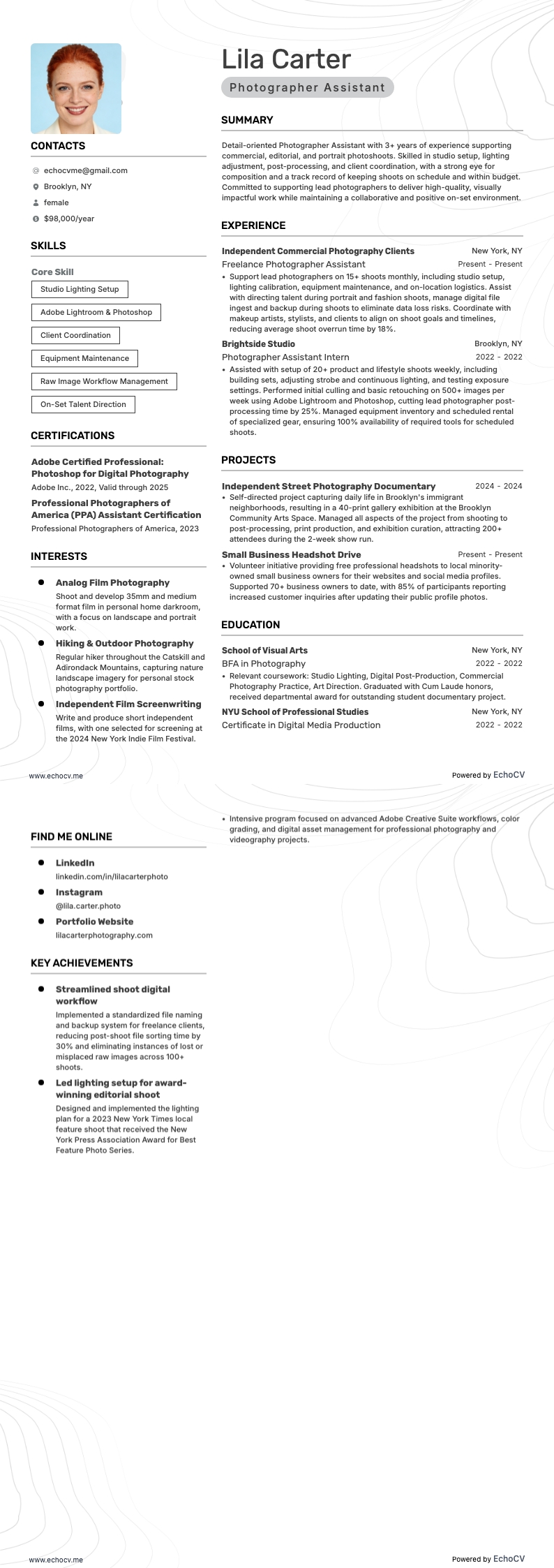
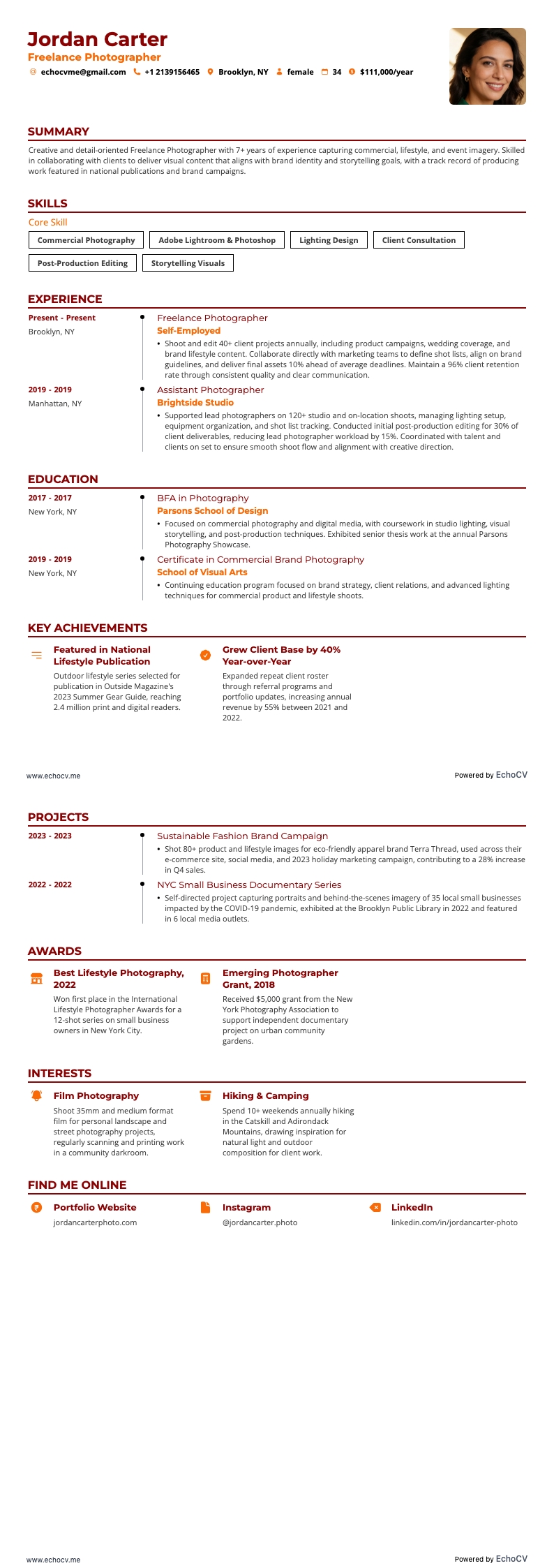
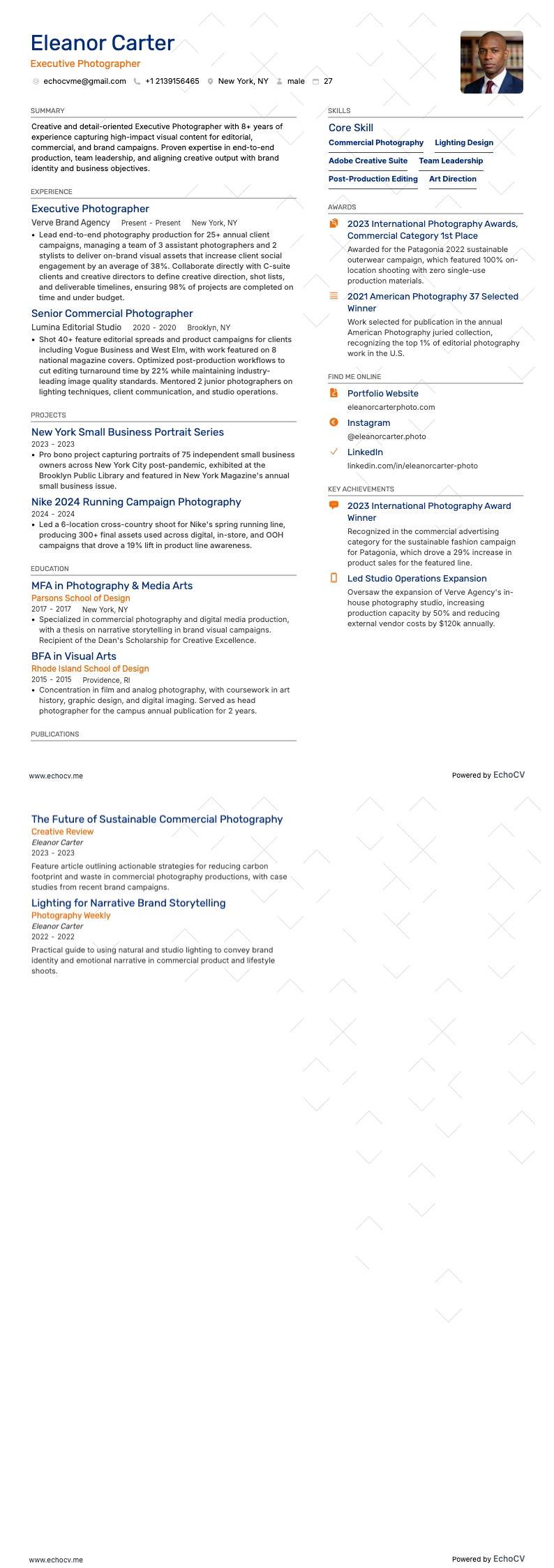
- Specificity: It clearly states the role, employment status, location, and dates, providing a clear timeline.
- Achievements: Highlights notable accomplishments and client base growth, showing impact and progression.
- Skills and responsibilities: Describes the range of skills from technical to educational, showcasing versatility.
How to quantify impact on your resume
- Number of photos taken for a large campaign: This displays the volume of work you can handle and your capability to manage big projects.
- Increase in social media engagement or followers due to your photographs: This showcases your contribution to online growth and digital marketing.
- Specific budget managed for a photography project: This shows your ability to effectively manage resources and demonstrates your responsibility.
- Timeframes adhered to for completing assignments: Punctuality and meeting deadlines are valued in any business setting, and this shows your reliability.
- Number of repeat clients or contracts: This indicates customer satisfaction and the quality of your work.
- Ratio of project bids won: A high success ratio portrays your competitiveness and the market's recognition of your skills.
- Quantity of images sold (if working freelance): This can indicate direct profitability from your work and the market's demand for your style.
- Number of photography exhibitions participated in or organized: Participation in and organizing events indicates your industry involvement and shows your initiative.
How to write a photographer resume with no experience
It can be a scary thing to apply for a new job in an area you have never done before professionally. However, there is a way to do it right and increase your chances of being brought on. Crafting a resume with no experience to show is quite similar across all industries and positions.
Instead of focusing on your work experience, you focus on all the other things. This involves things like highlighting your skills, education, passion for photography, and any relevant projects or informal experiences that demonstrate your talents.
Here's how you can structure such a resume:
- Contact information (header)
- Objective or summary: Write a brief statement that conveys your enthusiasm. Emphasize your commitment to learning and growing as a professional photographer.
- Education: If you have any formal education related to photography or art, list it here. Highlight coursework relevant to photography skills, such as digital imaging, photo editing, or visual arts.
- Skills: Include a photography skills section.
- Projects/Portfolio: Since you lack professional experience, this section is crucial. Describe any photography projects you've completed. These can be personal projects, assignments from courses, or volunteer photography work. Be specific about what you did, the concept or theme, and the outcome.
- Volunteer work/internships: If you've done any volunteer photography work or internships, even if unpaid, list them here.
- Awards/Honors: Include any photography contests, school awards, or recognitions you've received.
- Affiliations: Mention if you are a member of any photography clubs, groups, or online communities.
- References: Optionally, you can include references on your resume or note that they're available upon request.
Tips for a strong photographer's resume without professional experience:
- Focus on quality over quantity: Choose your best work for your portfolio link.
- Tailor your resume to the job: Highlight the most relevant skills and projects based on the job description.
- Keep it concise and visually appealing: Use a clean layout and ensure there are no typos or grammatical errors.
By emphasizing your skills, education, and passion for photography, you can create a resume that captures the attention of potential employers or clients, even without formal professional experience.
Where you should put your portfolio link on a photographer resume
Placing your portfolio link in a prominent position on your photographer resume is crucial for ensuring it catches the attention of potential employers or clients. Here are the most effective places to include it:
- Header: Right alongside your contact information. This is one of the first places employers look, making it an ideal spot for your portfolio link. It ensures visibility regardless of how much time someone spends looking at your resume.
- Top of your resume: Just under your name and contact details. Before you dive into your professional experience or skills, having your portfolio link here acts as an invitation to view your work upfront.
- Summary or objective section: If you include a brief summary or objective at the beginning of your resume, consider adding your portfolio link at the end of this section. It naturally invites readers to explore your work after getting an overview of your professional background.
- End of your resume: As part of your closing remarks or in a separate section labeled "Portfolio" or "Online Portfolio." This placement works well if you want to leave a lasting impression, directing potential employers to view your work as a final step.
Regardless of where you place it, ensure your portfolio link is easy to read and type into a browser, considering using a URL shortener if necessary. Also, make sure your portfolio is up-to-date and showcases your best work relevant to the positions you're applying for.
How to list hard and soft skills on your resume
Displaying a resume skills section is extremely consequential because it showcases technical abilities, artistic proficiency, and software knowledge, helping employers gauge a candidate's competency and fit for specific projects or roles.
Categorize your skills into interpersonal (soft) and technical (hard) skills. Use bullet points for clarity, and prioritize skills most relevant to the job you're applying for.
Hard skills on a photographer's resume refer to technical abilities directly related to photography, such as proficiency in using specific camera equipment, lighting techniques, and photo editing software (e.g., Adobe Photoshop, Lightroom).
Soft skills are interpersonal and creative attributes like communication, adaptability, creativity, and collaboration. Both are crucial, as hard skills demonstrate the photographer's technical capability, while soft skills show their ability to work well in team settings, adapt to different shooting environments, and creatively solve problems.
Below are some of the most desired skills on a photographer’s resume.