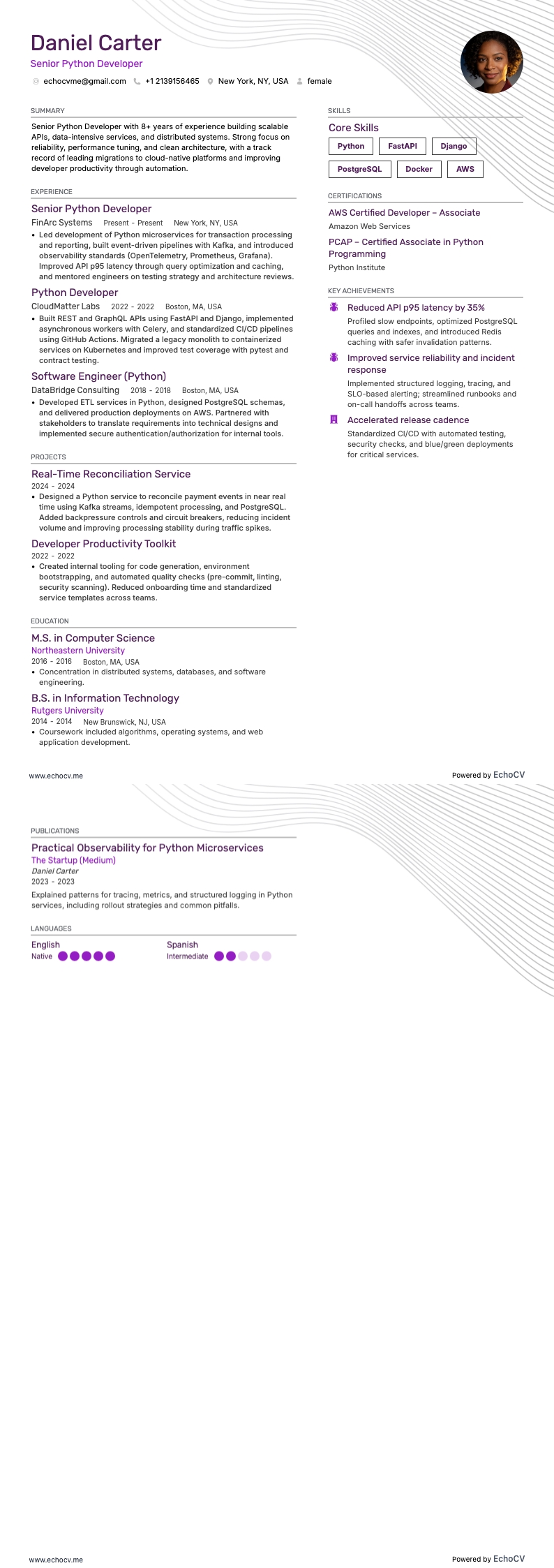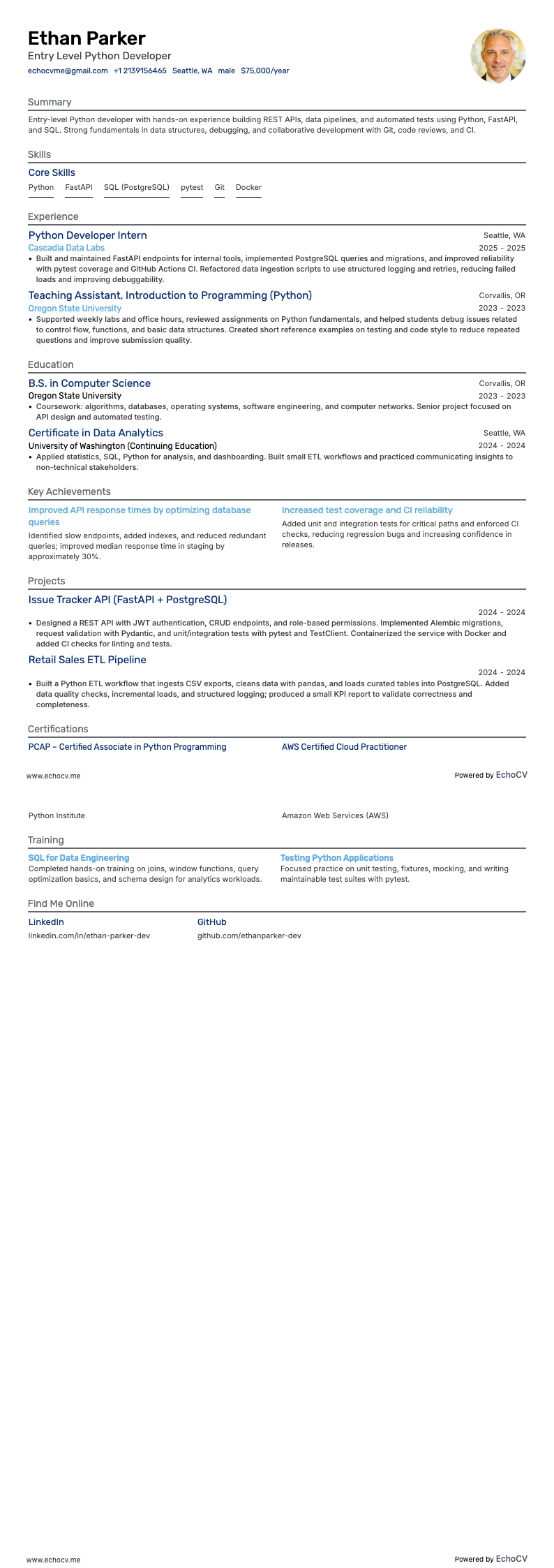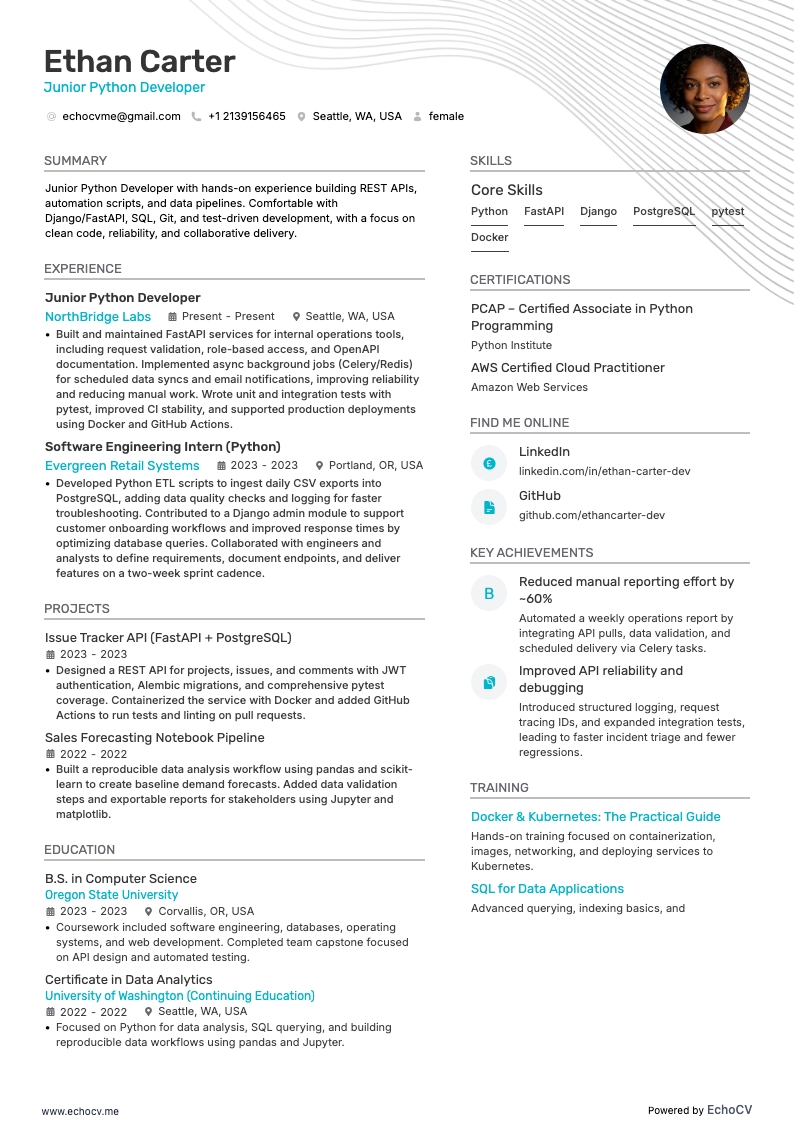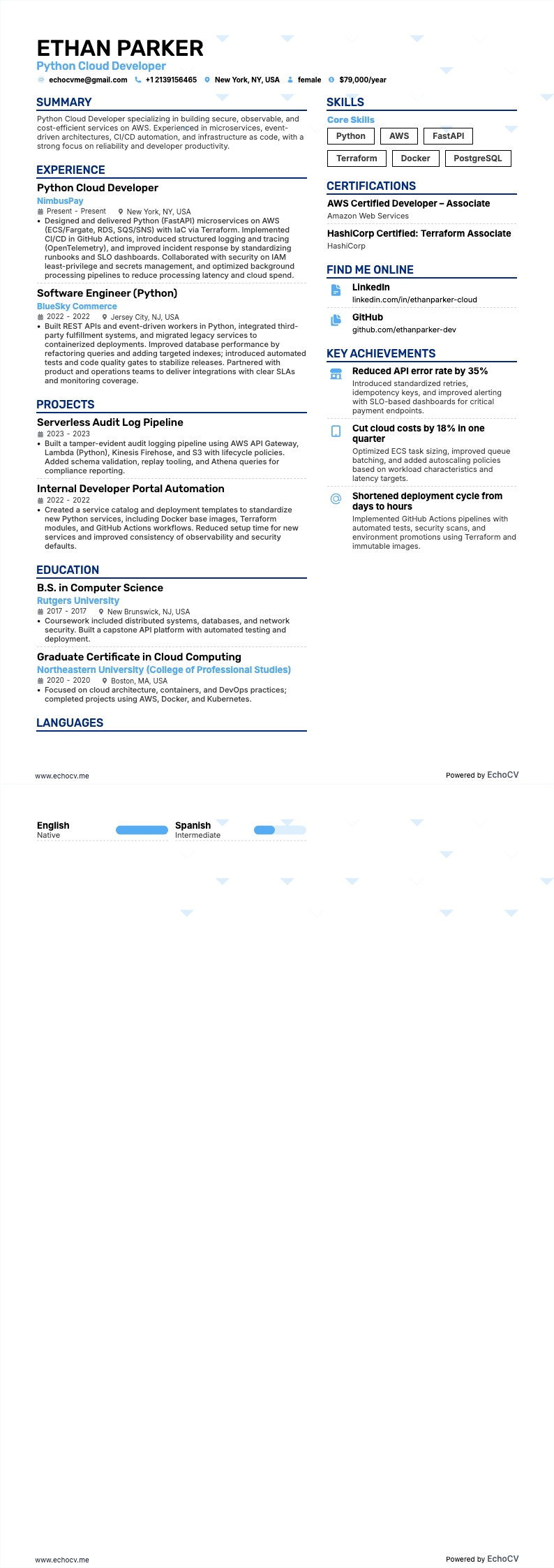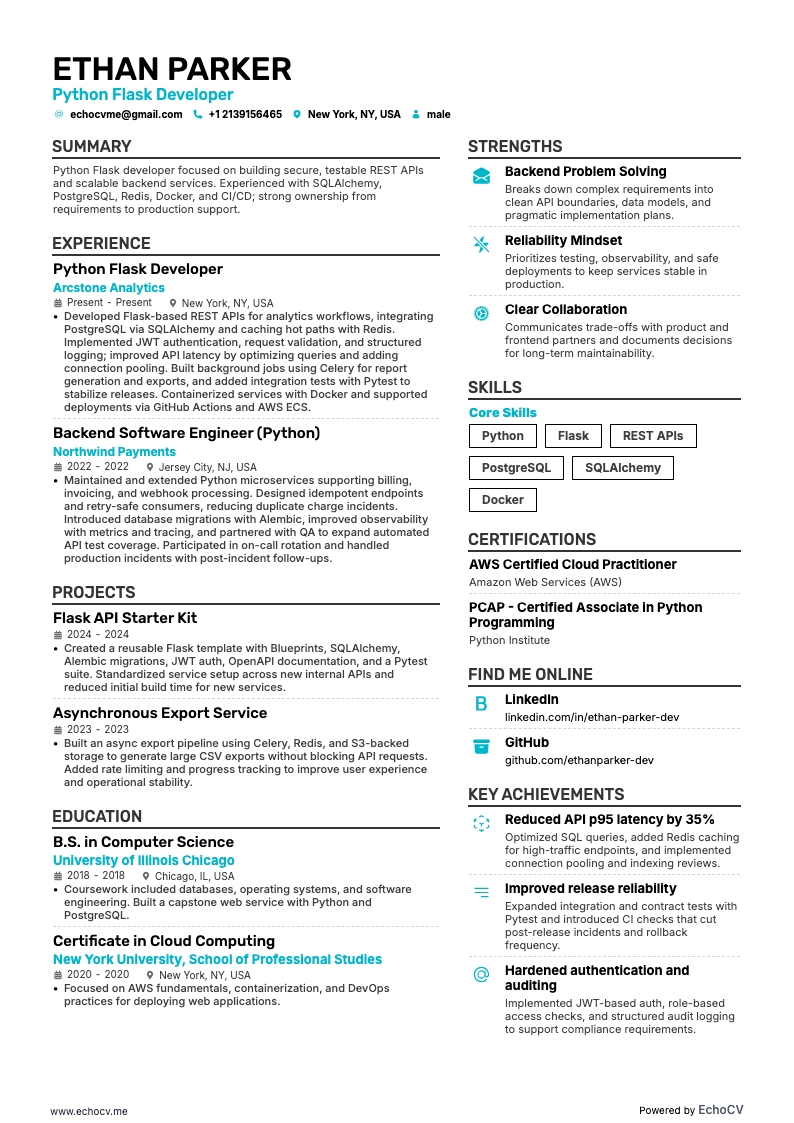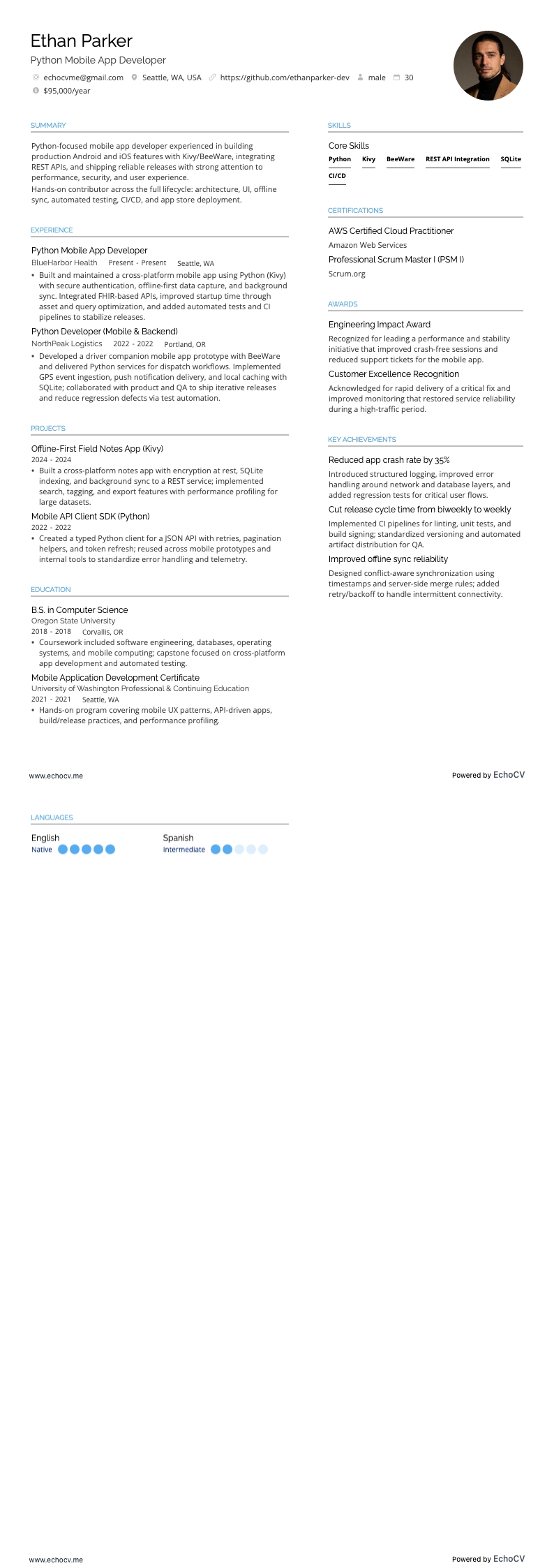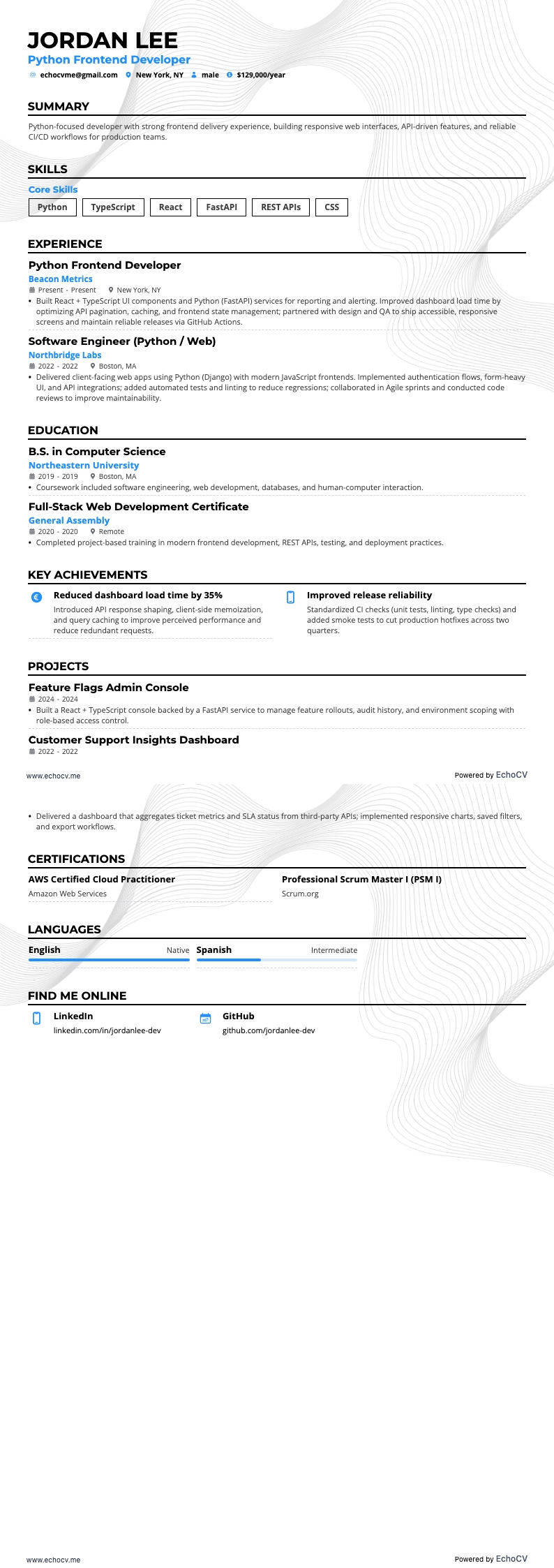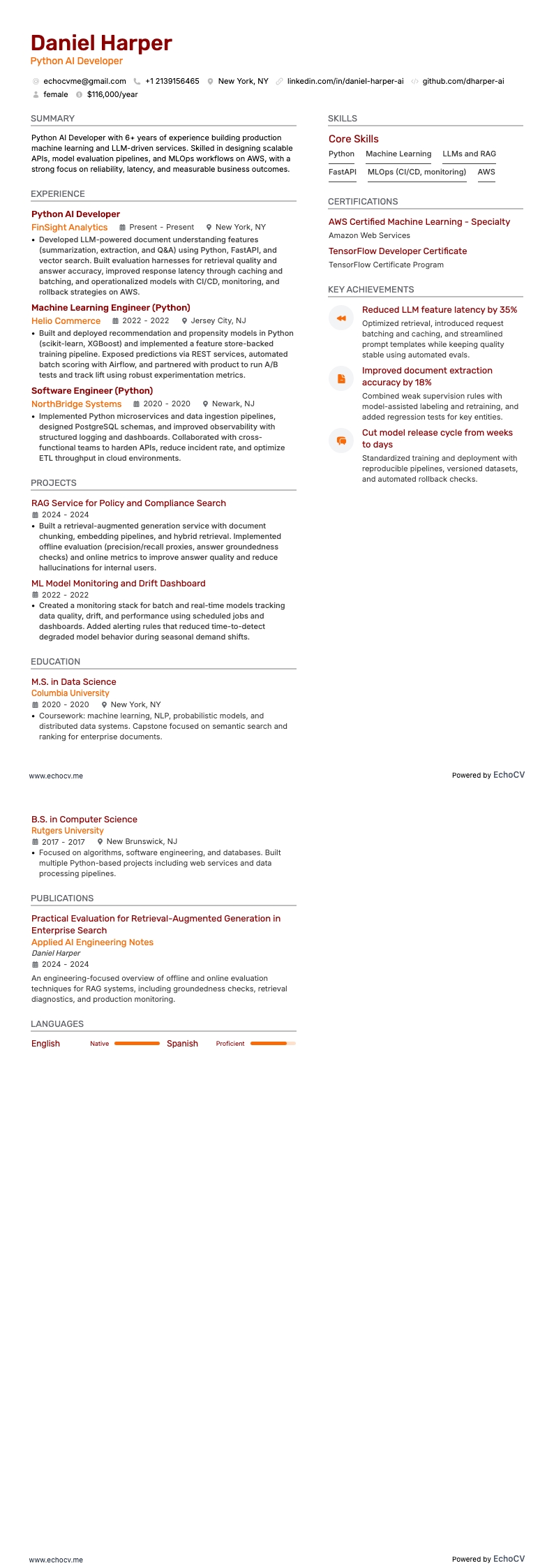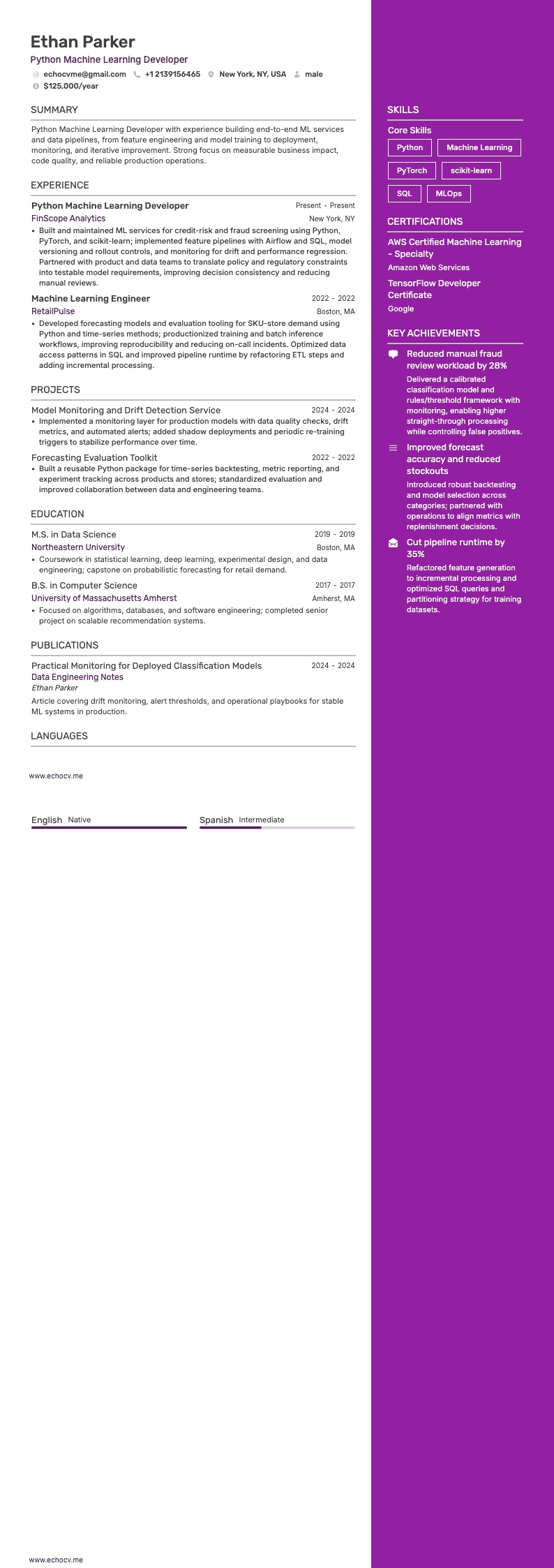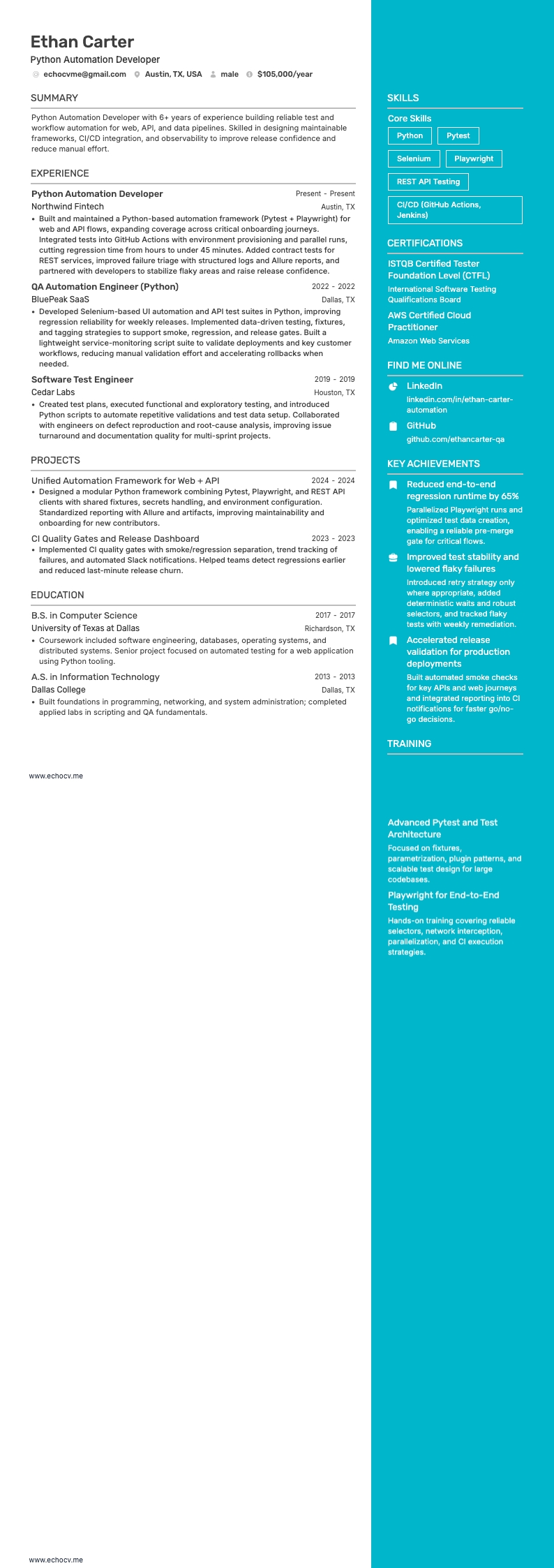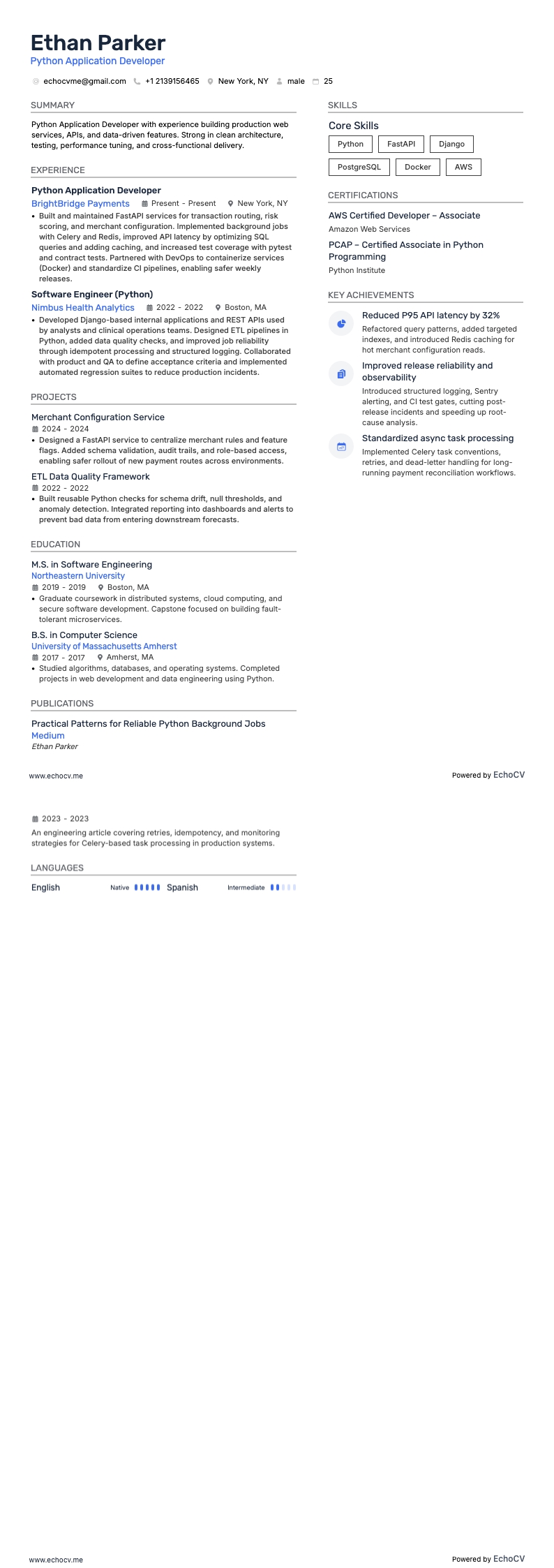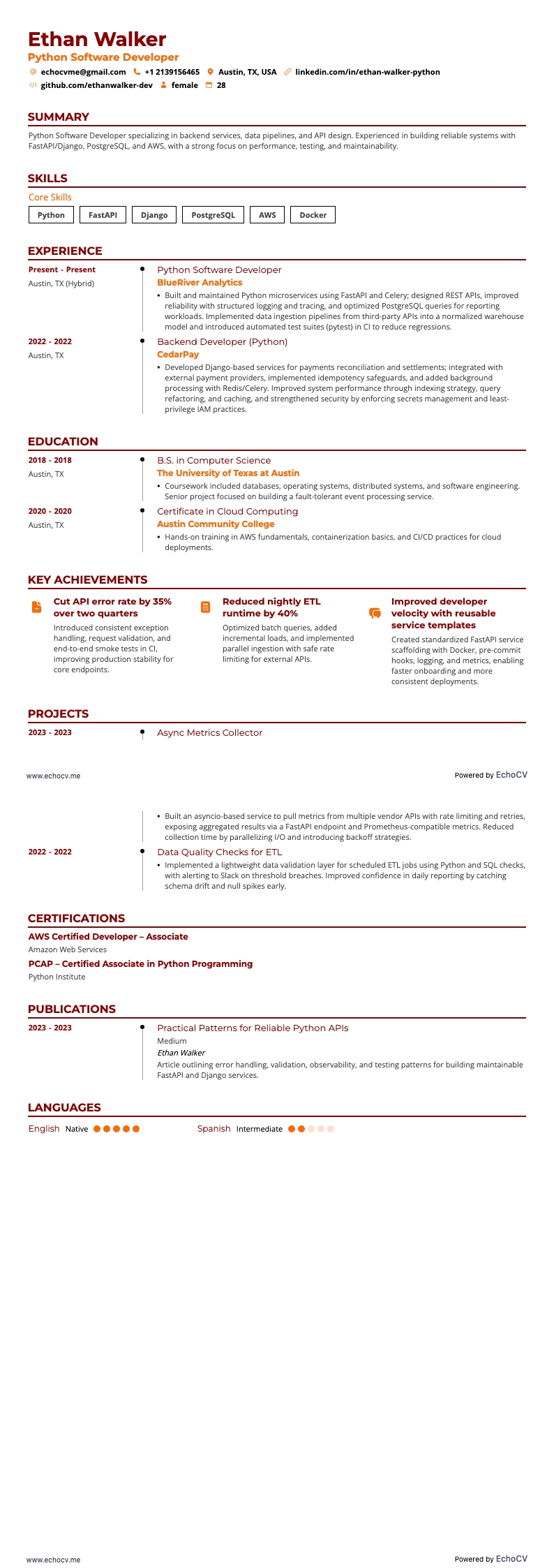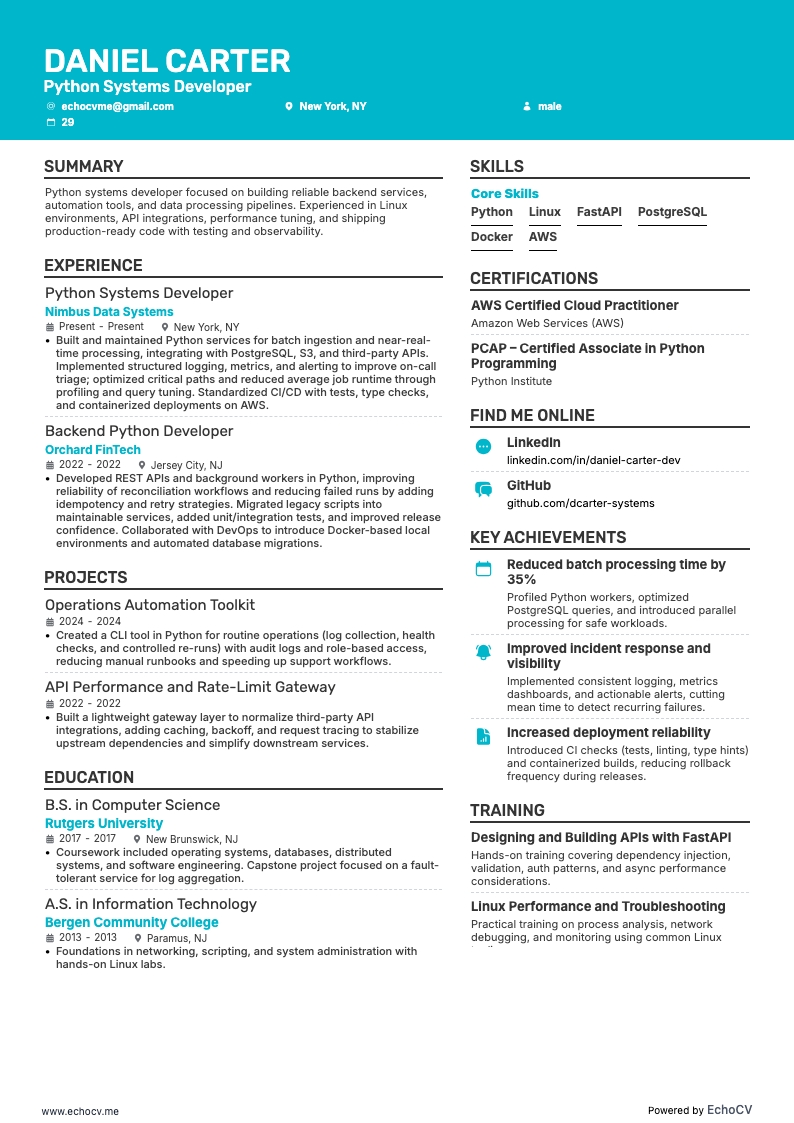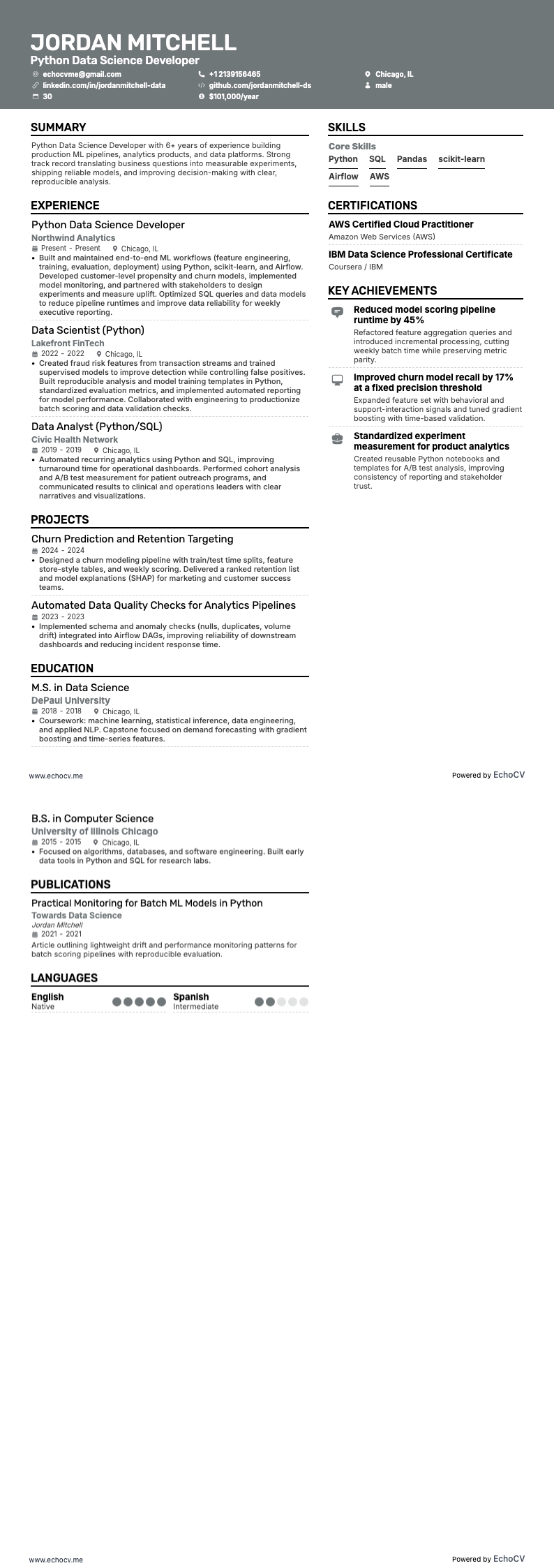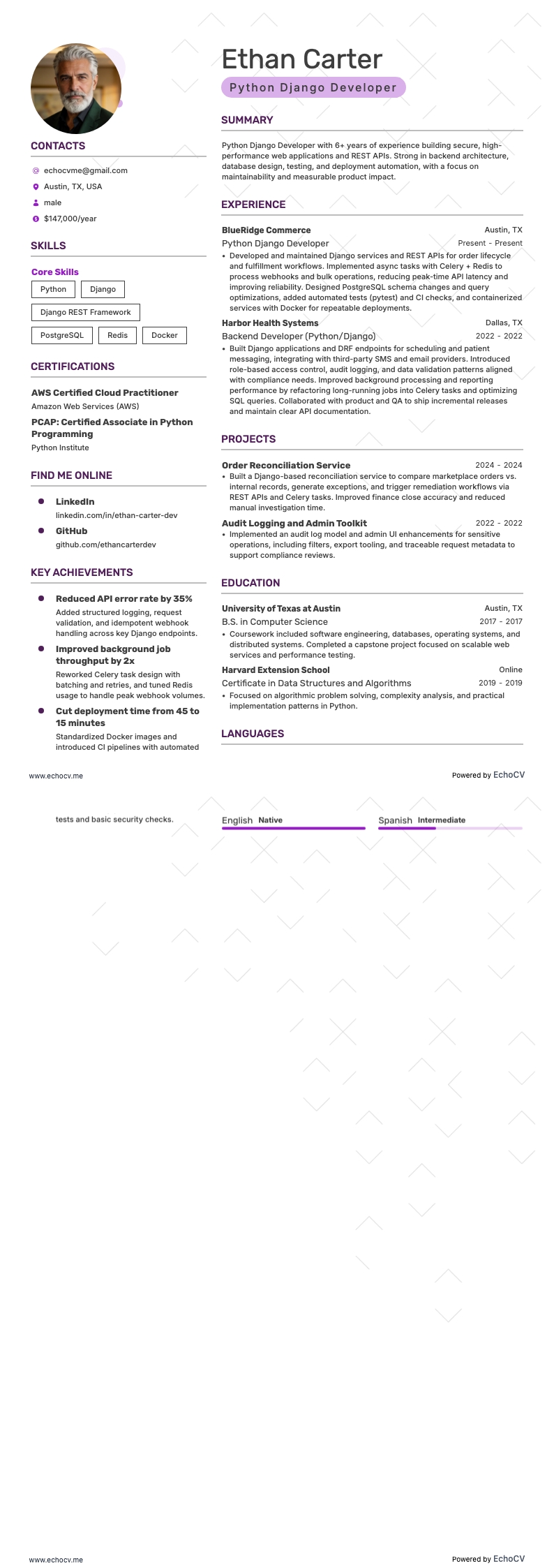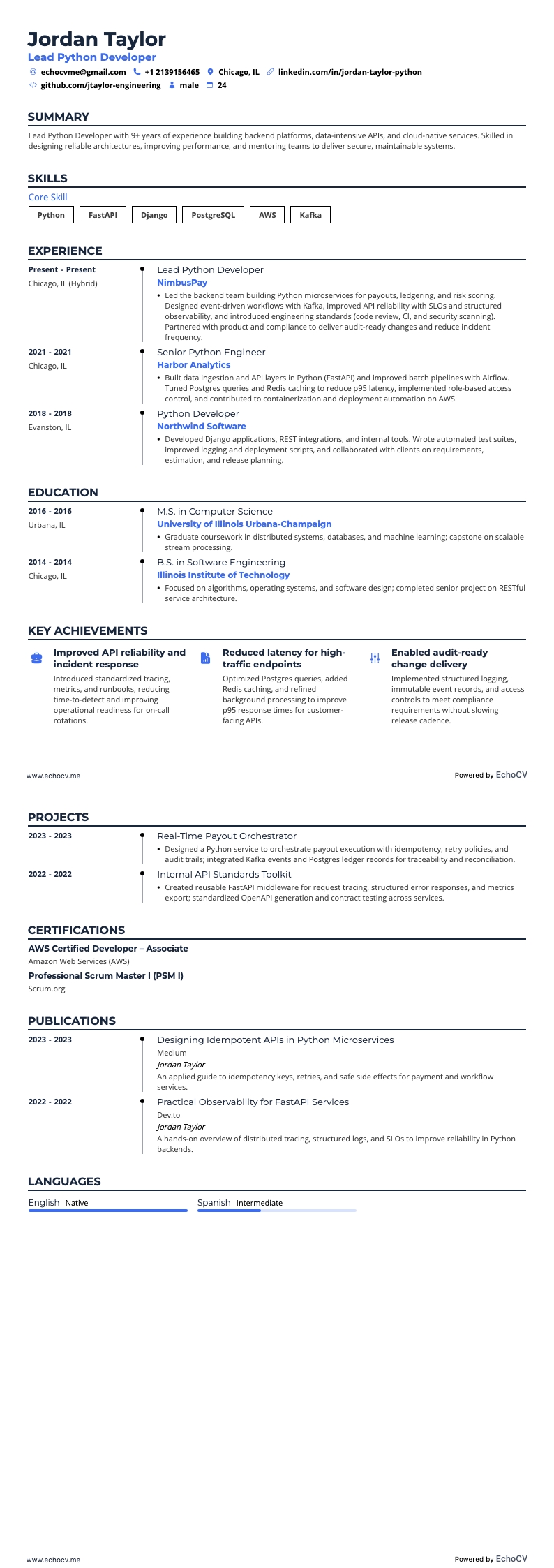
Stating “detected risk issues” doesn’t mean much. But when the applicant mentions they’ve successfully identified nearly 500 potential risks and prevented them. Now that will grab recruiters’ attention!
How to quantify impact on your resume
Speaking of providing context. The best way to do so is to quantify your achievements by linking them to data and numbers. For each bullet point, you need to:
- Begin with a resume action verb.
- Explain the type of challenge you were trying to tackle and your method of solving it.
- Cite the results of your work.
Given the nature of the job, there are plenty of accomplishments you can reference on your Python developer resume:
- Size of databases you’ve worked on: Showcase your ability to handle and manage big data sets. This is a crucial skill for Python programmers.
- Number of projects you’ve completed: Demonstrate your experience and capability to deliver on your promises and within deadlines.
- Number of team members you’ve worked with: Show your ability to collaborate and work in a team. If you’re aiming for a Python-related software development position, this is key.
- Number of code lines you’ve written or bugging tasks you’ve successfully conducted: Emphasize your technical proficiency and attention to detail.
- Percentage of significant performance improvements your code introduced: Display your optimization skills and the positive impact they’ve had on the systems you’ve worked on.
- Frequency of software releases or updates: Boast about your work pace and ability to manage tasks.
- Scale of users impacted by your applications: Demonstrate the real-world impact of your work by emphasizing the potential business value of your work.
- Quantity of bugs or issues you resolved: Highlight your problem-solving skills and attentiveness to product quality.
How do I write a Python developer resume with no experience
If you’re just starting out as a Python developer you may have to work on a few personal side projects before you craft your resume.
Even if they’re as small as building a weather application or working with public datasets. (Kaggle has some very good options for improving your machine-learning skills, if this is your desired field.)
But if you already have a portfolio you can present to tech managers, there’s a way to list projects and events in the experience section. All you have to do is:
- Frame your projects as a part-time gig or an ongoing study activity (more on how to do this later in the guide).
- Mention workshops or competitions you’ve participated in. Better yet if you’ve won prizes or recognition for your work during the events.
- Reference any leaderboards you’re part of. Especially if you’re aiming for a Python-related network and cybersecurity position.
The best part about the last option is that even if you don’t have work experience, leaderboard stats can carry the same weight.
The reason for this is that companies are actively searching for cybersecurity specialists to find bugs or issues with their products. For each bug identified and reported to the business, there’s an official confirmation by that particular company in the form of a bug bounty.
So you don’t necessarily need to have worked for a company to have its stamp of approval that your Python skills are up to par.
How to list your hard skills and soft skills on your resume
Next on the agenda is the talent section — a small box on your resume where you detail your most relevant technical and social abilities.
Naturally, one side must not overwhelm the other.
It’s tempting to dump all your Python developer hard skills in one place. These include your knowledge of libraries, frameworks, and platforms.
But you’re not a robot. And you shouldn’t strive to be one.
Display some of your personality by mentioning your strongest soft skills. These represent your ability to integrate well into the company’s culture and your team.
They can also prove your efficiency as a Python developer by highlighting your time management or organizational abilities.
But irrespective of the type of talent you add to your skills section, make a point of the results your abilities have brought about:
- Introduce your achievement with an action verb.
- Detail the issue you were trying to resolve.
- Describe how your skills have positively affected the outcome of the situation.
If the ad isn’t very detailed about the talents the job demands, here are some ideas for hard and soft skills you can insert in this section: