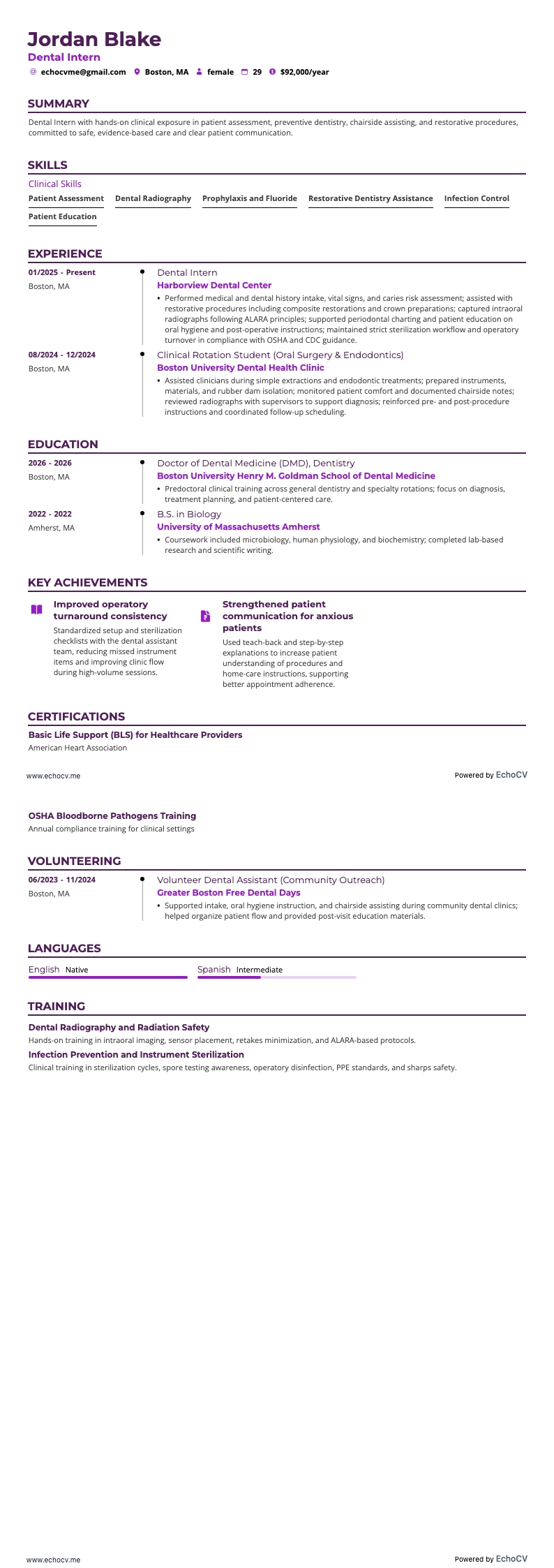
Vista previa completa de Practicante de odontología

21 ejemplos de currículum para dentista

EchoCV

Escrito por el equipo de EchoCV

Actualizado: 10/6/20248 min read

Vea todos los ejemplos de currículum en esta guía o genere su propio ejemplo con su prompt personalizado

Practicante de odontología example resume
Practicante de odontología

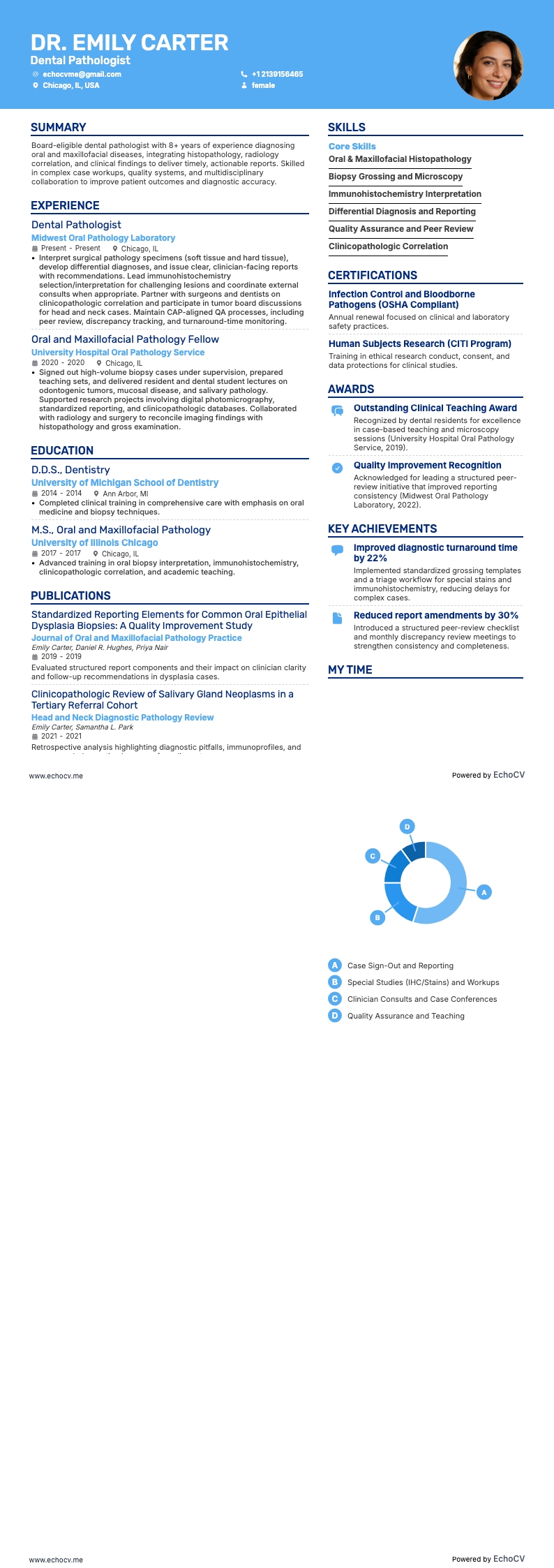
Patólogo dental example resume
Patólogo dental

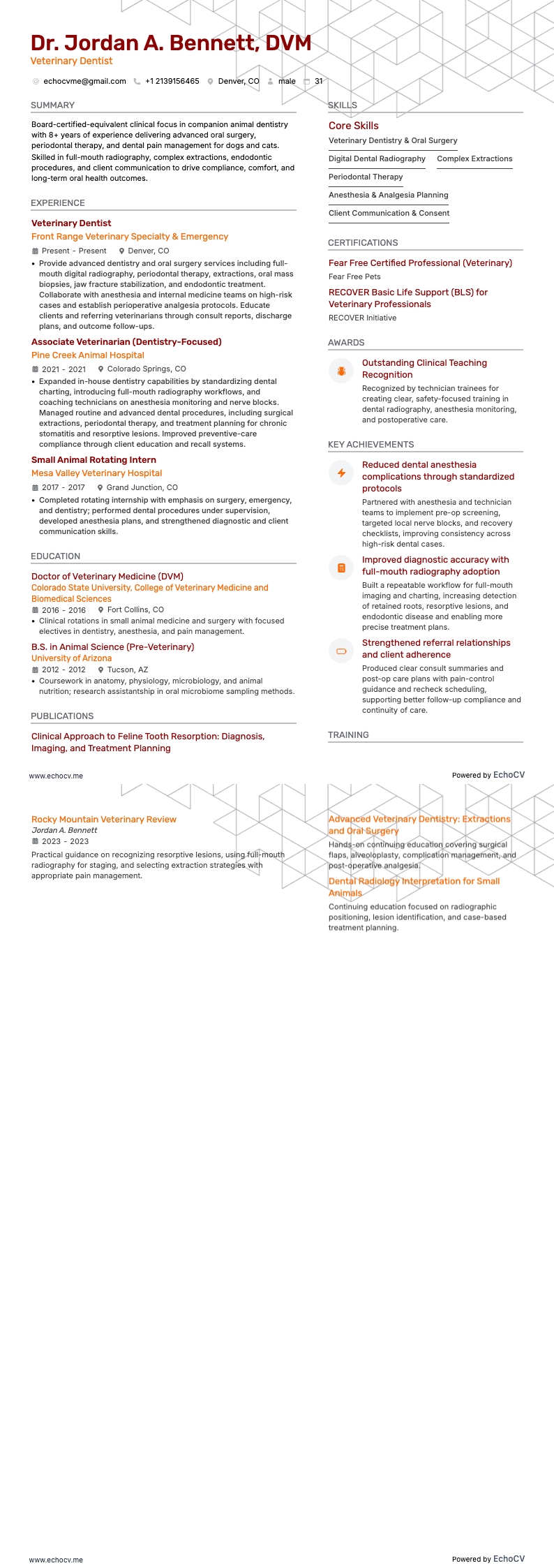
Odontólogo veterinario example resume
Odontólogo veterinario

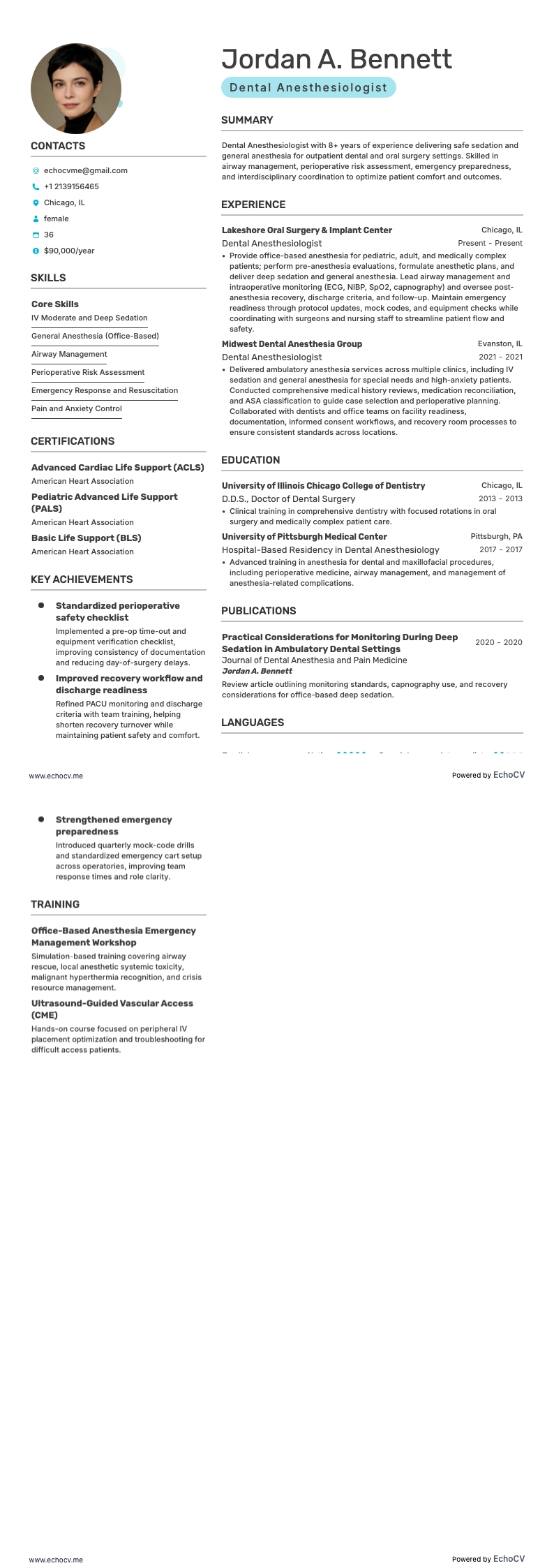
Anestesiólogo dental example resume
Anestesiólogo dental

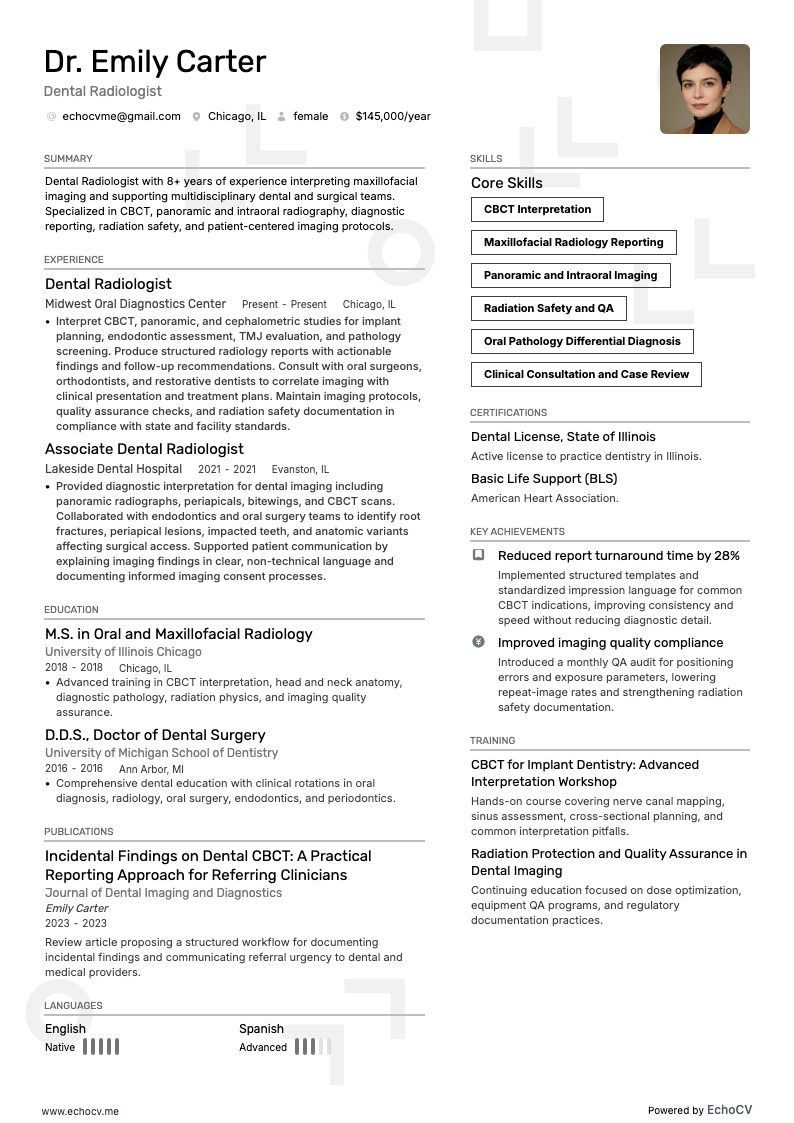
Radiólogo dental example resume
Radiólogo dental

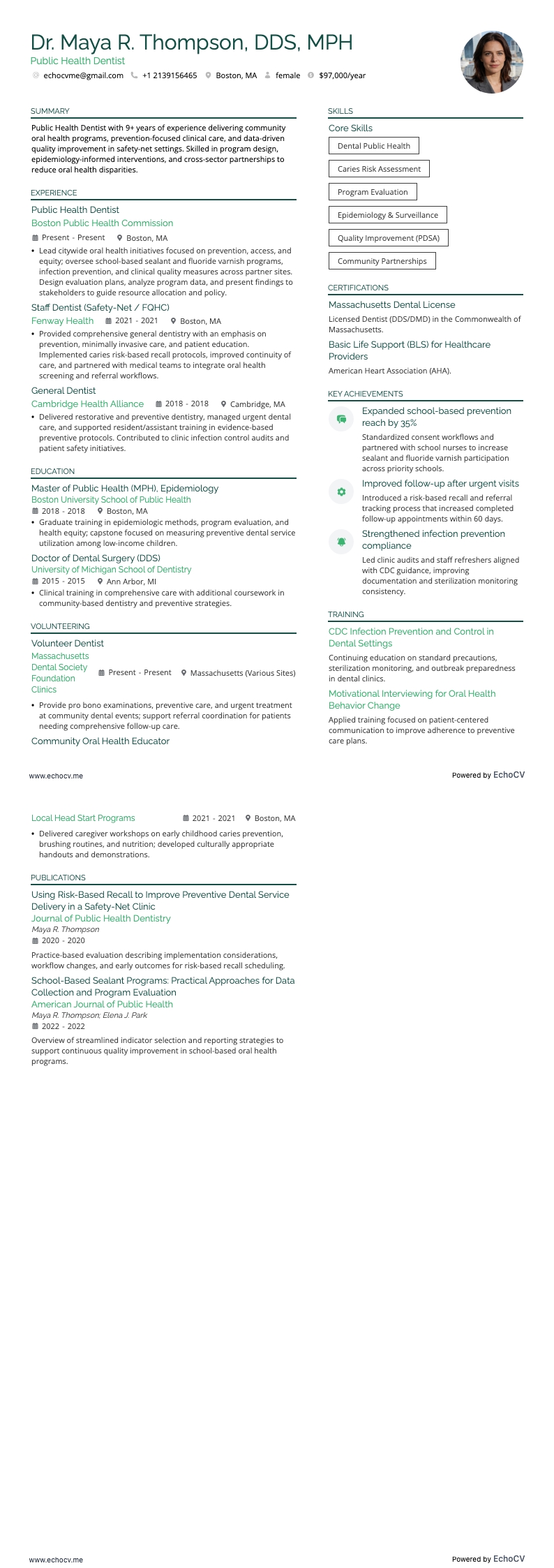
Dentista de salud pública example resume
Dentista de salud pública

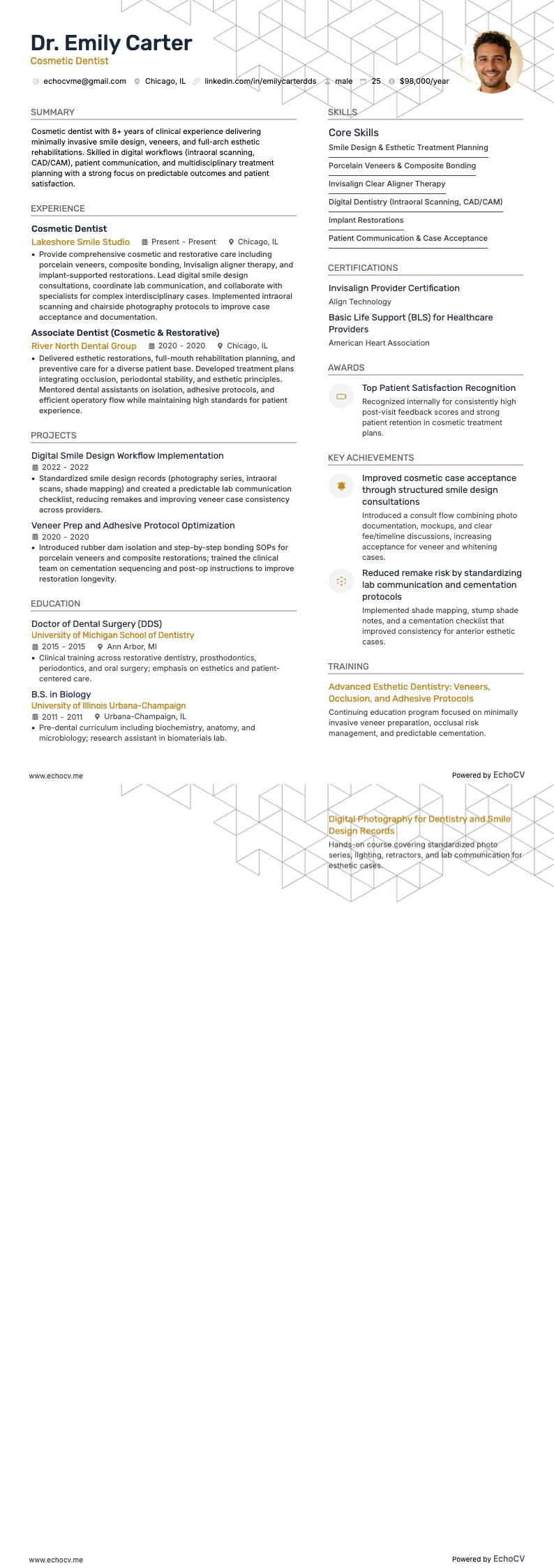
Dentista estético example resume
Dentista estético

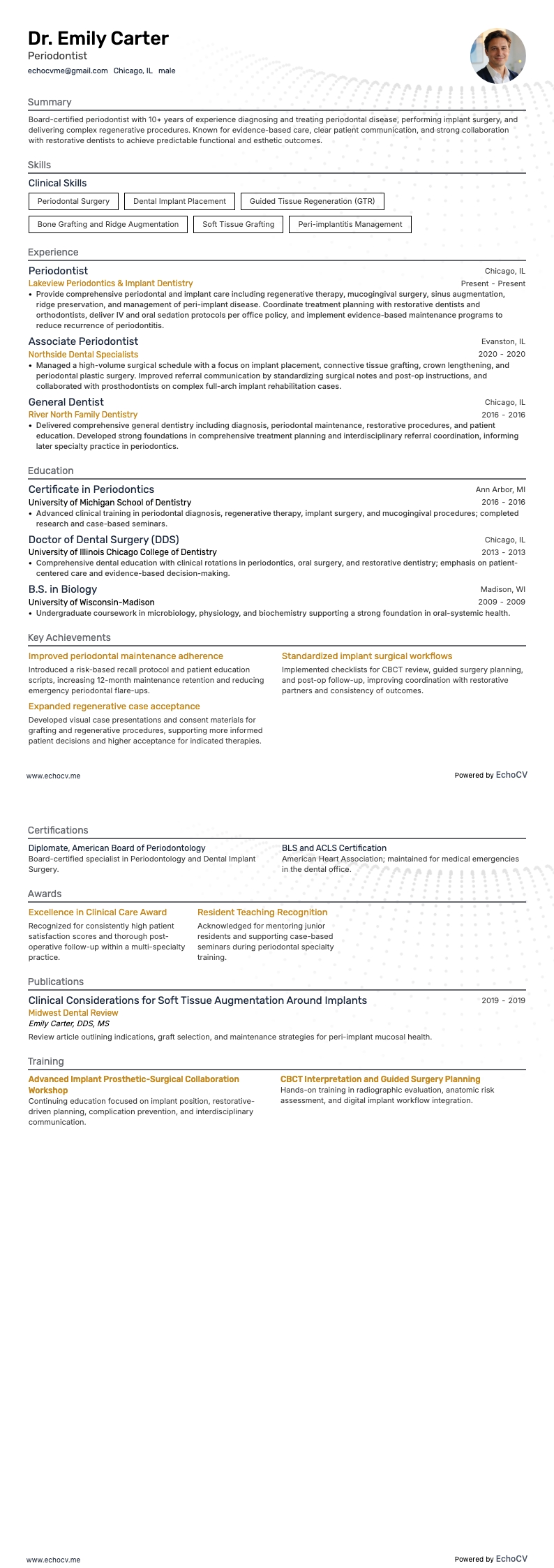
Periodoncista example resume

Periodoncista

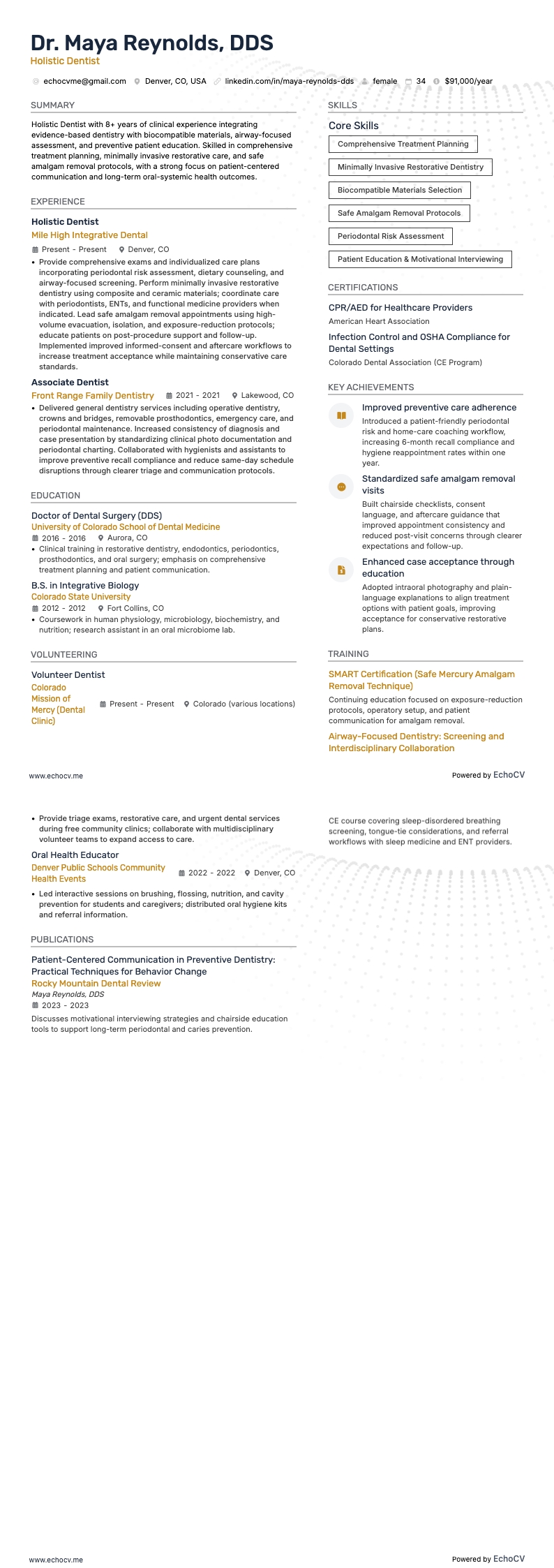
Dentista holístico example resume

Dentista holístico

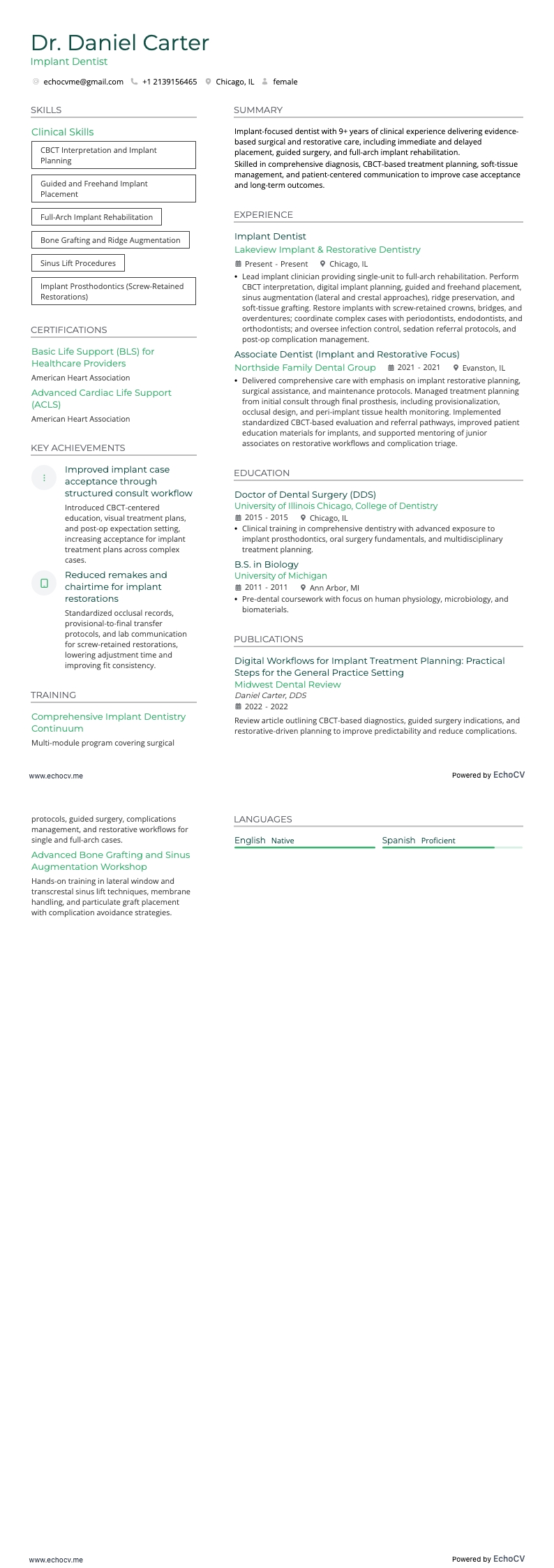
Dentista implantólogo example resume
Dentista implantólogo

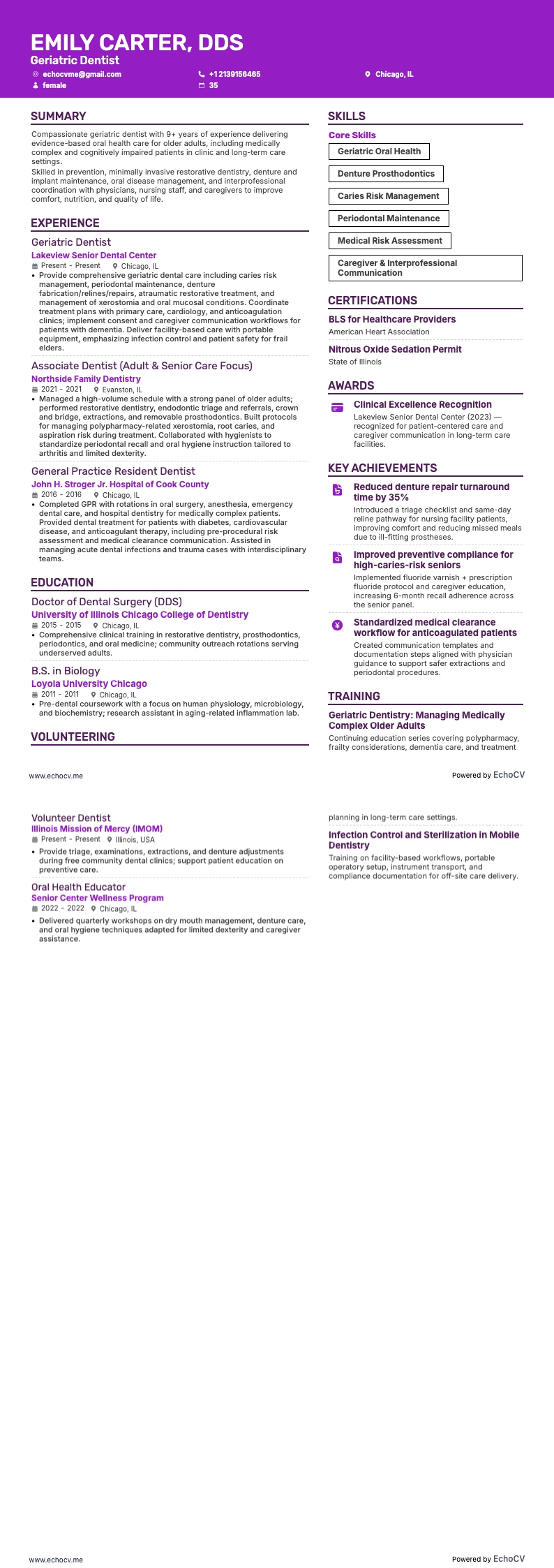
Odontólogo geriátrico example resume
Odontólogo geriátrico

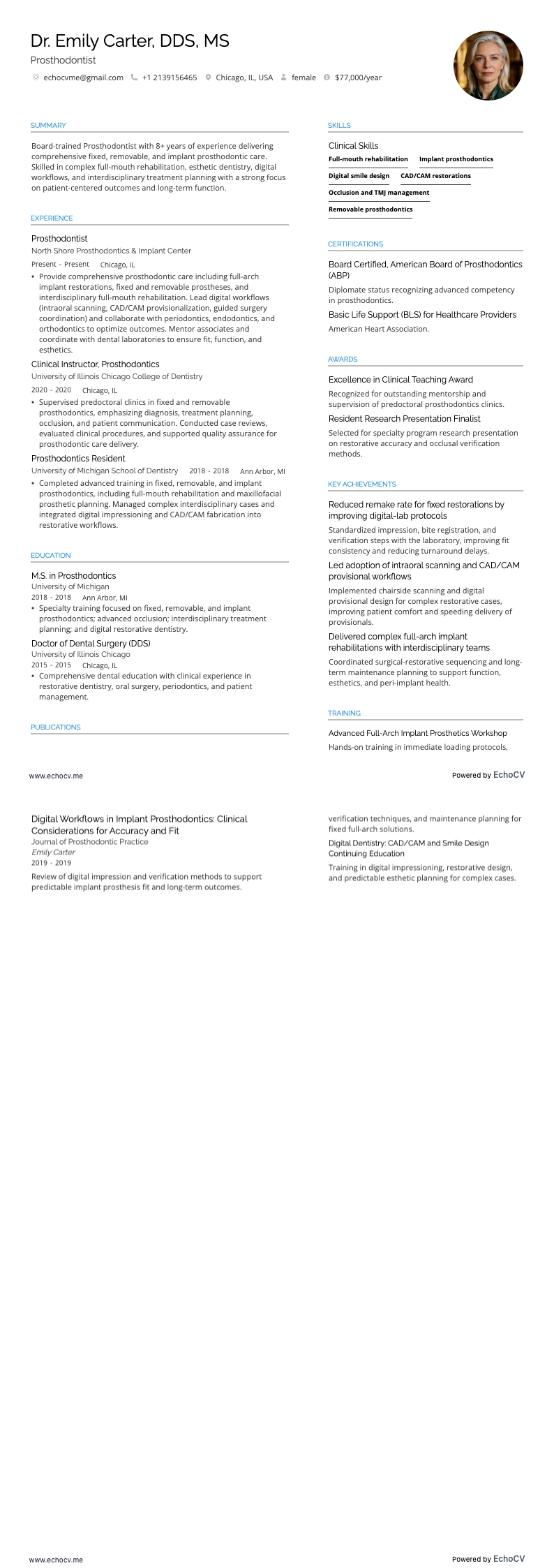
Prostodoncista example resume
Prostodoncista

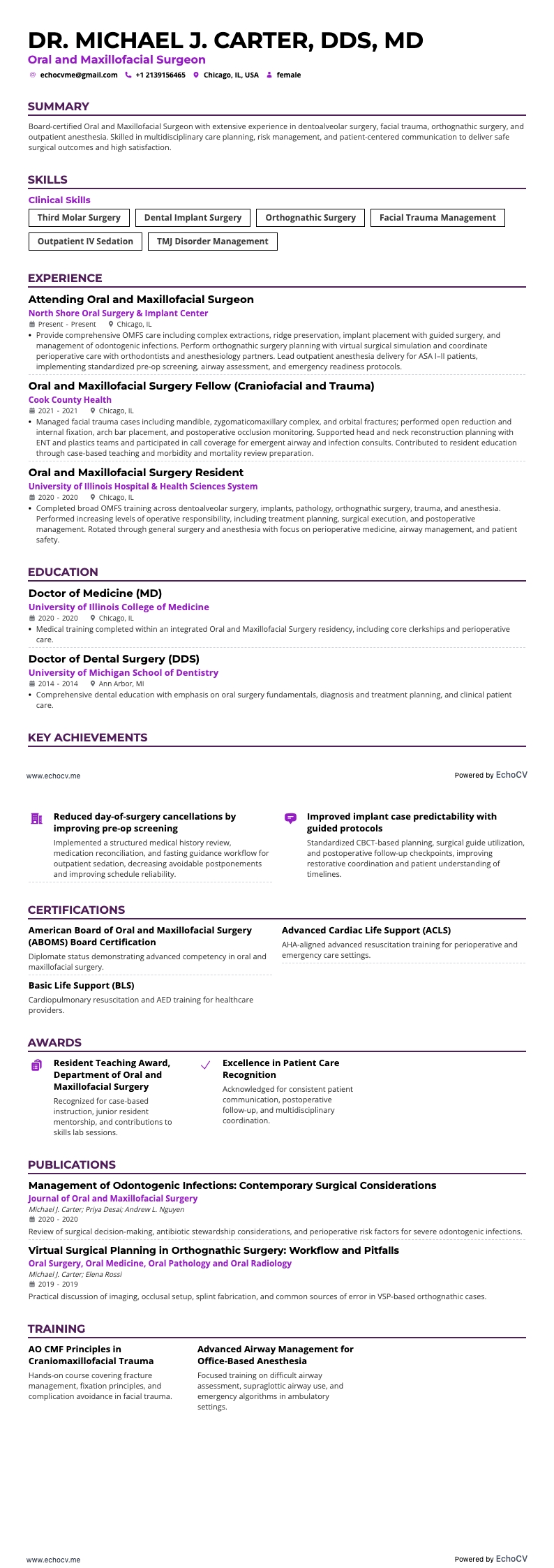
Cirujano oral y maxilofacial example resume
Cirujano oral y maxilofacial

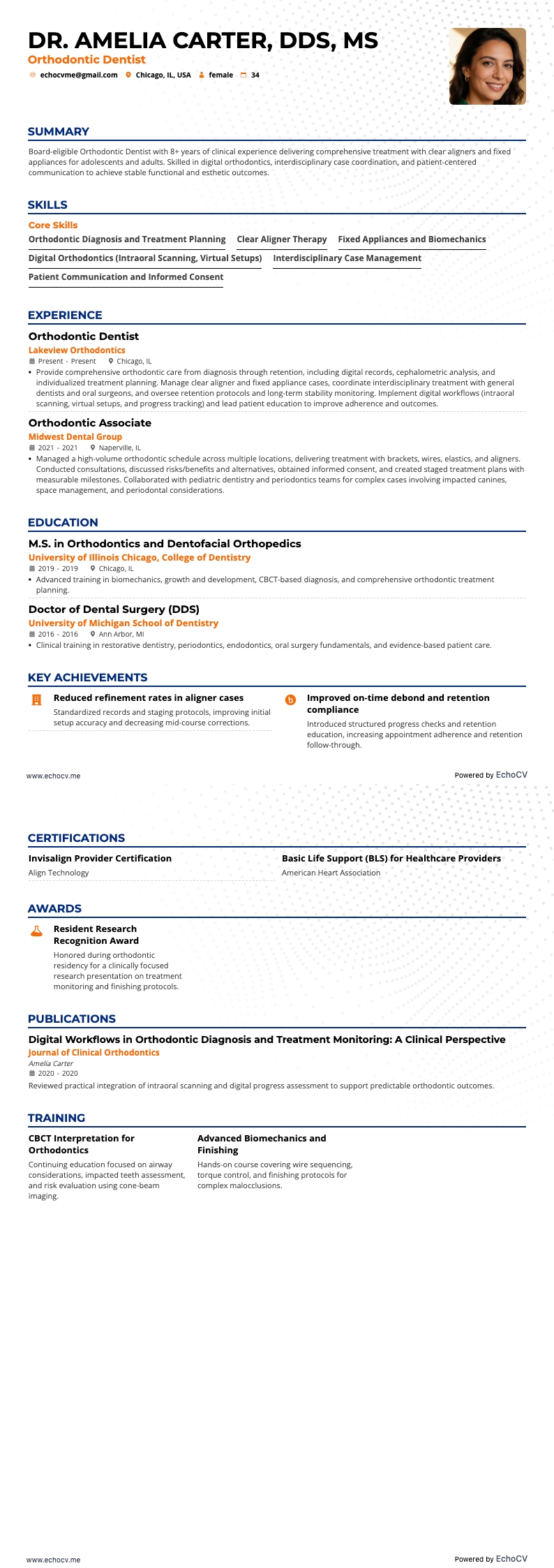
Dentista ortodoncista example resume
Dentista ortodoncista

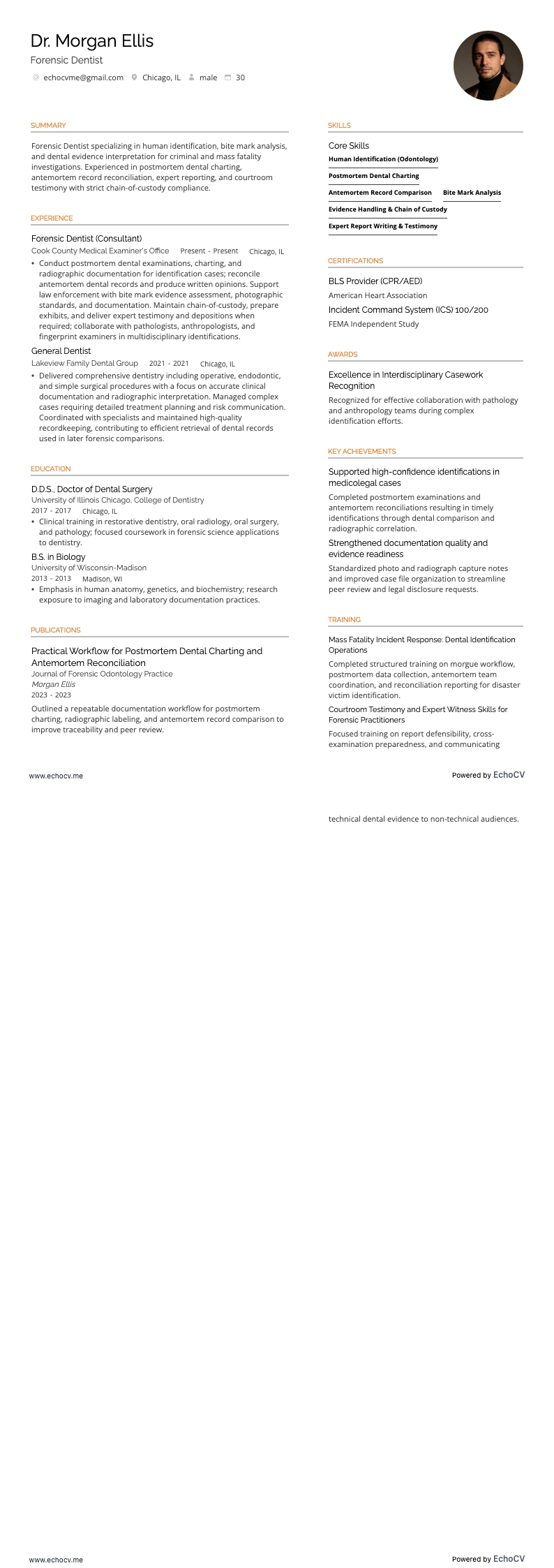
Odontólogo forense example resume
Odontólogo forense

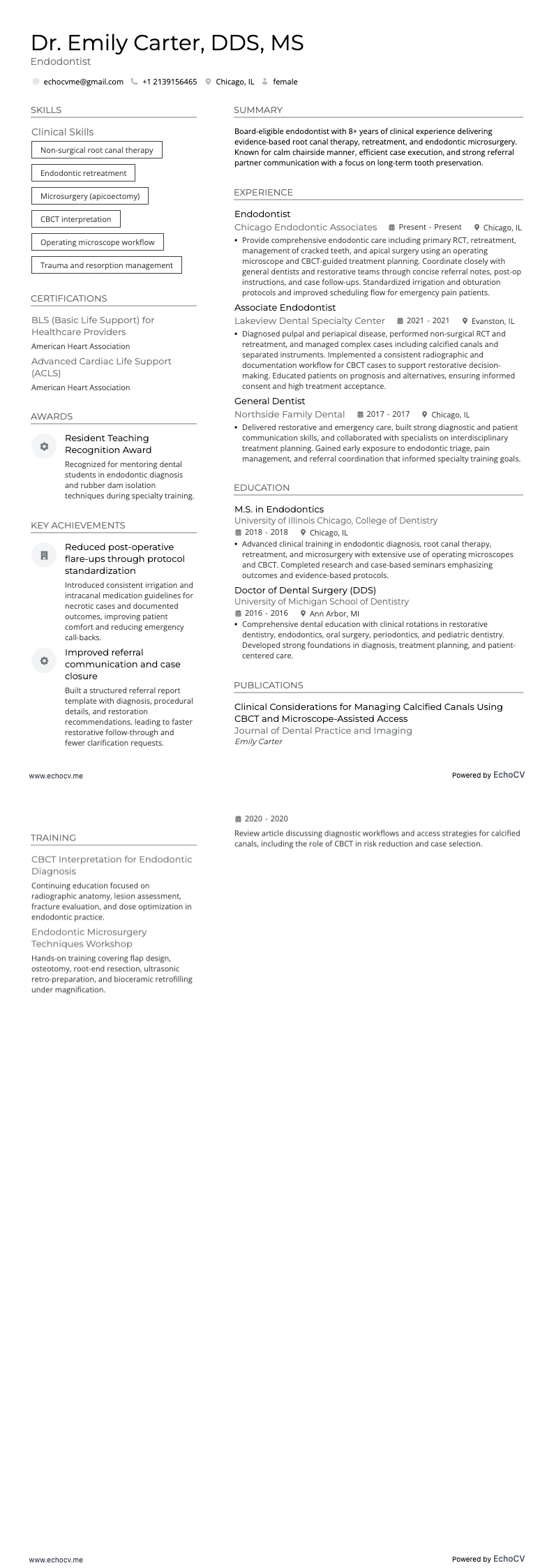
Endodoncista example resume

Endodoncista

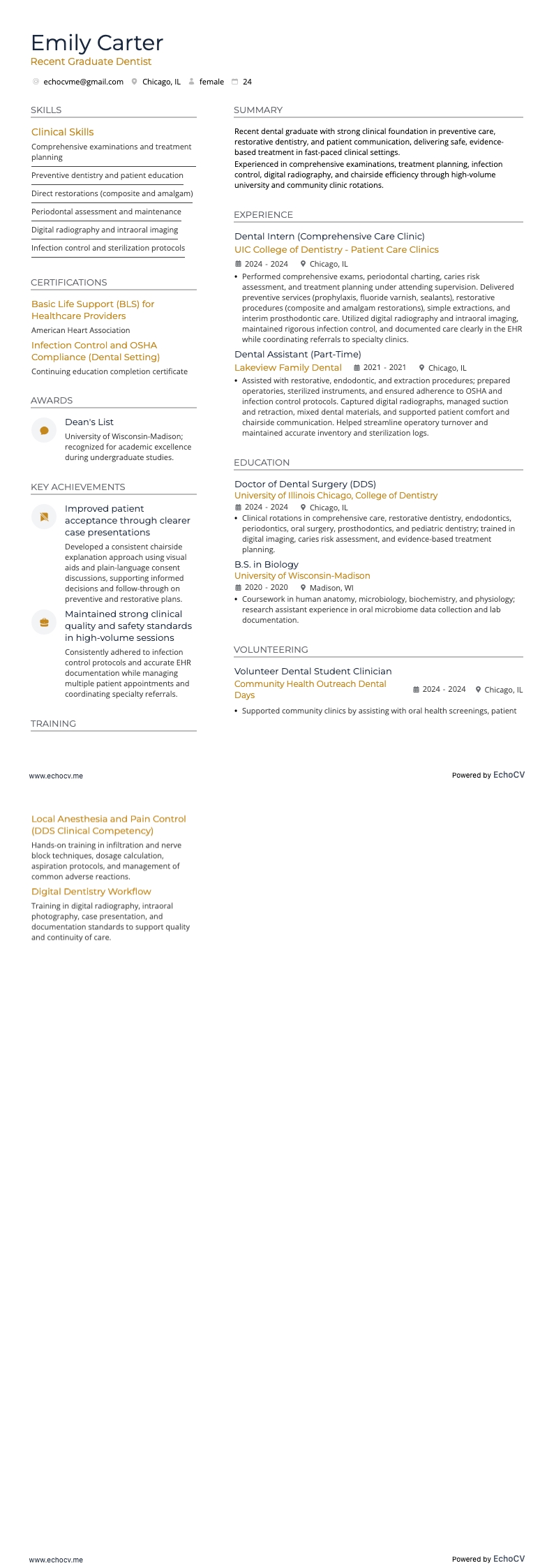
Dentista recién graduado example resume
Dentista recién graduado

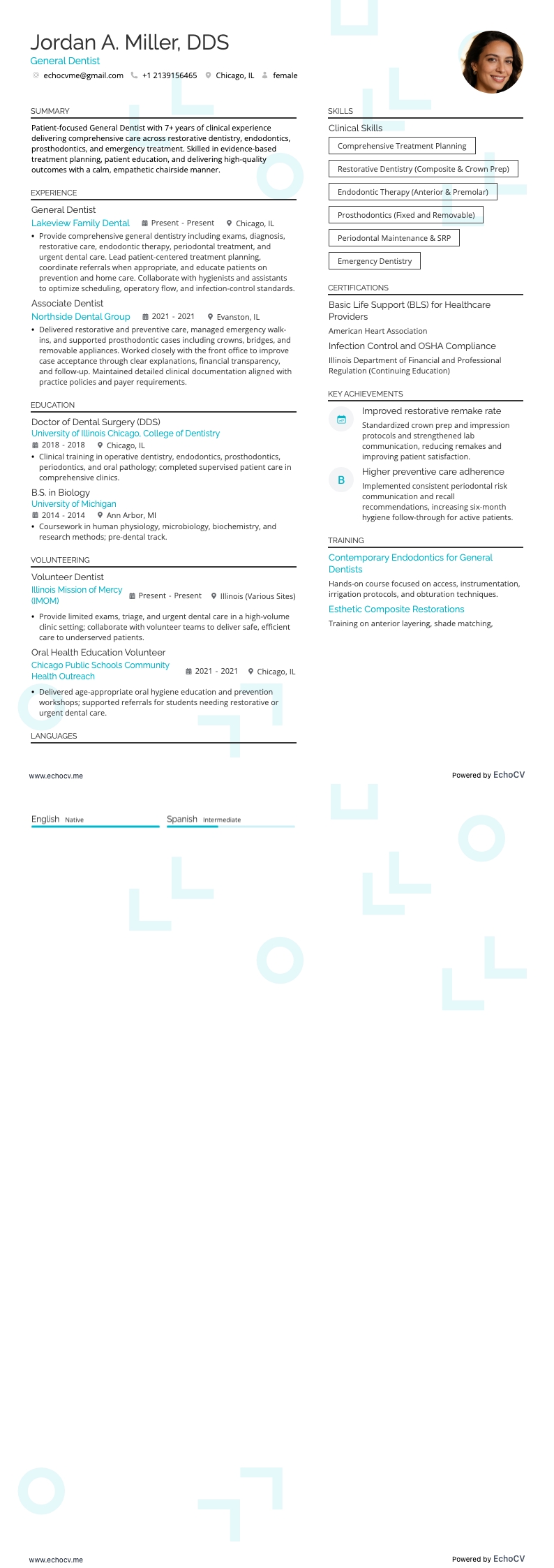
Dentista general example resume
Dentista general

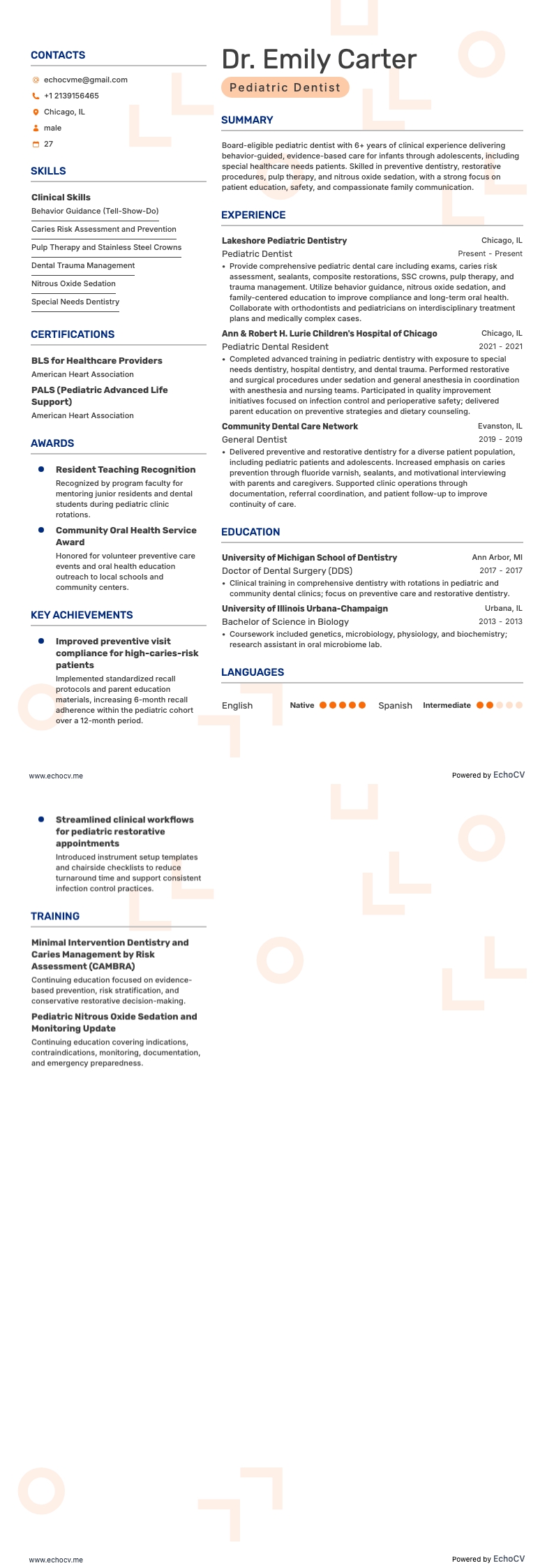
Odontopediatra example resume

Odontopediatra

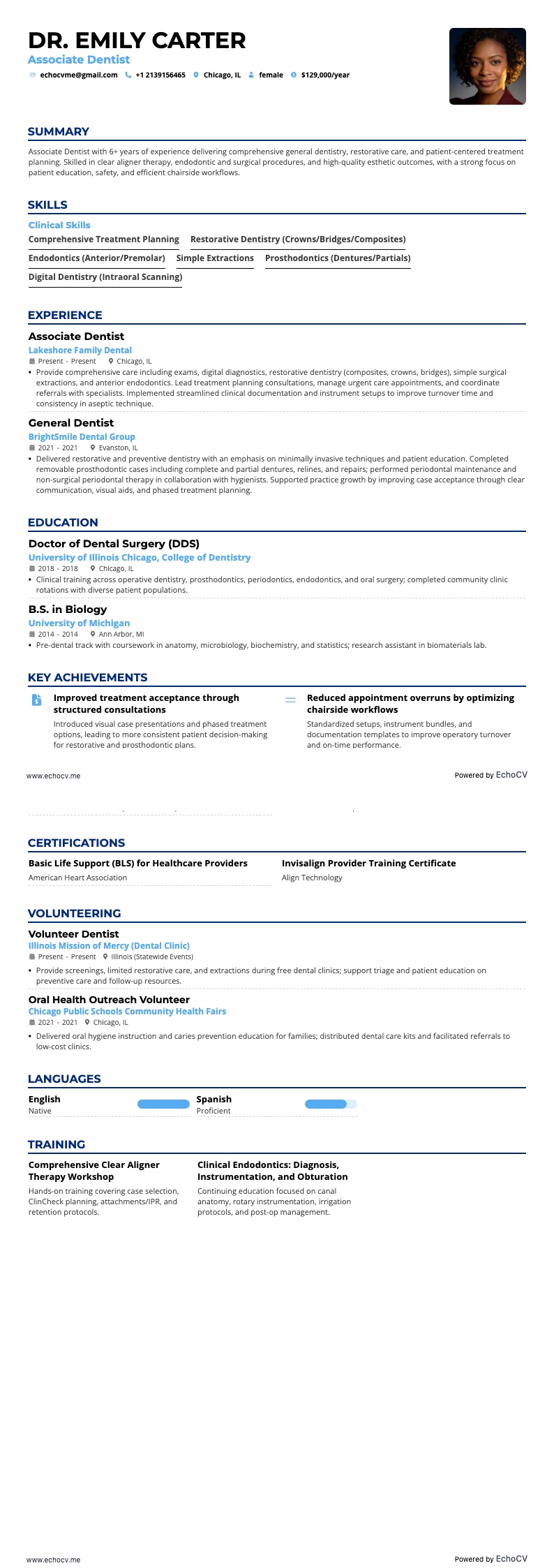
Odontólogo asociado example resume

Odontólogo asociado

Great dentists restore more than smiles—they build trust, precision, and calm in every patient who sits in the chair. But if your resume doesn’t reflect that same professionalism and clinical excellence, it won’t stand out.

As the person patients rely on for safety, comfort, and confidence, your work carries both medical and emotional weight. That’s why dental recruiters and practice owners review resumes with surgical precision—scanning for measurable impact, proven outcomes, and up-to-date certifications.

At Echocv, we’ve helped thousands of dentists and specialists craft resumes that turn procedures into results and results into interviews. In this guide, you’ll find 21 dentist resume examples and templates, along with step-by-step tips.

Key takeaways

  • Lead with reverse‑chronological or hybrid format to surface clinical scope fast.

  • Quantify outcomes (production, acceptance, remakes, chair time, complications).

  • Mirror the procedures/tech in the JD and prove them with numbers.

  • Put licensure & certifications (INBDE, ADEX, state, DEA, BLS/ACLS, sedation) in their own section.

  • Use Echocv to tailor and generate stronger bullets—then export ATS‑friendly PDFs.

  • Keep it to 1–2 pages, with optional Achievements for awards/CE.

Explore these dentist resume examples to see how top professionals highlight patient outcomes, technical skills, and career growth.

How to choose the best dentist resume format

Recruiters want fast evidence of case mix, volume, efficiency, and patient outcomes. Use a reverse‑chronological format if you’ve held recent clinical roles. If you’re a recent graduate or switching specialties, a hybrid format lets you front‑load clinical competencies and licensure while keeping experience scan‑friendly.

Which resume format should a dentist use?

What sections should go on a dentist's resume?

  1. Resume header (name, DDS/DMD, credentials, location, contact, optional website/smile gallery)
  2. Summary or Objective
  3. Work Experience (3–6 bullets each)
  4. Skills section (hard/technical)
  5. Education
  6. Certifications & Licensure (INBDE, ADEX/Regional, state license, DEA, BLS/ACLS/PALS, sedation permits)
  7. Optional: Publications/CE, Professional Memberships (ADA/AGD), Awards, Volunteering

How to write your dentist resume experience

Your experience section should prove that you deliver safe care and practice value. Each bullet should combine a procedure or competency with a metric or outcome. For example, cases per month, production, no‑show reduction, remakes, complication rates, chair time, case acceptance, patient satisfaction, etc.

Resumen

  • Scope: patient volume/day, procedure mix, payer mix (PPO/FFS/Medicaid)
  • Efficiency & quality: on‑time starts, remakes, complications, chair time
  • Growth: production/collections, case acceptance, hygiene recall
  • Tools: CBCT, CAD/CAM, intraoral scanners, lasers, practice software
  • Compliance & safety: OSHA/HIPAA, sedation permits, radiology protocols

Now let’s put that into action. Check out the example entry below..

Good example of a dentist experience section

General Dentist
Harbor Dental Group | San Diego, CA


June 2020 – Present

  • Performed 1,000+ restorative cases per year (Class II & core buildups) with <1.5% remake rate after adopting rubber dam isolation and calibrated contacts.
  • Implemented same-day CAD/CAM crowns (CEREC), cutting chair time by ~12 minutes per visit and increasing monthly production 18%.
  • Grew case acceptance for comprehensive treatments from 42% to 63% by adding digital treatment visualizations and financing scripts.
  • Led a three-operatory schedule redesign, reducing no-shows by 22% and improving hygiene recall by 15% year over year through automated reminders and a peri-maintenance protocol.

How to tailor your dentist resume experience

Recruiters and applicant tracking systems (ATS) scan your resume for alignment with the job description. If your bullet points reflect the exact procedures, tools, and patient outcomes a clinic emphasizes, you instantly appear more qualified.

Tailoring your resume ensures your clinical experience matches what the employer values most—whether that’s production goals, pediatric care, or implant restoration.

Here are several effective ways to tailor your dentist resume experience:

  • Mirror the procedures mentioned in the job post—such as restorative, endodontic, or implant treatments.
  • Use the same clinical tools and technologies listed—like CEREC, CBCT, iTero, or 3Shape scanners.
  • Highlight patient demographics the clinic serves—pediatric, geriatric, cosmetic, or community care.
  • Show outcomes the employer tracks—case acceptance, production, patient satisfaction, or complication rates.
  • Include any relevant payer mix experience, e.g., PPO, FFS, or Medicaid, to reflect practice focus.
  • Quantify results in the same terms they use (percentages, per-month cases, wait-time reductions).

Here’s a real job ad excerpt—as you read it, note the technology, procedures, patient mix, and performance goals the employer cares about.

Dentist job description from a real posting

  • We are seeking an experienced Dentist to join our general practice. The ideal candidate will perform full-scope care, including restorative procedures, extractions, root canals, implant restorations, and cosmetic dentistry. The office is fully digital—with CBCT, iTero scanning, and CEREC workflows. We treat a mixed payer population (PPO, FFS, Medicaid) and serve both adults and pediatric patients. The clinic aims to increase case acceptance and retention, with a goal to grow production 15% annually. Strong patient communication, treatment presentation, and financing plan implementation are required.

Below are examples of how dentists turn vague, generic bullets into high-impact, tailored achievements that directly match the job description.

Resume tailoring examples for dentists

Job description excerptUntailored bulletTailored bullet
Experience with clear aligner therapy and digital scans (iTero).Restored anterior esthetics for adult patients.Completed 40+ clear aligner cases/year using iTero digital scans; maintained 92% on-time case completion and reduced refinement time by 15%.
Comfortable with molar endodontics and surgical extractions.Performed root canals and extractions.Completed 8 molar endo cases/month and 10+ surgical extractions/month with <2% post-op complications through improved analgesia and follow-up protocol.
Focus on community and Medicaid patient care.Treated diverse patient base.Managed 18–22 patients/day in a Medicaid-supported clinic, reducing average wait times by 17% and achieving 4.9/5 patient satisfaction ratings.
Proficient with CBCT-guided implant restorations.Restored dental implants.Restored 60+ implants annually using CBCT-guided workflows; maintained <1% occlusal complications and verified torque integrity for all cases.
Seeking dentist experienced in workflow optimization and recall systems.Helped with scheduling and hygiene coordination.Led 3-operatory schedule redesign; reduced no-shows by 22% and boosted hygiene recall by 15% year-over-year through automated text reminders.

CONSEJO PRO

Tailoring proves fit for ATS and humans. Use Echocv’s one‑click tailoring to paste a job description and auto‑update bullets, skills, and sections—without rewriting from scratch.

Once you’ve aligned your experience with the job description, the next step is to prove your impact with numbers that highlight quality, efficiency, and patient outcomes.

How to quantify your experience on a dentist's resume

Numbers make your clinical impact clear. They show hiring managers the size of your patient base, the efficiency of your workflows, and the quality of your care. Quantifying your work turns everyday procedures into measurable achievements that demonstrate precision, growth, and patient trust.

Here are five effective ways to quantify your experience as a dentist, with examples for each:

Examples of how to quantify a dentist's achievements on your resume

How to quantifyExample bullet point
1. Show your average patient volume“Delivered restorative and preventive care to 20–24 patients per day across three operatories while maintaining 92% on-time starts.”
2. Highlight production or revenue growth“Introduced same-day CEREC crowns that increased monthly production 18% and boosted annual collections by $185K.”
3. Prove safety and quality“Maintained a <1.5% remake rate across 500+ indirect restorations by calibrating prep design and bite verification protocols.”
4. Measure efficiency improvements“Reduced average chair time by 12 minutes per visit through workflow redesign and digital anesthesia timing.”
5. Quantify patient satisfaction or retention“Increased patient satisfaction scores by 28% and hygiene recall by 15% year-over-year by implementing post-visit follow-ups and text reminders.”

Each of these examples shows how simple numbers can transform a list of duties into proof of skill and impact. If you’re unsure how to phrase your own, try our tool below.

Tailoring and quantifying your achievements doesn’t have to take hours. With Echocv’s Bullet Point Generator, you can turn routine dental duties into high-impact, metrics-driven statements in seconds. Just enter your role and key tasks, and the AI suggests polished, ATS-friendly bullets that highlight your precision, efficiency, and patient care results.

How to list your hard and soft skills on your dentist resume

Skills on your resume help recruiters and ATS systems see your clinical precision, technical expertise, and patient-care strengths at a glance.

Hard skills prove your technical ability—everything from restorative and endodontic procedures to using CEREC CAD/CAM and CBCT technology.

Soft skills show how you communicate, lead, and build trust. They highlight empathy, teamwork, and professionalism—the traits that keep patients returning.

Place your skills section near the top if you’re a new or transitioning dentist. For seasoned clinicians, position it after Experience to emphasize proven expertise.

Let’s look at the core technical and interpersonal skills that set great dentists apart.

Best hard skills for a dentist's resume

  • Restorative dentistry (Class II, onlays, full crowns)
  • Endodontics (molar and retreatment procedures)
  • Implant placement and restoration
  • Prosthodontics and occlusal adjustment
  • Periodontics and scaling/root planing
  • Oral surgery and simple impactions
  • Pediatric dentistry and SDF applications
  • Digital dentistry (CBCT, iTero, 3Shape, CEREC)
  • Laser-assisted procedures
  • Local anesthesia and sedation techniques
  • Infection control and OSHA/HIPAA compliance
  • Practice management software (Dentrix, Eaglesoft, Open Dental)
  • Medical coding and CDT billing
  • 3D printing and intraoral scanning workflows

How to showcase your soft skills on a dentist's resume

Soft skills work best when they’re shown through actions, not listed as traits. You can highlight empathy, leadership, and communication directly in your summary or experience section by tying them to measurable results and patient outcomes.

Once your skills are in place, the next step is showcasing your dental education, board exams, and licenses so recruiters instantly see you’re fully certified to practice.

How to list your certifications and education on your dentist resume

Your education and certifications confirm you have the training and credentials required to deliver safe, high-quality dental care. Recruiters look for these first, often before reading your experience section.

Keep your Education section concise:

Include your GPA if it’s 3.7 or higher or if you’re a recent graduate. You can also add honors—such as cum laude or Dean’s List—to highlight strong academic performance.

If you’re early in your career, include relevant coursework like Restorative Dentistry, Oral Pathology, Prosthodontics, or Digital Imaging to demonstrate foundational clinical knowledge and align your studies with the role you’re applying for.

Education entry sample

Doctor of Dental Surgery (DDS) | University of Texas School of Dentistry, 2019

Bachelor of Science in Biochemistry | University of Texas at Austin, 2015, GPA: 3.9

State dental license and certifications

Your state dental license is mandatory—not optional—and should always be displayed on your resume. Include the state and license number clearly in your Certifications or Licensure section (e.g., “California Dental License #123456”). Recruiters and state boards use this to verify that you’re legally authorized to practice.

Place your Certifications and Licensure in a separate section so ATS systems can parse credentials like INBDE and ADEX correctly. These details also reassure employers that your license is current and valid.

With your education and certifications in place, the next step is crafting a summary that instantly communicates your expertise, personality, and impact.

How to write your dentist resume summary

Your resume summary is your first chance to show hiring managers that you’re not just clinically qualified—you’re skilled, efficient, and patient-focused. In just a few lines, it should communicate both your technical expertise and your impact on patient outcomes.

Recruiters use this section to decide whether to keep reading, so make it confident, specific, and results-oriented.

A strong dentist resume summary should:

  • State your current job title and years of experience.
  • Highlight your specialization or practice type (general, pediatric, cosmetic, surgical, etc.).
  • Mention key tools or technologies (CEREC, CBCT, iTero, or CAD/CAM).
  • Include one to two quantified results (e.g., case acceptance rate, patient satisfaction, production growth).
  • Convey soft skills like communication, empathy, and leadership through real outcomes.
  • Show how you can contribute to the employer’s mission, not just what you’ve done.

Example summary

General Dentist (DDS) with 9+ years of experience in restorative and cosmetic dentistry. Skilled in CBCT, CEREC, and iTero digital workflows, treating an average of 22 patients per day with <2% post-op complications. Improved comprehensive treatment case acceptance by 21% through visual planning and patient education. Known for a calm, empathetic approach that keeps patient satisfaction consistently above 4.9/5.

Why it works:

This summary clearly shows experience level, specialization, and technology expertise, while quantifying clinical results and patient satisfaction. It also weaves in soft skills—empathy and communication—without listing them directly.

It’s best to write your summary in first person without pronouns—for example, “Led a three-operatory practice” instead of “She led.” This style keeps your tone confident, professional, and personal without sounding informal.

If you’re just starting your dental career, you can still create a strong resume by focusing on your education, clinical training, and transferable patient-care skills.

How do I write a dentist resume with no experience?

Even without years of chairside experience, you can still craft a standout resume that shows your clinical readiness and passion for patient care. Focus on education, hands-on training, and transferable skills gained through school, residencies, and volunteer work.

Dentists typically complete four years of dental school to earn a DDS or DMD. After that, most go directly into practice once licensed—there’s no mandatory internship. However, many new graduates strengthen their clinical expertise through residency or postgraduate programs, such as:

  • GPR (General Practice Residency): hospital-based, emphasizing care for medically complex patients.
  • AEGD (Advanced Education in General Dentistry): clinic-based, focused on advanced procedures and workflow efficiency.
  • Specialty residencies (e.g., orthodontics, periodontics, oral surgery): lasting two to six years, providing advanced clinical training.

What to include in place of full-time dental experience:

  • Clinical rotations or externships: Highlight procedures completed, patient volume, and competencies achieved.
  • Dental assisting or sterilization roles: Show familiarity with workflows, infection control, and patient interaction.
  • Research or academic projects: Mention study size, purpose, and findings relevant to oral health or dental technology.
  • Volunteer work or community clinics: Demonstrate empathy, outreach, and real-world application of skills.
  • Certifications and continuing education: List INBDE, ADEX, BLS/ACLS, and any CE courses completed.
  • Additional sections: Add “Projects,” “Achievements,” or “Clinical Experience” to showcase outcomes in place of job titles.

Resumen

A hybrid resume format works best. It highlights your skills, education, and certifications first, followed by any practical experience from school or volunteering—helping you look job-ready even before your first full-time role.

Frequently asked questions about dentist resumes and job applications

Every dental career path looks a little different, and so do the questions that come up when applying. Below are answers to the most common concerns dentists have about formatting, certifications, cover letters, and showcasing their professional value.

What should your dentist resume header include?

Your header should clearly display your full name followed by your degree (DDS or DMD), contact information, and active state license if applicable.

Jane Smith DDS

(303) 555-0184 | [email protected] | linkedin.com/in/yourname | Denver, CO | Colorado Dental License #XXXXXX

Include a LinkedIn profile link if it’s up to date and reflects your professional image—ideally with a photo, detailed experience, and any continuing education or certifications listed. You can also add a custom URL (e.g., linkedin.com/in/janesmithdds) to keep your header clean and professional.

If you run a professional website or smile gallery, include it as well—it helps showcase your work and patient outcomes visually.

What design rules should you follow for a dentist resume?

Keep your resume layout professional and ATS-friendly:

How should you save and name your dentist resume file?

Use a clear file name like FirstNameLastNameDentistResume.pdf:

“BrandonReedDentistResume.pdf.”

This helps recruiters identify your application immediately when downloading multiple files.

What should a dentist cover letter include?

Your cover letter should complement—not repeat—your resume.

Focus on:

  • Why you’re interested in that specific clinic or patient base.
  • How your approach to patient communication improves trust or case acceptance.
  • One or two quantified achievements (e.g., “reduced chair time by 12%”).

You can create one in minutes using Echocv’s Cover Letter Generator below for tone, flow, and formatting consistency.

How do I show career progression on a dentist resume?

If you’ve moved from associate roles to practice leadership, structure your experience chronologically and emphasize:

  • Expanded clinical scope (e.g., from restorative to implant or cosmetic work).
  • Team leadership or mentorship experience.
  • Operational results like improved production or patient retention.
  • Quantify each advancement to make your growth clear.

What additional sections work well on a dentist resume?

Dentists benefit from sections like:

How much do dentists earn, and should salary expectations appear on the resume?

  • According to the U.S. Bureau of Labor Statistics (2026) , dentists earn a median salary of $172,000 per year, with specialists averaging over $220,000. You shouldn’t list salary expectations on your resume, but these figures can help you benchmark value and tailor achievements that tie to productivity and outcomes.

Do I need specific certifications to work as a dentist in the U.S.?

Yes. You must pass the INBDE (Integrated National Board Dental Examination) and a regional clinical exam such as ADEX, then obtain a state dental license. Most practices also require a DEA registration and current BLS or ACLS certification.

How technical should my dentist resume be?

Include clinical and digital terms that recruiters and ATS systems recognize—CEREC, CBCT, iTero, Dentsply-Tulsa, and CAD/CAM. Avoid overloading your resume with procedural jargon; focus instead on quantifiable outcomes like reduced complications or increased production.

In conclusion

Your resume should read like a safe, efficient clinic day—procedures, technology, and outcomes in balance. Quantify what you do best, prove it with metrics, and tailor to the patient population you’ll serve.

CONSEJO PRO

Create your next opportunity with Echocv’s free AI Resume Builder. In just minutes, you can generate a personalized, ATS-ready dentist resume that highlights your clinical skills, certifications, and patient-care results—all with smart formatting and AI-driven suggestions that make every word count.

Ejemplos de currículum de Dentista

Explore más ejemplos y guías de currículum de Dentista y vea qué funciona para su nivel de experiencia o rol.

Por experiencia

Practicante de odontología

Vista previa del currículum Practicante de odontología

Ejemplos de currículum de Dentista

Explore más ejemplos y guías de currículum de Dentista y vea qué funciona para su nivel de experiencia o rol.

Por puesto

Patólogo dental

Vista previa del currículum Patólogo dental

Odontólogo veterinario

Vista previa del currículum Odontólogo veterinario

Anestesiólogo dental

Vista previa del currículum Anestesiólogo dental

Radiólogo dental

Vista previa del currículum Radiólogo dental

Dentista de salud pública

Vista previa del currículum Dentista de salud pública

Dentista estético

Vista previa del currículum Dentista estético

Periodoncista

Vista previa del currículum Periodoncista

Dentista holístico

Vista previa del currículum Dentista holístico

Dentista implantólogo

Vista previa del currículum Dentista implantólogo

Odontólogo geriátrico

Vista previa del currículum Odontólogo geriátrico

Prostodoncista

Vista previa del currículum Prostodoncista

Cirujano oral y maxilofacial

Vista previa del currículum Cirujano oral y maxilofacial

Dentista ortodoncista

Vista previa del currículum Dentista ortodoncista

Odontólogo forense

Vista previa del currículum Odontólogo forense

Endodoncista

Vista previa del currículum Endodoncista

Dentista recién graduado

Vista previa del currículum Dentista recién graduado

Dentista general

Vista previa del currículum Dentista general

Odontopediatra

Vista previa del currículum Odontopediatra

Odontólogo asociado

Vista previa del currículum Odontólogo asociado