The projected job growth rate for COO roles between 2018 and 2028 was about 6%, which shows that companies are as interested as ever in recruiting talented COOs and retaining them for the long run.
However, growth in any field often creates fierce competition. There are more and more new COOs every day hoping to secure ideal positions at their dream companies.
In the face of such competitiveness, you can’t treat your job hunt as a numbers game, even if you are an experienced chief operations officer. You must learn and apply unique resume-building tactics so you can easily craft a COO resume that gets you noticed.
This chief operations officer resume guide will cover:
- Expert-driven tips on how to format and design your resume
- The most important resume sections and how to organize them
- The best ways to feature core skills and managerial experience
- Real-world COO resume examples to keep you inspired in your job hunt.
If you’re interested in additional C-level resume examples, refer to the short list below or search our website:
- CEO Resume
- CFO Resume
- CTO Resume
- Chief Product Officer Resume
- Chief Marketing Officer Resume
- Chief Human Resources Officer Resume
- Chief of Staff Resume
- COO Cover Letter
Ready? Let’s get started.
How to format a chief operating officer (coo) resume
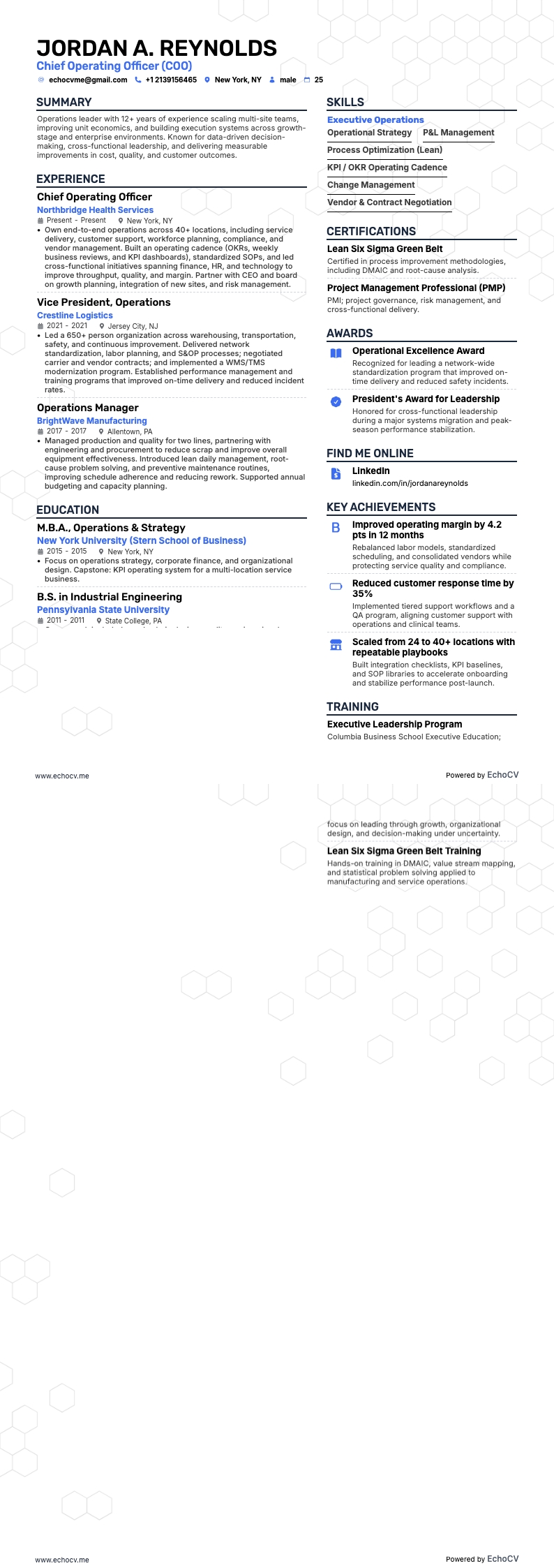
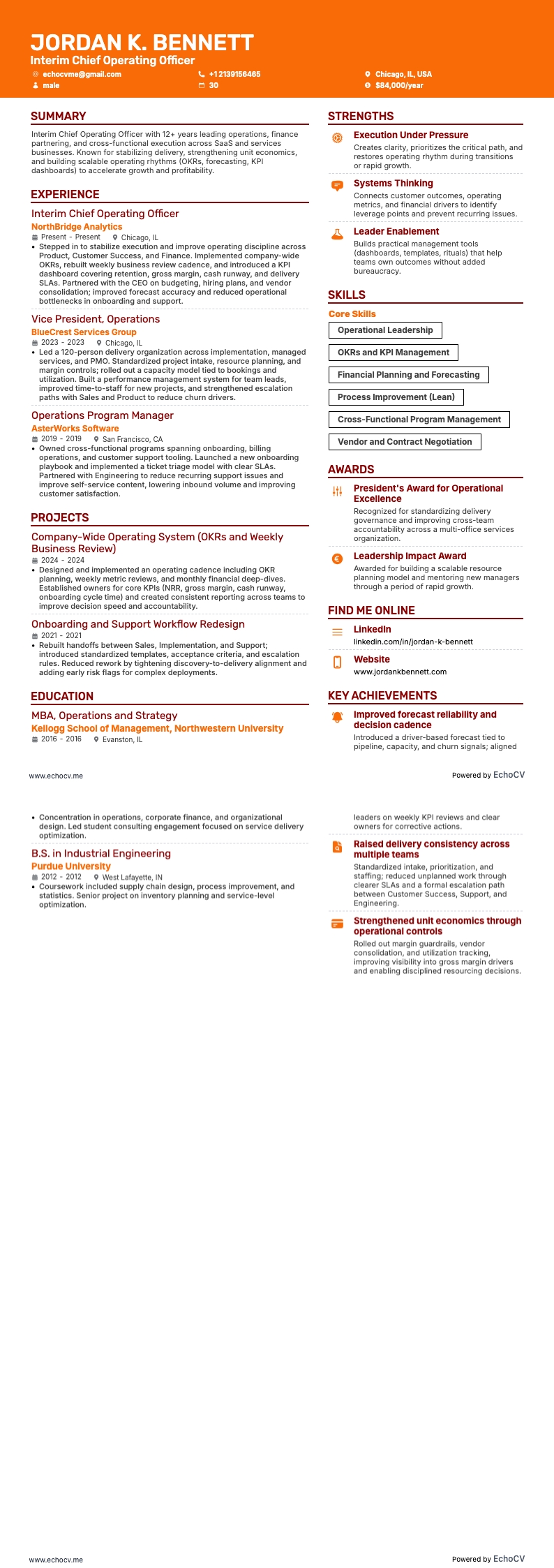
When applying for a COO position, you need to build a resume that goes beyond providing a summary of your expertise and skills. A job-winning is a strategic tool that sets the stage for your career advancement despite the competitiveness of executive job hunting.
The way you format your resume is crucial in conveying a clear, professional message to potential employers. Design and layout will also significantly impact how hiring managers view and evaluate your credentials. A well-structured resume is the best way to ensure that your extensive experience and skills as a COO are presented most compellingly.
Essential tips when formatting a COO resume:
- Use the reverse chronological format: This is the most widely recognized and preferred format, especially for an executive role like COO. It prioritizes your most recent job experiences, showcasing a solid career progression towards executive roles.
- Craft an impactful header: This is the first thing recruiters will see, so make it count. Include your name, job title, as well as your contact information — and make sure the latter is up-to-date.
- Feature all essential sections: Emphasize experience, skills, education, certifications, and achievements relevant to a COO role. Each section should highlight aspects of your career — such as leadership experience, operational improvements, and strategic planning skills.
- Keep a concise resume length: Most recruiters prefer a one-page resume if it can convey all the necessary details effectively. However, you can get away with a two-page resume given that most COO positions require over a decade of experience.
Be aware of location-based layout differences – Canadian resumes, for instance, might differ in format.