You’ve just heard there’s an open position for an audio engineer at the record label of your dreams.
They’re a global leader in the music industry, and they’ve created albums from your favourite bands.
Joining their team would be the highlight of your career so far.
You would get to record, edit and mix the recordings of your favourite musicians, every single day. What more could you ask for?
But first you need to impress the hiring manager with the perfect resume that shows them you’re the candidate of their dreams.
You may have all the passion and drive to land this job, but you need to show them with a resume that stands out from the crowd. Because there’s no doubt this job is in high demand from other audio engineers.
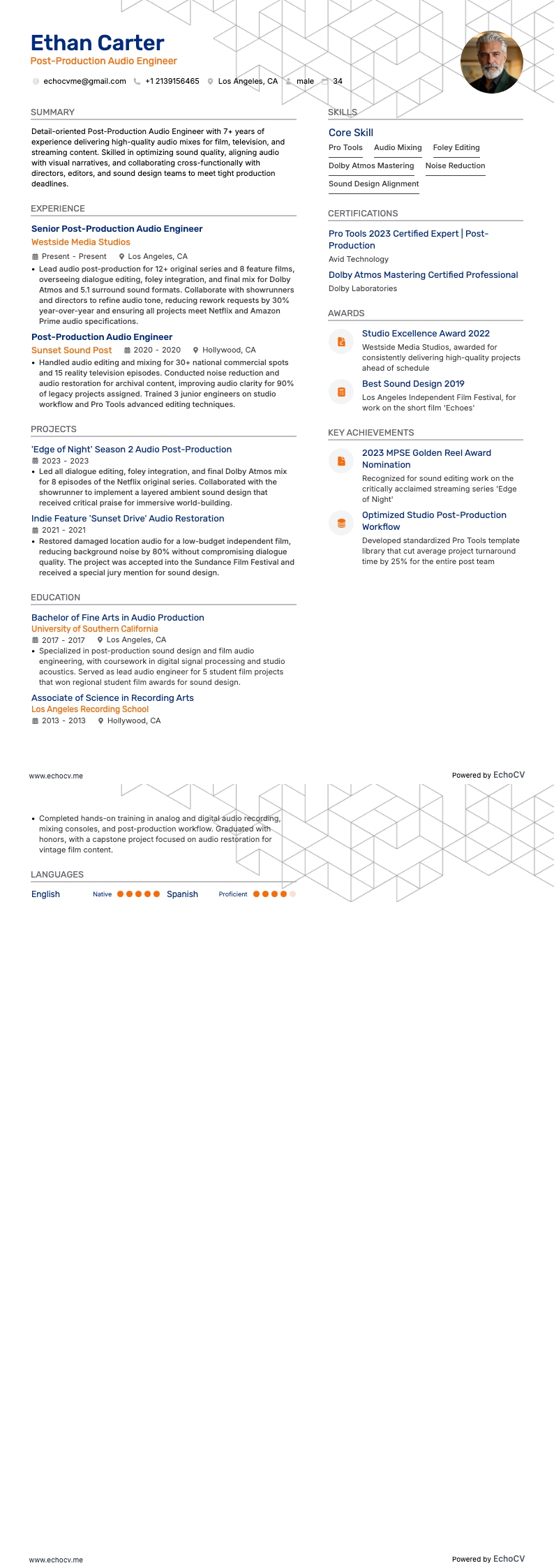
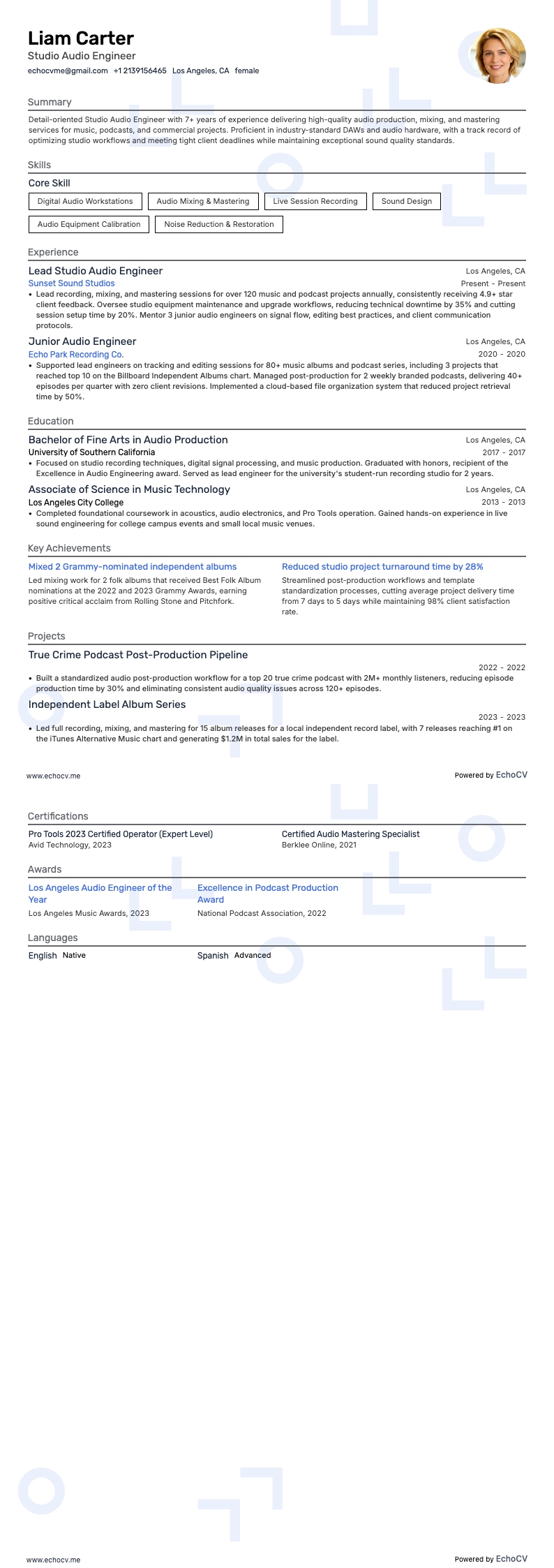
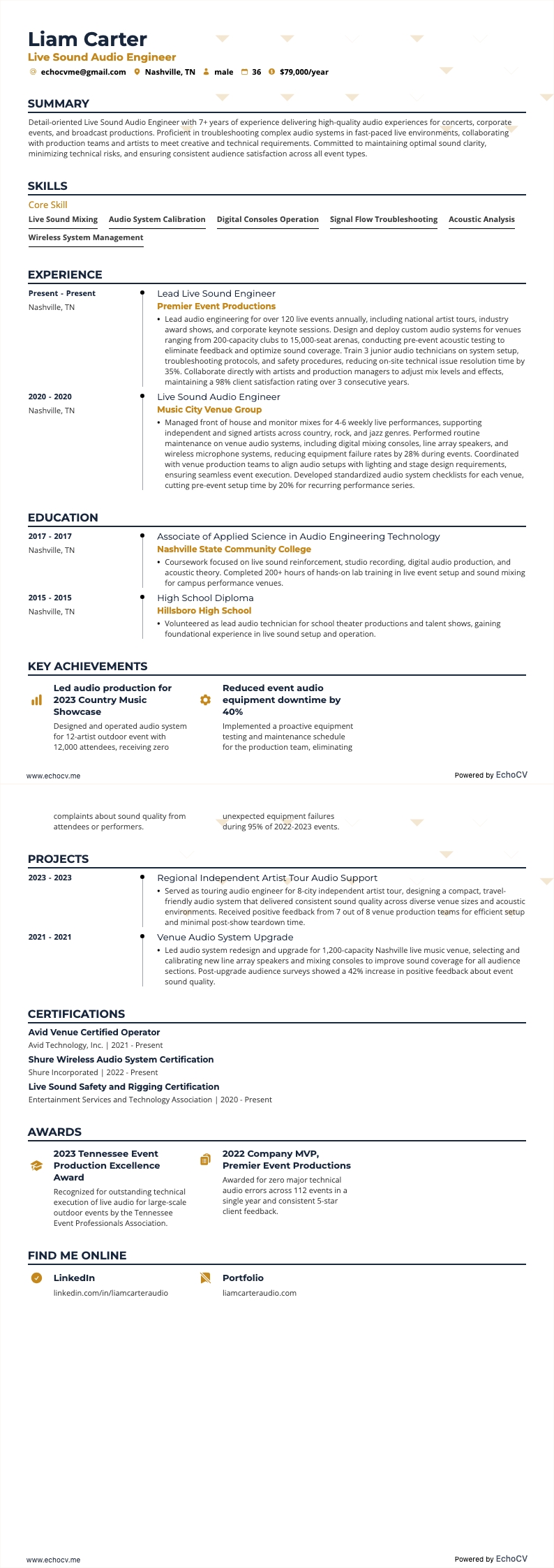
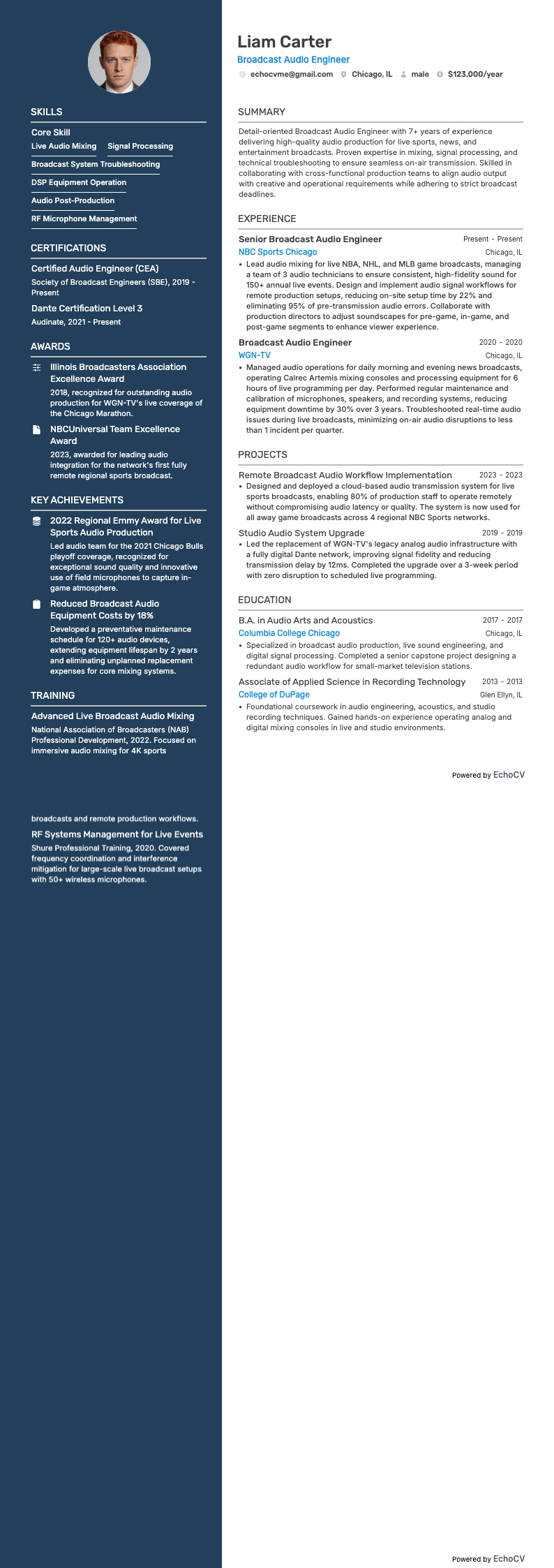
Read this guide to learn how to put together an audio engineer resume that lands you an interview.
This is what we’ll teach you.
Our audio engineer resume guide will teach you:
- Which resume format to use depending on your experience level
- How to personalize your resume for the job you’re applying for
- 8+ ways to explain your duties as an audio engineer
- 21+ examples of technical and soft skills to input in your resume
Looking for related resumes?
Important points about writing an audio engineer resume
Being a successful audio engineer requires expertise and organization.
Hiring managers are looking for candidates that have both the technical and soft skills needed to produce excellent results.
Your audio engineering resume should prove you can:
- Manage multiple projects at once
- Work well with a team
- Take the lead on managing the entire audio systems process
What is the best resume format to show you’re right for the job?
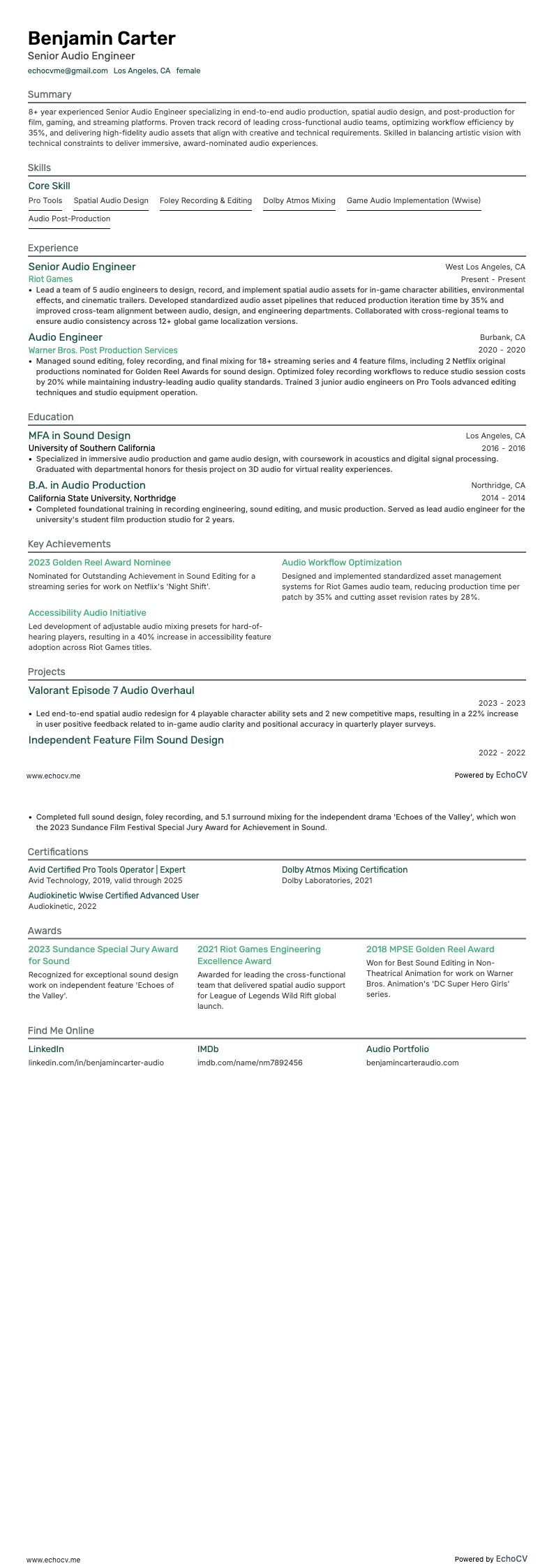
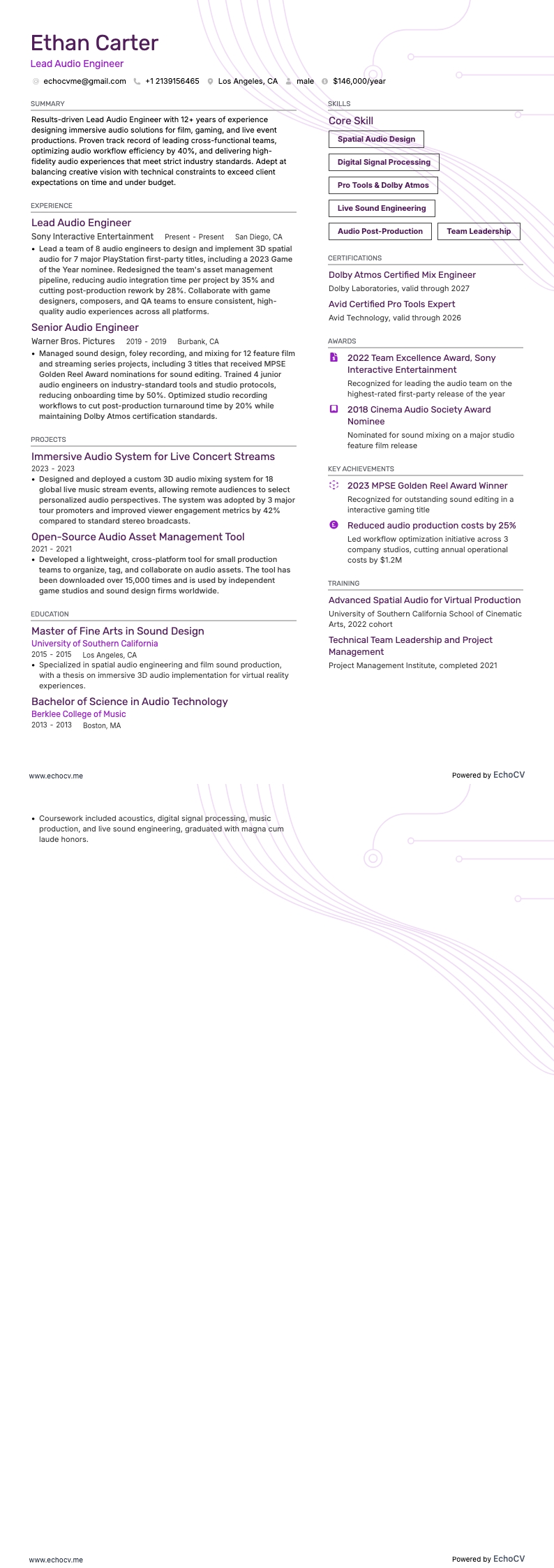
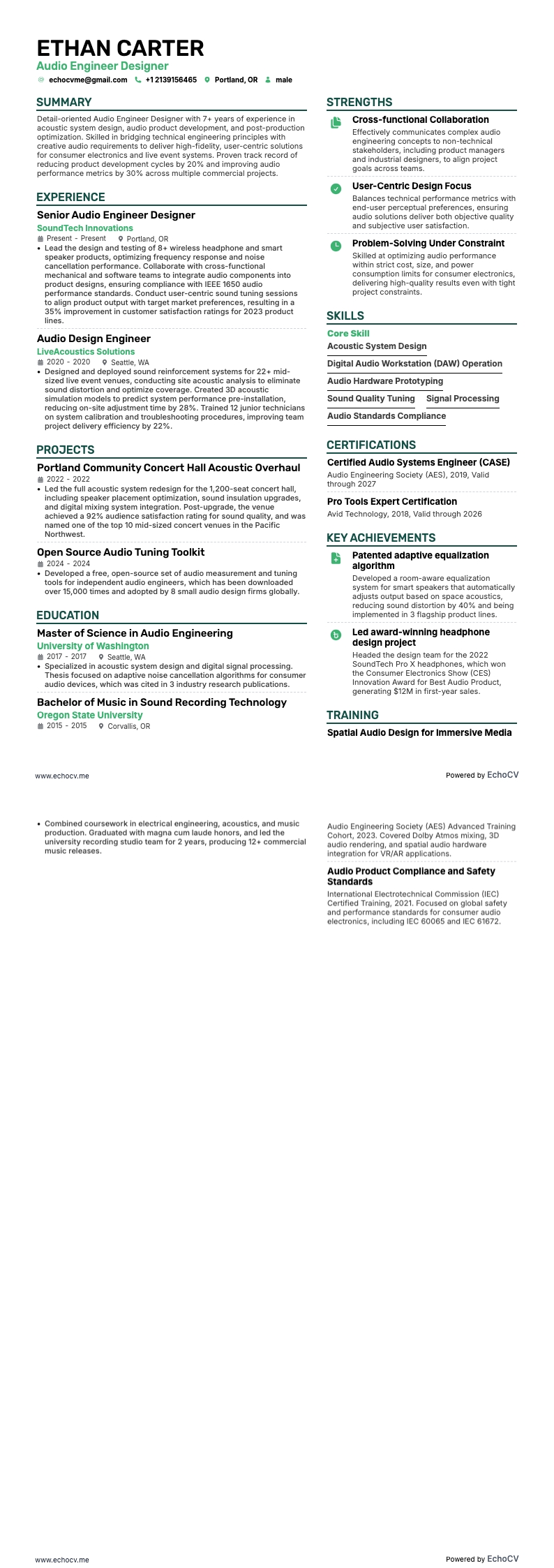
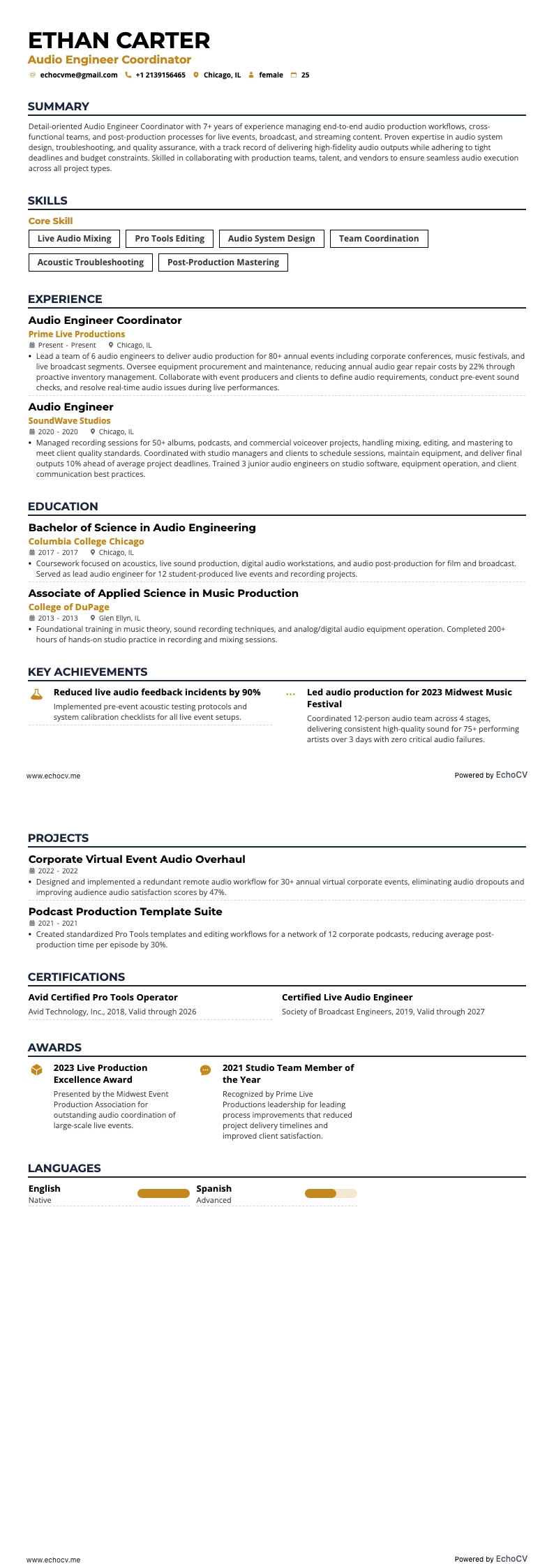
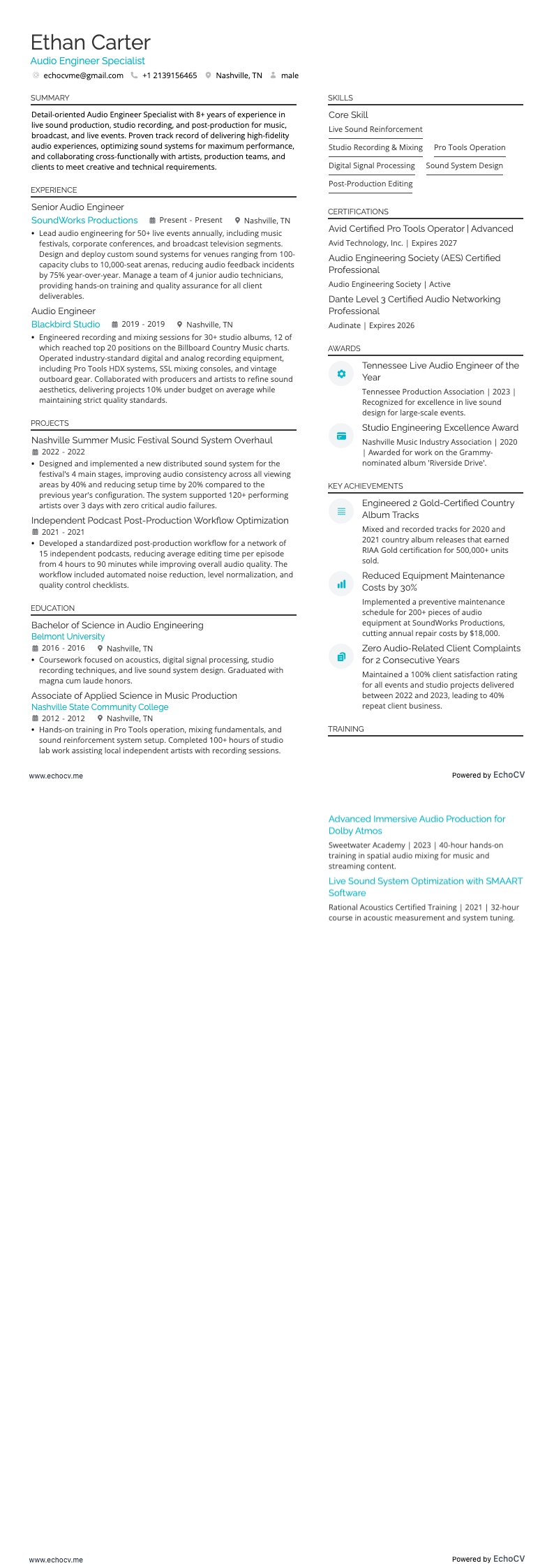
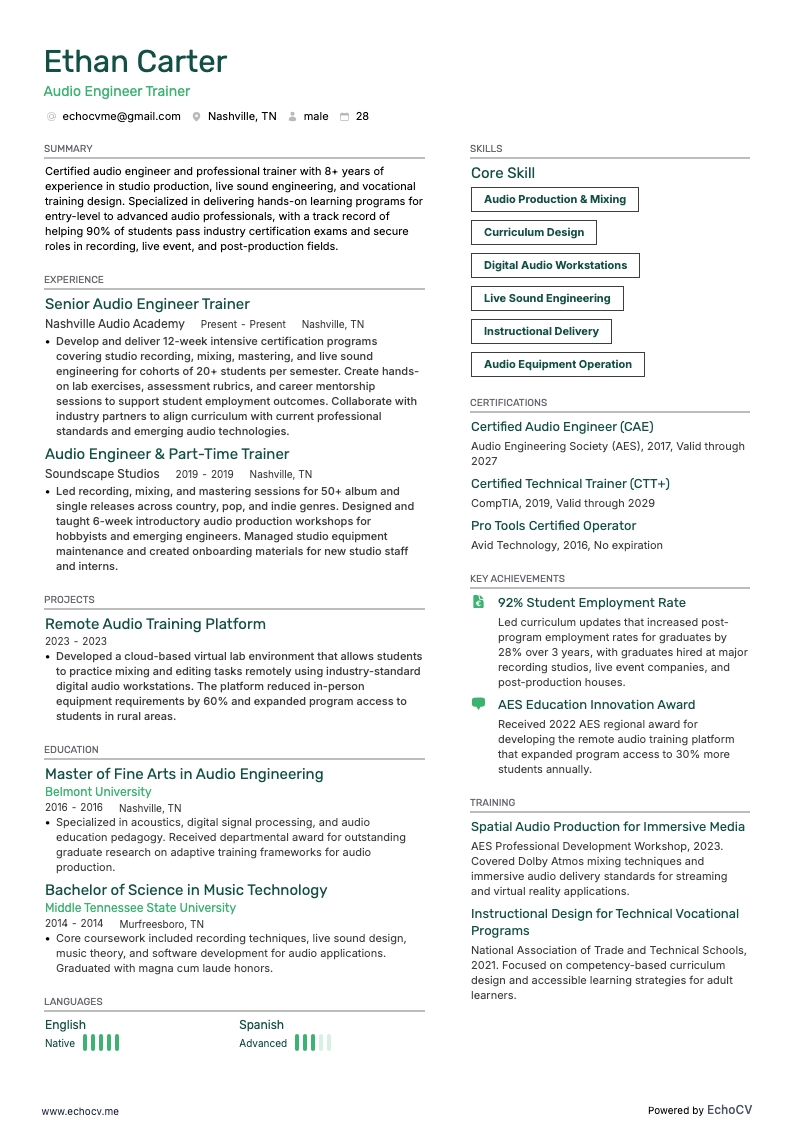
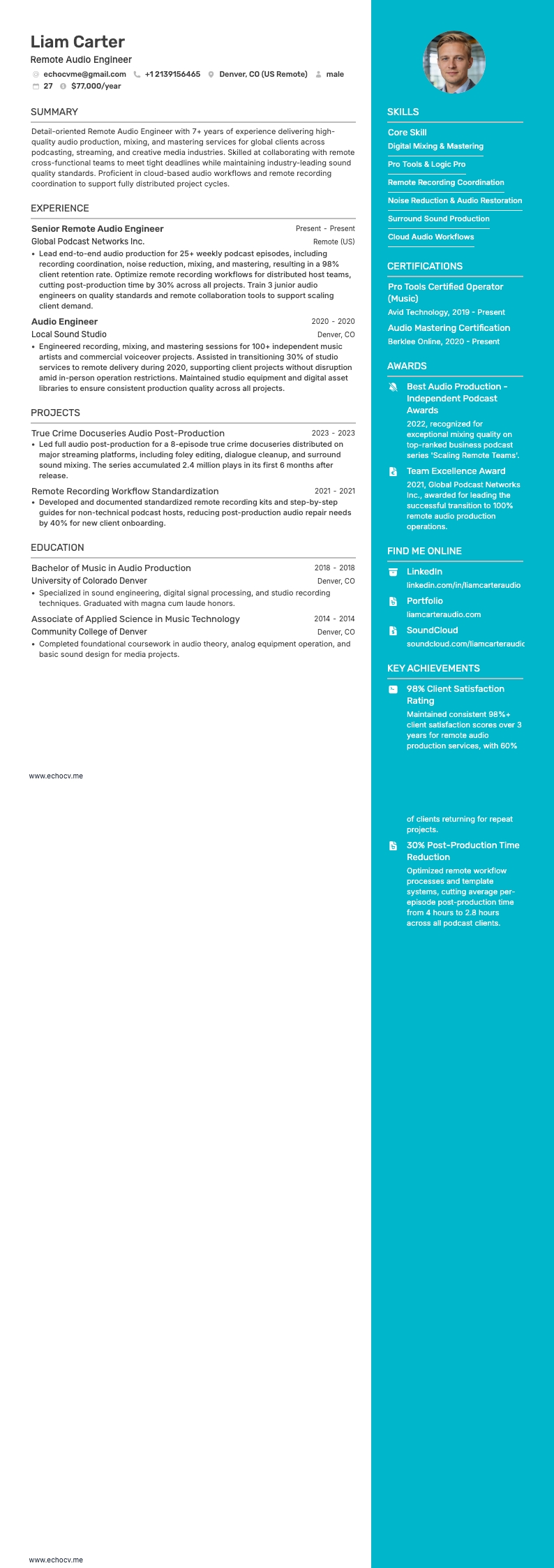
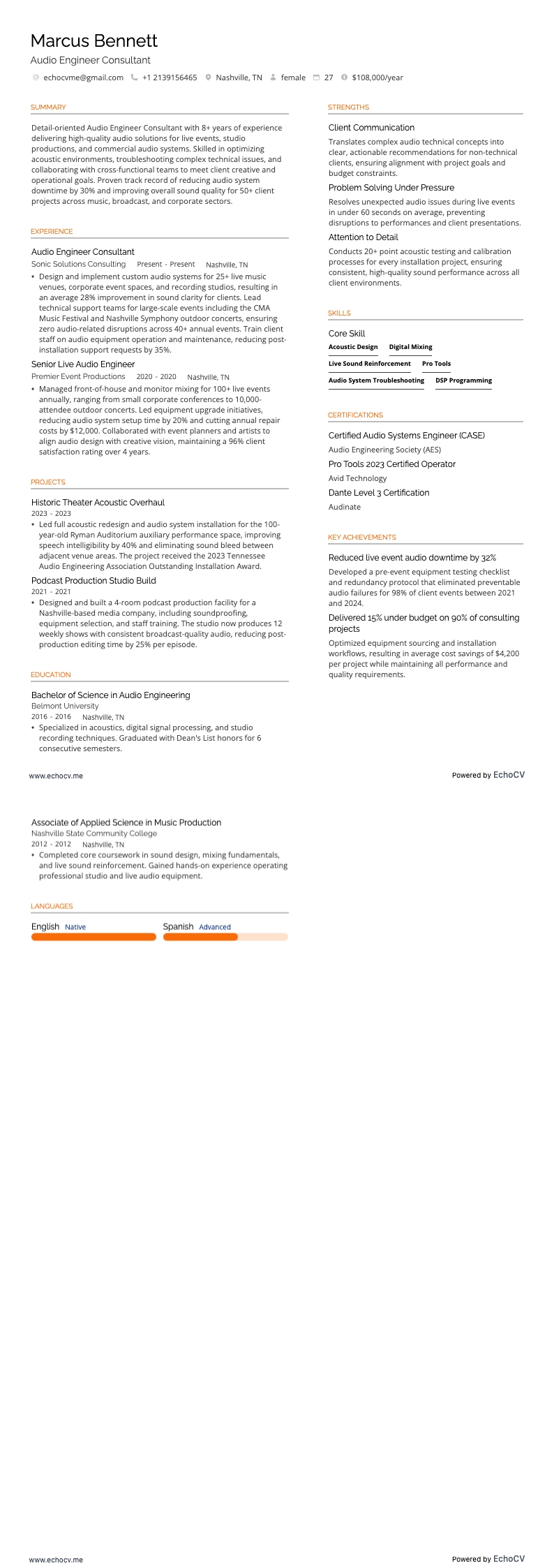
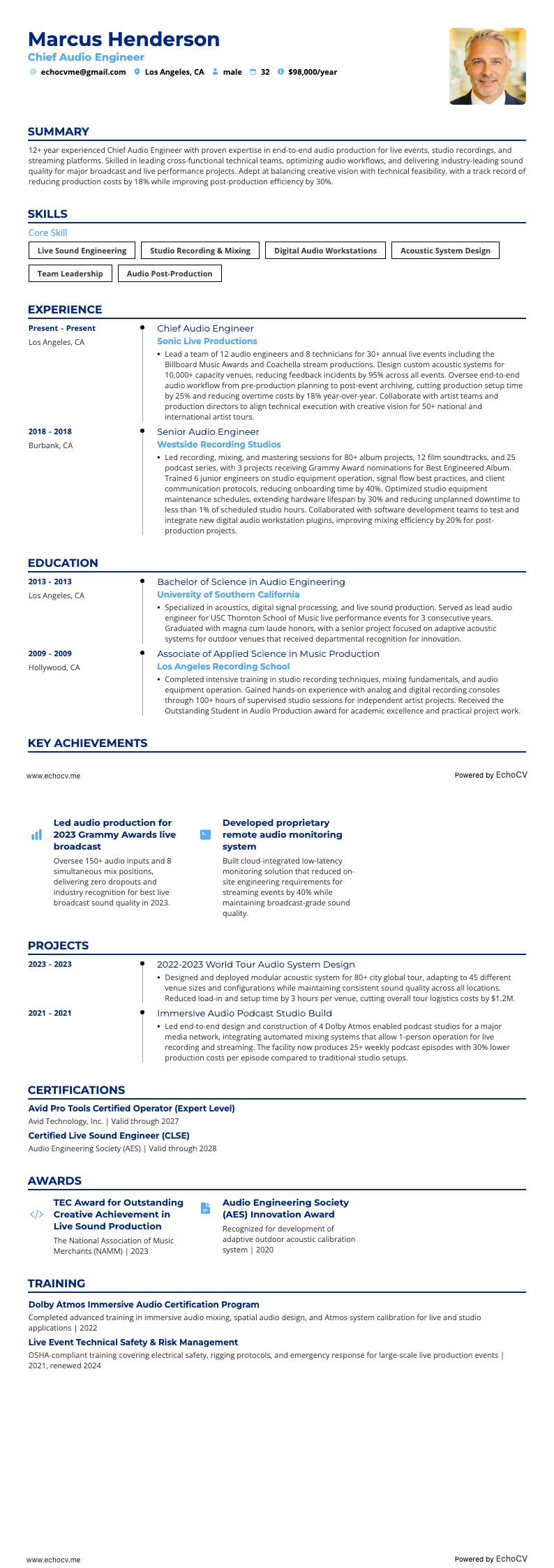
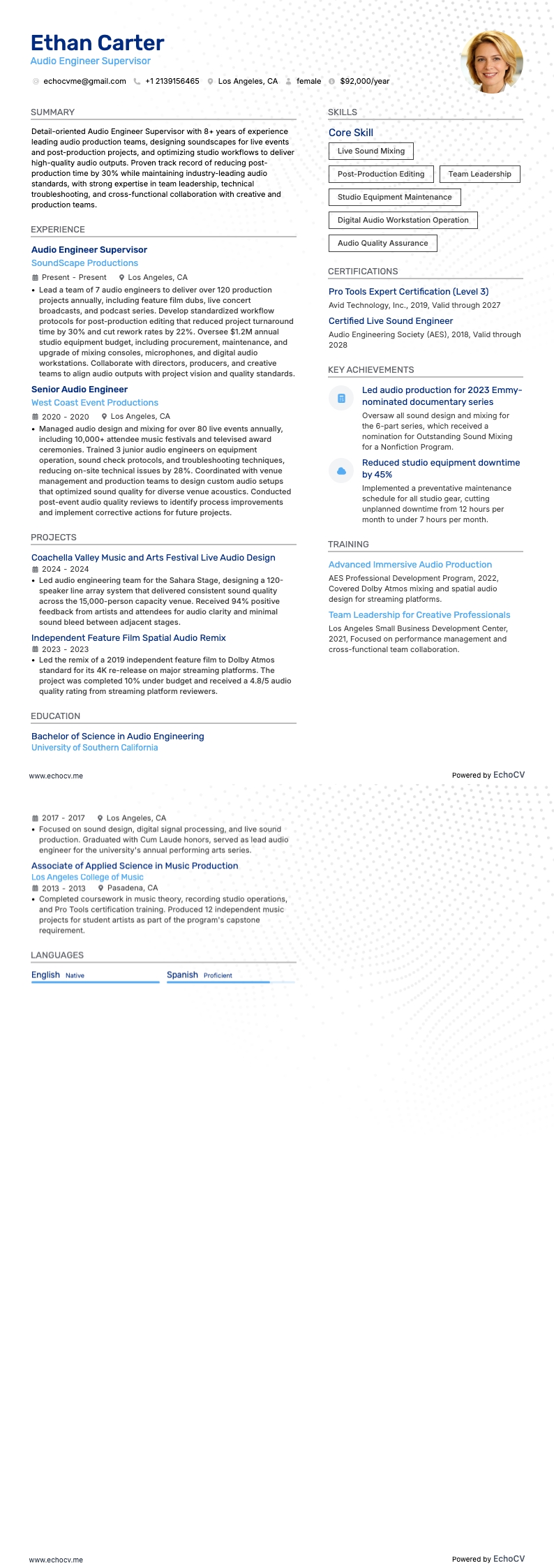
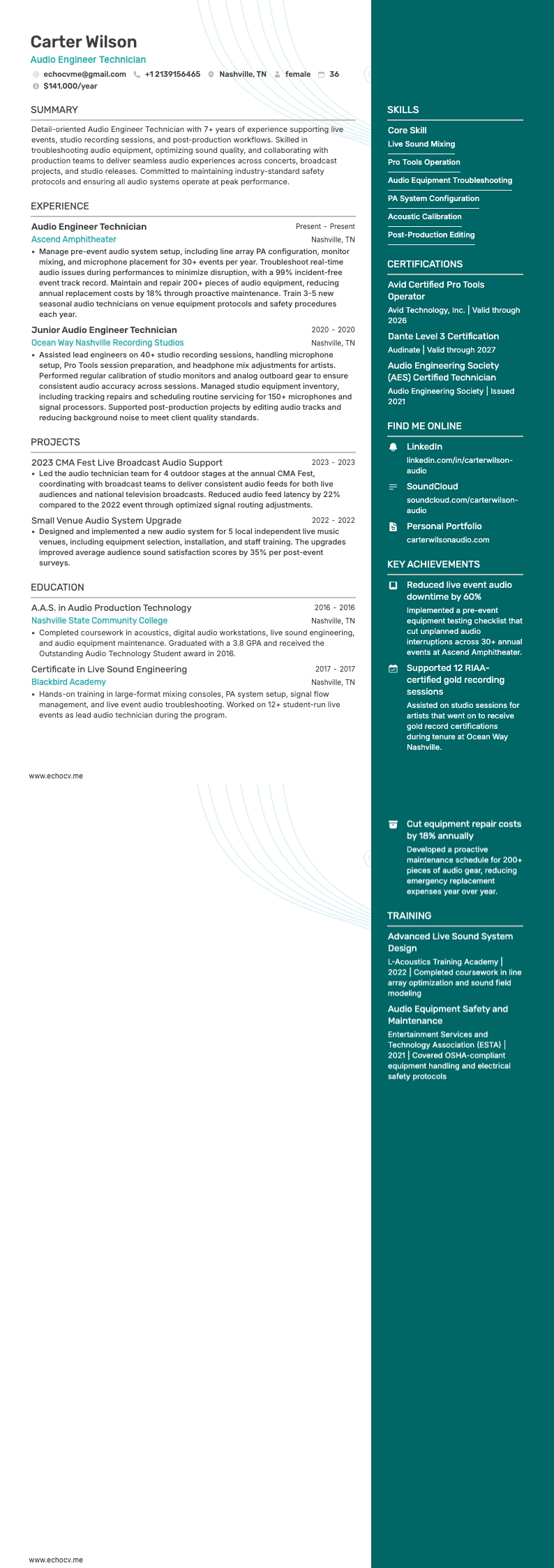
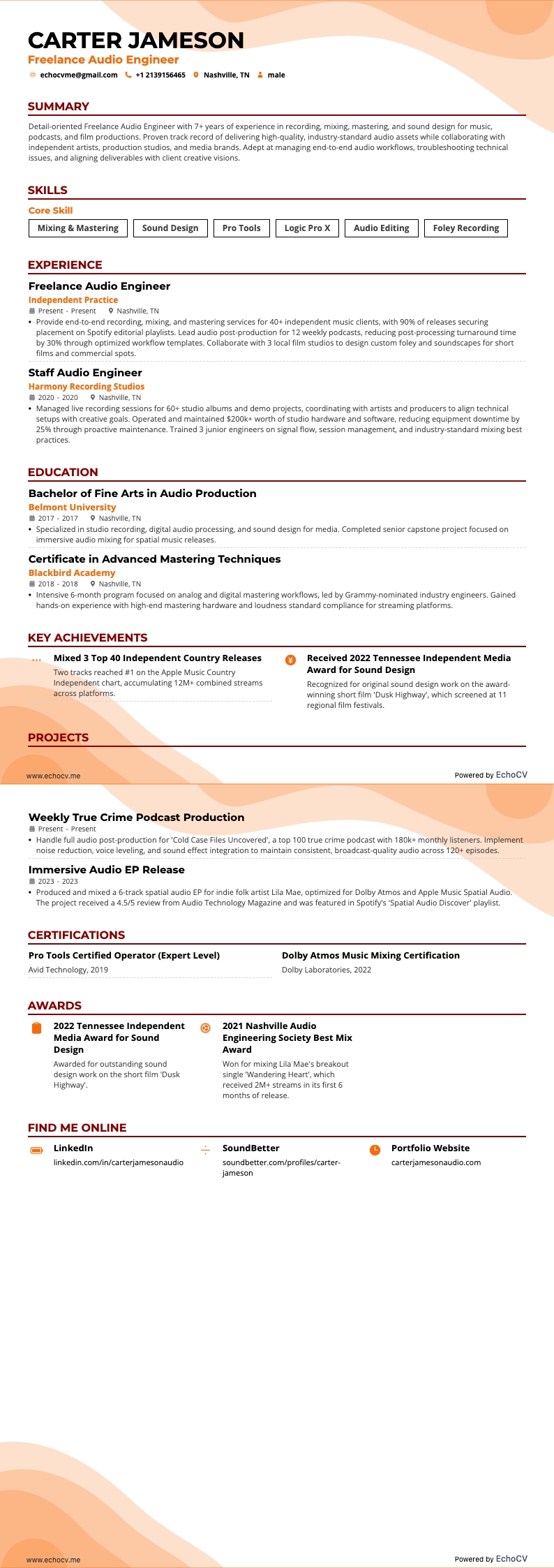
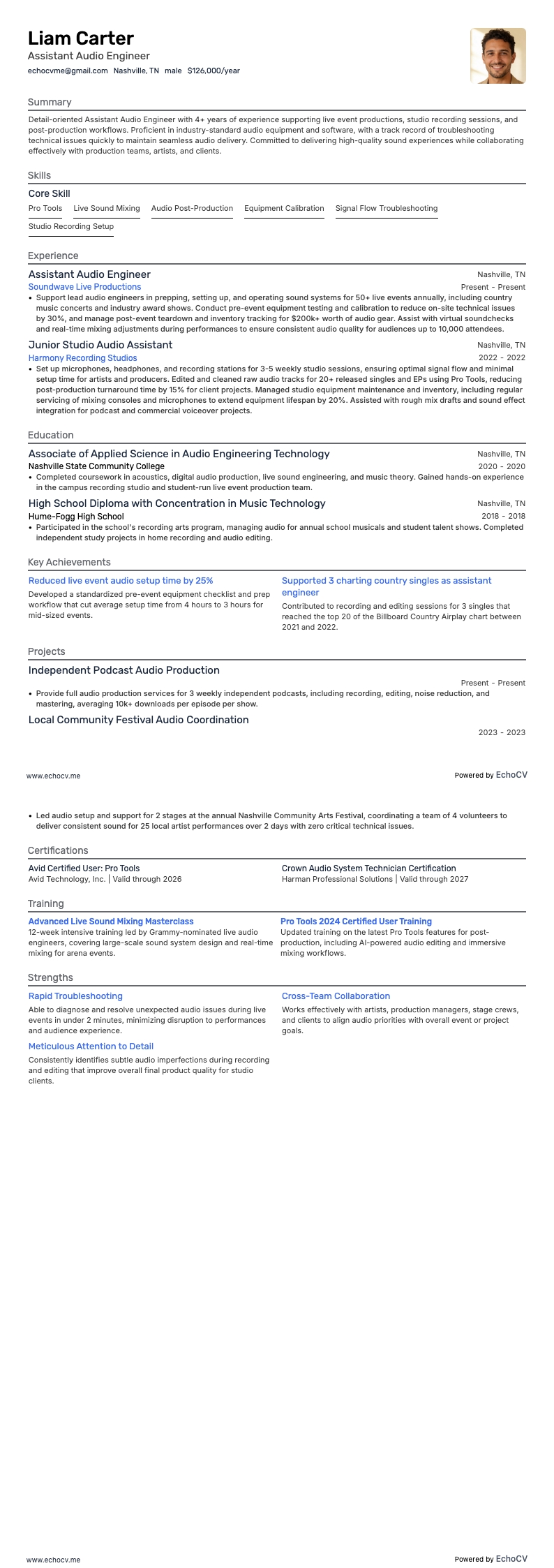
If you already have experience as an audio engineer, use a reverse chronological resume format. This resume layout emphasizes your experience more than the other sections.
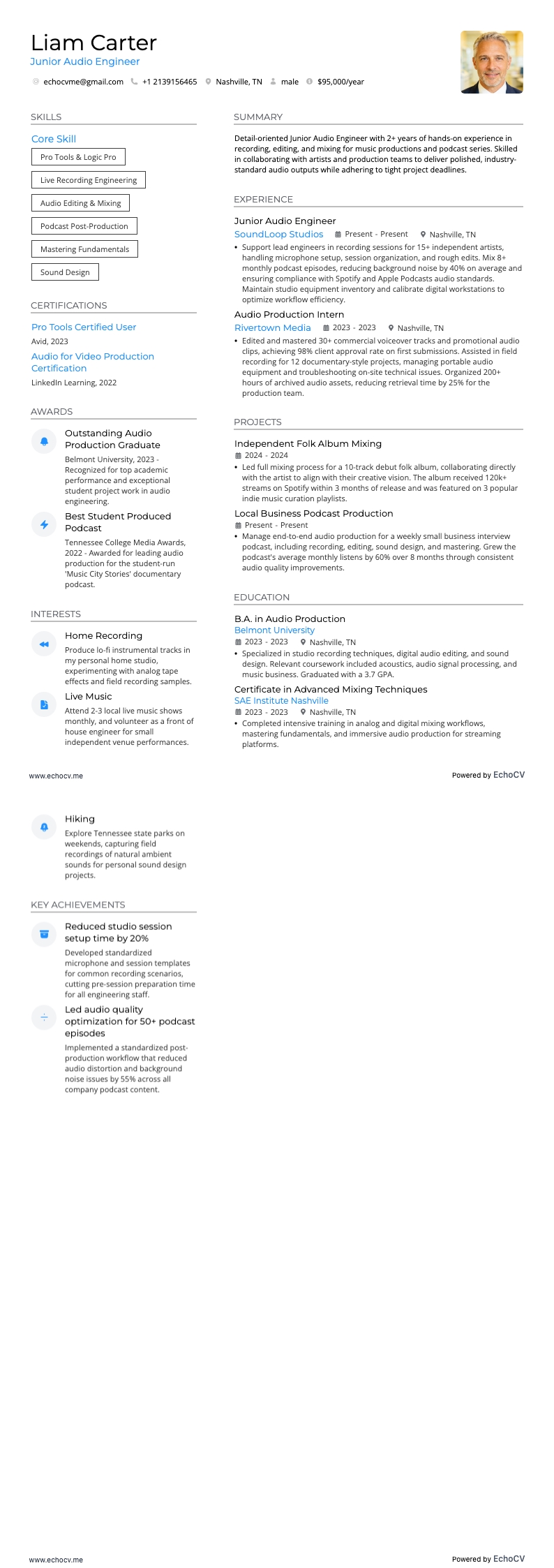
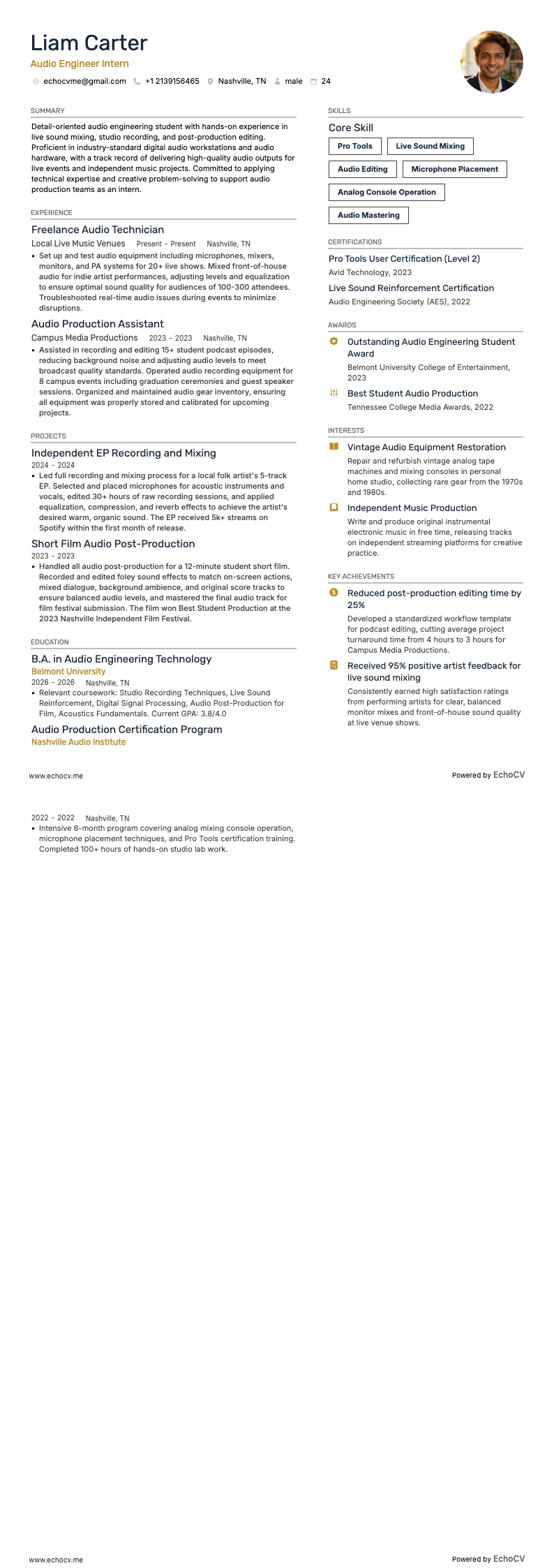
If you just completed your education and you’re still low on experience, use the functional resume layout. This format emphasizes your education, qualifications and skills, putting less pressure on your experience.
Your resume should match the market – Canadian applications, for instance, may use a different layout.