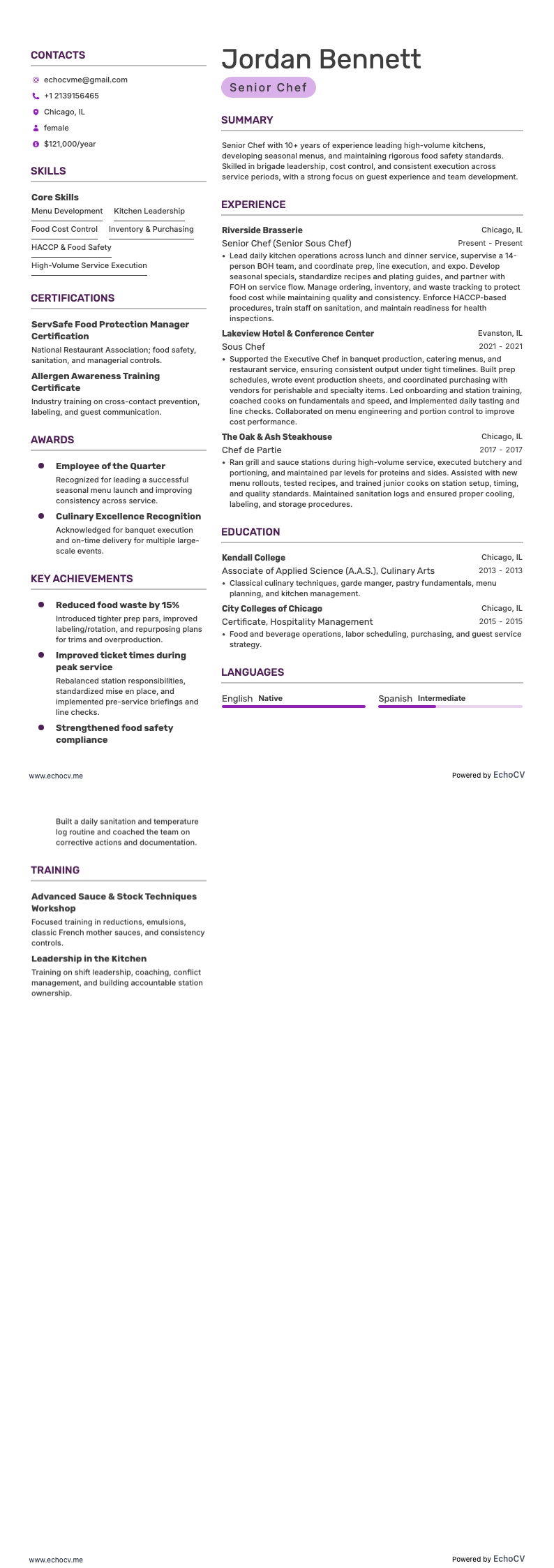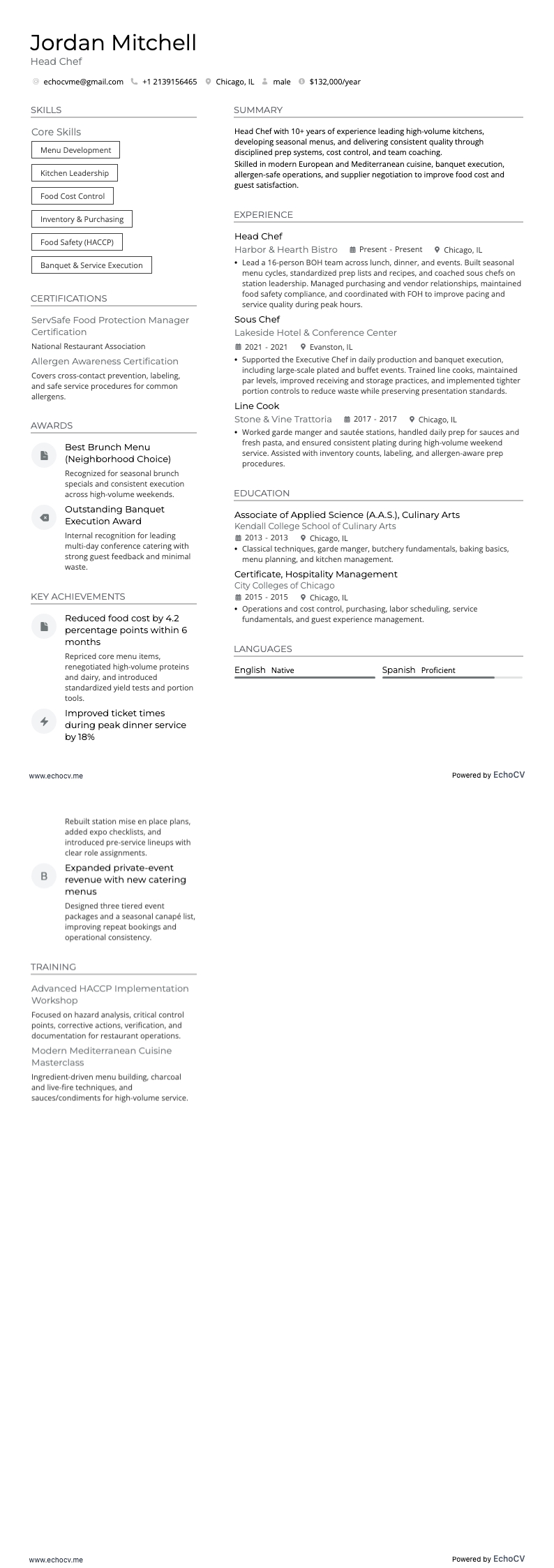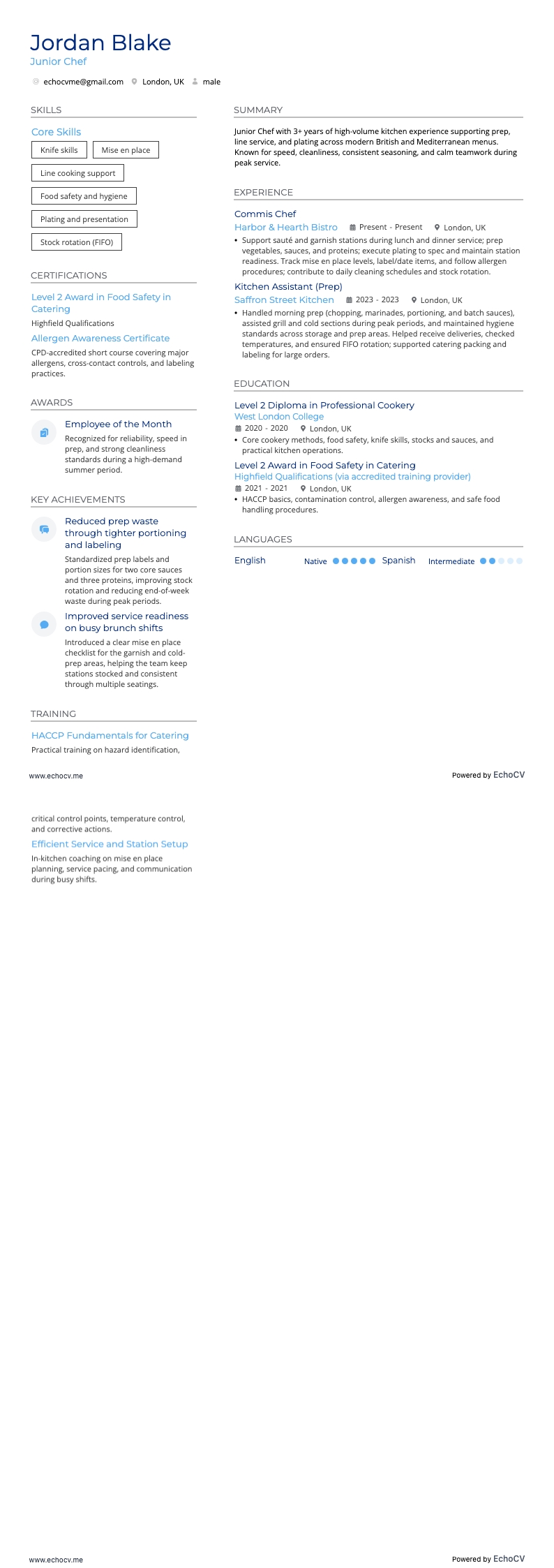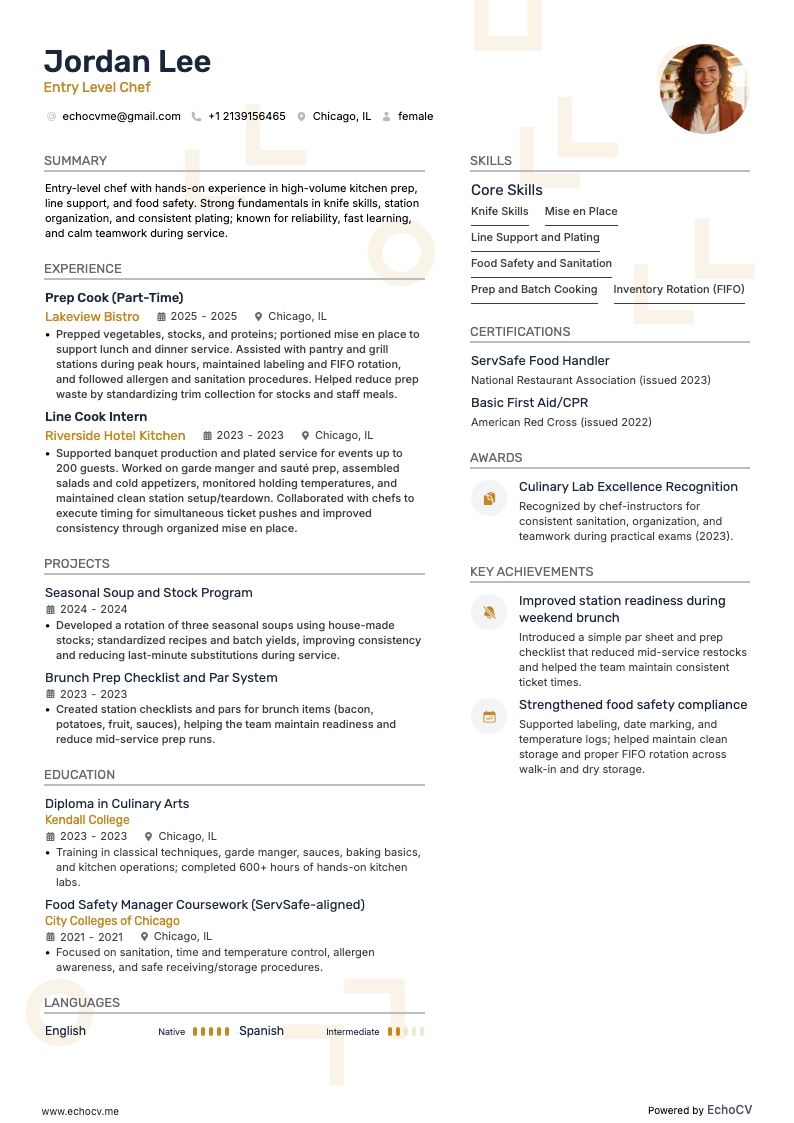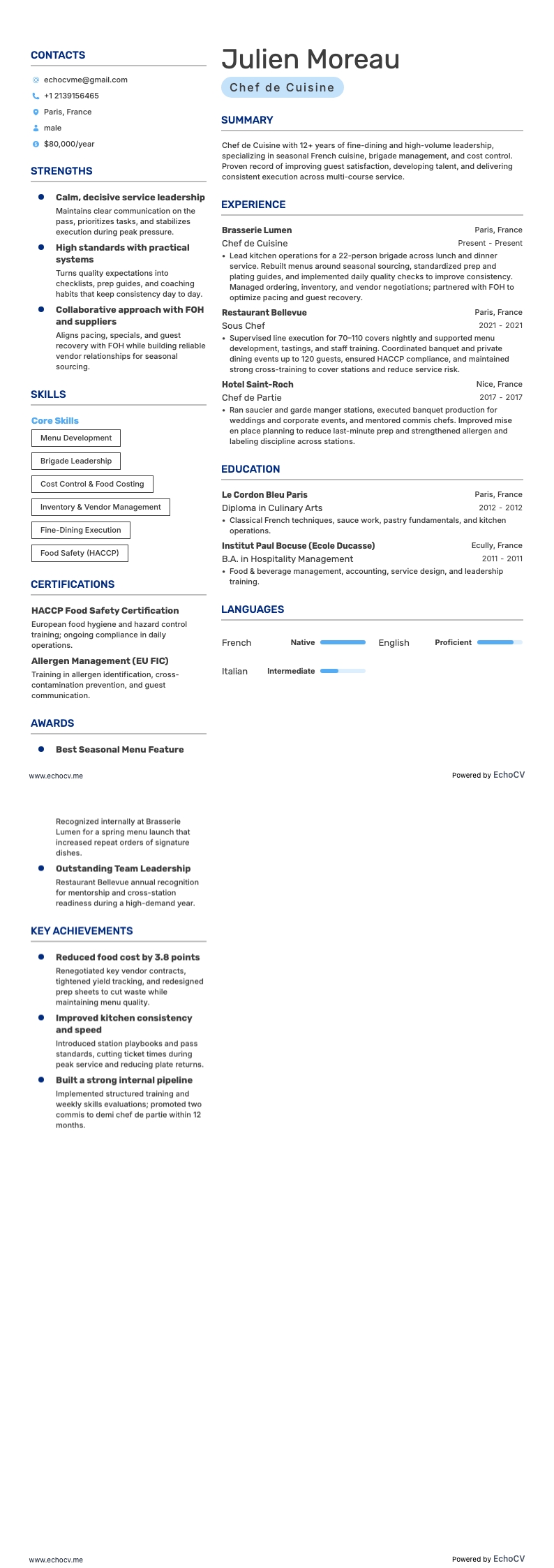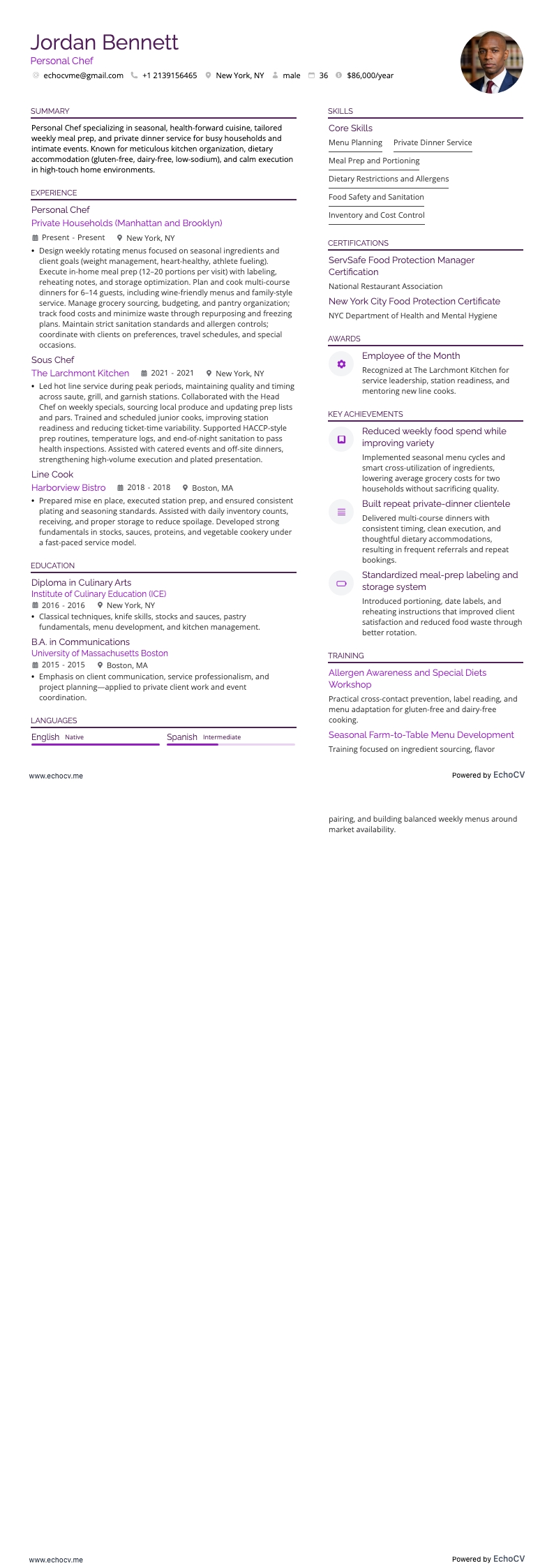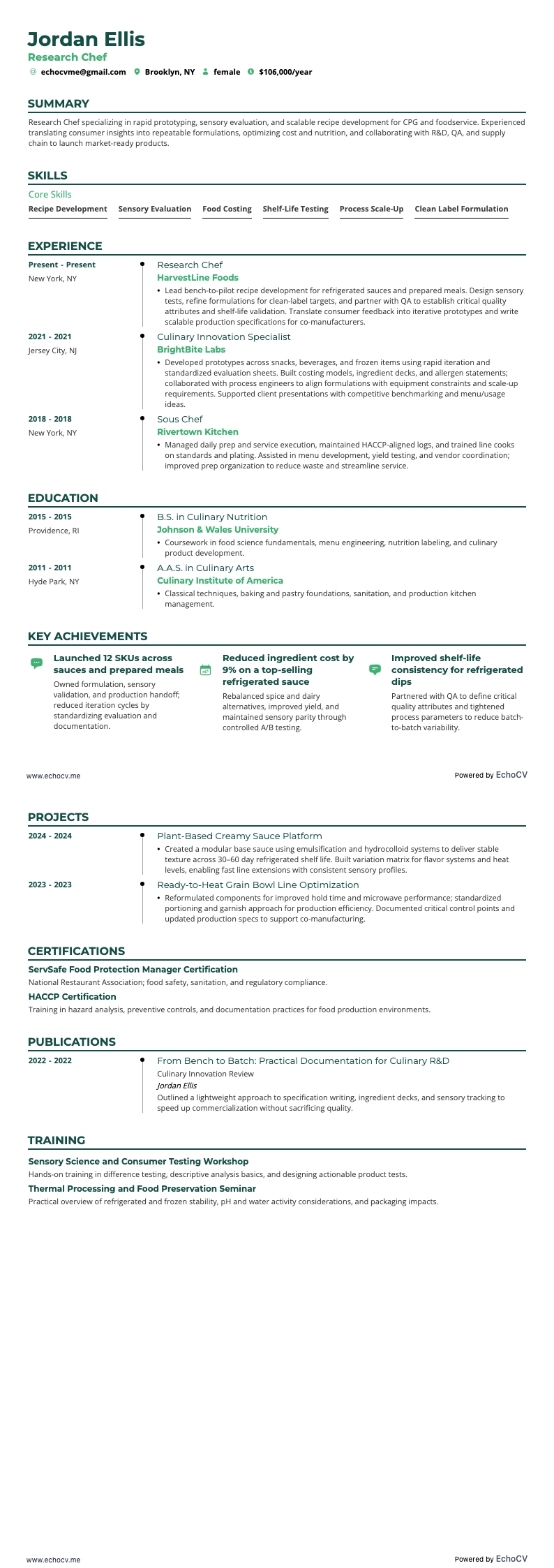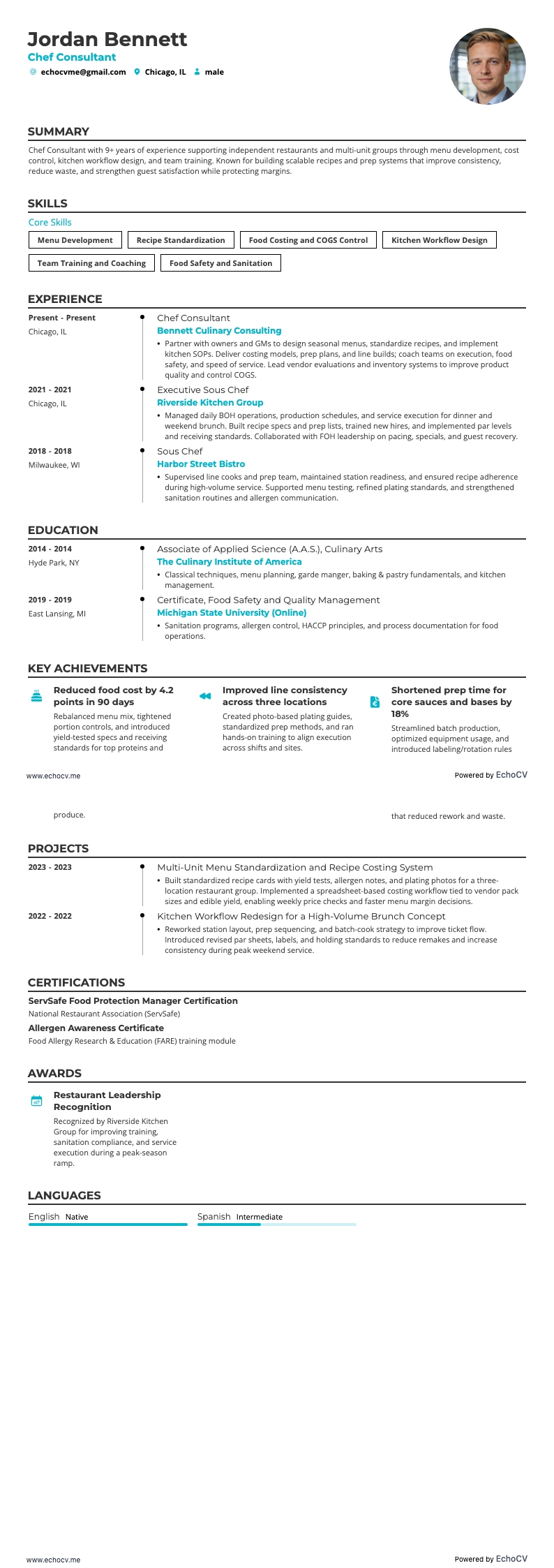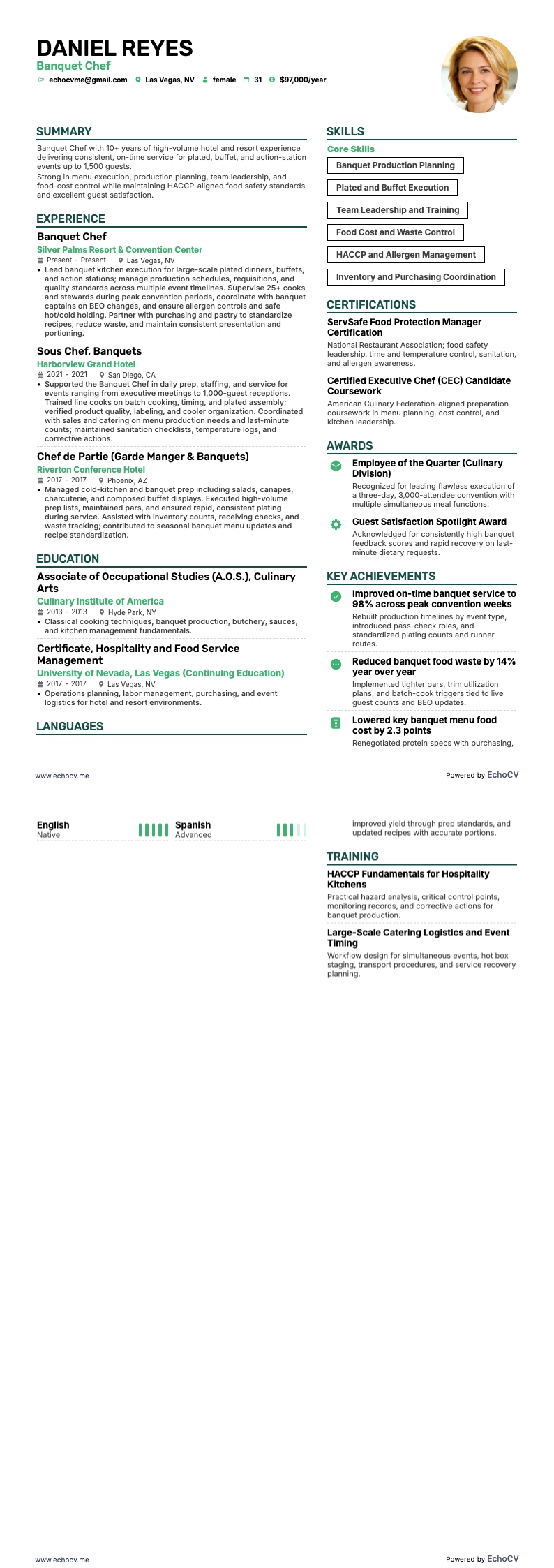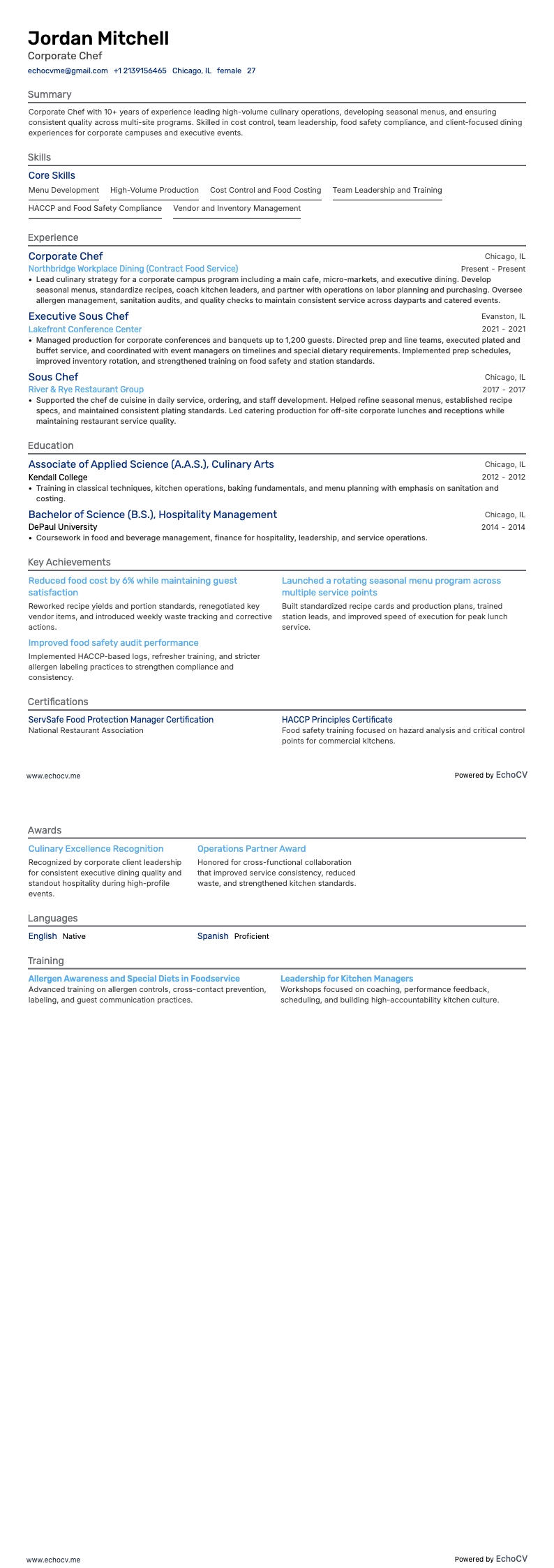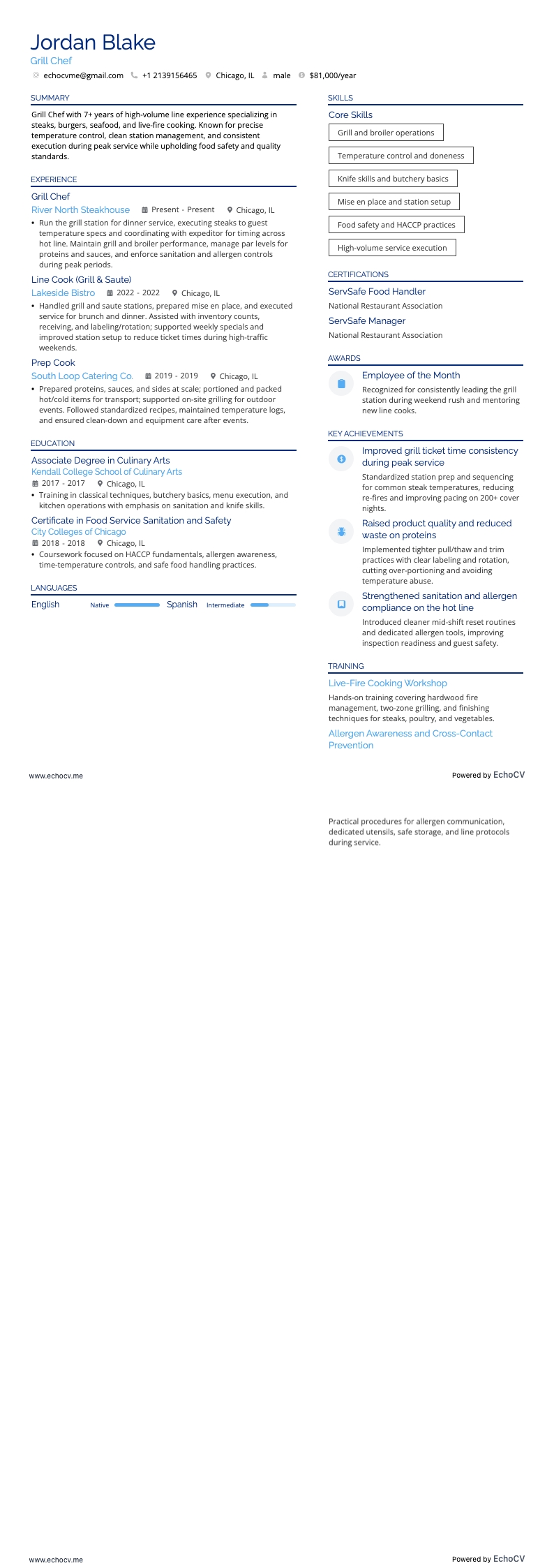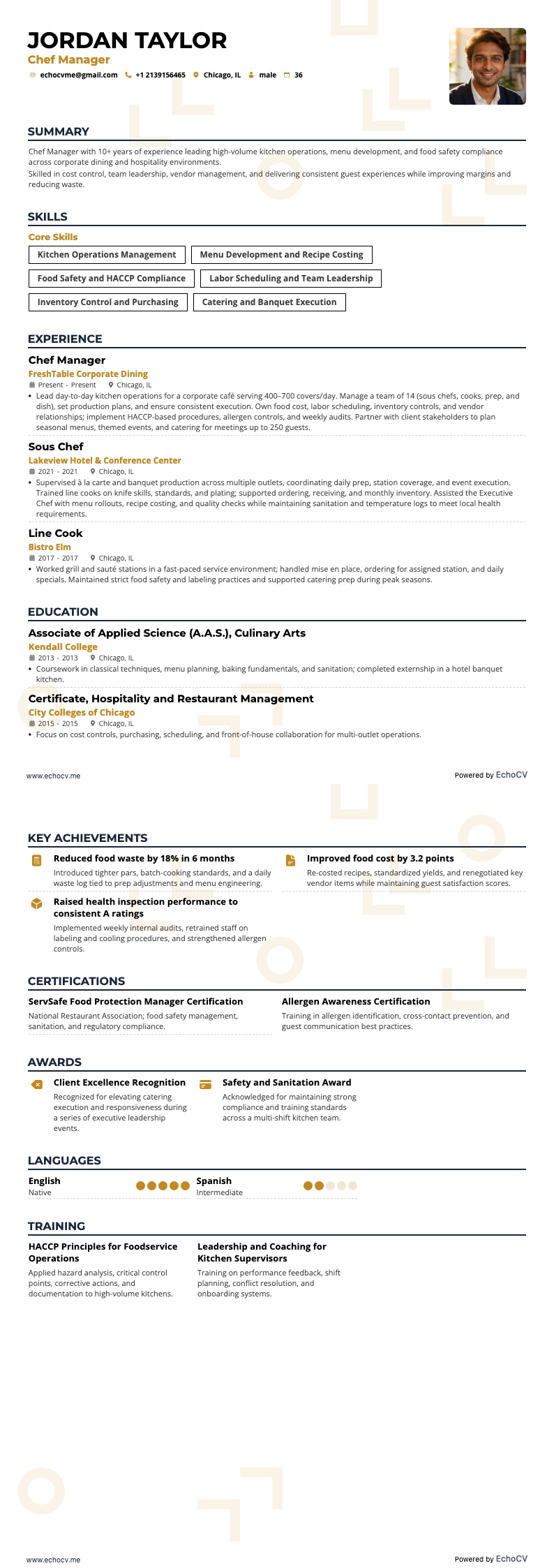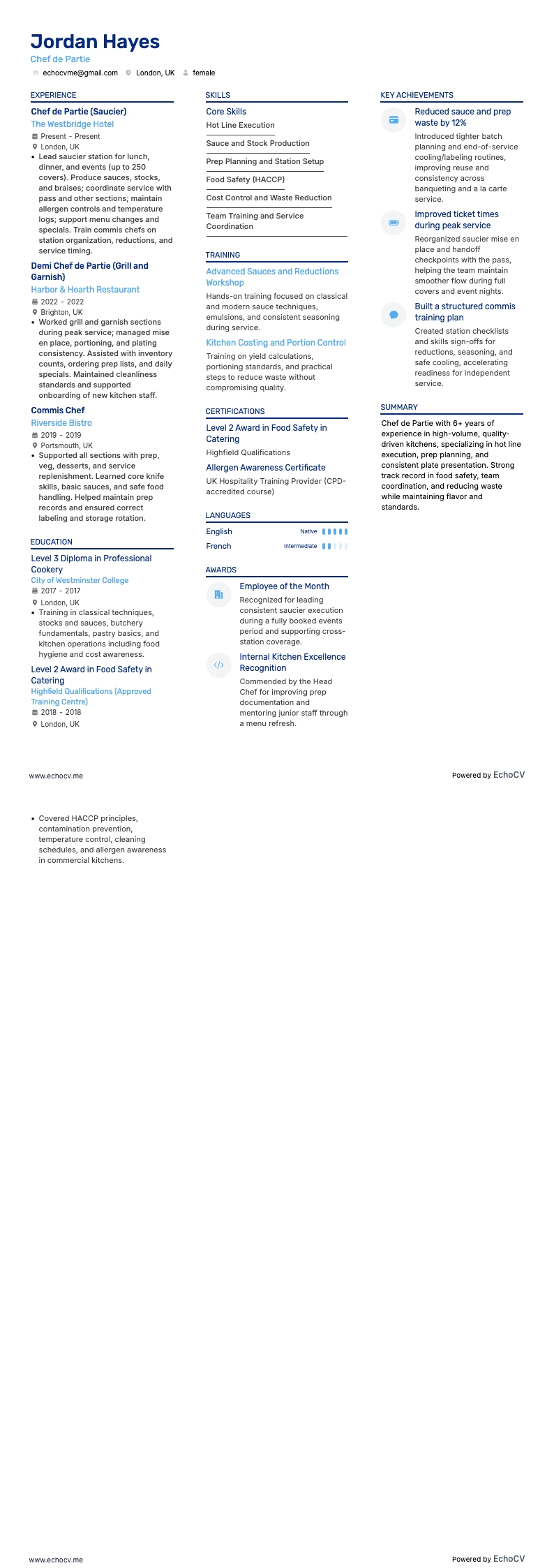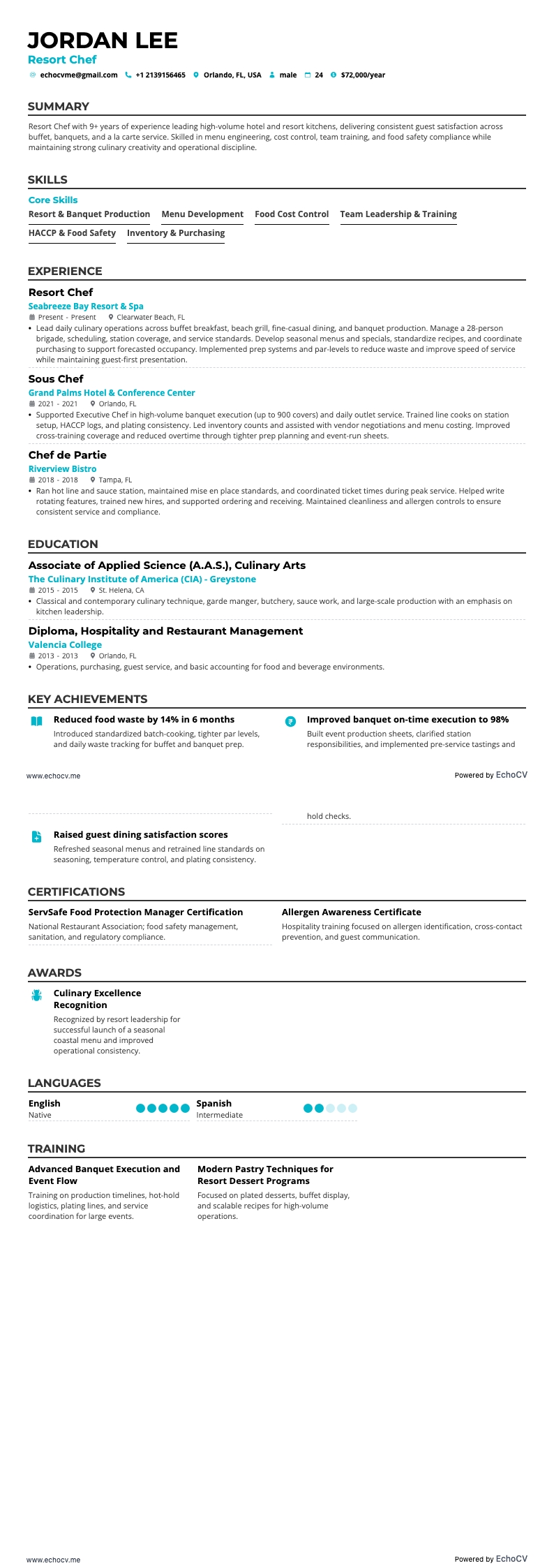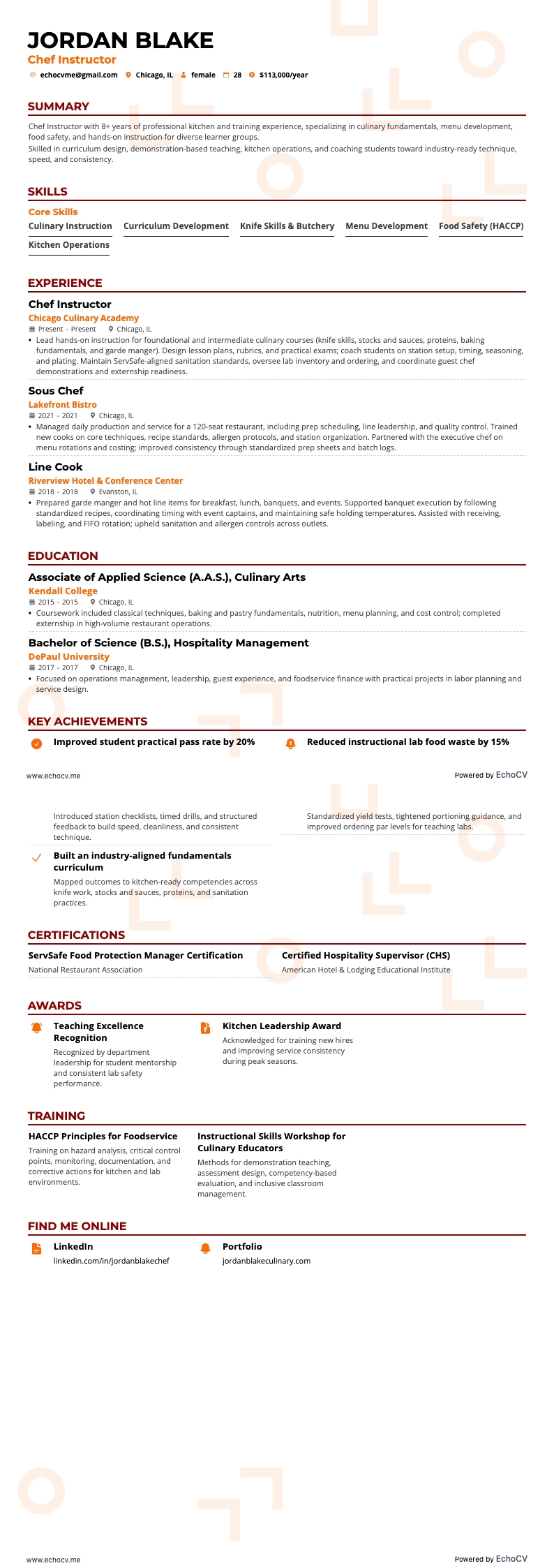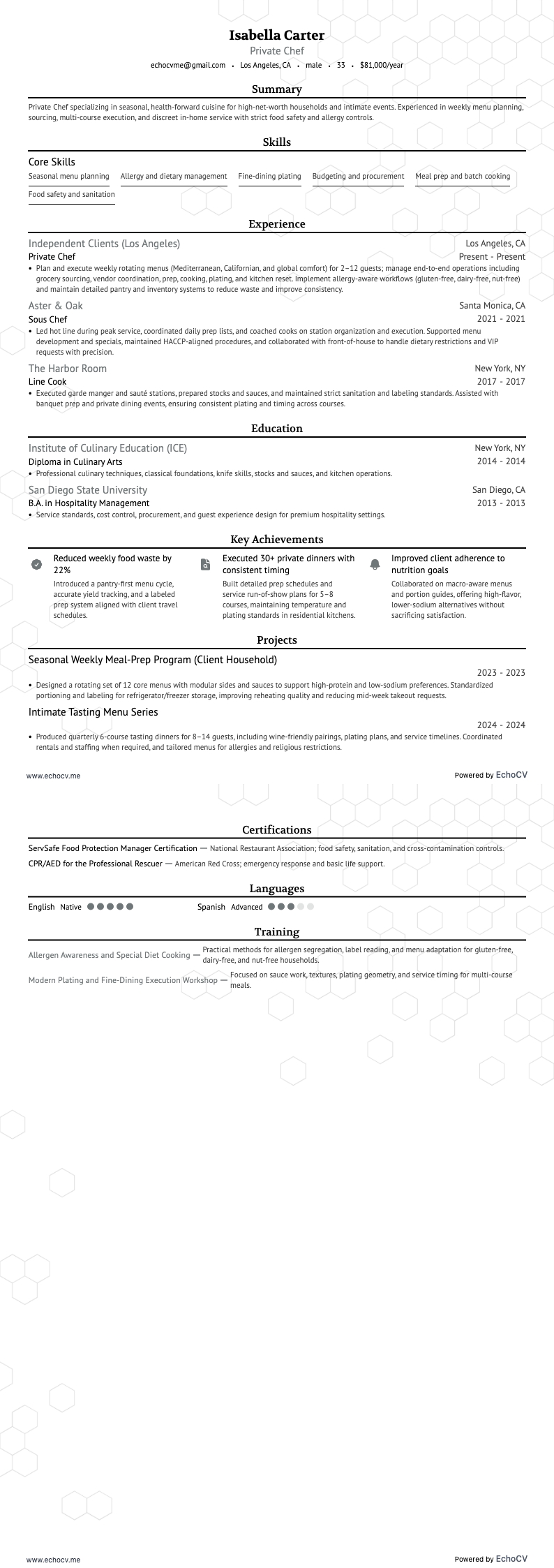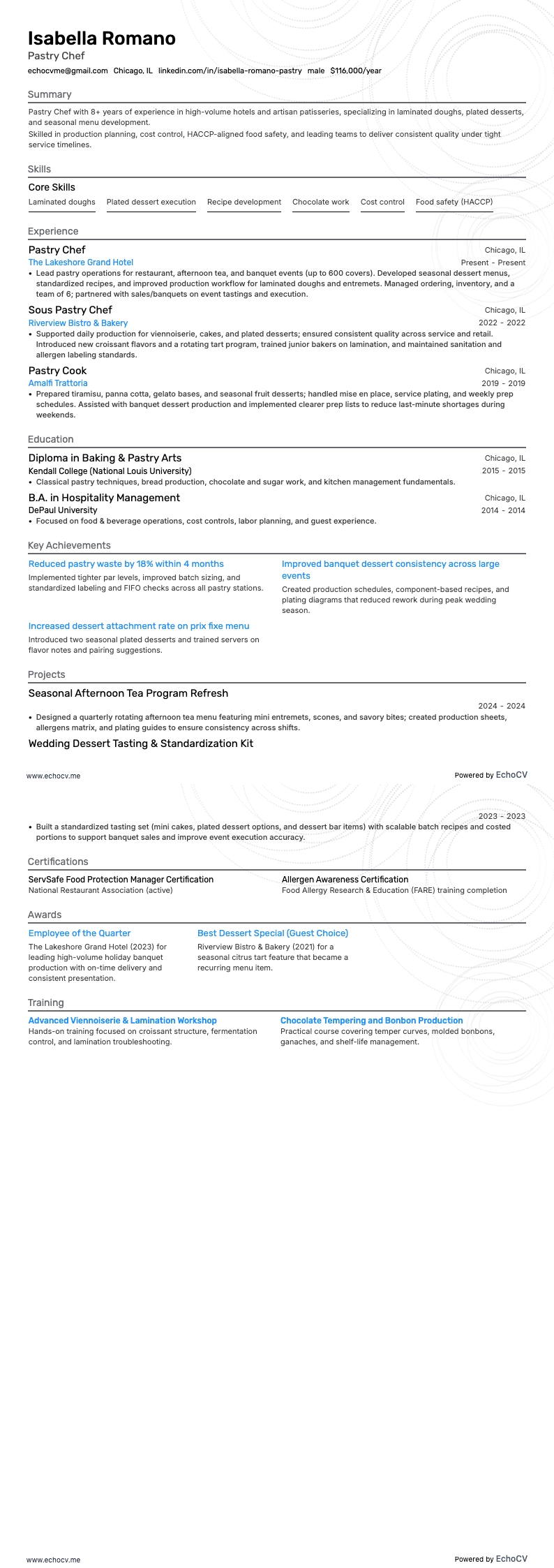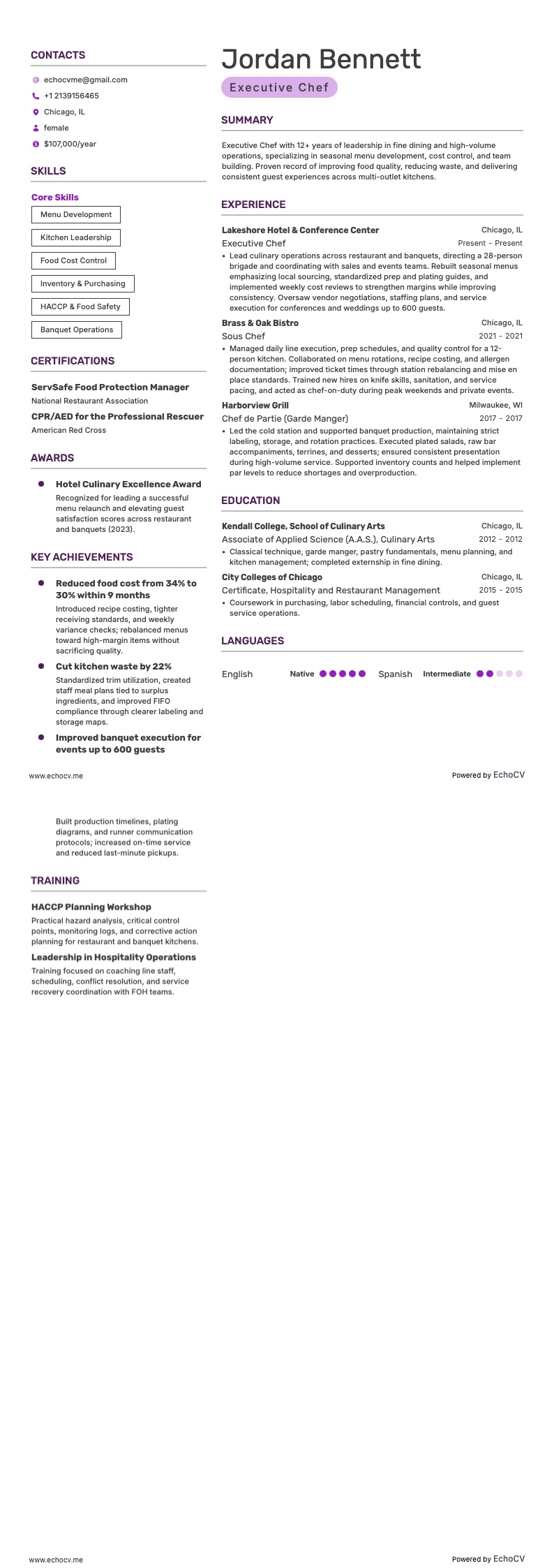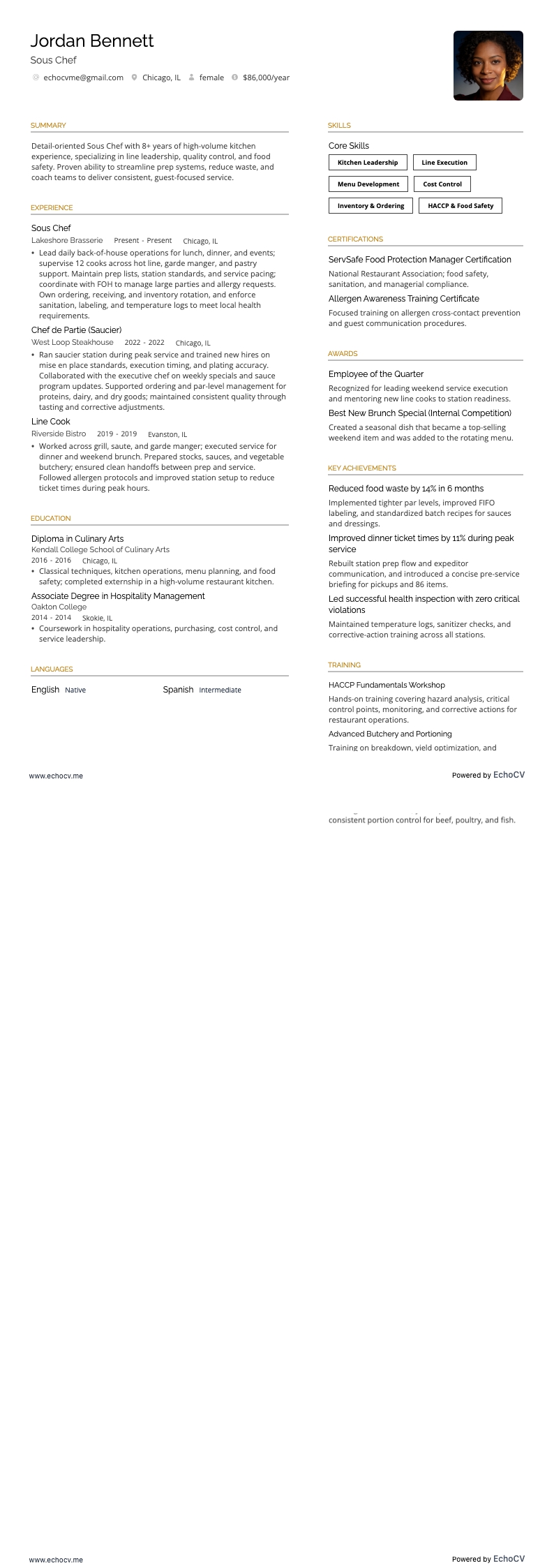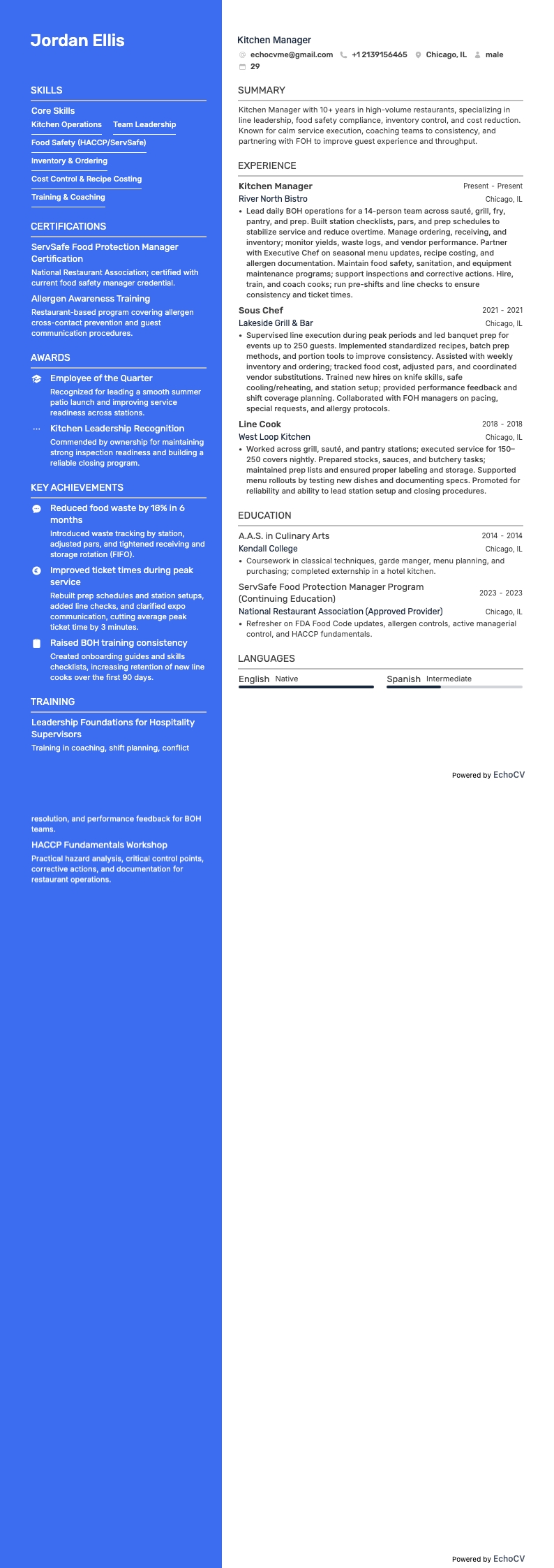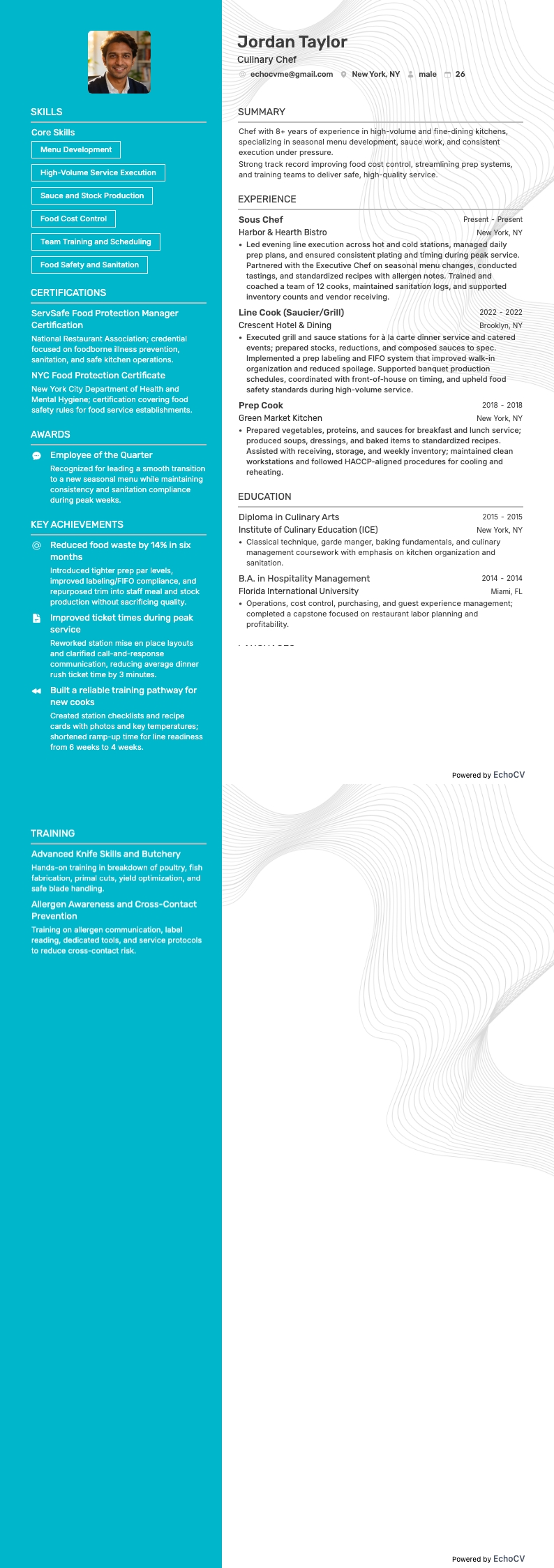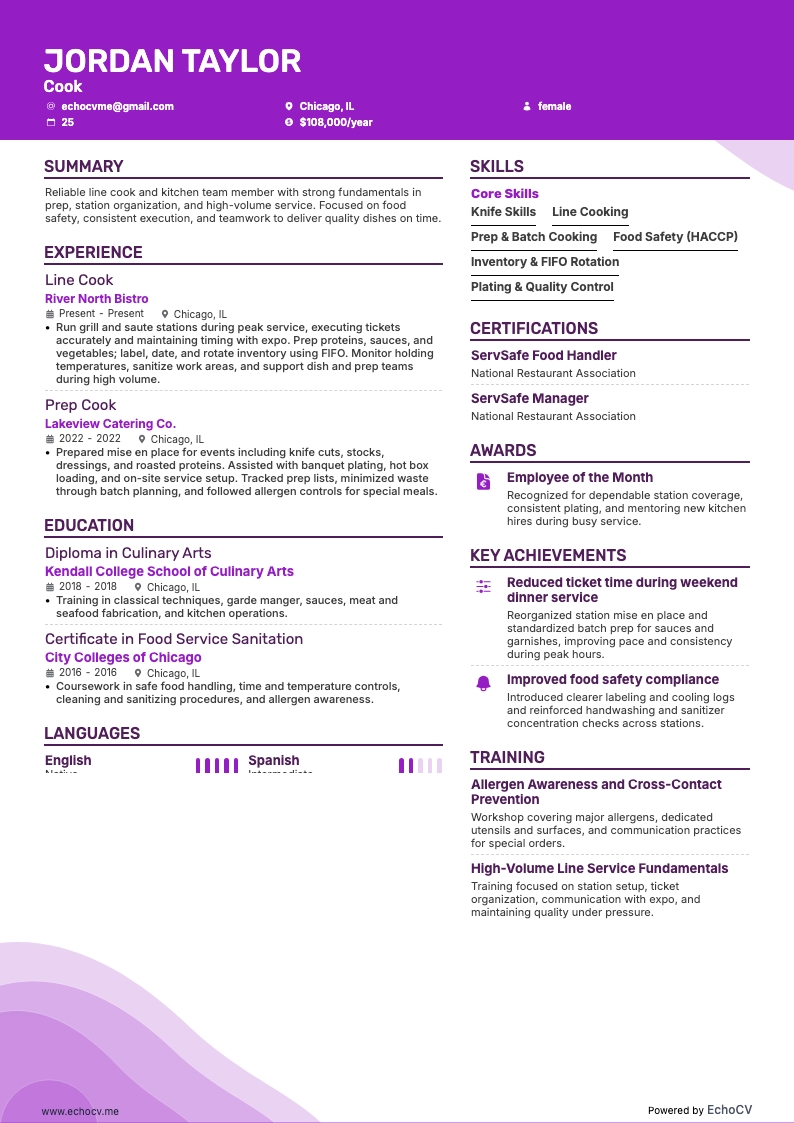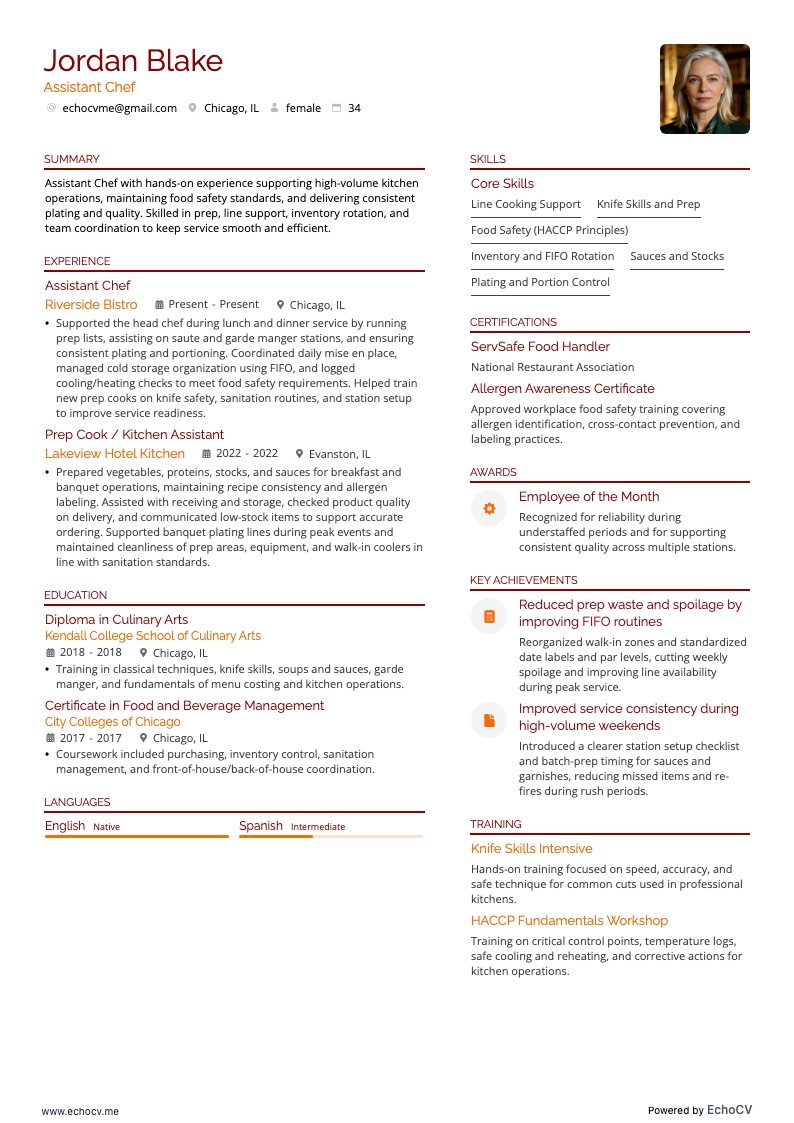
In the first example, it’s painfully obvious that the applicant probably doesn’t care too much and is sending out their resume en masse. The description is vague and we can’t discern anything about the company besides that it’s in Idaho. Besides that they misspelled the word ‘diner’ as ‘dinner’ - make sure that you proofread your resume several times before sending it out!
In the second example, the description is spot on accurately describing the workplace and type of cuisine. This is followed by a comprehensive list of duties and responsibilities that utilize action verbs, avoid overused buzzwords and, we would like to assume, keywords taken from the job advertisement and reused here.
The line cook lists too few responsibilities and completely forgets to list any achievements or successes - quantifying nothing. The latter candidate really makes an effort to highlight their achievements as well as properly quantifying a couple of them, e.g. Managed inventory and procurement of high-quality ingredients, reducing waste by 15% - it’s clear they took responsibility and achieved a successful result of reducing waste by 15%.
Be clear, concise, and quantify!
Let’s dive into quantifying a bit more as it can often be a hurdle for many candidates.
How to quantify impact on your resume
The numbers and statistics that you list actually help to show that you know what you’re doing and that you’ve achieved success. As a food industry employee, there are many opportunities to quantify, and the more the better. Employers want results and they want them to be easily conveyed - prove to them that you can do this!
Here are some useful things you can include in your experience section that can easily be quantified:
- Include the number of menu items you created or improved upon at your previous employment to demonstrate innovation and responsibility.
- Indicate how many special diets or food allergies you've accommodated to highlight flexibility and customer care.
- Mention the number of staff you've trained or mentored, showing leadership and cooperative skills.
- Show the percentage by which you reduced food costs without compromising quality, reflecting cost efficiency and resourcefulness.
- Include the number of repeat customers tied to your culinary creations which demonstrates your ability to attract and maintain clientele.
- Mention the increase in customer satisfaction ratings during your tenure to emphasize your impact on service quality.
- Reference the volume of meals served during special events or rush hours to reflect your stamina and ability to work under pressure.
- State the percentage decrease in kitchen waste achieved under your supervision as it signals your commitment towards sustainability and efficient use of resources.
How do I write a chef resume with no experience?
The first piece of advice to anyone in any industry who is just entering is to focus on creating an outstanding education section. Highlight coursework, activities, and projects, and your GPA (if it's 3.5 or higher!). In addition to education, include internship experience, extracurricular activities, volunteering, side projects, hobbies, passions, and, most importantly for a chef, a skills section.
If you have a minute read our detailed article on writing resumes with no experience. Otherwise, here are some steps to follow:
- Write a resume objective: Crafting a resume objective or summary varies with your experience level. Veterans in the field can highlight their extensive experience through real-world successes. However, if you're newer to the industry, focus on outlining your ambitions and what you aim to achieve in the role you're seeking. Emphasize your enthusiasm for specific cuisines or culinary techniques to show your passion.
- Use applicable experience to show competency: Even if you haven't been employed in a restaurant setting, it's likely that you possess relevant experience that could make you a great fit for the job. For instance, your involvement in preparing meals at a shelter or coordinating a potluck event for your nephew's school are opportunities where you can demonstrate your culinary skills.
- Highlight your education section: If you've recently graduated, you can illustrate your suitability for the position by highlighting projects you undertook during your studies. For example, if you designed a lunch menu for your high school cafeteria as part of a class project, mention this experience on your resume and briefly describe the research you conducted for it.
- Consider the functional resume format: This type uses a skills-based layout that lets you highlight skills and leaves your lack of experience in the background. Under the skills section, be sure to list all skills and practical examples from your life and career.
Other aspects that you could include are:
Similar to the coursework, a relevant internship can set you apart from the majority of job applicants. The goal here is to emphasize on duties and achievements accomplished during your internship.
- Extracurricular Activities
Many students choose to make room in their schedules for extracurricular activities. Most schools offer a variety of clubs, sports, and organizations that students can participate in.
Hiring managers prefer applicants with volunteer experience. This is because they believe unpaid work builds leadership and communication skills, shaping a strong character.
Another way to enrich your resume without work experience is by adding activities and projects that correlate with the position you are applying for.
What’s the difference? Hobbies are passions in the form of regular activities that you enjoy doing, while interests are something you’re curious about and want to learn more.
Interests lead to hobbies.
Passions can be used to enhance the effect of the hobbies and interests section.
Let’s move on to the most critical section for a chef - the skill section.
How to list your hard skills and soft skills on your resume
For a chef's resume, hard and soft skills play distinct roles, each highlighting different aspects of their capabilities and suitability for a role. Here's a breakdown of the differences:
Hard Skills
Hard skills refer to the technical abilities and knowledge necessary for specific tasks related to cooking and kitchen management. These skills are often acquired through formal education, training, and hands-on experience.
Soft Skills
Soft skills, on the other hand, are the personal attributes and interpersonal skills that determine how well someone can work or interact with others. These skills are crucial in a kitchen environment, which often requires teamwork, communication, and stress management.
When crafting a resume, a chef should aim to balance hard and soft skills to present themselves as well-rounded candidates. Hard skills demonstrate technical competence, while soft skills show how they'll fit into the kitchen's culture and work with the team. Including examples of how these skills have been applied in past roles can further strengthen a chef's resume.
Here are some steps to help you showcase your skills in the best way possible
Review Job Descriptions: Start by examining job postings that interest you. Note the skills frequently mentioned as requirements or preferences.
Match Your Skills: Compare your own skills with those listed in the job descriptions. Identify both hard and soft skills that match.
Consider Your Achievements: Think about your professional achievements and how your skills contributed to these successes.
Hard Skills vs. Soft Skills: Separate your skills into hard skills (technical abilities) and soft skills (interpersonal and personal qualities).
Specialized Sections: For certain professions, you might also categorize skills into more specific sections (e.g., "Culinary Skills" and "Management Skills" for a chef).
Relevance: Prioritize skills based on their relevance to the job you're applying for. The most relevant skills should be listed first.
Strength: Also consider your level of proficiency and experience with each skill. Highlight your strongest skills that match the job requirements.
- Use Keywords from Job Descriptions
Match the Language: Use the same wording as the job description when listing your skills. This can help your resume pass through Applicant Tracking Systems (ATS) and catch the eye of hiring managers.
Contextualize Skills: Whenever possible, provide context for how you've used your skills. This can be through bullet points under each job in your experience section.
Quantify Achievements: Use numbers and data to quantify your achievements. For example, "Increased kitchen efficiency by 20% through improved inventory management techniques."
Clear Section: Create a distinct section for your skills, usually near the top of your resume after your contact information and summary.
Bullet Points: Use bullet points to list your skills, making them easy to read at a glance.
Consistent Formatting: Ensure your resume has consistent formatting throughout. This includes font size, bullet style, and spacing.
- Review and Update Regularly
Tailor for Each Job: Customize the skills section for each job application based on the job description and requirements.
Keep Current: Regularly update your resume as you acquire new skills and experiences.
Here are some more examples of culinary skills: