Getting an opportunity to be an engineer-in-training is a great way to gain experience.
It’s a win-win situation for both you and the hiring company.
Companies accepting engineers in training are keen to see them grow and succeed.
That explains why they’re supportive and helpful throughout the learning process.
Businesses want to hire Engineers in Training for a variety of reasons.
First, they need human resources to help them complete their basic day-to-day tasks without having to spend much on the process.
Companies are always ready to invest in young talented engineers. They look for engineers to turn into loyal employees in the future.
Also, it makes them look good in the industry and promotes them as leading authorities.
But at the same time, they’re willing to take that risk at a cost.
They want to find the best engineers and give them the chance to thrive.
A recruiter reviewing your resume is looking for someone who can:
- Understand the fundamental engineering principles
- Solve problems and come up with new technical approaches
- Work under the supervision of seniors and contribute to team effectiveness
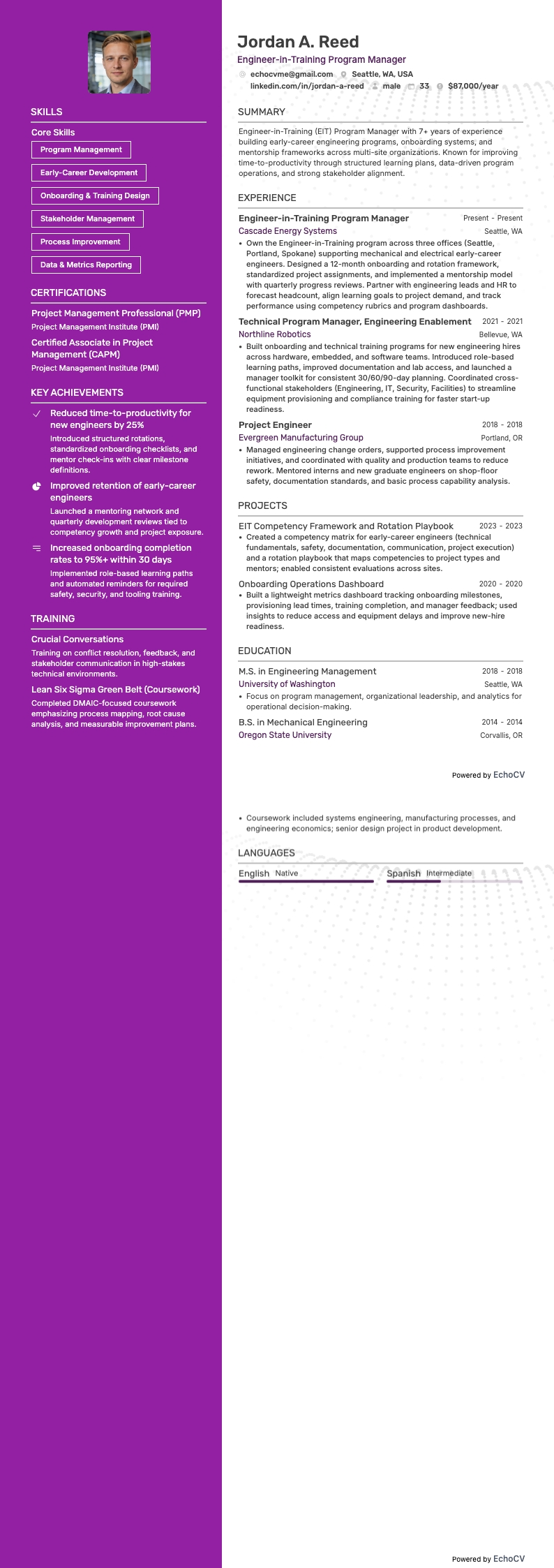
In this engineer-in-training resume guide, you’ll learn:
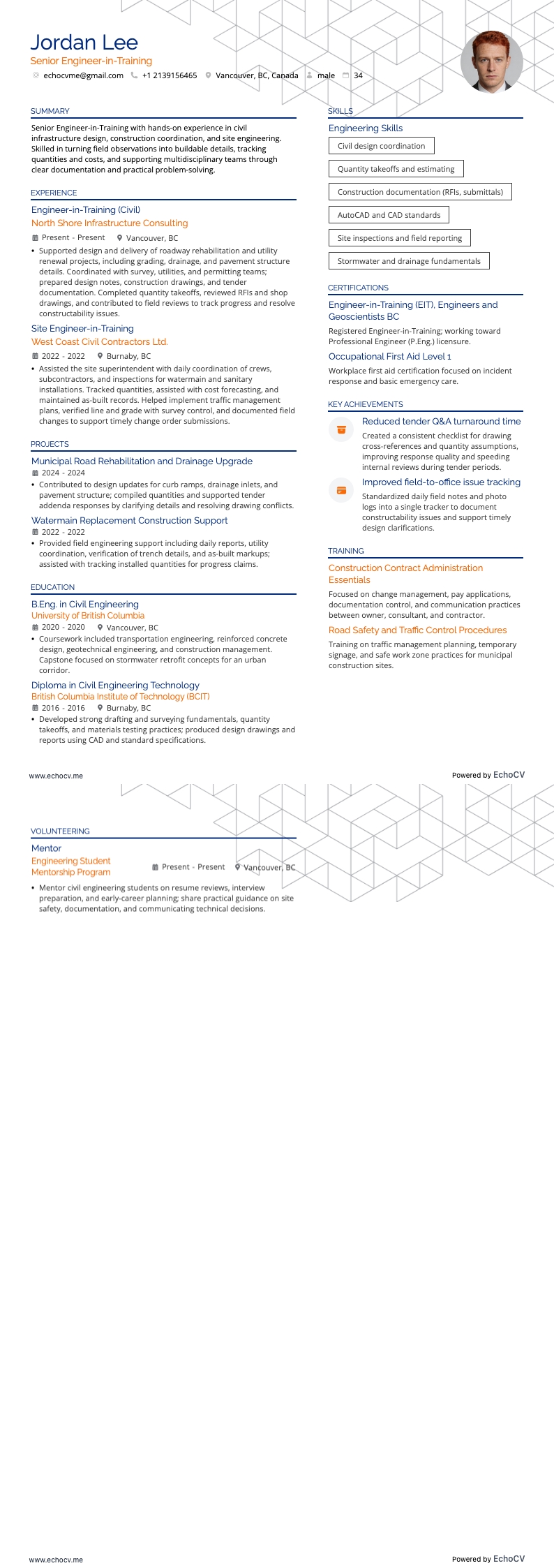
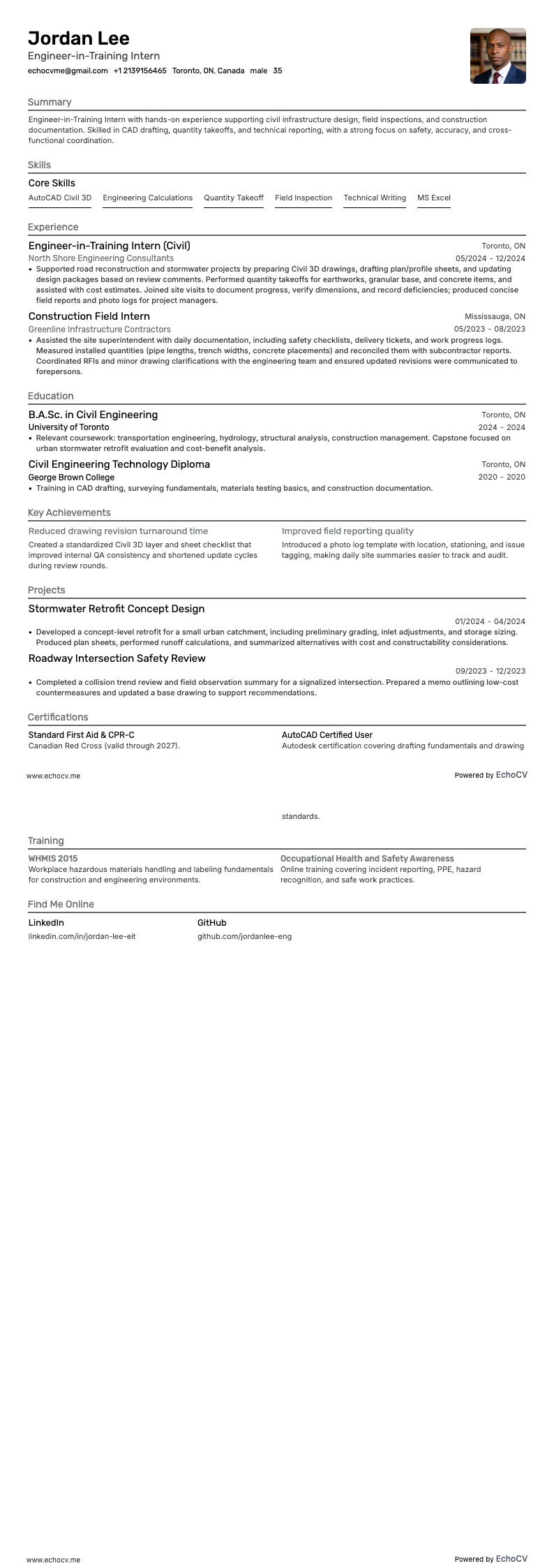
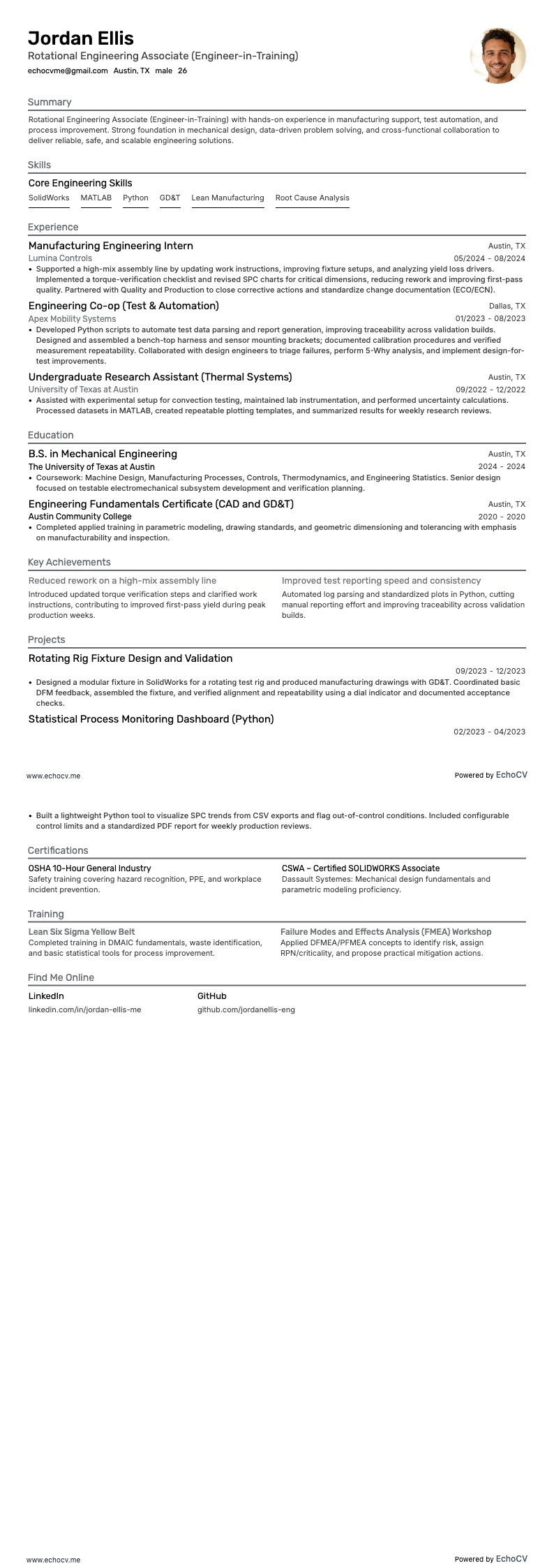
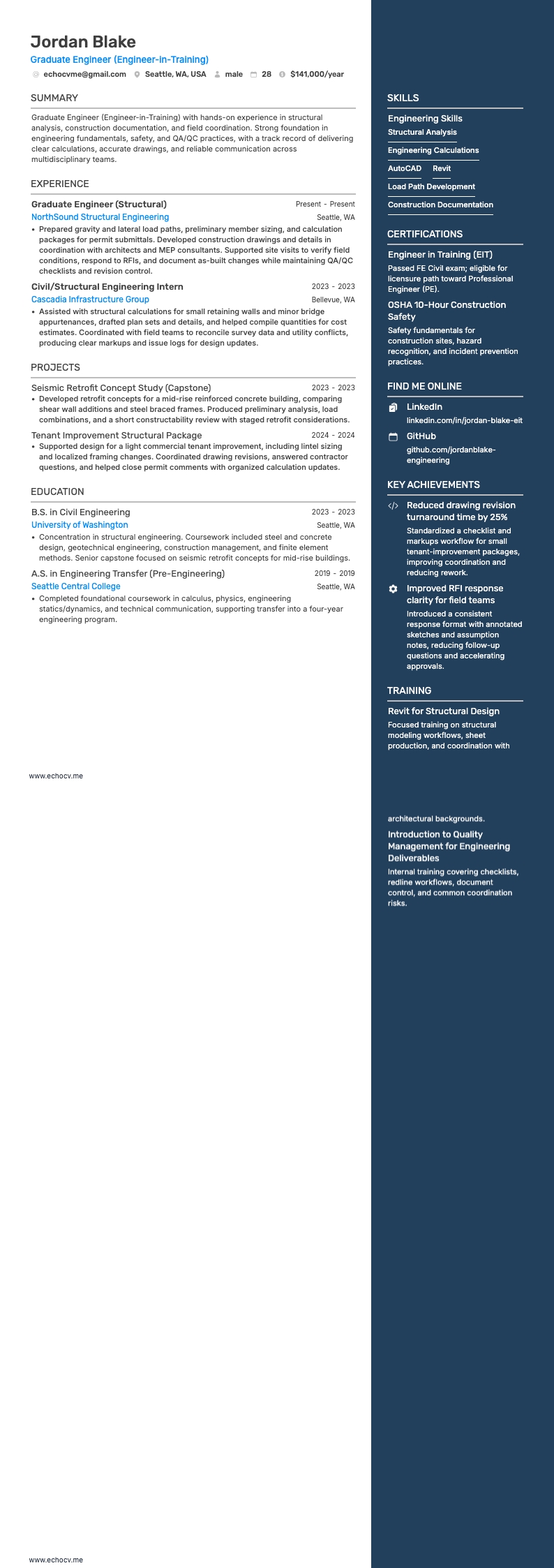
- How to structure your engineer-in-training resume in 6 key sections
- Why education matters if you want to get an opportunity as an EIT
- The most important computer, core, and soft skills to have in your resume
- What certifications you should feature to skyrocket your chances of getting hired
Looking for related resumes?
- Engineering Intern Resume
- Entry-Level Engineering Resume
- Entry Level Mechanical Engineer Resume
- Industrial Engineer Resume
How to write an engineer-in-training resume
The recruiter is looking to hire the best engineer-in-training they can find.
But there’s a problem.
They have to deal with hundreds of resumes, and then rationally decide which candidate they should select.
They’re dying to find someone to help them with that.
They’d appreciate it if you could make the hiring decision easy for them.
You're a natural problem solver after all.
It’s a pleasure for them to find someone with an outstanding career and resume that they can hire without thinking twice about it.
That’s why having a strong resume is your way to show why you deserve the job.
But how can you do that?
That’s what we’re going to answer in the rest of this guide.