If you’re enthusiastic about helping people make smart financial choices by protecting their assets, then working as an insurance salesperson is a good career choice.
To do this, you must display your strong risk assessment skills, proficiency in state and federal insurance regulations, and ability to address your clients’ needs. These are the essential building blocks that make up an effective insurance sales resume as they will let agencies know you have the experience and expertise to bring in new business.
In this guide, we’ll cover:
- How to choose a suitable resume format to showcase your relevant skills and training.
- What type of experience hiring managers are searching for and how to frame it.
- How to craft an insurance sales resume with no prior industry experience.
- How to curate your certificates, so that they align with the offered position.
- How to choose between a resume objective or a summary as your professional profile.
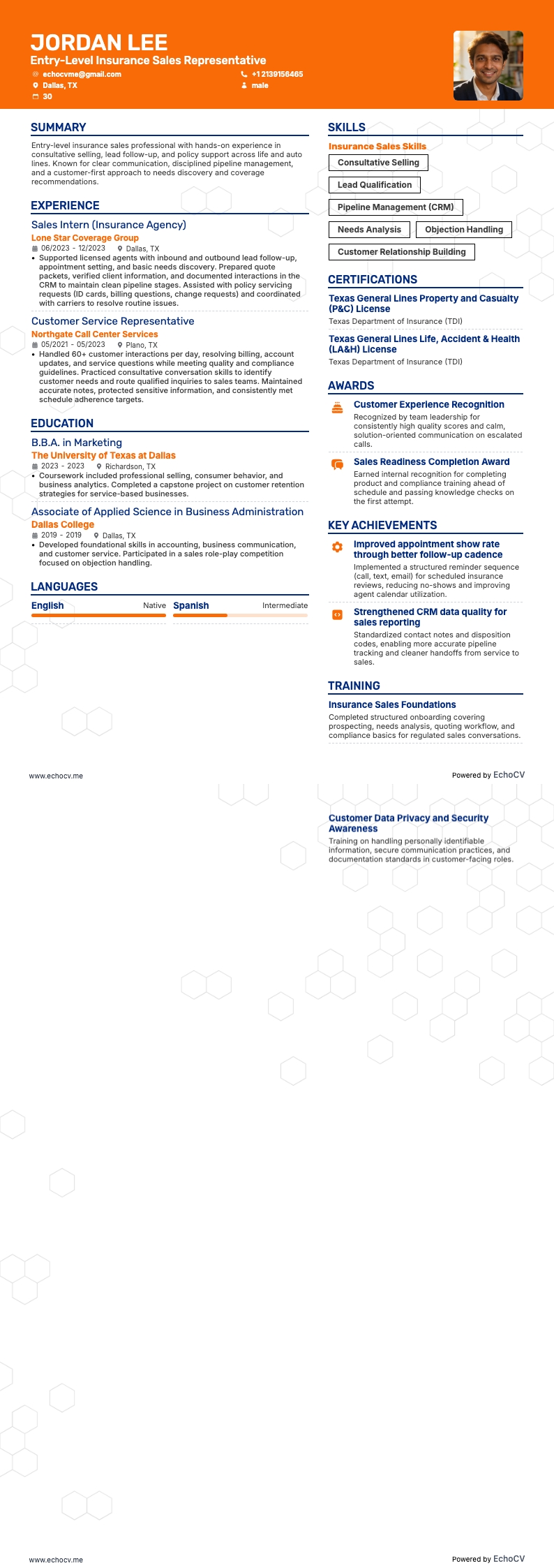
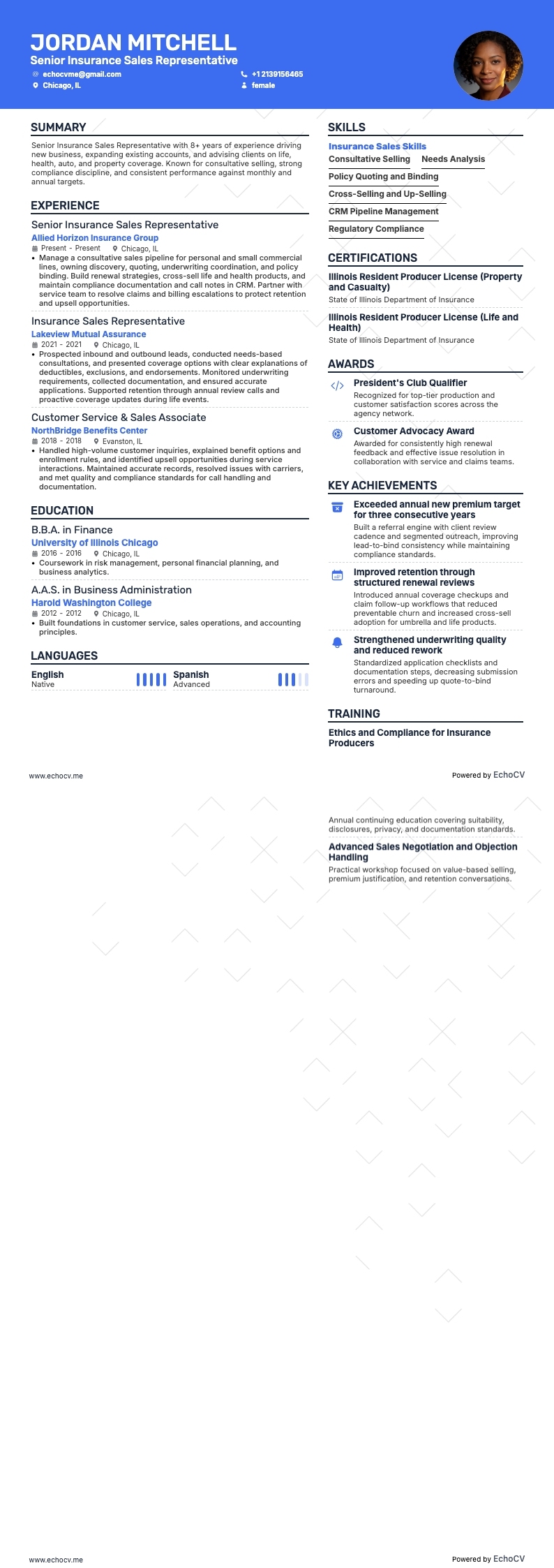
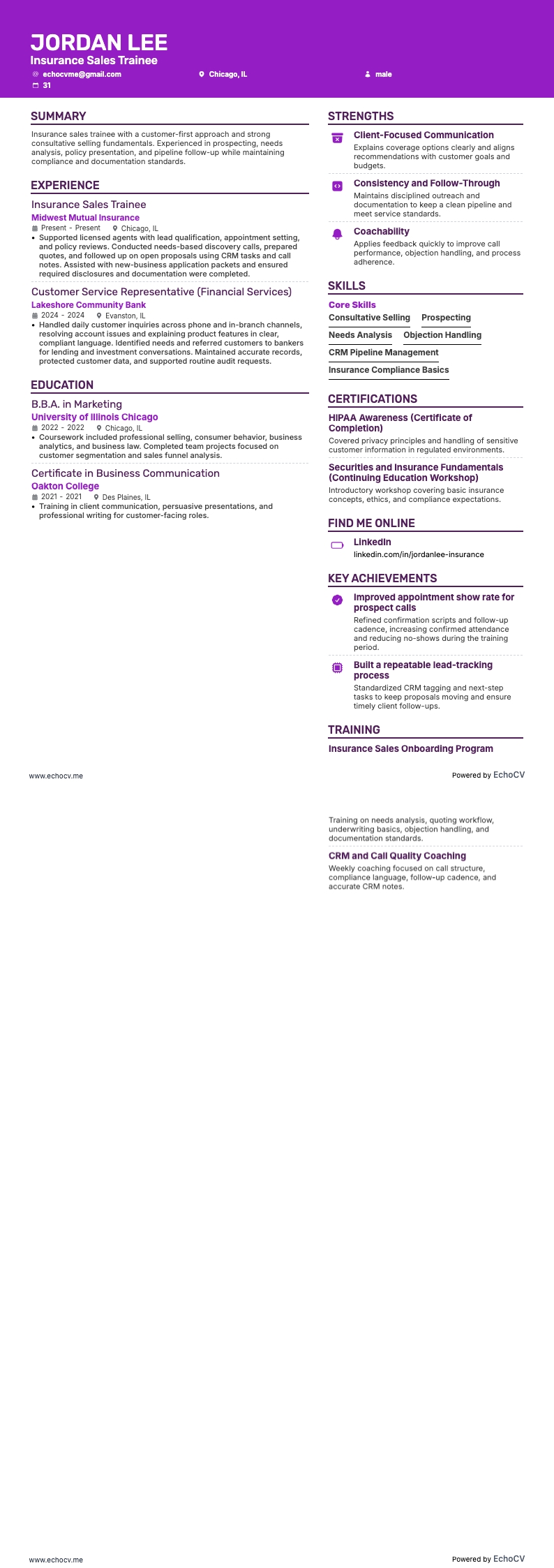
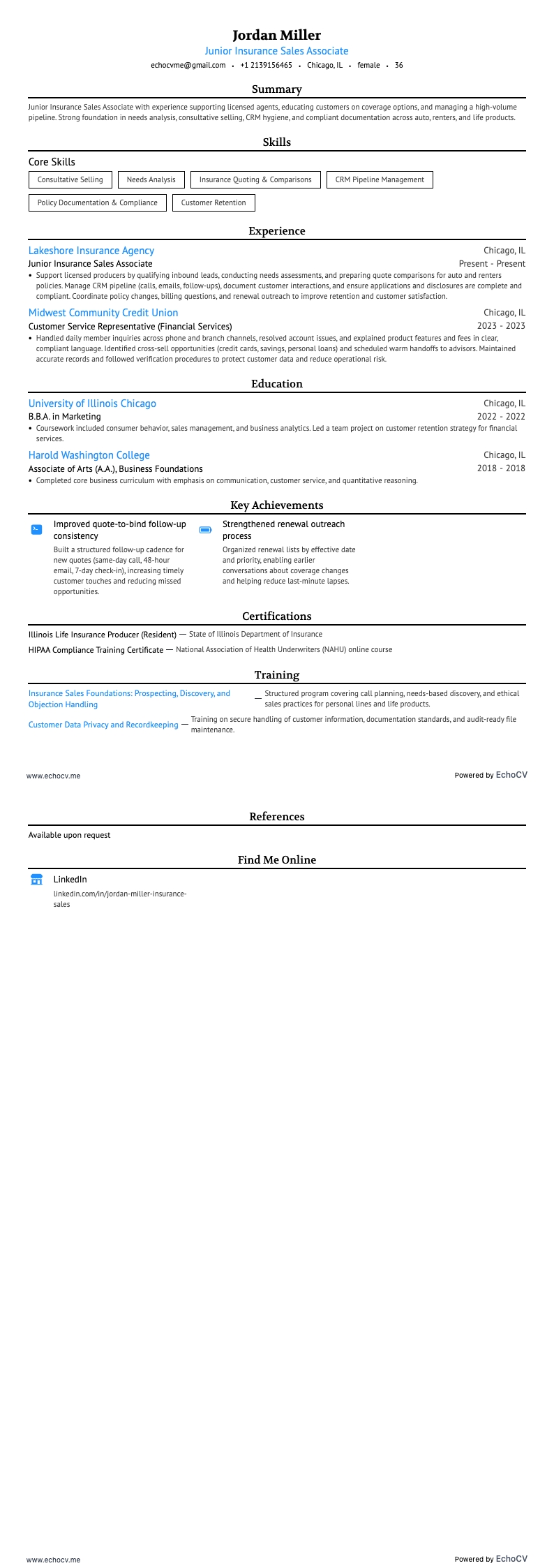
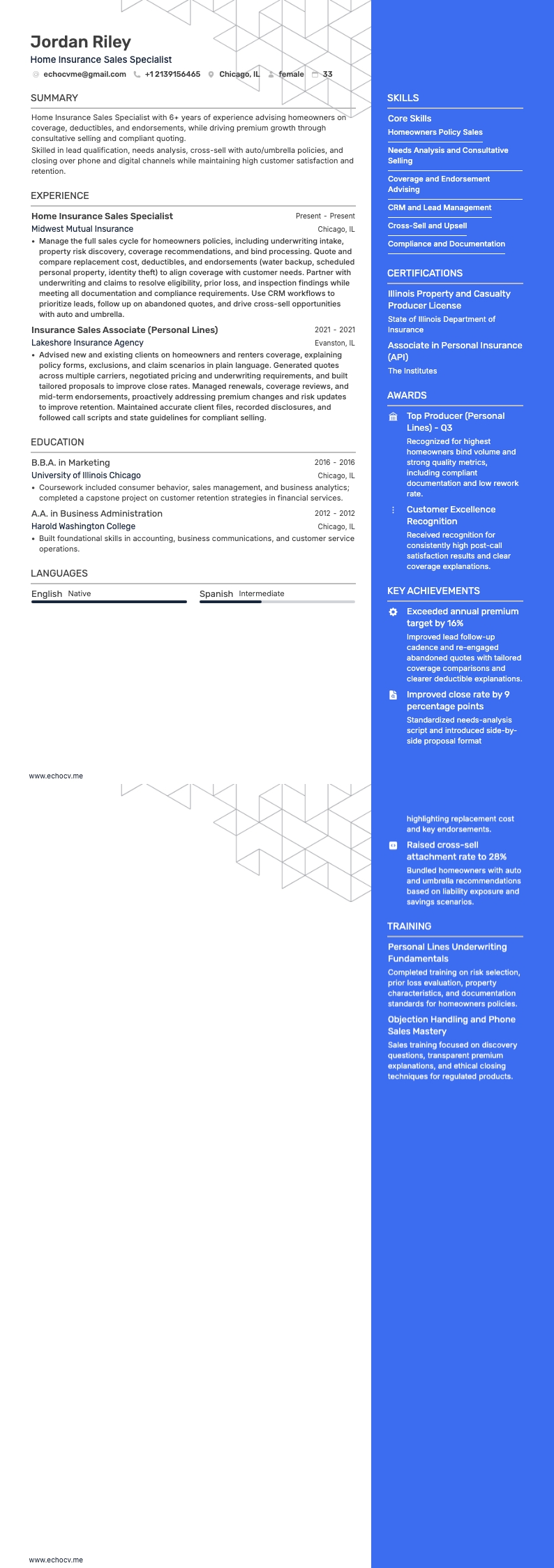
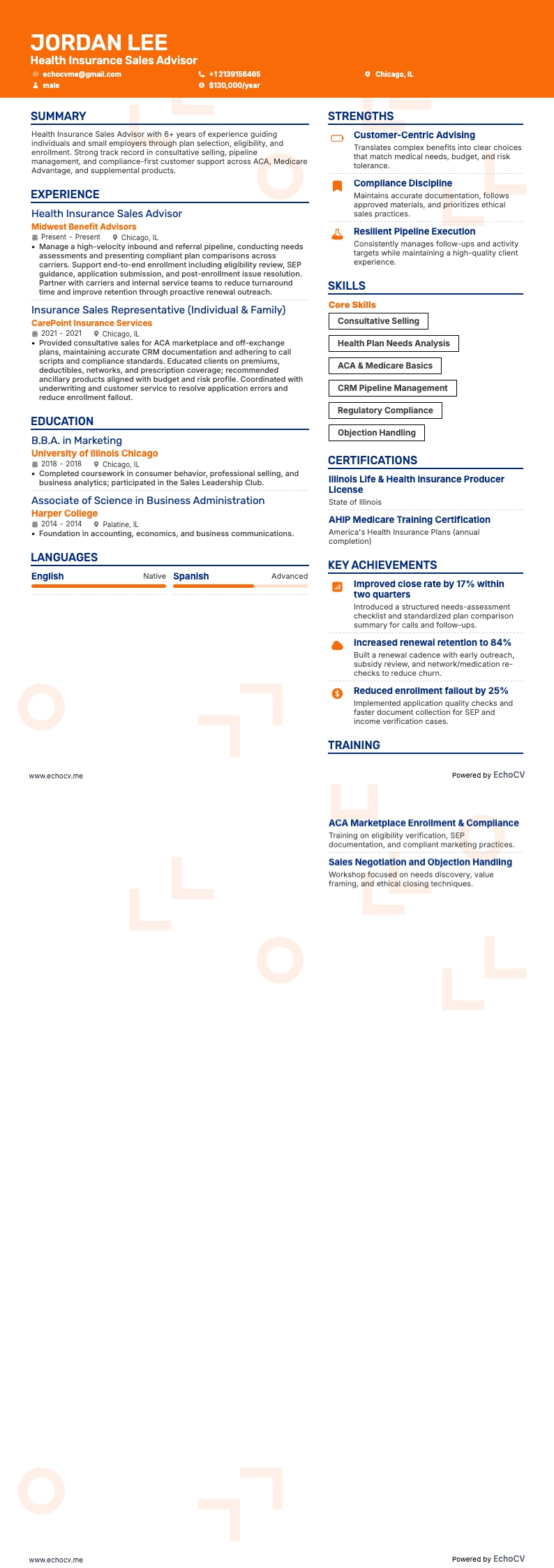
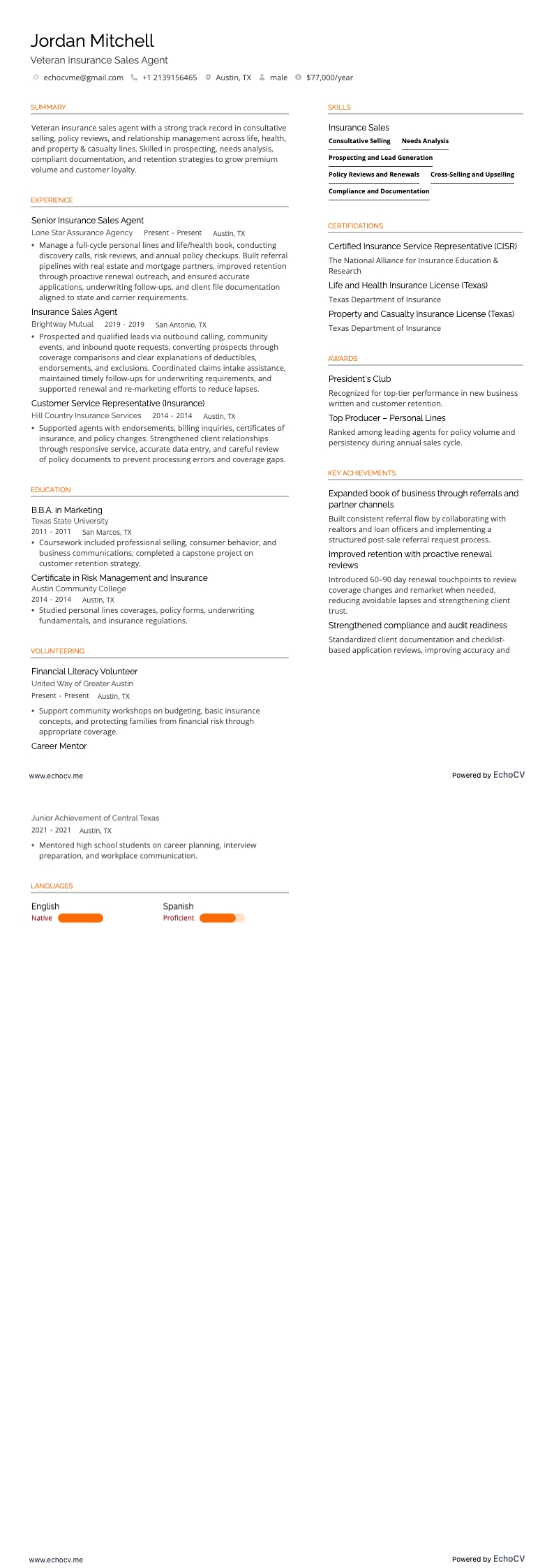
- How to use the real insurance sales resume examples in the article to build an impressive job application.
Check out other guides we have on related roles:
- Account Manager Resume
- Sales Manager Resume
- Entry Level Sales Resume
- Sales Associate Resume
- Sales Director Resume
- Insurance sales Cover Letter
How to format your insurance sales resume
Having a background in insurance and risk management means there’s lots of opportunities along your career path. That’s why it’s important you clearly state how your career has progressed so far and how you plan to continue growing professionally in the future.
To do this, you must pick an appropriate resume format to display your current insurance expertise properly. So, let’s look at the three most suitable formats for the job.
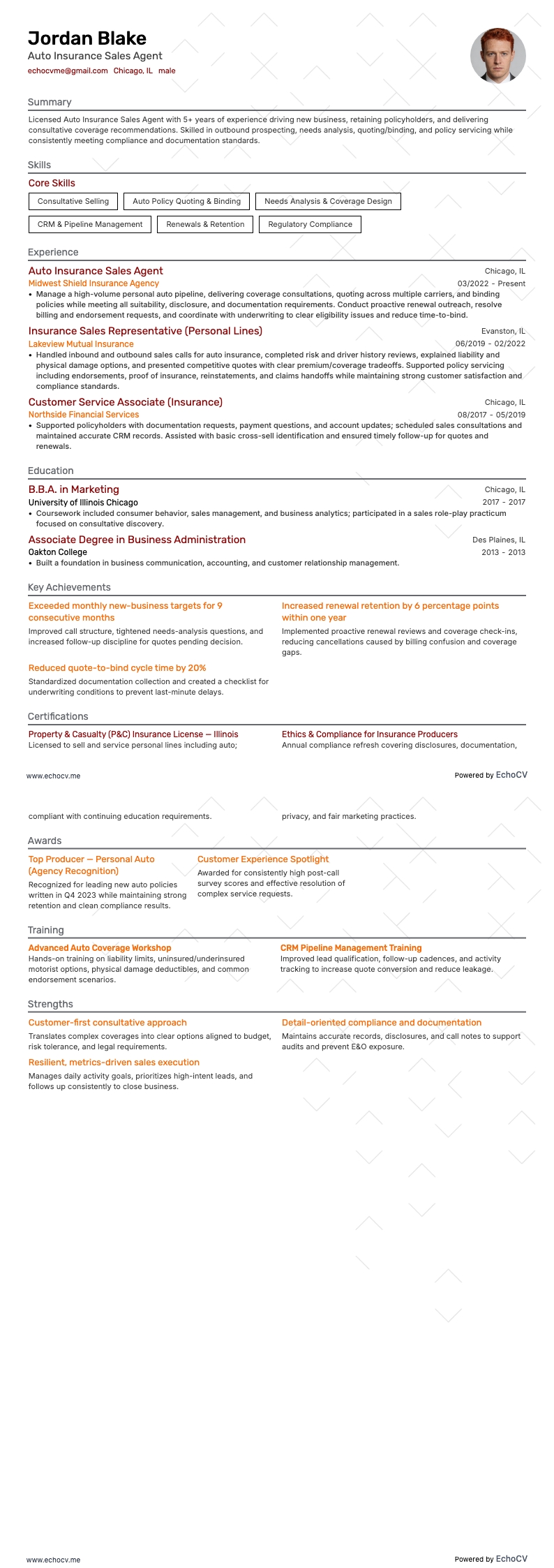
Reverse-chronological resume format
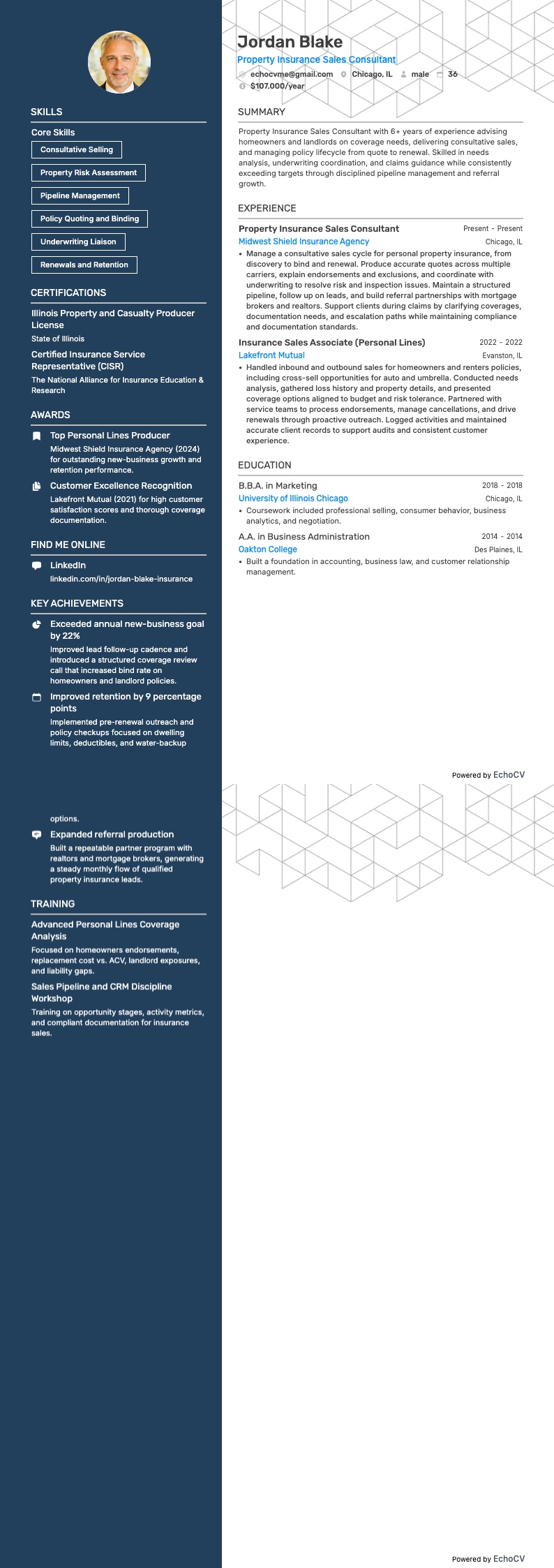
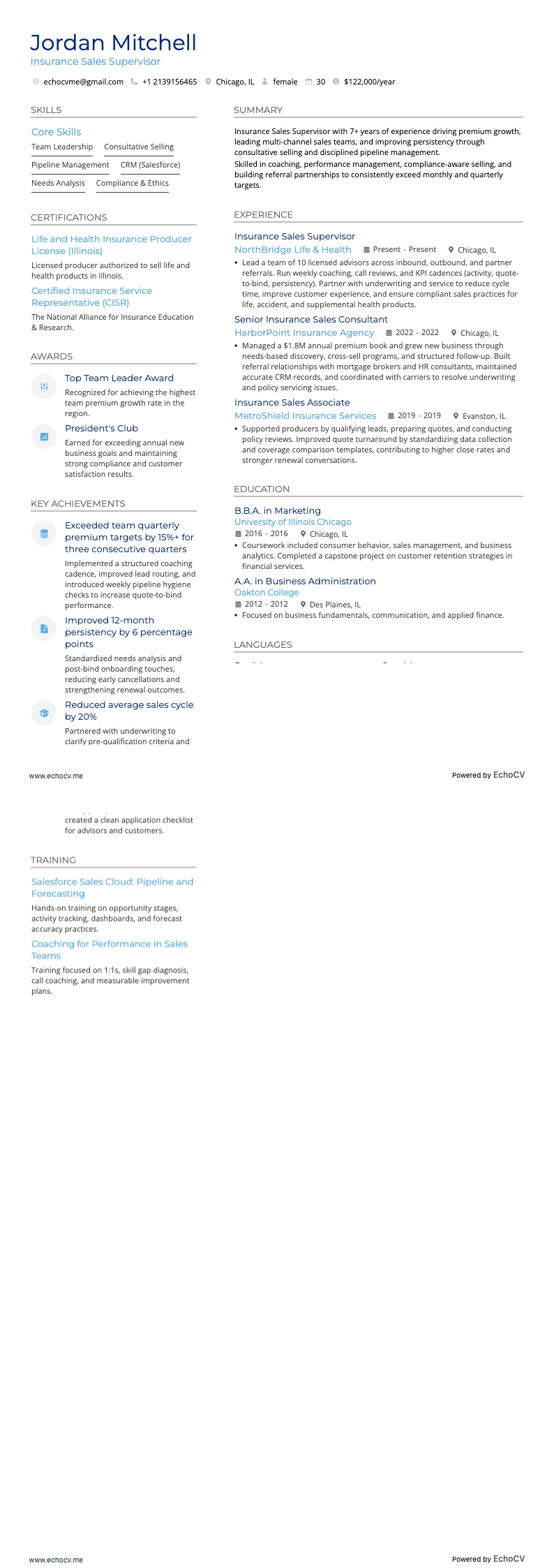
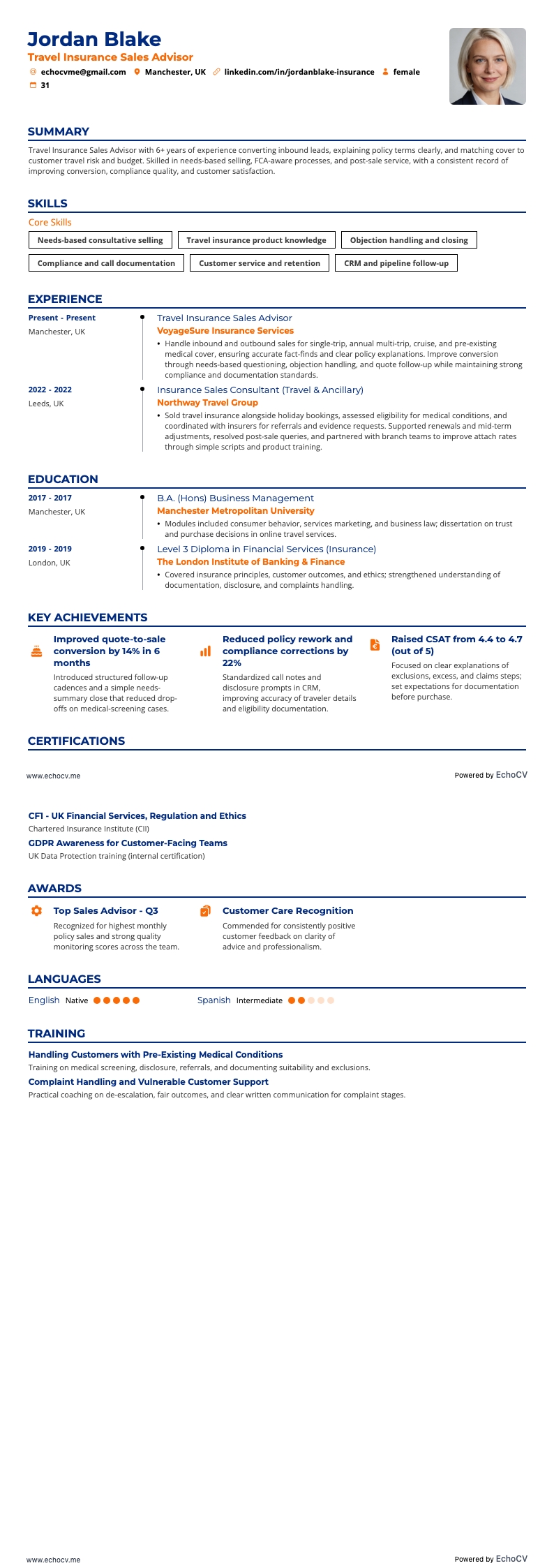
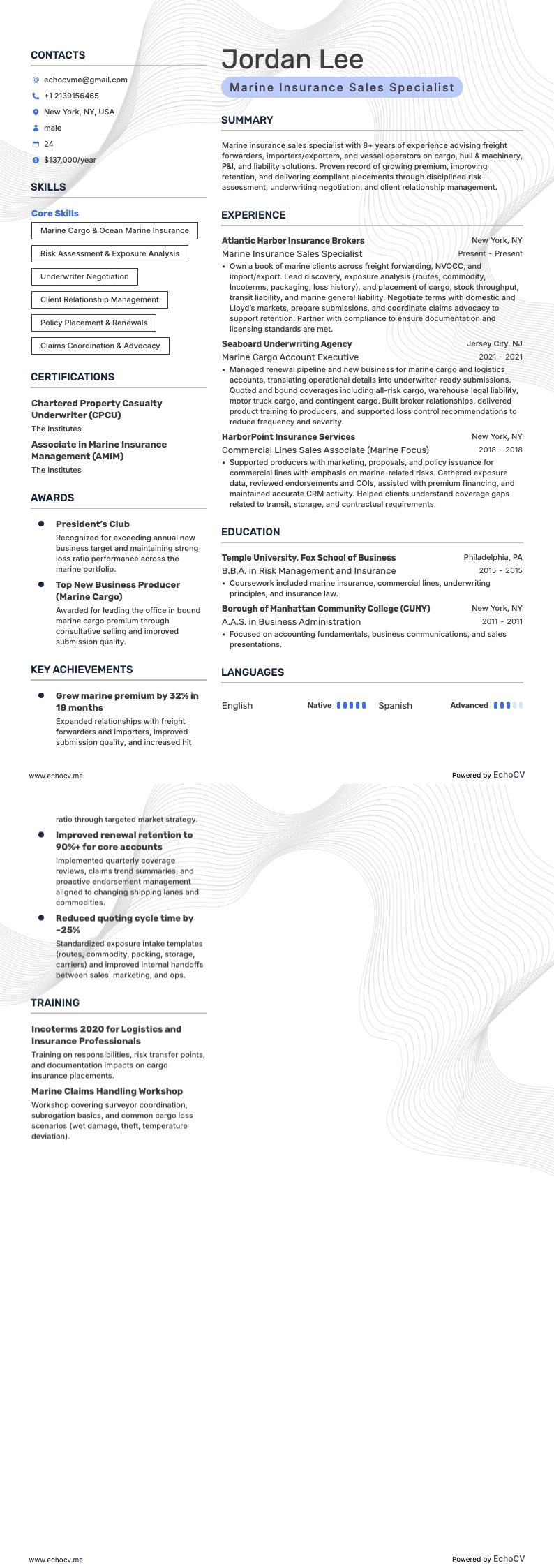
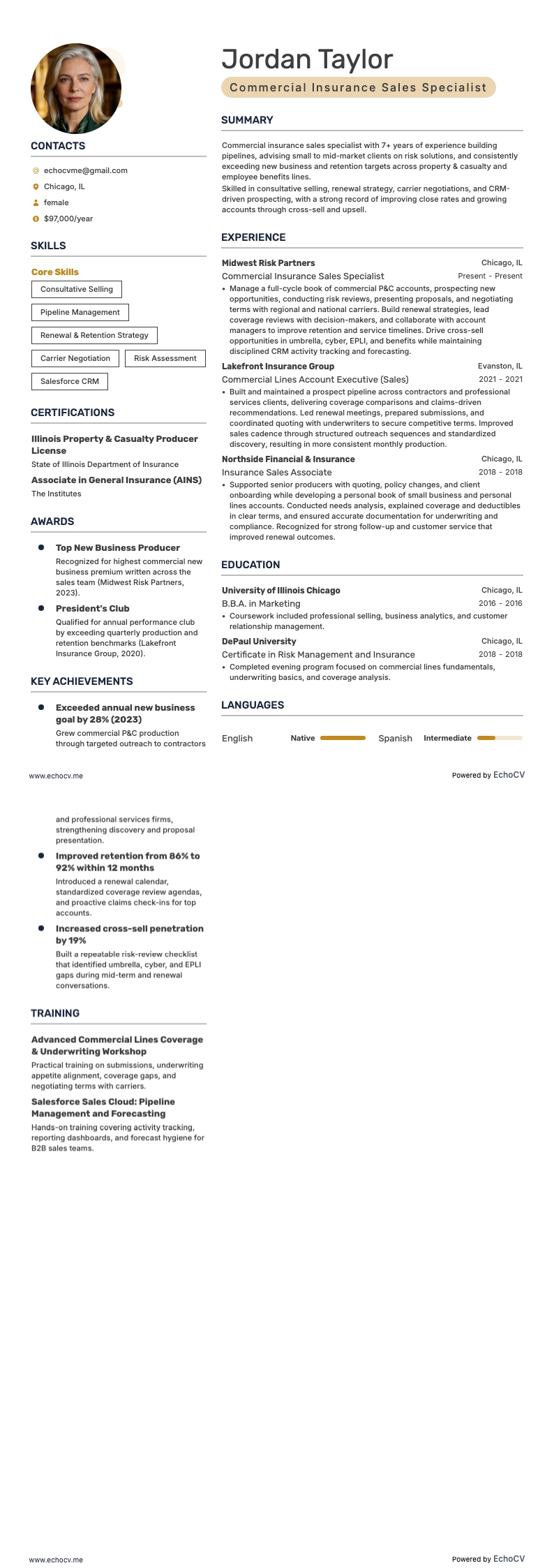
Opt for the reverse-chronological resume format, if you have at least 5 years of industry experience. It’s considered hiring managers’ favorite as this layout is the most common and most easy-to-read one. For this reason, it’s also known as the traditional resume format.
Make sure to showcase how each of your past roles has helped you gain the necessary experience and knowledge to climb the professional ladder. Note that this layout makes career gaps more visible. So, if you have any, add details on your resume that will explain the gaps, such as undergoing professional training or other commitments you may have had.
Being an insurance sales specialist means you’re dealing with sensitive private information and large budgets. Hence, recruiters want to ensure you’re trustworthy and that the gaps on your resume aren’t red flags they have to worry about.
In addition, be selective about the roles you include on your resume, and don’t go back further than 10 years. Insurance regulations and standards keep changing over time. So, while some agencies will appreciate your deep industry knowledge, they also prefer candidates who are aware of the latest changes in the insurance landscape.
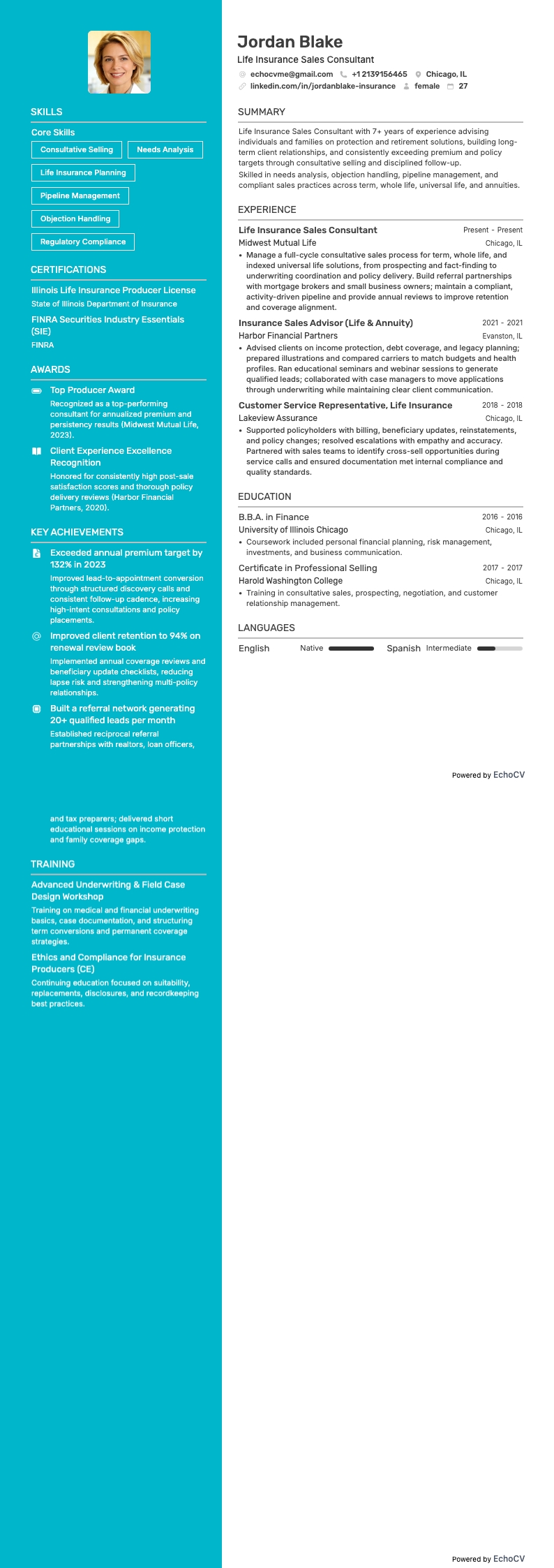
Hybrid (combination) resume format
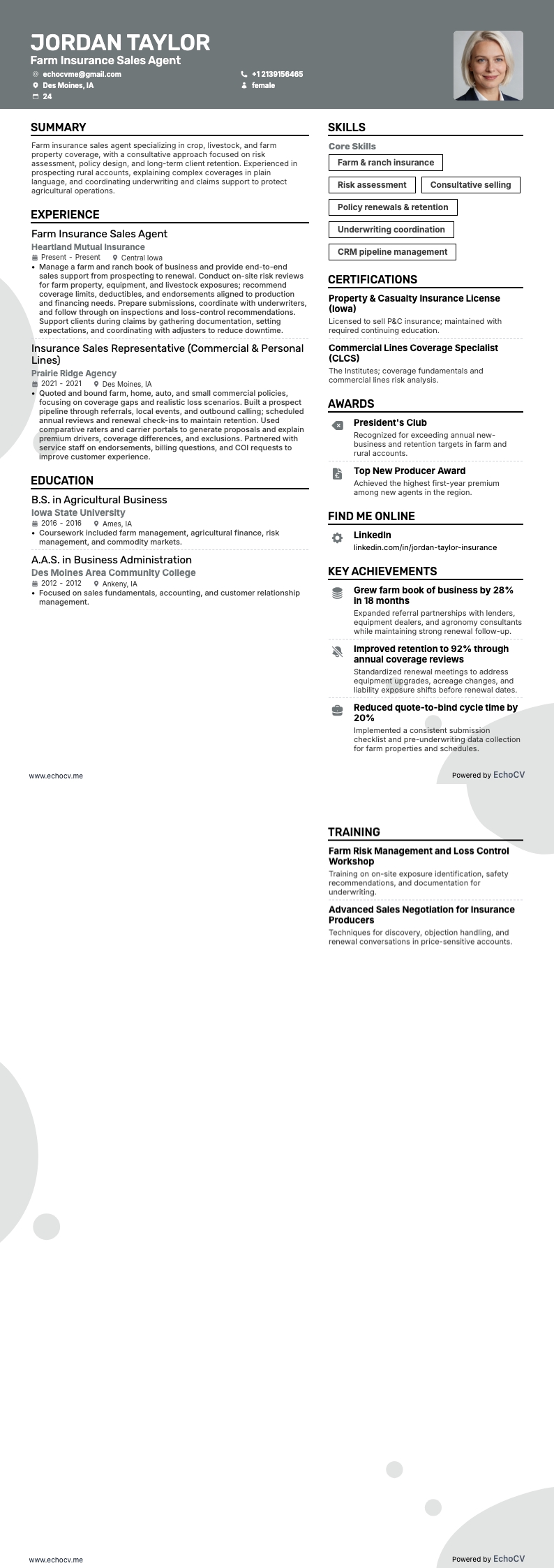
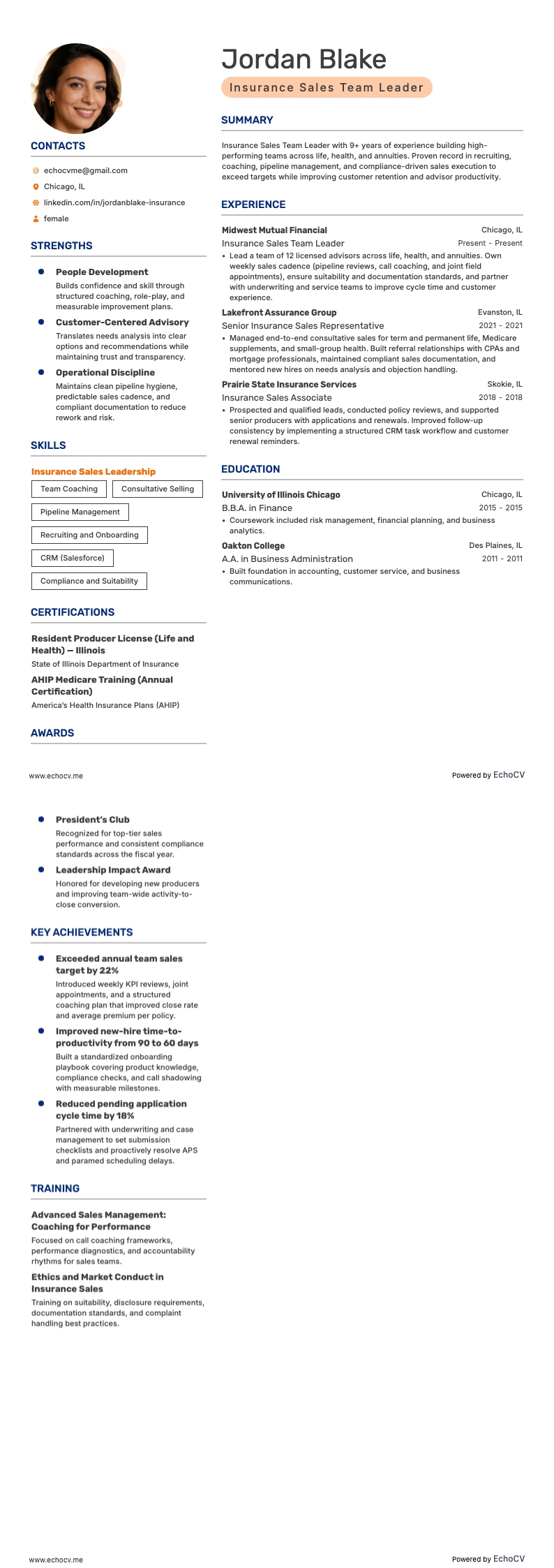
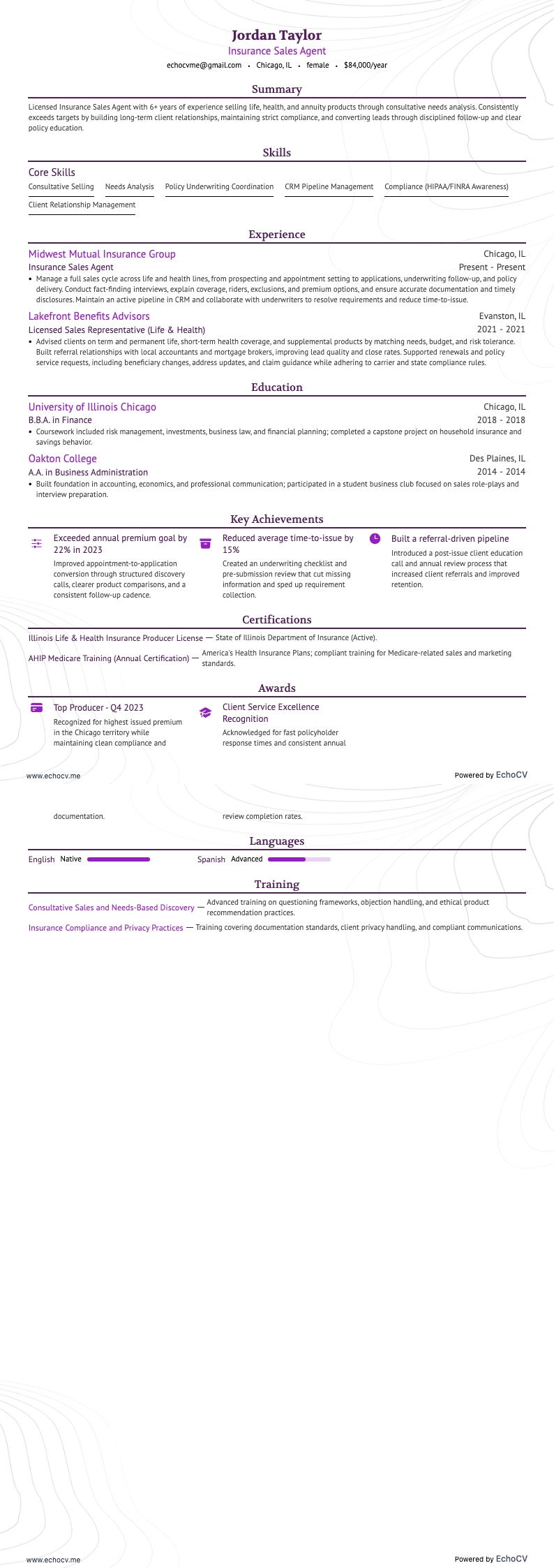
If you’re switching careers from an adjacent field or have less than 5 years of practical experience, pick the hybrid resume format. This one will allow you to emphasize your understanding of the industry alongside any job-related and other transferable skills you have to offer.
Keep in mind that because the format is not as popular with recruiters as the traditional one, it may disrupt the usual reading flow. Pay attention to which roles, qualifications, and skills you highlight. Place the most relevant near the top of your resume to increase your chances of getting noticed.
Customize your resume for the market – a Canadian format, for example, might vary in structure.