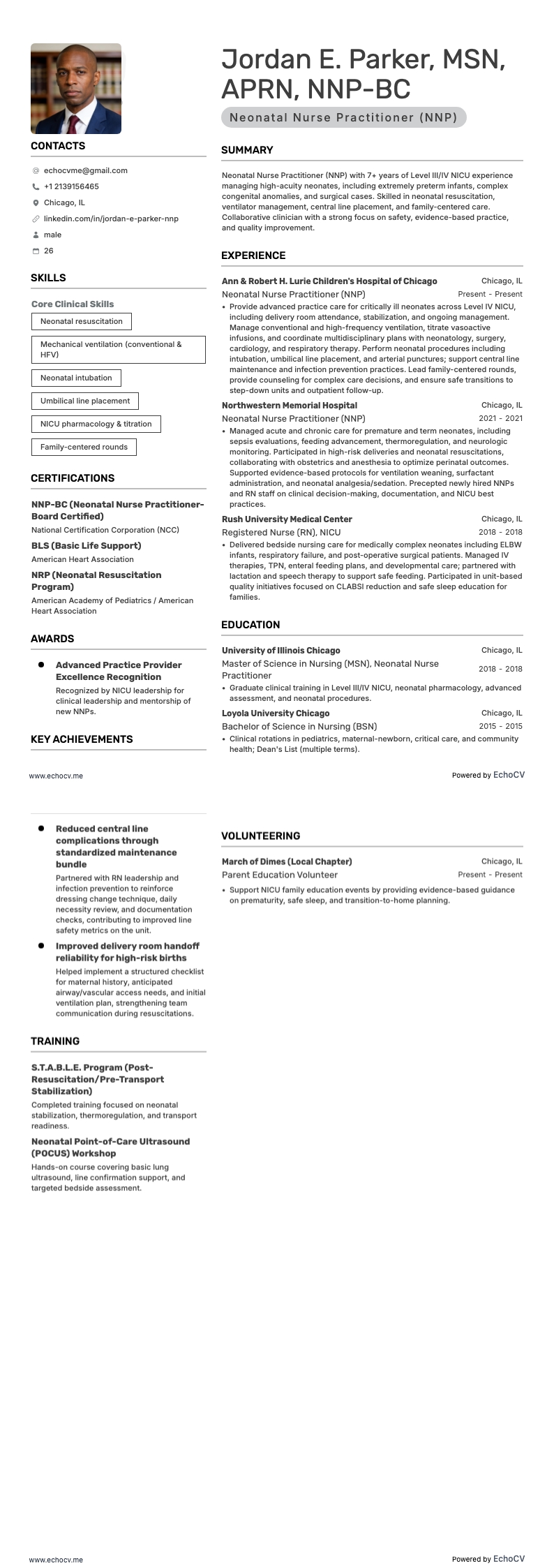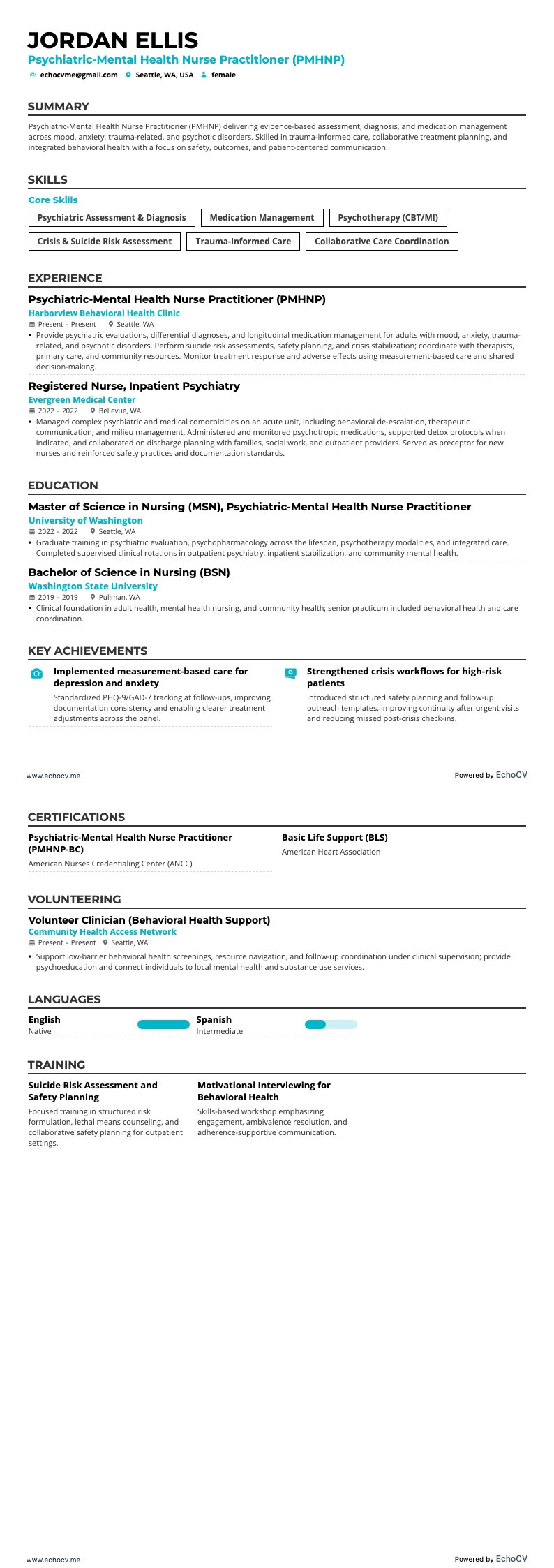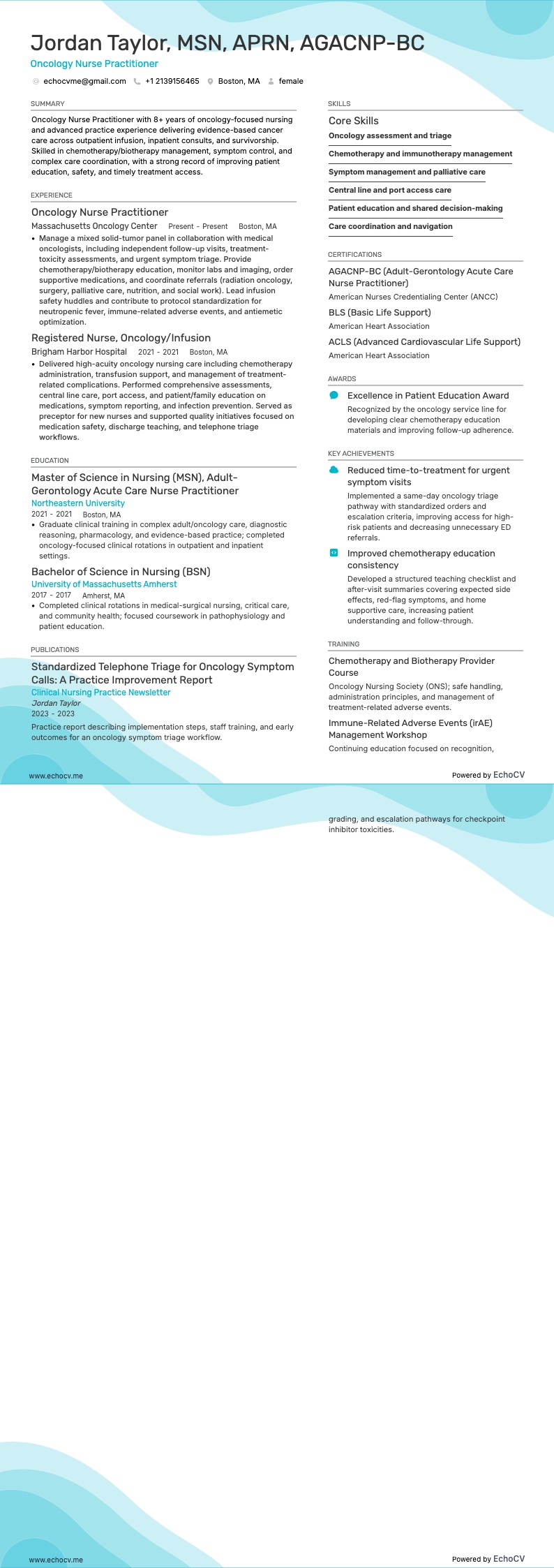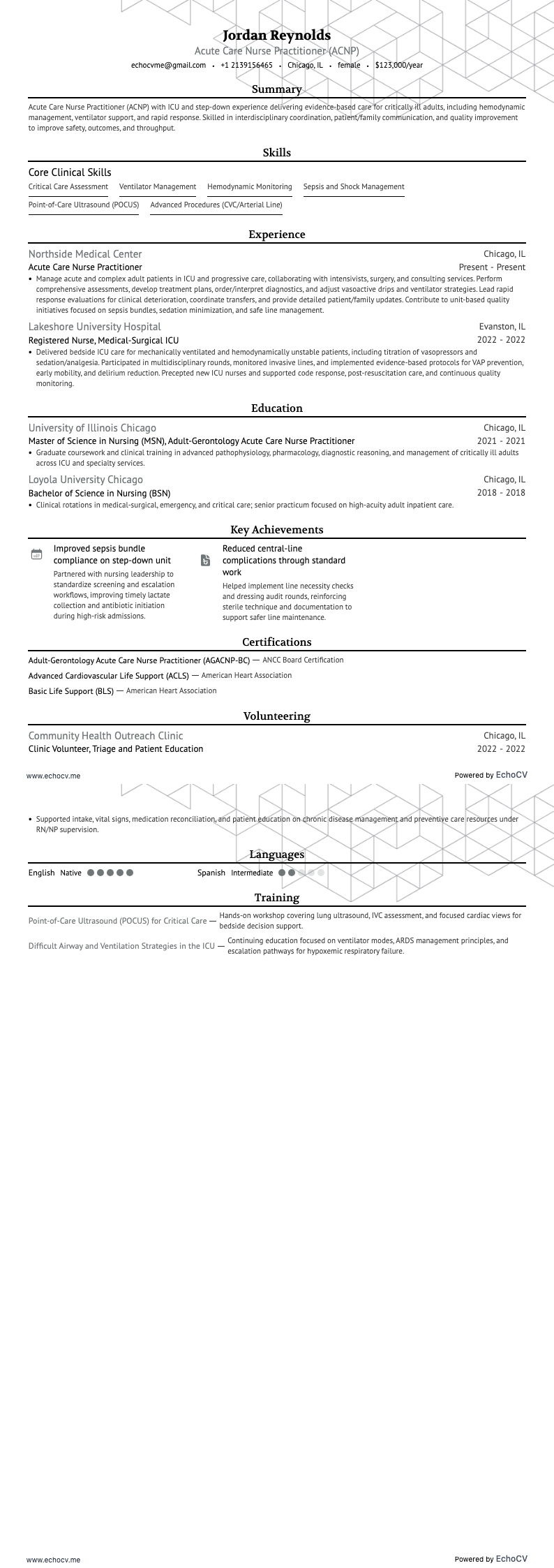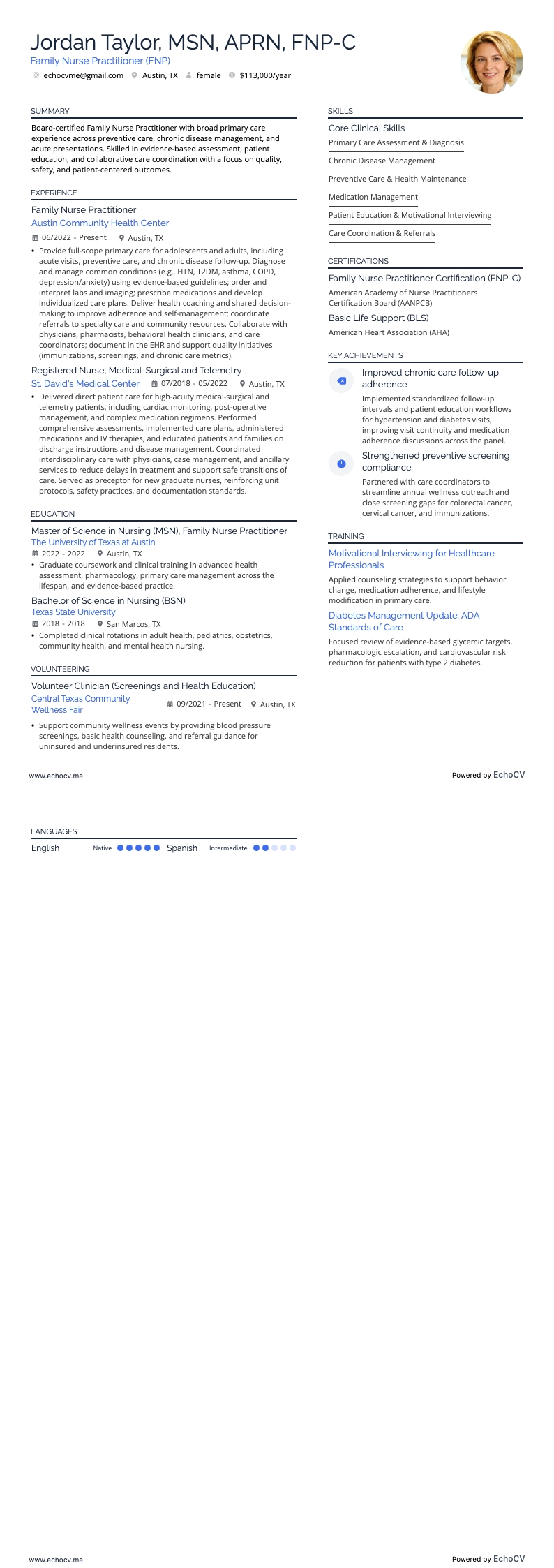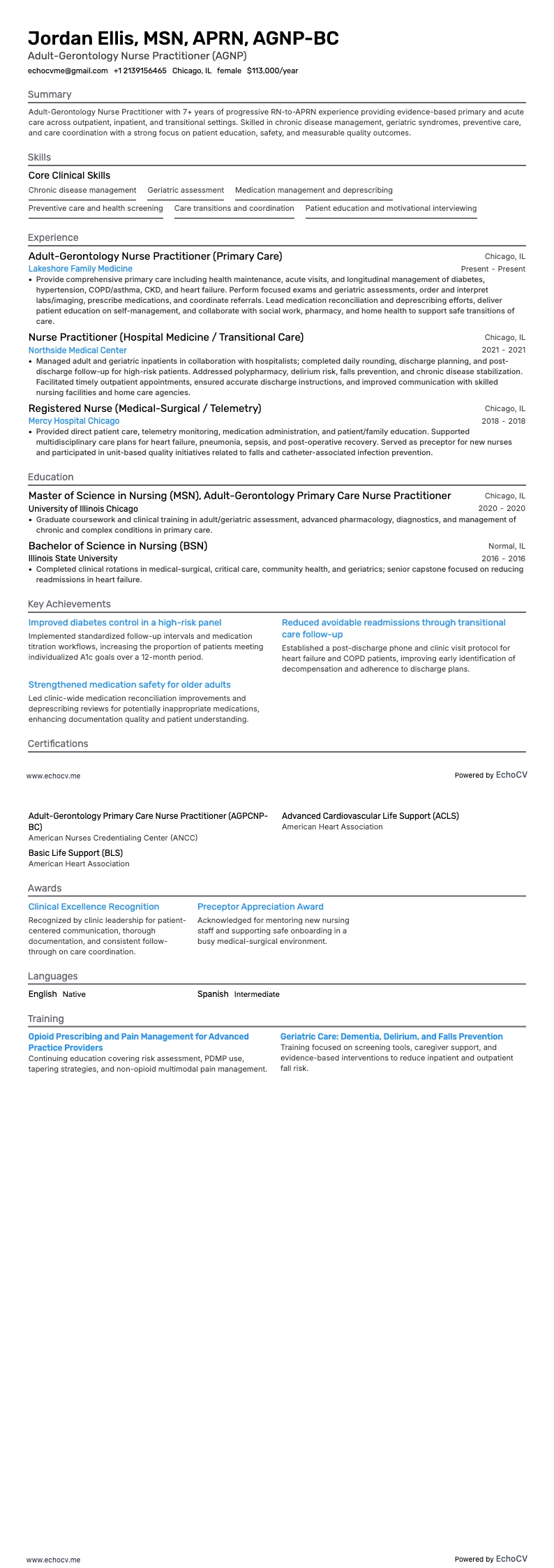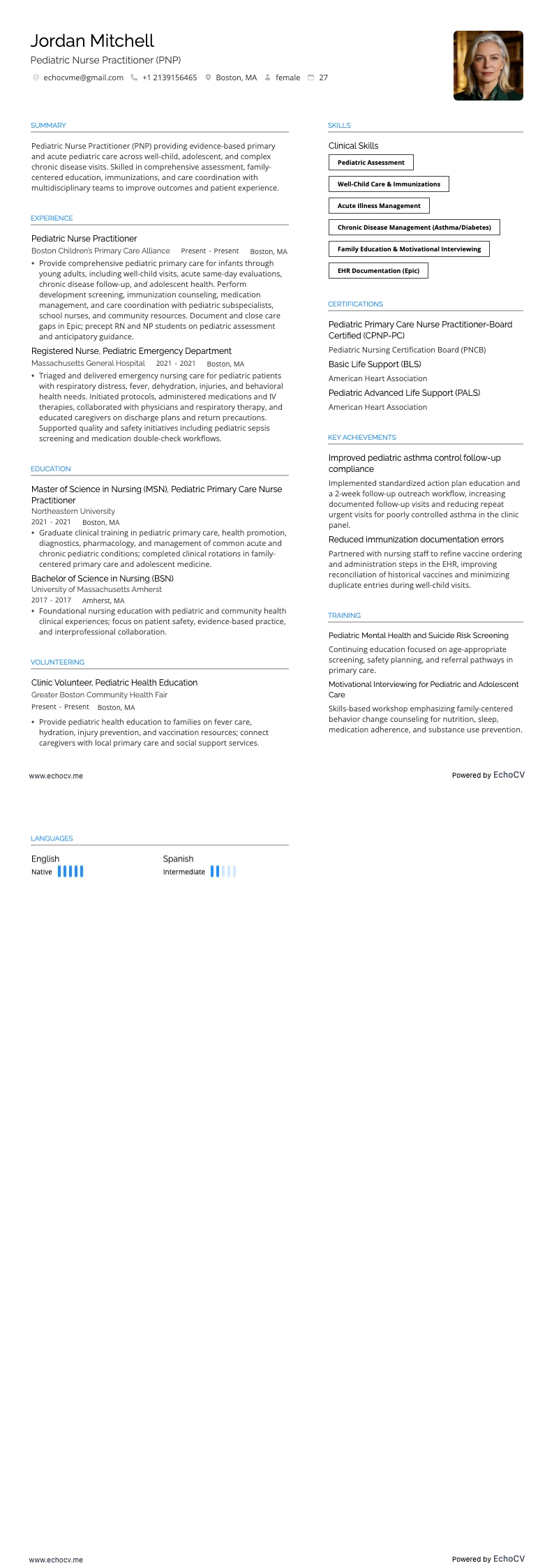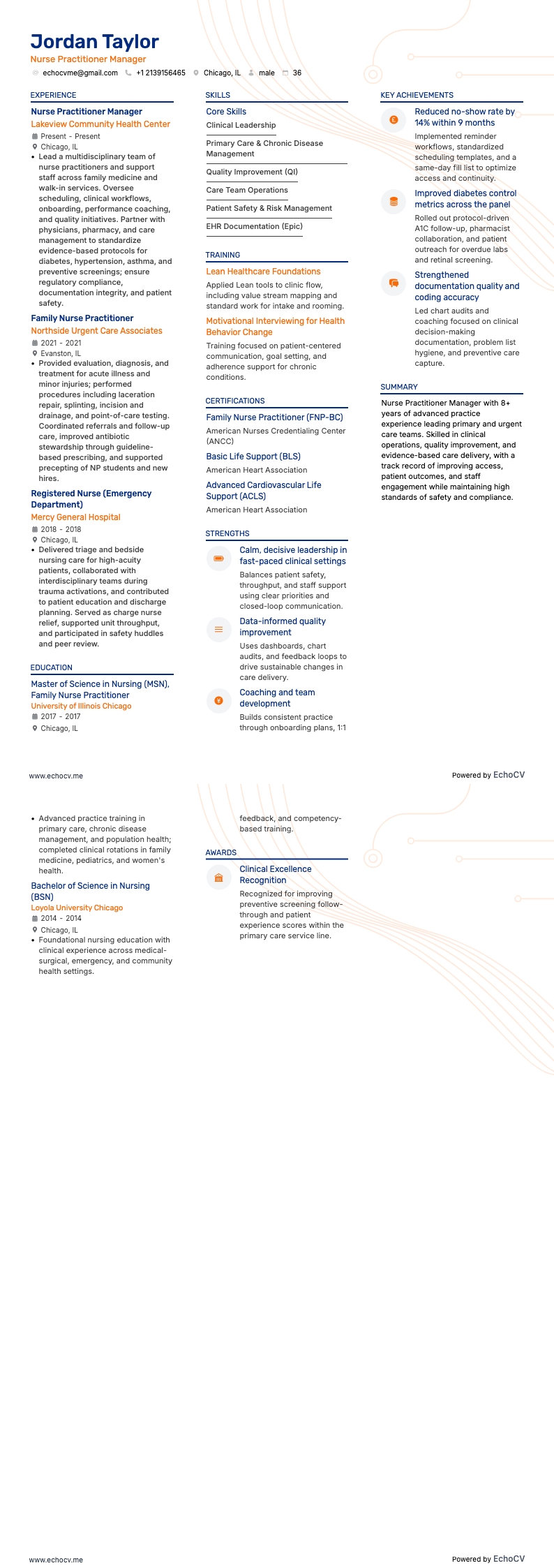
As a nurse practitioner, effectively showcasing your clinical experience and specialized skills in a concise manner on a resume can be quite challenging. Our guide provides clear, step-by-step advice to help you highlight your expertise and tailor your resume to stand out in the competitive healthcare job market.
- Get inspired from our nurse practitioner resume samples with industry-leading skills, certifications, and more.
- Show how you can impact the organization with your resume summary and experience.
- Introducing your unique nurse practitioner expertise with a focus on tangible results and achievements.
If the nurse practitioner resume isn't the right one for you, take a look at other related guides we have:
Enhancing your nurse practitioner resume: format and layout tips
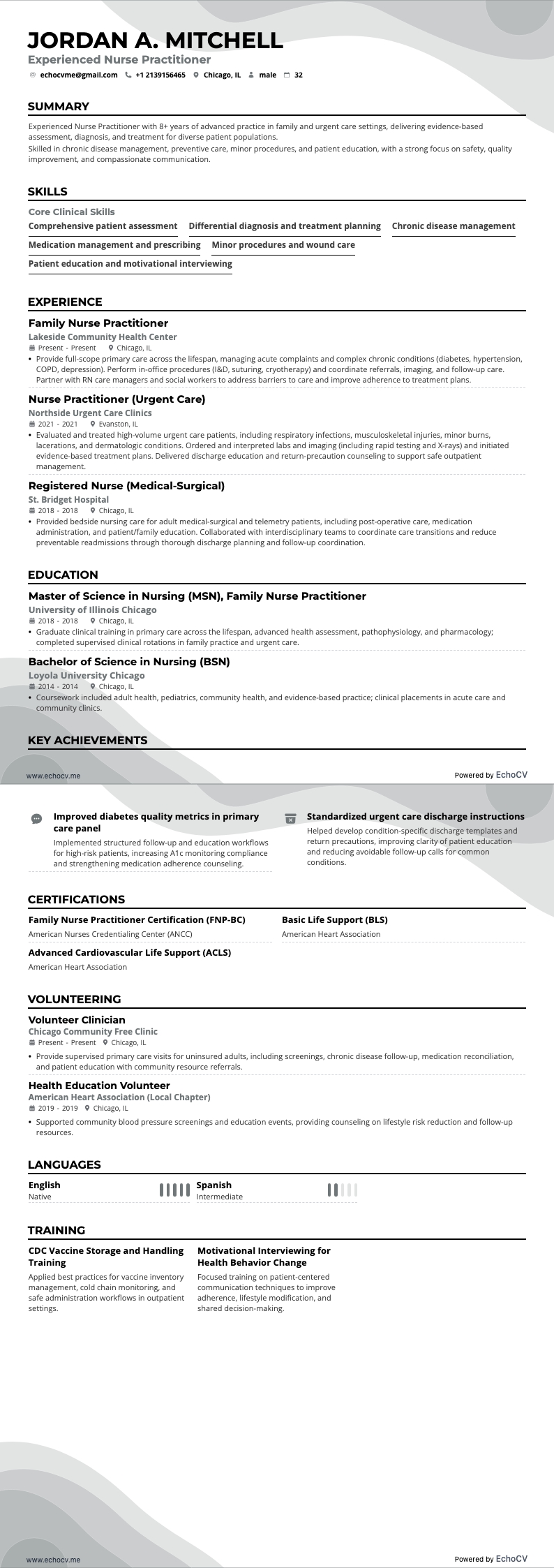
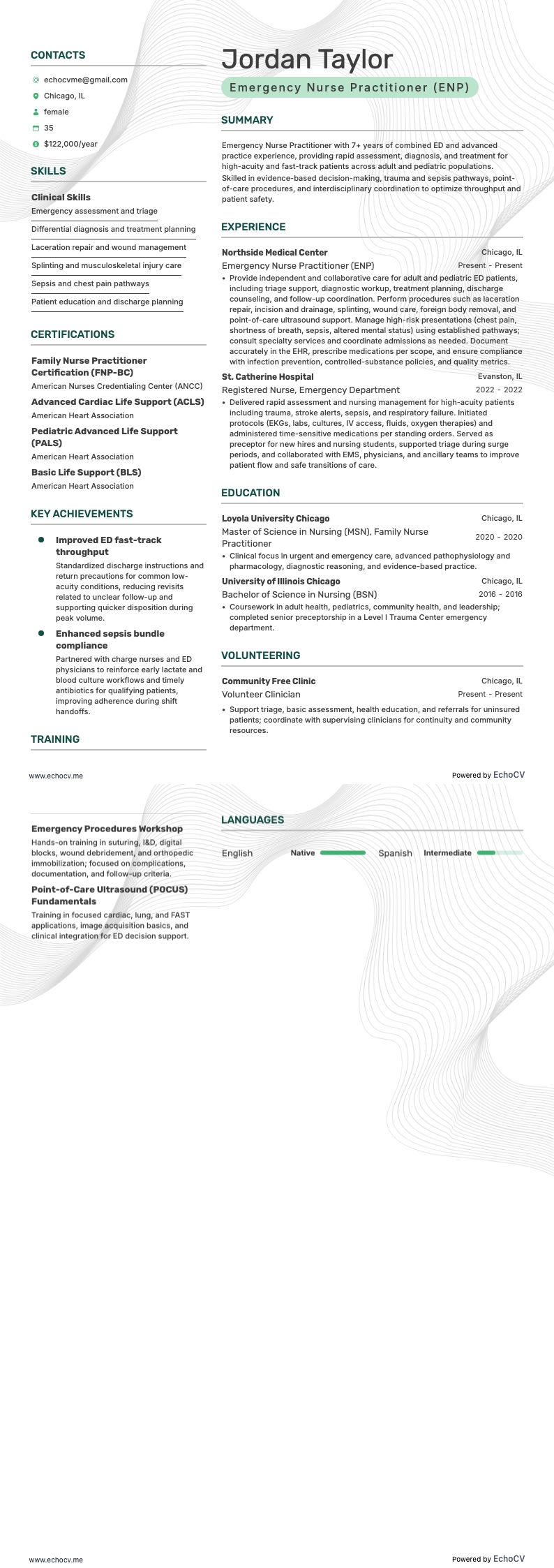
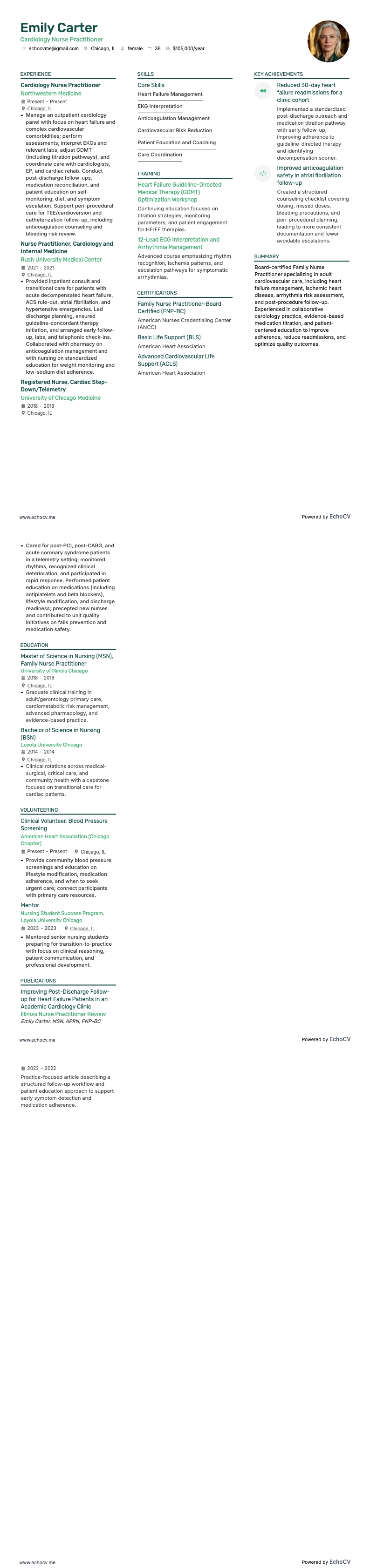
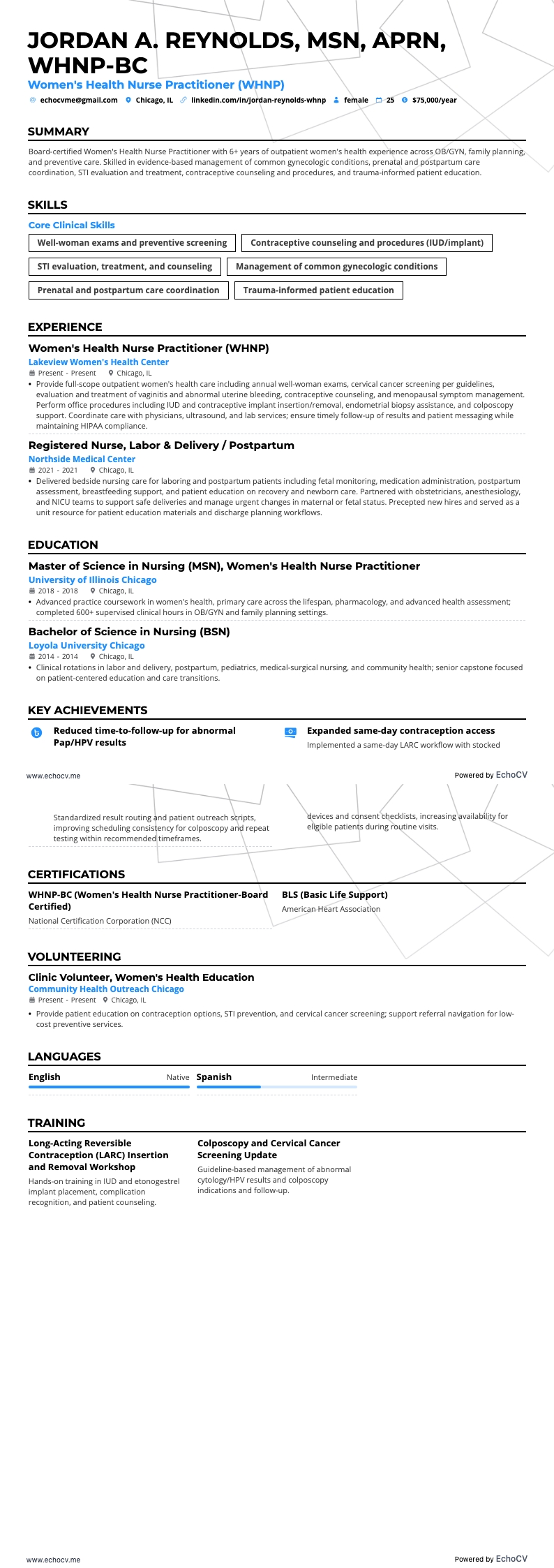
"Less is more" - this principle is key for your nurse practitioner resume design. It emphasizes the importance of focusing on why you're the ideal candidate. Simultaneously, it's crucial to select a resume design that is both clear and simple, ensuring your qualifications are easily readable.
Four popular formatting rules (and an additional tip) are here to optimize your nurse practitioner resume:
- Listing experience in reverse chronological order - start with your most recent job experiences. This layout helps recruiters see your career progression and emphasizes your most relevant roles.
- Including contact details in the header - make sure your contact information is easily accessible at the top of your resume. In the header, you might also include a professional photo.
- Aligning your expertise with the job requirements - this involves adding essential sections such as experience, skills, and education that match the job you're applying for.
- Curating your expertise on a single page - if your experience spans over a decade, a two-page resume is also acceptable.
Bonus tip: Ensure your nurse practitioner resume is in PDF format when submitting. This format maintains the integrity of images, icons, and layout, making your resume easier to share.
Finally, concerning your resume format and the Applicant Tracker System (ATS):
- Use simple yet modern fonts like Rubik, Lato, Montserrat, etc.
- All serif and sans-serif fonts are friendly to ATS systems. Avoid script fonts that look like handwriting, however.
- Fonts such as Ariel and Times New Roman are suitable, though commonly used.
- Both single and double-column resumes can perform well with the ATS.
Be mindful of regional differences in resume formats – a Canadian layout, for instance, might vary.