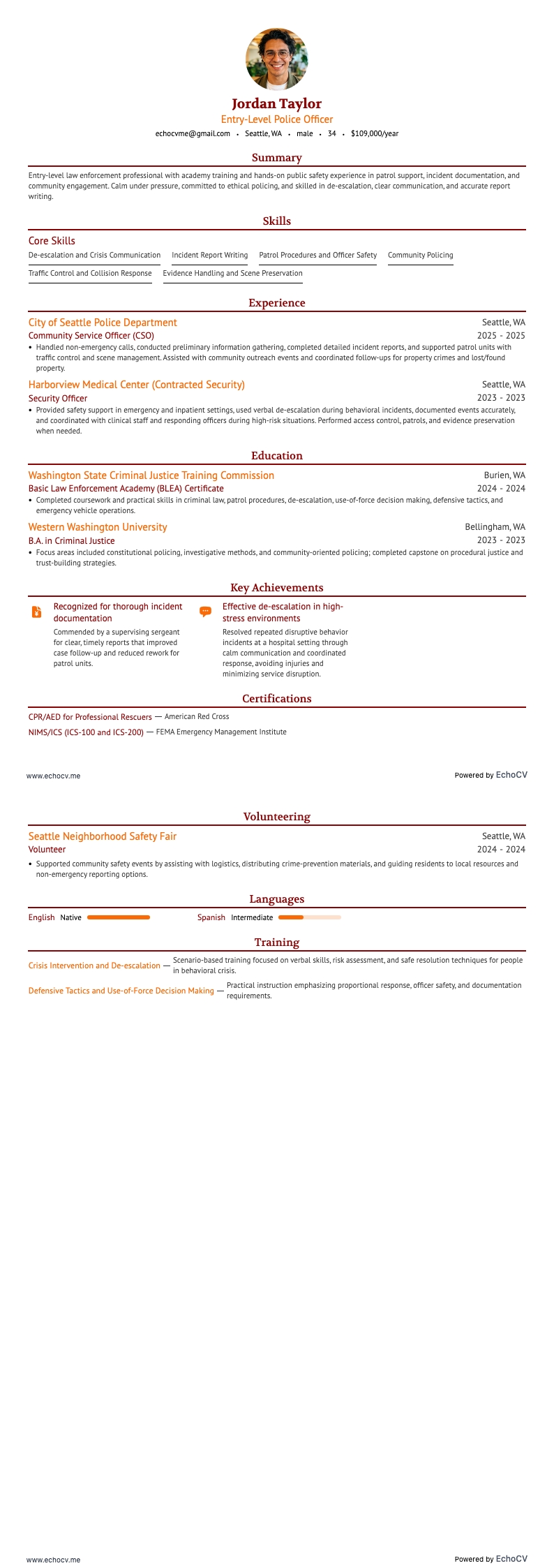
Being a police officer is a childhood dream of the brave and adventurous. And lately, the job's been getting more popular. There will be 64,500 openings for police and detectives every year until 2032. This means you need a competitive police officer resume to outshine the competition. Working in law enforcement requires balancing your tough and gentle sides. You need to be ready for diverse situations and even foresee them. Think you need a hero? You can be your own—let the tips and tricks in our extensive guide be the special gadgets that help you stand out.
In this article, we’ll also cover:
- How to format a resume so it reflects you’re trustworthy and responsible
- Why balancing hard and soft skills is valuable in your job as a police officer
- What to include in your resume if you’re just starting out
- How to tailor your resume to a real-life police officer job description
- What are the most useful and practical certifications and trainings you can obtain and include in your resume for a stellar presentation
- How to refine your personal statement so that it catches recruiters’ attention
Check out our other resume samples and cover letter guides for careers in public safety.
- Law Enforcement Resume Example
- Firefighter Resume Example
- Investigator Resume Example
- Security Guard Resume Example
- Security Officer Resume Example
- Case Manager Resume Example
- Fraud Investigator Resume Example
- Incident Manager Resume Example
- Security Manager Resume Example
- Police officer Cover Letter Example
How to format a police officer resume
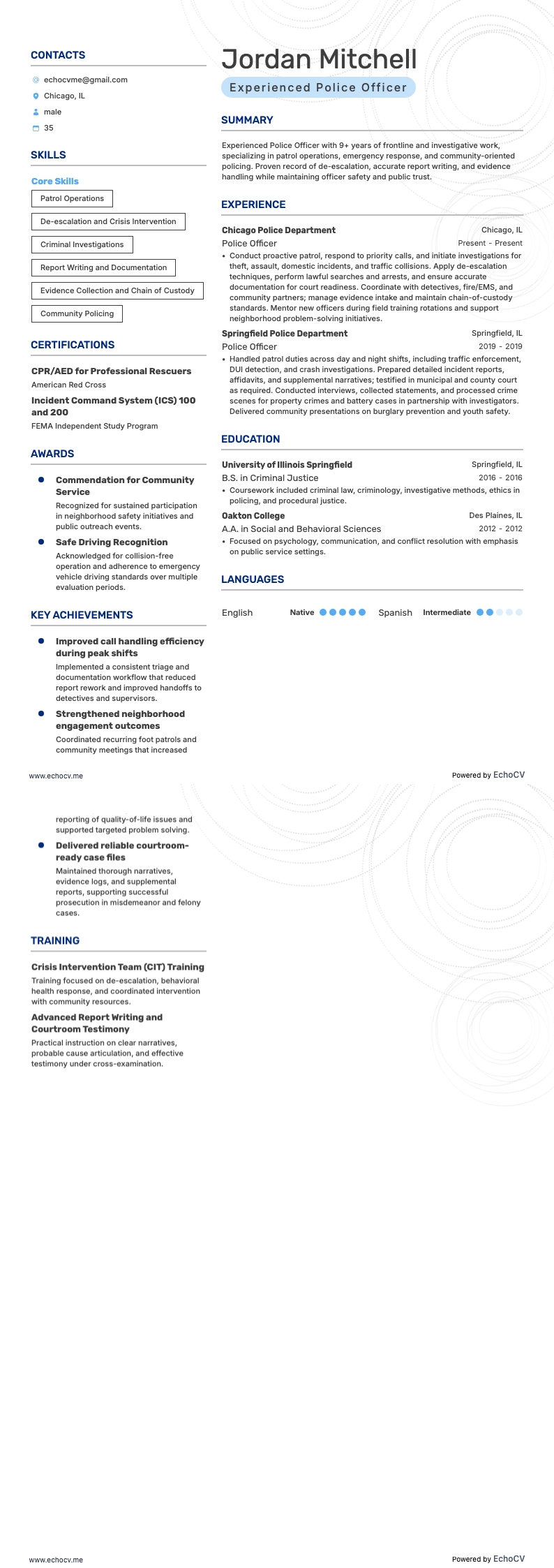
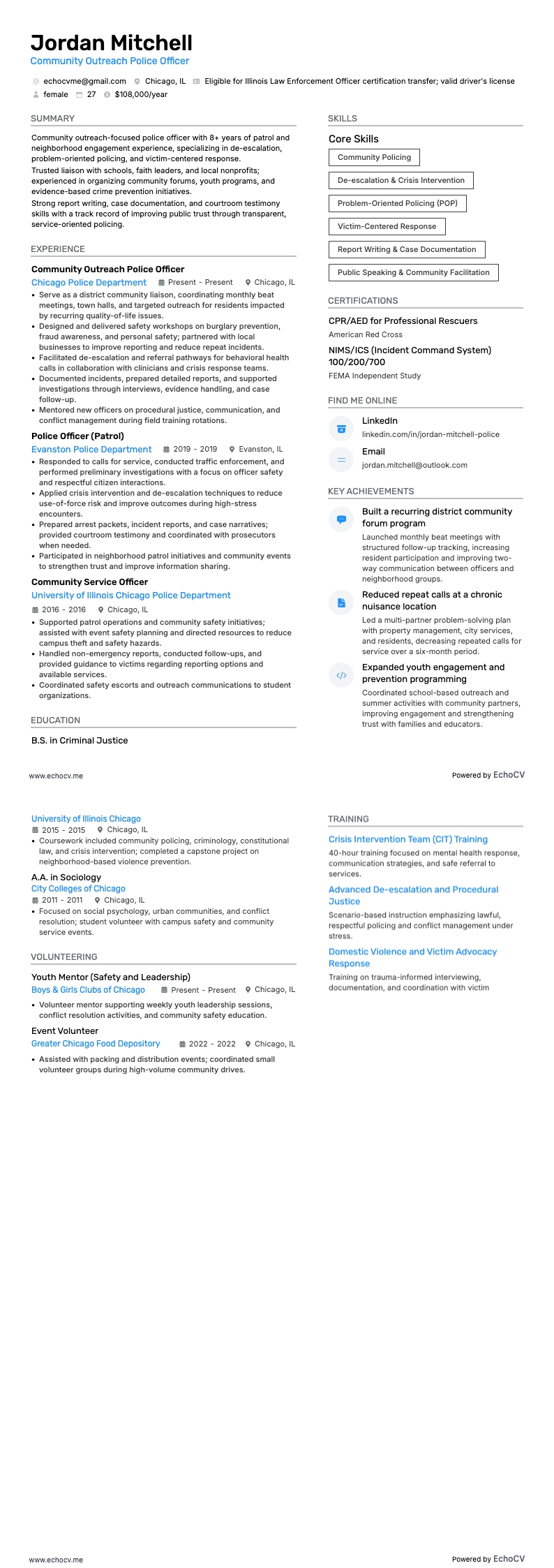
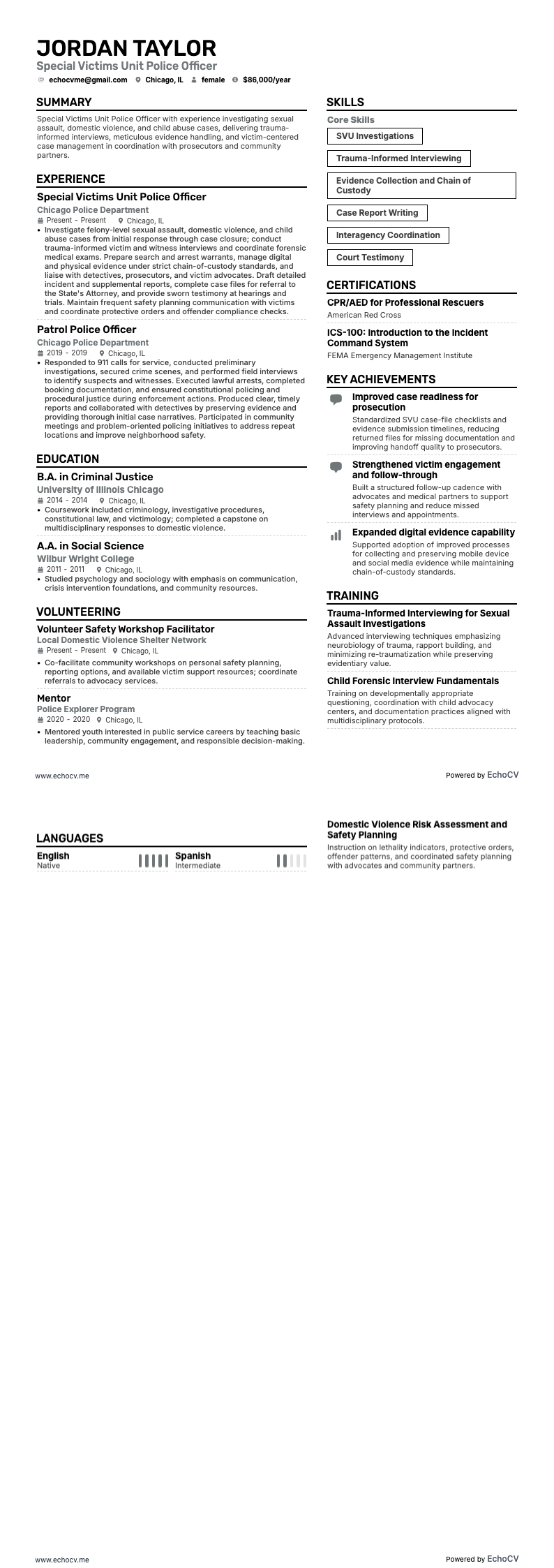
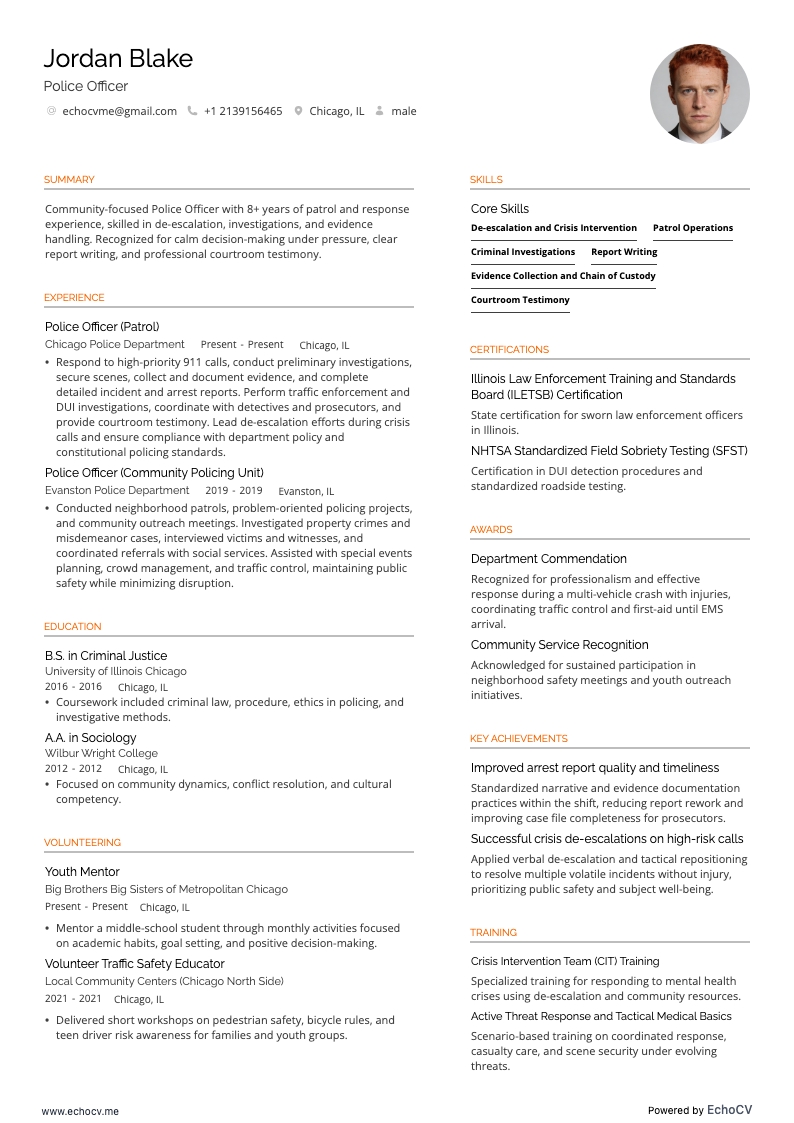
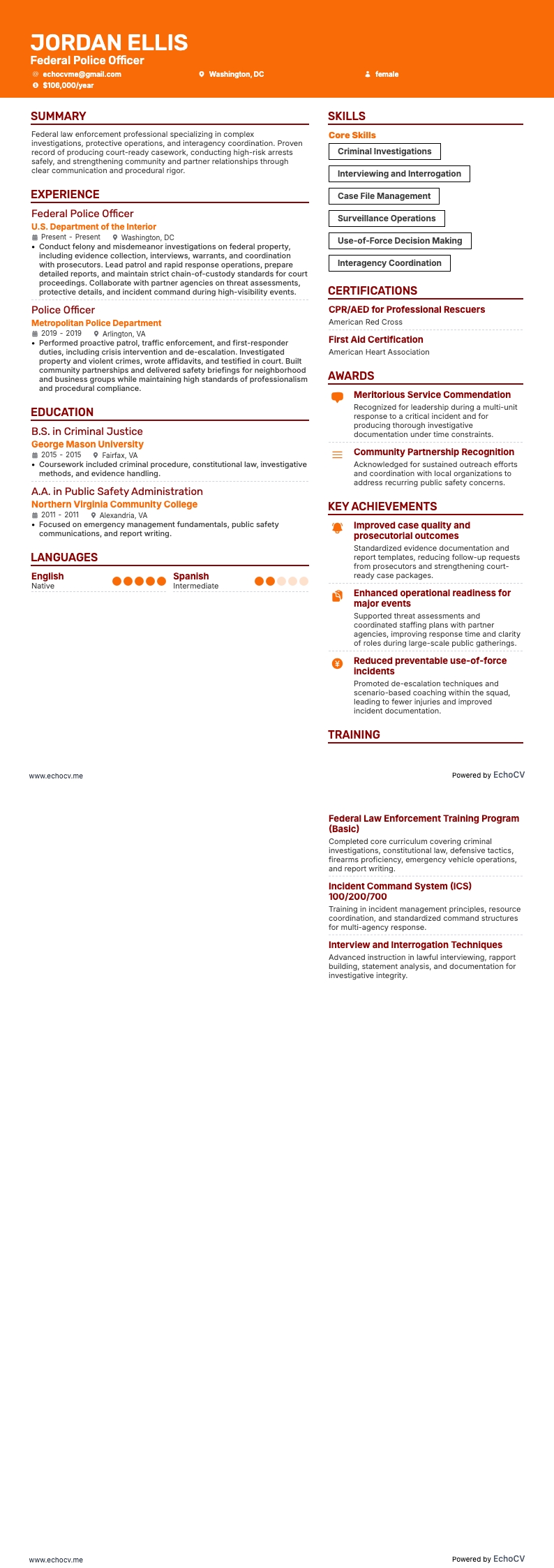
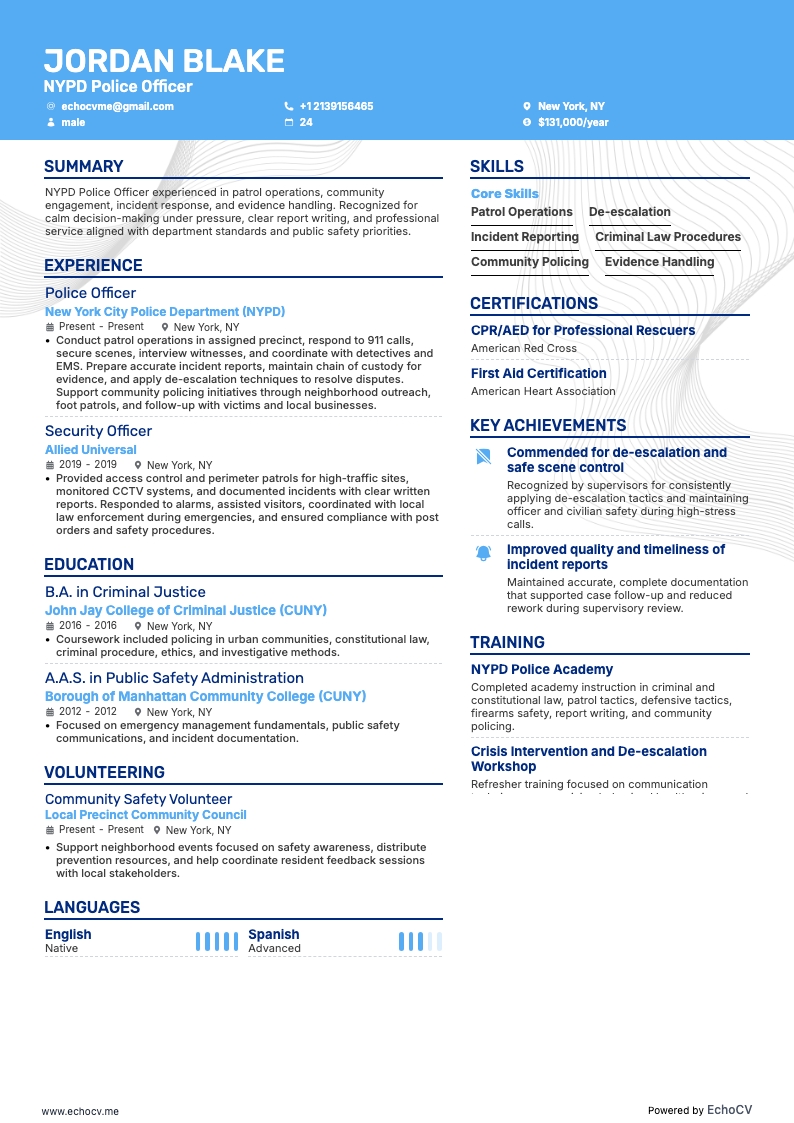
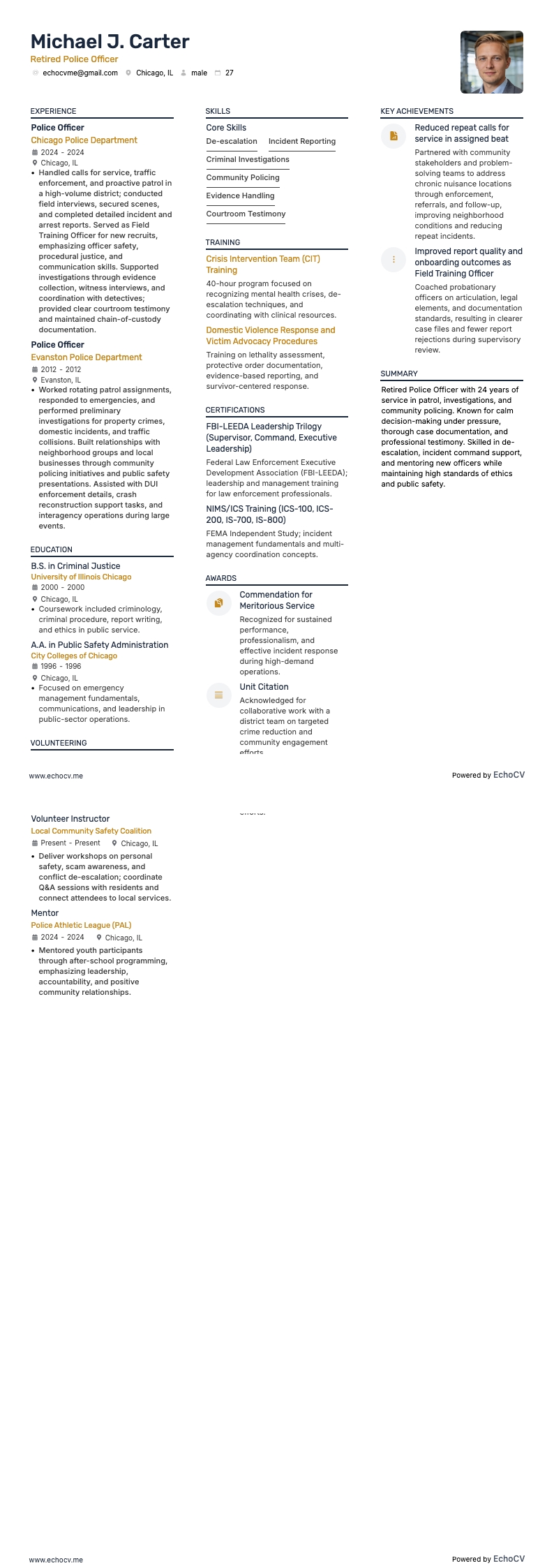
When we think of a policeman, the words role model come to mind. Stable, reliable, and dedicated. To mirror that in your police officer resume, a clear, presentable resume format is your best bet. But which one is best? Well, it depends on your experience and your goals. If you have an extensive police officer background, consider the classic reverse chronological resume. Your experience is your greatest asset, so outline the story of your career with this format. It’s also traditional, which works well with the expectations for the job.
But if you’re about to become one of the fresh recruits in the field, it’s better to opt for a functional resume. That way, you can lead with your skills and accomplishments. And compensate for the lack of experience.
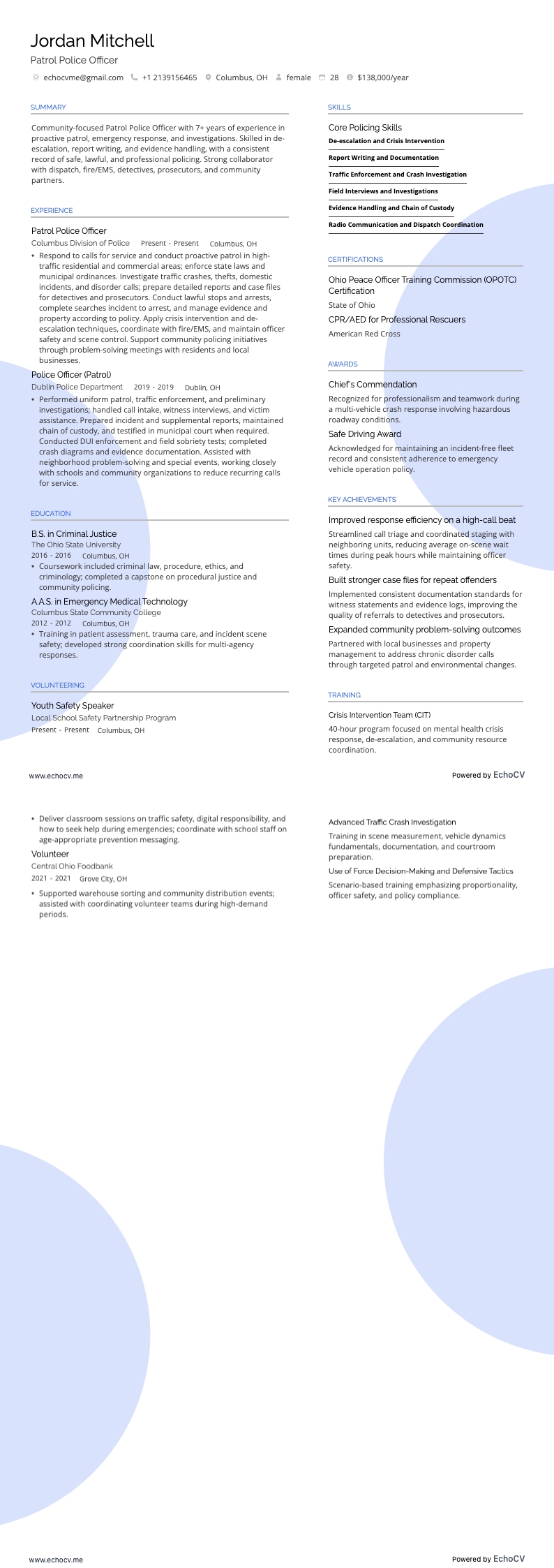
Finally, if neither option aligns with your expectations, why not try a hybrid resume? It combines focusing on experience and your most valuable skills. Your police resume should be all about balance, and a combination resume best reflects that.
Formatting tips you can rely on
You can always count on the force to save the day, and you can also count on these tips:
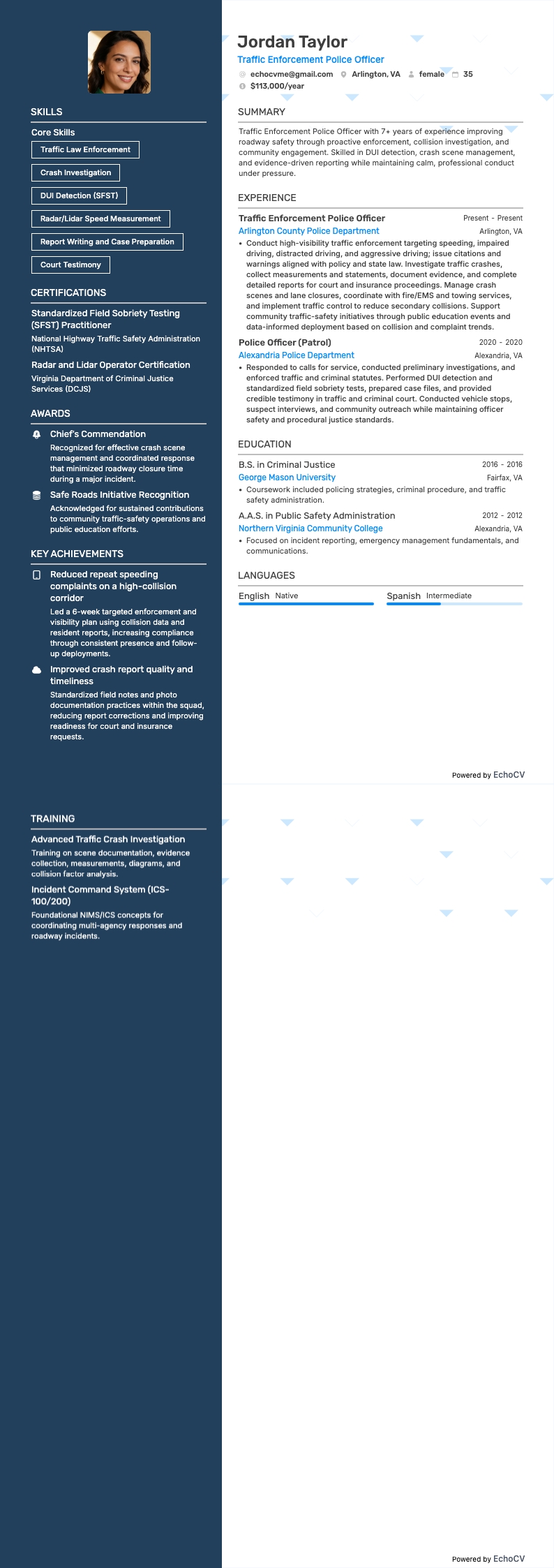
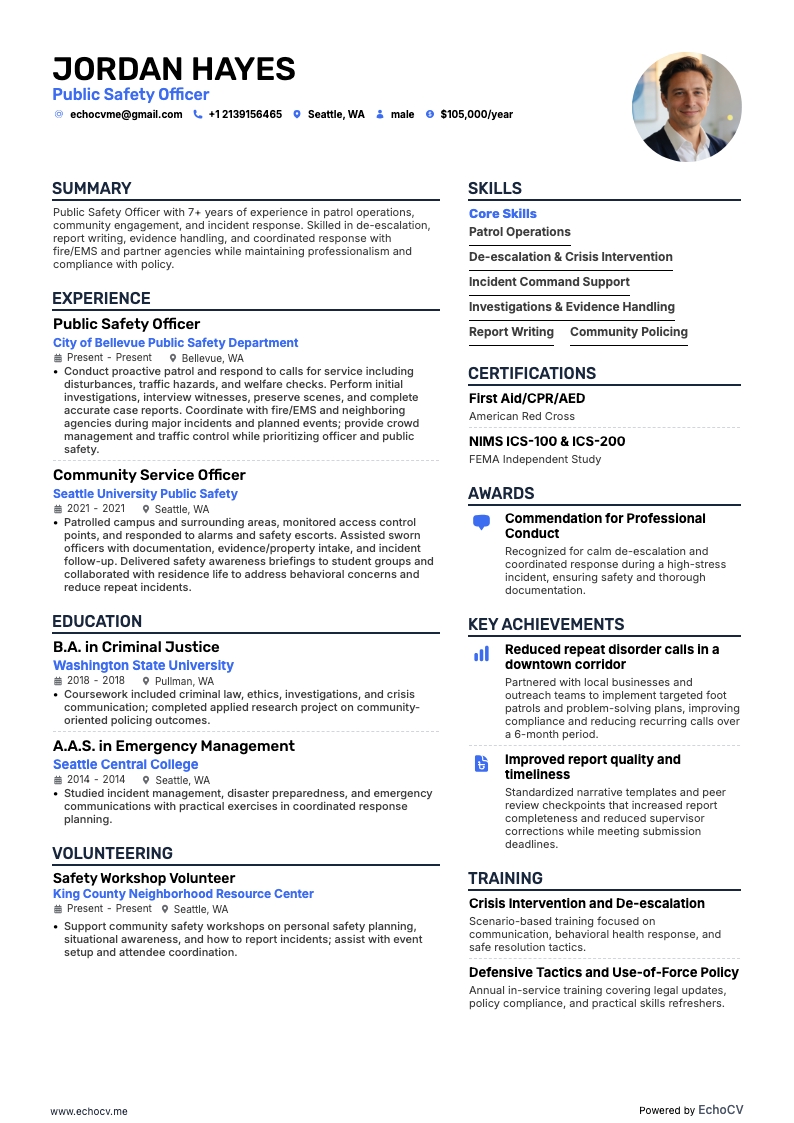
- Resume length: For most cases, a 1-page focused resume is enough—but use 2 if you have extensive experience. Consider using a 2-column format to save space. And yes, a 2-column resume performs equally well in terms of ATS (Applicant Tracking Systems) score.
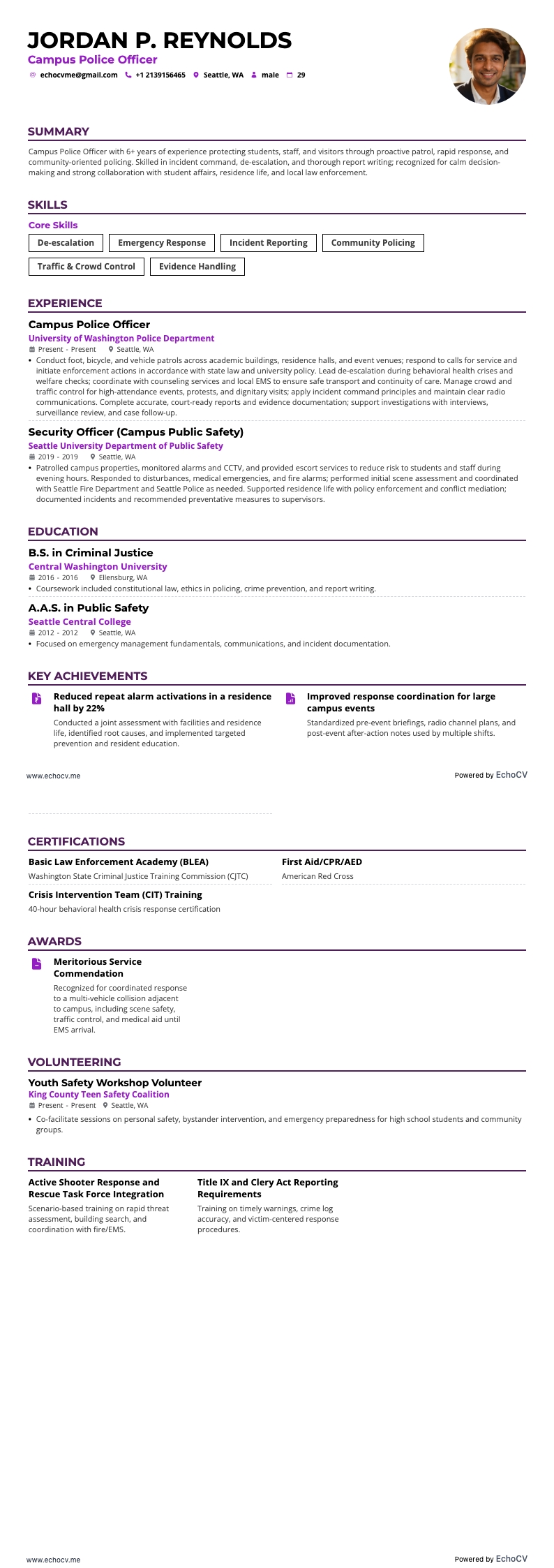
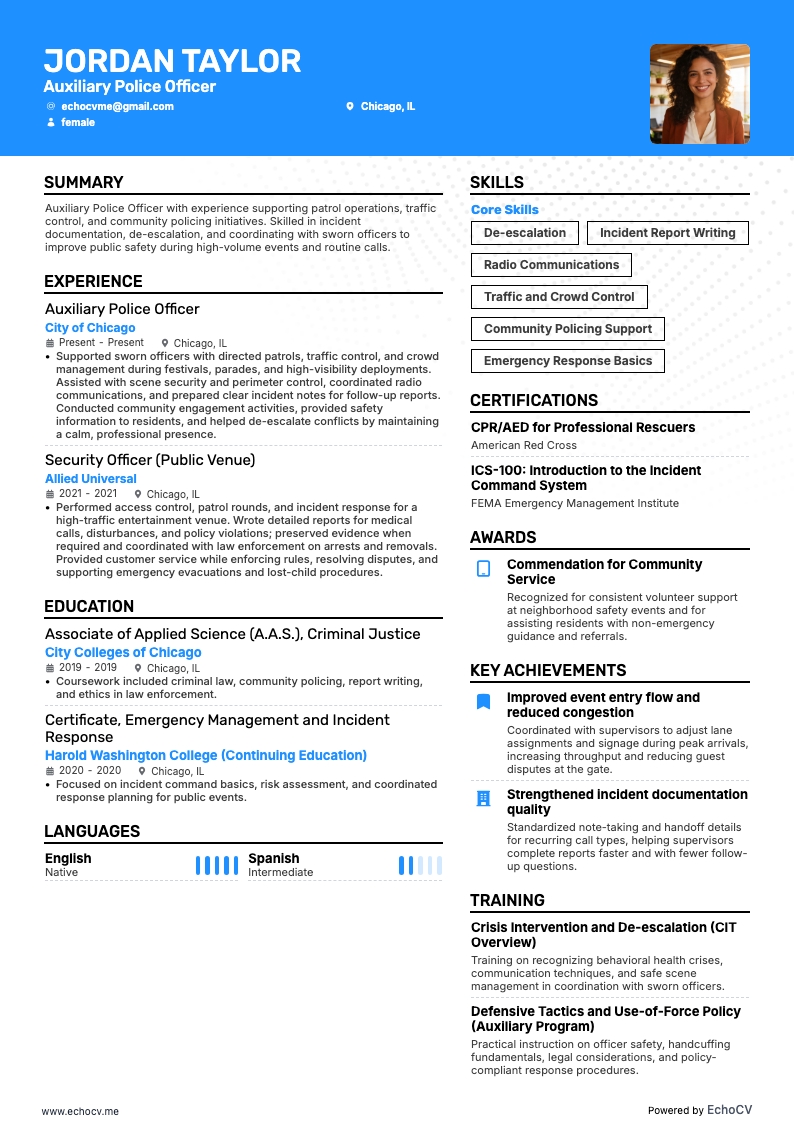
- Design components: You might think that colors look unprofessional or inappropriate in a police resume. In fact, using a subtle color palette can make your resume stand out. It can also direct attention to your strengths. Use classic fonts like Lato or Rubik to achieve an even more polished look.
- Header, contact info, and photo: Make your contact information easily accessible. Usually, photos aren’t required for a police officer resume. Let your experience and achievements be the image of your professionalism.
- Proofread your resume: This ensures accuracy and competence. Reflect your attention to detail and reliability, critical traits for a police officer.
Use our fab ATS checker to make sure your resume has flawless grammar and spelling!
Consider the local standards – Canadian resumes, for example, may have a different format.