Stepping into the real estate industry means embracing a profession filled with possibilities and obstacles. On the bright side, you have the potential for high earnings through commissions, flexible work hours, and diverse daily tasks. However, it's not without its hurdles. You'll face stiff competition, experience ups and downs in earnings, and depend on the real estate market's fluctuations. Plus, there's a lot of legal paperwork to get a handle on. But let's keep it real —if you have the idea of "I can get rich quick doing this" you’re far from the truth.
Nevertheless, if you want to make your mark in this career, you’ll need an awesome real estate agent resume. Listing achievements isn’t enough. Every section of your resume needs to show how hard you work and how committed you are.
We'll guide you in building a resume that catches people's attention and sets you up for your next career step. This real estate agent resume guide will cover:
- Which resume format is preferable for a real estate resume;
- How to frame your resume even with little to no work experience;
- What information hiring managers are on the lookout for;
- How to balance hard and soft skills on your resume;
- Tips for highlighting your license and certifications on your resume.
Before we get started, you might be looking for something more tailored to your field. Explore our selection of real estate-focused resume guides here:
- Realtor Resume
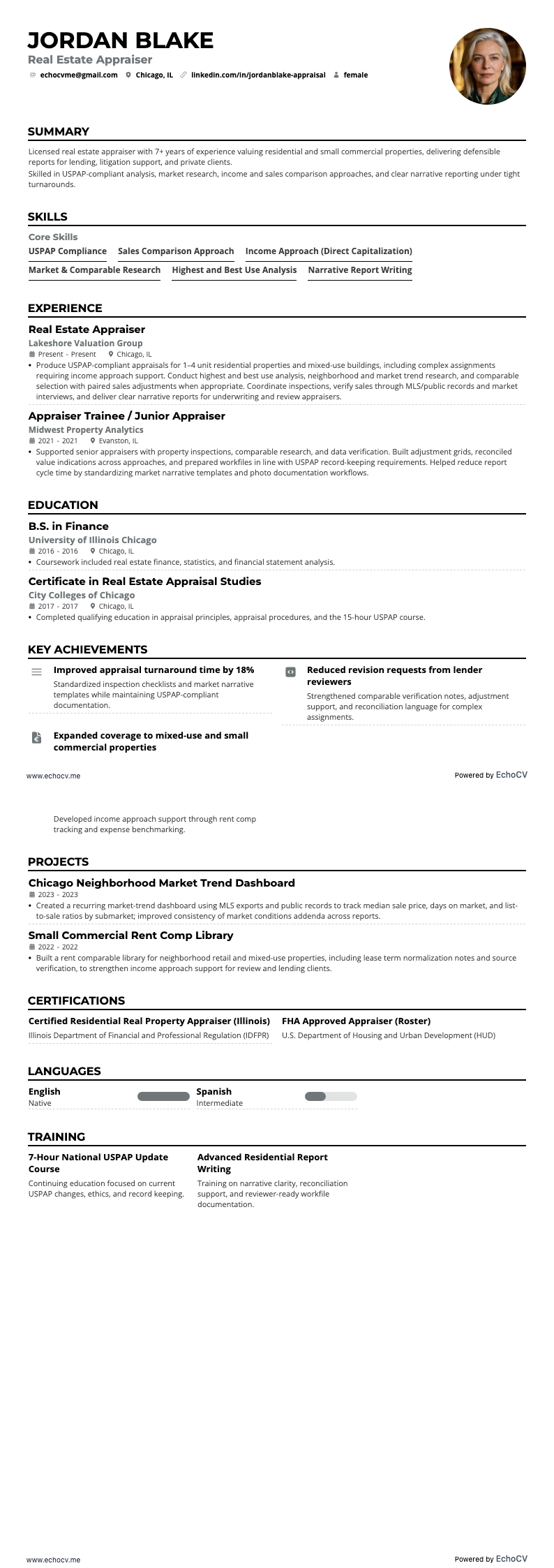
- Real Estate Appraiser Resume
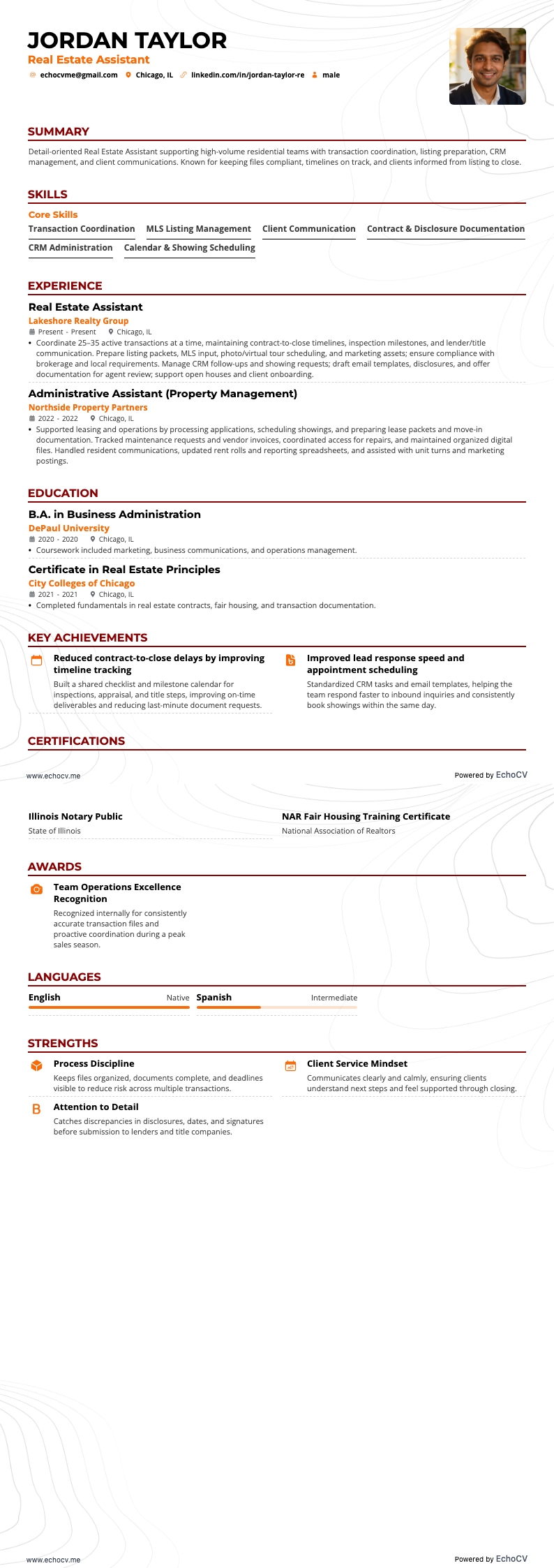
- Real Estate Assistant Resume
- Broker Resume
- Real Estate Broker Resume
- Real estate agent Cover Letter
How to format a real estate agent resume
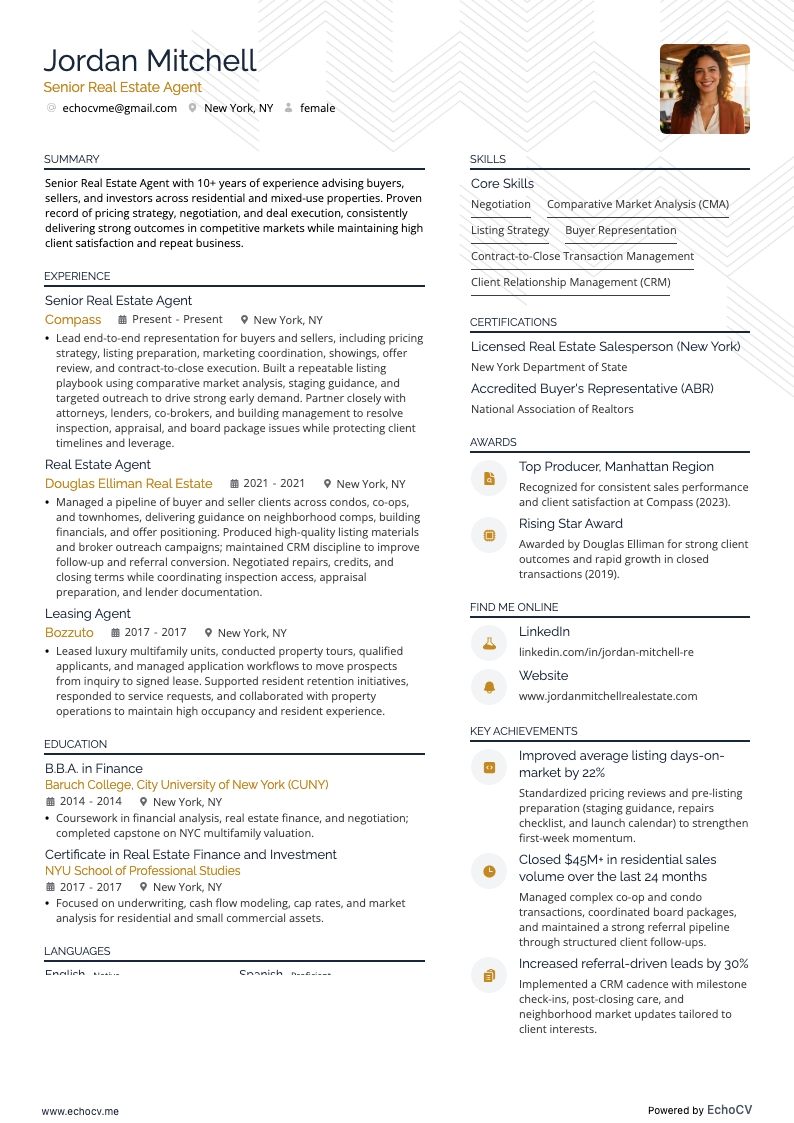
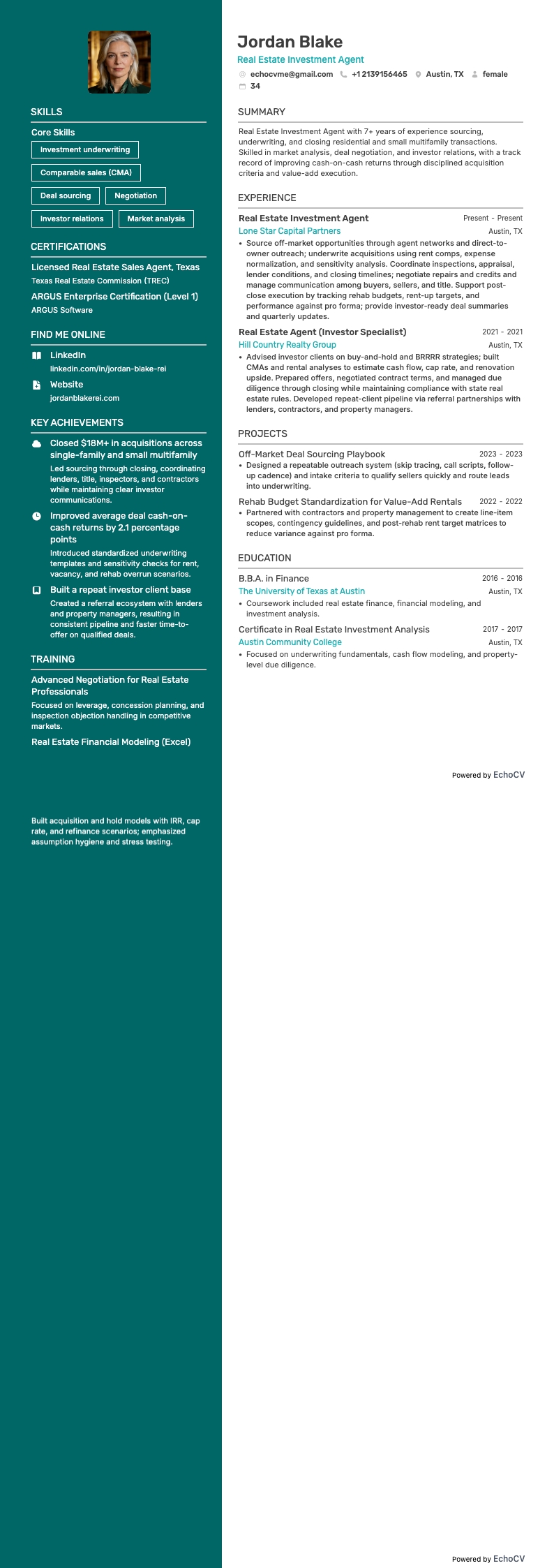
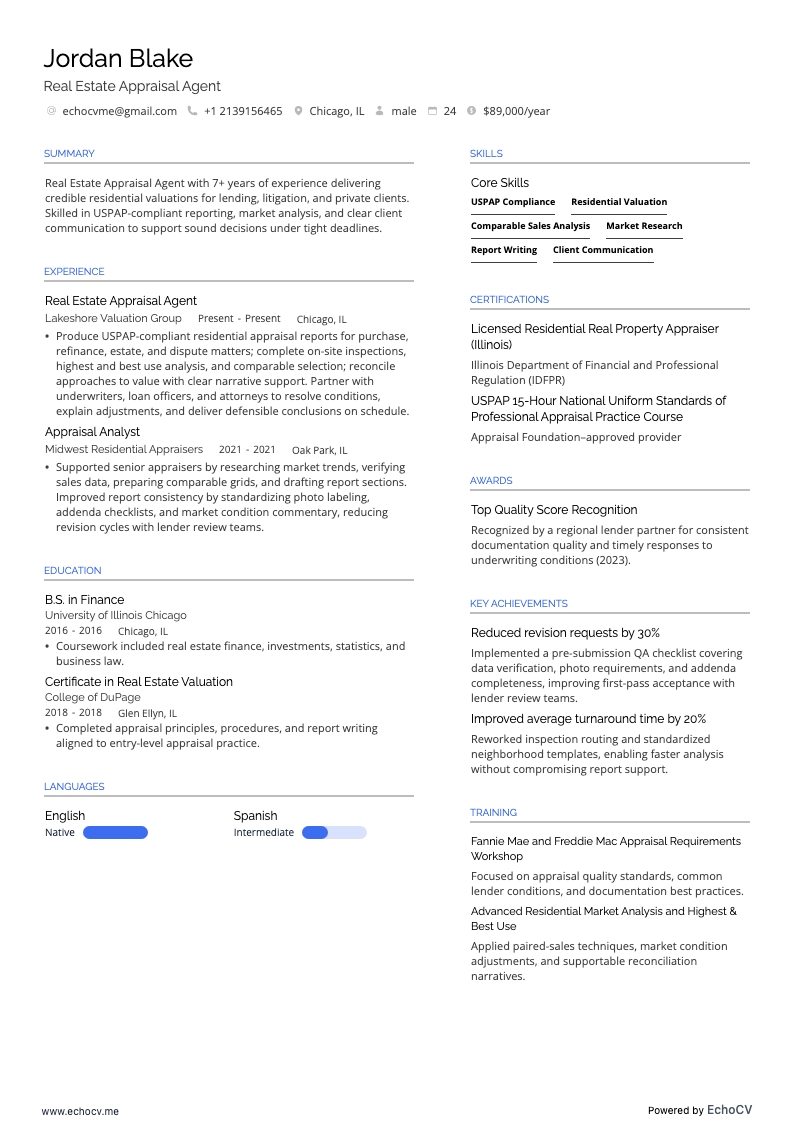
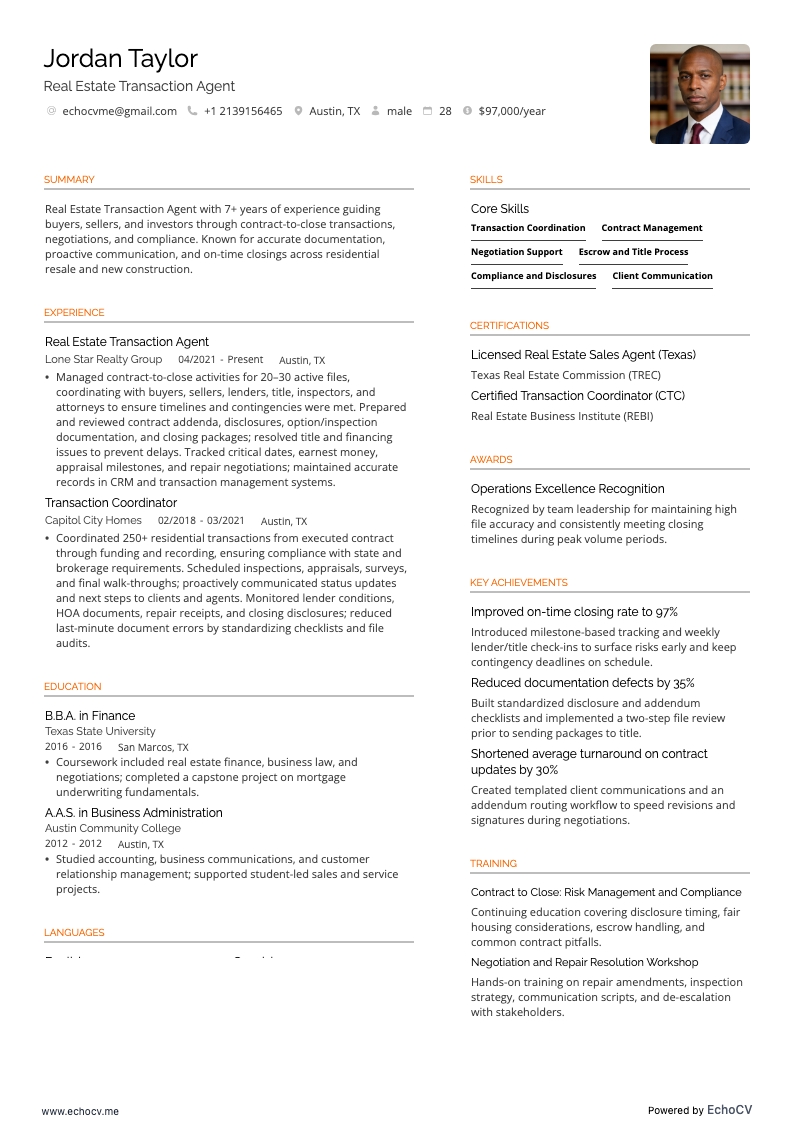
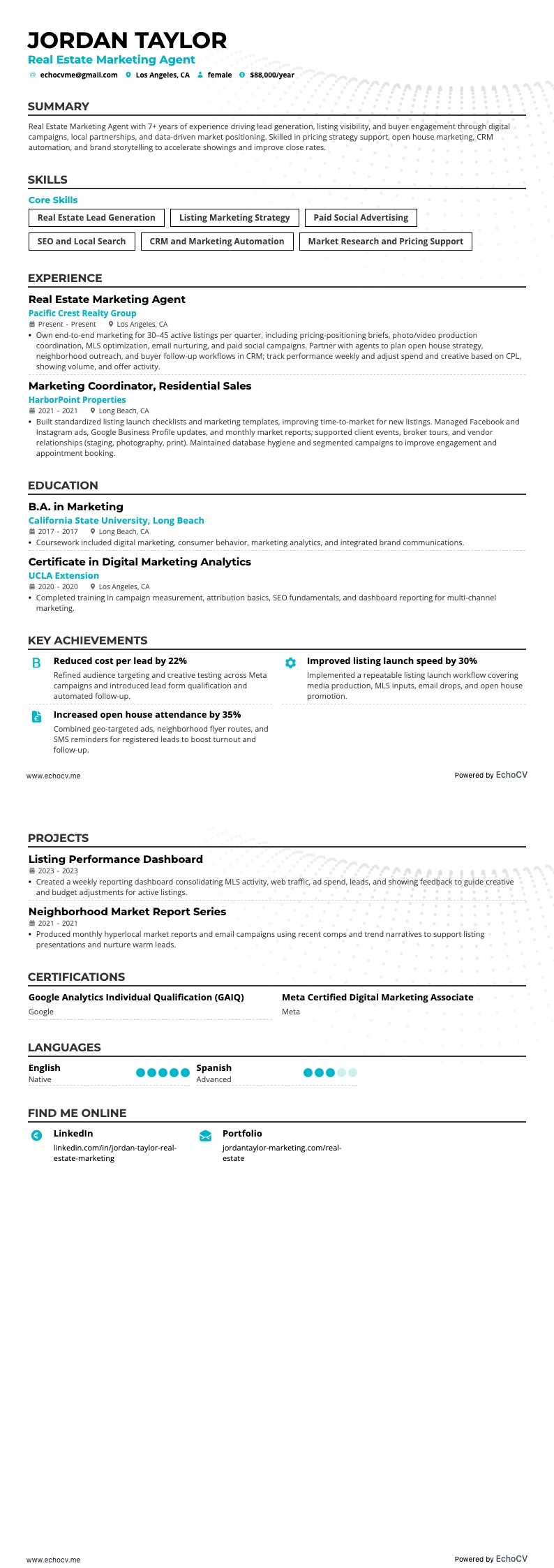
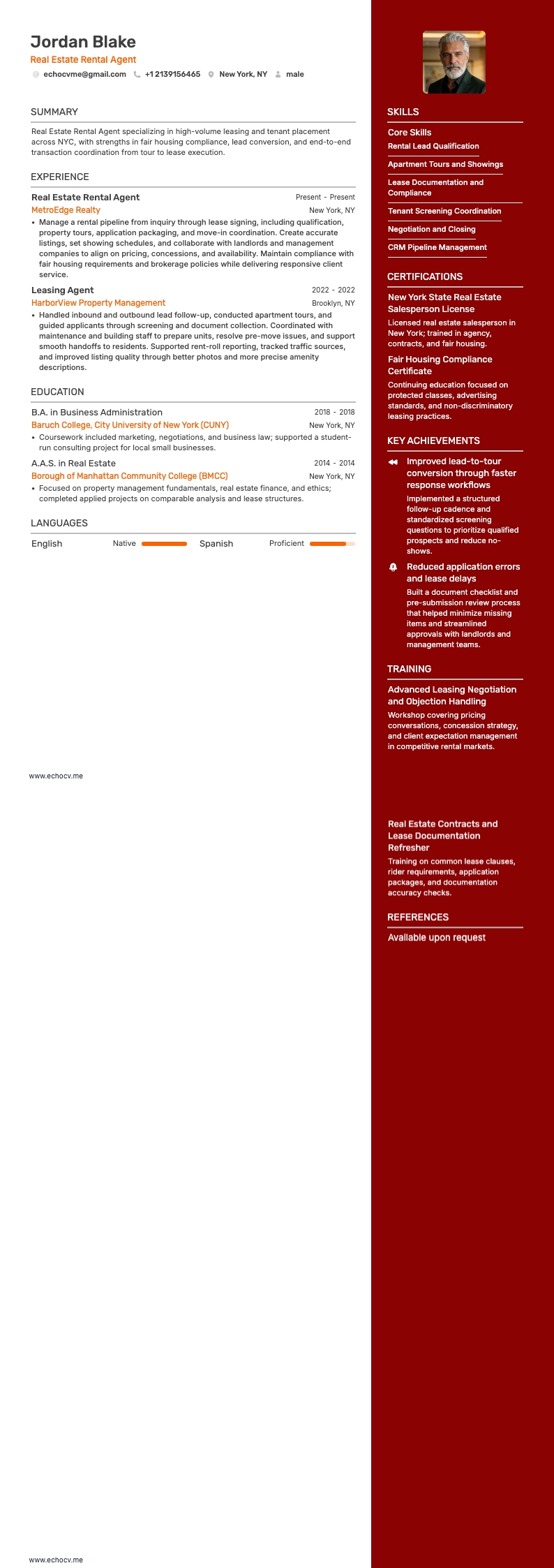
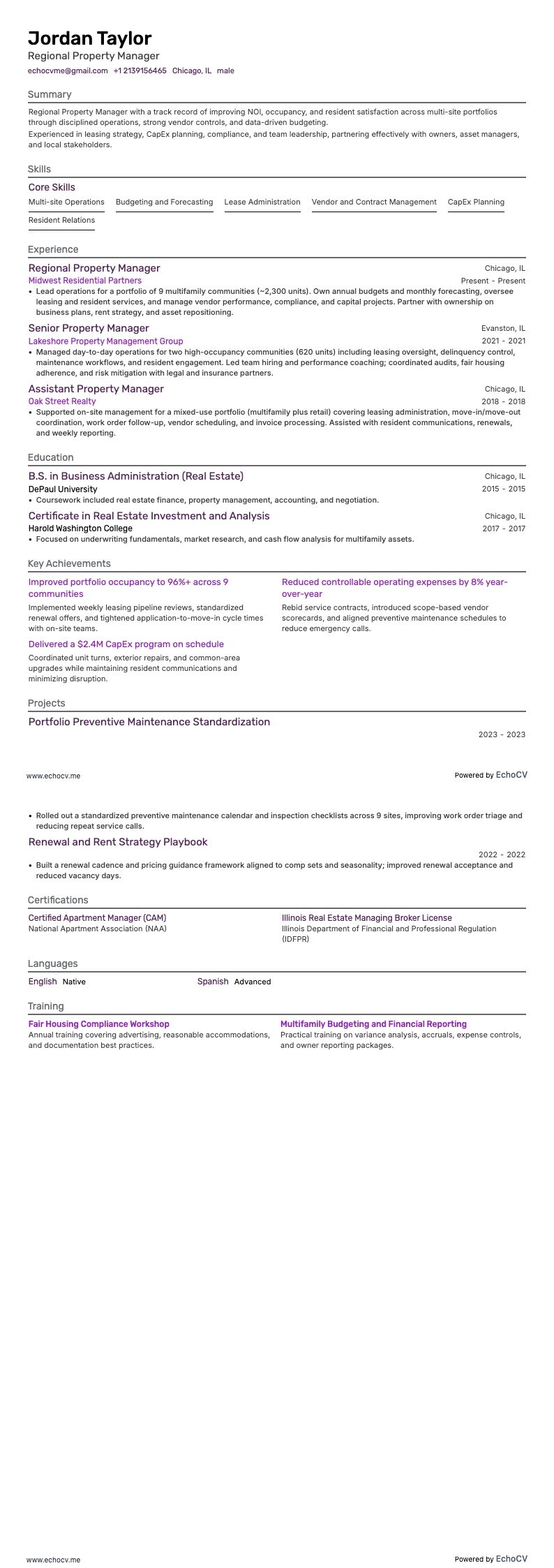
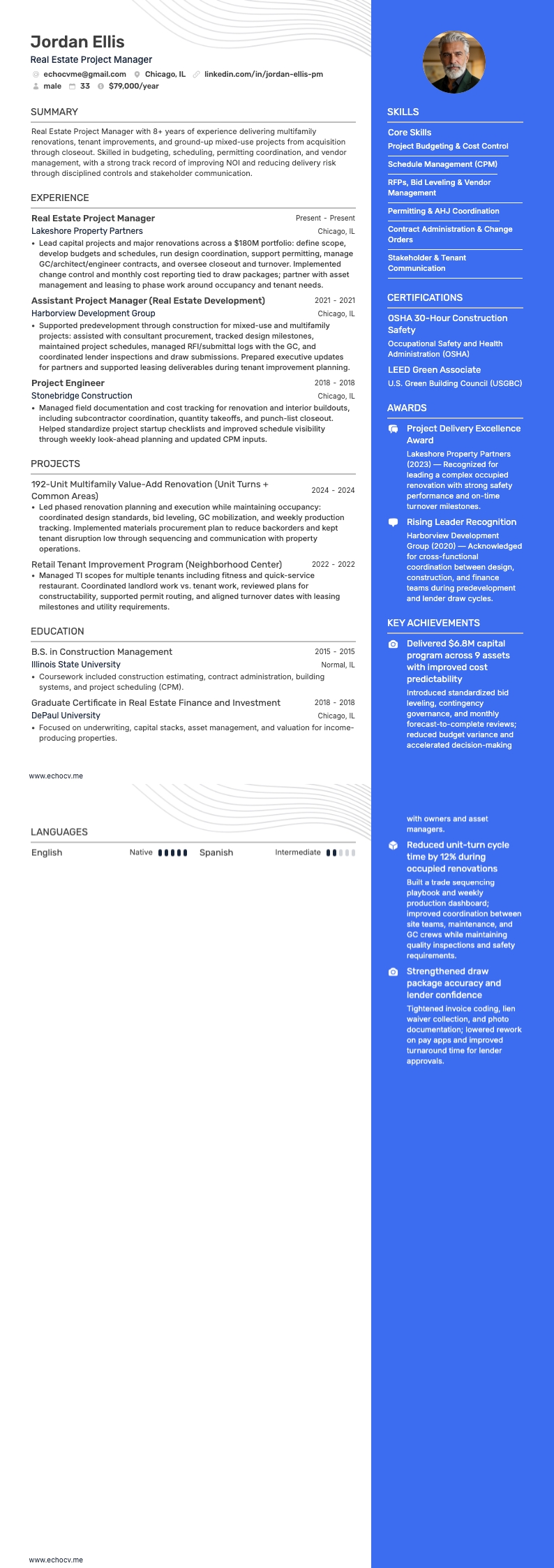
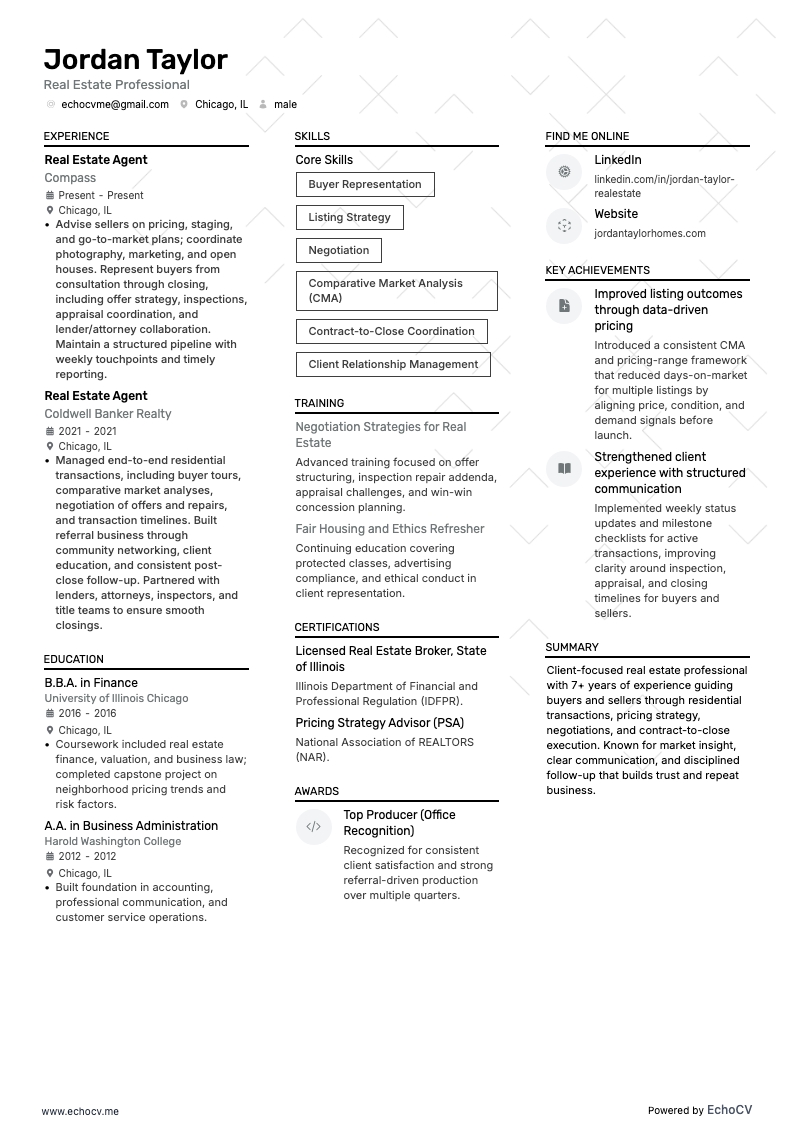
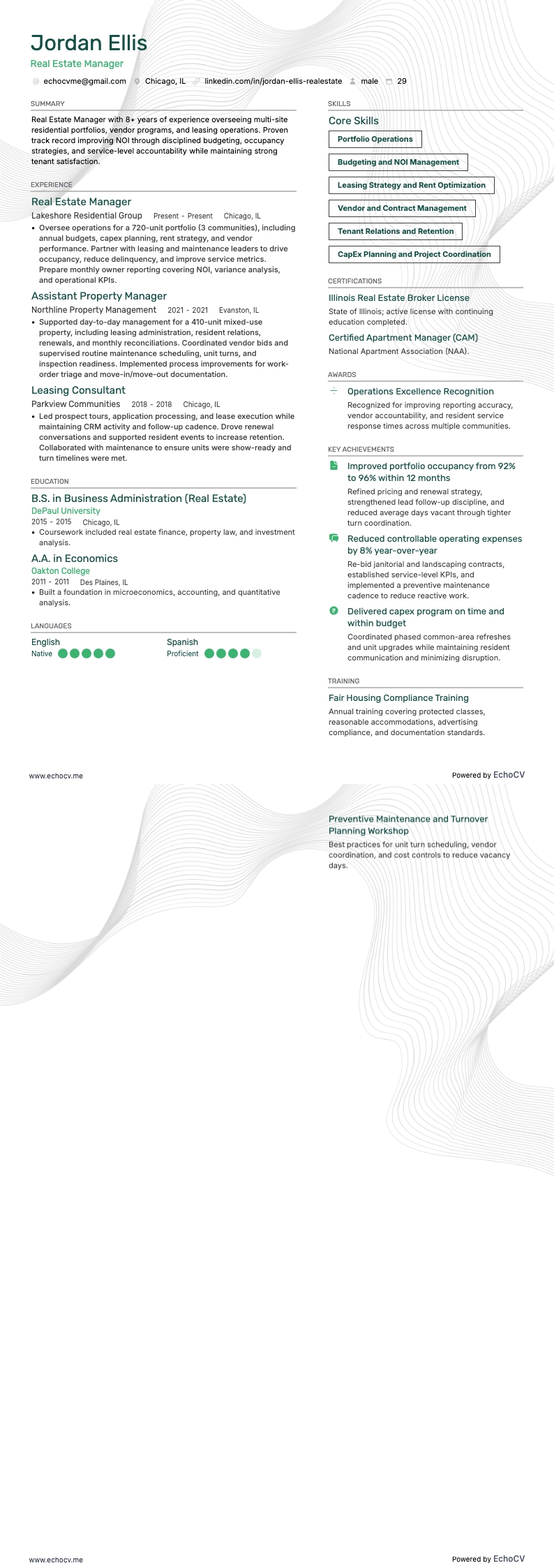
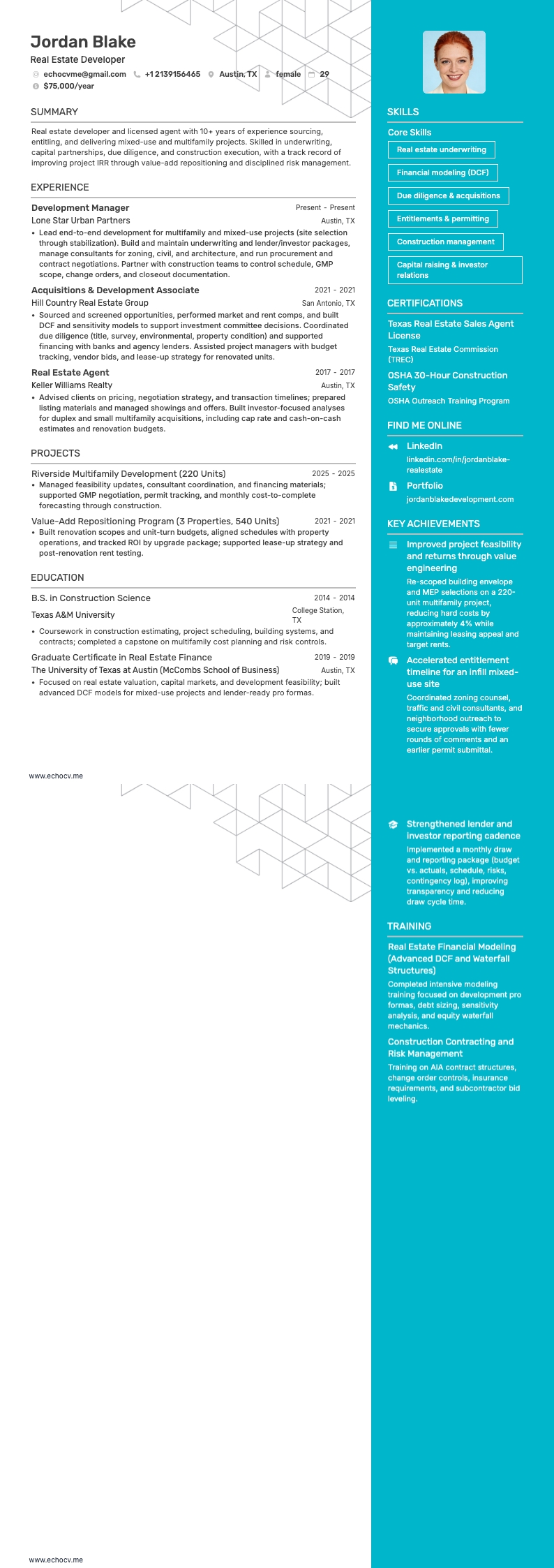
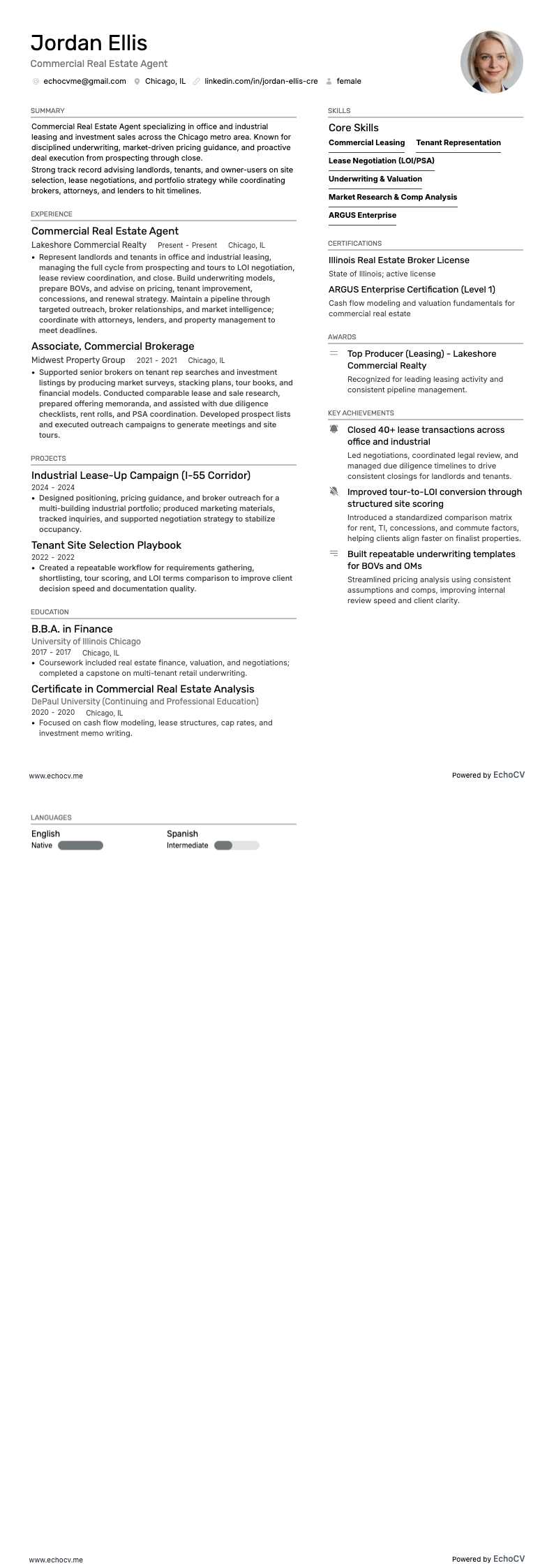
If you're an established real estate agent, adopting the reverse-chronological resume format can highlight your career development and key successes across different agencies or real estate projects.
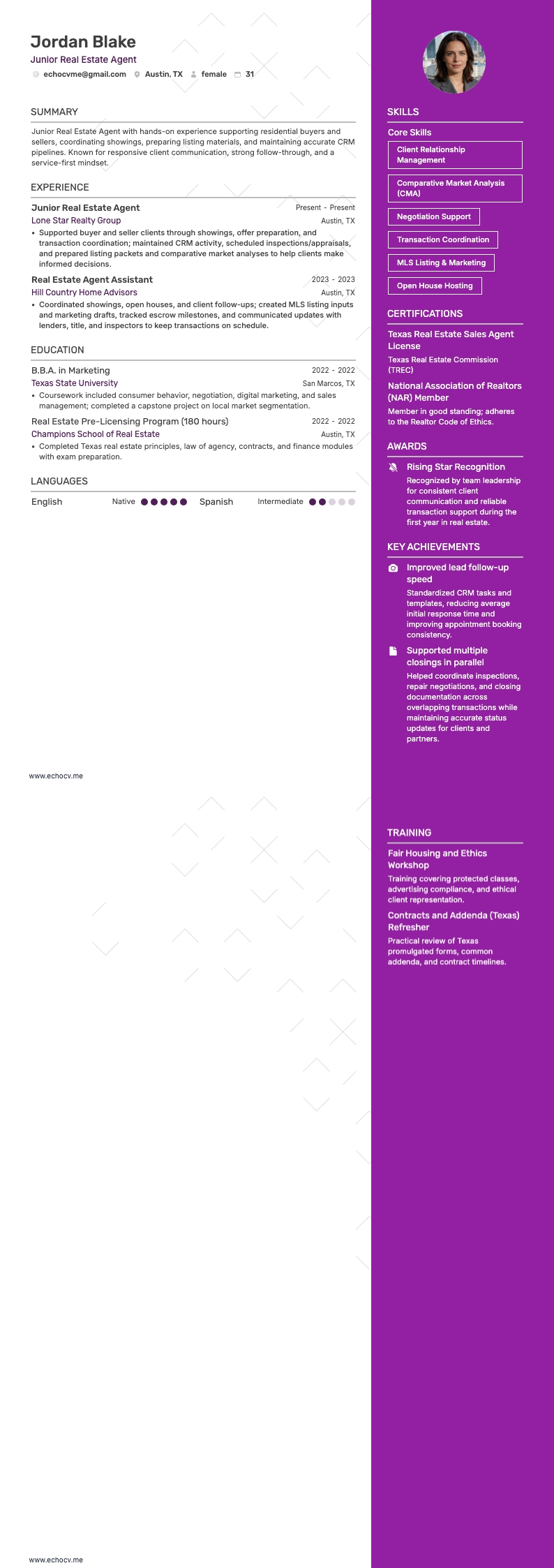
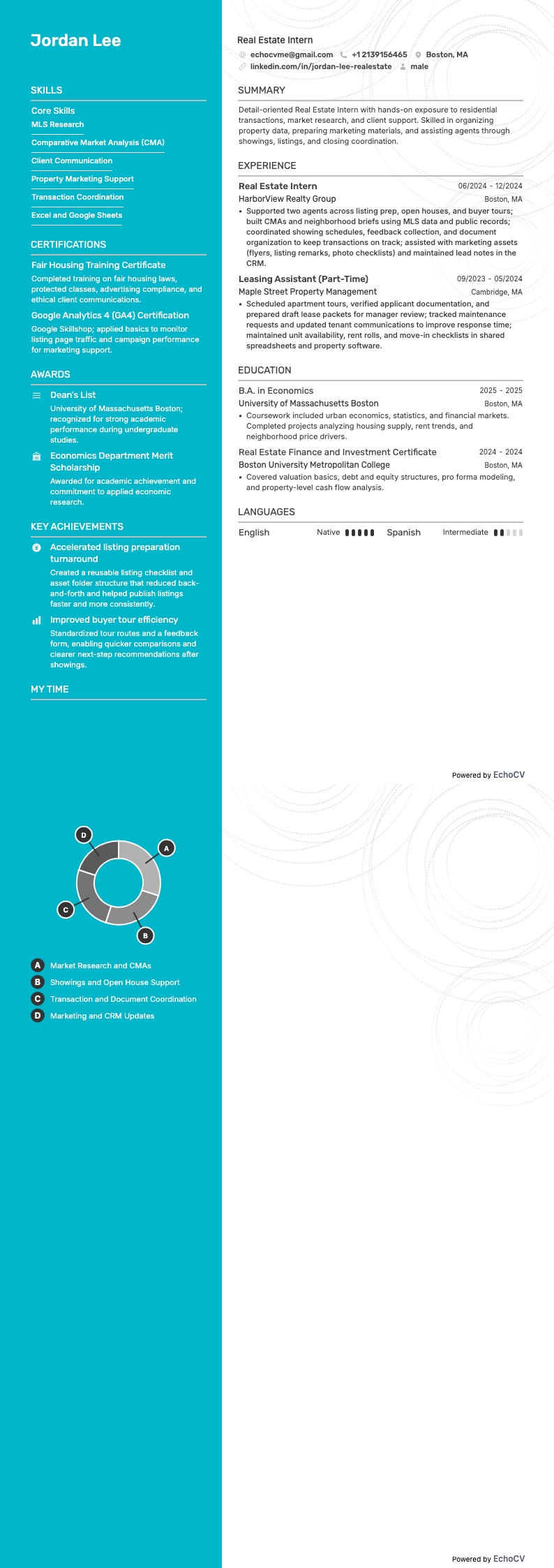
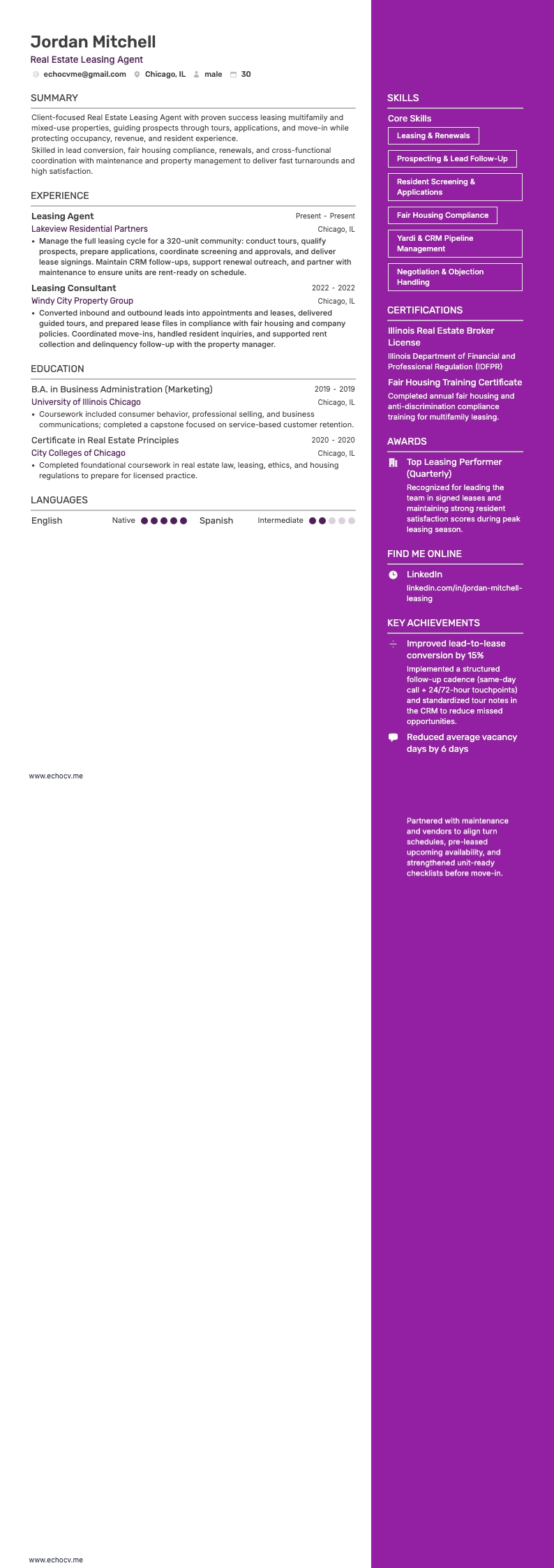
For those new to real estate, considering a functional resume format or a hybrid version can be beneficial. These resume formats focus on your abilities rather than past job roles and illustrate your potential in the real estate industry.
Moreover, selecting an appealing resume layout is crucial to distinguish yourself from the competition which is vital because as we already know, the real estate sector is heavily saturated.
Here are some specific resume tips:
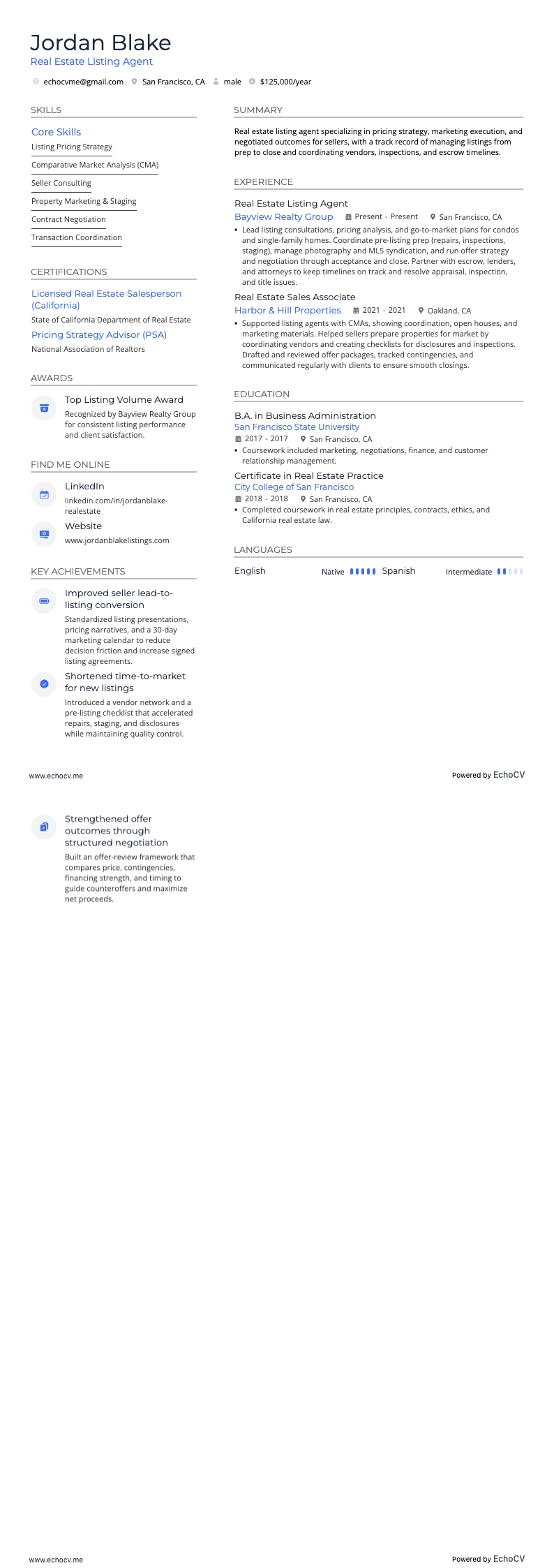
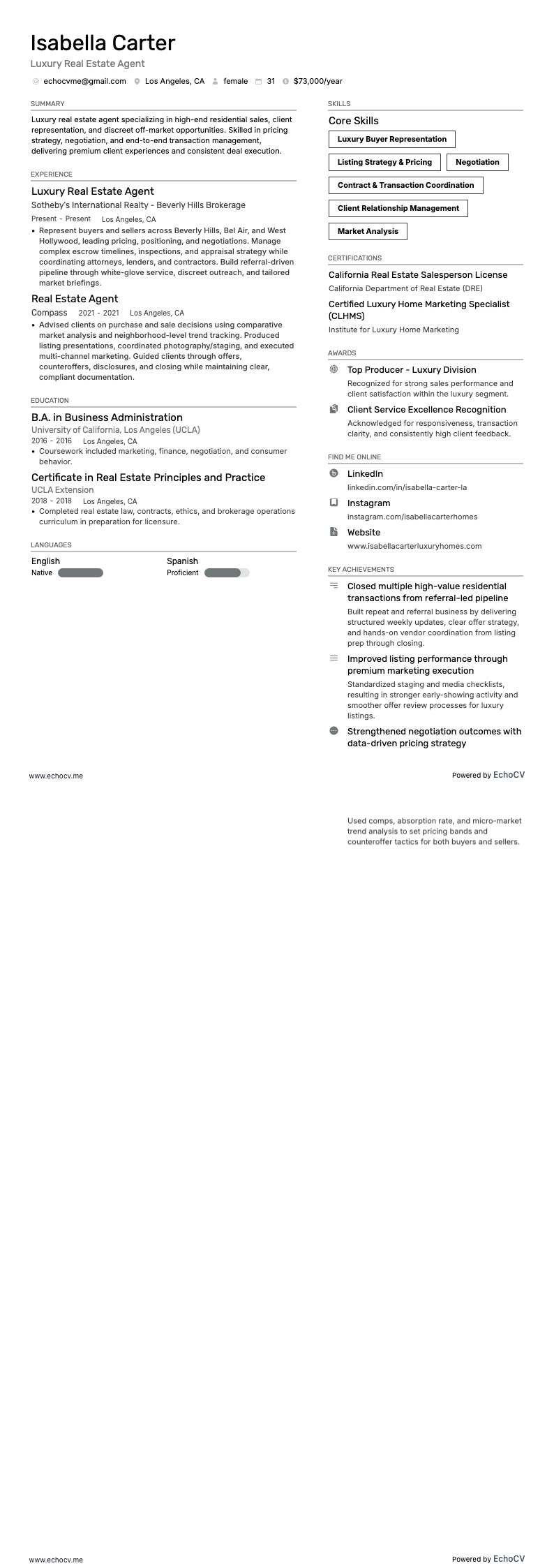
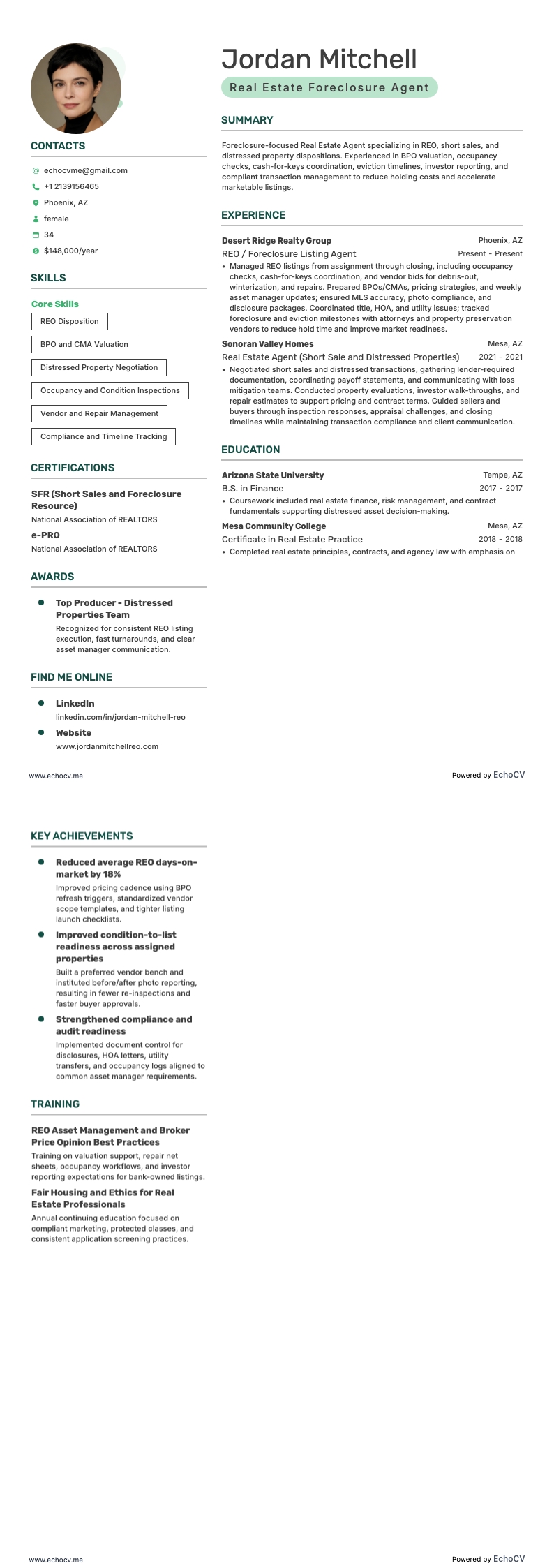
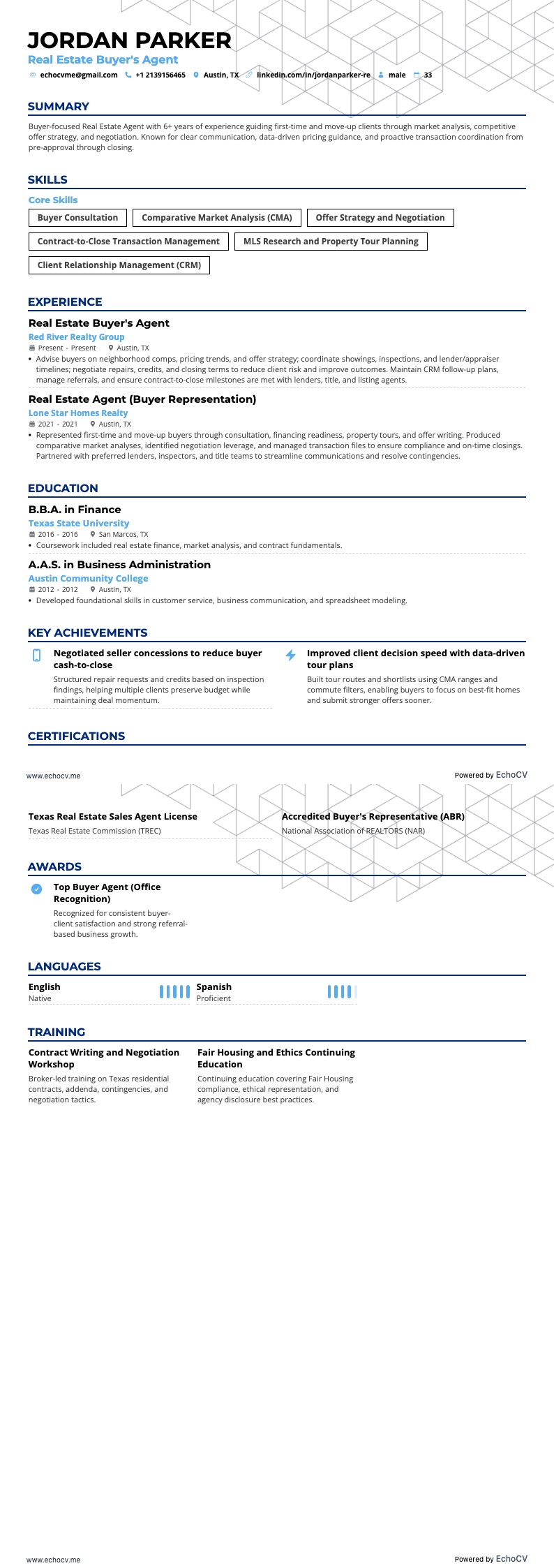
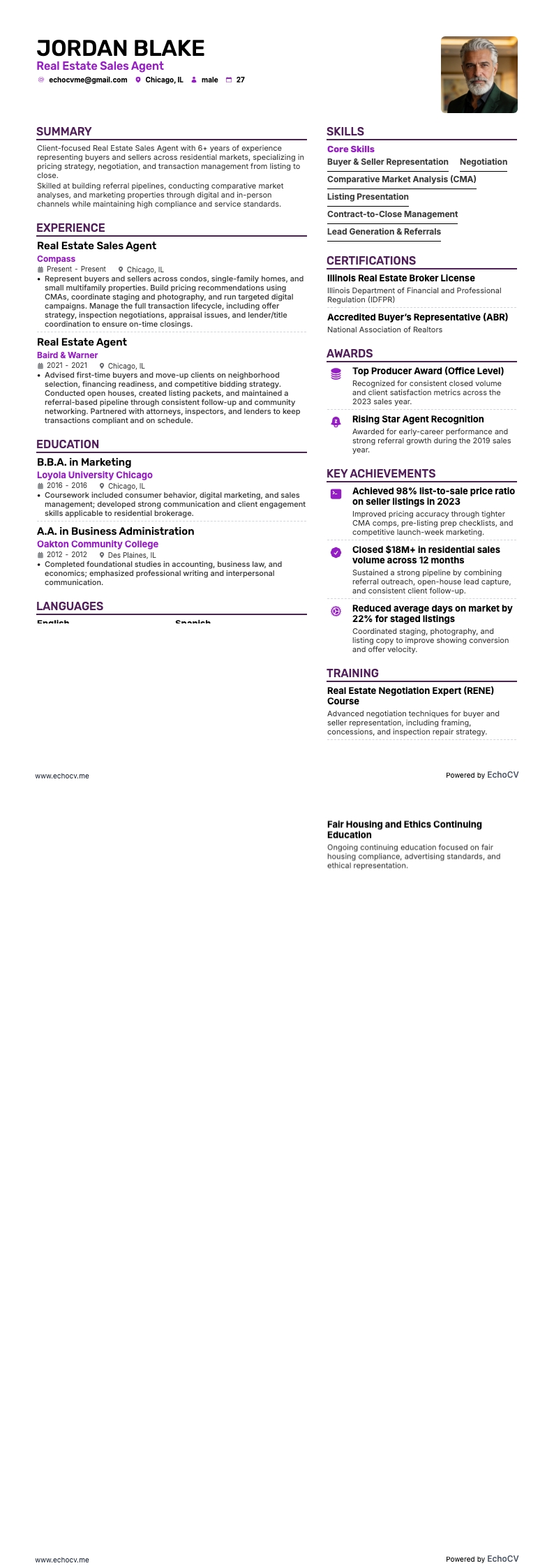
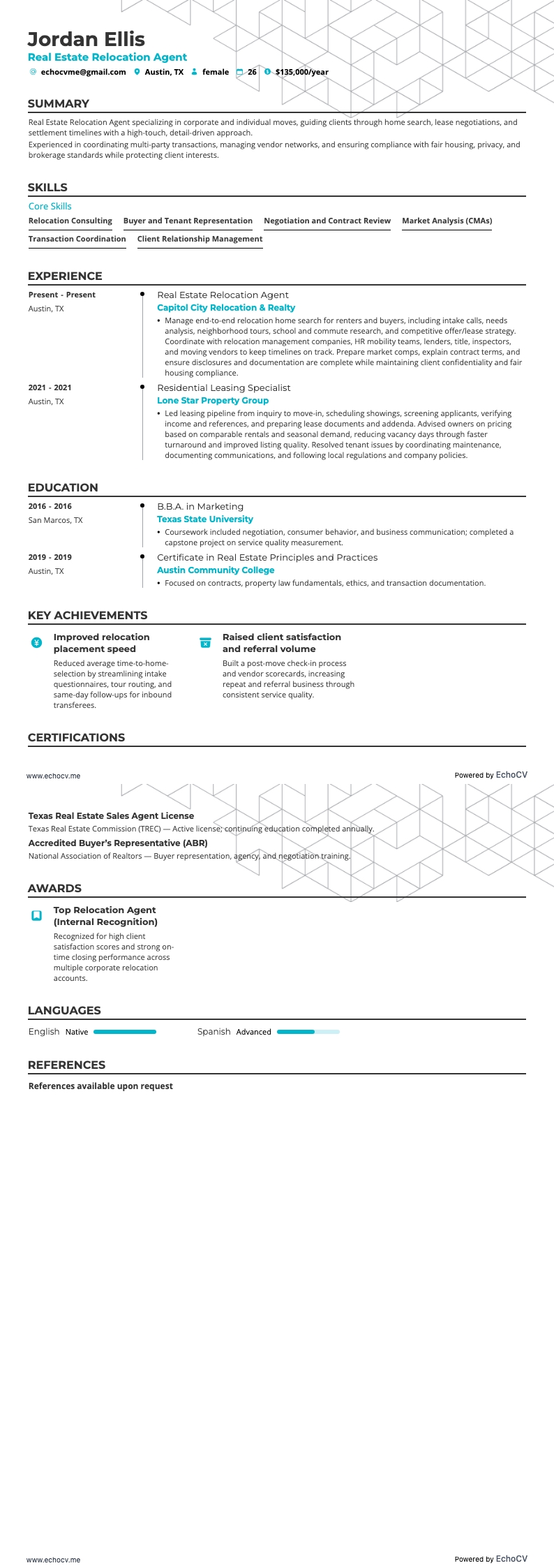
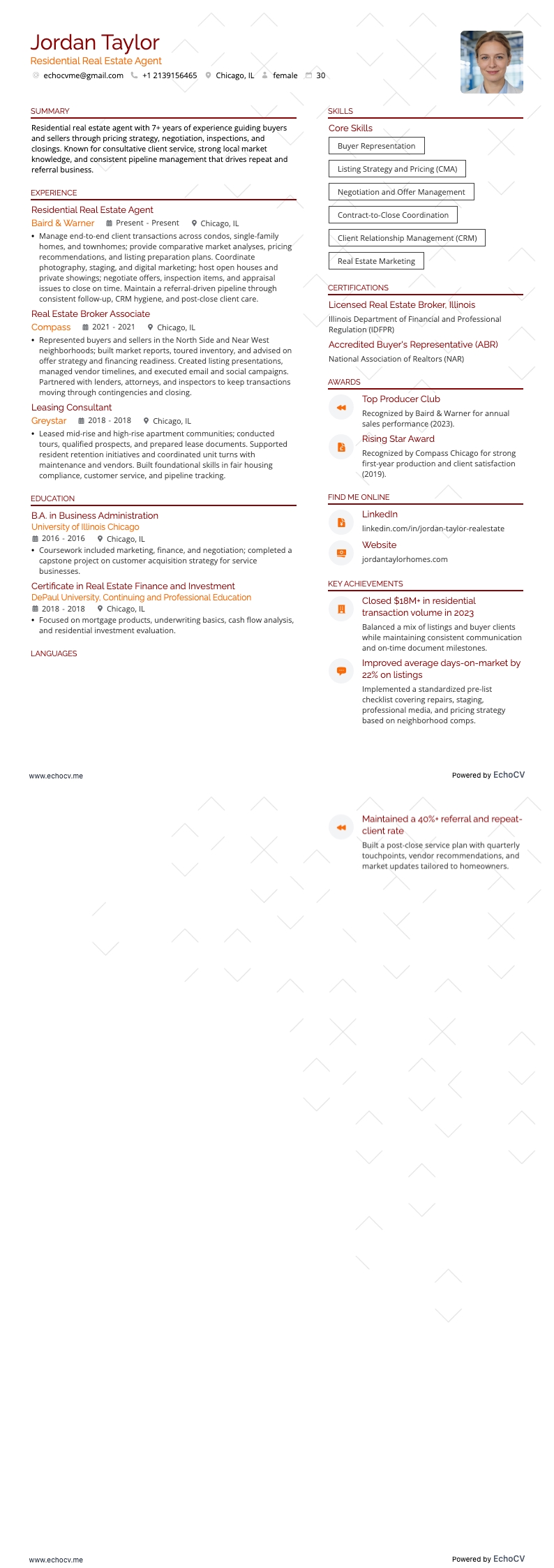
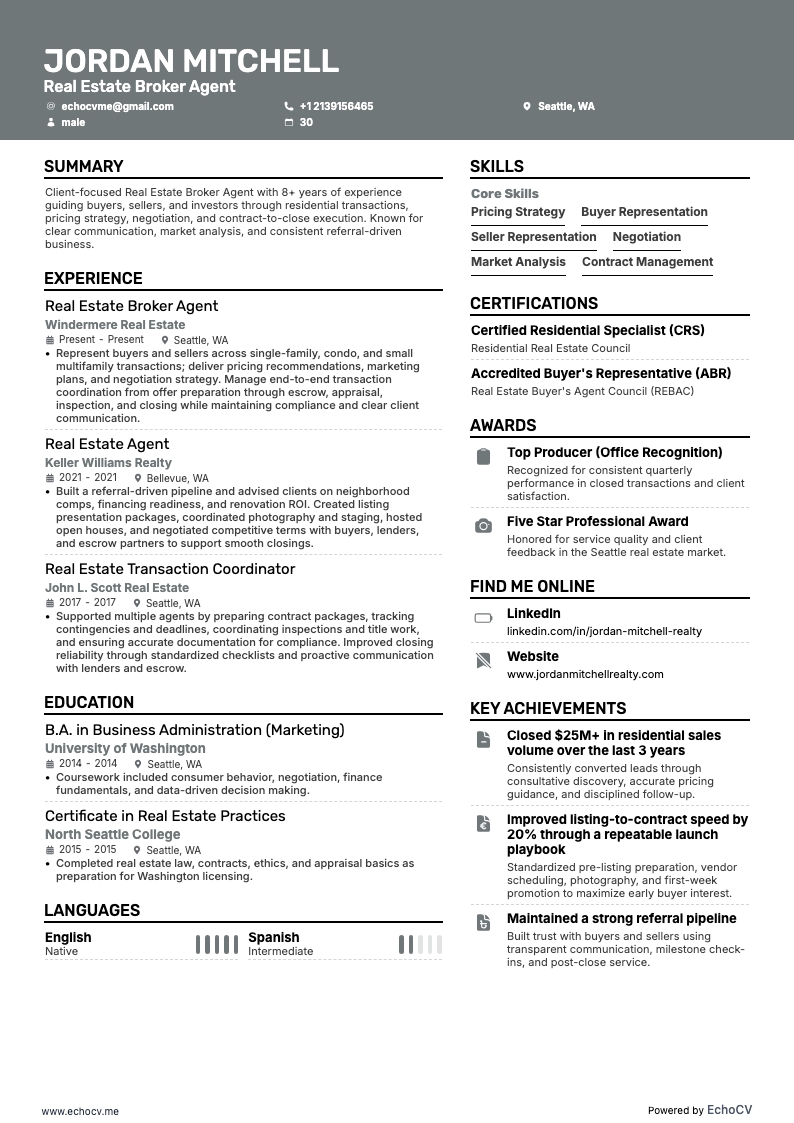
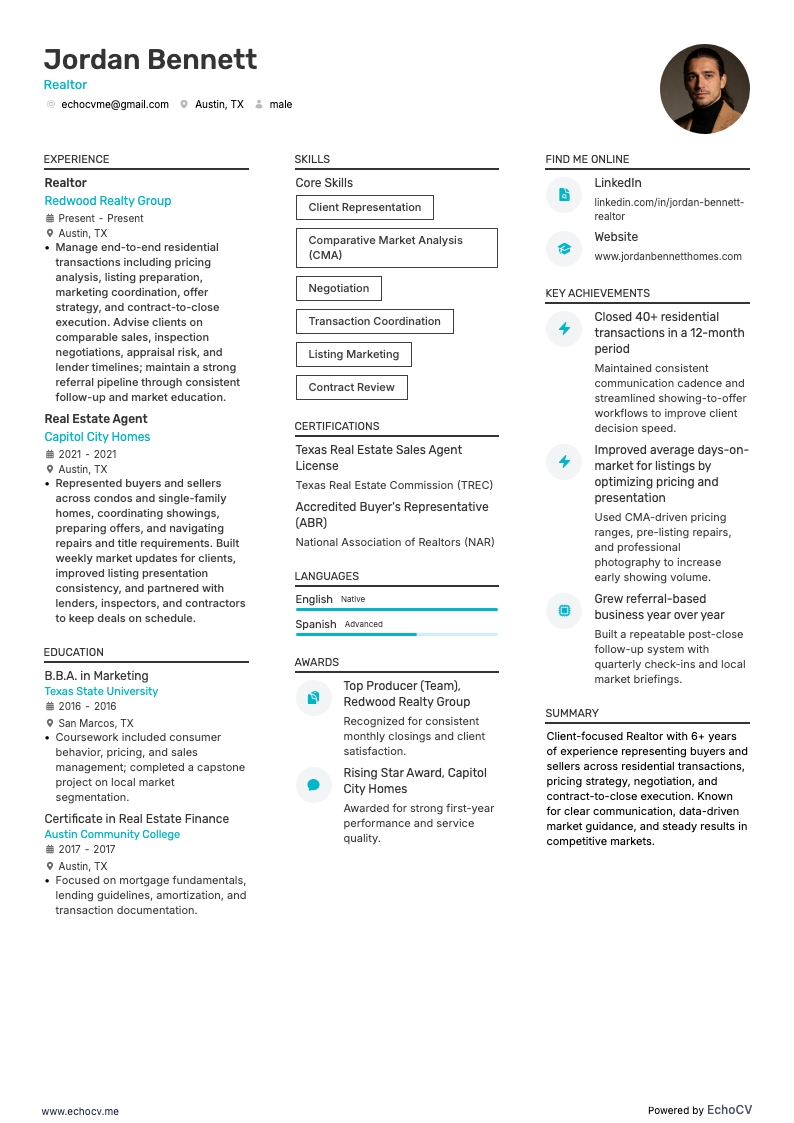
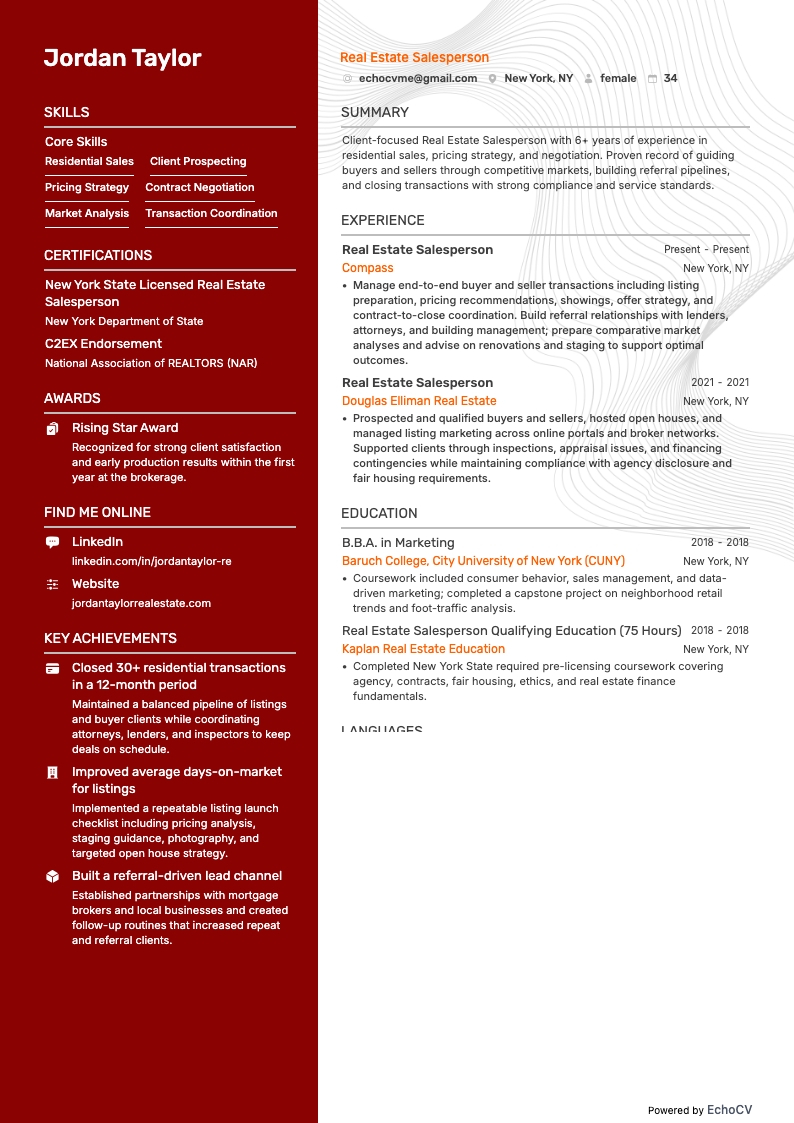
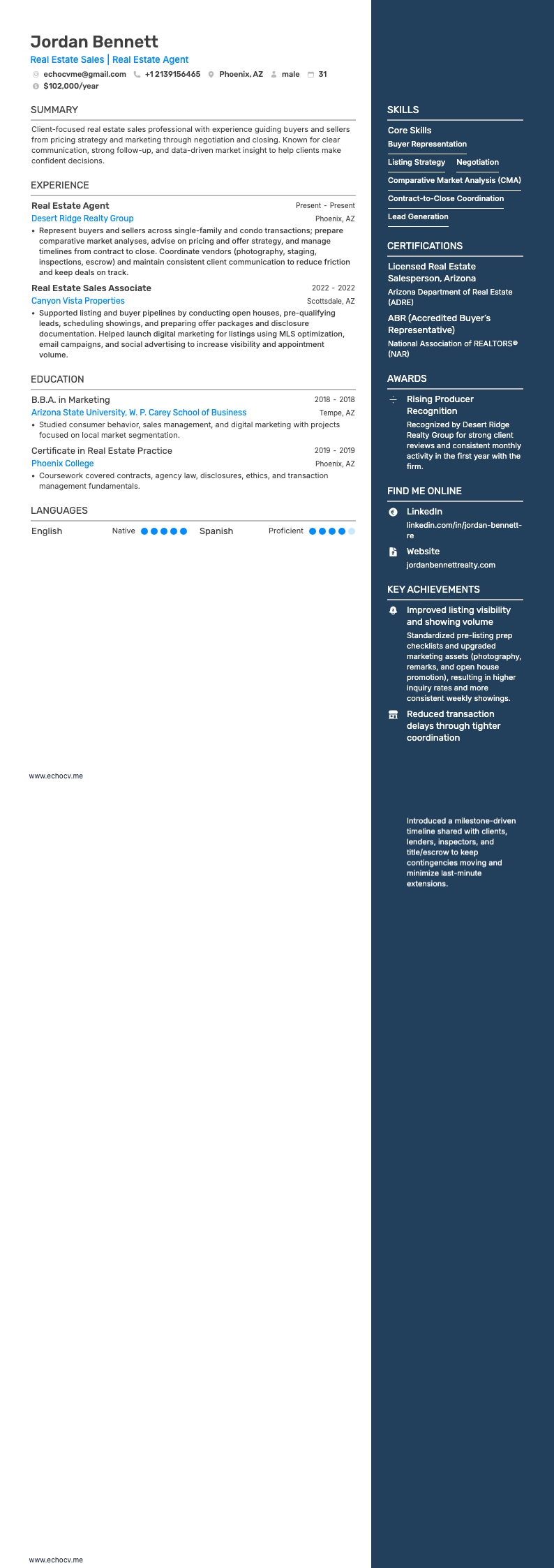
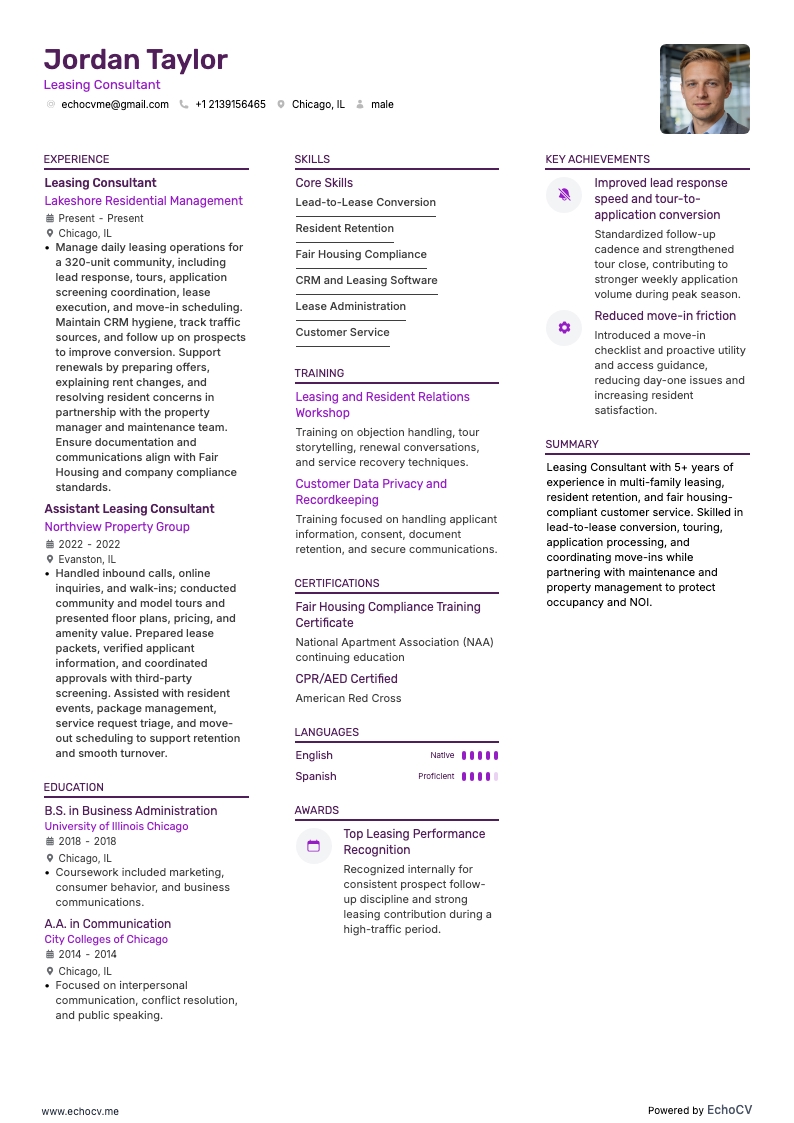
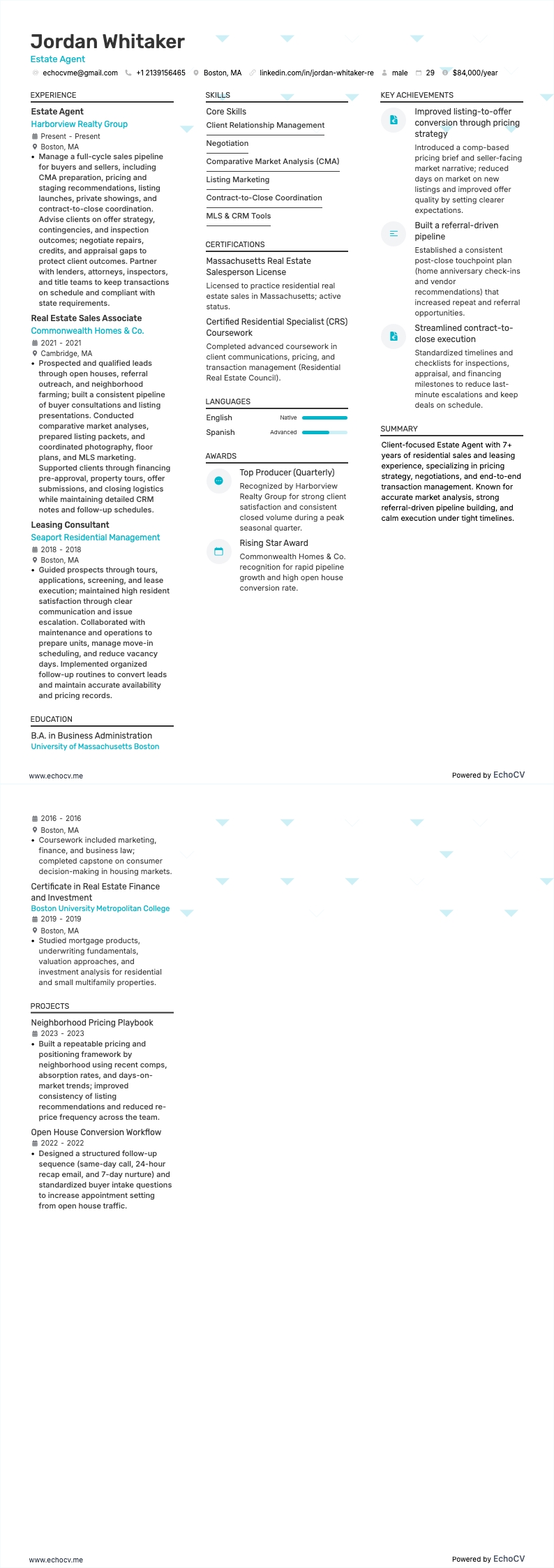
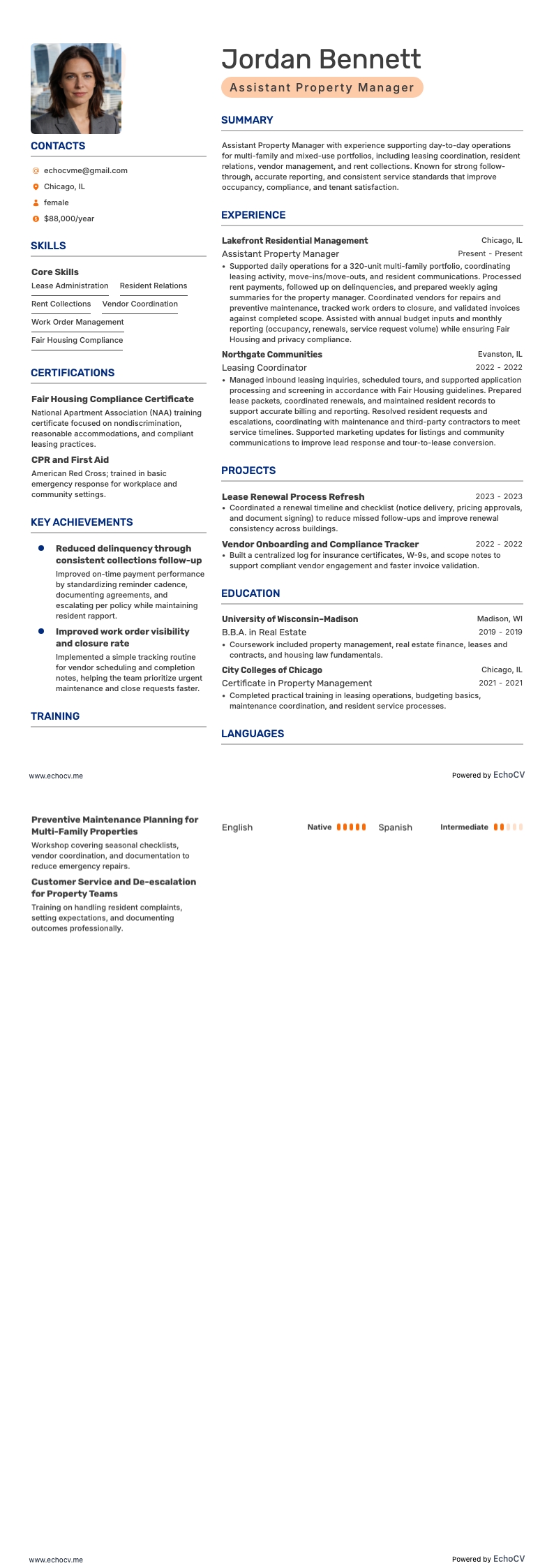
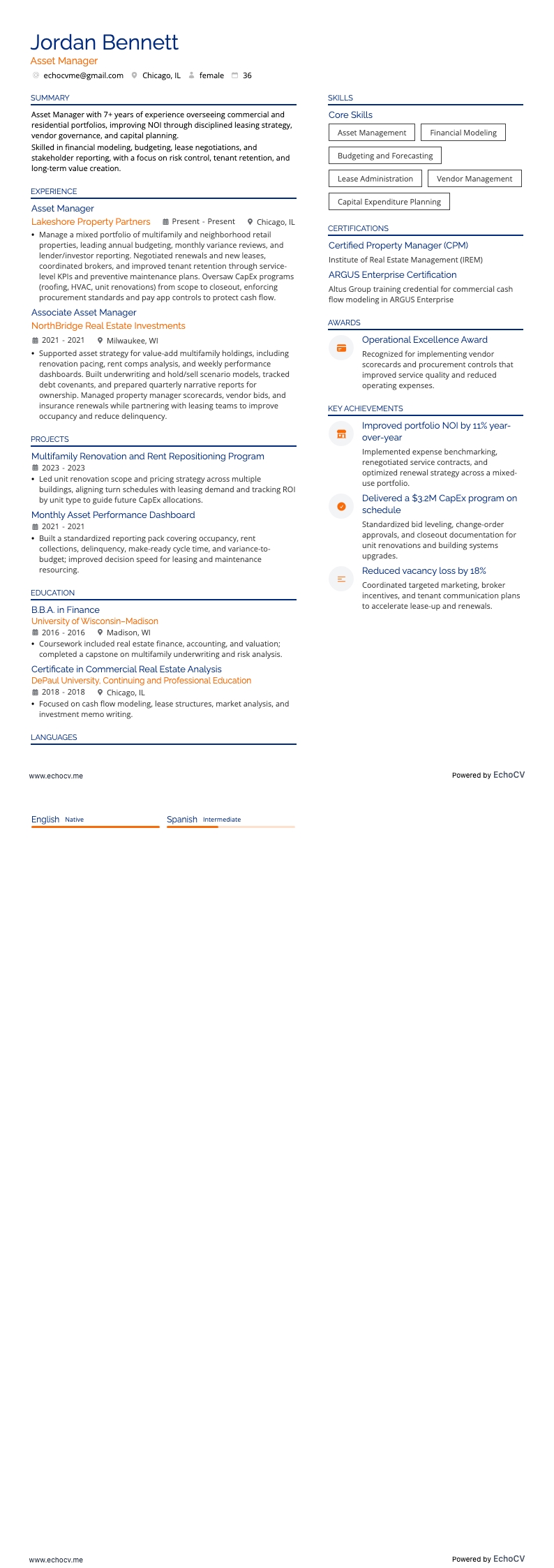
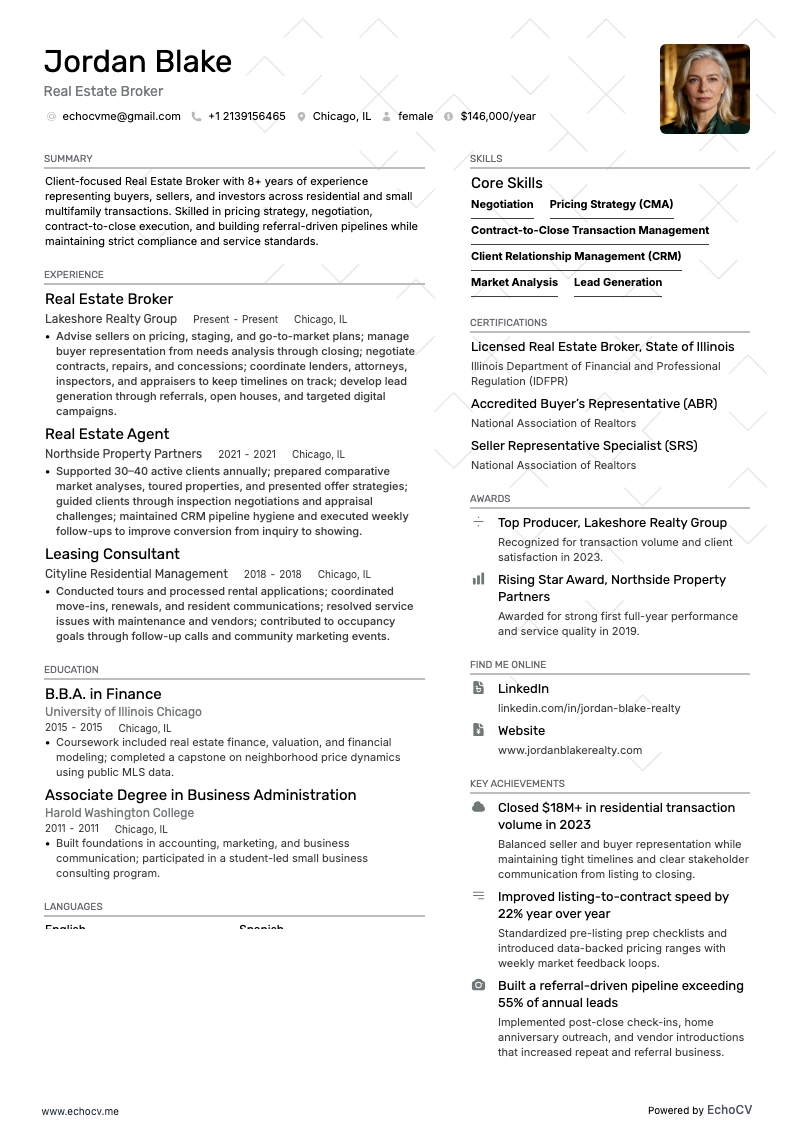
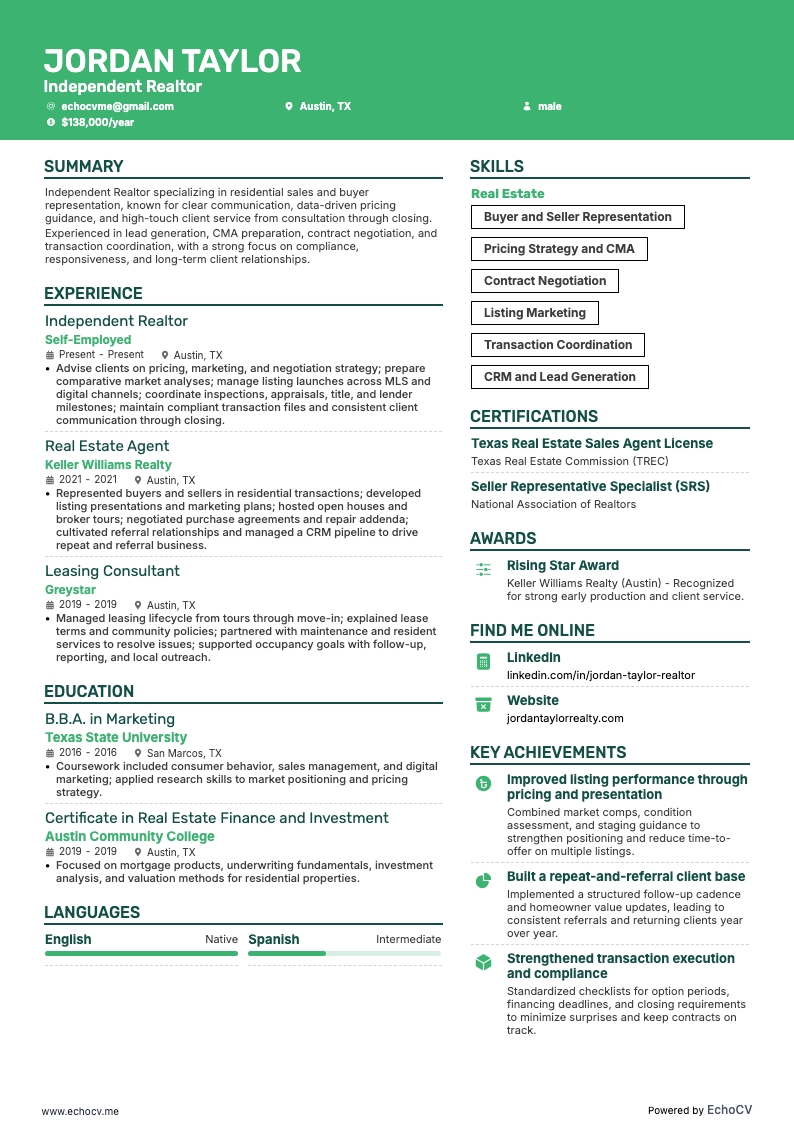
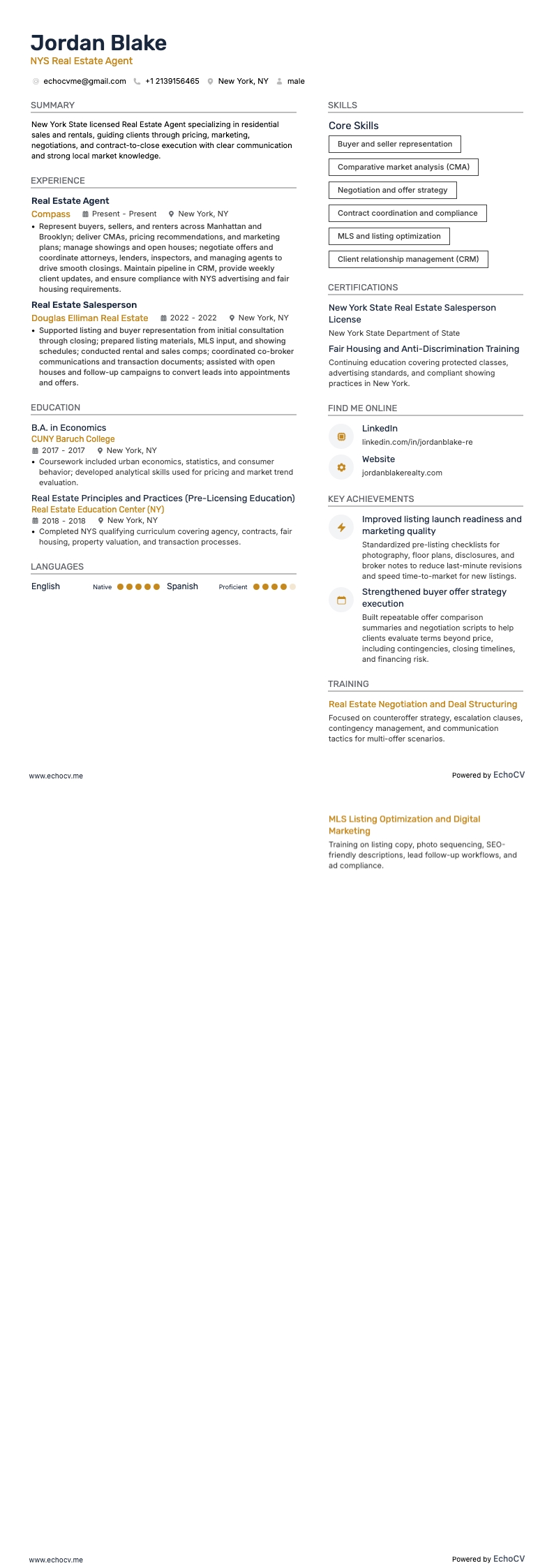
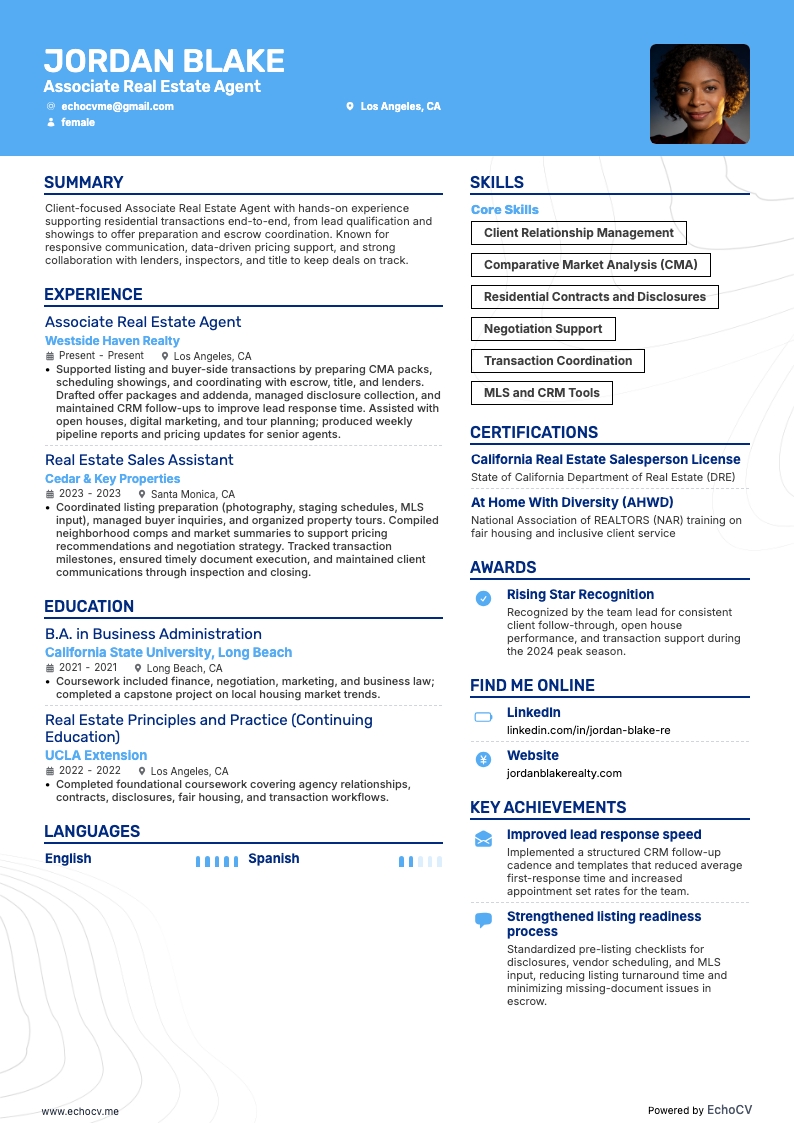
- Pick a simple, modern resume template that fits your taste. Use a two-column layout so it can include lots of information and is easy to read.
- Stick to easily readable fonts that won't confuse Applicant Tracking Systems (ATS), like Rubik, Lato, or Montserrat, in a 10-12 pt size.
- Keep 1-inch margins throughout your resume for better aesthetics.
- Tailoring your resume to fit into one page is often the most effective approach instead of having it overflow into two pages.
- Create a header with your name and title, contact number, email, and LinkedIn profile link.
- Always save your resume as a PDF to maintain its format across all devices and platforms.
Customize your resume for the market – a Canadian format, for example, might vary in structure.