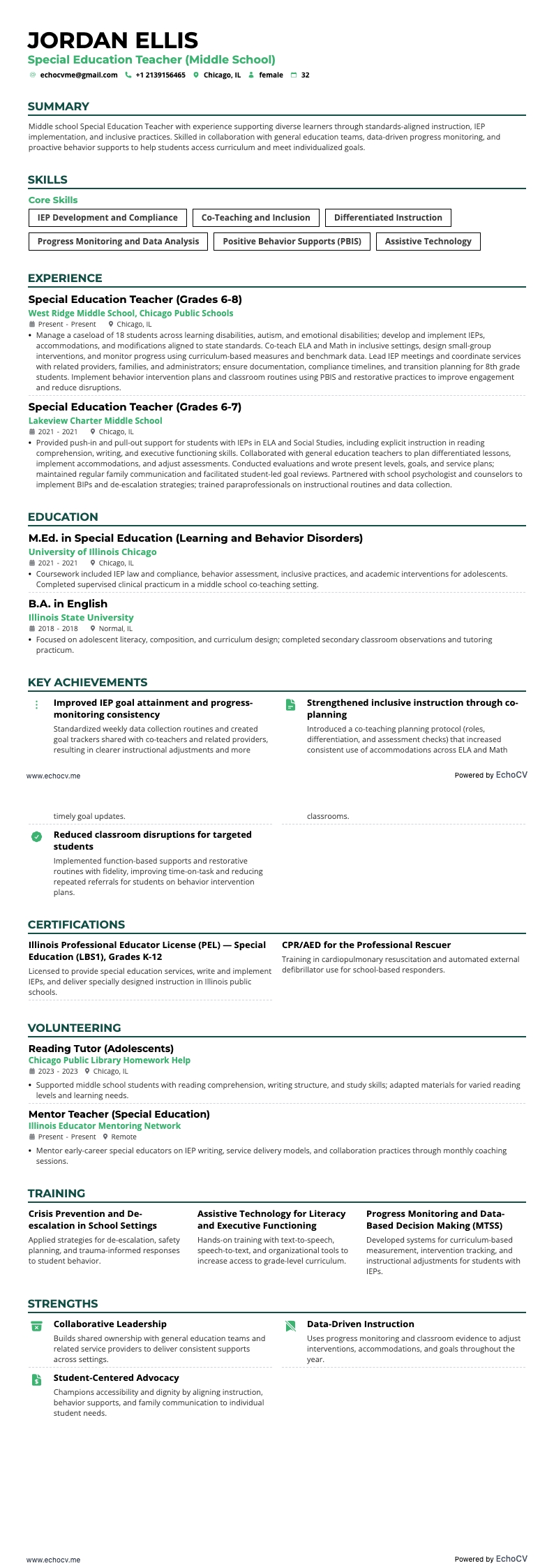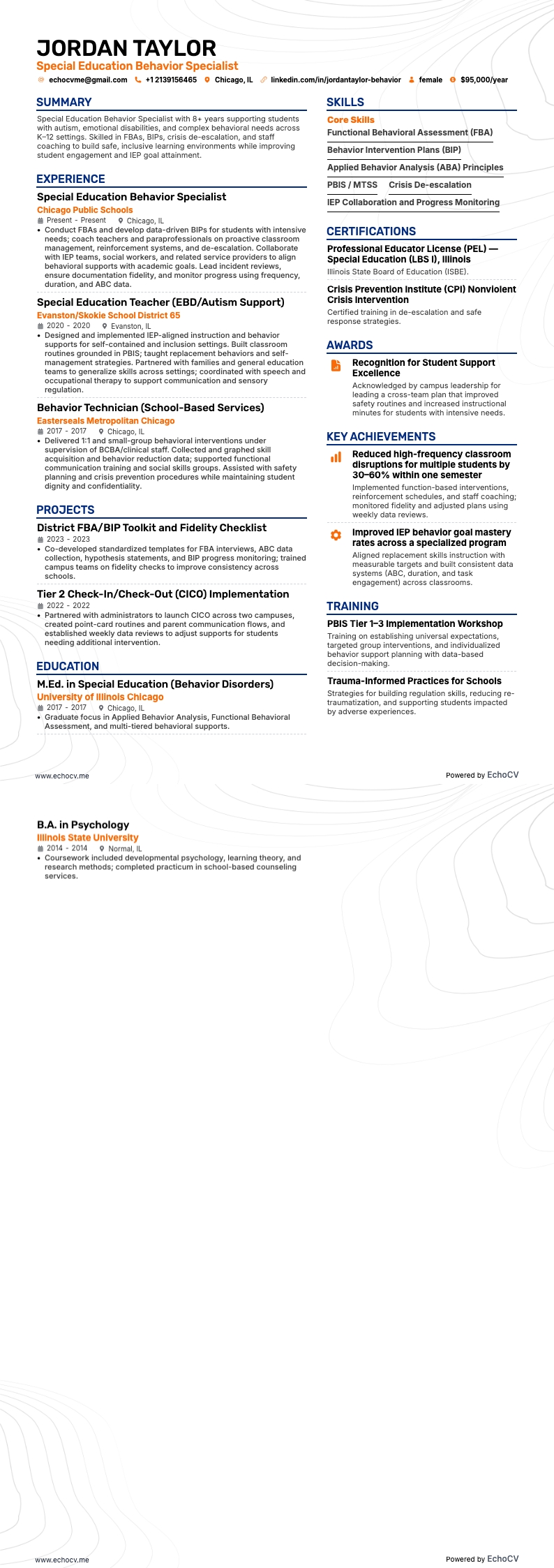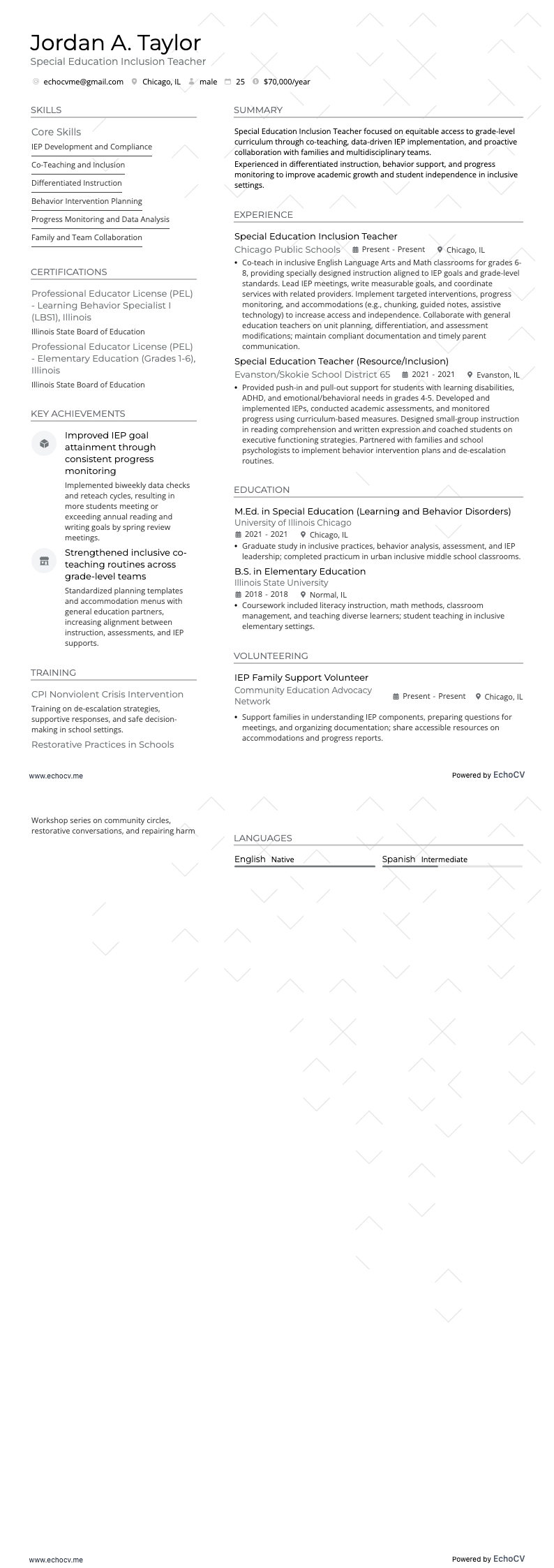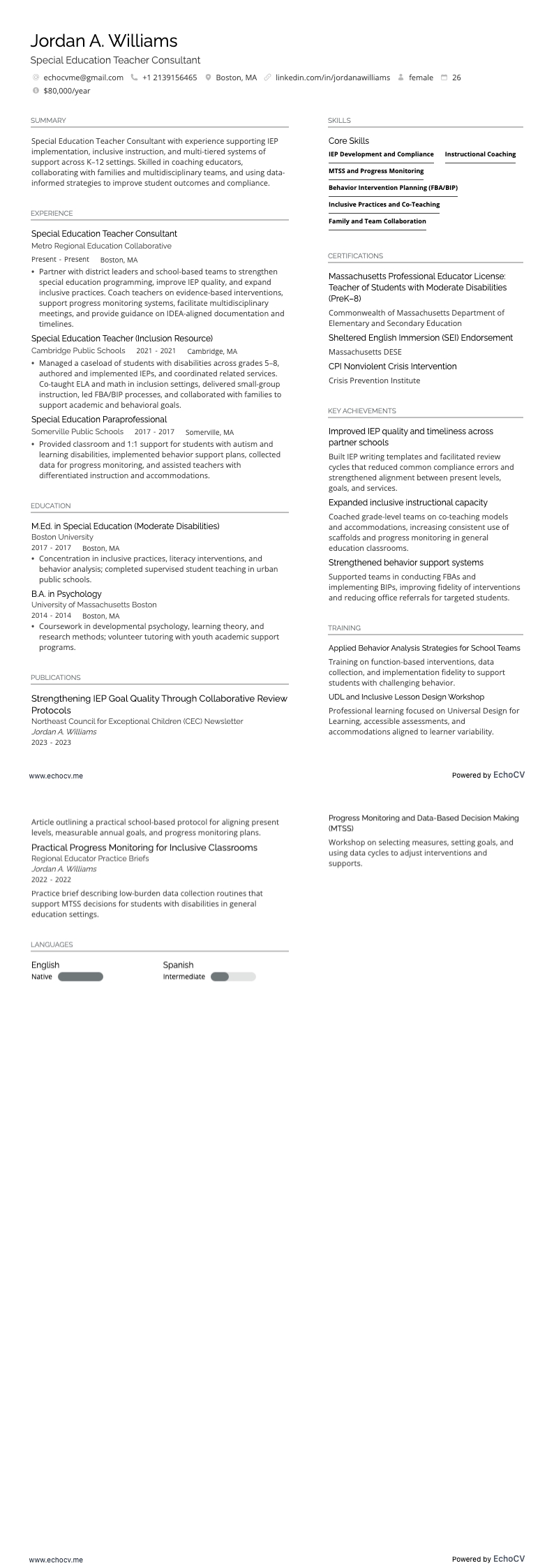
How to quantify impact on a special education teacher resume
As a special education teacher, you often compete in a sea of candidates with matching skills and qualifications. Unfortunately, this makes it tricky for you to stand out from the crowd.
The solution?
You must highlight your direct impact on your special needs students through tangible metrics. That helps you efficiently capture recruiters’ attention and prove your results-driven mindset.
Here are a few questions to help you promote yourself as a valuable addition to any school:
- Did you craft and implement any individualized educational plans (IEPs)? If so, what was the goal attainment rate for these IEPs?
- Did you use any behavioral techniques to reduce disruptions in the classroom?
- How often did you conduct parent-teacher meetings? And did increase parental involvement with their children?
- How many special needs students did you support and adapt strategies for?
- How many professional workshops on special education techniques did you participate in?
- Were you able to boost student engagement by incorporating assistive technologies?
- How many therapists and specialists did you cooperate with? Did these collaborations lead to notable improvements in student performance?
How do I write a special ed teacher resume with no experience
Let’s be honest - it’s not easy to break into the field of special education when you lack experience.
You know you’re qualified and ready for the position. But, hiring managers encounter such claims on every special needs teacher resume they review. So to rise above the rest and get noticed, you must show great promise.
How do you leave a mark on recruiters without experience?
By reshaping your resume to radiate drive, readiness, and potential. Here’s how to do that in a few simple steps:
- Use a hybrid resume format that emphasizes skills and qualifications upfront.
- Start with a resume objective that displays enthusiasm and desire to excel as a special education teacher.
- Emphasize skills like patience, communication, or teamwork from other roles or work experiences.
- Focus on relevant coursework, projects, or research related to special education.
- List any unpaid work or internships as long as they're related to education or caregiving.
- Include any training or workshops attended, even if not directly linked to teaching.
Special education resume skills: how to list your hard skills and soft skills
Without the teacher’s touch, the classroom is just a room of books. And without skills, your resume is merely a list of words on paper.
In the skills section, you will highlight your best qualities and tie them directly to the job ad.
There are two types of skills you should be aware of:
Soft skills are non-measurable qualities that help you foster a deeper bond with your students. Empathy, patience, adaptability, and strong communication are all essential interpersonal skills in your field.
On the other hand, hard skills are the concrete tools and techniques you’ve picked up on the job through practice. This includes special therapy training, knowledge about IEPs, and using assistive technologies.
Now, to really make your resume stand out:
You have to align your skills with the specific requirements of the job description. For example — if a school is seeking proficiency in sign language, put that front and center.
Also, quality always trumps quantity. So make sure to keep your list between 8 to 12 skills matching the job description and your personal experience.