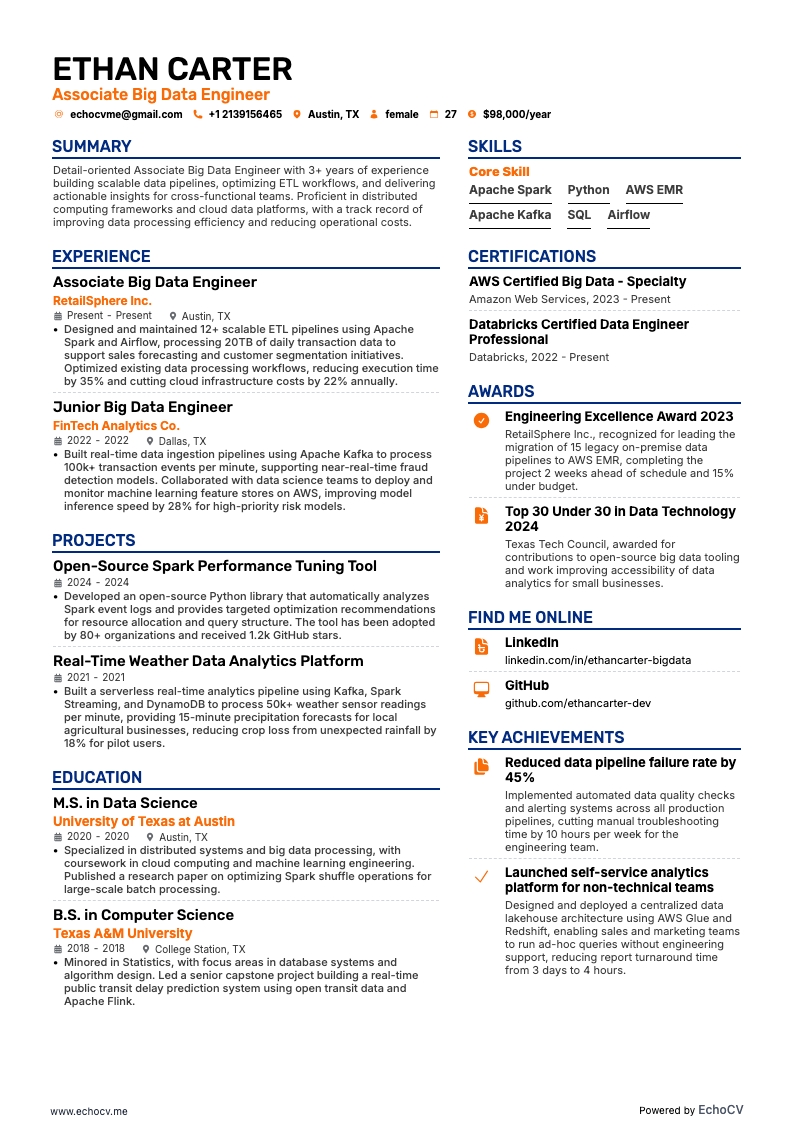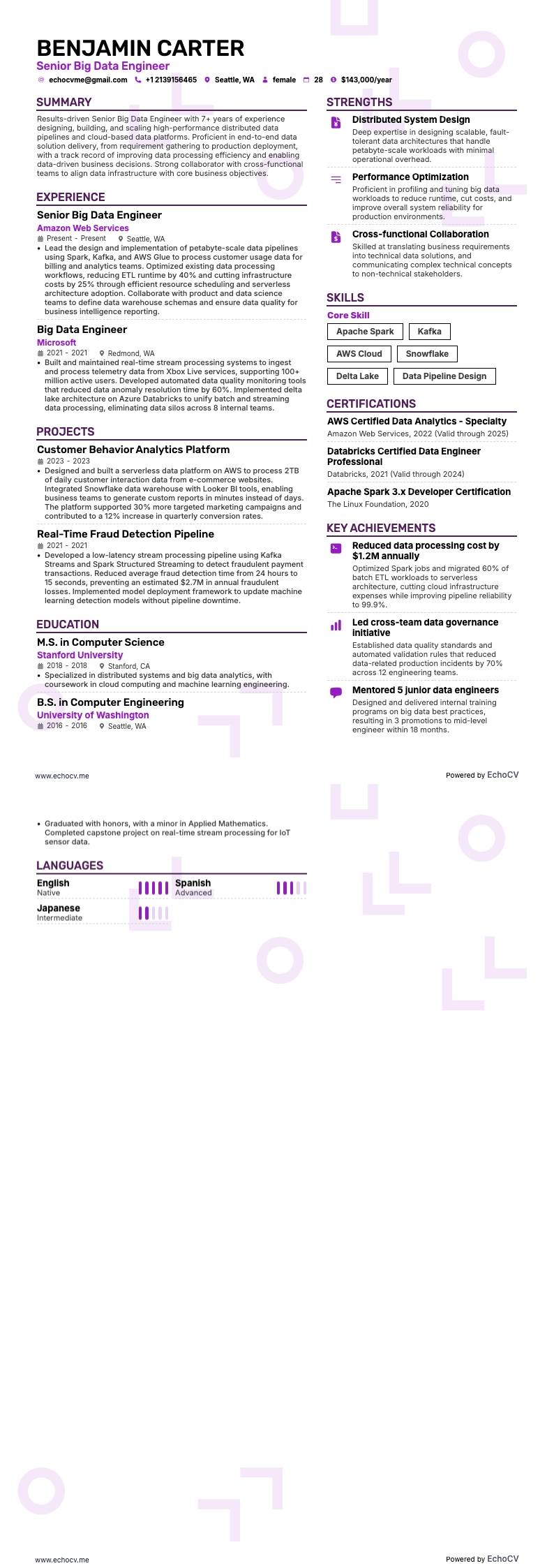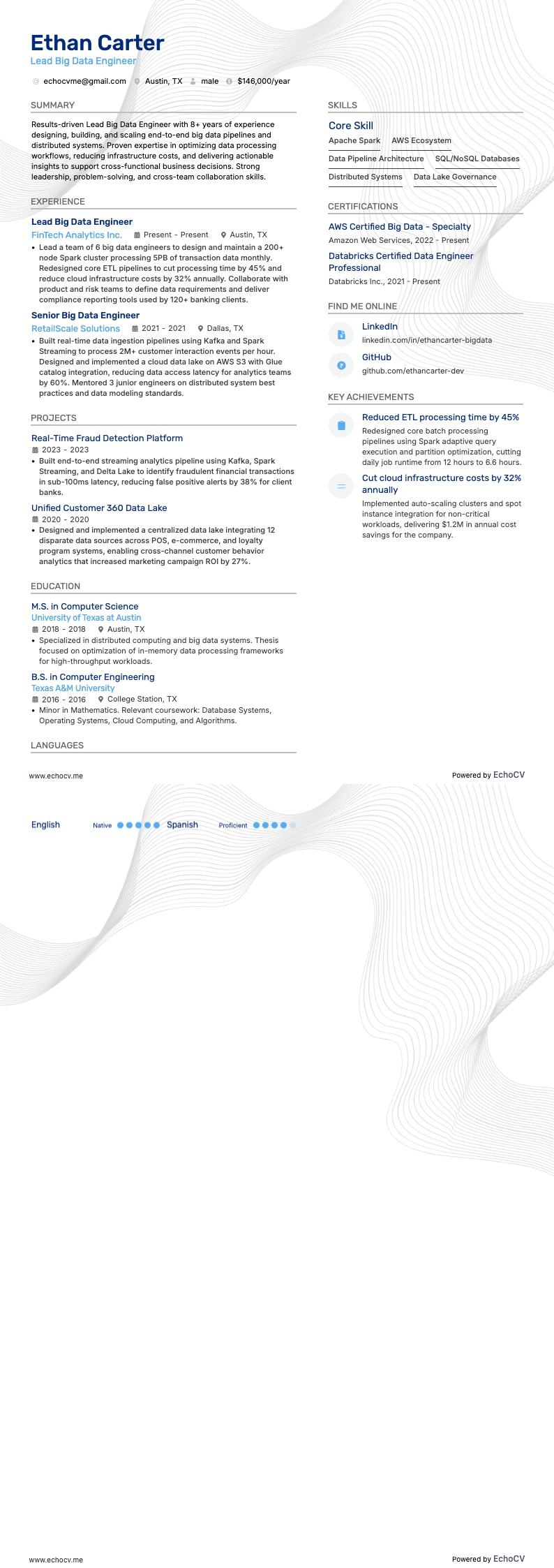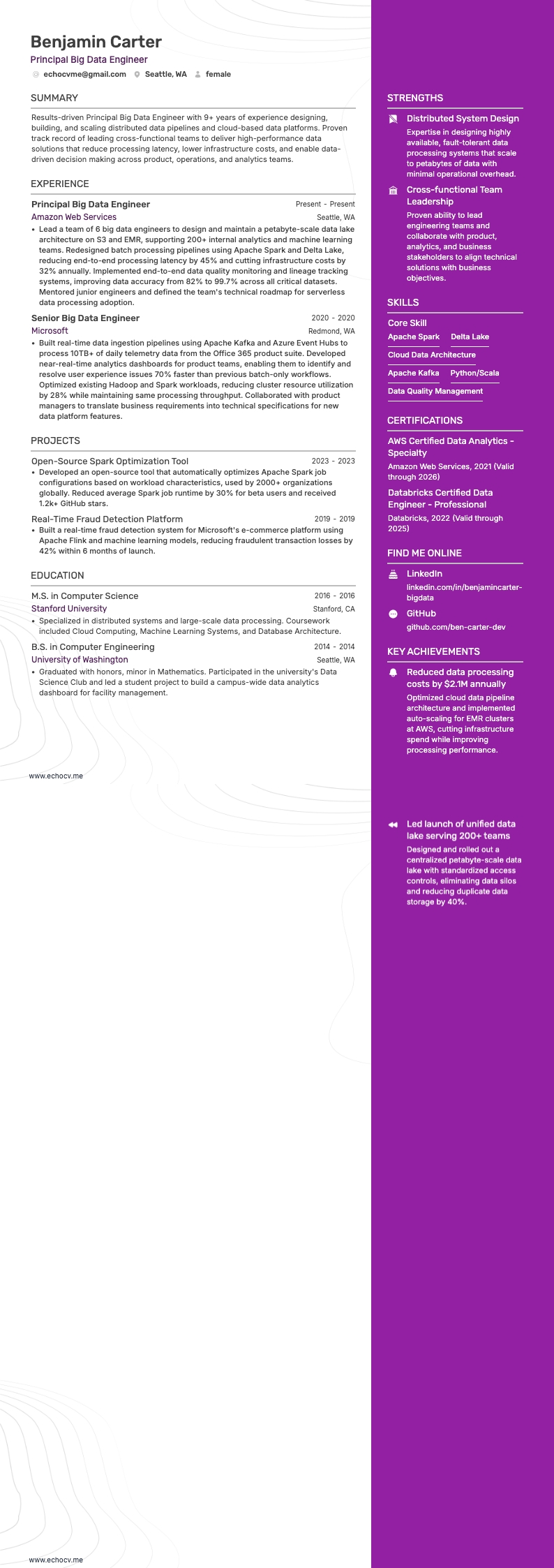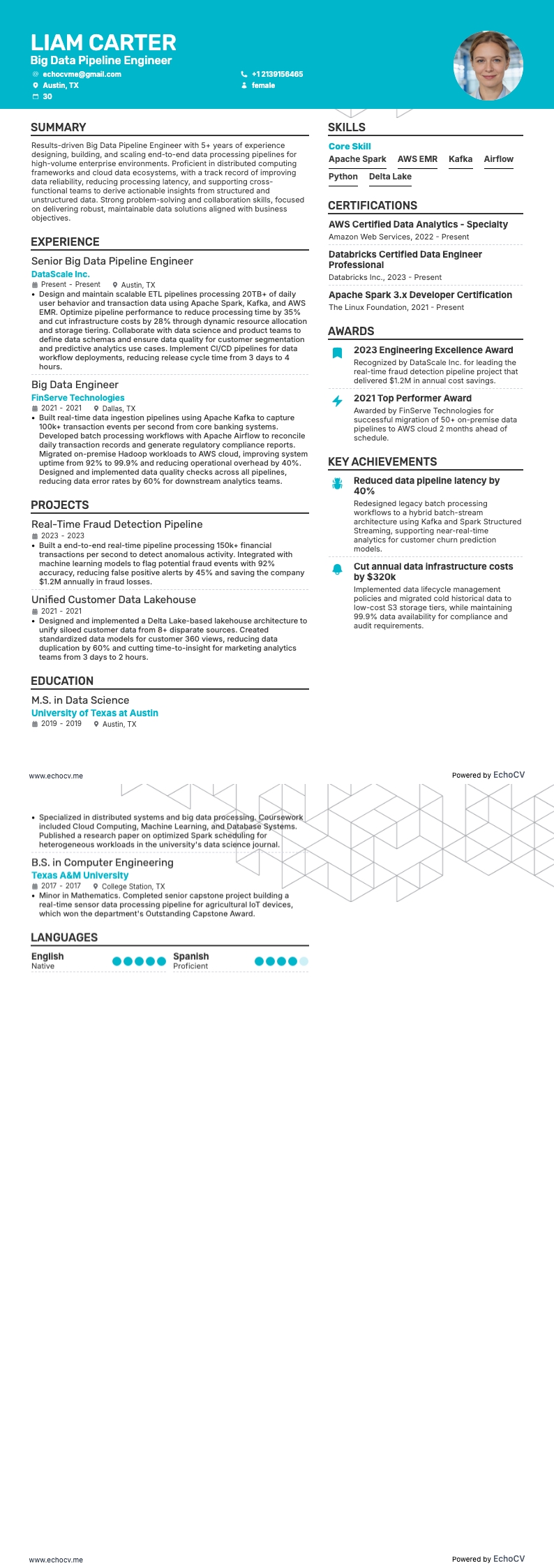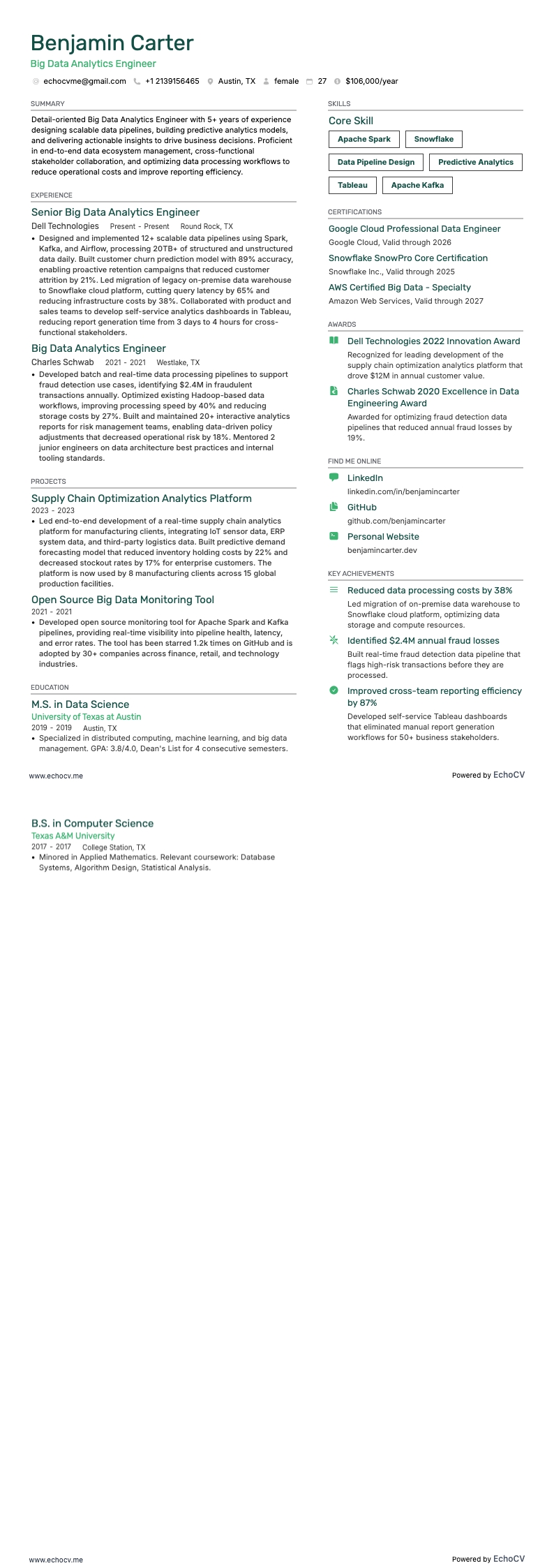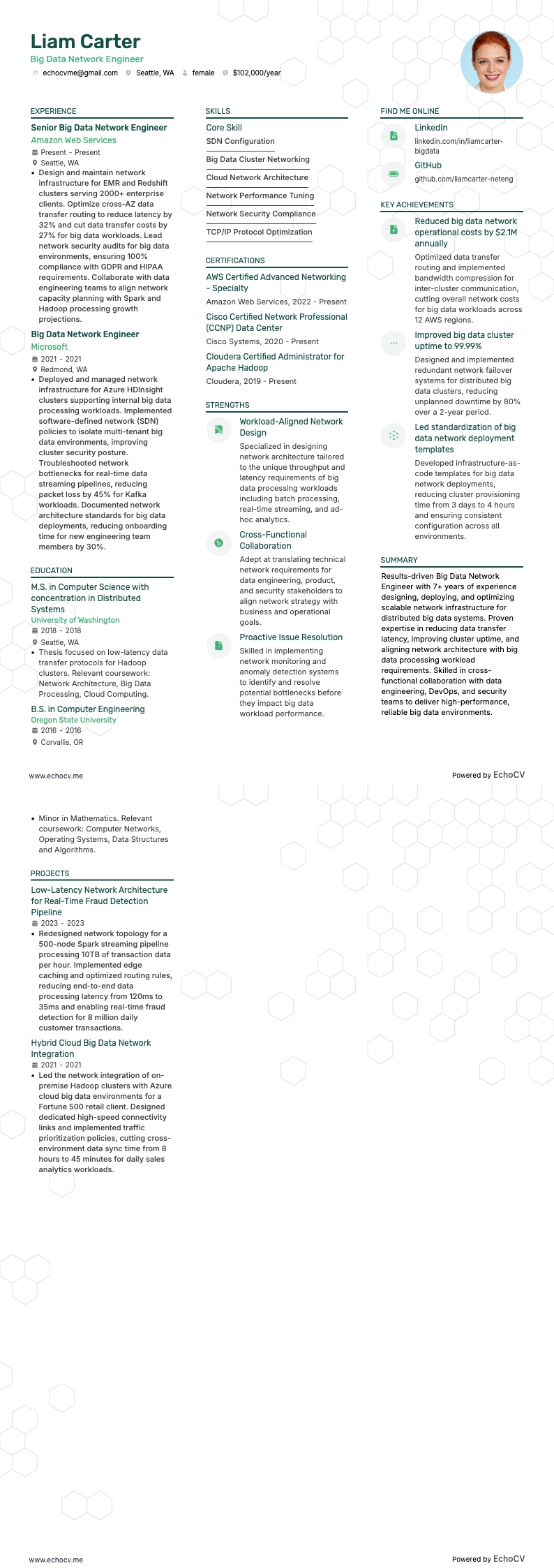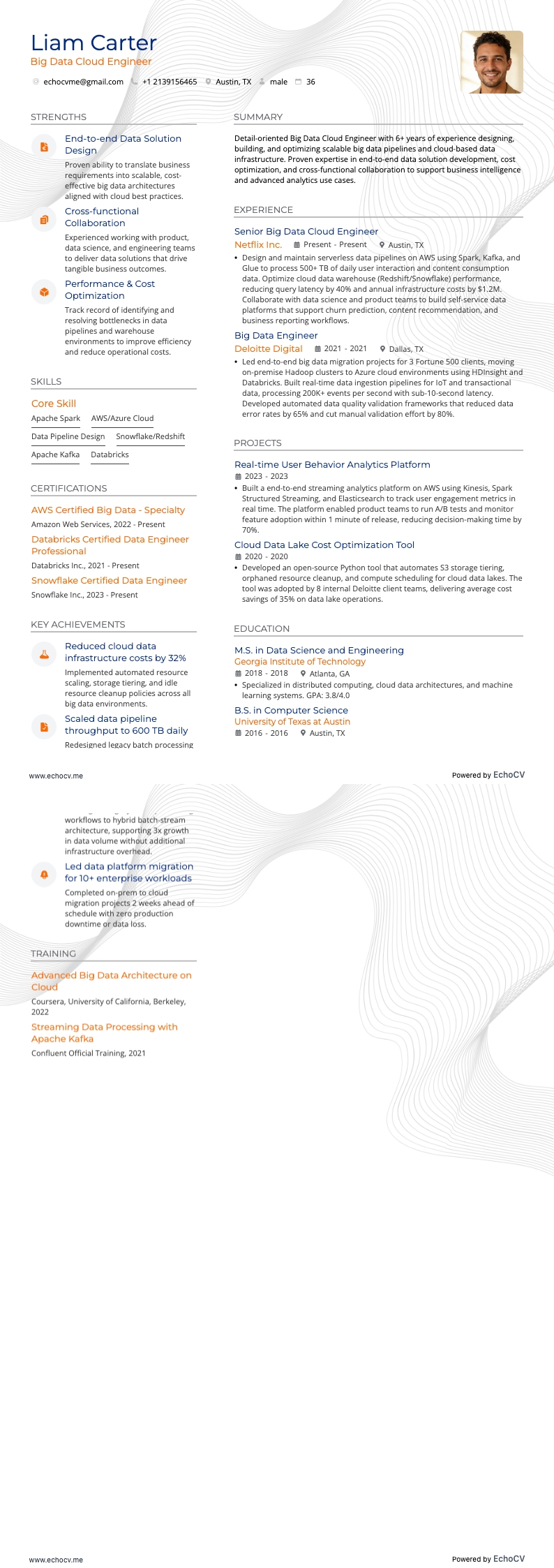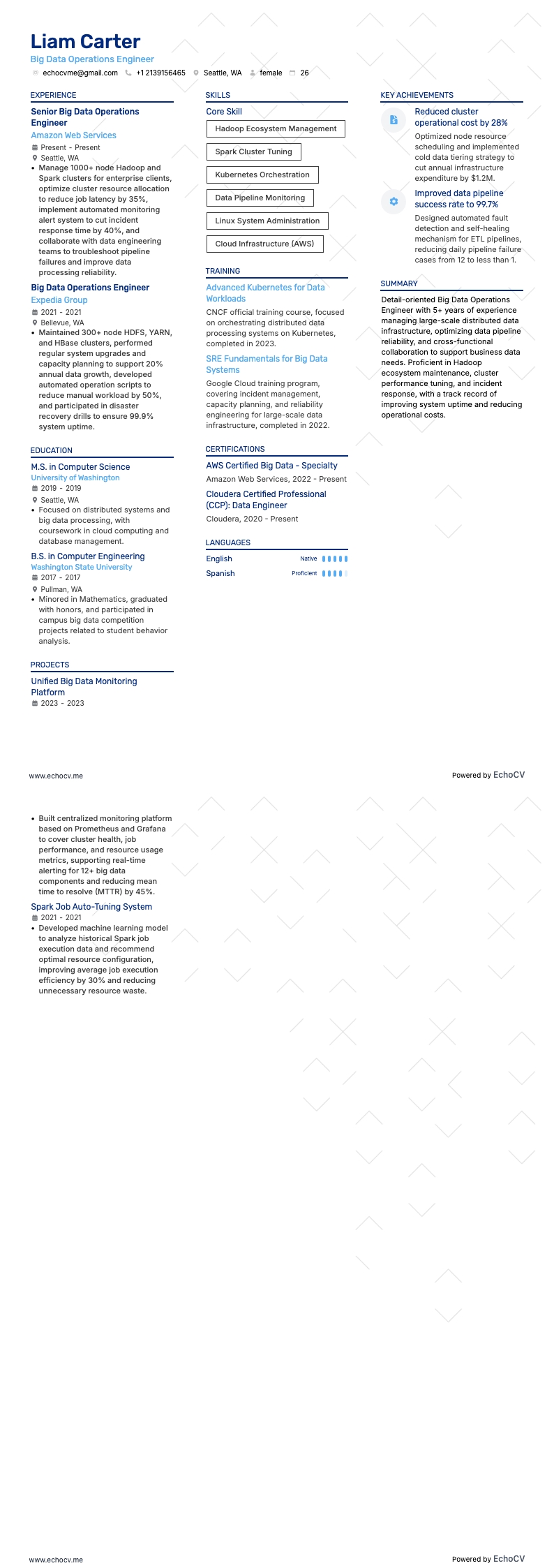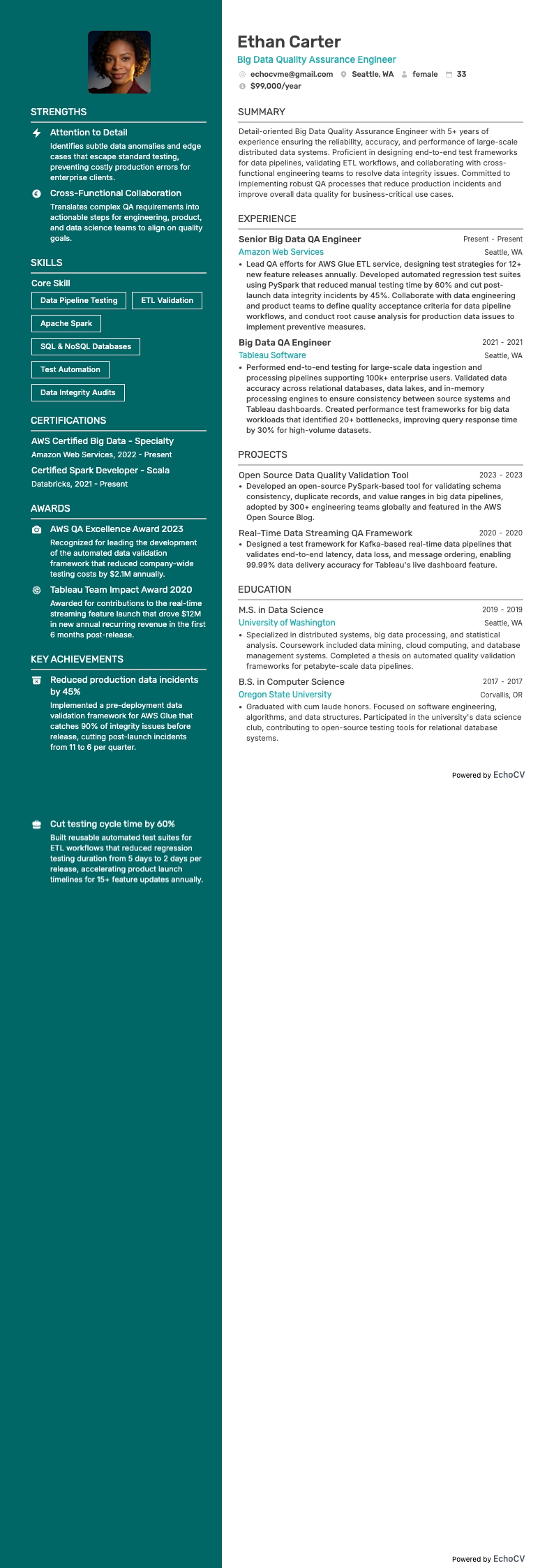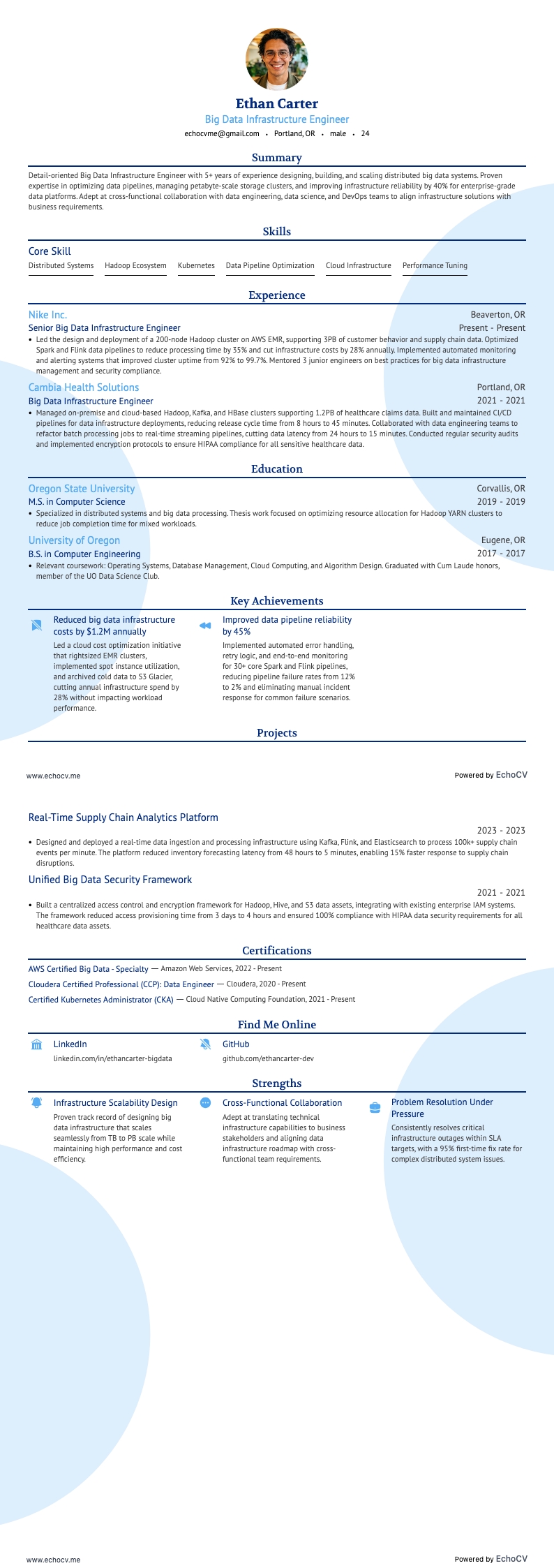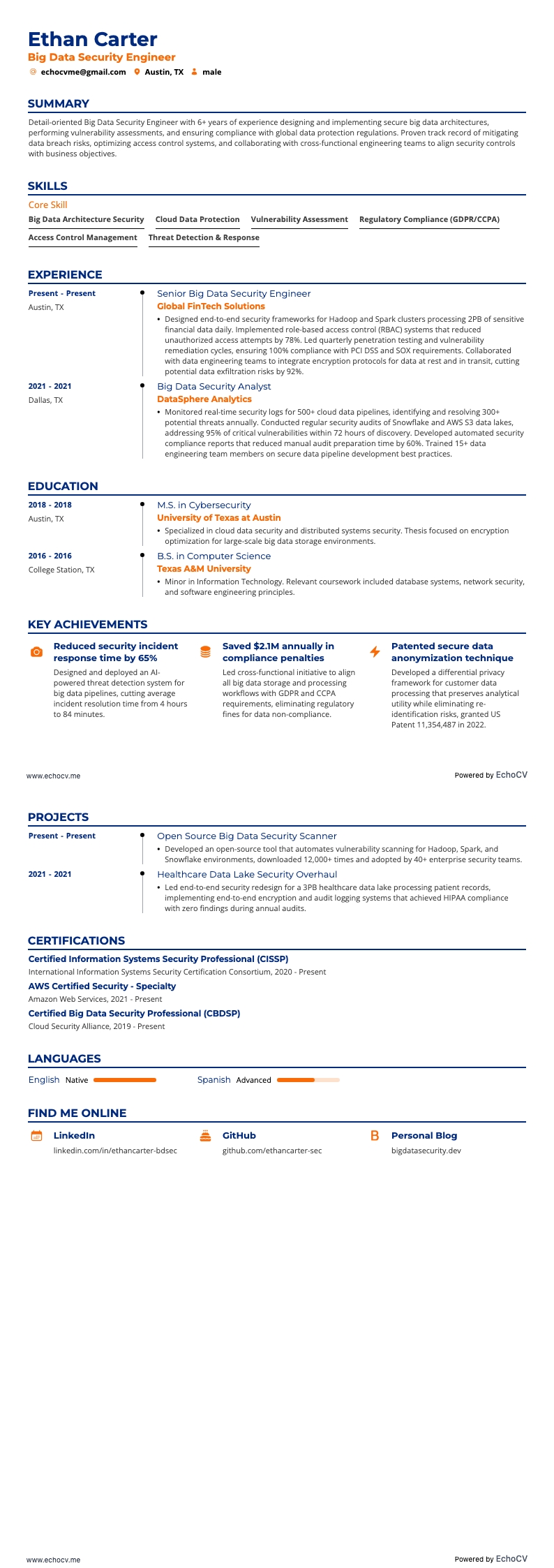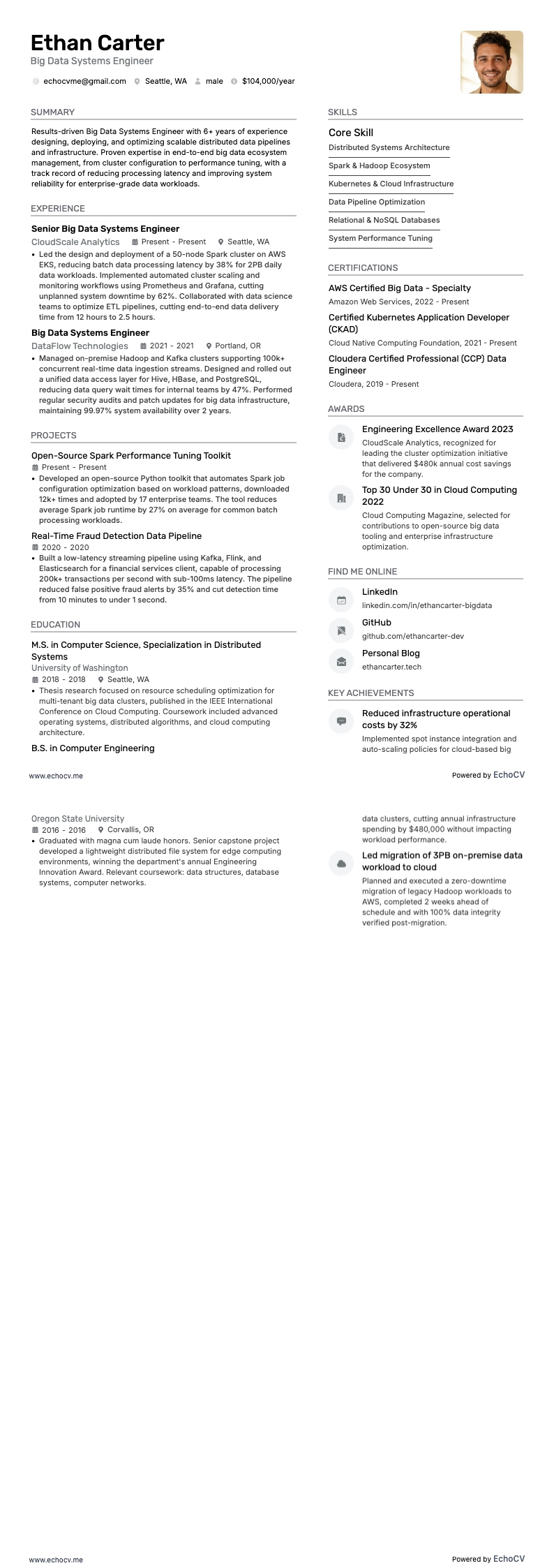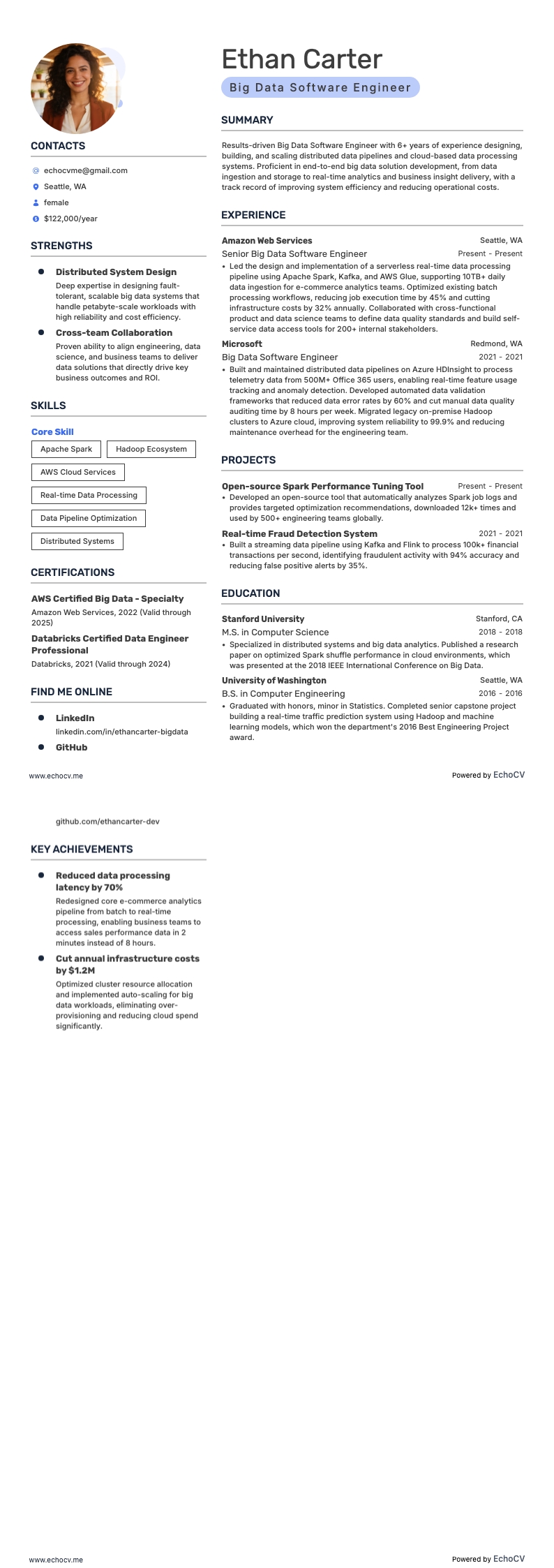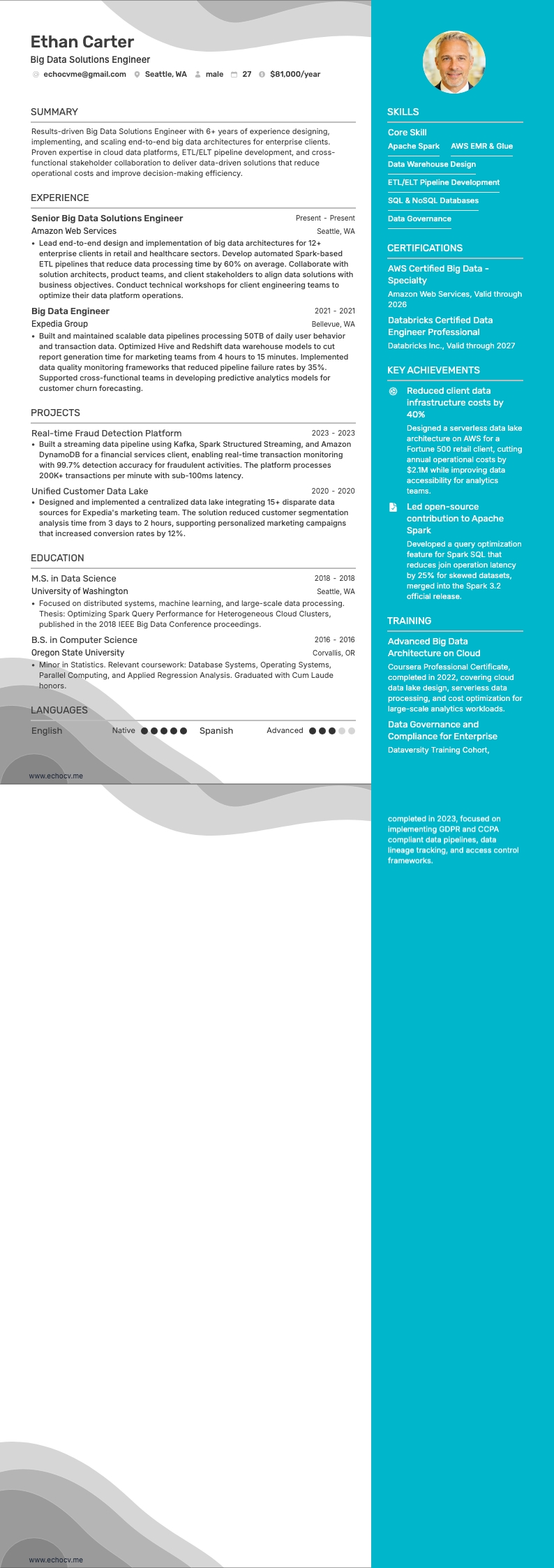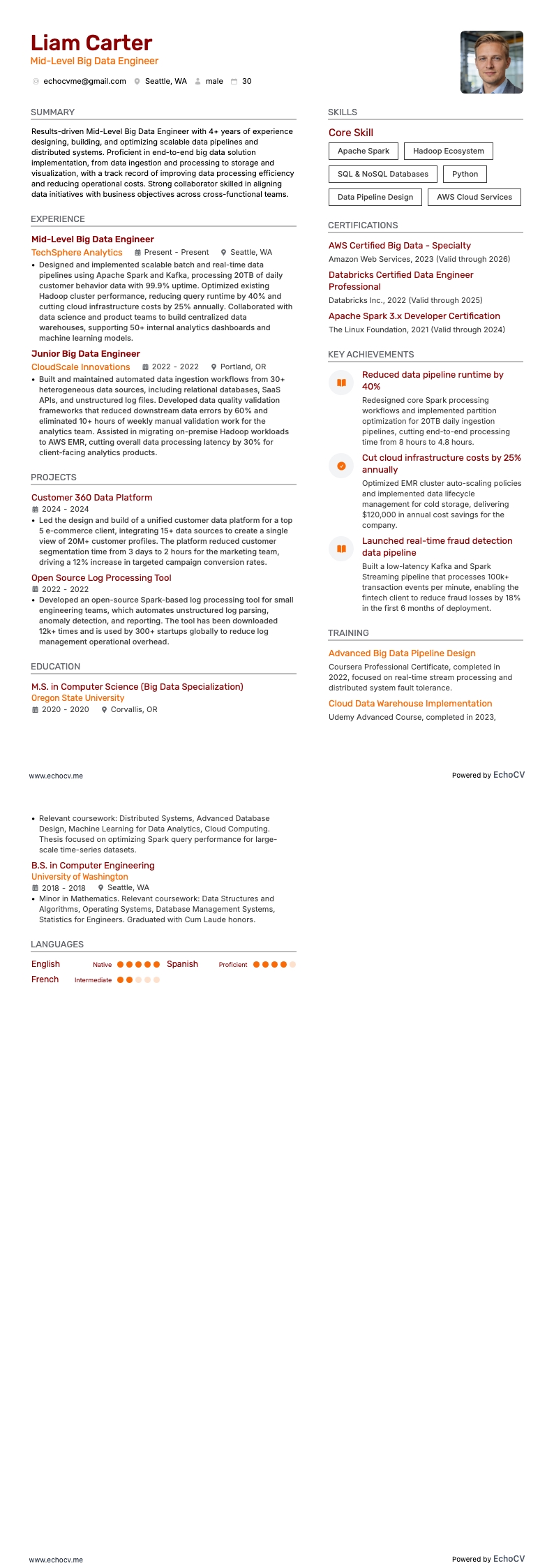
So much more impactful! Here’s why:
- Clear metrics: the applicant uses specific metrics to demonstrate impact, making achievements tangible and credible.
- Leadership and tech skills demonstration: those are implied, instead of explicitly mentioned. Employers appreciate multifaceted candidates.
- Industry-specific skills: highlighted proficiency in key big data technologies, aligning closely with job requirements in the field.
Want to achieve the same on your own resume? Read on to learn how to measure impact in big data engineering.
How to quantify impact on your resume
Including quantified impact in your resume helps communicate your accomplishments more effectively and showcase your contributions in a way that is clear, measurable, and impressive.
You can maximize your resume potential with the following tips:
- Include the volume of data you've managed or processed. Big data engineers should be able to demonstrate their ability to handle large-scale data infrastructures.
- Mention the percentage increase in data processing speed after optimizing ETL workflows. This shows efficiency improvements.
- Detail the reduction in data storage costs achieved through effective data management strategies. Stand out as someone with a cost-saving mindset.
- Quantify the improvement in data accuracy or quality as a result of your data validation processes.
- Describe the increase in analytics speed or efficiency due to your pipeline enhancements to underscore your impact on decision-making processes.
- Specify the growth in user engagement or customer satisfaction metrics due to your data-driven product improvements.
- Report the decrease in system downtime from your maintenance and optimization efforts, showcasing reliability and operational efficiency.
- Highlight the revenue growth or cost reduction achieved through your big data initiatives, linking your work directly to business outcomes.
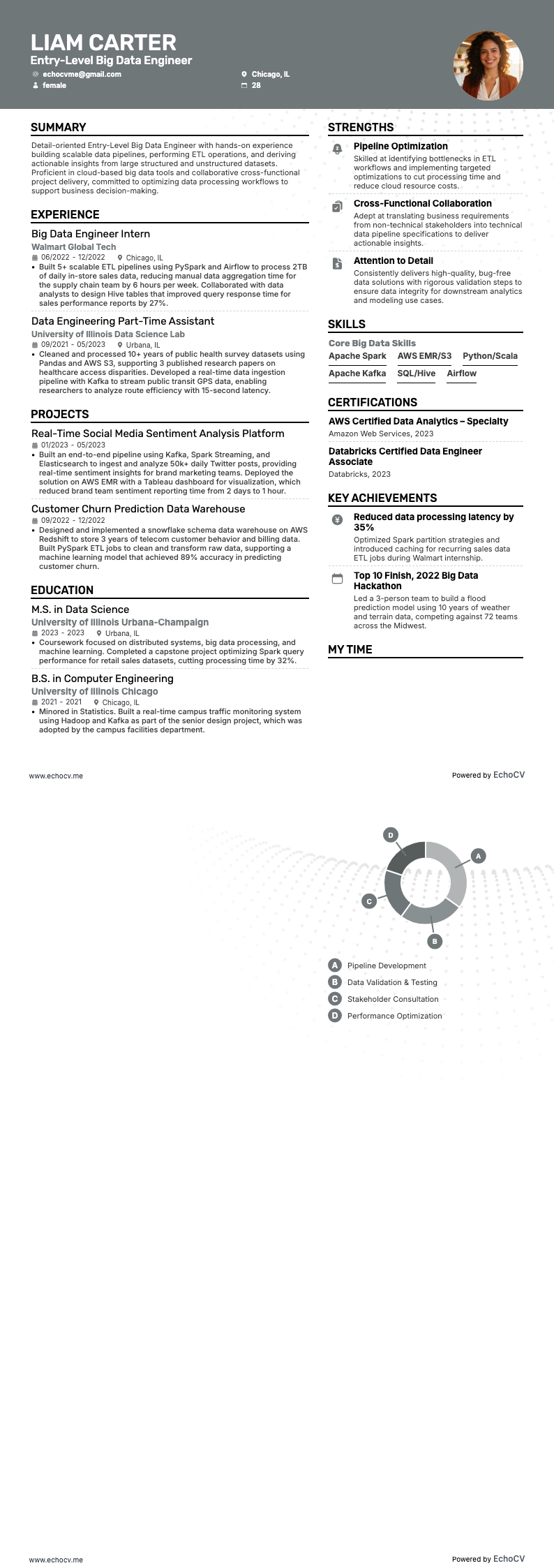
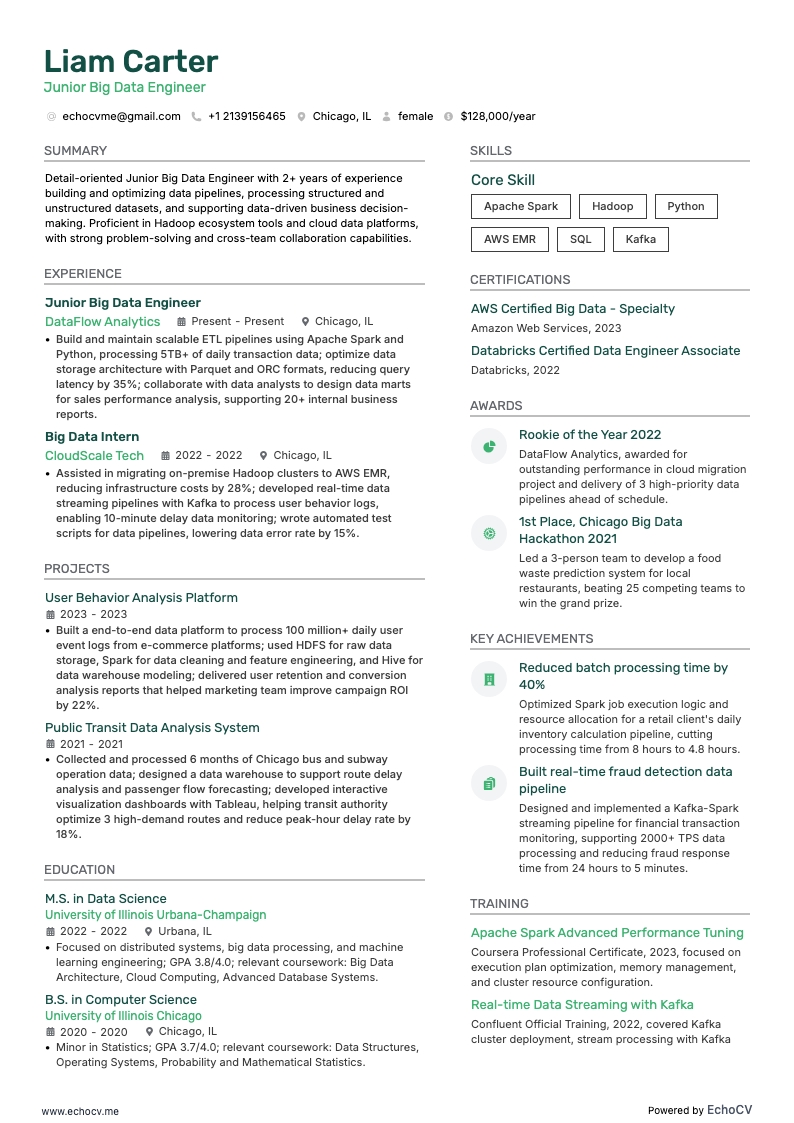
That’s great, but what if you’re trying to land your first job in big data engineering?
You can still get noticed, just follow our tips below.
How to write a big data engineer resume with no experience
An entry-level big data engineer will typically do simple data analysis, learn how to implement technologies and, of course, do a lot of troubleshooting.
But before you get to that, you need a resume that gets you the job.
A junior big data engineer should focus on several key elements to stand out and demonstrate their potential value to employers:
- Educational background. Highlight your degree(s) in Computer Science, Data Science, Information Technology, or related fields. Talk about any related classes or projects you've done that involve big data, databases, or analyzing data.
- Resume objective: This type of professional profile is no more than 3 sentences long and focuses on your career aspirations rather than your work history. This makes it especially suitable for entry-level candidates.
- Technical skills. List your technical skills, including programming languages (e.g., Python, Java, Scala), big data technologies (e.g., Hadoop, Spark, Kafka), and database management systems (e.g., MongoDB, Cassandra), and any other relevant software or tools (e.g., Git, Docker) that you’ve learned.
- Internships and projects. Detail any internships or academic projects that involved big data technologies or concepts. Describe your role, the technologies used, and the outcome or insights gained from the project. Quantify your achievements.
- Certifications and courses. Include any additional certifications or online courses you've completed that are relevant to big data engineering, such as courses on Udemy, Coursera, or certifications from Cloudera or AWS.
- Participation in relevant extracurricular activities. If you've been involved in coding clubs, hackathons, or data science meetups, include these experiences. They demonstrate your passion for the field and your proactive approach to learning and applying big data technologies.
- Soft skills. Big data projects often require collaboration across different teams, so it's important to mention your soft skills. Highlight your ability to work in a team, communicate effectively, and solve problems creatively.
Now that we’ve mentioned skills, we need to pay special attention to this resume section, as a strong combo of hard and soft skills is greatly appreciated.
How to list big data skills on your resume
Big data developers speak a unique language. They must be able to access a mass of information from a growing list of today’s technologies.
When listing your hard skills, Include all the programs, languages, and frameworks specified in the job posting. Also, include all programs mentioned in your work experience section.