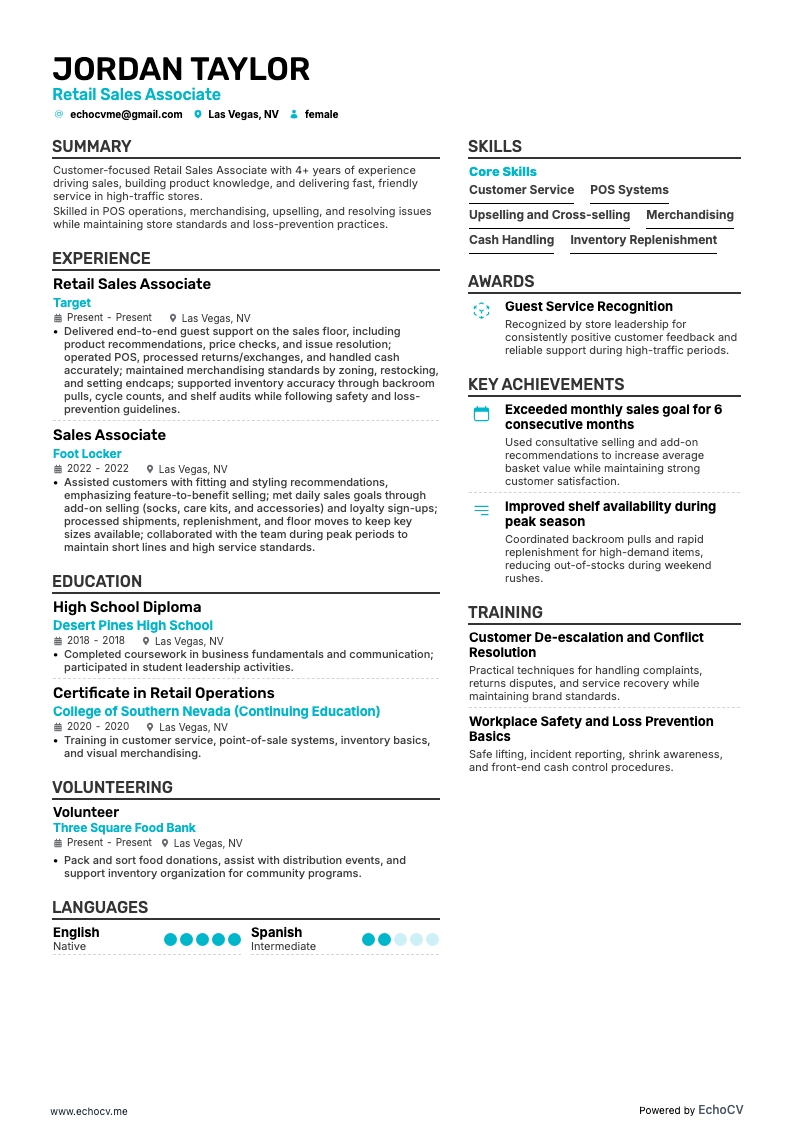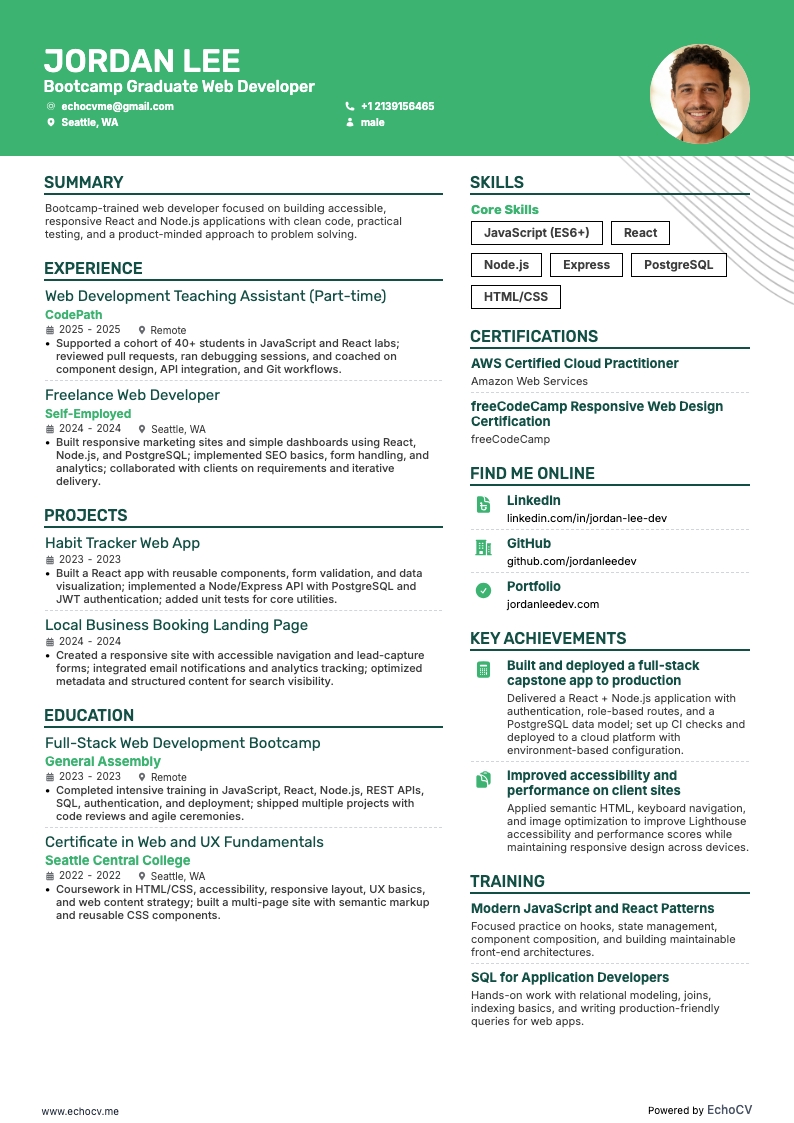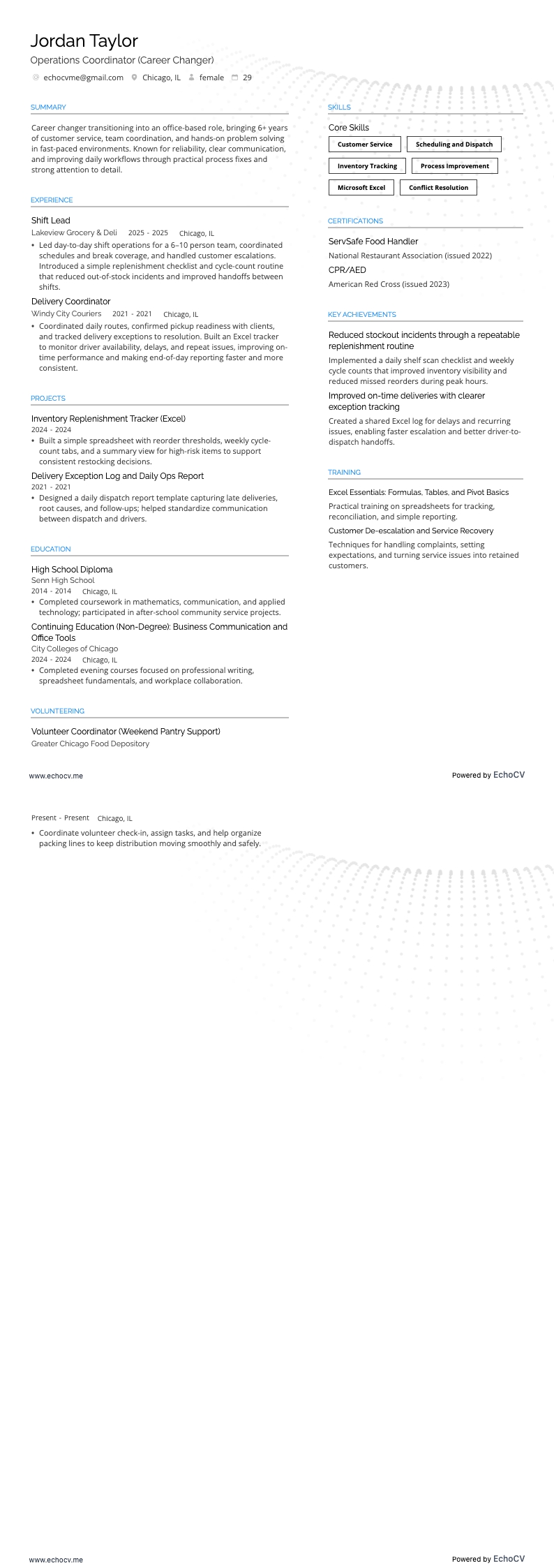
Once you’ve organized your resume with the right building blocks, the next step is detailing your experience so employers see your impact without relying on a degree.
How to write your No Degree resume experience
Your work experience section carries even more weight when you don't hold a formal degree because it serves as your primary proof of professional capability. Hiring managers reviewing candidates without degrees prioritize demonstrated impact—shipped work, role-relevant tools and methods you've applied, and measurable outcomes—over descriptive task lists that simply recount daily duties.
Each entry should include:
- Job title
- Company and location (or remote)
- Dates of employment (month and year)
Three to five concise bullet points showing what you owned, how you executed, and what outcomes you delivered:
- Ownership scope: the products, platforms, systems, markets, or teams you held direct accountability for, framed to show that your responsibilities matched or exceeded what a degree-holding candidate would typically manage.
- Execution approach: the tools, frameworks, technologies, or methods you used to make decisions and deliver work, proving you built fluency through hands-on practice rather than coursework.
- Value improved: the changes you drove in quality, performance, efficiency, accessibility, reliability, or risk—areas that confirm your contributions produced tangible, role-relevant progress without relying on credentials as a proxy.
- Collaboration context: how you partnered with cross-functional teams, clients, vendors, or external stakeholders, demonstrating that you earned trust and operated effectively across organizational boundaries regardless of educational background.
- Impact delivered: the outcomes you produced expressed through results, scale, or business impact rather than activity, giving hiring managers concrete evidence that your work moved meaningful metrics forward.
When you lack a degree, every bullet in your experience section must do double duty—establishing both your competence and your credibility. Anchor each point in what you owned, the specific way you executed, and the result that followed. This structure shifts the reader's attention from what's absent on your resume to what's undeniably present: a track record of real, verifiable contribution.