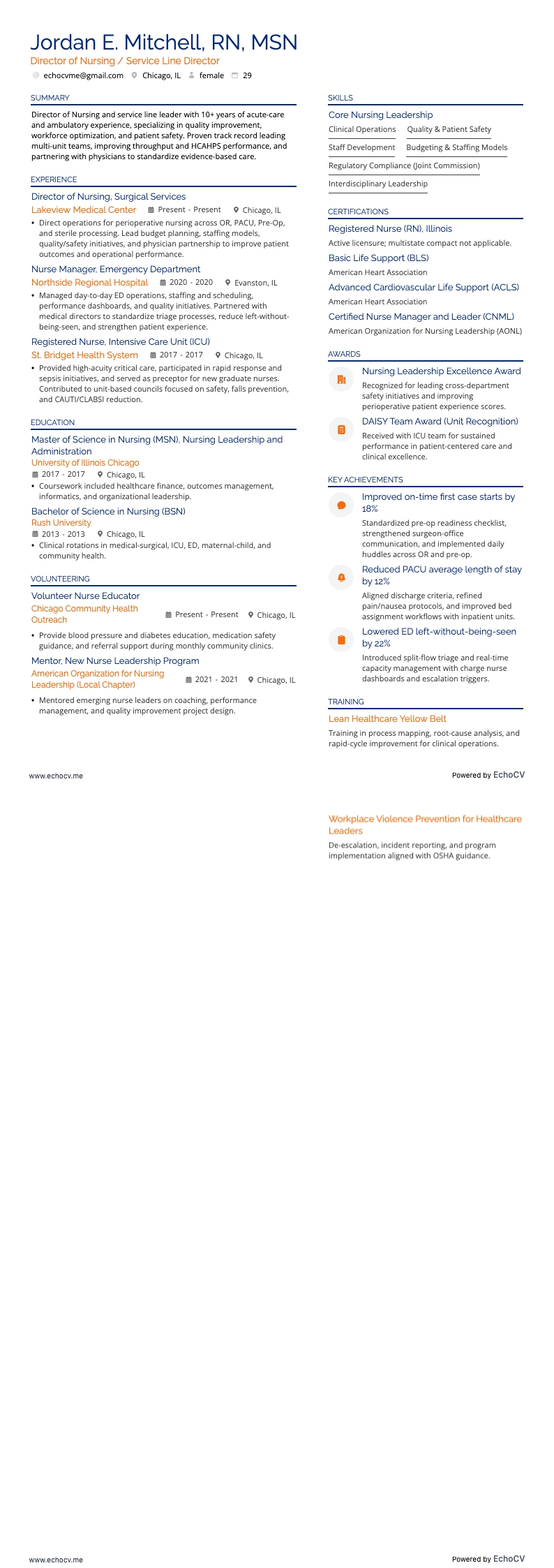
간호부장 / 서비스 라인 디렉터 전체 미리보기

간호사 이력서 예시 31가지

EchoCV

EchoCV 팀 작성

업데이트: 11/3/20248 min read

이 가이드의 모든 이력서 예시를 보거나, 나만의 프롬프트로 맞춤 이력서 예시를 생성해 보세요

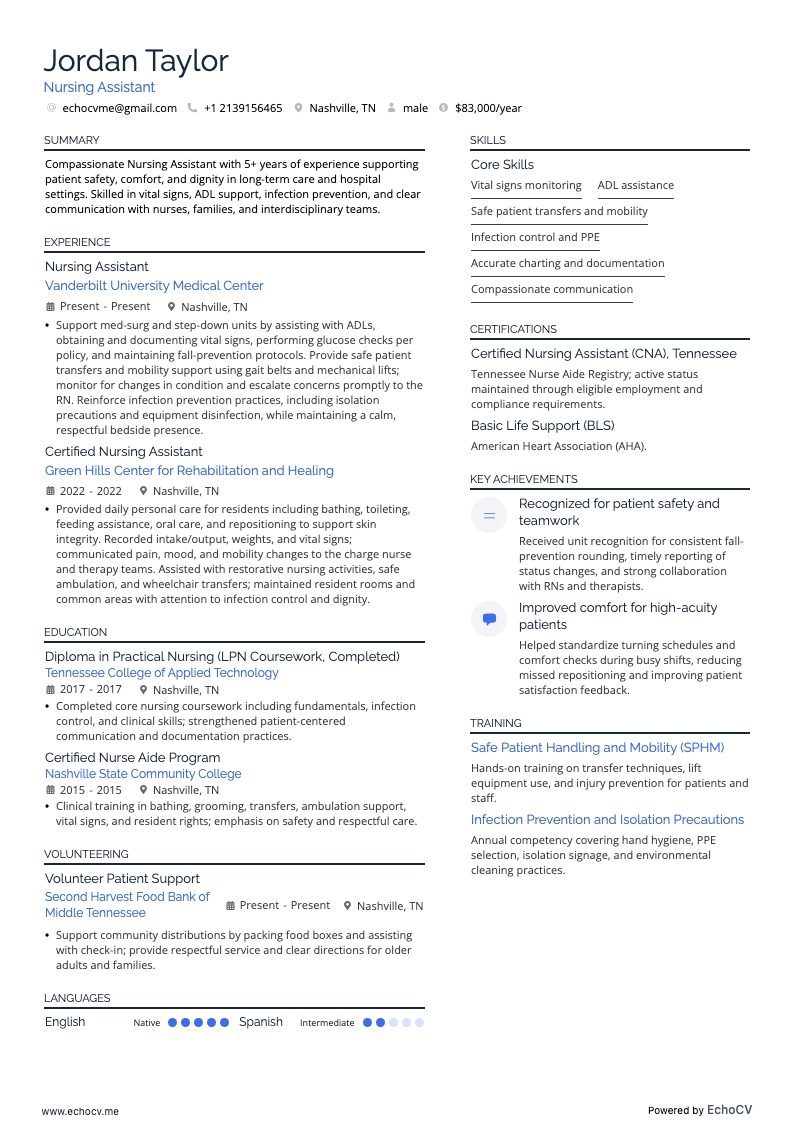
간호부장 / 서비스 라인 디렉터 example resume
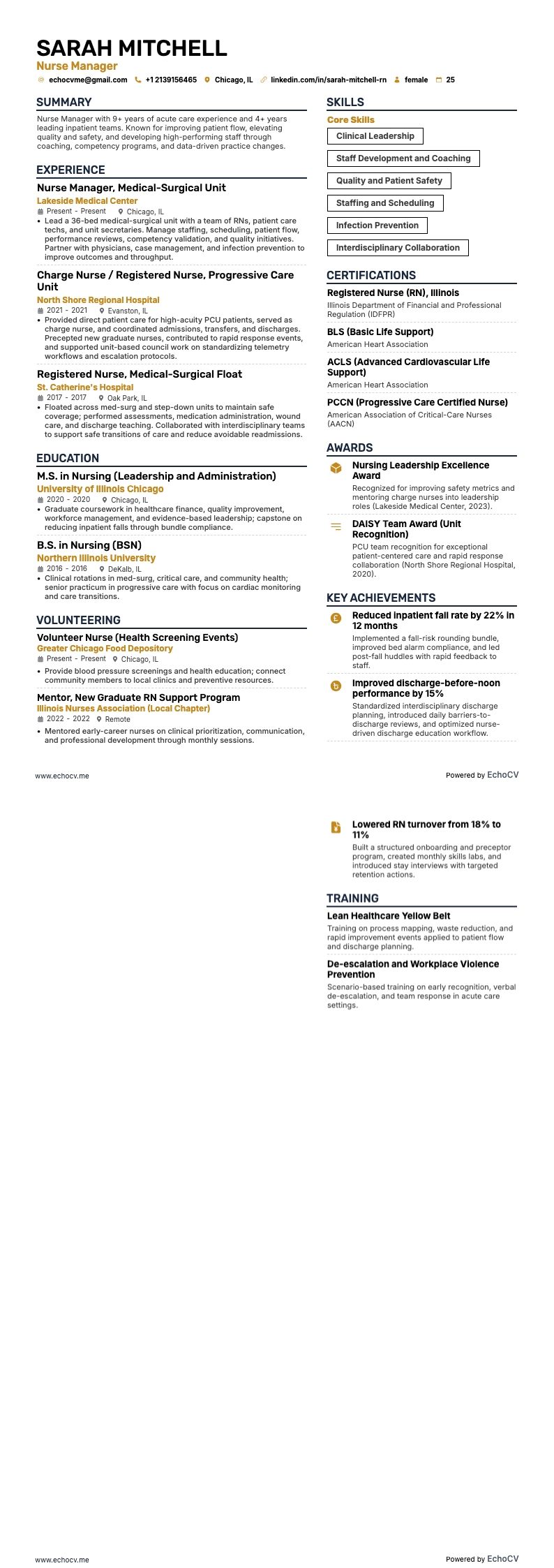
간호부장 / 서비스 라인 디렉터

간호 관리자 example resume

간호 관리자

간호조무사 example resume

간호조무사

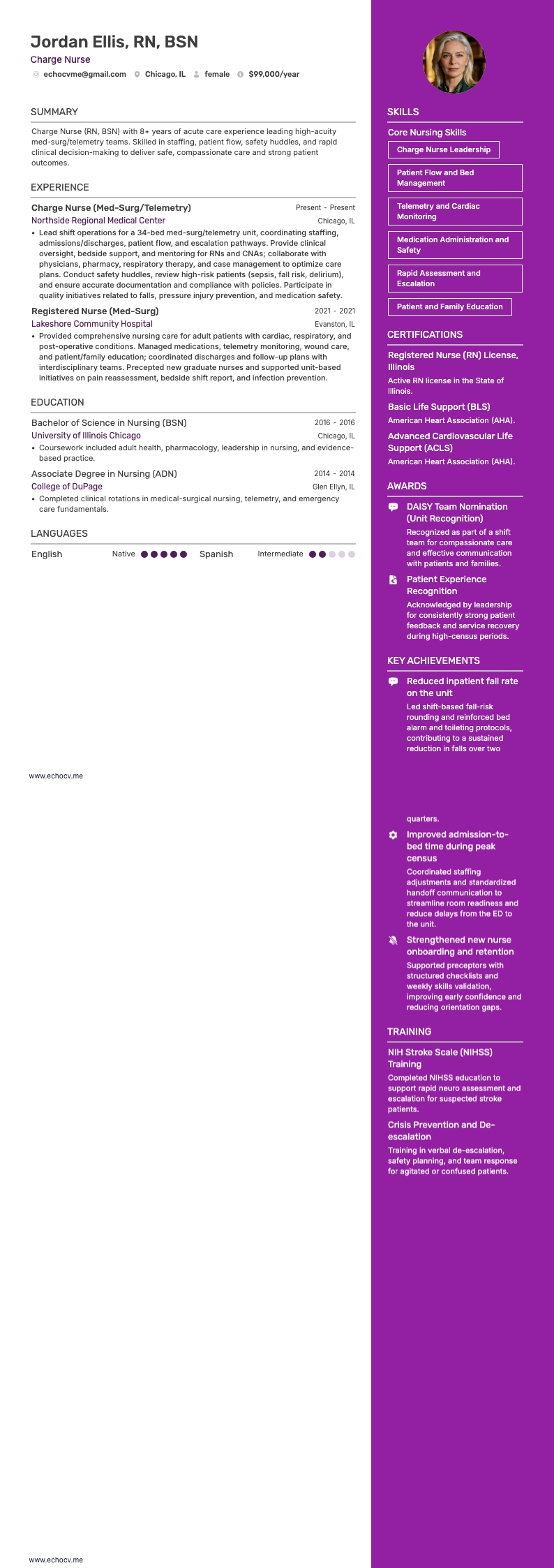
수간호사 example resume

수간호사

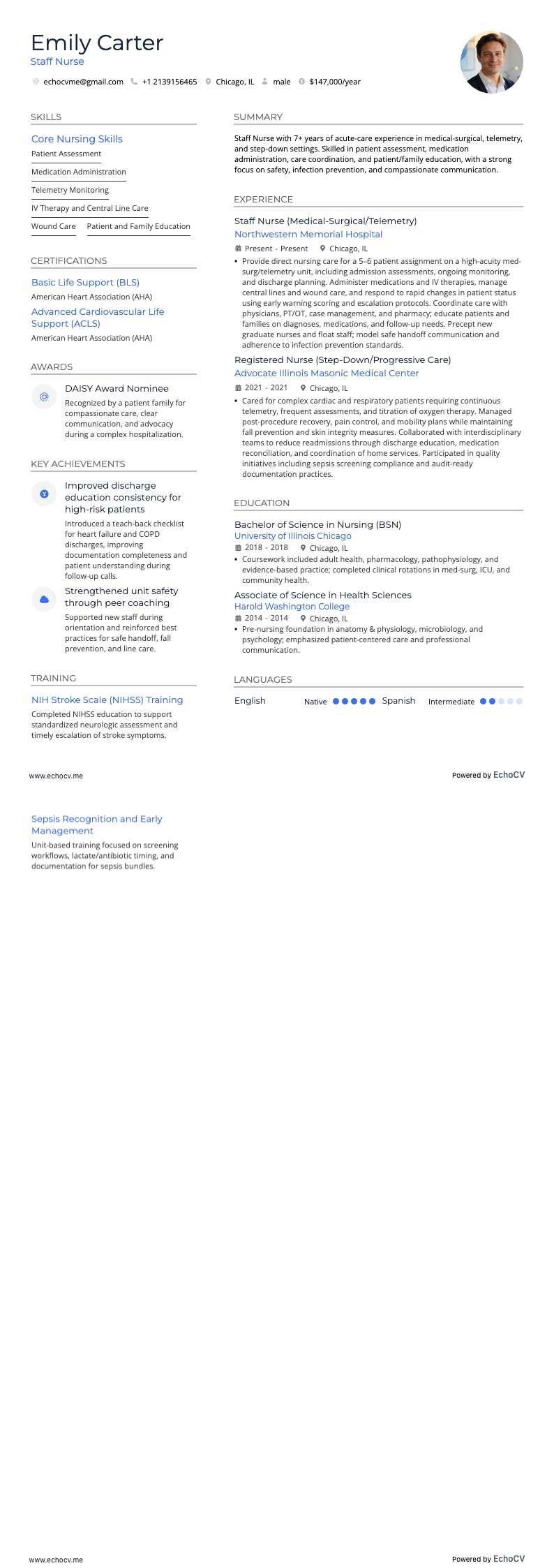
병동 간호사 example resume

병동 간호사

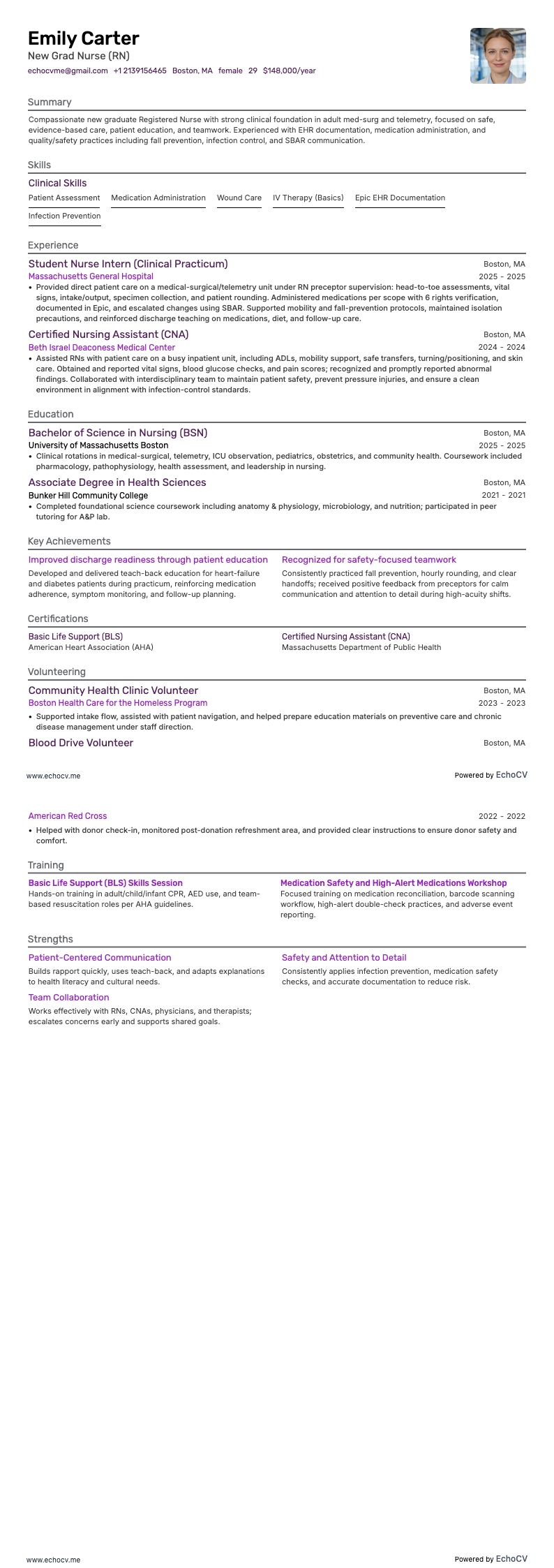
신입 간호사 example resume

신입 간호사

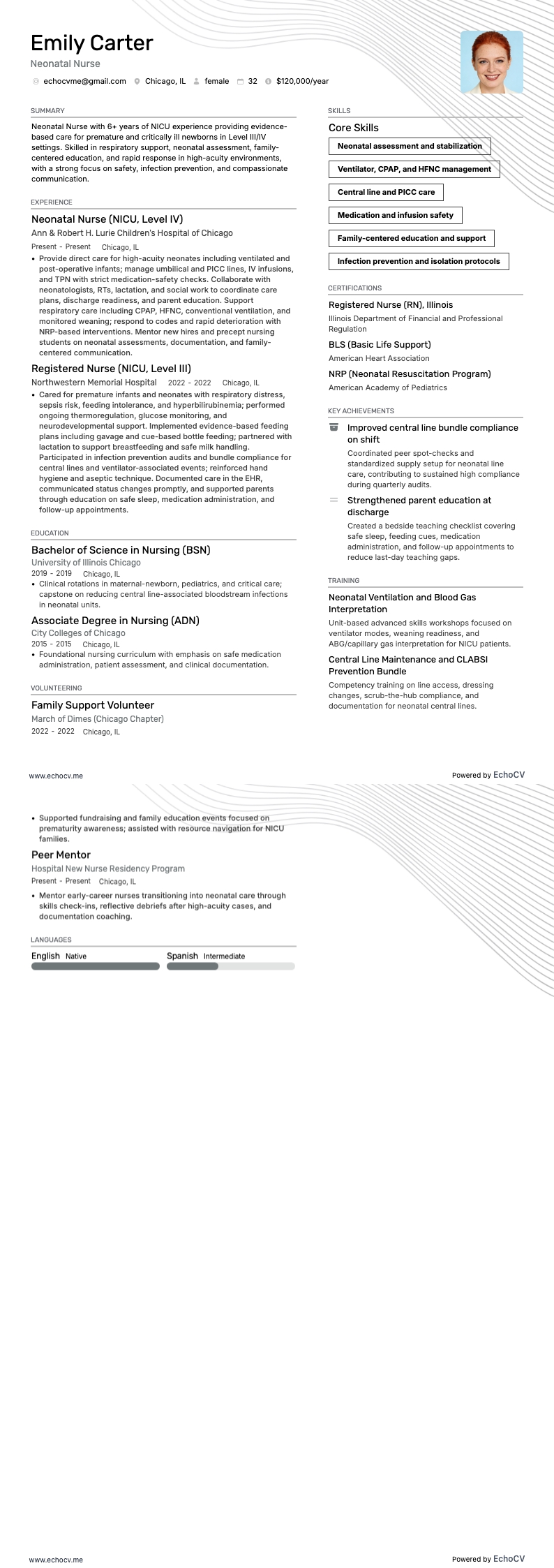
신생아 간호사 example resume

신생아 간호사

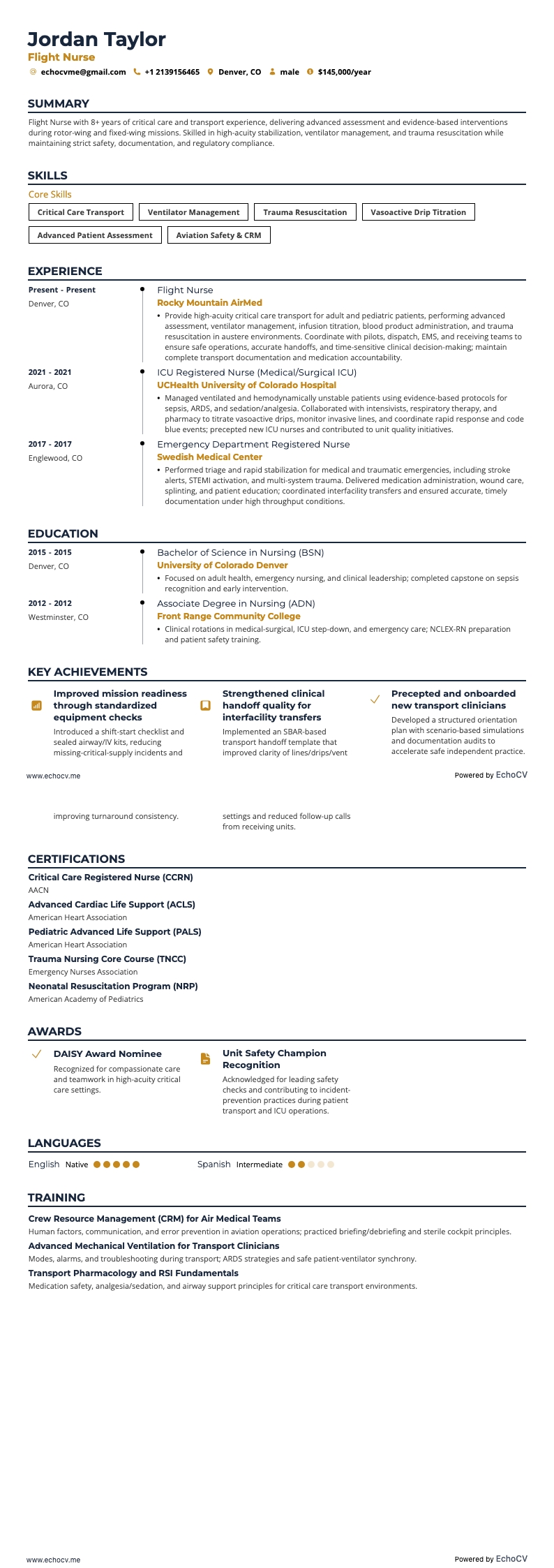
항공 간호사 example resume

항공 간호사

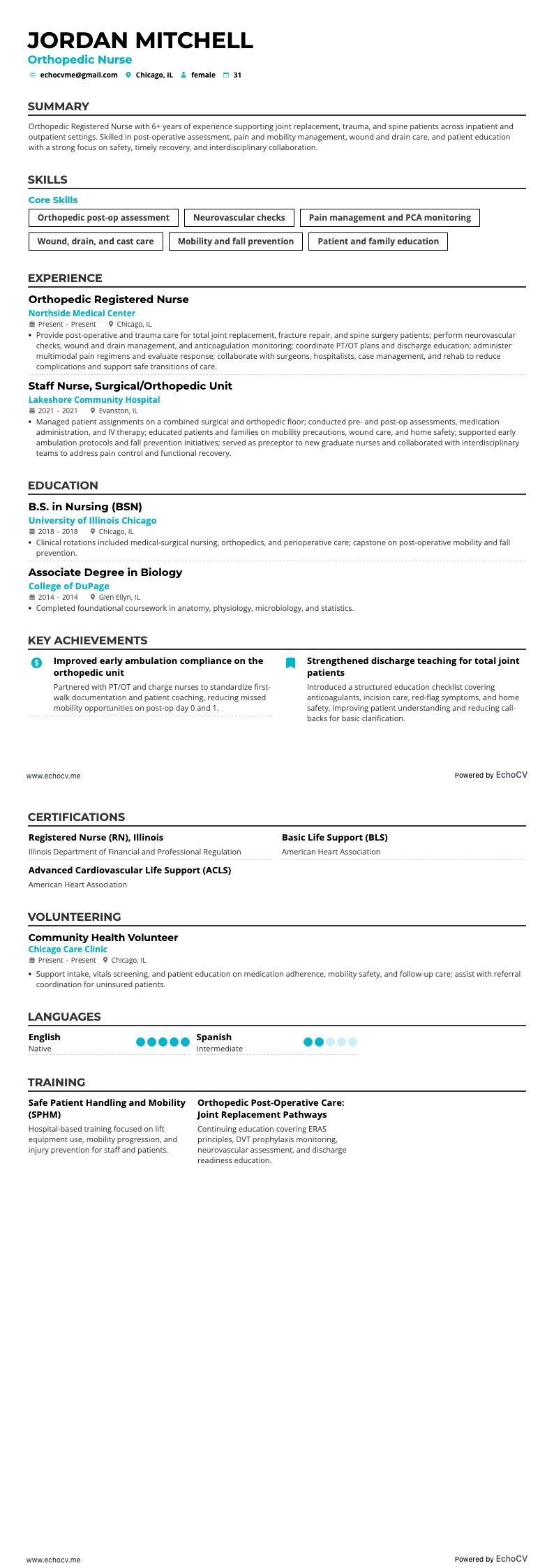
정형외과 간호사 example resume

정형외과 간호사

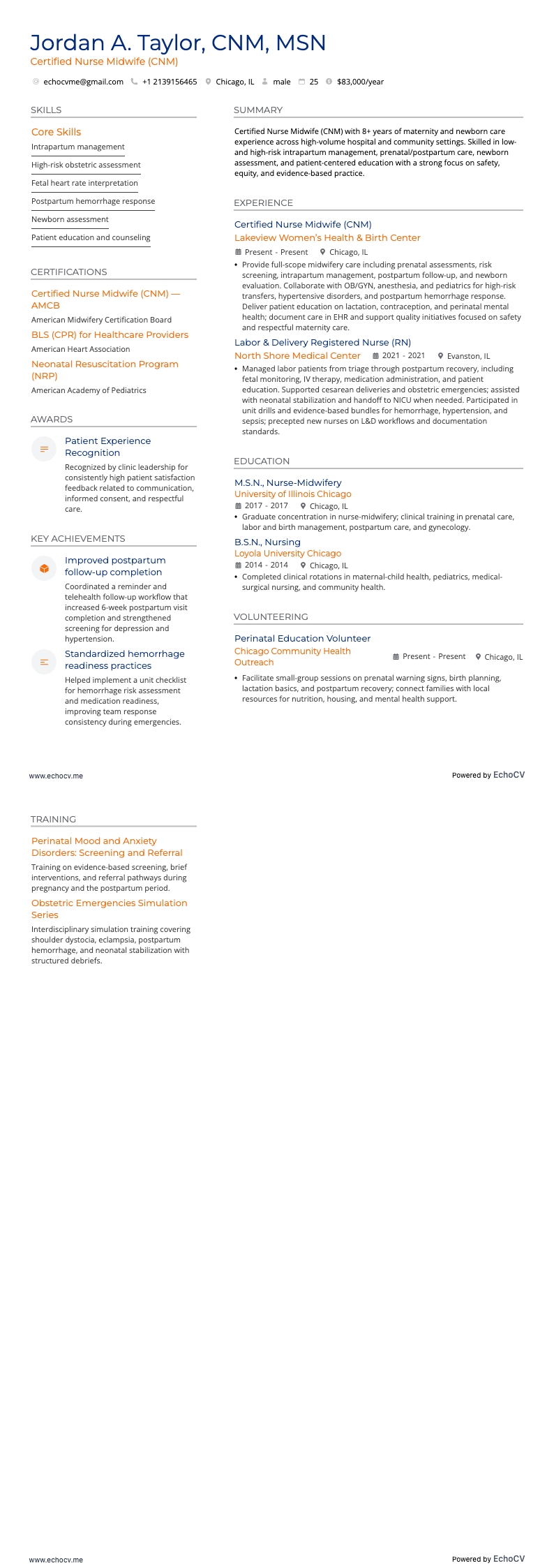
간호 조산사 (CNM) example resume

간호 조산사 (CNM)

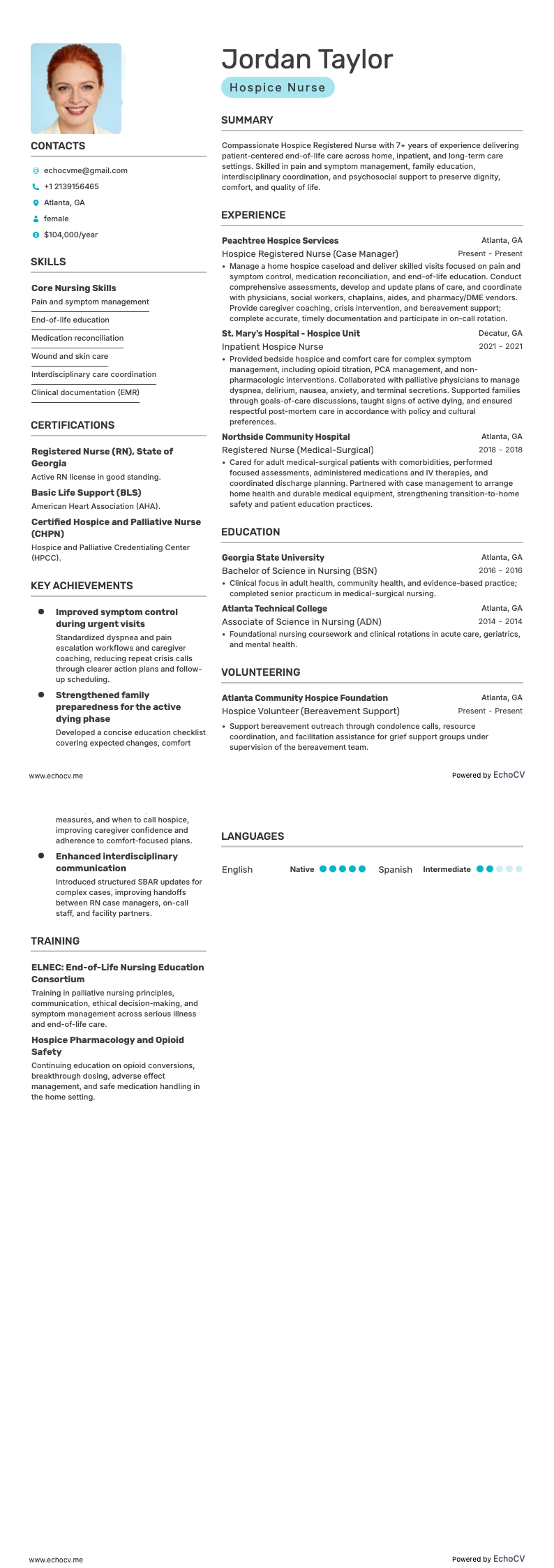
호스피스 간호사 example resume

호스피스 간호사

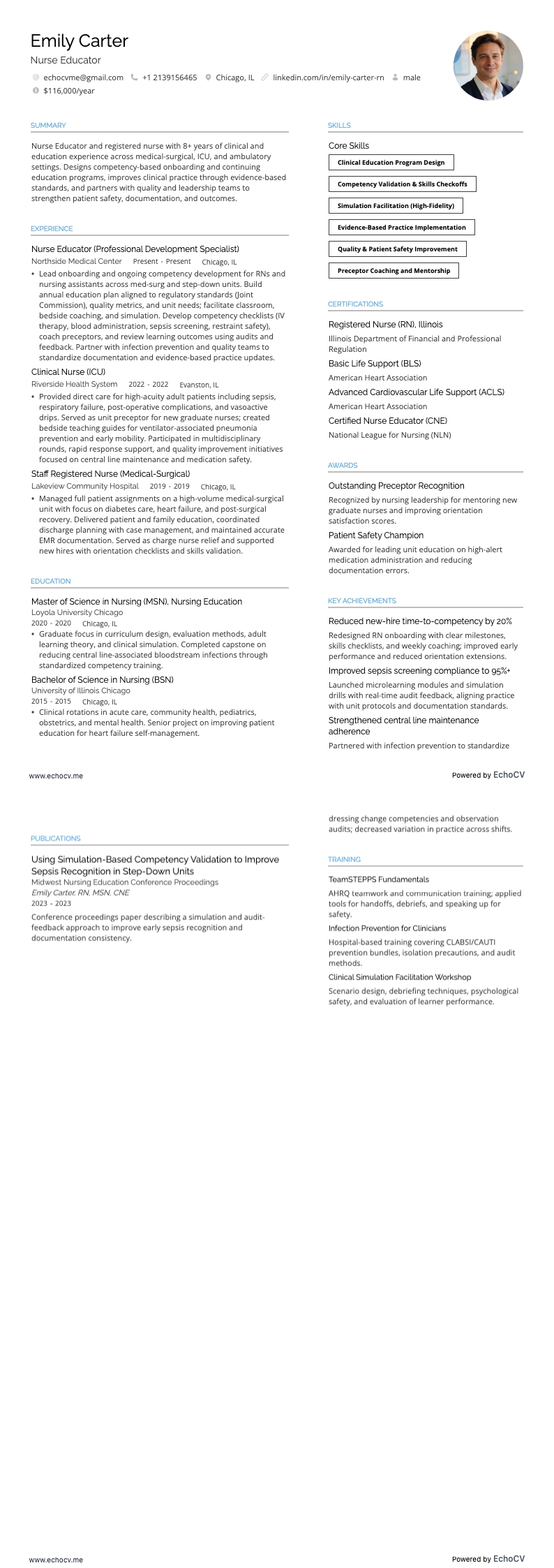
간호 교육자 example resume

간호 교육자

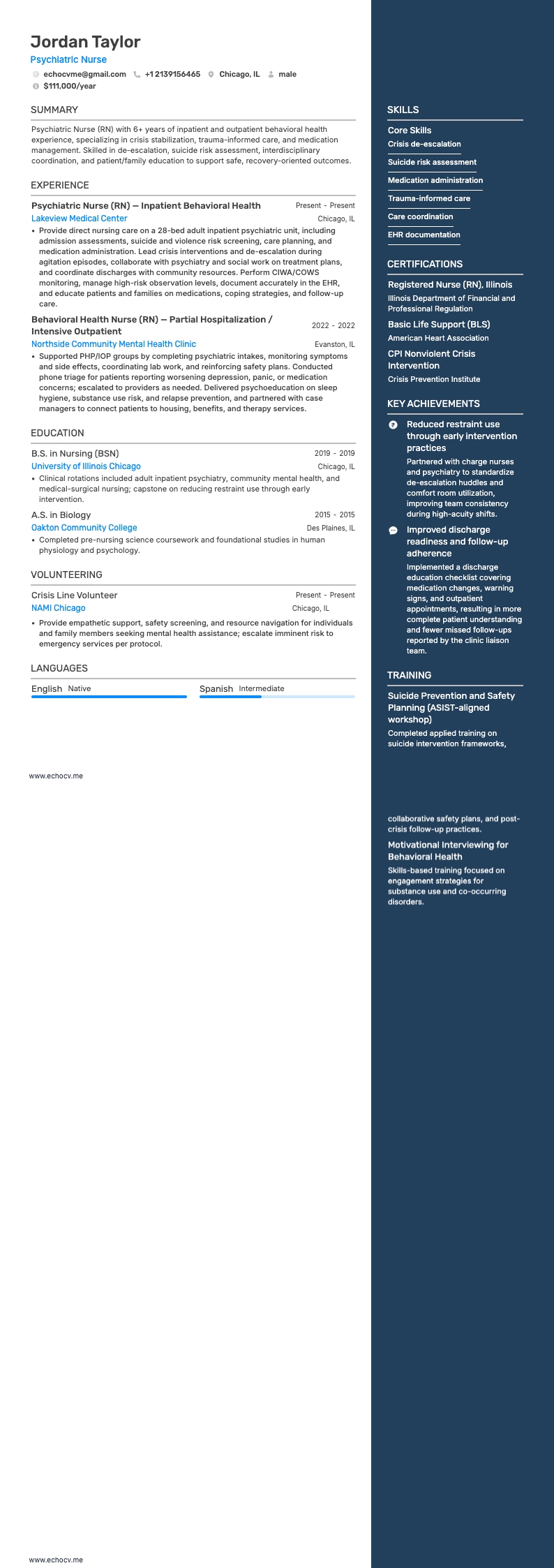
정신과 간호사 example resume

정신과 간호사

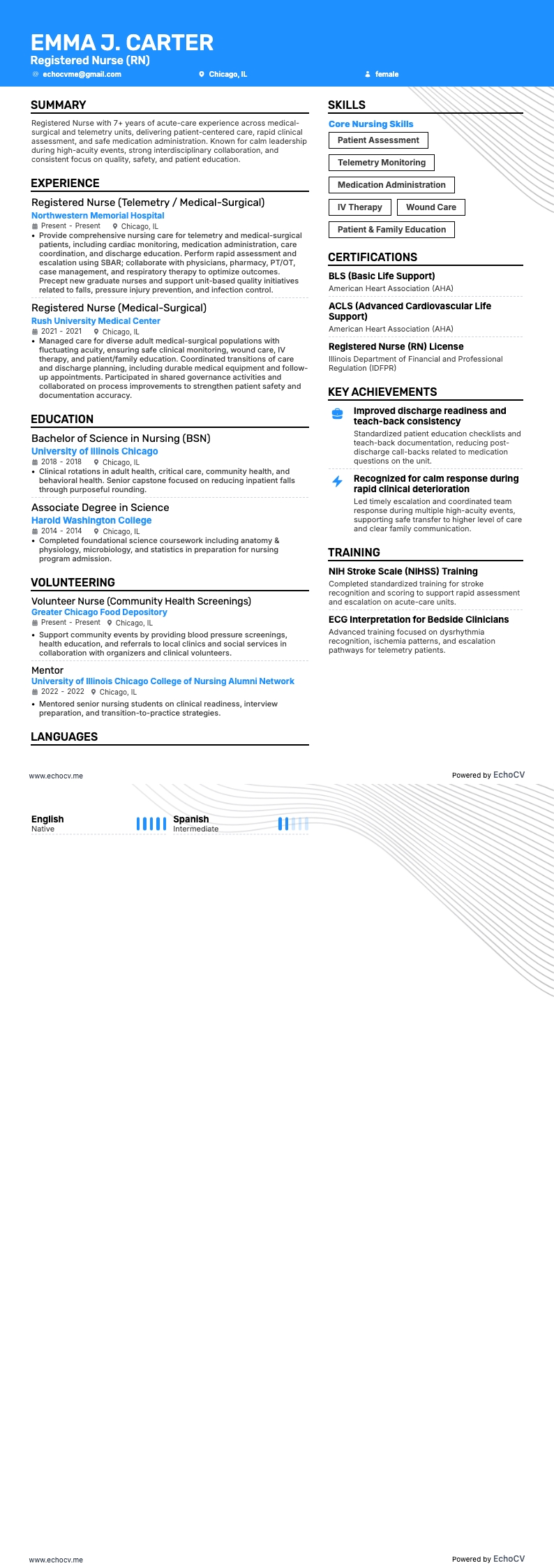
간호사 example resume

간호사

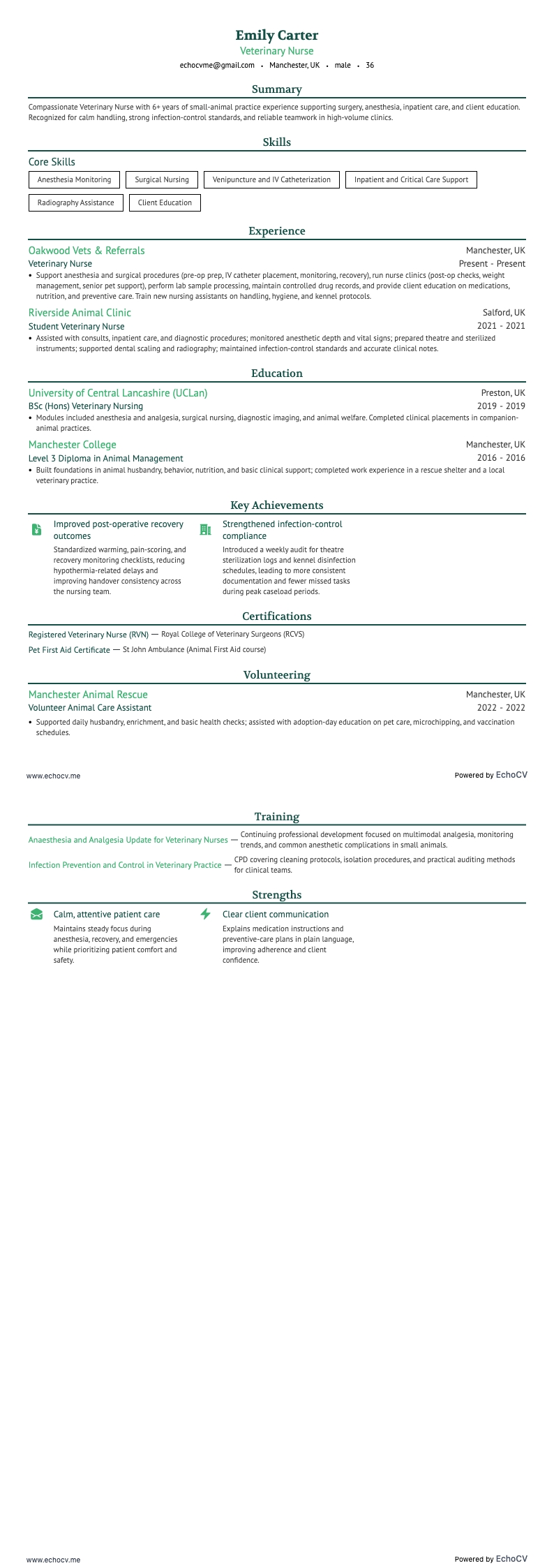
동물간호사 example resume

동물간호사

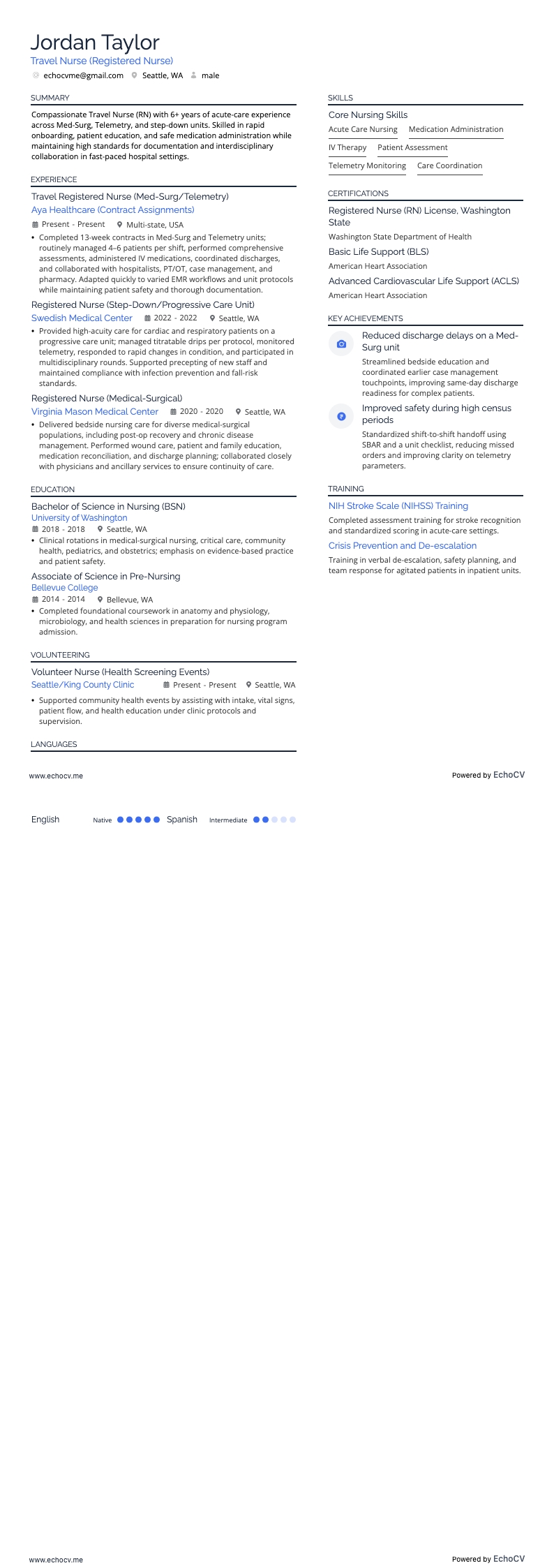
트래블 간호사 example resume

트래블 간호사

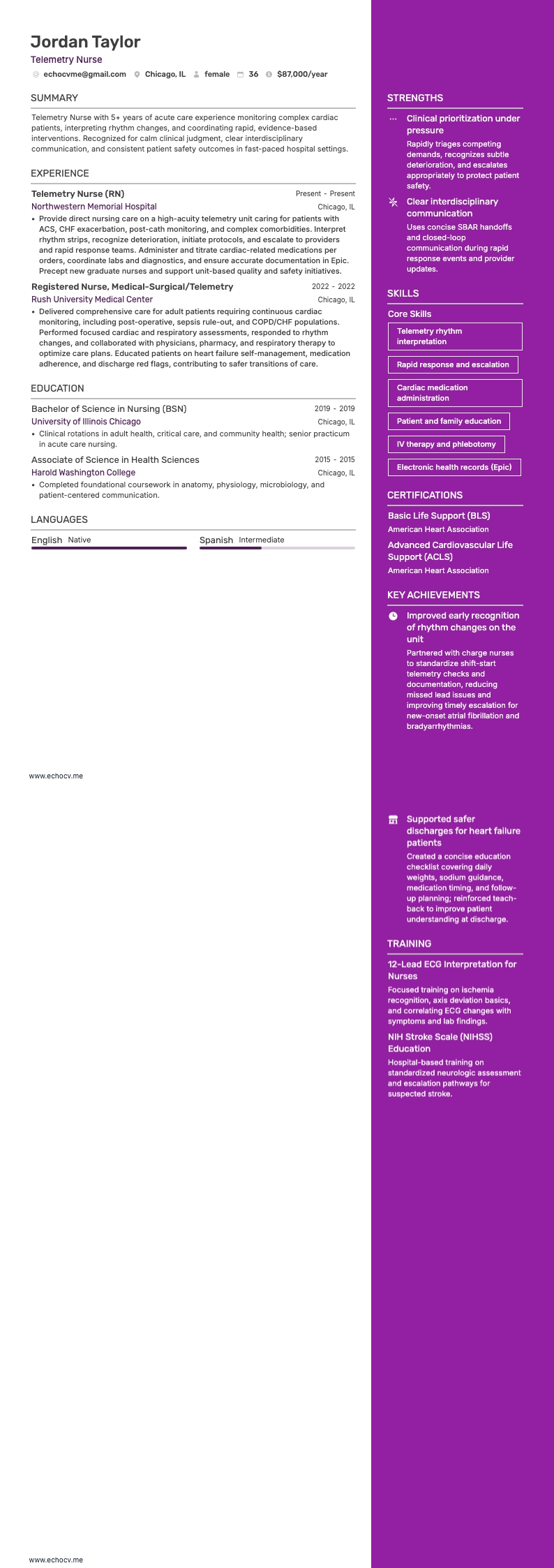
텔레메트리 간호사 example resume

텔레메트리 간호사

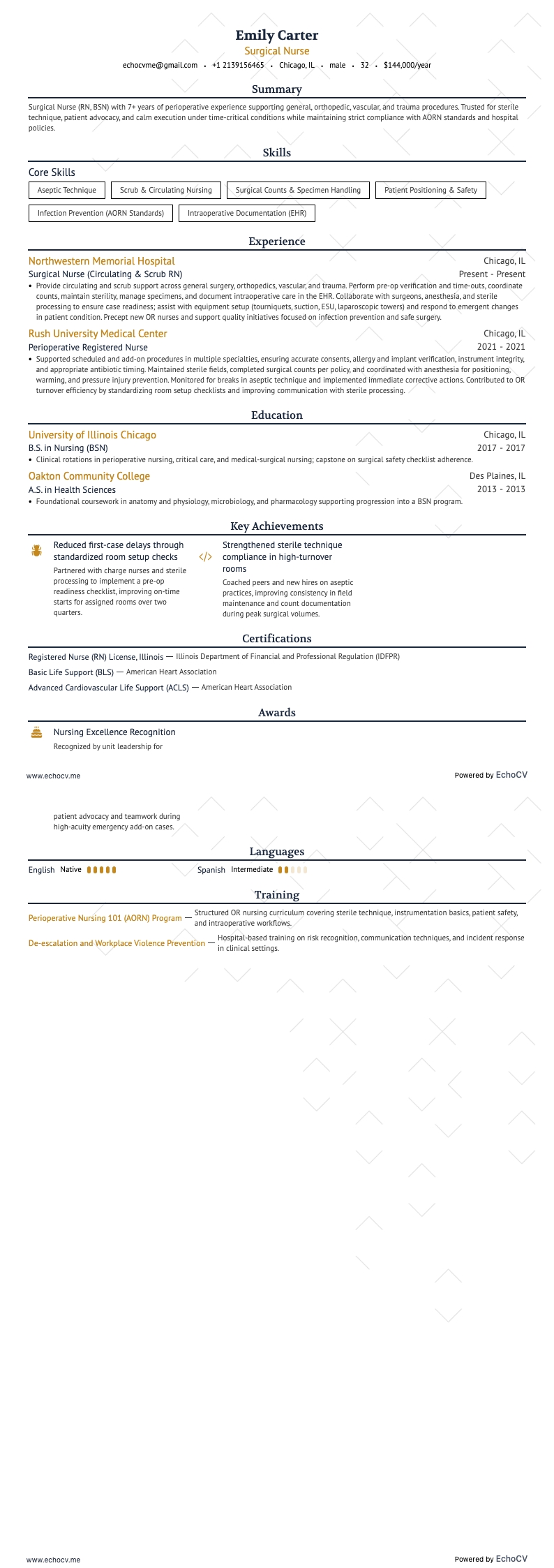
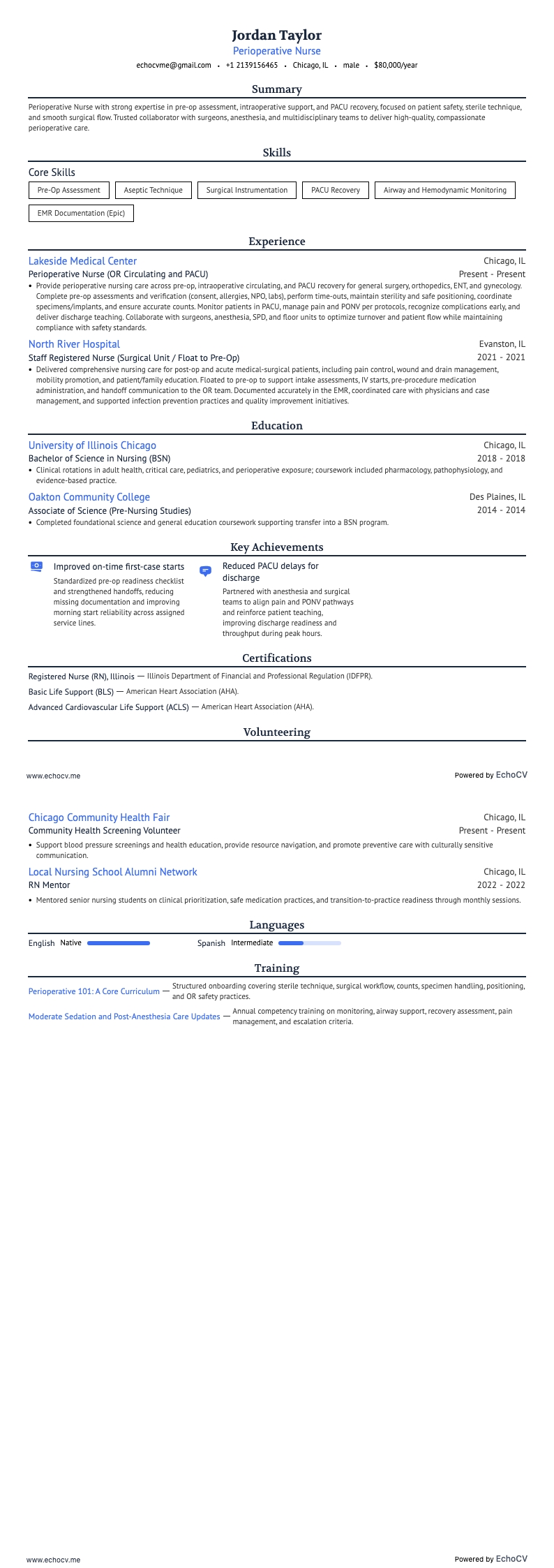
수술실 간호사 example resume

수술실 간호사

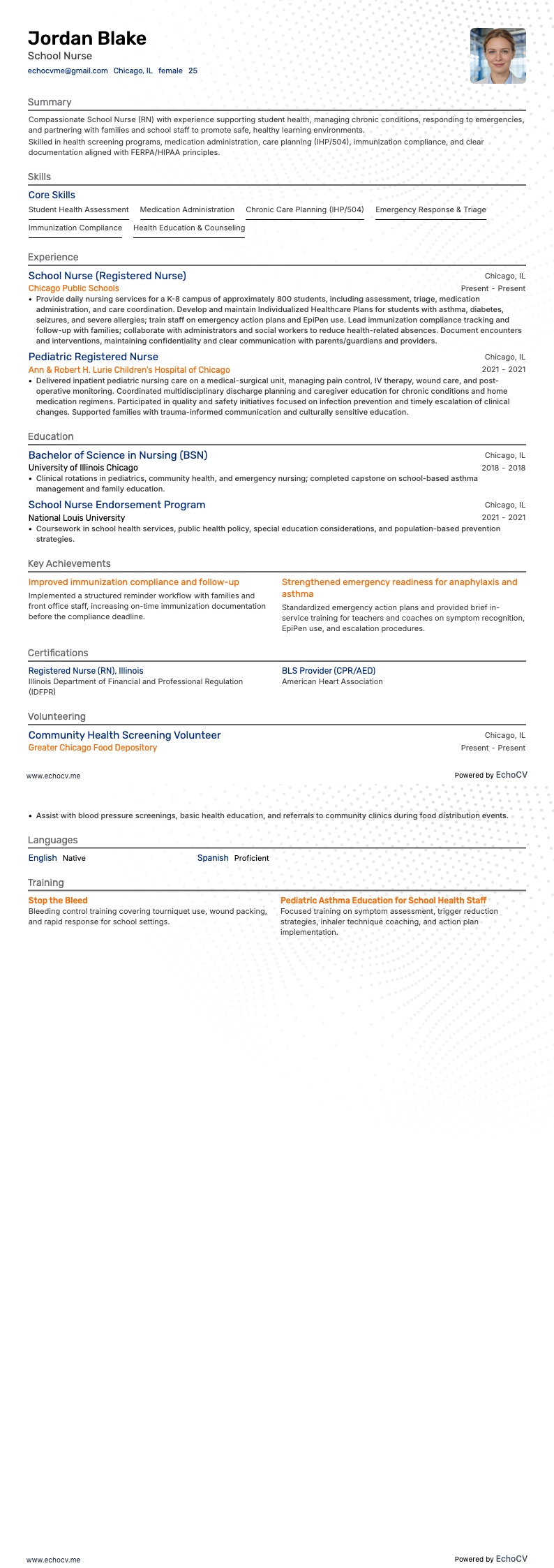
학교 간호사 example resume

학교 간호사

진료소 간호사 example resume

진료소 간호사

수술기 간호사 example resume

수술기 간호사

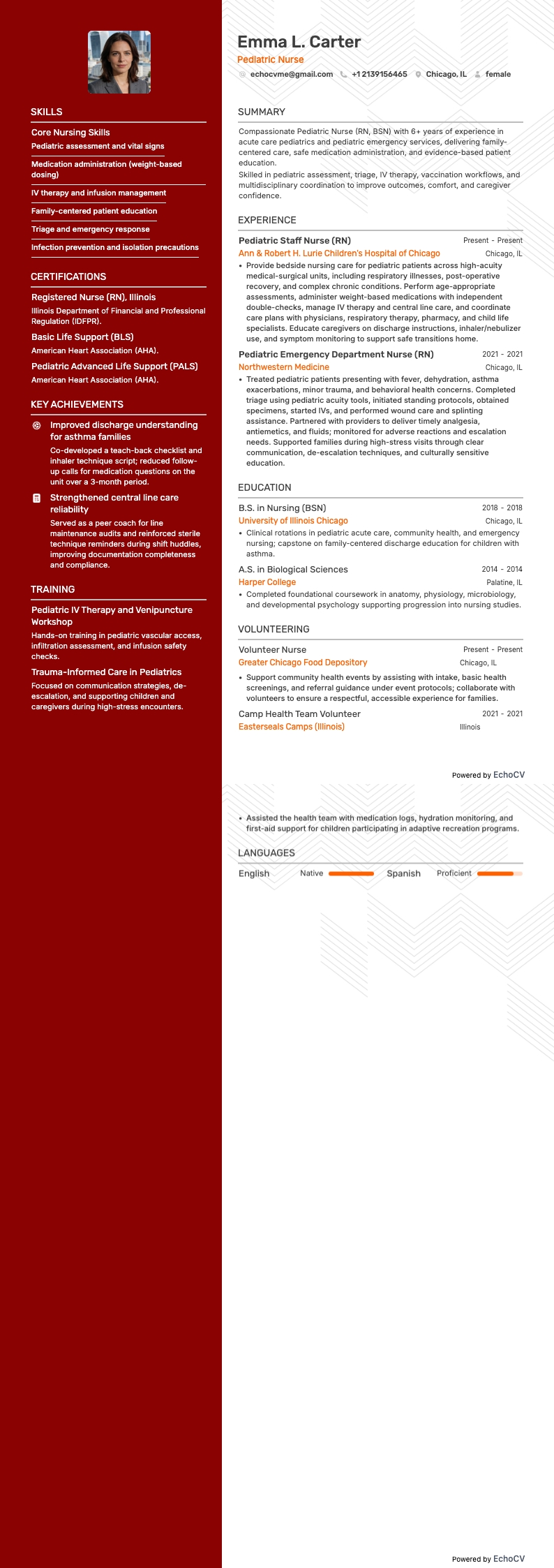
소아과 간호사 example resume

소아과 간호사

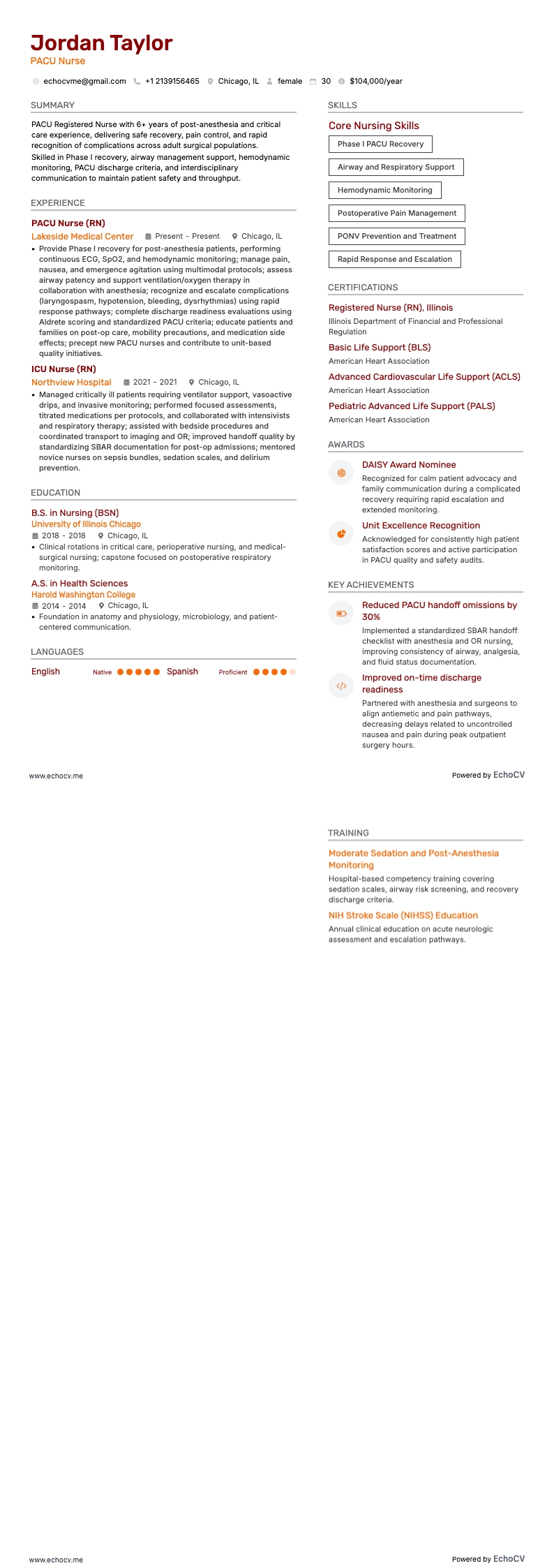
PACU 간호사 example resume

PACU 간호사

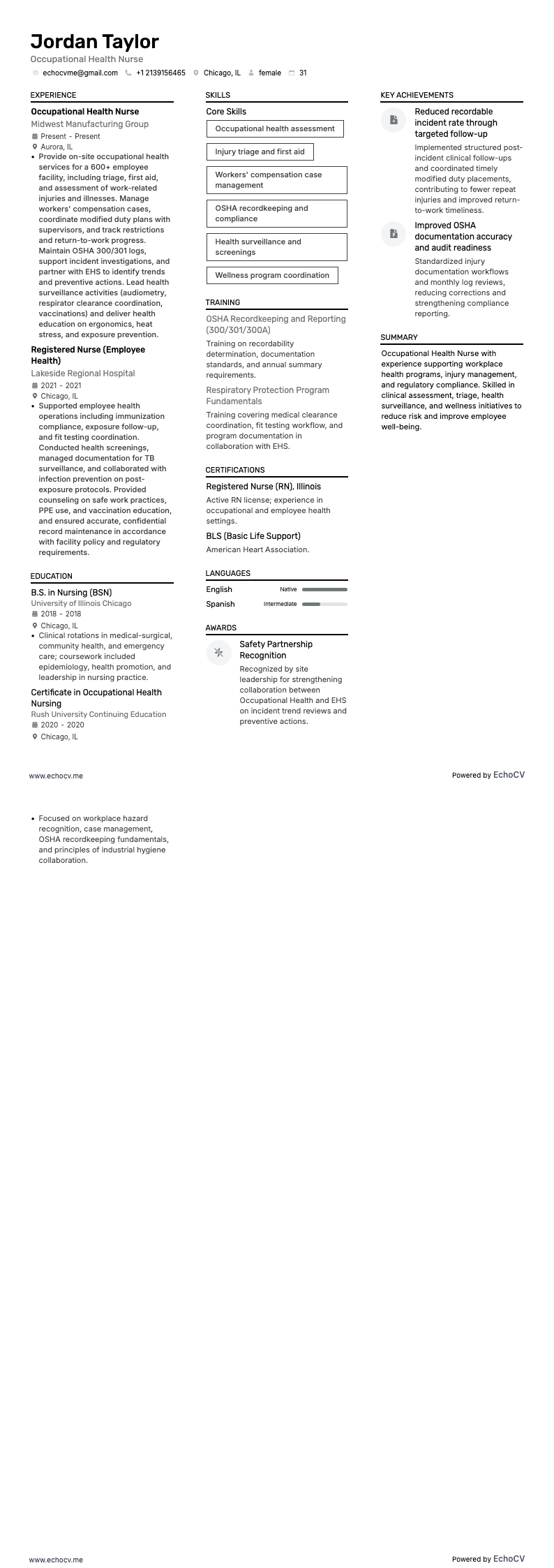
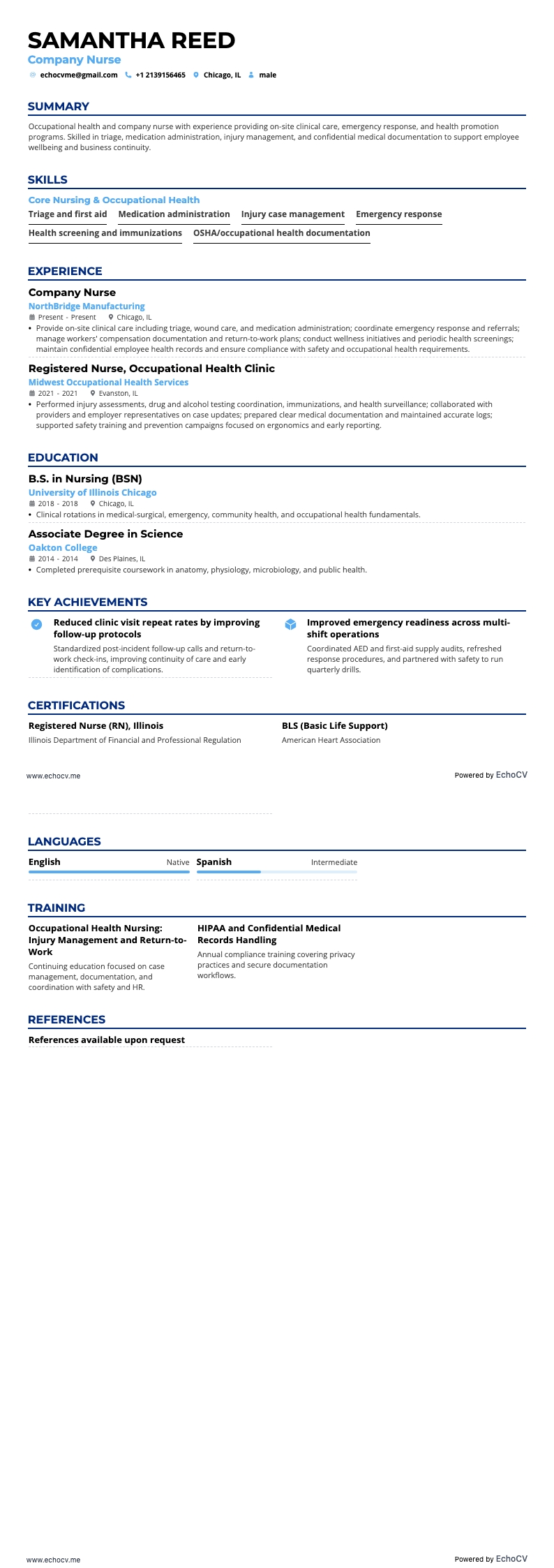
산업보건 간호사 example resume

산업보건 간호사

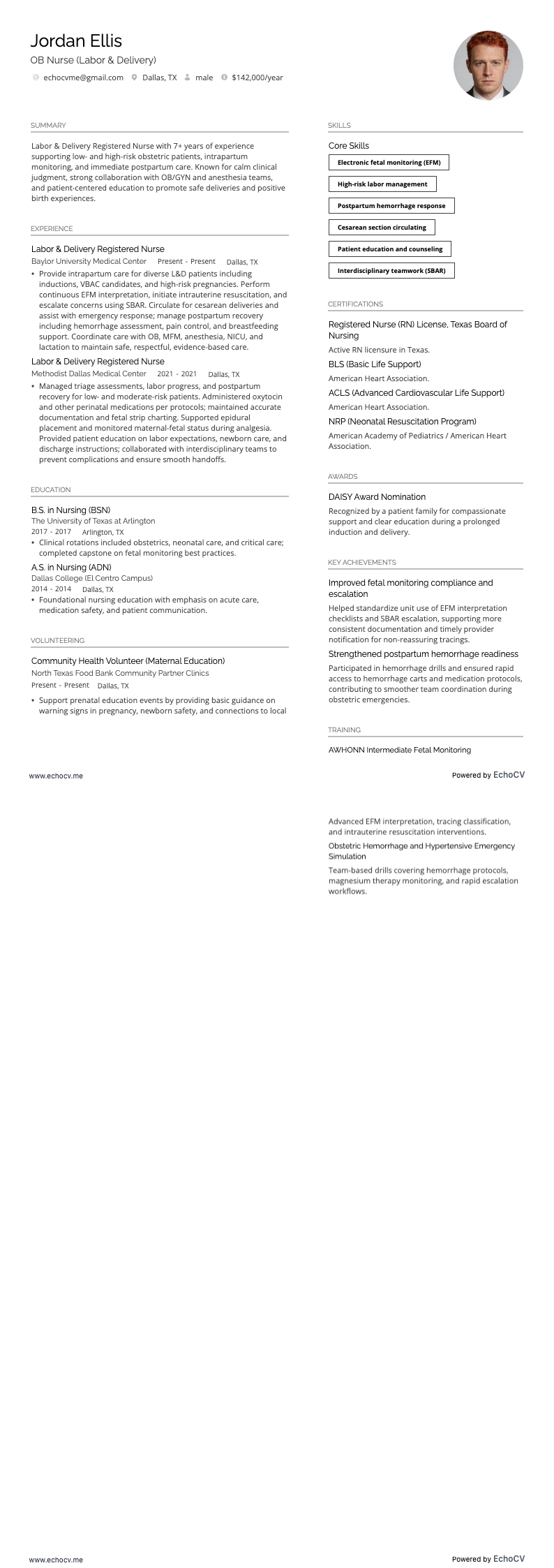
산과 간호사(진통·분만) example resume

산과 간호사(진통·분만)

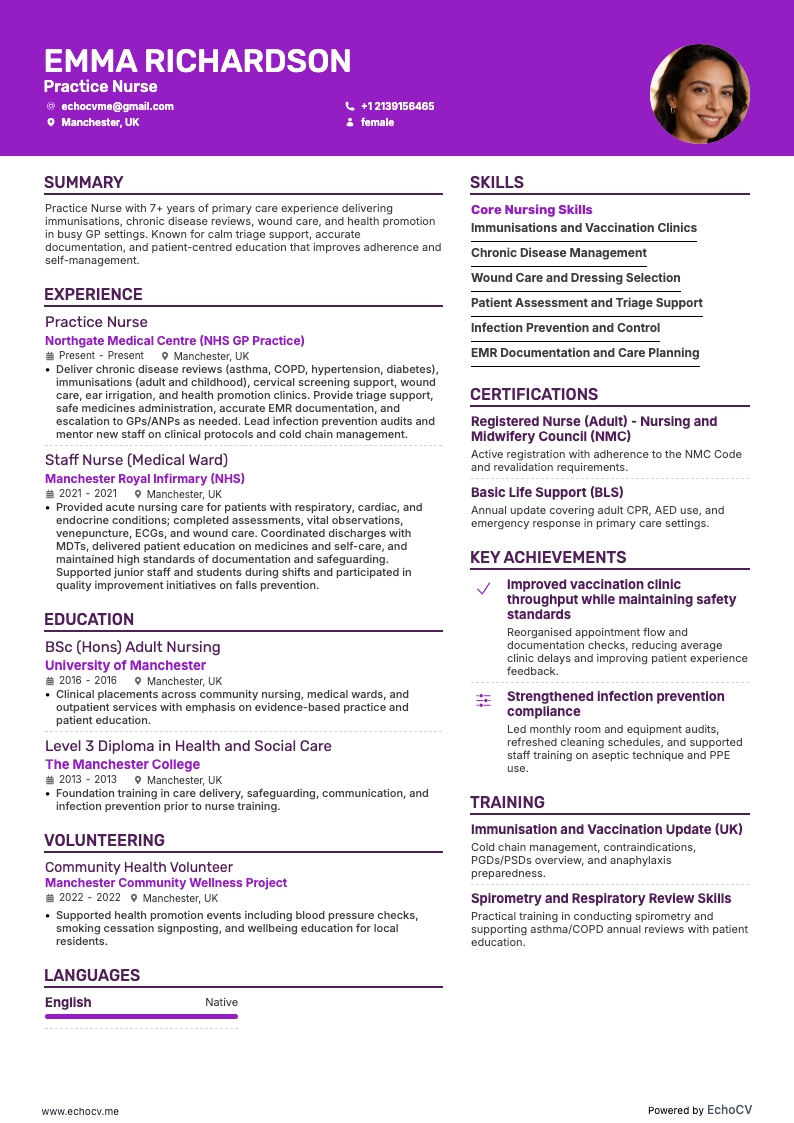
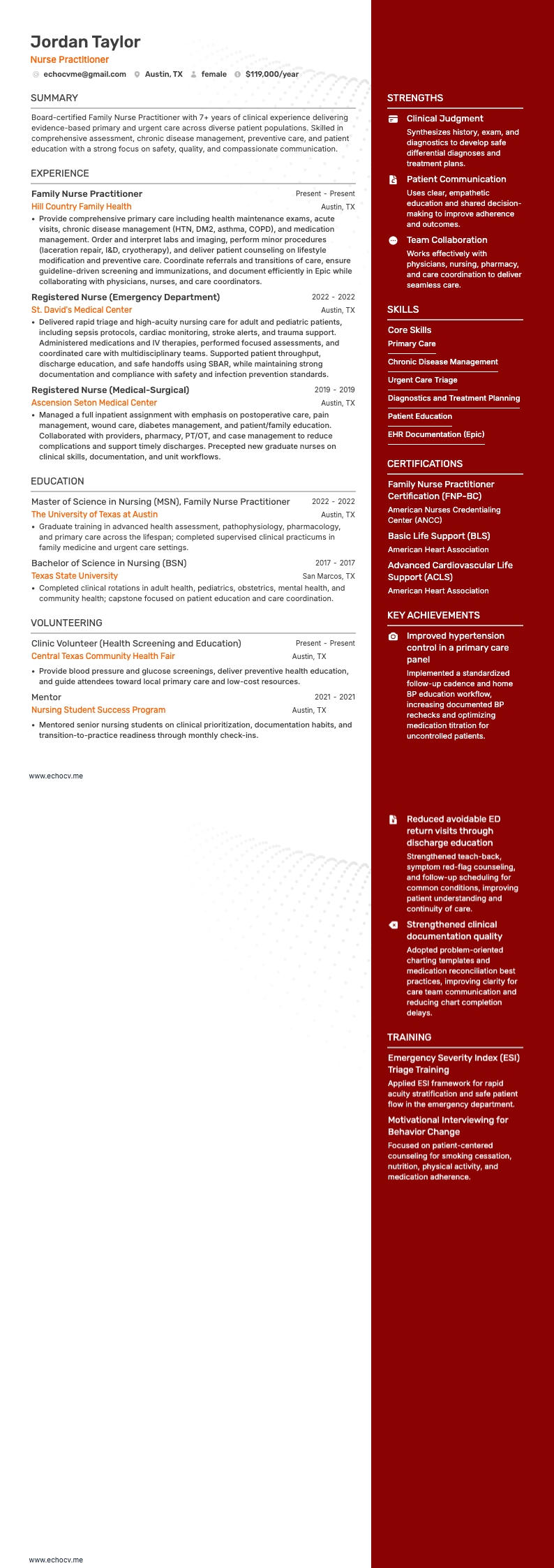
전문간호사 example resume

전문간호사

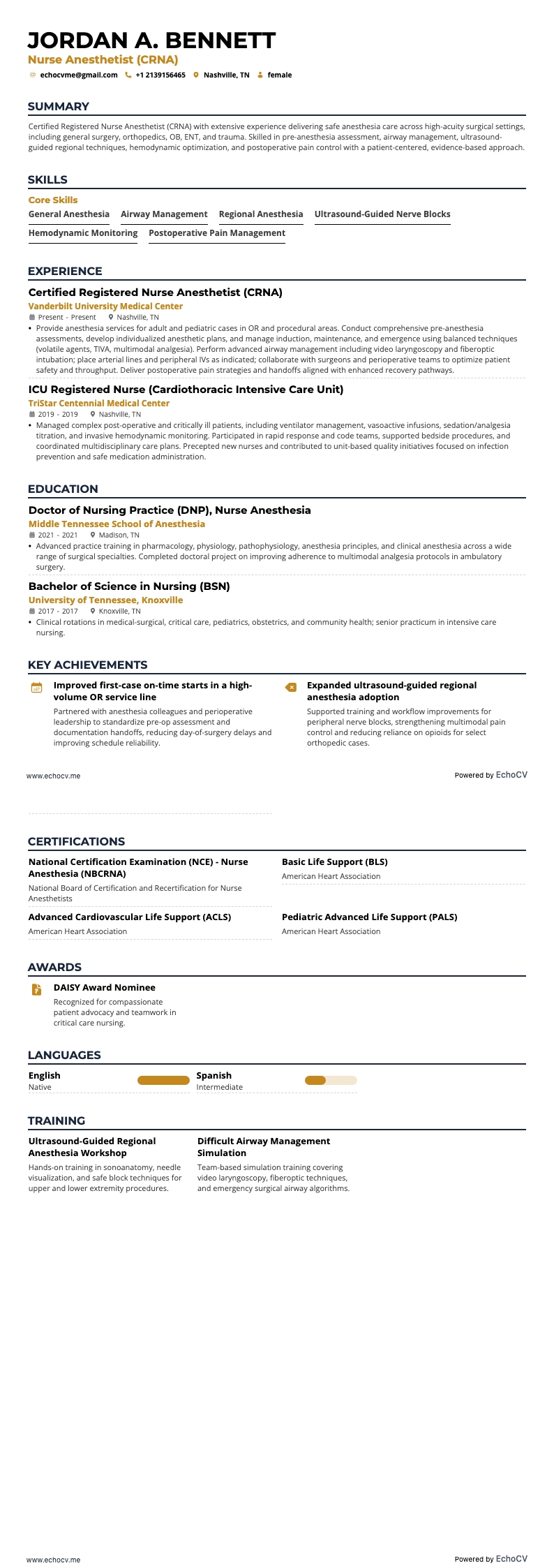
마취 간호사 example resume

마취 간호사

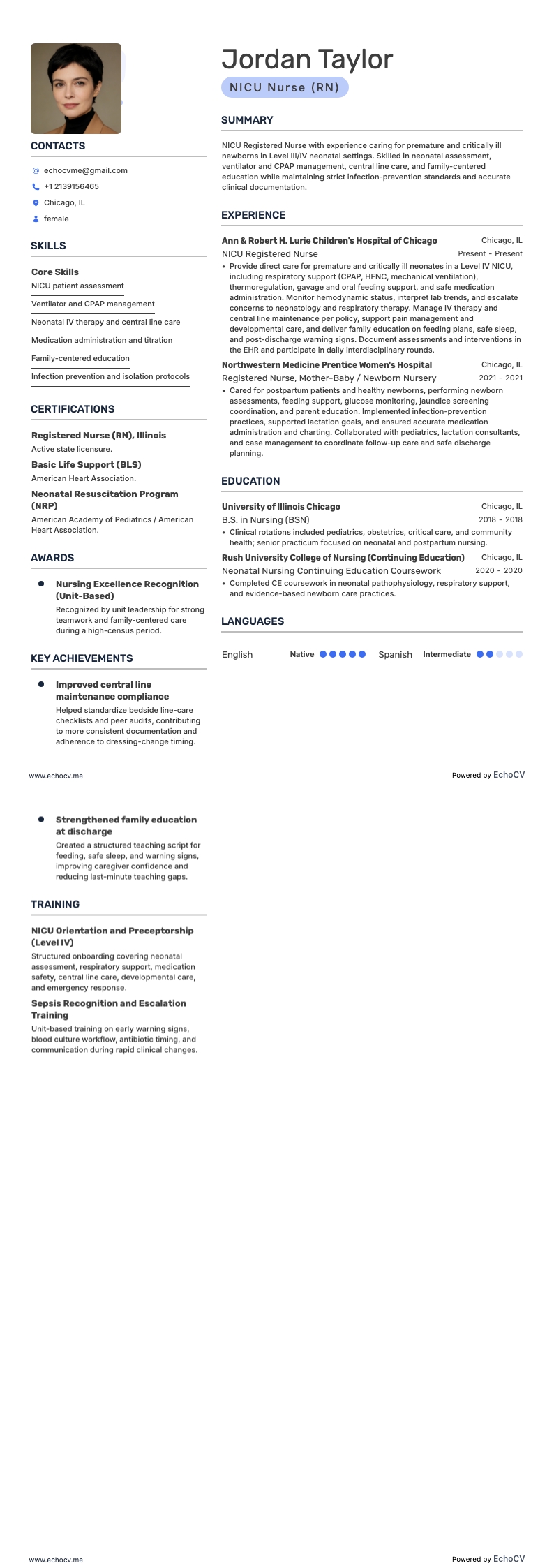
NICU 간호사 example resume

NICU 간호사

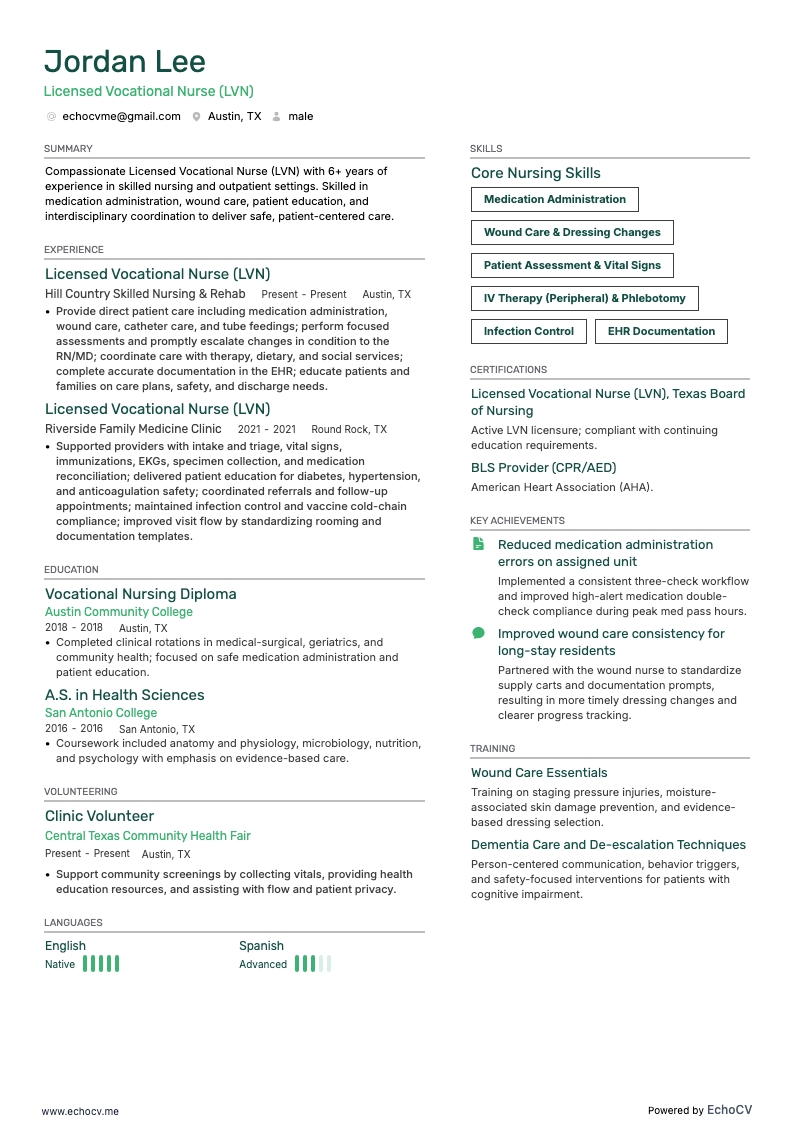
면허 직업간호사(LVN) example resume

면허 직업간호사(LVN)

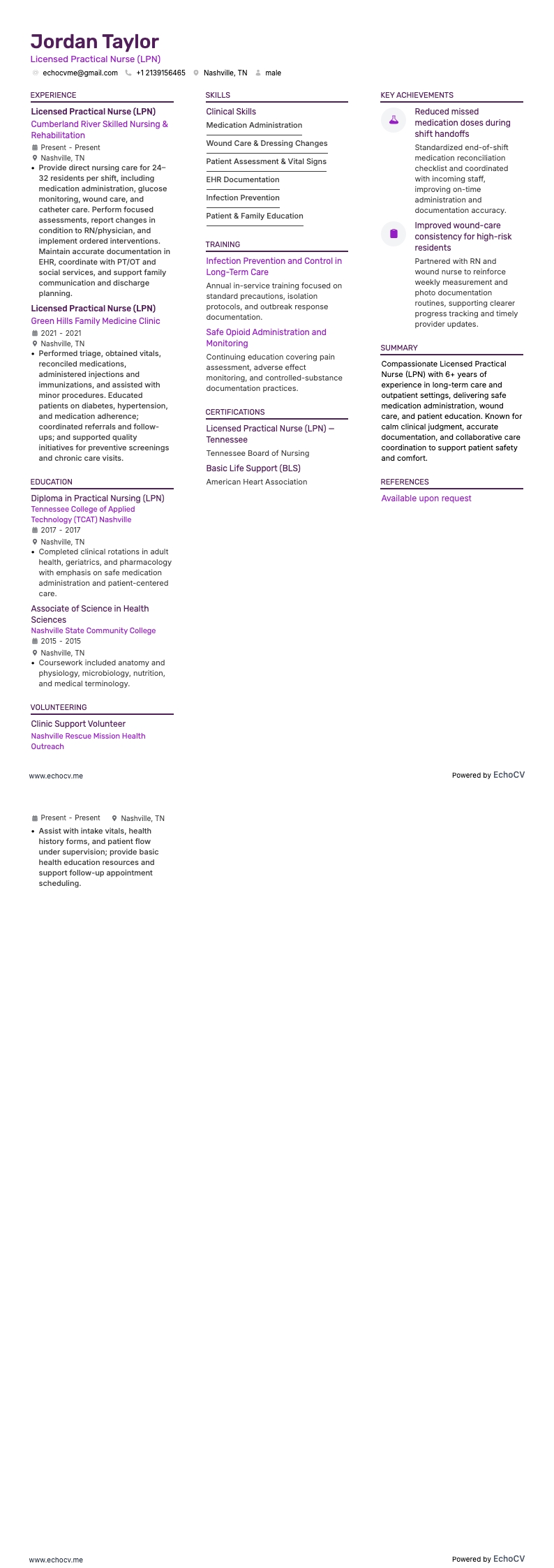
실무 간호사(LPN) example resume

실무 간호사(LPN)

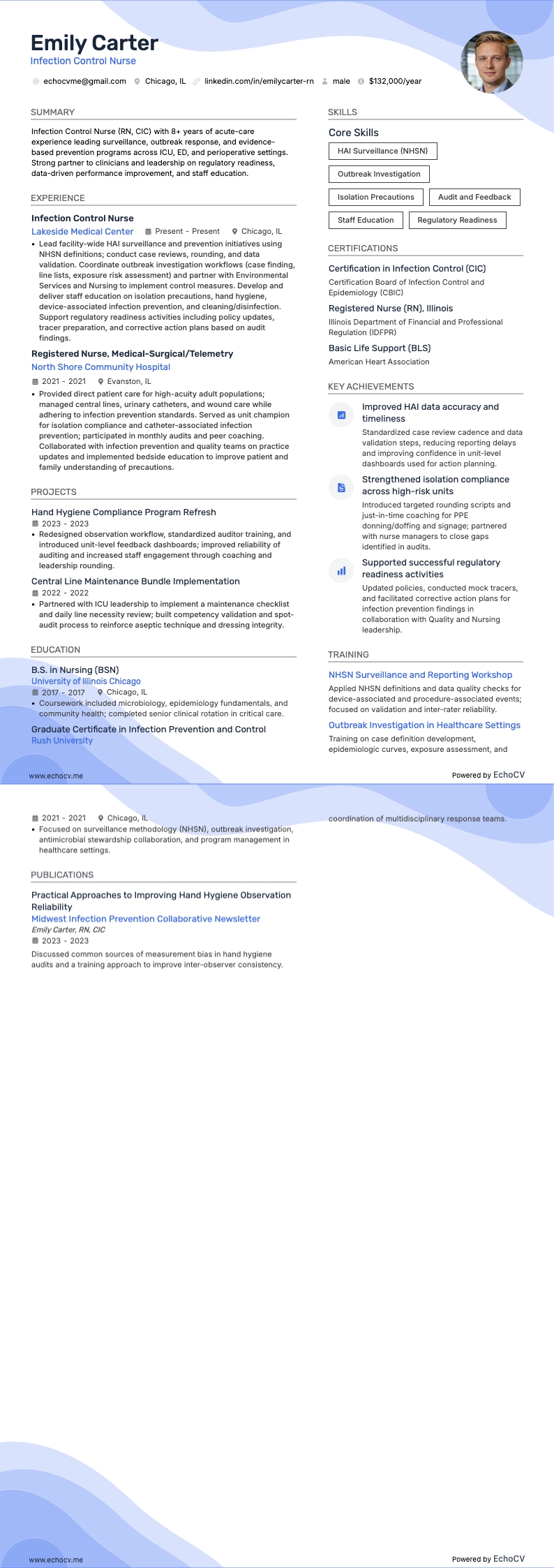
감염관리 간호사 example resume

감염관리 간호사

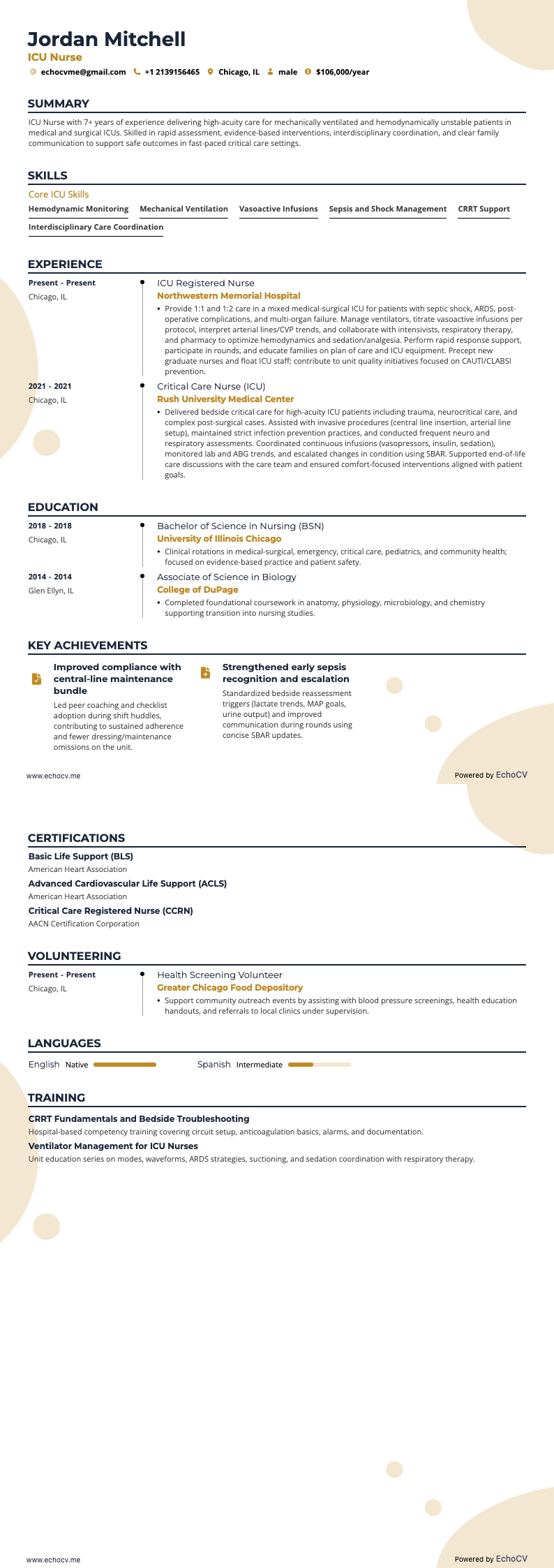
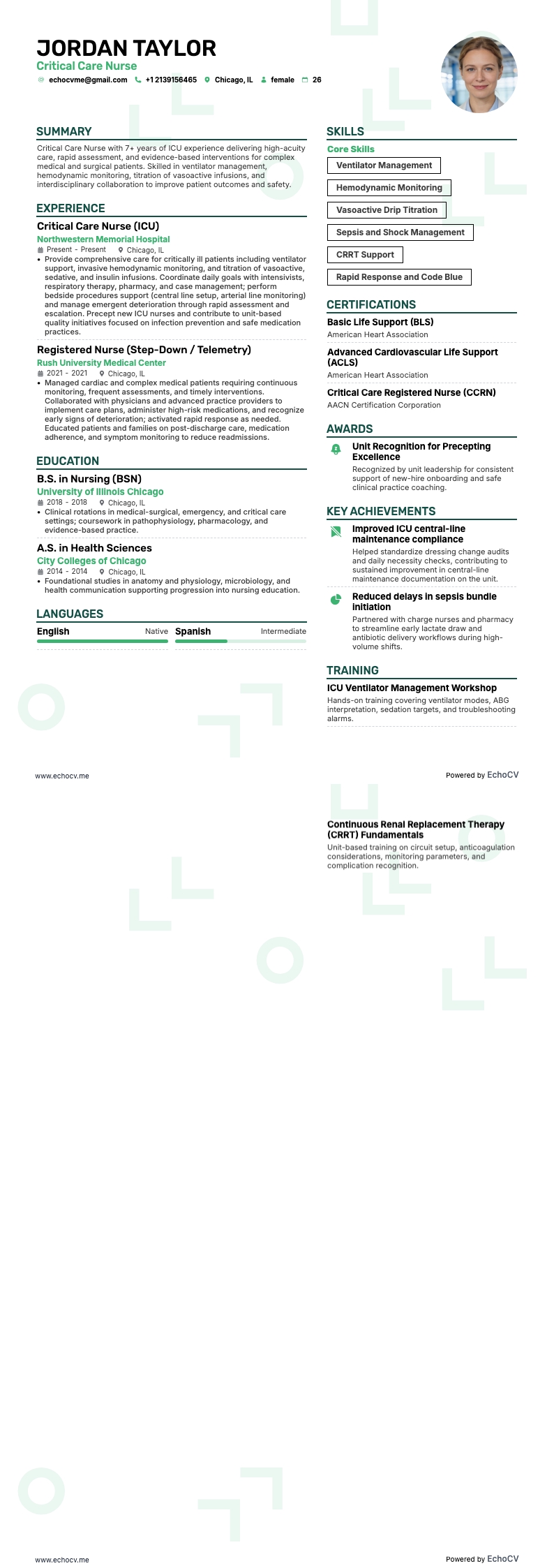
중환자실 간호사 example resume

중환자실 간호사

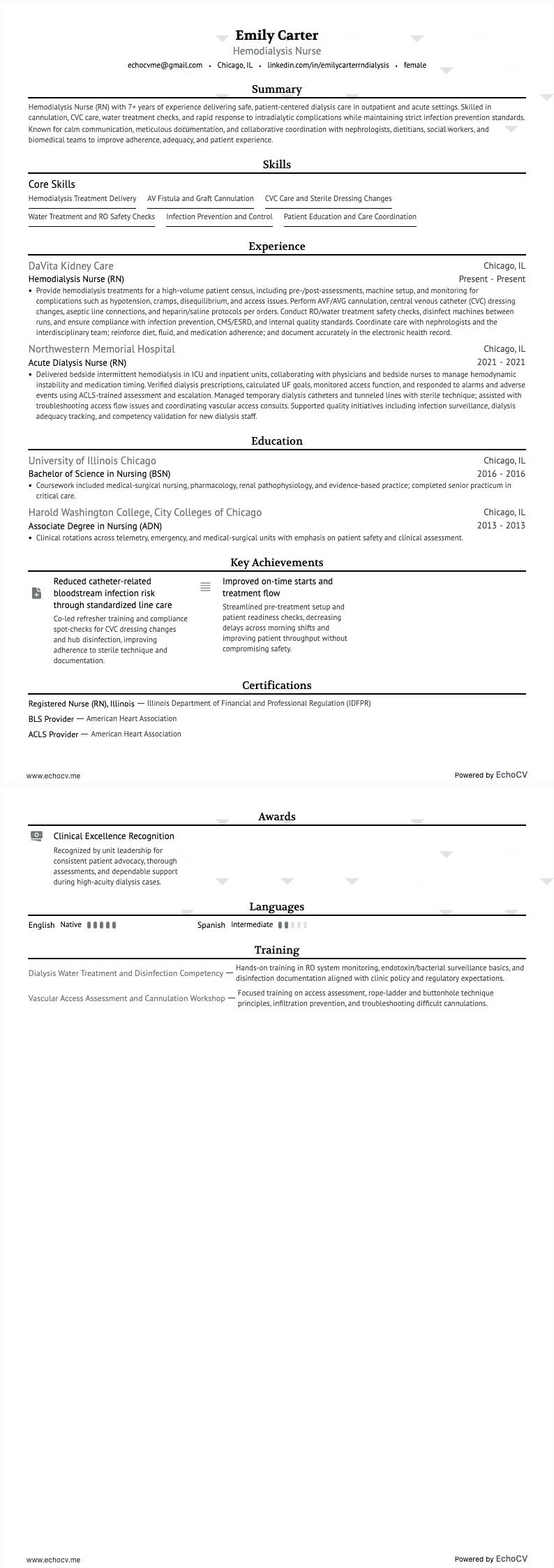
혈액투석 간호사 example resume

혈액투석 간호사

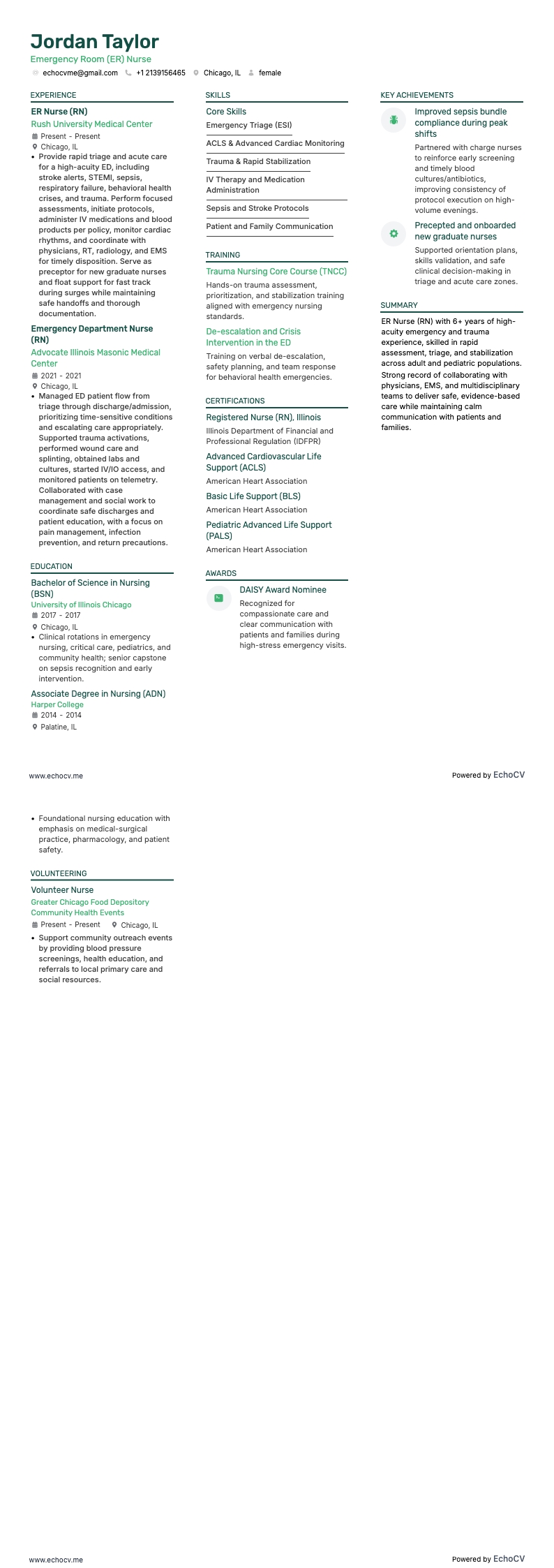
응급실 간호사 example resume

응급실 간호사

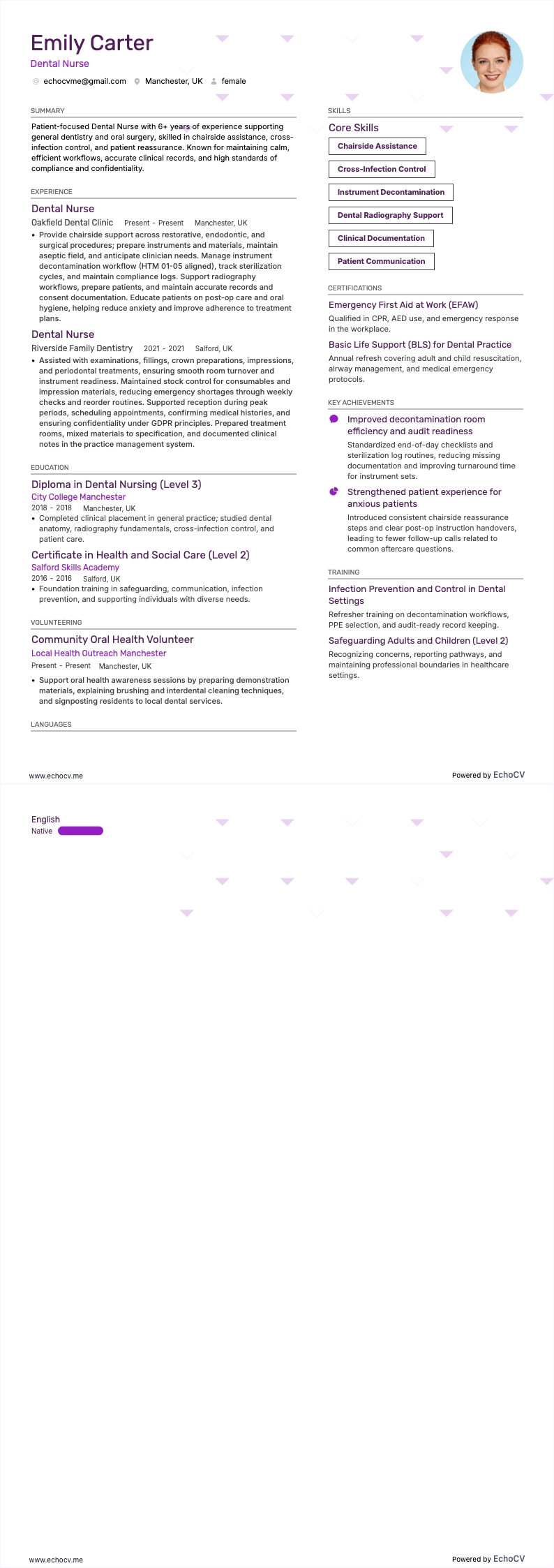
치과 간호사 example resume

치과 간호사

중환자실 간호사 example resume

중환자실 간호사

산업 간호사 example resume

산업 간호사

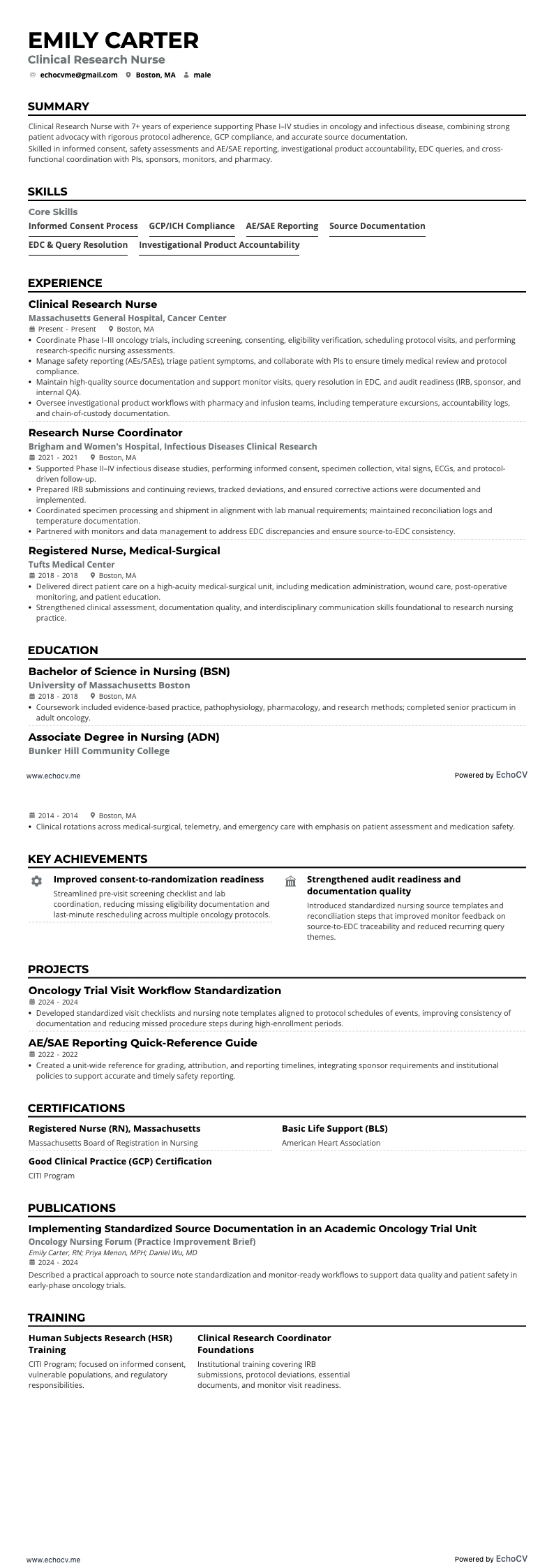
임상 연구 간호사 example resume

임상 연구 간호사

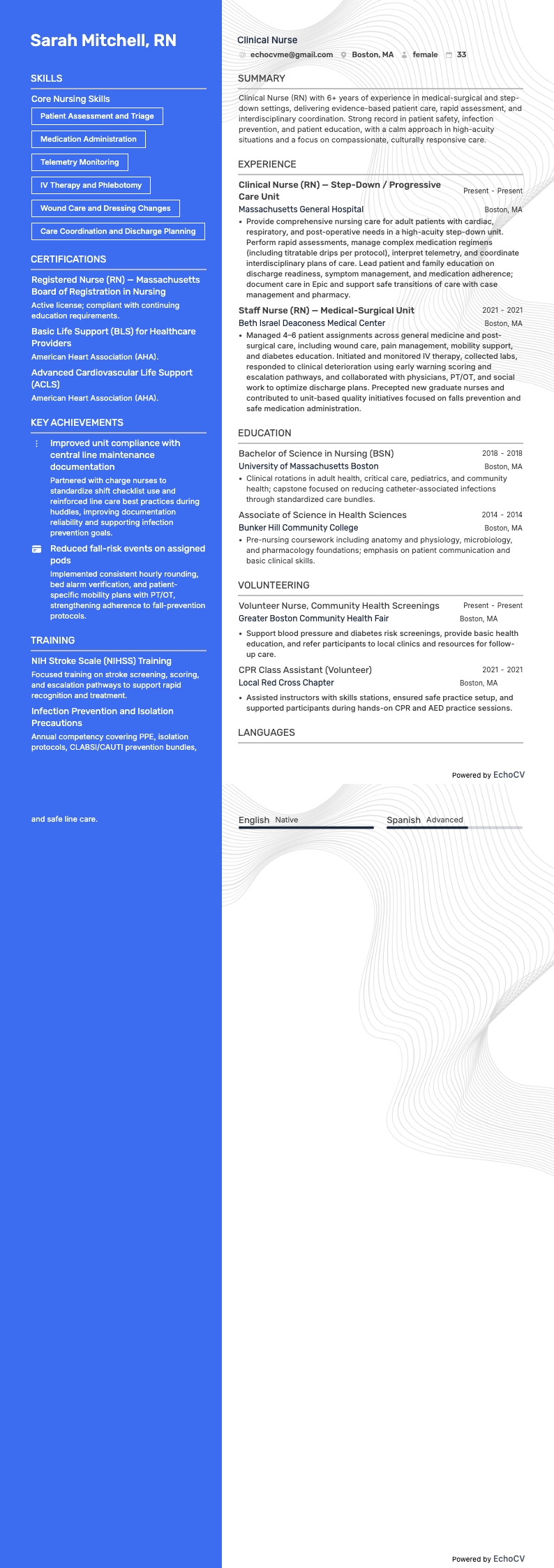
임상 간호사 example resume

임상 간호사

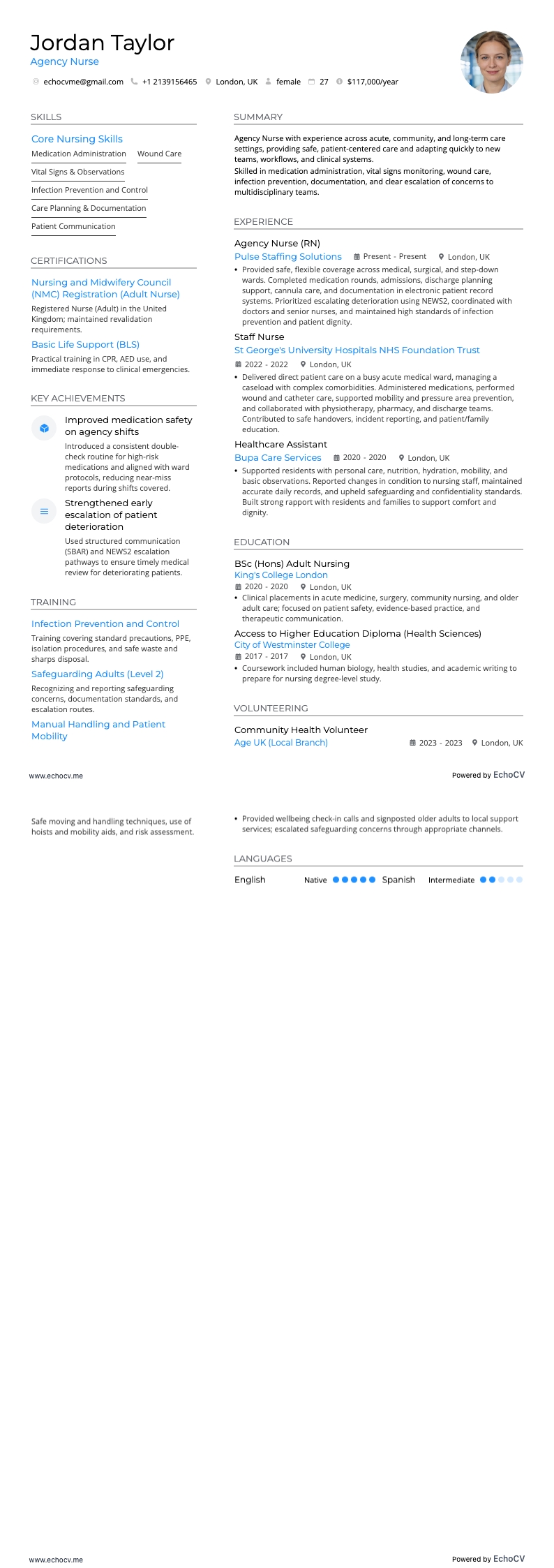
파견 간호사 example resume

파견 간호사

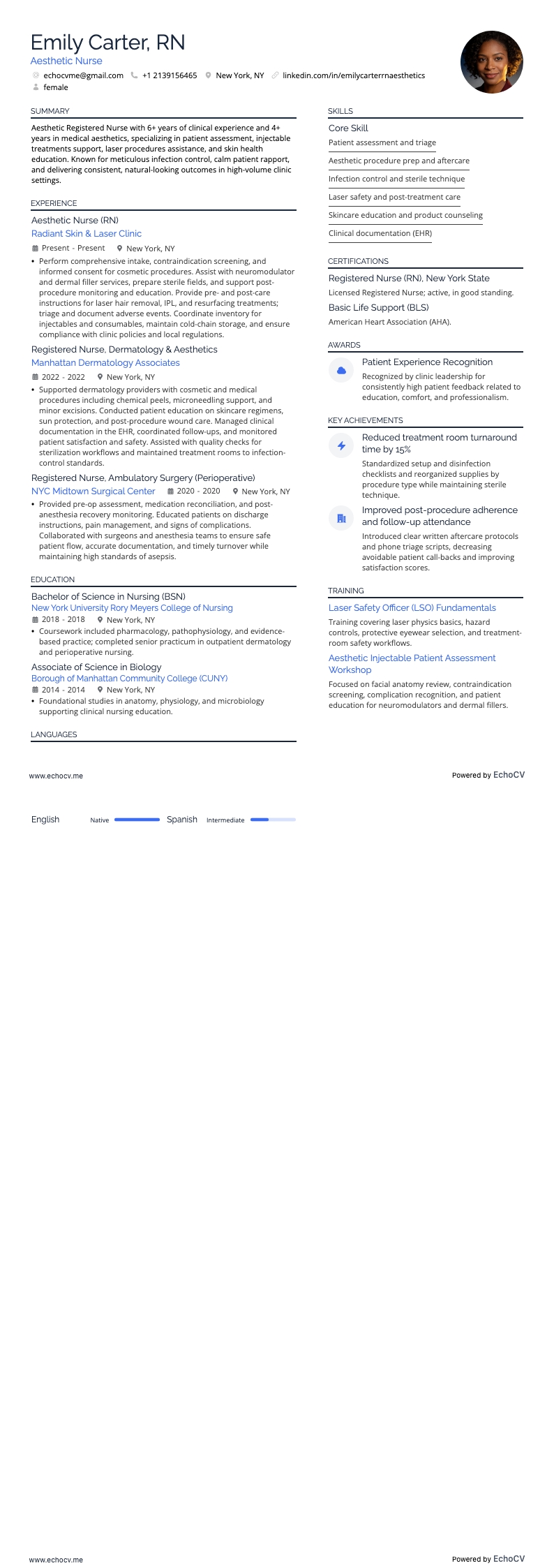
미용 간호사 example resume

미용 간호사

The U.S. Bureau of Labor Statistics projects nearly 190,000 annual openings for registered nurses through 2032. Yet, despite this massive demand, landing your dream job remains surprisingly difficult.

In 2024 alone, U.S. nursing schools had to turn away nearly 66,000 qualified applicants due to a lack of resources. That shows that meeting the basic requirements isn't always enough to get you through the door. Many qualified applicants are rejected simply because their documents fail to pass automated applicant tracking systems (ATS).

In this guide, we’ll show you how to build a nurse resume that clears automated screening and immediately proves your value to hiring managers. Whether you’re a new grad or a veteran, Echocv gives you guidance and tools to craft an application that gets you more interviews.

Key takeaways

  • Stick to the reverse-chronological format to satisfy busy nurse managers and navigate hospital ATS software effectively.

  • Don't just list duties. Quantify your impact with specific patient ratios, unit bed counts, and measurable health outcomes.

  • Pass the "skills gate" by tailoring your hard skills section to match the specific medical terminology and EMR requirements in the job description.

  • Place your licensure and certifications at the top of your resume or in the header to ensure immediate verification of your credentials.

  • New graduates should treat clinical rotations as professional experience, highlighting specific units, hours worked, and acuity levels.

  • Use Echocv’s Resume Builder to instantly format your document, check for keyword gaps, and polish your bullet points with AI.

  • Leverage our expert AI prompts to overcome writer's block and tailor your content. Still, always review the output to ensure it accurately reflects your actual clinical scope and integrity.

If you need inspiration for a specific specialty or career stage, explore our collection of targeted nurse resume examples.

What’s the best resume format for nurses

For most registered nurses and LPNs, the reverse-chronological format is the gold standard. It places your most recent clinical experience at the top, which is exactly what healthcare recruiters want to see. They’re trained to scan your licensure, specialty experience, and facility history in seconds.

This layout also ensures your nurse resume passes the ATS used by major hospital networks.

You might consider a functional format if you have gaps between travel contracts or are transitioning away from bedside care. However, be careful, as most unit directors prefer the clarity of a standard timeline to verify your clinical hours.

Regardless of the format you choose, a professional nurse resume must include these essential sections:

  • Header: Your name, contact details, and credentials (e.g., RN, BSN) clearly displayed.
  • Summary: A brief description of your clinical focus, years of practice, and top certifications.
  • Experience: A detailed history of your hospital roles, including unit types, bed counts, and patient ratios.
  • Education: Your nursing degree details, plus clinical rotations if you’re a recent graduate.
  • Skills: A mix of technical competencies(like IV insertion or Epic) and soft skills (like patient advocacy).
  • Certifications: Vital licenses and credentials like BLS, ACLS, CCRN, or your state nursing license.

Before you put your final document into rotation, run it through Echocv’s Resume Checker to catch weak spots, keyword gaps, and formatting issues.

How to write your nurse resume experience

Nurse managers want to see more than just a list of standard duties. They already know you administer medications and perform head-to-toe assessments.

Instead, highlight the acuity of your patient load and the specific clinical challenges you handle.

To build an effective experience section, start with the basics to establish your timeline and setting.

Include:

  • Job title: Write your specific role (e.g., ICU Registered Nurse) clearly at the top.
  • Facility: List the hospital name and specific care unit to provide context for your clinical environment.
  • Dates: Clearly state your dates of employment (month/year) to show your tenure and reliability.

Then, refine your bullet points to show your impact:

If you’re a new graduate, list your clinical rotations as professional experience, noting the unit type and total hours.

Below is an example of how that works on a nursing resume:

Good example of a nurse experience section

CLINICAL EXPERIENCE

Registered Nurse

Northwestern Memorial Hospital | Medical ICU

Chicago, IL | June 2021 – Present

  • Managed complex caseloads for 2 critically ill patients per shift in a Level I Trauma Center, utilizing advanced hemodynamic monitoring.
  • Administered high-risk medications and vasoactive drips, maintaining 100% safety compliance during high-pressure emergency interventions.
  • Utilized Epic EMR to document detailed patient assessments, consistently scoring above 95% on quarterly chart audits.
  • Collaborated with interdisciplinary teams to coordinate discharge planning, reducing average patient length of stay by 10%.

전문가 팁

If your job title is consistent (e.g., "Registered Nurse"), avoid repetition by placing the hospital name first.

This is especially effective if you worked at prestigious Magnet facilities or Level I Trauma Centers. It immediately signals the high quality of your clinical training to the hiring manager.

Now, how do you move from good to interview-worthy? You tailor your resume.

Tailoring your nurse resume for specific roles

Generic resumes often get lost in the shuffle. To catch a recruiter's eye, your application must mirror the specific language of the job posting. This proves you understand the unique demands of that unit.

For instance, an ICU nurse application requires different keywords than a school nurseor labor and delivery role.

Review the job description to find the "must-have" skills. Then, weave those exact terms into your experience bullets to show you’re a perfect match.

See three examples below:

Resume tailoring examples for nursing professionals

Job description excerptUntailored bulletTailored bullet
Labor & Delivery: "Experience with high-risk antepartum care and fetal monitoring.”Cared for pregnant women and monitored babies.Provided specialized antepartum care for high-risk patients with preeclampsia, interpreting fetal heart strips to ensure safety.
Travel Nurse: "Must be adaptable and willing to float between units."Floated to other floors when needed.Demonstrated adaptability by floating between Med-Surg and Telemetry units, maintaining high standards of care in diverse settings.
Nurse Practitioner: "Diagnose and treat acute and chronic conditions independently.”Helped doctor treat patients.Diagnosed and managed acute and chronic conditions for a panel of 20+ patients daily with full autonomy.

Tailoring every single application by hand can feel like an endless shift. Fortunately, AI tools can cut your writing time in half by instantly identifying key requirements.

You can use a general chatbot to help you align your experience with a specific hospital unit.

Try this simple prompt:

Act as a Nurse Recruiter. Compare my resume experience below with this job description. Rewrite my bullet points to highlight the matching clinical skills and keywords.

For an even smoother experience, try Echocv’s One-Click Job Tailoring tool.

It automatically optimizes your resume against a specific job posting without you ever leaving the editor.

How to quantify your nursing experience on a resume

Every nurse has patient ratios. That’s a baseline expectation—not an achievement. To truly impress a hiring manager, you need to quantify your influence on the unit's success.

Think about the problems you solved, not just the shifts you worked. Did you help the unit save money, time, or, most importantly, lives?

Here are three high-impact ways to quantify the "unquantifiable":

Metric 1: Staff retention

Predictable: "Trained new nurses."

Standout: "Precepted 4 new graduates during a high-turnover period, resulting in 100% retention after their first year."

Metric 2: Error reduction

Predictable: "Followed safety protocols."

Standout: "Audited 50+ charts monthly as a Safety Champion, reducing unit-wide medication errors by 15%."

Metric 3: Process improvement

Predictable: "Gave shift report."

Standout: "Standardized bedside handoff procedures, cutting shift change overtime costs by 10% per week."

If you improved a process, retained a colleague, or prevented a pattern of errors, put a number on it.

For extra support, try Echocv’s Bullet Point Generator. It streamlines your experience entries, reminding you to add metrics and trim lines that get too verbose.

How to list your hard and soft skills on your nurse resume

Your skills section serves two critical purposes: passing the ATS scan and proving your technical readiness. Hiring managers look for a specific mix of hard clinical skills and soft interpersonal traits.

Avoid the “skills gate” rejection

  • Our study of 25 U.S. recruiters found that 8% configure their ATS to auto-reject candidates who miss a specific count of required technical skills.
  • This means listing your skills correctly is the only way to bypass these strict keyword-based filters.
  • Don't worry about "font police"—focus on matching the exact medical terminology found in the job description.

Hard skills are the technical abilities you use daily, like IV insertion, wound care, or telemetry monitoring. They’ll vary depending on your specialty, but make sure you list at least 75% of the job ad’s must-haves.

Common clinical and technical skills to include

  • IV therapy and phlebotomy
  • Wound care
  • Medication administration
  • Triage
  • Tracheostomy care,
  • Foley catheterization
  • Infection control

Top tools and technologies for nurse resumes

  • Epic/Cerner/Meditech (EMR)
  • Pyxis MedStation
  • Alaris IV pumps
  • Telemetry monitors
  • Glucometers
  • Hoyer lifts

When building your skills section, it’s important to follow these steps:

Step 1: Let the job description dictate your choices, focusing on specific procedures and medical equipment. List your most complex skills first, such as IV therapy or EKG interpretation, to show advanced capability.

Step 2: Place this section high on your resume, immediately after your professional summary. This ensures your core competencies serve as a primary keyword filter for busy recruiters and ATS software.

Step 3: Organize your expertise into distinct categories like "Clinical" or "Technical" for maximum readability. Use simple commas to separate items, limiting your list to the skills you have truly mastered.

Soft skills, on the other hand, are essential, but listing them as buzzwords often wastes valuable space. Instead, they should be strategically woven into your experience section to prove you possess them.

Avoid generic terms like "hard worker" unless you connect them to a specific outcome or story.

Describing a soft skill in a resume summary
  • Avoid: "Hard-working and reliable team player."
  • Use: "Demonstrated reliability by volunteering for extra shifts during critical staffing shortages, maintaining 100% attendance."

How to list licensure and education on a nurse resume

Nursing resumes have unique requirements because hospitals and licensing boards must instantly verify your credentials and clinical safety.

Unlike other professions where education sits at the bottom, nursing requires licensure and certifications to be immediately visible. Often, the best practice is to put them right after your name in the header or as a resume headline. It also ensures both human recruiters and ATS software can quickly verify your active status.

Consider the following framework:

  • Licensure: Clearly list your license type (e.g., RN, LPN) and state. Some employers also require your specific license number.
  • Credentials order: Follow the industry standard (recommended by the AACN) when listing credentials after your name for professional impact. Start with the highest degree (e.g., BSN), add your licensure (e.g., RN), and finish with the national certification (e.g., CCRN).
Example of credentials on a nurse resume header

Mark Smith, BSN, RN, CEN

Then, create a separate Licensure & Certifications section to fully detail each one.

Include:

  • Full certification name: Put the standard abbreviation in brackets (e.g., Certified Emergency Nurse [CEN]).
  • Issuing organization: (e.g., American Heart Association).
  • Expiration date: Crucial for hospital compliance tracking.

With your key credentials established, you can now structure the education section itself. This is where you quickly and formally document your academic foundation.

Here’s what to write:

Note that only your highest nursing degree is necessary—omit high school details entirely.

Education entry sample

LICENSURE & CERTIFICATIONS

Registered Nurse (RN)

Illinois Board of Nursing, License ID 123456

Certified Medical-Surgical Registered Nurse (CMSRN)

MSNCB, Expires 10/2027

Advanced Cardiovascular Life Support (ACLS)

American Heart Association, Expires 11/2026

Basic Life Support (BLS)

American Heart Association, Expires 11/2027

EDUCATION

Bachelor of Science in Nursing (BSN)

Loyola University Chicago | Chicago, IL

May 2020

How to write your RN resume summary

Recruiters often scan resumes in under 20 seconds. So, your nurse resume summary is your best chance to hook them immediately.

It shouldn't be a vague list of personality traits like "passionate" or "hardworking." Instead, it must be a concise snapshot of your licensure, experience level, and top clinical achievements.

A strong summary includes three key elements:

  1. Identity: Your current title and years of experience (e.g., "Bilingual BSN-RN with 4 years in Pediatrics").
  2. Hard skills: Key certifications or unit specialties (e.g., "ACLS-certified," "Trauma experience").
  3. Value: A specific achievement or goal tailored to the employer (e.g., "seeking to improve patient satisfaction scores").

If you’re a new grad, focus on your clinical rotations, GPA, and eagerness to learn rather than work history.

Below are three examples of career statements for nursing resumes:

Experienced registered nurse

Compassionate BSN, RN with over 5 years of experience in high-volume Medical-Surgical units. Expert in post-operative care and wound management, consistently serving as a trusted preceptor for new hires. Seeking to leverage clinical expertise to reduce readmission rates and improve safety outcomes at [Hospital Name].

New graduate nurse

Motivated BSN graduate with a 3.8 GPA and 500+ hours of clinical rotations in ICU and ER settings. Commended by preceptors for rapid critical thinking, strong patient advocacy, and precise medication administration. Eager to launch a nursing career, delivering high-quality, patient-centered care within a collaborative team.

Career-changing nurse

Adaptable Registered Nurse with a strong background in K-12 education and a passion for health literacy. Skilled in breaking down complex medical terms for diverse patient populations to ensure clear understanding. Committed to using superior communication skills to enhance patient education and satisfaction scores on your unit.

Write your summary last. It’s much easier to summarize your career highlights after you’ve already written your experience section.

To perfect your professional profile, try Echocv’s Summary Generator. Our AI analyzes your experience in seconds, giving you a strong, interview-ready foundation to build upon.

How do I write a nurse resume with no experience?

Applying for your first nursing job can feel like a "chicken-and-egg" scenario: you need experience to get hired, but you need someone to hire you to get experience.

To bridge this gap, you must pivot from "work history" to clinical potential and academic foundation.

Shift the focus: Clinical rotations are experience

Never omit your clinical rotations—for a new graduate, this is your work history. Treat your senior capstone or practicum like a job entry.

  • Format it correctly: List the hospital name, unit (e.g., Med-Surg, Pediatrics), and total hours.
  • Highlight quantifiable skills: Focus on the highest acuity tasks you performed, such as "administered IV medications under supervision" or "managed a 4-patient assignment during preceptorship."
Move education to the top

For a novice nurse, your degree is your strongest asset. Place your education section immediately after your professional summary.

  • GPA: Include it if it’s 3.5 or higher.
  • Honors: List academic awards (e.g., Dean's List, Sigma Theta Tau) to prove your dedication.
  • Certifications: BLS is mandatory. Gaining ACLS or PALS on your own time shows initiative and makes you a safer hire.
Write a future-focused objective statement

Your profile must quickly convince the nurse manager that you’re trainable and eager.

  • Focus on traits: Use keywords like "fast learner," "evidence-based practice," and "patient advocacy."
  • Show commitment: State your specific goal clearly (e.g., "Seeking to launch a nursing career in a collaborative Medical-Surgical unit at [Hospital Name]").
Build a strong skills section

Since you lack years of employment, spell out the hard skills you mastered in simulation labs and rotations.

  • Procedures: List essentials like Foley catheterization, NG tube insertion, sterile dressing changes, and phlebotomy.
  • Tech: Listing proficiency in EMR systems is a huge plus, as it reduces your orientation time.

Does your resume truly reflect your bedside expertise?

Instead of spending hours self-editing, use these targeted AI prompts to act as your personal editor, polishing your content and fixing blind spots instantly.

10 expert-made prompts to boost your RN resume

Here are 10 highly relevant topics and specific prompts you can copy-paste into ChatGPT, Claude, or Gemini to fix your resume.

1. Turning generic duties into strong achievements

Your bullets sound like a job description (e.g., "Passed meds," "Did assessments"). You need to turn tasks into achievements.

Prompt:

Rewrite these three generic nursing bullet points to make them sound like achievements. Use strong action verbs and emphasize patient outcomes, safety, or efficiency. Here are the bullets:

[Insert Bullets]

2. Listing travel nursing effectively

You’ve listed six different hospitals in two years, and your resume looks chaotic and unstable. To fix this, group contracts to show adaptability, not instability.

Prompt:

I’m a travel nurse with multiple short-term contracts. Please help me summarize these 4 assignments into one cohesive entry titled “Travel Registered Nurse.” Focus on my ability to float to different units, learn new EMRs quickly, and maintain high standards of care in diverse settings.

3. Transitioning to non-clinical roles

You’re burnt out on floor nursing and want to move into case management, informatics, or outpatient clinics, but your resume screams "ICU only." Try highlighting transferable skills like coordination and tech.

Prompt:

I’m an ICU nurse transitioning into [add target field]. Below is the job description for the new role.

Rewrite my experience section to downplay specific bedside procedures (like vents and drips) and instead highlight transferable skills that match the keywords in this job description (such as discharge planning, interdisciplinary communication, or software proficiency).

[paste job description here]

4. Turning clinical rotations into work experience

You only have clinical rotations, no "real" job, and you feel unqualified. You should elevate rotations to professional experience.

Prompt:

I’m a new graduate nurse. Please turn this list of clinical rotations into professional resume entries. Include the unit type, total hours, and specific skills practiced. Make them sound as rigorous as a job entry.

5. Optimizing for Magnet hospitals

You’re applying to a prestigious Magnet-designated hospital and need to sound like you care about research and governance. The solution is to inject shared governance and EBP language.

Prompt:

I’m applying to a Magnet-designated hospital. Review my resume summary and experience. Add keywords related to Evidence-Based Practice (EBP), Shared Governance, and Quality Improvement (QI) to align with Magnet standards.

6. Explaining employment gaps professionally

You took time off to raise kids or care for family, and you're worried about the employment gap? One way to fix this is to learn how to write a resume after a career break.

Alternatively, try the prompt below:

Prompt:

I have a 3-year employment gap due to [caregiving/family reasons]. Please write a brief, professional one-line explanation I can put on my resume or cover letter that frames this positively and pivots back to my eagerness to return to clinical practice.

7. Tailoring your resume for a new specialty

If you’re moving from a slow-paced unit to a high-acuity one, you should emphasize speed and prioritization.

Prompt:

I’m a Med-Surg nurse applying for an Emergency Room position. Rewrite my bullet points to focus on skills relevant to the ER, such as rapid assessment, prioritization, handling admissions/discharges, and staying calm under pressure.

8. Quantifying without exact data

Don't know your exact metrics (fall rates, etc.)?

Try this prompt to estimate your impact:

Prompt:

I need to add numbers to my nurse resume but I don't have exact data. Ask me 5 questions about my work and daily tasks that will help me estimate credible metrics to include in my bullet points.

9. Highlighting informal leadership experience

You want a leadership role but have never held the title. Now’s the time to underscore informal leadership.

Like so:

Prompt:

I’ve been a staff nurse for 5 years but often run the shift. Help me write a bullet point that highlights my experience with conflict resolution, staffing assignments, and mentoring new hires, to prove I’m ready for a charge nurse role.

10. Avoiding a wall of text

Your resume is four pages long because you listed every job and hospital since 2005. That’s a mistake. The best way to avoid that is to condense older history.

Prompt:

My resume is too long. Please condense my work history from 10+ years ago into a brief Early Career section. Summarize the roles into 2-3 sentences that establish my longevity without wasting space.

While these prompts are powerful, you can skip the manual copy-pasting by using Echocv’s AI Resume Builder. It integrates these tailoring and writing capabilities directly into the editor, allowing you to polish your resume without ever switching tabs.

Frequently asked questions about nurse resumes and job applications

Here are answers to the most common questions about building a professional nurse resume and navigating the current healthcare job market.

How long should a nurse's resume be?

For most nurses, one page is the gold standard, especially if you have under ten years of experience. Nurse managers prefer brevity.

However, if you’re a senior nurse, possess extensive certifications, or have a CV-style academic background (DNP/PhD), a two-page resume is perfectly acceptable.

What are the best formatting rules for a nurse resume?

Keep it clean and readable.

Do I really need a cover letter for nursing jobs?

While not always mandatory, a cover letter is crucial if you’re a new graduate, a career changer, or looking to switch specialties. It allows you to explain your passion and "why" behind the application, which bullet points alone can’t always convey.

Where should I place my RN license number?

Your license type (e.g., RN, BSN) should be in your header next to your name. Your full license details (state, license number, expiration) belong in a dedicated Licensure & Certifications section near the top of the resume, ensuring recruiters can instantly verify your status.

Where are the biggest nurse shortages in the US?

Shortages vary significantly by region. According to the Nurse Workforce Projections, 2020-2035 report, the ten states with the largest projected shortage in 2035 are Washington (26%), Georgia (21%), California (18%), Oregon (16%), Michigan (15%), Idaho (15%), Louisiana (13%), North Carolina (13%), New Jersey (12%), and South Carolina (11%).

What are the highest-paying nursing specialties?

Advanced practice roles like Certified Registered Nurse Anesthetists (CRNAs) top the list, often earning over $200k annually.

For registered nurses without advanced degrees, travel nursing remains the most lucrative path. Other high-paying bedside specialties include Cardiac Cath Lab, ICU, and OR nursing due to the high acuity and on-call requirements involved.

In conclusion

You have the licensure and the bedside manner—now you have the strategy to prove it on paper. By focusing on patient outcomes over standard duties and tailoring your keywords for the ATS, you can build a profile that stands out in any hospital system.

Use the checklists and prompts provided in this guide to polish your final draft. Your resume isn't just a record of your past—it’s your ticket to the next step in your medical career.

간호사 이력서 예시

추가 간호사 이력서 예시와 가이드를 살펴보고, 경력 수준이나 역할에 맞는 구성을 확인하세요.

경력별

간호부장 / 서비스 라인 디렉터

간호부장 / 서비스 라인 디렉터 이력서 미리보기

간호 관리자

간호 관리자 이력서 미리보기

간호조무사

간호조무사 이력서 미리보기

수간호사

수간호사 이력서 미리보기

병동 간호사

병동 간호사 이력서 미리보기

신입 간호사

신입 간호사 이력서 미리보기

간호사 이력서 예시

추가 간호사 이력서 예시와 가이드를 살펴보고, 경력 수준이나 역할에 맞는 구성을 확인하세요.

직무별

신생아 간호사

신생아 간호사 이력서 미리보기

항공 간호사

항공 간호사 이력서 미리보기

정형외과 간호사

정형외과 간호사 이력서 미리보기

간호 조산사 (CNM)

간호 조산사 (CNM) 이력서 미리보기

호스피스 간호사

호스피스 간호사 이력서 미리보기

간호 교육자

간호 교육자 이력서 미리보기

정신과 간호사

정신과 간호사 이력서 미리보기

간호사

간호사 이력서 미리보기

동물간호사

동물간호사 이력서 미리보기

트래블 간호사

트래블 간호사 이력서 미리보기

텔레메트리 간호사

텔레메트리 간호사 이력서 미리보기

수술실 간호사

수술실 간호사 이력서 미리보기

학교 간호사

학교 간호사 이력서 미리보기

진료소 간호사

진료소 간호사 이력서 미리보기

수술기 간호사

수술기 간호사 이력서 미리보기

소아과 간호사

소아과 간호사 이력서 미리보기

PACU 간호사

PACU 간호사 이력서 미리보기

산업보건 간호사

산업보건 간호사 이력서 미리보기

산과 간호사(진통·분만)

산과 간호사(진통·분만) 이력서 미리보기

전문간호사

전문간호사 이력서 미리보기

마취 간호사

마취 간호사 이력서 미리보기

NICU 간호사

NICU 간호사 이력서 미리보기

면허 직업간호사(LVN)

면허 직업간호사(LVN) 이력서 미리보기

실무 간호사(LPN)

실무 간호사(LPN) 이력서 미리보기

감염관리 간호사

감염관리 간호사 이력서 미리보기

중환자실 간호사

중환자실 간호사 이력서 미리보기

혈액투석 간호사

혈액투석 간호사 이력서 미리보기

응급실 간호사

응급실 간호사 이력서 미리보기

치과 간호사

치과 간호사 이력서 미리보기

중환자실 간호사

중환자실 간호사 이력서 미리보기

산업 간호사

산업 간호사 이력서 미리보기

임상 연구 간호사

임상 연구 간호사 이력서 미리보기

임상 간호사

임상 간호사 이력서 미리보기

파견 간호사

파견 간호사 이력서 미리보기

미용 간호사

미용 간호사 이력서 미리보기