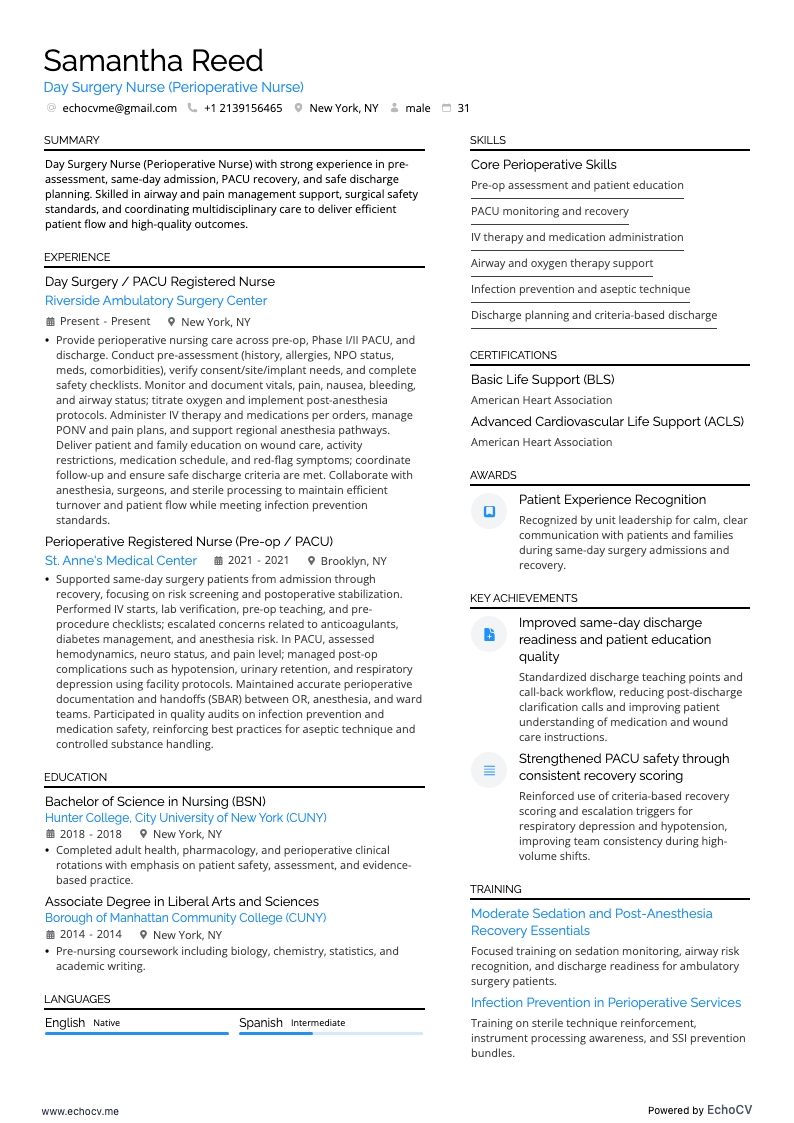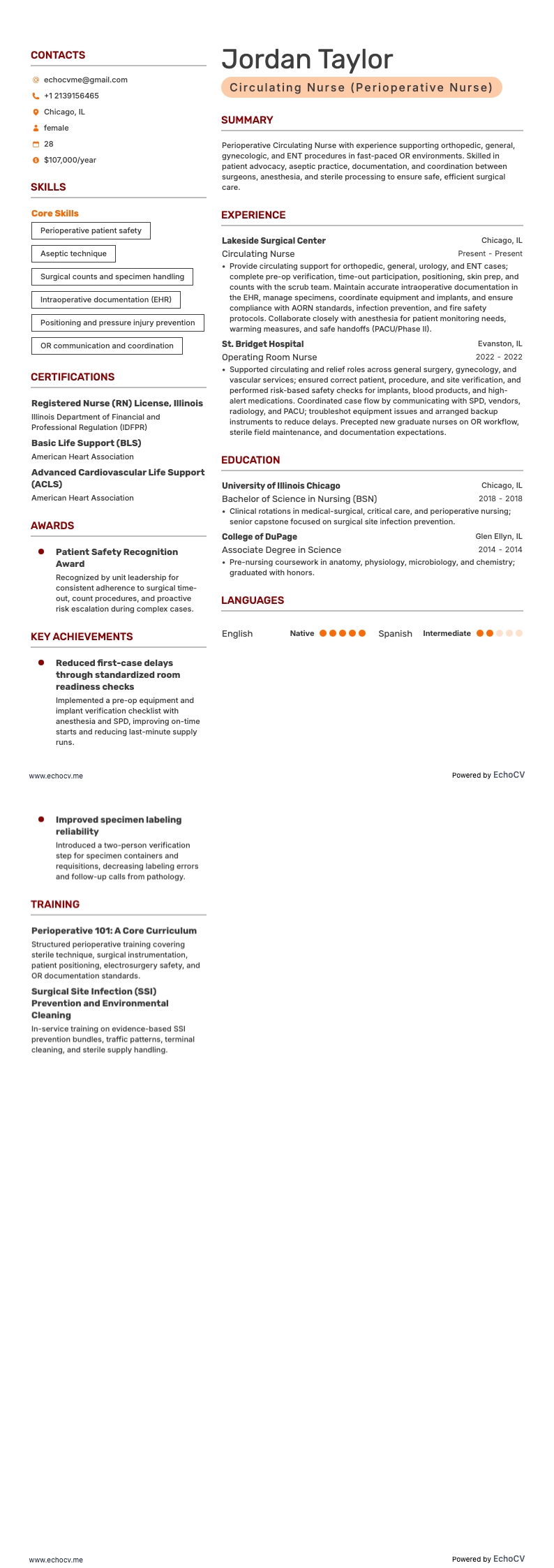
Once you’ve organized the key resume components, the next step is writing your perioperative nurse experience section so each entry supports the role you’re targeting.
How to write your perioperative nurse resume experience
Your experience section should demonstrate the clinical work you've delivered across preoperative, intraoperative, and postoperative settings—highlighting the surgical tools, patient safety protocols, and evidence-based methods you've applied to produce measurable patient outcomes. Hiring managers prioritize demonstrated impact over descriptive task lists, so every entry needs to reflect how your contributions improved surgical workflows, patient recovery metrics, or team performance. Building a targeted resume that aligns each entry with the specific role ensures your qualifications resonate with both recruiters and ATS filters.
Each entry should include:
- Job title
- Company and location (or remote)
- Dates of employment (month and year)
Three to five concise bullet points showing what you owned, how you executed, and what outcomes you delivered:
- Ownership scope: the patient populations, surgical specialties, operating room environments, sterile processing systems, or nursing teams you were directly accountable for throughout the perioperative continuum.
- Execution approach: the clinical assessment frameworks, surgical instrumentation, electronic health record platforms, infection prevention protocols, or evidence-based practices you used to guide patient care decisions and deliver safe perioperative outcomes.
- Value improved: changes to patient safety indicators, surgical site infection rates, operating room turnover efficiency, pain management effectiveness, documentation accuracy, or compliance with regulatory standards resulting from your direct contributions.
- Collaboration context: how you coordinated with surgeons, anesthesiologists, surgical technologists, central sterile supply teams, post-anesthesia care unit nurses, or patient families to ensure seamless handoffs and continuity of care across every phase of the surgical experience.
- Impact delivered: outcomes expressed through reductions in adverse events, improvements in patient satisfaction, gains in procedural efficiency, or contributions to departmental quality benchmarks—framed as results and scale rather than routine activity descriptions.