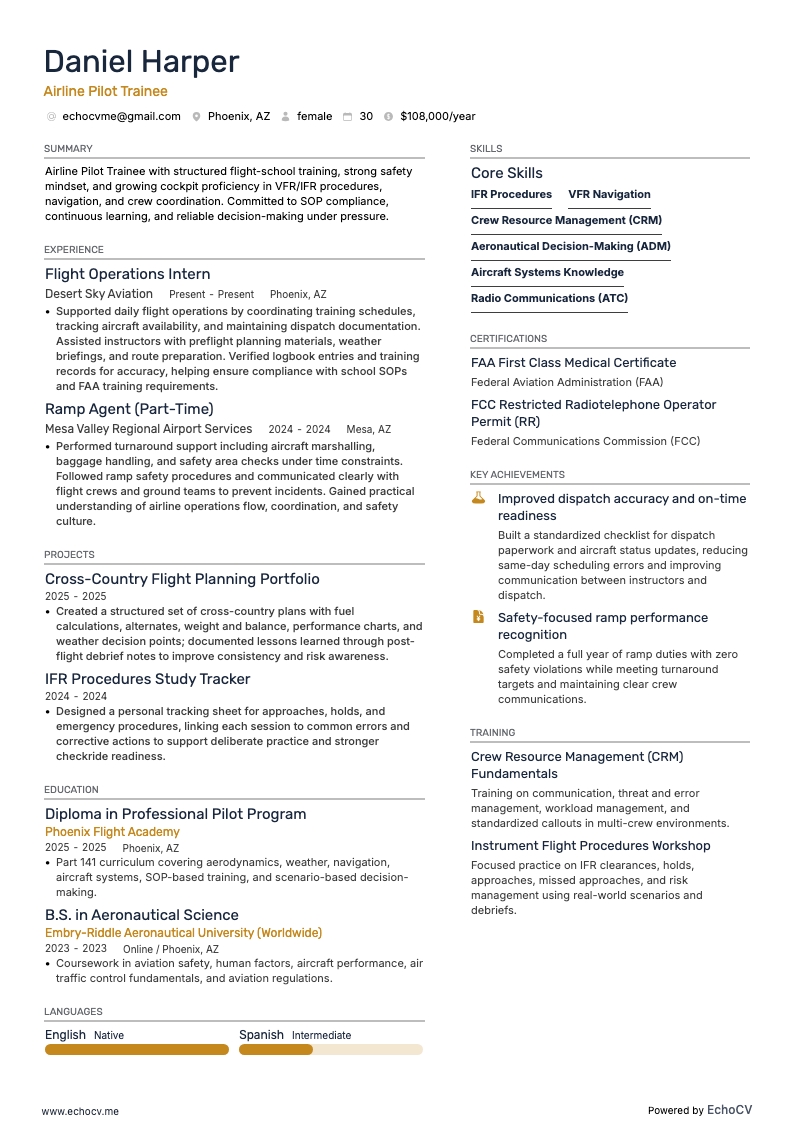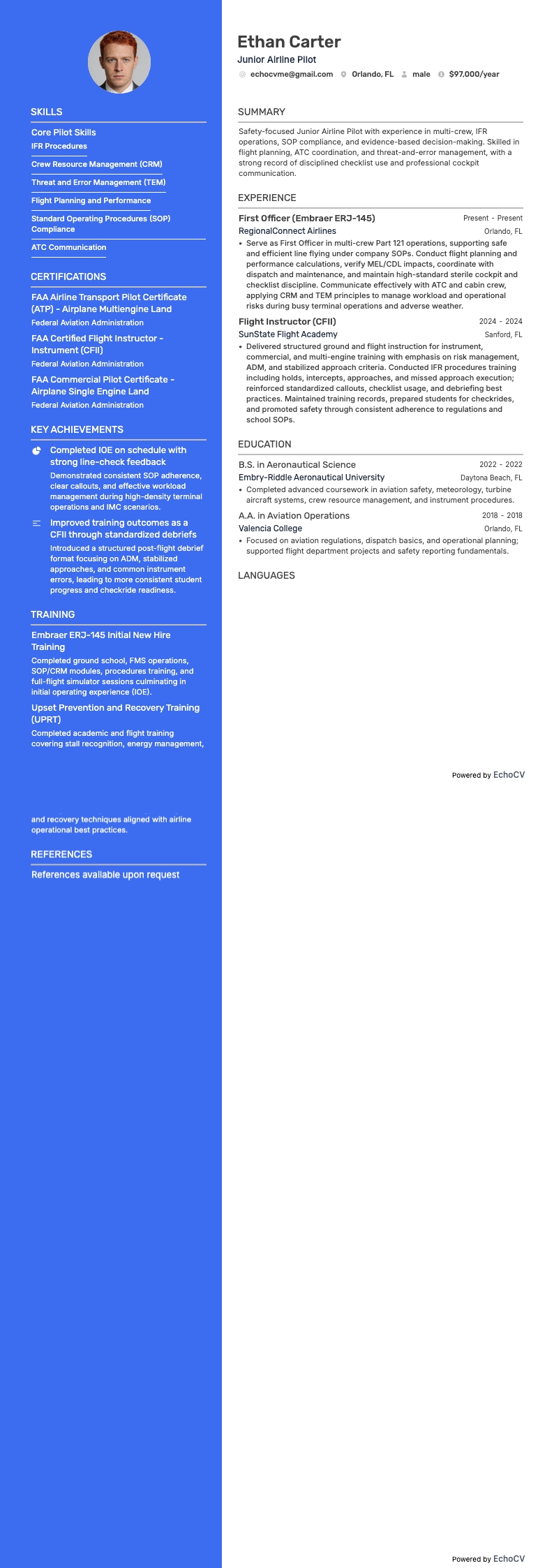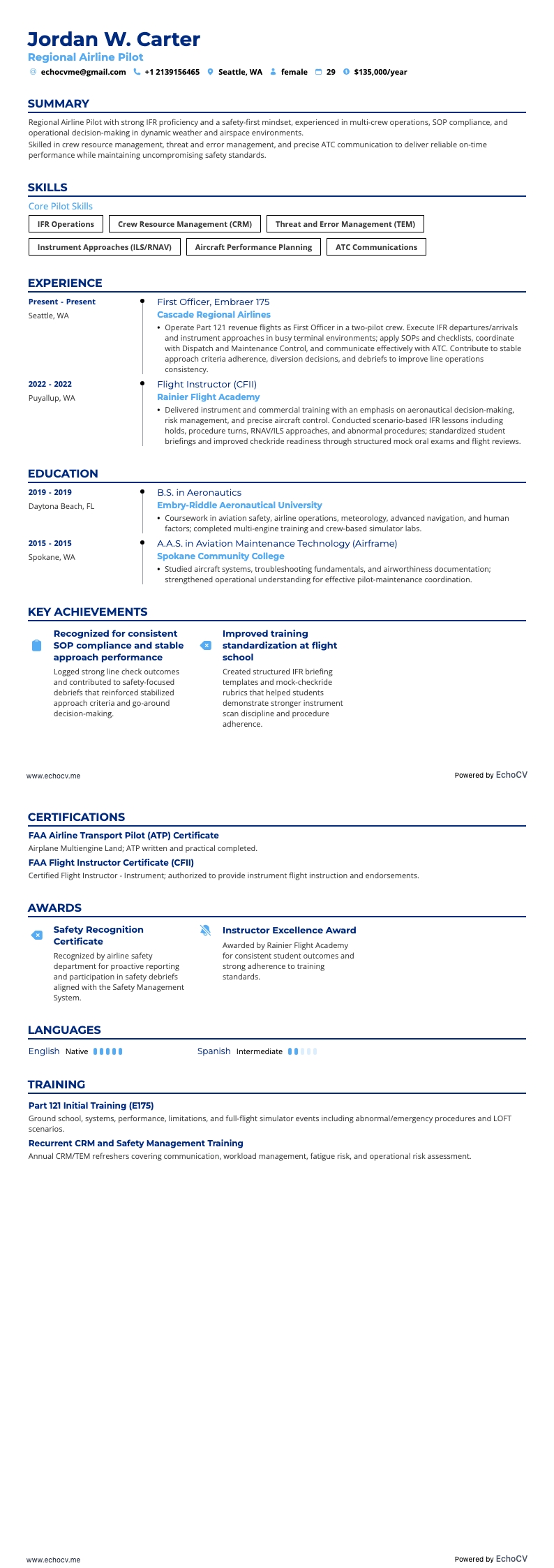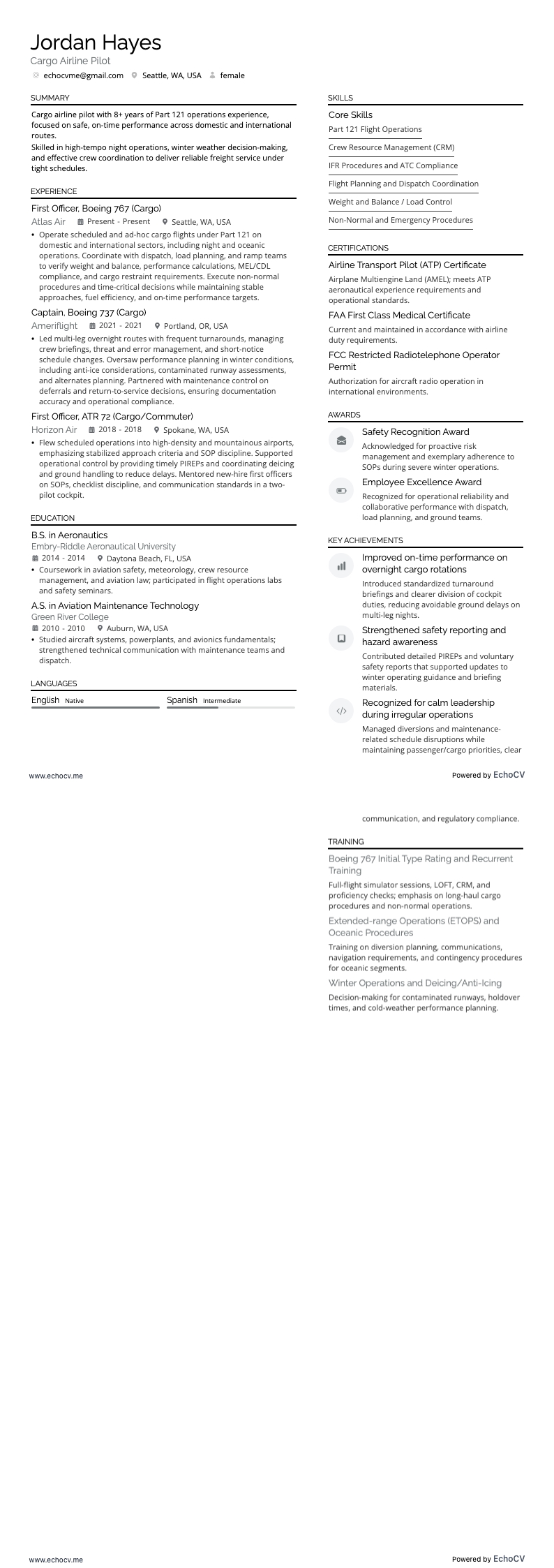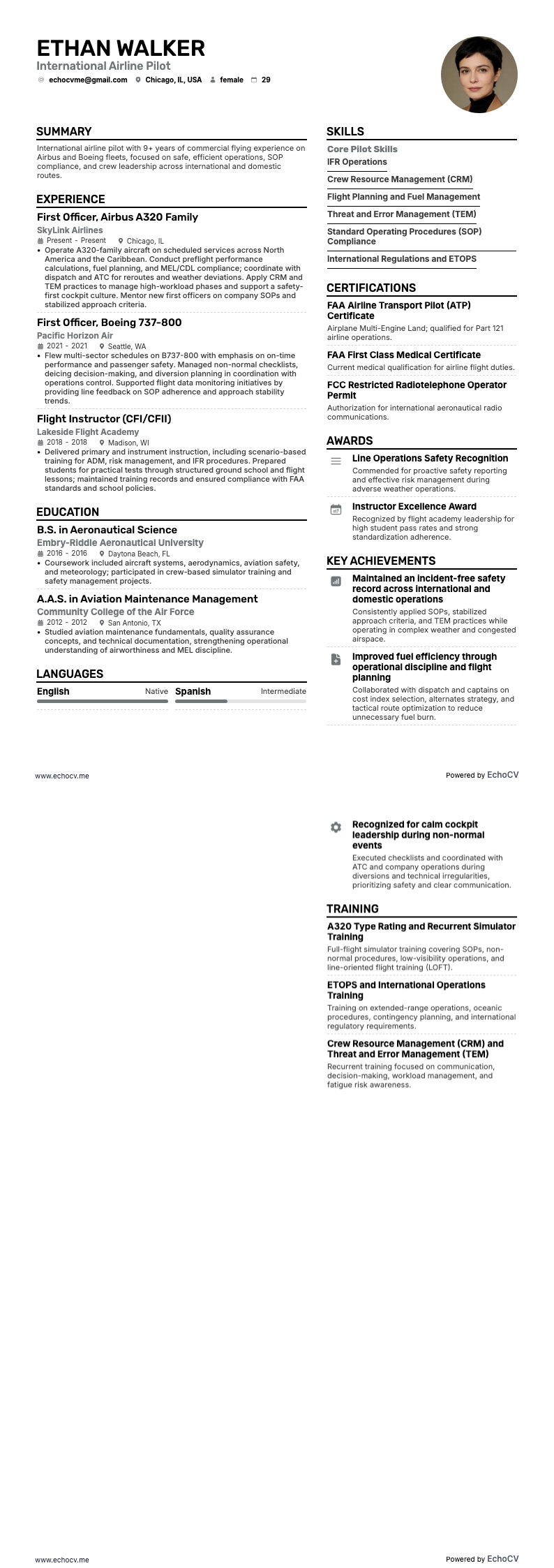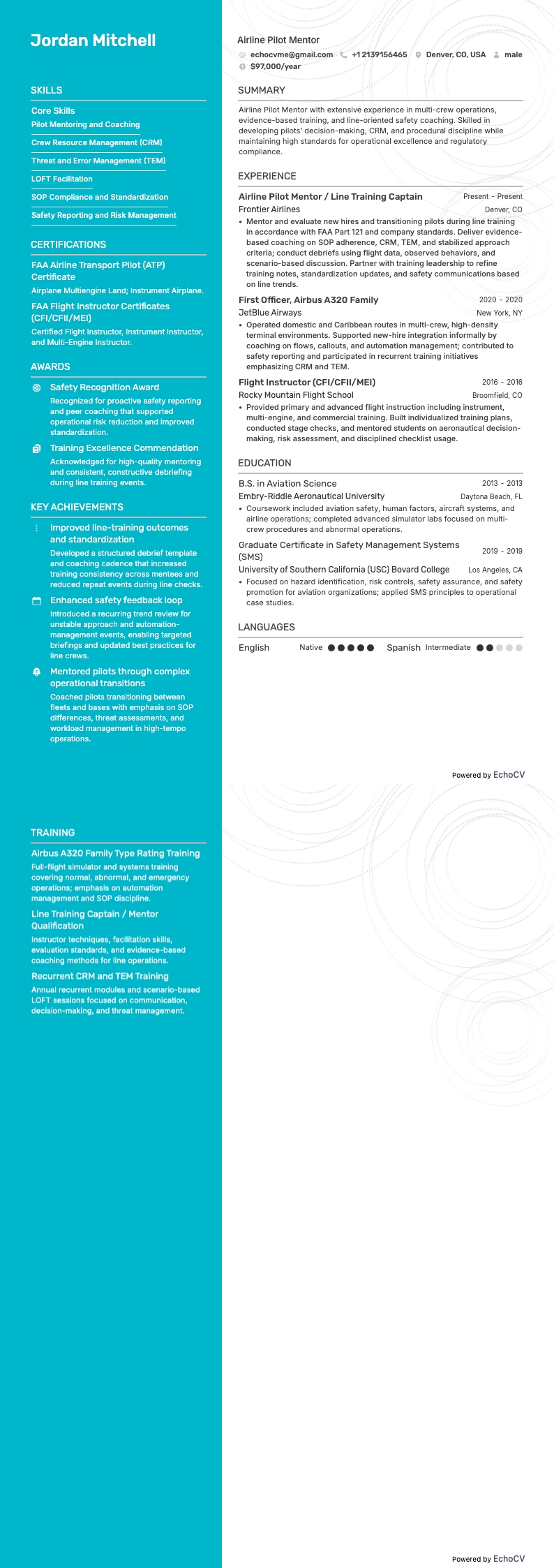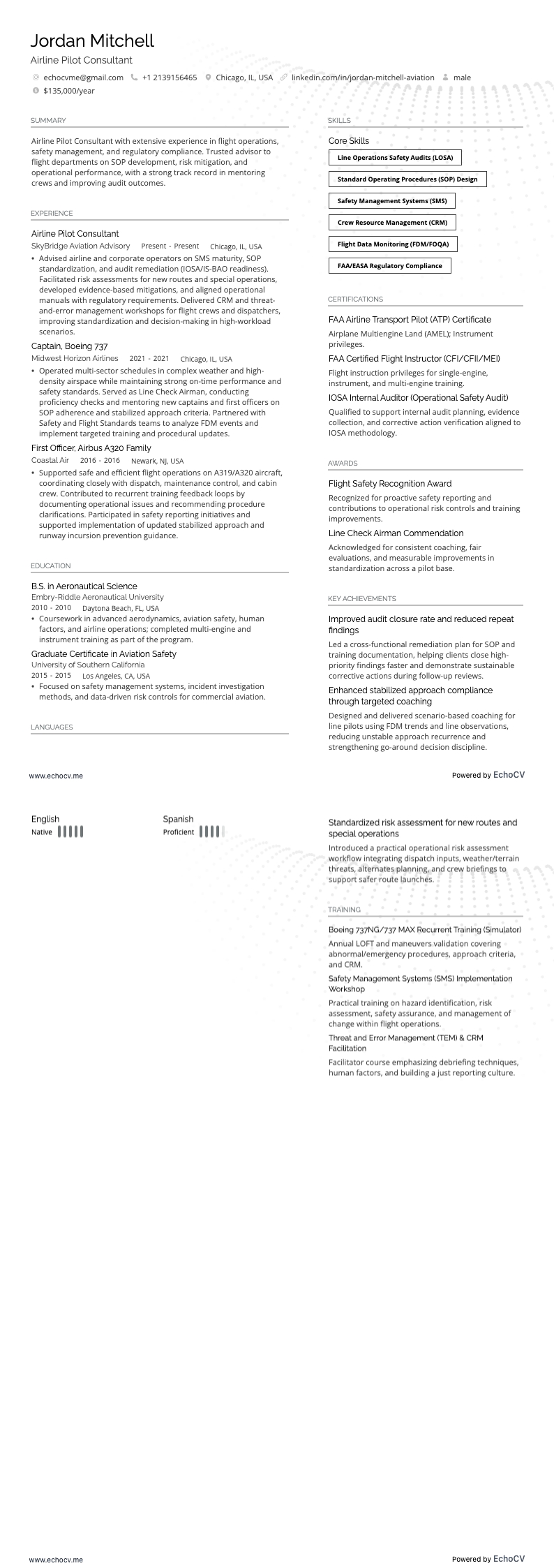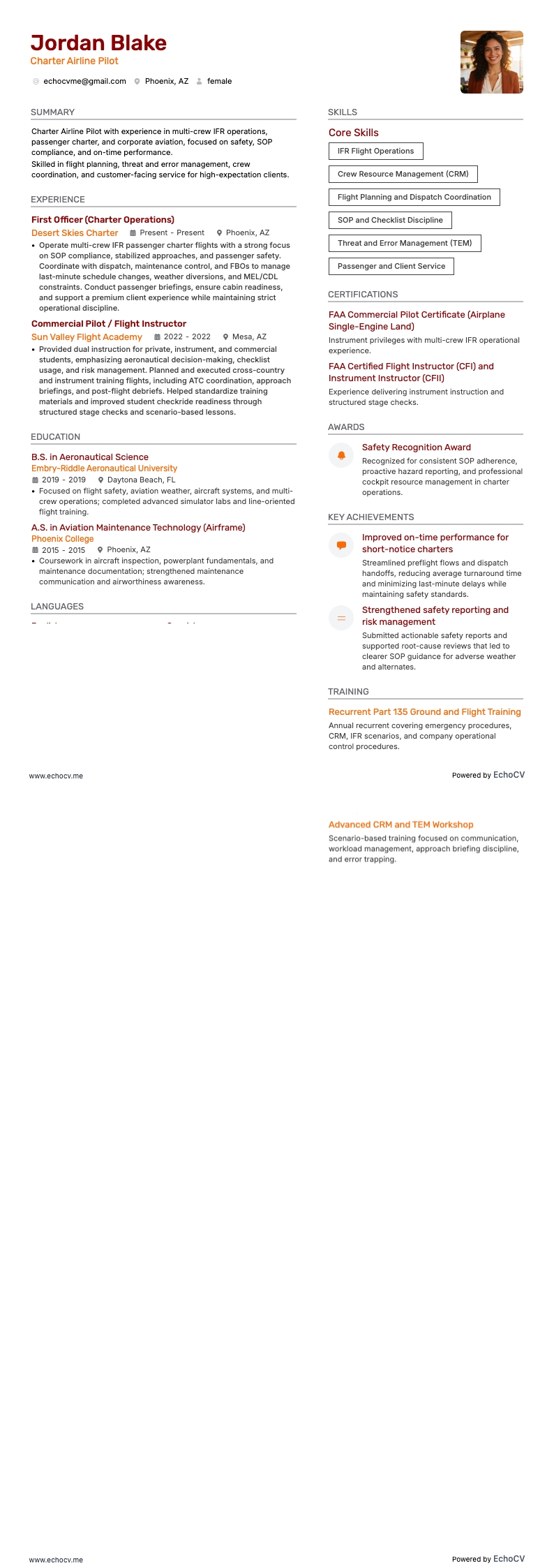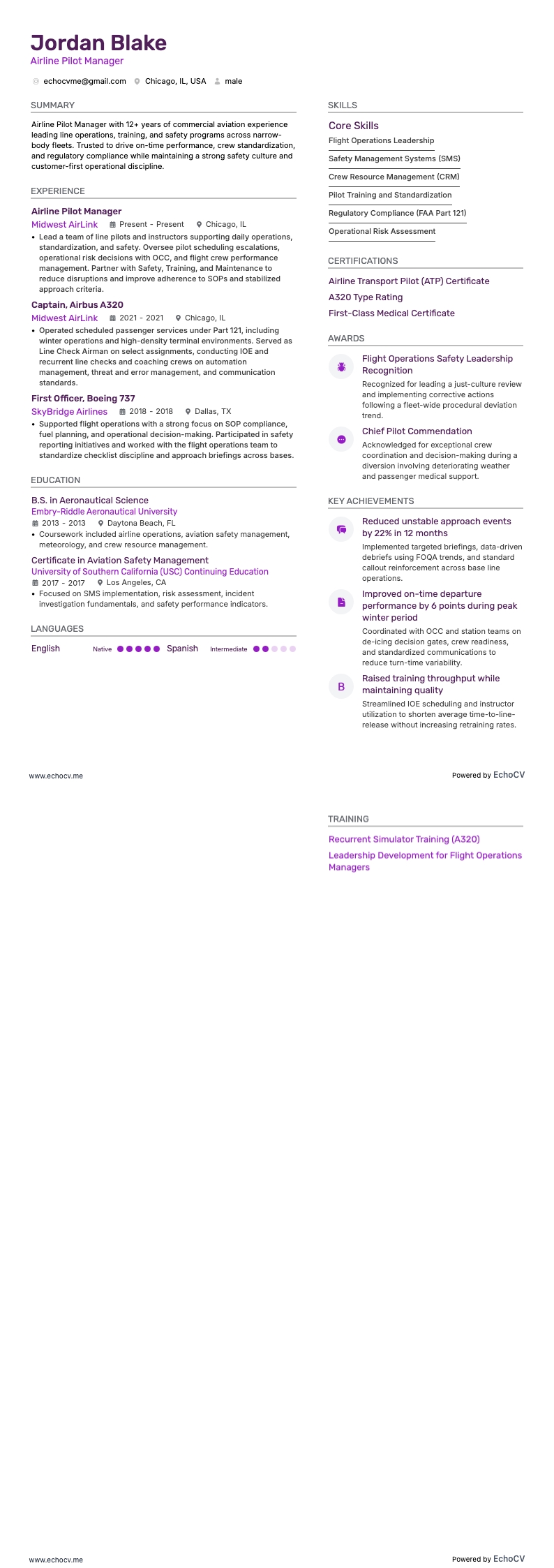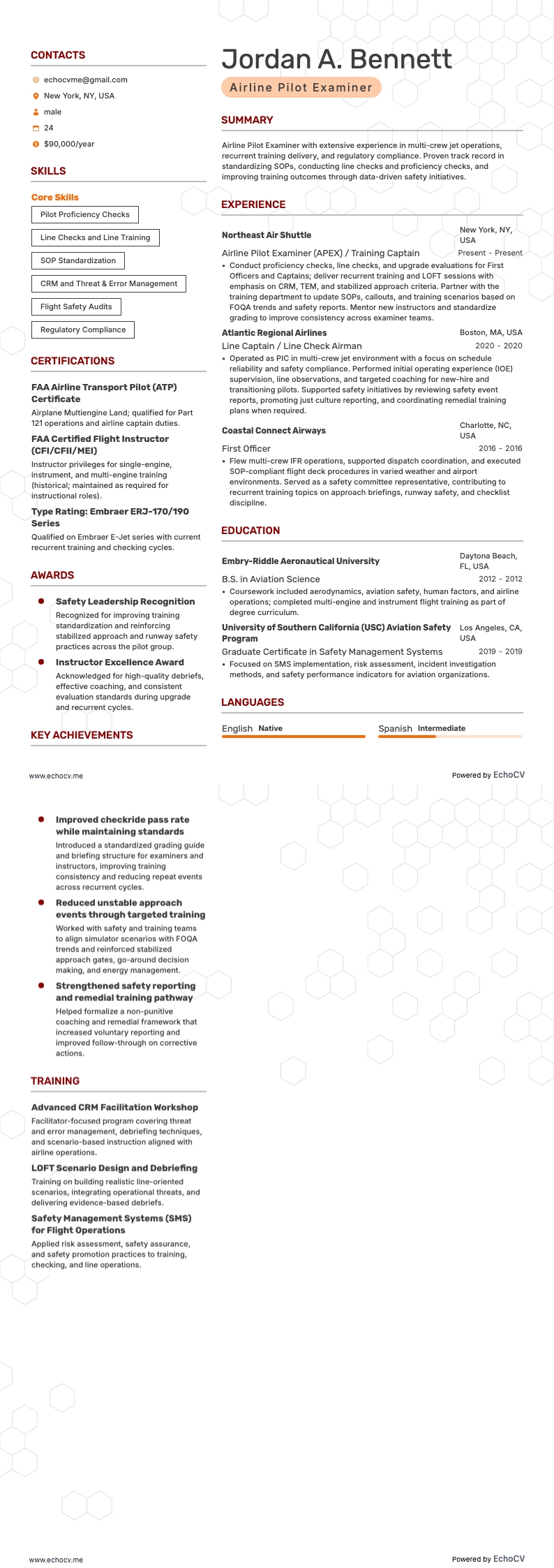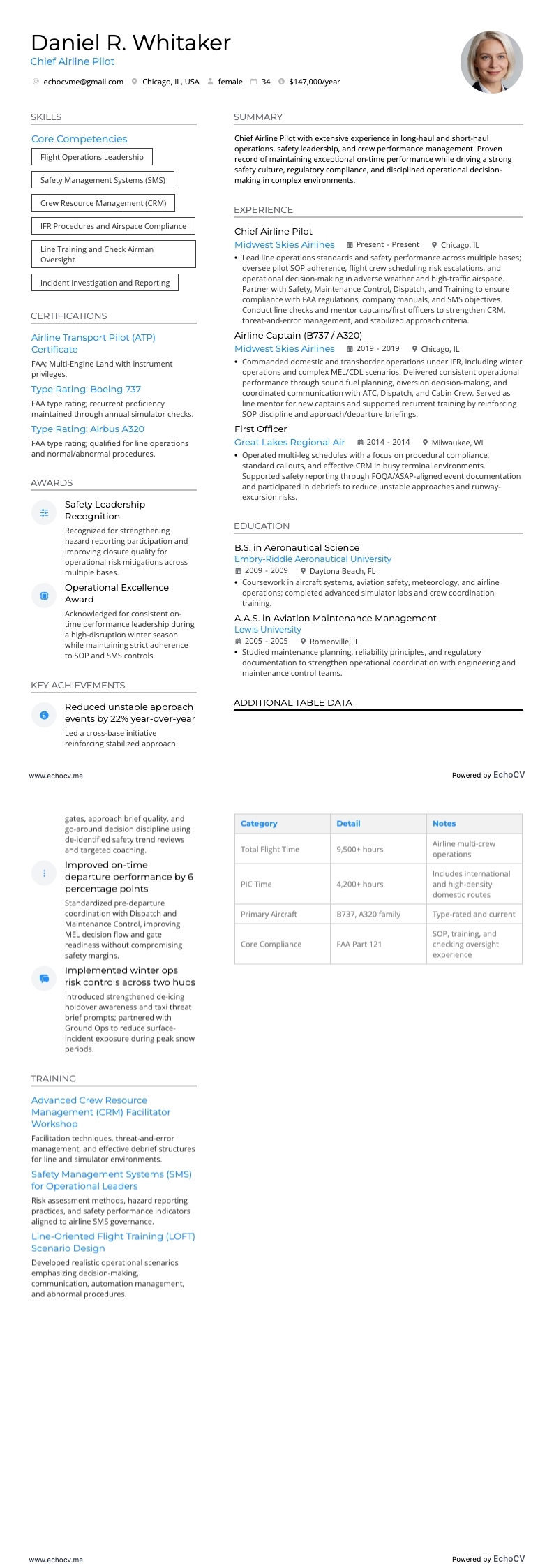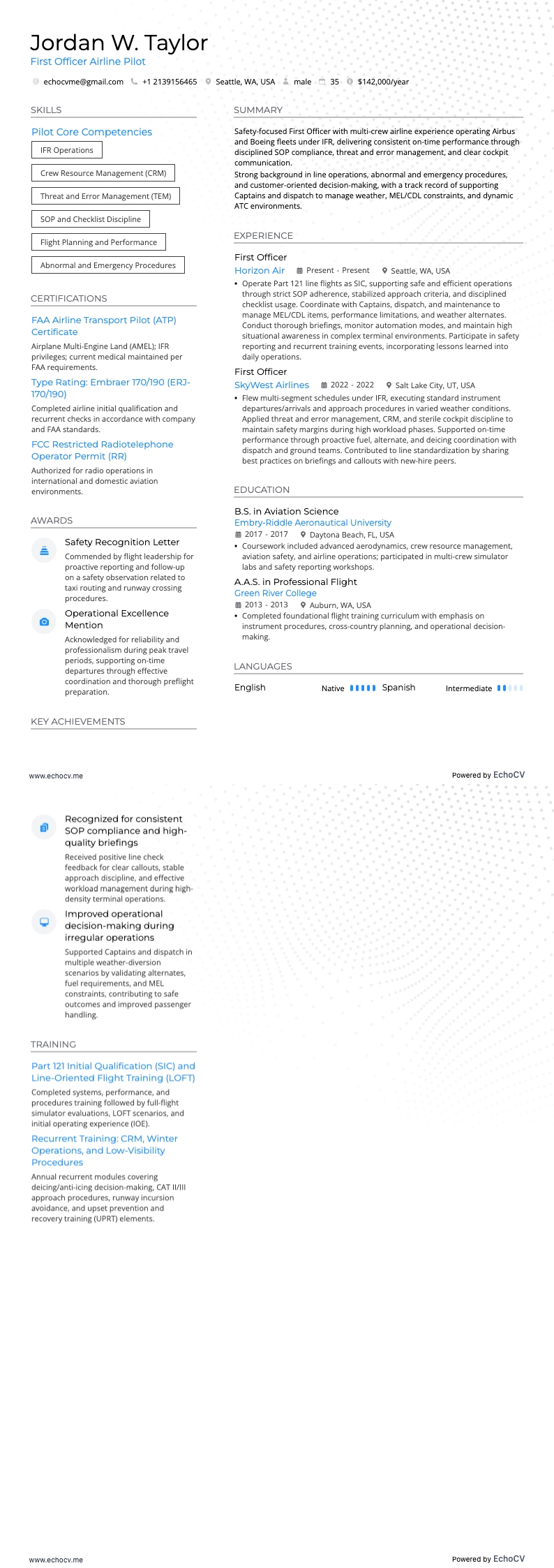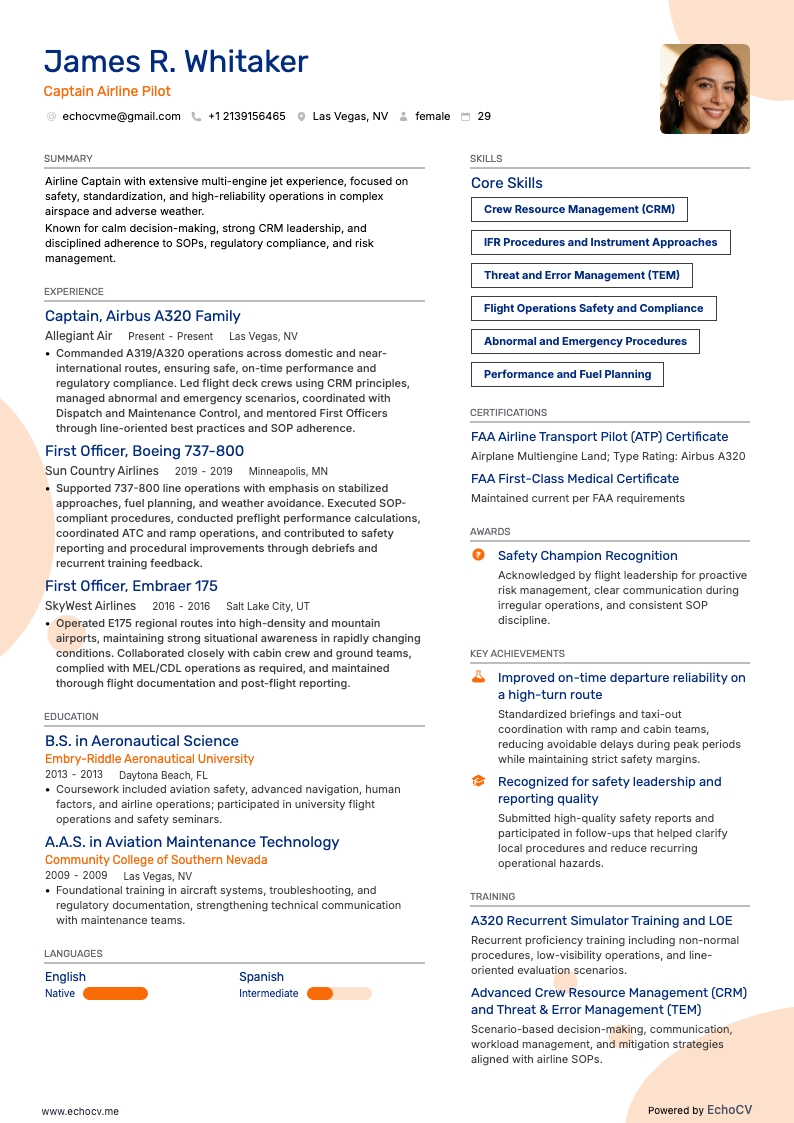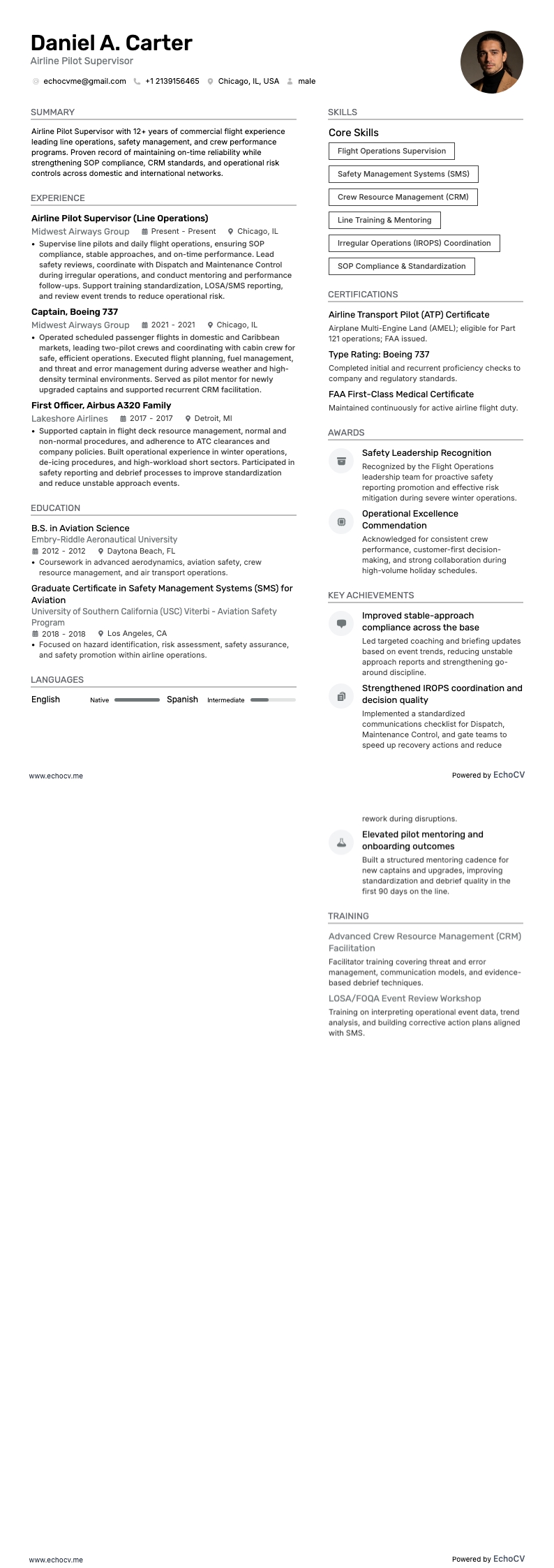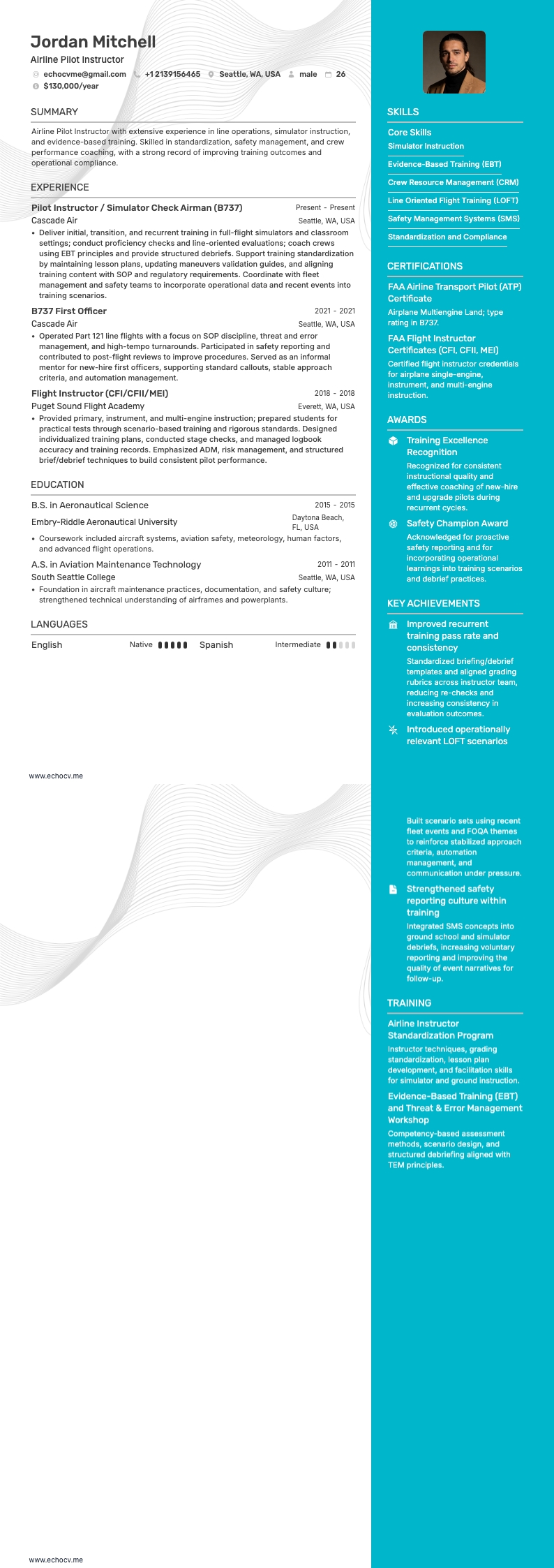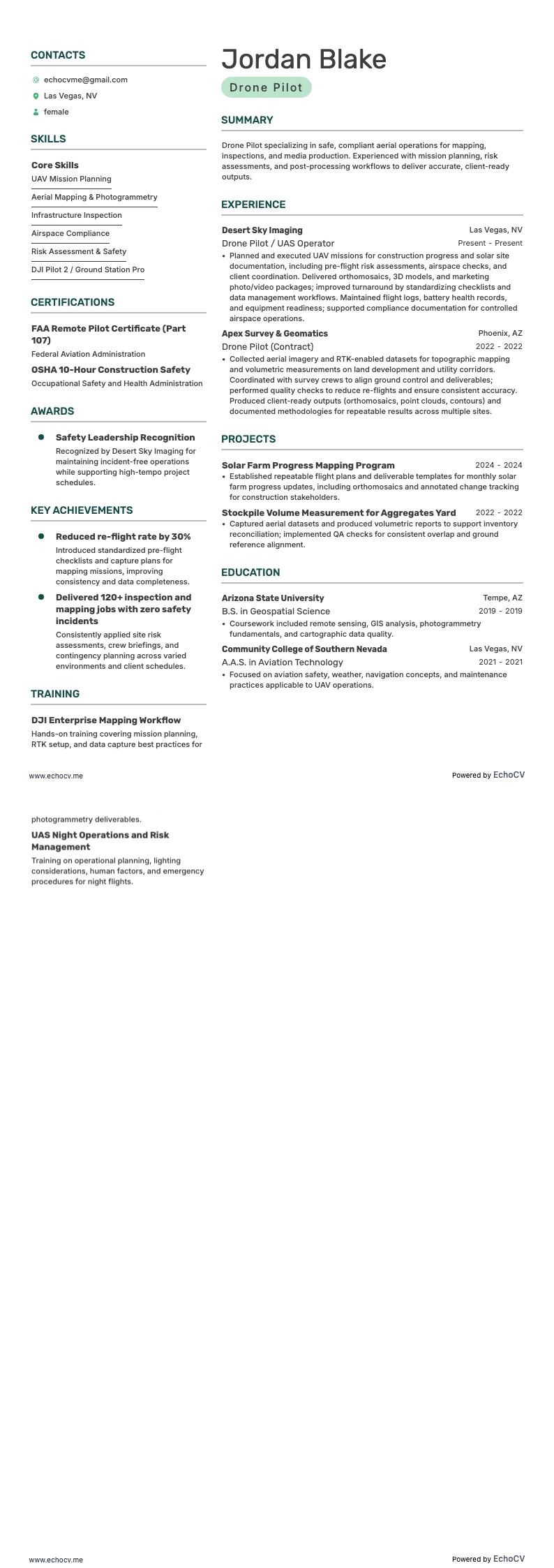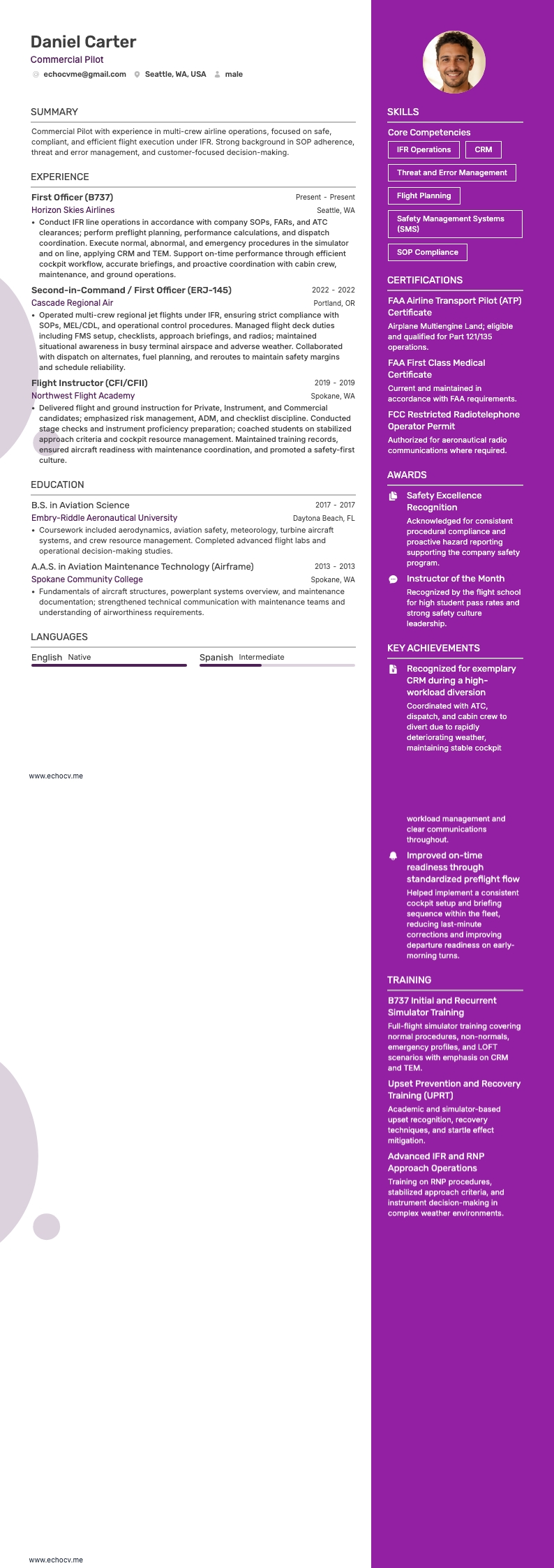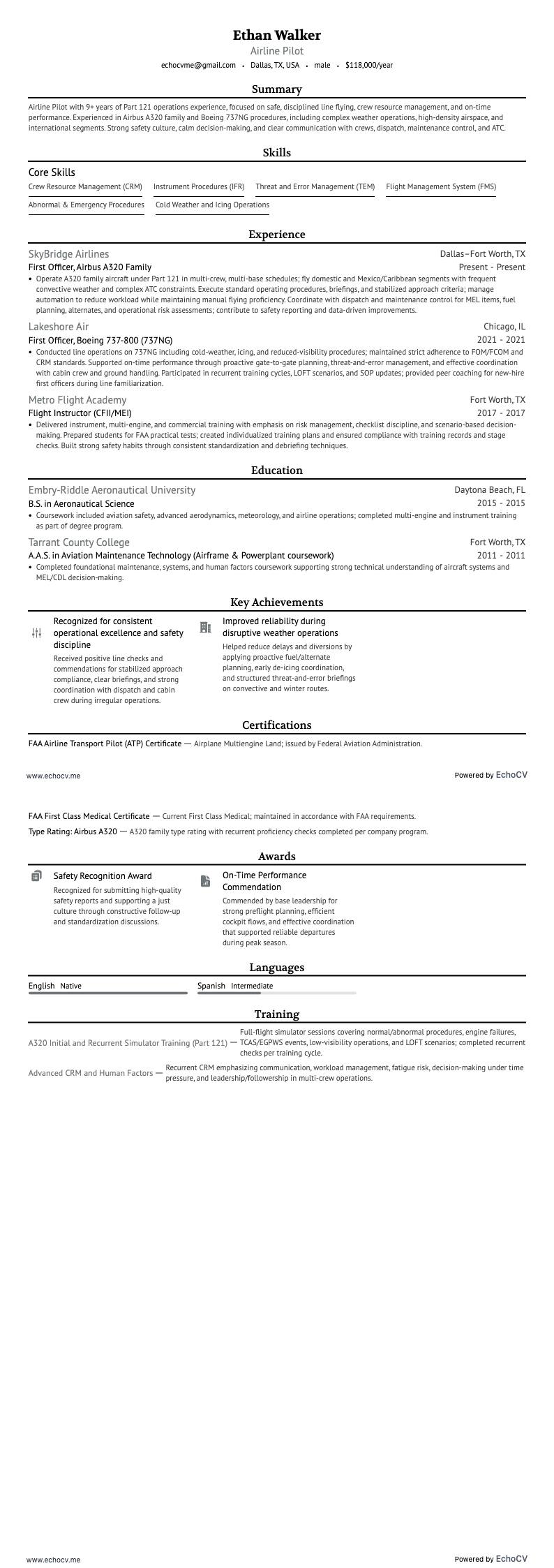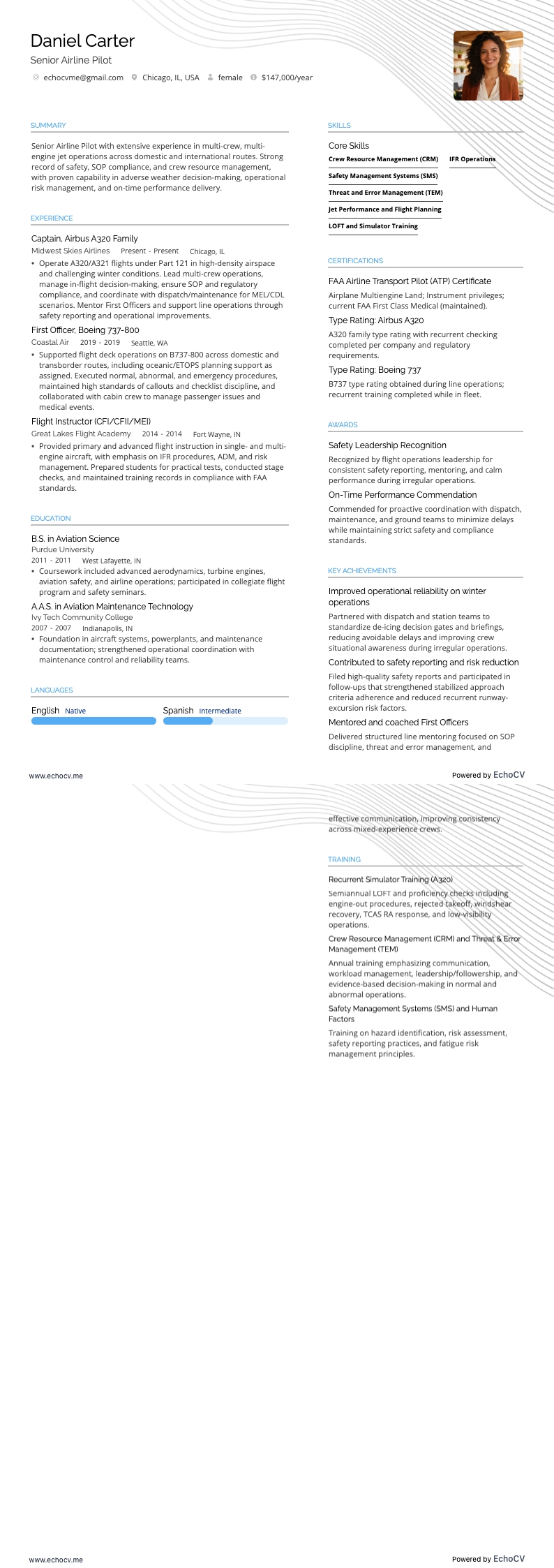
This pilot resume aligns well with the job ad requirements because it:
- Highlights over 1,500 flight hours, night operations, and 100% regulatory compliance as pilot in Command (PIC).
- Demonstrates impact with a 95% on-time rate and improved client retention by 15%.
- Emphasizes skills in logistics, scheduling, and accurate reporting with zero discrepancies.
- Uses strong action verbs at the beginning of each bullet point, creating a sense of agency and initiative.
- Includes specific numbers and results to quantify achievements, making the impact clear.
- Tailors each bullet to address the specific requirements and expectations of the job entry.
In terms of quantified achievements, the section below provides more details.
How to quantify your experience on a resume
As a pilot, it's vital to provide clear, quantifiable evidence of your impact and effectiveness. Specific details, such as flight hours, safety records, and on-time performance, prove your expertise and knowledge.
Each bullet point should emphasize the broader outcomes of your actions and their importance to flight operations or the airline you worked for.
In aviation, your measurable experience should emphasize the following:
- Logged over 3,000 flight hours, including 1,500 hours in King Air 300 series aircraft, enhancing operational readiness.
- Maintained a 100% compliance rate with FAA regulations, ensuring zero safety violations on over 500 flights.
- Achieved a 97% on-time performance rate, minimizing delays and enhancing passenger satisfaction.
- Improved fuel efficiency by 12% through optimized flight planning and route adjustments.
- Conducted over 50 safety drills and emergency simulations, resulting in a 20% increase in crew preparedness.
Even if you have no work experience in piloting, use these guidelines. In the next section you’ll find some actionable tips to make your entry-level pilot resume impressive.
How do i write a pilot resume with no experience
To craft a compelling pilot resume without direct experience, focus on your education, training, and certifications. Feature the skills and achievements gained during your flight program and related activities.
Here are the steps to make your resume stand out:
- Choose a functional resume format to spotlight your skills and educational achievements.
- Select a traditional template to maintain a professional appearance, even without work experience.
- Enroll in a flight program at a college or university to gain foundational education and credentials.
- Accumulate flight hours through part 61 or part 141 training; qualify for airlines at 1,000 hours under part 141 instead of 1,500.
- Obtain essential certifications like Private pilot License (PPL) and Instrument Rating (IR).
- Log total flight hours during training, maintain 100% FAA compliance, excel in flight school exams, and participate in simulated emergency drills.
- Emphasize skills such as flight planning, navigation, communication, safety protocols, and crew resource management.
- Join aviation organizations like the Aircraft Owners and pilots Association and volunteer at aviation events to show commitment.