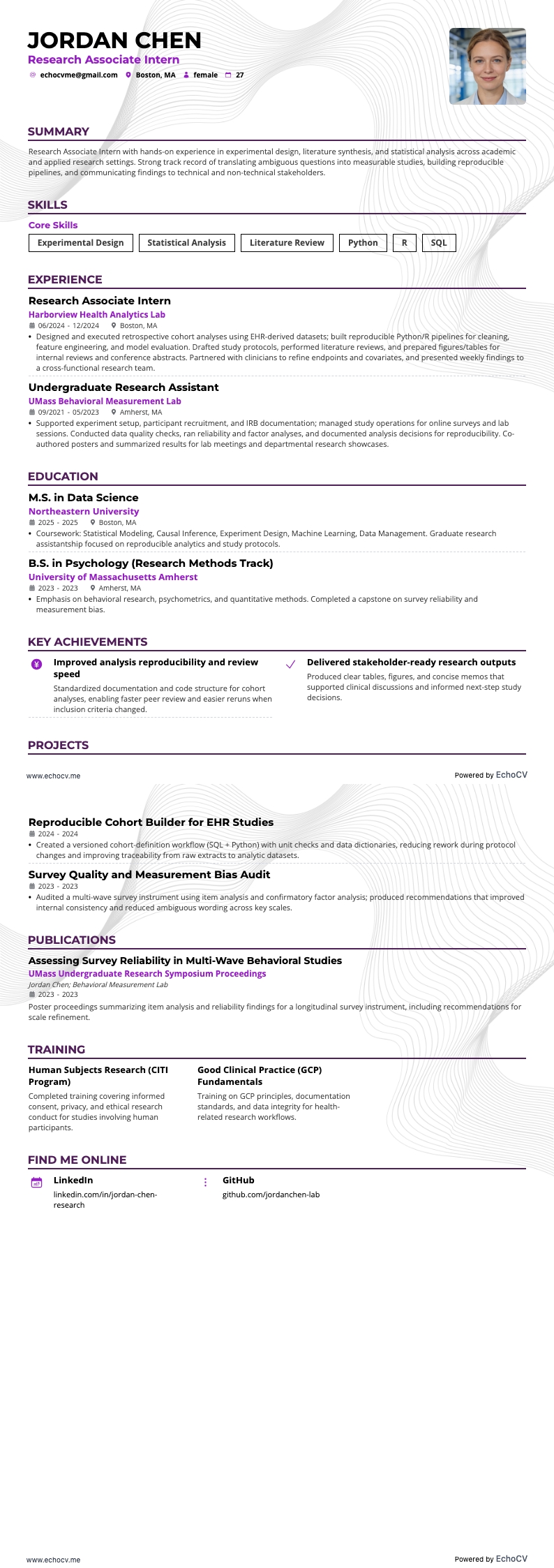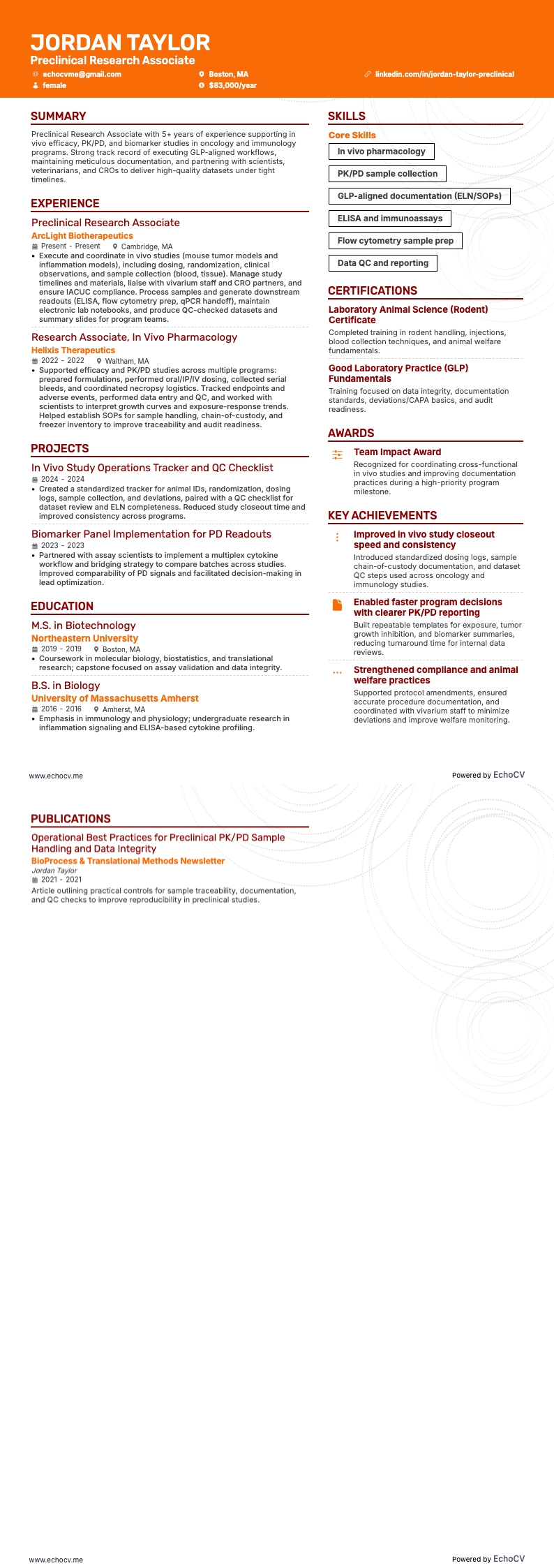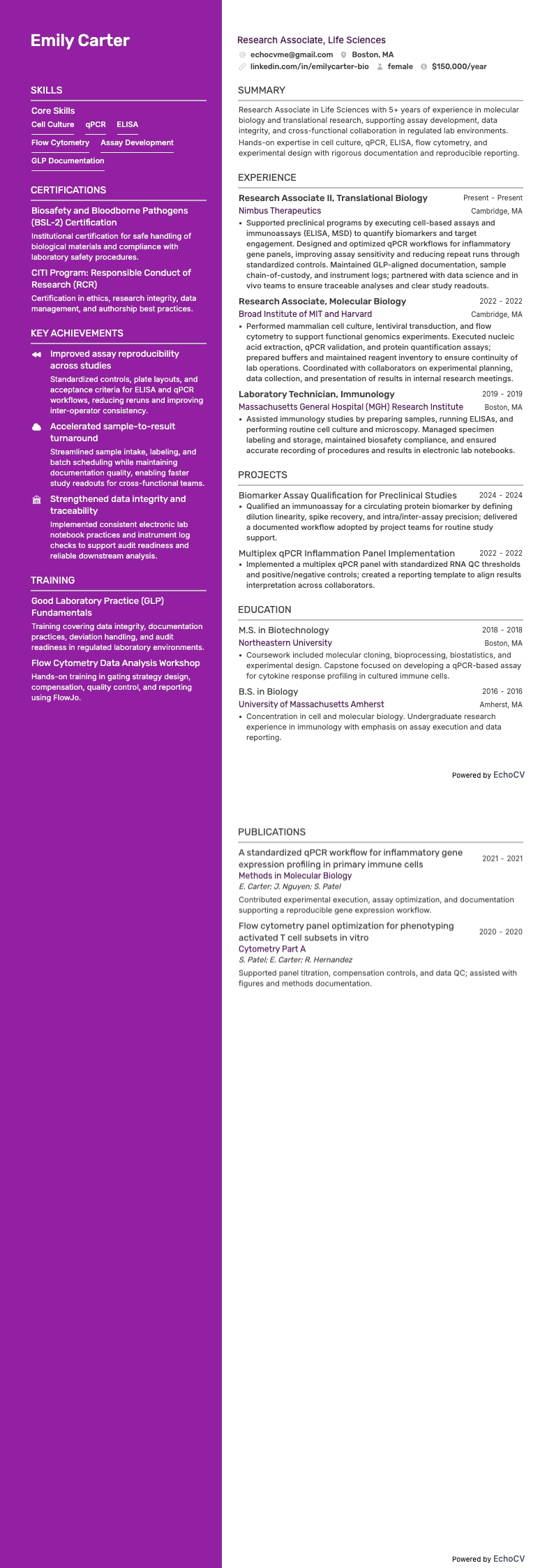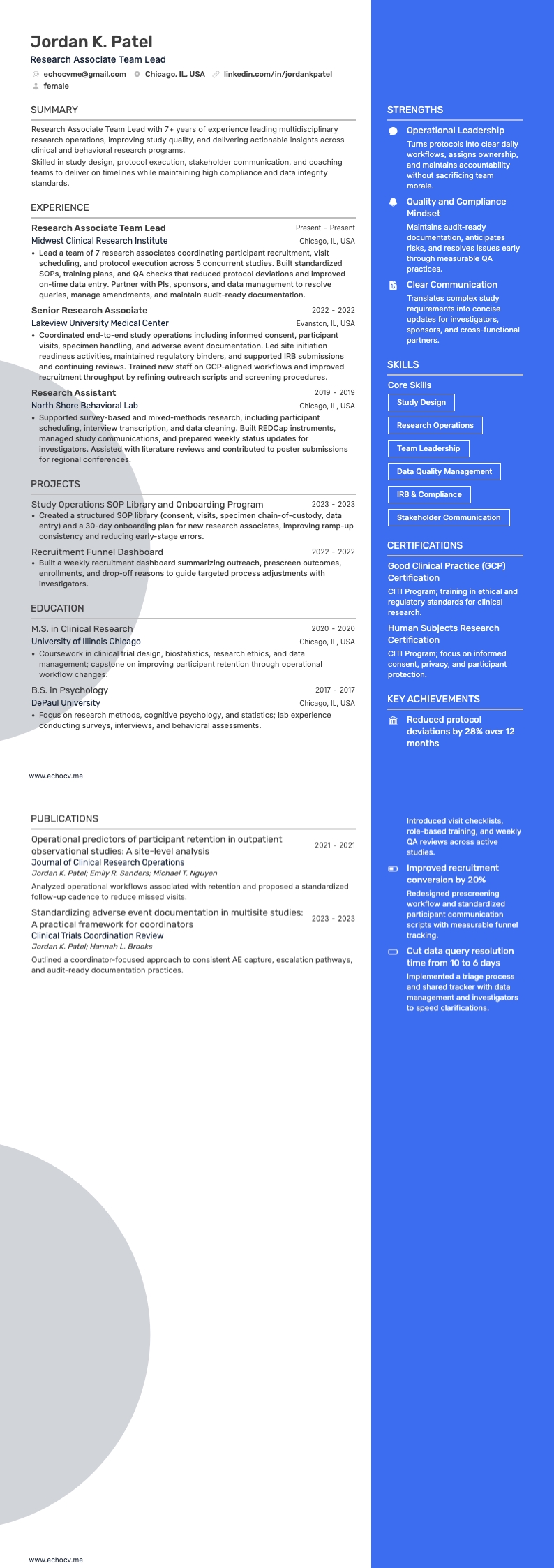
Once you’ve organized the key resume components in a clear structure, the next step is to write your research associate experience section so it fits that layout and supports the same goals.
How to write your research associate resume experience
Your experience section should highlight research you've designed, conducted, and delivered—including the methodologies, analytical tools, and laboratory or computational techniques that drove your work forward. Hiring managers prioritize demonstrated impact over descriptive task lists, so every bullet should connect what you did to a measurable outcome like published findings, improved protocols, or successful grant contributions. Building a targeted resume for each application ensures your most relevant accomplishments rise to the top.
Each entry should include:
- Job title
- Company and location (or remote)
- Dates of employment (month and year)
Three to five concise bullet points showing what you owned, how you executed, and what outcomes you delivered:
- Ownership scope: the studies, experiments, datasets, laboratory operations, or research programs you were directly accountable for as a research associate.
- Execution approach: the instruments, statistical software, assays, computational models, or research frameworks you applied to design experiments, analyze data, and validate findings.
- Value improved: changes to data accuracy, reproducibility, turnaround time, protocol efficiency, sample integrity, or risk mitigation that resulted from your contributions.
- Collaboration context: how you coordinated with principal investigators, fellow researchers, clinical teams, external partners, or regulatory bodies to advance shared research objectives.
- Impact delivered: outcomes expressed through publication contributions, successful funding applications, dataset scale, regulatory milestones, or discoveries that moved a project or organization forward—rather than routine activity.