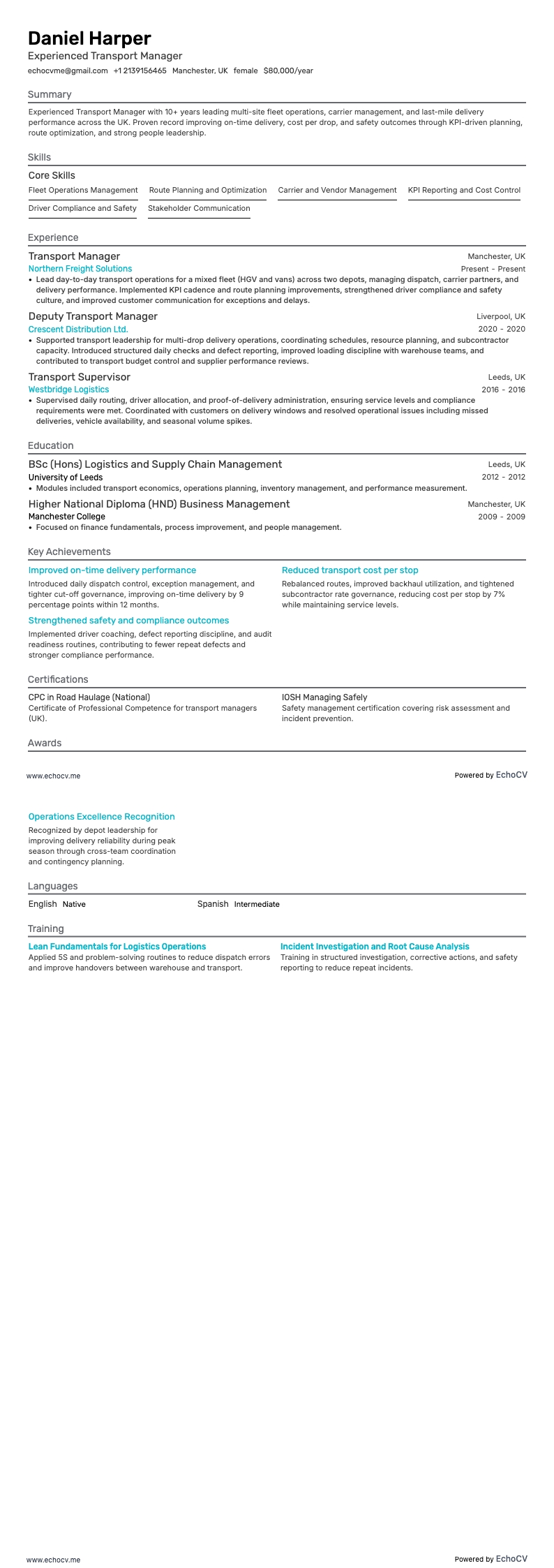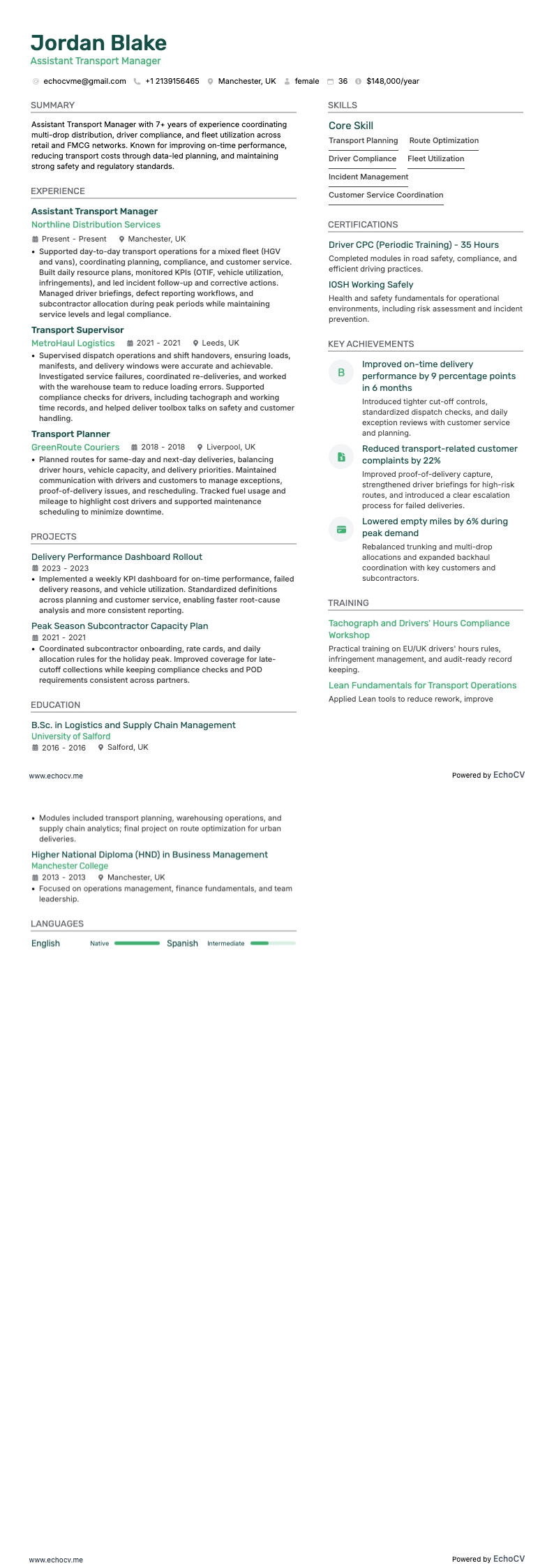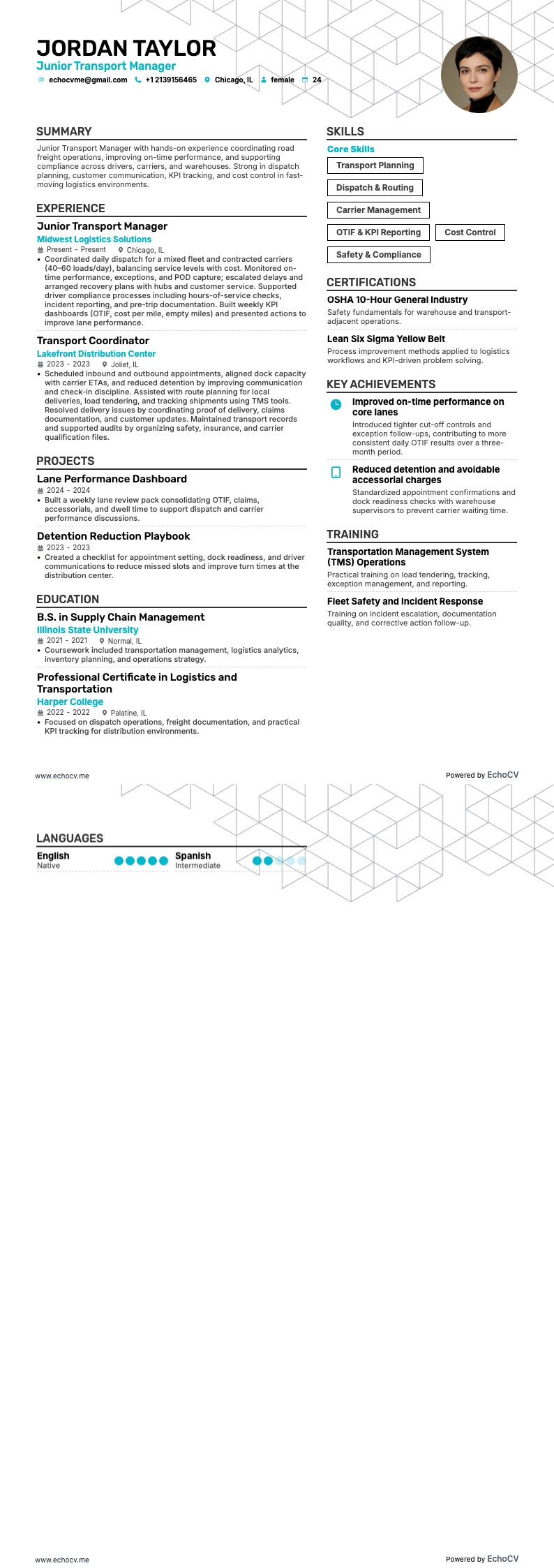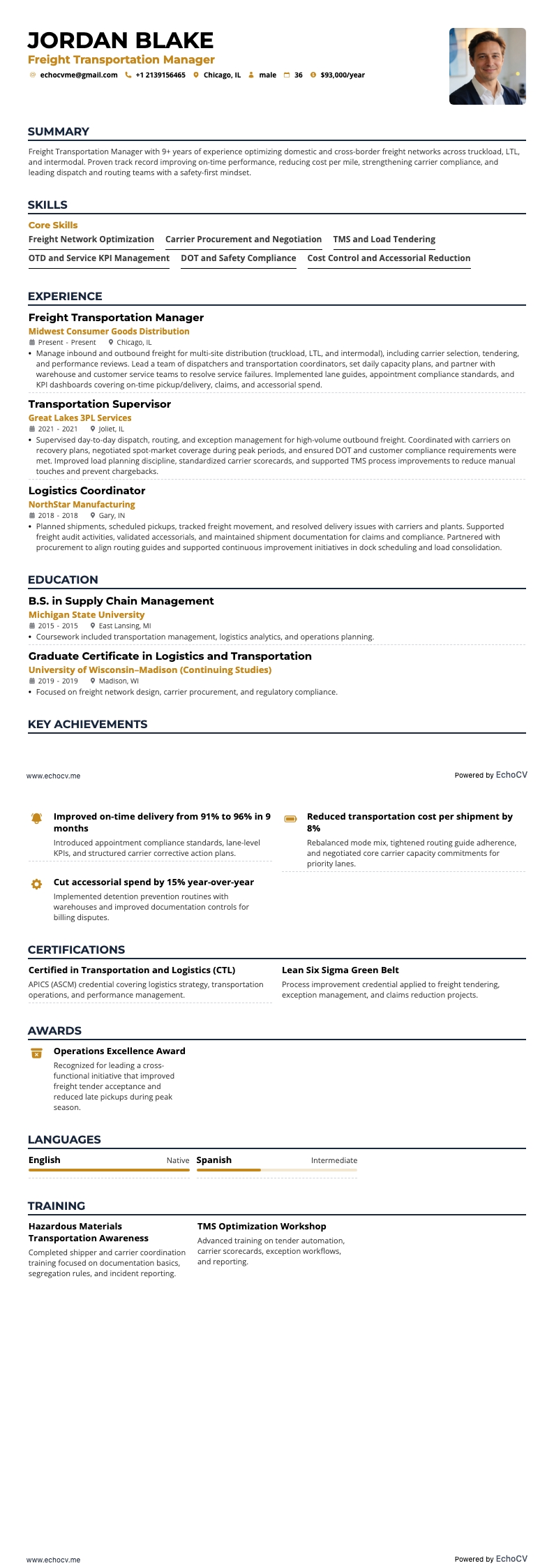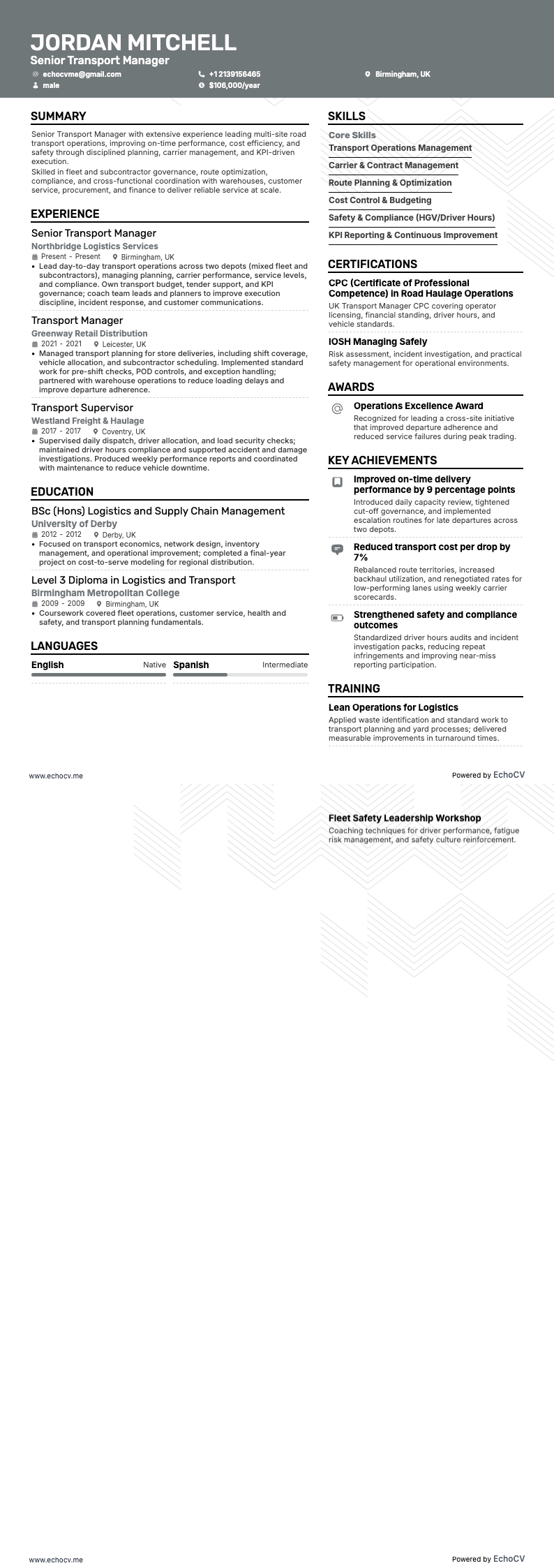
Once you’ve organized your resume with the right components, the next step is to write your transport manager experience section so it supports that structure with relevant, role-specific details.
How to write your transport manager resume experience
The experience section is where you prove you've managed fleet operations, optimized logistics networks, and delivered measurable improvements in cost, safety, and on-time performance. Hiring managers prioritize demonstrated impact—route efficiency gains, compliance improvements, fleet utilization results—over descriptive task lists that simply restate a job description. Building a targeted resume ensures every bullet speaks directly to the role's priorities rather than listing generic duties.
Each entry should include:
- Job title
- Company and location (or remote)
- Dates of employment (month and year)
Three to five concise bullet points showing what you owned, how you executed, and what outcomes you delivered:
- Ownership scope: the fleets, distribution networks, transport budgets, driver teams, or regional logistics operations you were directly accountable for as a transport manager.
- Execution approach: the route planning software, transport management systems, telematics platforms, regulatory frameworks, or scheduling methods you used to make operational decisions and keep vehicles moving efficiently.
- Value improved: changes to delivery reliability, fuel efficiency, vehicle downtime, regulatory compliance rates, driver safety records, or overall transport cost-per-mile relevant to your operation.
- Collaboration context: how you coordinated with warehouse teams, procurement, third-party carriers, maintenance departments, regulatory bodies, or senior leadership to align transport operations with broader supply chain goals.
- Impact delivered: outcomes expressed through fleet performance improvements, service-level gains, cost reductions, or safety benchmarks rather than a summary of daily dispatching activities.