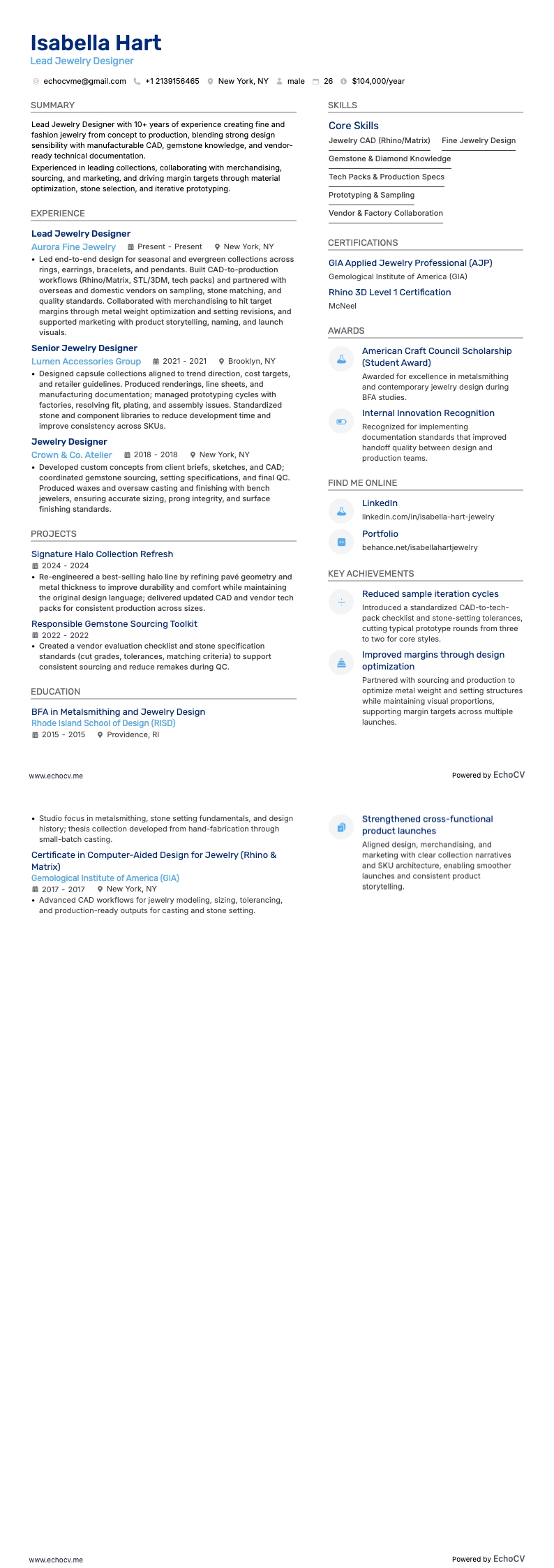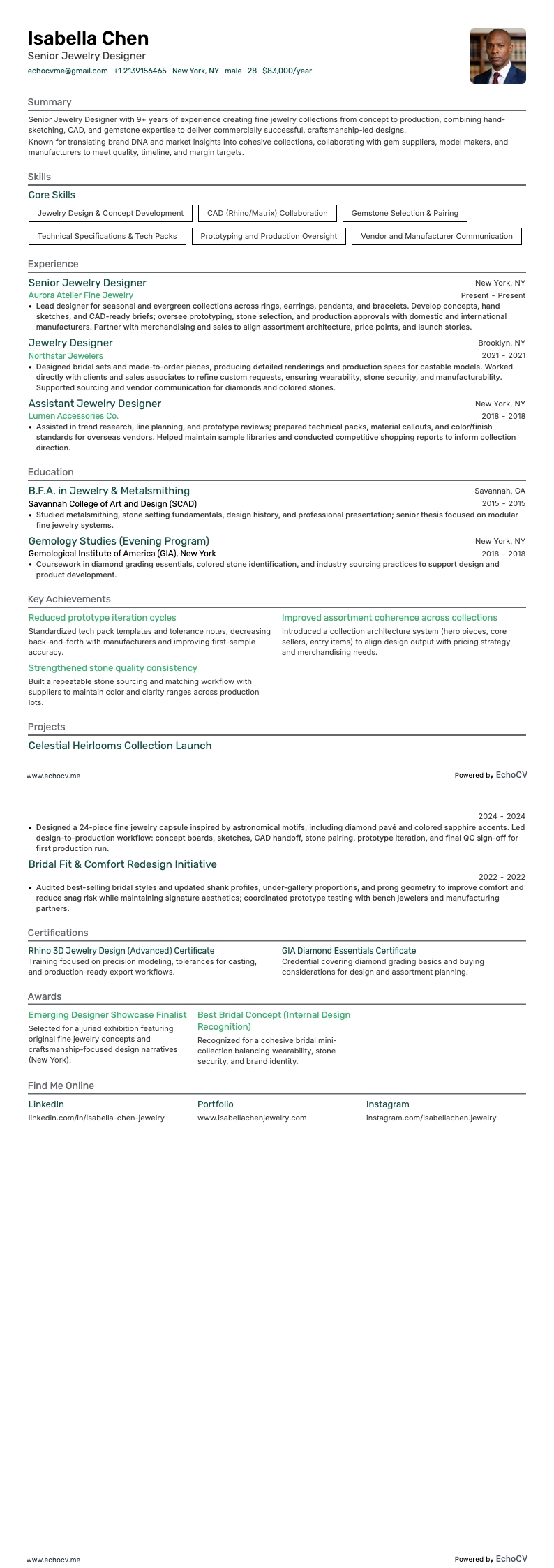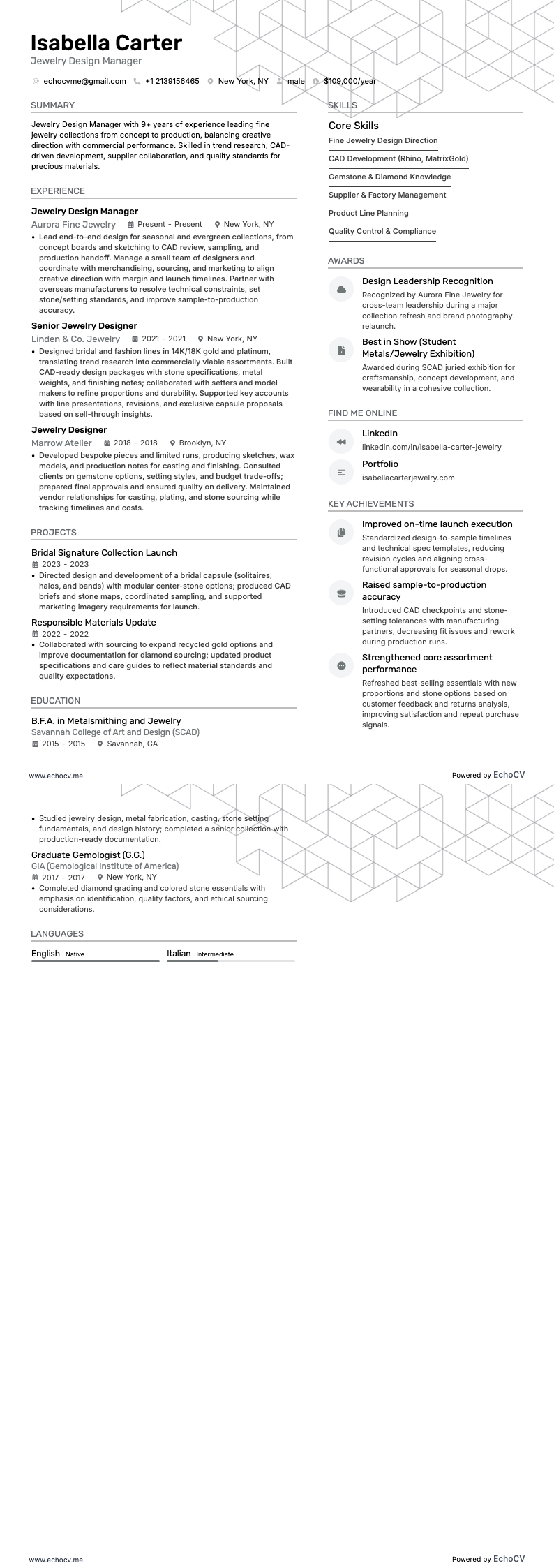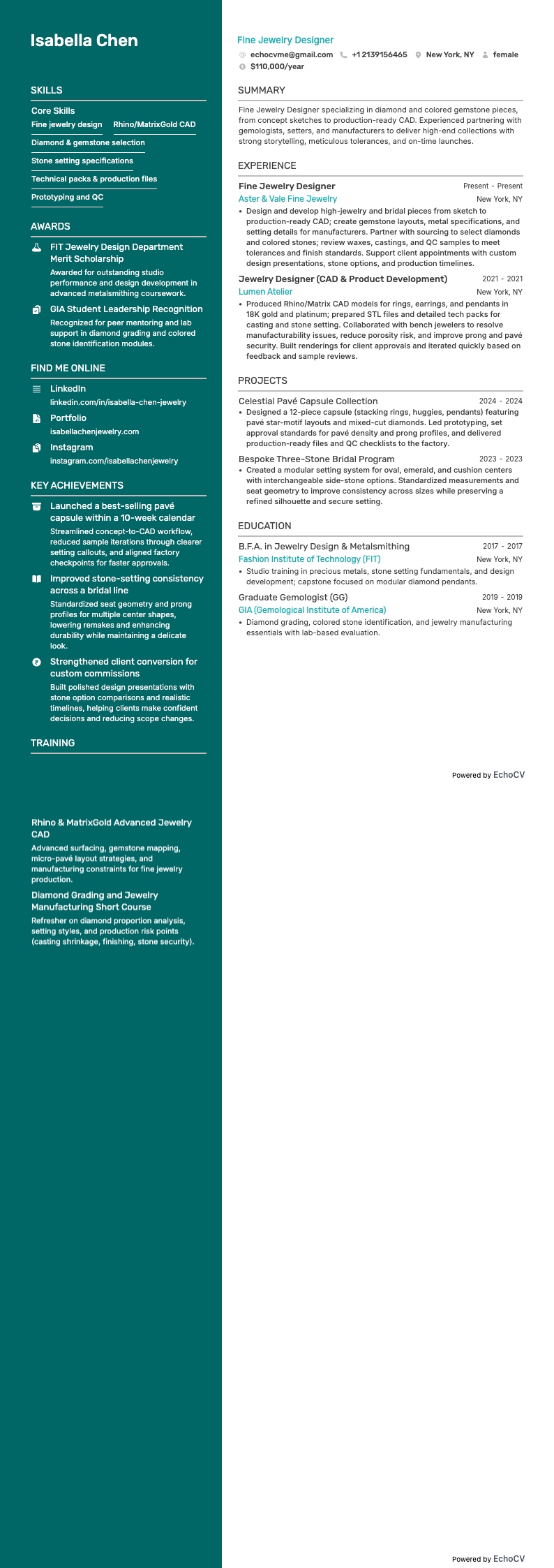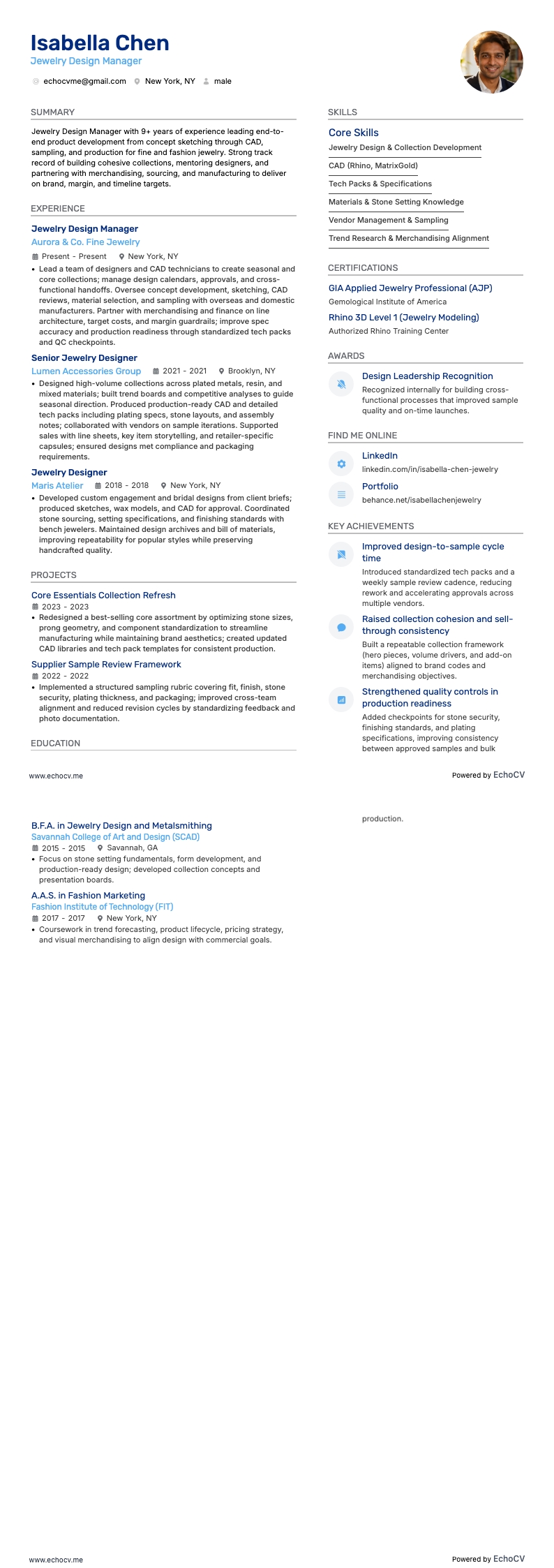
With your resume’s key components in place, the next step is to show how to write your jewelry designer resume experience so each role supports those sections with specific, relevant results.
How to write your jewelry designer resume experience
The experience section of your jewelry designer resume should spotlight work you've shipped—finished collections, custom commissions, production runs—using the specific tools, techniques, and materials that define your craft, paired with measurable outcomes such as sales growth, production efficiency, or client retention. Hiring managers prioritize demonstrated impact over descriptive task lists, so every bullet you write needs to prove you moved a project from concept to completion and generated a tangible result.
Each entry should include:
- Job title
- Company and location (or remote)
- Dates of employment (month and year)
Three to five concise bullet points showing what you owned, how you executed, and what outcomes you delivered:
- Ownership scope: the collections, product lines, custom design programs, material sourcing pipelines, or studio teams you were directly accountable for as a jewelry designer.
- Execution approach: the CAD software, hand-fabrication techniques, casting methods, gemstone-setting processes, or prototyping workflows you used to make design decisions and deliver finished pieces.
- Value improved: changes to product quality, production turnaround, material waste reduction, design consistency, wearability, or compliance with hallmarking and safety standards relevant to jewelry production.
- Collaboration context: how you worked with gemologists, bench jewelers, retail buyers, marketing teams, suppliers, or clients to align design intent with commercial and technical requirements.
- Impact delivered: outcomes expressed through revenue contribution, sell-through performance, collection expansion, client acquisition, or brand positioning rather than a simple list of daily tasks.