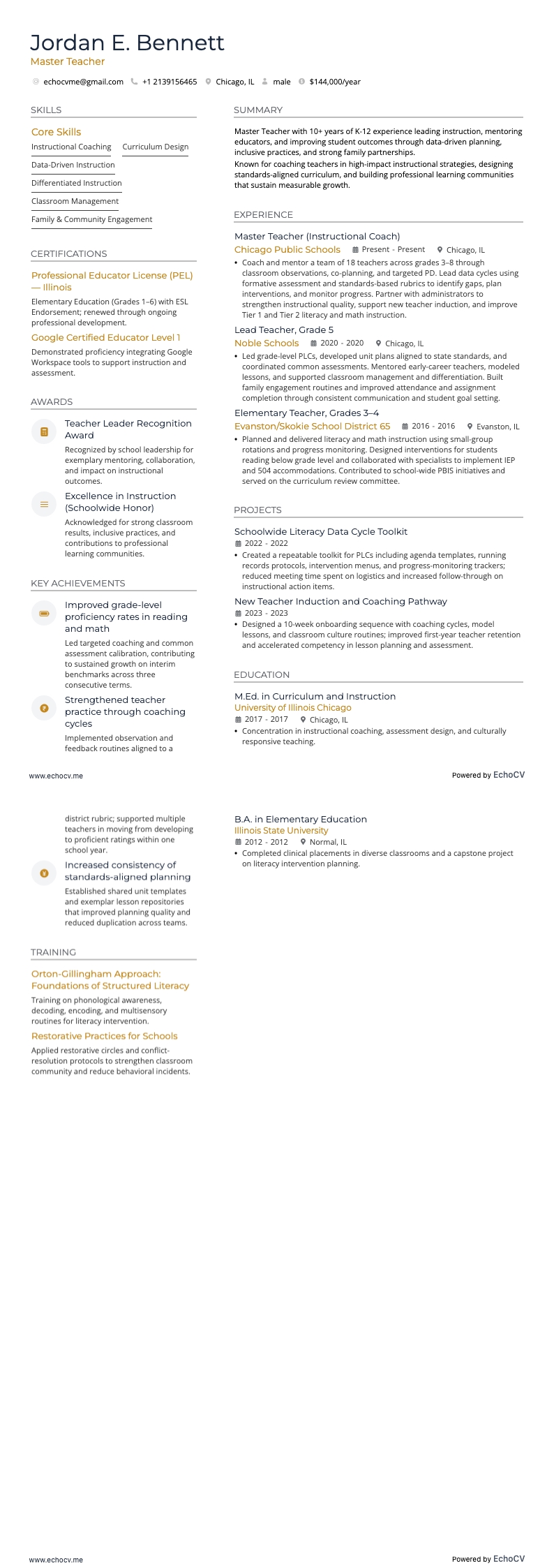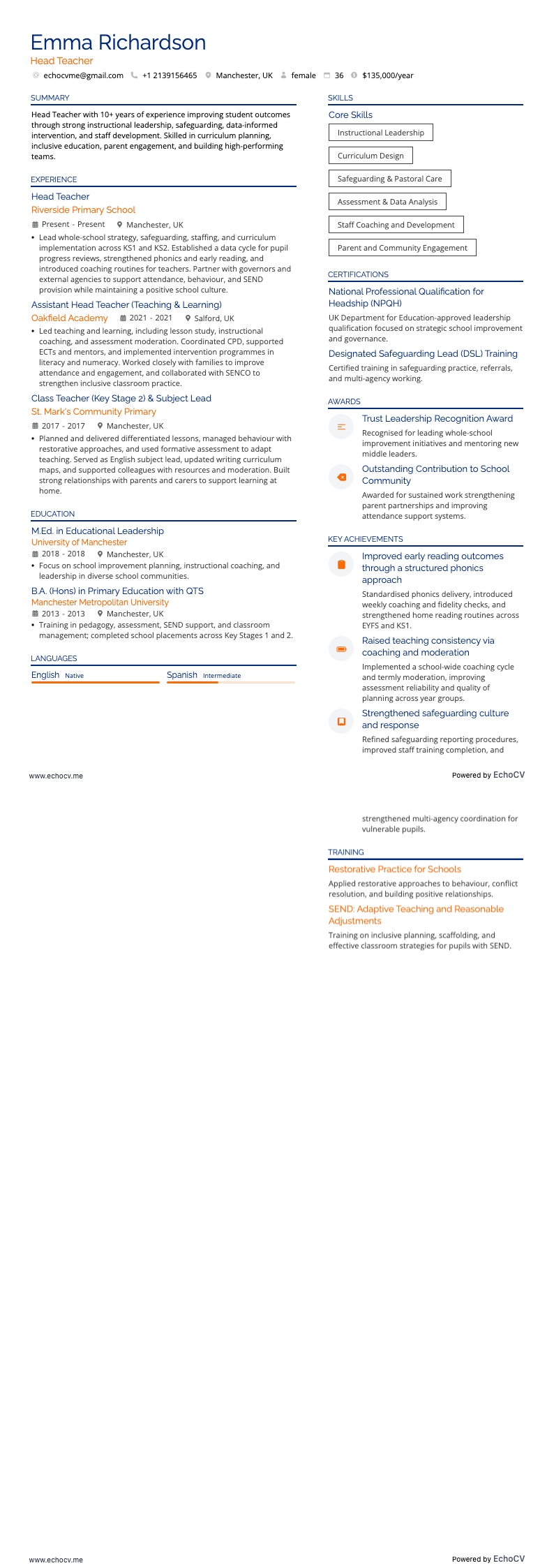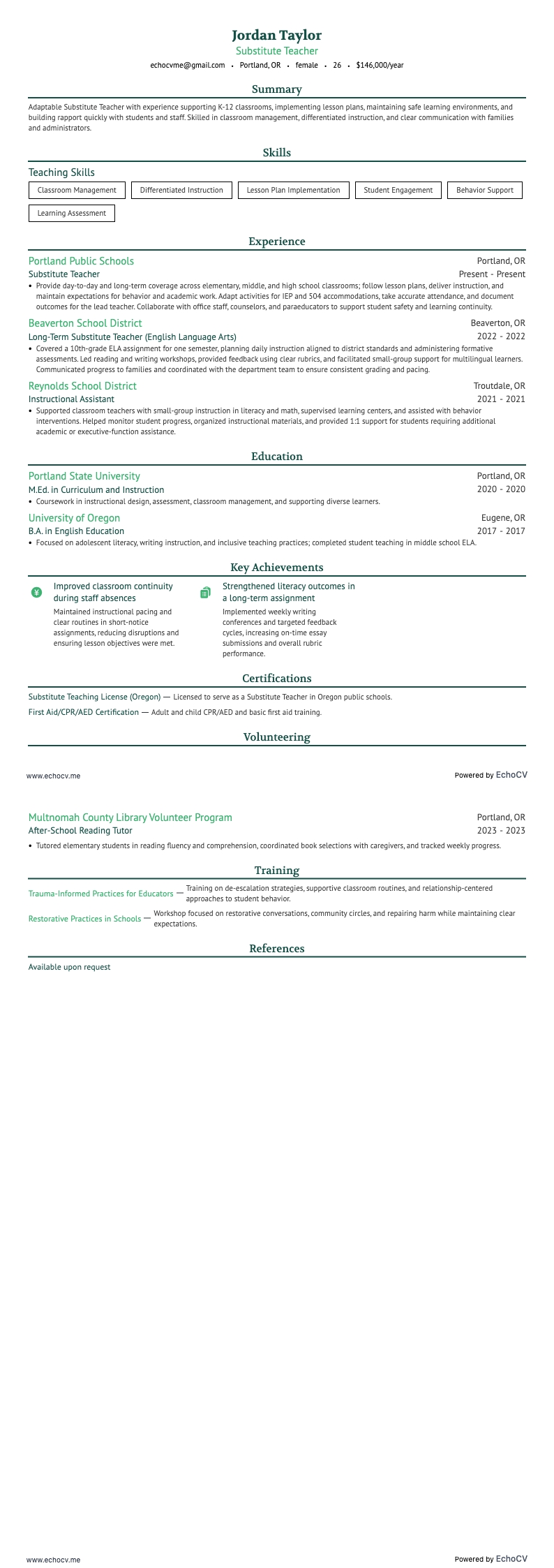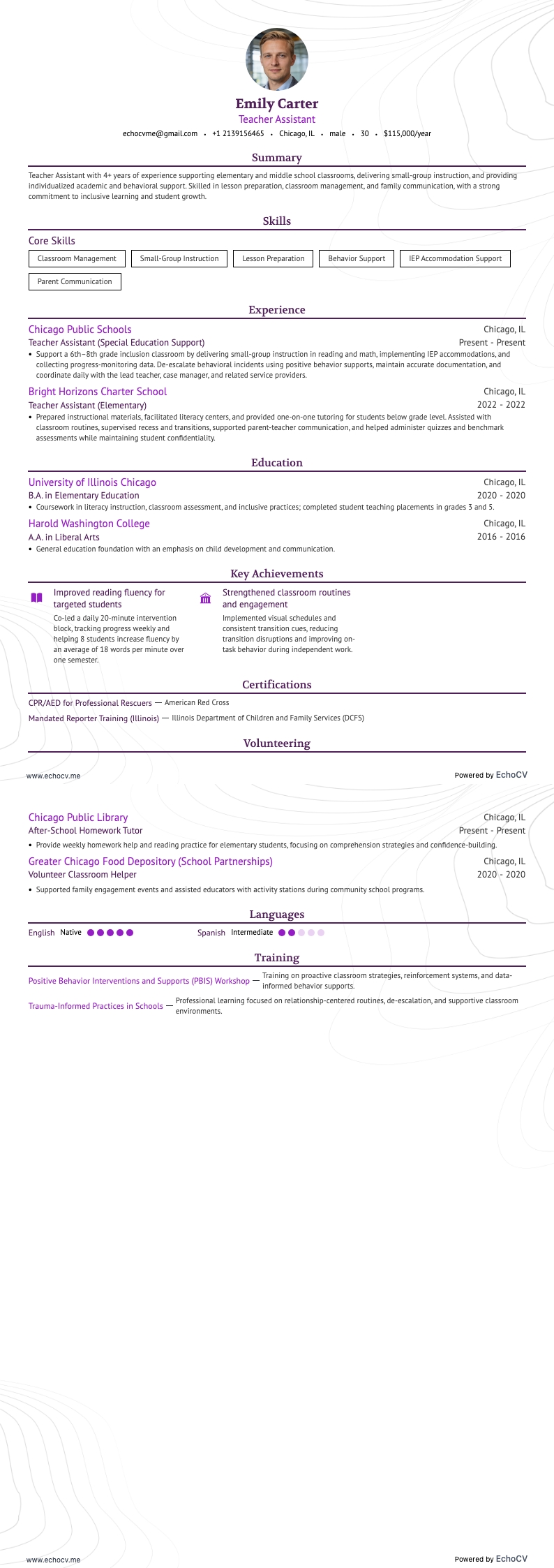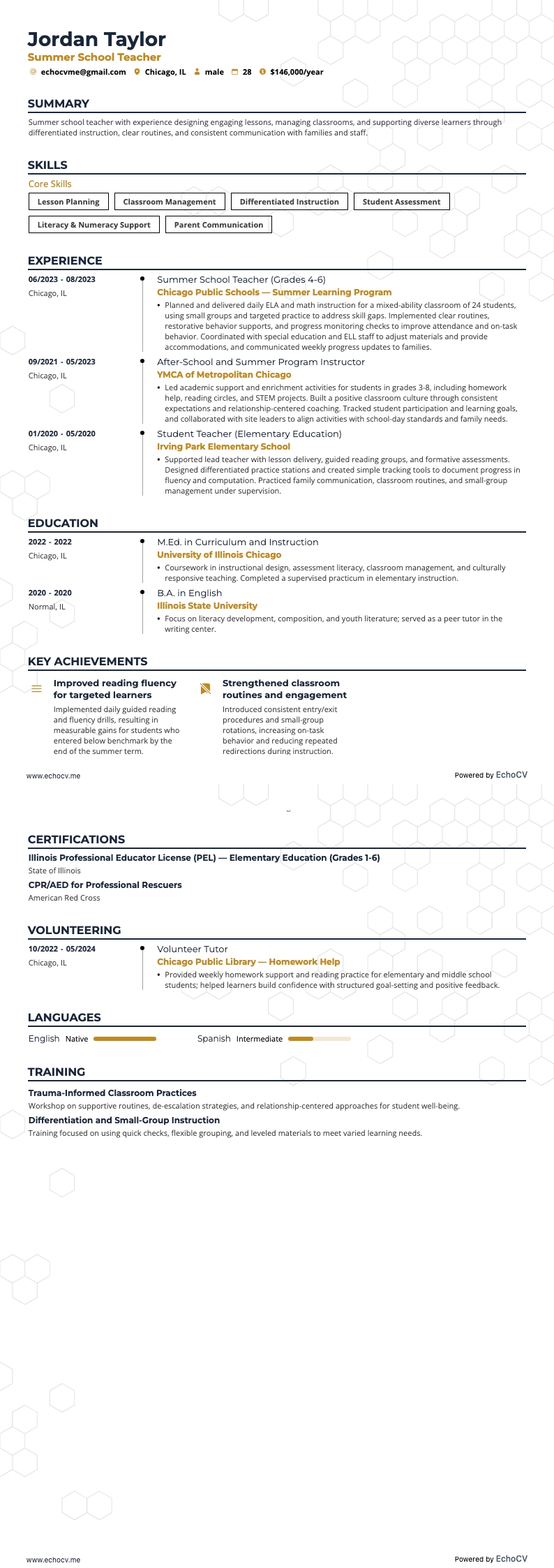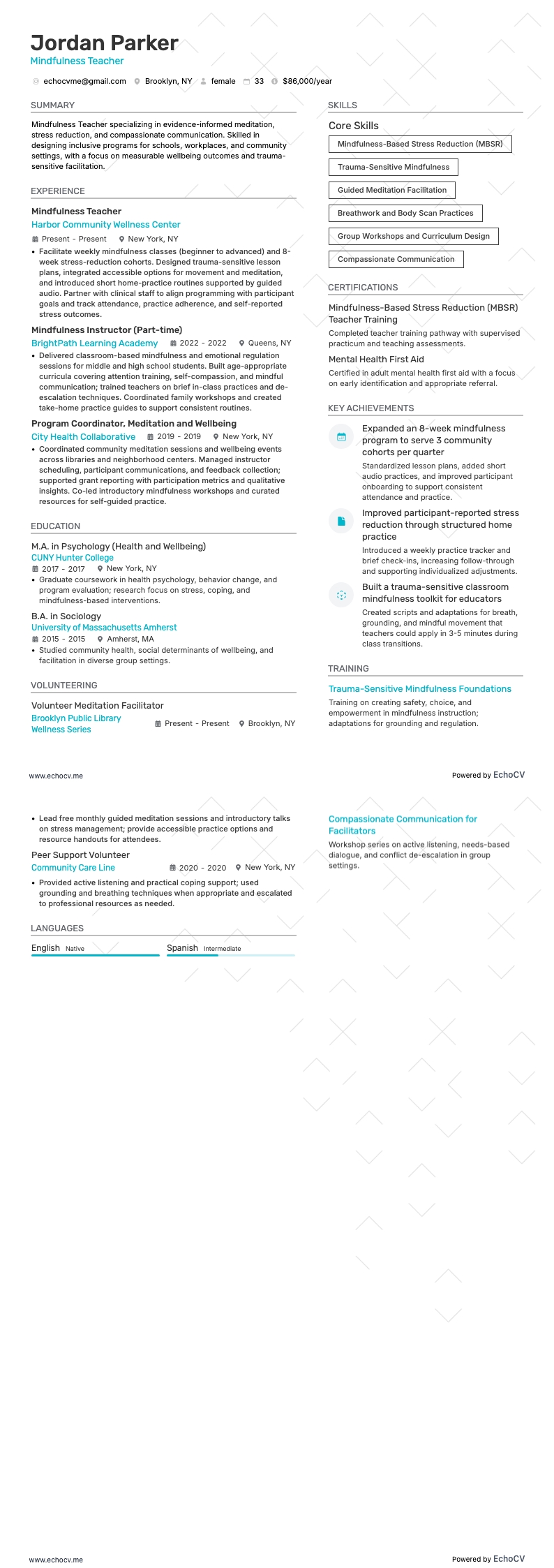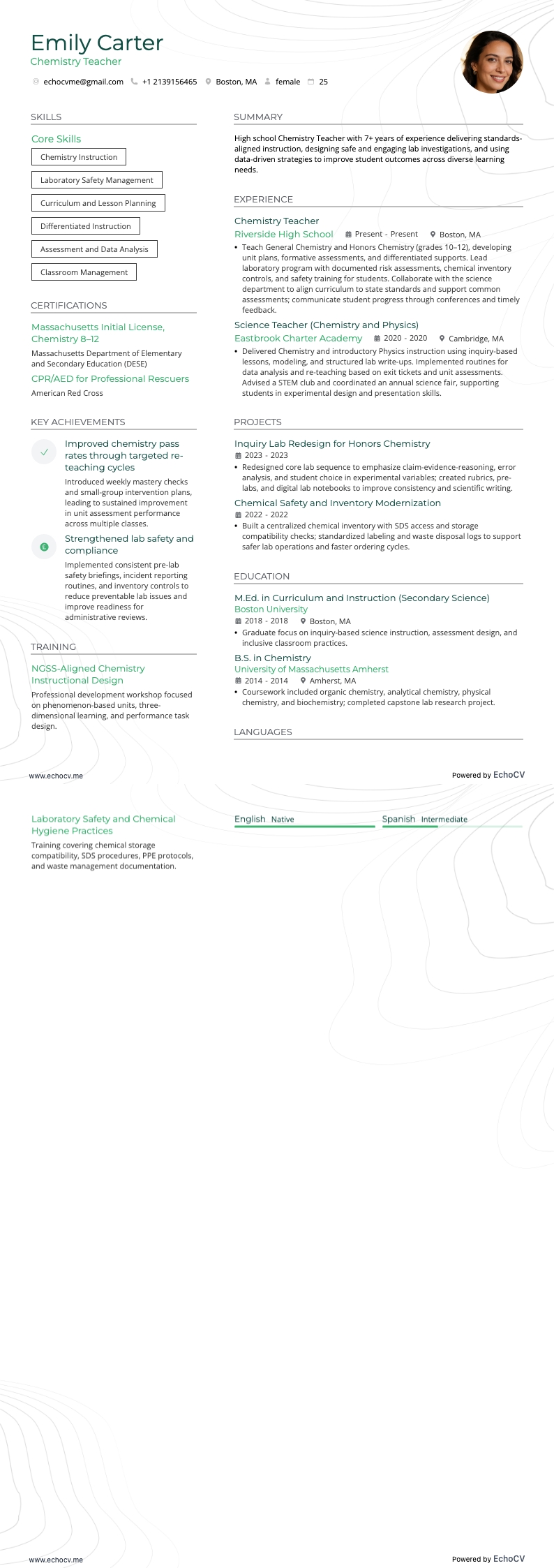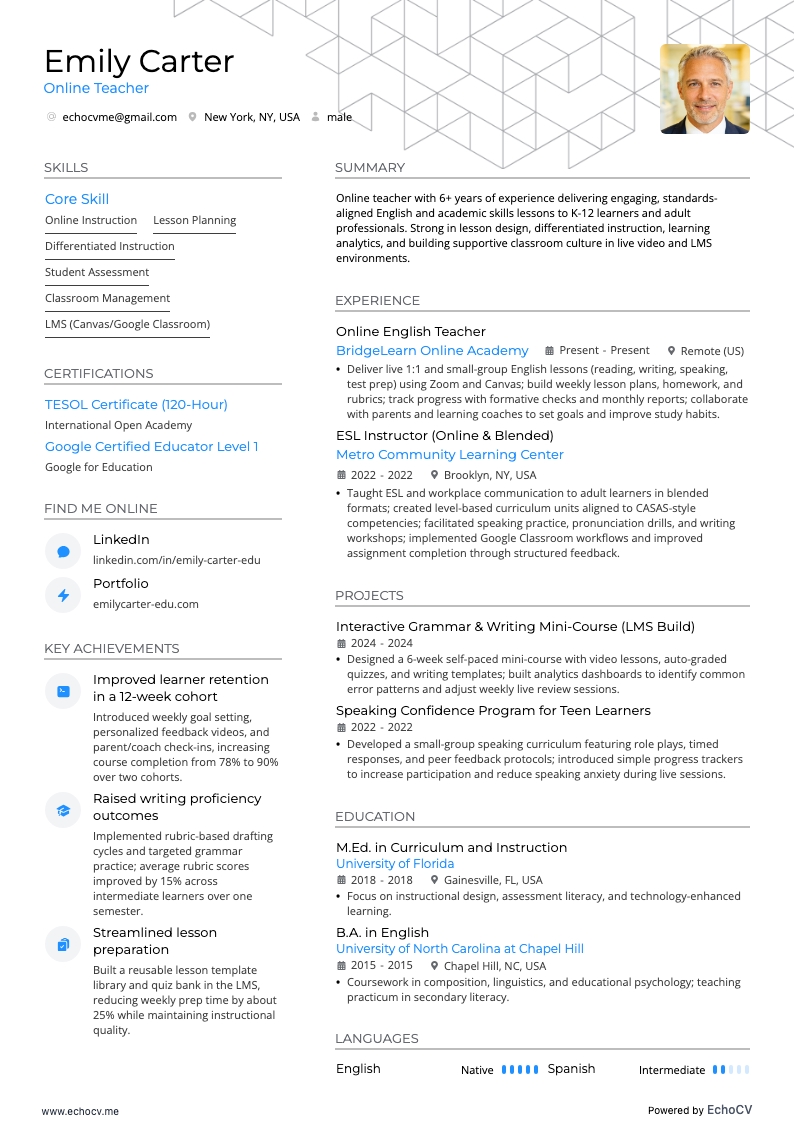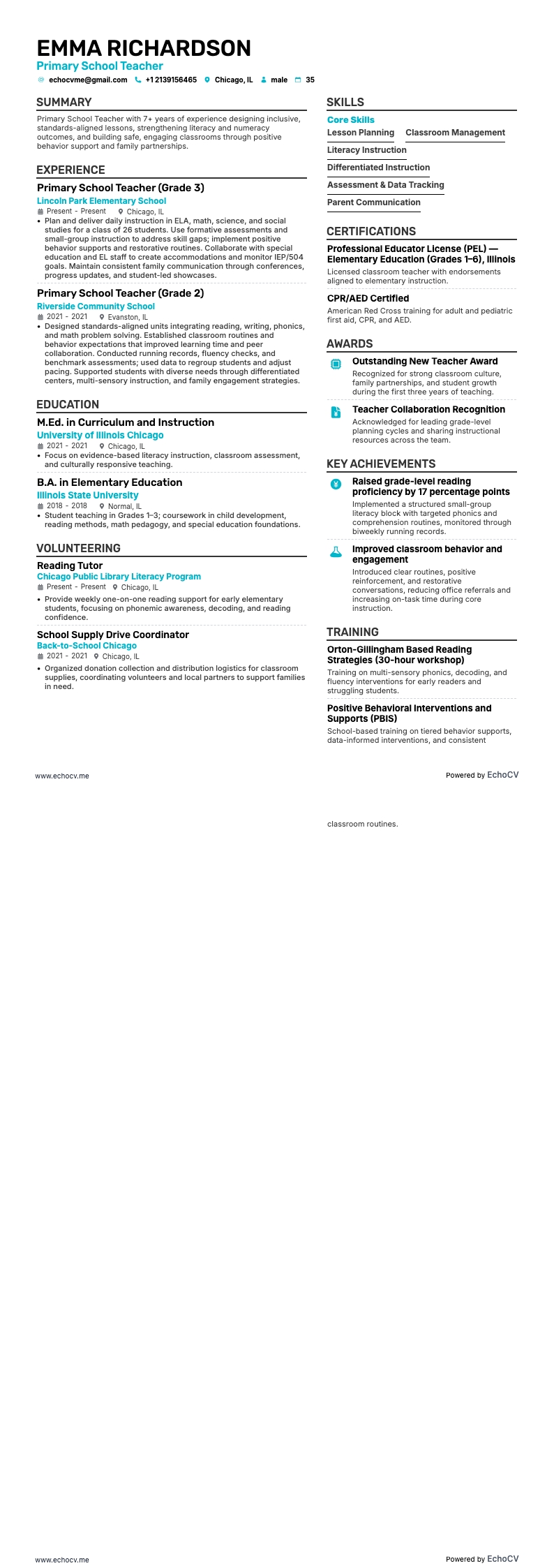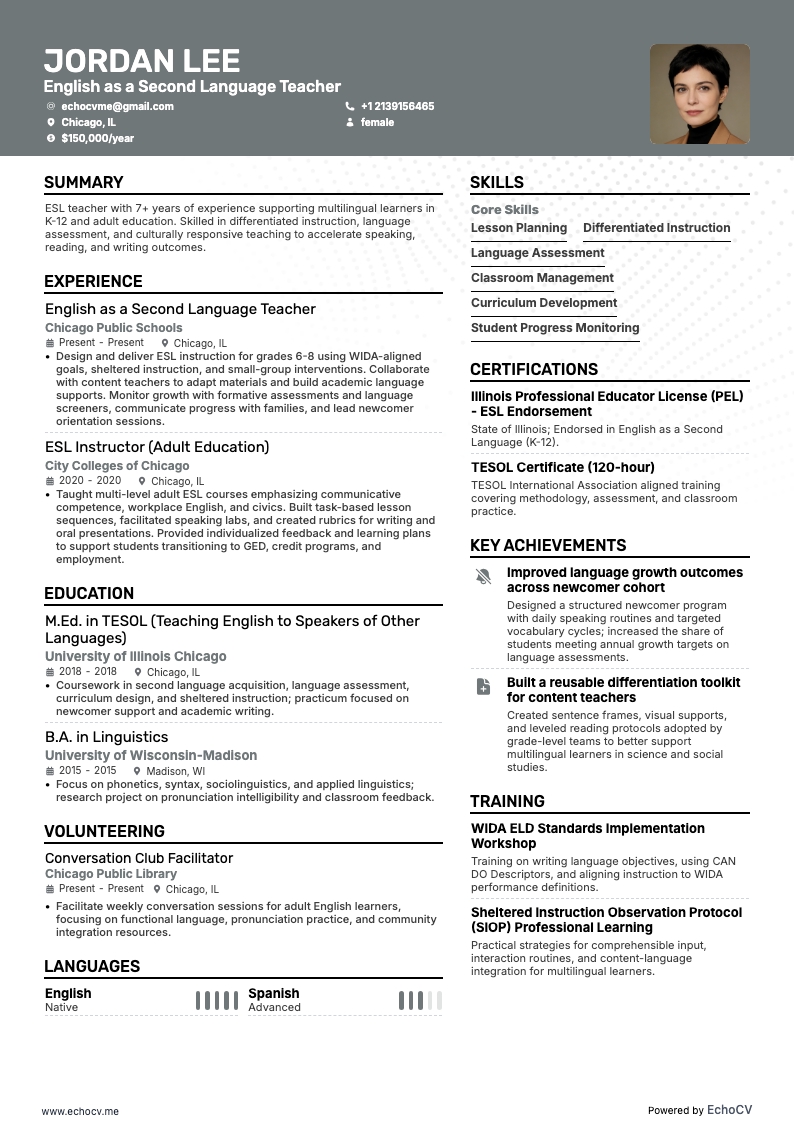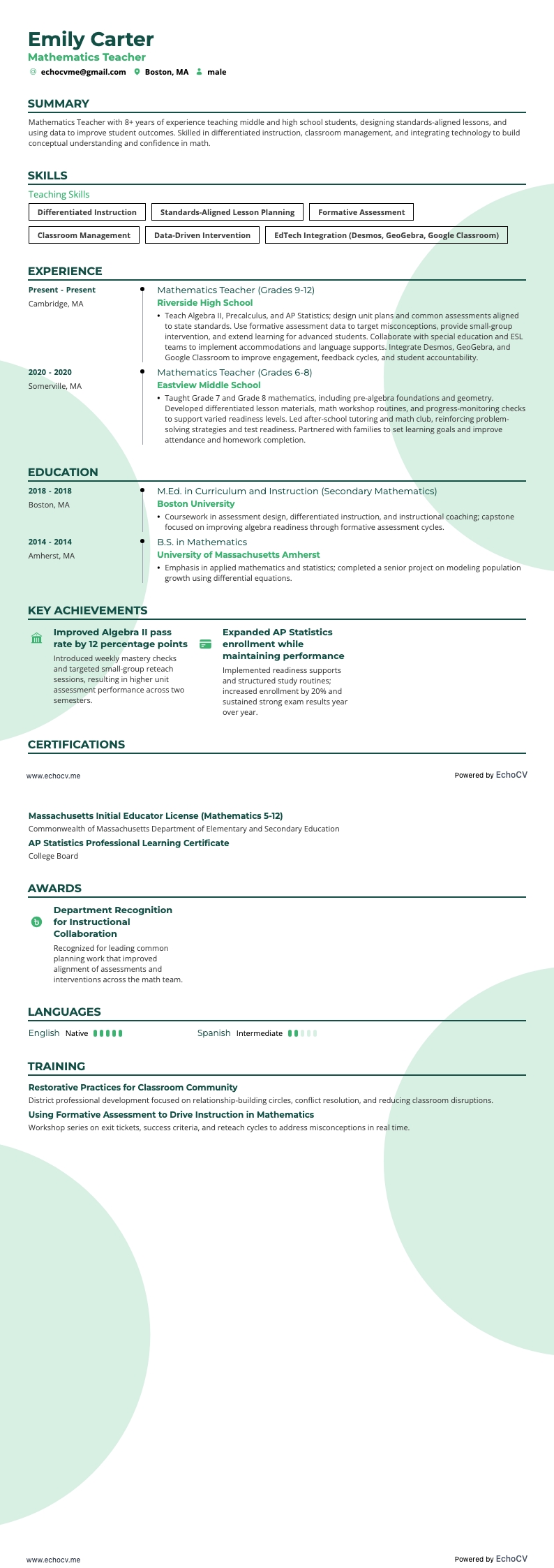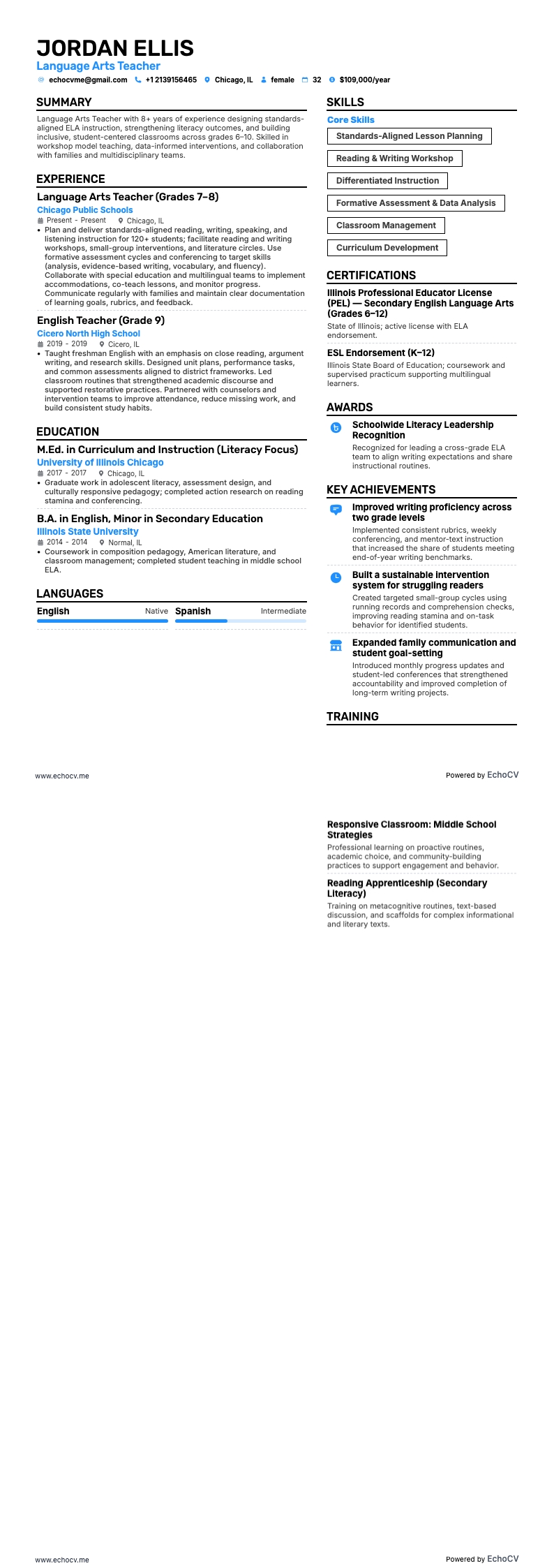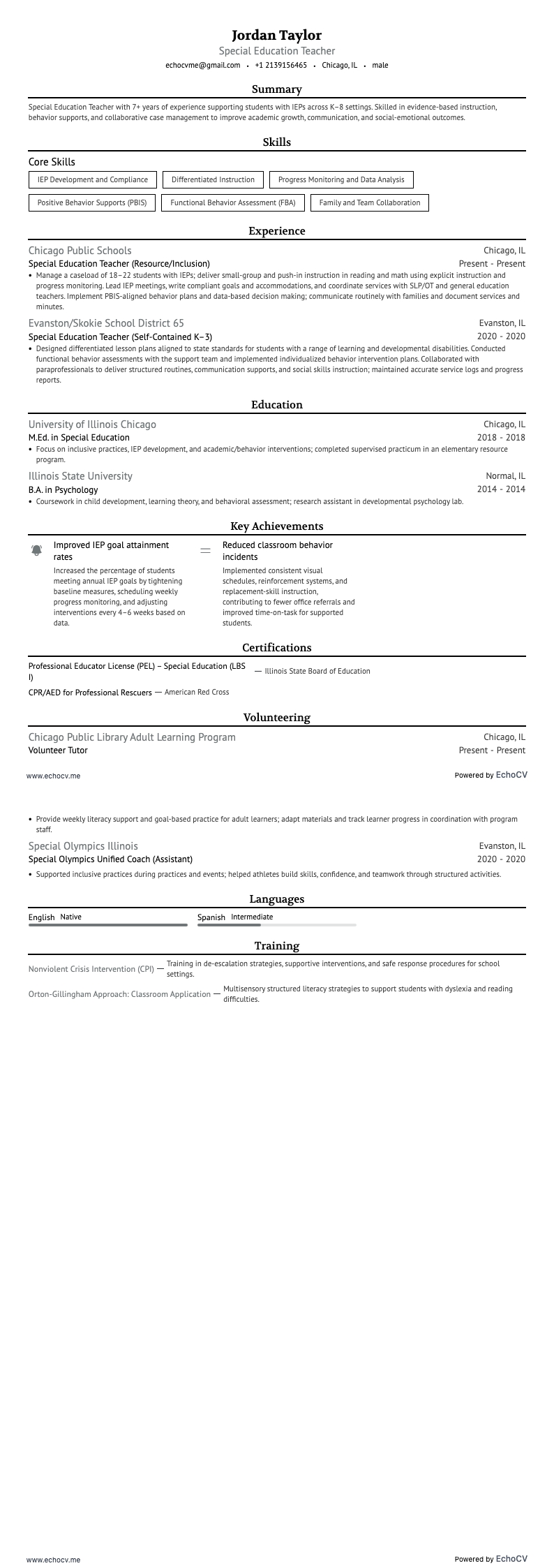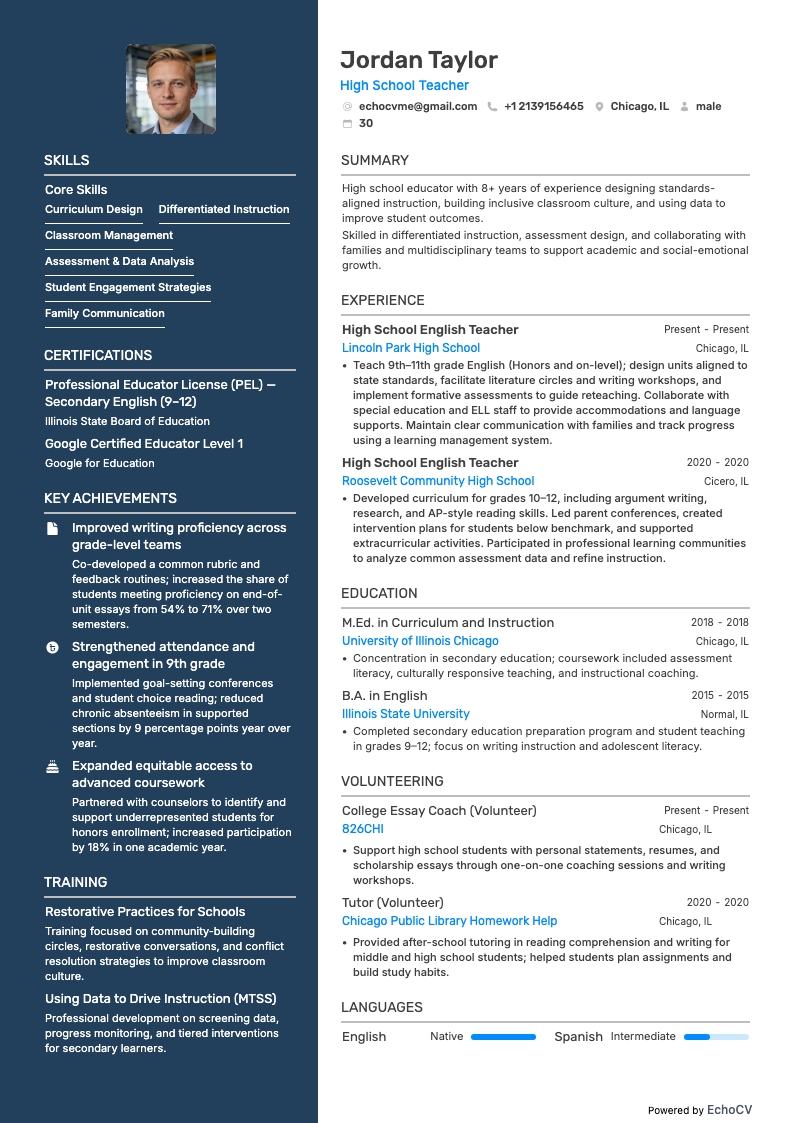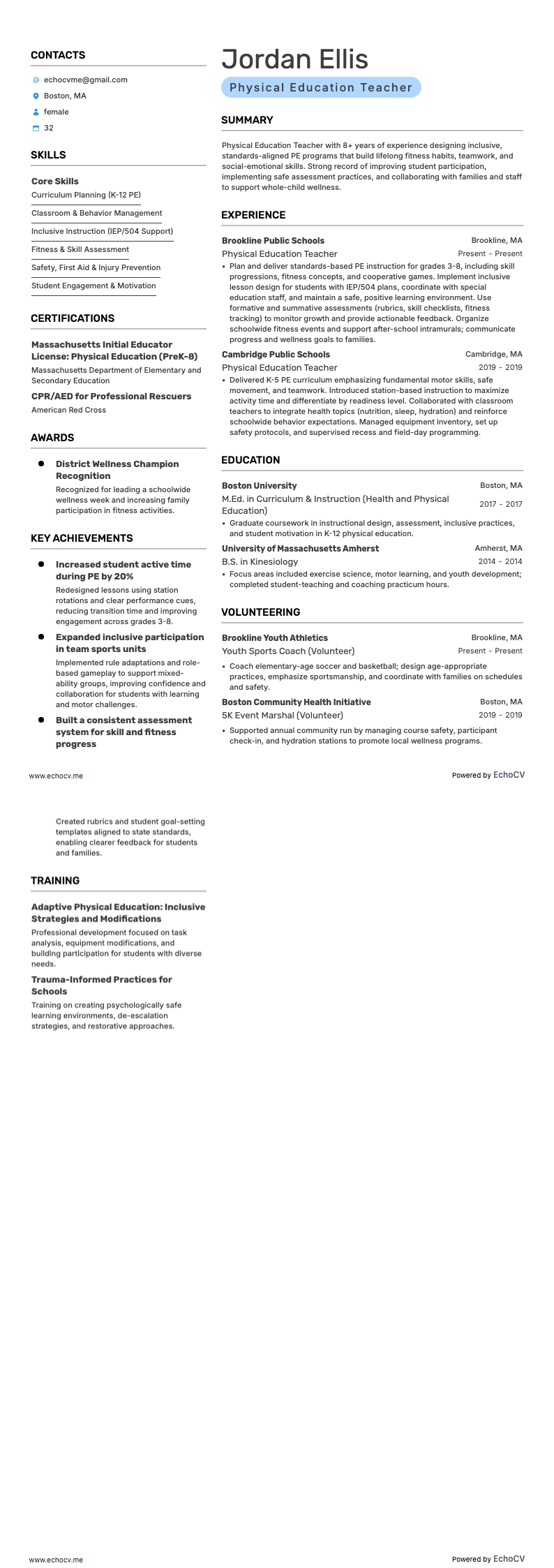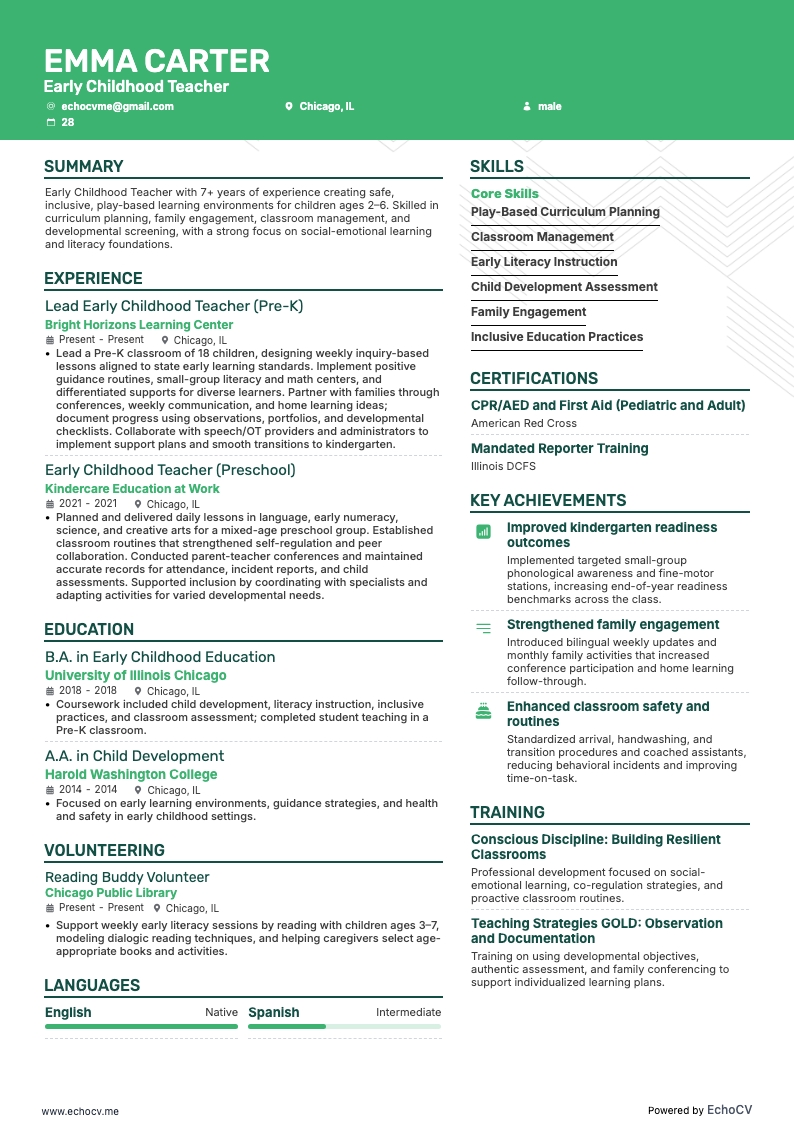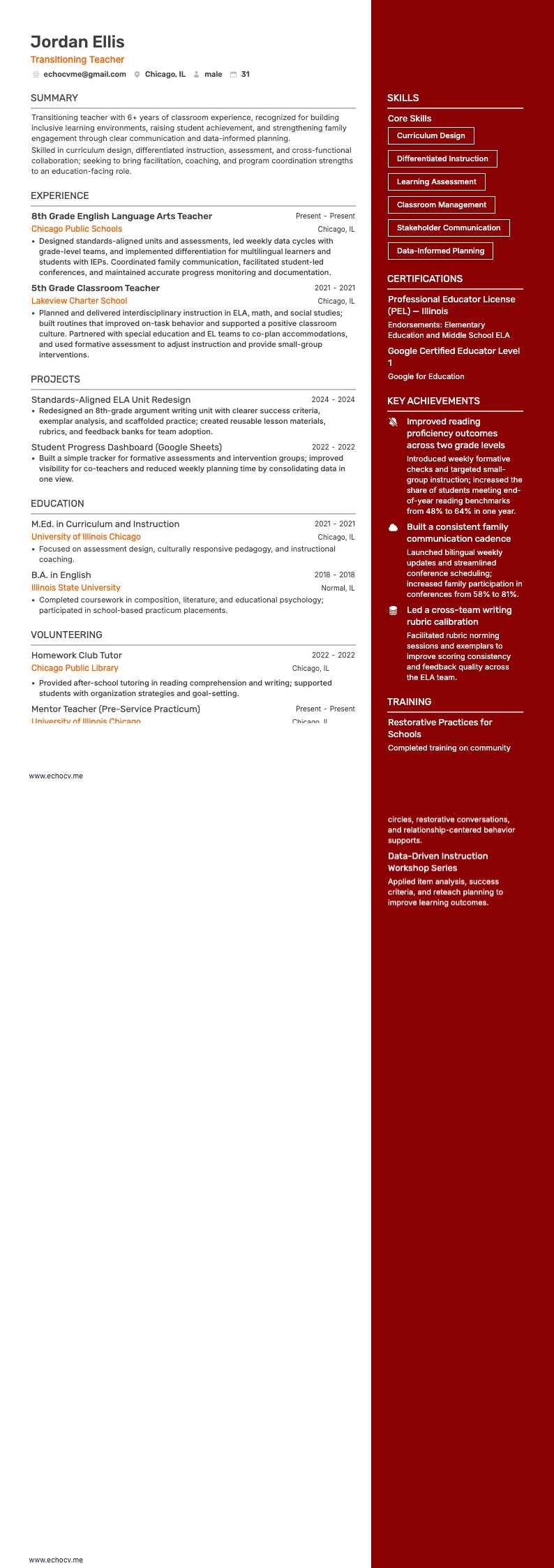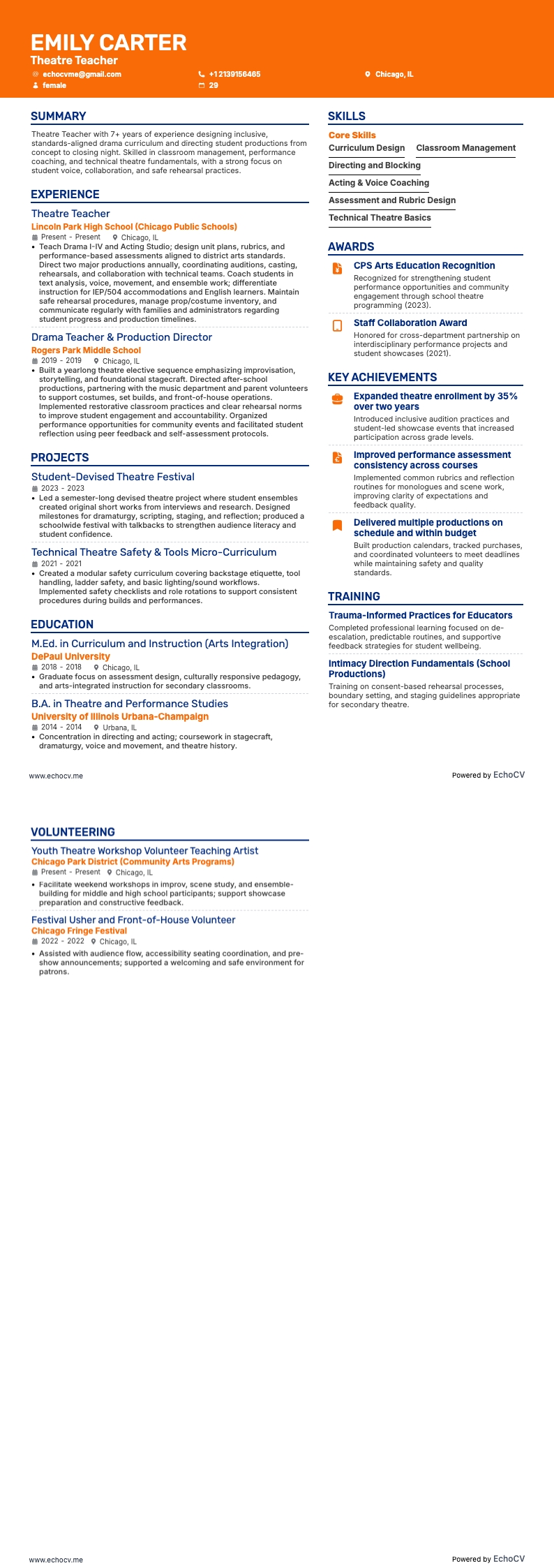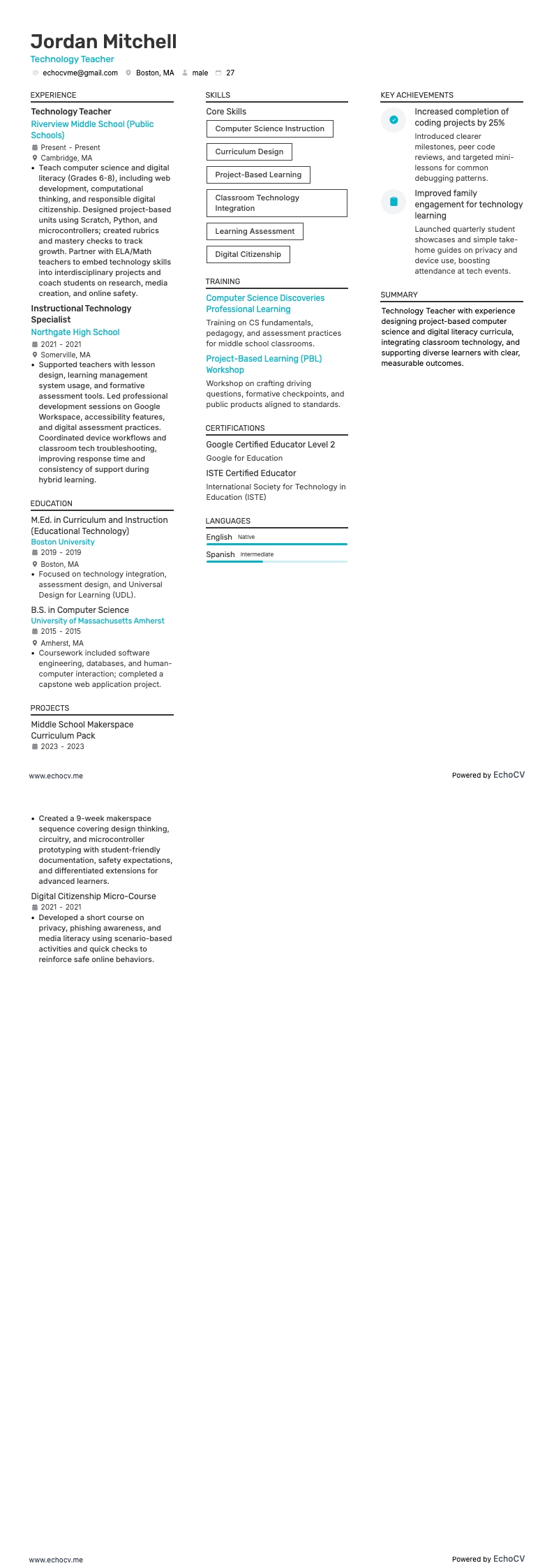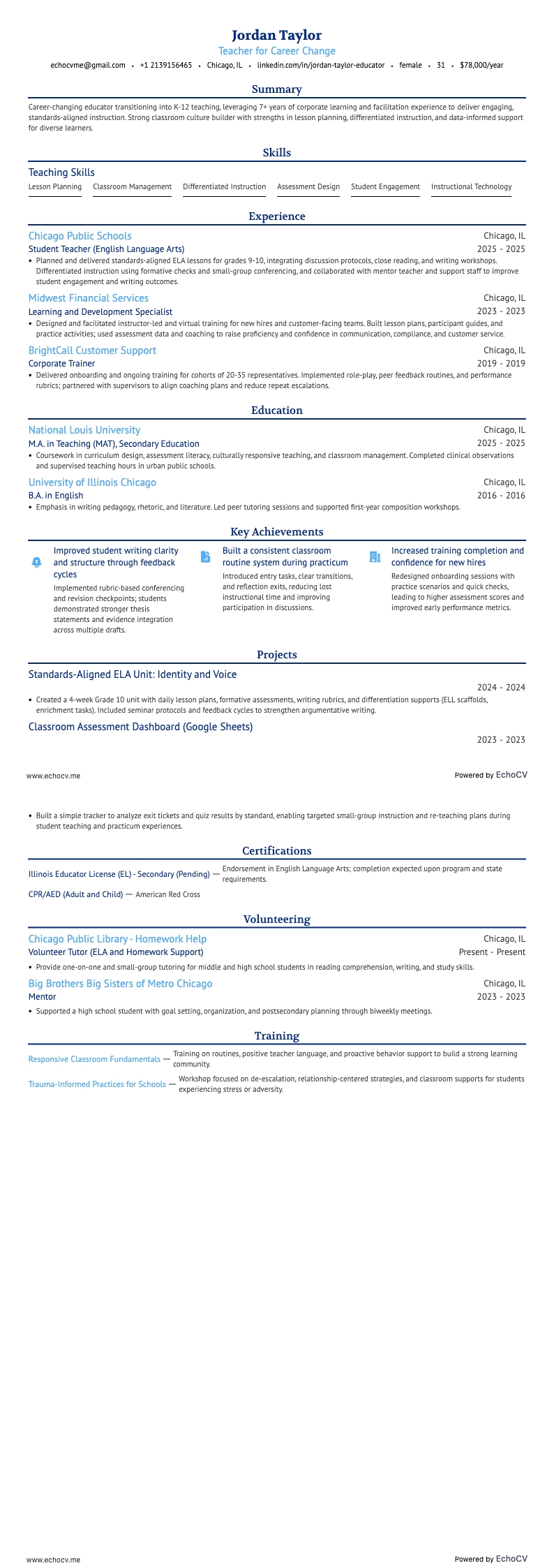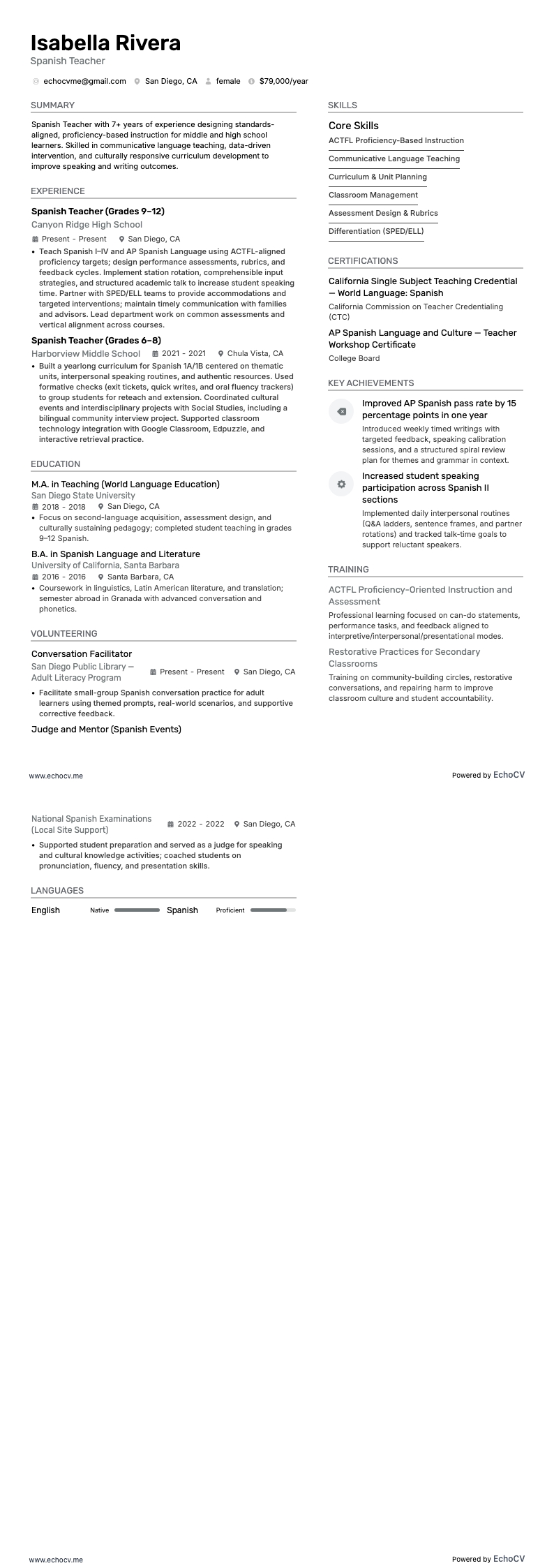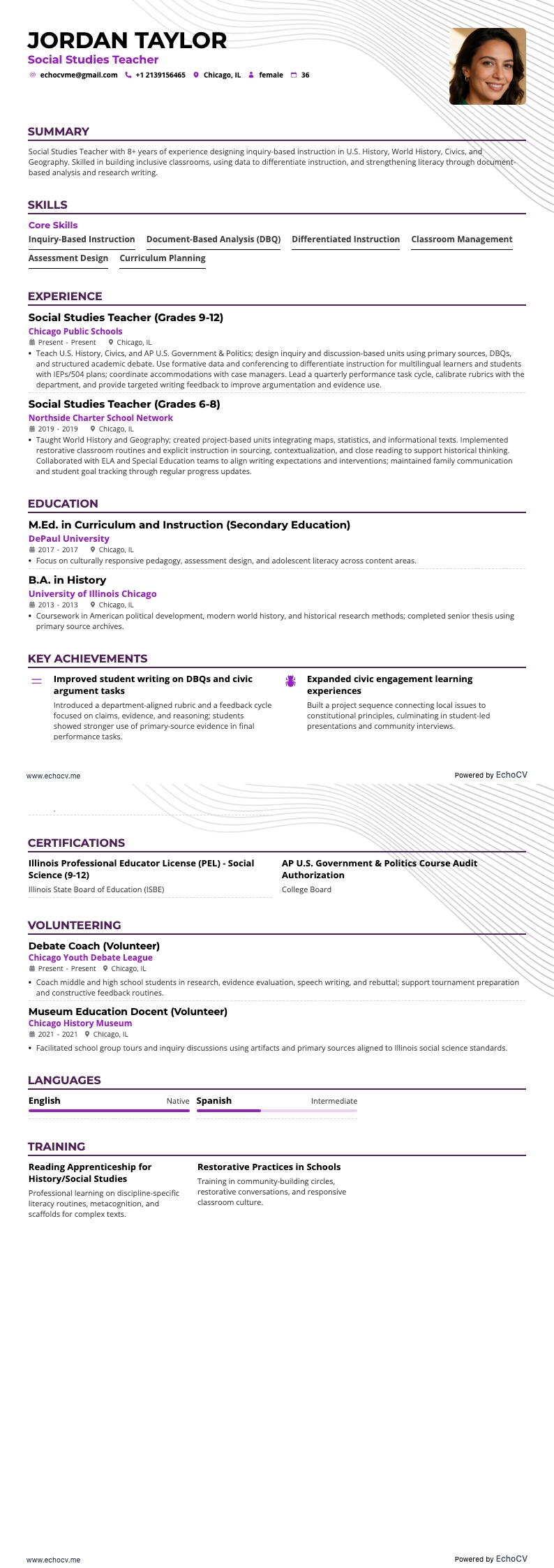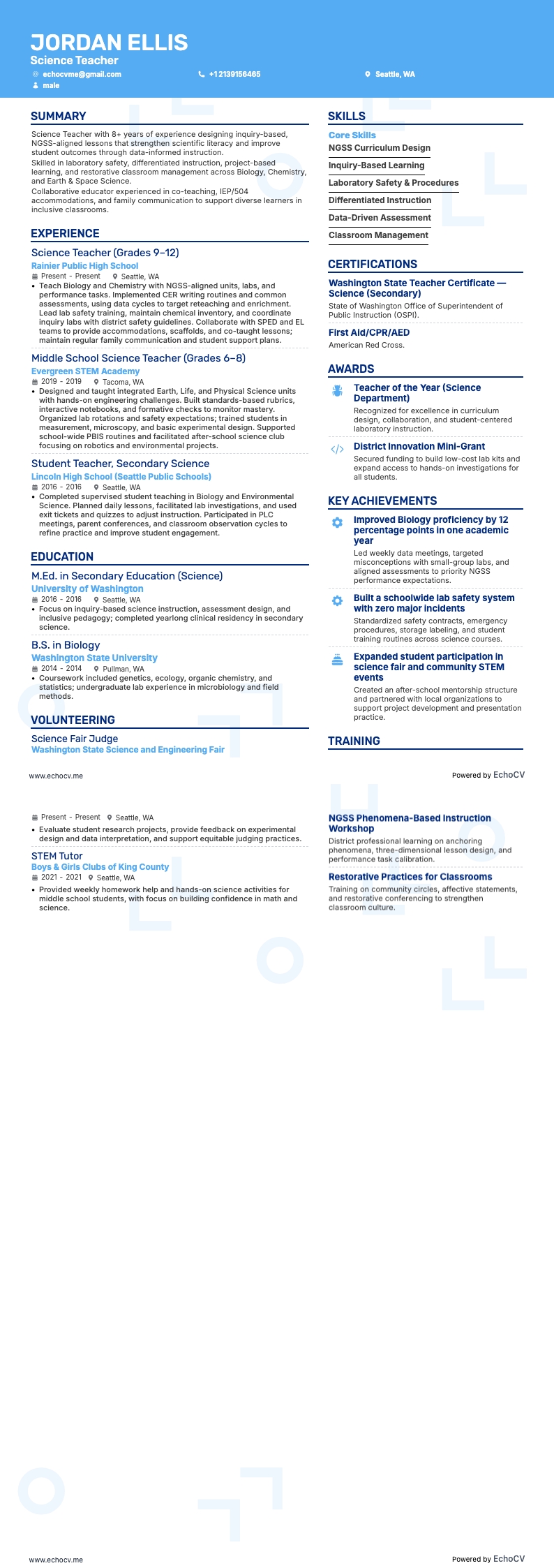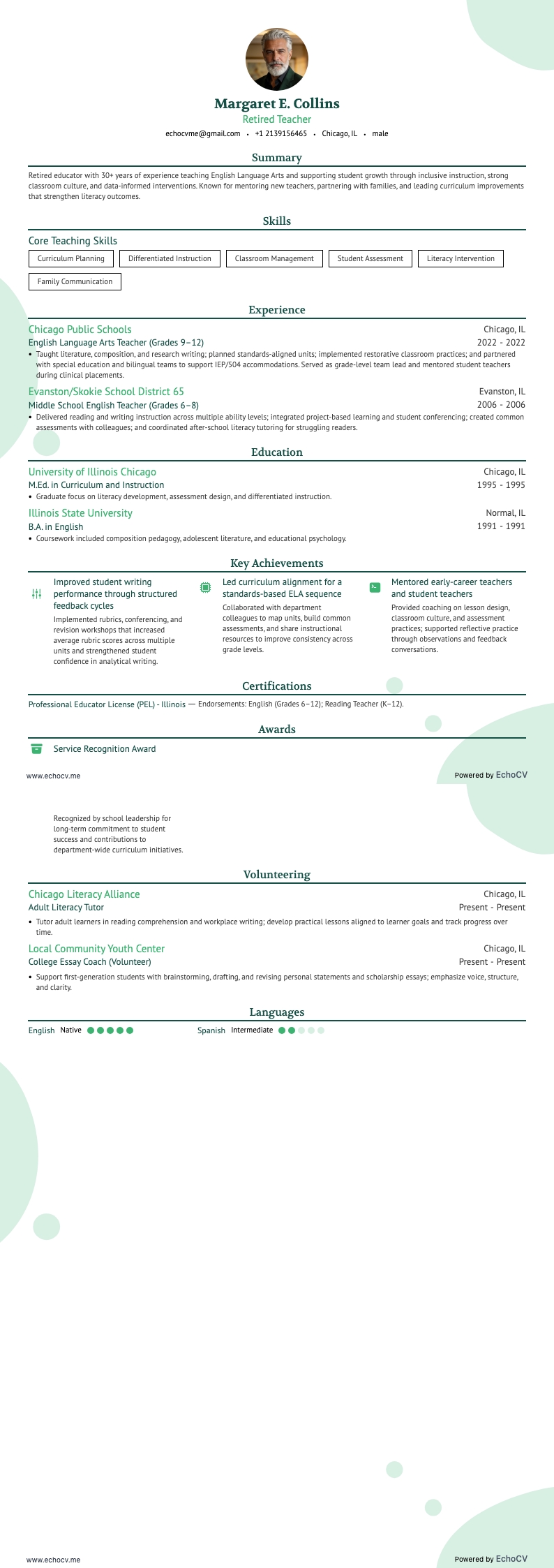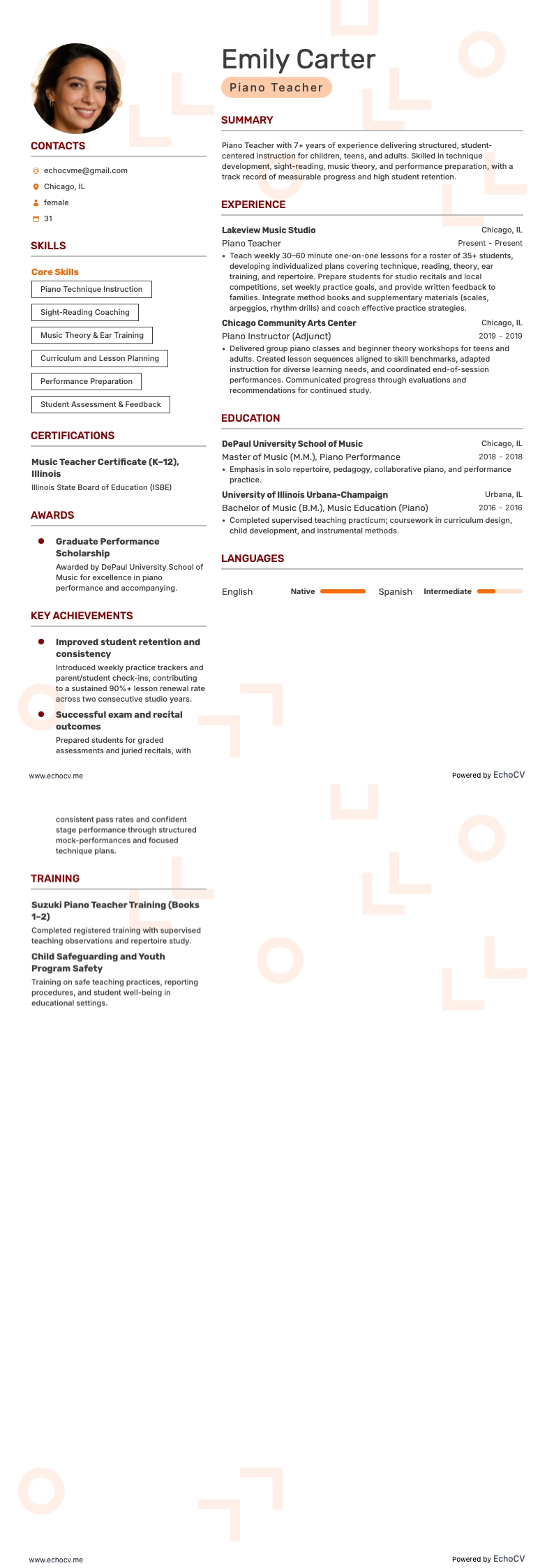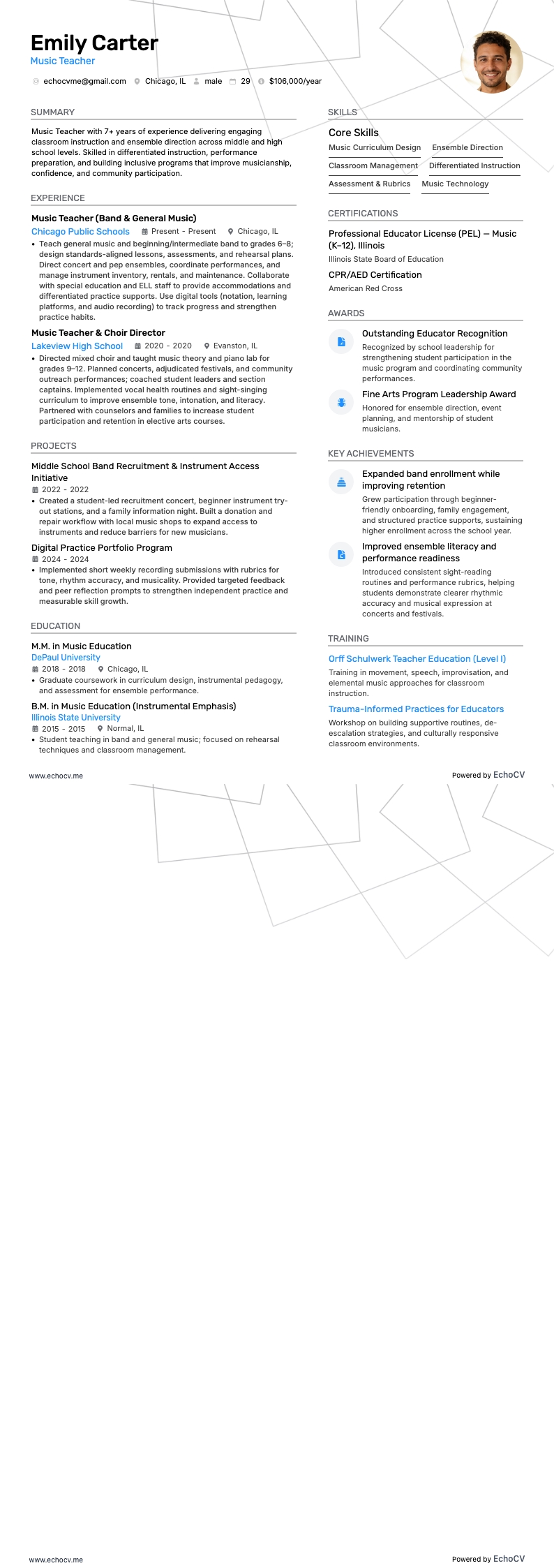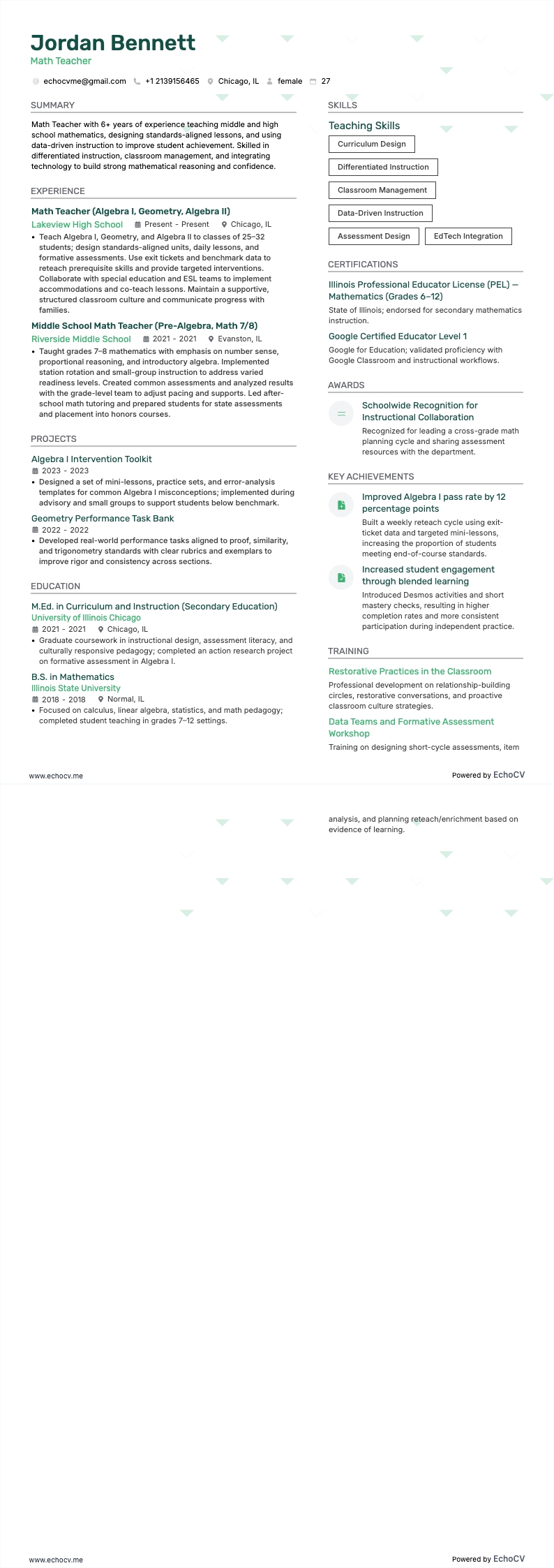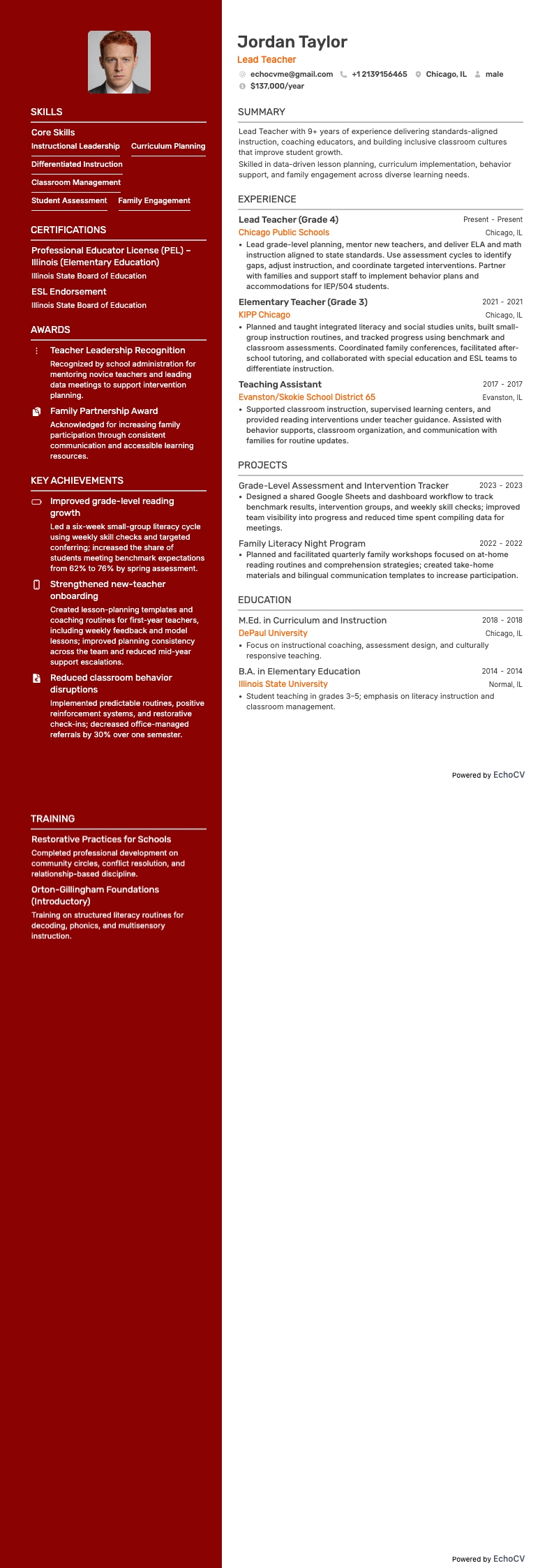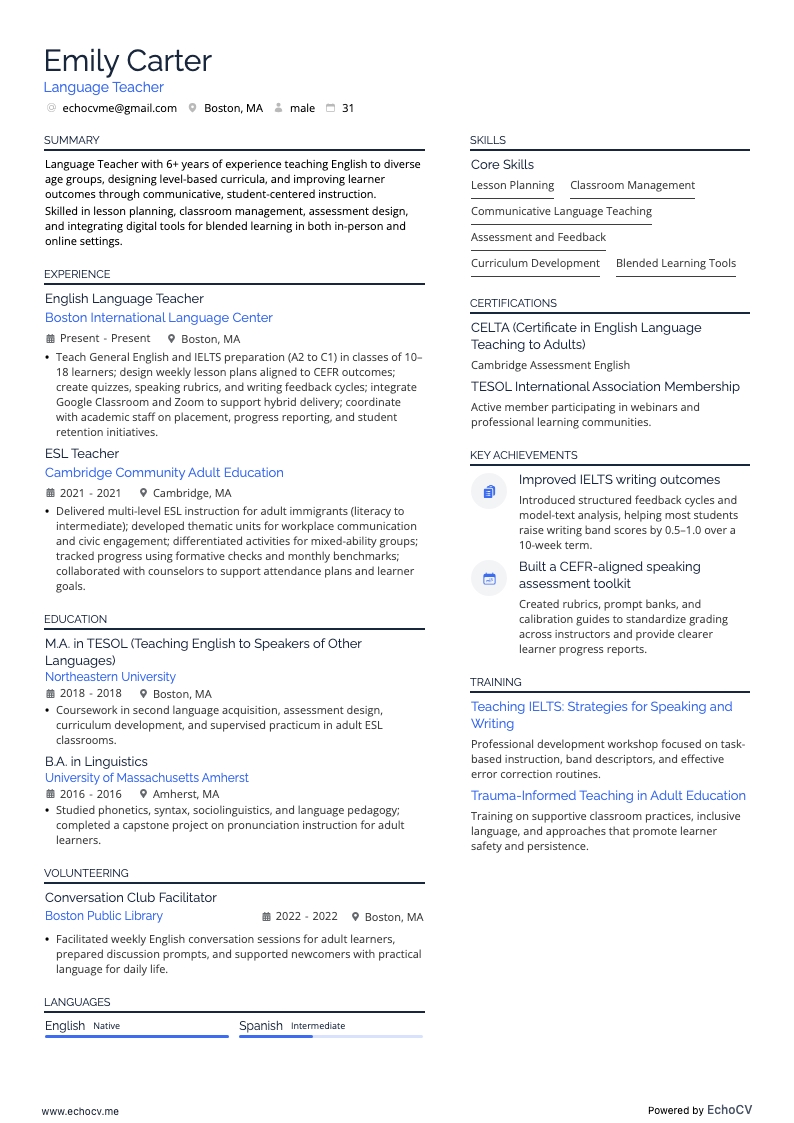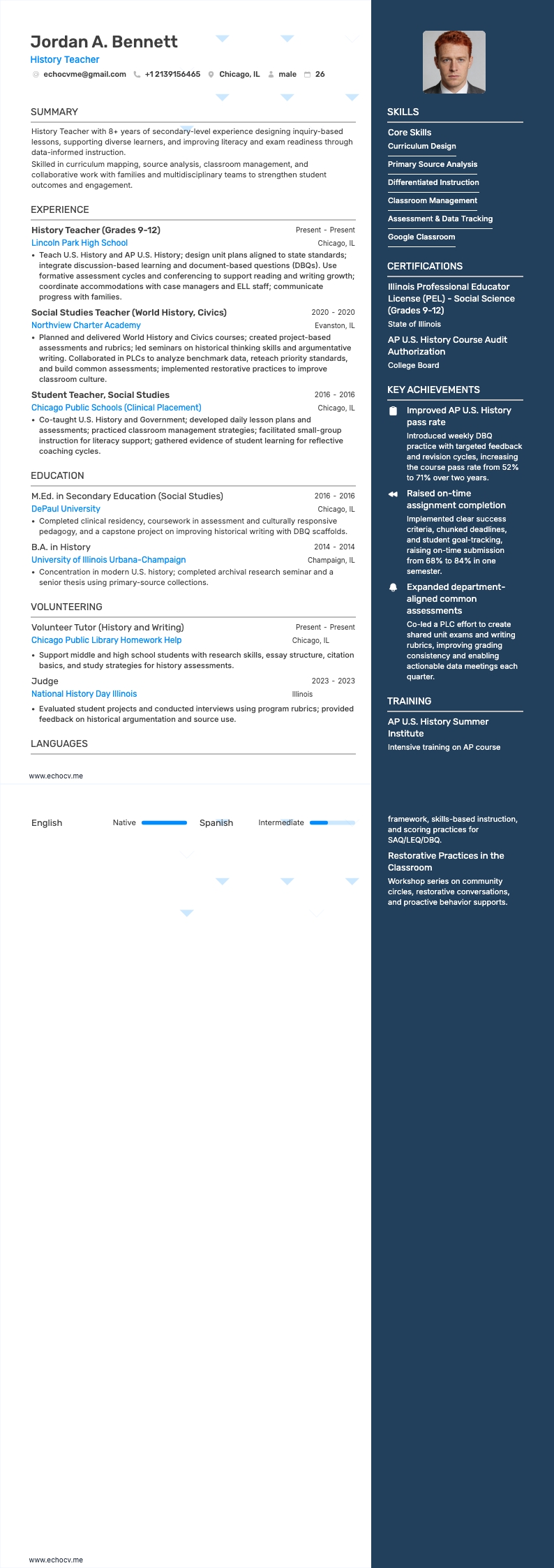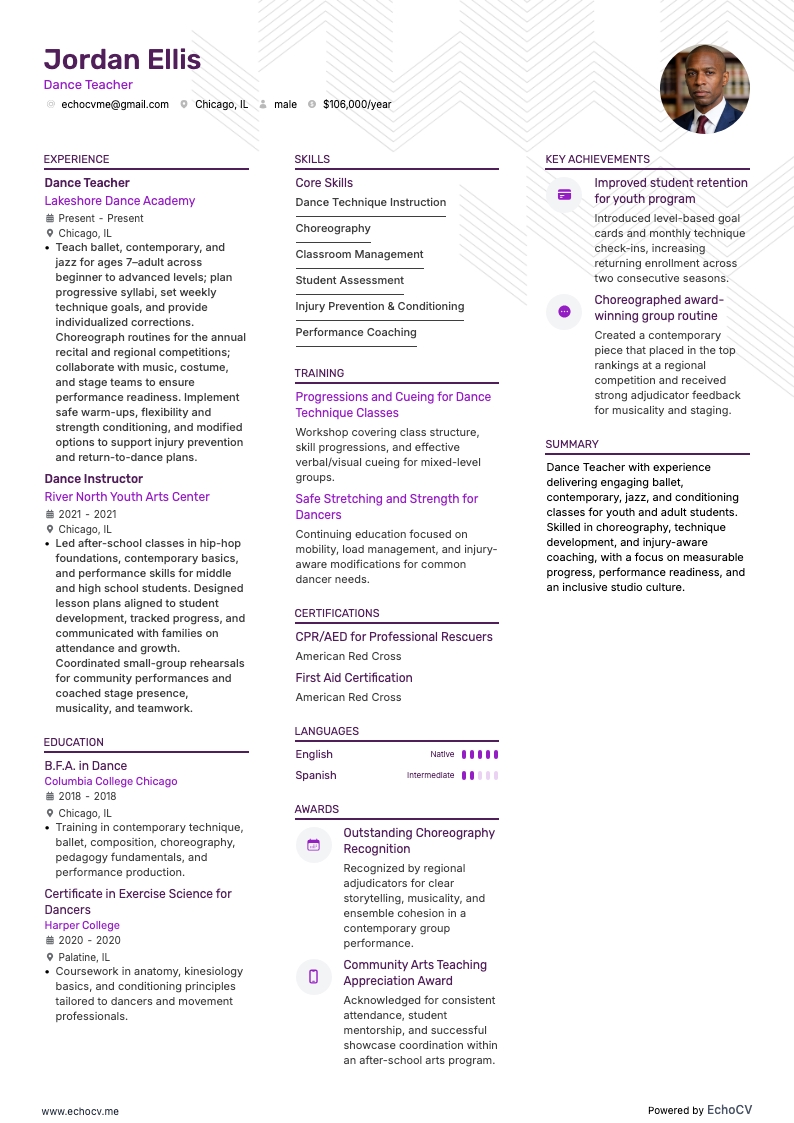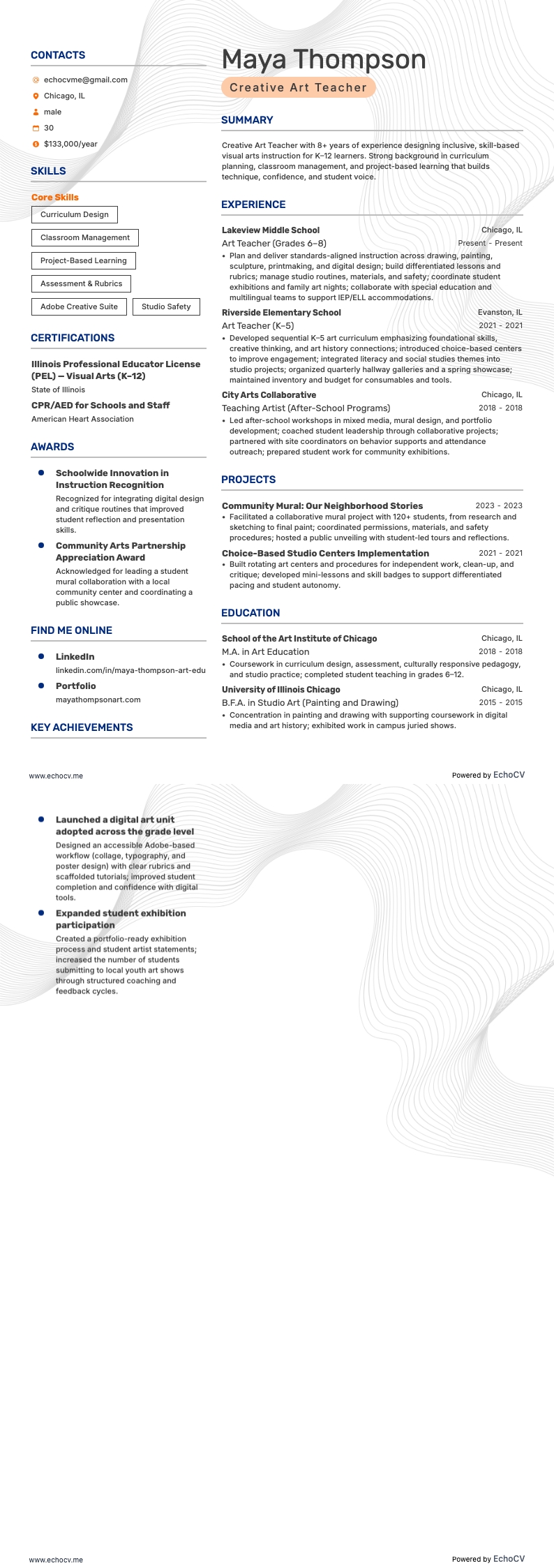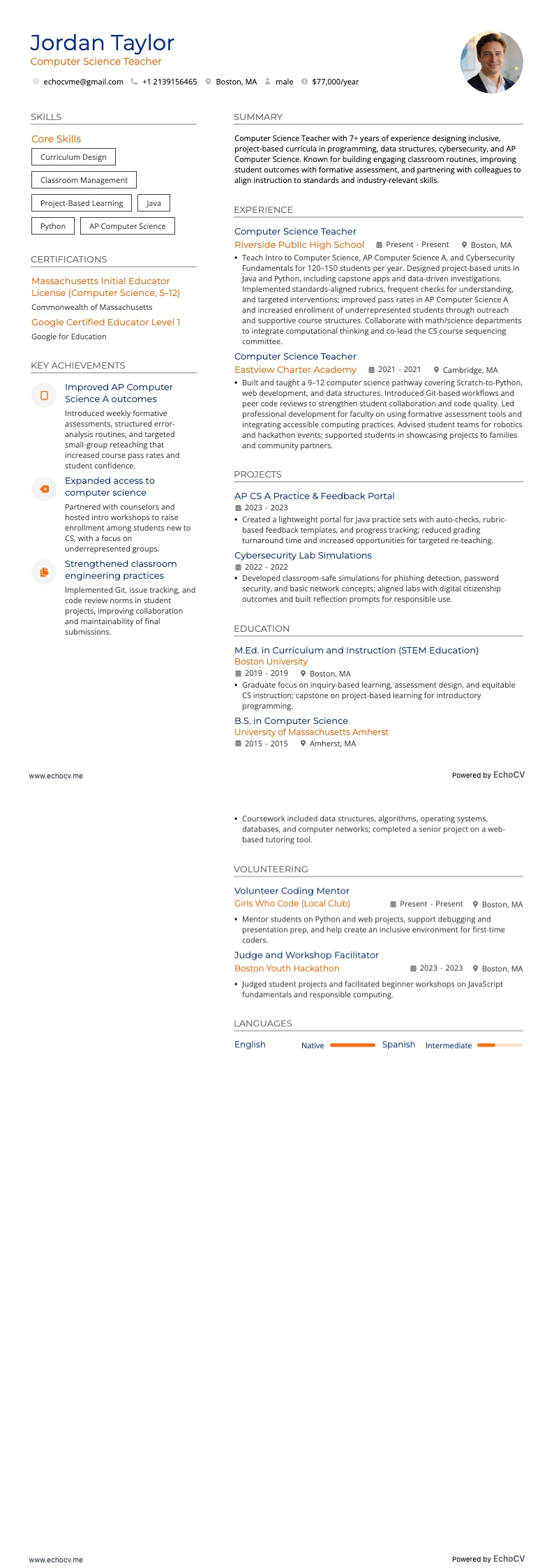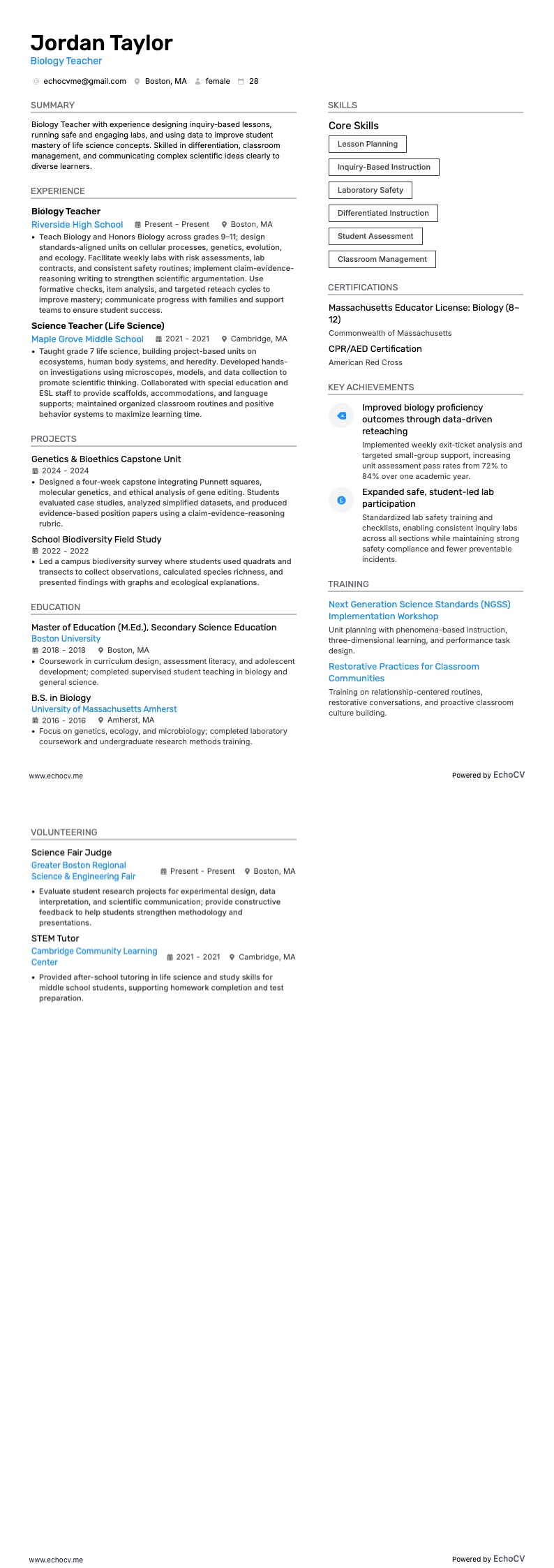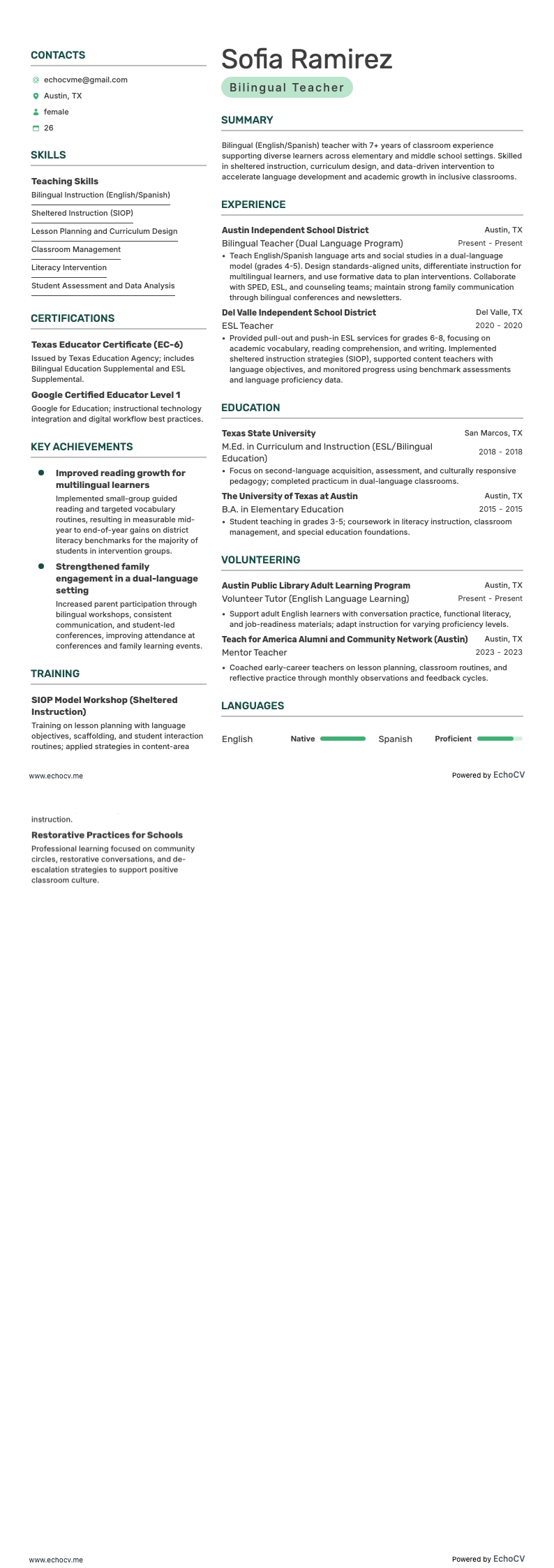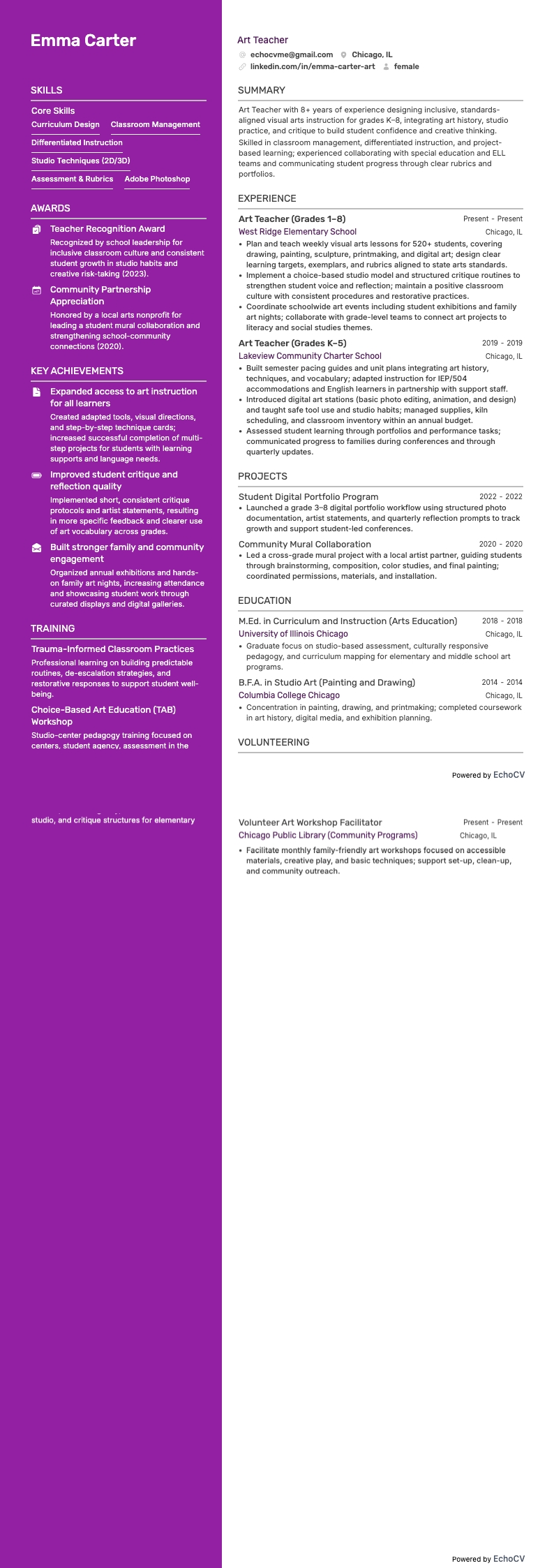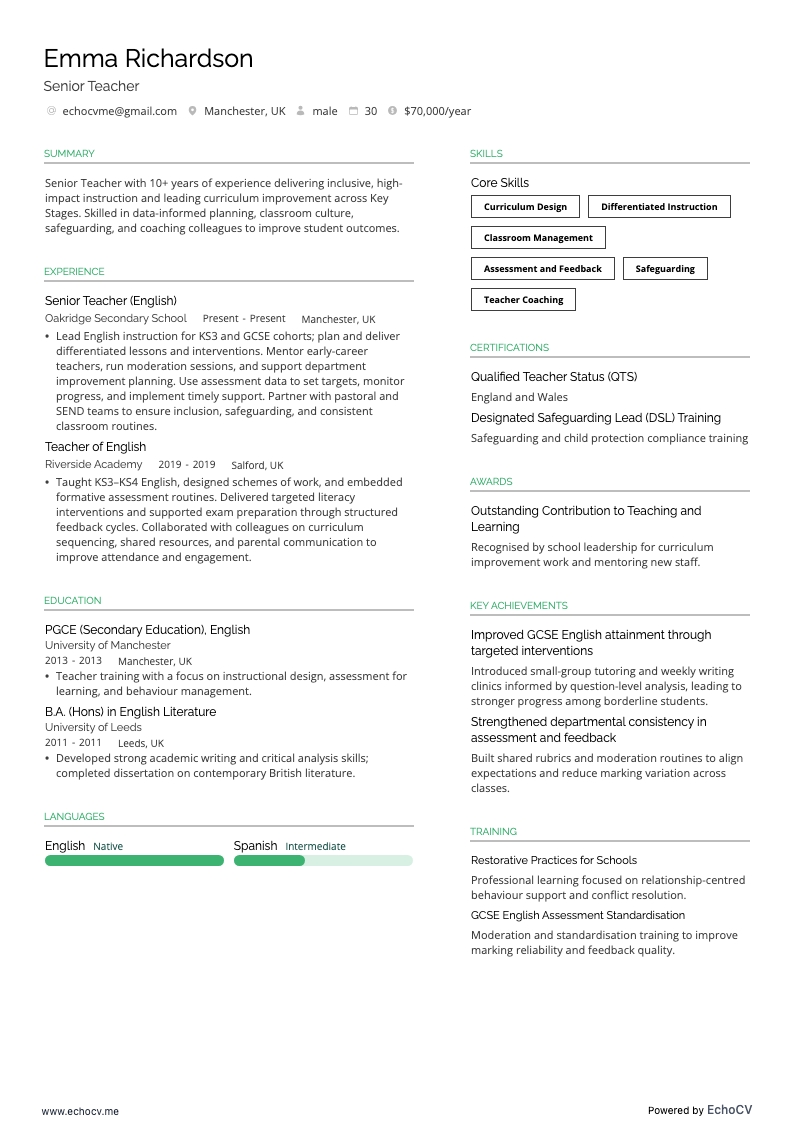
This is a top-notch example of a teacher’s resume. It presents the candidate as an experienced, effective, and dedicated educator.
Some of the reasons why are:
Extensive Teaching Experience: The candidate has taught for several years at multiple schools, demonstrating their ability to handle diverse students and subjects.
Track Record of Achievements: These specific and quantifiable achievements lend credibility to the teacher's effectiveness and commitment to improving student outcomes.
Education and Certification: The candidate holds a PhD in Educational Administration and other certifications, demonstrating their commitment to ongoing professional development.
Publications and Volunteering: The candidate's publications and volunteering demonstrate their dedication to academic research, community service, and making a positive impact outside the classroom.
Formatting and good design are essential for a resume's readability and visual appeal - crucial characteristics to grab and hold a hiring committee’s attention. A well-structured resume also clearly conveys professionalism, increasing your chances of an interview.
Since teachers are trusted with so much responsibility, in most cases, it’s best that you align your resume to a conventional format. Choose a traditional format, with either one or two columns, instead of going for a flashy or creative resume.
The exceptions would be if you’re applying to an art school or other creative-oriented private school or if you’re applying to an art, music, drama, or other creative teacher position. In those cases, you might consider using a creative resume template.
Every teacher’s resume will be different, and each one you write should be tailored to the specific job you’re applying to. For example, you’ll want to highlight different skills as an art or a maths teacher, and likewise, if you’re teaching at the kindergarten, elementary, or high school level.
But, there are some fundamental aspects you should always bear in mind.
Use reverse chronological order
Typically, resumes are formatted in reverse chronological order. This means organizing your work and education history with the most recent experiences listed first and moving backward to the oldest.
This format makes it easy for employers to identify your most current and relevant work and skills. It demonstrates your career progression and helps potential employers understand your professional journey.
Properly format the header and contact info
A resume header is the first, and ome might say one of the most important parts of a teacher resume. It’ the section at the top of a resume that includes your name and contact information and is the first thing the recruiter will lay their eyes upon. It’s like your introduction, letting a potential employer know who you are and how to get get a hold of you.
A good header should include your:
- Full name
- Job title
- Phone number
- Email address
Additional and somewhat optional information is including your home address (which is traditional and not used so much anymore) and a link to your LinkedIn profile.
Be mindful of regional differences in resume formats – a Canadian layout, for instance, might vary.
Key sections
Beyond the header, your resume should highlight your relevant qualifications, experience, and the skills you bring to the job. The standard sections to include in your teacher resume are:
- Professional Summary or Objective: A brief statement that highlights your experience, teaching philosophy, or key strengths tailored to the specific teaching position you’re applying for.
- Work experience & Achievements: This section outlines your successful work history. Include the school's name, the grade level or subject you taught, the dates of your employment in reverse chronological order, and include quantifiable results from your time there.
- Skills: Showcase any relevant teaching and technical skills you have that might not be expected or that you can provide specific evidence of.
- Education: The details of your academic qualifications, including degrees, certifications, and relevant coursework.
- Certifications and licenses: List any relevant teaching licenses or certifications, along with their expiration dates, if applicable.
Number of pages
There’s an old rule of thumb that you should keep your resume to 1 page. While that may be true in some industries, it’s not always true for teachers.
Aim for a length that includes all the info you need to show you’re the best fit for the job, but avoid including unnecessary bloat. Keeping everything concise will ensure it’s readable and avoid looking cluttered.
A bit vague? Okay. As a rough guide, if you’ve been teaching for less than 4 years and don’t have much other experience or professional development, one page should do. If you’ve been teaching for a while and want to include some optional sections we cover later, you can stretch it to two pages.
If you’re a veteran teacher with many years of experience and you’ve been keeping up with professional development, you might consider going to three pages. And if you’re a post-secondary teacher with a long list of publications and conference presentations or other important accolades, you might even consider 4 or 5 pages.
File format: doc or pdf?
Once you’re ready to save your resume, you have two choices: a .PDF or a .Doc. I suggest saving it as a .PDF unless the employer has specified otherwise.
PDFs save all the formatting you just put so much time into. Unlike with a .Doc., there’s no chance your resume will print up wonky and undermine the professional image you’re trying to send.
Another consideration is that many employers now use applicant tracking systems(ATS) as the first step in the selection process. Luckily, all of our resume templates are preformatted and designed to play well with ATS, and they come as .PDFs, so you don’t have to worry about a thing.