Crafting a standout resume is a pivotal step for any attorney looking to navigate the competitive legal job market. Whether you're wrestling with squeezing complex cases into concise statements or standing out in a crowd of similarly qualified candidates, it's hard. Let’s not forget the challenge of articulating your specific skills and experiences in a way that resonates with both legal and non-legal hiring managers.
This comprehensive guide is designed to bridge these gaps. It offers tailored advice and resume writing strategies for attorneys at all career stages, ensuring your resume highlights your legal acumen and sets you apart from the competition.
Today’s guide will cover the following topics:
- The best resume formatting tips, including layout, design, and elegant templates suitable for law practitioners;
- How to feature your professional and educational experience in a way that adds credibility and value to your profile;
- How to maximize the impact of your resume by researching the prospective employer and adding strategic keywords to your career summary;
- Which skills to include in an attorney resume and where to put them exactly if the space is limited.
The bar is high (pun intended), so let’s get started.
Are you interested in a different type of legal resume? Below you might find what you’re looking for.
- Senior attorney Resume
- Entry-level attorney Resume
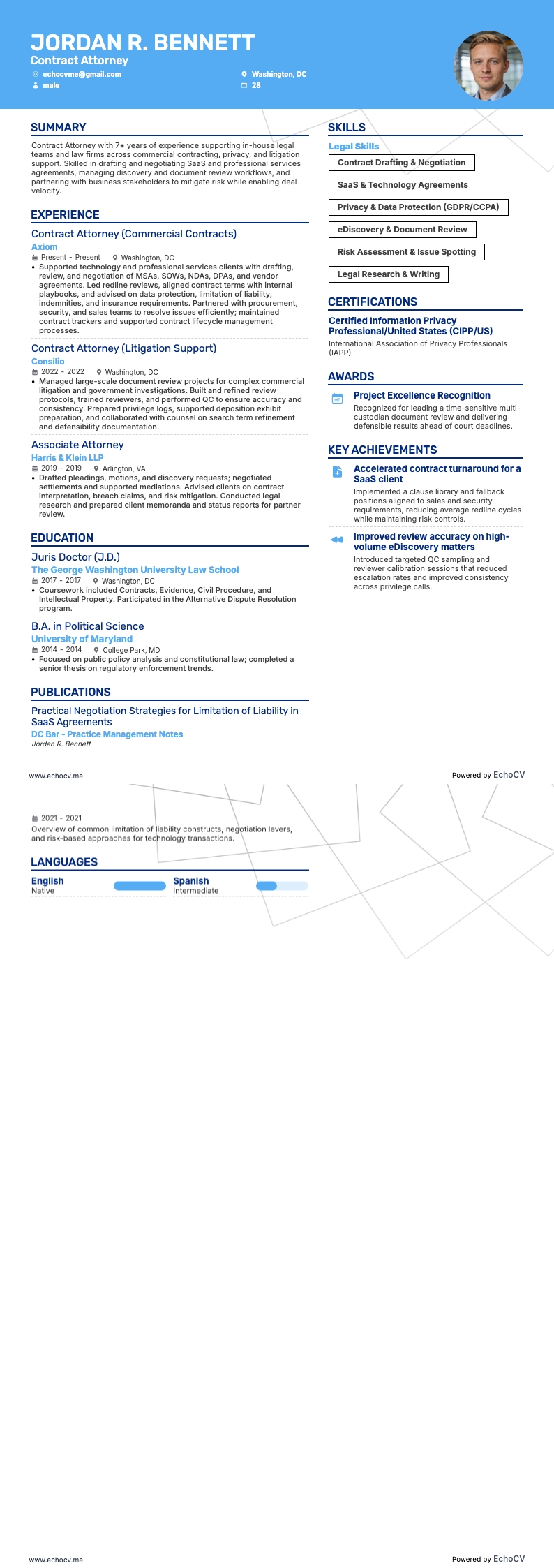
- Contract attorney Resume
- Lawyer Resume
- Corporate Lawyer Resume
- Employment Lawyer Resume
- Attorney Cover Letter
How to format an attorney resume with precision
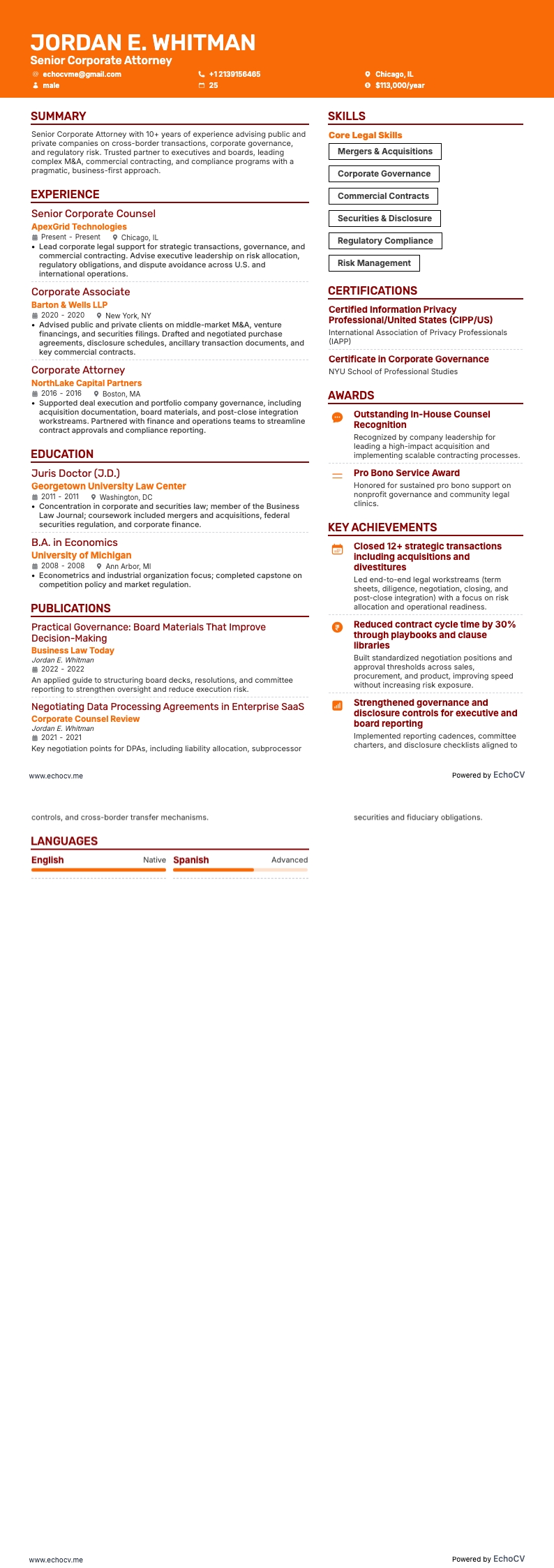
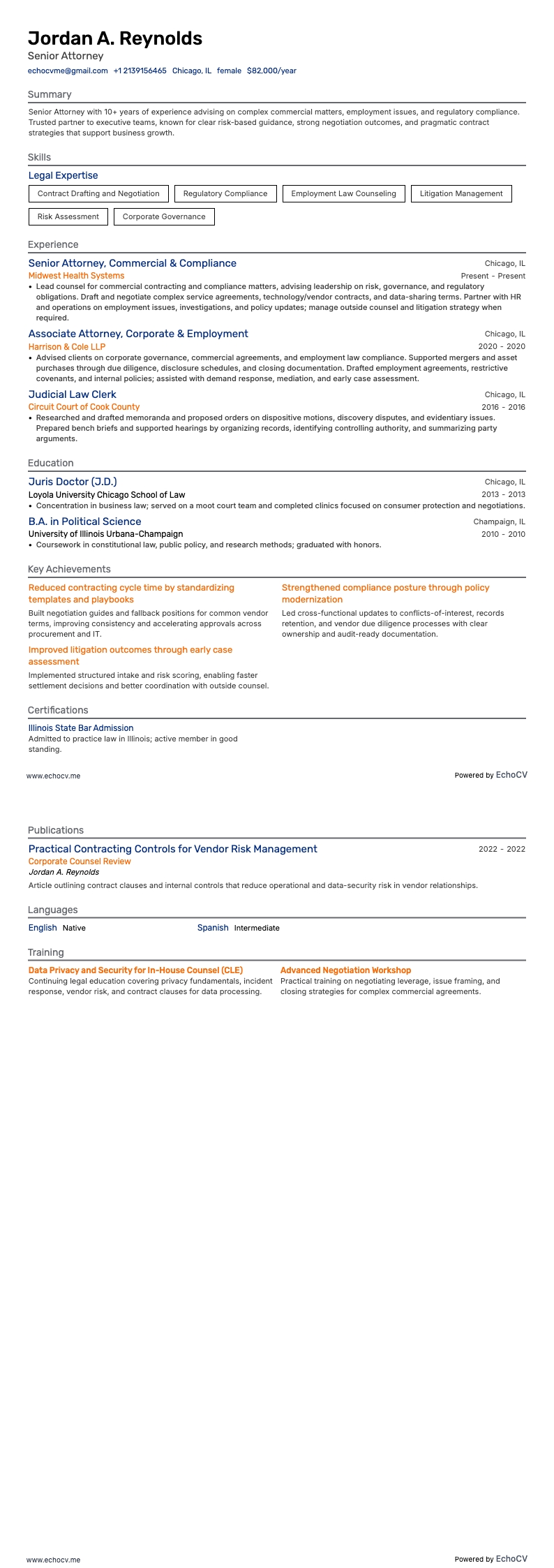
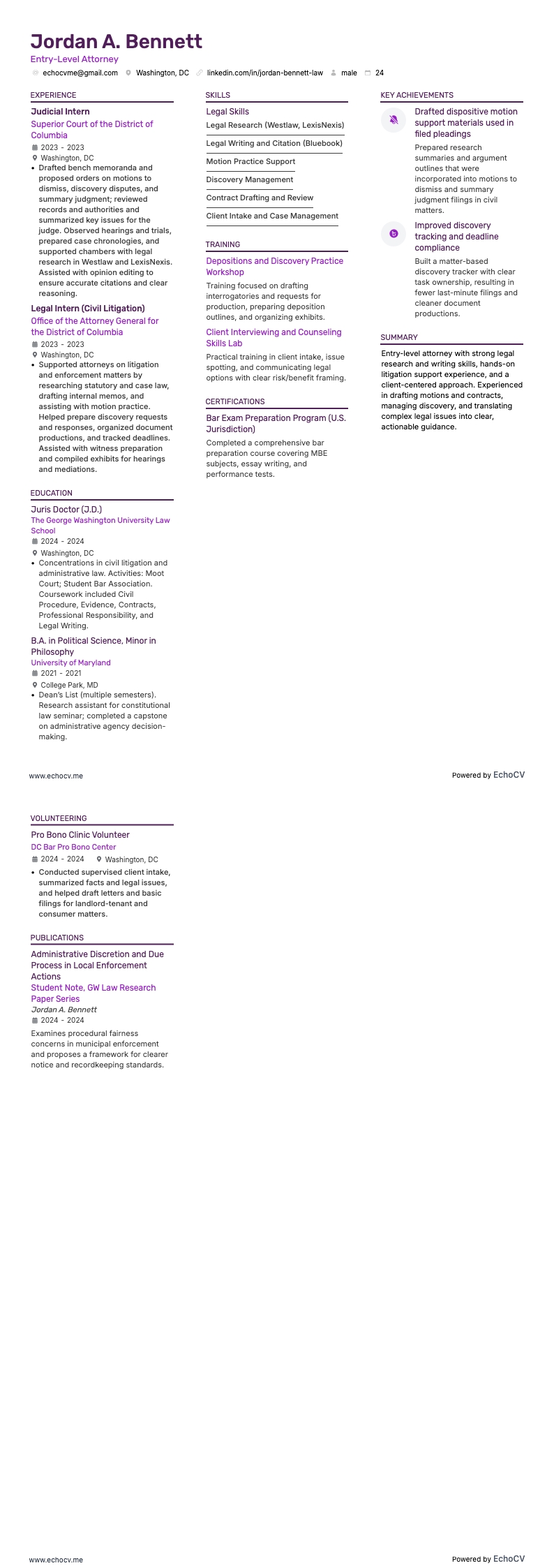
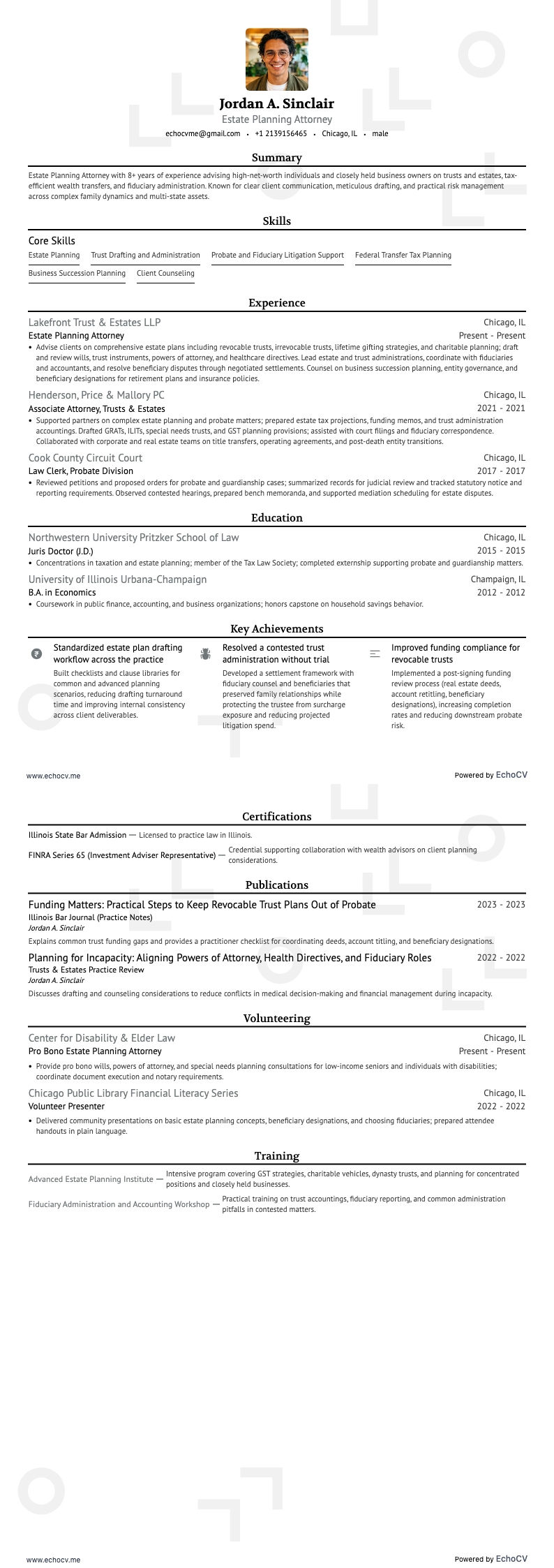
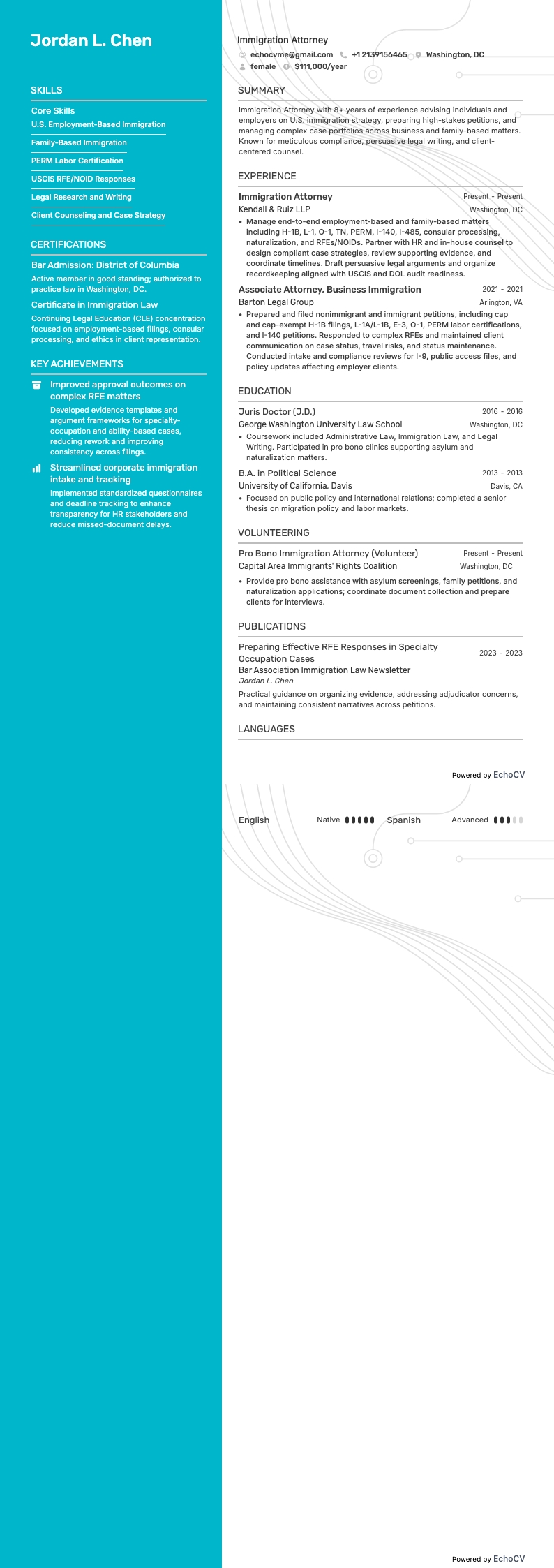
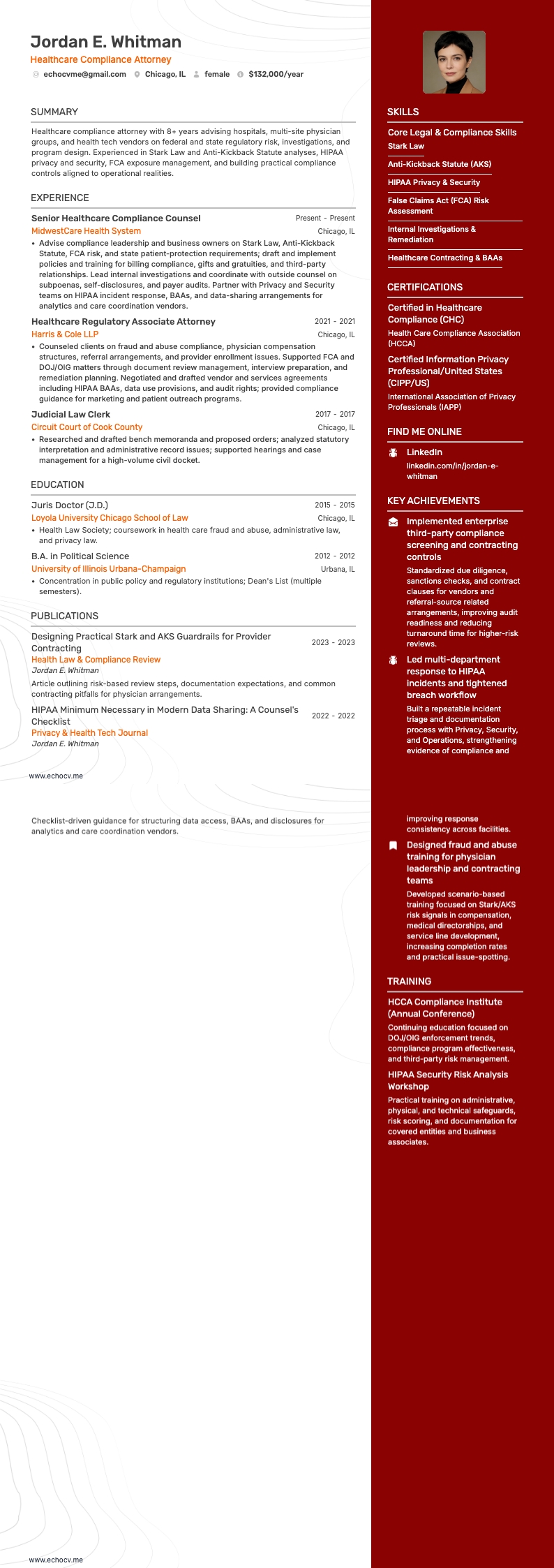
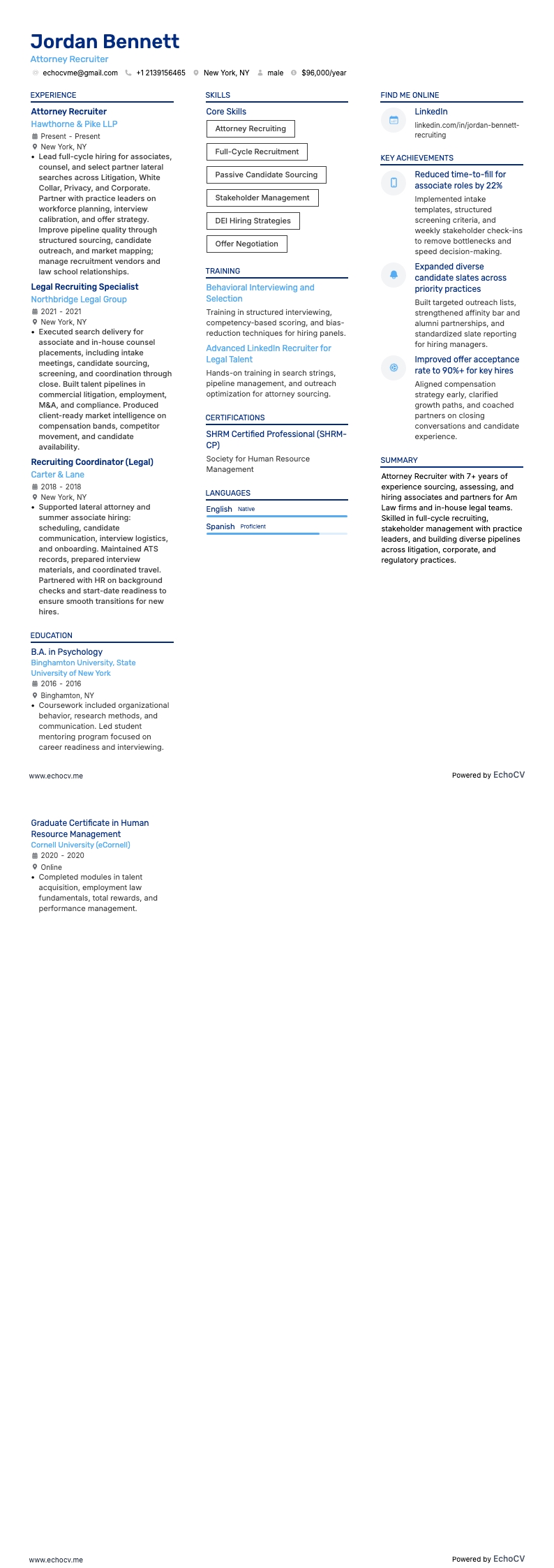
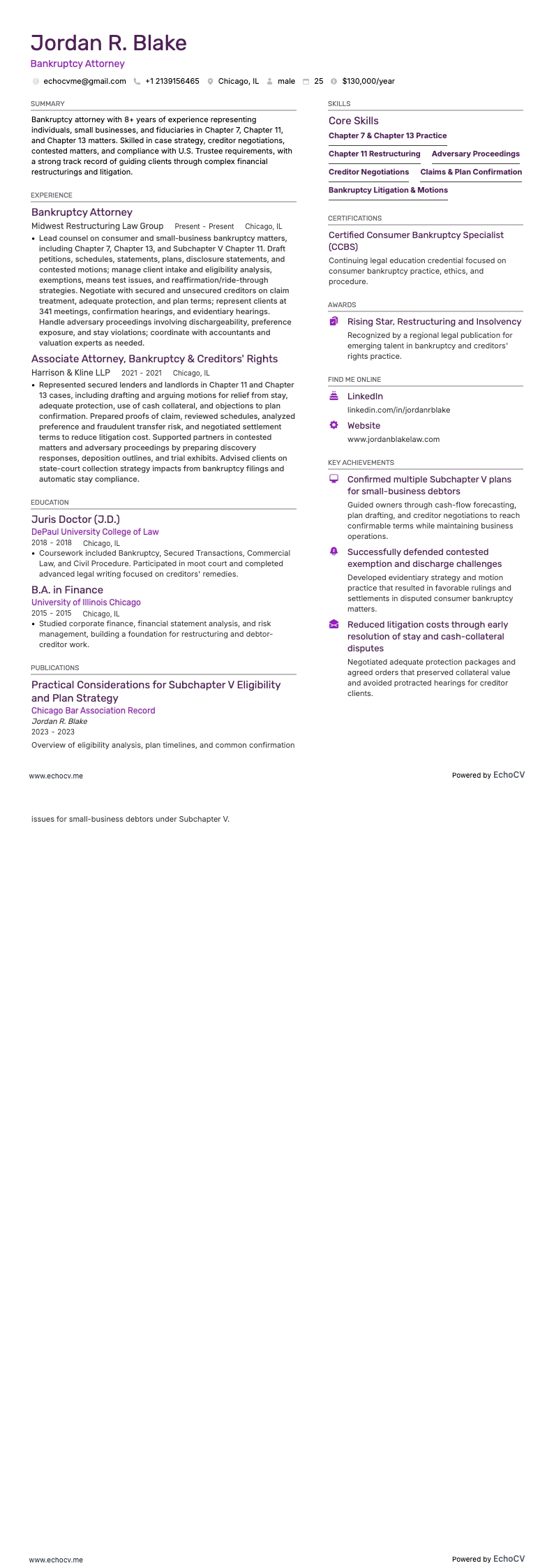
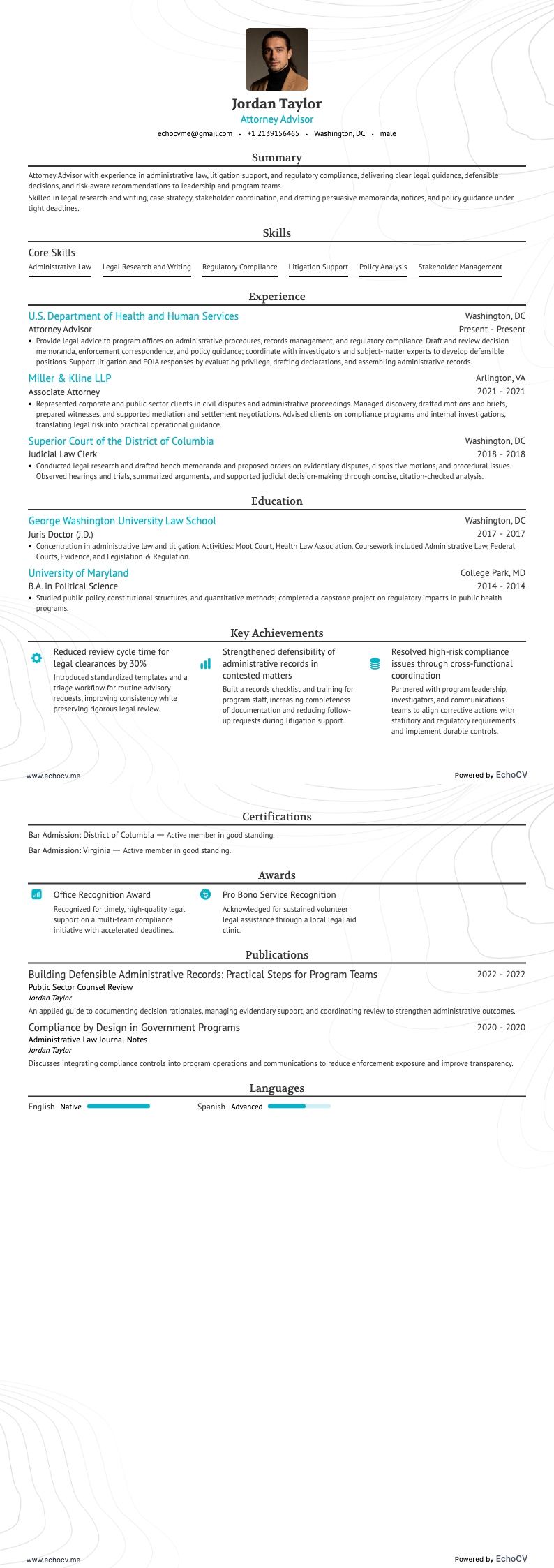
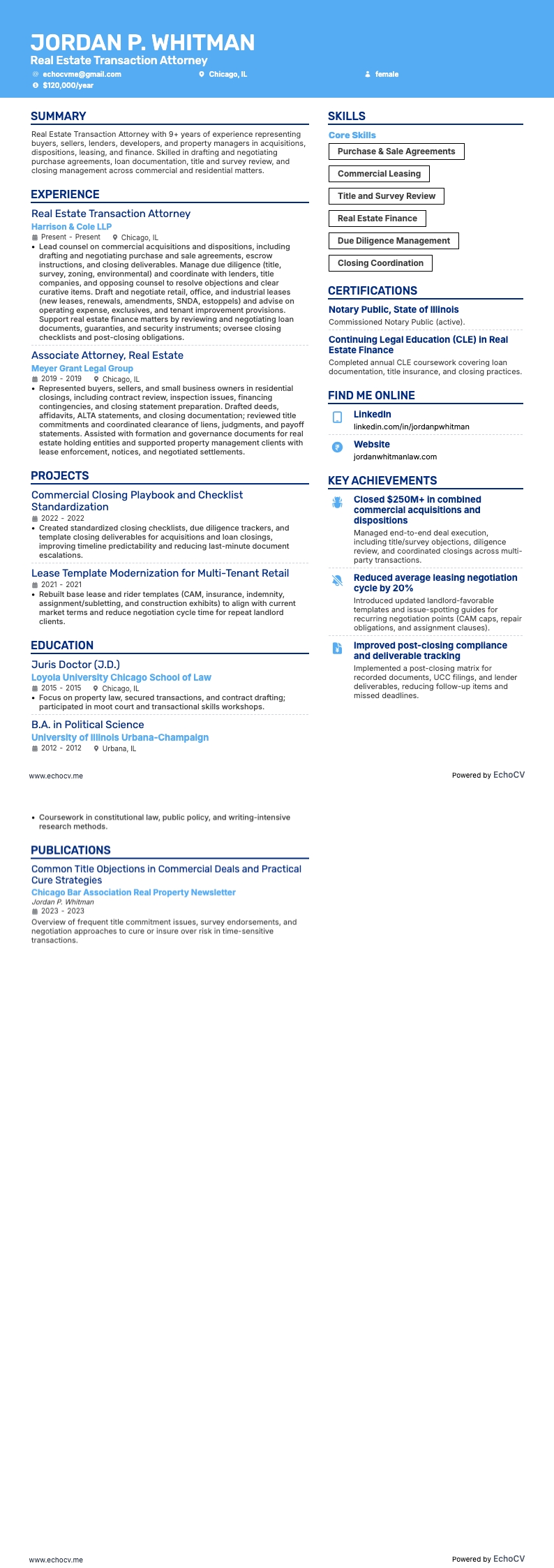
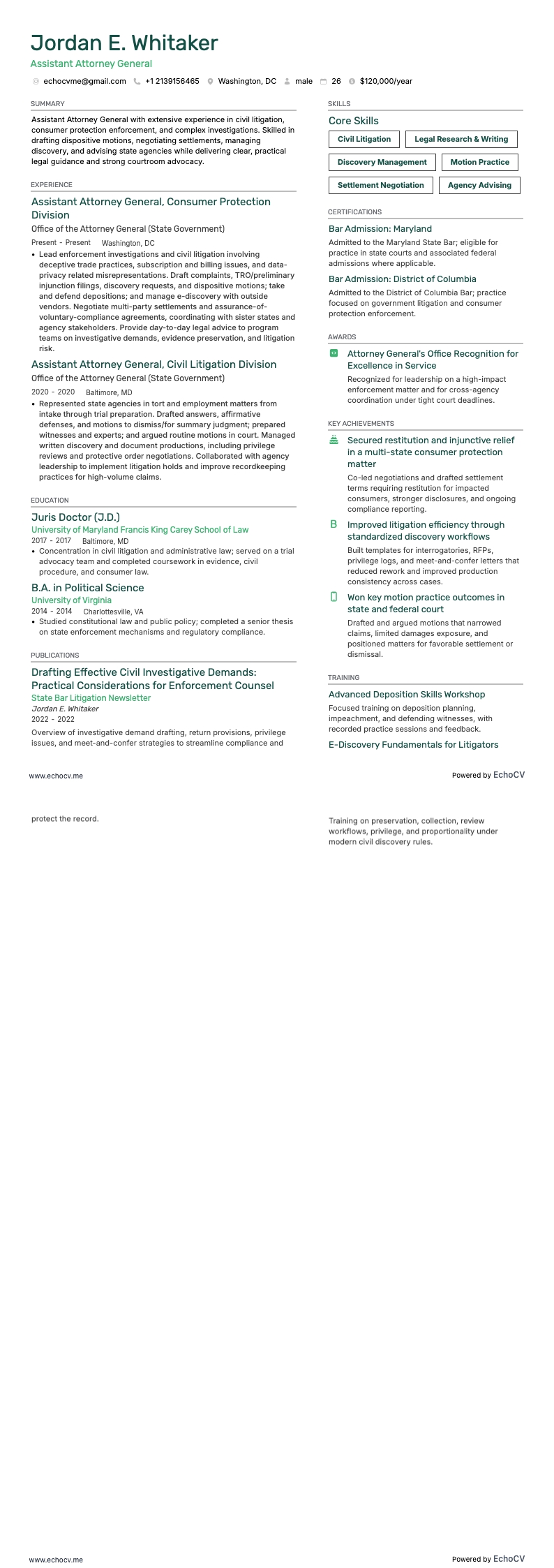
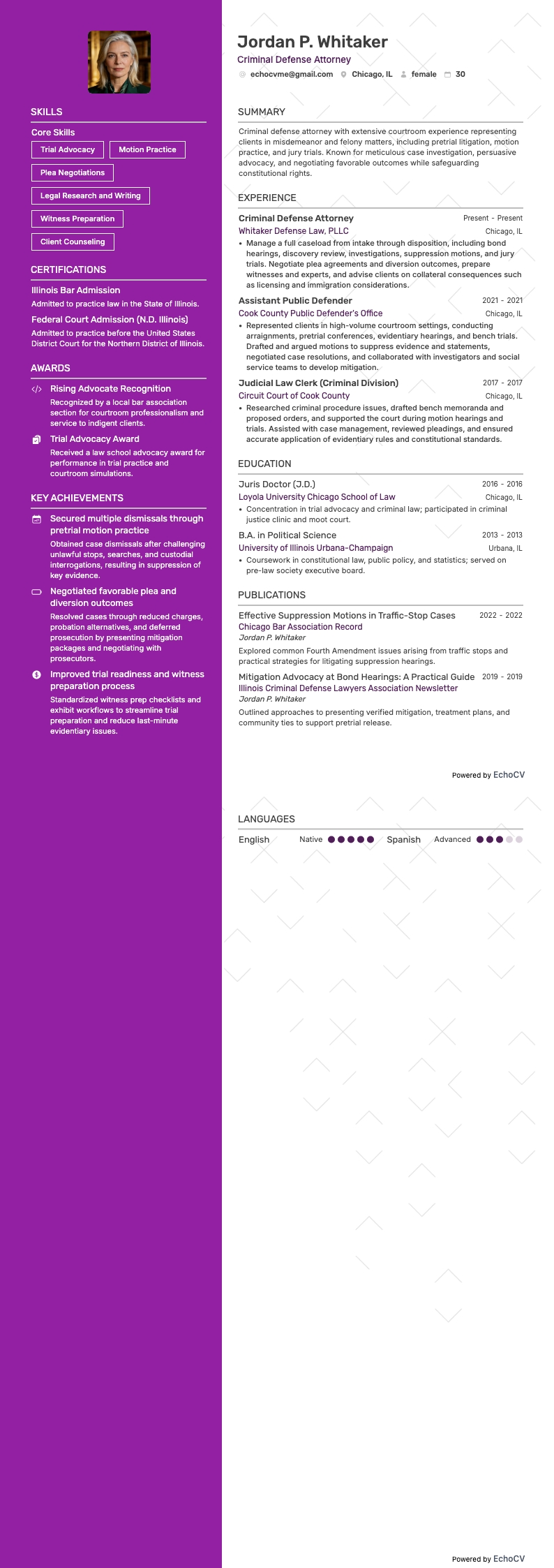
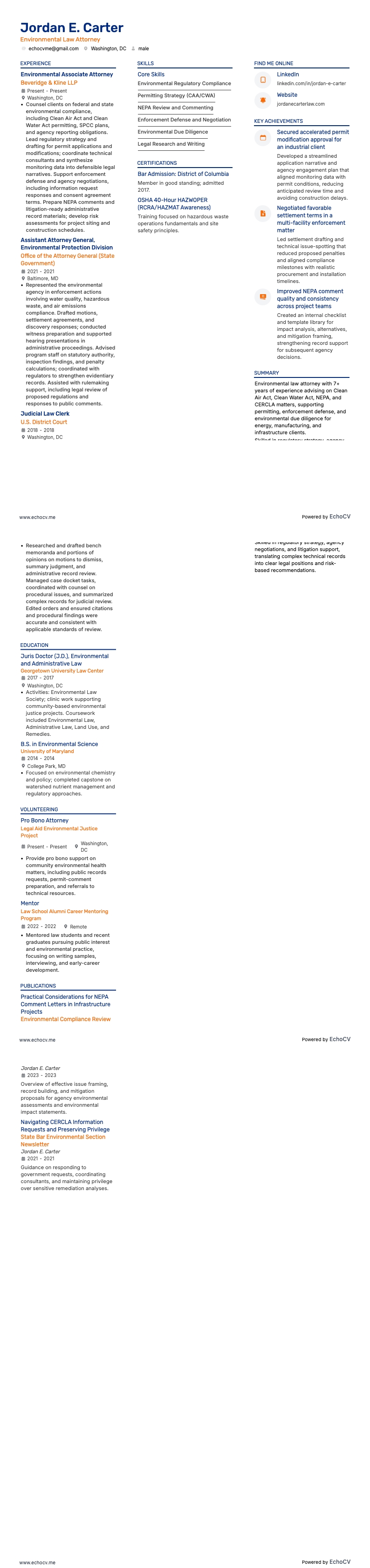
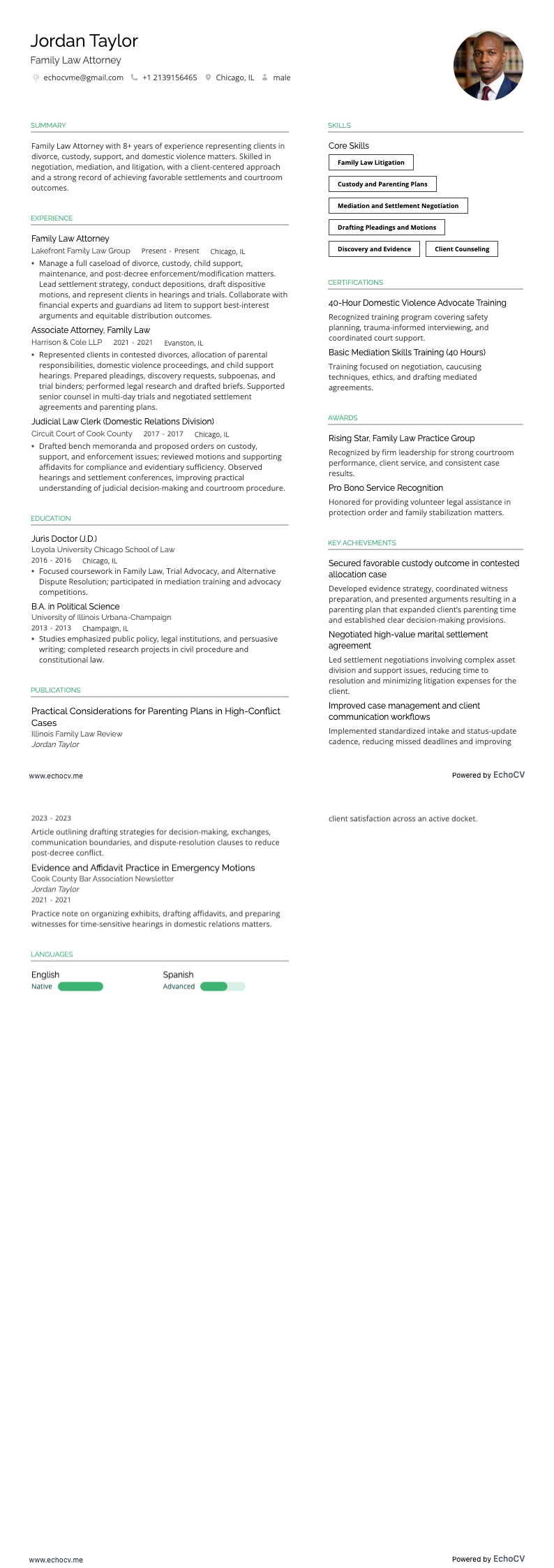
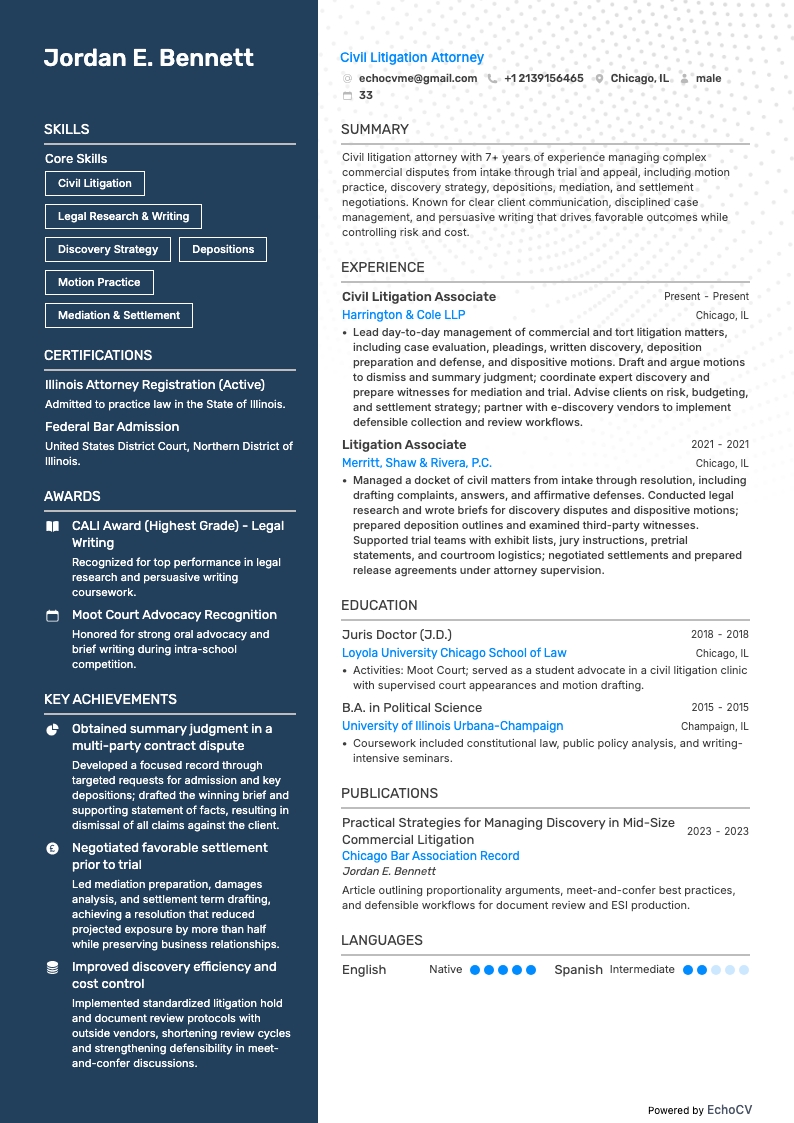
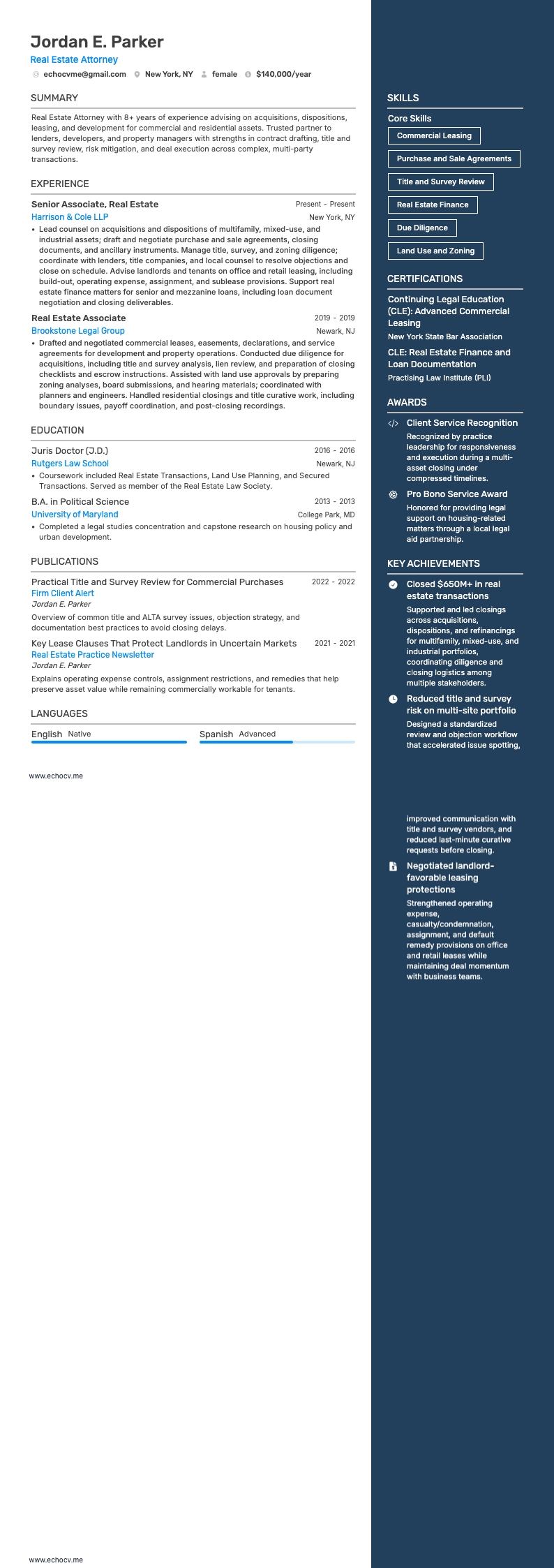
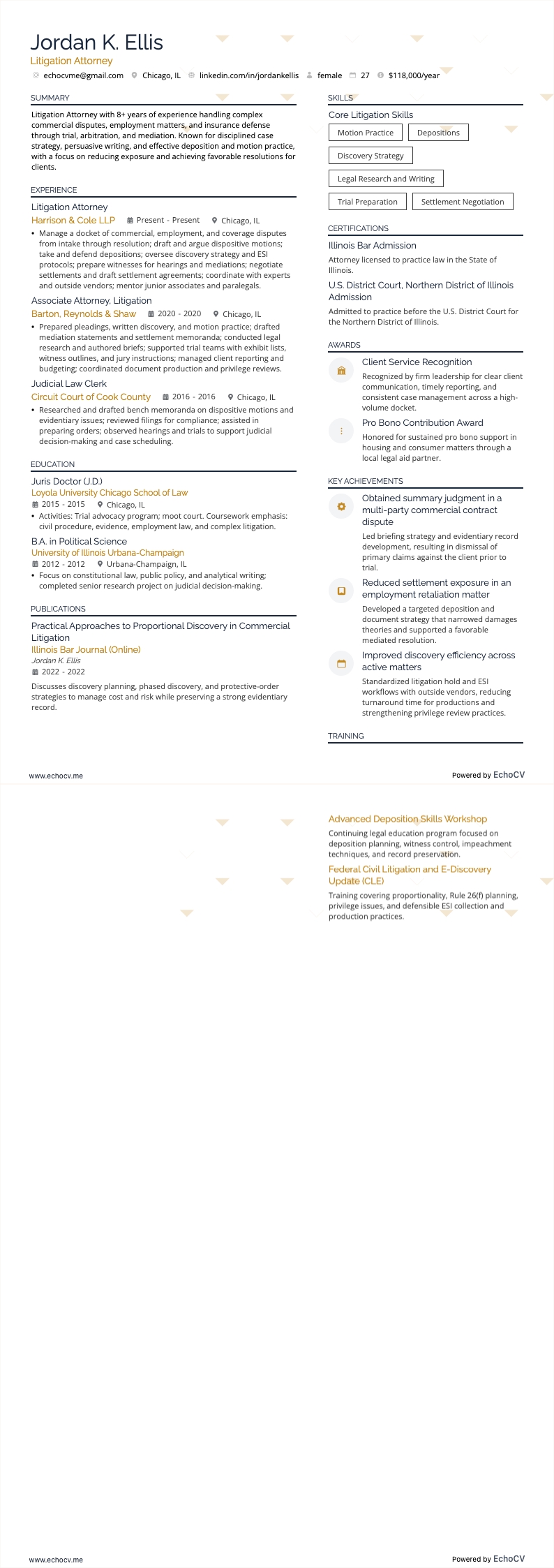
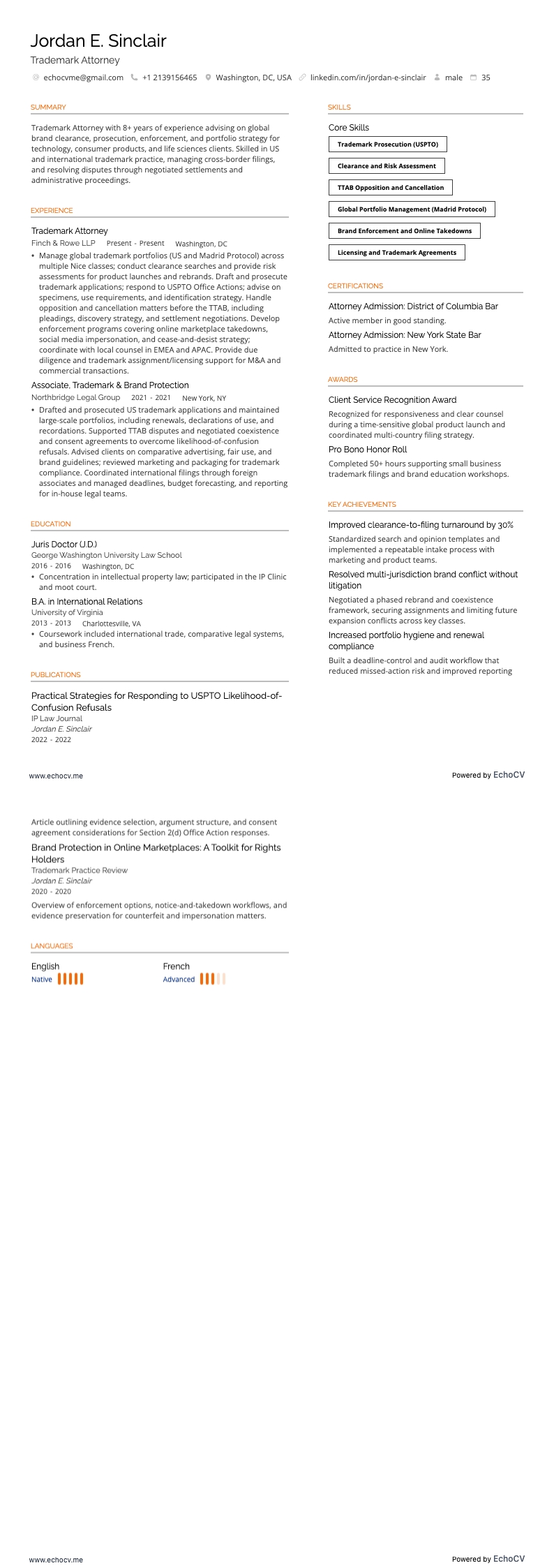
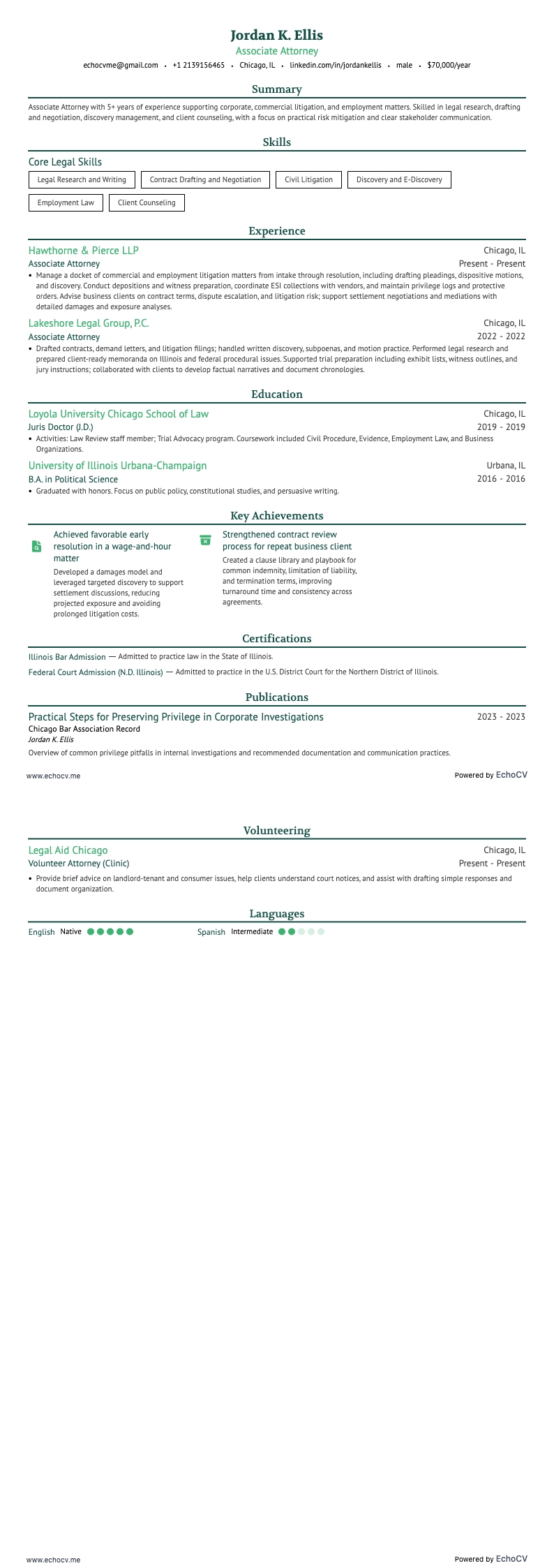
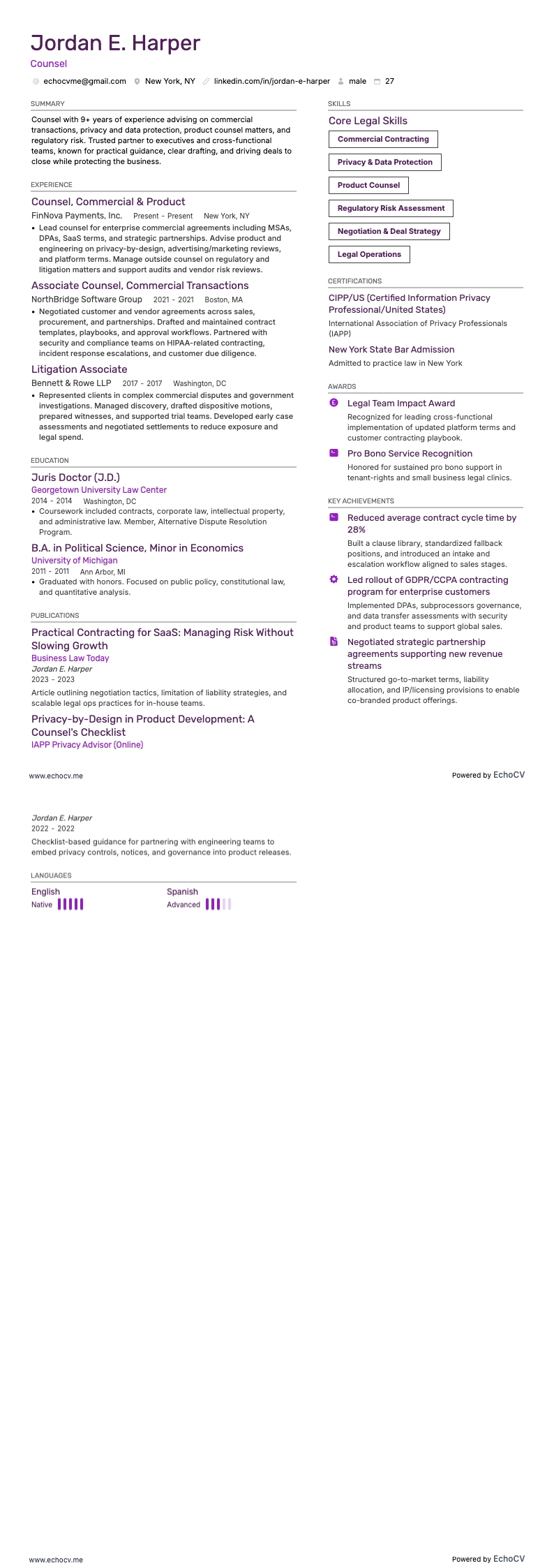
attorneys excel at organizing their workload, a skill that should also be reflected in your resume's layout. A tidy resume is the first impression you give to potential employers, so it has to stand out. Opt for a classic template, professional font, and ample white space to ensure your resume is ATS-friendly.
But first, decide on a resume format that speaks to both the traditions and the current practices of the legal profession.
Most seasoned attorneys prefer the hybrid (or combination) format because it allows them to showcase both their chronological work history and their specific skills and accomplishments. Another major advantage is that it’s very versatile—you can choose which aspects of your career to emphasize, whether that's a rich array of legal skills, a history of high-profile cases, or leadership in legal settings.
This doesn’t mean you should avoid the other two top formats. For instance, the reverse-chronological type is more focused on your work experience and is great for those who have an extensive career history in law. At the opposite end of the spectrum are functional resumes, which are skills-oriented, and are best suited for entry-level attorneys.
Attorney resume design and layout
Lawyers know better than anyone that clarity and relevance bring any document to another level. This is what you should be looking to achieve on your resume, too. Consider the following suggestions when building your professional presentation.
Remember, resume layouts can vary by country – for example, a Canadian resume format could look different.
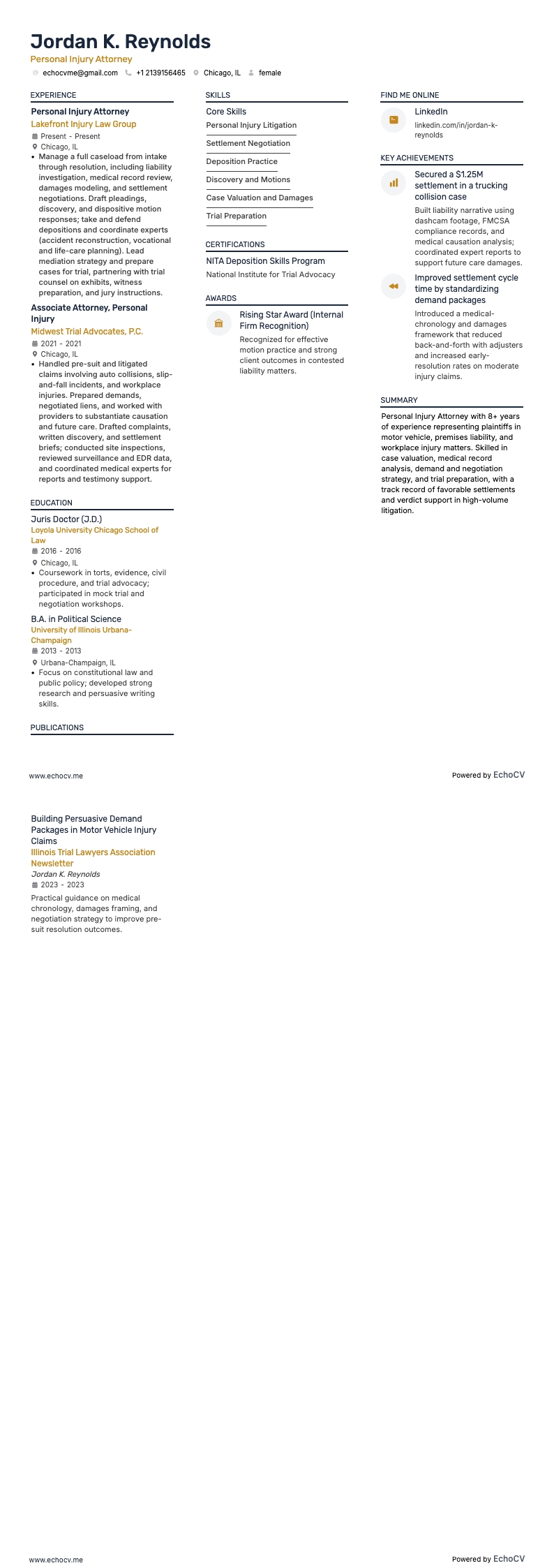
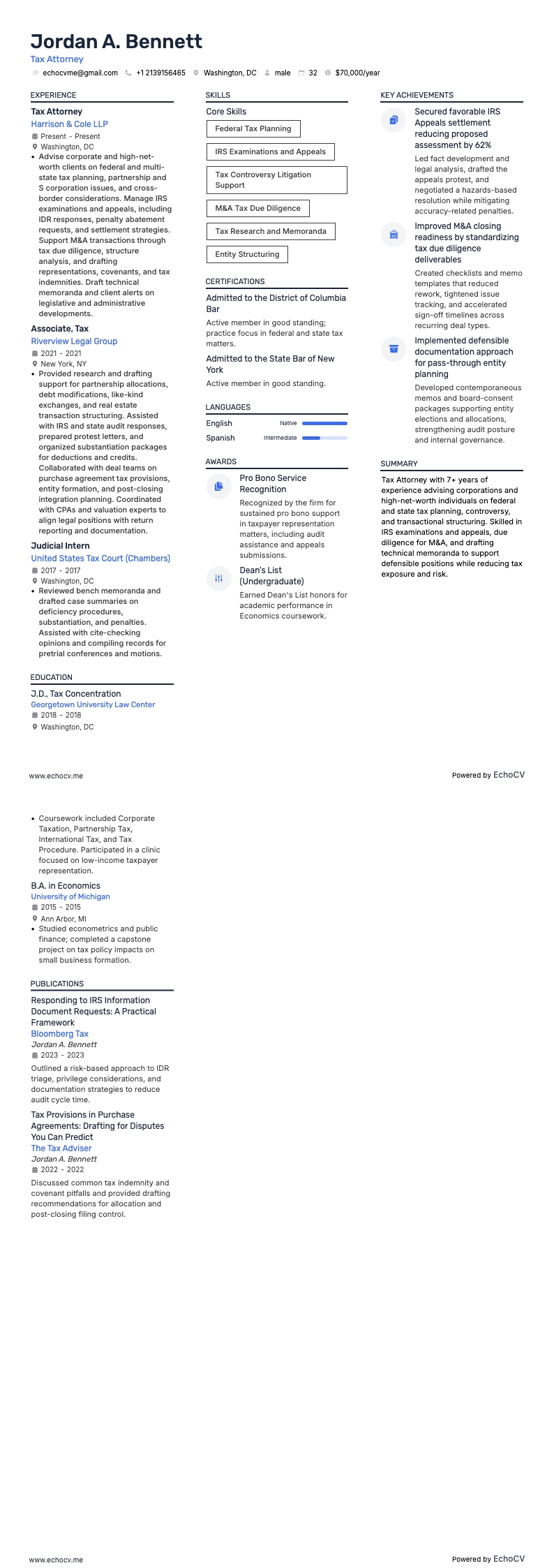
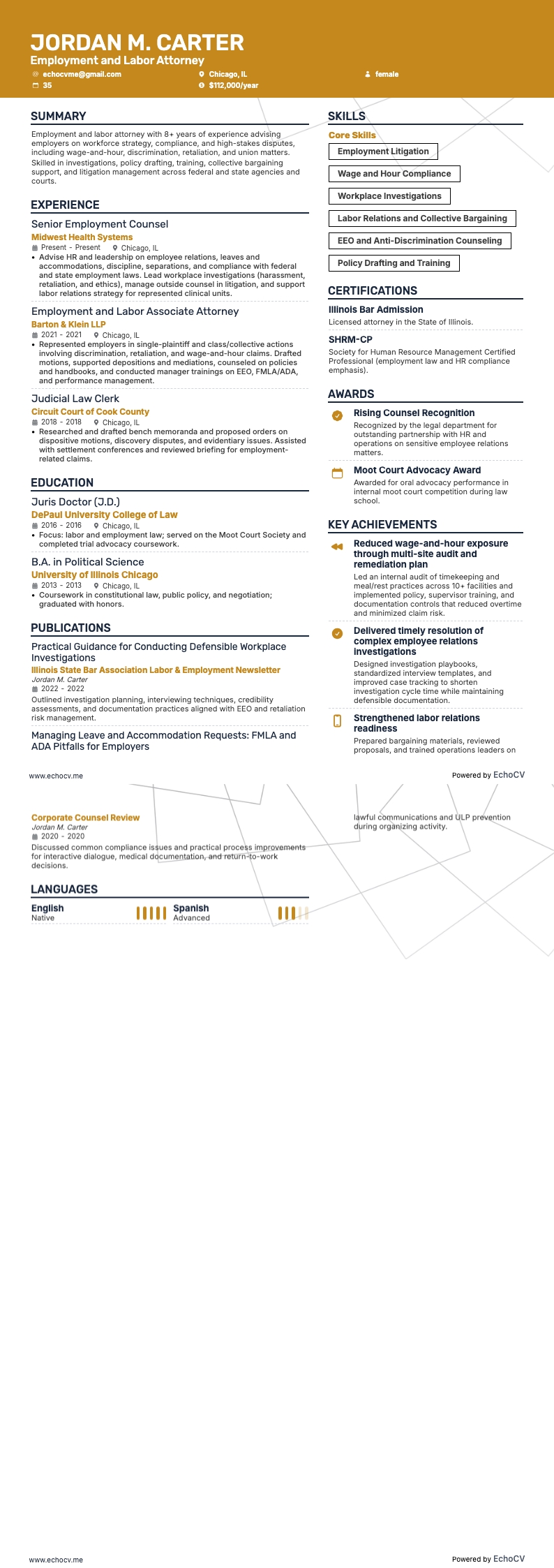
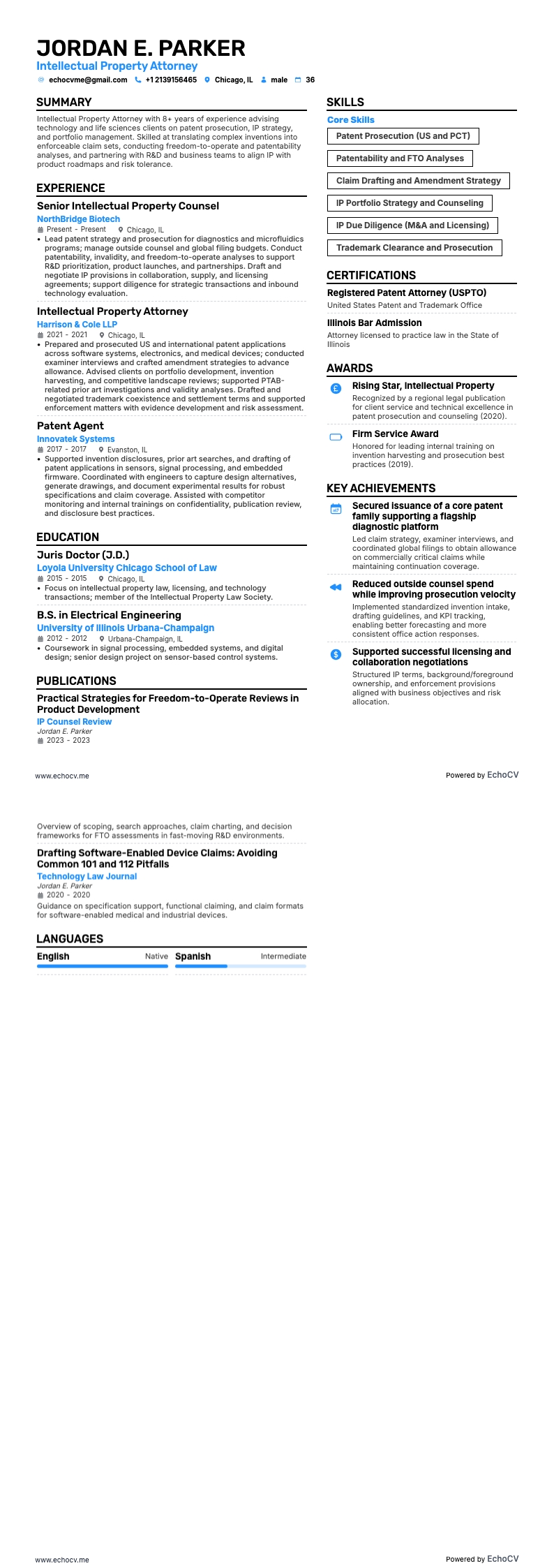
- Create a compelling resume header. Ideally, this section should include your full name, your professional title (e.g. Trademark attorney), and contact information — phone number, email address, and LinkedIn profile. For more impact, you may choose to include your licensure status or a link to your professional website, showcasing your achievements.
- Keep the resume neatly organized. Two major factors will make your resume readable — professional fonts and sufficient white space. For the former, Times New Roman is considered the standard for documents, conveying a more formal tone. Alternatively, you could opt for a sans serif font like Arial, Lato, or Rubik, which aren’t only perfectly legible but also ATS-friendly. Just ensure that the font size is no smaller than 10 pt. Regarding white space, it largely depends on margin sizes. It's best not to reduce margins below 1 inch to prevent your resume from appearing too cluttered and overwhelming.
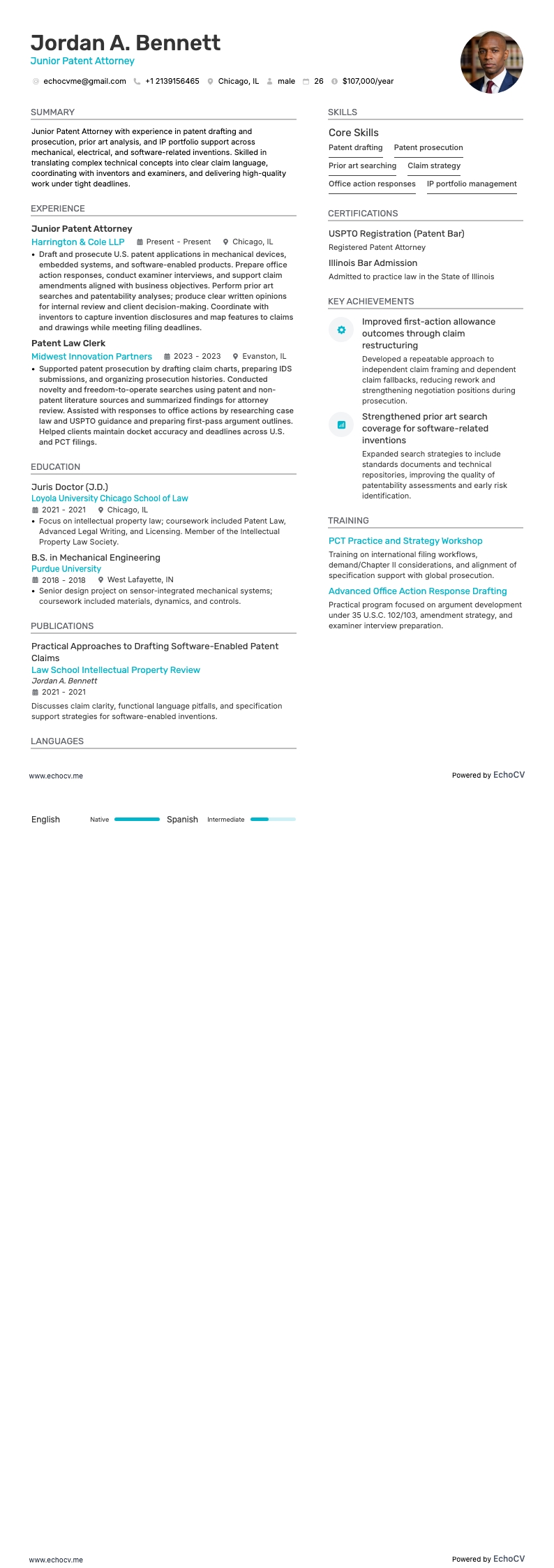
- Avoid too many graphic elements. It goes with the territory. The legal profession in the United States follows a conservative approach to job applications, which also applies to photos on resumes. The reason is straightforward: photos can lead employers to unintentionally bias or discriminate, and ATS scanners might not process these images correctly. The same goes for resume icons, which don’t align with the profession's strict professional standards.
- Proofread your resume. While it may seem like a basic step, it's always beneficial to run your final document through our AI-powered resume checker. This tool doesn't just offer content advice; it also identifies any typos, ensuring your resume is polished to perfection.
- Save your file as a PDF. Unless explicitly mentioned otherwise, it’s best to save your resume as a PDF to avoid unexpected formatting changes which is often the case with Word resumes. The file naming convention goes as follows: your name, your job title, and the word resume (JohnDoeEmploymentattorneyresume.pdf).