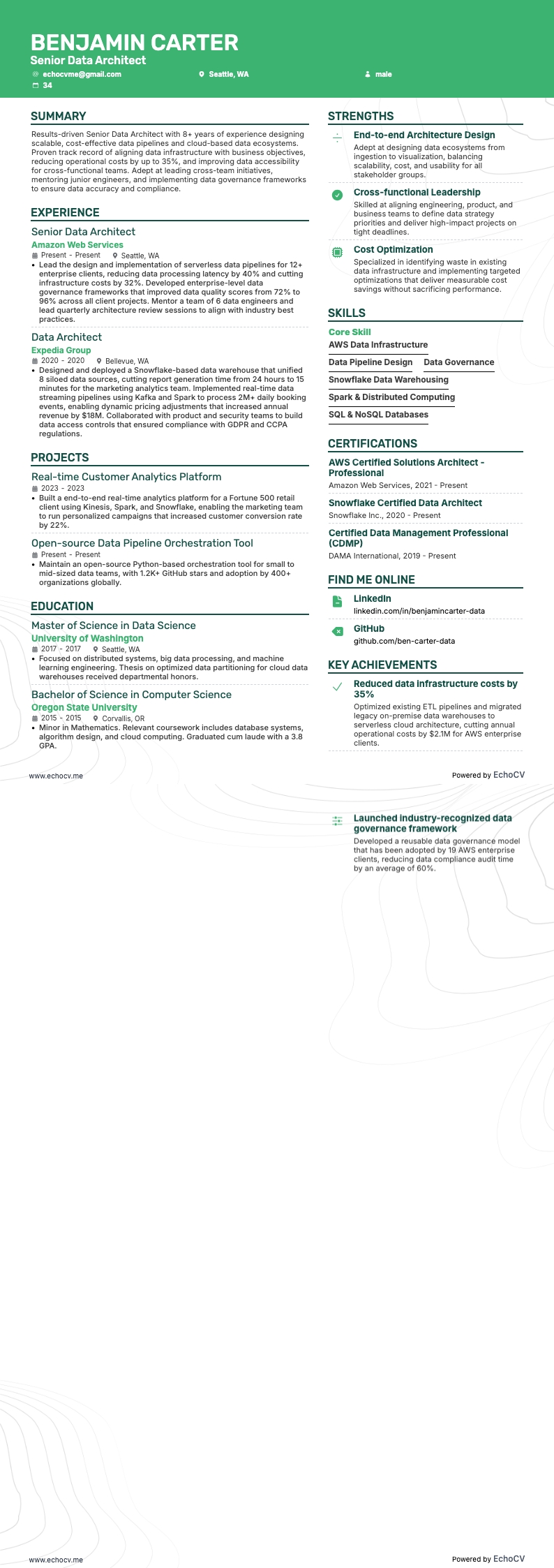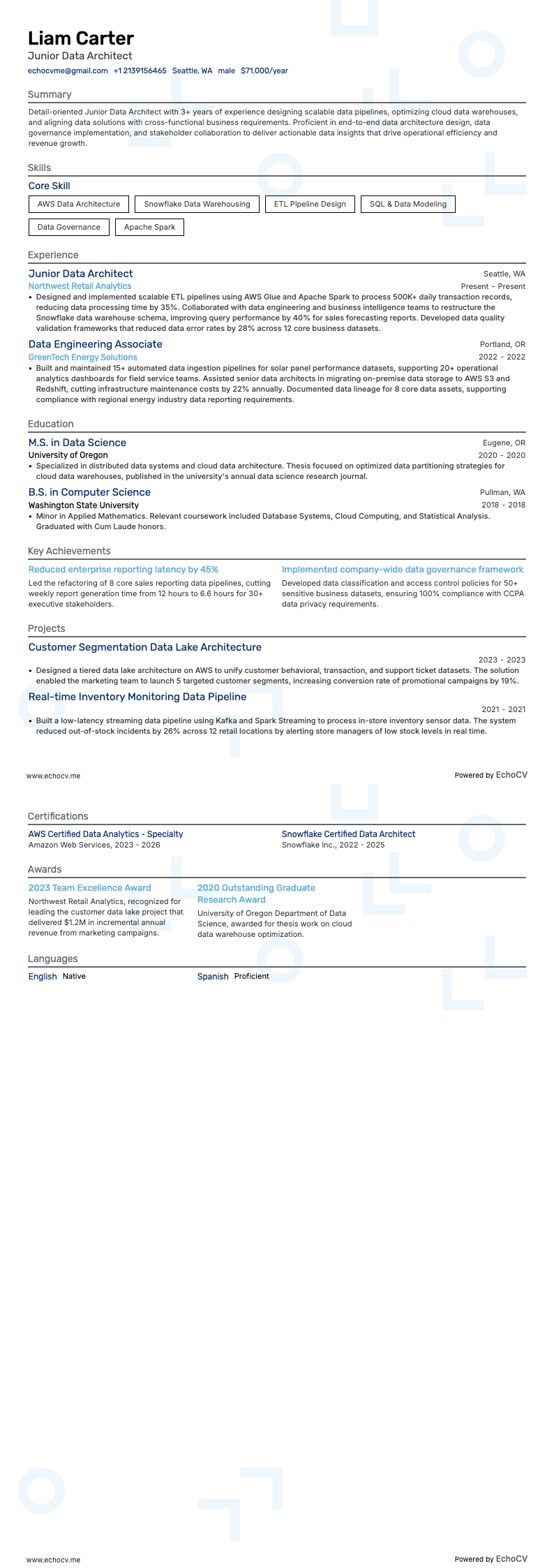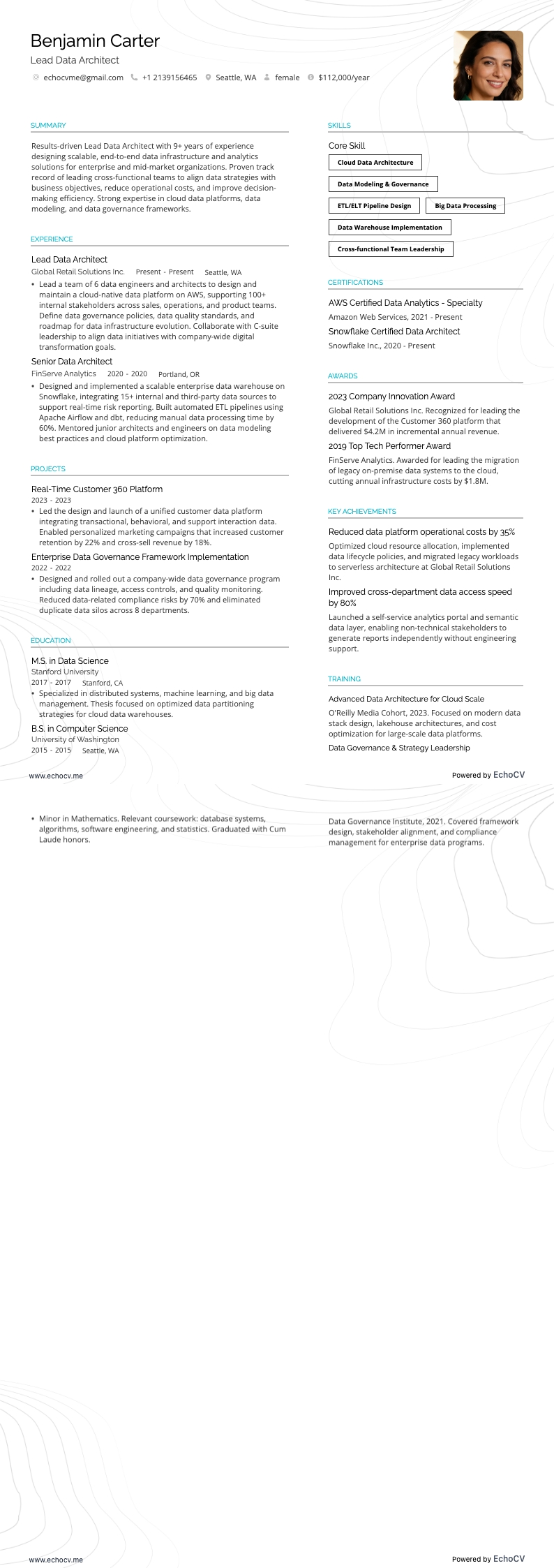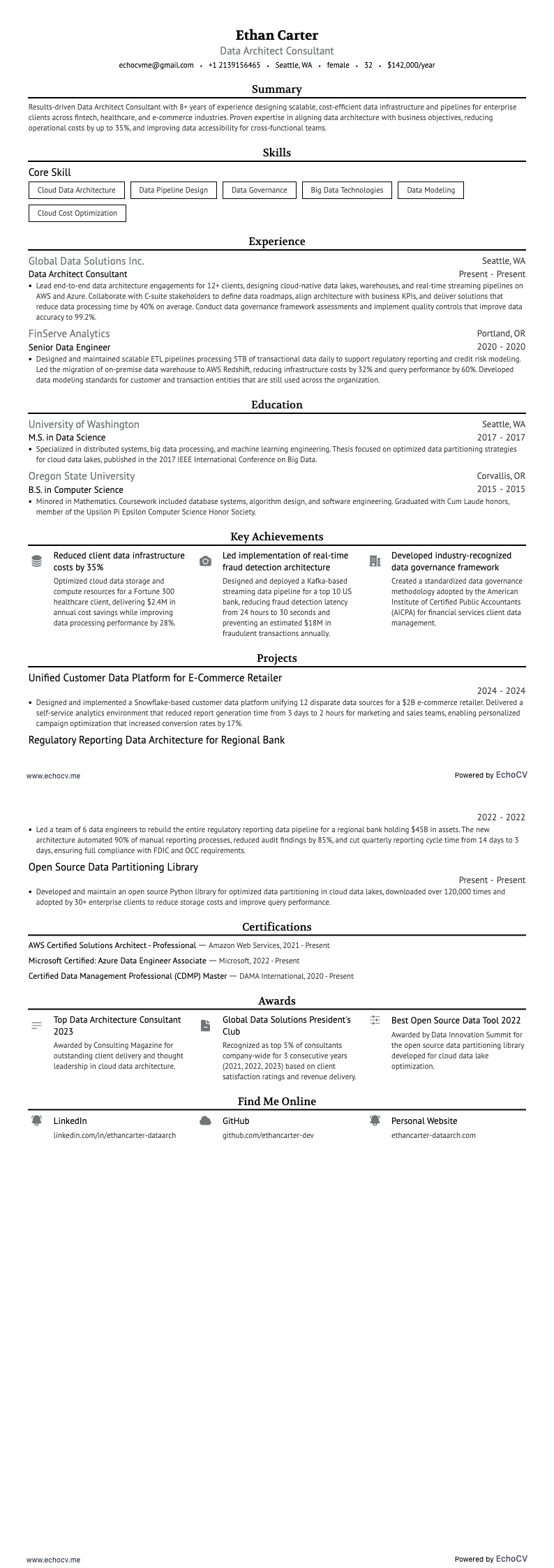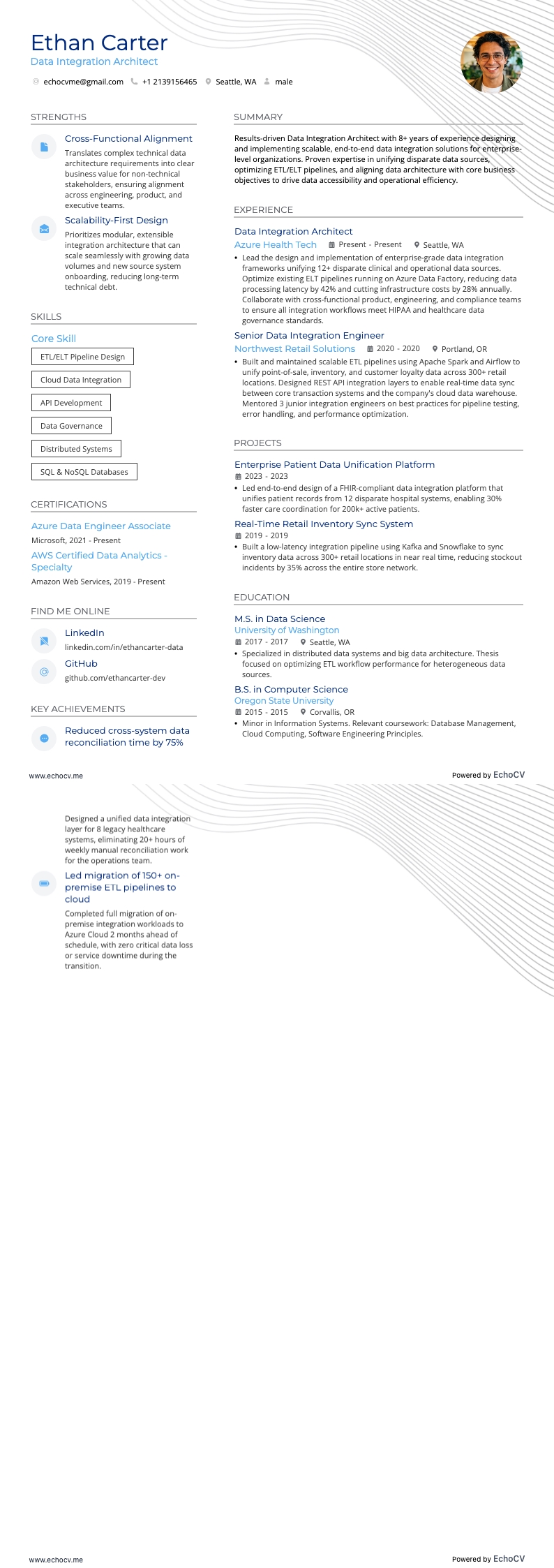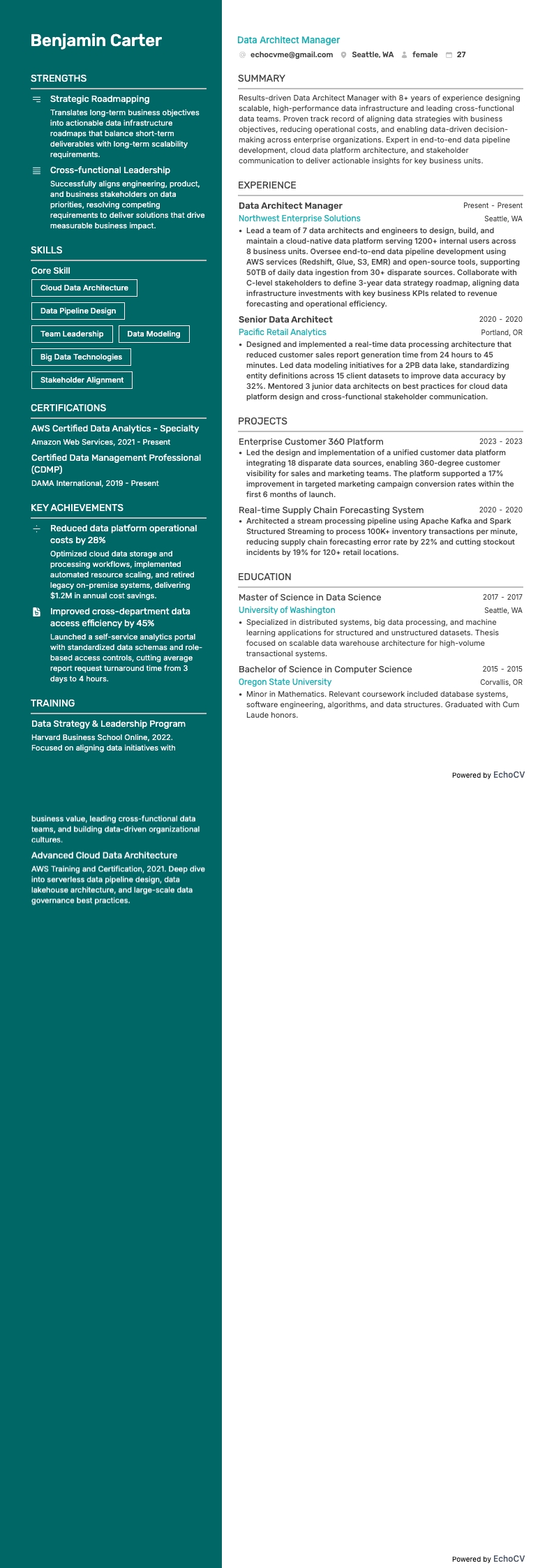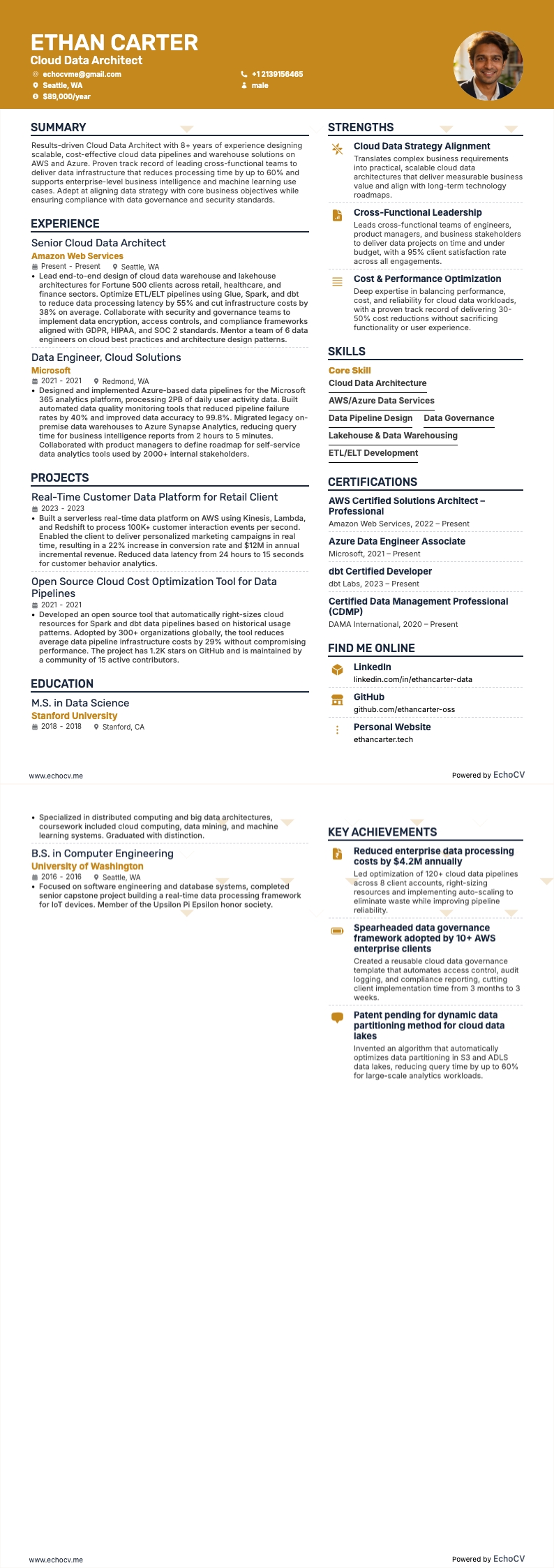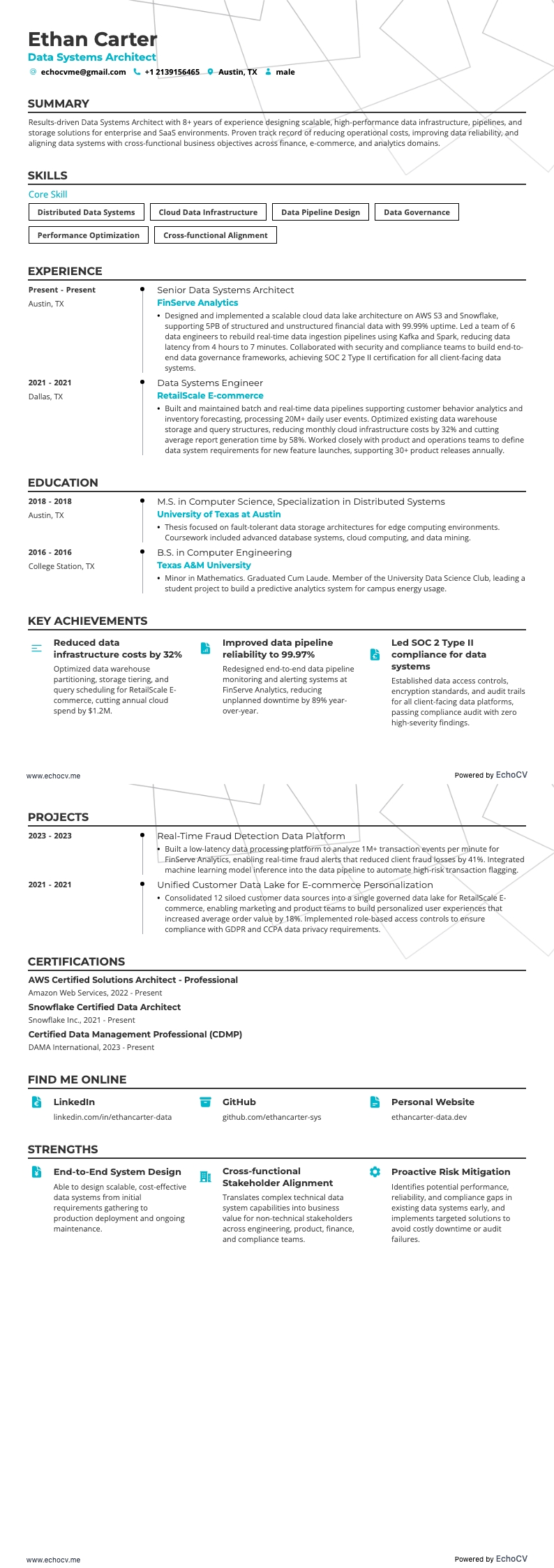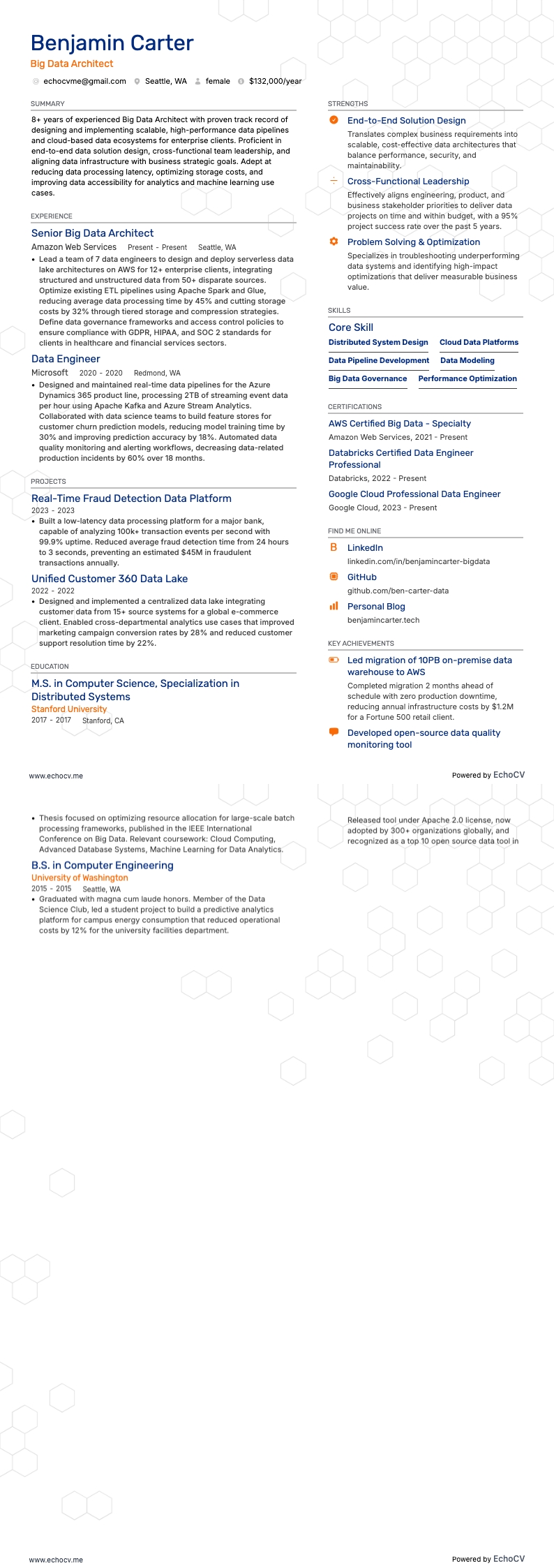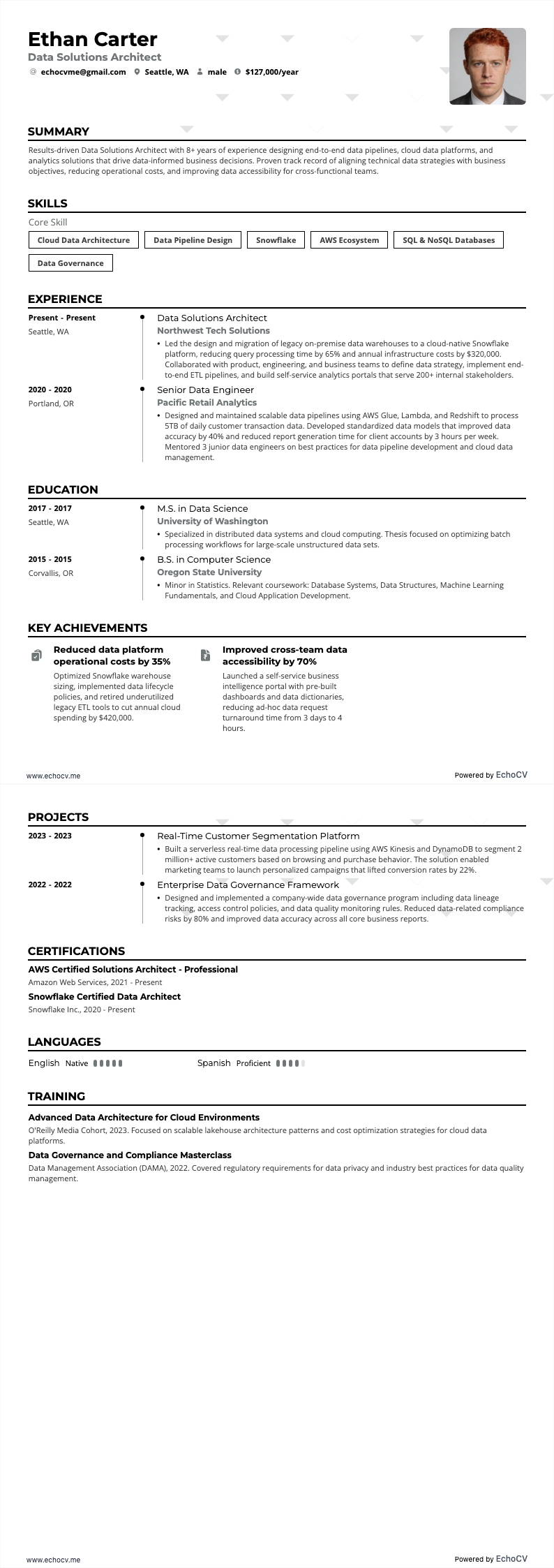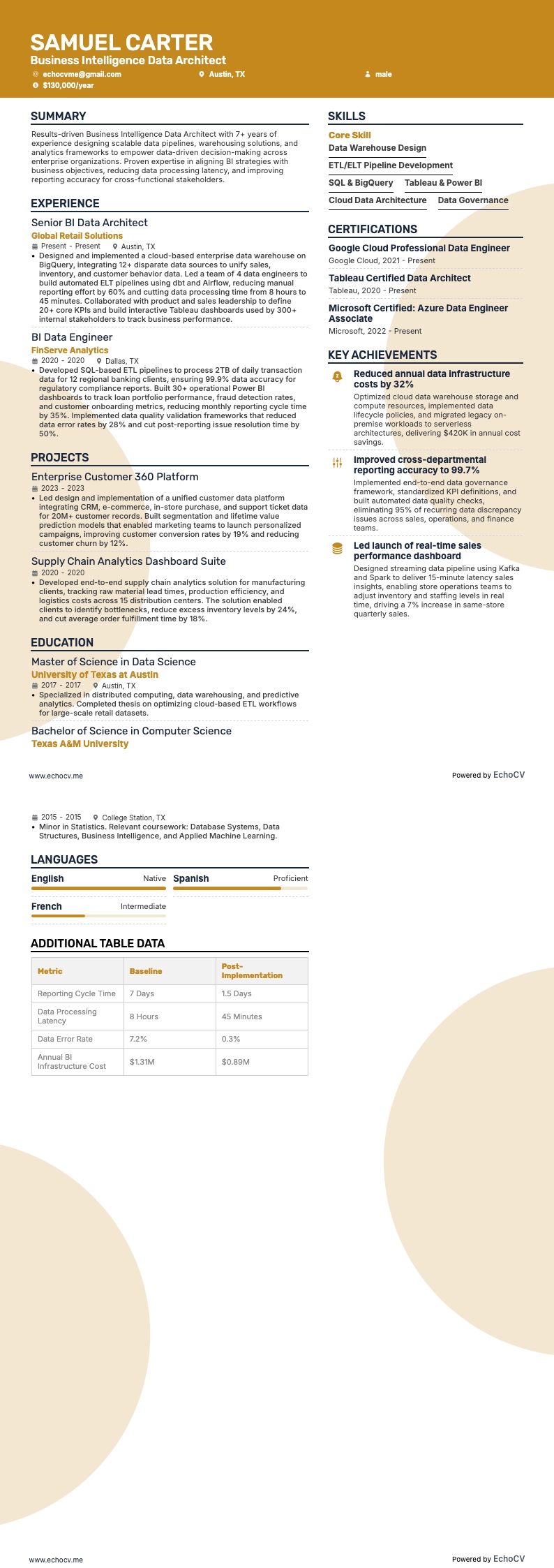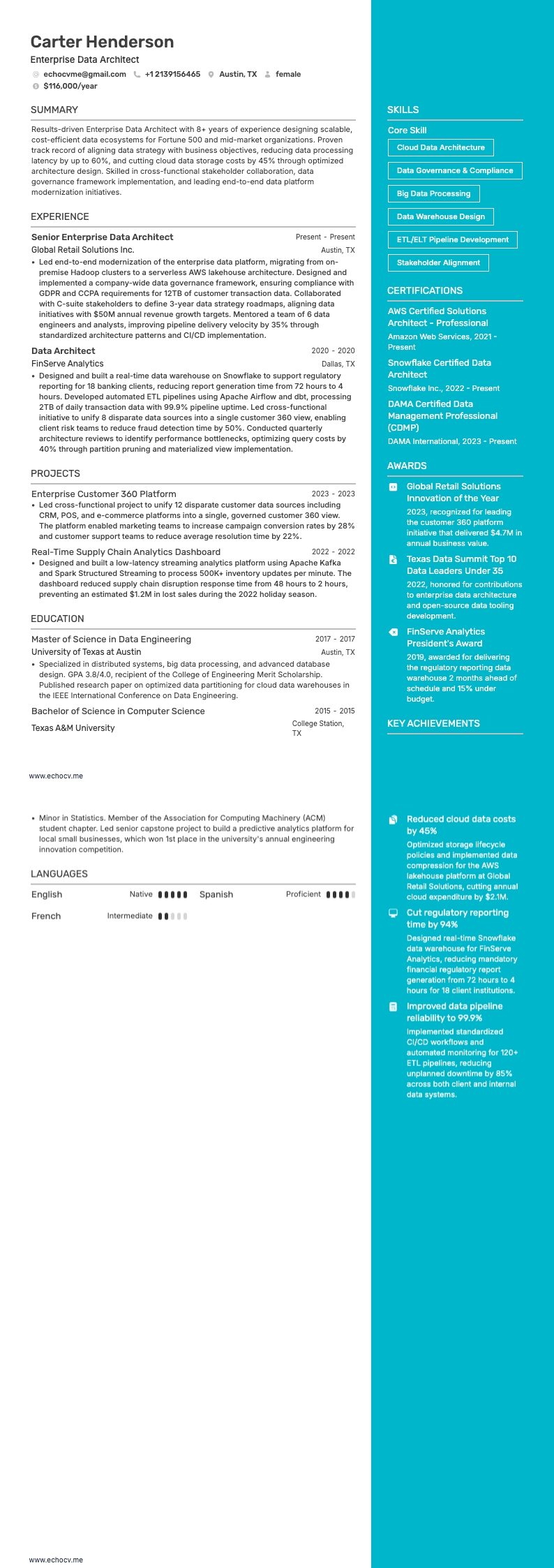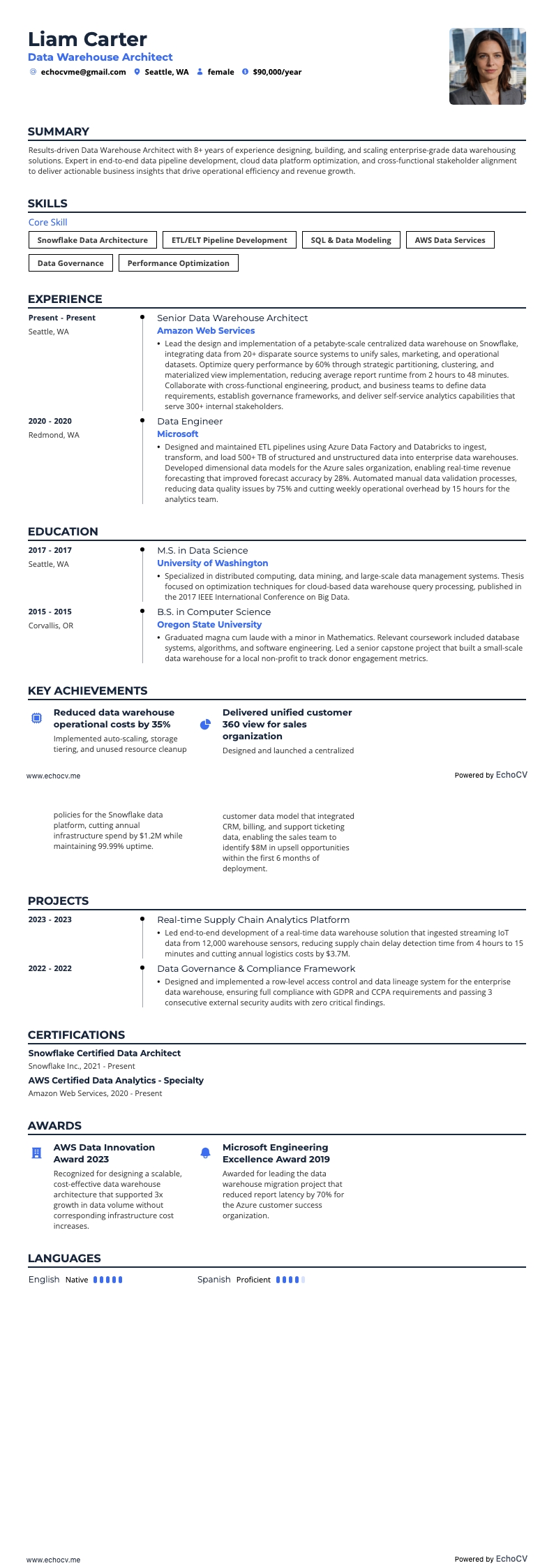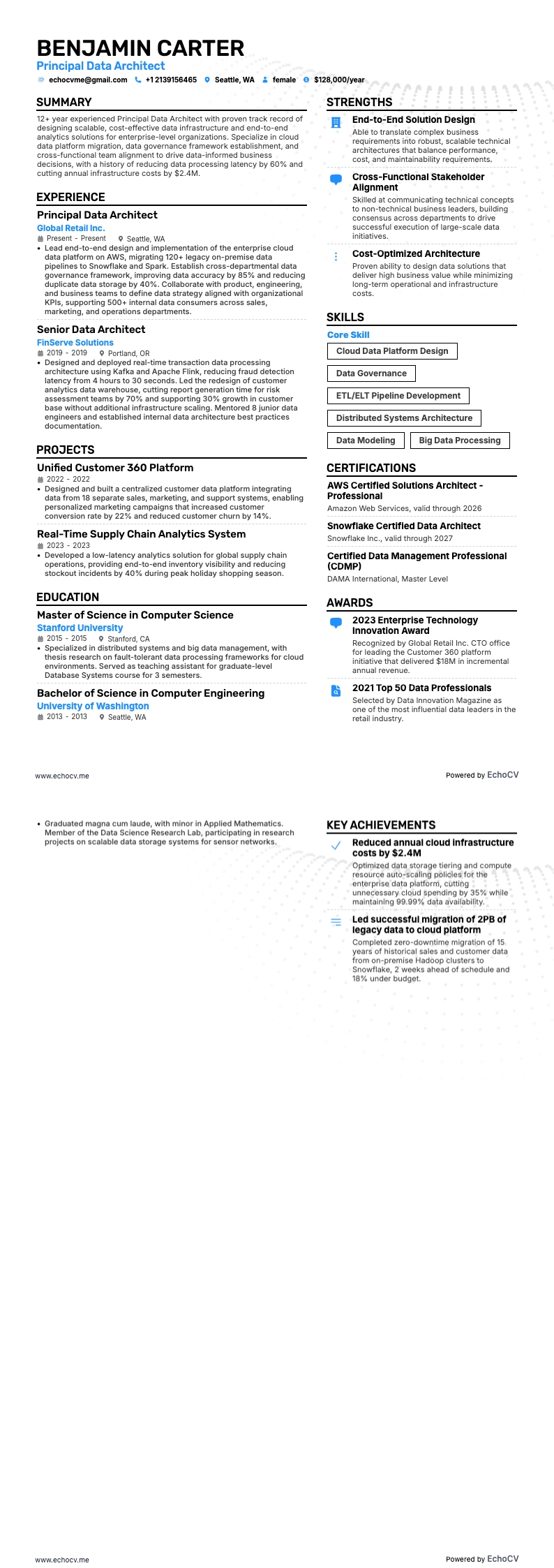
Now, we have a better idea of this person’s abilities and accomplishments in improving the company's database. With this example, we have a more accurate description of:
- Their ability to design and implement a relational database.
- The type of industry they have experience in.
- The effects their actions had on the data infrastructure.
- Their knowledge of federal and local regulations and their attempts at being compliant.
- Their ability to analyze data and make improvements based on what they read.
If you are unsure which metrics you can quantify, we’ll show you a few examples of the kinds of data architect metrics you can quantify.
How to quantify impact on your resume
One of the biggest complaints from hiring staff is getting resumes that don’t accurately show the potential of new recruits. Instead of getting resumes that use numbers and percentages to show actionable results, they get a re-telling of the job duties and responsibilities, just like our first example.
Recruiters already know what the job duties and responsibilities are. After all, they’re the ones who created the job post in the first place.
What they want to see are the results of your actions. How did your new database design improve efficiency or reduce downtime? How were your customers impacted by your data-hardening techniques? What was the outcome of any cross-functional teams you led or worked in?
Check out these real-world examples of quantifying the impact of your data architect resume:
- Number of data systems designed and implemented: “Supervised the design and development of 12 new AWS data warehouses to support BI initiatives, which led to a $5M annual revenue increase.”
- Number of business processes improved: “Developed 25 reports using Tableau Desktop and SQL queries, which increased visibility in the status of the sales pipeline by 78%.”
- Size and scale of data managed: “Managed a 100GB MySQL database with over 50 million rows, achieving 99.99% uptime and 5ms average query response time.”
- Number of cross-functional team collaborations: “Collaborated with cross-functional teams to define and document system requirements, resulting in a 30% increase in project success rate and a 20% reduction in project delivery time.”
- Increases in data accessibility or usability: “Generated 75% performance gain for enterprise BI systems by strengthening OLAP database systems.
- Reductions in downtime: “Developed solution architecture for CRM capability of the company, decreasing delays in data by 80% and boosting data availability by 100%.”
- Value of cost savings initiatives: “Designed and implemented a scalable data lake and data warehouse architecture for a global retailer, resulting in a 50% reduction in data storage costs.”
- Success rates of projects led: “Conceived a new monitoring system that tracked the performance rating of 3,400 staff, increasing productivity among 11 top sales performers.”
One of the easiest ways to create a tailored resume is by quantifying those metrics that are listed in the job post. If you are reading a job post that mentions team collaboration and data design as their main responsibilities, you’ll want to quantify those metrics.
Next, we’ll spend a little time talking about the kinds of experience first-time data architects can add to this section when looking for their first professional role.
How do I write a data architect resume with no experience
Landing your first data architect job can seem like a daunting task. A common mistake is including irrelevant jobs that don’t do anything to promote your skills in database design, analysis, and security.
What recruiters are interested in seeing from entry-level data architects are the jobs where you:
- Gained experience in programming languages, such as SQL, Python, or Java.
- Worked on managing relational databases through SQL Server, MongoDB, or MySQL.
- Managed various types of data storage systems.
- Used data modeling tools like Erwin Data Modeler, Lucidchart, or SQL Developer Data Modeler.
- Worked on big data technologies, such as Hadoop, Spark, or Kafka.
If you lack real-world work experience, you can showcase additional work experience through personal projects, volunteering, academic projects, and college internships.
Now it’s time to focus on adding those ever-important technical, business, and personal skills to further impress your future employer.
How to List Your Hard and Soft Skills on Your Resume
data architecture is a highly technical position but still requires more personal skills, like leadership, stress management, and coming up with creative solutions to complex problems. When updating your resume, you want to include all relevant hard and soft skills you are proficient in. What is the difference between hard and soft skills?
Hard skills are those necessary skills that you learn through school, continuing education courses, and on-the-job training. They include how to design and implement various types of data systems, knowledge of several types of programming languages, complex processes like ETL, state and federal regulatory compliance, and implementing distributed data systems.
Soft skills are those skills that make you a better leader and maintain a level head when dealing with difficult staff or customers. They include essential skills like expressing empathy, advanced problem-solving skills, active listening skills, and resilience. They help you come up with complex solutions and be more adaptable to different work environments.
Here are some of the top hard skills that recruiters like to see from potential recruits.