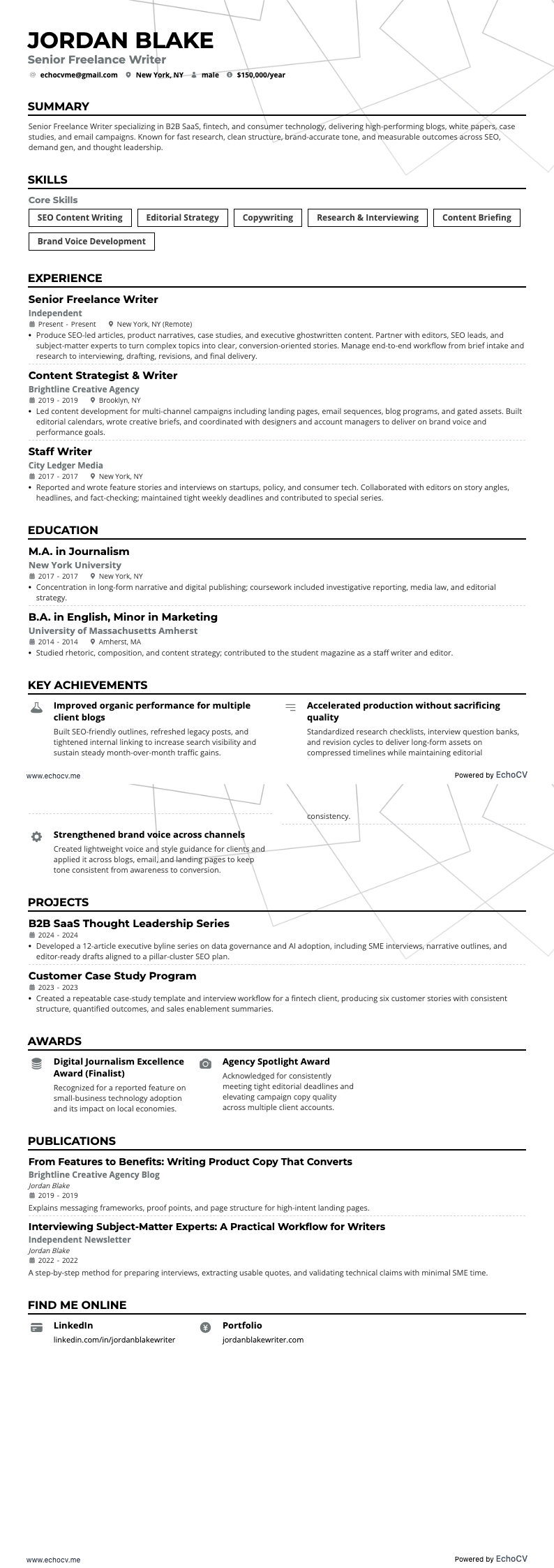
If you're reading this, chances are you understand what it takes to earn $5,000 a month as a writer. This level of income typically involves a hefty amount of copywriting, proofreading, and content repurposing—key tasks for a freelance writer. One of the greatest perks of this job is the freedom it offers: you get to choose when, where, and who you work for. The hardest part? Pitching and selling your work to potential clients.
This guide will equip you with all the essential tools to market your skills. Assuming you've already put together a portfolio, your next move is to create a resume. Never overlook the power of a well-crafted resume. In most professional contexts, having both a portfolio and a resume really lets you show off what you can do, like a pitch that sells your story.
So, this is what we’ll be covering in today’s freelance writer resume guide:
- The best way to format your resume so it passes ATS scanning and recruiter scrutiny with flying colors.
- How to tailor your resume experience section to both the job description and the specific market needs.
- How to display the versatility and breadth of your skills across different styles, formats, and subjects.
- Which technologies and certifications might serve you to level up your freelance writer application.
- What to include in your resume summary to not only communicate your achievements but also let employers assess the quality, tone, and fit of your work.
- Which additional resume sections can boost your pitch and land you a job..
For those who need more specific insights, our specialized resume guides for writers are just the resources you need.
- Content Marketing Resumes
- Copywriter Resumes
- Technical Writer Resume
- Writer Resume
- Content Editor Resume
- Editor Resume
- Freelance writer Cover Letter
Let’s dive in.
How to format a freelance writer resume
The structure of your resume not only reflects your organizational skills but also your ability to adapt to different roles. Whether you're applying to a specialized niche or a more generalist position, your resume should clearly demonstrate your clarity, organization, and storytelling abilities.
Let's talk about the three common resume formats. The reverse-chronological resume lists your experiences starting from the most recent and working backwards. Then we have the functional (or skill-based) resume which is great for candidates with limited or no experience. However, for freelance writers, the most suitable resume format is the combination (hybrid) resume. It blends the chronological with the functional layout, giving equal justice to both your work history and your skills.
Here are the advantages of using a hybrid resume:
- Showcases diverse skills: Freelance content writers typically have a diverse set of writing skills, from technical writing to creative storytelling. The combination resume allows you to highlight these varied skills right at the top in a dedicated skills section. This immediately showcases your breadth of expertise.
- Highlights specific achievements: This format allows you to connect specific skills with concrete achievements. For instance, under each job or project, you can detail accomplishments like, say, increased blog engagement. This method directly links your skills to measurable outcomes.
- Flexibility in presenting experience: Excellent for freelancers who manage multiple projects, allowing you to group similar work under categories like "Freelance projects" or by client, detailing specific roles and achievements within.
- Address gaps clearly: The hybrid structure helps explain gaps in employment in a positive light by focusing more on your achievements rather than the exact timeline.
- Tailor for different audiences: The combination resume is perfect for adapting to various job applications across different industries or media types, allowing you to highlight the most relevant skills and experiences for each role.
Choosing the right header for your freelance writer resume
As a writer, choosing the perfect words and providing accurate information should come naturally. The same goes for the header. You have a single line, get the attention of hiring managers by exceeding their expectations.
The resume header is a great opportunity to leverage your copy skills and customize everything (including the title). For example, adding “Marketing freelance writer” to your title instead of “freelance writer” makes a huge difference.
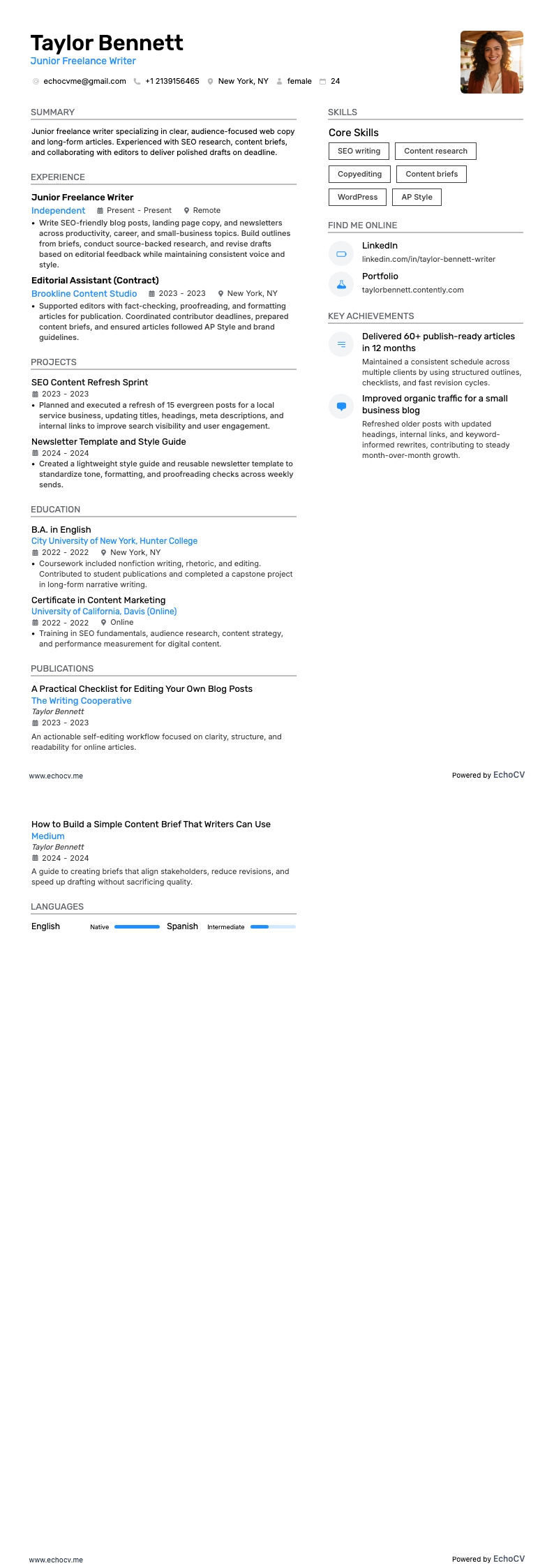
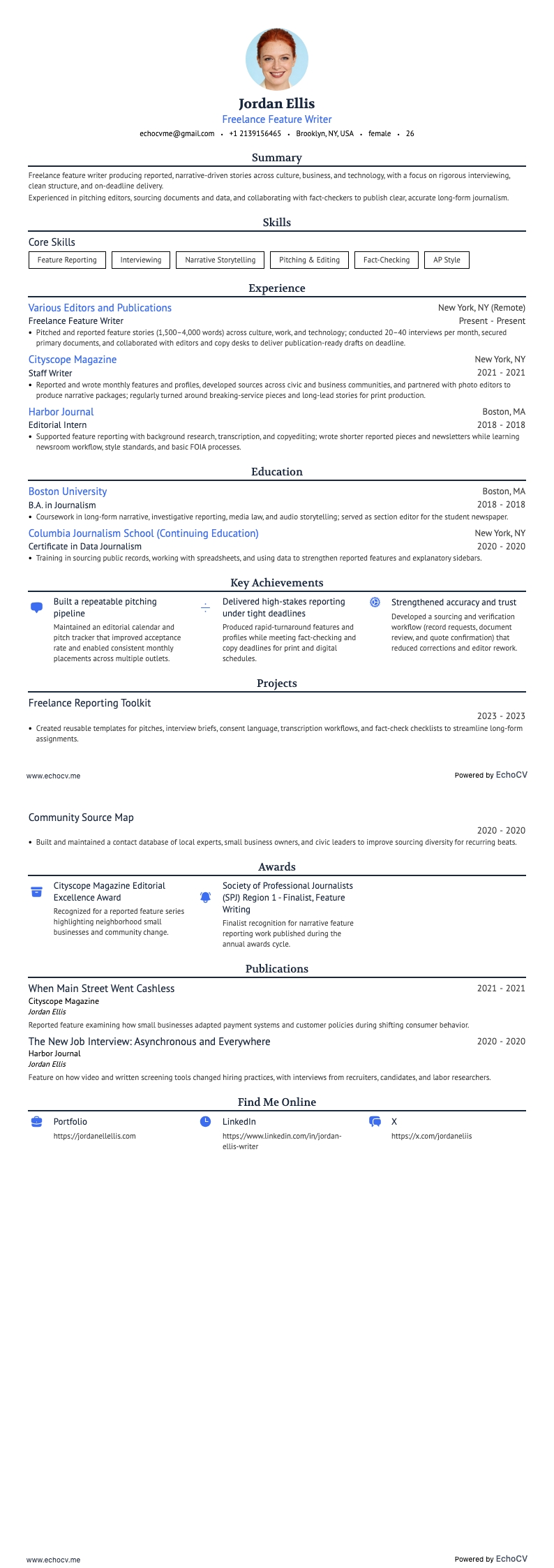
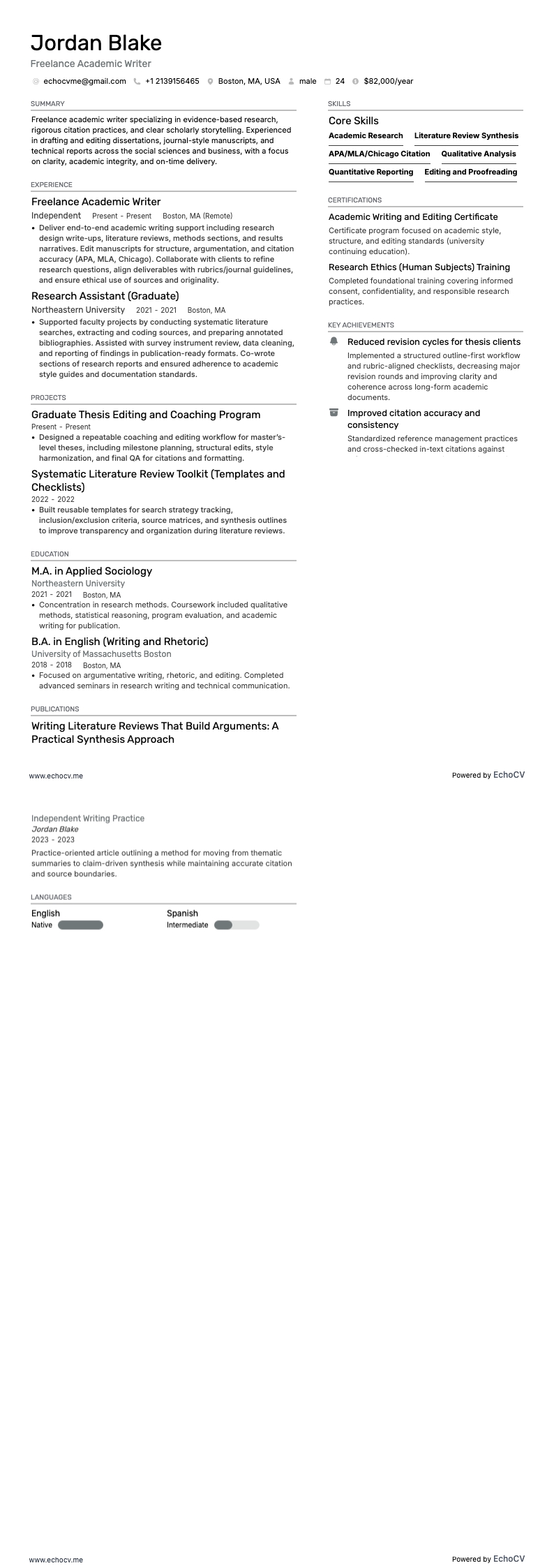
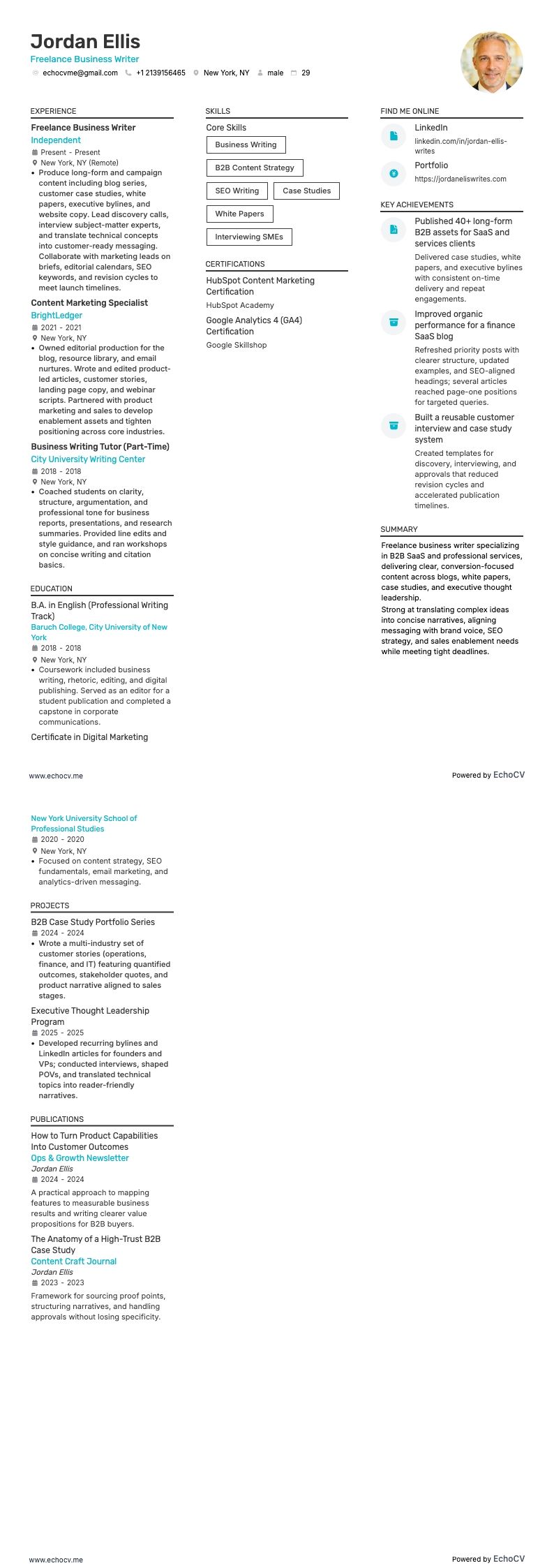
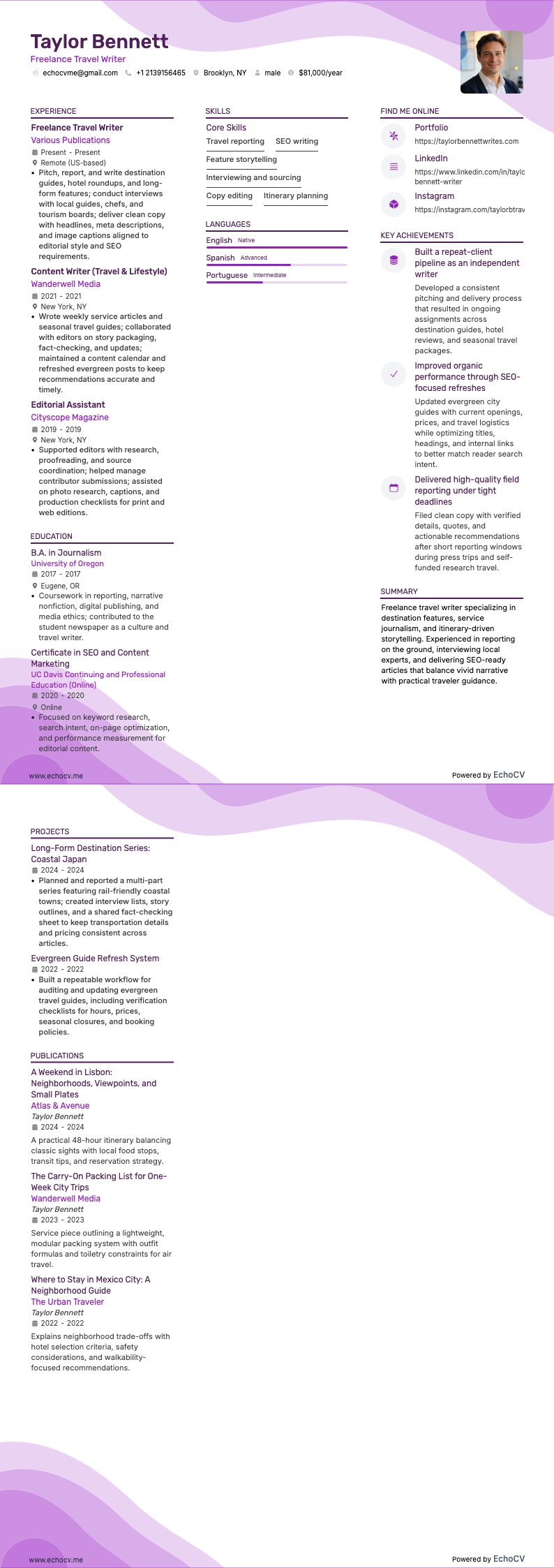
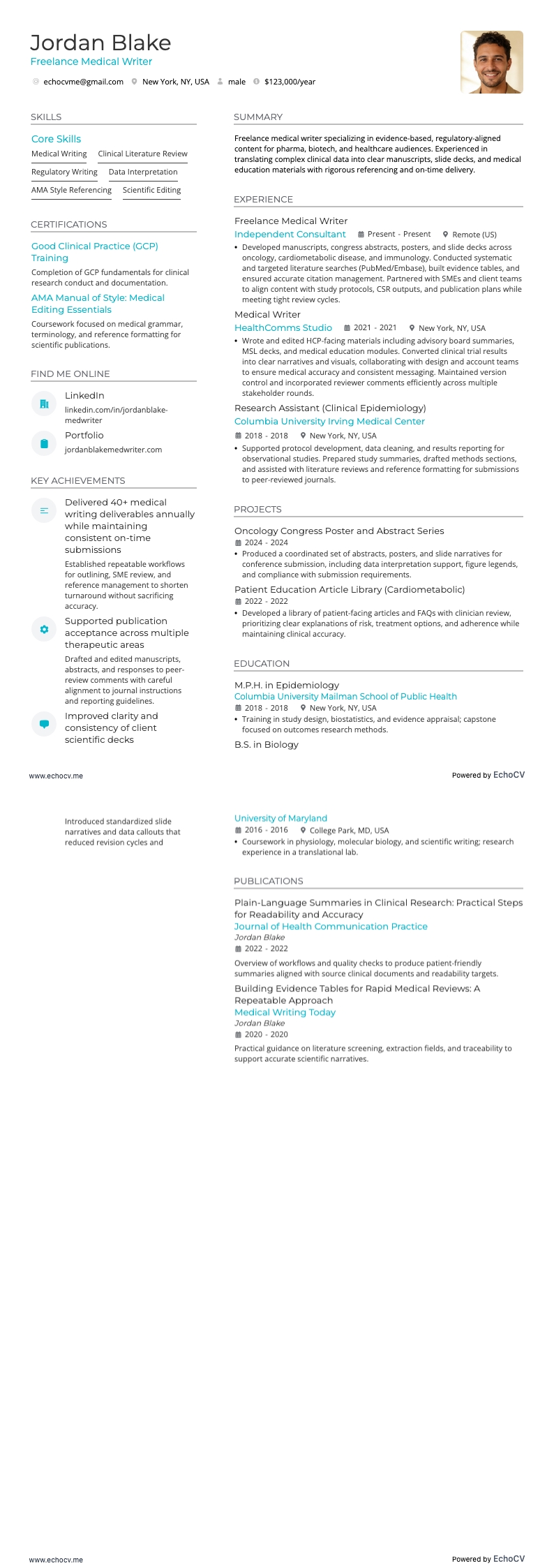
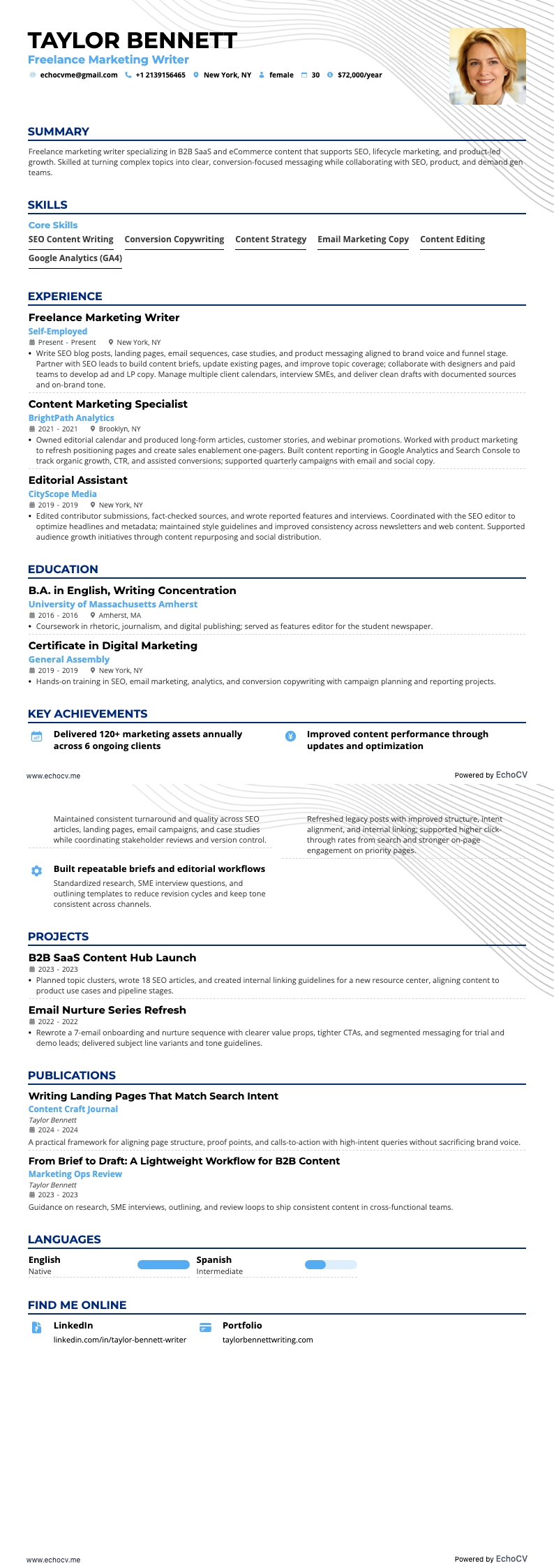
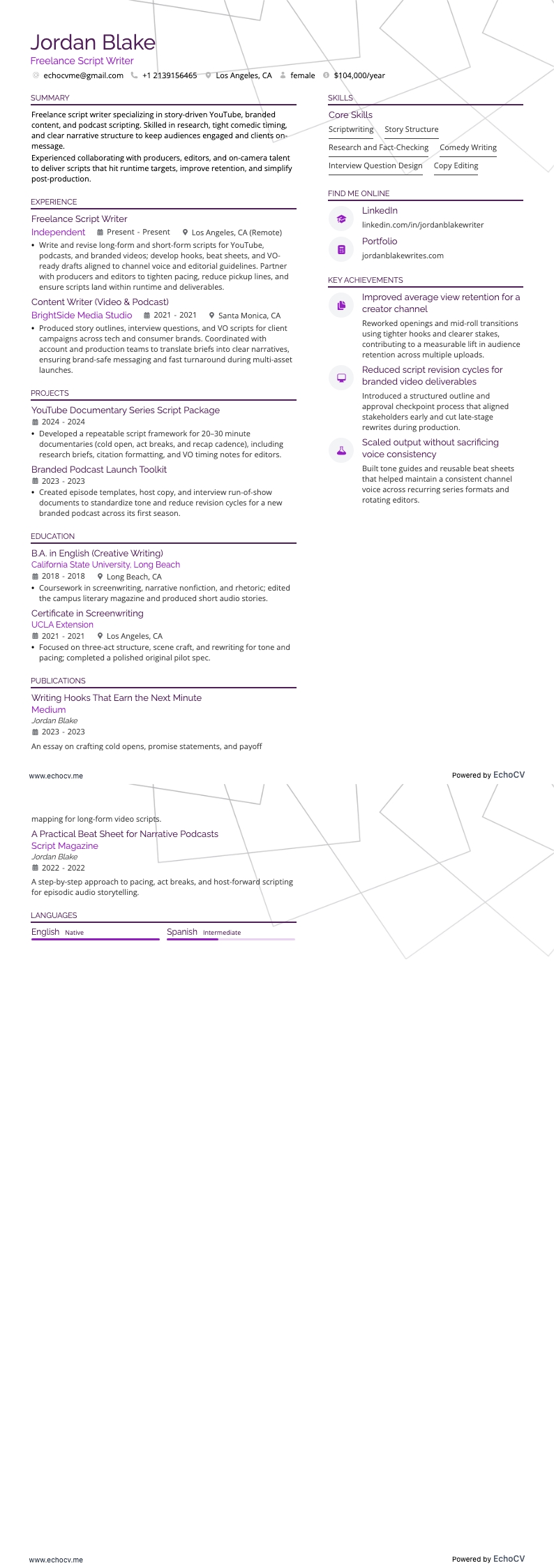
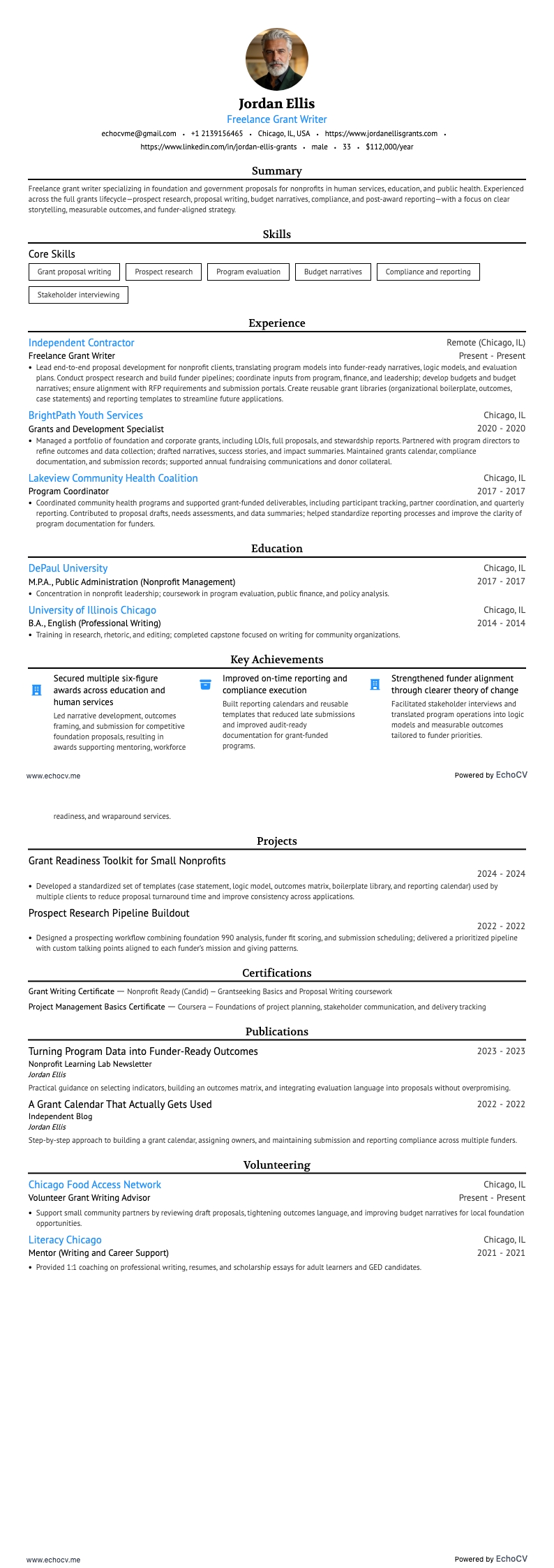
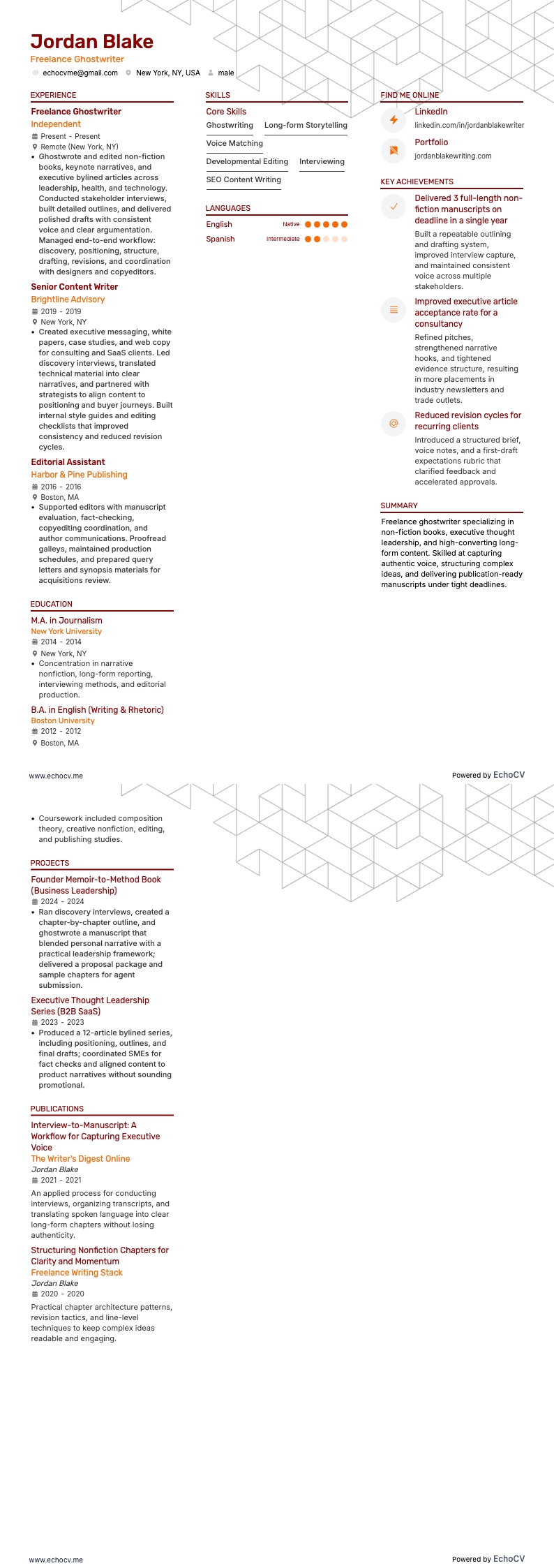
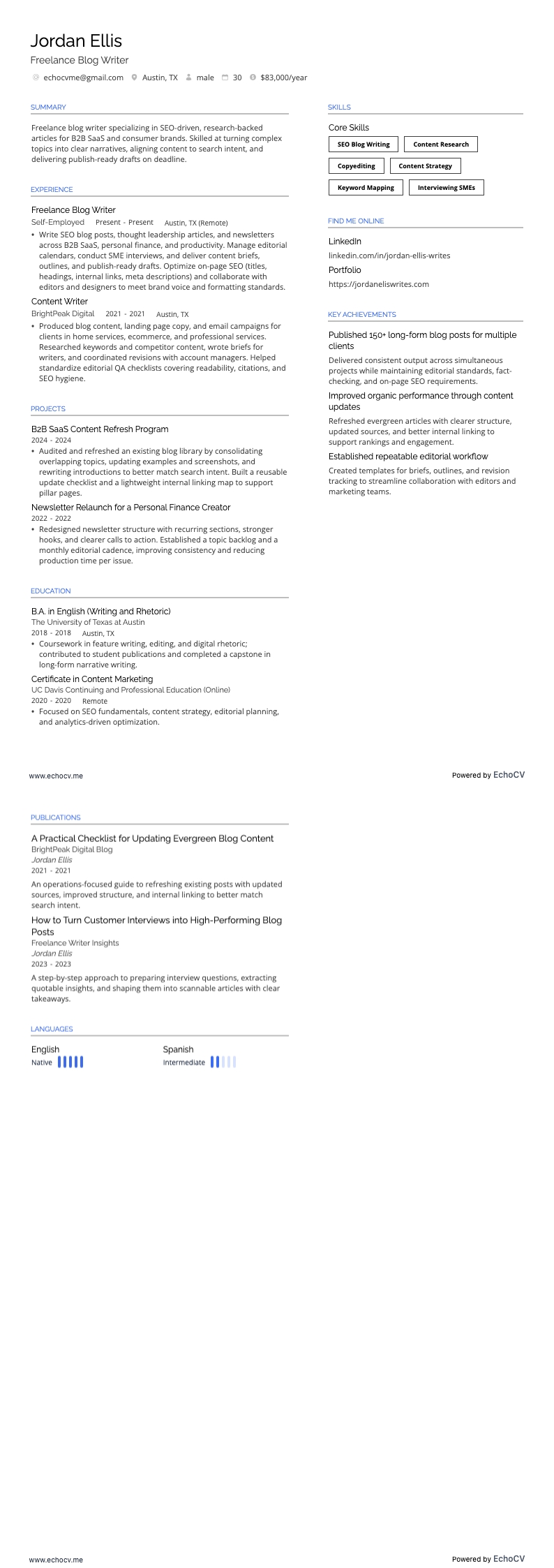
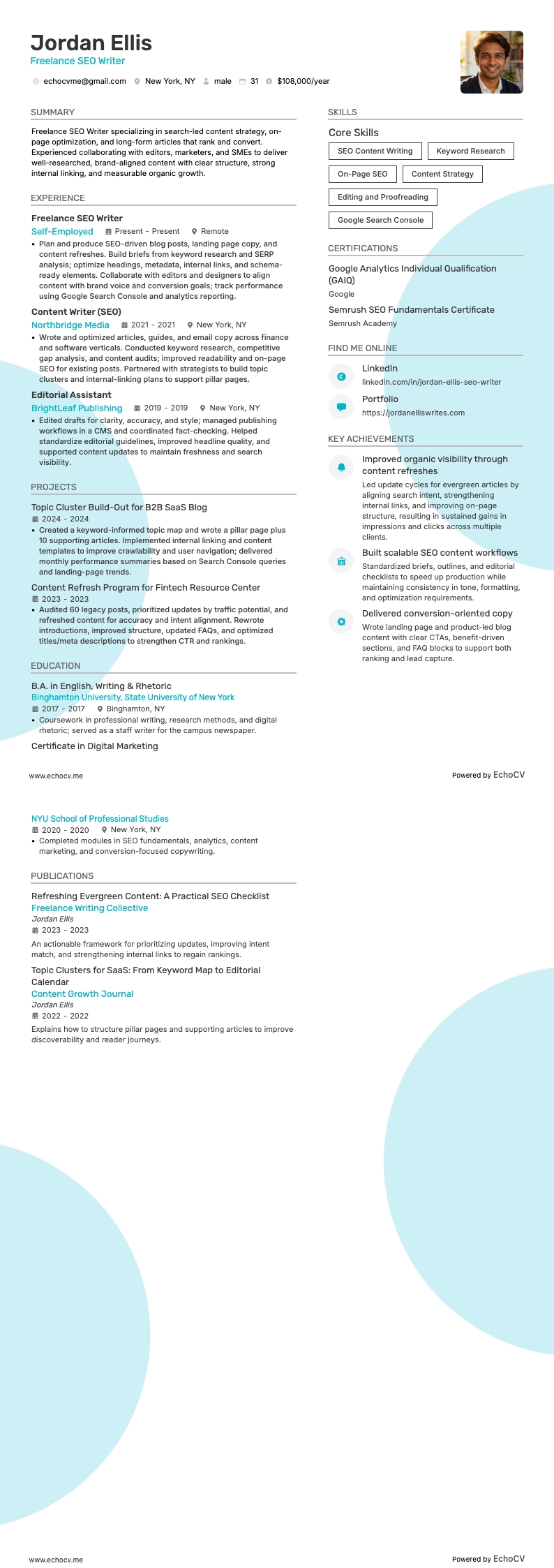
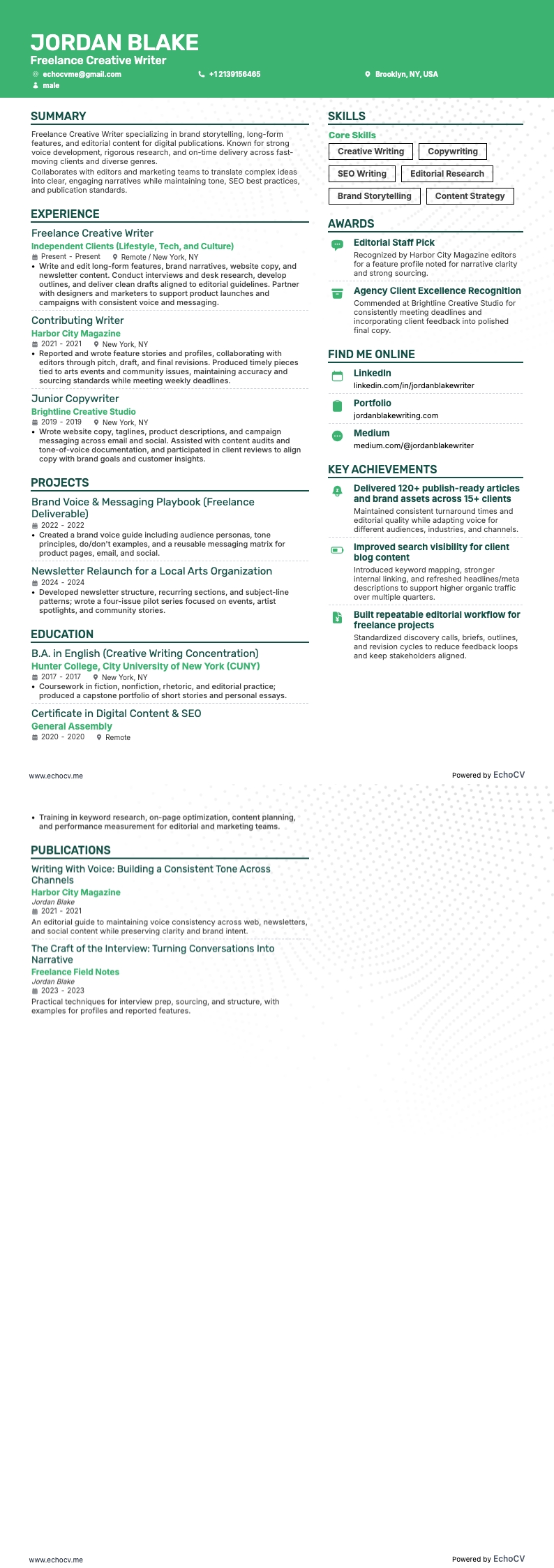
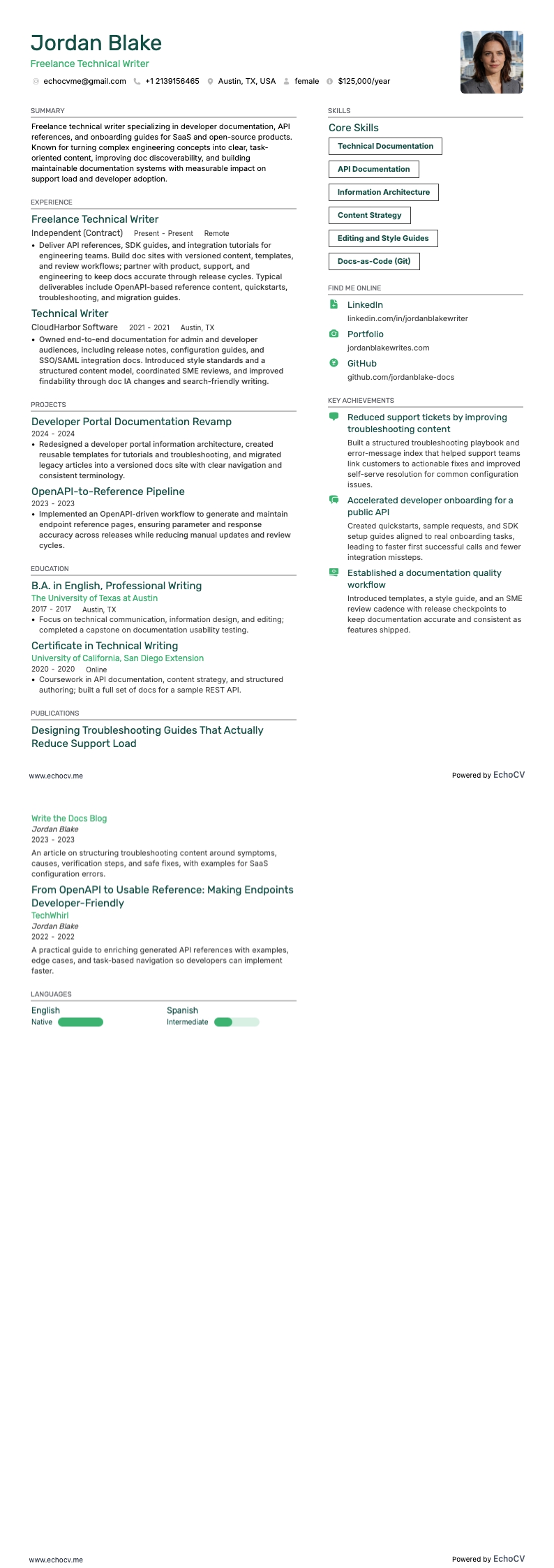
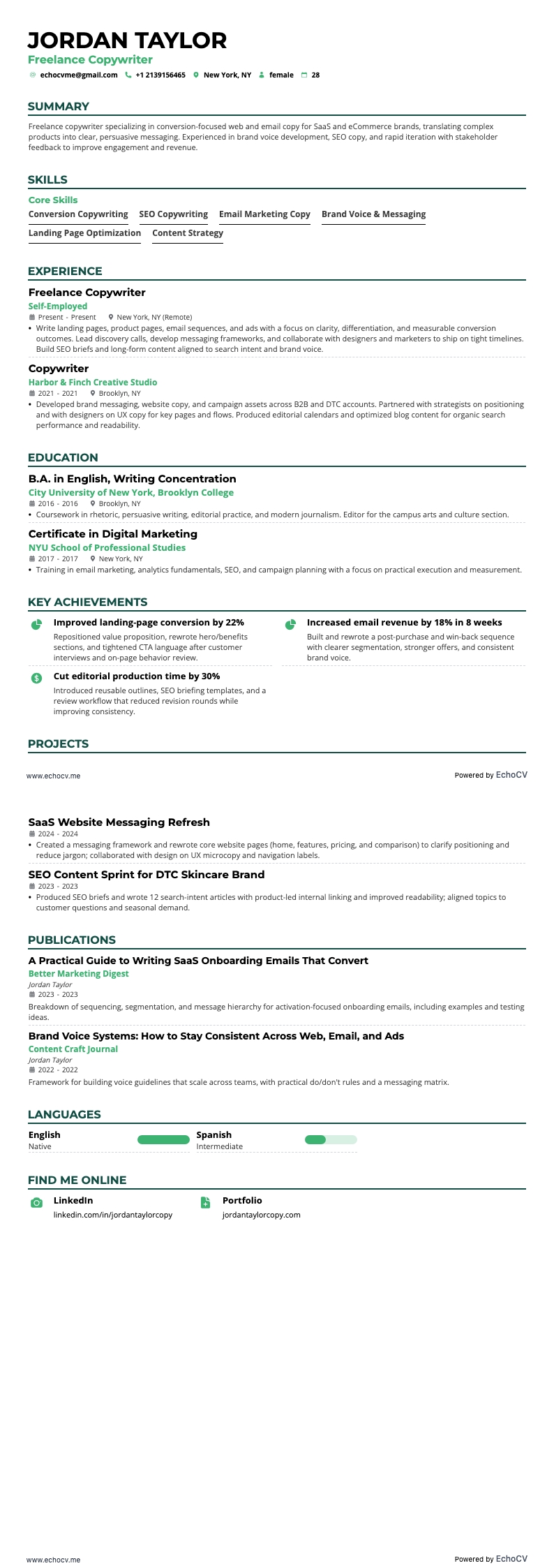
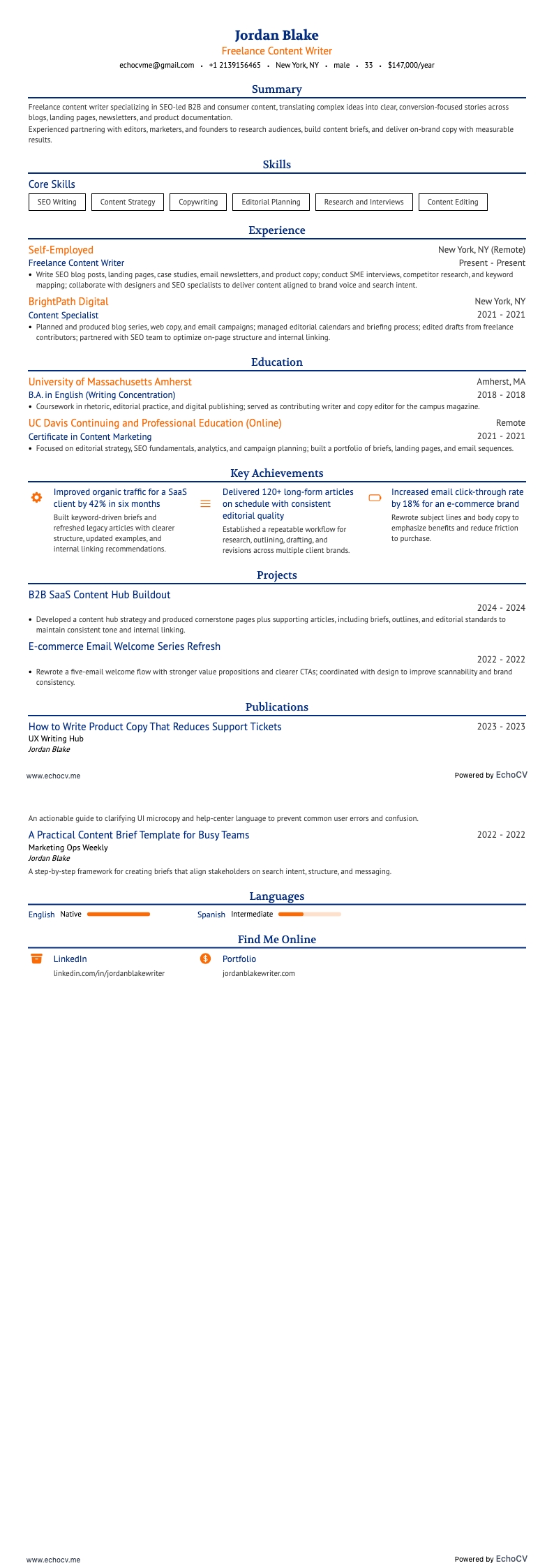
Your header should also include your name, location, email address, and a link to your personal website or portfolio. Look at the example below.
Different regions expect different formats – Canadian resumes, for example, may look unique.