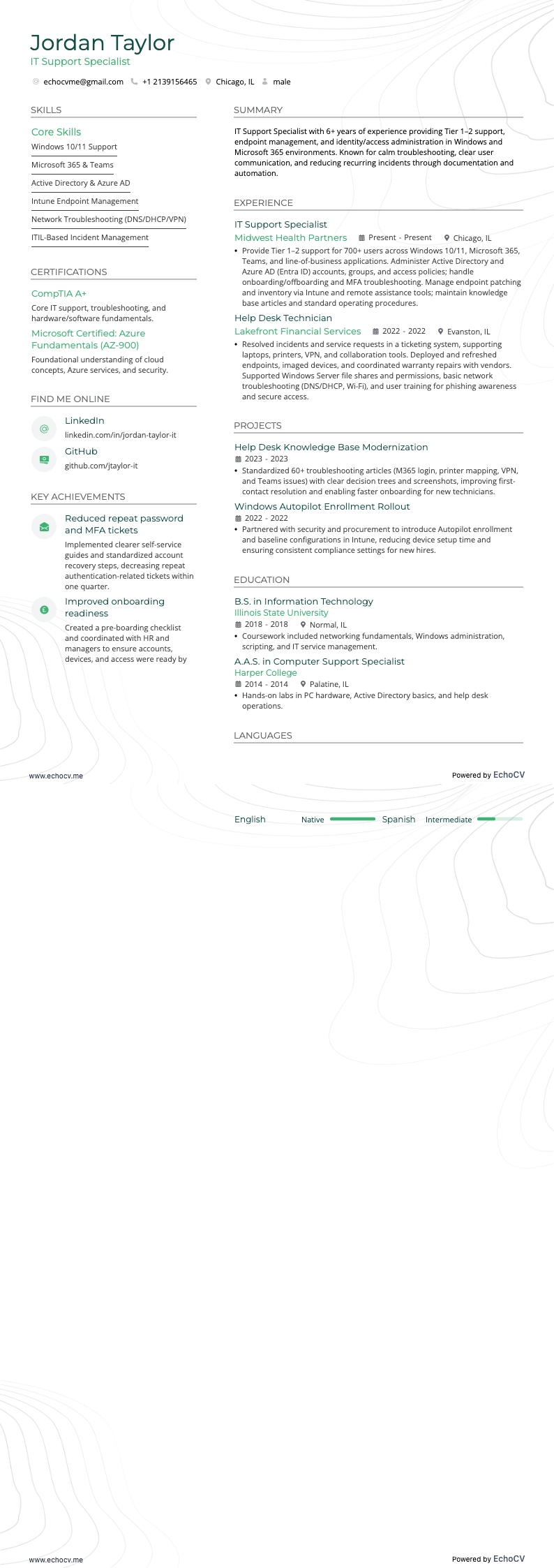
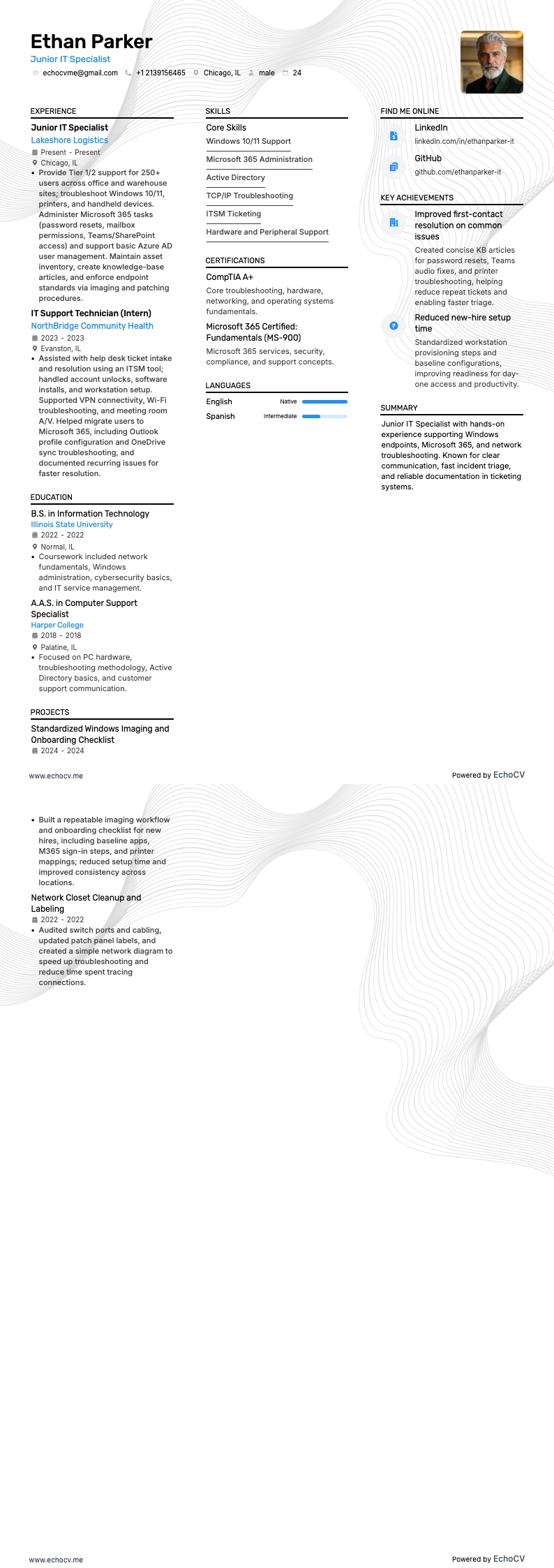
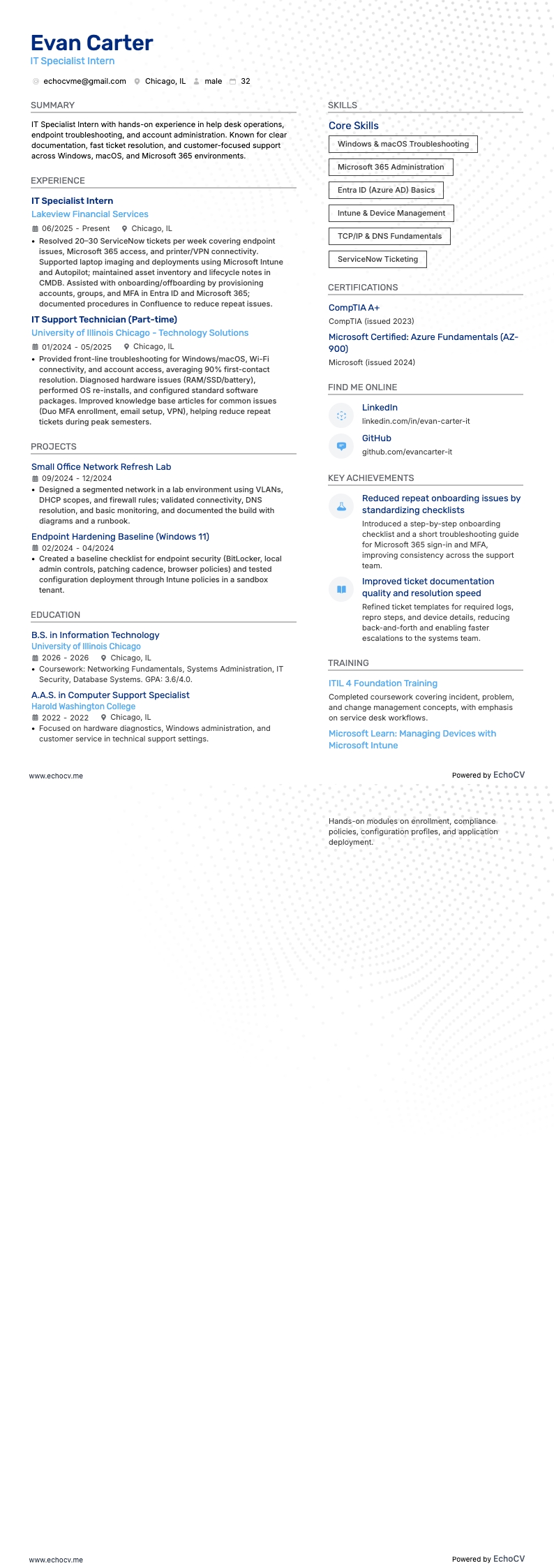
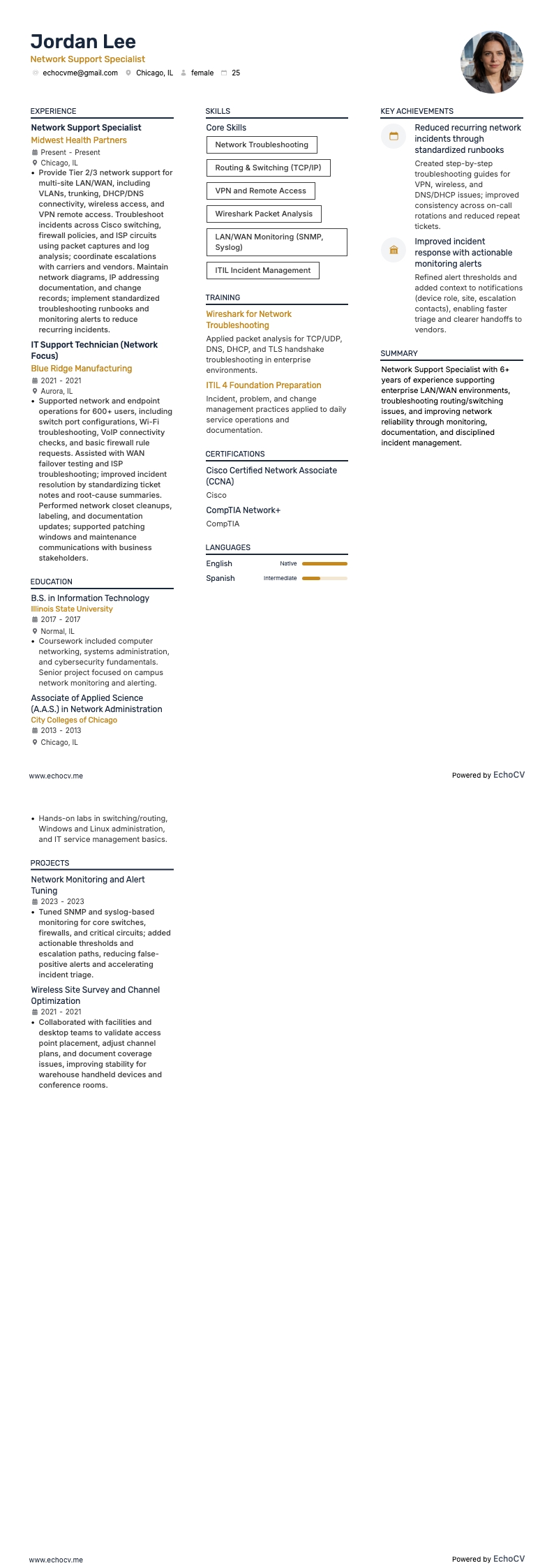
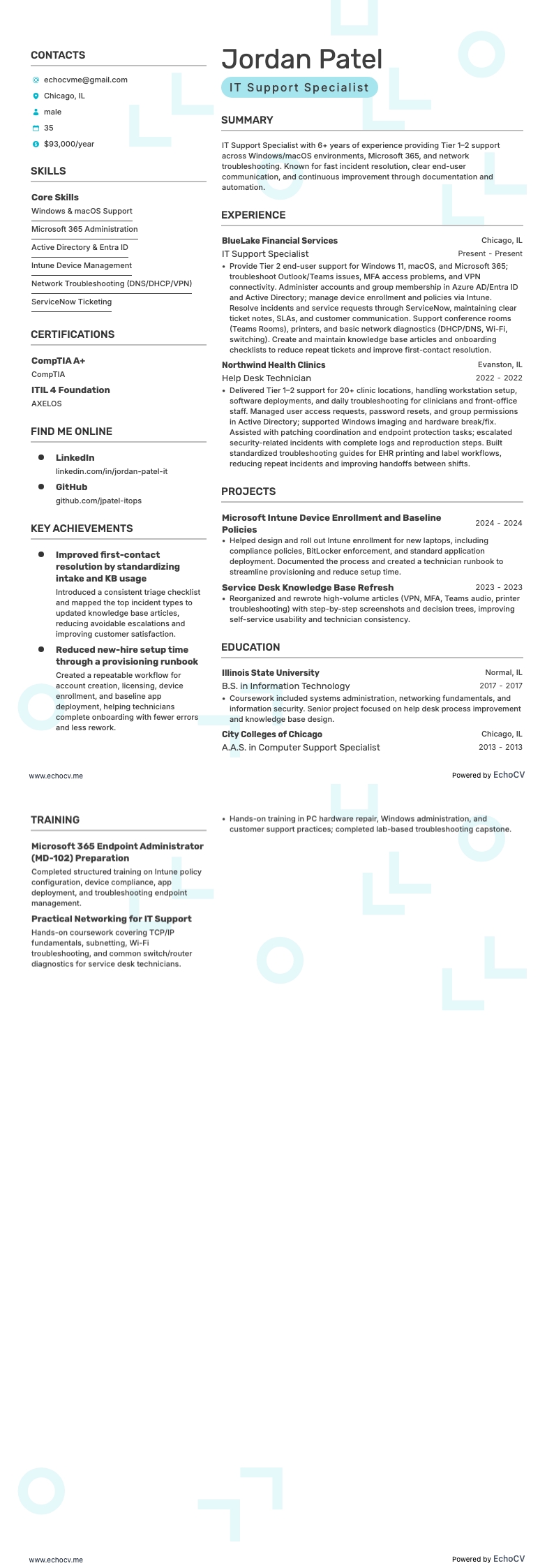
Once you’ve organized your resume with the right structure and supporting details, the next step is to write your IT specialist resume experience in a way that fits that format and shows impact.
How to write your IT specialist resume experience
Your experience section should highlight the IT projects, systems, and solutions you've shipped or delivered—using role-relevant tools, platforms, and methodologies that demonstrate your technical depth. Hiring managers prioritize demonstrated impact over descriptive task lists, so focus on measurable outcomes like uptime improvements, resolution times, successful migrations, or security enhancements rather than routine responsibilities.
Each entry should include:
- Job title
- Company and location (or remote)
- Dates of employment (month and year)
Three to five concise bullet points showing what you owned, how you executed, and what outcomes you delivered:
- Ownership scope: the infrastructure, networks, systems, applications, or end-user environments you were directly accountable for managing, maintaining, or improving as an IT specialist.
- Execution approach: the hardware, software, platforms, protocols, or troubleshooting frameworks you applied to diagnose issues, deploy solutions, and maintain IT operations.
- Value improved: the changes you drove in system uptime, network performance, security posture, response times, data integrity, or operational efficiency within your IT environment.
- Collaboration context: how you partnered with departments, vendors, managed service providers, or leadership to align IT solutions with organizational needs and resolve cross-functional technical challenges.
- Impact delivered: the business outcomes your IT work produced—expressed through scale of users supported, infrastructure reliability gains, cost reductions, risk mitigation, or successful project completions rather than day-to-day activity descriptions.