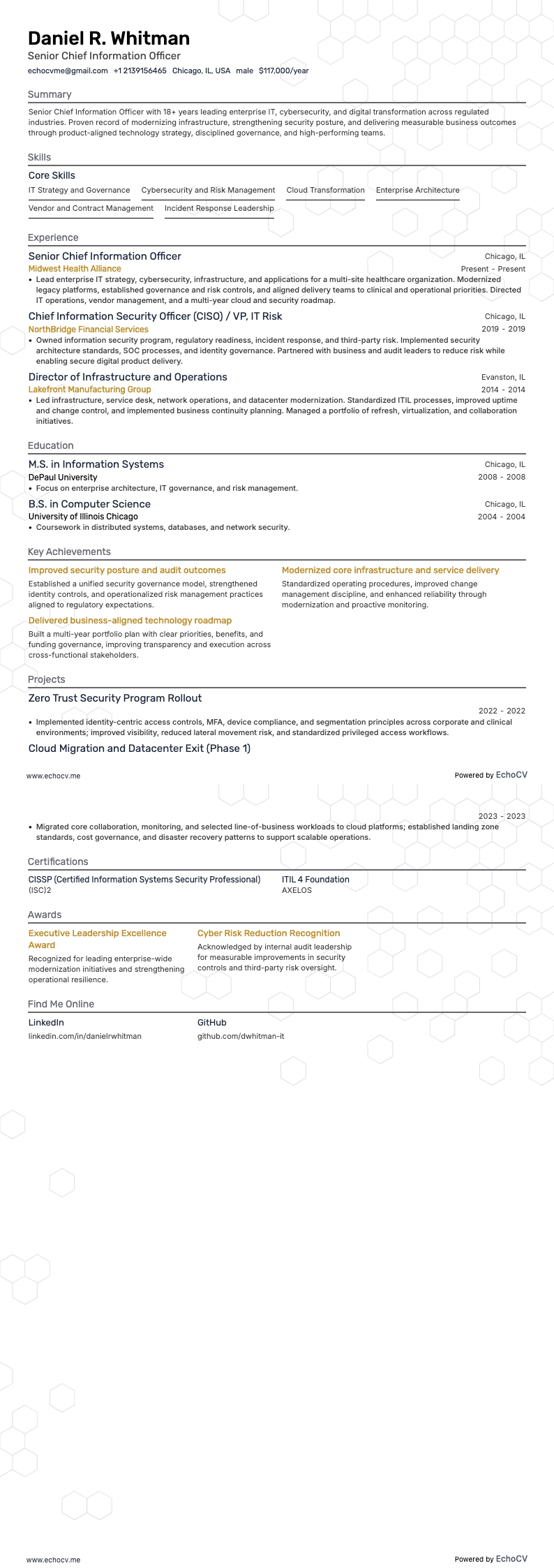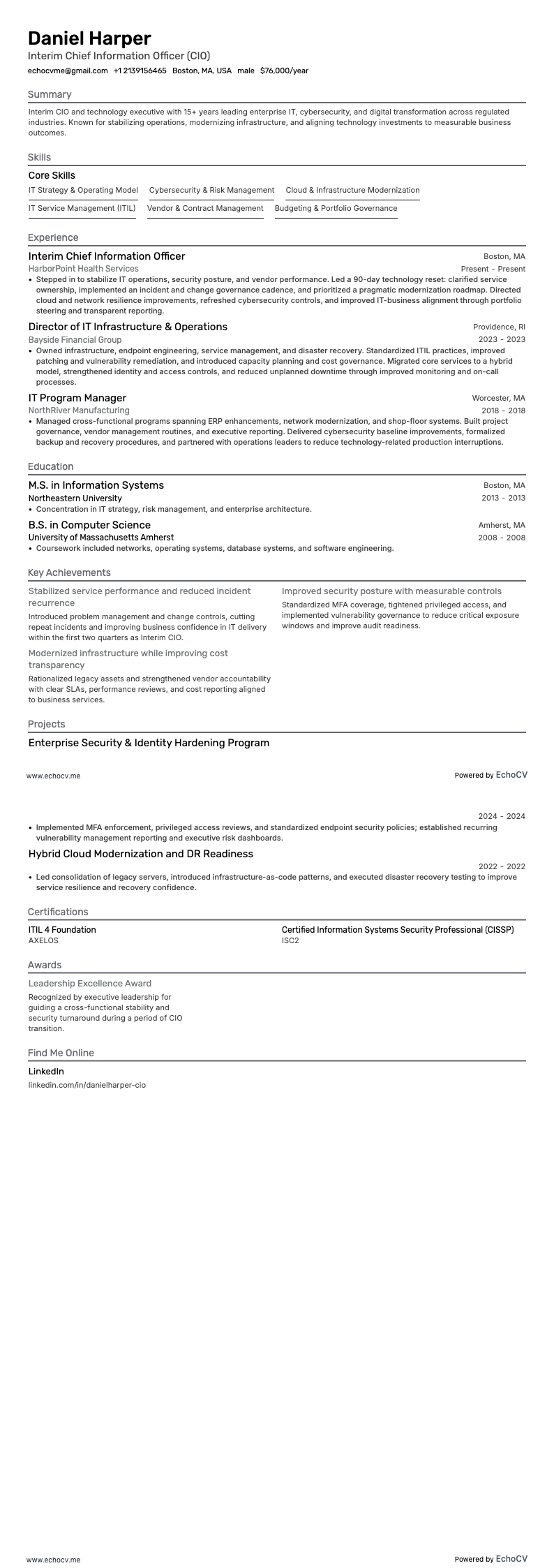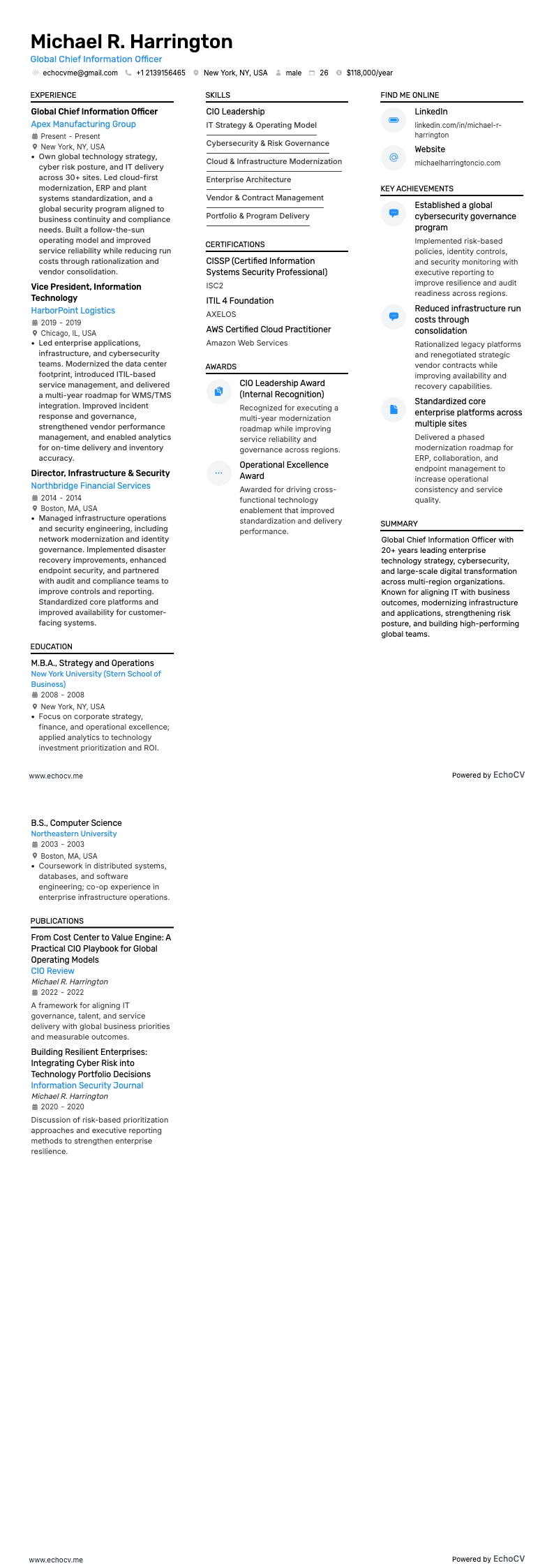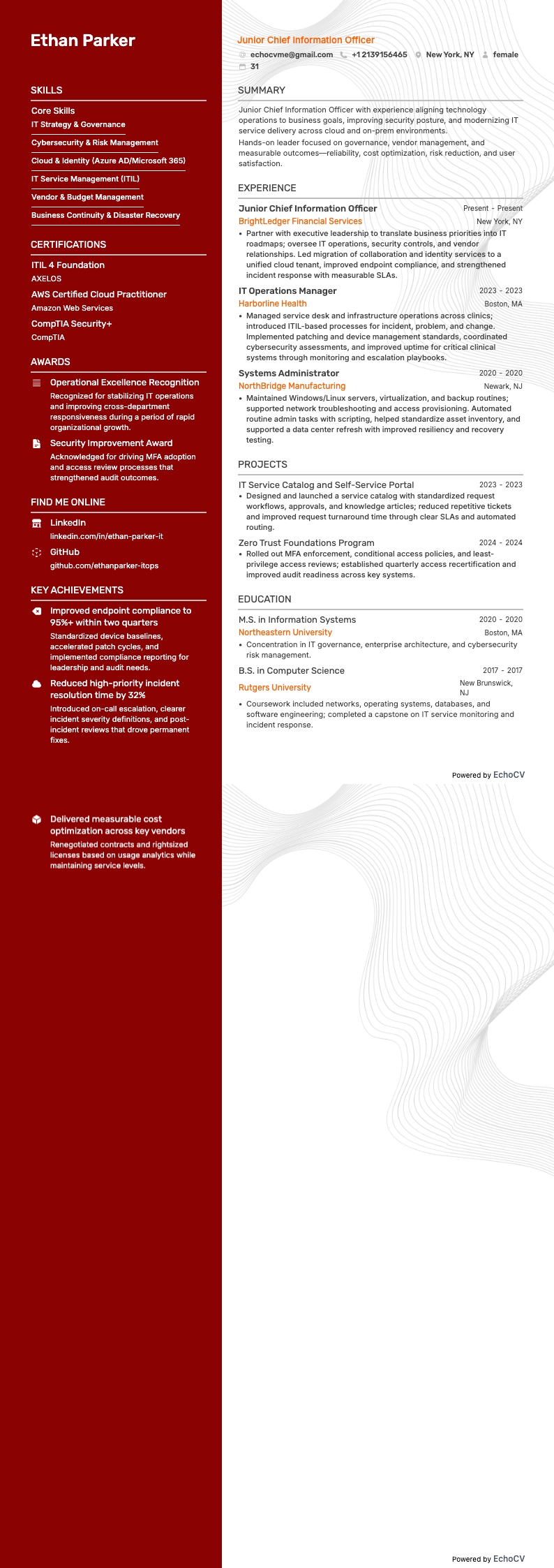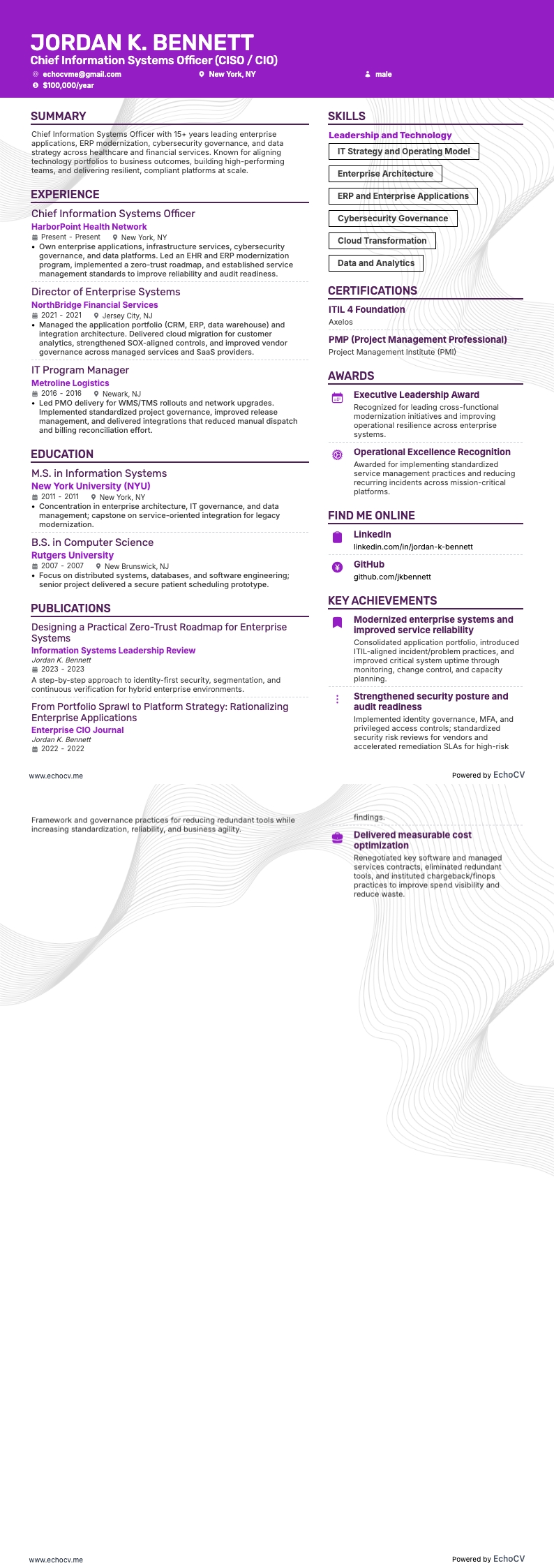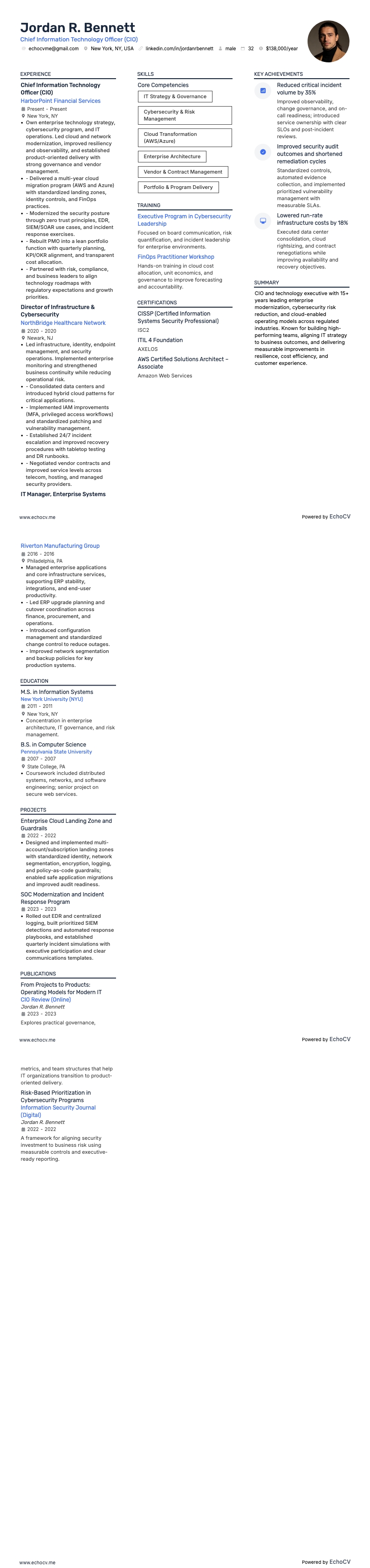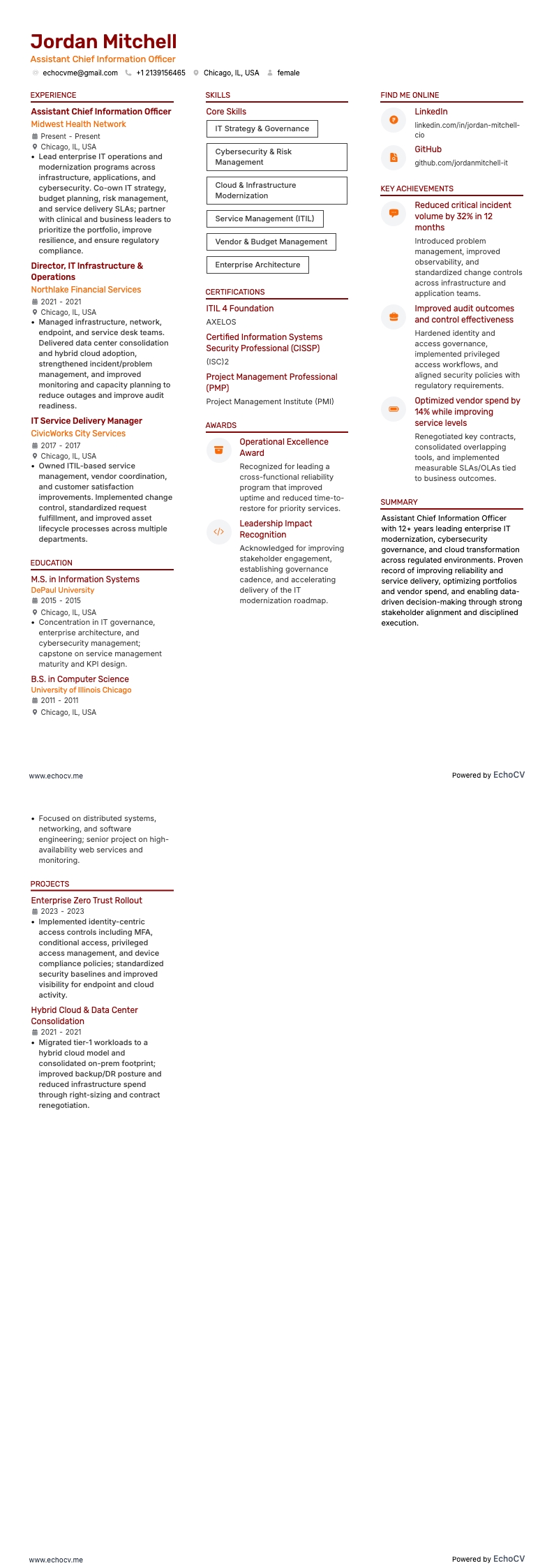
What works in this section?
Scattered throughout this resume experience section is real data on which a hiring manager can see and understand the role that the applicant has had. We see the exact number of people that they led during their tenure, and we also learn that this one-year roadmap led to an increase of 20% in operational efficiency. These real percentages lend credence to the author’s competency.
In fact, during an interview, you may be asked to give more information on facts and figures that you mentioned in your resume. Laying down this foundation of competency can give you a significant edge against other candidates.
How to quantify the impact on your resume
When the CEO comes to you and asks for actual information on the project you’re working on, you’ll likely have a presentation ready that highlights time frames, dollar figures, and expected revenue. All of this quantifiable data directly shows how the project you’re working on will work towards the goals of the company to its success. The same goes for the claims that you make on your resume about your experience.
Having quantifiable data on your resume can help to bolster all the claims that you make. It’s allowing a potential hiring manager to do their research and check up on your success.
It is important to include the context behind the claims that you make. Don’t just include data figures and percentages with nothing explaining them. Instead, provide the background details on how you achieved success. This not only quantifies your achievements but also helps potential employers understand the impact of your contributions to the organization. Ensure that the percentages align with the priorities and expectations of the specific CIO role you are applying for.
Percentages
Whether it’s an increase in efficiency or how you streamlined the workload of your team, including percentage points on your resume can help to lend credibility. Some percentages you may wish to highlight on your resume include:
- Operational Efficiency
- Cost Savings
- Cybersecurity Improvement
- Revenue Growth or Cost Avoidance
- Employee Satisfaction
- Project Success
- System Uptime or Downtime Reduction:
- Technology Adoption
Dollar figures
A dollar figure amount is a substantial data point to include on your resume because it shows how much revenue was generated through the work that you did. If you had a fairly successful product launch that generated significant revenue for your previous employer, include the precise dollar amounts created by sales. Some dollar amounts you should highlight include:
- Cost Savings
- Revenue Generation
- Return on Investment (ROI)
- Budget Management
- Contract Negotiations
- Project Budget Adherence
- Employee Productivity
- Risk Mitigation
Other Data Figures
Besides percentages and dollar amounts, a CIO resume can benefit from including various data figures that highlight your achievements and showcase your impact on the organization. Consider incorporating the following data:
- Project Metrics
- Technology Metrics
- Security Metrics
- Operational Metrics
- Strategic Planning Metrics
- Team Metrics
- User Engagement Metrics
- Customer Metrics
- Regulatory Compliance Metrics
- Technology Adoption Metrics
Example of a good quality impact section
- Include IT project budget figures: Revealing the scale of budgets managed illustrates financial acumen and trustworthiness with significant funds.
- Detail cost savings from IT initiatives: This shows the ability to drive efficiency and highlights a focus on cost optimization.
- Highlight percentage uptime or system availability: Showcasing high percentages shows a commitment to business continuity and minimal operational disruptions.
- Quantify the scale of IT infrastructure managed: Providing numbers on servers, databases, or user endpoints managed offers insight into the complexity and scale of operations overseen.
- Specify the number of direct and indirect reports: Displaying team size gives a sense of leadership scale and people management capabilities.
- Mention the percentage reduction in security incidents: Demonstrating improvements in security showcases a proactive stance on risk management and data protection.
- List the number of successful IT projects delivered on time and on budget: This evidences project management skills and the ability to meet business objectives.
- Quantify improvements in system performance or user satisfaction scores: Presenting growth or prominent figures in these areas underlines a commitment to end-user satisfaction and system effectiveness.
How to list your hard skills and soft skills on your resume
There are two types of skills to list in your resume skills section. The first one is hard skills, which are also commonly referred to as technical skills. These are skills gained in a particular workplace or educational environment that have a narrow focus on the role that you have within a particular field or workplace. As you’ve worked your way up to CIO, you’ve likely gained a lot of hard skills with experience in a wide range of fields like cloud computing, cybersecurity, and software development.
Throughout your resume experience section, you’re likely going to be pulling in hard skills that you have developed, quantifying the information you provide with real percentages and data figures. These hard skills may form the backbone of your resume, lending credence to your ability to manage teams of highly skilled technical employees. Also, on the skills section of your resume, you’ll likely highlight the hard skills at the top of the list.
As a CIO, you bring a lot of hard skills to the table, but you also have soft skills, commonly referred to as “people skills”, and these skills allow you to interact effectively with people. These can involve leadership and communication skills which allow you to work with a wide variety of people.
Your professional summary and cover letter can be great places to highlight your leadership and communication skills.and of sections. In those sections, you can really delve into how you helped raise up the teams you’ve led and lead them towards success.
4-step process for listing skills on your resume
- List all the skills that you possess: Include both the hard and soft skills that you’ve cultivated in your previous experience.
- Separate between hard skills and soft skills.
- Review the job description: Look at the job description and you’ll see specific skills that are required to fulfill the role. These are the skills that your future employers are looking for on your resume.
- Edit the list for the skills that are most applicable to the job: Tailor the list so that it fits with the job that you’re applying for. You may need to get rid of some skills that don’t fit. For example, if the company you’re applying for primarily deals with cybersecurity services for their clients, then you may choose to leave off of your resume your cloud computing skills.