22 CV-exempel för cybersäkerhetsanalytiker
EchoCV
Skriven av EchoCV-teamet
Uppdaterad: 11/4/2025•8 min read
Se alla CV-exempel i den här guiden, eller skapa ditt eget CV-exempel med din personliga prompt
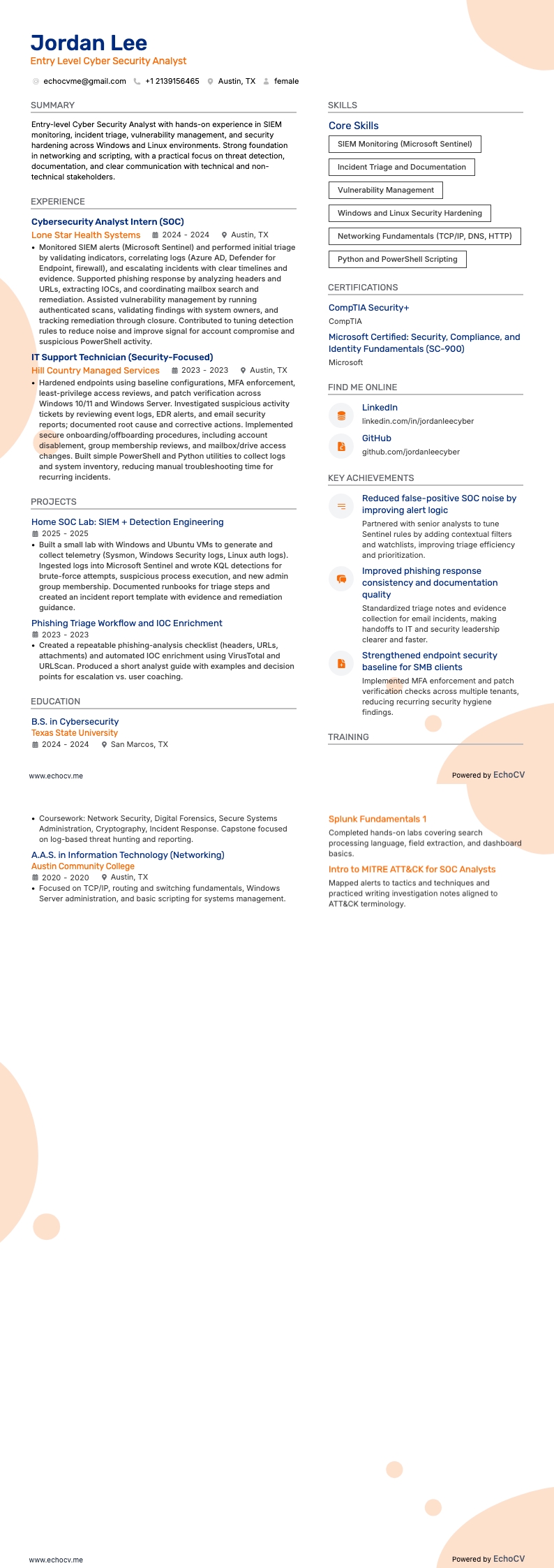
Cybersäkerhetsanalytiker på ingångsnivå
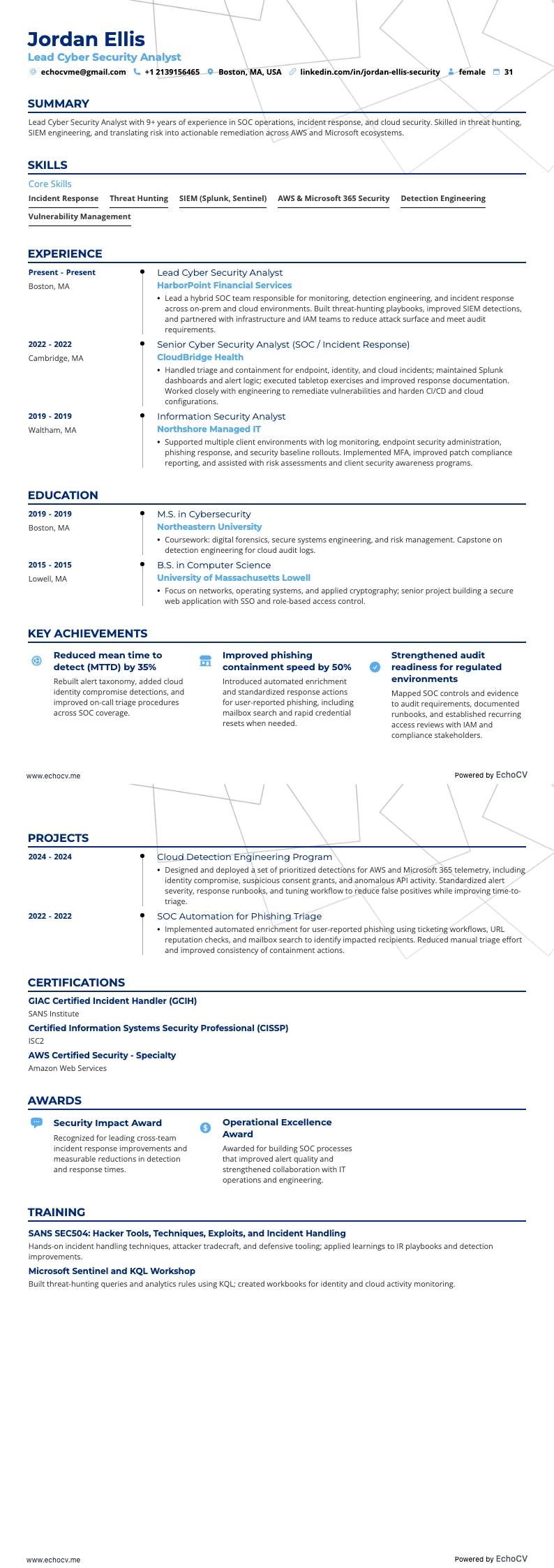
Ledande cybersäkerhetsanalytiker
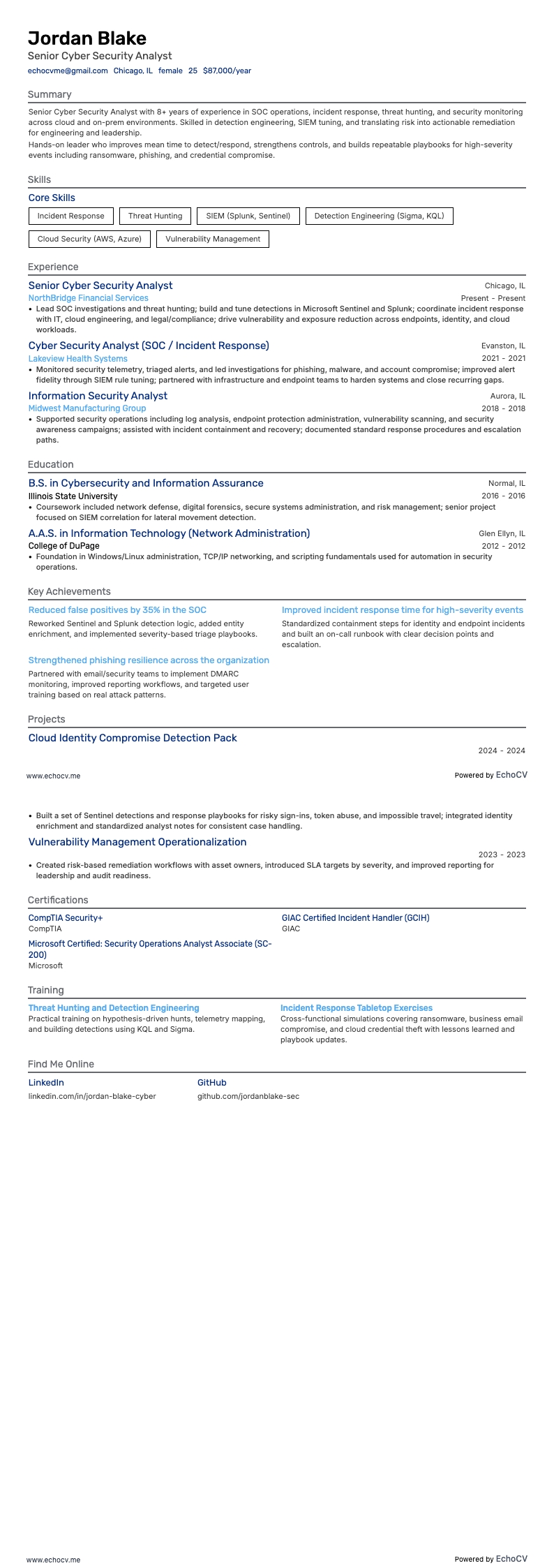
Senior cybersäkerhetsanalytiker
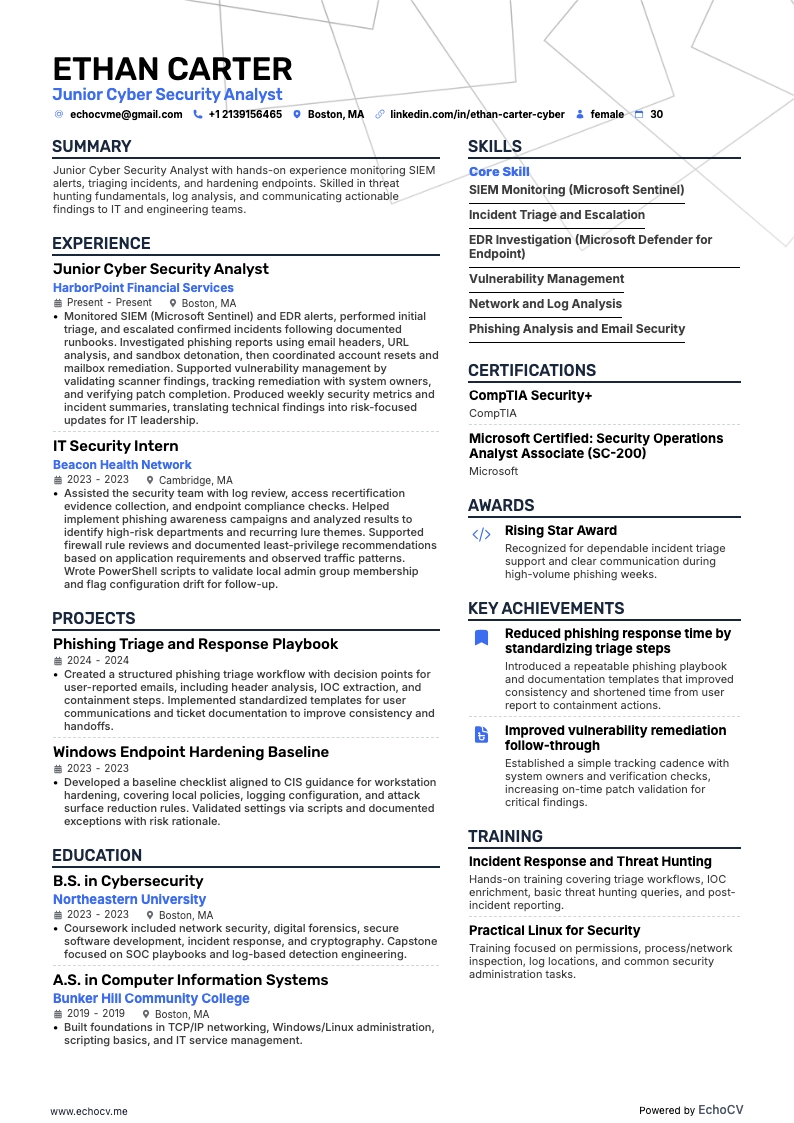
Junior cybersäkerhetsanalytiker
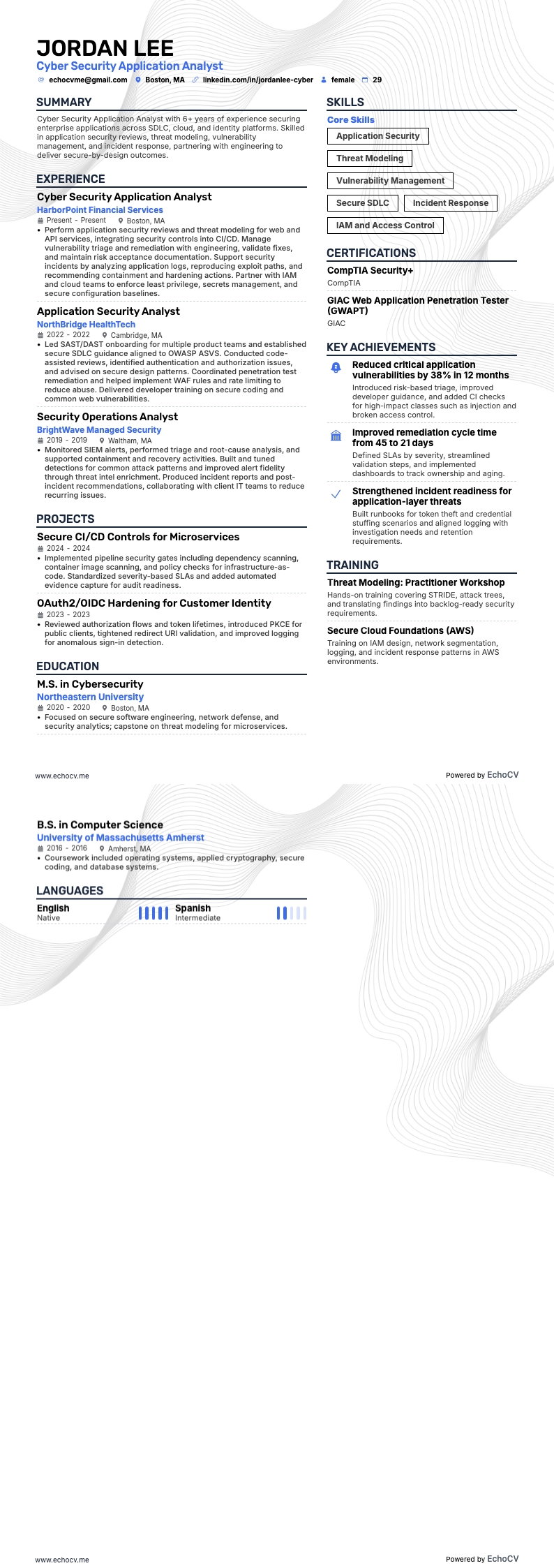
Applikationsanalytiker inom cybersäkerhet
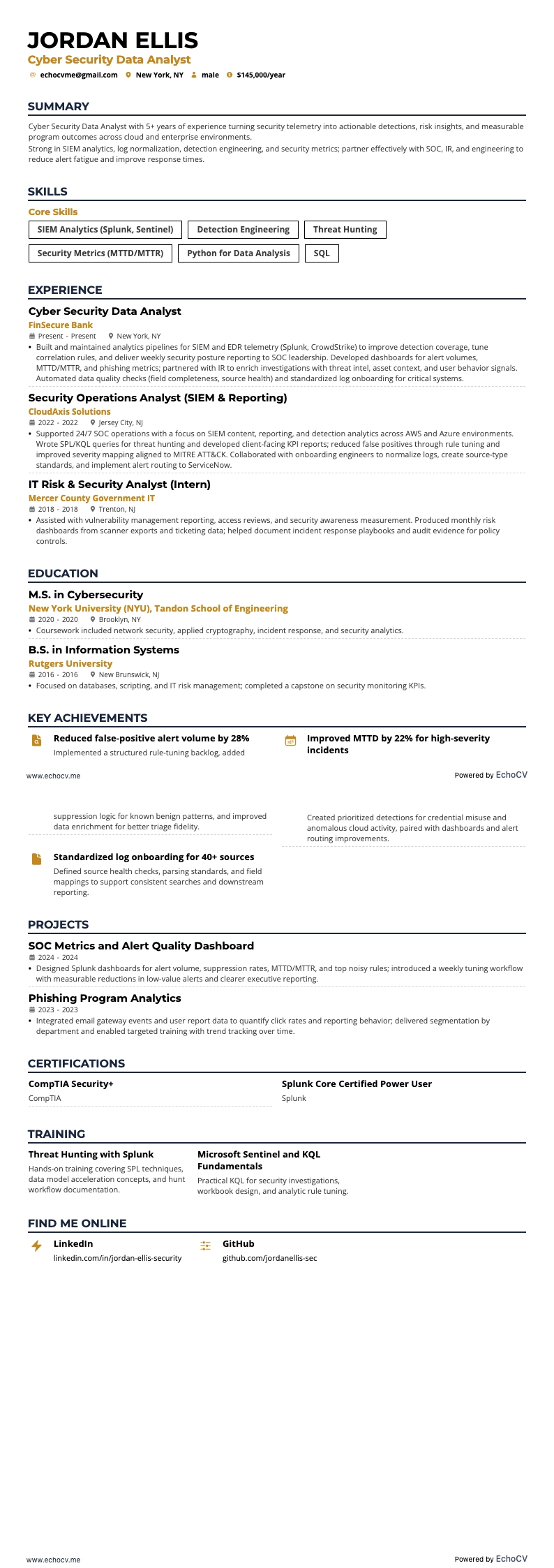
Dataanalytiker inom cybersäkerhet
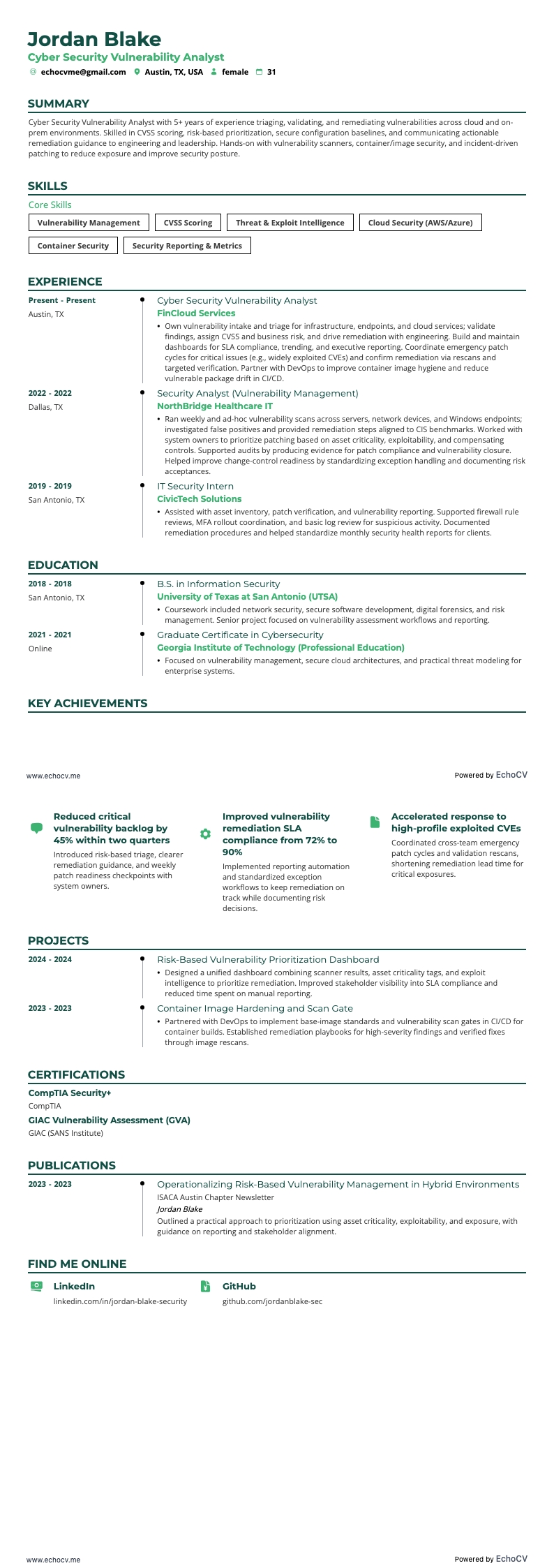
Analytiker för cybersäkerhetssårbarheter
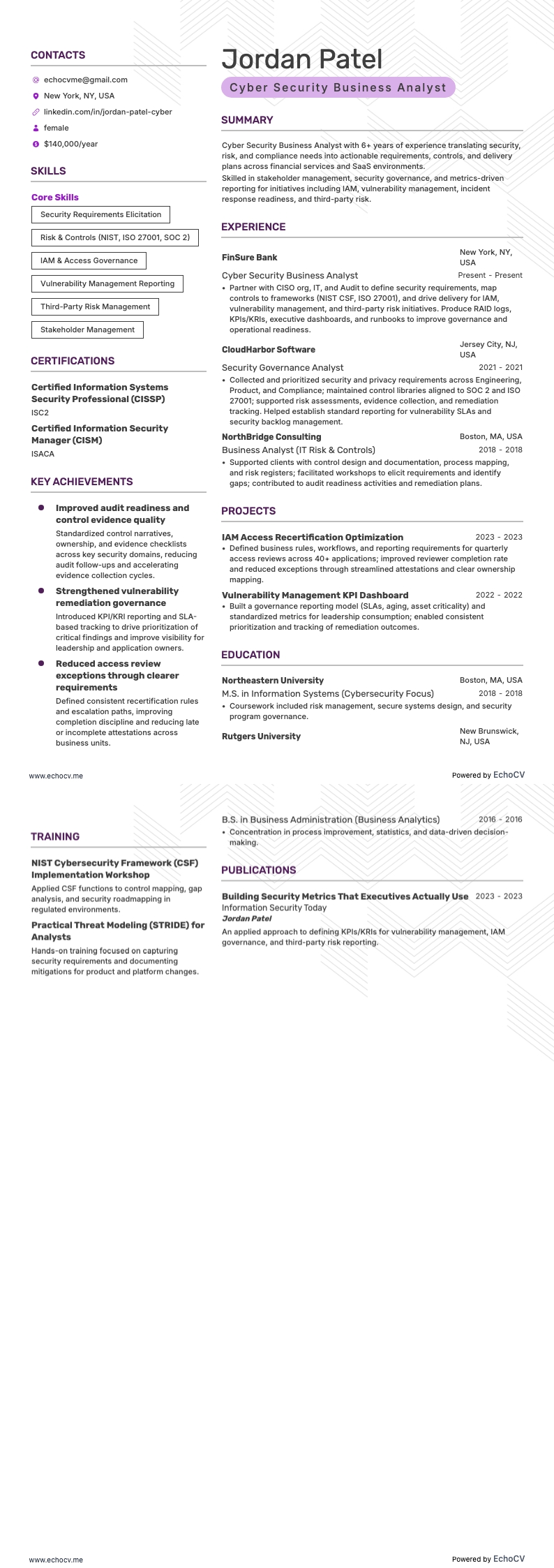
Affärsanalytiker inom cybersäkerhet
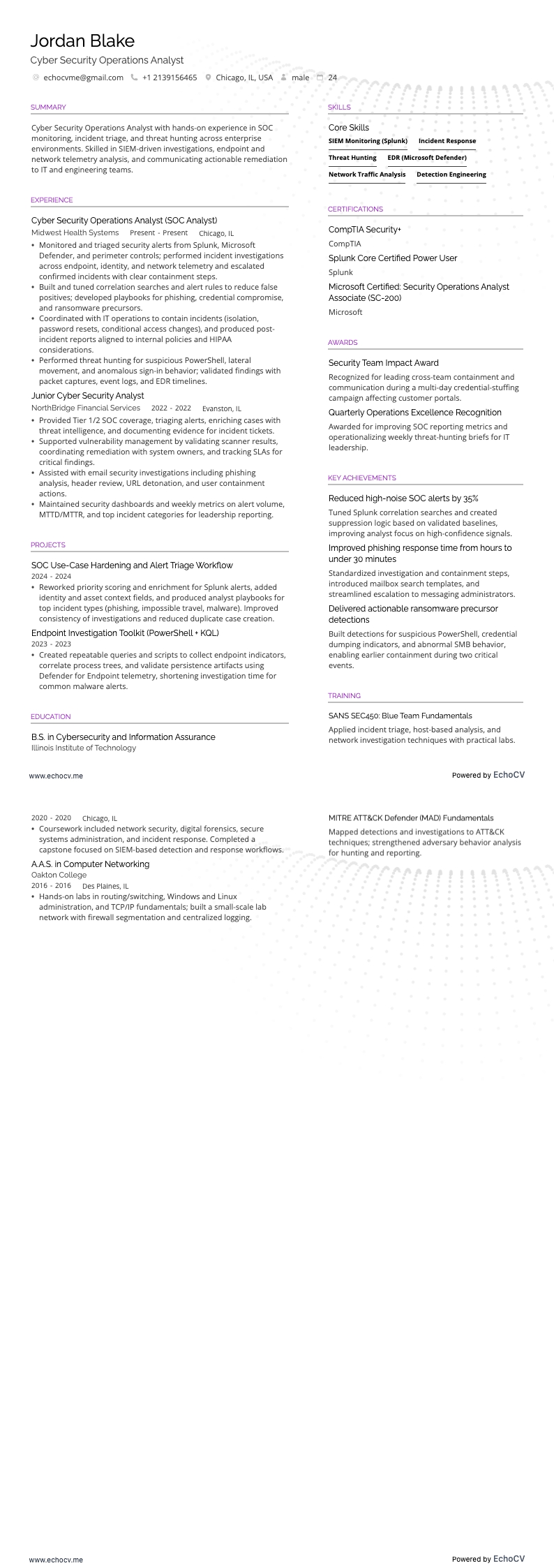
Analytiker inom cybersäkerhetsdrift
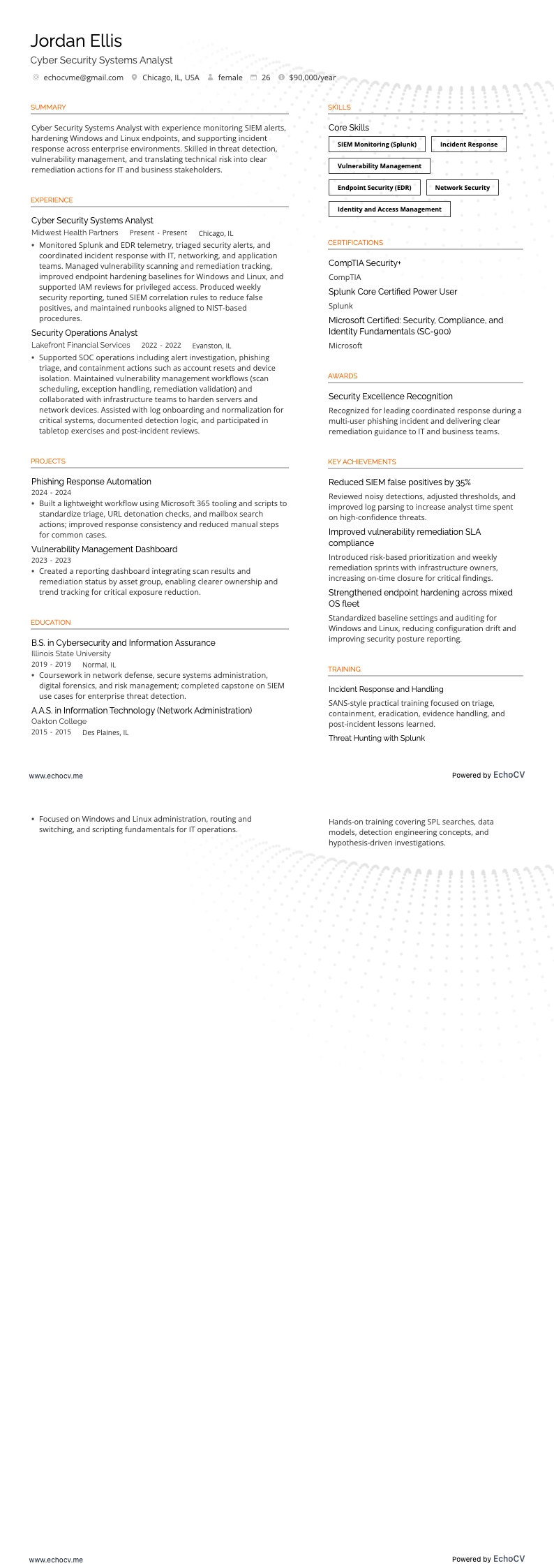
Analytiker inom cybersäkerhetssystem
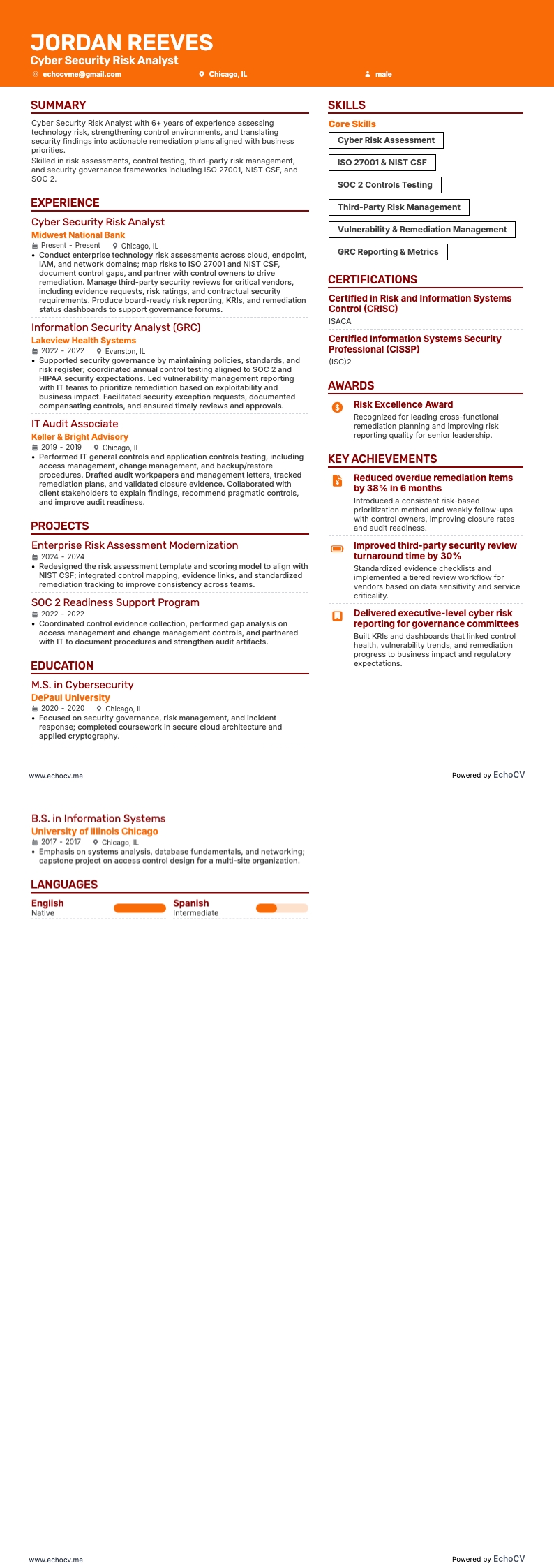
Cybersäkerhetsriskanalytiker
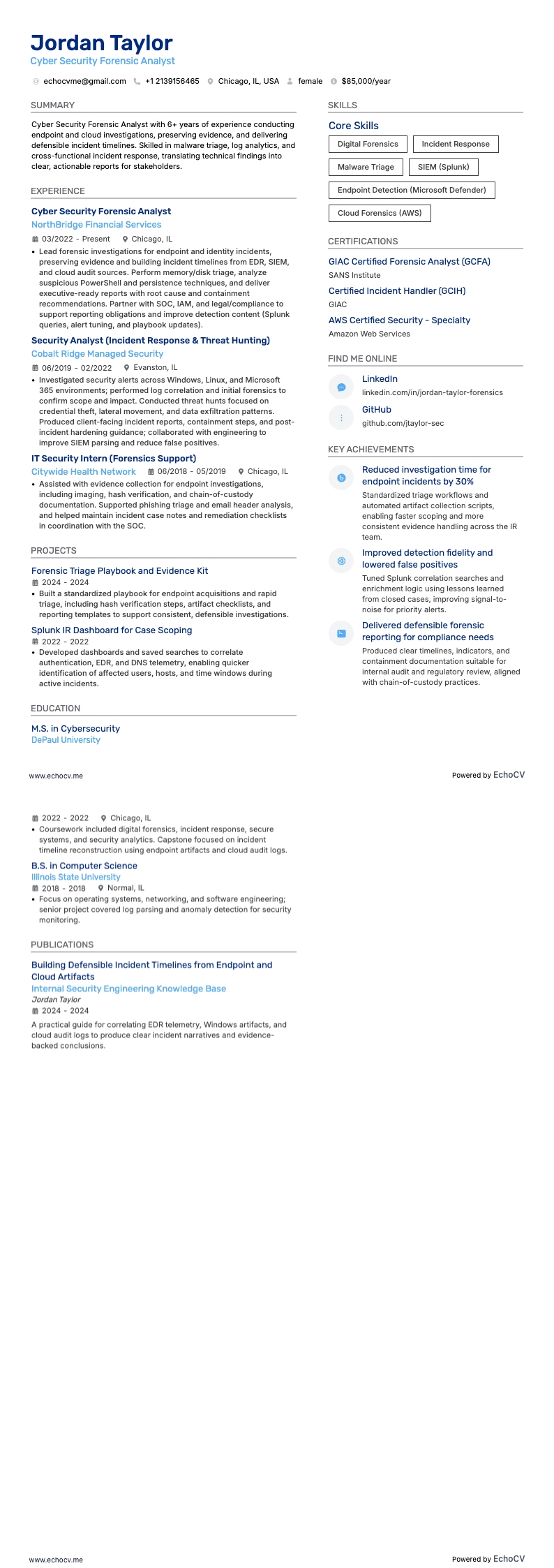
Forensisk cybersäkerhetsanalytiker
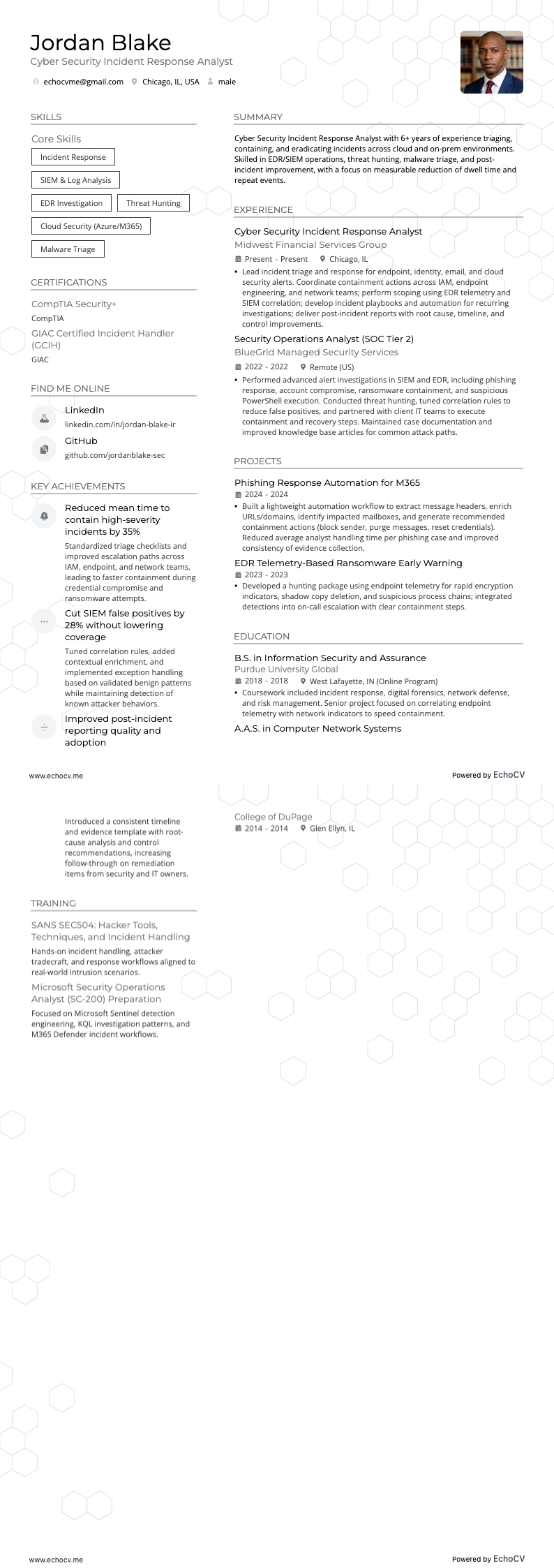
Analytiker för cybersäkerhetsincidenthantering
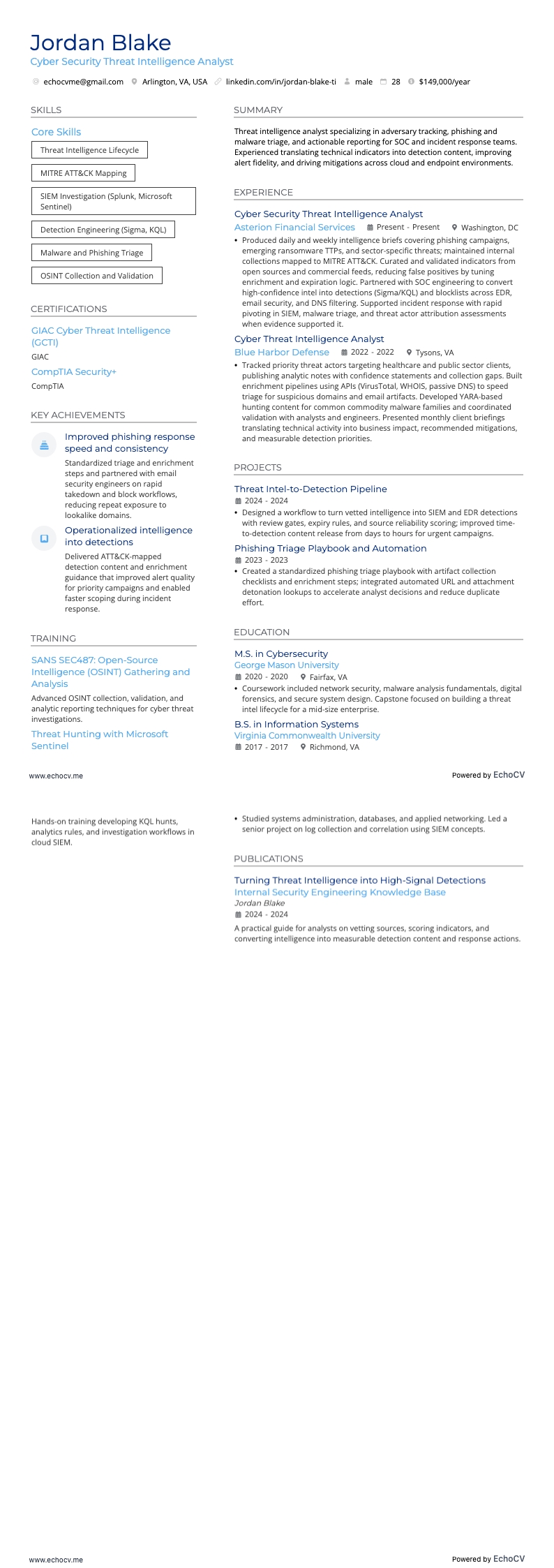
Analytiker inom cyberhotunderrättelser
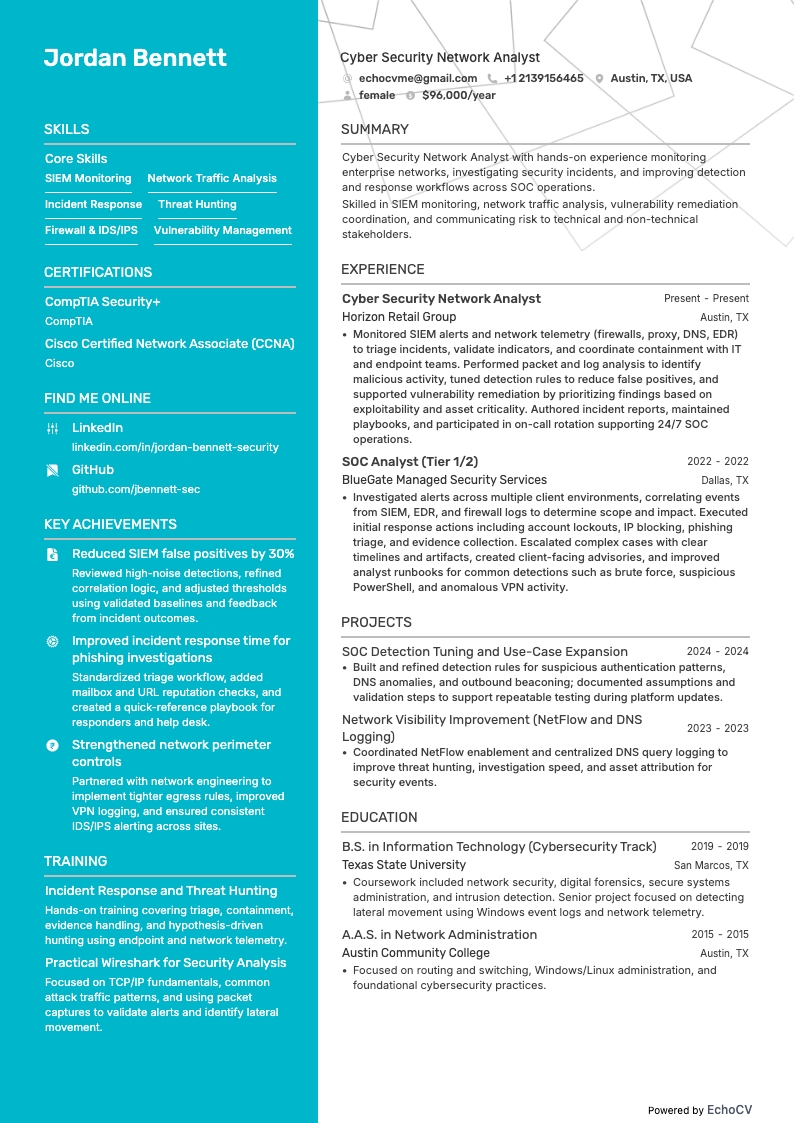
Nätverksanalytiker inom cybersäkerhet
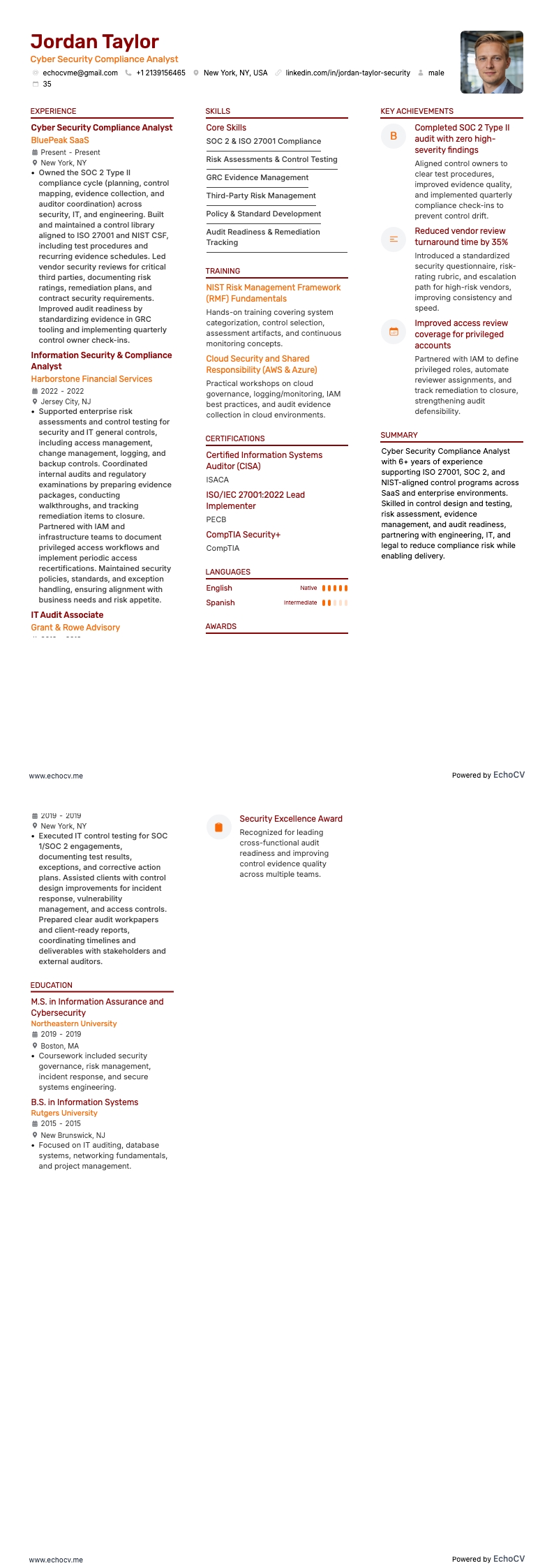
Analytiker inom cybersäkerhet och regelefterlevnad
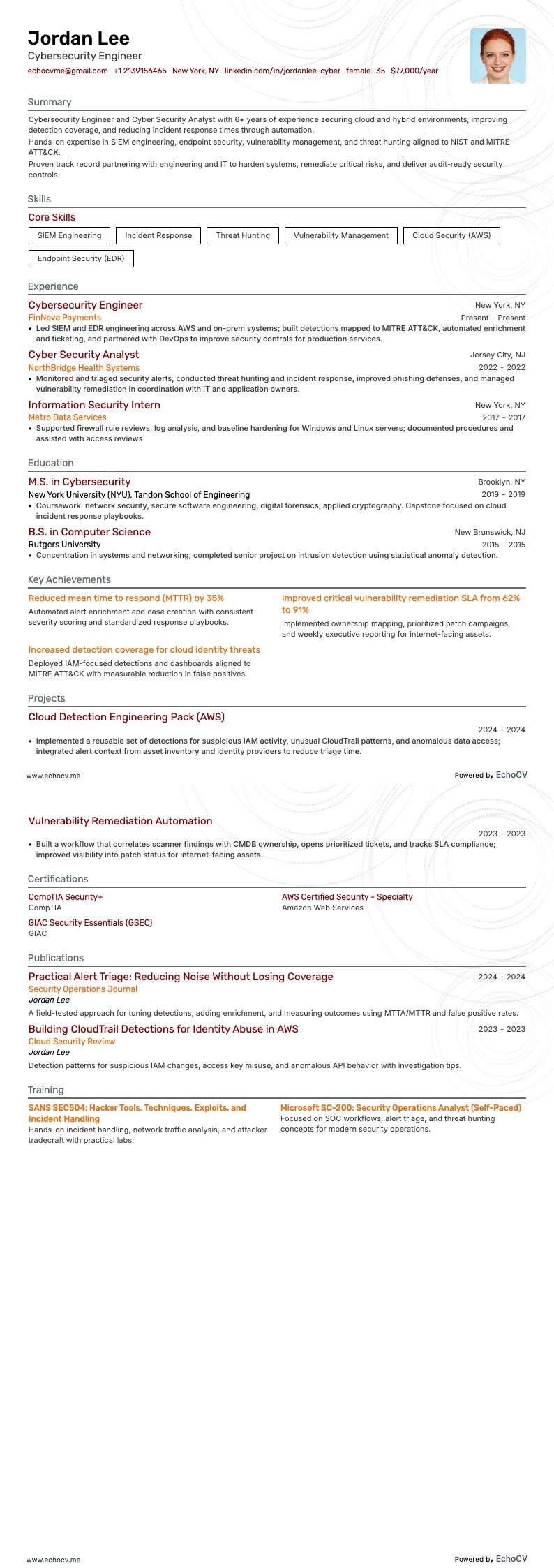
Cybersäkerhetsingenjör
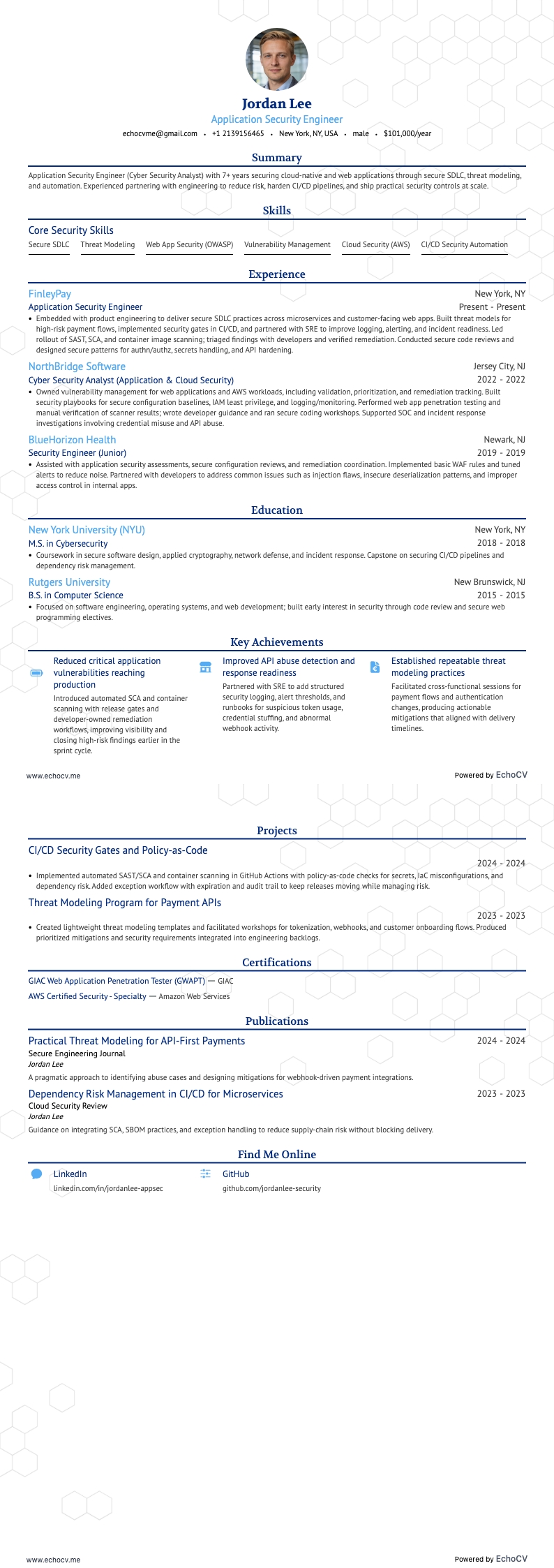
Applikationssäkerhetsingenjör
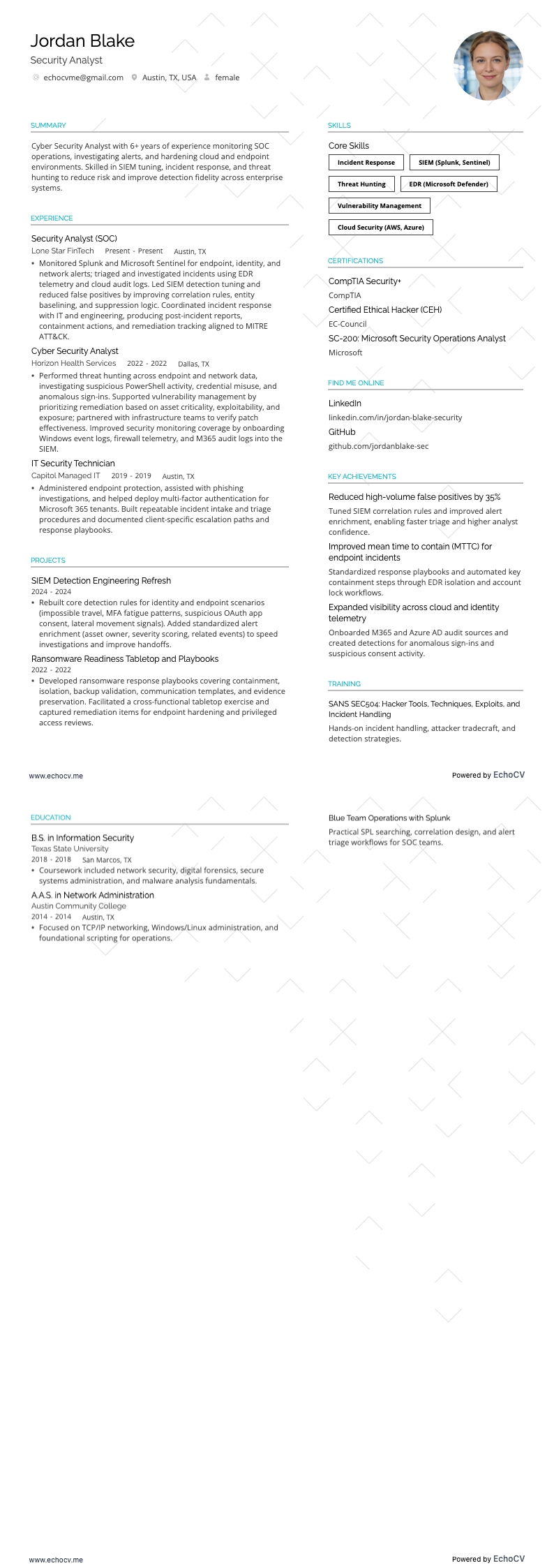
Säkerhetsanalytiker
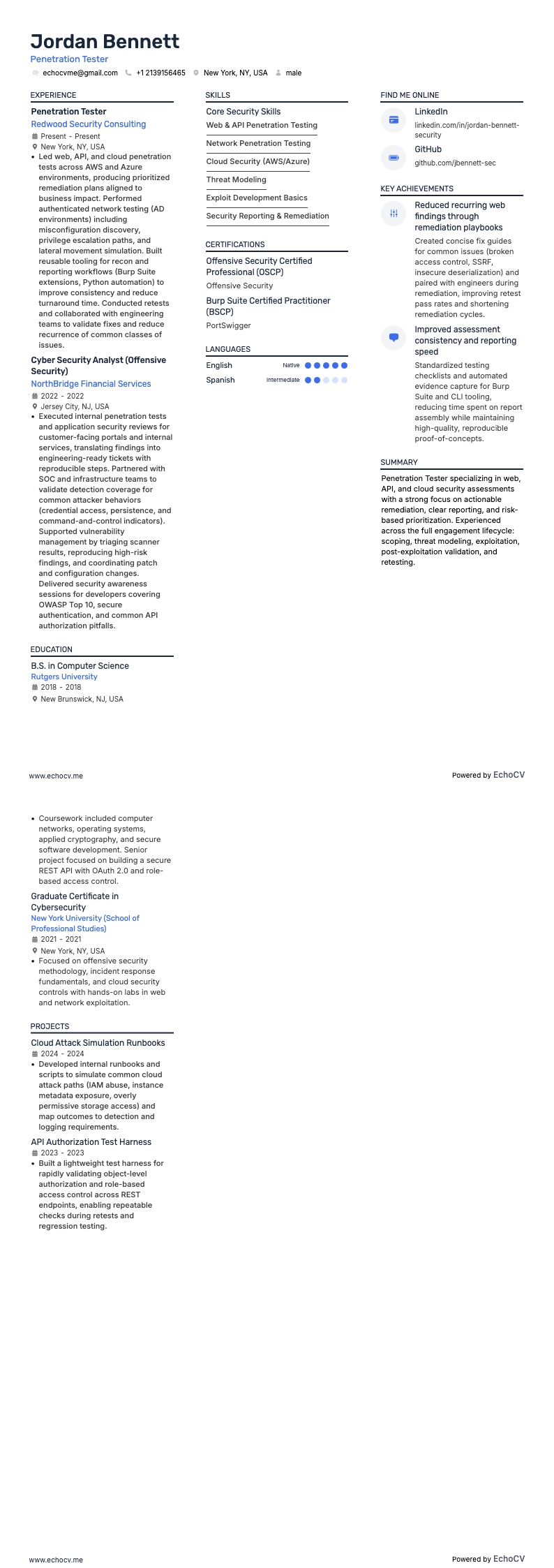
Penetrationstestare
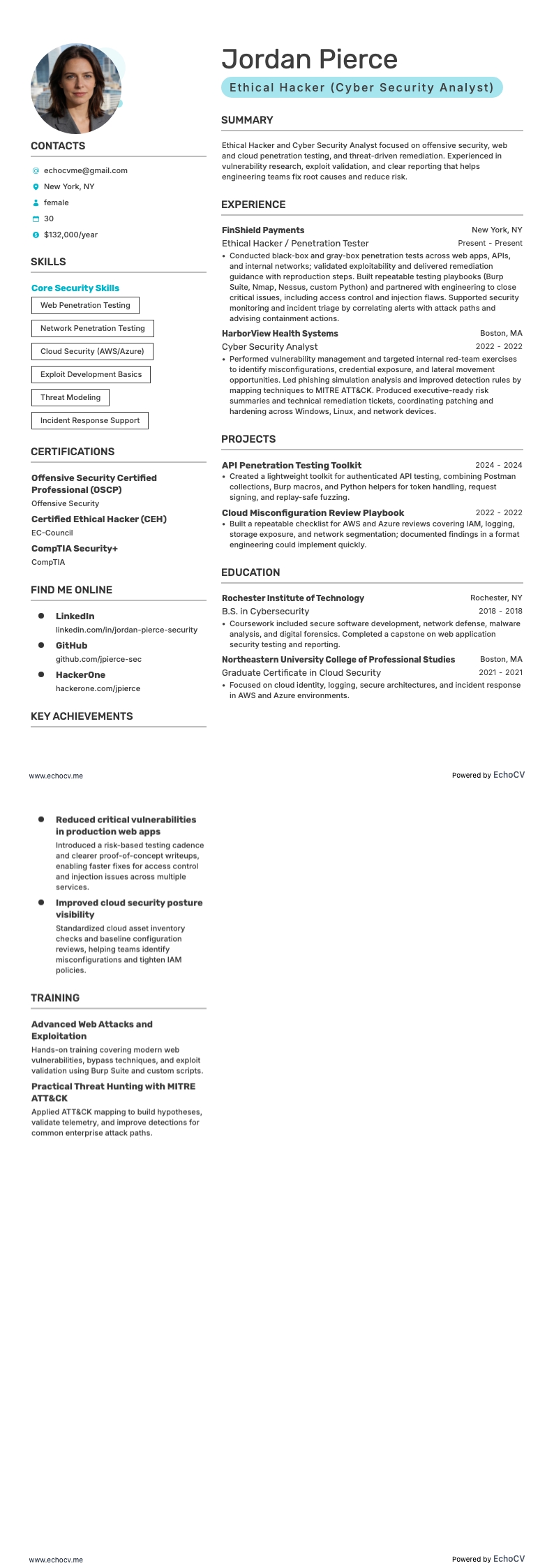
Etisk hackare
Cybersäkerhetsanalytiker CV-exempel
Utforska fler Cybersäkerhetsanalytiker-CV-exempel och guider och se vad som fungerar för din erfarenhetsnivå eller roll.
Efter erfarenhet
Cybersäkerhetsanalytiker på ingångsnivå
Ledande cybersäkerhetsanalytiker
Senior cybersäkerhetsanalytiker
Junior cybersäkerhetsanalytiker
Cybersäkerhetsanalytiker CV-exempel
Utforska fler Cybersäkerhetsanalytiker-CV-exempel och guider och se vad som fungerar för din erfarenhetsnivå eller roll.
Efter roll
Applikationsanalytiker inom cybersäkerhet
Dataanalytiker inom cybersäkerhet
Analytiker för cybersäkerhetssårbarheter
Affärsanalytiker inom cybersäkerhet
Analytiker inom cybersäkerhetsdrift
Analytiker inom cybersäkerhetssystem
Cybersäkerhetsriskanalytiker
Forensisk cybersäkerhetsanalytiker
Analytiker för cybersäkerhetsincidenthantering
Analytiker inom cyberhotunderrättelser
Nätverksanalytiker inom cybersäkerhet
Analytiker inom cybersäkerhet och regelefterlevnad
Cybersäkerhetsingenjör
Applikationssäkerhetsingenjör
Säkerhetsanalytiker
Penetrationstestare
Etisk hackare