This resume is decent. But rest assured, we can do a lot better. Ready for some insider knowledge from the experts?
Let’s start with formatting your biology resume appropriately. It’s safe to assume you want to convey professionalism while making your skills and core competencies easy to spot.
The best resume format for a biologist resume
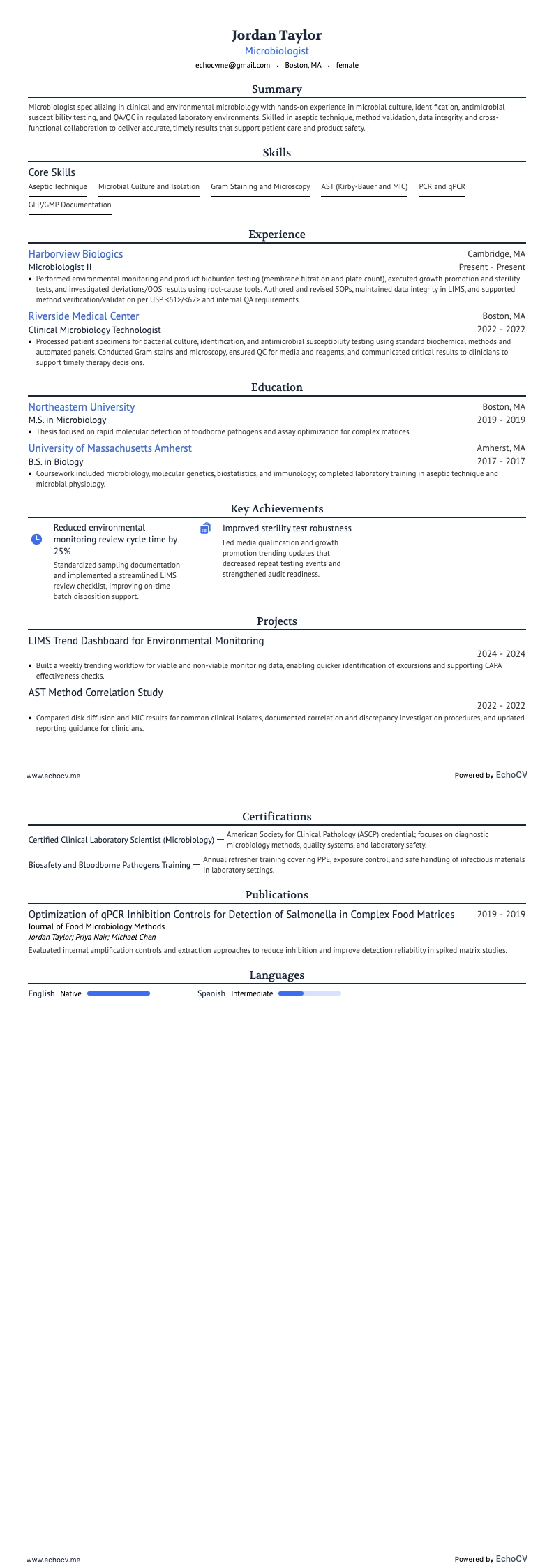
A reverse-chronological resume is the best option for academic and research roles. This way hiring managers can easily scan through your most recent and relevant experience first.
If you’re applying for a traditional role (research scientist, wildlife biologist, microbiologist, etc.), keep things simple and focused with a single-column resume layout.
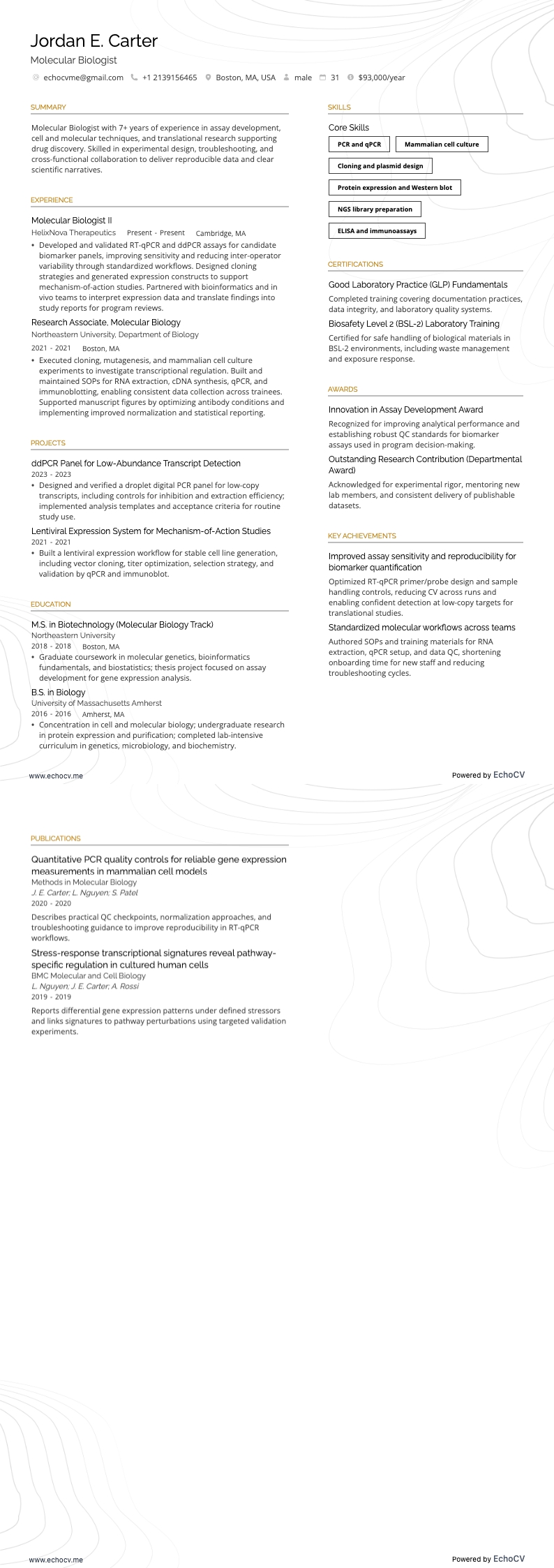
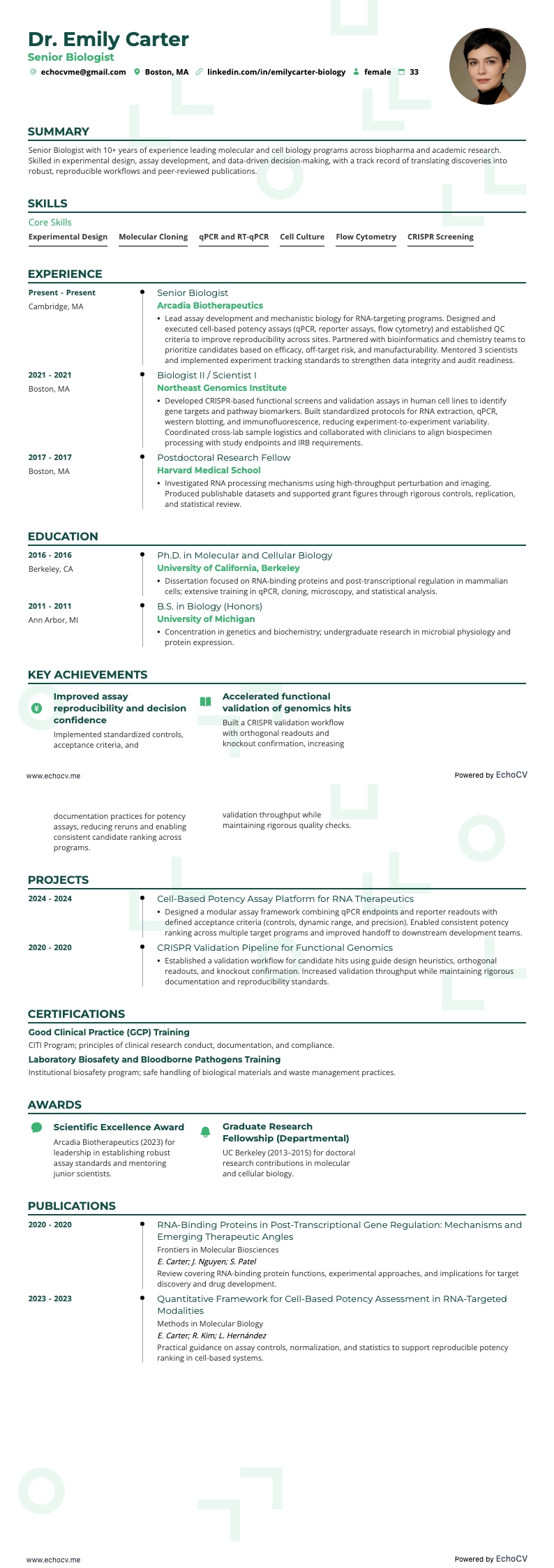
One-page resumes are appreciated in 2026 but you can confidently extend yours to two pages if you have over a decade of experience.
However, if you’re applying for a modern industry role (e.g., bioinformatics specialist, biotechnology product manager, environmental data analyst, etc.), we recommend you choose a one-page two-column format to optimize space and convey efficiency.
It’ll keep your document focused and actively engage the recruiters’ attention without distracting them with fluff.
Either way, consider the following:
Resume design tips
- Set resume margins between 0.5" and 1" for a neat look.
- Opt for simple, legible fonts like Arial or Calibri.
- Keep font sizes between 10-12 points for the body and 14-16 points for headings.
- Stick to black text on a white background.
- You can use subtle resume colors to accentuate headers and important information.
- Save time on these details with Echocv’s ready-made templates.