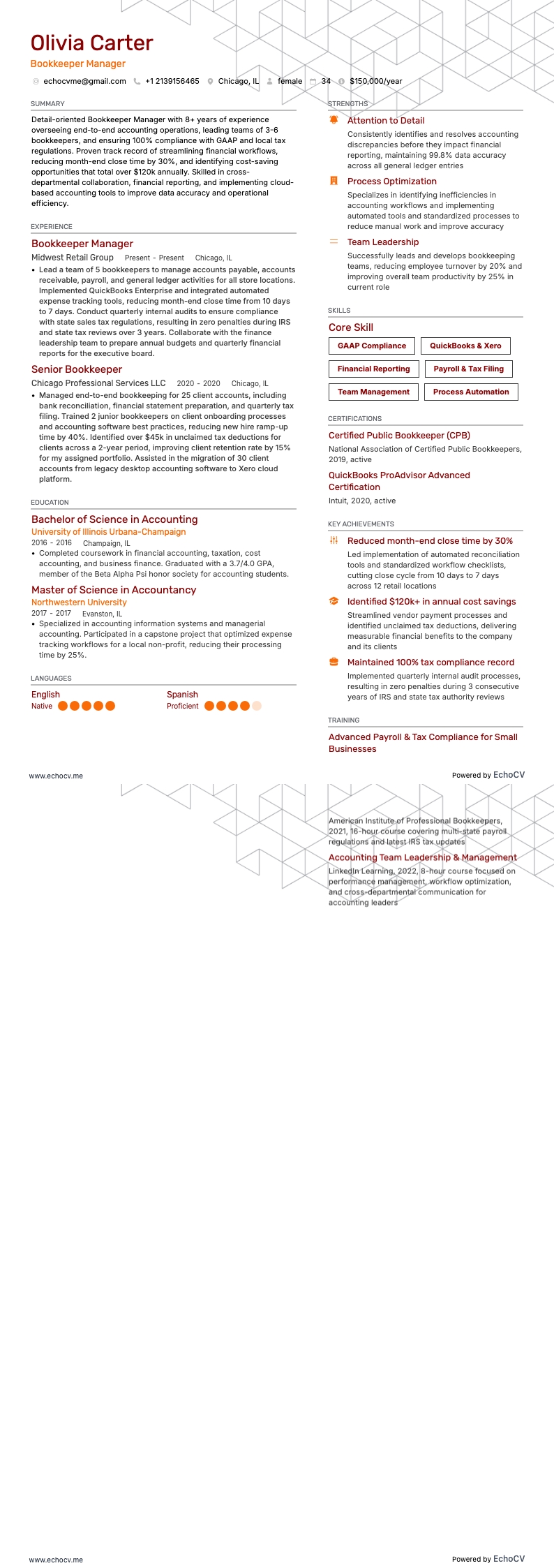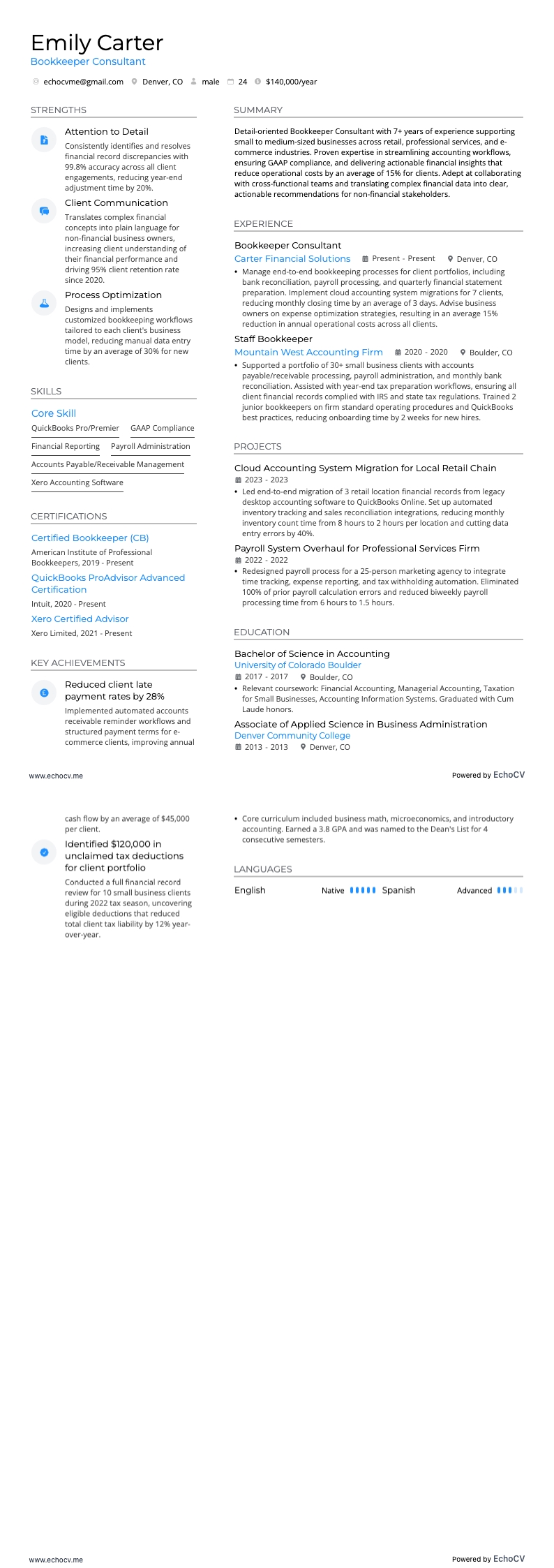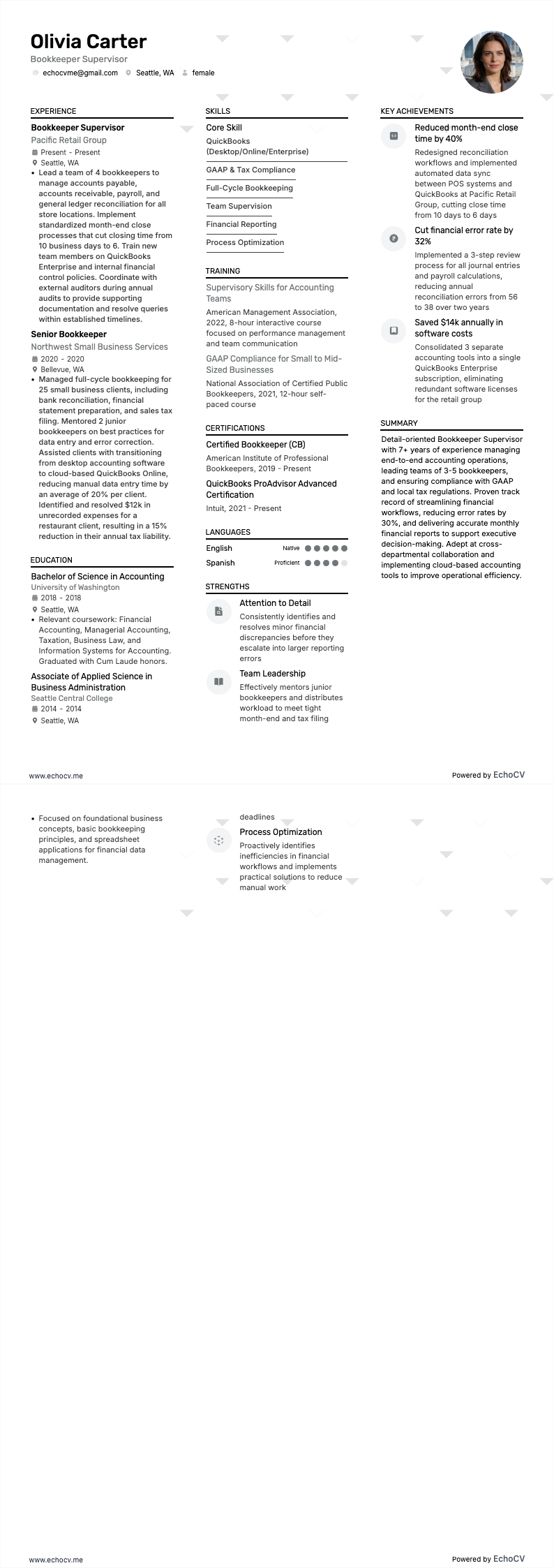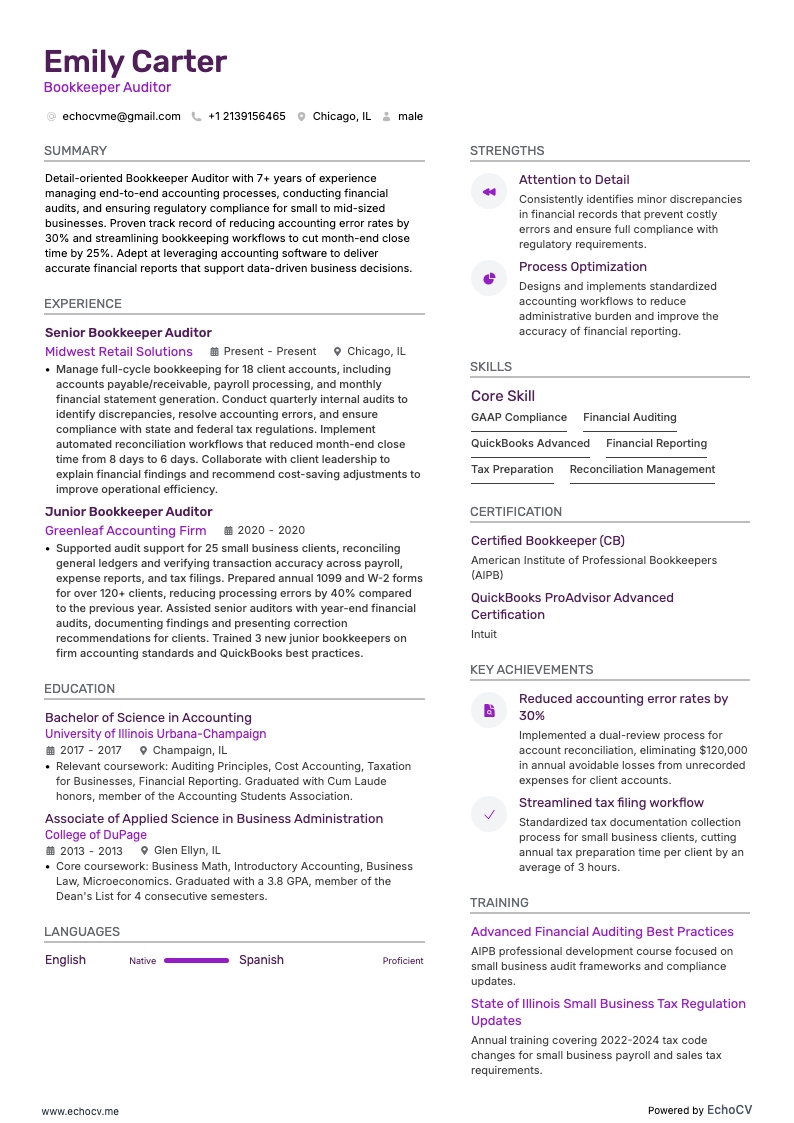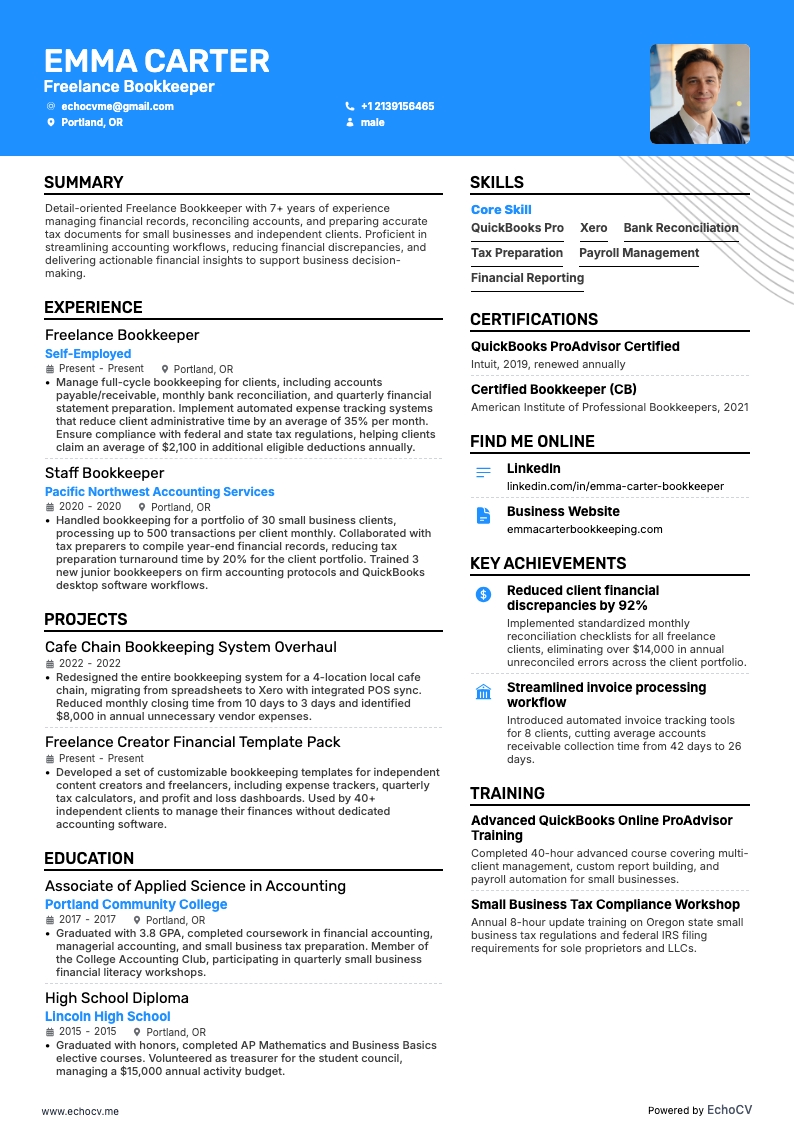
A lot of people think they can skip hiring a bookkeeper because QuickBooks ads make it sound so easy. Unfortunately, this often leads to years of disorganized financial records. Eventually, even those who were skeptical came to realize that AI can't fully replace the human touch needed in bookkeeping. It's a detail-intensive job. While some routine tasks can be automated, the role of bookkeepers remains vital for thorough analysis and strategic decision-making.
So, if you're hunting for a job in this industry, you really need to nail your resume. It’s the key to showing off your ability to handle the intricate challenges that software simply can’t.
Want recruiters to call you? Here's how to do it:
- Select a resume template that shows your bookkeeping skills.
- Organize your resume's main sections for the best display of your expertise.
- Underline your experience with key bookkeeping practices and software.
- Describe your key achievements and their impact on financial management.
- Match your skills to the job description to align with employer expectations.
- List your relevant educational qualifications, focusing on bookkeeping-related certifications or degrees.
Interested in expanding your career in accounting and bookkeeping? Explore these resume examples to discover more job opportunities.
- Purchase Manager Resume Example
- Payroll Director Resume Example
- Financial Operations Manager Resume Example
- Public Accounting Resume Example
- Financial Data Analyst Resume Example
How to format a bookkeeper resume
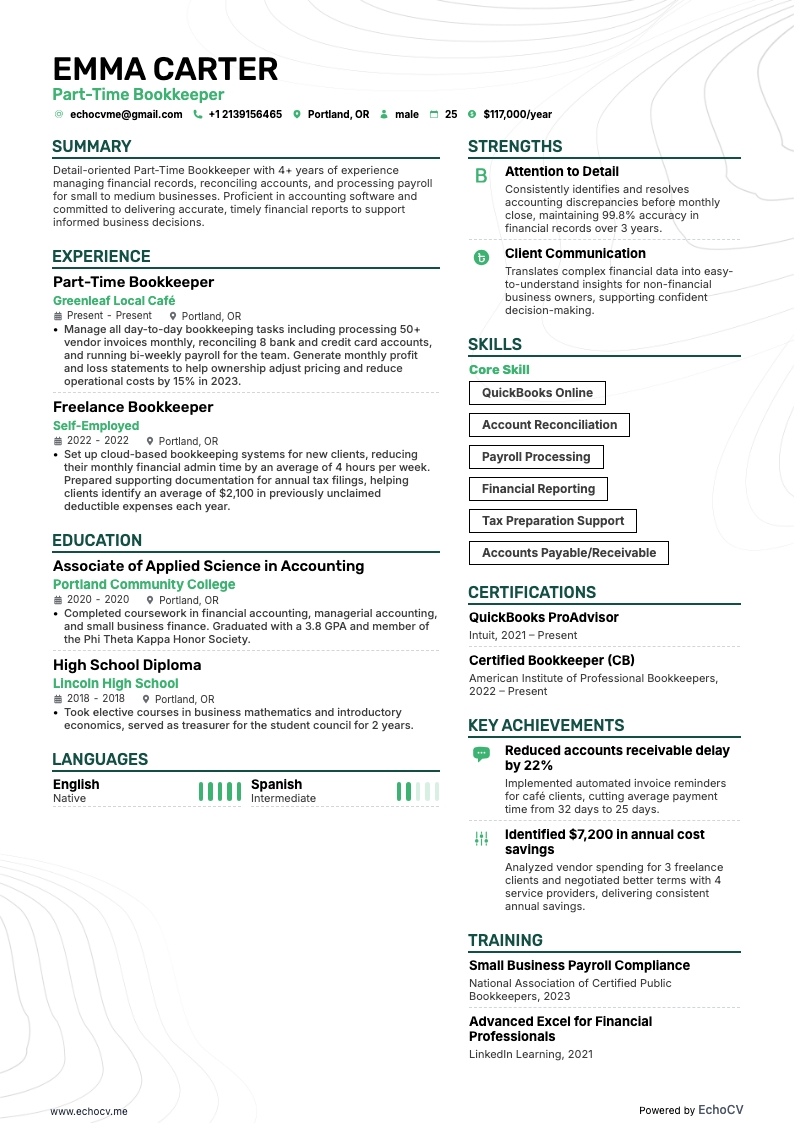
Selecting the appropriate resume format is key to making a great impression as a bookkeeper. Here are three formats to consider:
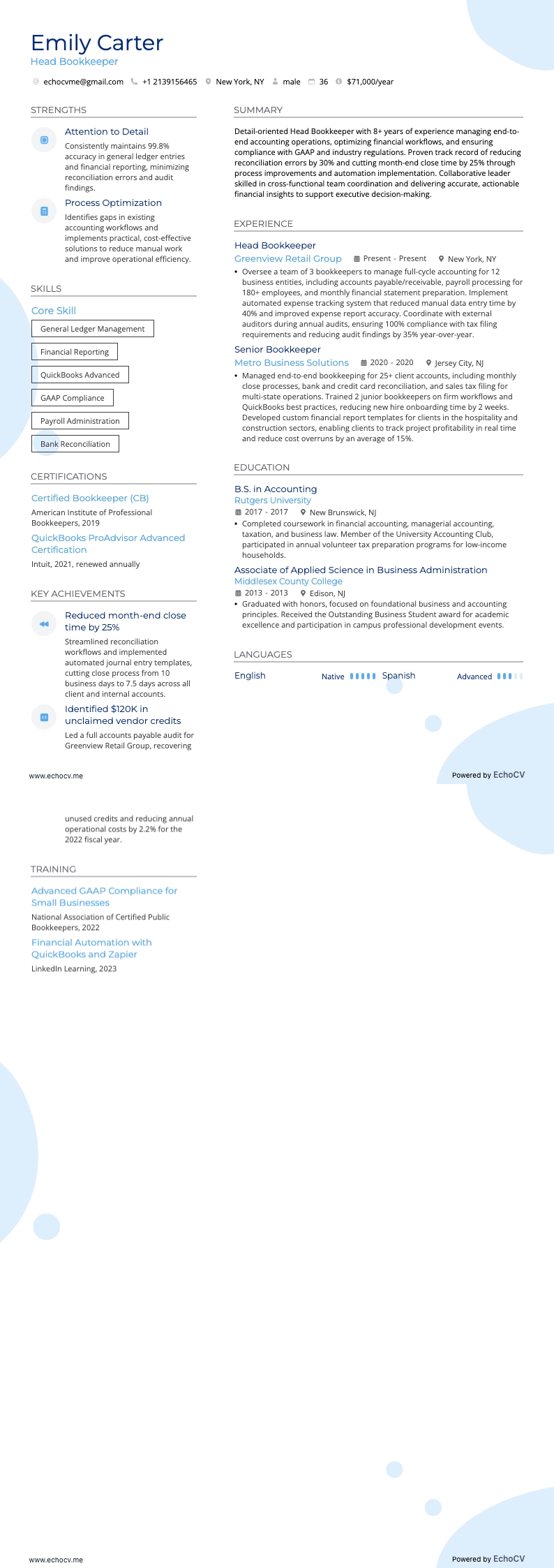
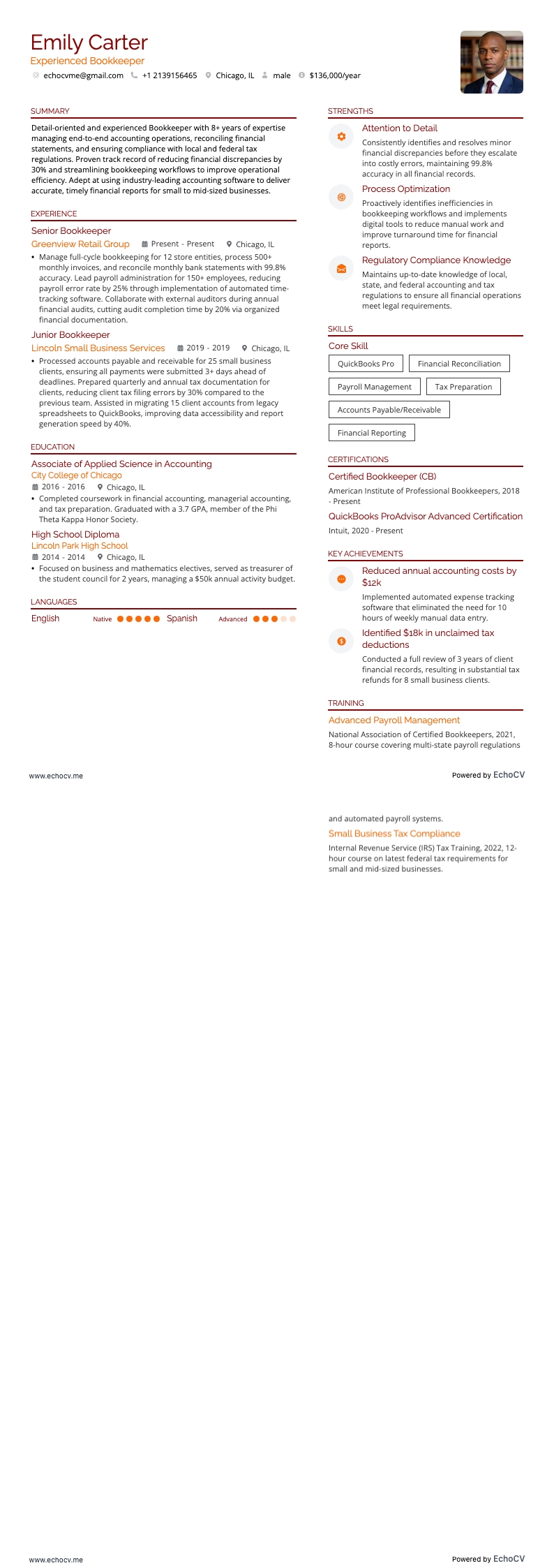
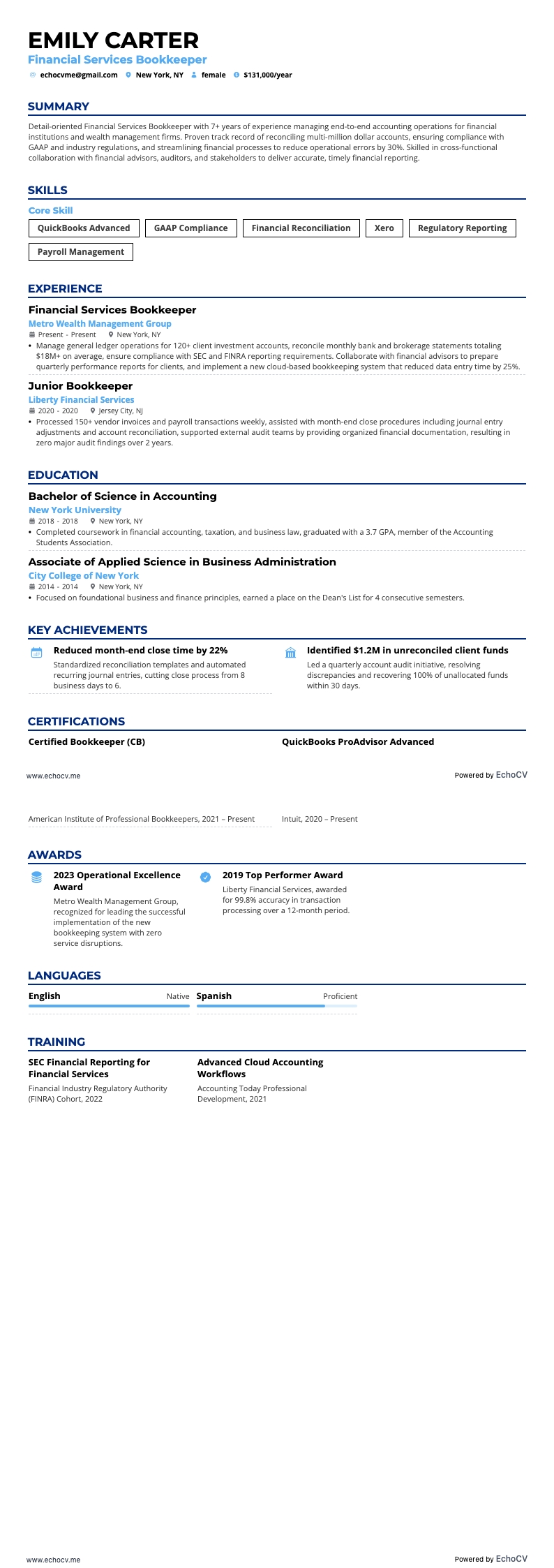
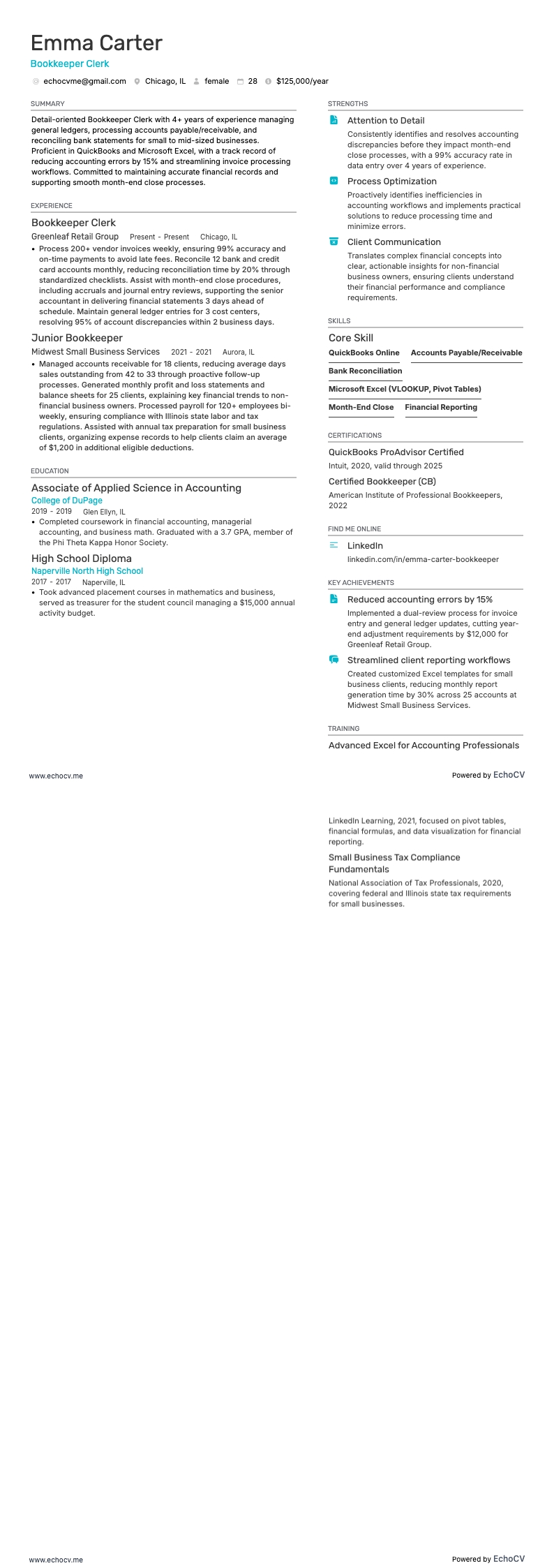
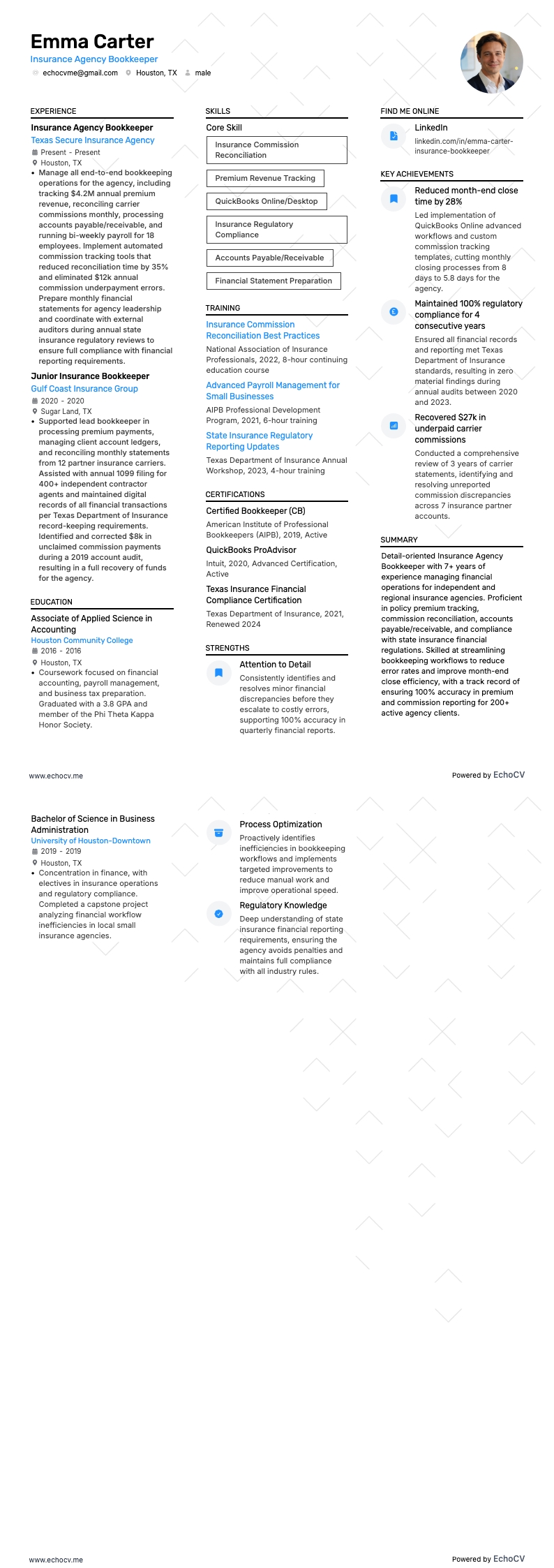
- Reverse chronological resume: This format is ideal for candidates with steady work experience, as it lists your jobs starting with the latest one. You can use reverse chronological resume templates to show off a consistent job history and your career growth, which is what employers look for in experienced bookkeepers.
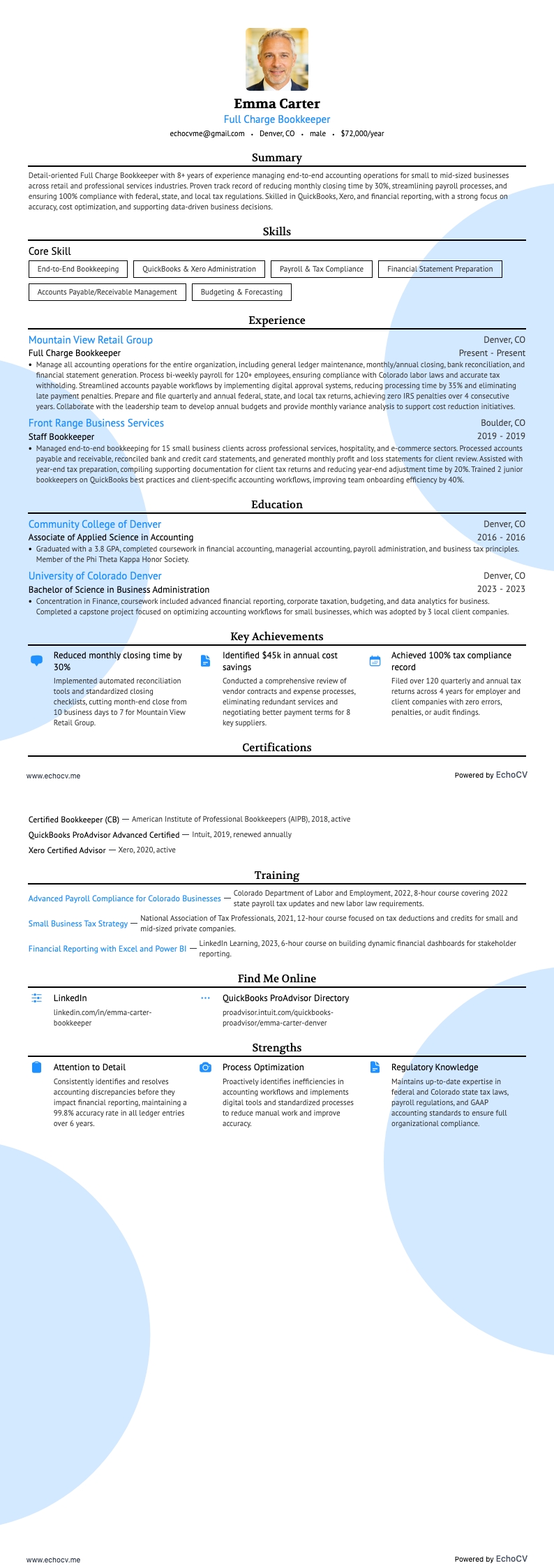
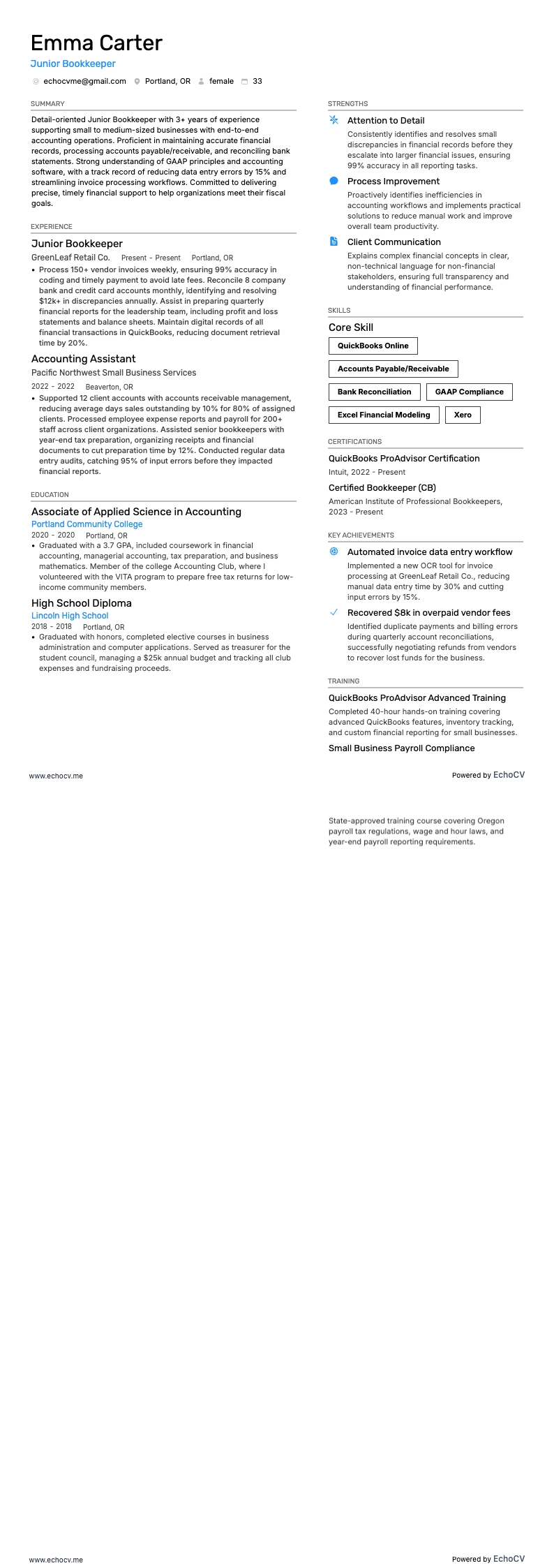
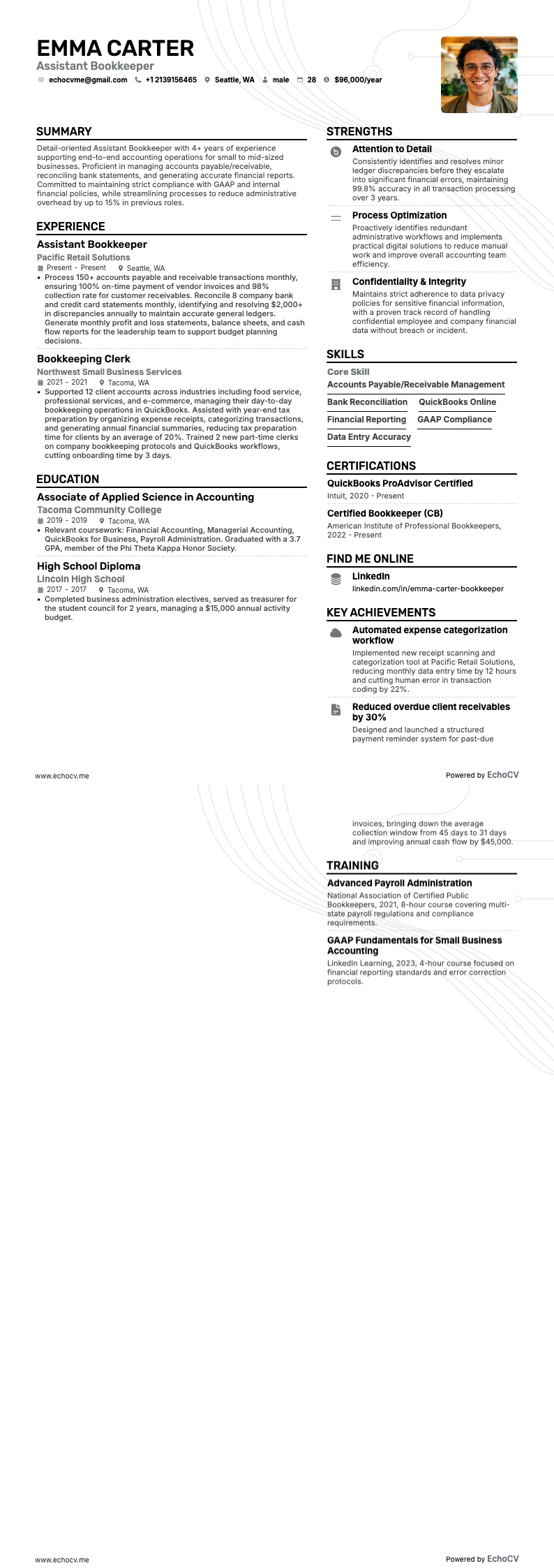
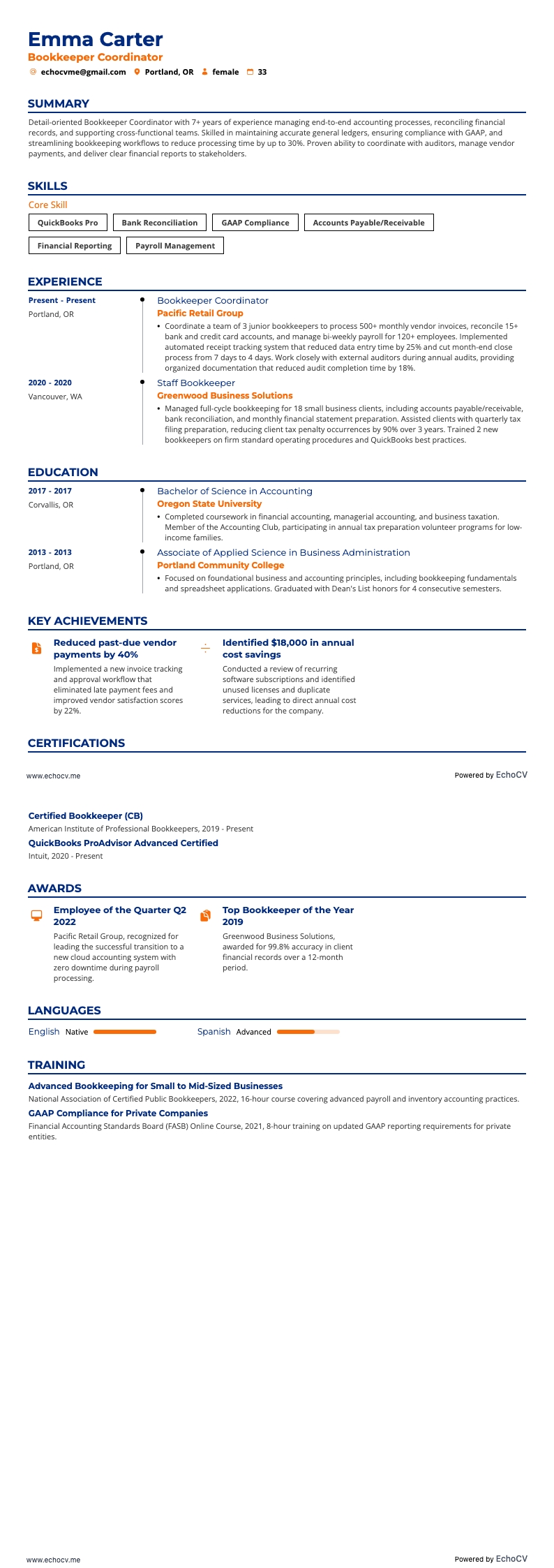
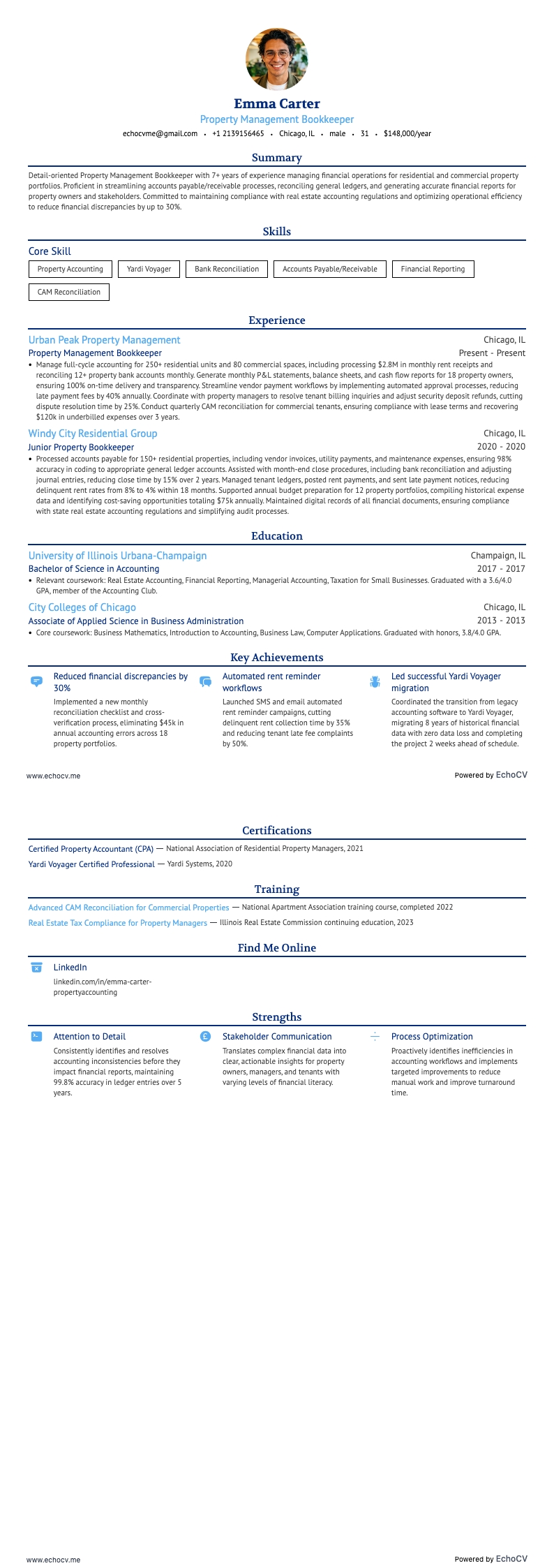
- Functional resume: If you're new to bookkeeping, changing careers, or have gaps in your work history, consider a skills-based resume template. This format focuses on your skills and qualifications instead of your job history, helping you underline your bookkeeping abilities and certifications without drawing attention to employment gaps.
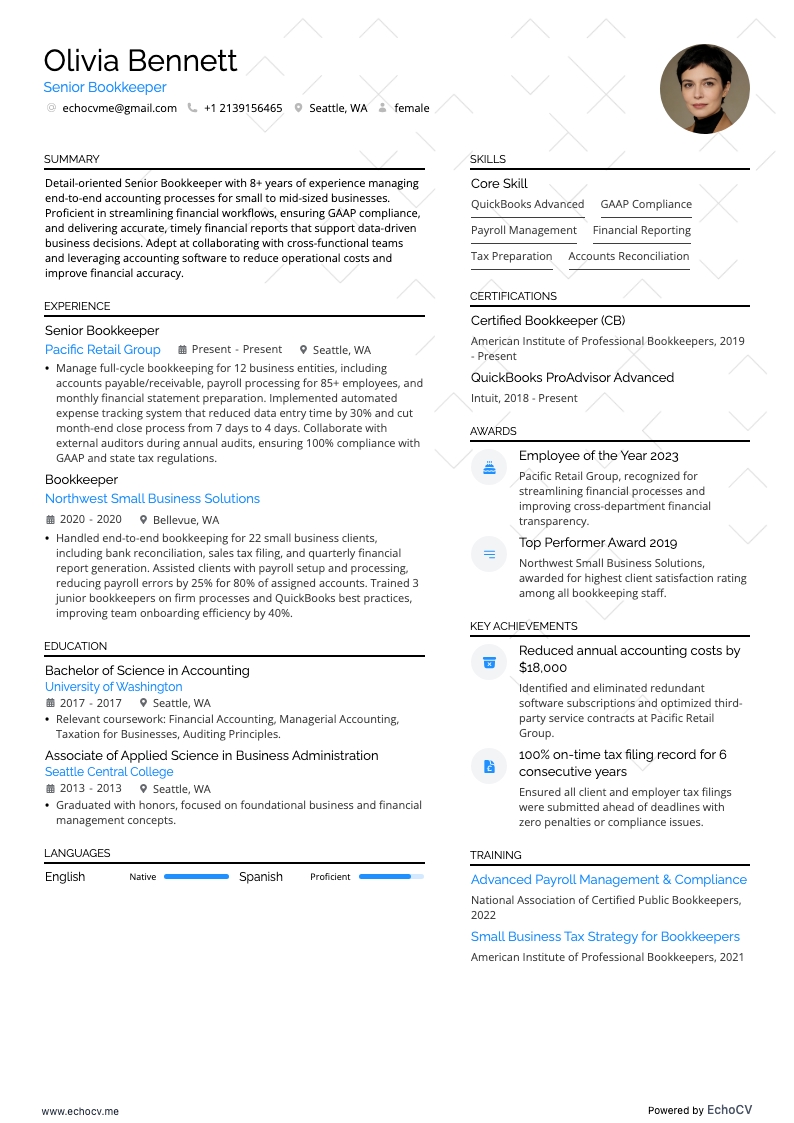
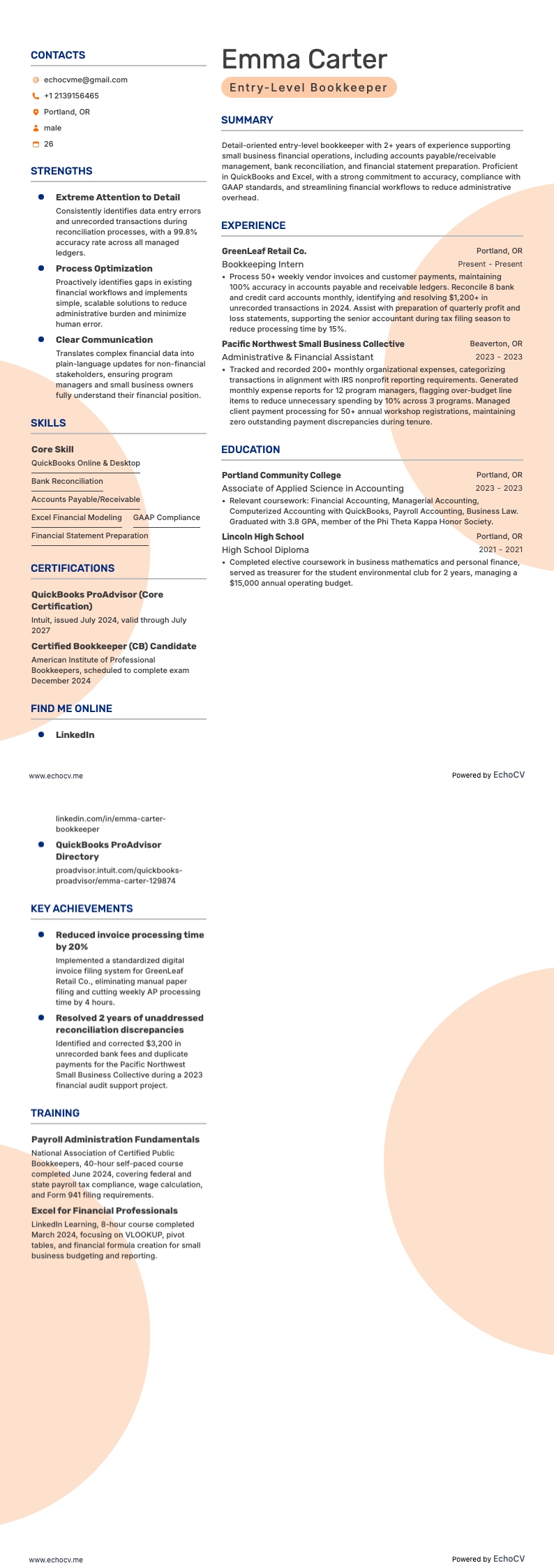
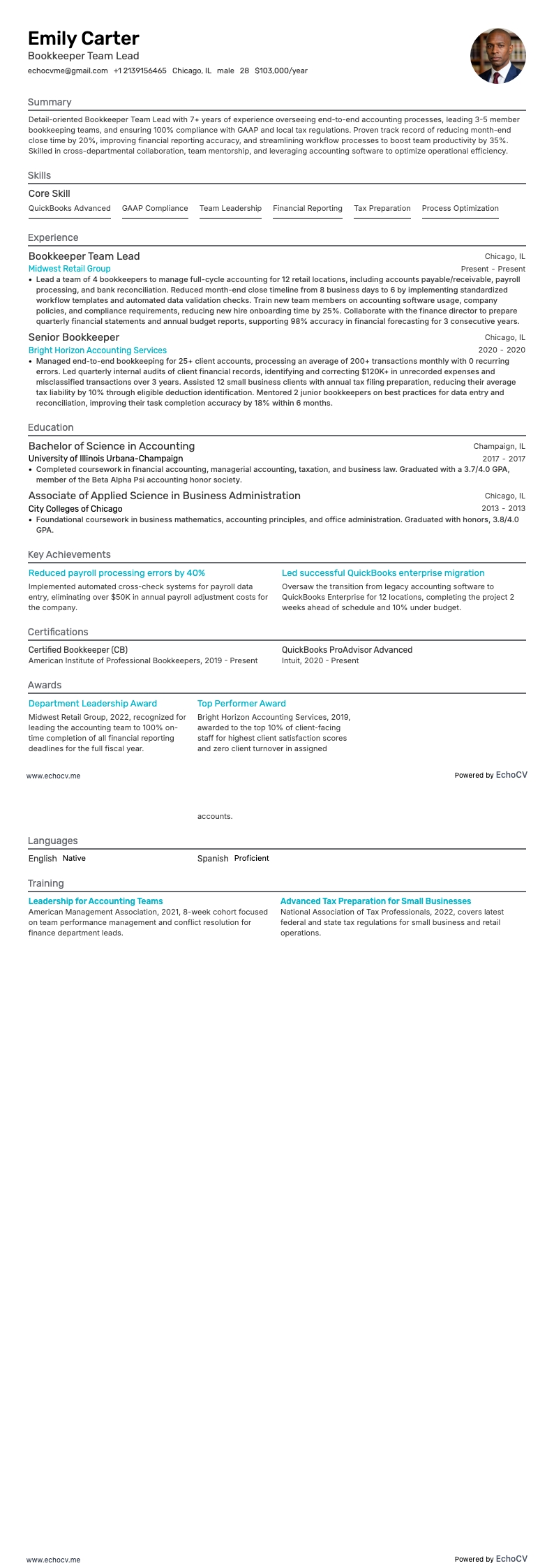
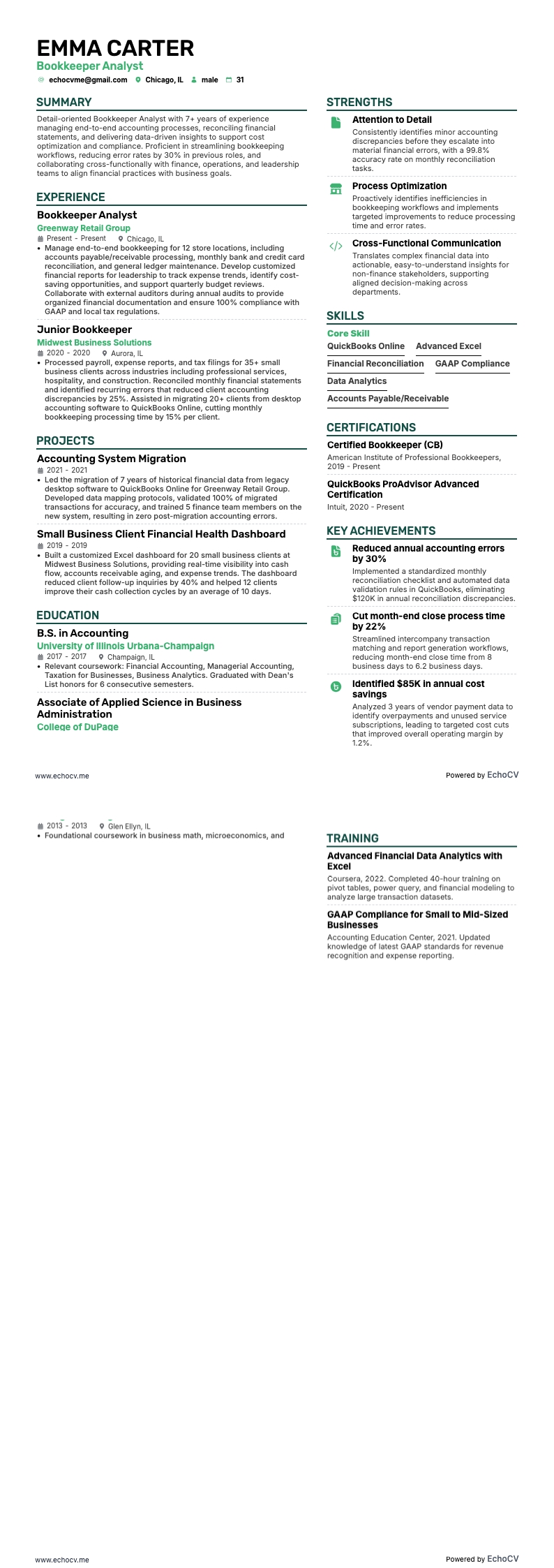
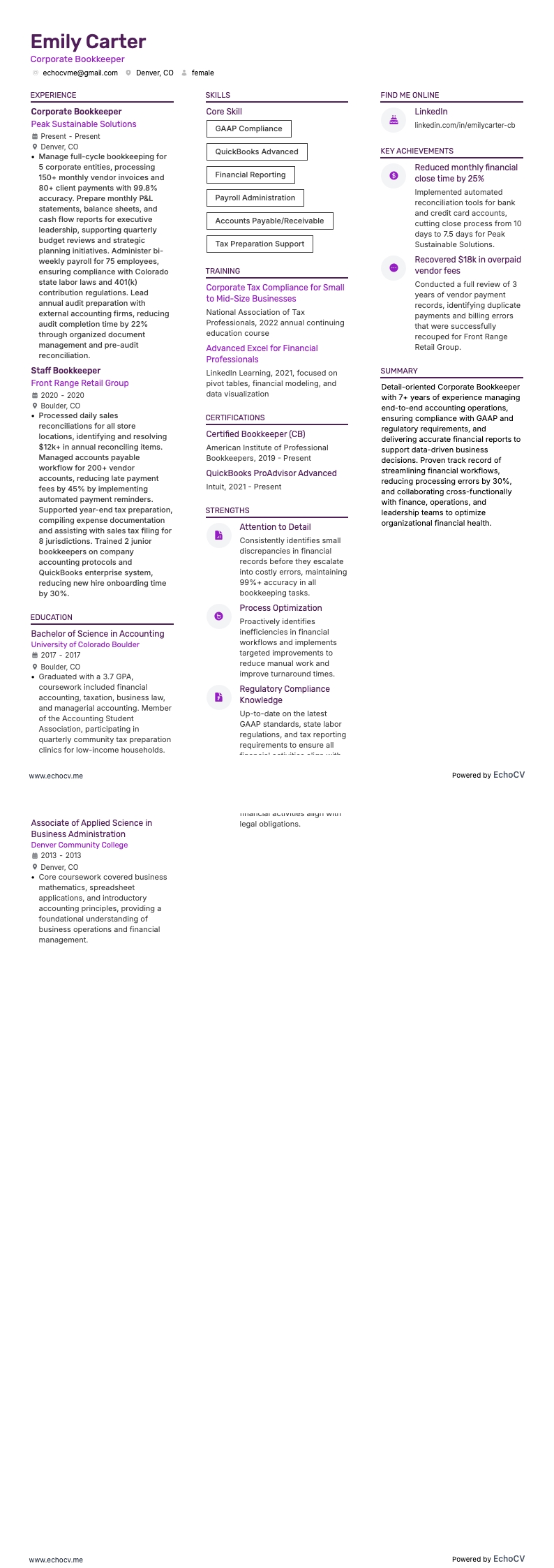
- Hybrid resume: These combination resume templates are great for bookkeepers with both solid experience and relevant skills. They allow you to showcase your skills and work history together. This versatile approach is ideal for highlighting your abilities and showing a steady job progression, making it suitable for different bookkeeping roles, from junior to senior levels.
Here are some effective strategies to enhance your bookkeeper resume:
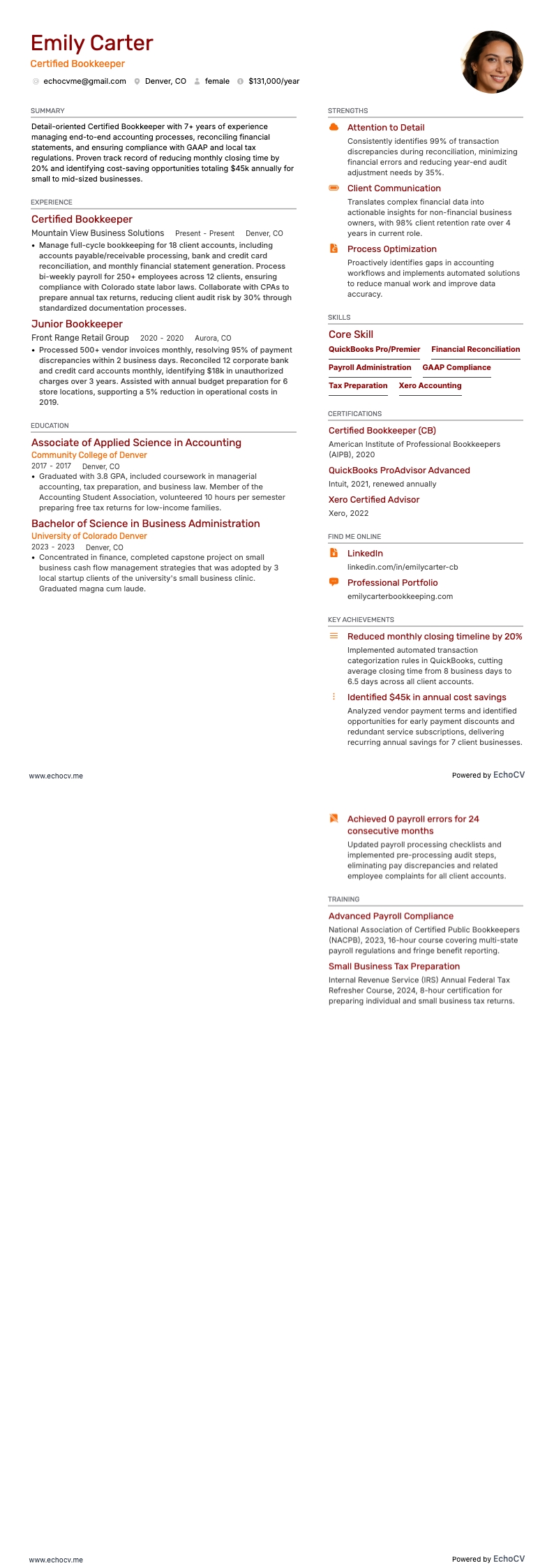
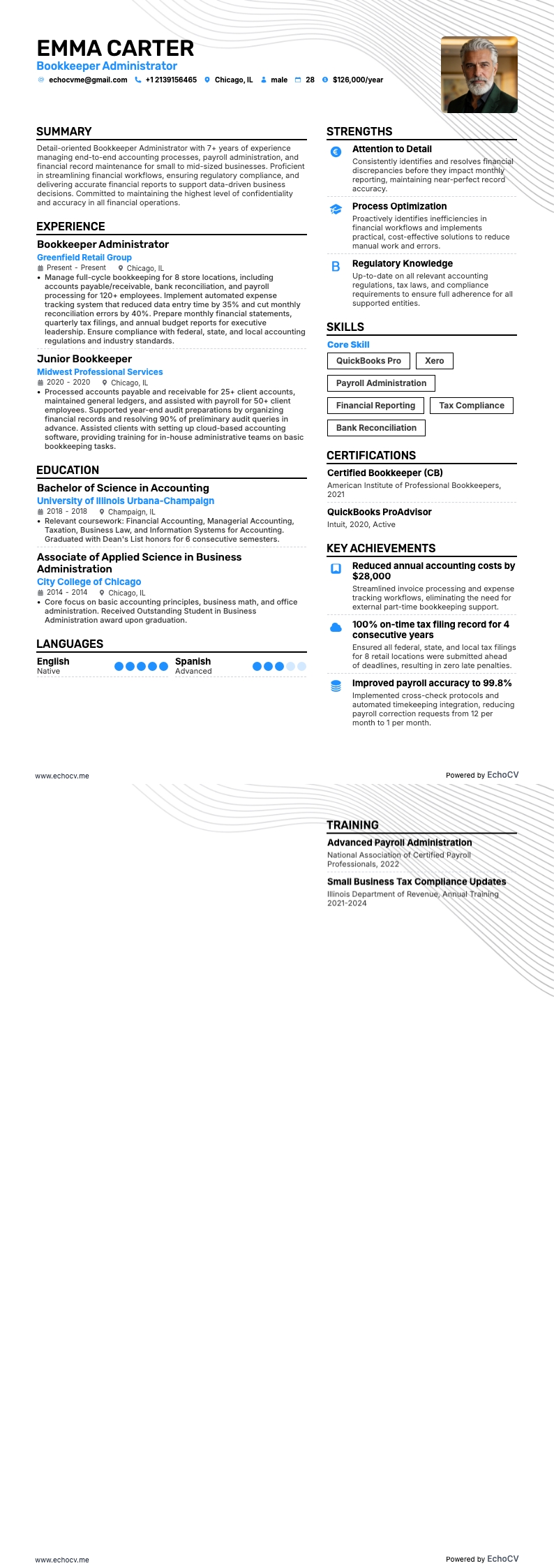
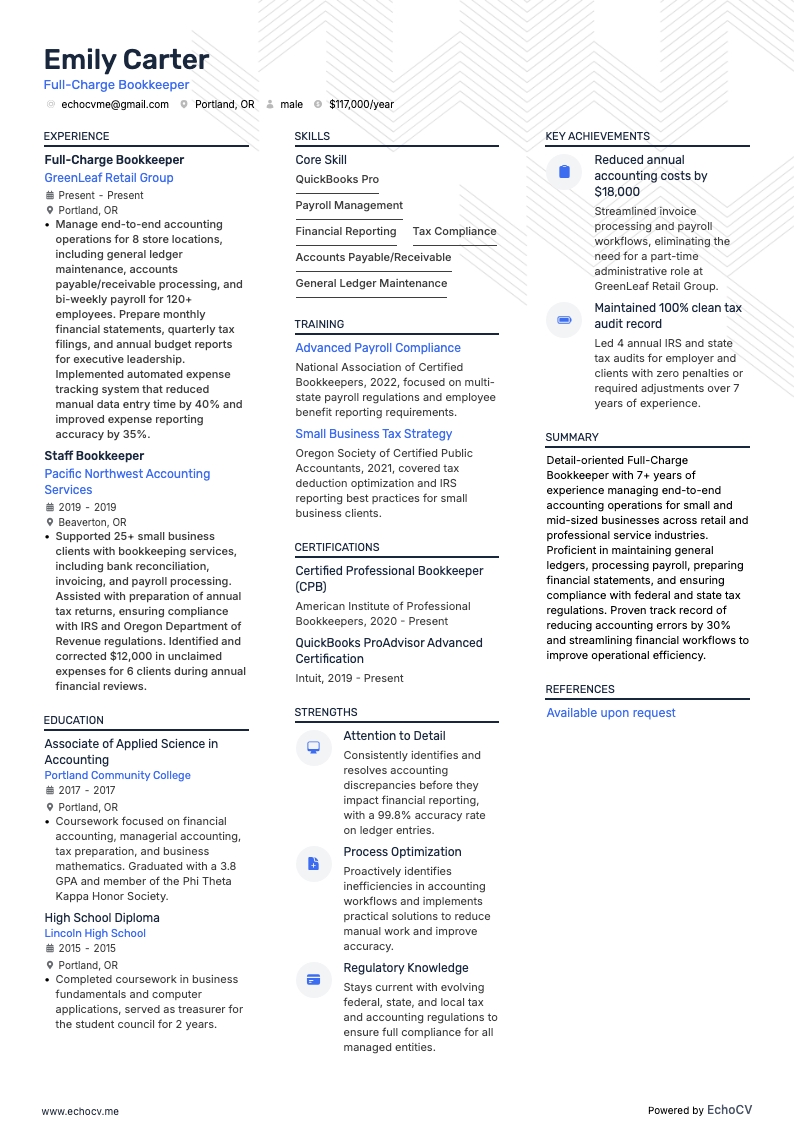
- Opt for a clean, modern template that keeps the layout uncluttered. This helps your achievements stand out without any visual distractions.
- Select simple fonts like Rubik, Lato, or Times New Roman, and keep font size between 10 and 12 points to ensure your resume is easy to read.
- If you're early in your career or at mid-level, limit your resume to one page. If you're more experienced, a two-page resume can be appropriate.
- Use consistent margins of about 1 inch to create a tidy, organized look.
- Include your name, phone number, location, and professional email address in the header of your resume.
- Insert a link to your LinkedIn profile if it's up-to-date and relevant.
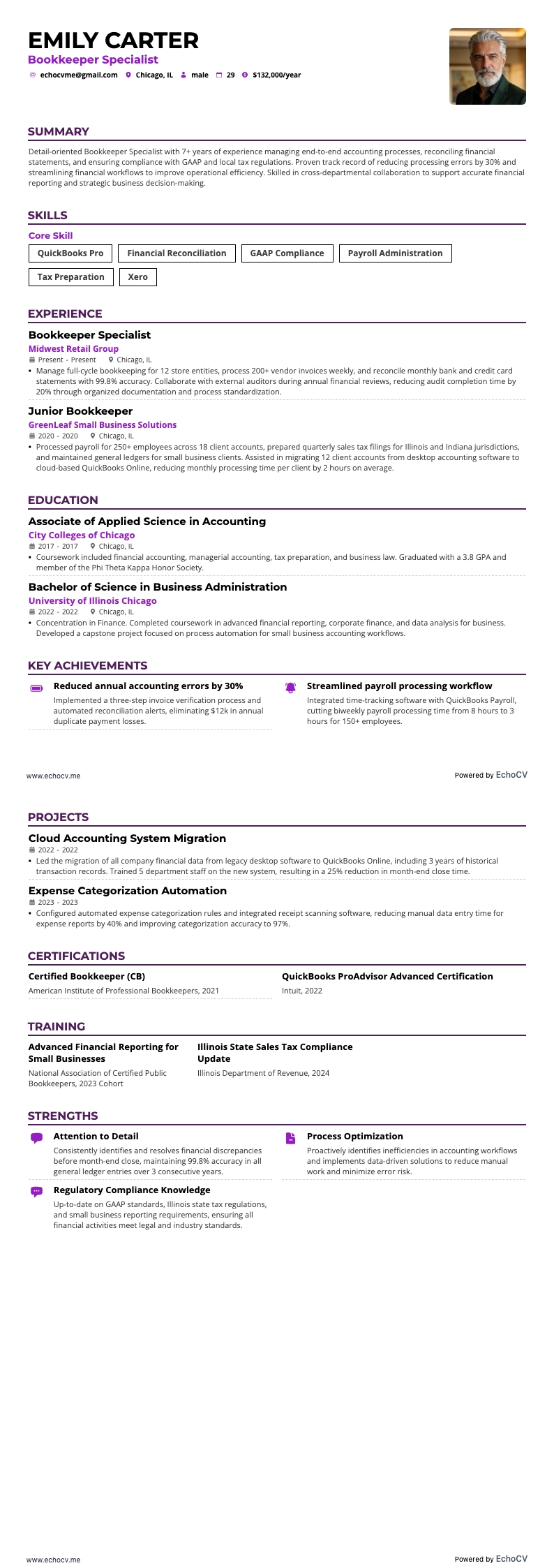
- Only add a photo if the job advertisement specifically asks for one.
- Always save your resume as a PDF to keep the format consistent across different platforms.
Focus on your precision in managing financial records and the positive outcomes of your projects. Incorporate keywords from the job description to help your resume get past Applicant Tracking Systems that many employers use.
Different markets have specific resume formats – a Canadian resume could vary in layout.
Take advantage of our intuitive AI resume checker to get a detailed 16-point evaluation and improve your resume for free.