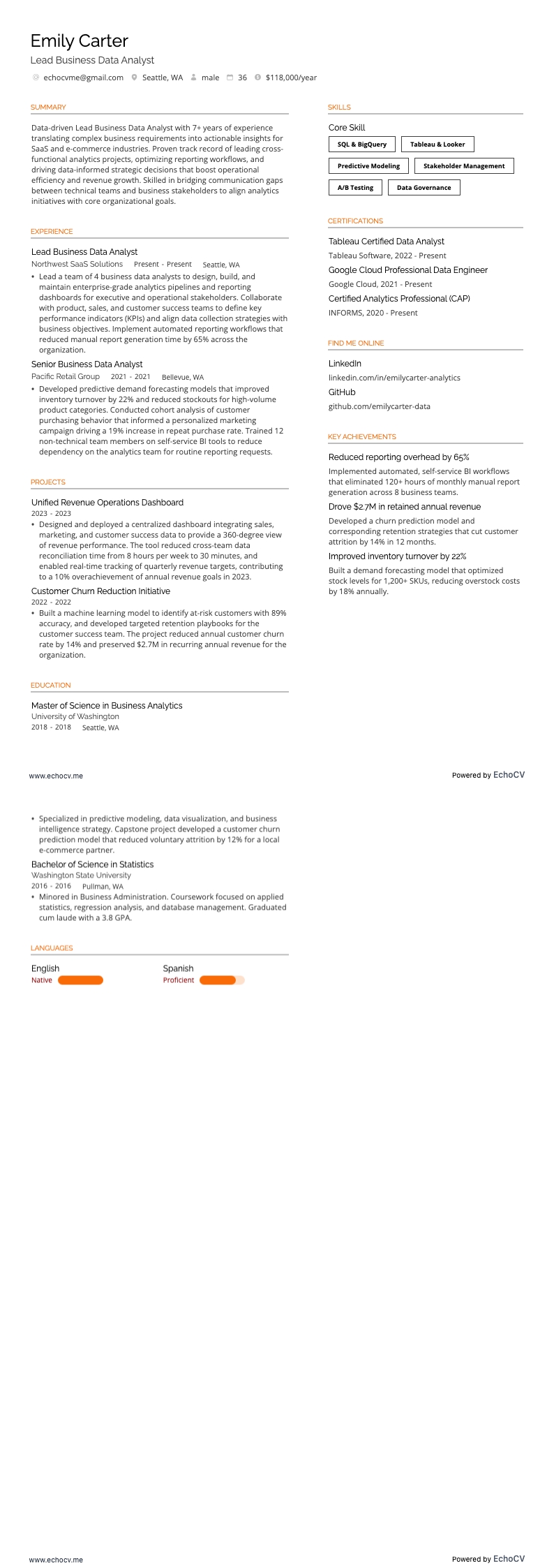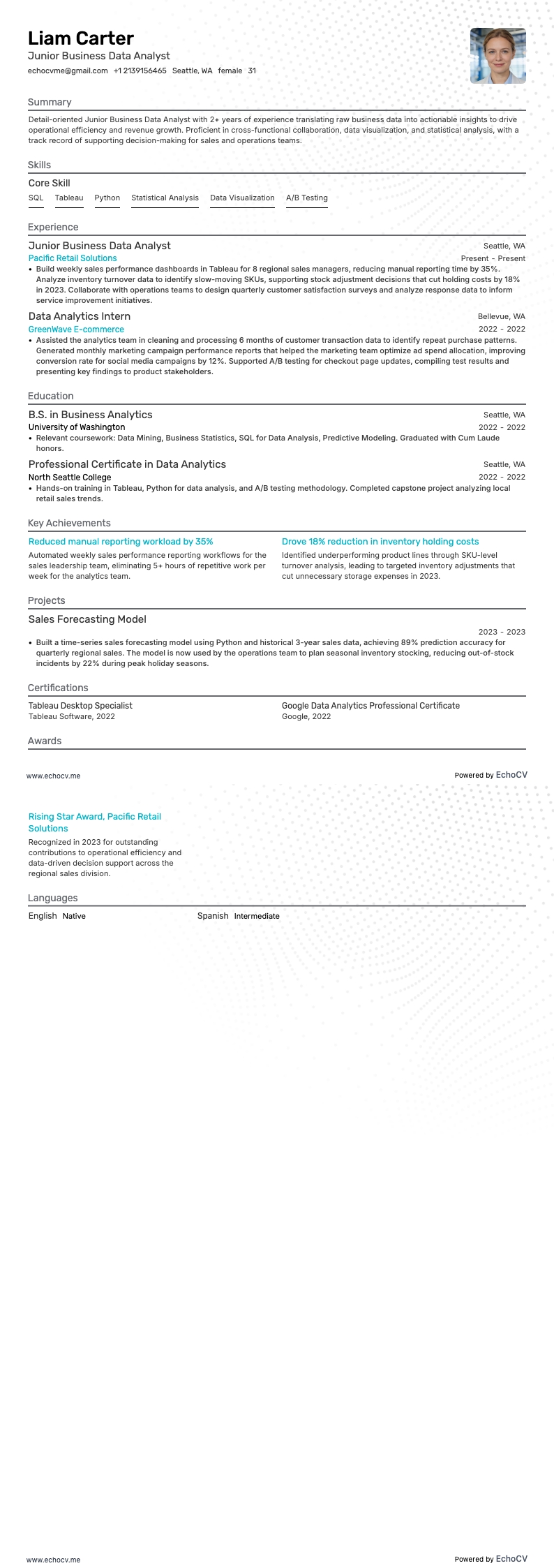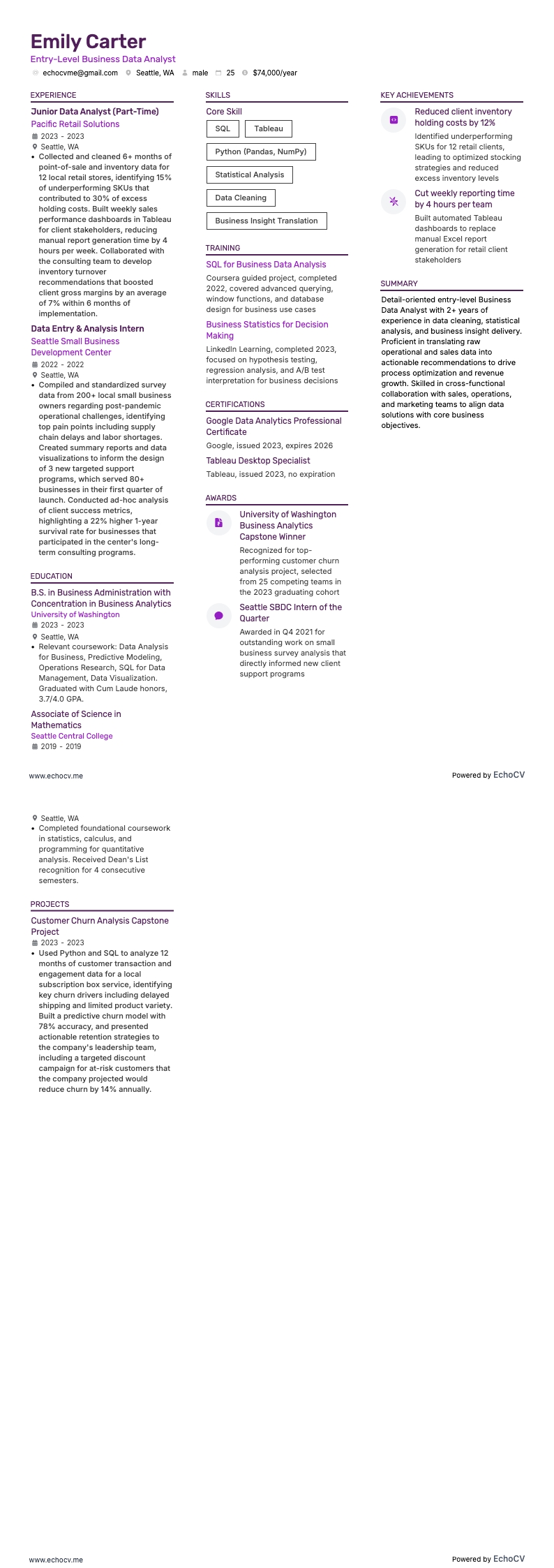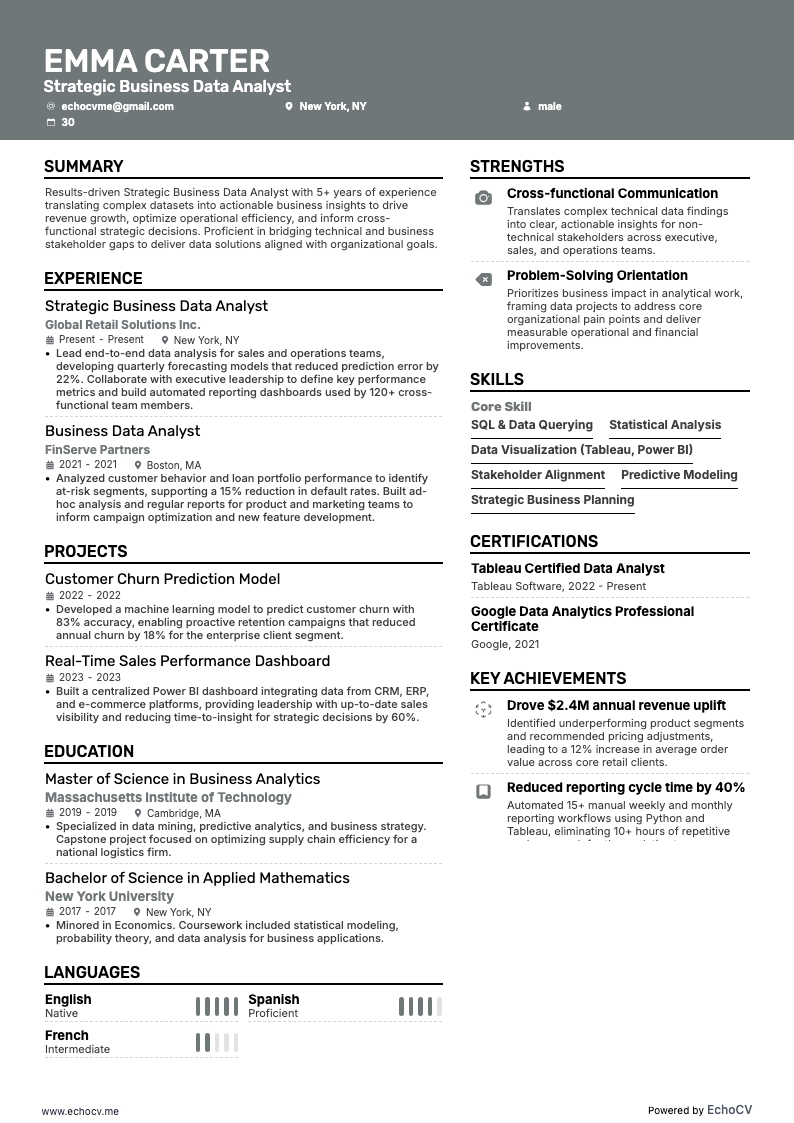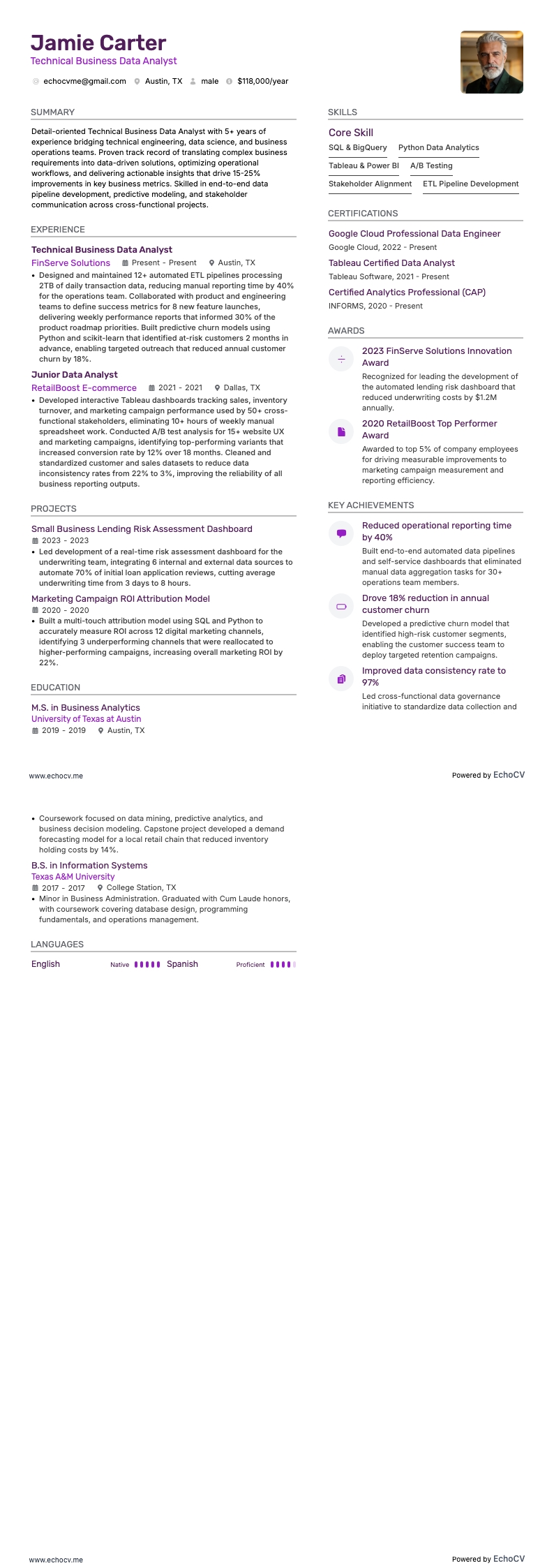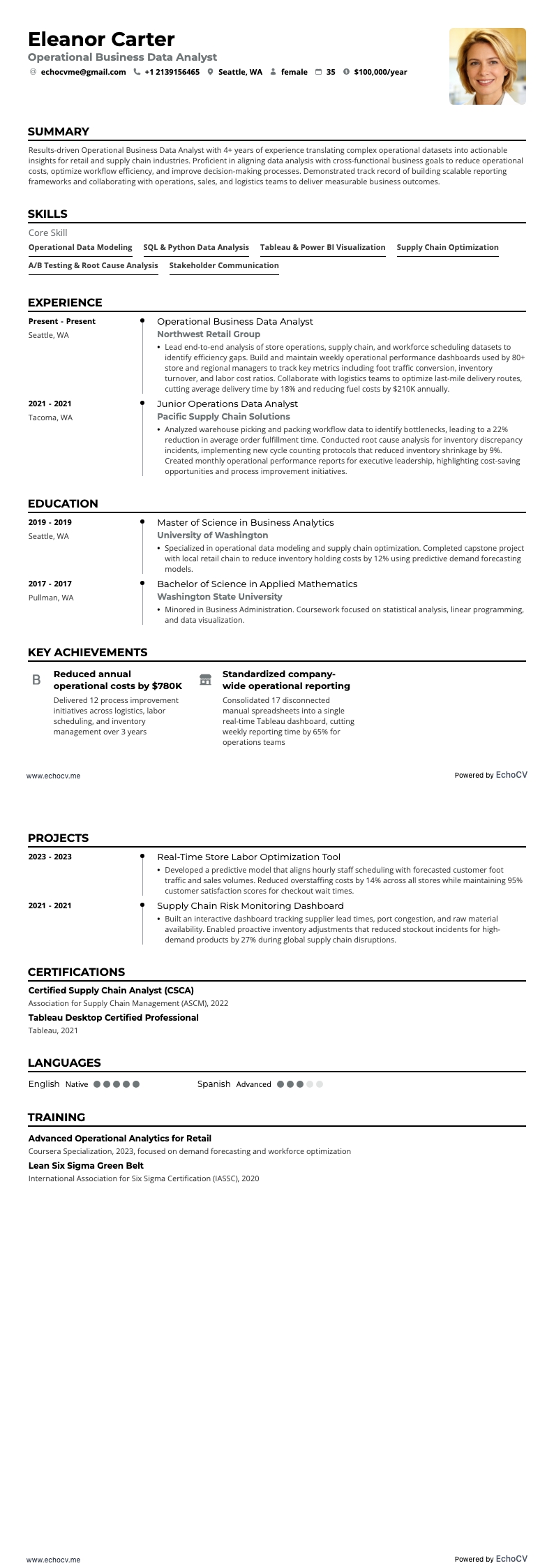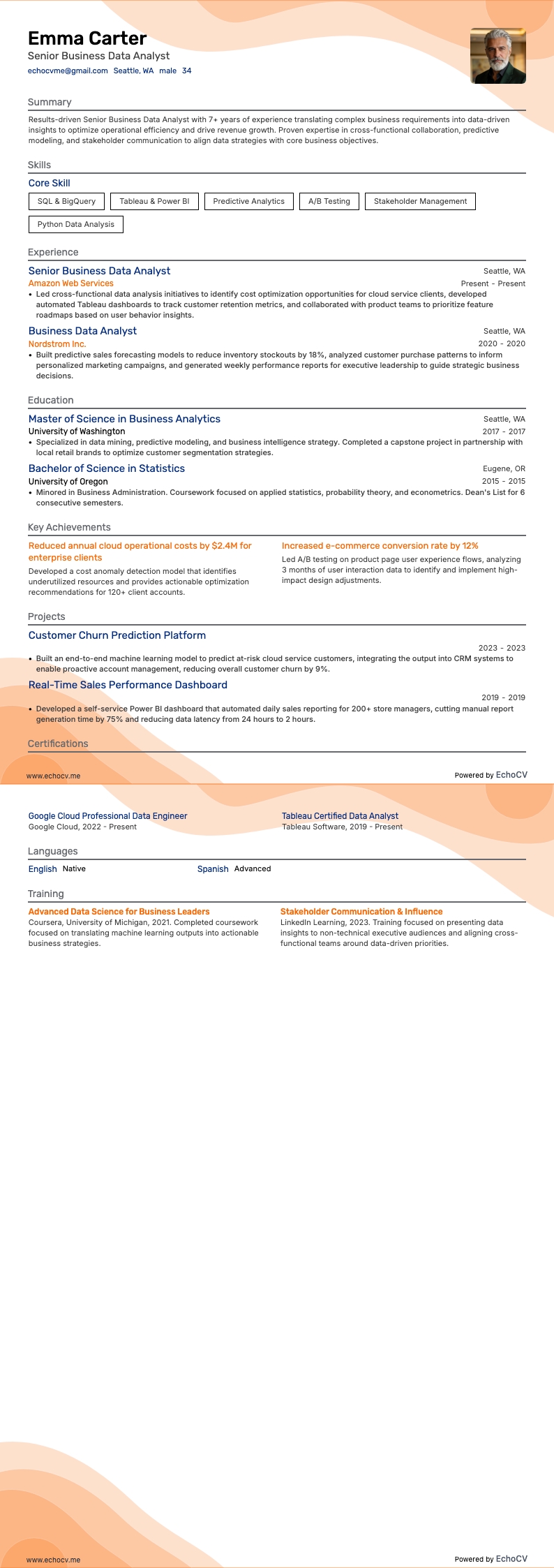
A version like this shows not only your strengths but your accomplishments as well.
If you were applying for a job in which you had to analyze user behavior, your resume would show the company you already have the experience.
How to describe duties of a business data analyst on a resume
Much of proving you have the right experience to a recruiter is showing that you have experience similar to the job you want.
Here are some work experience responsibility samples that may fit your business data analyst resume:
- Analyzed data to spot trends, make forecasts and extract information
- Utilized Microsoft SQL Server for extraction and analysis of data from multiple sources
- Developed reports and dashboards using Tableau for internal and external customers
- Crafted compelling stories and transform data into insights that address key client issues
These duties both lead into the technical skills that you need as well as soft skills like the ability to communicate clearly.
How do you write a resume for a job that requires experience when you lack experience? Entry-level business analysts come from a variety of other occupations including IT and other types of data analyst positions. You might want to read our post on how to write a resume without work experience. It might help you score an entry-level job.
Possible ways to close the gap on your resume include:
- Explaining how your education led to real-world experience
- Showing connections between your past work and the job that you want
- Including mentorships and apprenticeships that gave you data analysis experience and education
- Including accomplishments in fields like data scientist and financial analyst that may be equally impressive in business data analytics
Does your business data analyst resume need an education section?
Experience matters a lot to recruiters when it comes to hiring business data analysts. So does education.
Business data analysts must know how to use different types of data-analytics software like RapidMiner and Tableau. Many job postings suggest experience using Python.
Hiring managers may want candidates with a bachelor’s degree in business, management, economics, computer science or other similar fields. They may want candidates with a Master of Business Administration. So if you have any of those, make sure you list them in your education section.
College isn’t the only way to learn needed skills. Certifications can also provide that education.
How to include certifications on your resume
Certifications can convince hiring managers that you are a valuable candidate. The catch is they have to be professional industry-approved certifications.
Certifications prove that you have the knowledge to complete specific task or have specific skill sets. Often they may involve software such as Microsoft products that you may be using.
A few popular industry-approved data analytics certifications are:
Be sure to list industry-approved certifications.
Your education is important. So are the skills that you learned.
What business data analyst skills do recruiters want to see in your resume?
Business data analysis requires plenty of skills past making a spreadsheet.
For instance, decision-makers rely on you to gather and analyze data. They also count on you to explain it.
That’s why communications is near the top of the needed skills list.
Look at the job posting to see exactly what your duties would be if hired. List the skills that show you can do the work.
Will you need to do regression analysis? Using Minitab statistical software and Excel are skills related to that task.
If you have those skills, put them on the list.
You should be proficient in skills like creating spreadsheets and using databases to gather your information. Statistical programming and skills using SQL are also valuable.
Basic types of skills that you need include:
- Analytical
- Communication
- Computer
- Mathematical
- Decision making
- Organizational