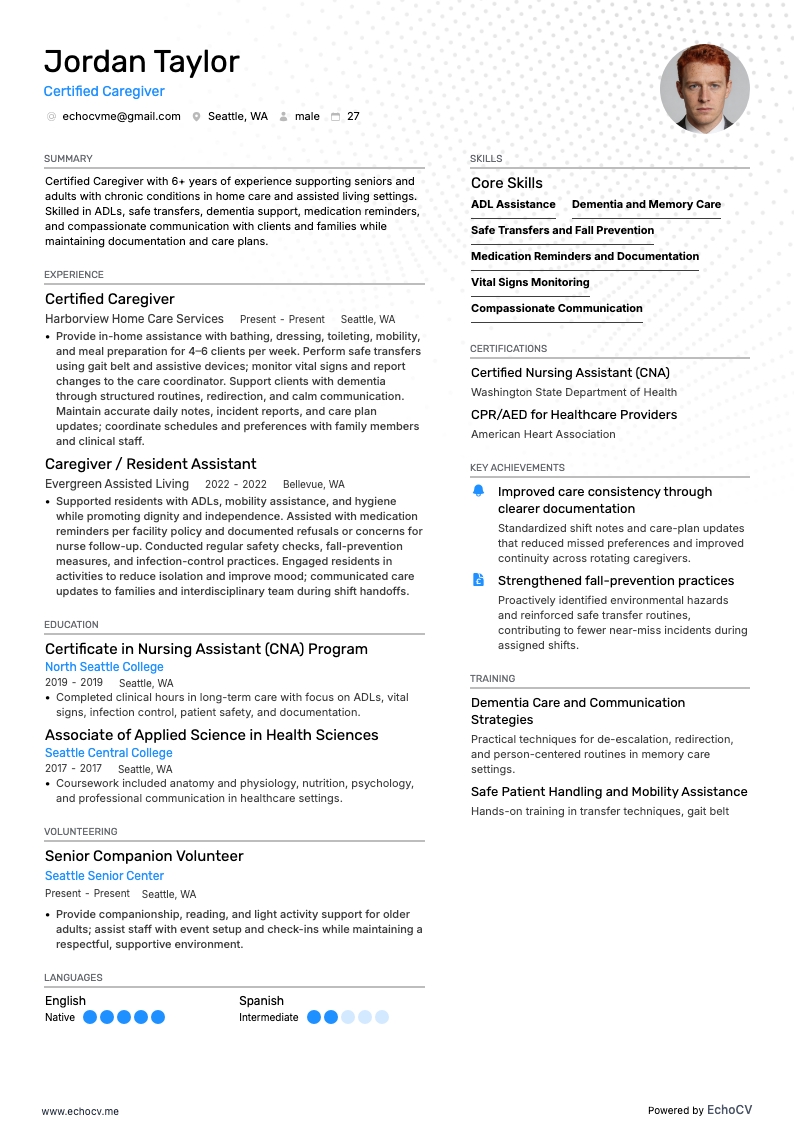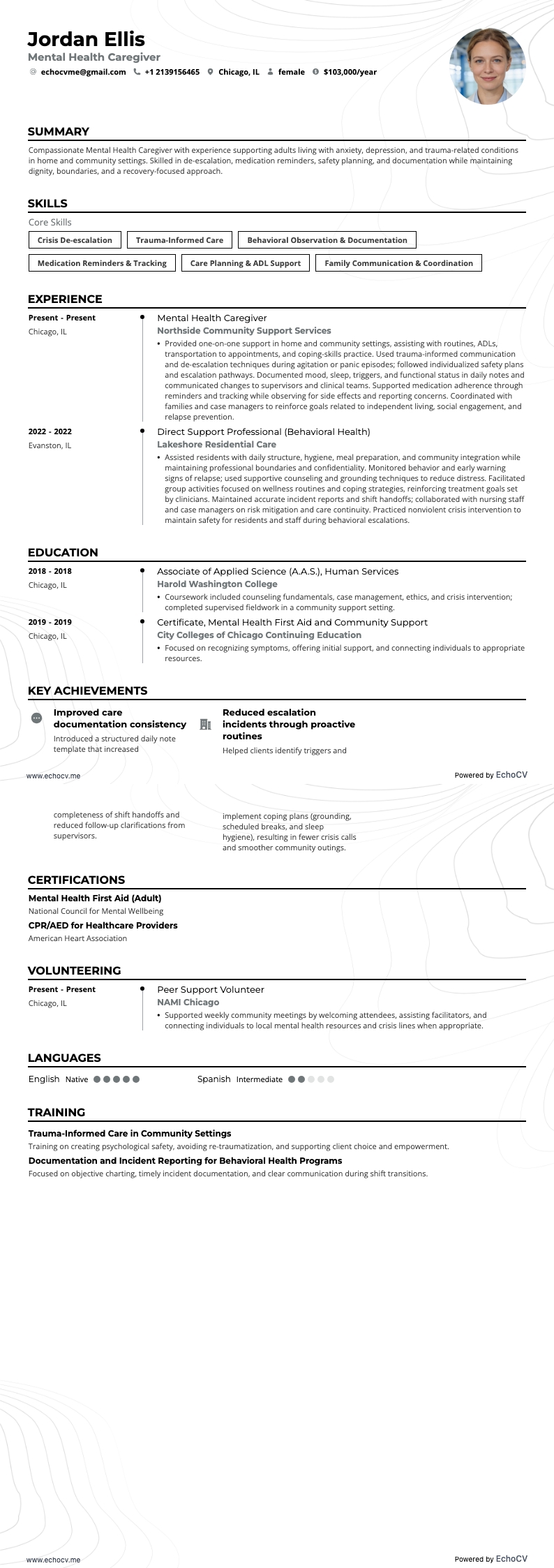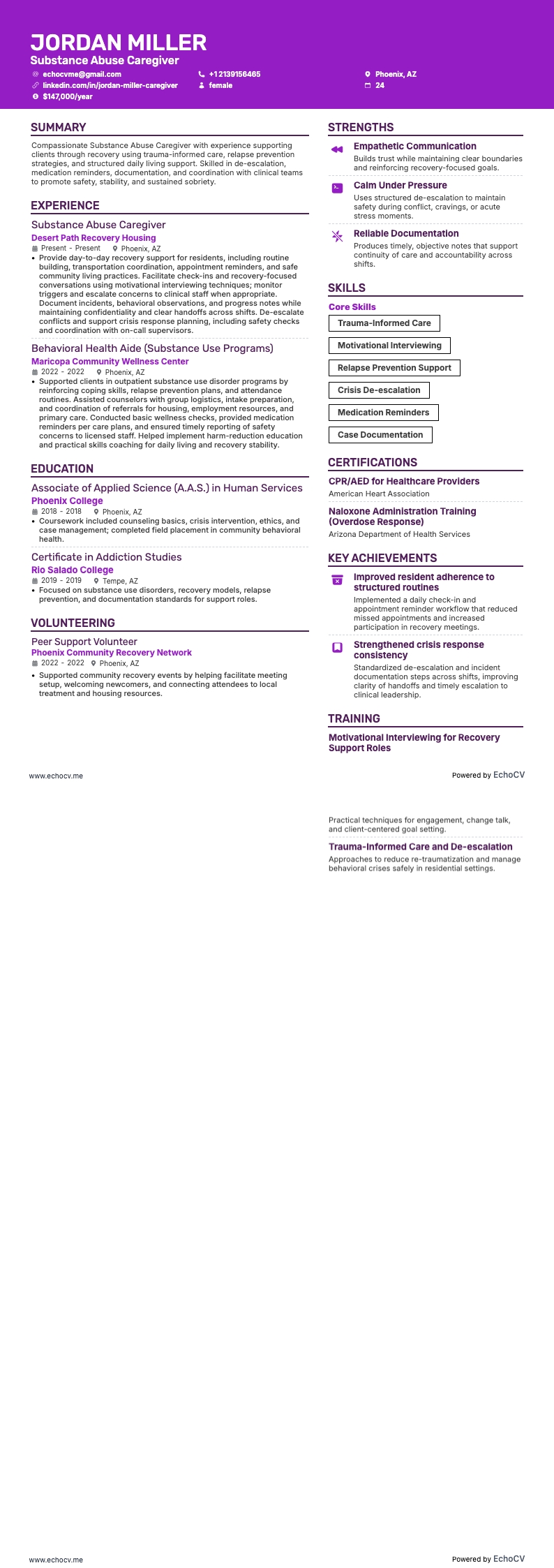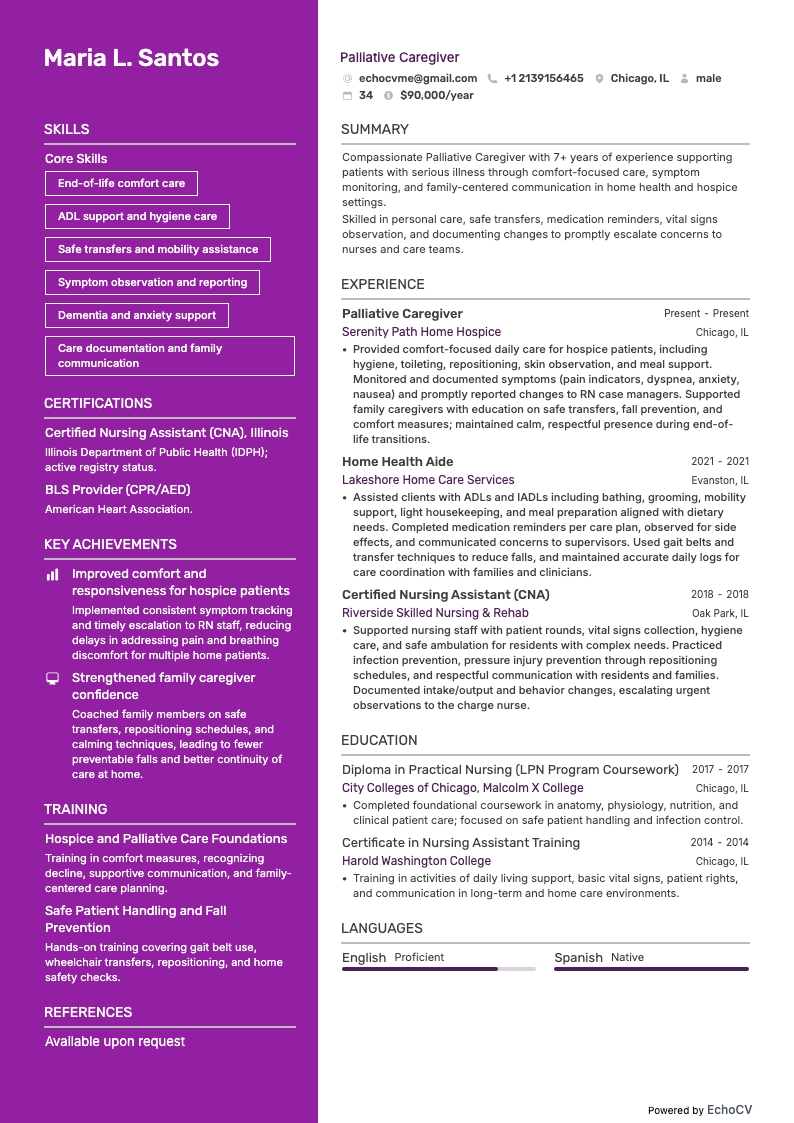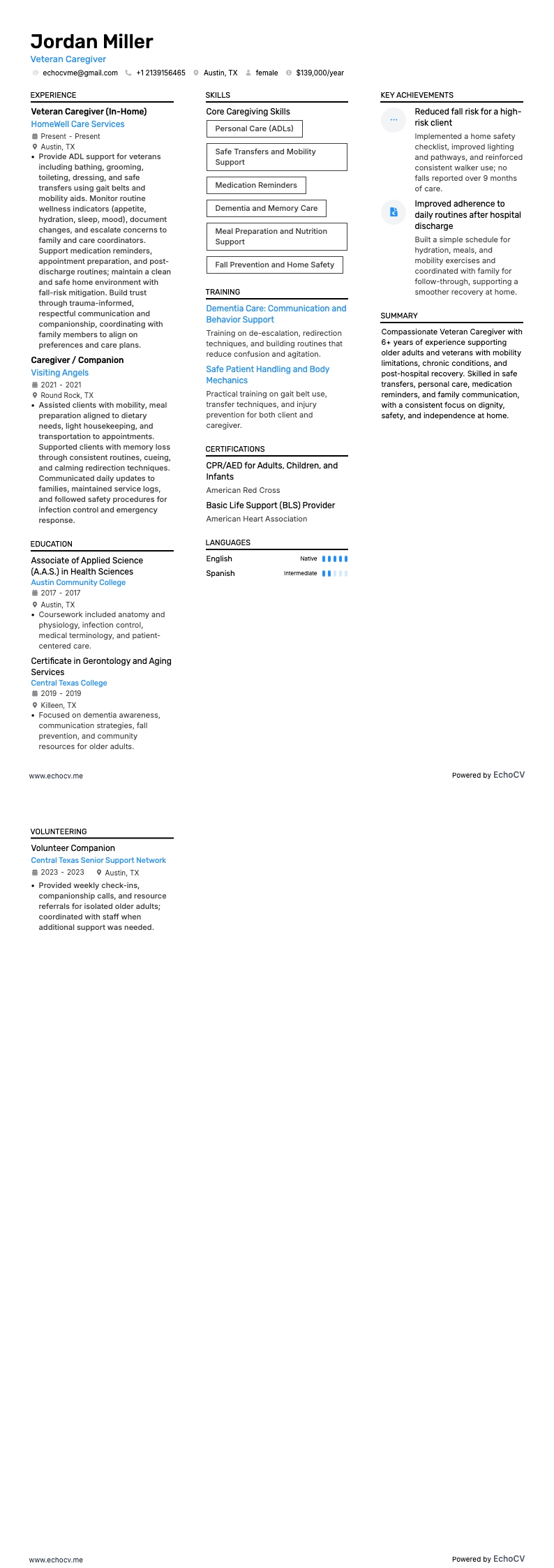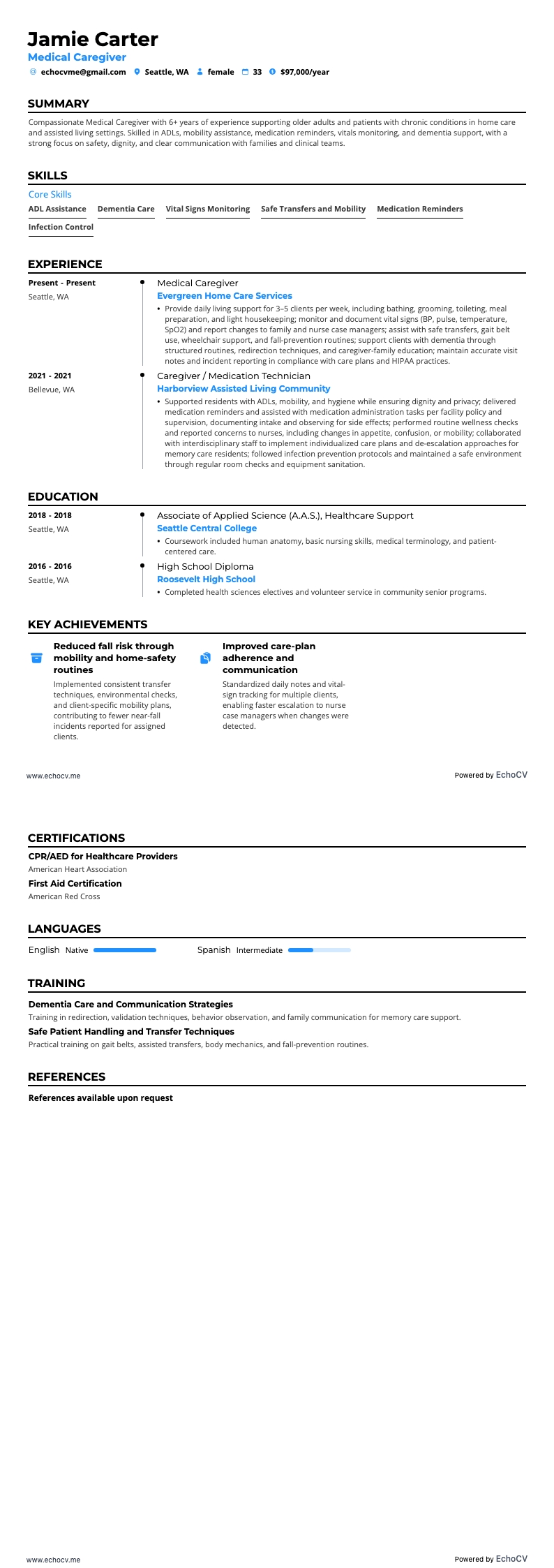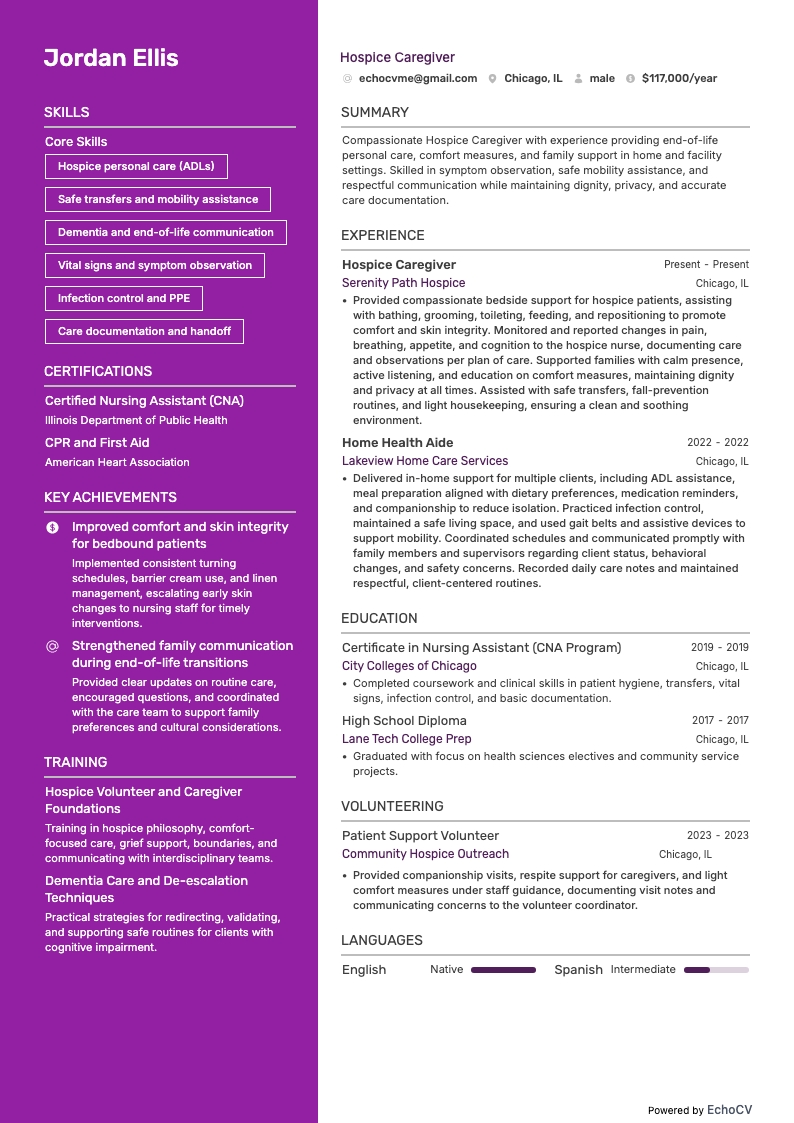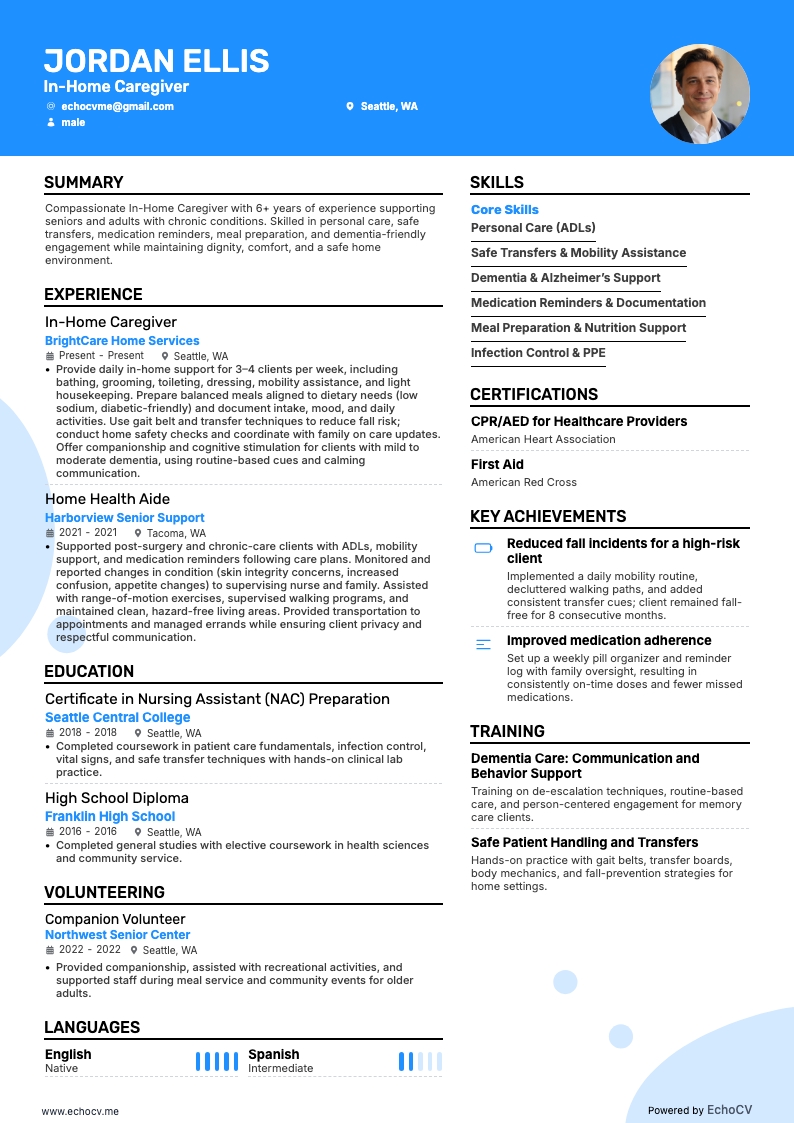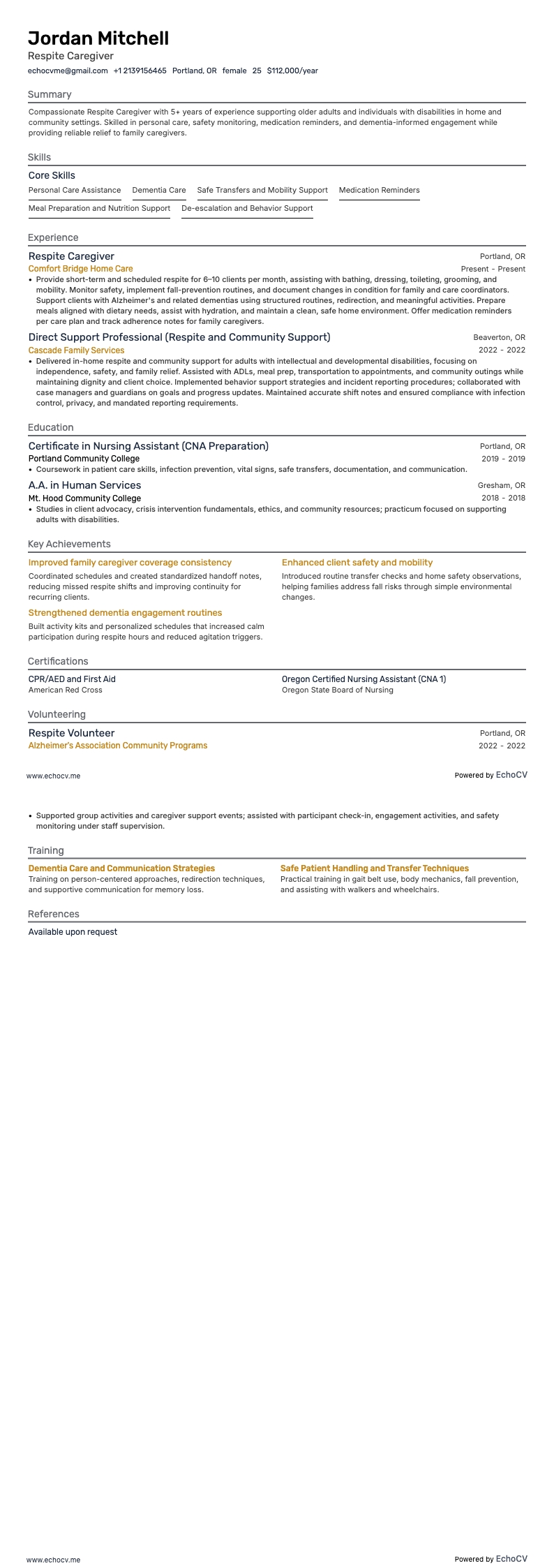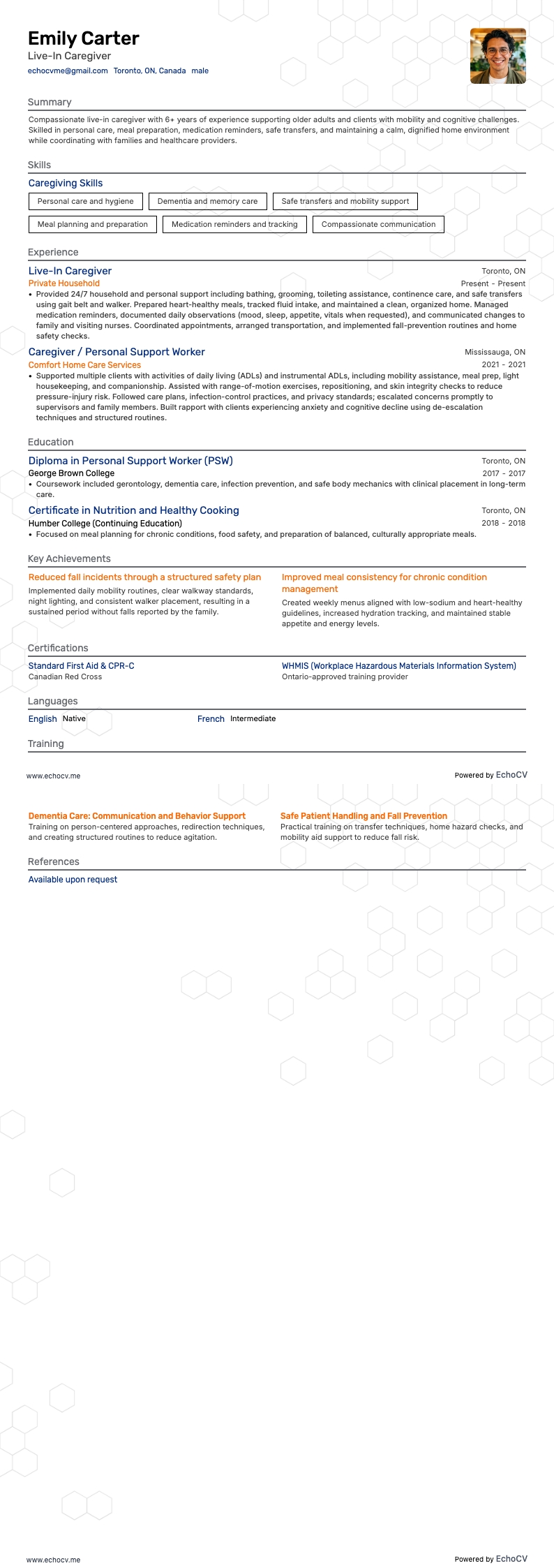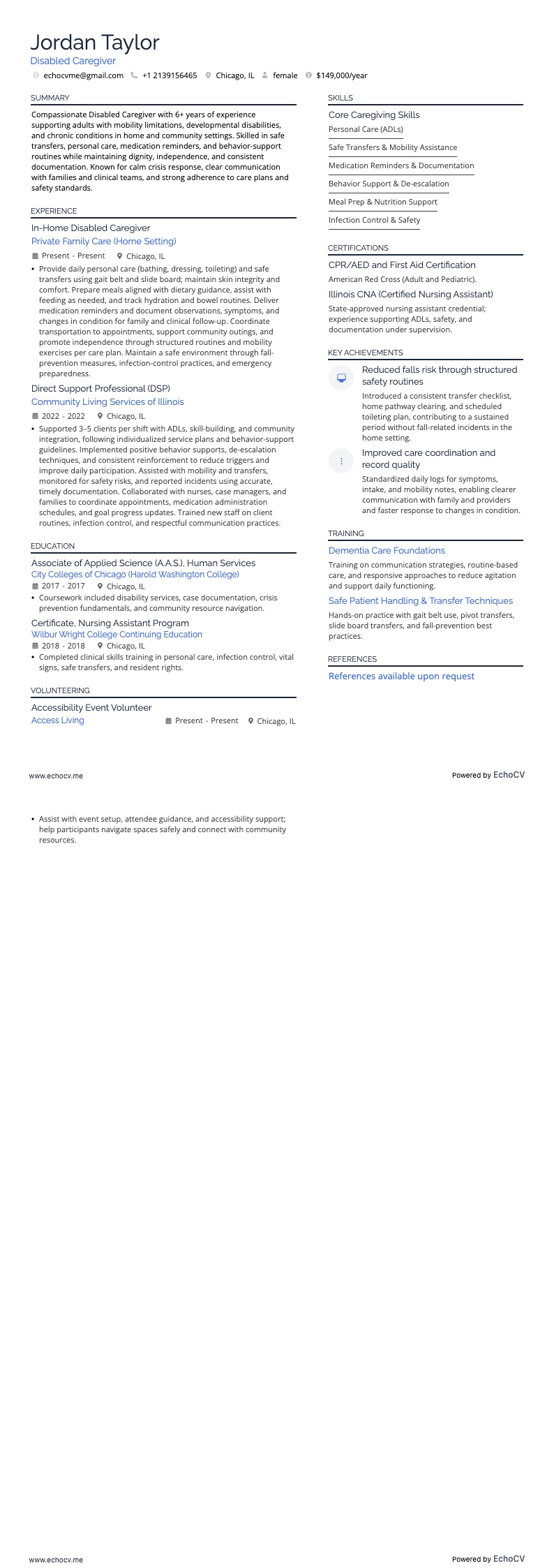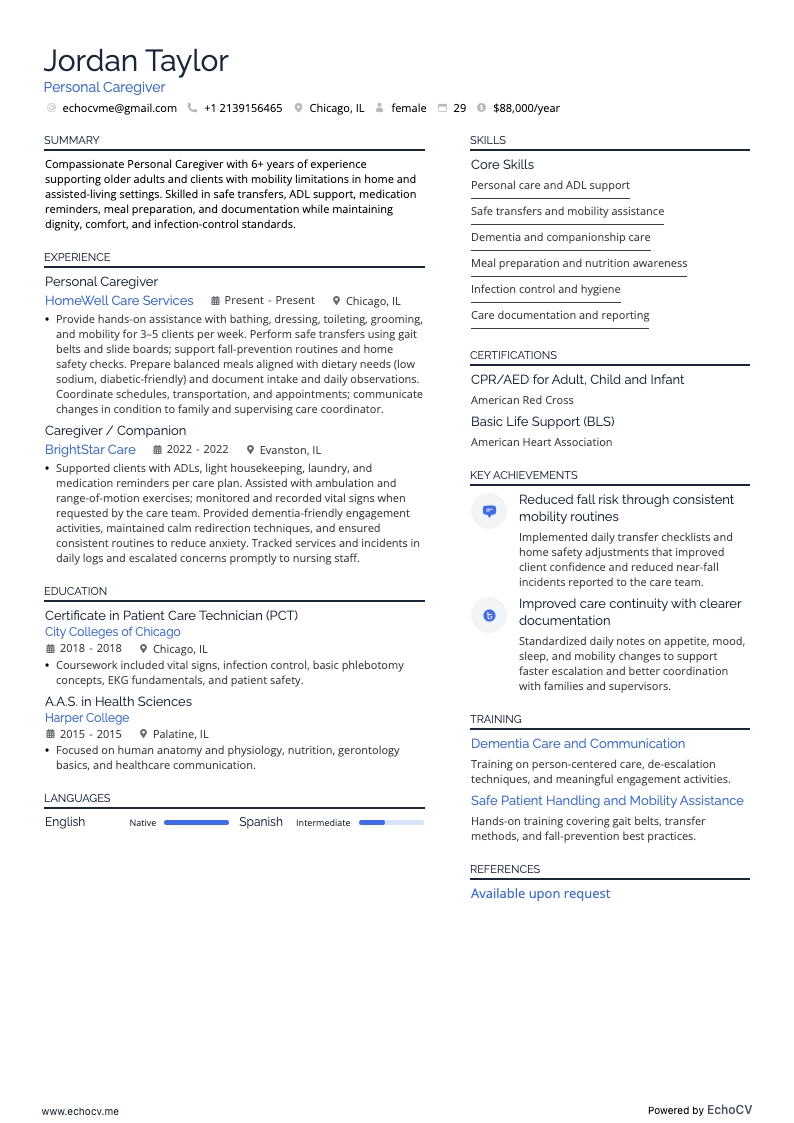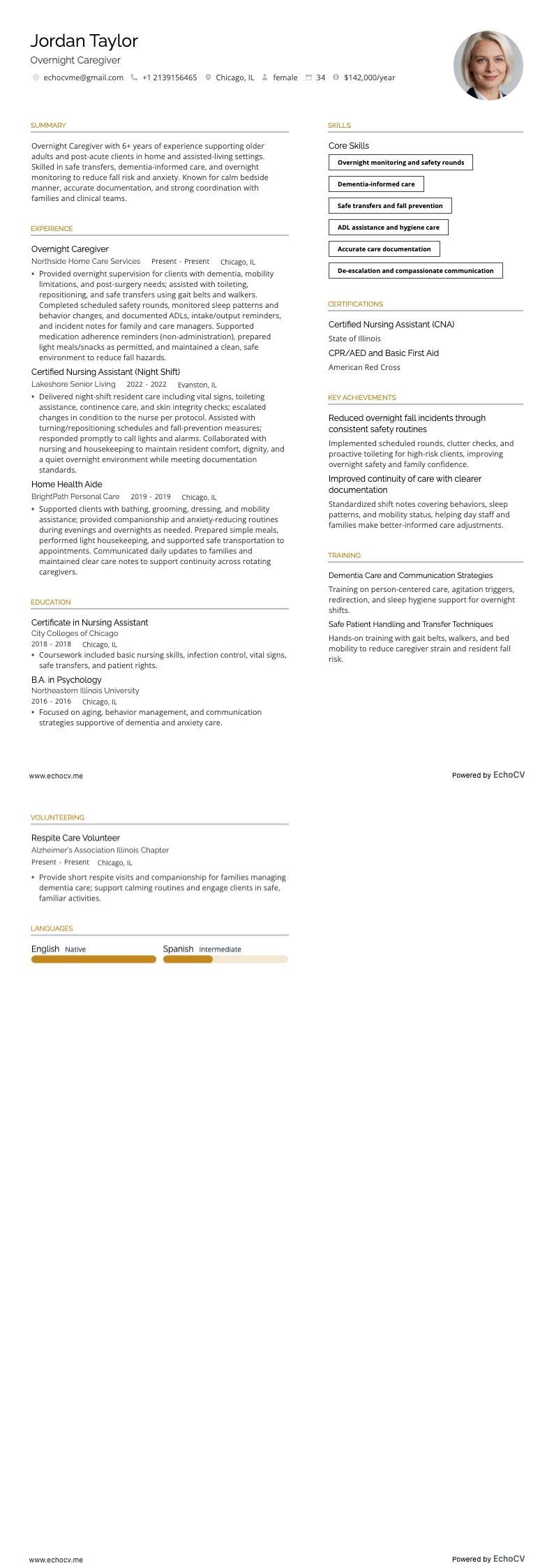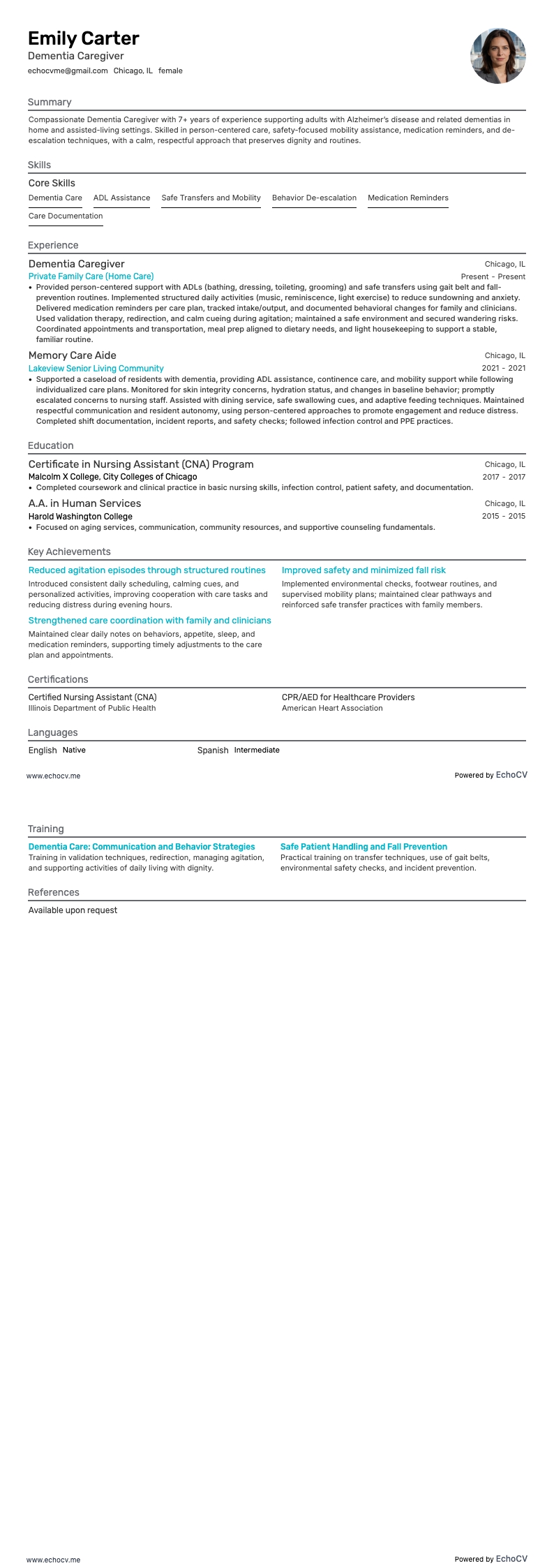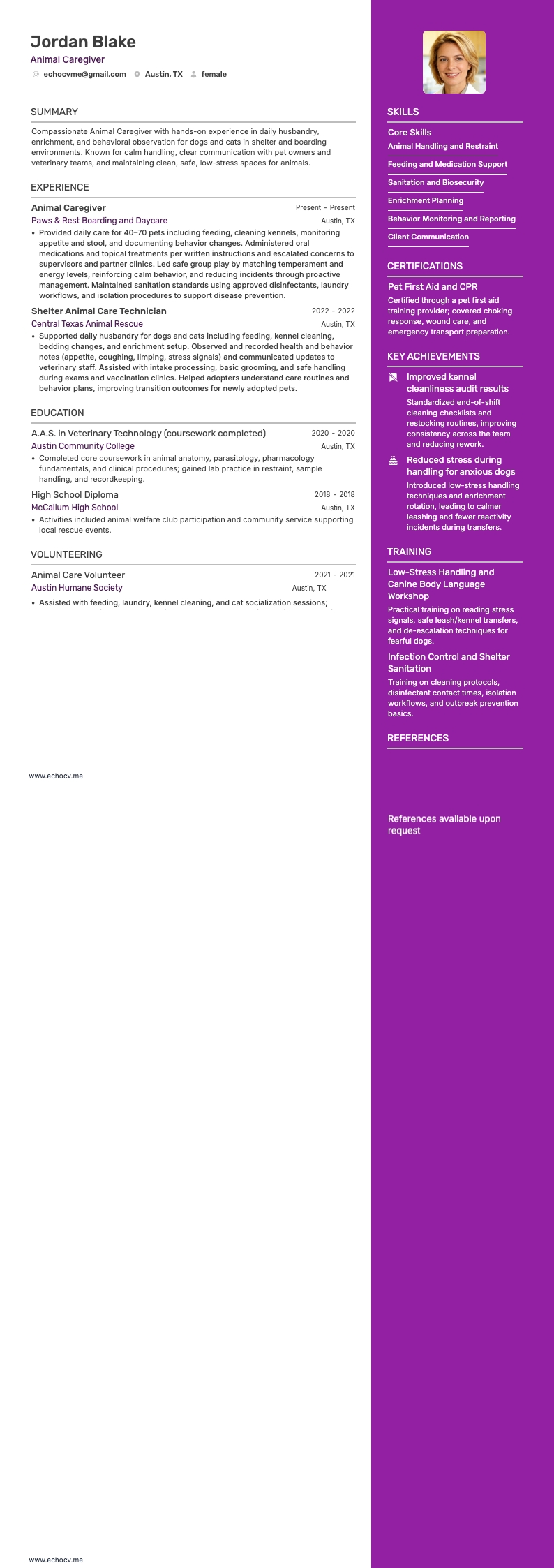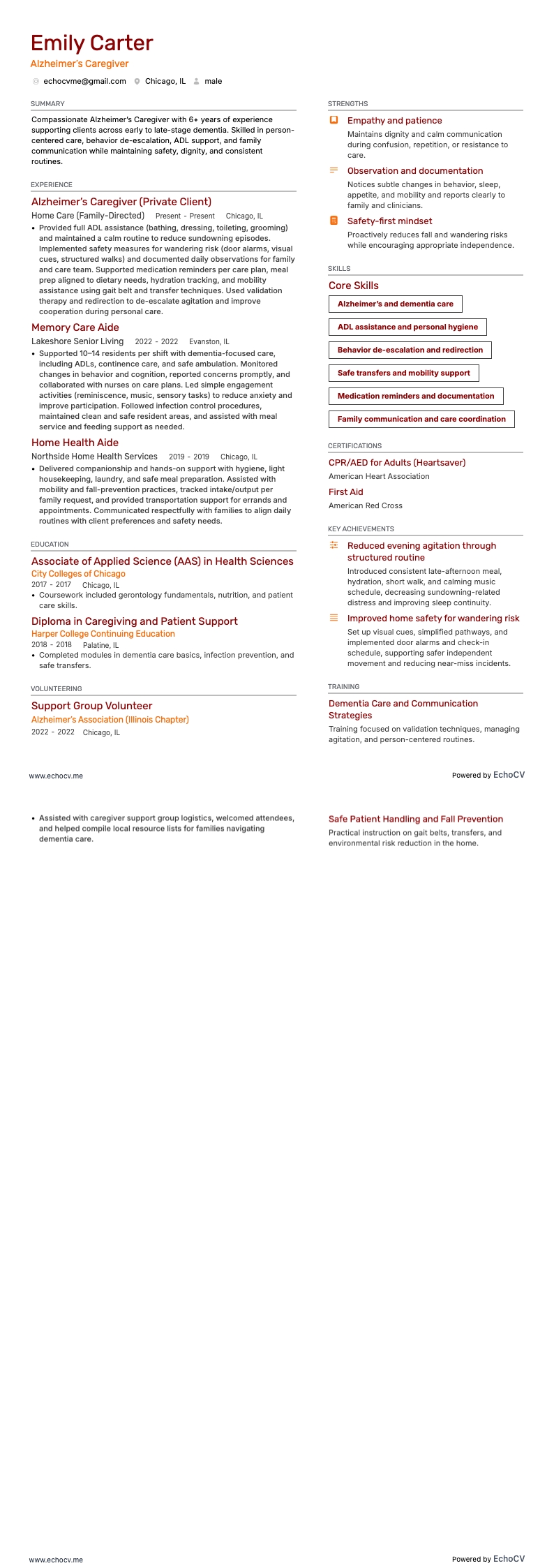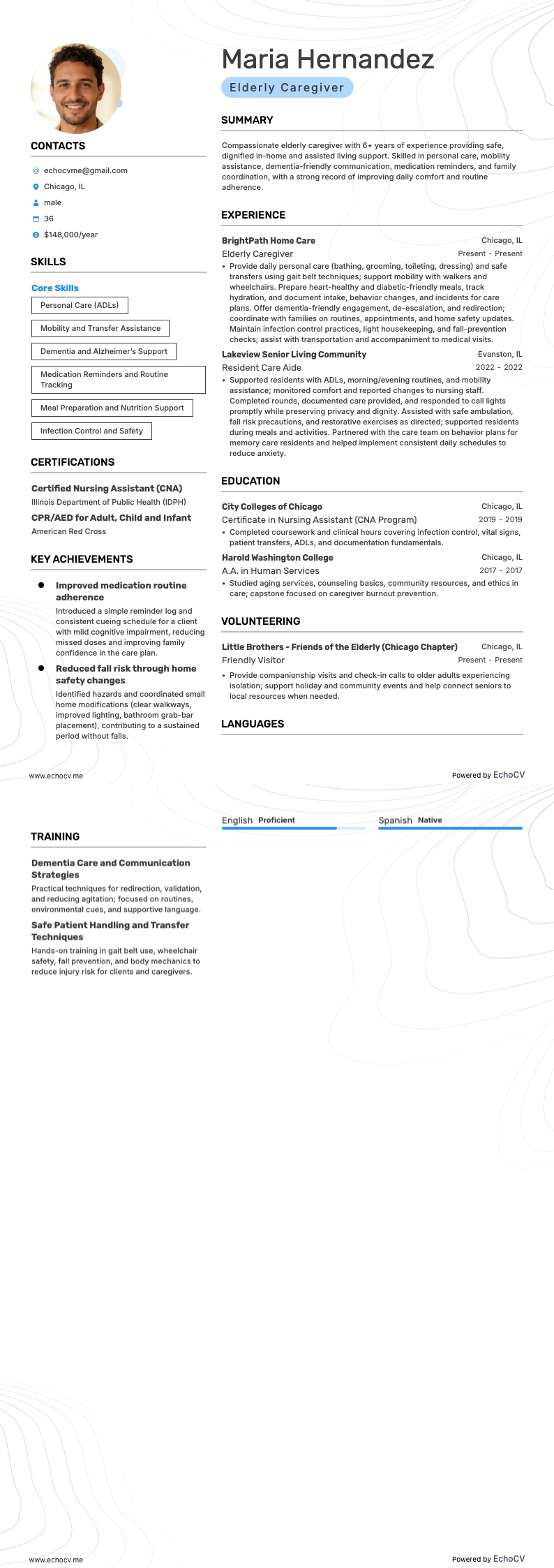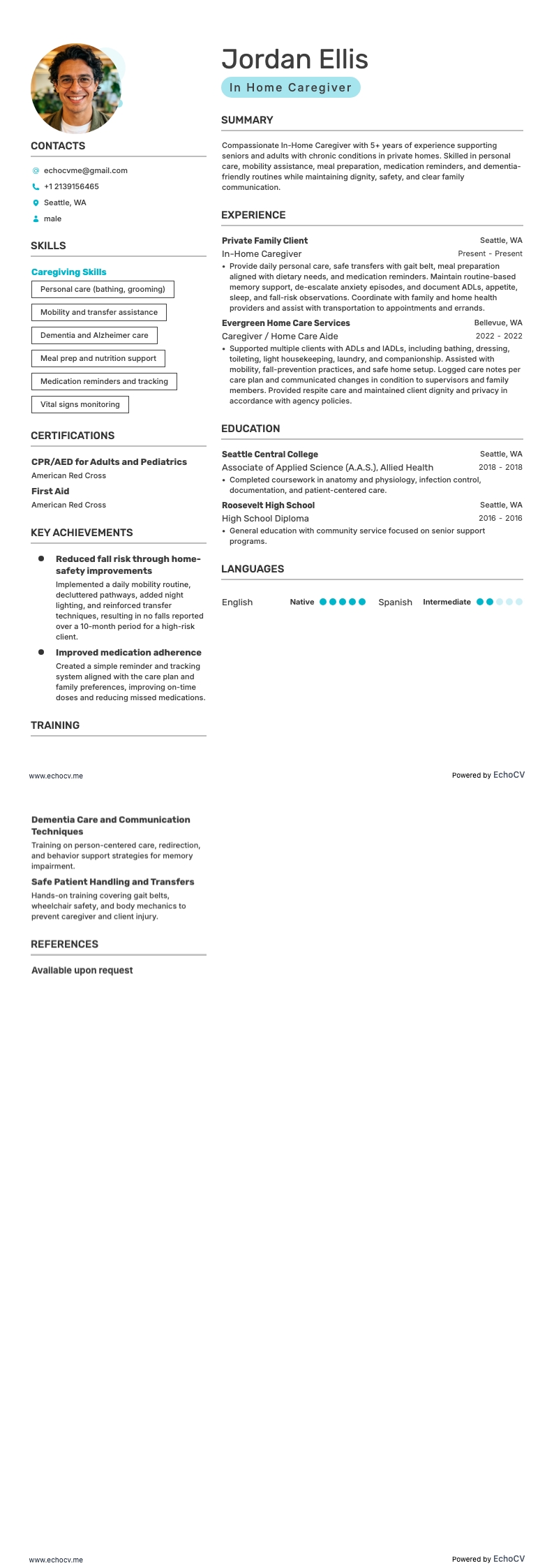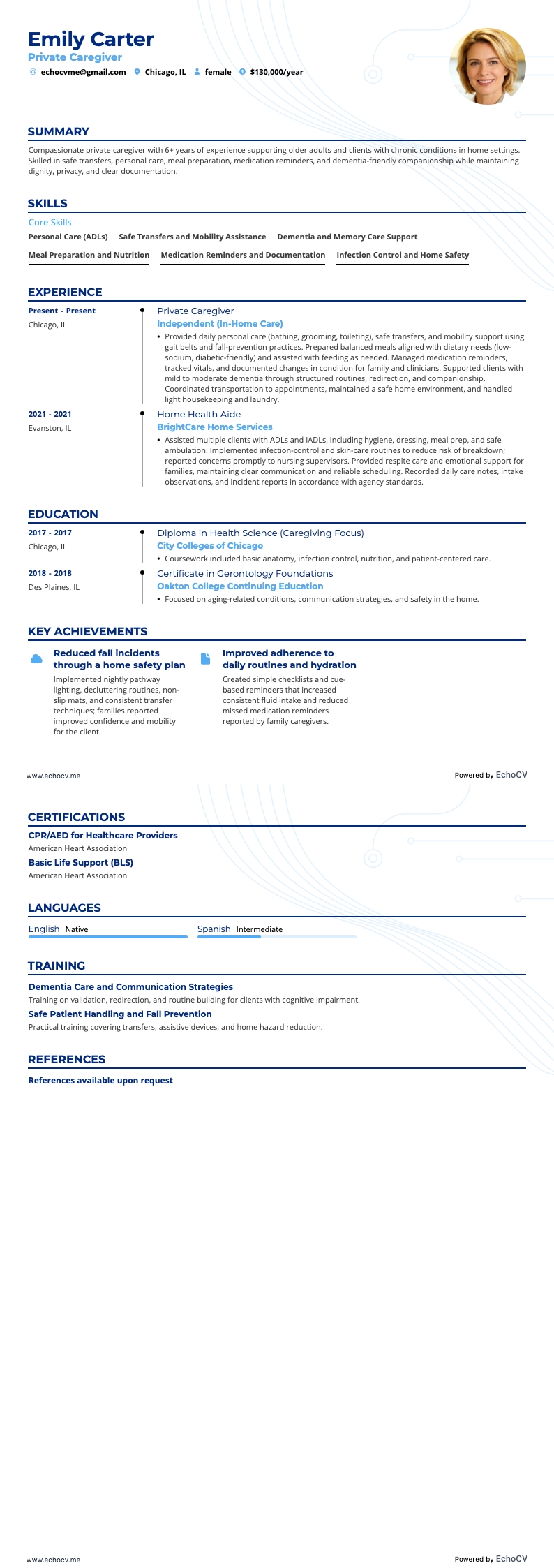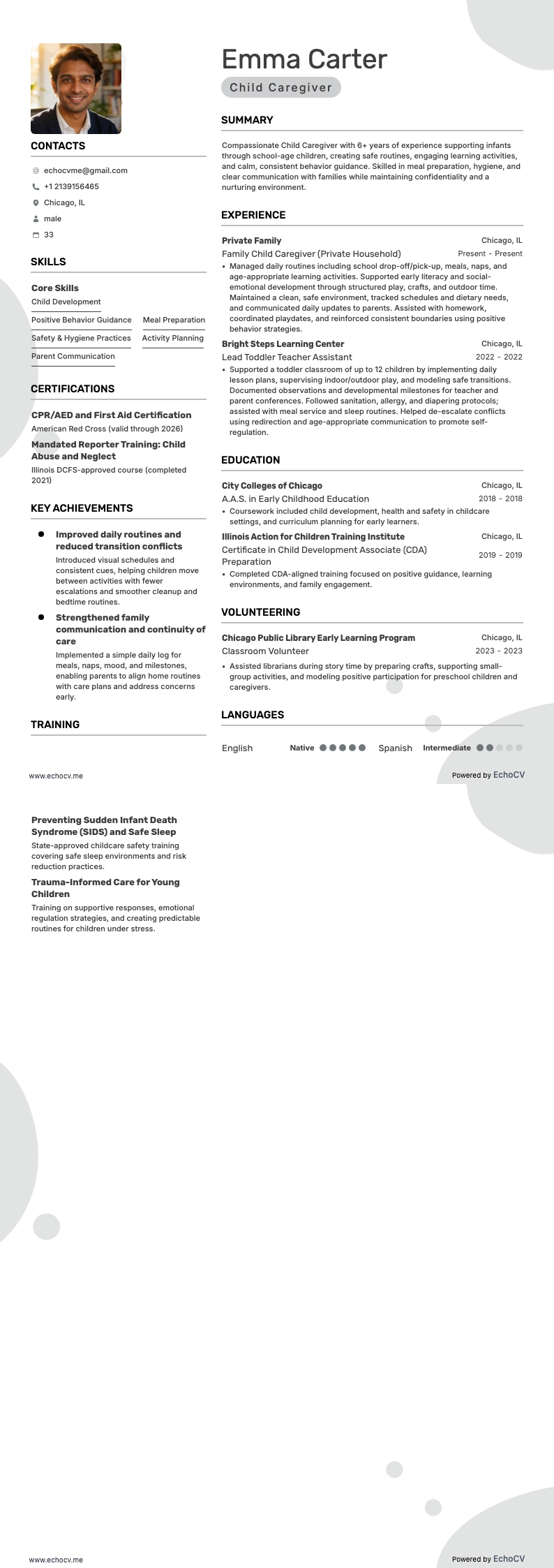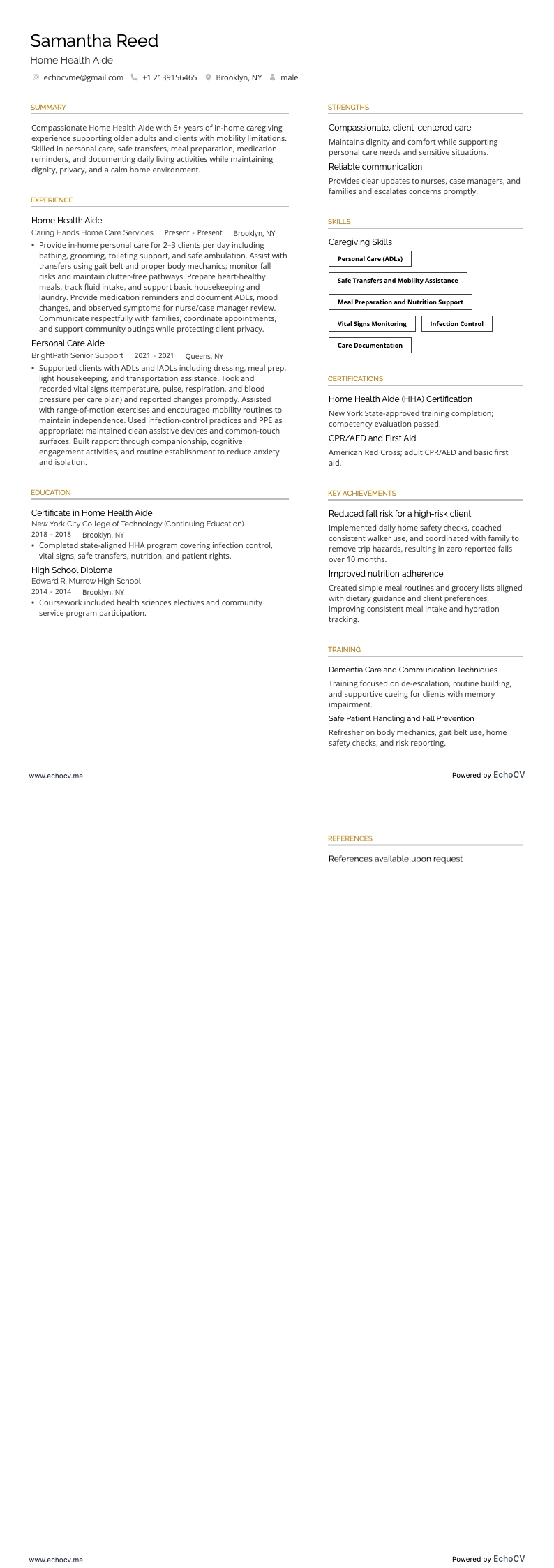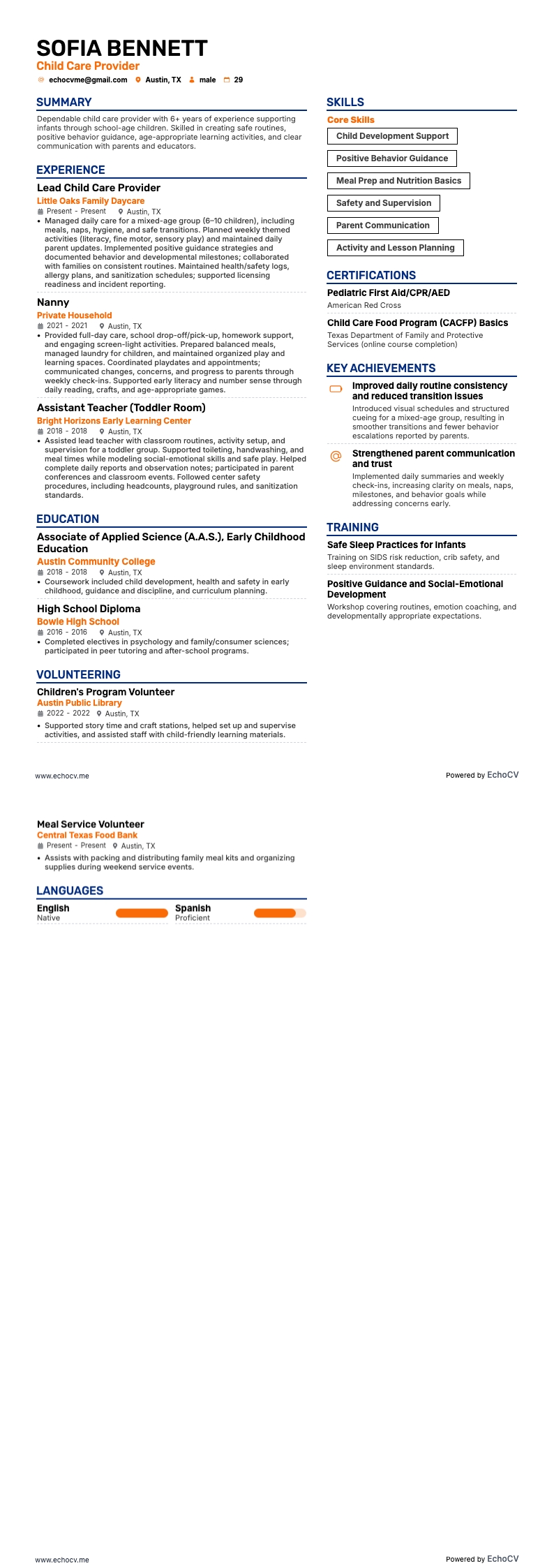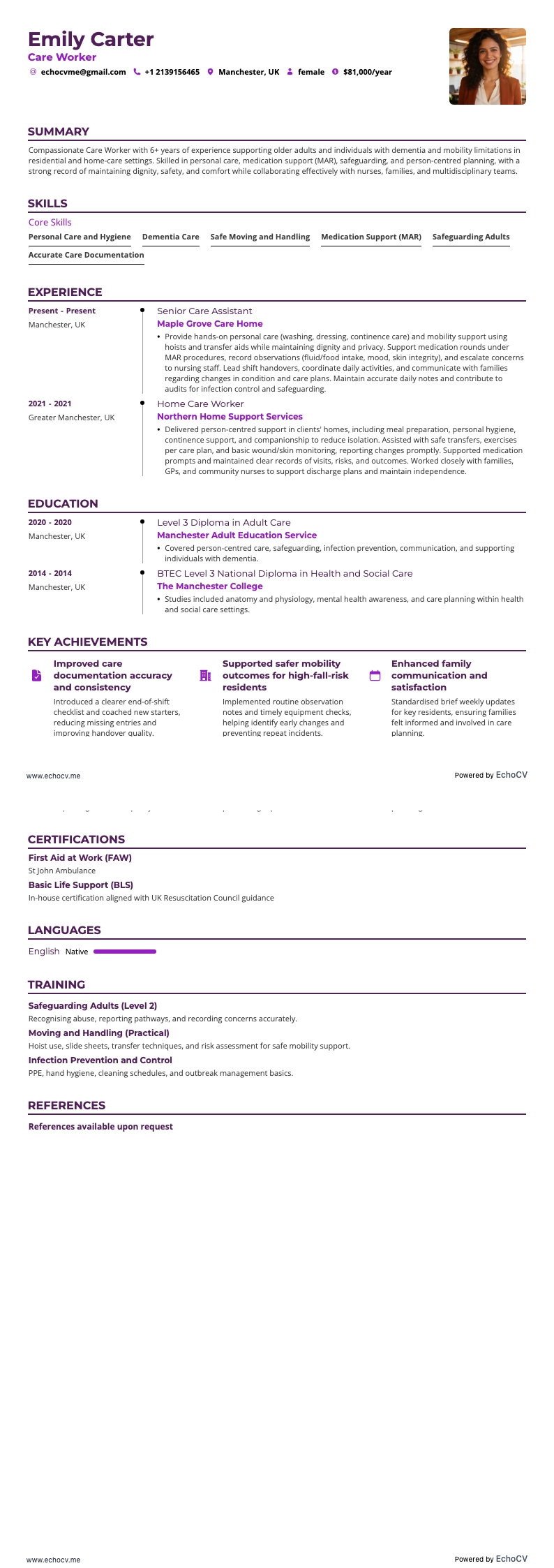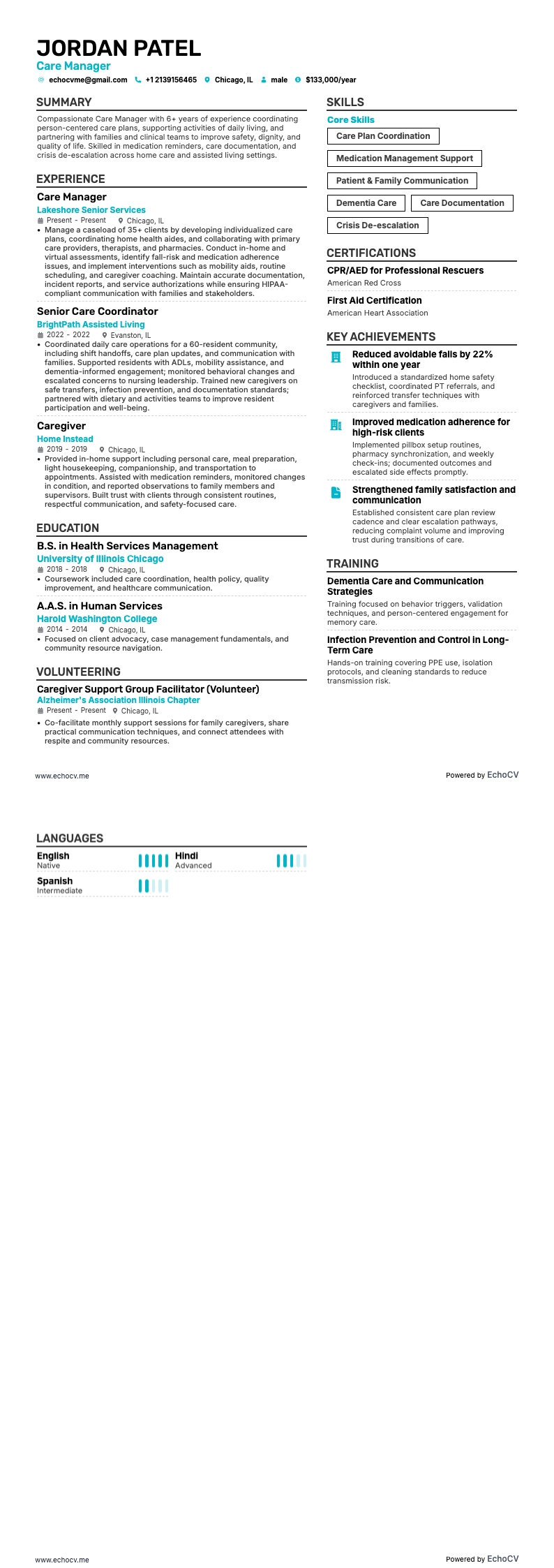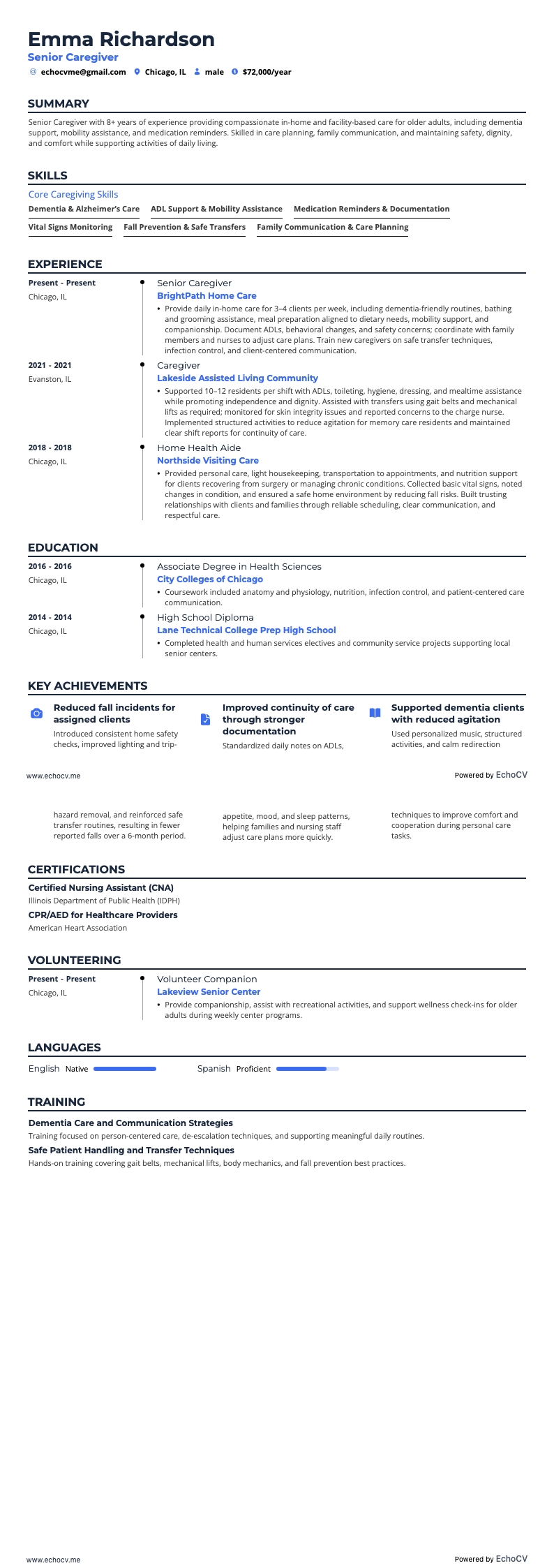
From this example, we get a clear example of this person’s performance and some of the tasks they did to help their patients.
This example clearly shows:
- They have experience in a large care facility and can manage multiple patients effectively
- The specific details on the duties they performed and how those tasks benefited their patients
- The types of medical equipment they are comfortable working with
- Demonstrates how they can talk with medical professionals and family members to discuss health issues
- Shows how they adapt their creative talents to keep residents entertained and mentally active
caregivers will sometimes have gaps in employment due to caring for family or for other personal reasons.
Caregiver burnout is a real condition. According to the National Alliance for caregivers and AARP Public Policy, 40% of professional and nonprofessional caregivers felt emotionally stressed, while 20% felt physical duress.
You can explain these gaps on your resume with a few short sentences:
“From April of 2004 to December of 2006, I was caring for a close family member during a serious illness. Now, I am ready to return to a professional caregiver role, and I think my qualifications and passion will fit well for the caregiver position.”
Next, we’ll talk about one of the biggest problems when creating a resume for caregivers. Quantifying caregiver work.
How to quantify the impact on your resume
Using numbers to quantify the impact of your resume experience is an excellent way to show off how your skills benefited your last employer.
When applying for a new job, the environment of the position will determine how you quantify your results.
If you are applying for a large care facility, you can say, “Improved patient mobility by 25% using proven physical therapy techniques.” Whereas if you are applying for a job in a family home, you can instead say, “Encouraged and assisted patients in exercise programs that allowed them to walk unassisted for 20 minutes longer than before.”
Here are some examples of how caregivers can use numbers and percentages to quantify the impact of their work:
- Assistance with daily living activities – “Assisted 10 patients every day with bathing, dressing, eating, going to the bathroom, and other daily activities.”
- Improvement in patient health and mood – “Implemented mental and physical activity programs that increased patients' mood and general well-being by 30%.”
- Medication management – “Responsible for medication management for 15 patients that includes administering all types of medication and confirming new medications do not cause any adverse reactions.”
- Efficiency and time management – “Organized patient and caregiver scheduling to decrease wait times by 13%, which allowed for faster response times.”
- Patient or family satisfaction – “Maintained a 98% satisfaction rating during employment.”
- Compliance and safety procedures – “Implemented new safety procedures that reduce the number of patient and caregiver accidents by 10%.”
- Volume of work – “Managed up to 23 residents’ daily activities and appointments to ensure they are active and keeping up with all medical and therapeutic appointments.”
- Attendance and reliability – “Maintained a 100% attendance record for over five years.”
Let’s take a moment to talk about creating a resume for a caregiver with no experience.
How do I write a caregiver resume with no experience
Having no experience should not keep you from applying for a caregiver job. There are plenty of entry-level positions available where you will use any related caregiving experience to show off your skills.
Caregivers with no actual real-world experience can still create an attention-getting resume by making a few simple changes to the format.
- Create a resume objective that lists your career goals instead of a summary that lists past work experience.
- List your education and skills set before your resume experience section.
- Include relatable jobs, such as caring for family members, volunteering at hospitals and care facilities, and any other job where you helped people.
- Include additional sections, like patient/family testimonials, strengths, spoken languages, and professional associations.
When listing relatable work experience, focus on those transferable skills, like active listening and dementia care, so future employers can see you have the experience they are looking for.
Now it’s time to add those all-important hard and soft skills that employers and families want their caregivers to have.
How to list your hard skills and soft skills on your resume
Having a well-rounded list of soft skills is essential for caregivers if they want to give their patients the best care possible. Soft skills are those life experience skills, such as articulating medical knowledge to non-medical family and loved ones and showing compassion for others.
Hard skills are the skills that you learn from teachers and on-the-job experience. They include necessary skills, like:
- Reading vital signs
- Administering medication
- Performing CRP and First Aid
- HIPAA rules and regulations
When writing this section, keep in mind one important fact about applicant tracking systems.
Employers will enter specific keywords into ATS software to search for skills they need. If you write “Able to express empathy” on your resume and the job description says “Shows empathy,” the software may not recognize that as a skill you have.
Always match the skill sets on your resume to the listed skills in the job description word for word.