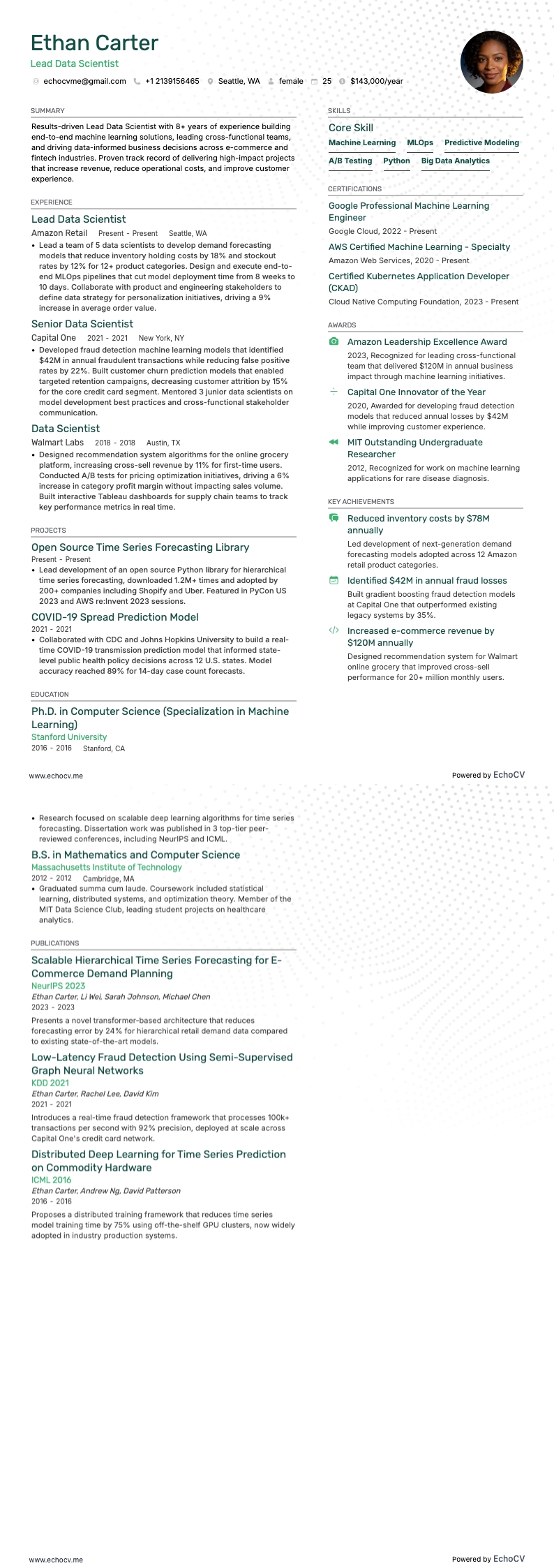
What works in this example:
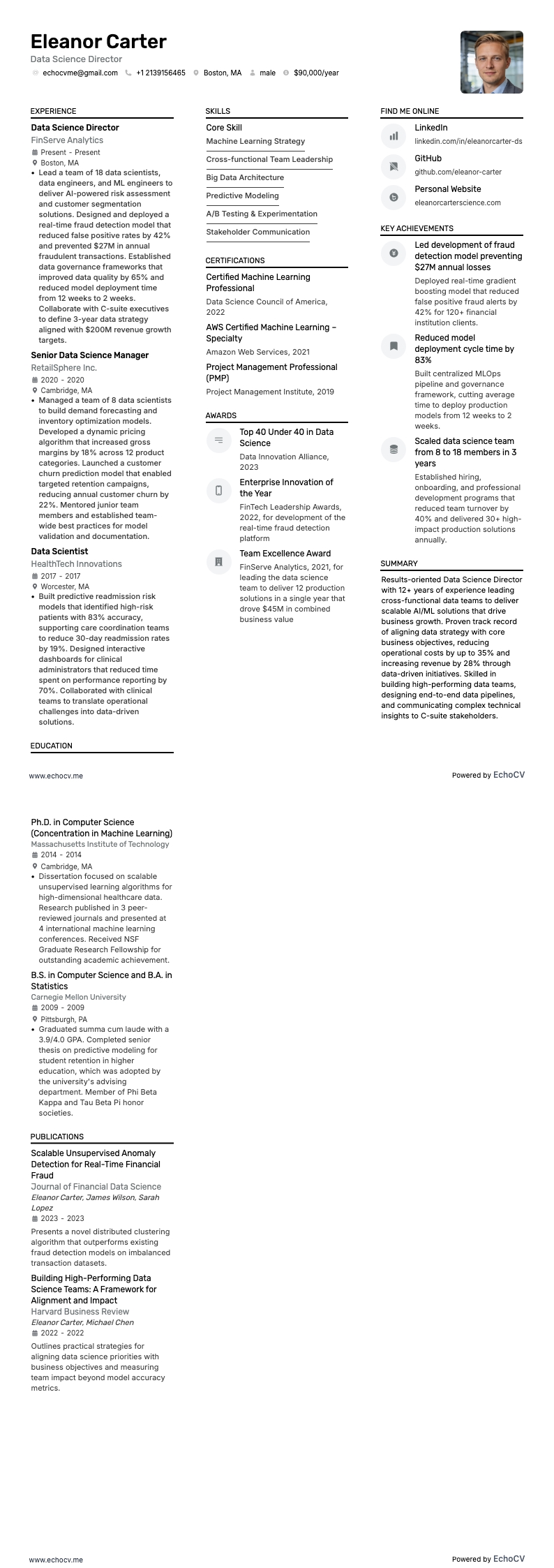
- Shows evidence of specific results by “achieving a 20% improvement of approval decision time”
- Shows project management skills by mention “team of 20 data scientists working on 6 different projects”
- Shows industry-specific “data restructuring” skills and reach of “16 different countries”
This version is a big improvement. It quantifies impact with measurable results and industry-specific skills.
Always focus on relevant achievements instead of general responsibilities and tailor every section of your resume to fit your target job.
How to quantify impact on your data scientist resume
Companies hire data scientists to provide solutions and maximize success. If you want hiring managers to give you a chance, you need to quantify impact on your resume.
Recruiters will be looking through a stack of resumes that all list “data visualization” and “algorithm development” as skills. It’s not enough just to list it. You need to prove it.
Provide evidence to support your claims by sharing specific achievements with measurable success. Use real data and numbers to quantify impact in every section of your resume.
Quantitative data that can strengthen your data scientist resume include:
- Increased sales revenue
- Reduced redundancy or errors
- Rate of engagement or number of users
- Improved algorithm accuracy
- Profit margin
- Time saved for the company
- ROI for projects
Use these metrics throughout your resume to show potential employers exactly how you’ve achieved succes in previous roles.
Writing an entry-level data science resume
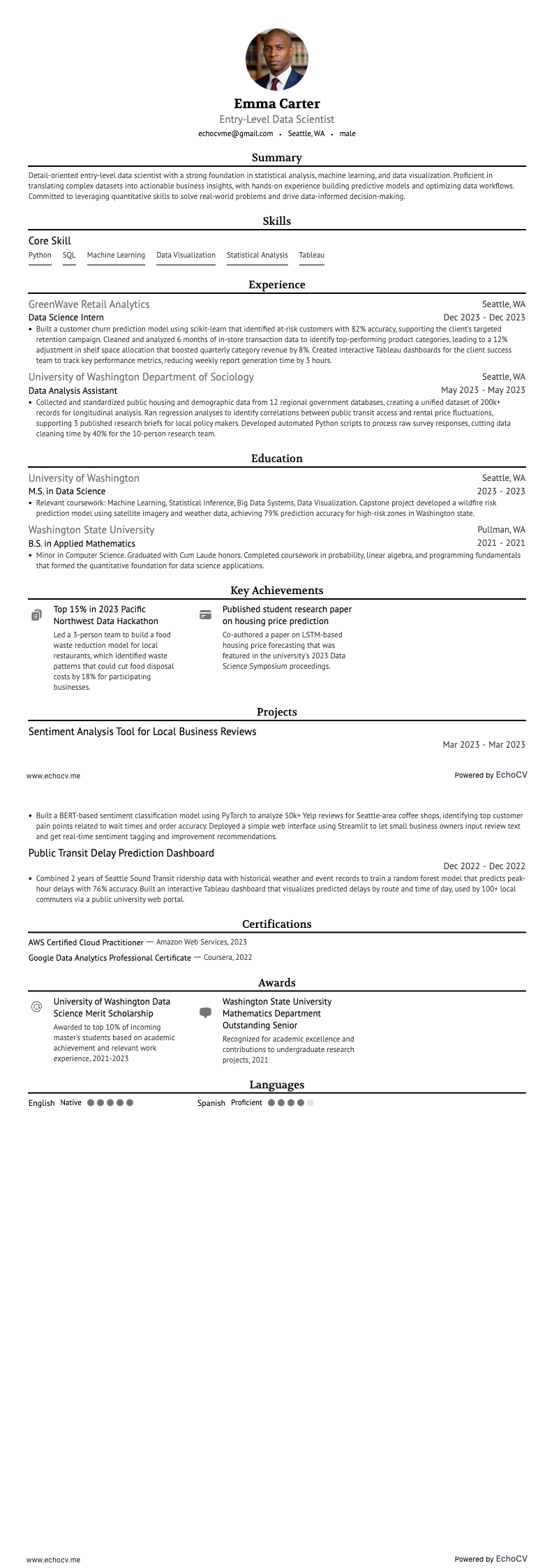
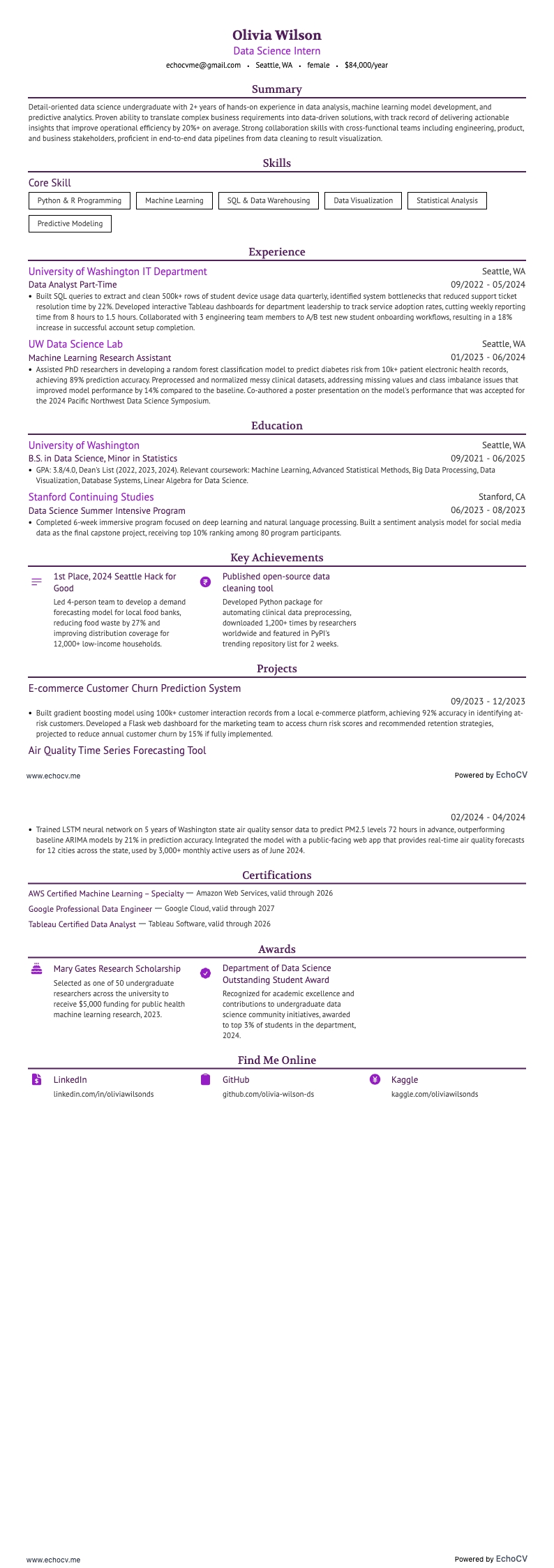
Just because you’re a recent grad looking for your first job in data science, don’t start thinking “I’m done, I don’t have any experience yet!”.
You’re mistaken if you think you don’t have any experience. Consider including
- Course projects that involved data science work - surely you’ve practiced your skills on a few practical exercises you can list here. Just make sure you feature the new and exciting projects - no one wants to see the same tired Titanic Survivor project!
- Internships - no matter if it’s your uncle’s company or a university help gig, you probably learned a lot, including keeping up with deadlines, working well with others, and communicating data results to different audiences. Practical skills matter, even if they’re soft skills.
- Volunteer work or side projects - if you don’t have practical experience, create some. There are tons of local SaaS startups that would benefit from logistic regression analysis to uncover their user activation points - help them out and use that as a practical example in your resume.
As you can see, there is a lot going on beyond traditional 9-to-5 steady job experience. And all of these will look great on your data scientist resume!
Looking to build your own entry-level job resume? Follow the steps in our guide on How To Write Your First Job Resume.
How to list your hard skills and soft skills on your resume
A data scientist needs a unique set of skills that lets you explore, transform, visualize and model datasets, and also communicate constantly with diverse stakeholder groups.
Make a good impression by showing that you have the right combination of hard skills and soft skills to accomplish this.
In “Top 10 Big Data Skills to Get Big Data Jobs” Amit Verma presents a comprehensive list of languages and systems data scientists should be able to work with, including