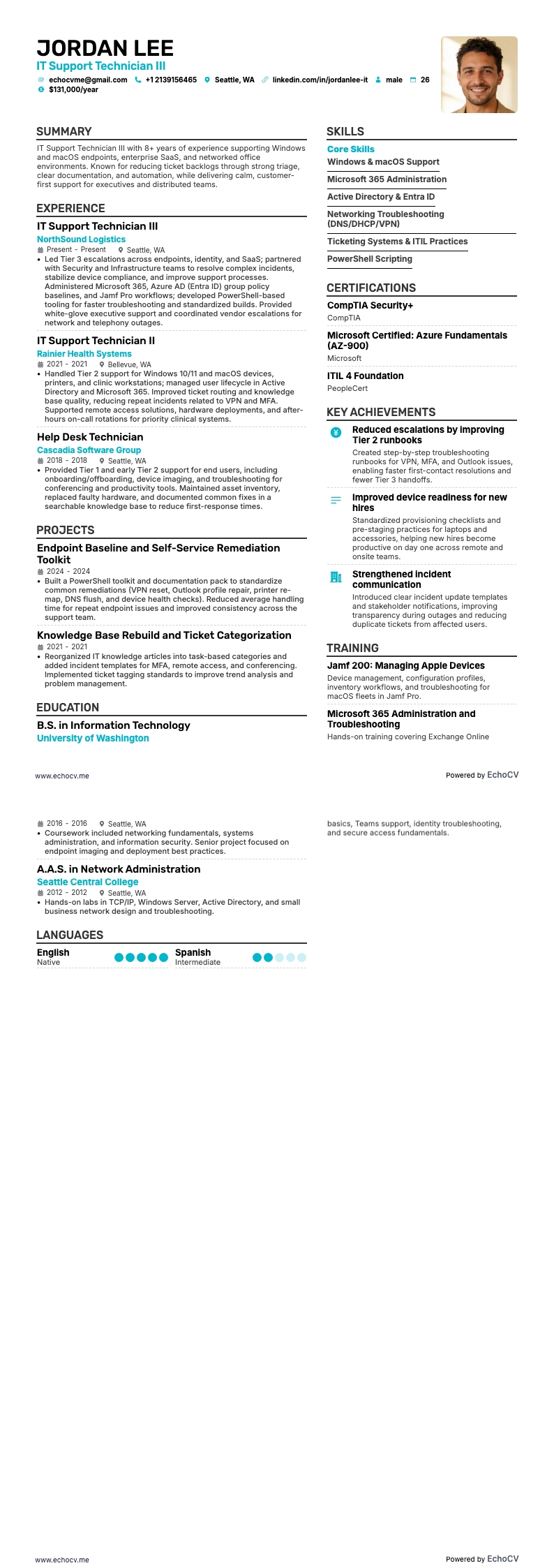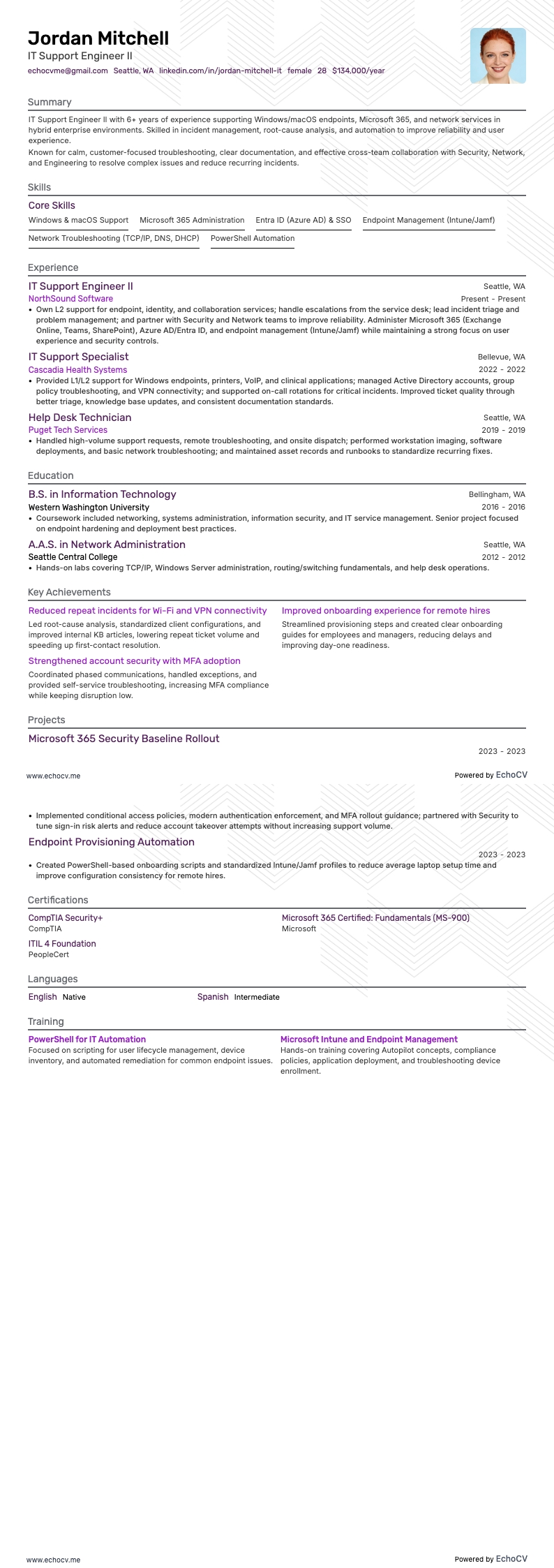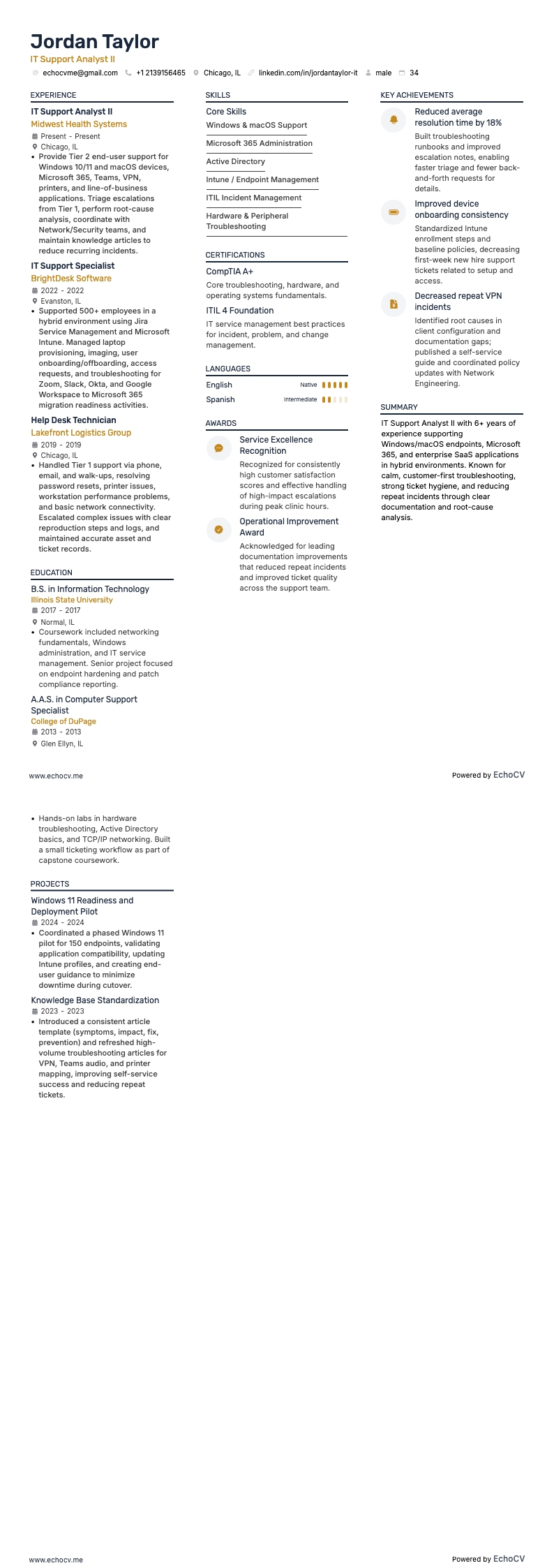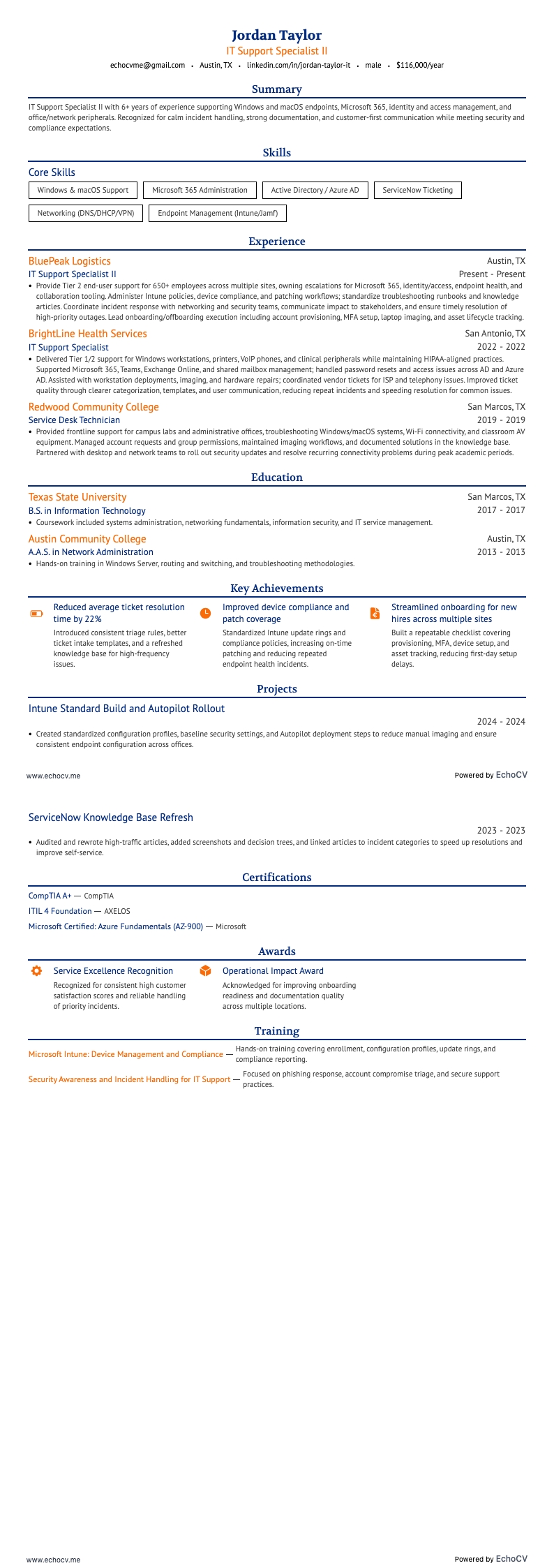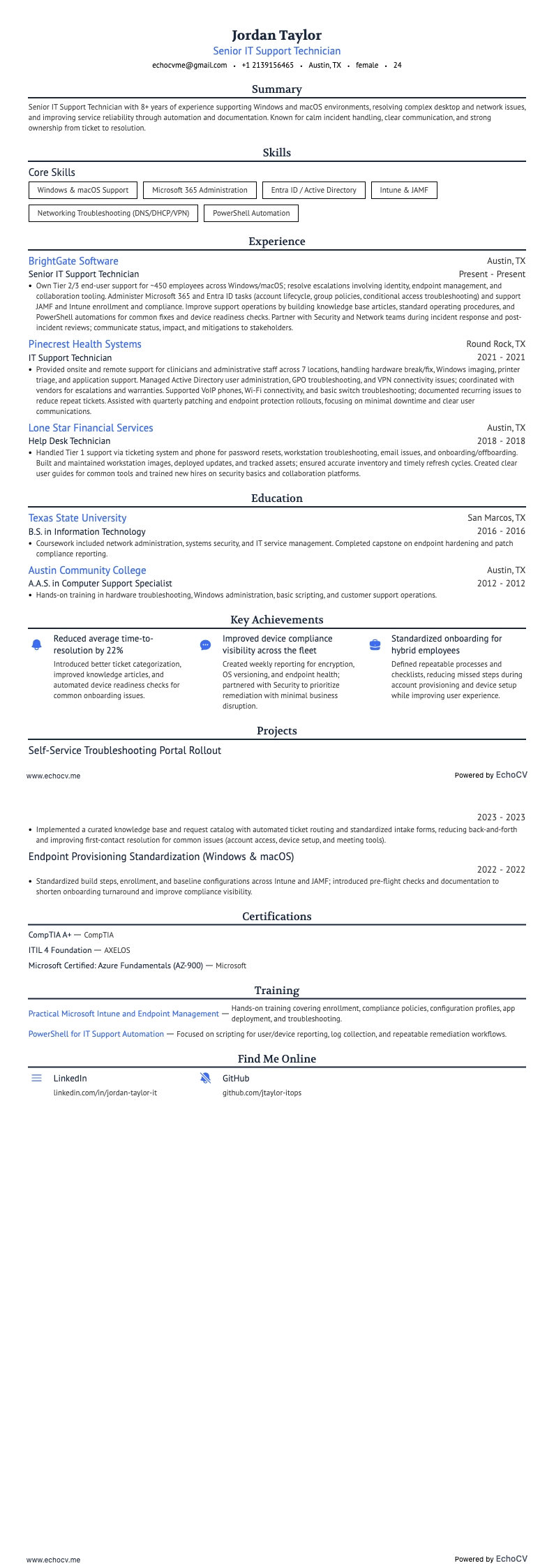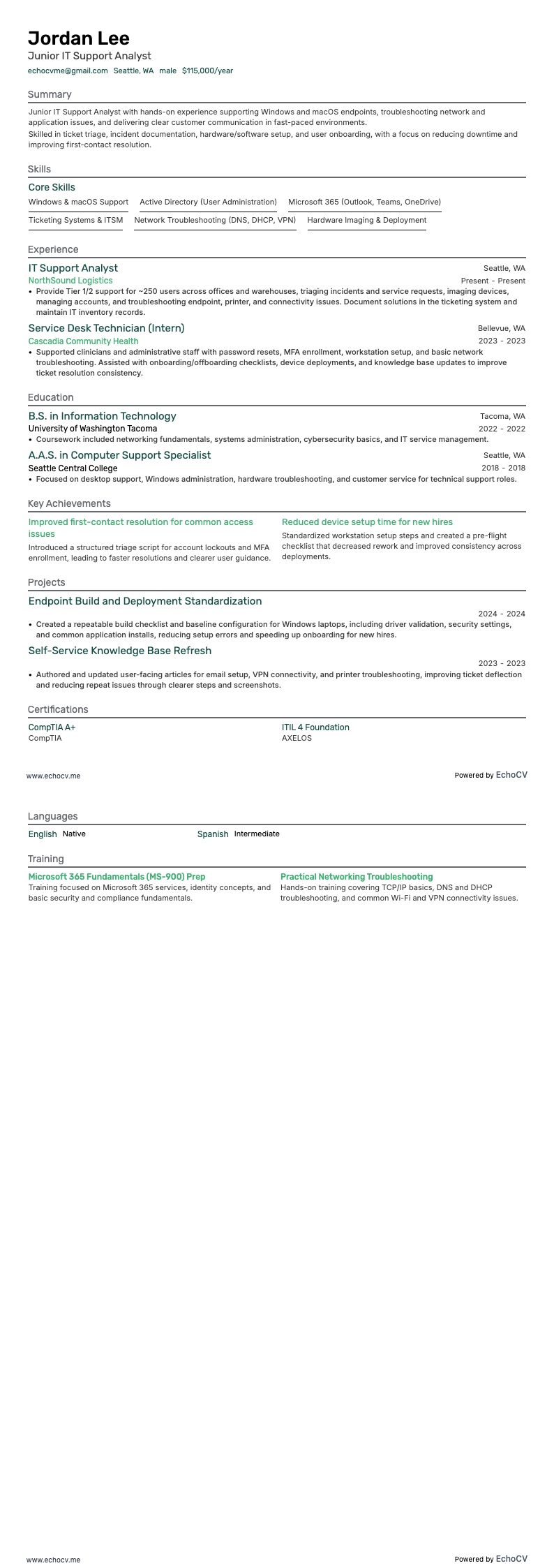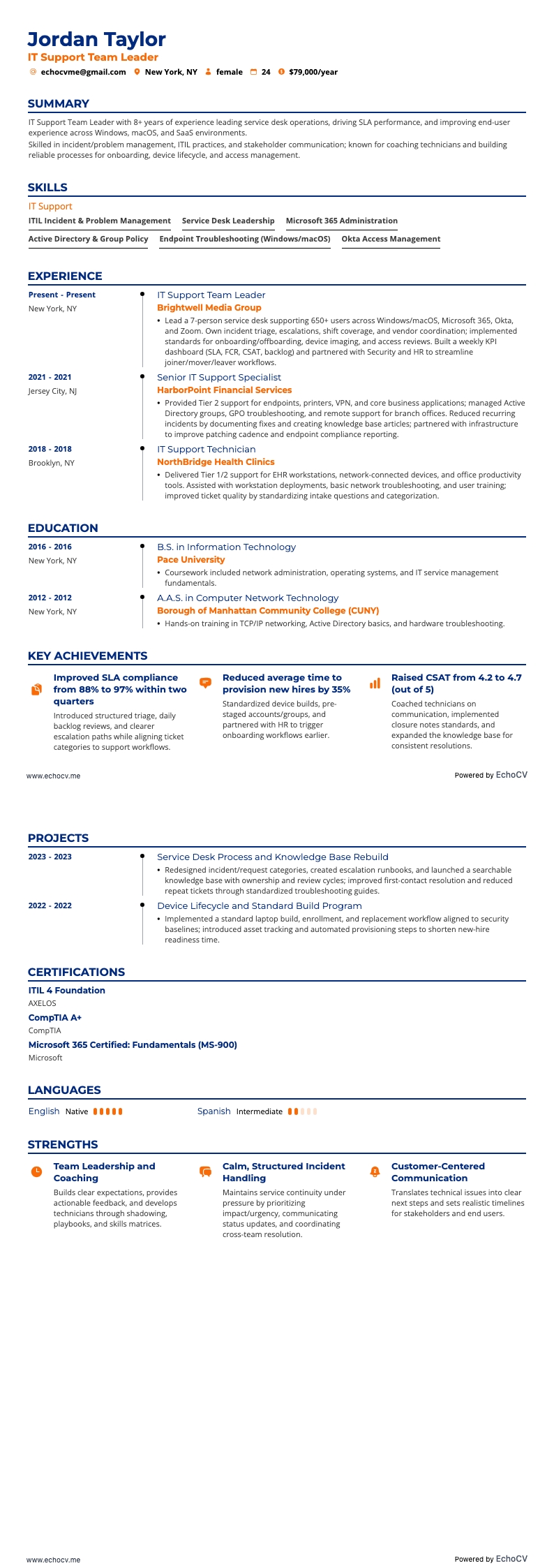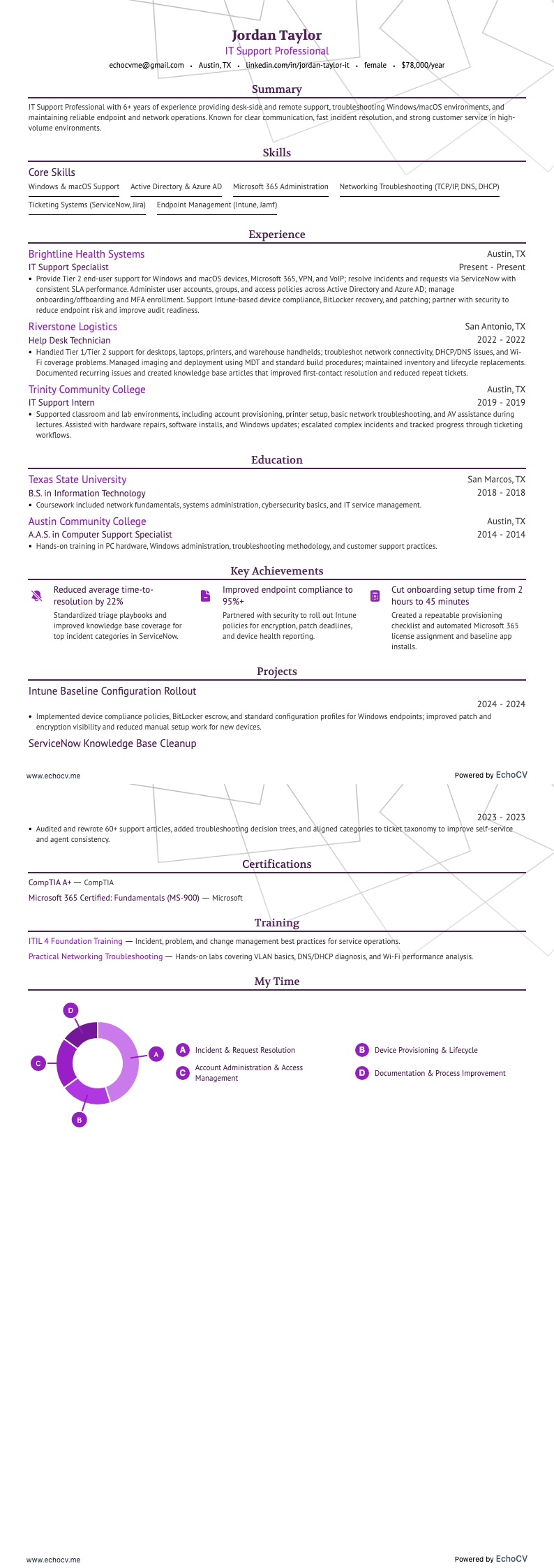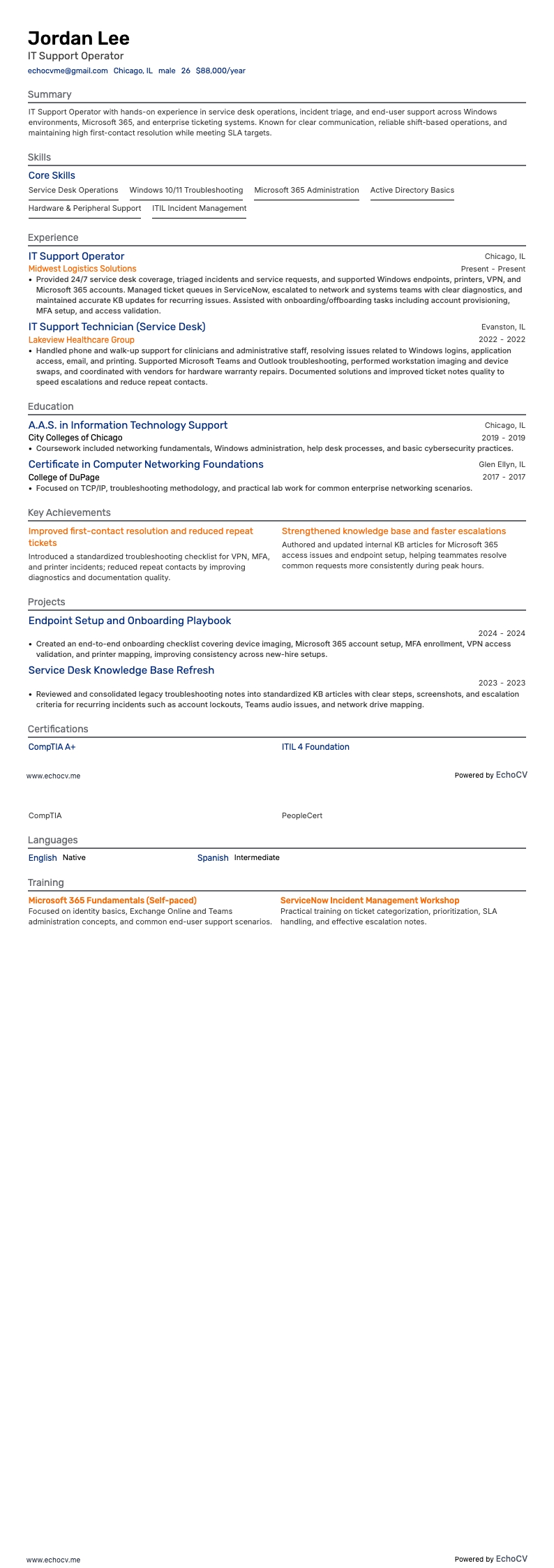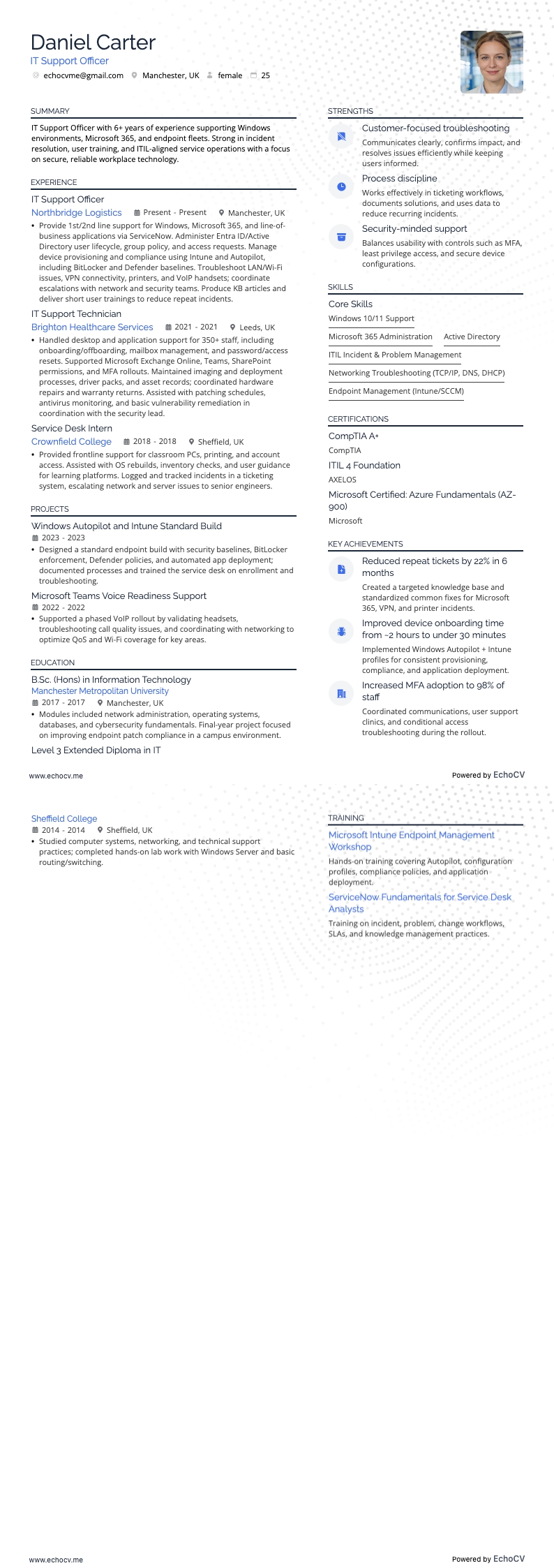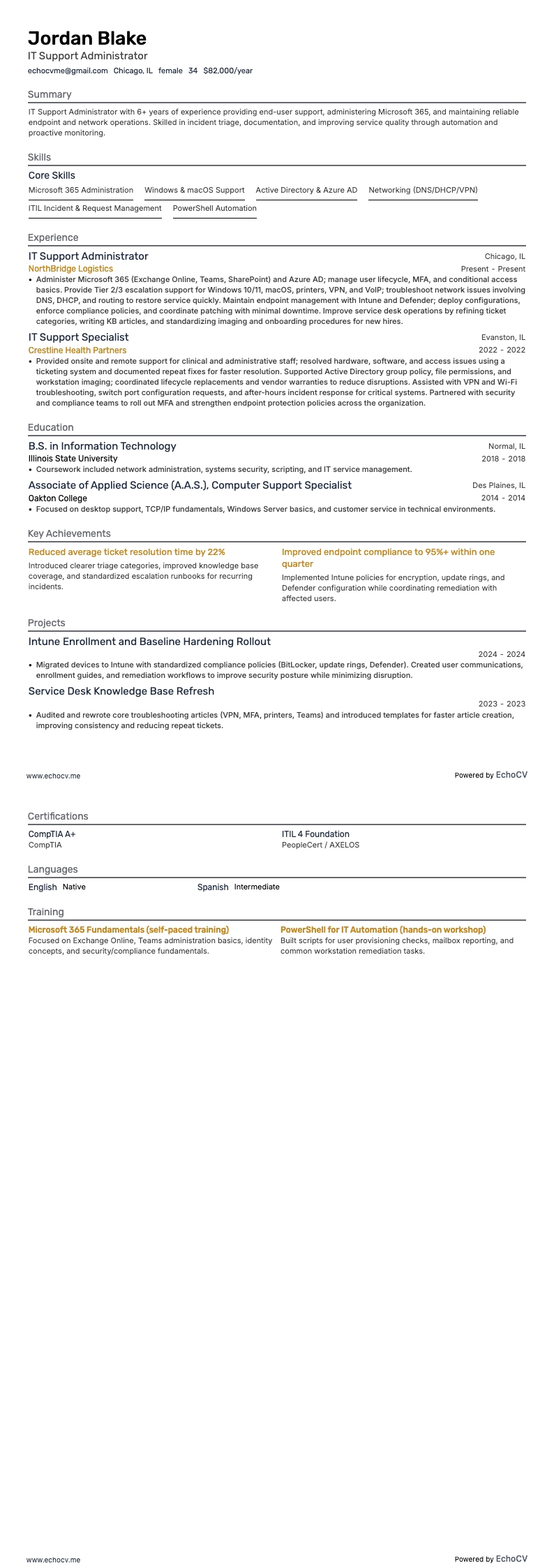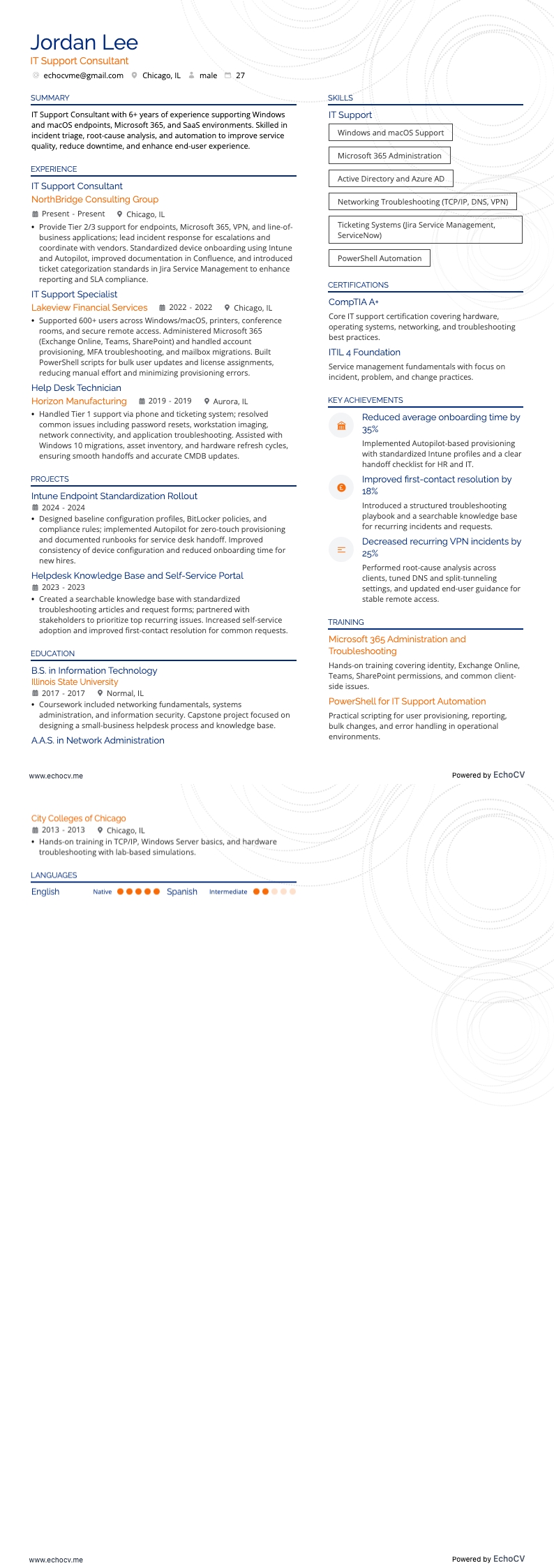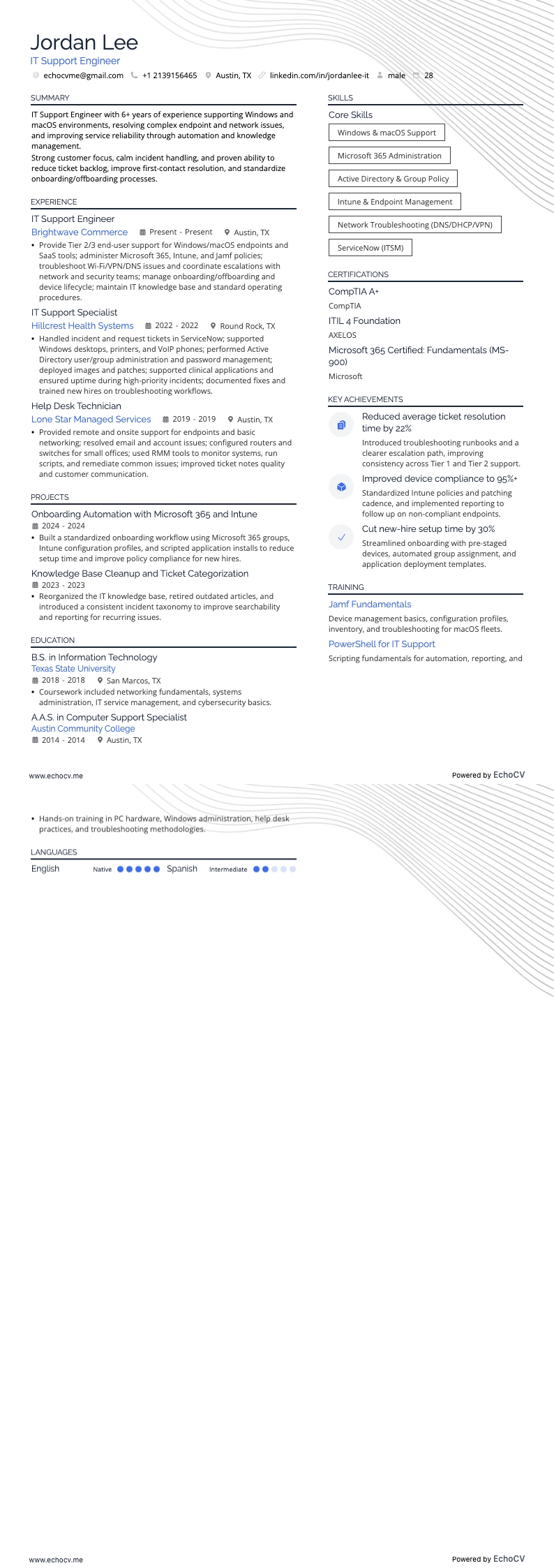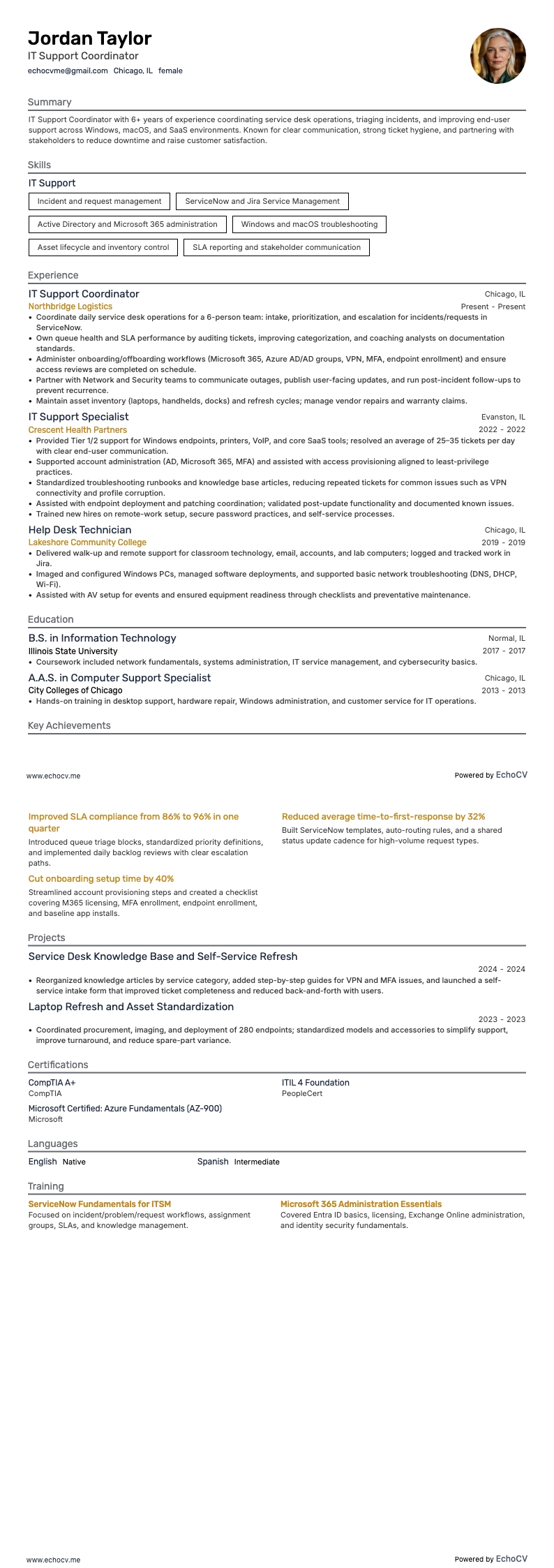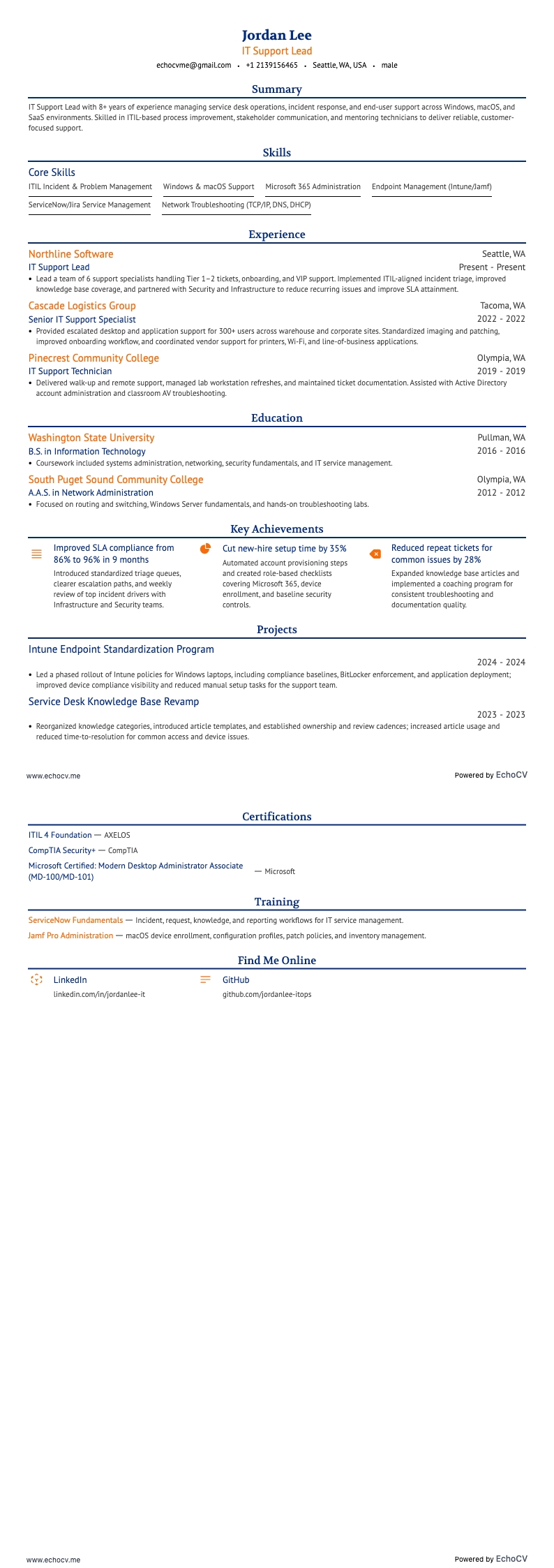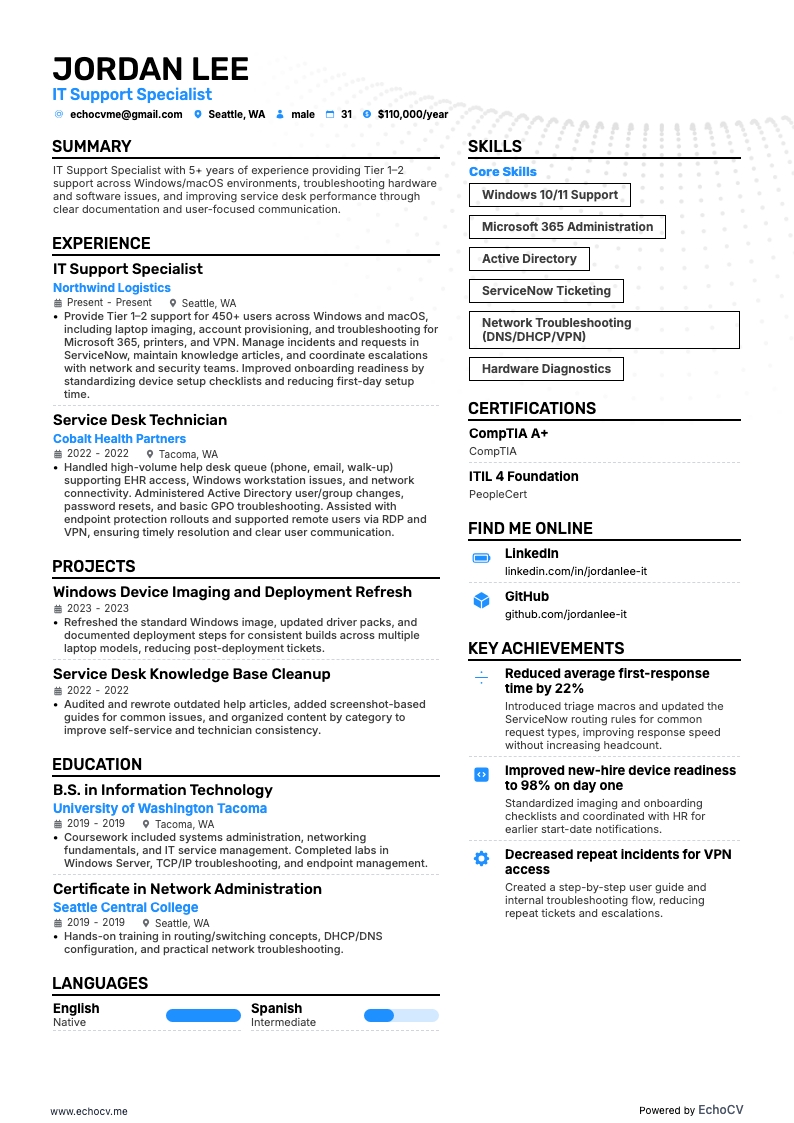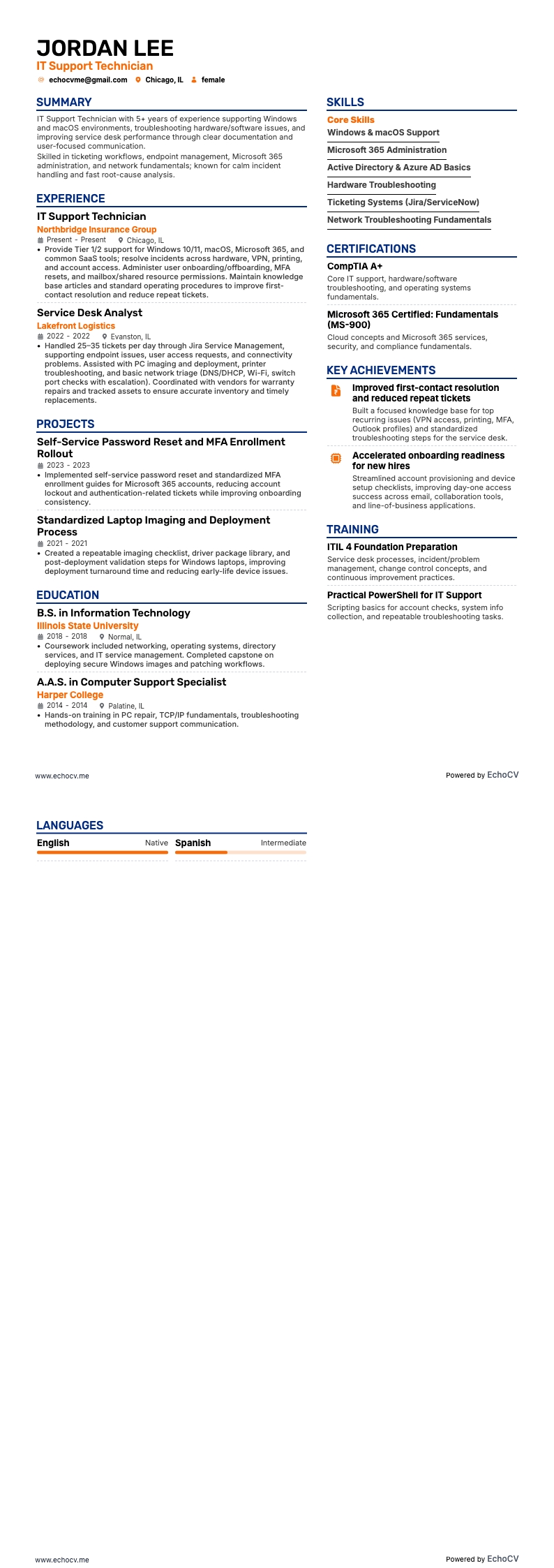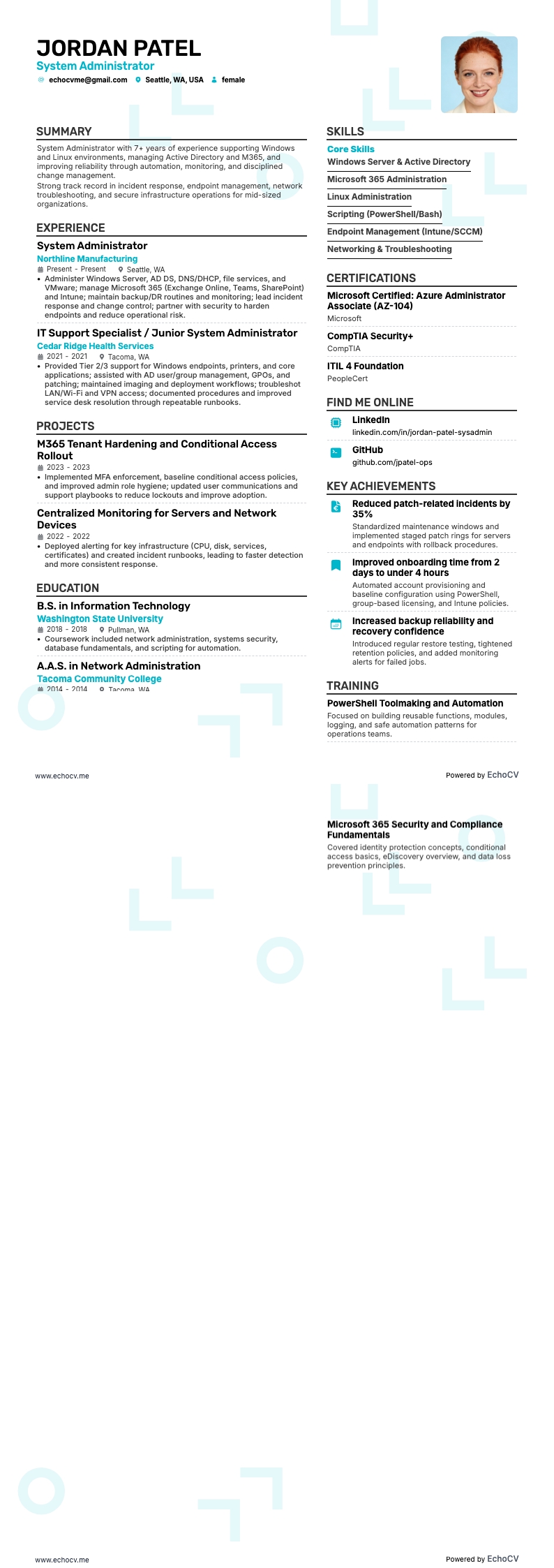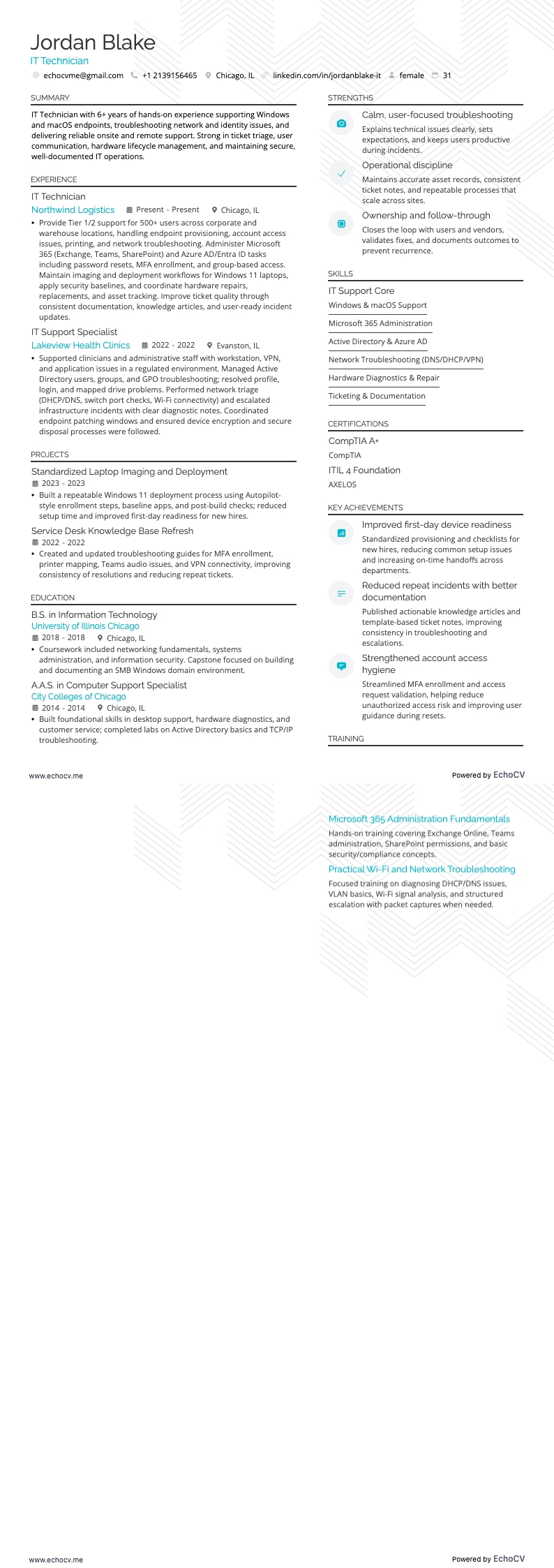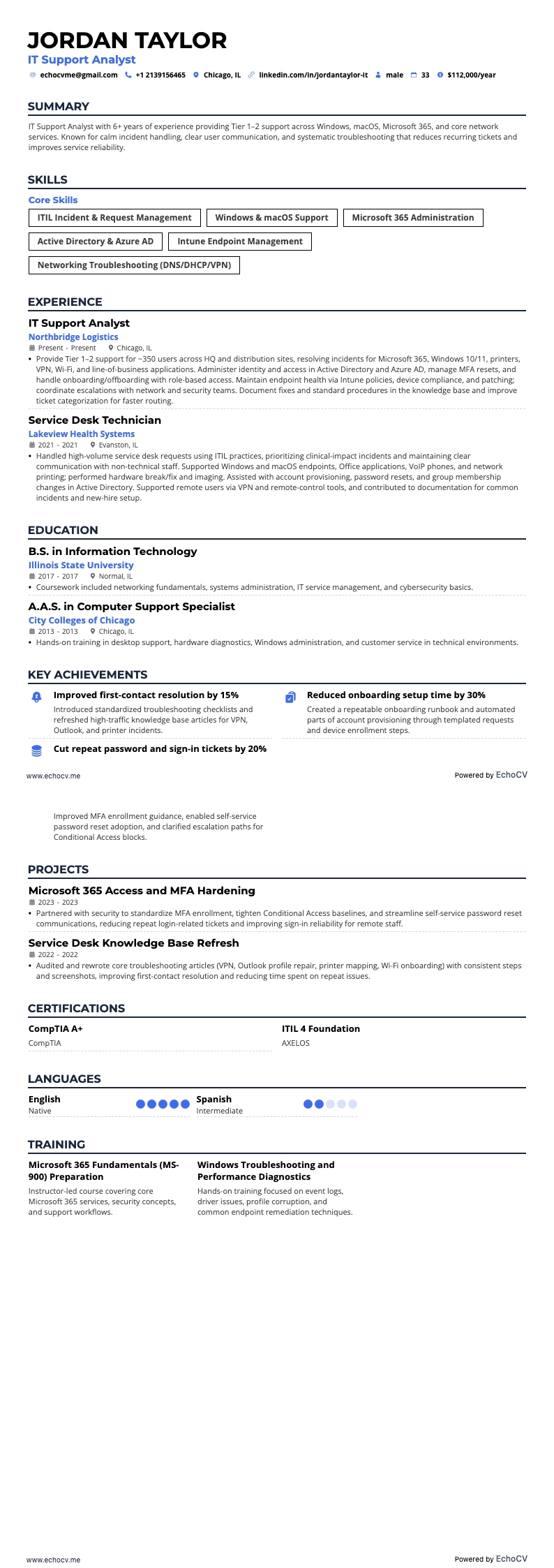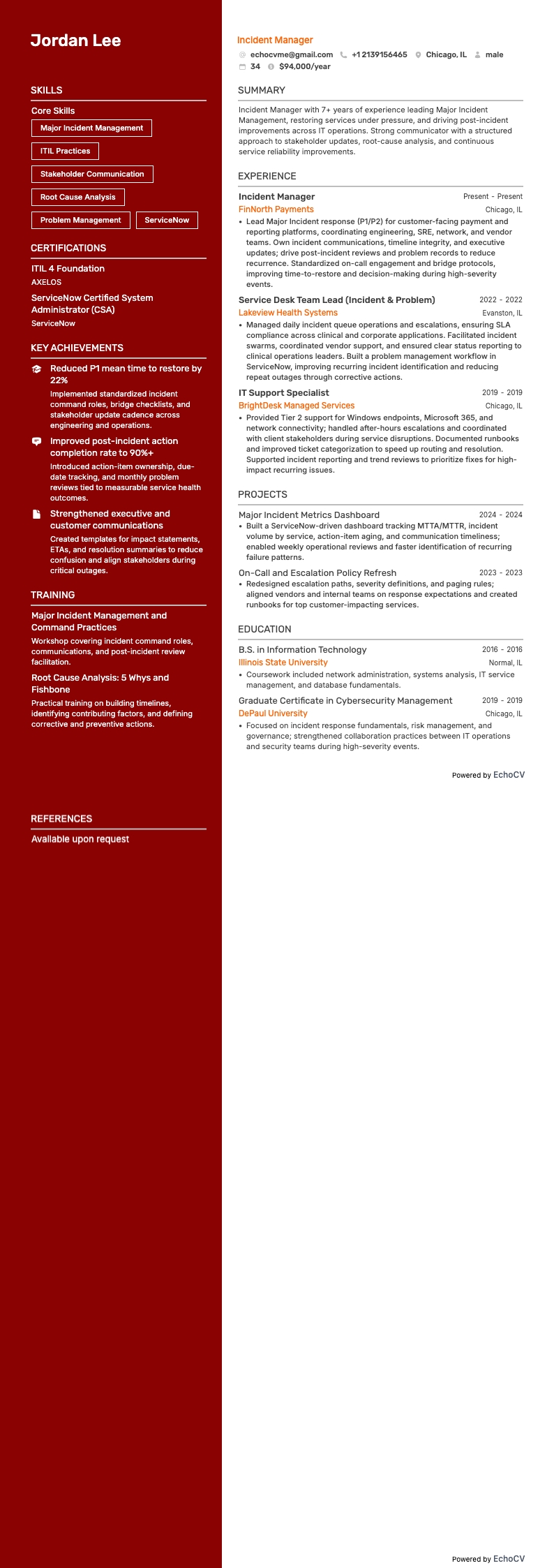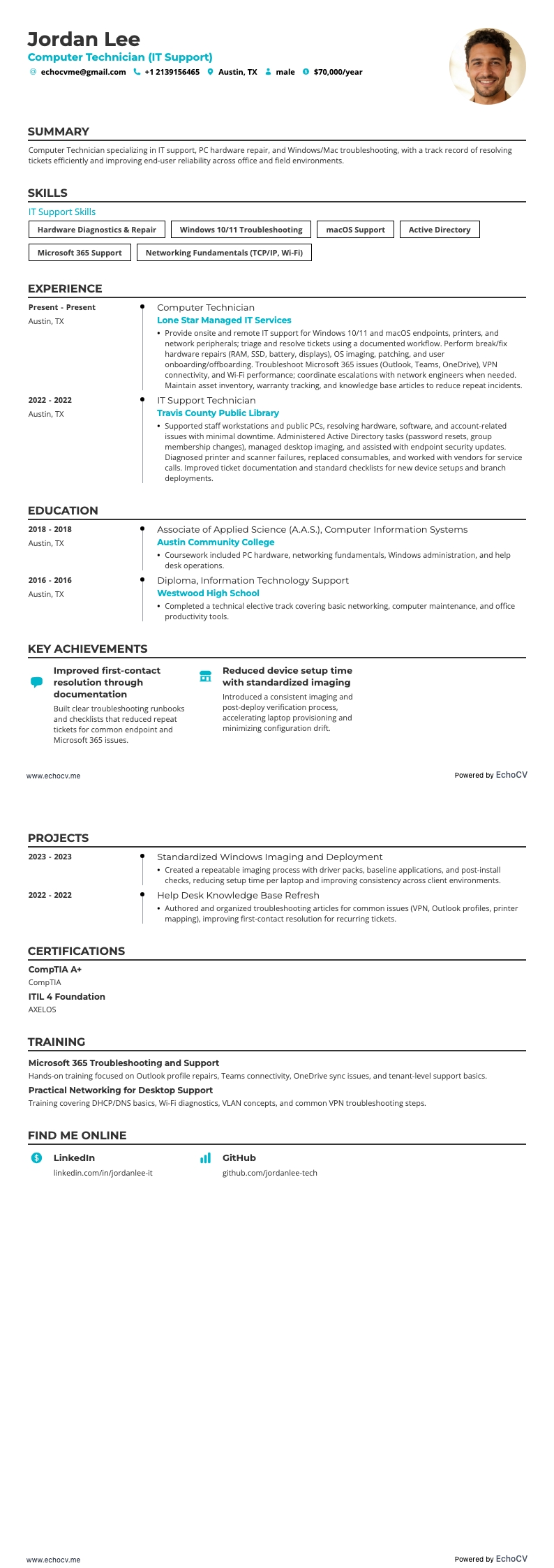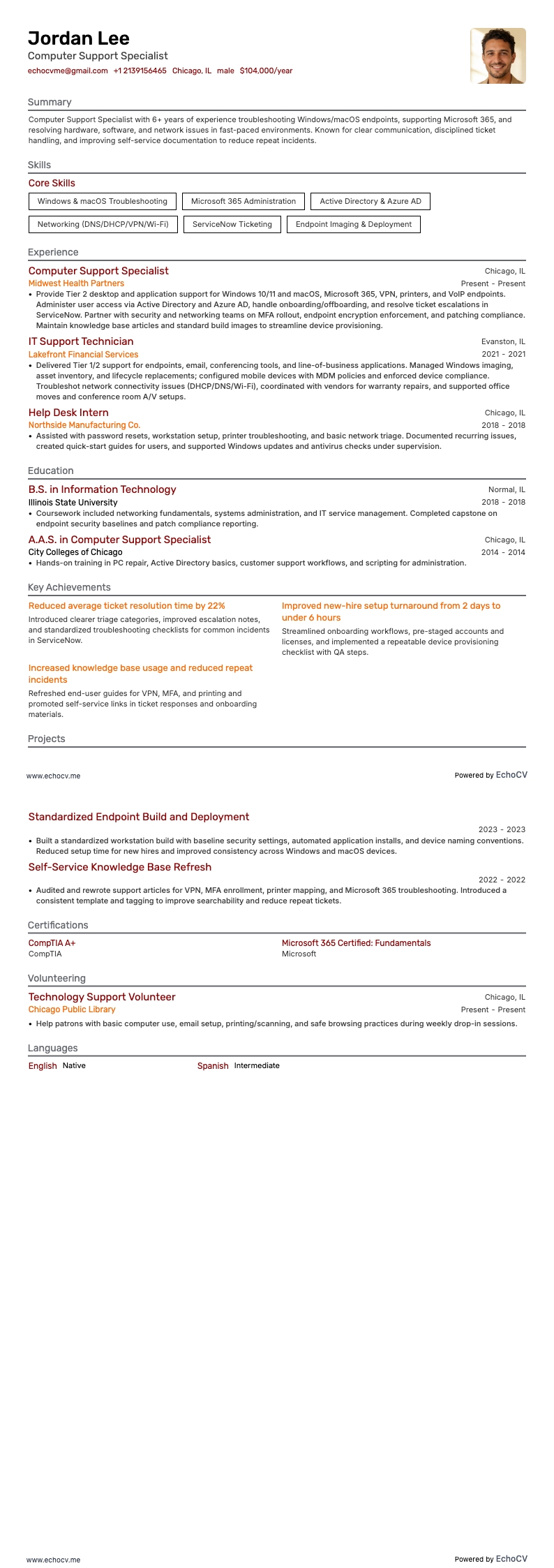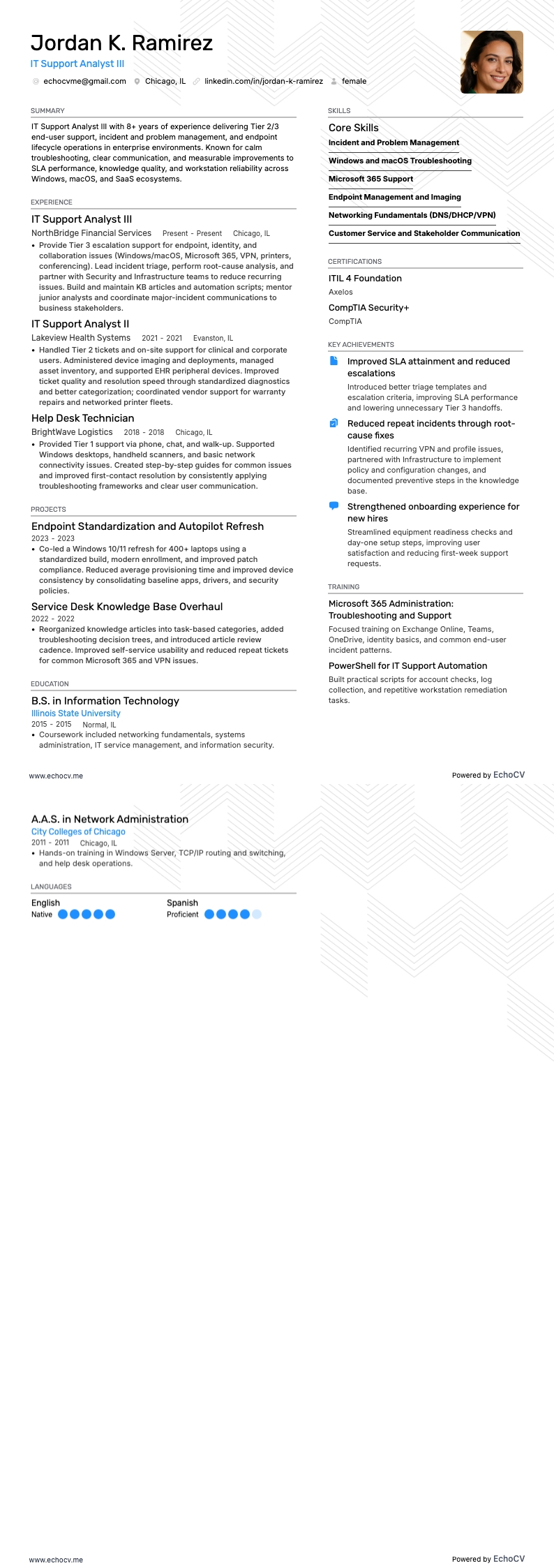
Now recruiters will be certain that Takeshi is the candidate they were searching for!
How to quantify the impact on your resume
We talk a lot about results, but that’s because they are the key to a successful resume. Being able to measure your achievements means that you take into account the impact of your work.
And that you’re goal-oriented.
Some of the measurable achievements you can add include the:
- Number of tickets you’ve handled daily to demonstrate time and workload management.
- Size and the scope of the networks and systems you’ve managed to illustrate the scale of your technical capabilities.
- Number of side projects you’ve completed to showcase your versatile skill set and inquisitive nature.
- Number of projects you’ve spearheaded or led to highlight your leadership and project management skills.
- Number of staff or new colleagues you’ve mentored to emphasize your ability to mentor and work in a team.
- Amount of project time you’ve saved the company to draw special attention to your ability to optimize systems and find better solutions.
- Percentage of satisfied customers you’ve managed to help to prove you’re also proficient in customer service.
- Amount of money you’ve saved the company by providing hardware and software recommendations to outline your industry and tech knowledge.
- Number of certificates you’ve earned while working for your past employer to demonstrate your willingness to continue improving your abilities.
- Number of conferences you’ve presented at to emphasize your good communication and explanation skills.
- Amount of funds you’ve saved from your past employer to prove you’re good at budgeting and contributing to the business’ financial efficiency.
- Percentage of downtime reduced to highlight your impact on improving system reliability.
How do I write an IT support resume with no experience
If you’re building an entry-level IT support Specialist resume, you can still build a powerful one. Even if you lack the relevant experience.
All you have to do is focus on your transferable skills. And your ability to pick up new skills quickly.
Don’t forget to:
- Be honest about what you do and don’t know. Companies will appreciate it. Hiring managers are searching for candidates who can admit they don’t know everything.
- Declare you are willing to adapt to your future employer’s work style. Show that you’re not afraid to do some research when needed.
- Mention any transferable technical and social talents you can offer, such as contract negotiations or vendor relations.
- Include an extra section, if you’ve completed any relevant side projects or courses. We’ll cover that later on in the article.
Remember, companies and recruiters are rarely knowledgeable about the small details of your duties and responsibilities.
But as long as you show you’re motivated to do the work, you’re on the right path.
How to list your hard skills and soft skills on your resume
Recent developments in the tech industry have been heavily influenced by both the pandemic and the rise of AI.
By shifting to remote offices and working from home, IT support specialists had to double down on reliability and security.
On the other hand, many professionals found themselves redundant once large language models, such as ChatGPT, emerged.
Hence, now competition isn’t limited to those who are out of work alone. Employed professionals are also on the lookout. Just in case they’ll have to search for a new workplace.
This means that you'll have to present a very versatile profile of hard and soft skills if you want your resume to be successful.
Hard skills refer to all tools and platforms you use as an IT support Specialist to do your daily tasks. When listing them on your resume, keep in mind to:
- Reflect on the requirements of the job ad.
- Place the tools and languages you’re most comfortable being interviewed in first.
- Use the same spelling as the one used in the job ad. This will ensure you will pass any Applicant Tracking System (ATS) tests.
But before you start building your skills section, take a look at the resume summary and the work history segments once again.
Odds are, you've already mentioned how you've applied some of your tech skills.
To make your IT support resume more well-rounded, highlight a few of your soft skills. Especially now that more often than not IT professionals are also doubling as emotional counselors.
So:
- Take into account what will be your main job responsibilities. As well as who it is more likely you’re going to help - other colleagues or customers.
- List some of the soft skills you have to offer.
- Then, employ the same method you used to quantify your other achievements to outline your top social talents.
With all this in mind, we’ve compiled two lists with the key tech and soft skills currently in demand.