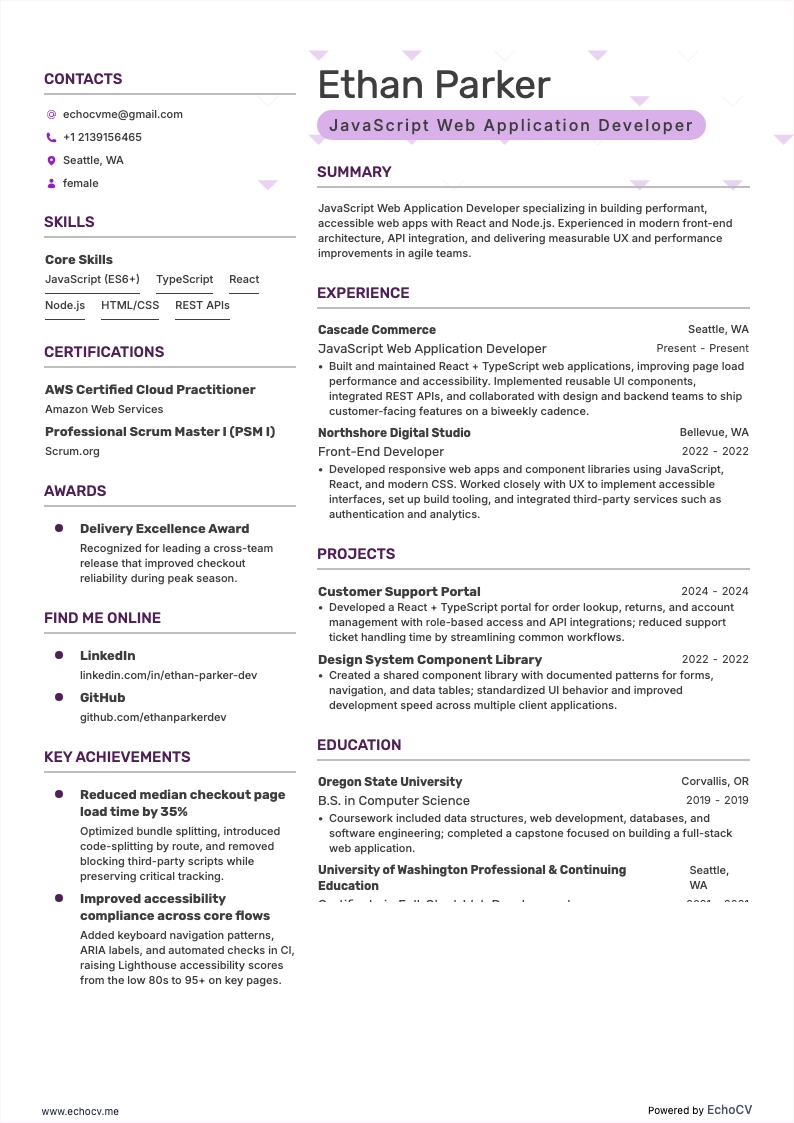
Right away we know that Charlotte is an “experienced frontend developer” without having to get into her work experience. The header is your first opportunity to list your job title and relevant keywords that applicant tracking systems look for.
It also points to her desire to “join an innovative and dynamic team to further develop my skills and contribute to exciting projects.” This section is a great chance to show off your writing skills and your passion for web development.
These are the kinds of things that make hiring managers giddy.
Here are some additional things that this resume does well:
- Quantifies Achievements: The resume effectively uses specific percentages to quantify achievements (e.g., "20% increase in user engagement"). This approach demonstrates the tangible impact of Charlotte's work, making her accomplishments more concrete and measurable for potential employers.
- Highlights Specific Technologies: Charlotte's resume lists her proficiency in key JavaScript frameworks like React, Vue, and Angular. This specificity is beneficial for roles requiring expertise in these technologies and helps her stand out in a field where knowledge of particular frameworks can be a decisive factor.
- Emphasizes Collaboration and Leadership Skills: The resume highlights Charlotte's ability to work well in team settings and her role in mentoring junior developers. These details showcase her technical skills and her leadership and collaborative abilities, which are crucial for senior developer roles.
For those developers who love to create things from scratch, this next section will go over the nuts and bolts of formatting your resume.
There are several questions to ask yourself before creating your resume. Which format should I use? Should I go with a single-column or double-column layout? Which fonts are acceptable?
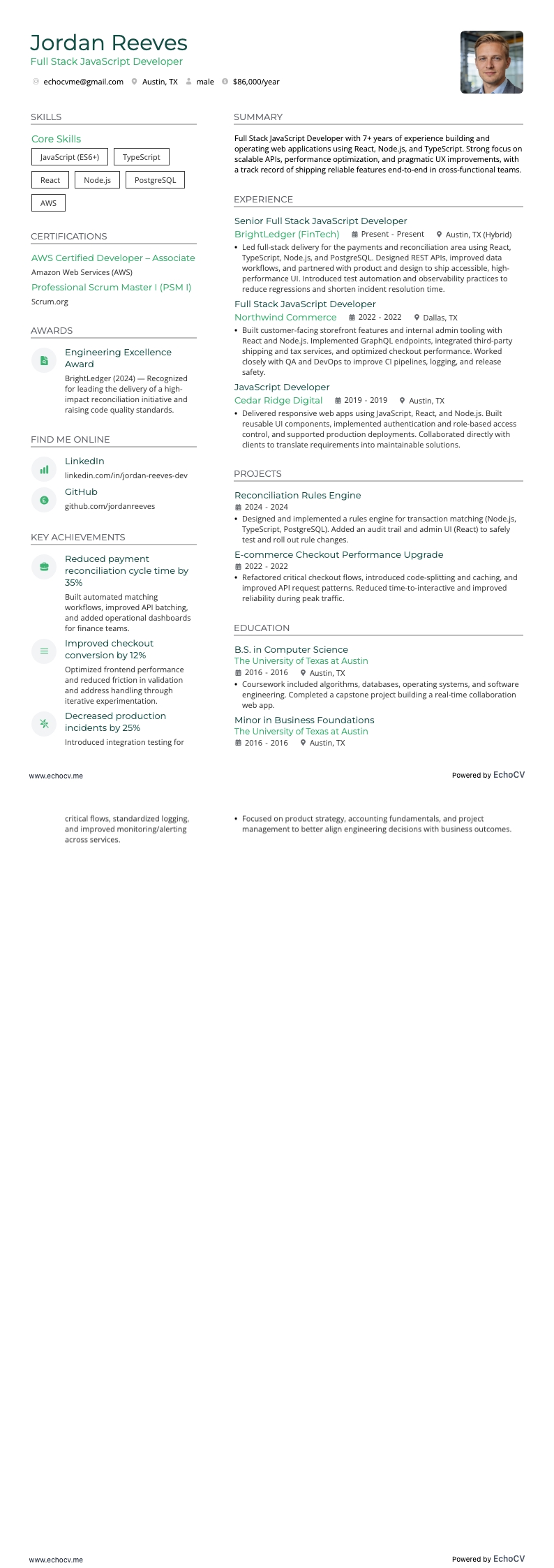
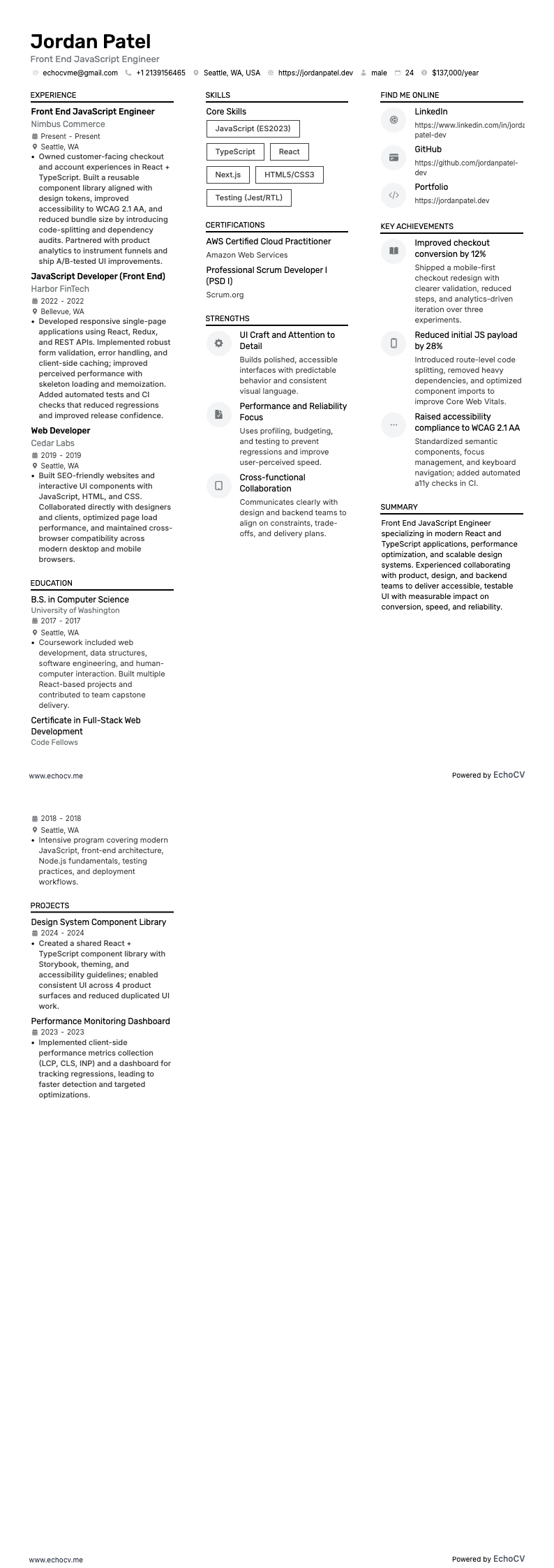
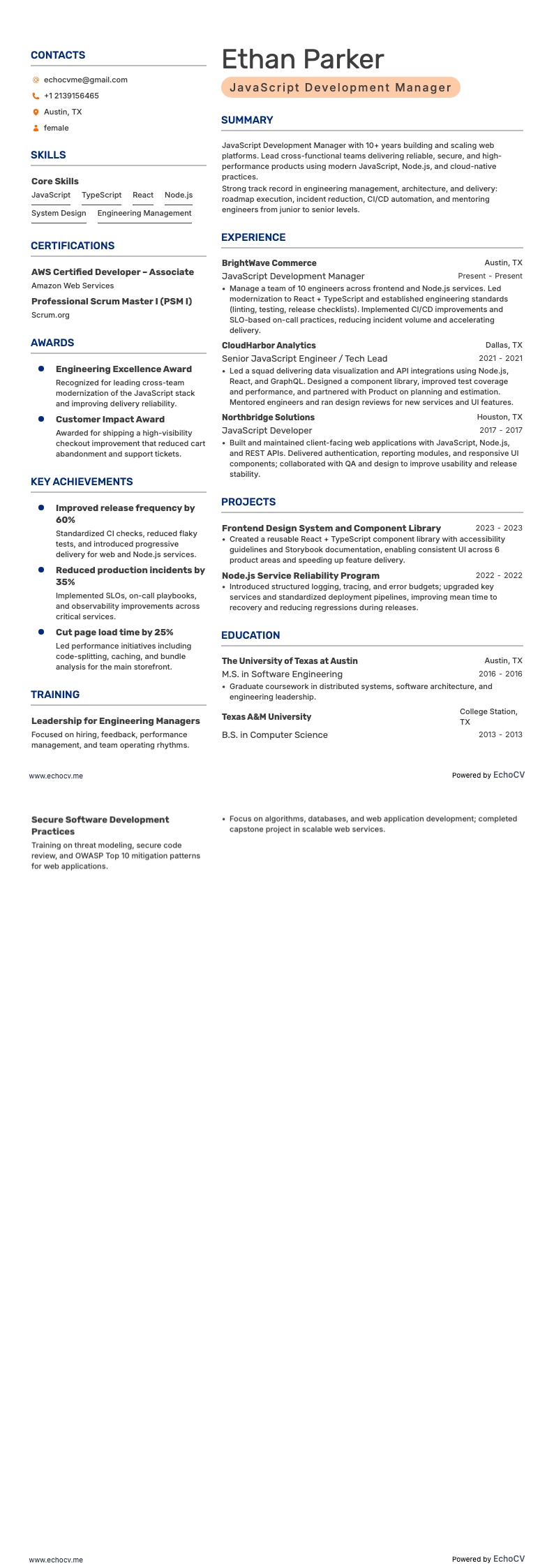
For Javascript developers and other tech positions, the best format to use is a reserve-chronological format with a two-column layout.
This helps recruiters see your related skills without having to turn the page or scroll to find the information. Your resume should be no more than two pages.
Set all margins to one inch with line spacing set to single. Fonts like Arial and Times New Roman are acceptable but a little outdated. Try to pick a more modern ats-friendly font like Rubik, Lato, Montserrat, Raleway, Exo 2, and Volkhov, which are included in the Echocv resume builder.
When sending your resume to potential employers, don’t send it as a Word (.docx) or Google doc (.gdoc). Instead, save it as a portable document file or PDF type (.pdf). This format is widely accepted and will maintain your format no matter what OS the company is using.
One more thing about the importance of resume formatting.
A lot of companies today are using applicant tracking software (ATS) to help them sort through all of the resumes they receive. This software performs the laborious task of sifting through each resume and looking for specific keywords that indicate they have the experience for the job.
If you do not use a standard resume format that includes job-related keywords, you will score poorly on the system and be less likely to get a call.
Think about the market’s preferences – a Canadian resume, for instance, could have a different layout.