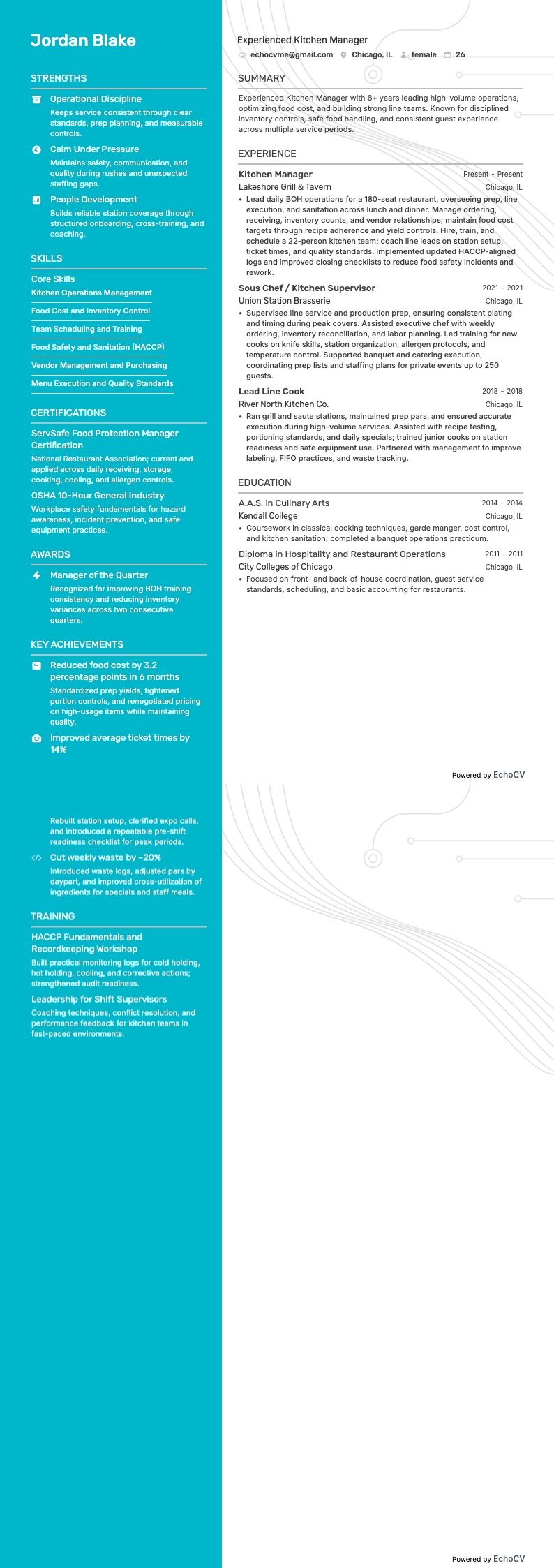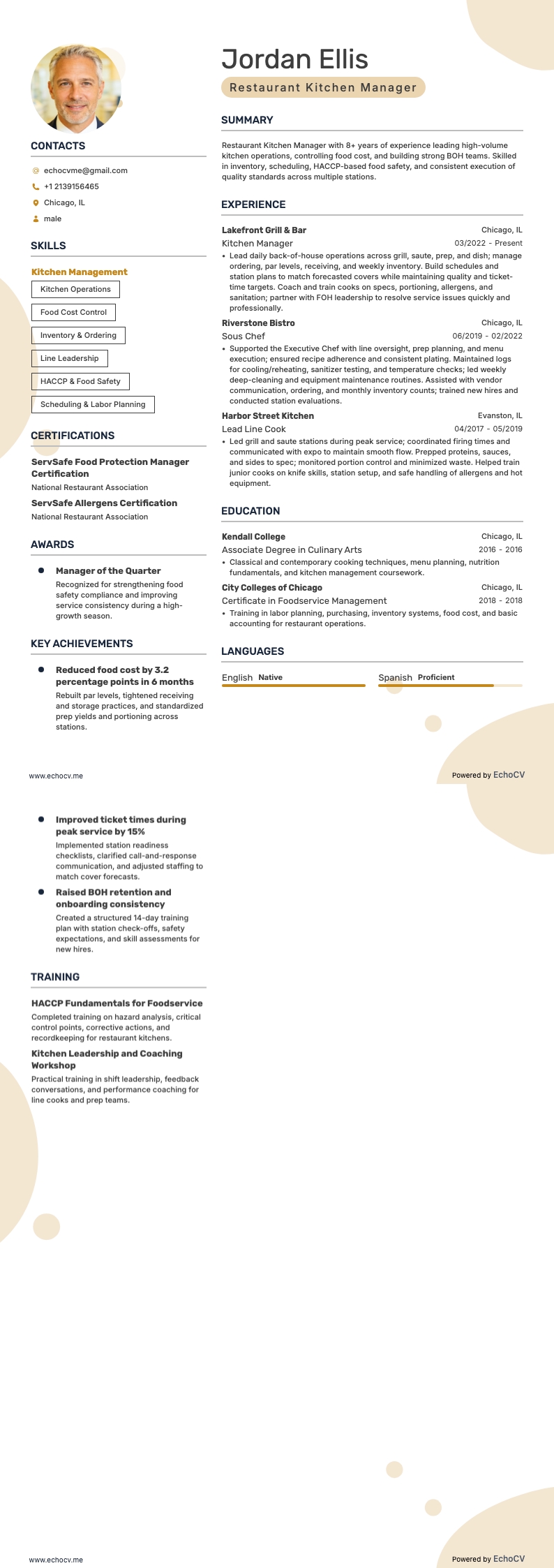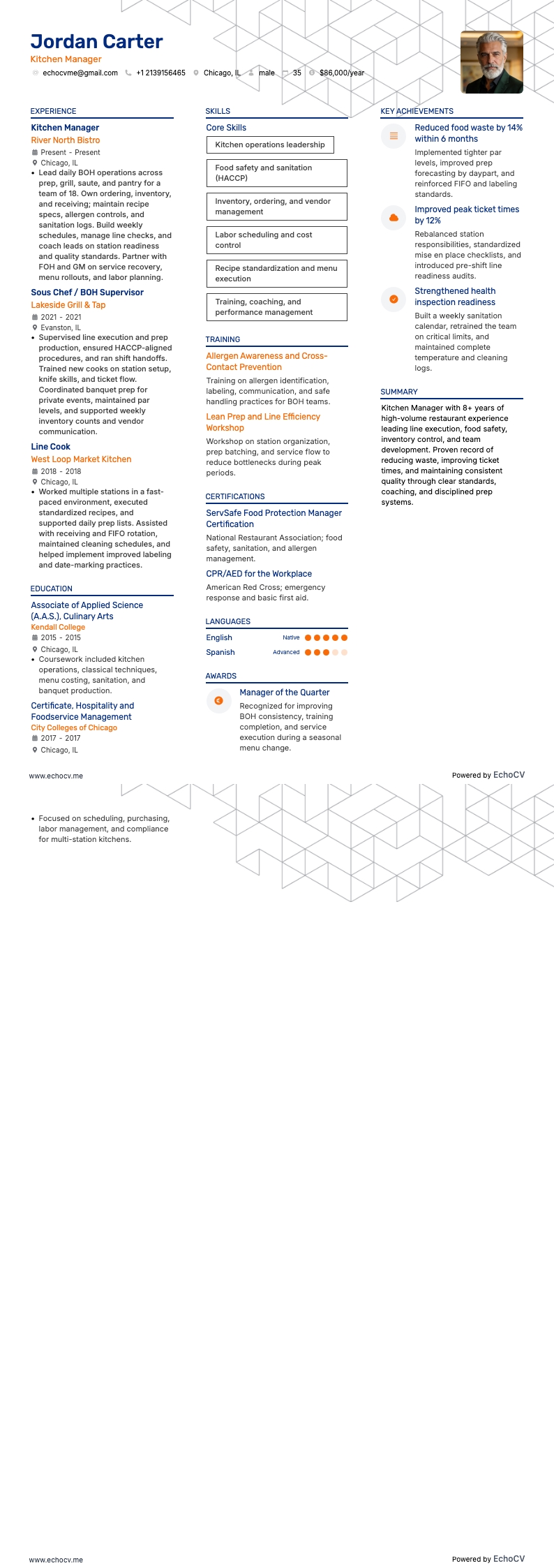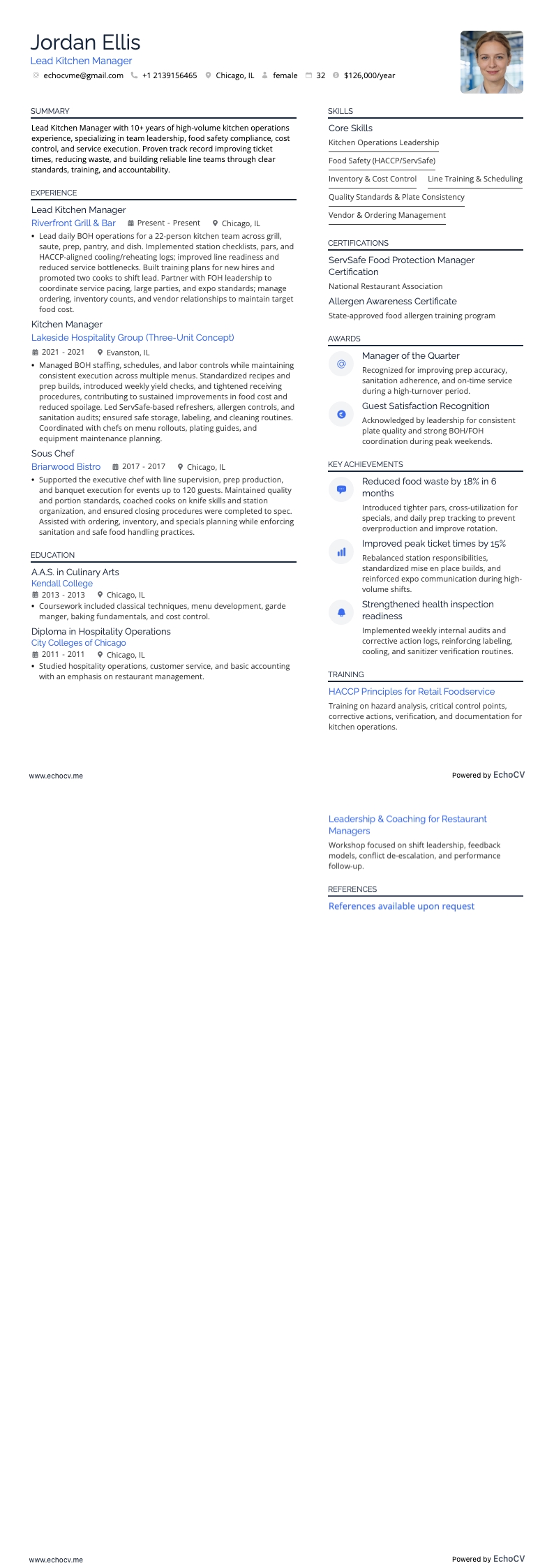
Once you’ve organized your resume with the right components, focus next on writing your kitchen manager experience section so it clearly supports each element with relevant, role-specific impact.
How to write your kitchen manager resume experience
Your experience section should showcase work you've delivered—spanning kitchen operations, food safety systems, inventory controls, and team leadership—with clear, measurable outcomes attached to each responsibility. Hiring managers prioritize demonstrated impact over descriptive task lists, so every bullet should prove you drove results rather than simply occupied the role. Writing a targeted resume ensures each entry speaks directly to what the employer needs.
Each entry should include:
- Job title
- Company and location (or remote)
- Dates of employment (month and year)
Three to five concise bullet points showing what you owned, how you executed, and what outcomes you delivered:
- Ownership scope: the kitchen operations, menu programs, food production lines, prep teams, or vendor relationships you were directly accountable for as a kitchen manager.
- Execution approach: the tools, frameworks, and methods you relied on to run your kitchen—such as inventory management systems, HACCP protocols, scheduling software, cost-control techniques, or standardized recipe procedures.
- Value improved: the specific changes you drove in food quality, kitchen efficiency, waste reduction, health inspection scores, order accuracy, labor cost management, or workplace safety compliance.
- Collaboration context: how you partnered with front-of-house managers, sous chefs, suppliers, health inspectors, corporate leadership, or catering clients to align kitchen output with broader business goals.
- Impact delivered: the outcomes your work produced, expressed through improvements in revenue, cost savings, team retention, guest satisfaction, throughput capacity, or operational consistency—not through a list of daily tasks you performed.