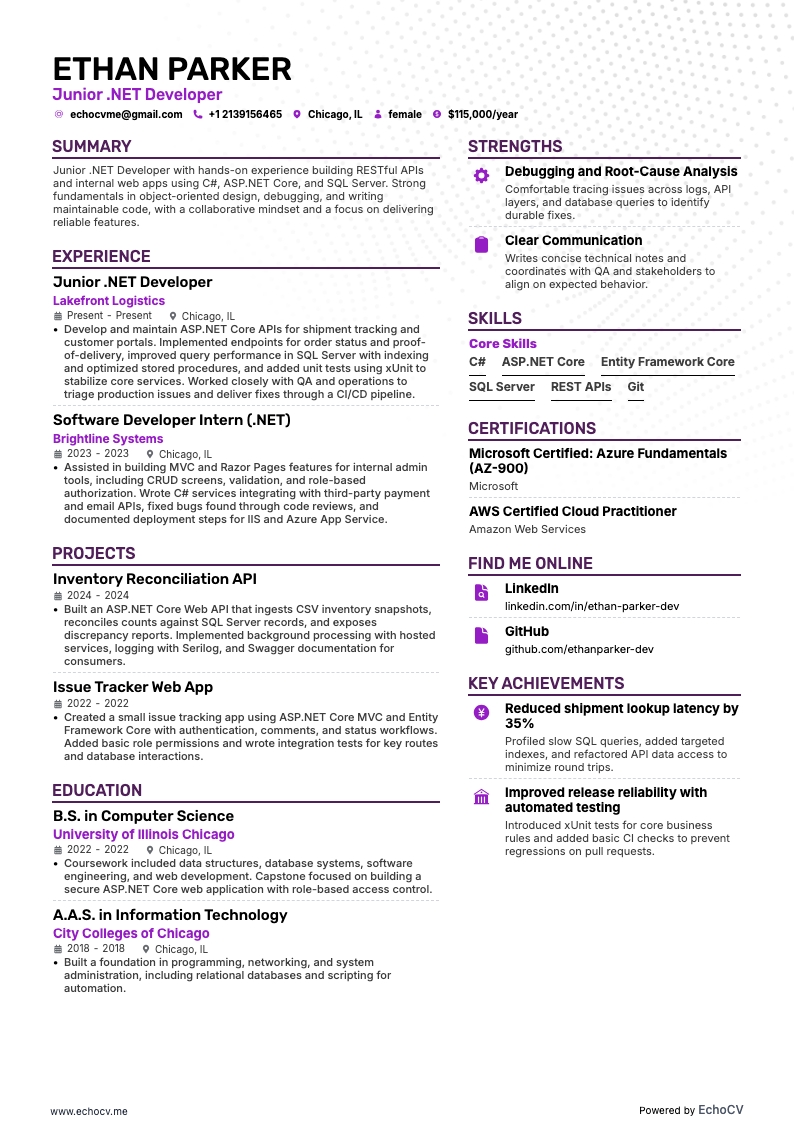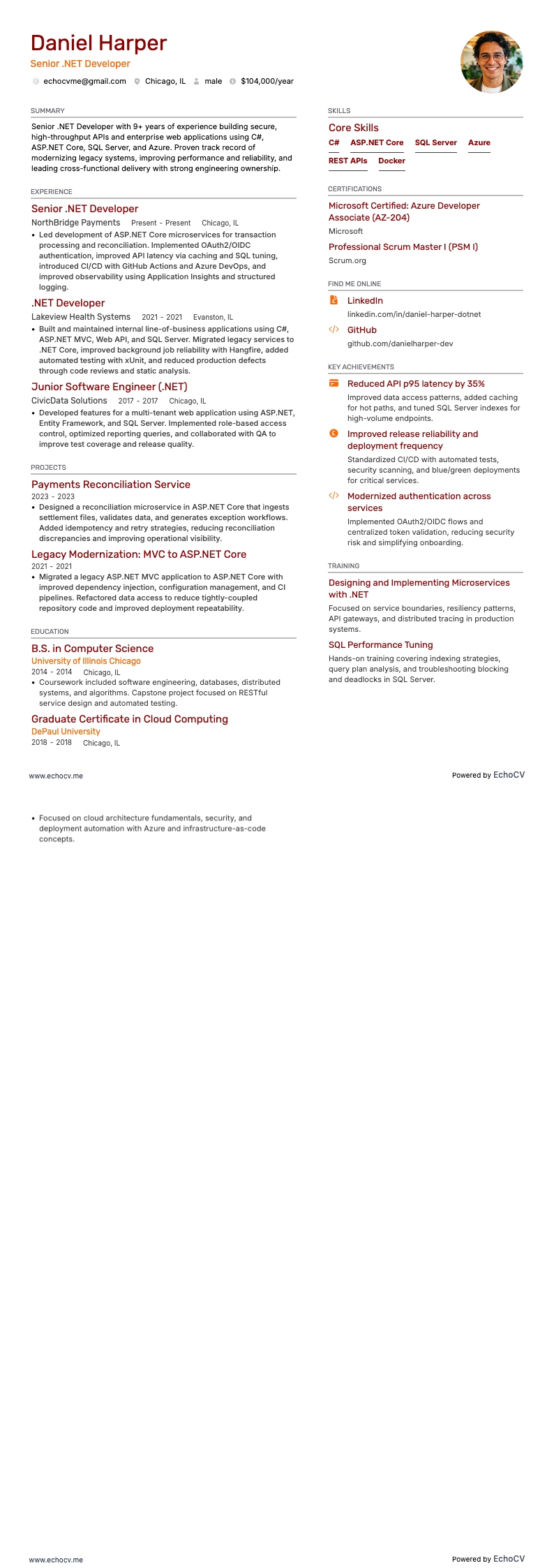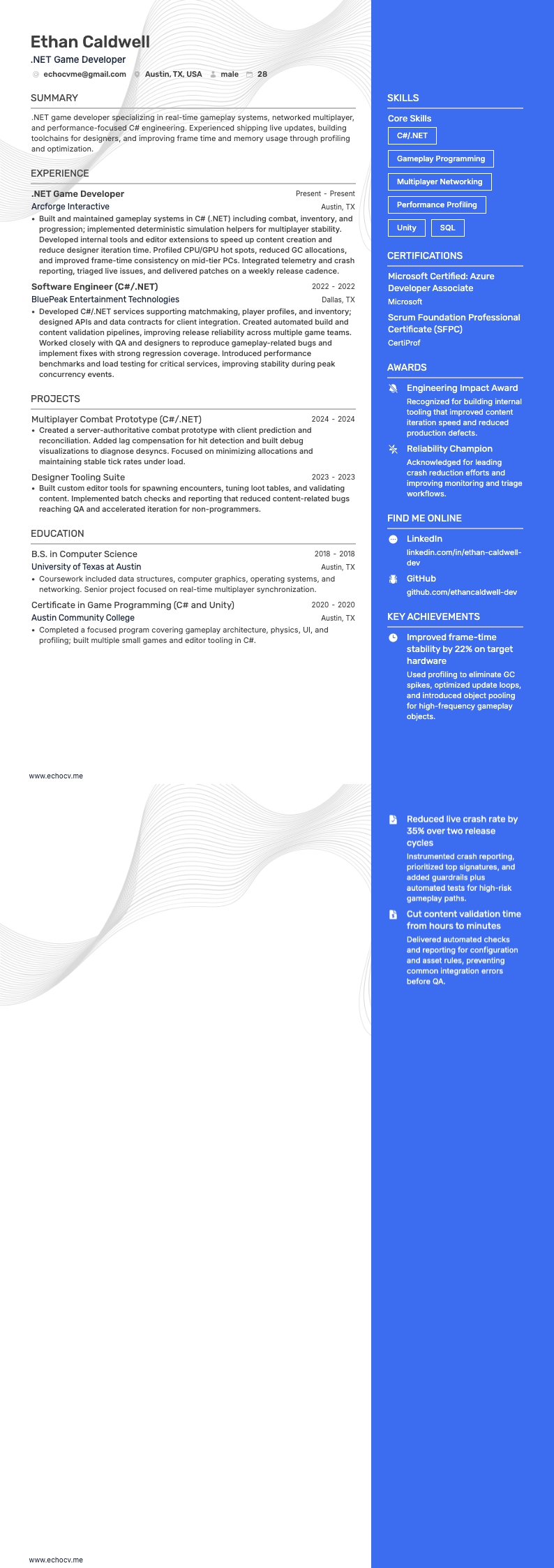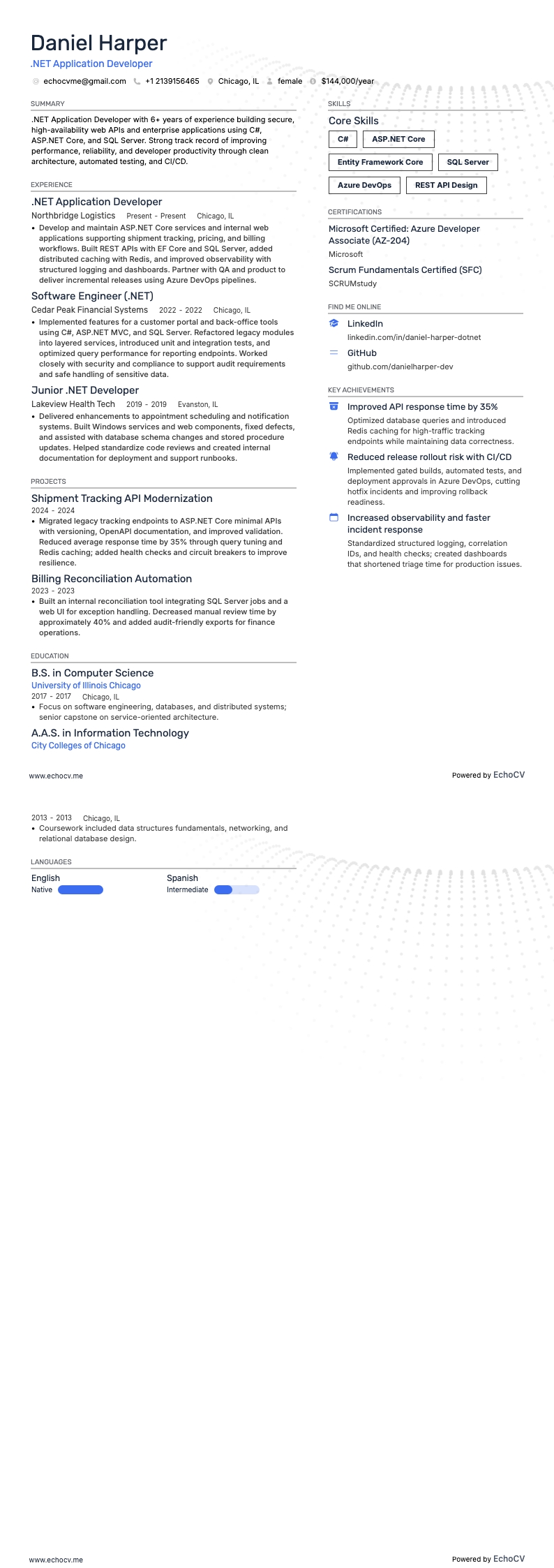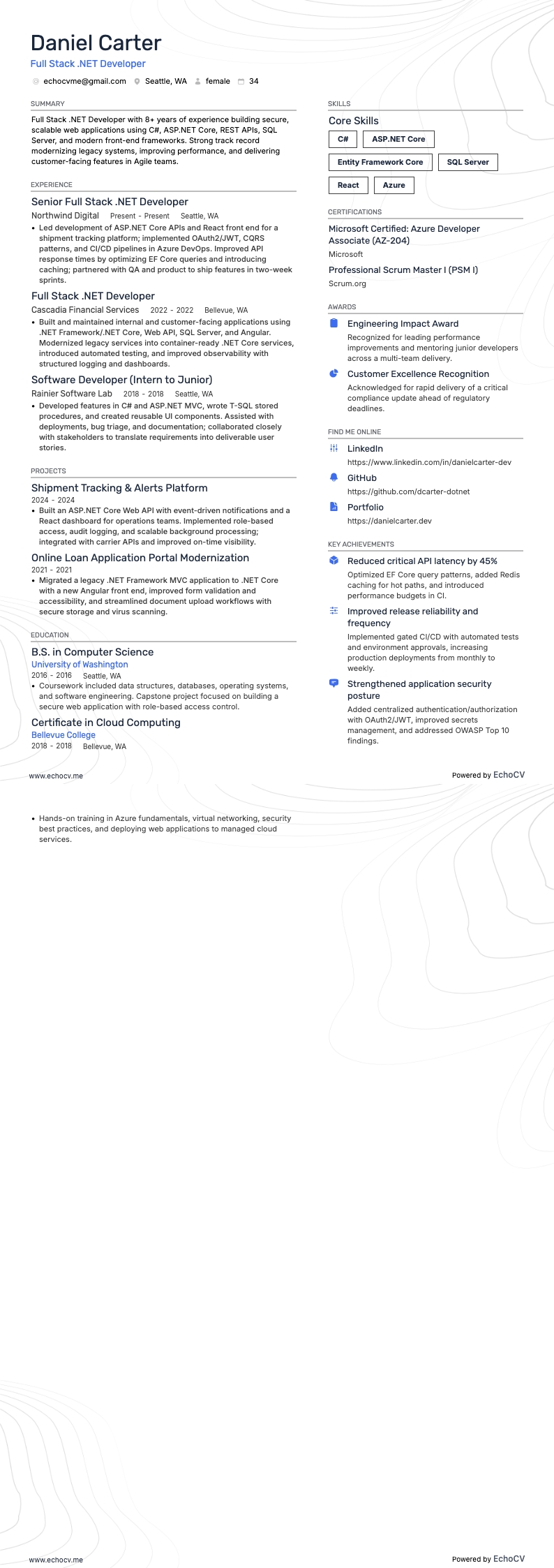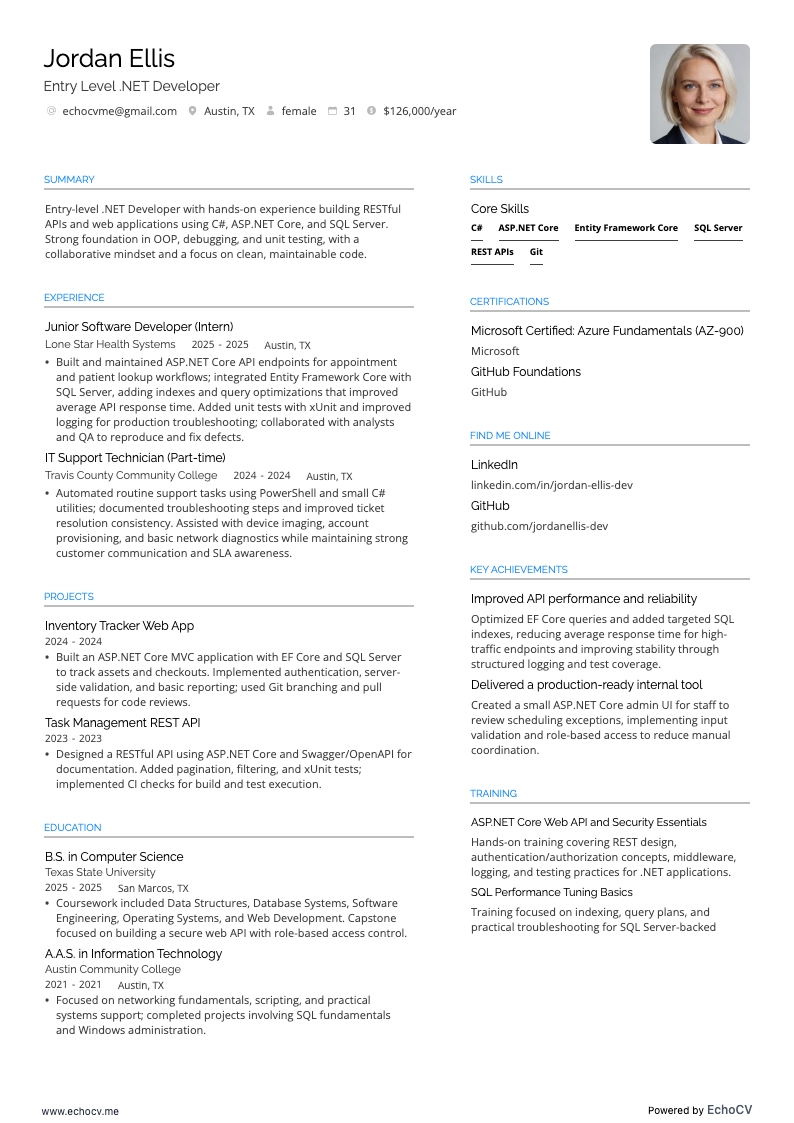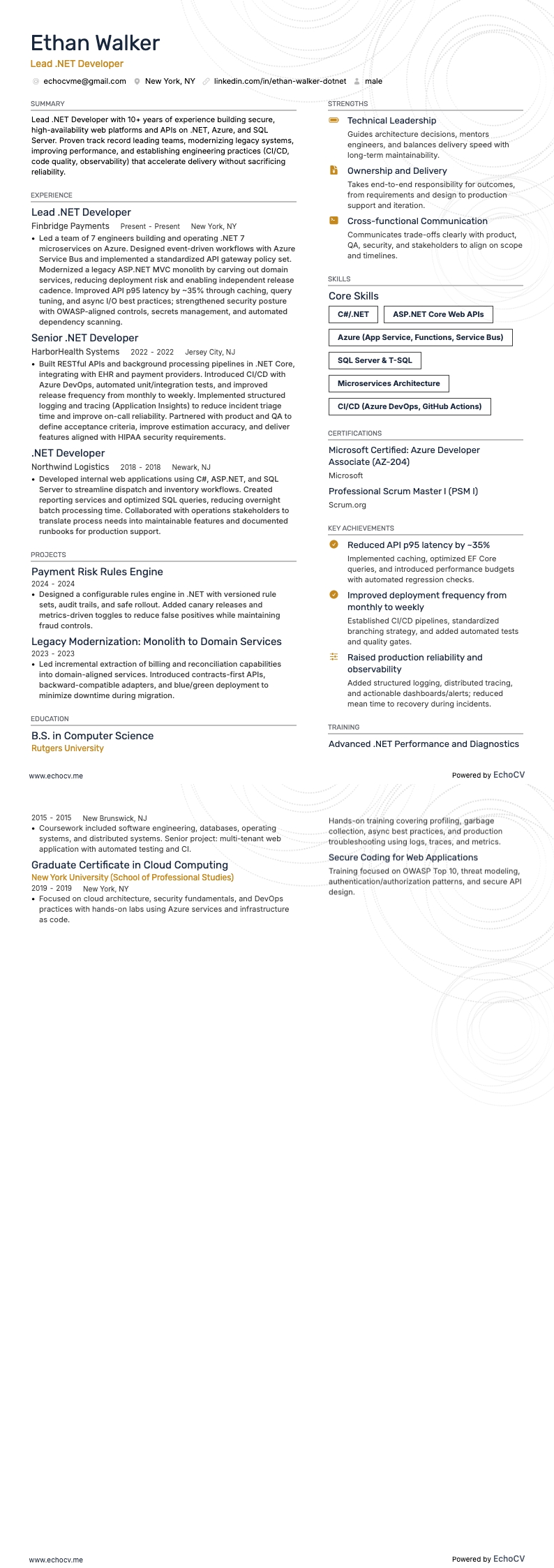
What works in this example:
- Shows exactly how tech stack knowledge resulted in success by generating “$700k in revenue in Q1”
- Uses action verbs that show execution of skills and measurable success with “99% accuracy rate”
- Mentions industry award that recognizes “expertise in IIS/Amazon Web Services” in full stack technical skills
This .NET experience section is what recruiters look for. It’s important to not just make blanket claims of success but to provide evidence with quantifiable metrics.
How to quantify impact on your resume
As mentioned above, impact is more than just writing “successfully managed .NET framework” on your resume. You need to define success with measurable results.
Use real data, numbers, and statistics to quantify your achievements. If you’re not sure where to look for these metrics, start with the ones listed below.
Numbers that can strengthen your .Net developer resume:
- Number of users using the web app you developed using .NET framework
- Increased profit/revenue through improved conversion
- Increased web traffic on pages you updated
- Increasing conversion rate on the website by X%
- User experience improvement on programs you wrote using full stack
- Number of projects/pages/apps managed
- Number of people led on a team
- Increased productivity after providing technical support
- Improvement rate after debugging
Use these statistics as a guide while you comb through your achievements in previous roles. Clear evidence of success will stand out to recruiters and hiring managers.
How do I write a .Net developer resume with no experience
Not everyone has a decade of achievements to include on their resume. Everyone has to start somewhere.
If you’re writing a .Net developer resume with no experience, follow these steps:
- Choose a functional resume format - this layout focuses more on skills rather than experience. If you’re just breaking into the industry or have gaps in your timeline, this is a great way to keep the attention on your technical knowledge.
- Highlight transferable skills - so you haven’t worked as a dot net developer for a major software company, but maybe you managed the SQL server for library at your university. Show how your experience equipped you with a relevant skill set.
- List relevant certifications - a great way to show commitment to your field is by gaining certifications from coding bootcamps and other institutions. This shows your dedication to staying on top of industry trends and improving your skills. More on certification programs below.
How to list your hard skills and soft skills on your resume
Hard skills, sometimes referred to interchangeably as technical skills, are crucial for a strong .Net developer resume.
Potential employers want to know that you’re skilled in their full tech stack and current technologies.
If you’re listing programming languages and frameworks on your resume, hiring managers will assume you’re proficient. Only include relevant .Net developer skills that you’re confident in.
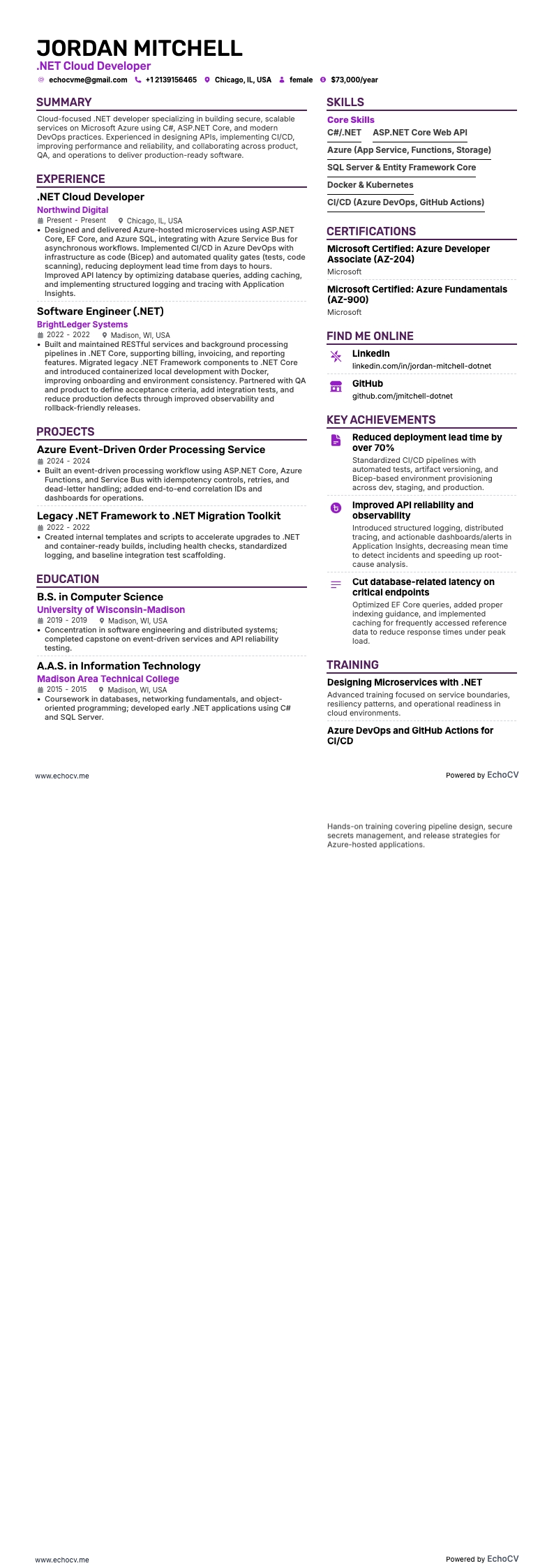
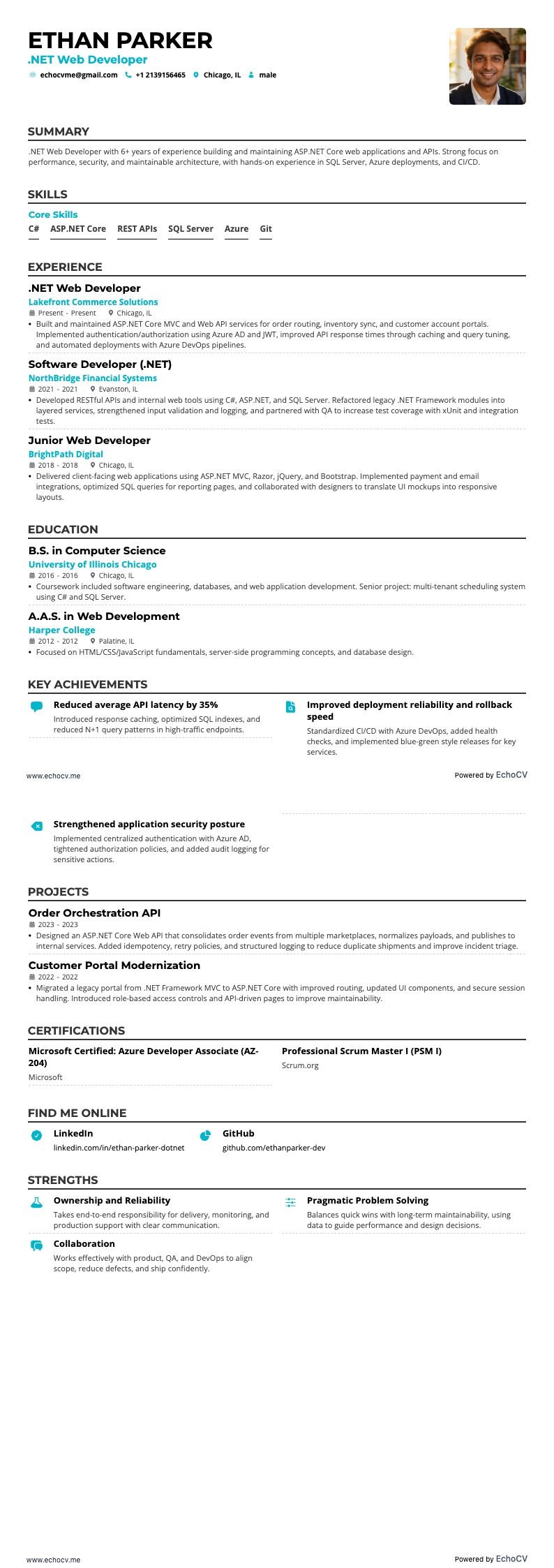
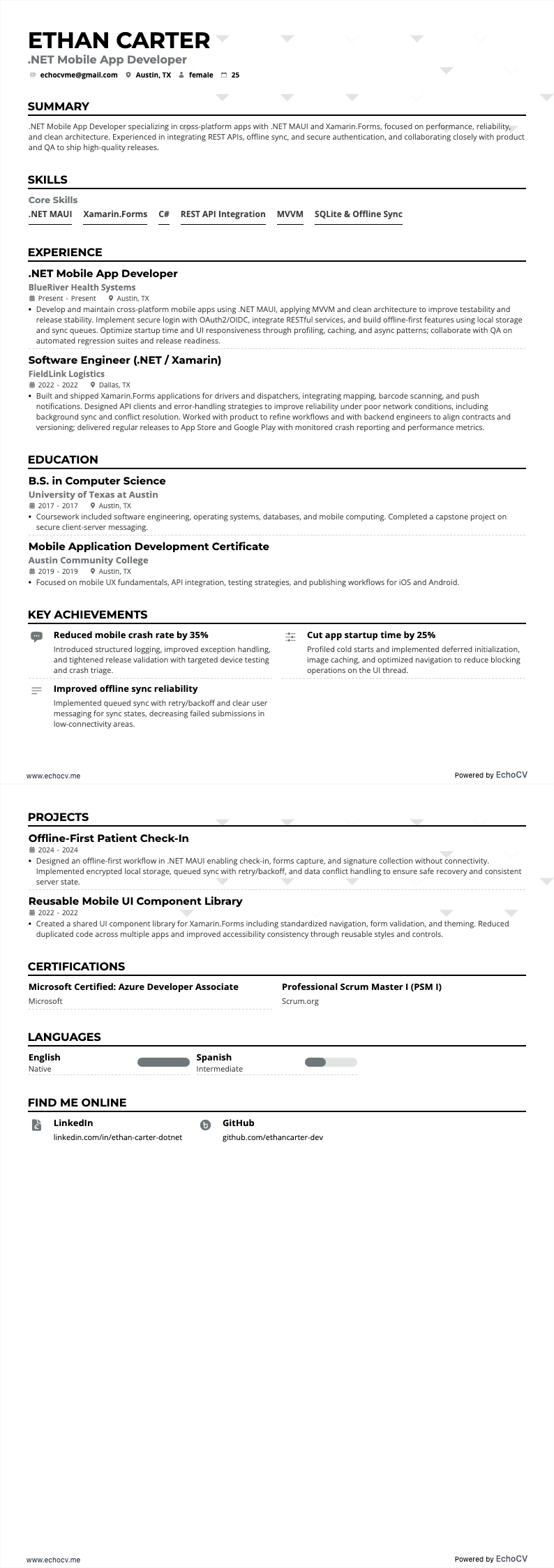
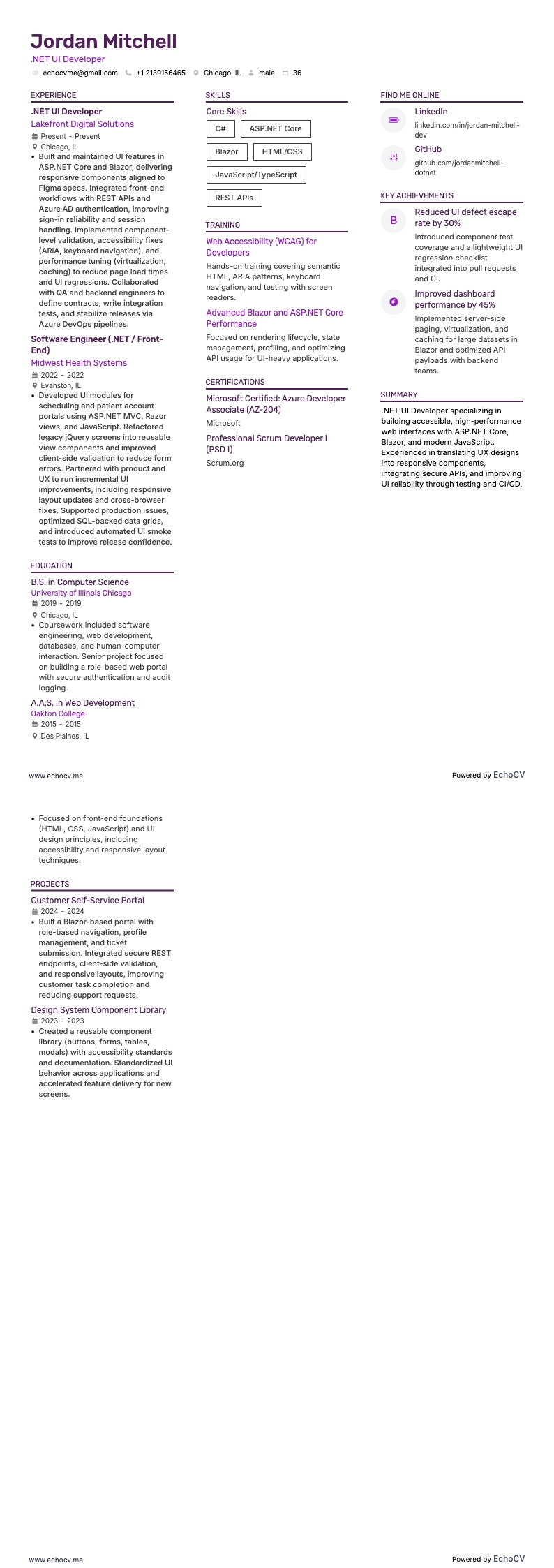
Here is an example of including .Net developer technical skills on a resume.