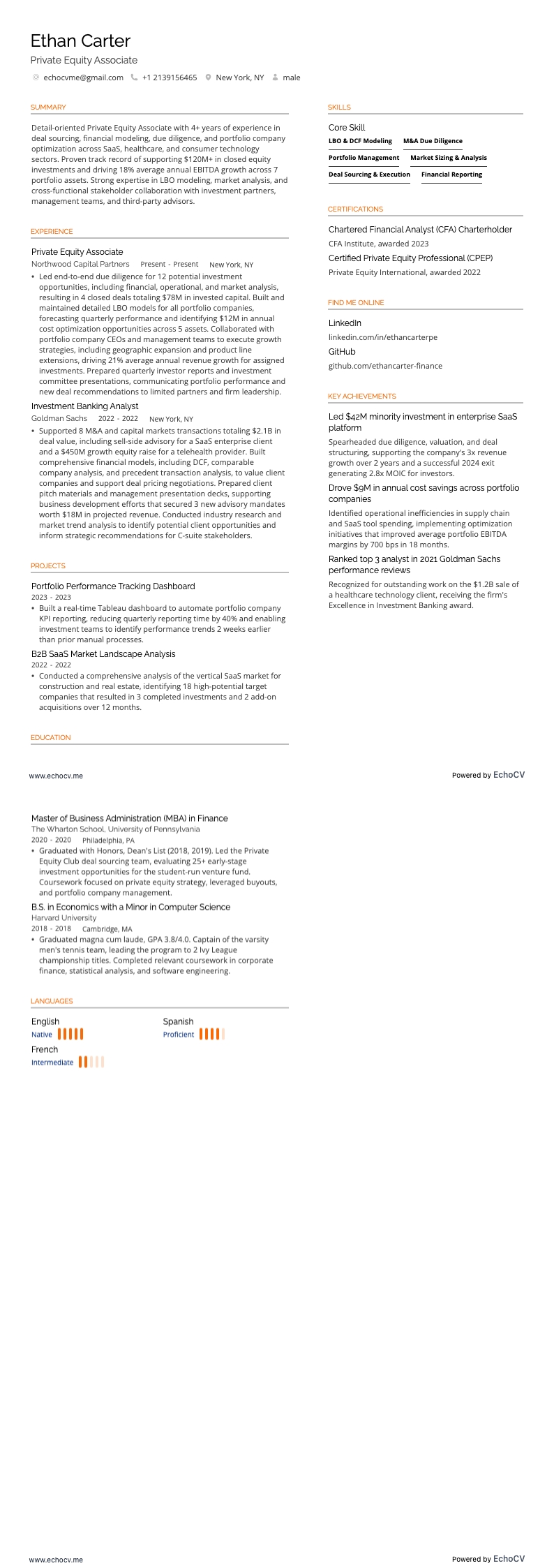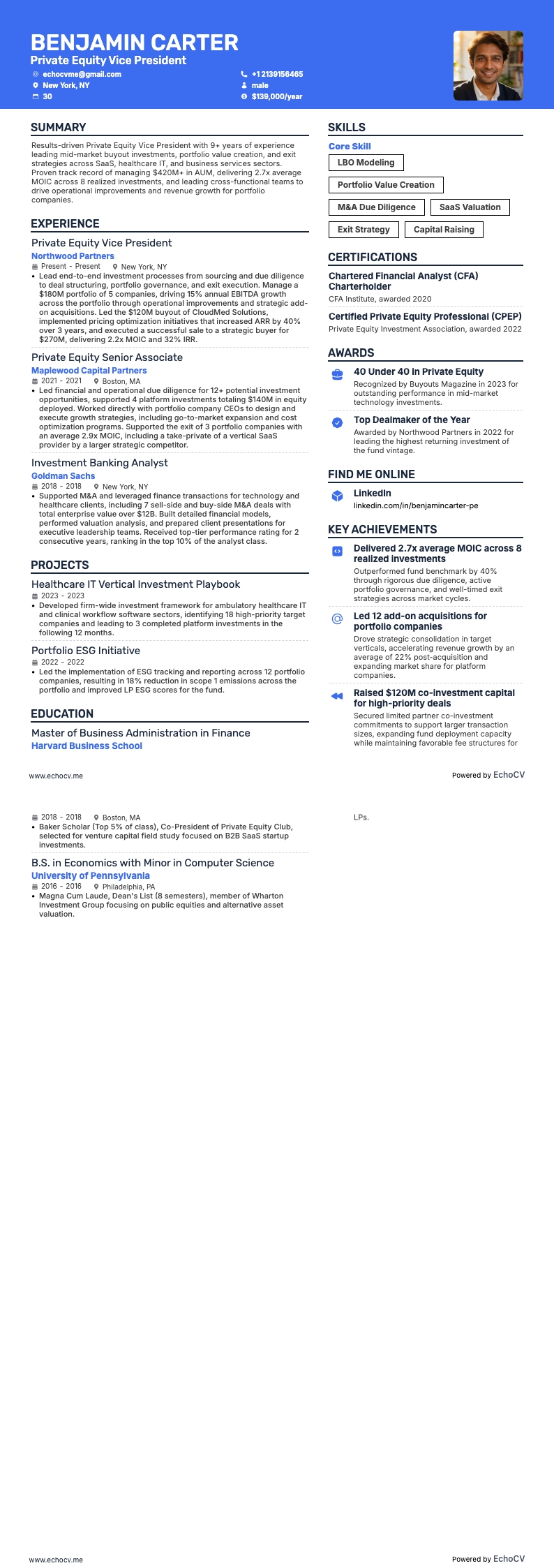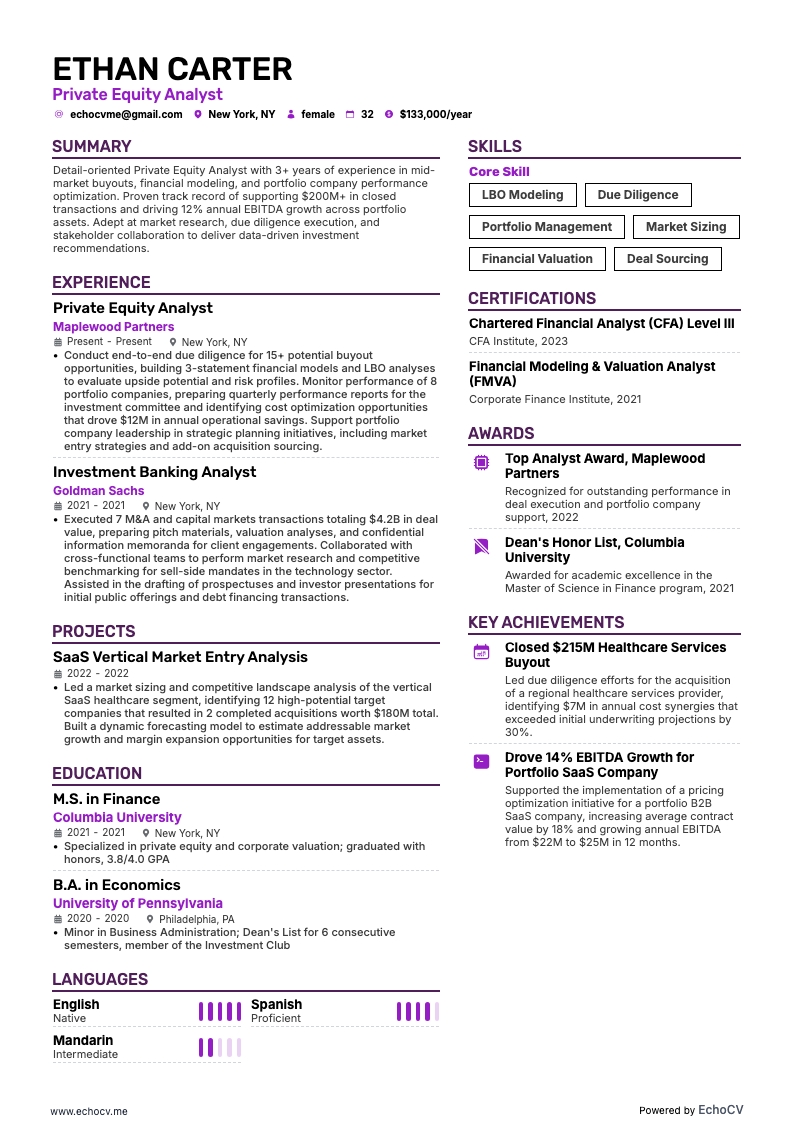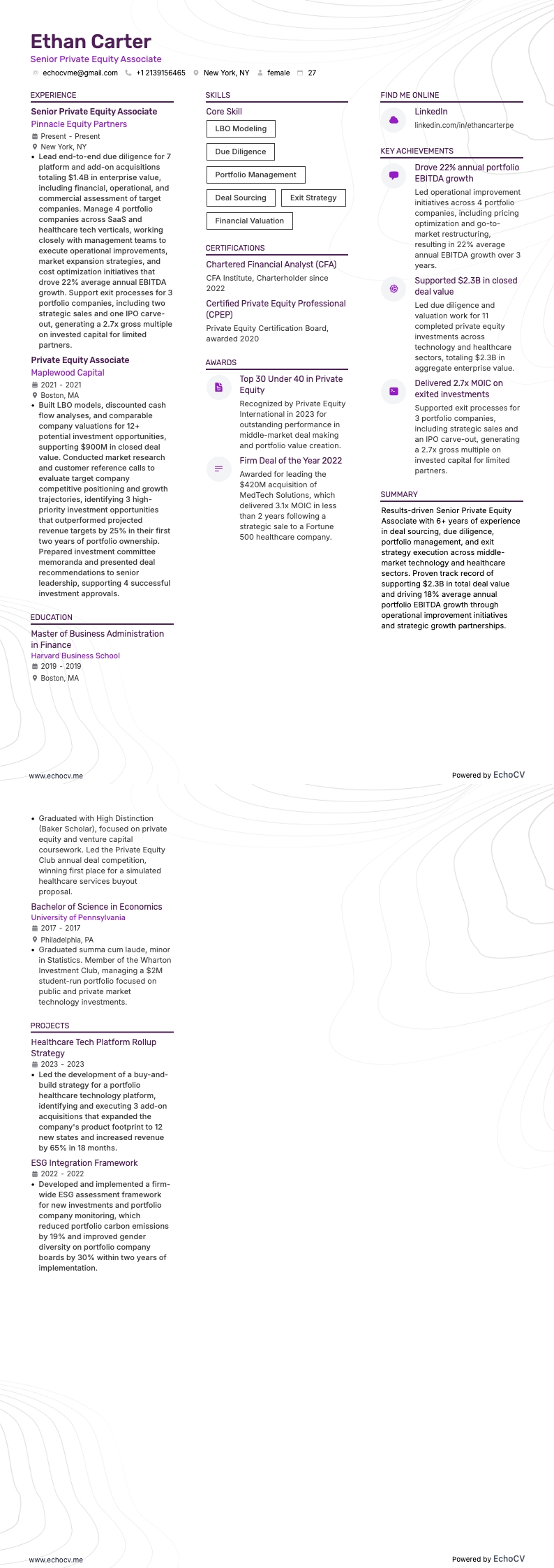
Crafting a resume that effectively highlights your analytical skills and deal-making experience can be daunting in the competitive field of private equity. Our guide offers step-by-step insights to ensure your resume stands out, demonstrating your value through quantifiable achievements and tailored content that speaks directly to the needs of private equity firms.
- Aligning the top one-third of your private equity resume with the role you're applying for.
- Curating your specific private equity experience to get the attention of recruiters.
- How to list your relevant education to impress hiring managers recruiting for the private equity role.
Discover more private equity professional examples to help you write a job-winning resume.
Creating the best private equity resume format: four simple steps
The most appropriate private equity resume format is defined by precision and a systematic approach. What is more, it should reflect upon how your application will be assessed by recruiters. That is why we've gathered four of the most vital elements to keep in mind when designing your resume:
- It's all about presenting how your experience or skills align with the job. Use the reverse-chronological resume format , if your expertise is relevant to the private equity role. Otherwise, select the functional skill-based resume format or the hybrid resume format to shift the focus to your skill set.
- Resume header - make sure you've filled out all relevant (and correct) information, like your contact details and link to your portfolio.
- Resume length - unless you've over a decade of applicable expertise in the field, stick with a one-page resume format. If you'd like to present more of your professional experience, go up to two pages.
- Resume file - submit your private equity resume in a PDF format to ensure all information stays in the same place.
Think about the market’s preferences – a Canadian resume, for instance, could have a different layout.