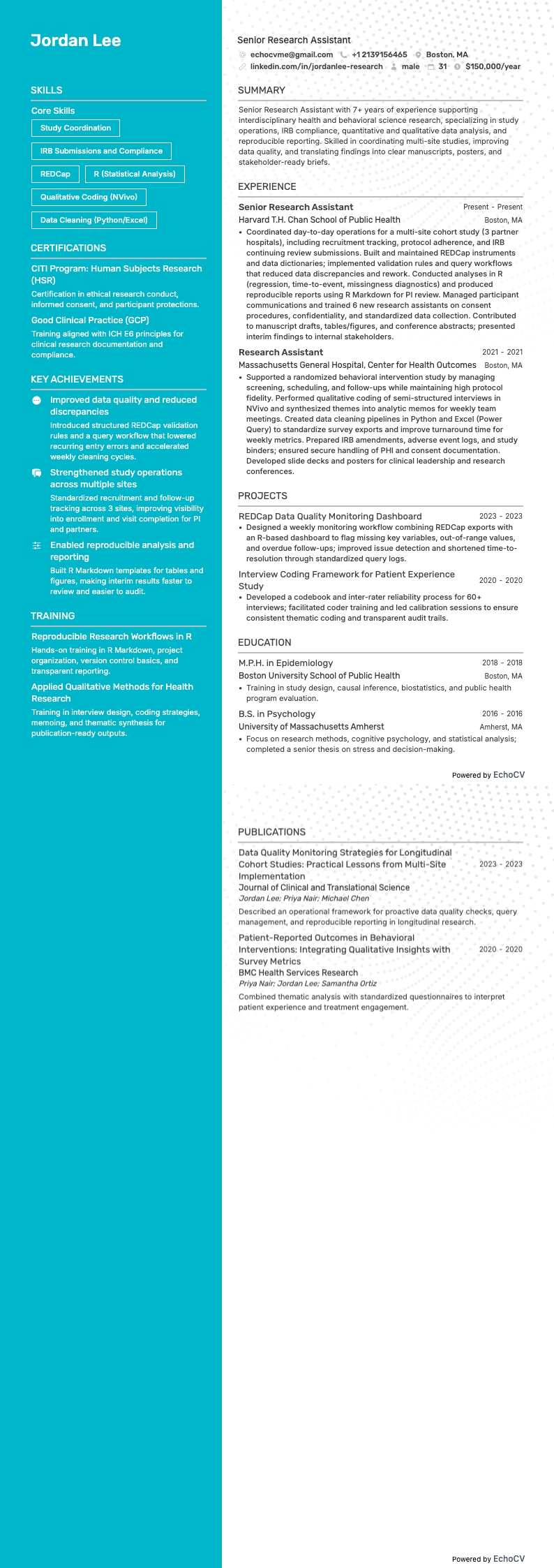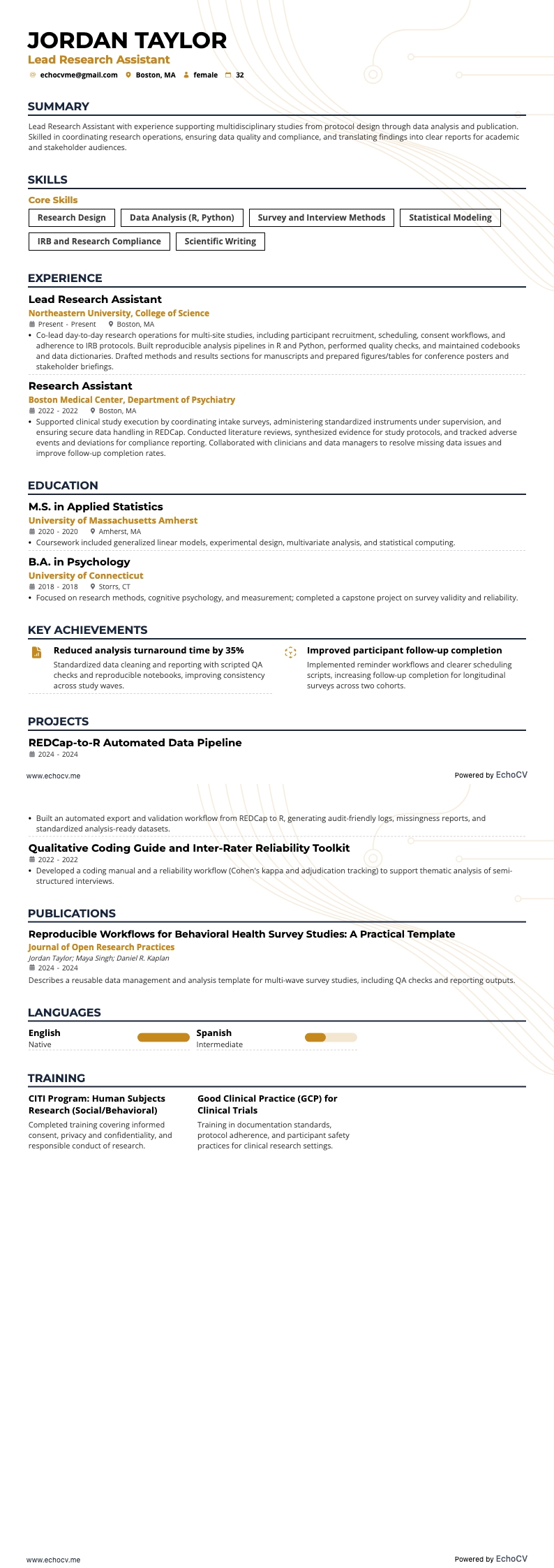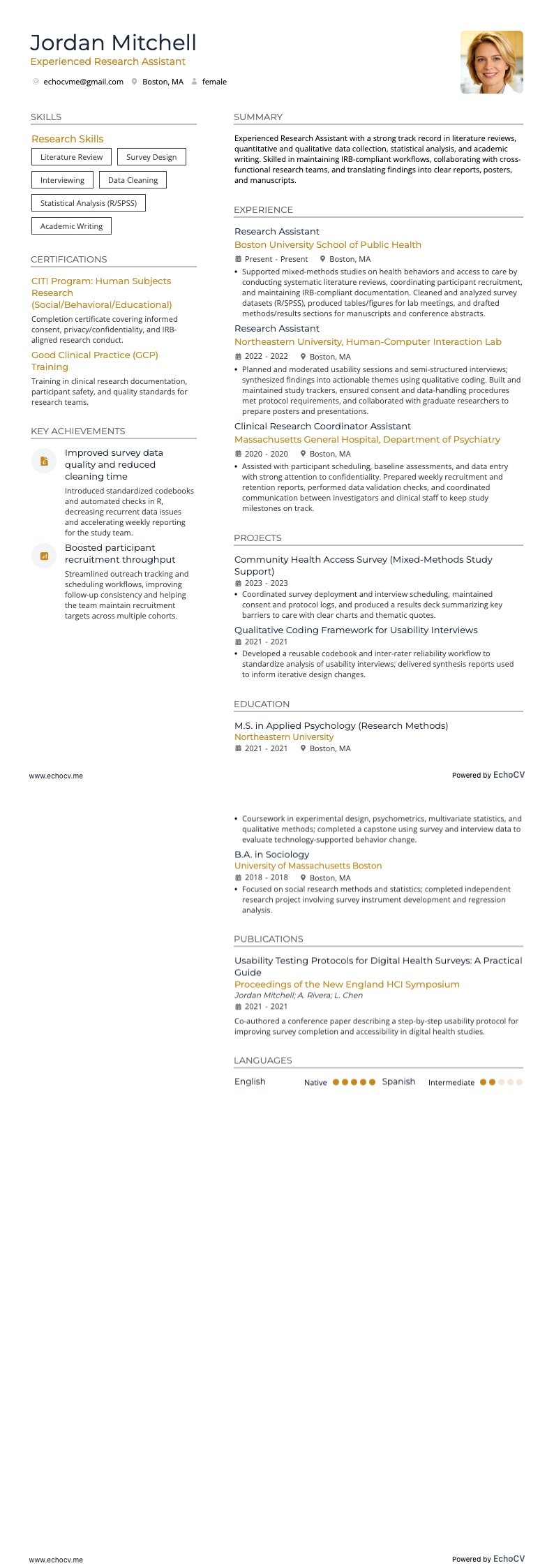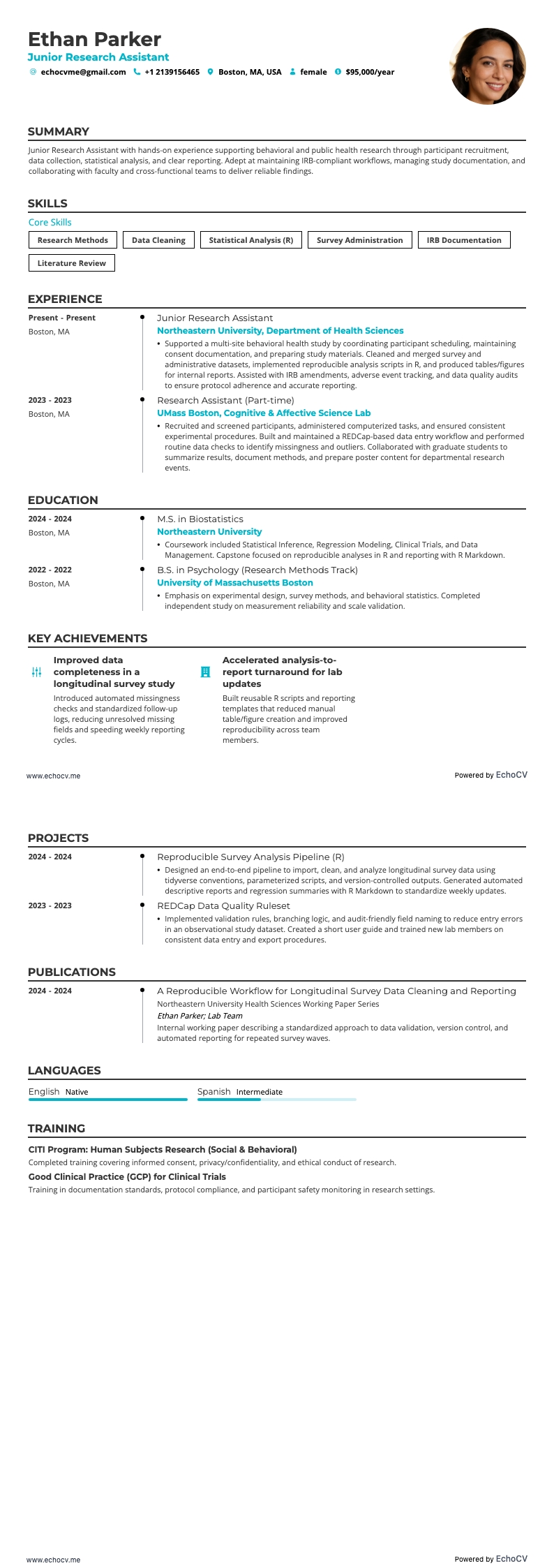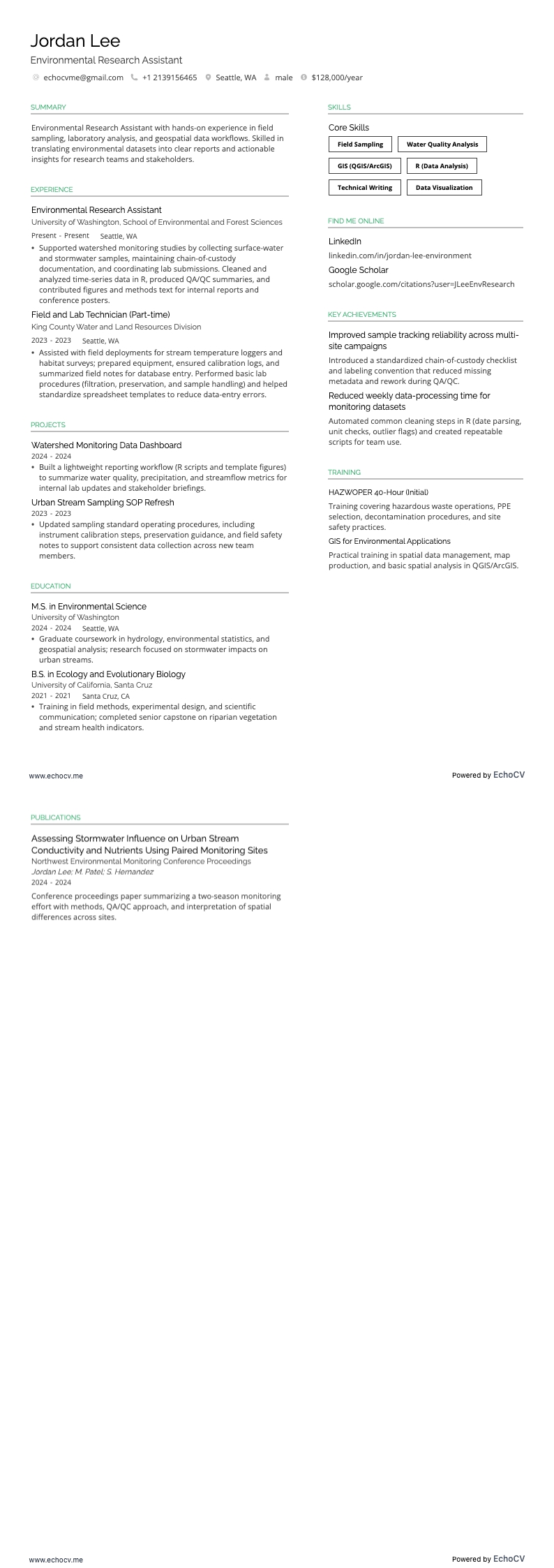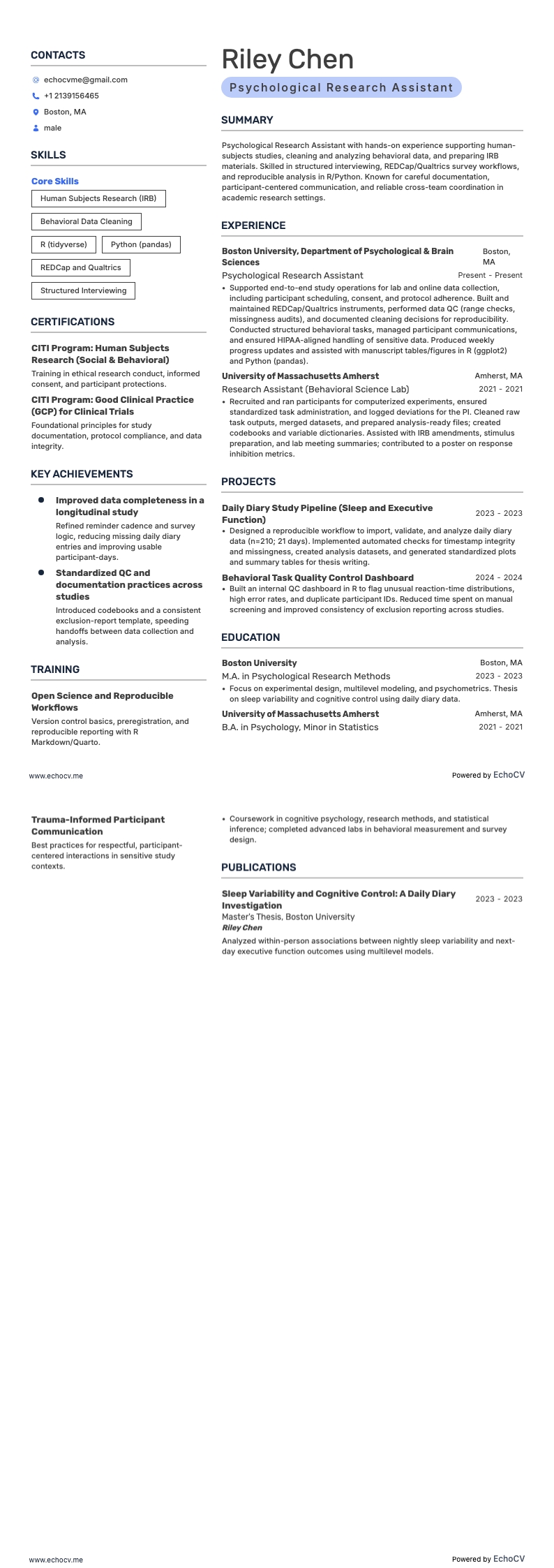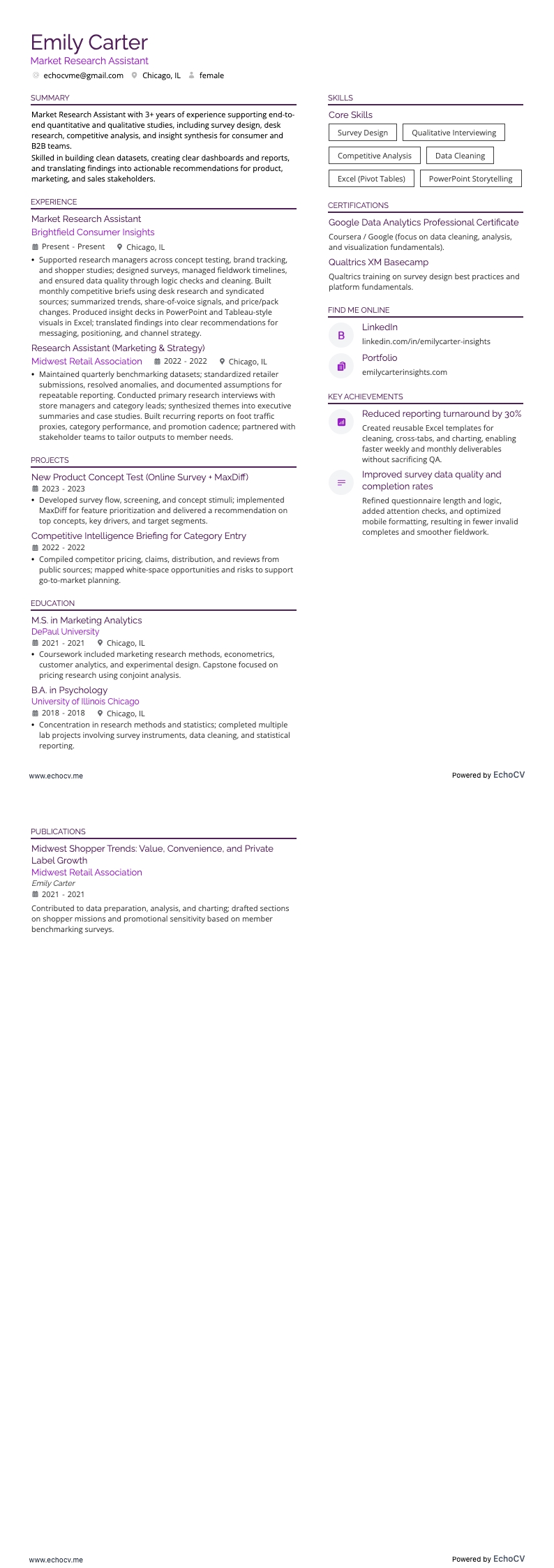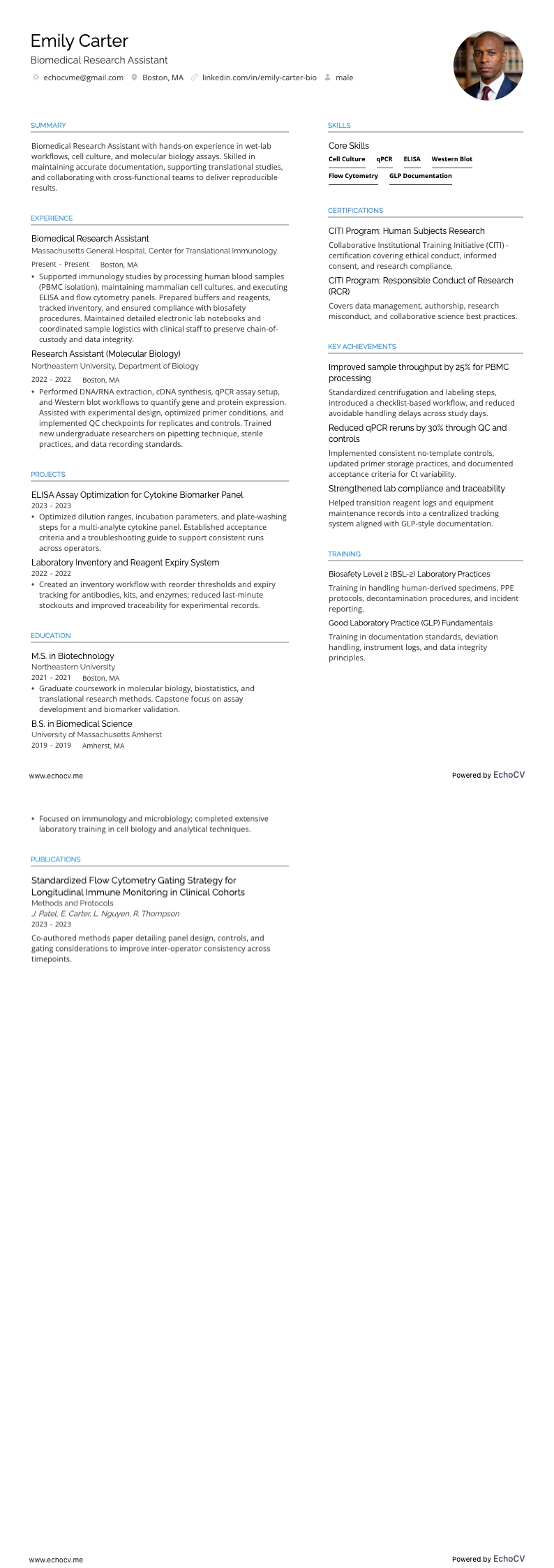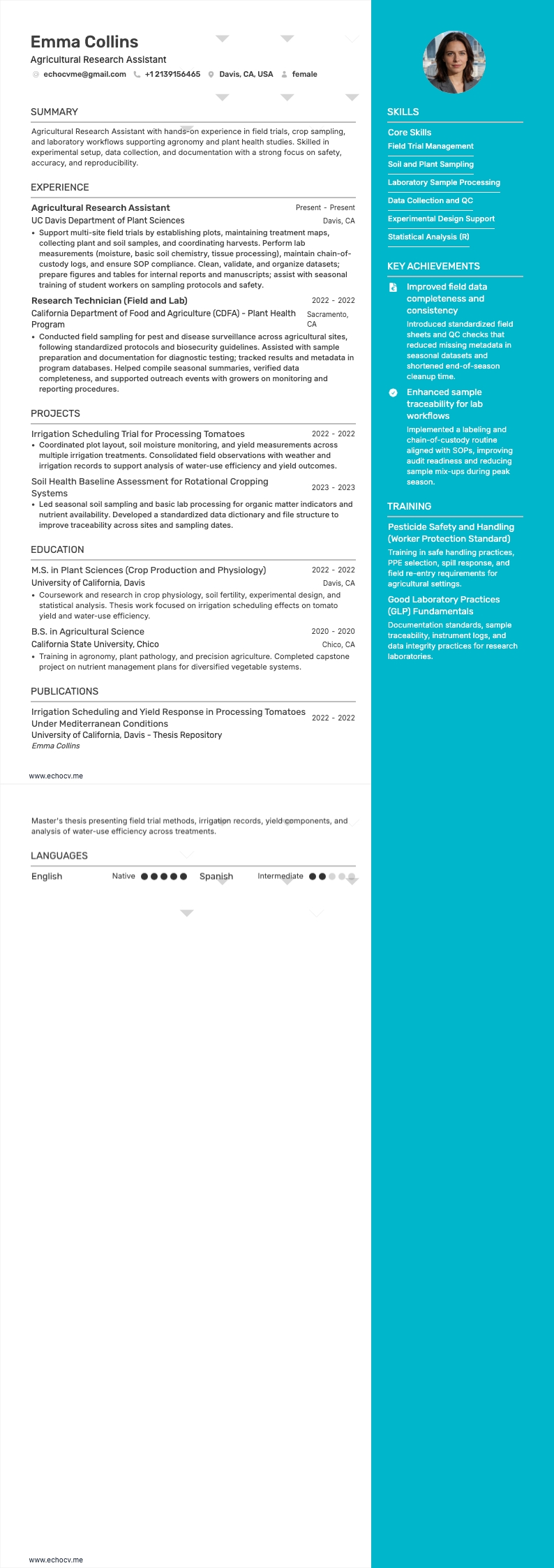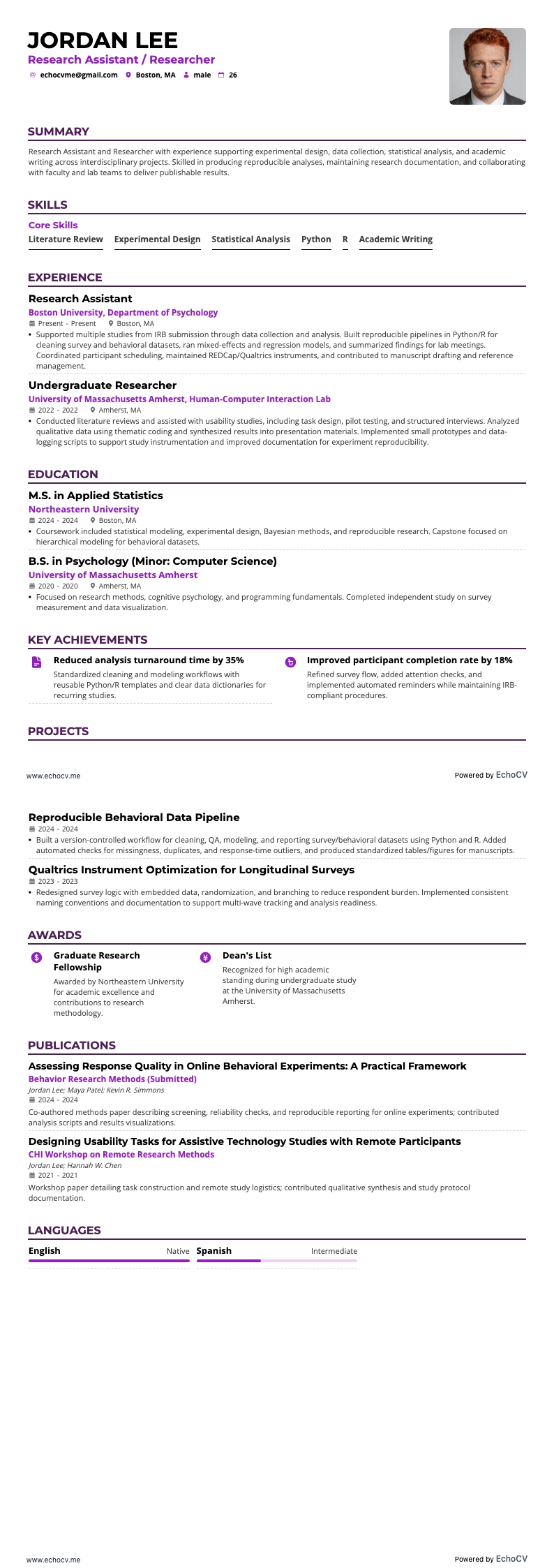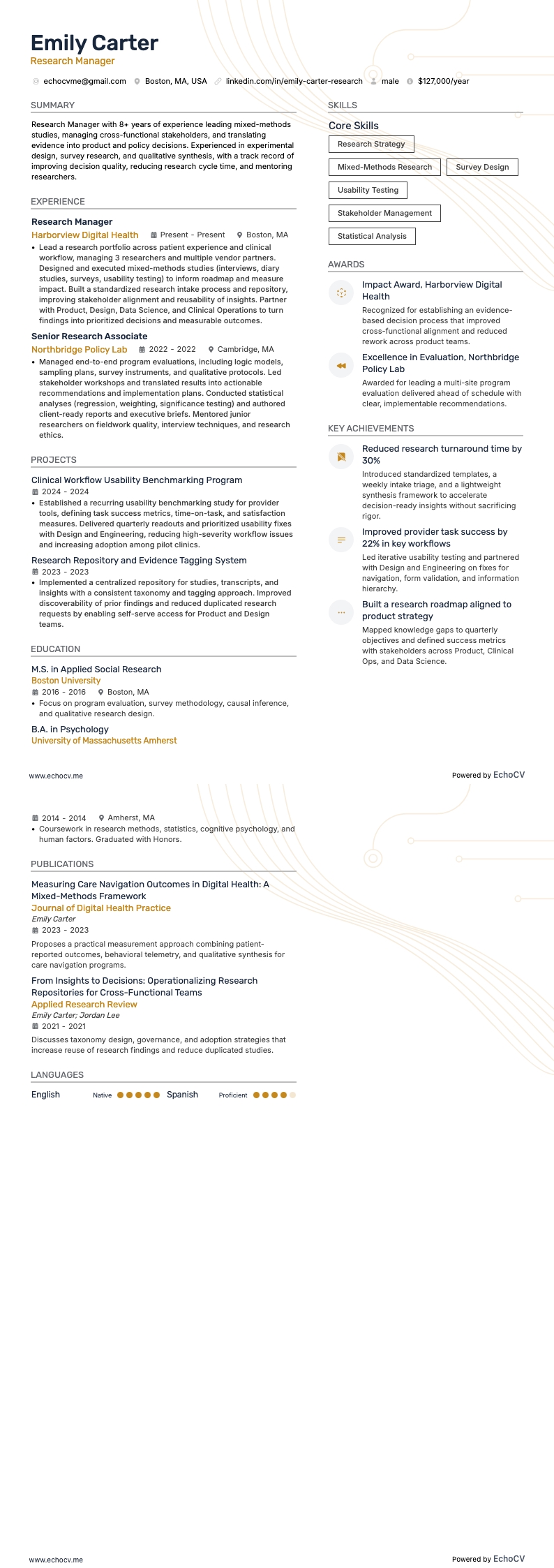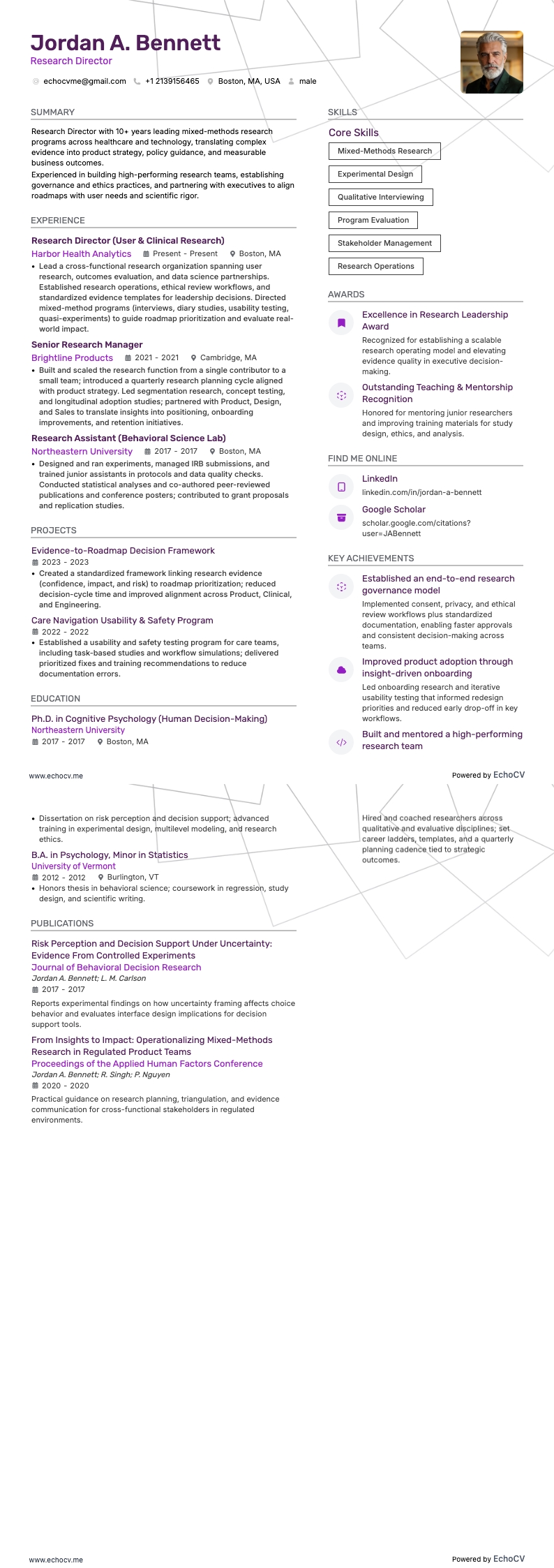
As a research assistant, articulating the breadth of your technical skills and academic research experience on a single-page resume can be a daunting challenge. Our guide offers tailored strategies and examples to help you effectively summarize your expertise and achievements, ensuring your resume stands out to potential employers.
- Sample industry-leading professional resumes for inspiration and research assistant resume-writing know-how.
- Focus recruiters' attention on what matters most - your unique experience, achievements, and skills.
- Write various resume sections to ensure you meet at least 95% of all job requirements.
- Balance your research assistant technical expertise with personality to stand out amongst candidates.
If the research assistant resume isn't the right one for you, take a look at other related guides we have:
The importance of format and layout in your research assistant resume
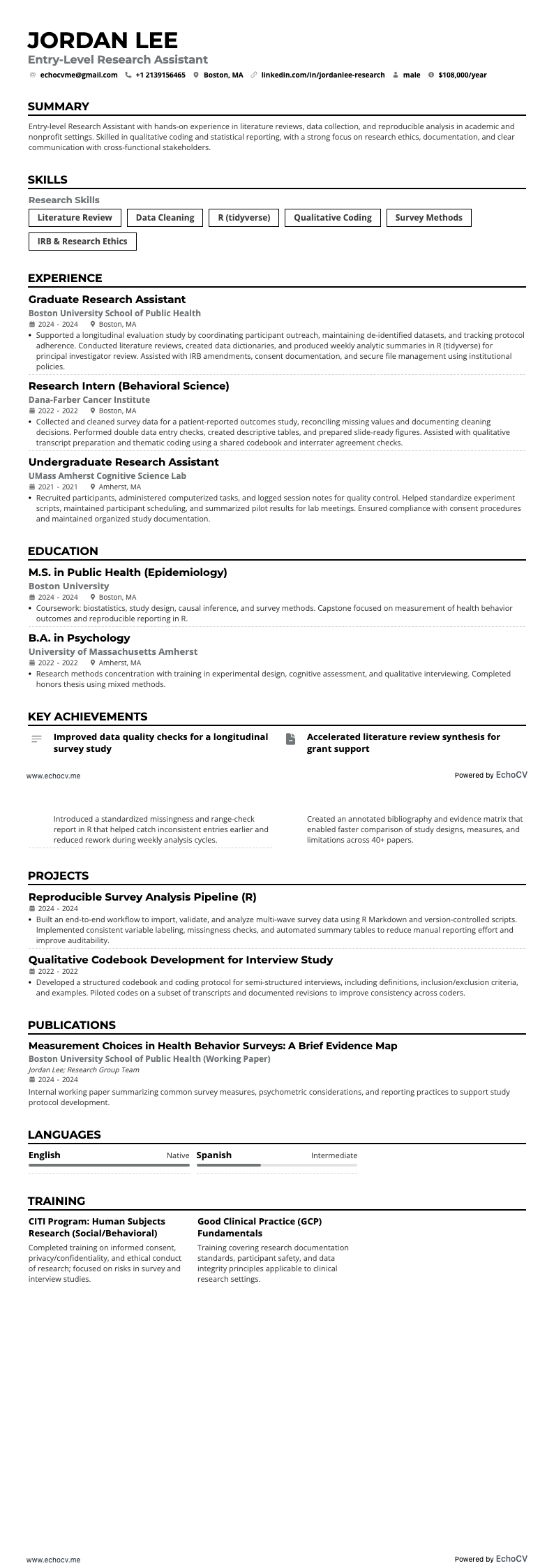
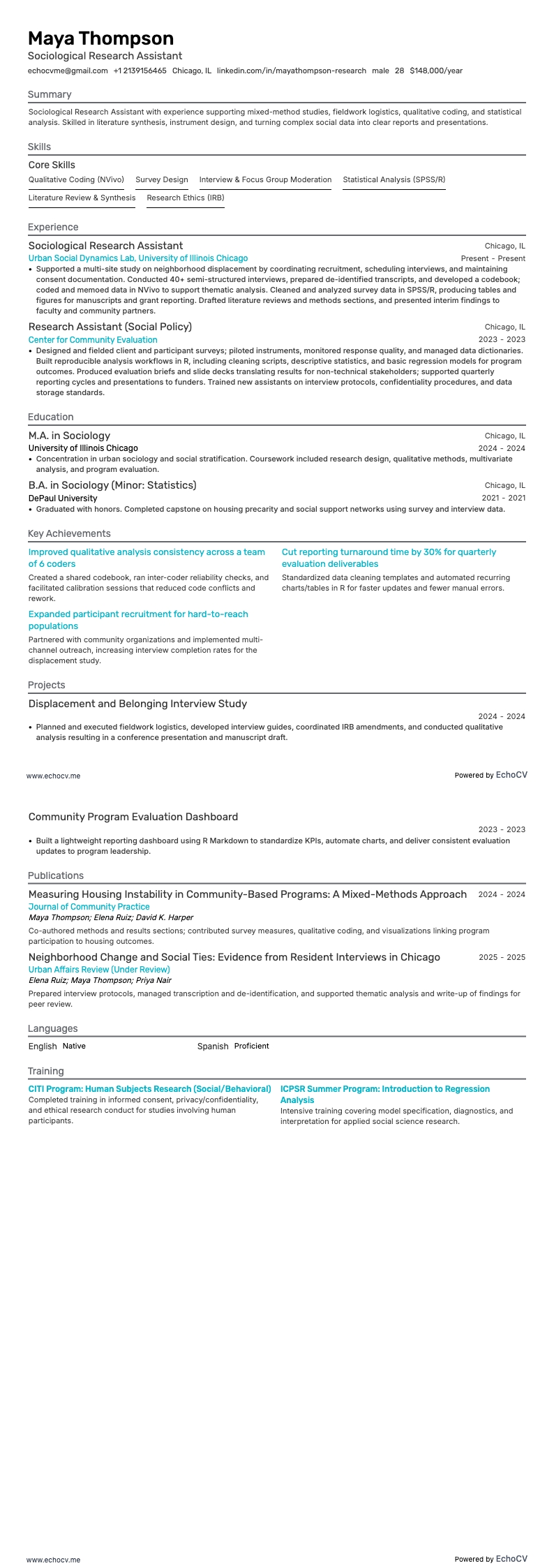
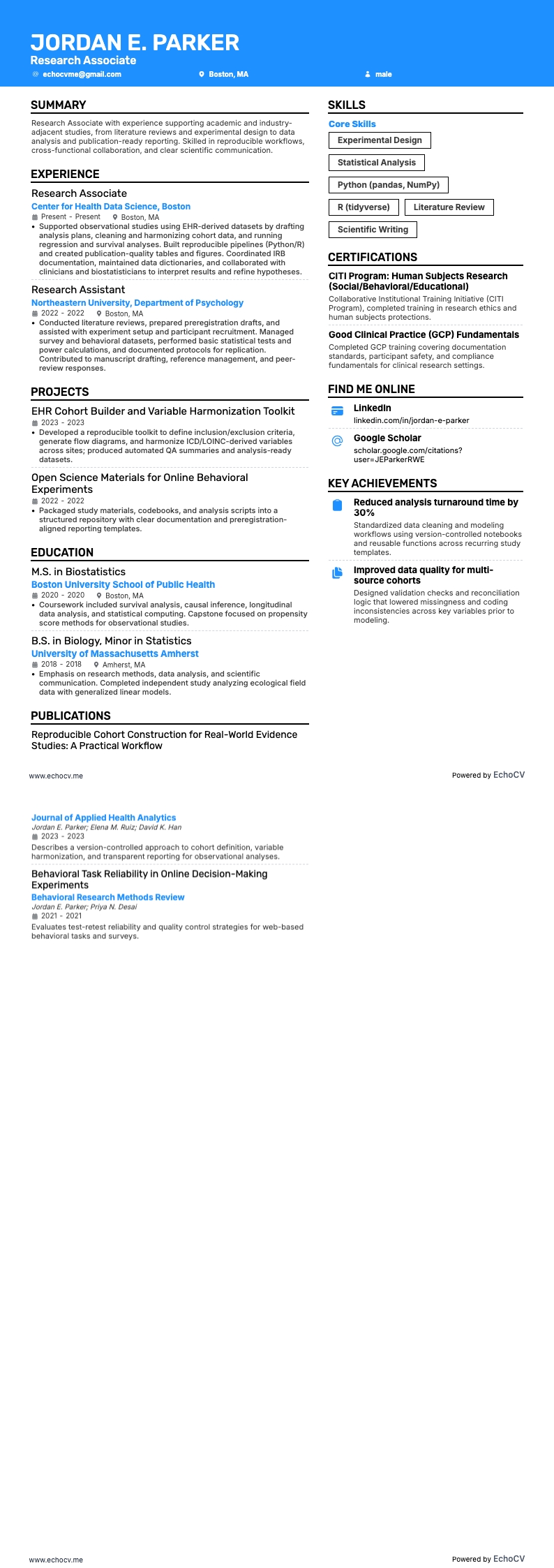
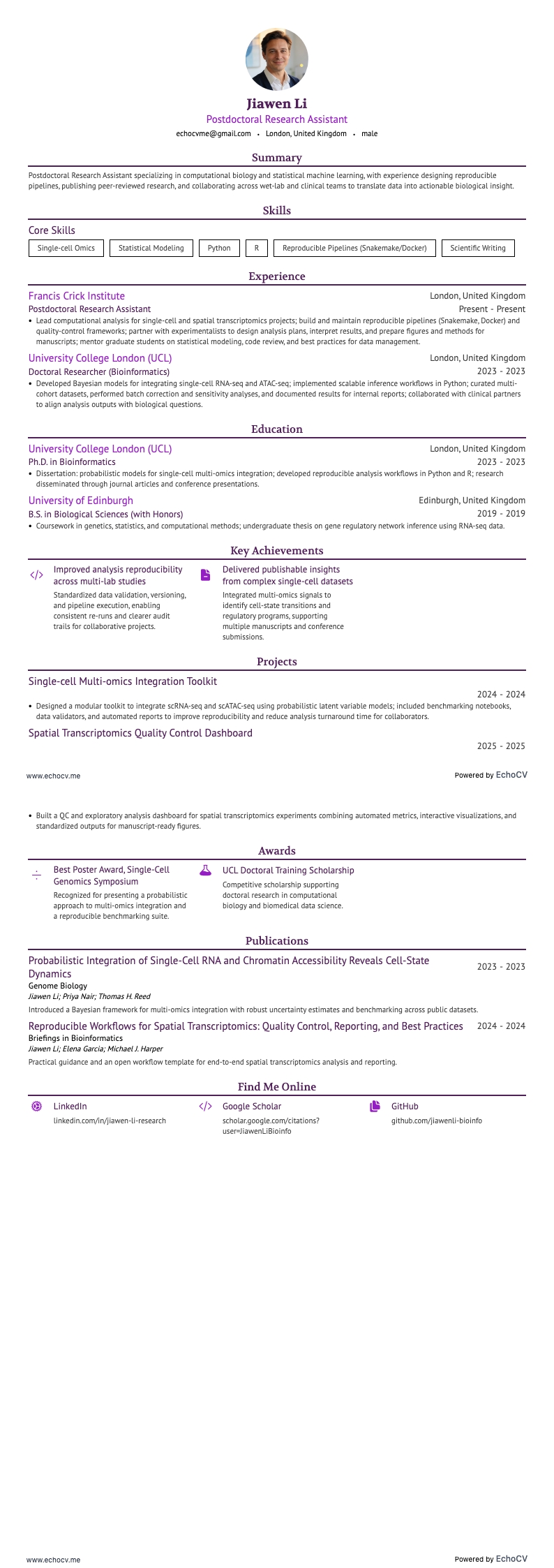
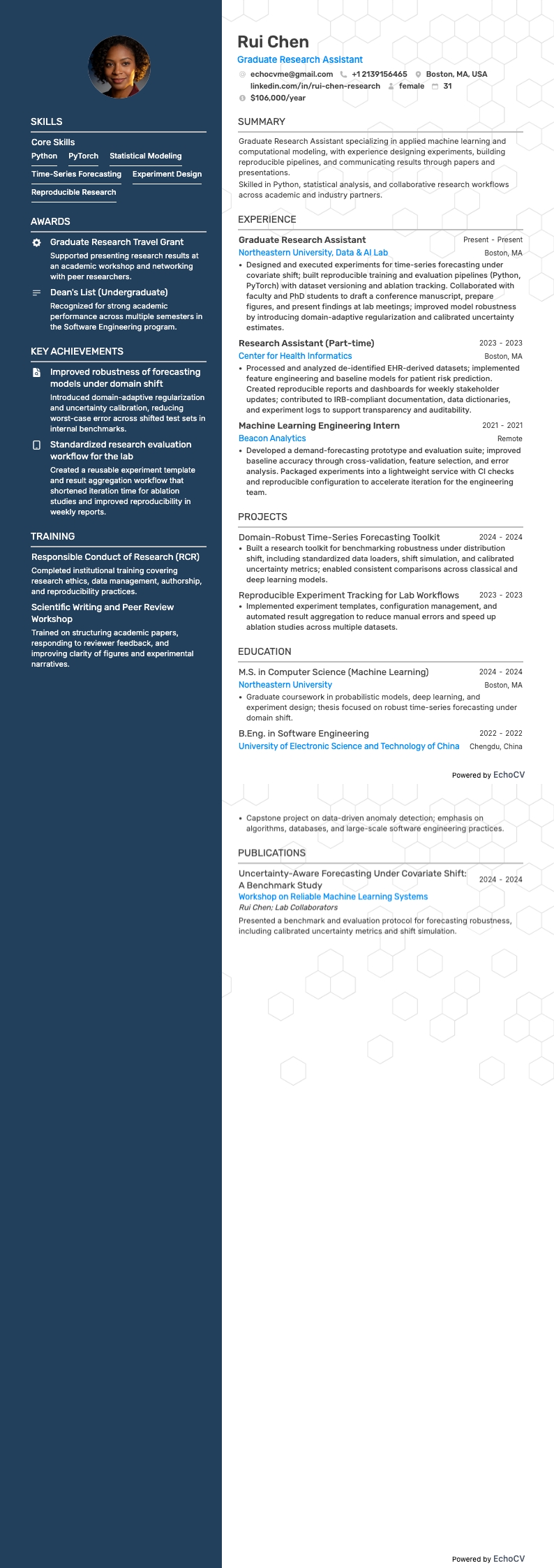
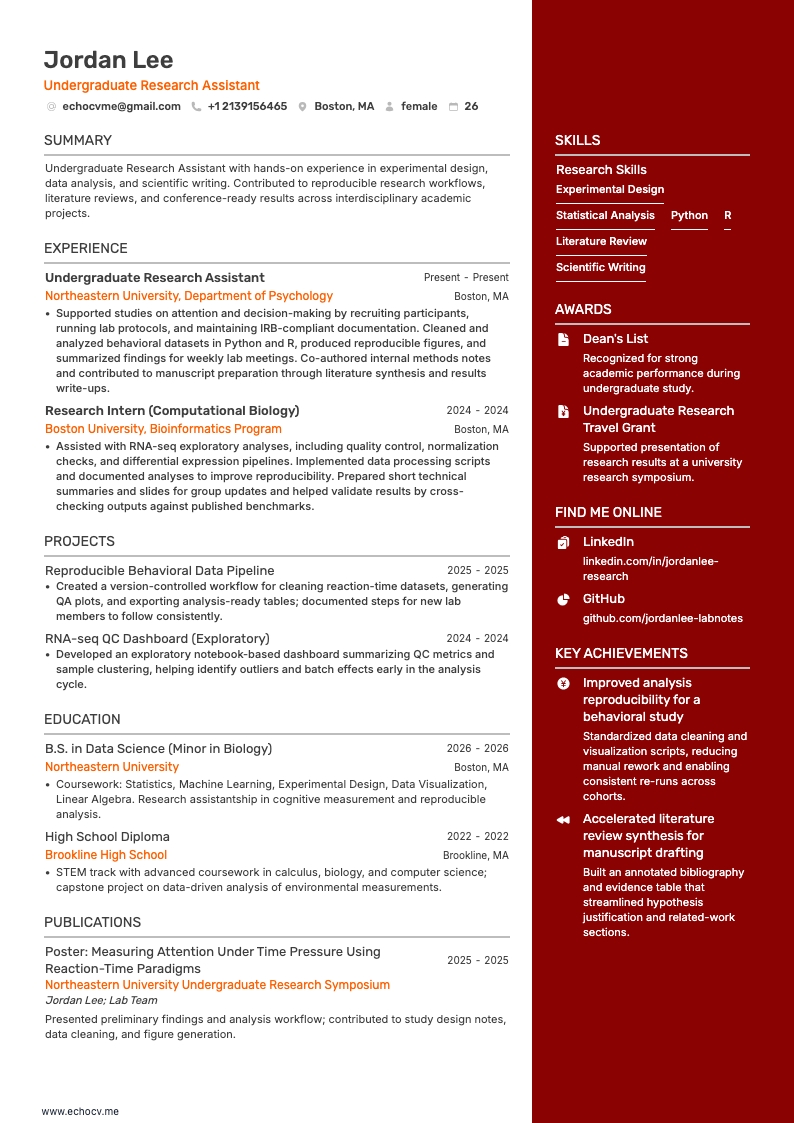
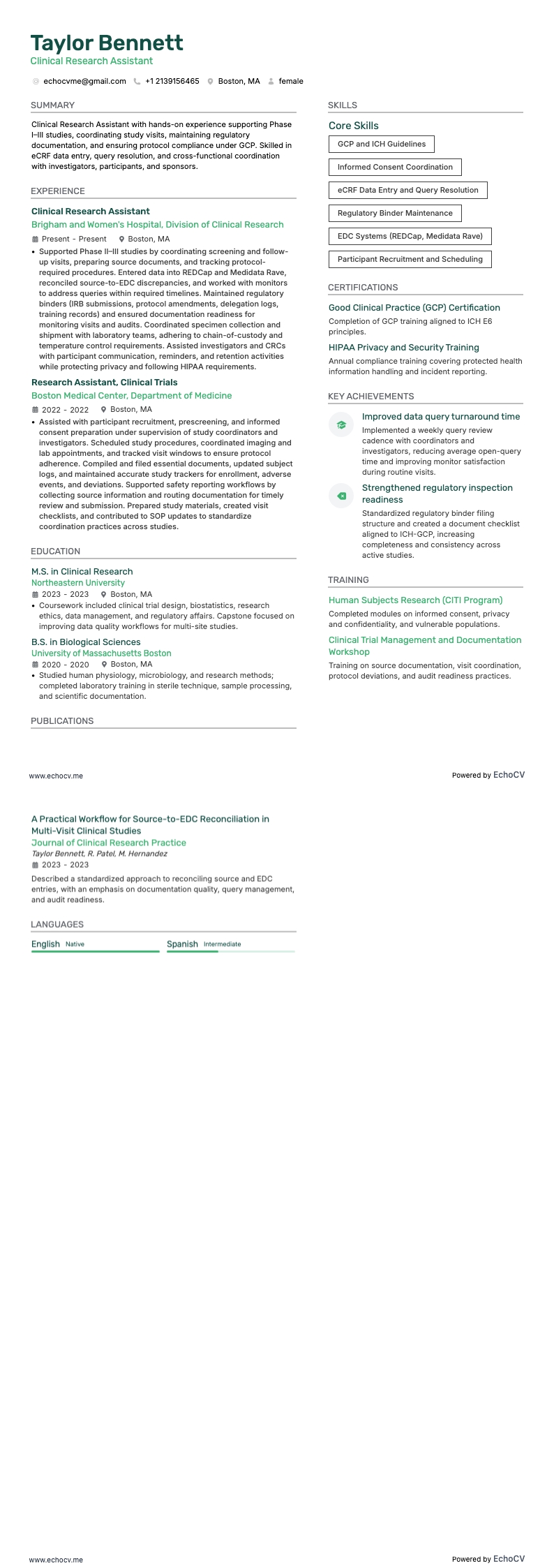
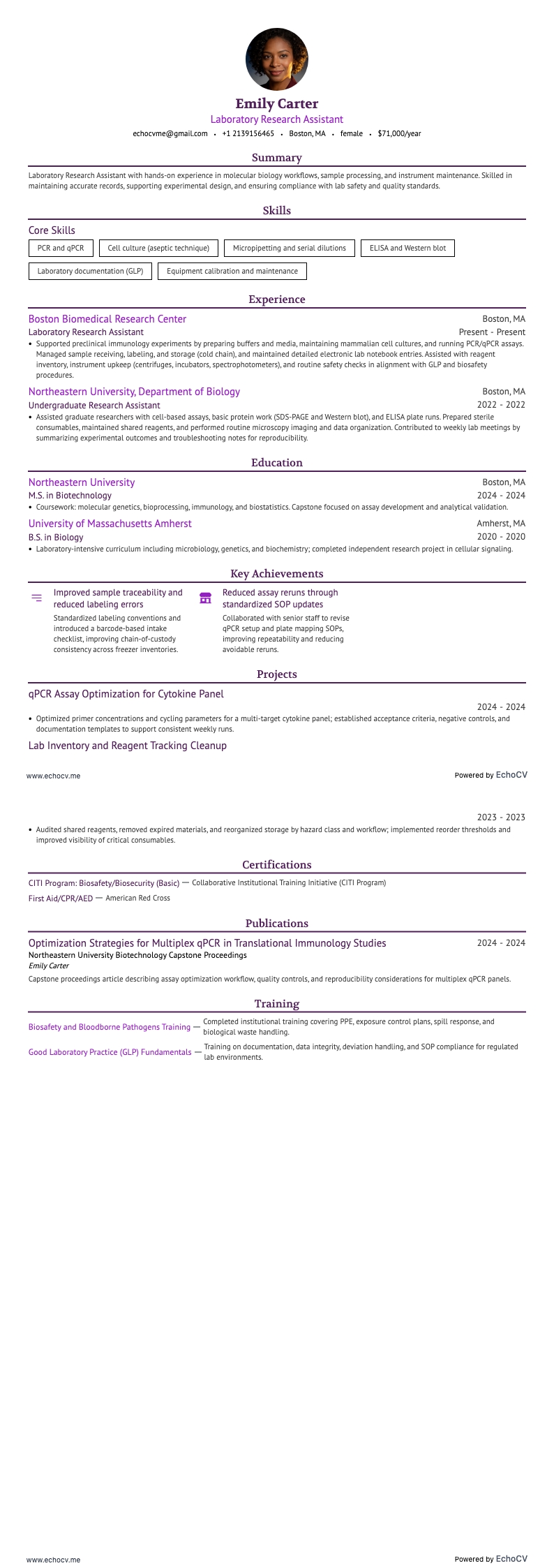
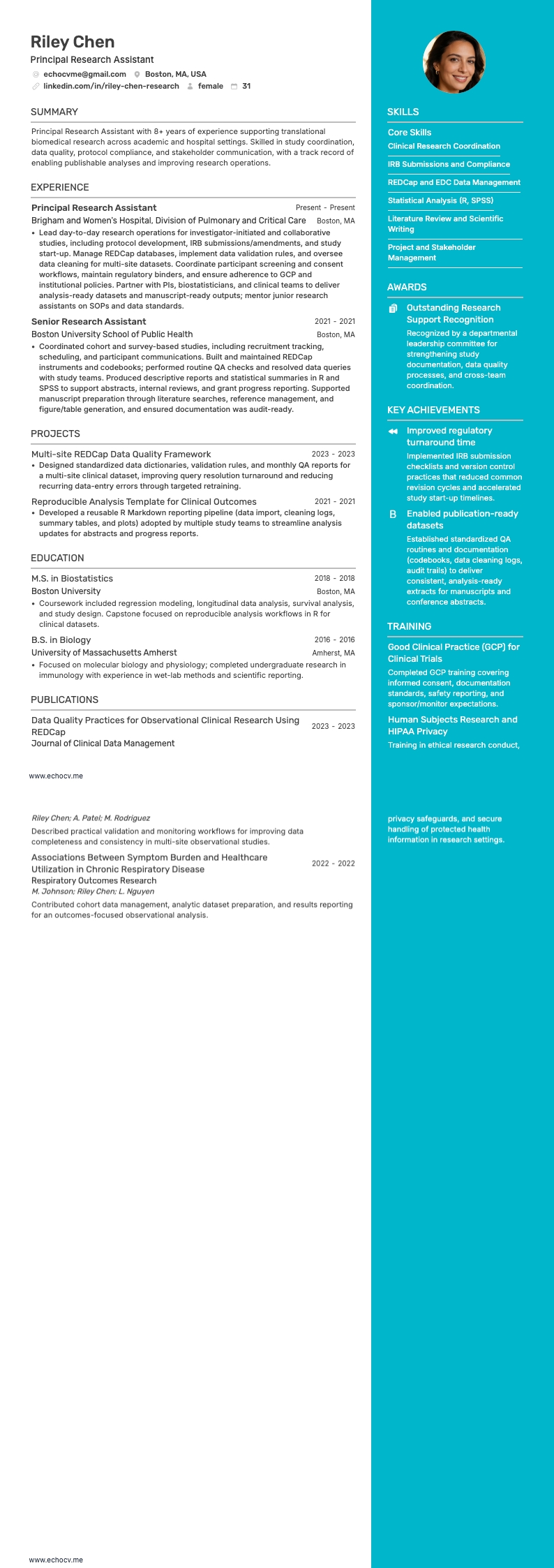
Consider you're an HR professional at company X, evaluating two research assistant candidate resumes. John Smith presents a simple, traditional, and easy-to-read resume. Edward Price, however, uses a non-conventional, often illegible format. Whose resume would you spend more time on to understand their experience? This scenario underscores the importance of your research assistant resume’s design. It should be simply formatted and clearly communicate why you are the ideal candidate for the role.
Achieve this balance by:
- Listing your experience, beginning with the most recent and relevant, in reverse chronological order;
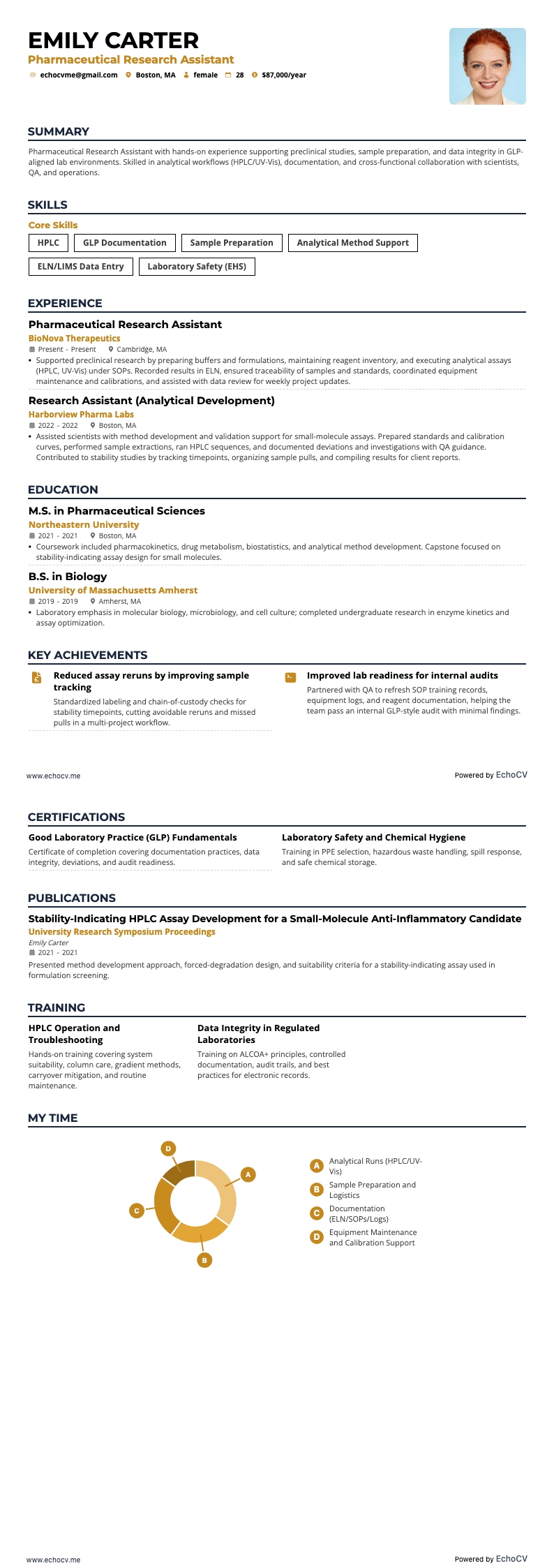
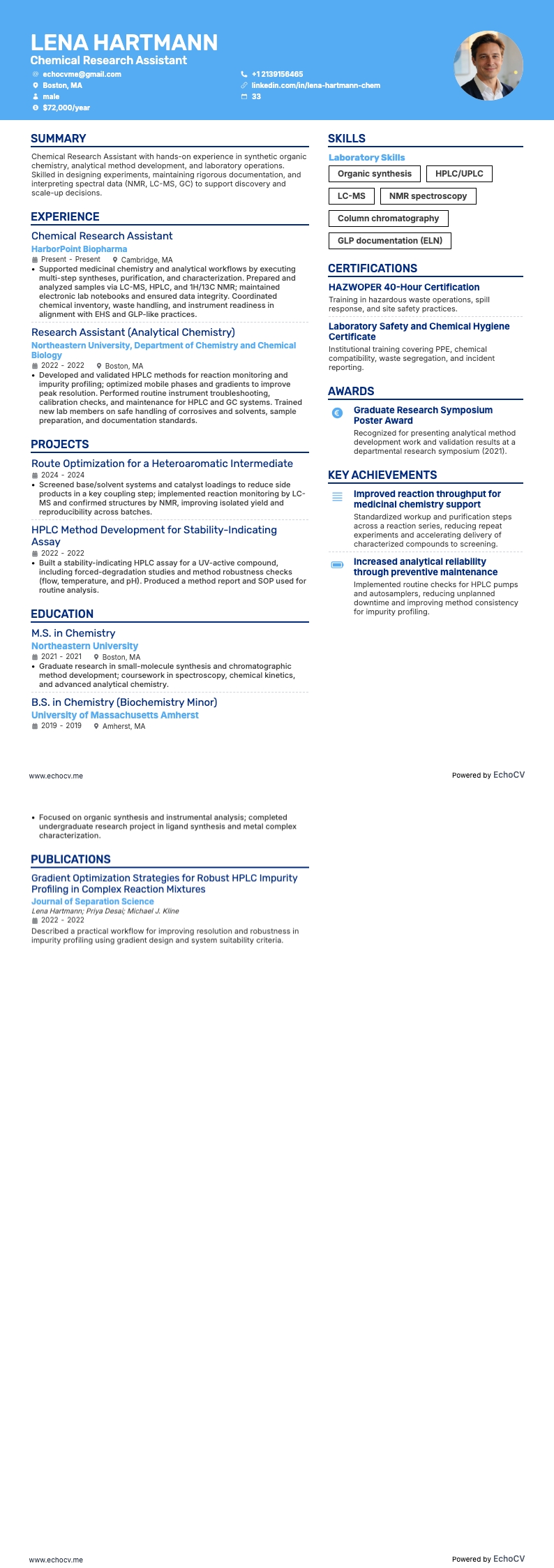
- Ensuring your header contains essential information, such as contact details, a headline, and a portfolio link. Include a professional photo in the research assistant resume header if you have one;
- Including only the most important and relevant resume sections to showcase your expertise and stand out from other candidates;
- Editing your research assistant resume to be no longer than two pages if you have extensive relevant experience. Use your limited resume space judiciously.
Also, remember that your research assistant resume might initially be scanned by an Applicant Tracker System (ATS).
When it comes to ATS:
- Opt for simple and legible fonts like Raleway, Rubik, Lato, etc., making your experience easy for the ATS to scan;
- Use serif and sans-serif fonts, both of which are ATS-friendly;
- Avoid overused options like Arial and Times New Roman, which, while suitable, may lack personality.
Contrary to a common myth, our recent study shows that the ATS can effectively process both one-column and two-column resumes. Learn more about this in the ATS myths guide.
Finally, when submitting your research assistant resume, always export it as a PDF to ensure all information remains intact, making the document easier to print, read, and scan.
Customize your resume for the market – a Canadian format, for example, might vary in structure.