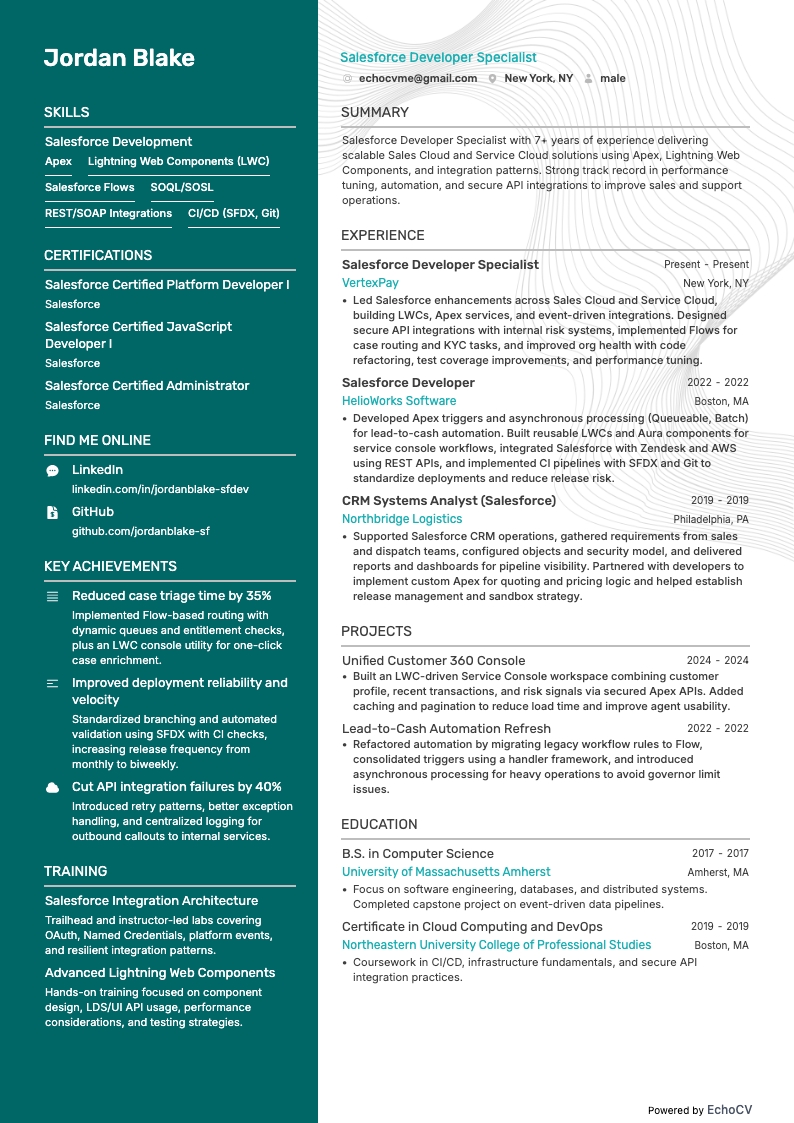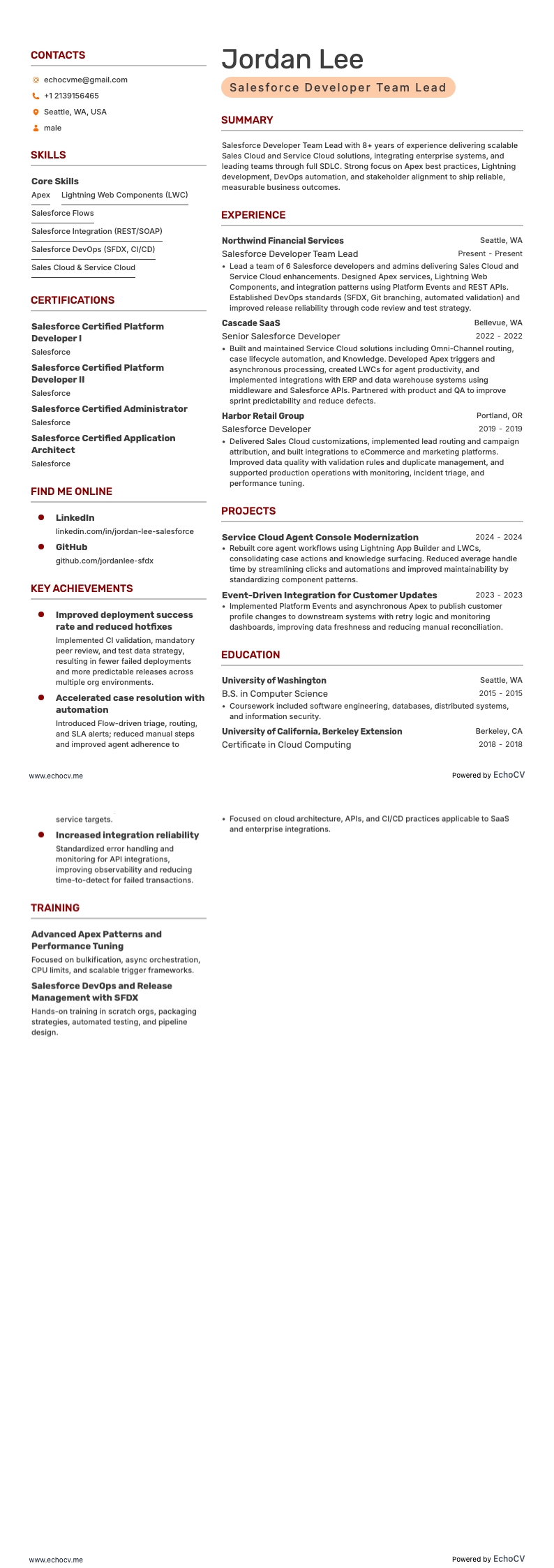
Recent research shows that 150,000 companies globally, including many American startups and Fortune 500 giants, rely on Salesforce for customer relationship management. This creates a massive and growing demand for Salesforce developers who not only understand the platform but can also simplify organizational processes.
As a software developer specializing in Salesforce, job opportunities abound, but so does the competition. A quick LinkedIn search might reveal more than 100 applicants for a single position. Within the first 24 hours of posting. You definitely don't want to land in the rejection pile. Instead, you want to articulate your technical skills and business savvy so clearly that you stand out immediately as a top candidate.
Don’t worry, this guide’s got you covered. Think of it as your personal debugger: it’s here to help you smooth out your career path by giving you the best tips to impress not just recruiters but even those without a technical background.
Here’s what else we’ll cover:
- How to include enough detail to be compelling, while also keeping your resume concise and to the point.
- How to design your resume so it doesn’t confuse applicant tracking systems (ATS) and reaches recruiters.
- How to tailor your Salesforce resume to an actual job description and make it count.
- Which skills to emphasize to align with the requirements of the specific job.
- How to write an impactful personal statement that balances technical expertise with clear examples of your expertise.
Before we dive in, you might want to have a look at other Salesforce-related resume guides.
- Salesforce Resume
- Salesforce Project Manager Resume
- Salesforce Admin Resume
- Salesforce Consultant Resume
- Salesforce Business Analyst Resume
- Salesforce developer Cover Letter
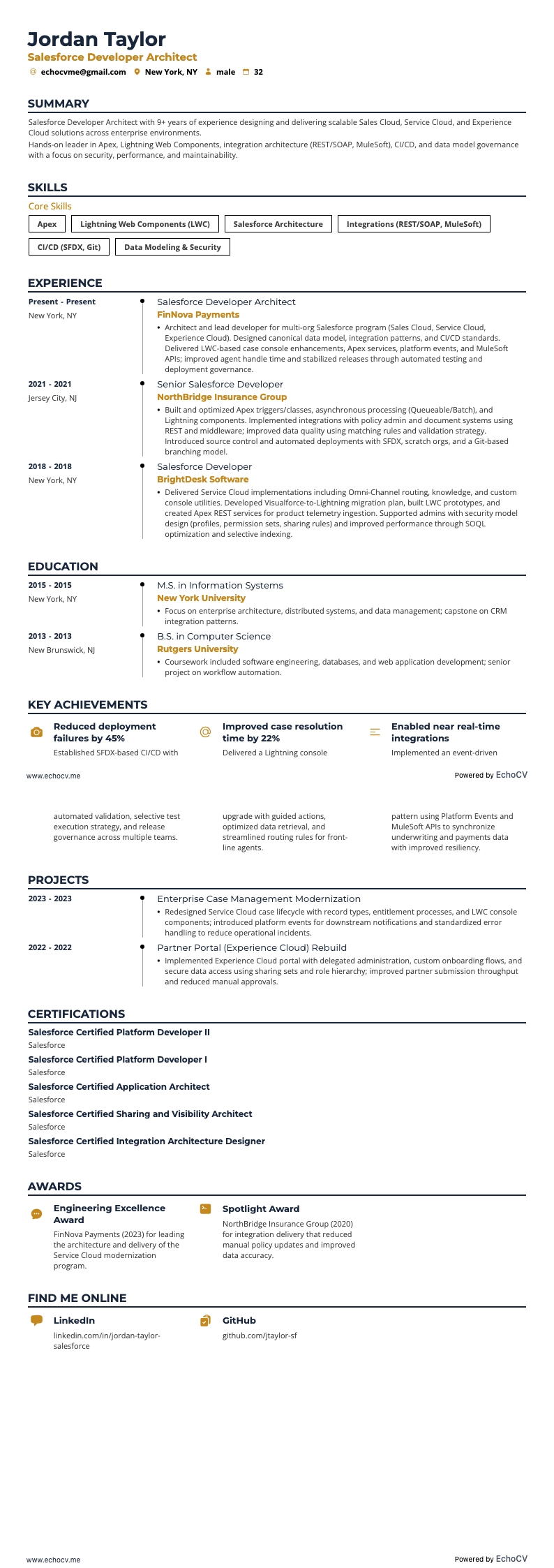
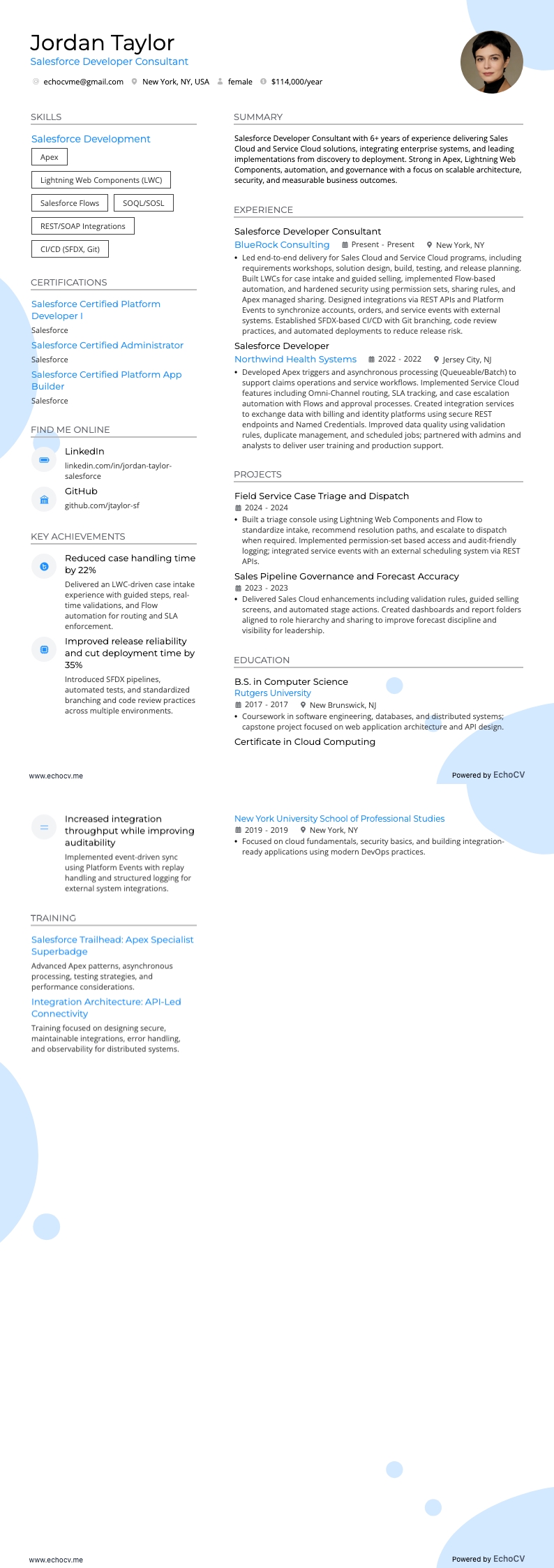
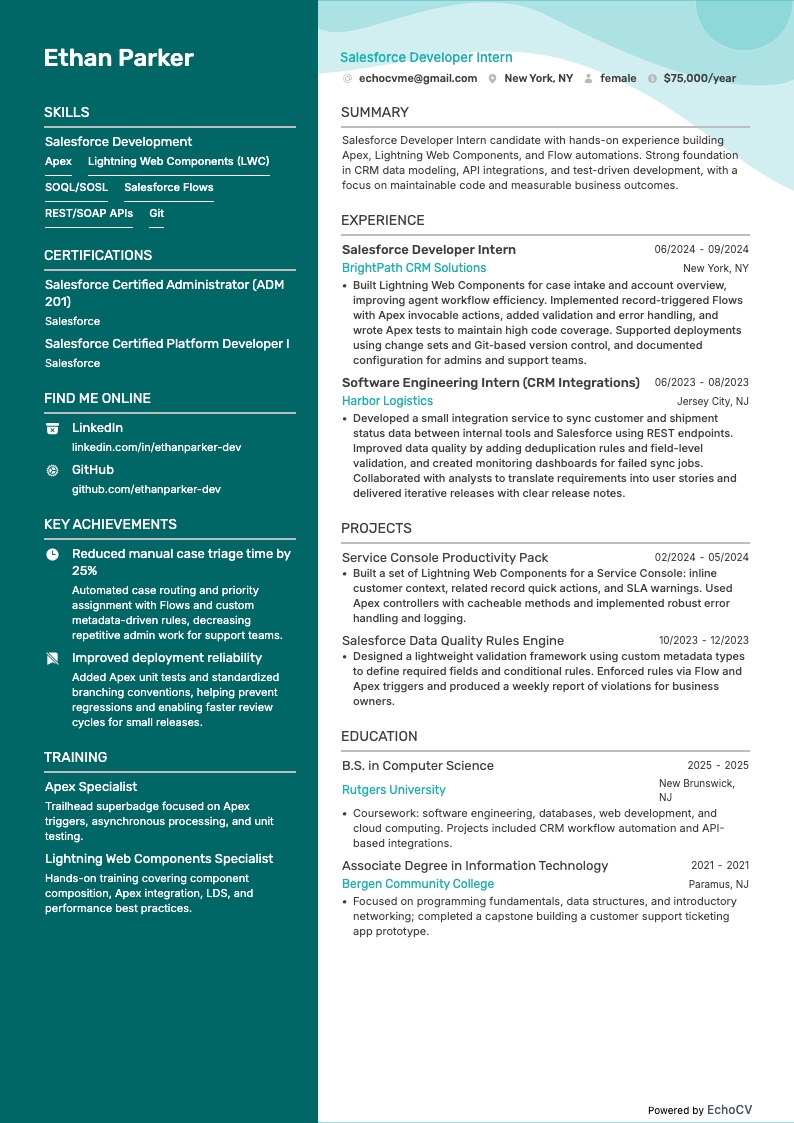
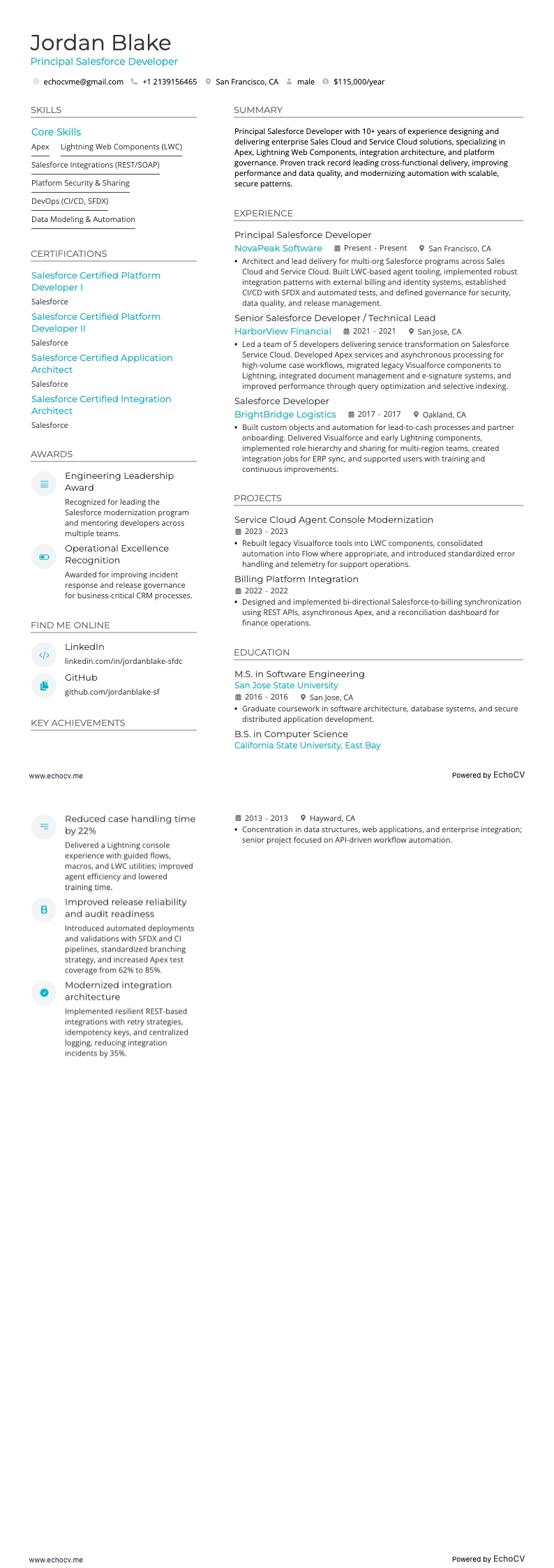
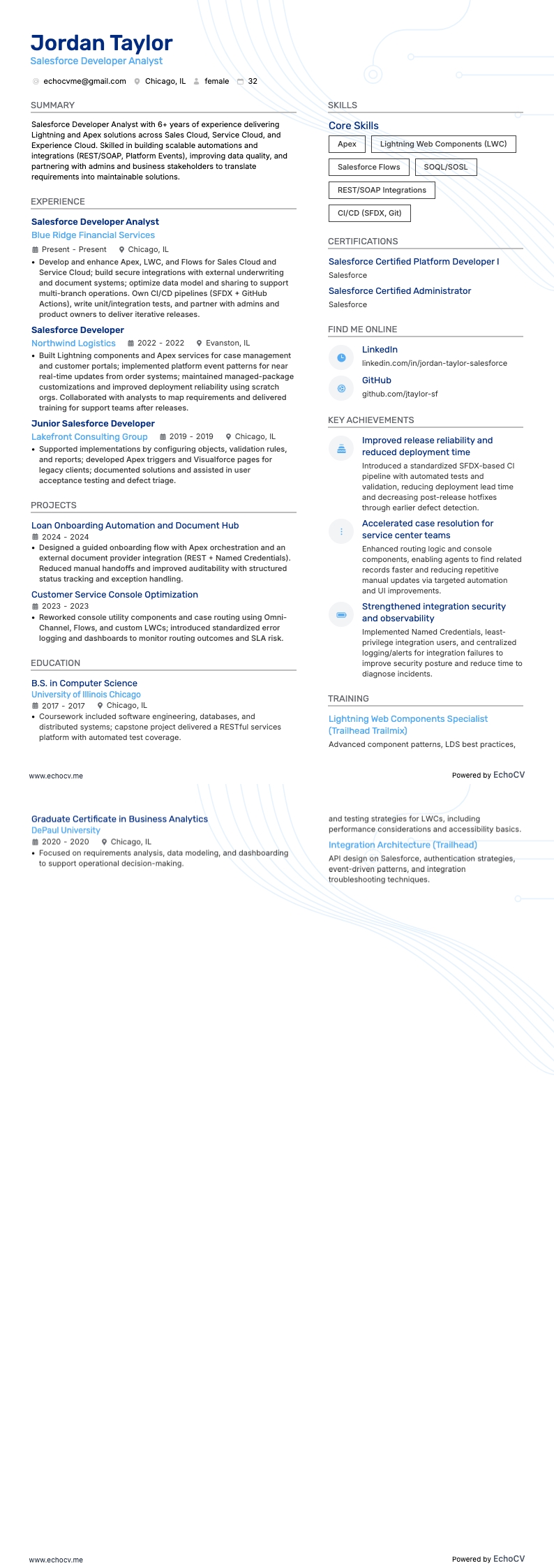
How to format a Salesforce developer resume
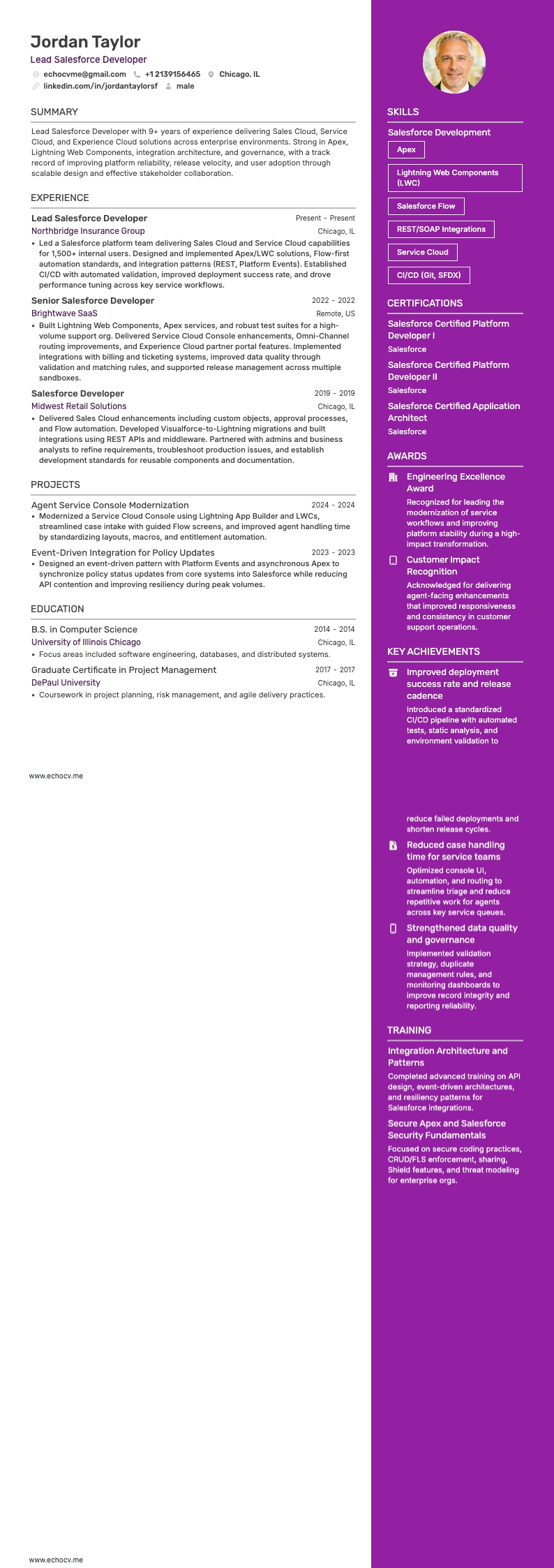
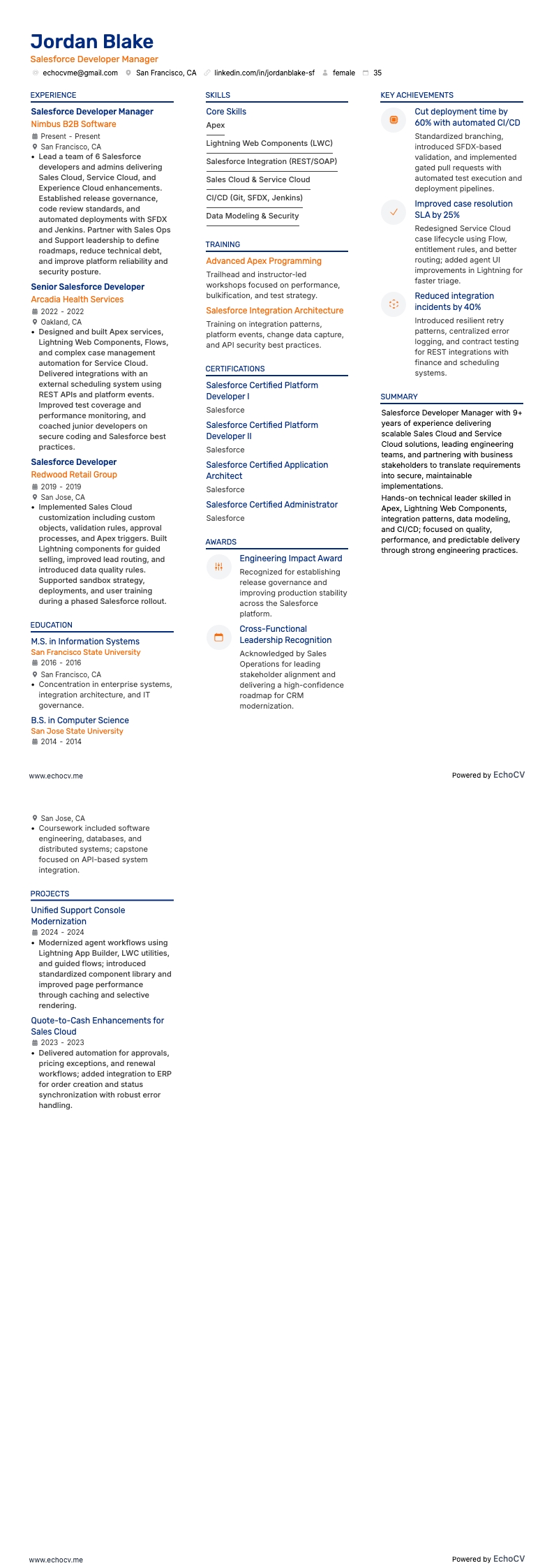
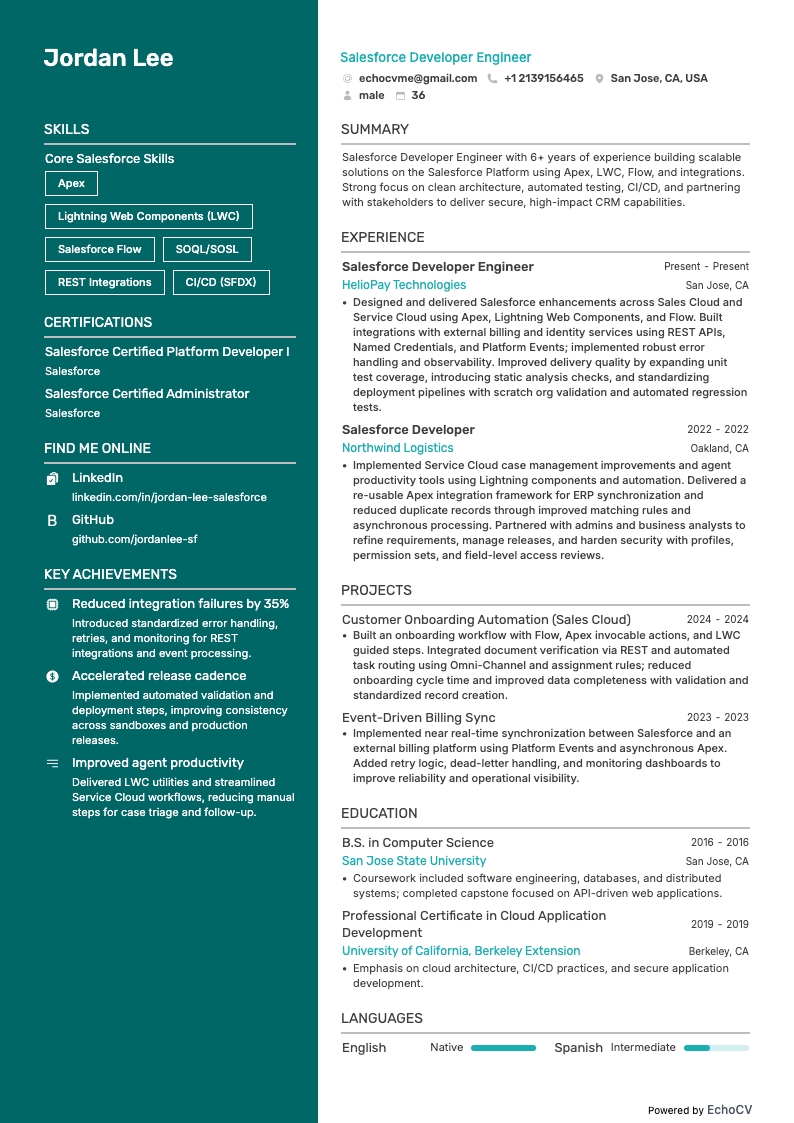
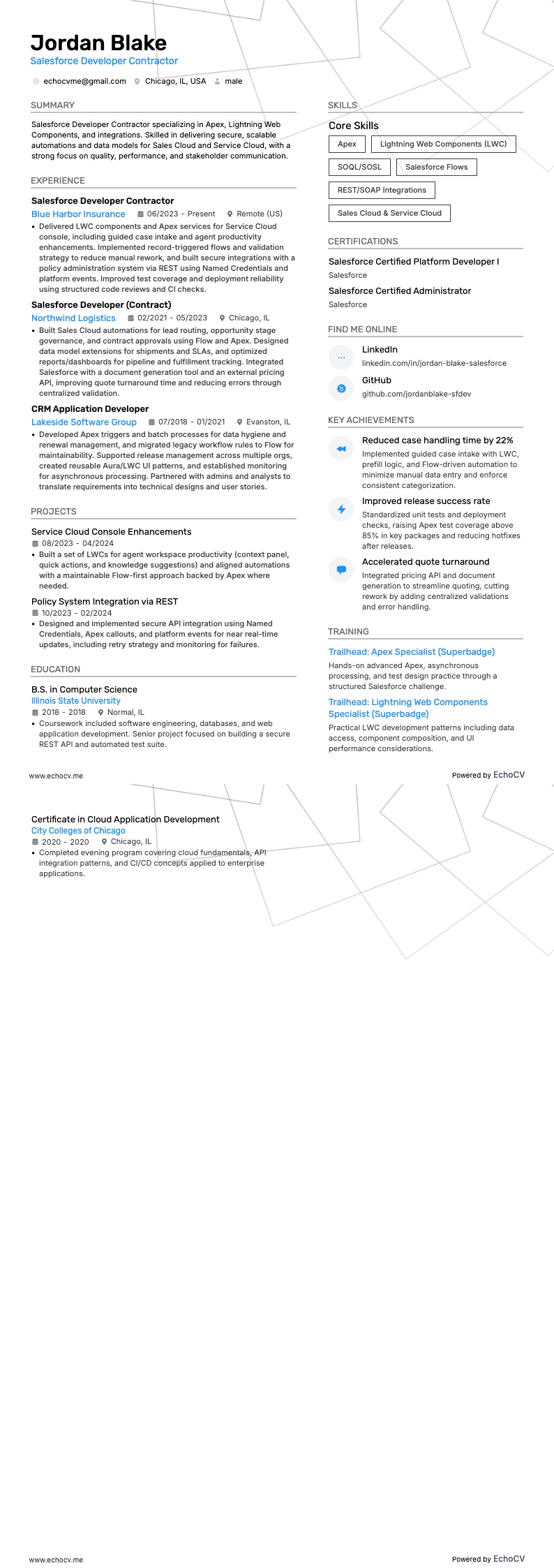
Choosing the right resume format depends on your specific career path and how you want to present your skills and experience to potential employers. Each format has its advantages, whether you're aiming to underline a robust career progression or spotlight your specific capabilities in Salesforce.
Here are the three most popular resume styles:
- Reverse-chronological resume: Similar to the chronological format but emphasizing the latest jobs first, this format is preferred if you're showcasing a steady climb in your Salesforce career. It clearly displays your most recent and relevant experience at the top, making it easy for hiring managers to see your latest accomplishments.
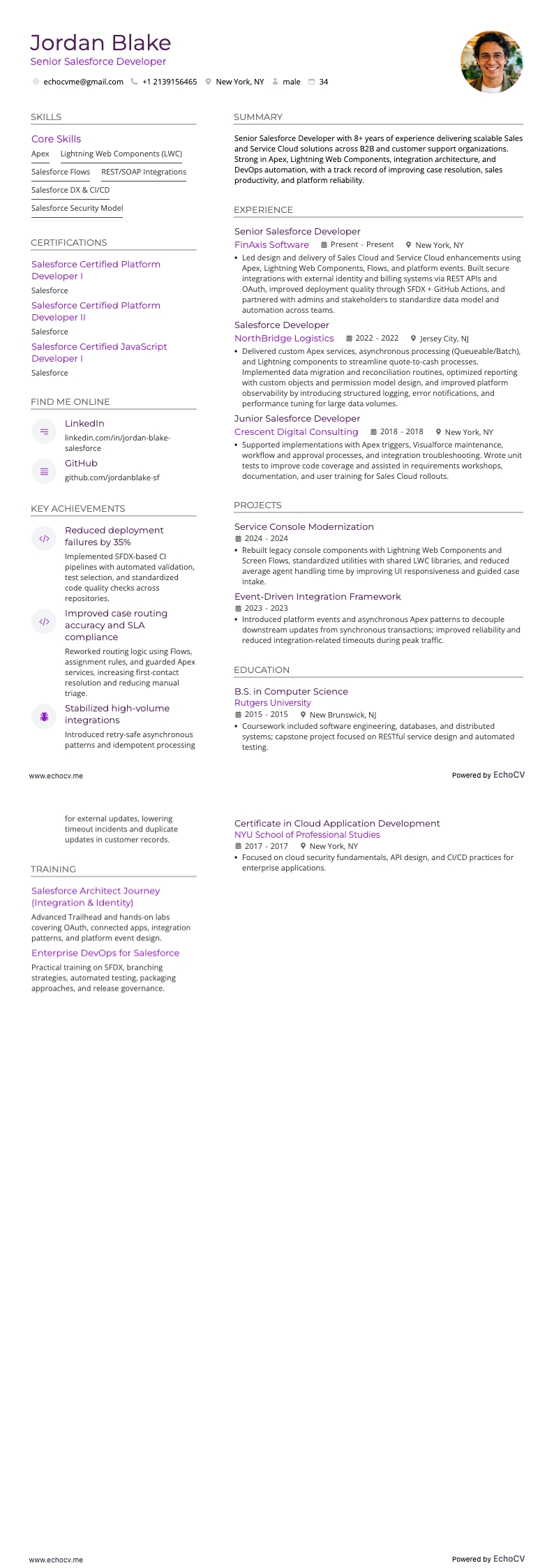
- Combination (hybrid) resume: This format highlights relevant skills at the top, like specific Salesforce certifications or technical proficiencies, followed by a professional experience section. This is especially effective if you want to emphasize both your tech skills and your career progression, or if you've had a diverse career or gaps in employment.
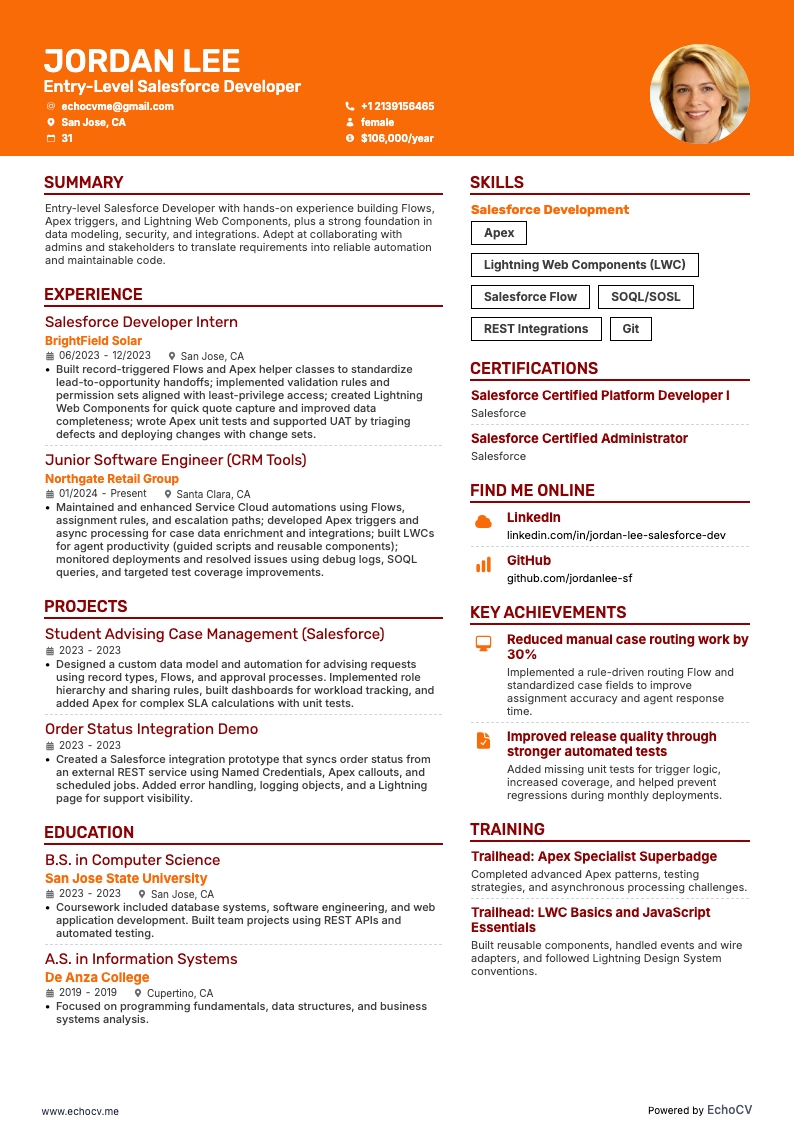
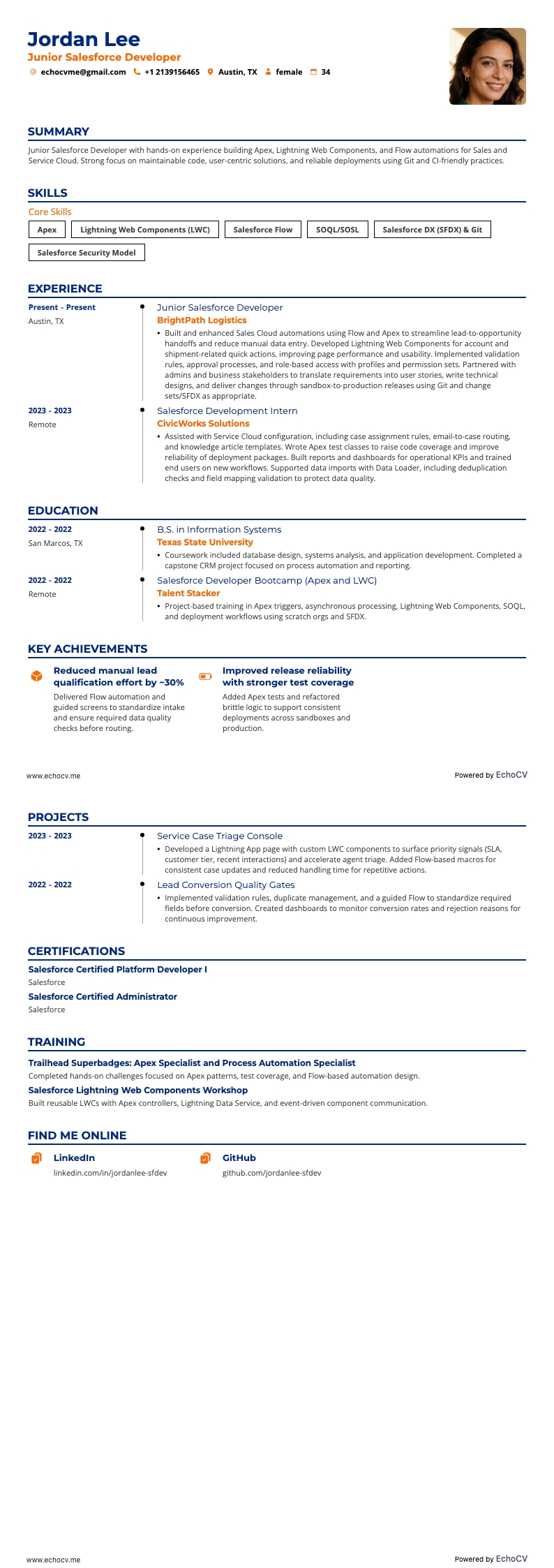
- Functional resume: This format focuses on your skills and experiences rather than your job history. It's ideal for those who may be changing careers, have gaps in their employment, or are first-time job-seekers. By underlining your Salesforce skills and projects upfront, you can show potential employers what you're capable of, even if you don't have a lengthy career specifically in Salesforce development.
Different markets have specific resume styles – a Canadian resume, for instance, may require a different approach.